6 October 2026
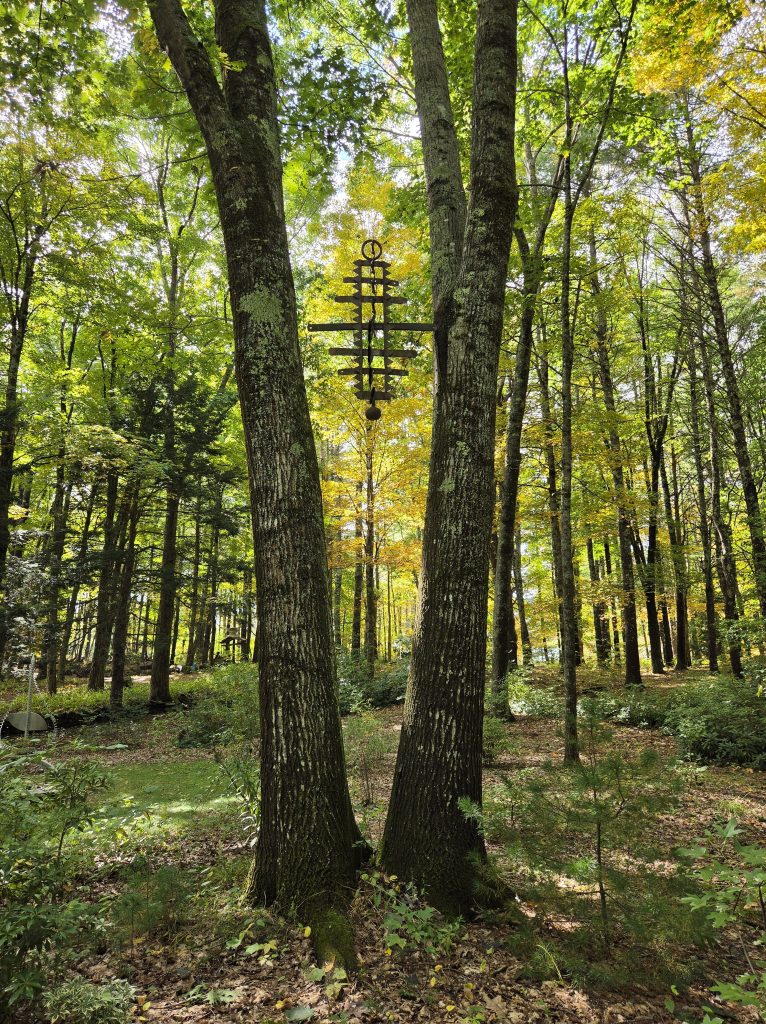
“The amazement one feels at this stage of life—a sort of astonishment that is also confusion, which leads to a sort of worry, or a sort of fear, I guess. How did we get here? How can it be?” (The Correspondent, p. 7).
How did the 40-year-old author Virginia Evans, writing here in the persona of her 73-year-old character Sybil Van Antwerp, just nail my own everyday lived experience? Evans says she’s been pegged as an old soul, always attracted to elders, and as a writer, she is, of course, hyper-observant. As I approach the end of my 73rd year, I find I’m often astonished/worried/fearful, a divided self simultaneously experiencing but also observing myself experiencing all I do to try to dispel the anxieties that show up so frequently in the lucid dreams a retiree is privileged to entertain in the early morning hours, sometimes in retrospect hilariously incongruous scenarios, scrambling fears arising from teaching, home construction, travel, and/or looking after loved ones into some indigestible omelette.
Motion is the lotion for my arthritic bones, I know, and staying in motion often means seeking out more psychological relief and comfort by visiting theatres, museums, and gardens—with the added “benefit” of avoiding tasks (like deep cleaning or finishing painting the deck railing) I just don’t want to do. Such avoidance takes many forms; I know I spend too much time of an evening obsessively enjoying reruns of David Suchet’s immaculate performance as Hercule Poirot.
Since I last diverted despair with a visit to Tewksbury butterflies on 9/11, I’ve also enjoyed the magical synergy of two great actors, Paul Giamatti and John Turturro, at the top of their game and successfully selling the relevance of Eugène Ionesco’s 1959 absurdist play Rhinoceros in Diane Paulus’s production at the A.R.T. in Cambridge.
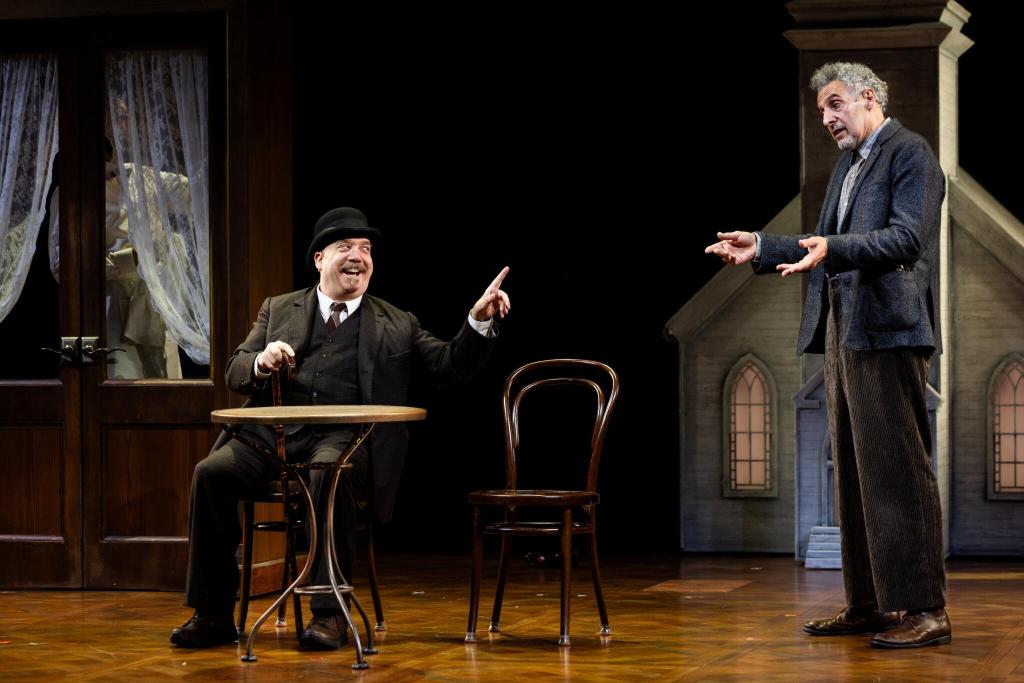
(photo by Hawver and Hall courtesy of the A.R.T.)
Watching Giamatti so convincingly transform himself into a rhinoceros—sans makeup or costume change—was a wonder, and Turturro’s struggles as the last human sympathetic. Earlier inspired by a friend’s tip and Sebastian Smee’s review in the August Atlantic of the Cape Ann Museum’s show Avery, Gottlieb & Rothko: By the Sea, I had driven with my artist friend Carol Shore down to Gloucester, MA on one of the last perfect days of summer. Both show and museum were revelatory, and it tickled us to discover how many of the other museum visitors that day were also artists.
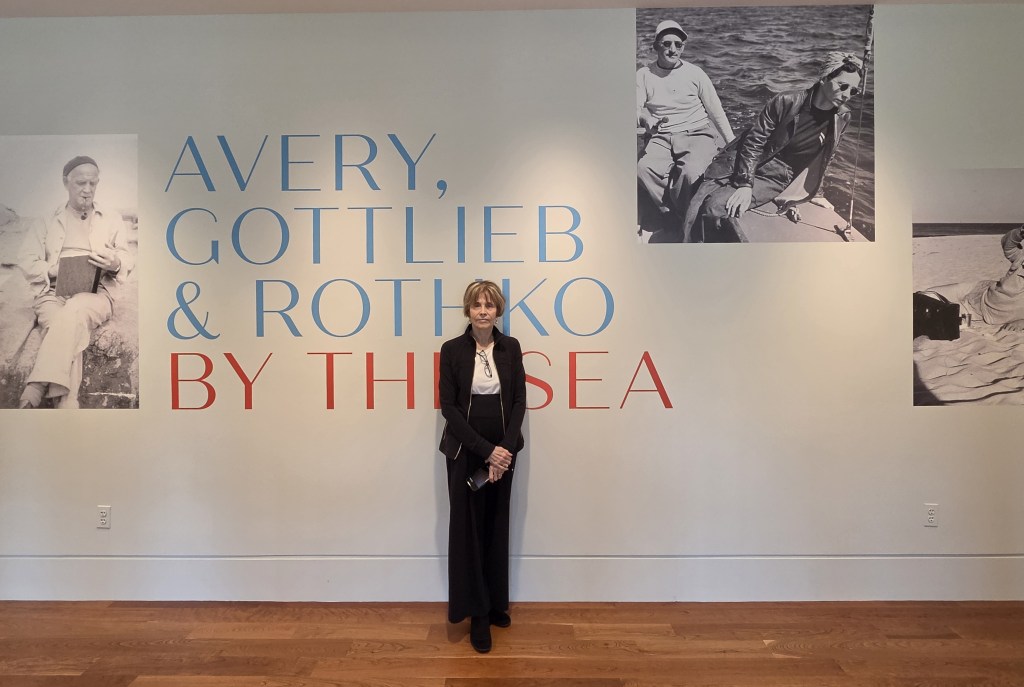
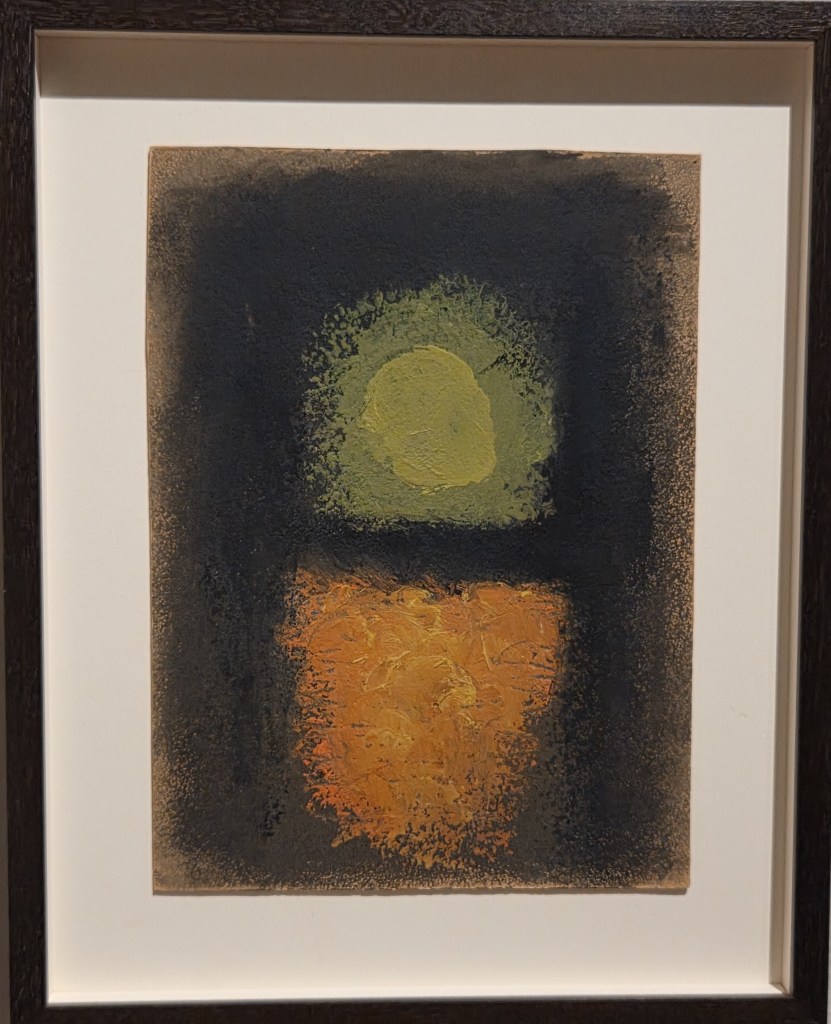
In retrospect, however, it isn’t the work of those major artists that resonates, but the multi-wall installation by ceramicist Diane KW, the first art one sees on entering the museum’s cloak- and bathroom vestibule.
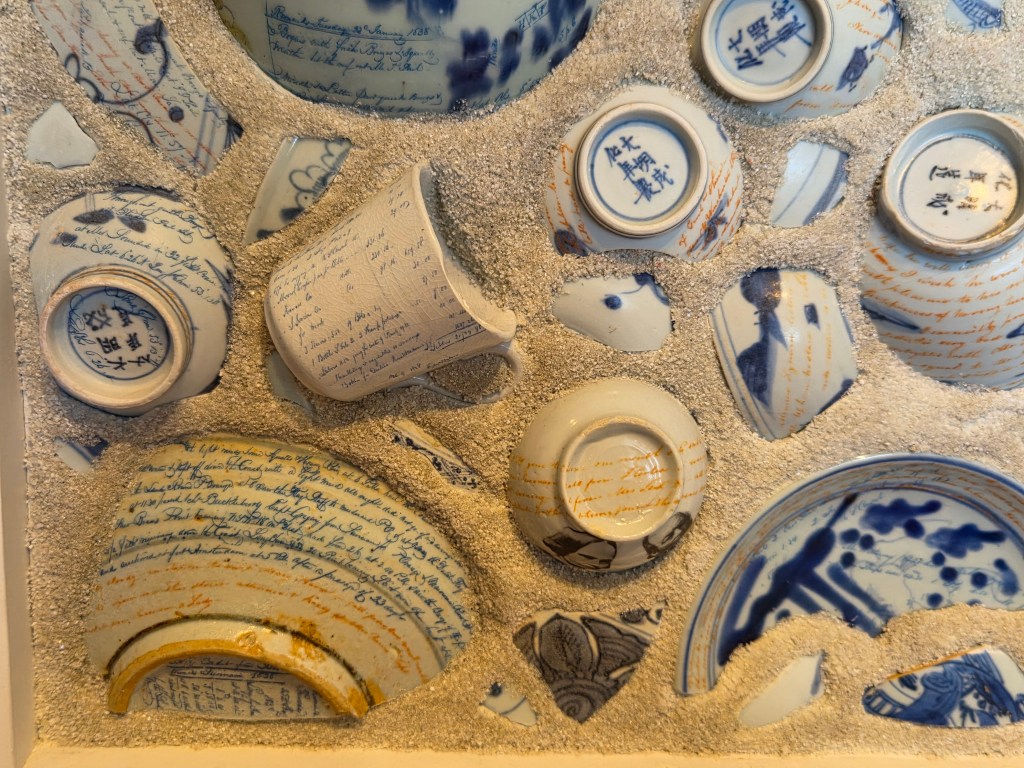
In her series of panels, the artist has applied to shipwrecked shards of Chinese export plates excerpts from the 1838 ship’s log of Gloucester’s Captain Edward Babson of the brig Cadet, his entries juxtaposed with those from the 1838 diary of his wife Amanda Babson. Embedded in mortar and sand to look as if they might have been found at the bottom of the ocean after a shipwreck, the shards tell their story in the blue and white of sea and sky, a tale for the viewer to piece together.
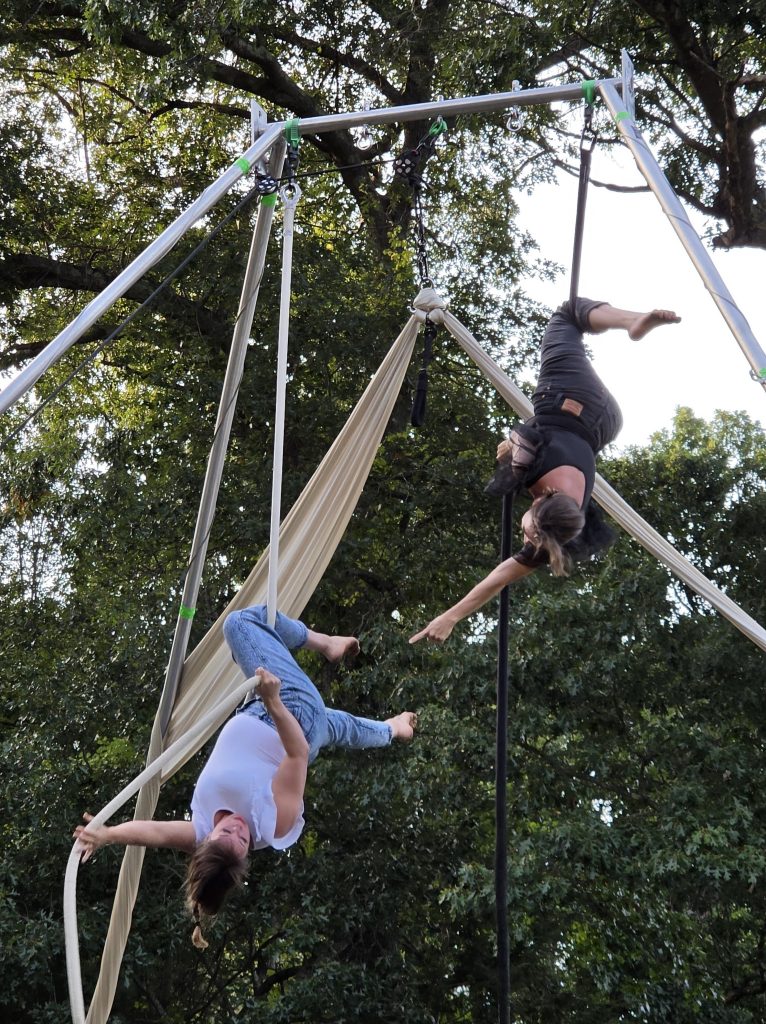
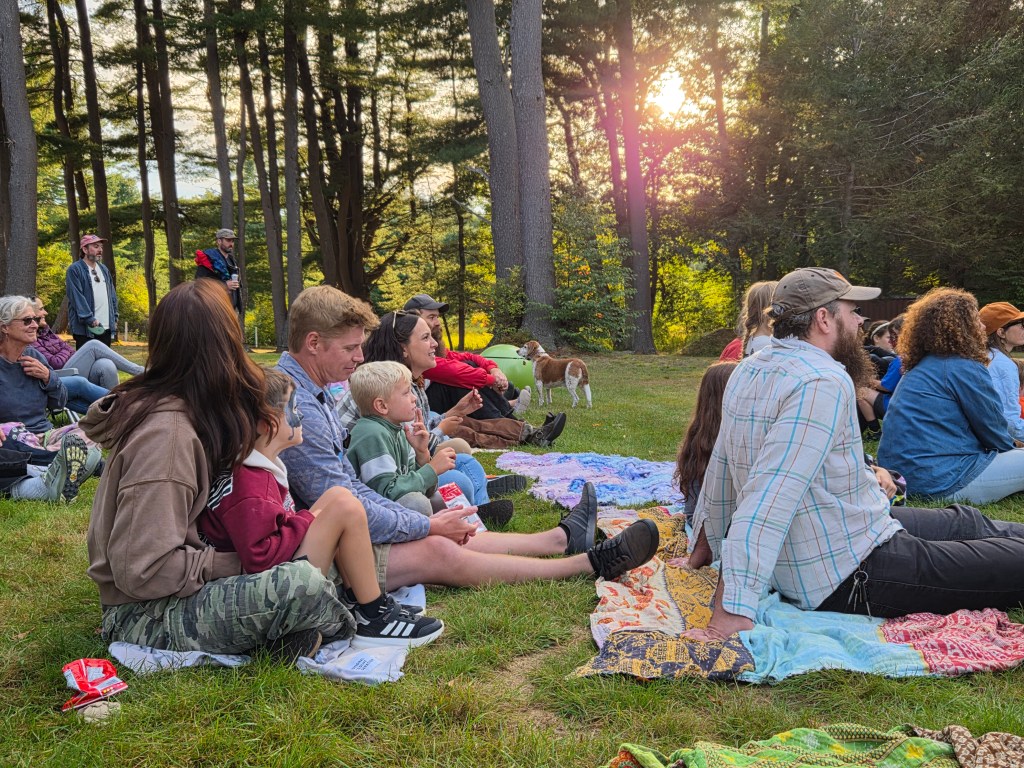
From Gloucester I drove north to catch the tail end of the community music and art Takedown Festival at the Raitt Homestead Farm in Eliot, Maine, and the aerial acrobatics of Scorpion Tales performed by my wonderful neighbor Anne and her friend Katrina, the two of them acting out in space a tale about the importance of stories that entranced its audience young and old alike.
Driving home at dusk I realized why the landscape around Eliot looked so familiar: it was at Albert Raitt’s nearby stoneyard that I had picked out my husband’s memorial stone back in 2021. Rather larger than Diane KW’s annotated shards, that engraved granite super shard now rests in our yard, telling its own much abbreviated story of folks who once lived here.
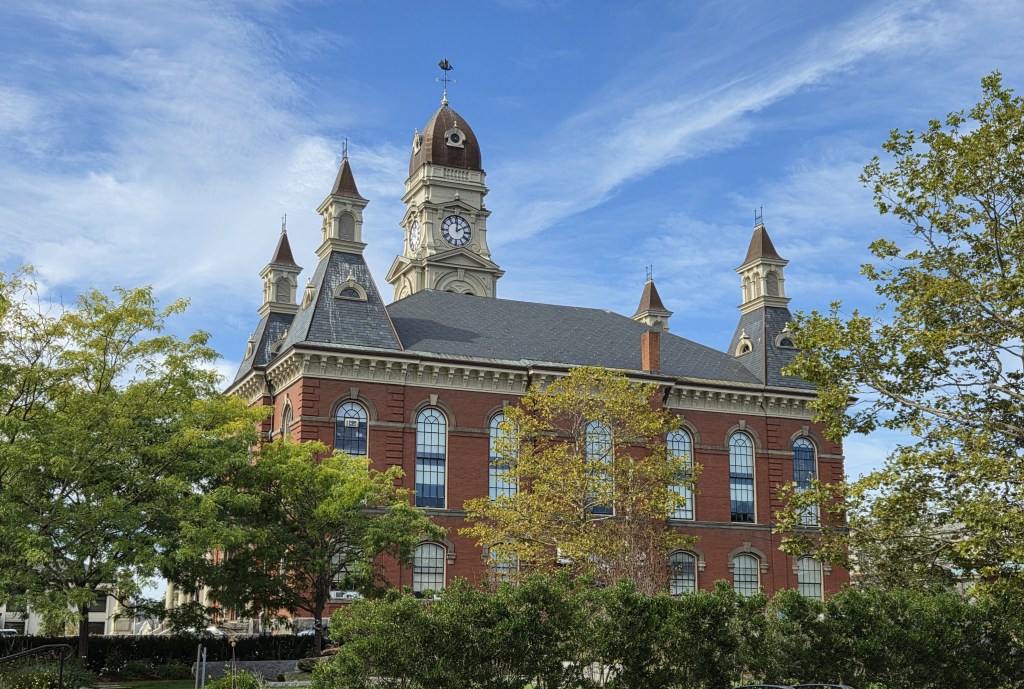
At the end of the September, the Portsmouth Public Library’s Shakespeare group met to discuss for the first time a non-Shakespearean play, Webster’s Duchess of Malfi, whose 1612 narrative of chaos, corruption, and cruelty in a ducal court seems now even more relevant to the polycrisis of our day than the warnings implicit in the A.R.T.’s revival of Ionesco’s 1959 Rhinoceros. Over a post-discussion pizza with two fellow academics, I was struck not only by the comfort implicit in that relevance—others have been this way before—but also by how my former UNH colleague Doug had so cleverly scripted a transition to retirement for himself, eschewing the discombobulating void of his first fall without the hopeful busy-ness of composing syllabi and preparing for classes by undertaking an arduous two-week, 150+ mile pilgrimage through Portugal on the Camino de Santiago to the Cathedral of Santiago de Compostela, writing himself a new story to link to the one that had just ended.

Two days later and needing to review Virginia Evans’s novel The Correspondent before our Madbury Public Library Book Club meeting, I took advantage of a lovely early fall day to take both book and my notes to Bedrock Gardens in Lee, New Hampshire, the 40-years-in-the-making 30-acre creation of two remarkable people, artist and clinical social worker Jill Nooney and her husband Bob Munger, retired physician and once my husband’s PCP.
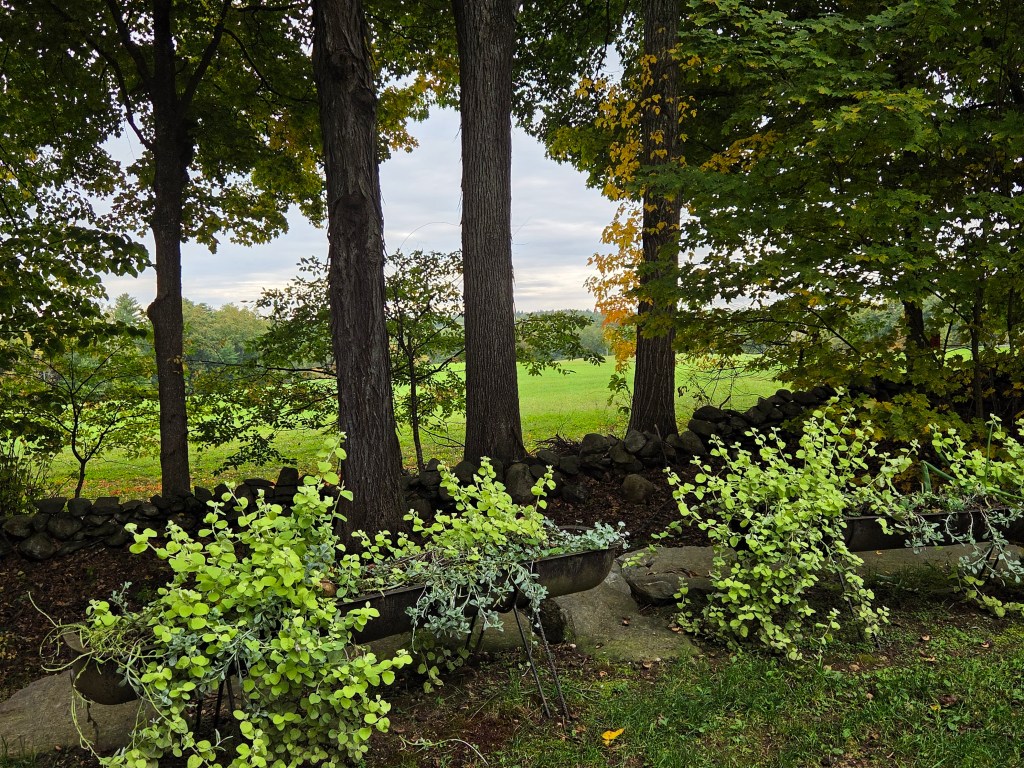
Sitting on a rustic bench at the garden’s Belvedere, with the sound of hickory nuts randomly dropping like some John Cage composition, reviewing the novel and gazing out at the illuminated conservation land beyond the dark trees—the counterpoint to the otherwise inwardly facing gardens—I began to think I had an awful lot in common with Evans’s title character Sybil, another letter writer with anachronistic penmanship, both of us 73 years old, living and reviewing our lives, searching for a throughline to connect shards of past experience.
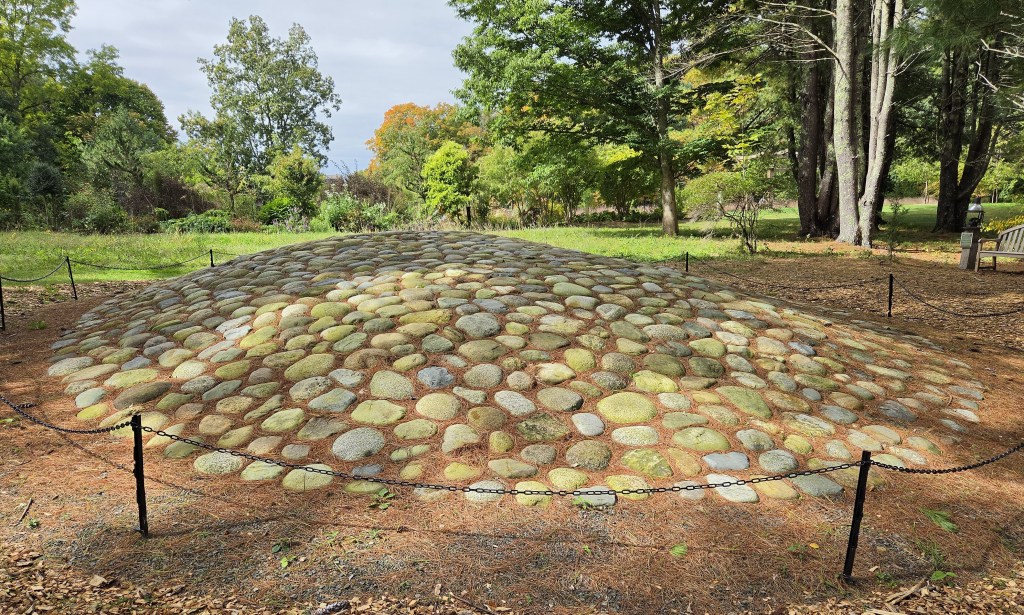
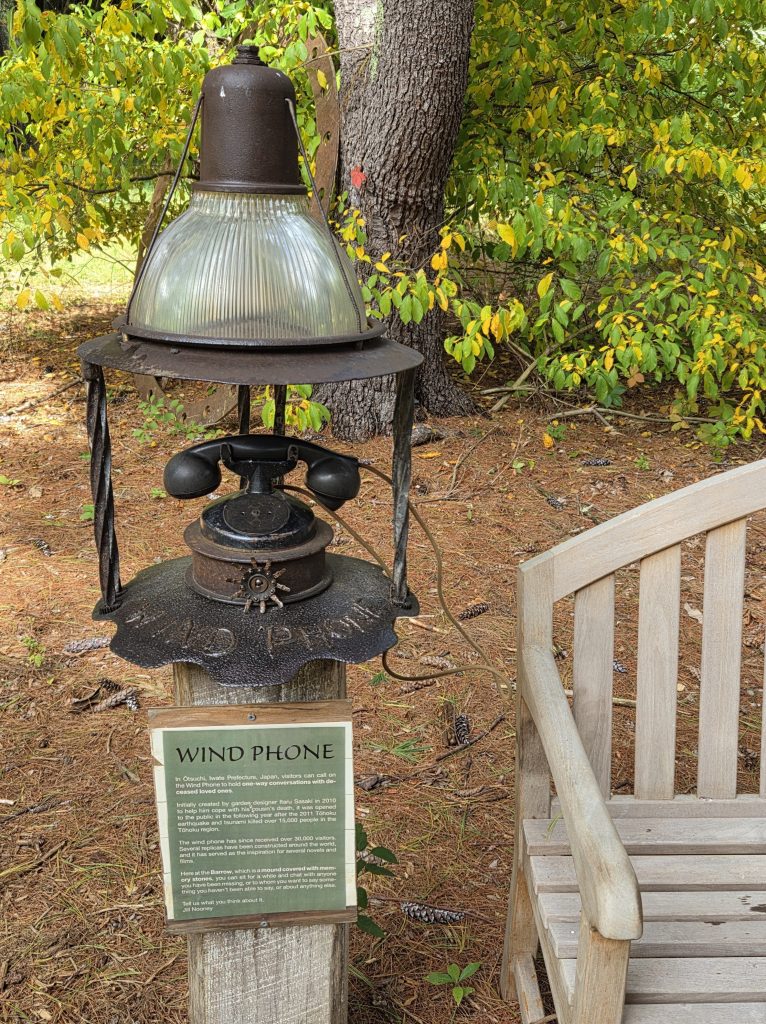
Close to the Belvedere at Bedrock Gardens is the Barrow, a mound of “memory stones” I’d last seen still under construction but now complete. Next to it is a Wind Phone, a replica of garden designer Itaru Sasaki’s inspiration first created in 2010 to help him cope with a cousin’s death but then rededicated to the 15,000+ who lost their lives in the 2011 Tōhoku earthquake and tsunami. A sign below the phone invites a chat with anyone you have been missing. And so I sat on the adjacent bench and for a short while caught up with my late husband David.
Other connections less metaphysical embellished the day. I ran into my friend Mandy at Bedrock’s FernBerm, where she revealed she’d once rappelled down the precipitous outcropping at Stone House Pond I’d recently labored to climb on Labor Day; we commiserated about the passing, however necessary, of such youthful temerity. And then on the way home, inspired by Bedrock’s beauty, I stopped at Pawtuckaway Nursery for a few perennials to plant before the first frost to entice pollinators come spring. I was gobsmacked when nursery owner Mark Davis recognized me and asked how my azaleas were doing; I’m sure I’d not consulted him about my azaleas for at least seven years. But then he also remembered the boxwood he’d installed 25 years ago, along with the pachysandra under them. Remarkable! And so flattering and affirming to be remembered.
Remembrance. Is it this we yearn for? I’ve got boxes of handwritten letters and emails printed out, my own and David’s, to sort—and, I have thought, perhaps to discard. But then Virginia Evans’s Sybil writes: “Imagine, the letters one has sent out into the world, the letters received back in turn, are like the pieces of a magnificent puzzle, or, a better metaphor, if dated, the links of a long chain, and even if those links are never put back together, which they will certainly never be, even if they remain for the rest of time dispersed across the earth like the fragile blown seeds of a dying dandelion, isn’t there something wonderful in that, to think that a story of one’s life is preserved in some way, that this very letter may one day mean something, even if it is a very small thing, to someone?”
What shards of lives lived carry meaning into the future?
Last Friday I made my first visit to Rochester’s Opera House, seeking comfort in the community of hopeful Democrats gathered to cheer on candidates entering the final month of their breathless run for office: Cinde Warmington, Stefany Shaheen, and Chris Pappas all basking in the support of former Transportation Secretary Pete Buttigieg, whose intelligent warmth, wit, charisma, and public speaking chops were on full display.



O that we might have had that man as our president! Mayor Pete, as Rochester Mayor Chuck Grassie preferred to call him, concluded his remarks with a riff on what his five-year-old son recently told his doting dad: “When I’m as big as you are, you’ll be a grandpa. Or you’ll be dead.” Preferring the former outcome, Buttigieg mused on what folks in the 2050’s will think of what we the people did—or didn’t—do in the 2020’s. And he confessed he had hope for that future.
Hearing Mayor Pete inspired in me a related hope, a kind of existential kintsugi, or “golden joinery,” the art of mending broken pottery with lacquer mixed with powdered gold.
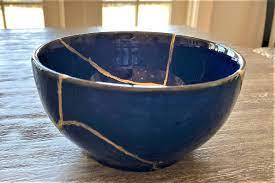
There is beauty to be found in imperfection, impermanence, and the mutability that time passing brings. Over time, shards and stories do come together, bound by our connections to each other, past, present, and future.
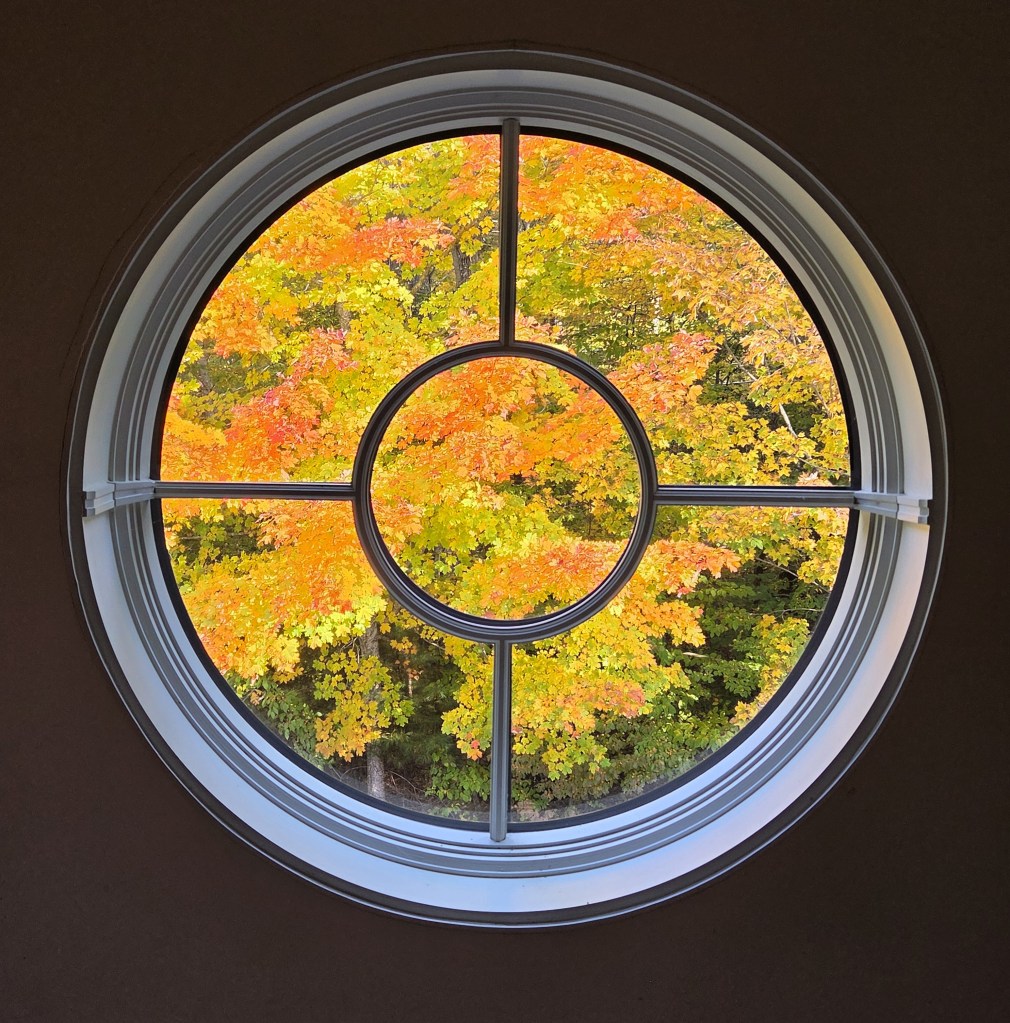
So, here’s to hope, and to your own golden joinery, Dear Reader, in this golden season.


Leave a comment