-
Shards and Hope
6 October 2026
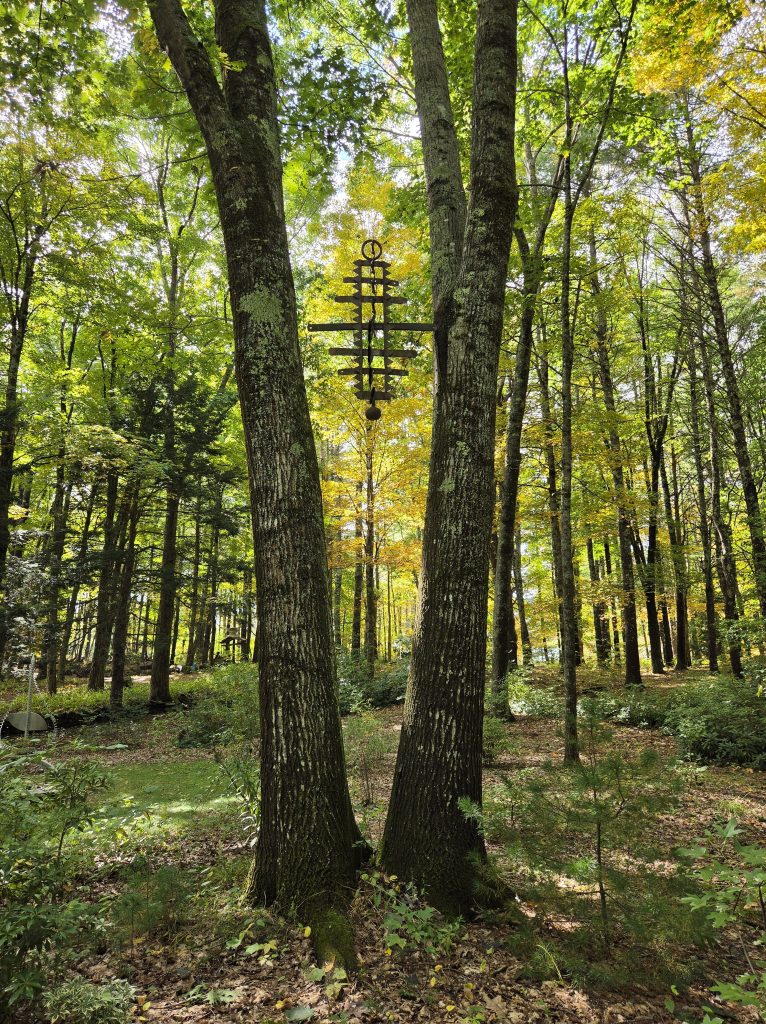
Sculpture by Jill Nooney at Bedrock Gardens, Lee NH “The amazement one feels at this stage of life—a sort of astonishment that is also confusion, which leads to a sort of worry, or a sort of fear, I guess. How did we get here? How can it be?” (The Correspondent, p. 7).
How did the 40-year-old author Virginia Evans, writing here in the persona of her 73-year-old character Sybil Van Antwerp, just nail my own everyday lived experience? Evans says she’s been pegged as an old soul, always attracted to elders, and as a writer, she is, of course, hyper-observant. As I approach the end of my 73rd year, I find I’m often astonished/worried/fearful, a divided self simultaneously experiencing but also observing myself experiencing all I do to try to dispel the anxieties that show up so frequently in the lucid dreams a retiree is privileged to entertain in the early morning hours, sometimes in retrospect hilariously incongruous scenarios, scrambling fears arising from teaching, home construction, travel, and/or looking after loved ones into some indigestible omelette.
Motion is the lotion for my arthritic bones, I know, and staying in motion often means seeking out more psychological relief and comfort by visiting theatres, museums, and gardens—with the added “benefit” of avoiding tasks (like deep cleaning or finishing painting the deck railing) I just don’t want to do. Such avoidance takes many forms; I know I spend too much time of an evening obsessively enjoying reruns of David Suchet’s immaculate performance as Hercule Poirot.
Since I last diverted despair with a visit to Tewksbury butterflies on 9/11, I’ve also enjoyed the magical synergy of two great actors, Paul Giamatti and John Turturro, at the top of their game and successfully selling the relevance of Eugène Ionesco’s 1959 absurdist play Rhinoceros in Diane Paulus’s production at the A.R.T. in Cambridge.
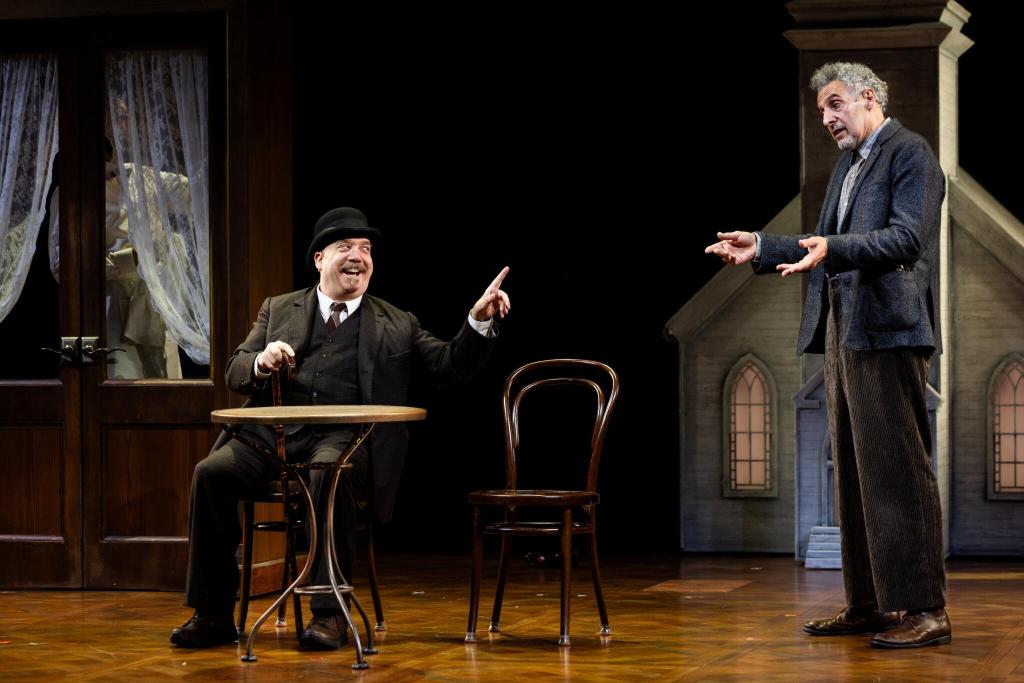
Giamatti as Jean and Turturro as Berenger in Rhinoceros at the A.R.T.
(photo by Hawver and Hall courtesy of the A.R.T.)Watching Giamatti so convincingly transform himself into a rhinoceros—sans makeup or costume change—was a wonder, and Turturro’s struggles as the last human sympathetic. Earlier inspired by a friend’s tip and Sebastian Smee’s review in the August Atlantic of the Cape Ann Museum’s show Avery, Gottlieb & Rothko: By the Sea, I had driven with my artist friend Carol Shore down to Gloucester, MA on one of the last perfect days of summer. Both show and museum were revelatory, and it tickled us to discover how many of the other museum visitors that day were also artists.
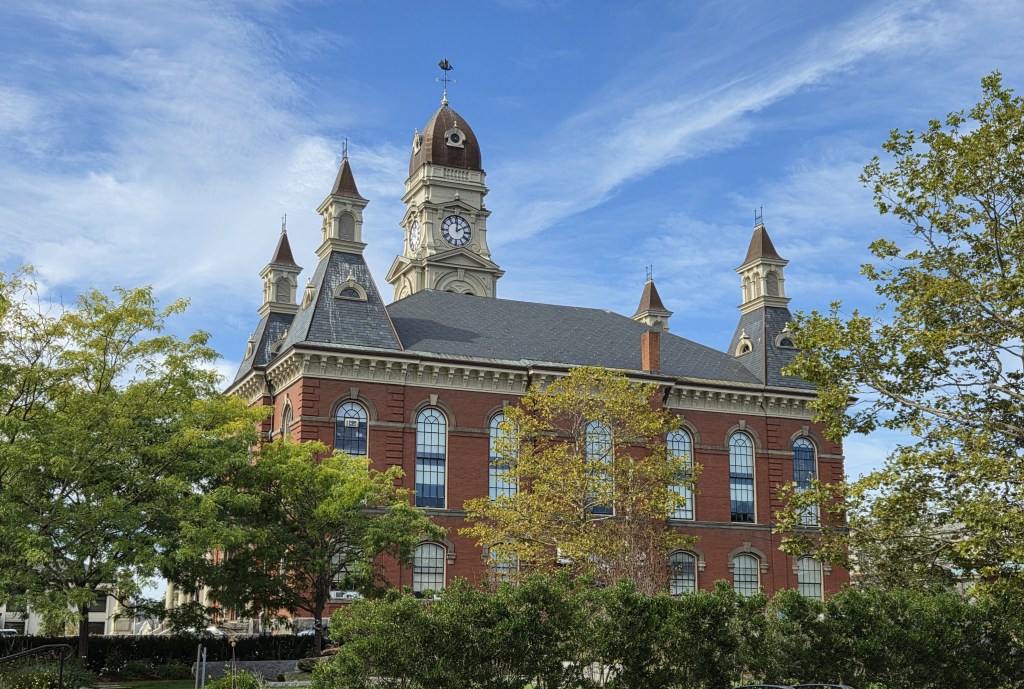
Gloucester’s Second Empire City Hall (architect Gridley J. F. Bryant, 1870) 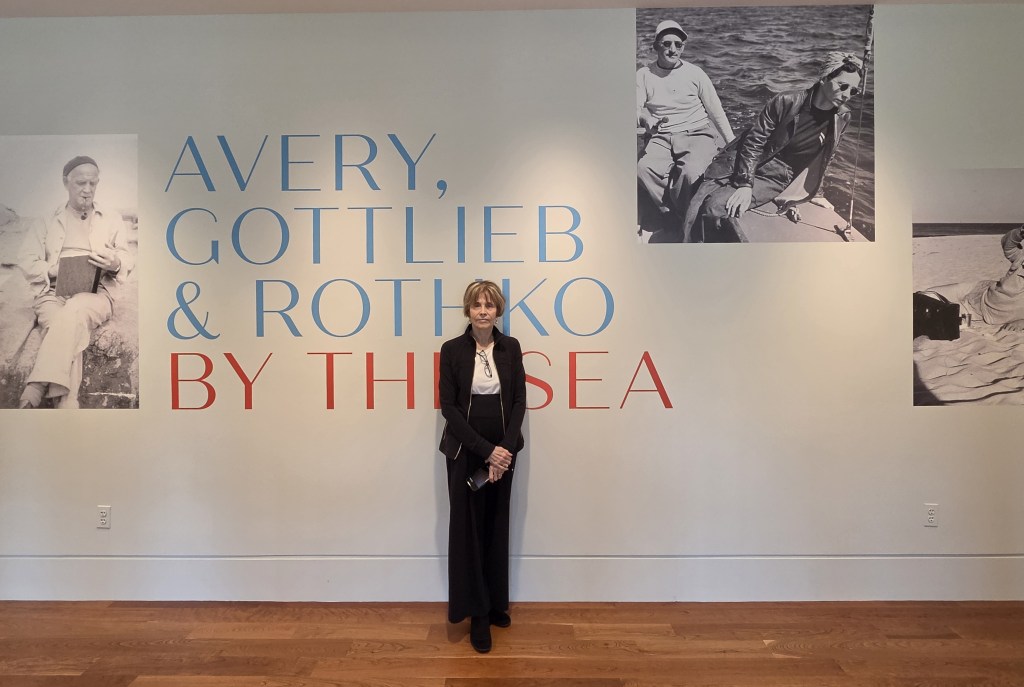
My elegant friend, artist Carol Aronson-Shore at the Cape Ann Museum 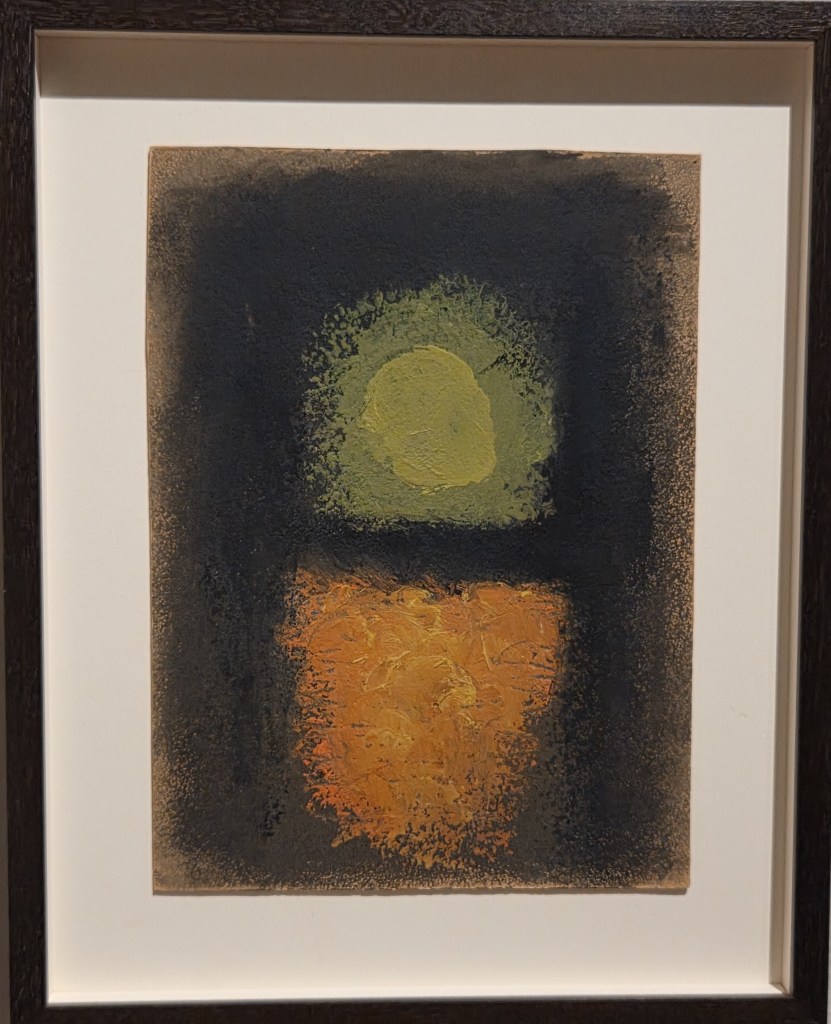
My favorite painting of the show: Milton Avery’s 1959 Moon Lit Sea In retrospect, however, it isn’t the work of those major artists that resonates, but the multi-wall installation by ceramicist Diane KW, the first art one sees on entering the museum’s cloak- and bathroom vestibule.
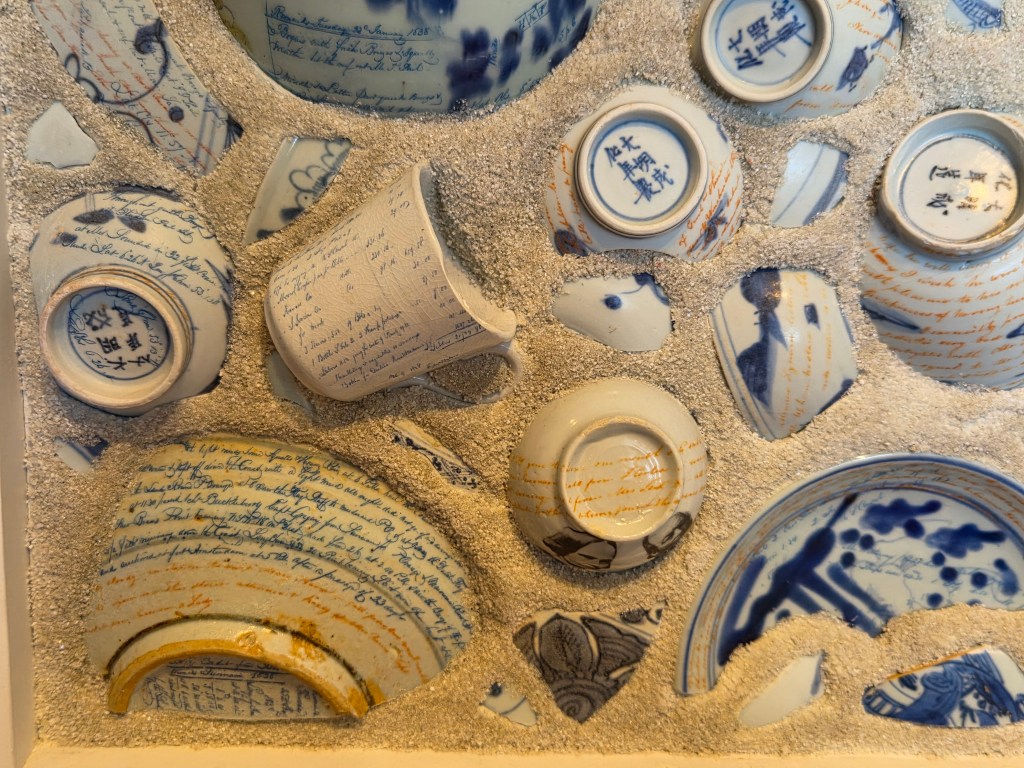
Part of Diane KW’s Strong Breezes installation In her series of panels, the artist has applied to shipwrecked shards of Chinese export plates excerpts from the 1838 ship’s log of Gloucester’s Captain Edward Babson of the brig Cadet, his entries juxtaposed with those from the 1838 diary of his wife Amanda Babson. Embedded in mortar and sand to look as if they might have been found at the bottom of the ocean after a shipwreck, the shards tell their story in the blue and white of sea and sky, a tale for the viewer to piece together.
From Gloucester I drove north to catch the tail end of the community music and art Takedown Festival at the Raitt Homestead Farm in Eliot, Maine, and the aerial acrobatics of Scorpion Tales performed by my wonderful neighbor Anne and her friend Katrina, the two of them acting out in space a tale about the importance of stories that entranced its audience young and old alike.
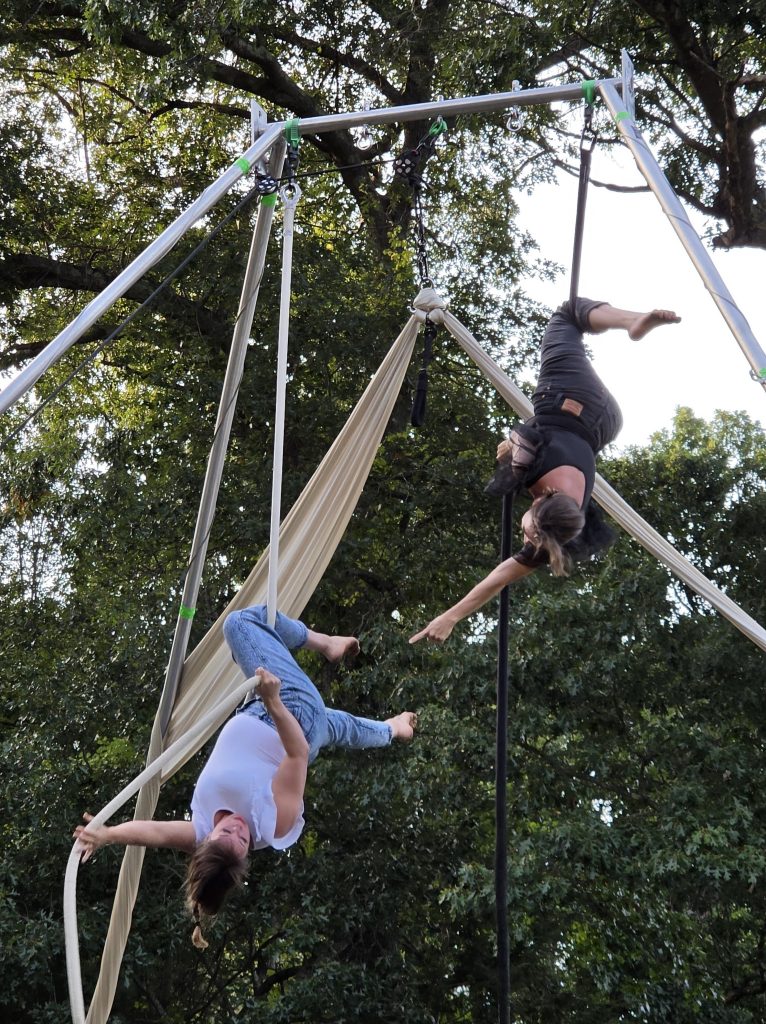
l. to r. Anne and Katrina of Scorpion Tales at the Takedown Festival 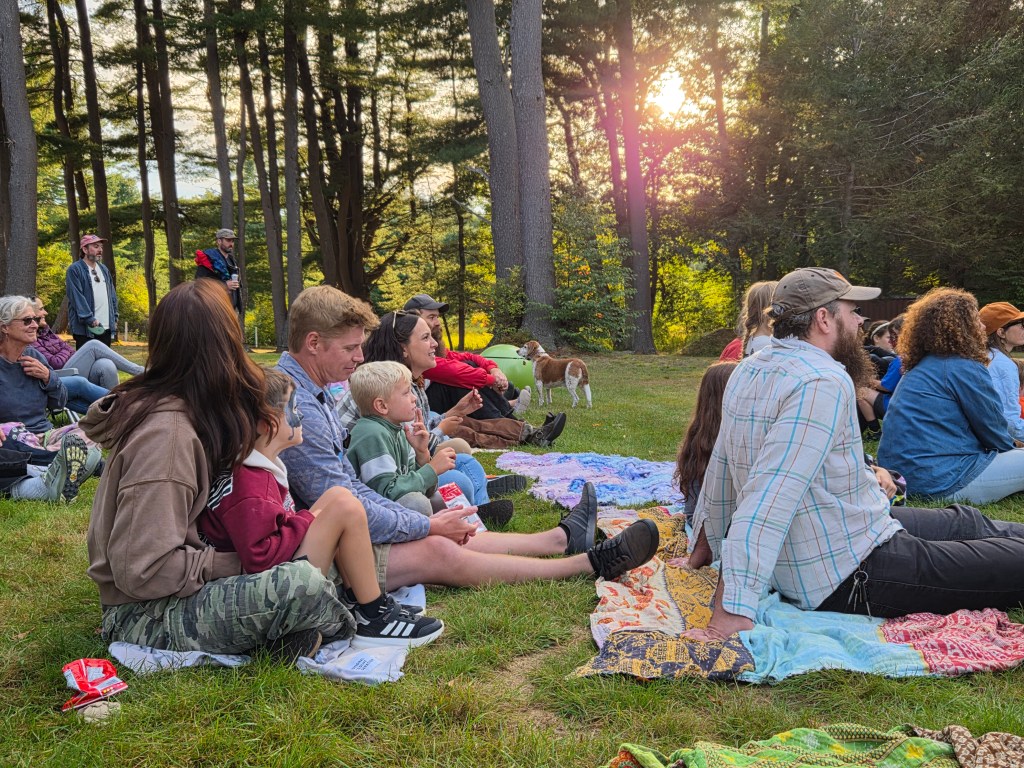
Driving home at dusk I realized why the landscape around Eliot looked so familiar: it was at Albert Raitt’s nearby stoneyard that I had picked out my husband’s memorial stone back in 2021. Rather larger than Diane KW’s annotated shards, that engraved granite super shard now rests in our yard, telling its own much abbreviated story of folks who once lived here.
At the end of the September, the Portsmouth Public Library’s Shakespeare group met to discuss for the first time a non-Shakespearean play, Webster’s Duchess of Malfi, whose 1612 narrative of chaos, corruption, and cruelty in a ducal court seems now even more relevant to the polycrisis of our day than the warnings implicit in the A.R.T.’s revival of Ionesco’s 1959 Rhinoceros. Over a post-discussion pizza with two fellow academics, I was struck not only by the comfort implicit in that relevance—others have been this way before—but also by how my former UNH colleague Doug had so cleverly scripted a transition to retirement for himself, eschewing the discombobulating void of his first fall without the hopeful busy-ness of composing syllabi and preparing for classes by undertaking an arduous two-week, 150+ mile pilgrimage through Portugal on the Camino de Santiago to the Cathedral of Santiago de Compostela, writing himself a new story to link to the one that had just ended.
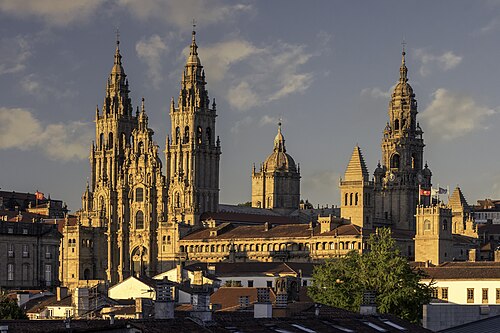
The Archcathedral of Santiago de Compostela Two days later and needing to review Virginia Evans’s novel The Correspondent before our Madbury Public Library Book Club meeting, I took advantage of a lovely early fall day to take both book and my notes to Bedrock Gardens in Lee, New Hampshire, the 40-years-in-the-making 30-acre creation of two remarkable people, artist and clinical social worker Jill Nooney and her husband Bob Munger, retired physician and once my husband’s PCP.
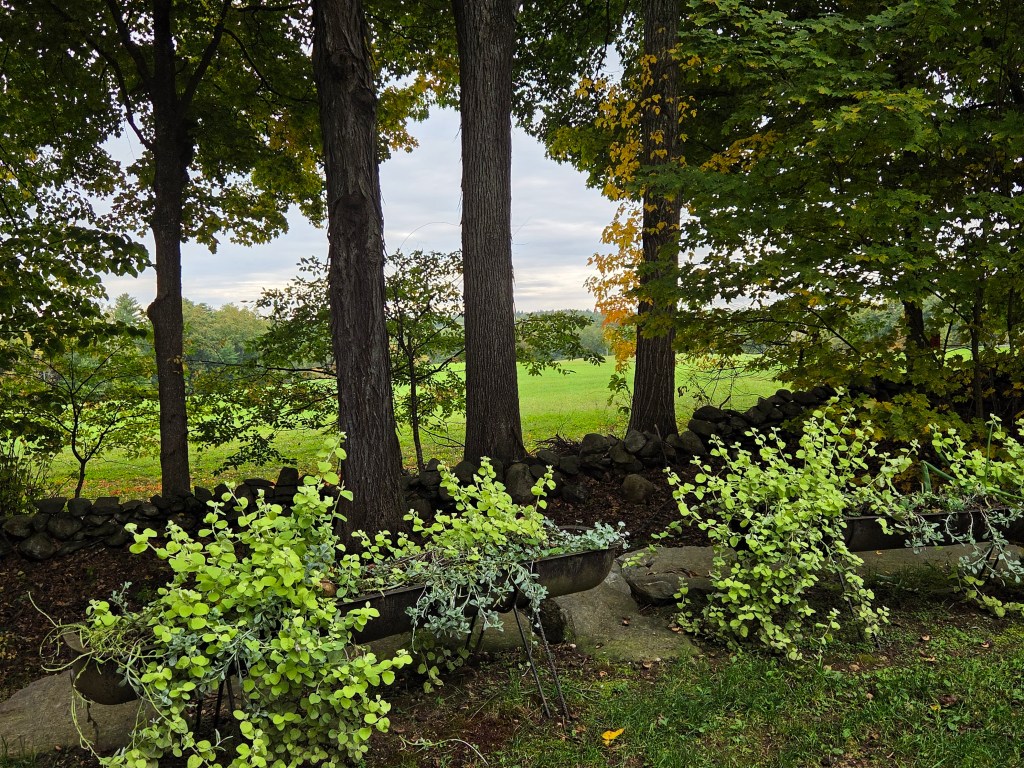
View from the Belvedere at Bedrock Gardens Sitting on a rustic bench at the garden’s Belvedere, with the sound of hickory nuts randomly dropping like some John Cage composition, reviewing the novel and gazing out at the illuminated conservation land beyond the dark trees—the counterpoint to the otherwise inwardly facing gardens—I began to think I had an awful lot in common with Evans’s title character Sybil, another letter writer with anachronistic penmanship, both of us 73 years old, living and reviewing our lives, searching for a throughline to connect shards of past experience.
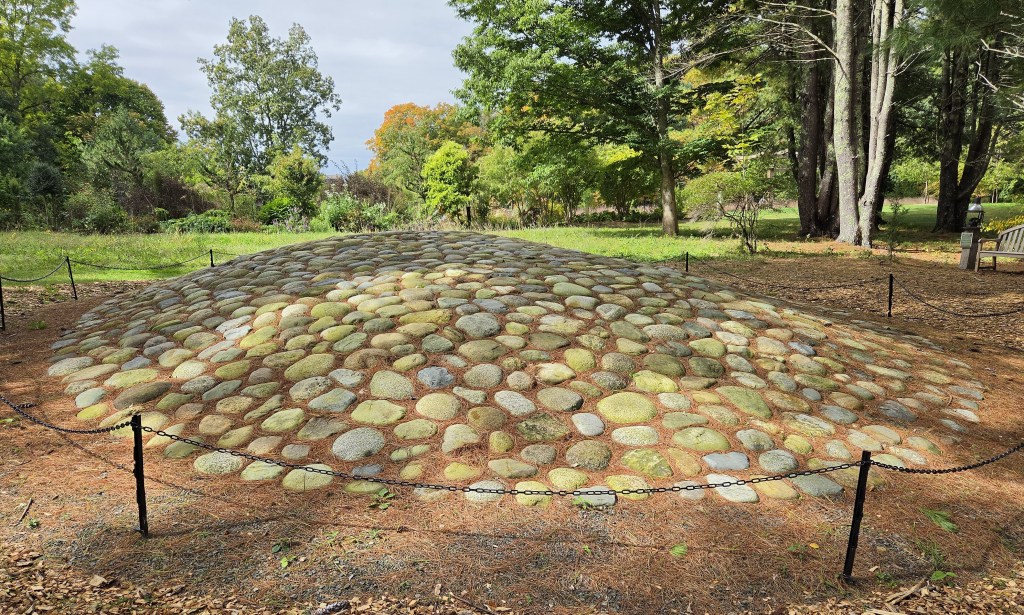
The Barrow Close to the Belvedere at Bedrock Gardens is the Barrow, a mound of “memory stones” I’d last seen still under construction but now complete. Next to it is a Wind Phone, a replica of garden designer Itaru Sasaki’s inspiration first created in 2010 to help him cope with a cousin’s death but then rededicated to the 15,000+ who lost their lives in the 2011 Tōhoku earthquake and tsunami. A sign below the phone invites a chat with anyone you have been missing. And so I sat on the adjacent bench and for a short while caught up with my late husband David.
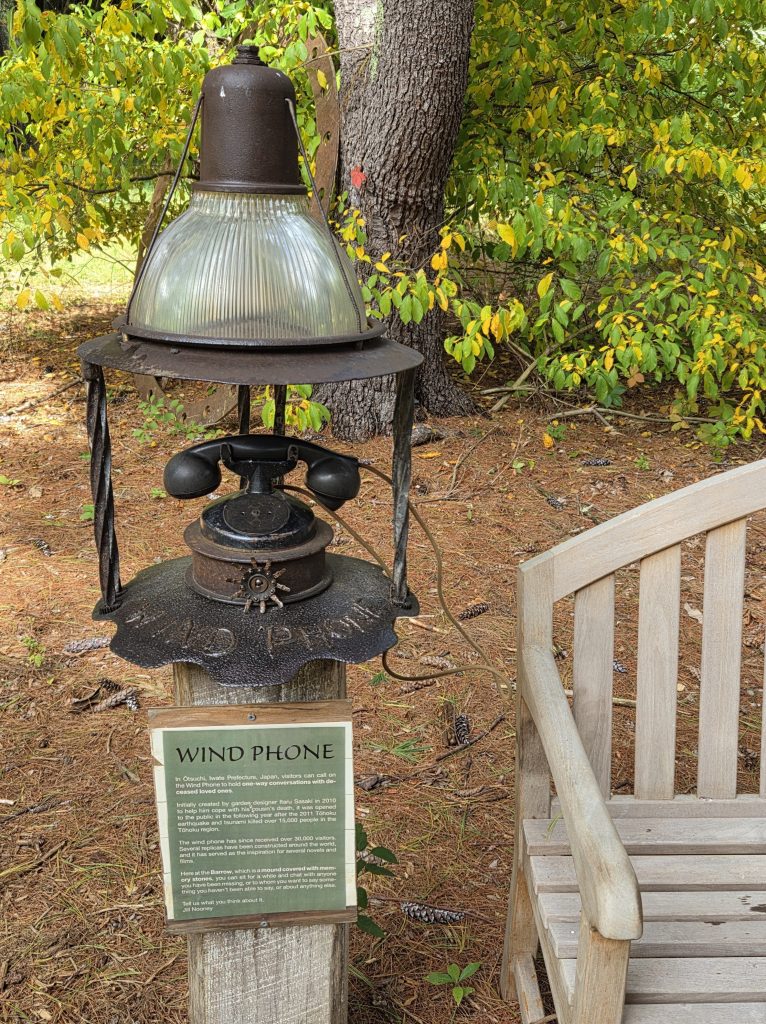
Other connections less metaphysical embellished the day. I ran into my friend Mandy at Bedrock’s FernBerm, where she revealed she’d once rappelled down the precipitous outcropping at Stone House Pond I’d recently labored to climb on Labor Day; we commiserated about the passing, however necessary, of such youthful temerity. And then on the way home, inspired by Bedrock’s beauty, I stopped at Pawtuckaway Nursery for a few perennials to plant before the first frost to entice pollinators come spring. I was gobsmacked when nursery owner Mark Davis recognized me and asked how my azaleas were doing; I’m sure I’d not consulted him about my azaleas for at least seven years. But then he also remembered the boxwood he’d installed 25 years ago, along with the pachysandra under them. Remarkable! And so flattering and affirming to be remembered.
Remembrance. Is it this we yearn for? I’ve got boxes of handwritten letters and emails printed out, my own and David’s, to sort—and, I have thought, perhaps to discard. But then Virginia Evans’s Sybil writes: “Imagine, the letters one has sent out into the world, the letters received back in turn, are like the pieces of a magnificent puzzle, or, a better metaphor, if dated, the links of a long chain, and even if those links are never put back together, which they will certainly never be, even if they remain for the rest of time dispersed across the earth like the fragile blown seeds of a dying dandelion, isn’t there something wonderful in that, to think that a story of one’s life is preserved in some way, that this very letter may one day mean something, even if it is a very small thing, to someone?”
What shards of lives lived carry meaning into the future?
Last Friday I made my first visit to Rochester’s Opera House, seeking comfort in the community of hopeful Democrats gathered to cheer on candidates entering the final month of their breathless run for office: Cinde Warmington, Stefany Shaheen, and Chris Pappas all basking in the support of former Transportation Secretary Pete Buttigieg, whose intelligent warmth, wit, charisma, and public speaking chops were on full display.
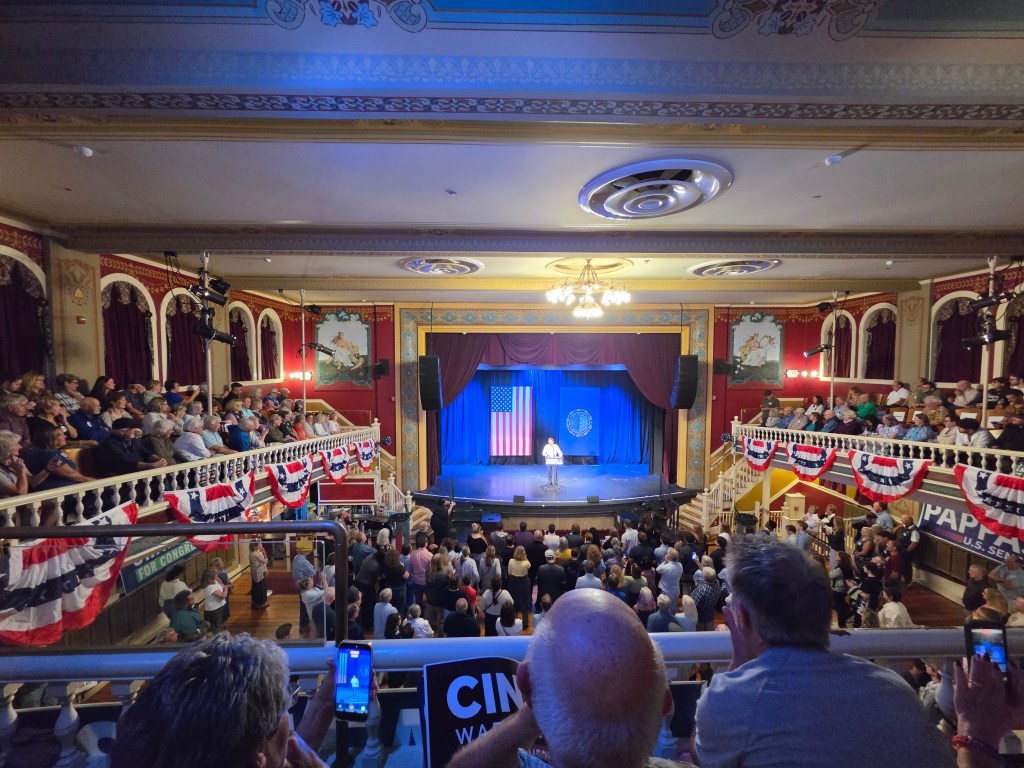
Pete Buttigieg at the Rochester Opera House, famous for its moveable dance floor (architect George Gilman Adams, 1908) 

O that we might have had that man as our president! Mayor Pete, as Rochester Mayor Chuck Grassie preferred to call him, concluded his remarks with a riff on what his five-year-old son recently told his doting dad: “When I’m as big as you are, you’ll be a grandpa. Or you’ll be dead.” Preferring the former outcome, Buttigieg mused on what folks in the 2050’s will think of what we the people did—or didn’t—do in the 2020’s. And he confessed he had hope for that future.
Hearing Mayor Pete inspired in me a related hope, a kind of existential kintsugi, or “golden joinery,” the art of mending broken pottery with lacquer mixed with powdered gold.
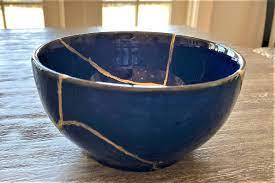
There is beauty to be found in imperfection, impermanence, and the mutability that time passing brings. Over time, shards and stories do come together, bound by our connections to each other, past, present, and future.
So, here’s to hope, and to your own golden joinery, Dear Reader, in this golden season.
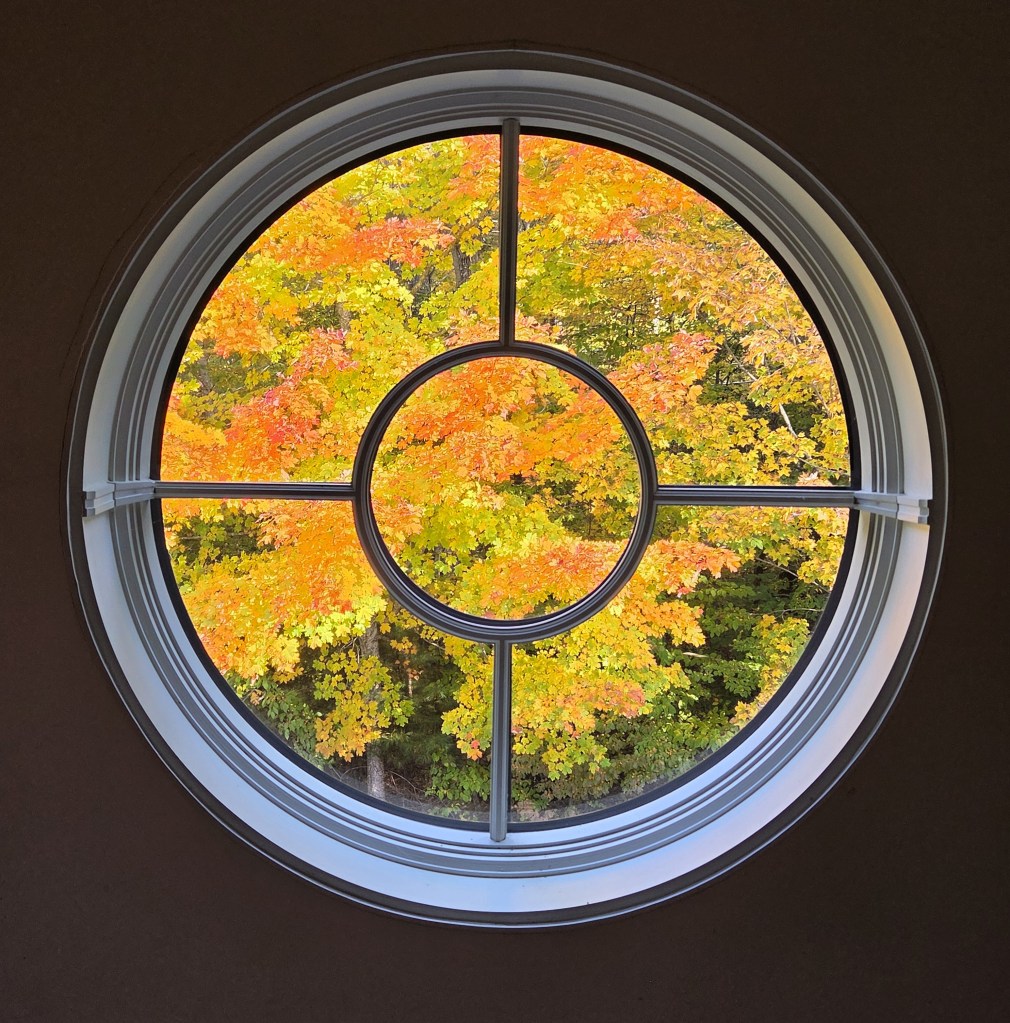
Madbury autumn through the Gnawwood oculus -
Review Mirror
18 September 2026
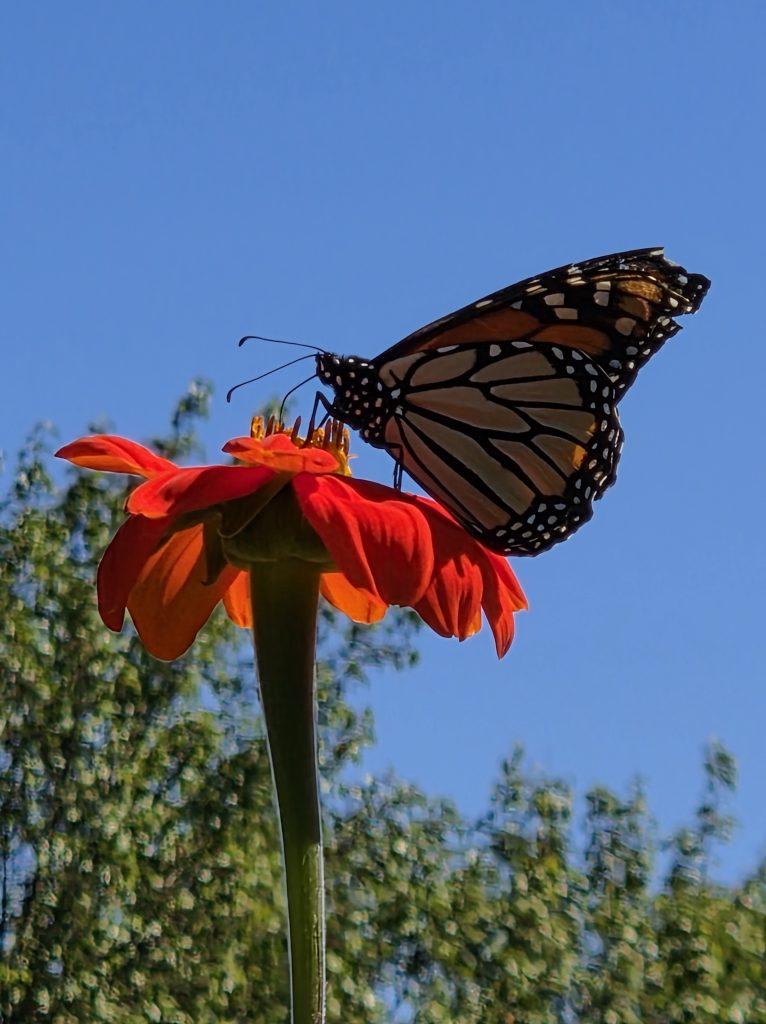
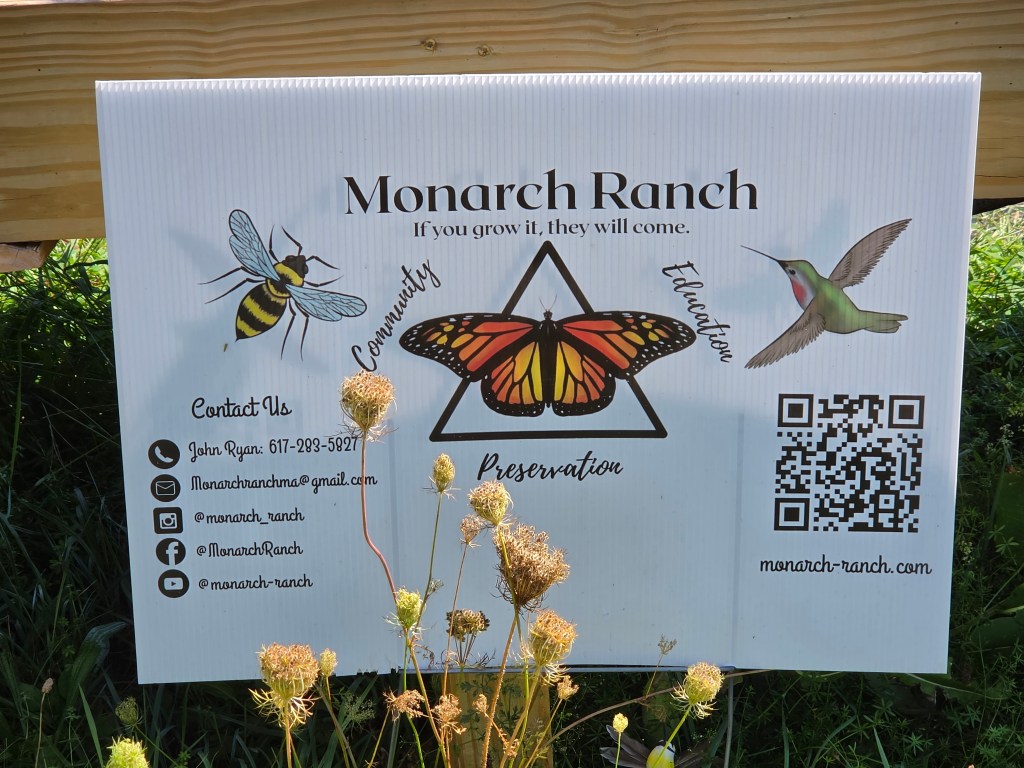
Last Friday, 9/11, my beneficent friends Jay and Susan offered me a beautiful alternative to marinating in the horrors of that 25th anniversary: an afternoon observing the monarchs feasting in the pollinator gardens behind the public library in Tewksbury, Massachusetts. Jay Richard, an accomplished wildlife photographer, I first met seven years ago when, after several days of driving by this guy staked out with camera and impressive telephoto lens, I finally pulled over to ask what he was shooting. A Mississippi Kite it was, nesting not far from UNH, an amazing photo of which now hangs in my dining room. Jay’s gotten involved with founder Jack Ryan’s Monarch Ranch, a community education and preservation project (“If you grow it, they will come”: monarach-ranch.com), sharing his photography skills to illustrate Ryan’s presentations and in turn spreading the environmental gospel. Even my modest Samsung Galaxy S26 could capture some of the tonic beauty there to behold, and with some other friends, we all shared a more than bountiful lunch at the Pushcart Café in Tewksbury (I made two more meals out of that chicken salad).
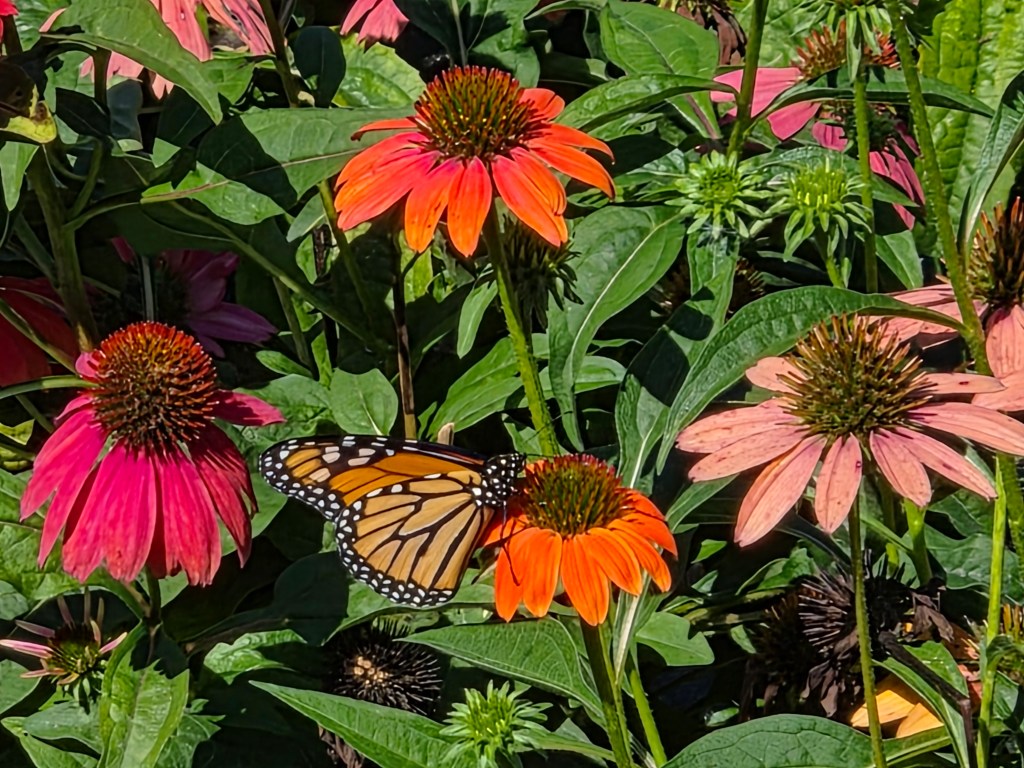
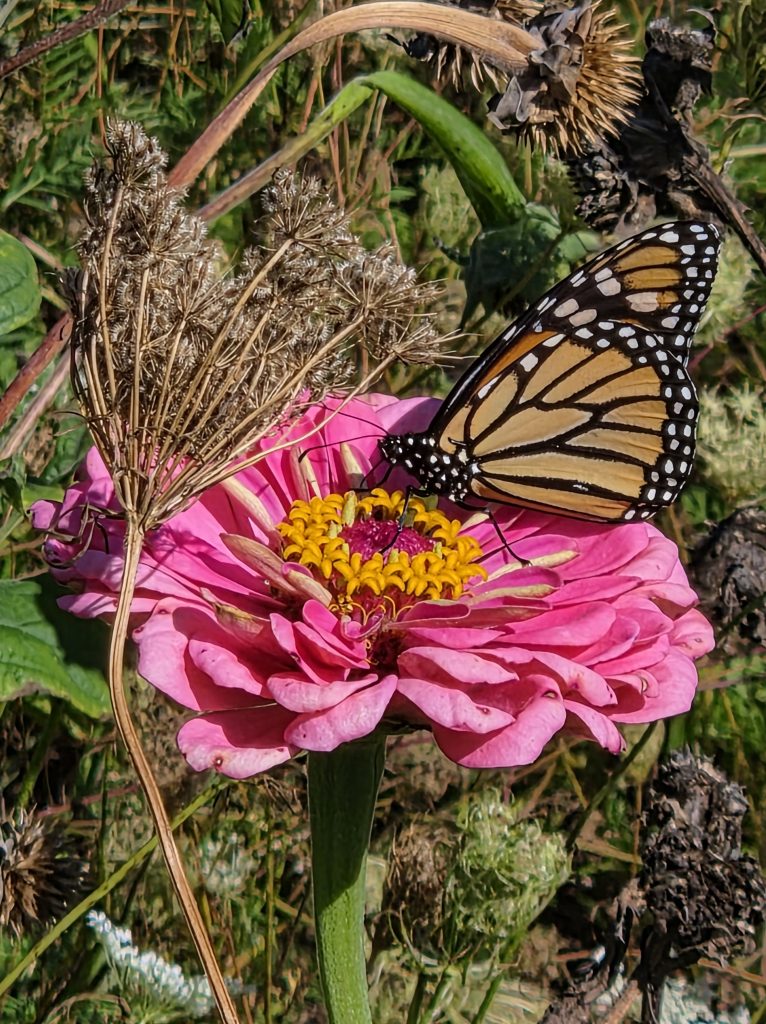
Jay’s and Susan’s hospitality, the worthiness of Ryan’s mission, and the glory of the monarch beauties among the Mexican sunflowers were indeed uplifting, offering some salutary perspective on the past. But I still spend a lot of time looking back. I once had a Mother’s Day brunch with my friend Jimmy at Windows on the World at the top of the twin towers, and years later David and I saluted them from our Piper Warrior as we self-announced our flight path down and back up the Hudson, only 500 feet above the water and considerably lower than Windows on the World. The minute-by-minute revelation of the 2001 attack remains as vivid in my memory as that November afternoon in 1963 when the safety patrol kids who’d just been released to their duties came running back into my 6th grade classroom bearing the news they’d heard from moms arriving to pick up their children: the President had been shot. Mrs. Gassner had spent that afternoon teaching us about the Lincoln assassination; she put her head down on her desk and began to cry. In 2001, I had just gotten to my new job as international undergraduate research coordinator at UNH when my boss’s daughter called her from London to ask if she was all right. But why? Hearing that what we assumed was a small plane had hit a tower, I hurried to the Memorial Union next door where there was a tv, arriving just in time to see the second tower struck. David and I had just moved into our newly built home that summer; my husband was still there, not yet having left for his class. Recalling the “duck and cover” drills prompted by the Cuban missile crisis during my elementary school years in Florida, I thought that perhaps this, finally, WAS the end, and decided that if it was, I wanted to be back with my husband. I went home.
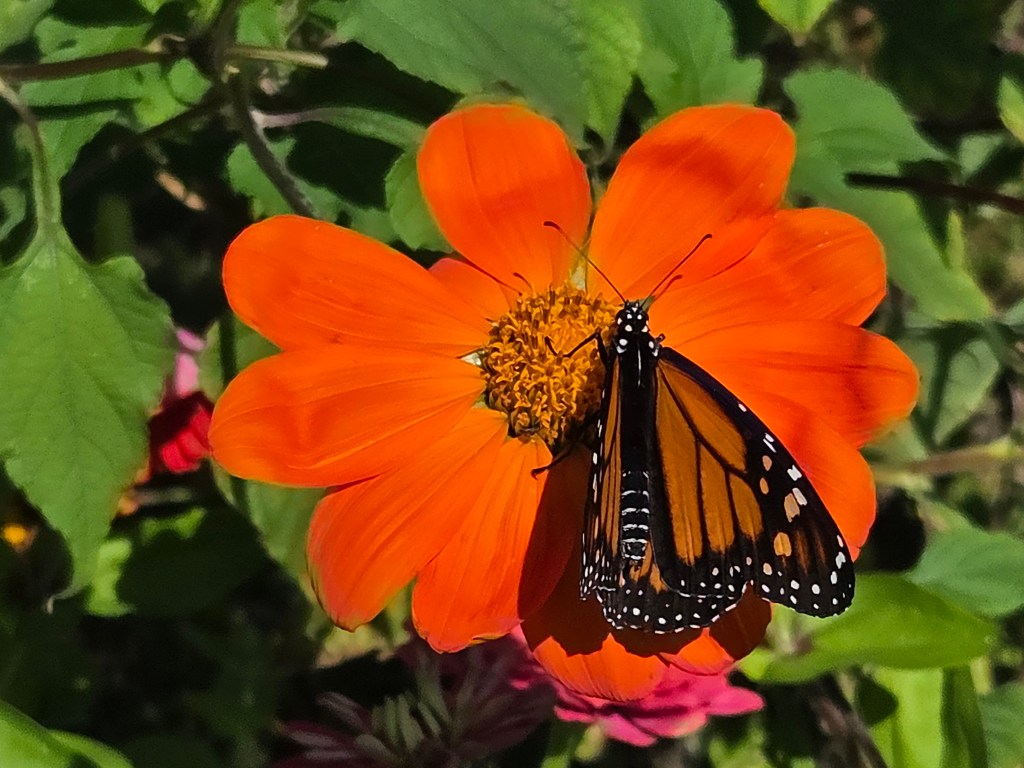
My colleague Bob LeBlanc, emeritus geographer who volunteered time advising study abroad students, had been on his way to a conference in L.A. on United 175, the plane I saw hit the second tower. I’ve now twice been back to the 9/11 memorial there at ground zero and seen his name engraved among so many others. So, 25 years later, following my afternoon of beautiful butterflies and good company, I watched again Paul Greengrass’s powerful 2006 film, United 93, every bit as moving as the first time I saw it.
Among the many remembrances broadcast last week, what I now most recall is Tonya Mosley’s interview of Richard Beck on NPR’s Fresh Air. Beck’s new book Homeland: The War on Terror in American Life looks at how the Sept. 11 attacks led to the expansion of government surveillance and a sharp increase in hate crimes against Muslim Americans, further arguing that the War on Terror laid the groundwork both for Donald Trump to become president and for “impunity culture in American politics.” In that interview, Beck quoted Susan Sontag writing in the 16 September 2001 New Yorker. I understand Sontag was at the time reviled for her truth telling, but 25 years later, her words ring all too true. She begins:
“The disconnect between last Tuesday’s monstrous dose of reality and the self-righteous drivel and outright deceptions being peddled by public figures and TV commentators is startling, depressing. The voices licensed to follow the event seem to have joined together in a campaign to infantilize the public. Where is the acknowledgment that this was not a ‘cowardly’ attack on ‘civilization’ or ‘liberty’ or ‘humanity’ or ‘the free world’ but an attack on the world’s self-proclaimed superpower, undertaken as a consequence of specific American alliances and actions? How many citizens are aware of the ongoing American bombing of Iraq? . . . Let’s by all means grieve together. But let’s not be stupid together. A few shreds of historical awareness might help us understand what has just happened, and what may continue to happen.”
Whither America 25 years after 9/11 in this now even more stupid union led by the self-serving Felon-in-Chief? And what of the youngsters with no living memory of 9/11, for whom too many “education” amounts to cognitive surrender to A I, replacing human deliberation with machine answers?
Well, dear Readers, we do what we can. And when despair threatens, I advise following the arts. And don’t assume the past is template for the future. In the words of my hero, Ted Lasso, “There’s a reason the rearview mirror is smaller than the windshield.”
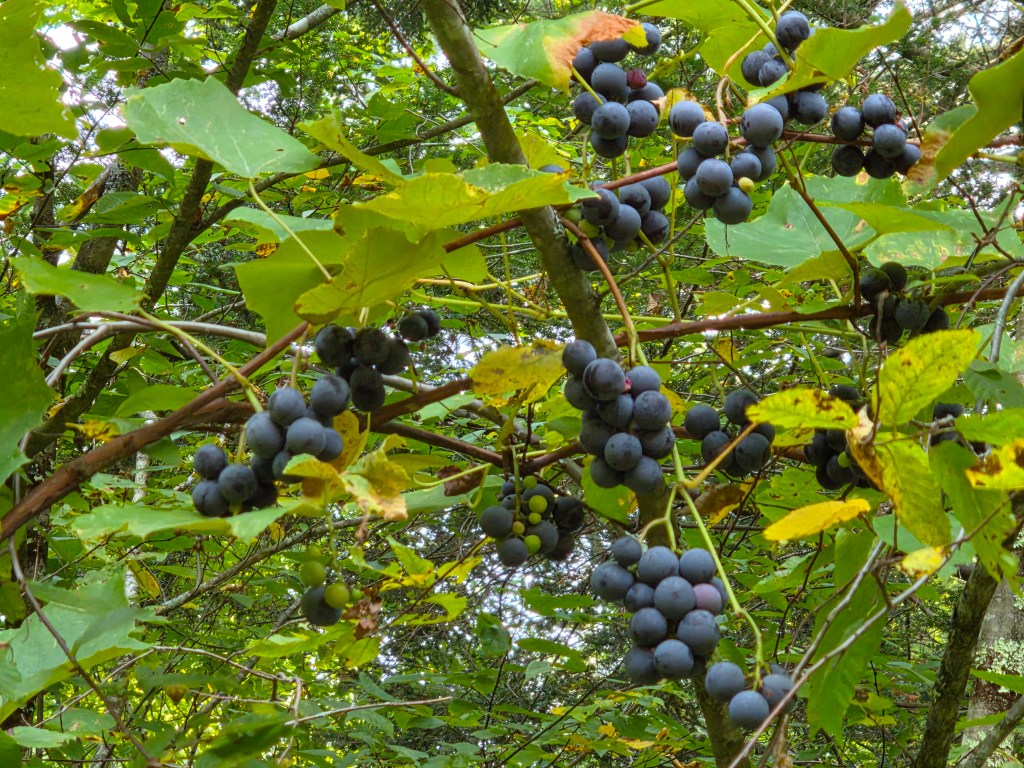
Autumn is icumen in. The hummingbirds have decamped, but the wild grapes sweetly scent the air. Time to gather in and take stock. And look forward.
-
Elephants on Com Ave!
1 September 2026
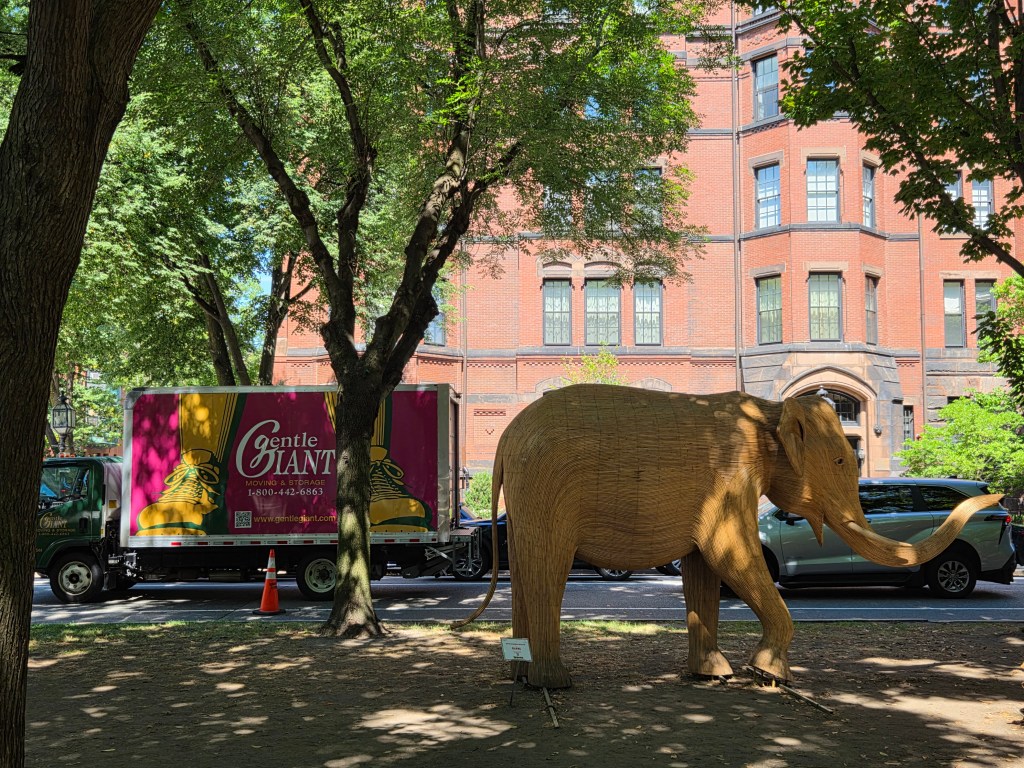
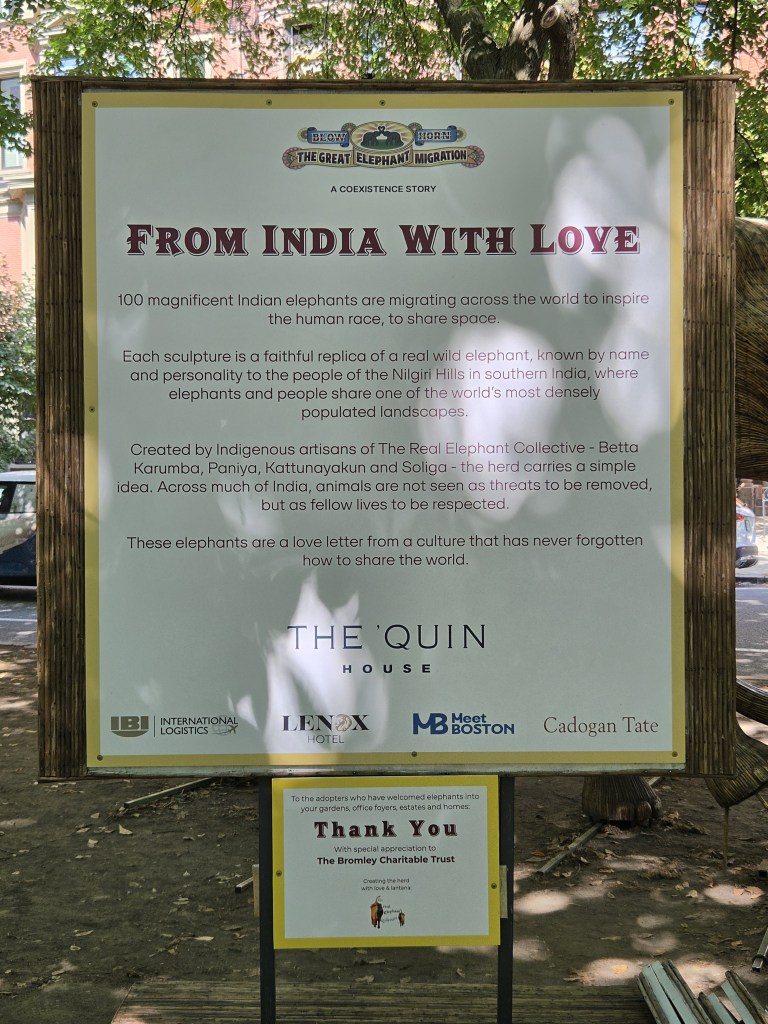
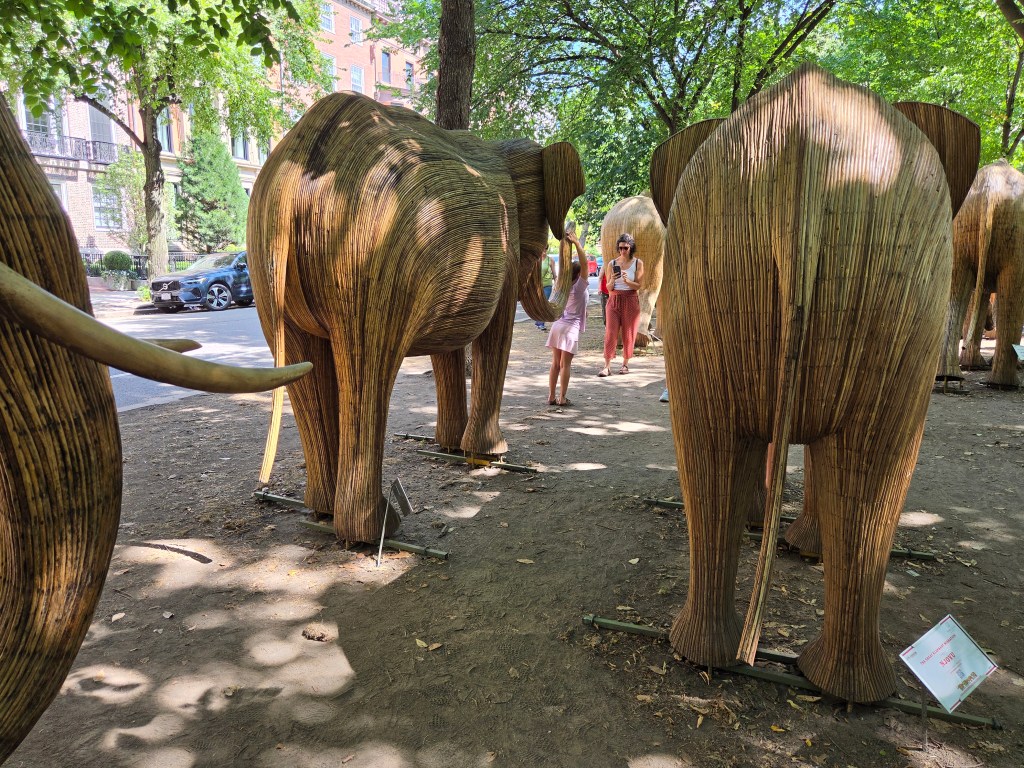
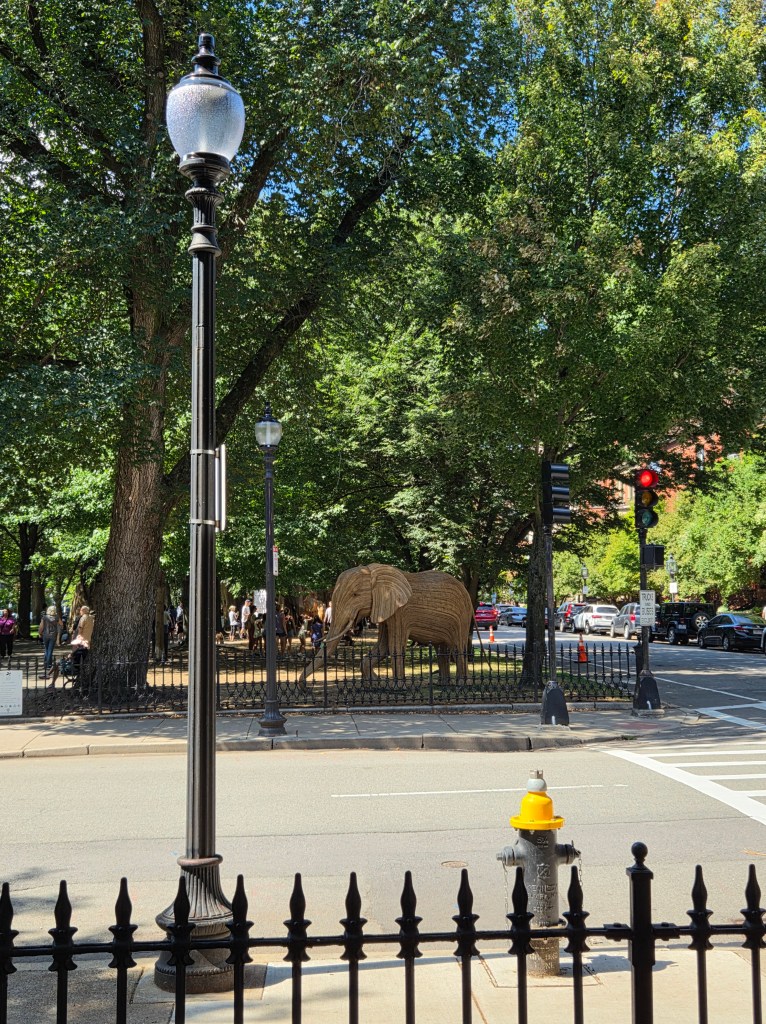
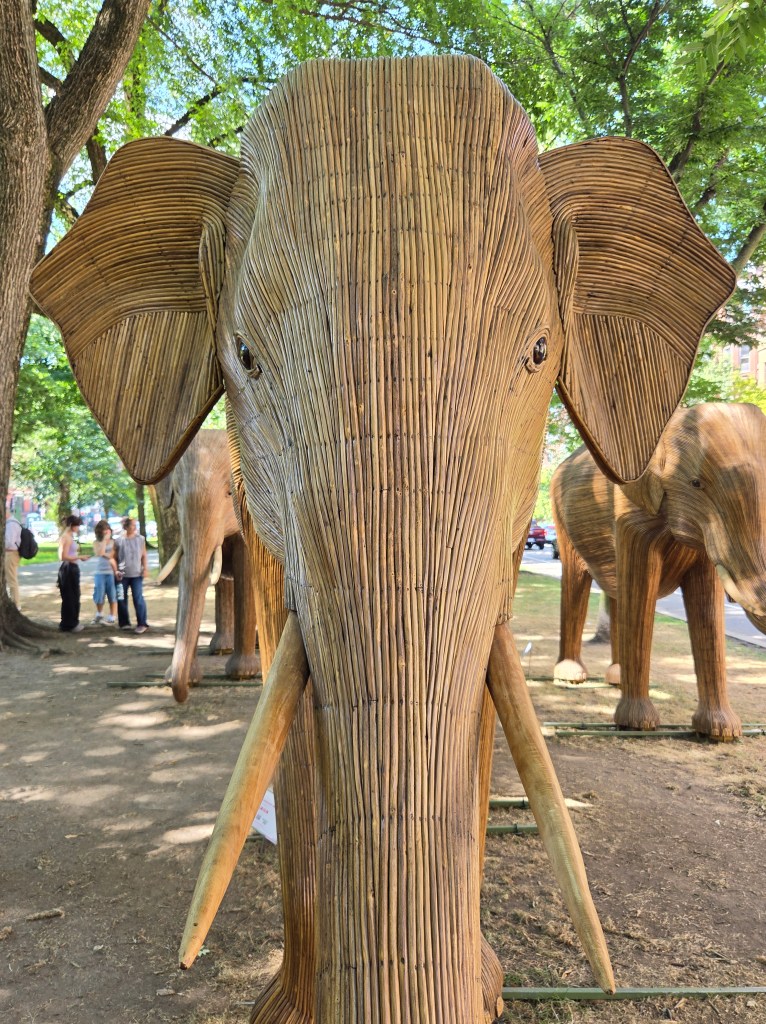
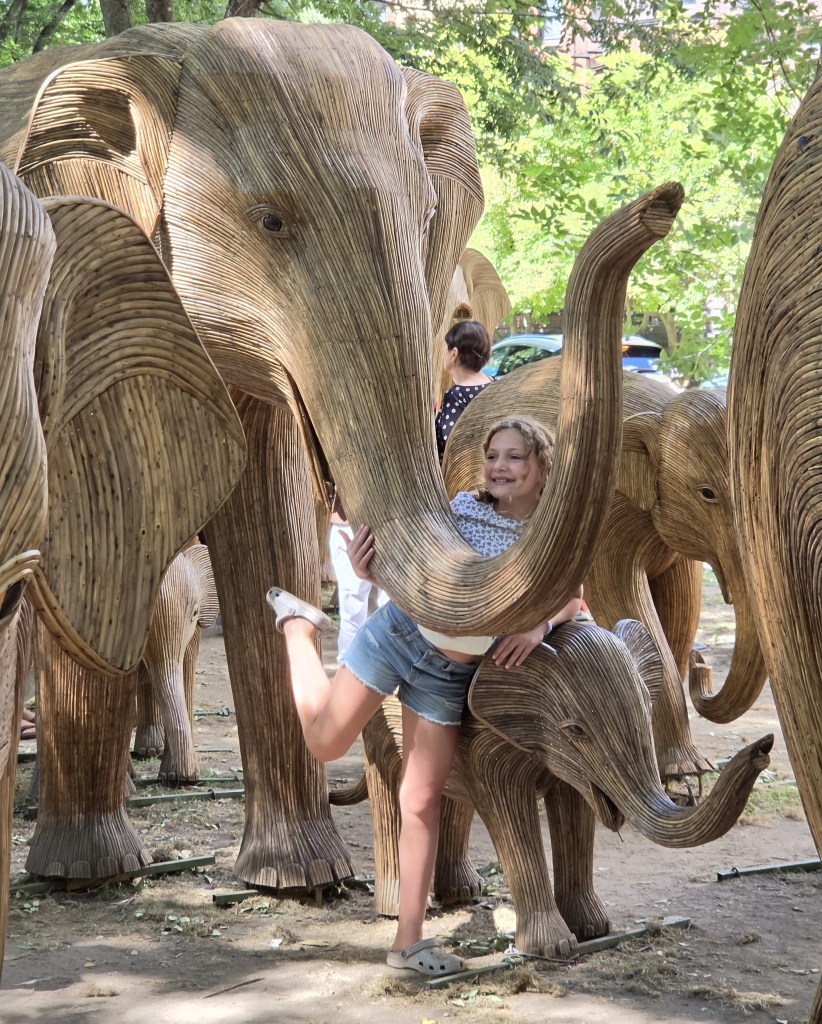
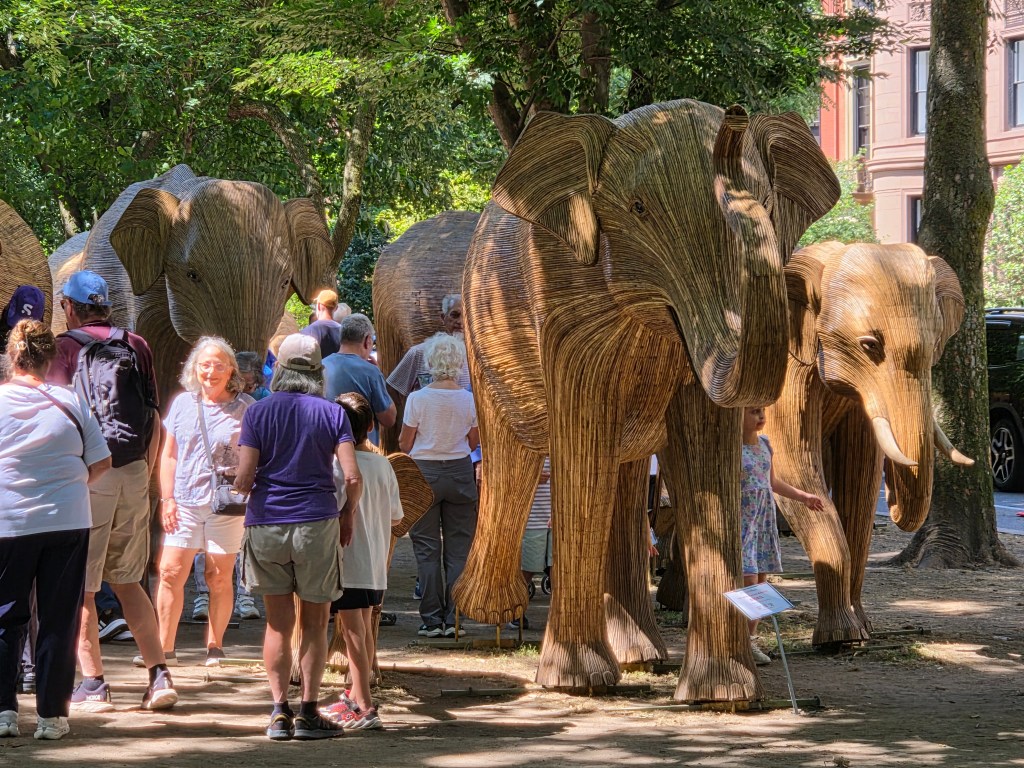
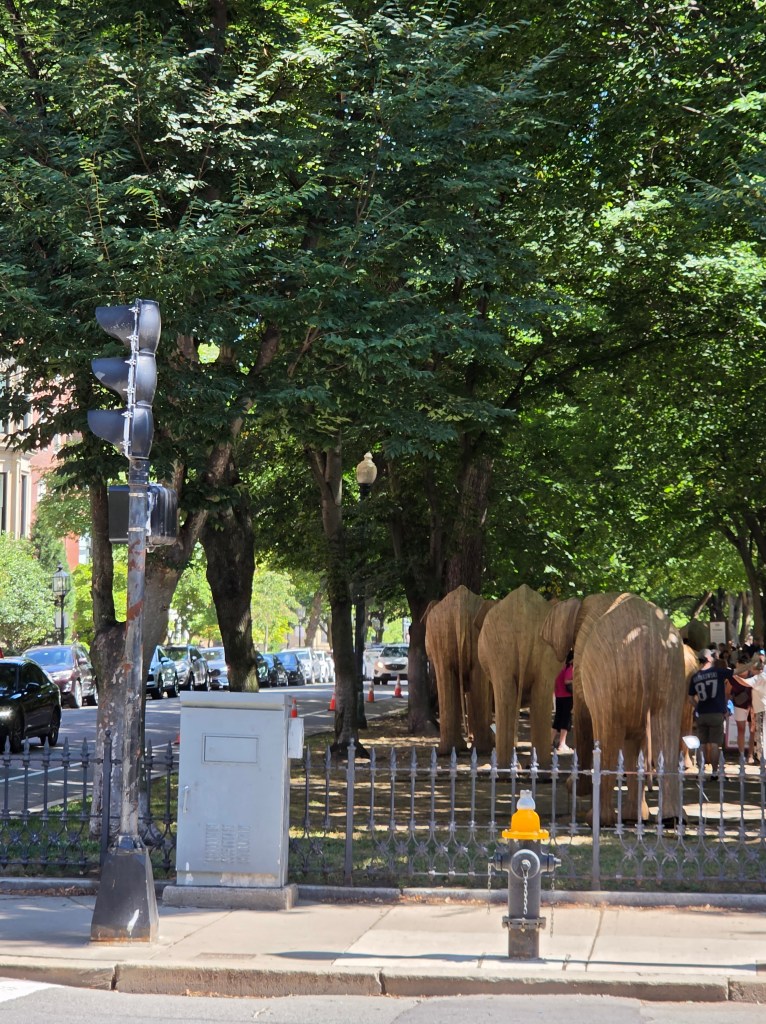
Serendipitously arrived moving truck as caption Last Wednesday I treated myself to the Great Elephant Migration proceeding now through 13 September down the Commonwealth Ave Mall in Boston from Fairfield to Dartmouth. The handiwork of over 300 indigenous artisans of The Real Elephant Collective of the Nilgiri Hills in South India, these 100 elephants seem remarkably at home, though arrested in mid-amble, each a named replica of a real wild elephant in the Nilgiri Biosphere Reserve, each one distinct in size, shape, and remarkably rendered personality.
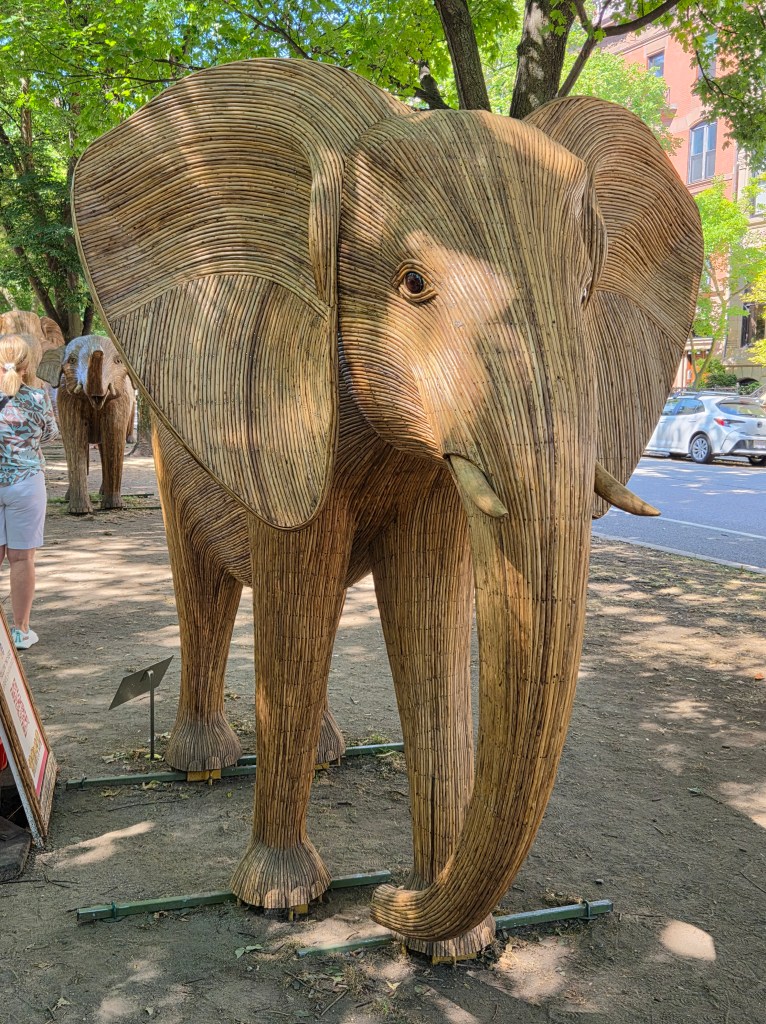
The Migration is a unique opportunity to stroll safely among a herd of elephants, their progress juxtaposed with the elegant Victorian-era row houses of Com Ave, themselves each distinct Second Empire, French Renaissance, Italianate, and Beaux-Arts beauties. The new Back Bay visitors are composed of a steel framework covered by Lantana camara, an invasive species that smothers elephants’ preferred vegetation, and were created to promote awareness of human-wildlife coexistence, support conservation fundraising, and highlight reuse of invasive plant materials. They are free to observe, and absolutely delightful.
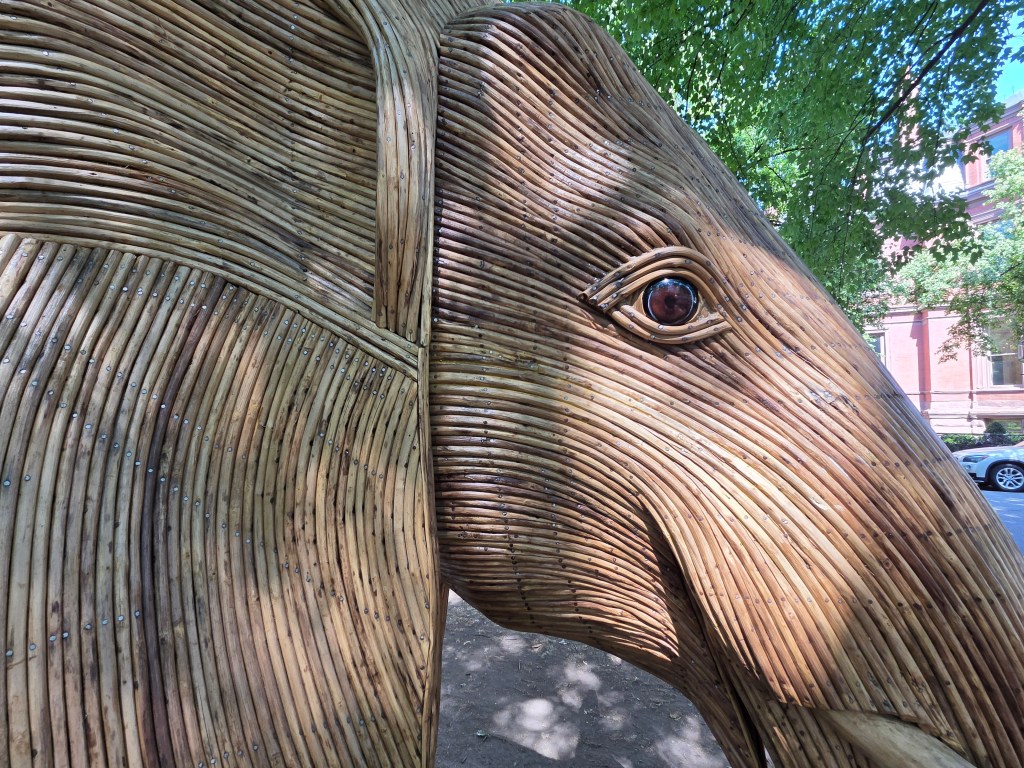
Touchable (and kiss-able and feed-able to all children), the elephants were not, however, climb-able, something of a challenge to parental control.
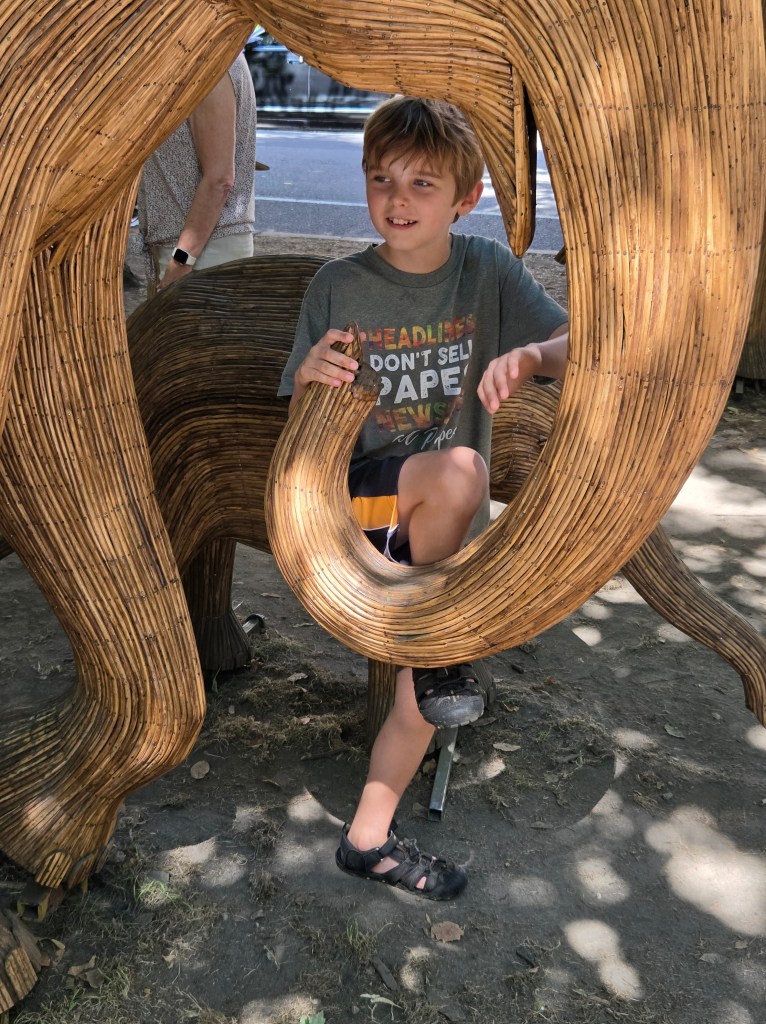
Testing the limits 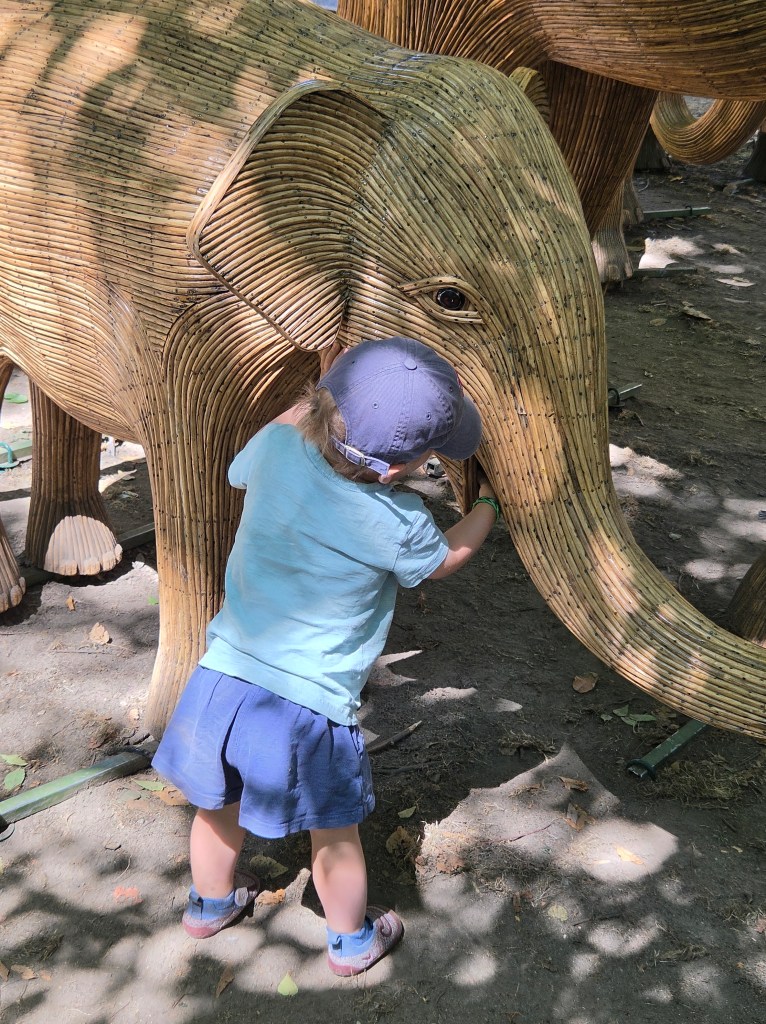
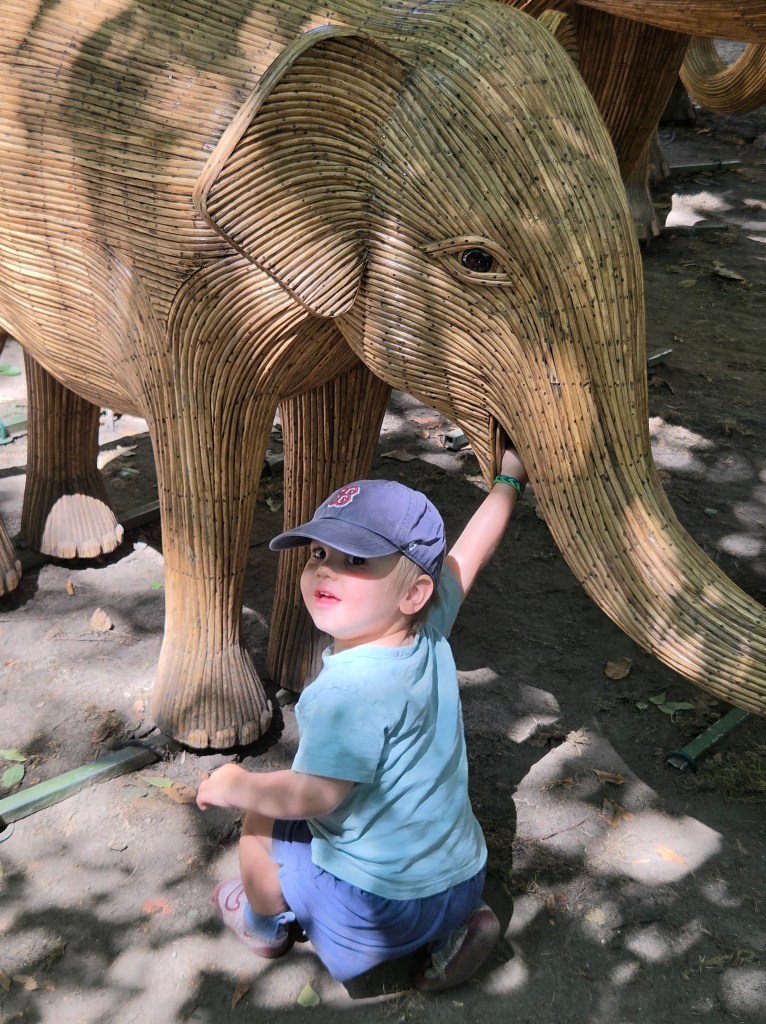
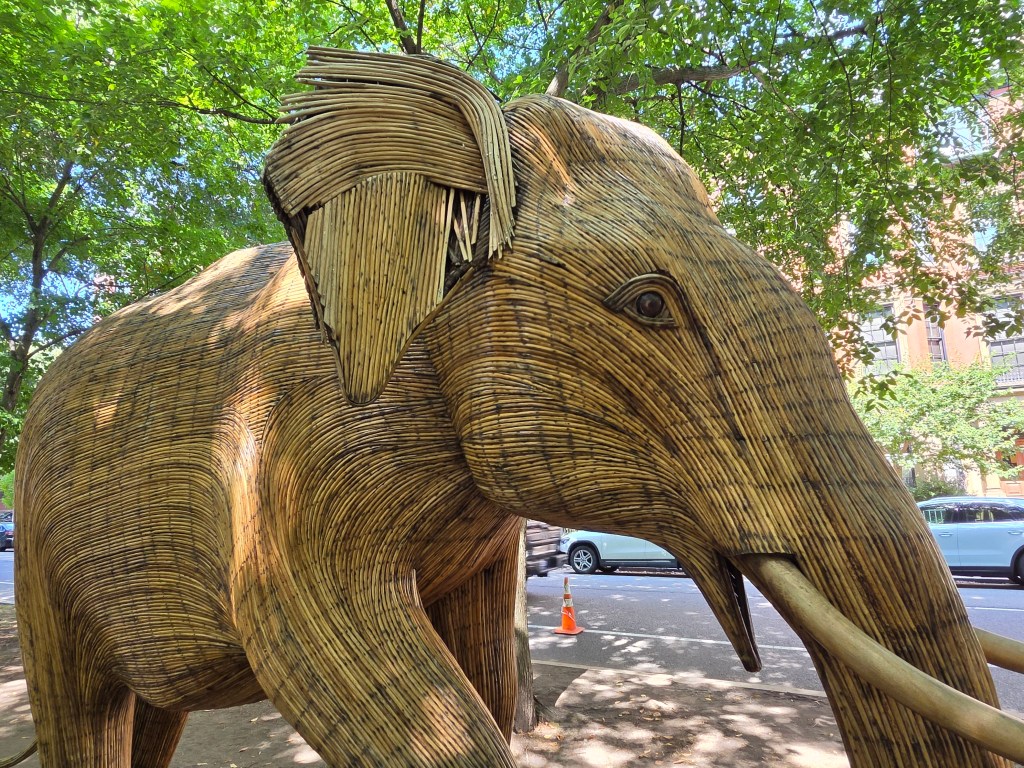
Subhash with the raggedly ear 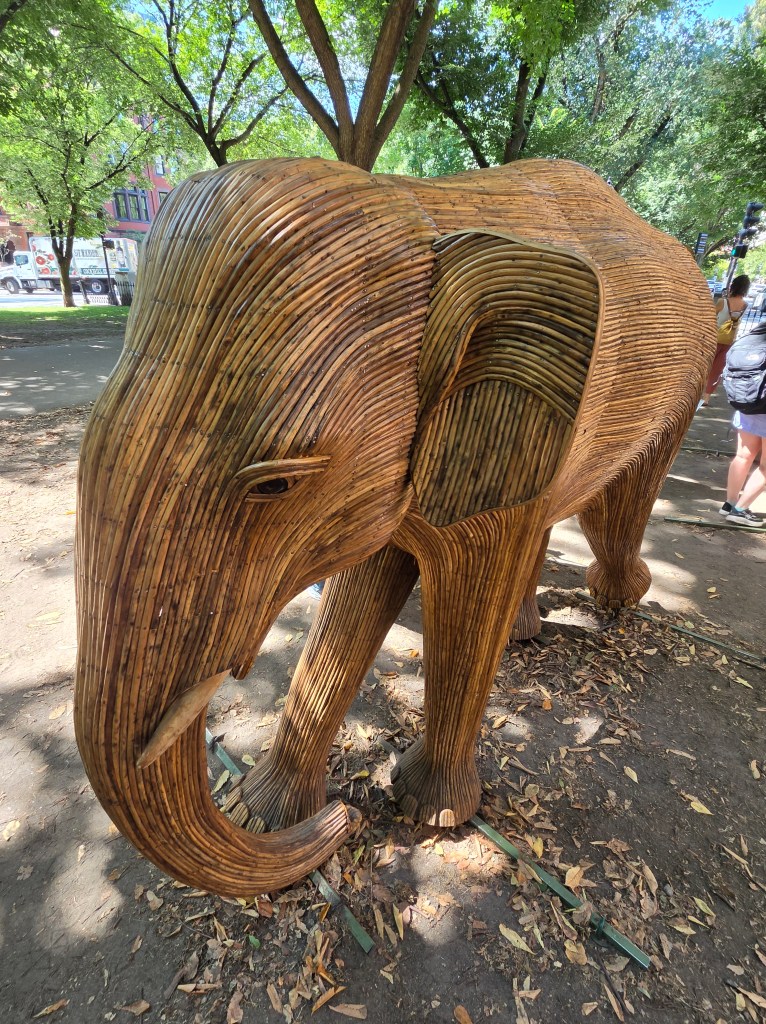
City “phant” 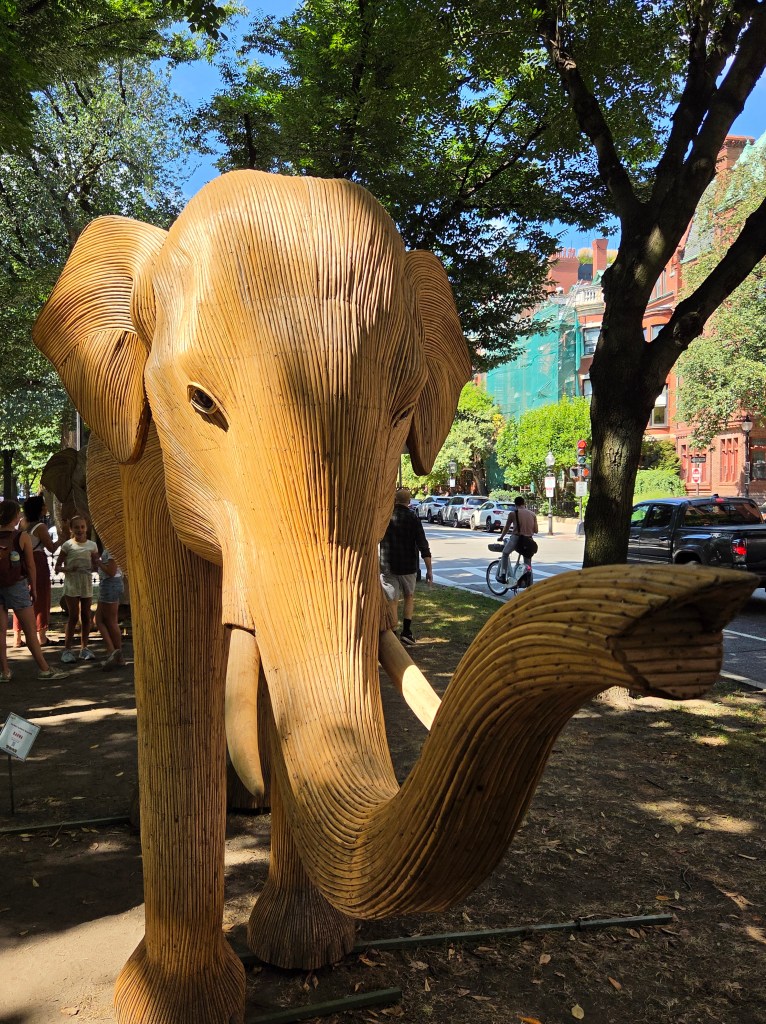
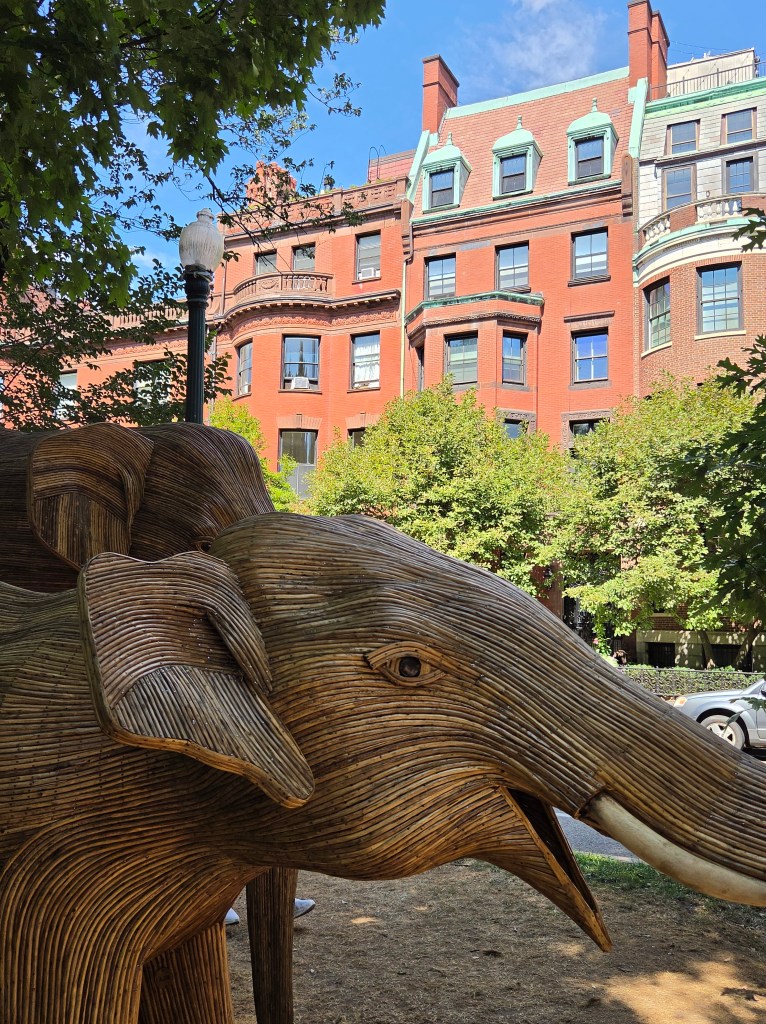
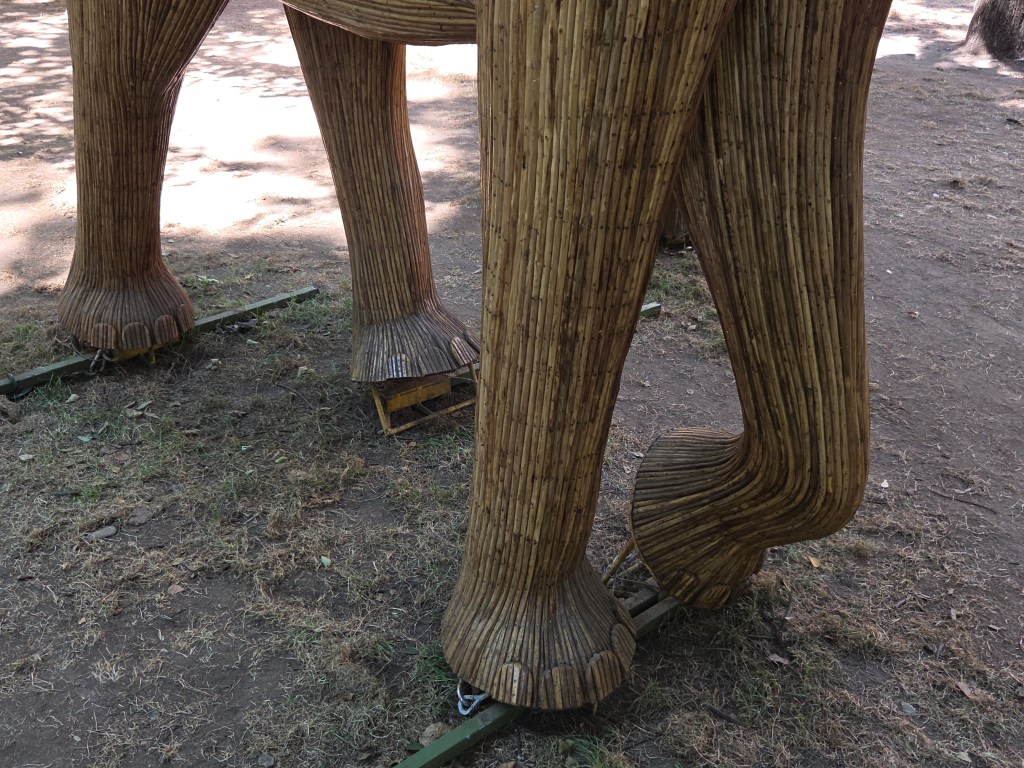
The illusion of forward motion 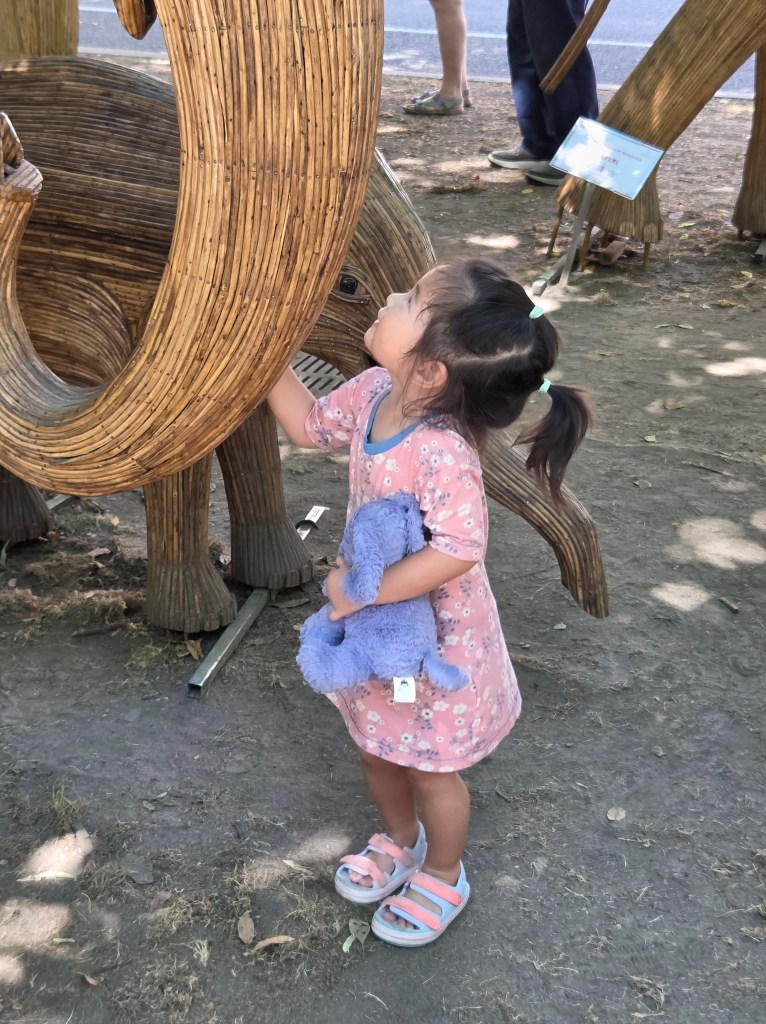
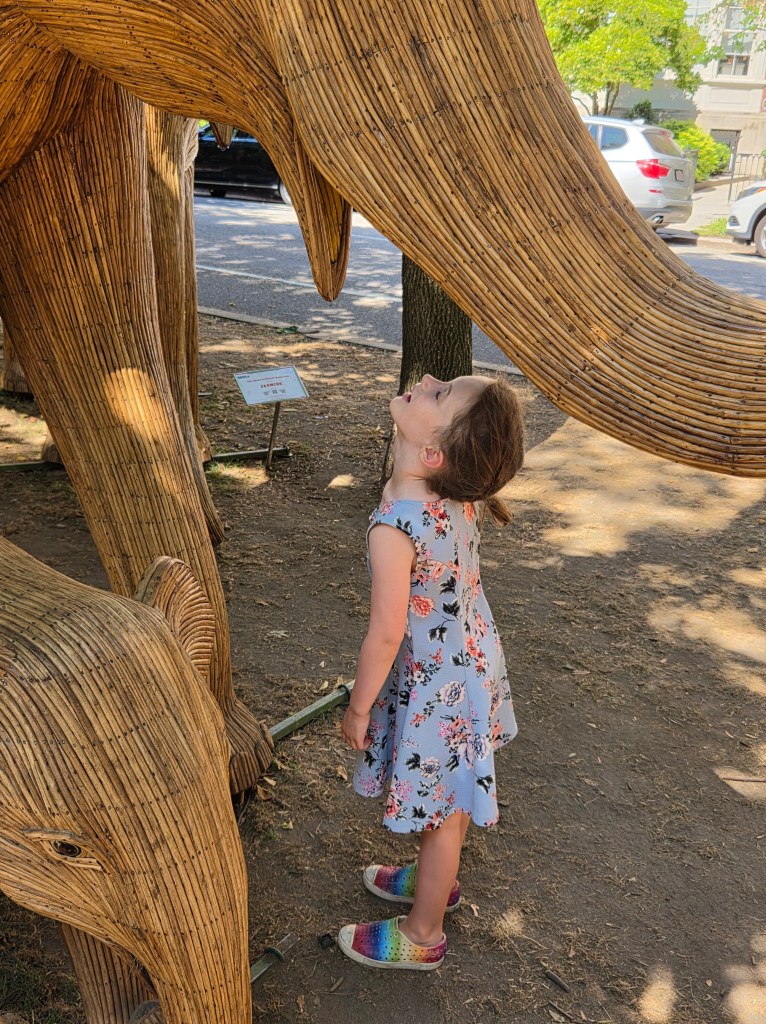
Two herds on the move 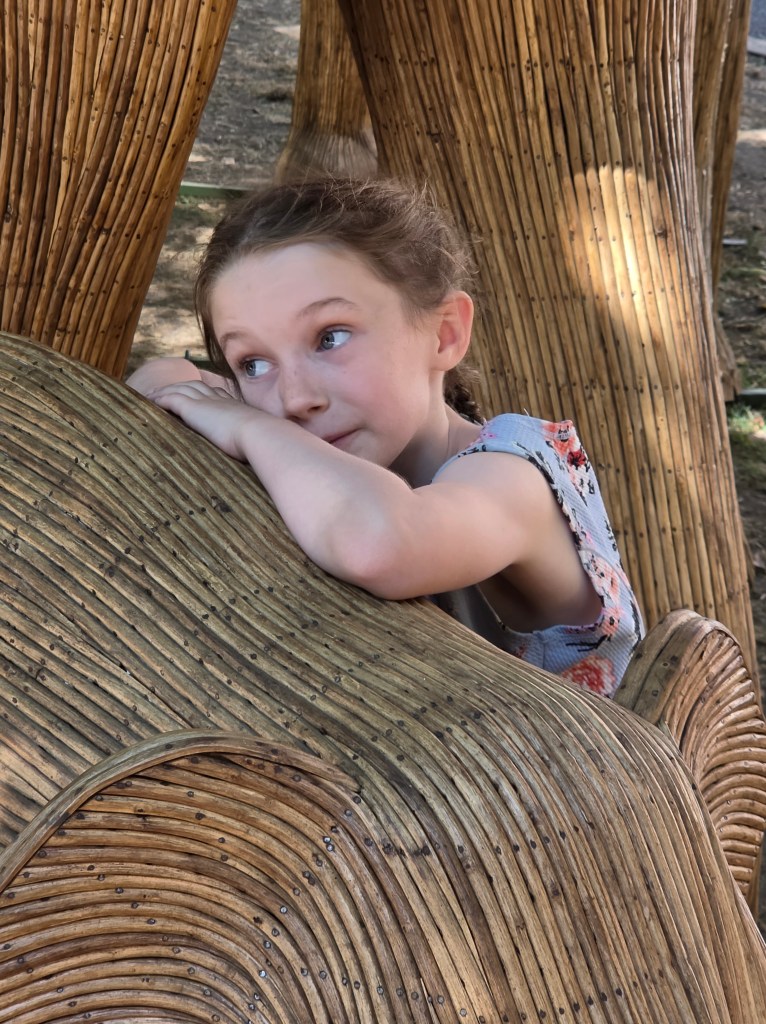
-
O Canada
29 August 2025
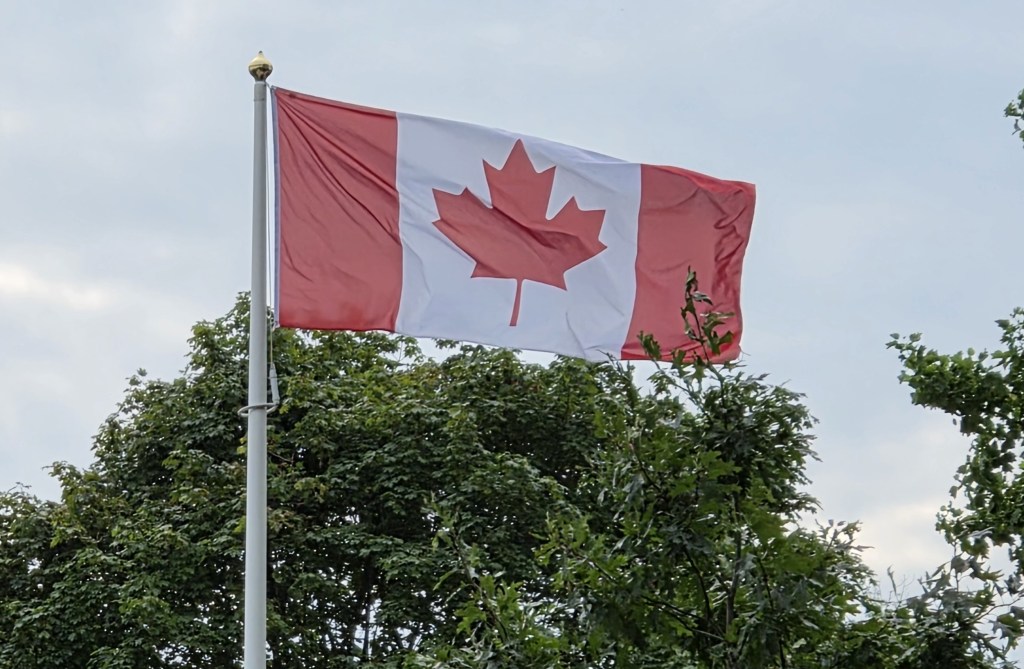
As the Felon-in-Chief (FIC) continues his ignorant and depraved assault on our good neighbors to the north, I have returned from the charming Niagara-on-the-Lake (that’s Lake Ontario, NOT the Lake of America) feeling more embarrassed than ever to be a citizen of what my late husband often called the Un-tied States. My apologies to the Canadians I met on my trip were graciously, even generously met: Steven, whom I encountered on the dog run of the Niagara-on-the-Lake Commons and told none of the dogs in view were mine, assured me these were “community dogs” to be enjoyed by all. Well informed about U.S. politics, he inquired politely about New Hampshire’s “first-in-the-nation” primary status (“vexed,” I replied). And he answered my lament of my government’s egregious abuses with an invitation to move. “We are rich in land and resources. What we lack is people. Come join us!”
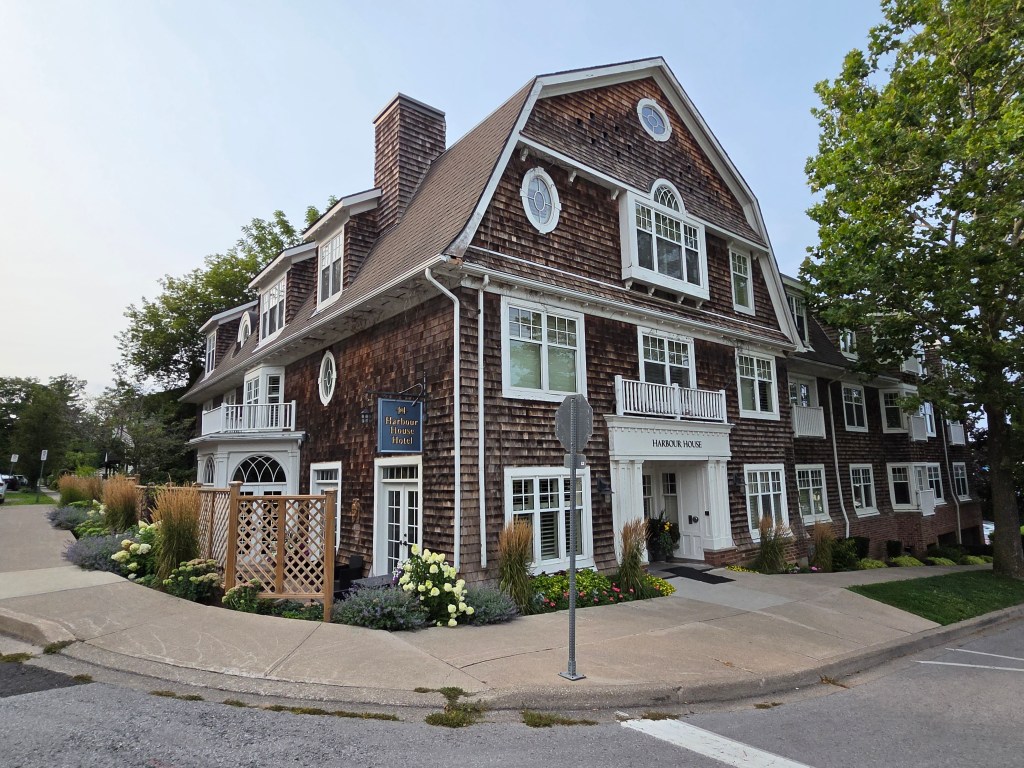
Harbour House, the charming boutique hotel where I stayed 
. . . and the very busy harbour close by 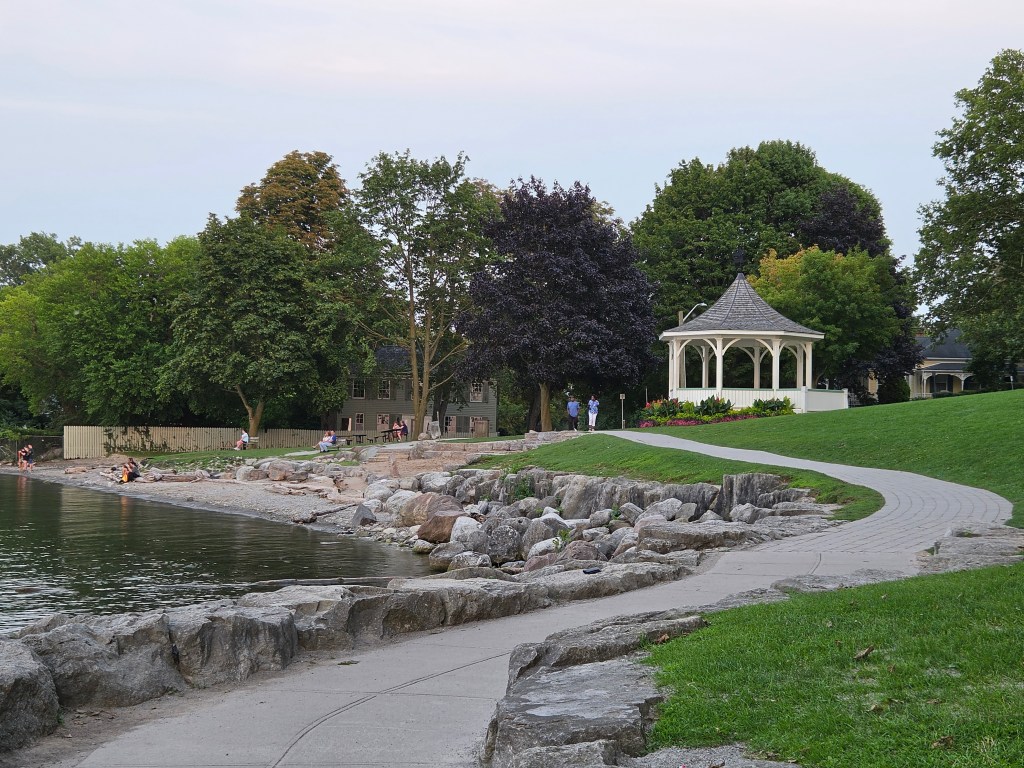
Queen’s Royal Park on the Lake 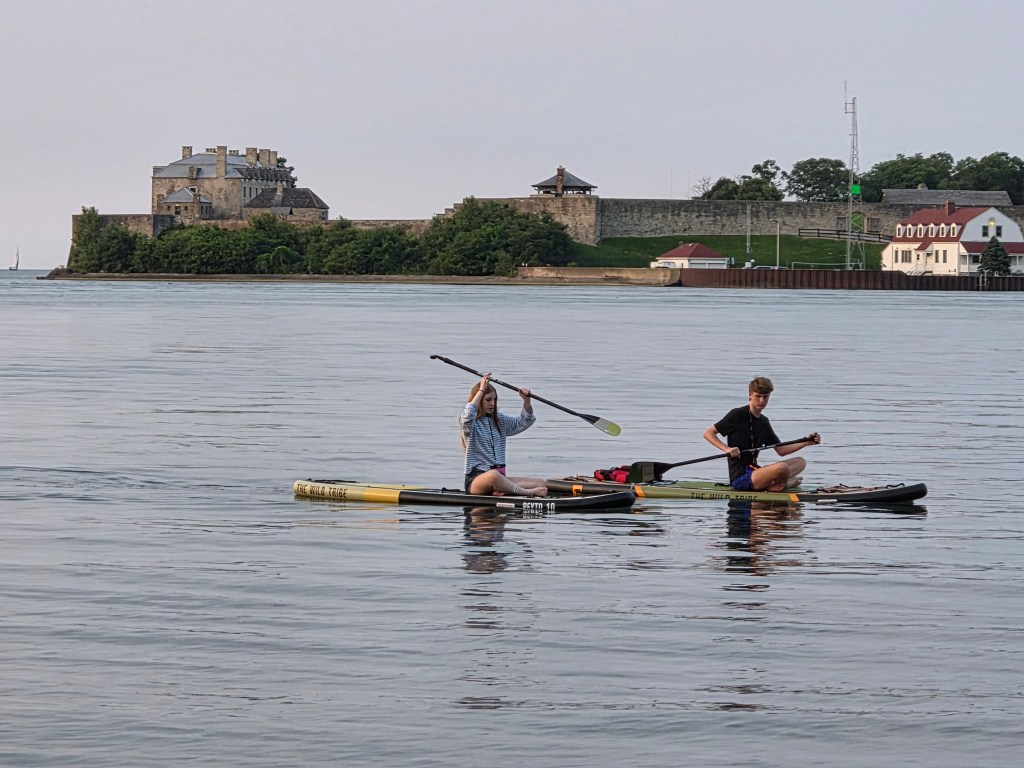
Paddlers by American Ft. Niagara, built by the French in 1726 Like so many grieving the loss of the so deeply good Dolly Parton, even as the latest of the FIC’s atrocious, mendacious bullying replays on the news, I’ve been wondering what I could say about my travels at such a time. I went back and re-read Canadian Prime Minister Mark Carney’s powerfully eloquent speech delivered at the World Economic Forum in Davos, Switzerland on 20 January 2026—ironically the first anniversary of the FIC’s second inauguration. So here I’ll juxtapose images of my delightful time in Ontario—the Falls! The beautiful harbour! The world-class theatre! The vineyards! The gardens! The history!—with excerpts (direct quotations in bold) from a speech all Americans should take to heart, “Principled and Pragmatic: Canada’s Path.”
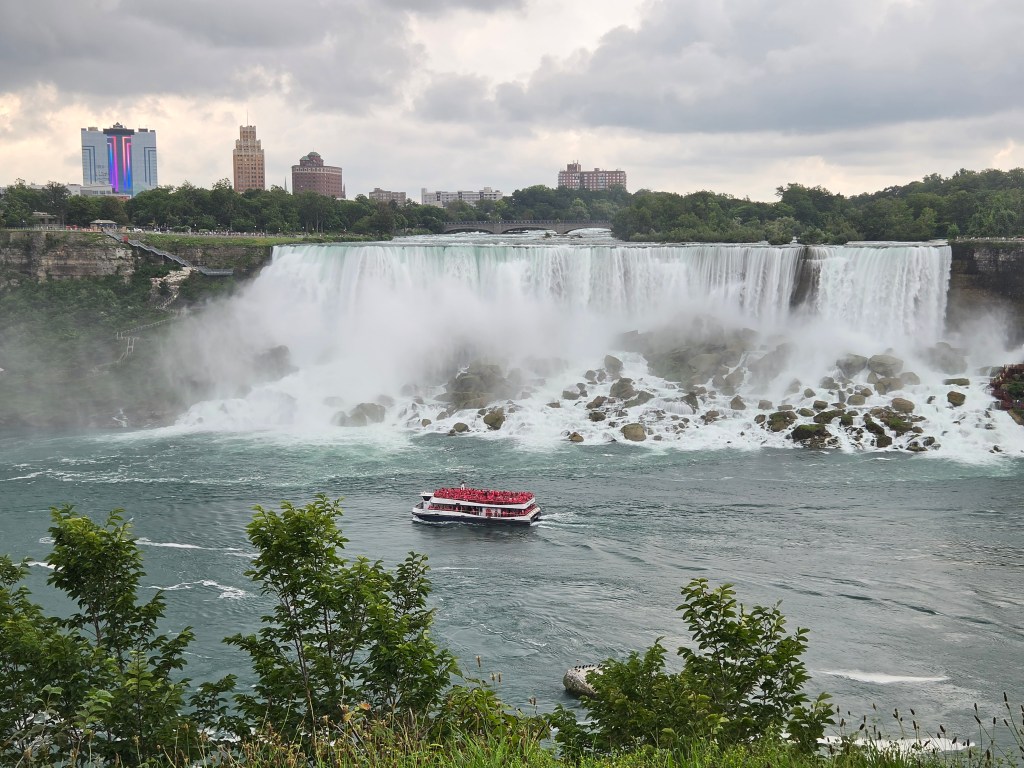
The American Falls at Niagara Falls 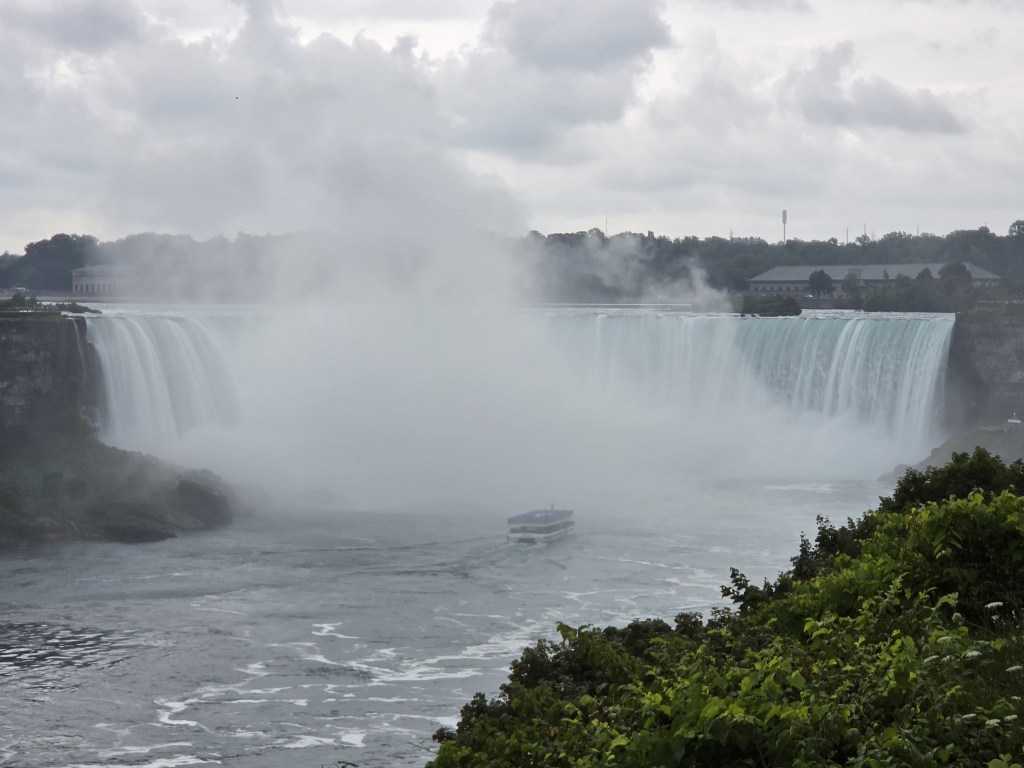
The Canadian Horseshoe Falls 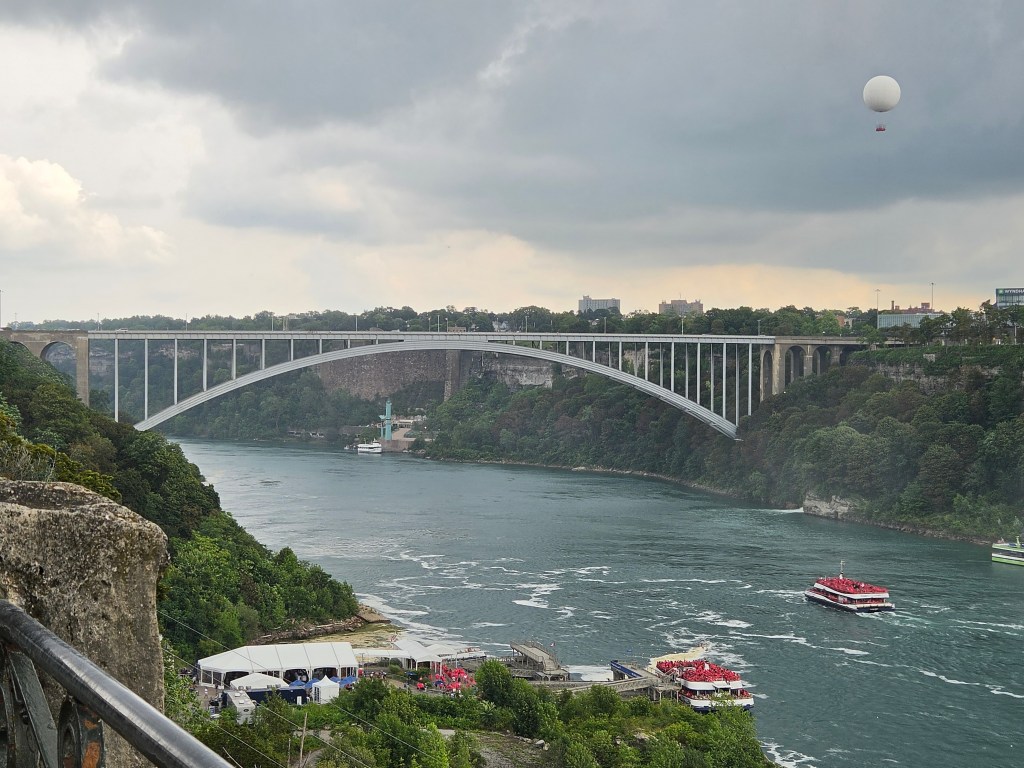
Rainbow Bridge (1941) and some of the many thrill rides available Early on, Carney quotes Thucydides [mind the gap between this world leader and our own FIC]: “Every day we are reminded that we live in an era of great power rivalry. That the rules-based order is fading. That the strong do what they can, and the weak suffer what they must.” He goes on to reference Václav Havel’s 1978 essay “The Power of the Powerless,” calling performing the fiction of an international rules-based order “living within a lie.”
“Let me be direct: we are in the midst of a rupture, not a transition. . . . You cannot ‘live within the lie’ of mutual benefit through integration when integration becomes the source of your subordination. . . .“
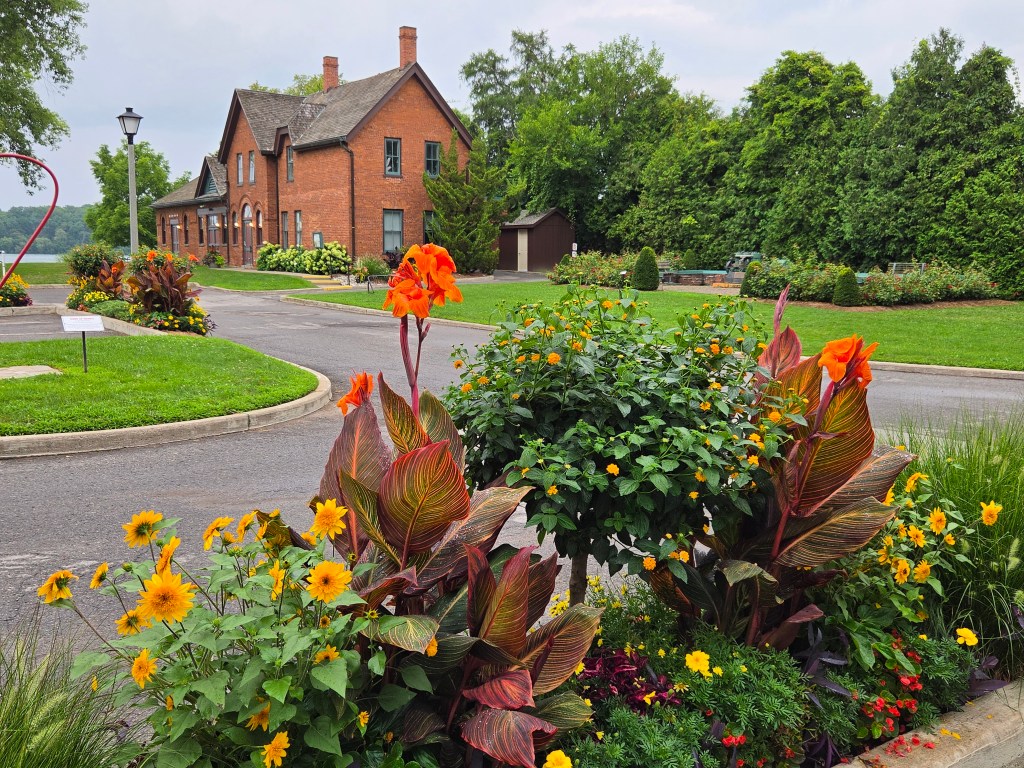
Niagara Pumphouse Arts Centre (1891) 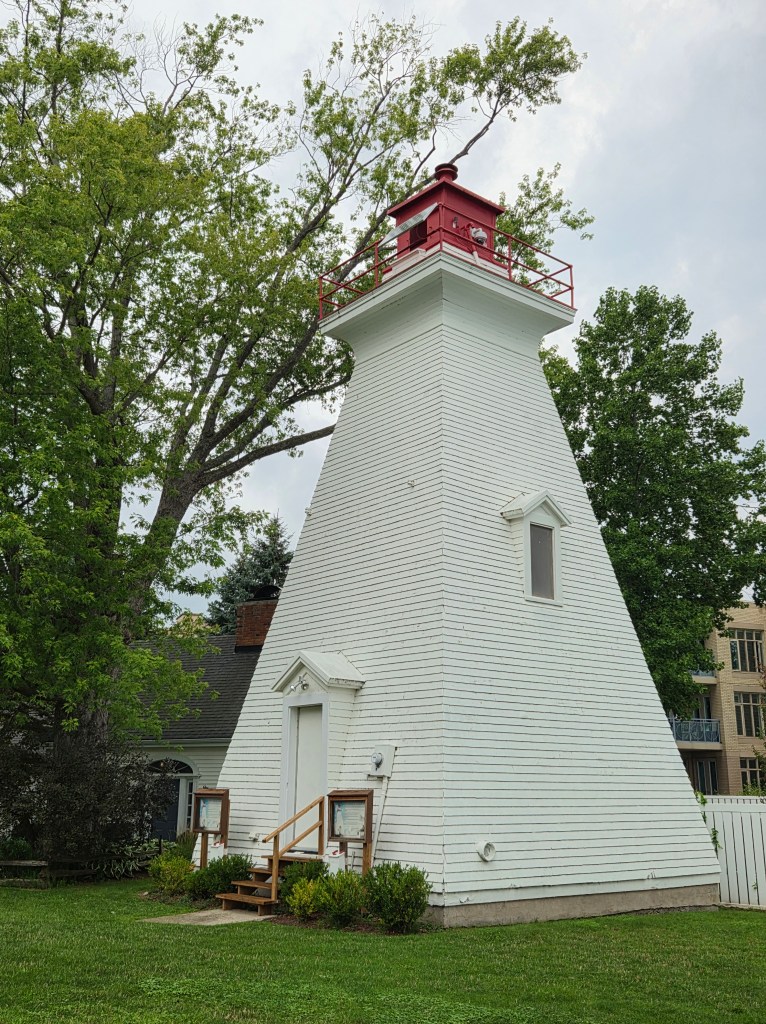
Water testing station at the Pumphouse 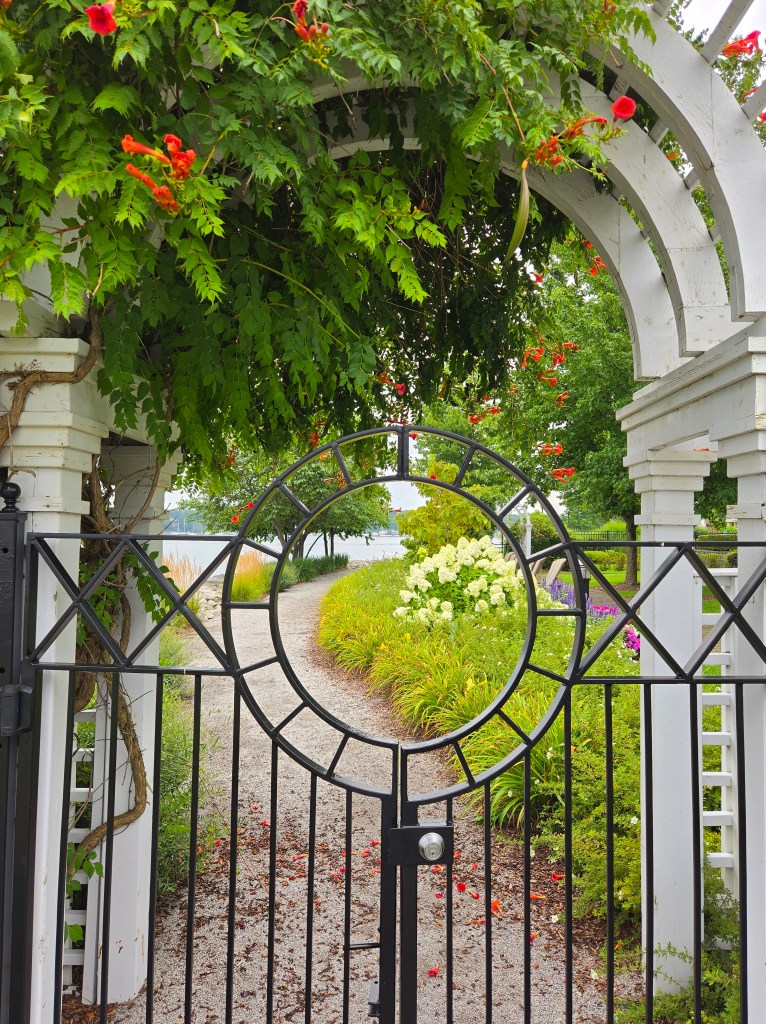
Garden along the Waterfront Trail “Canadians know that our old, comfortable assumption that our geography and alliance memberships automatically conferred prosperity and security is no longer valid.
Our new approach rests on what Alexander Stubb has termed ‘values-based realism’ – or, to put it another way, we aim to be principled and pragmatic.
Principled in our commitment to fundamental values: sovereignty and territorial integrity, the prohibition of the use of force except when consistent with the UN Charter, respect for human rights.
Pragmatic in recognising that progress is often incremental, that interests diverge, that not every partner shares our values. We are engaging broadly, strategically, with open eyes. We actively take on the world as it is, not wait for a world we wish to be. . . .“
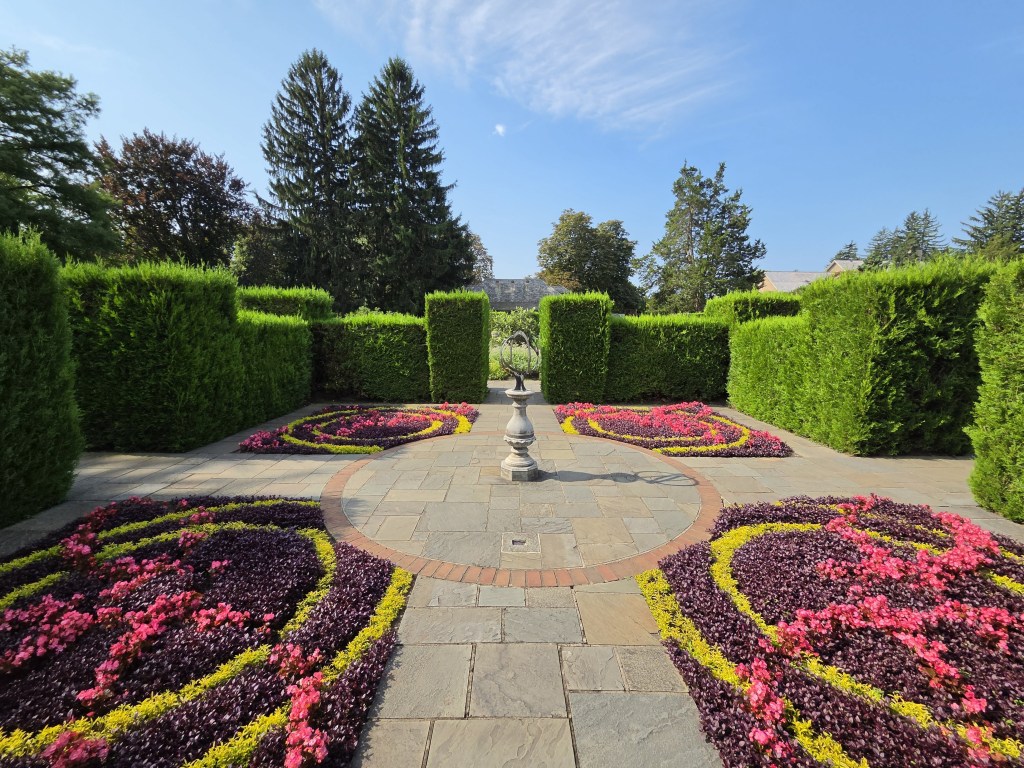
Parterre Garden at the Niagara Botanical Gardens 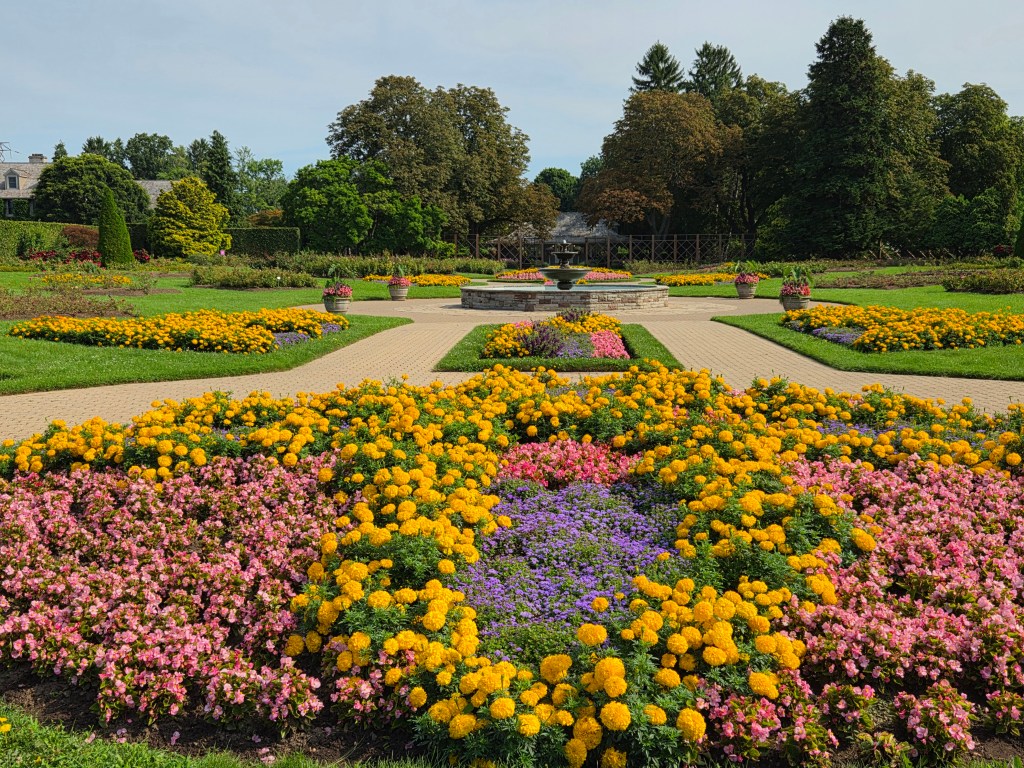
Rose Garden and K. Matt Broman Fountain 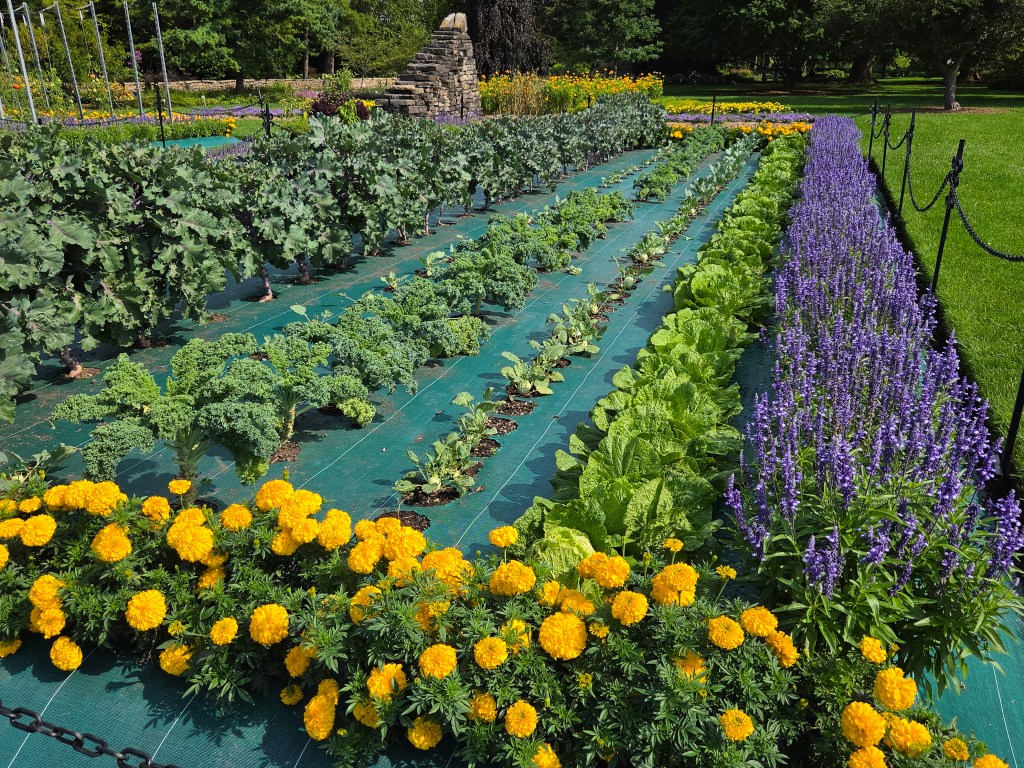
. . . and the most orderly vegetable garden ever 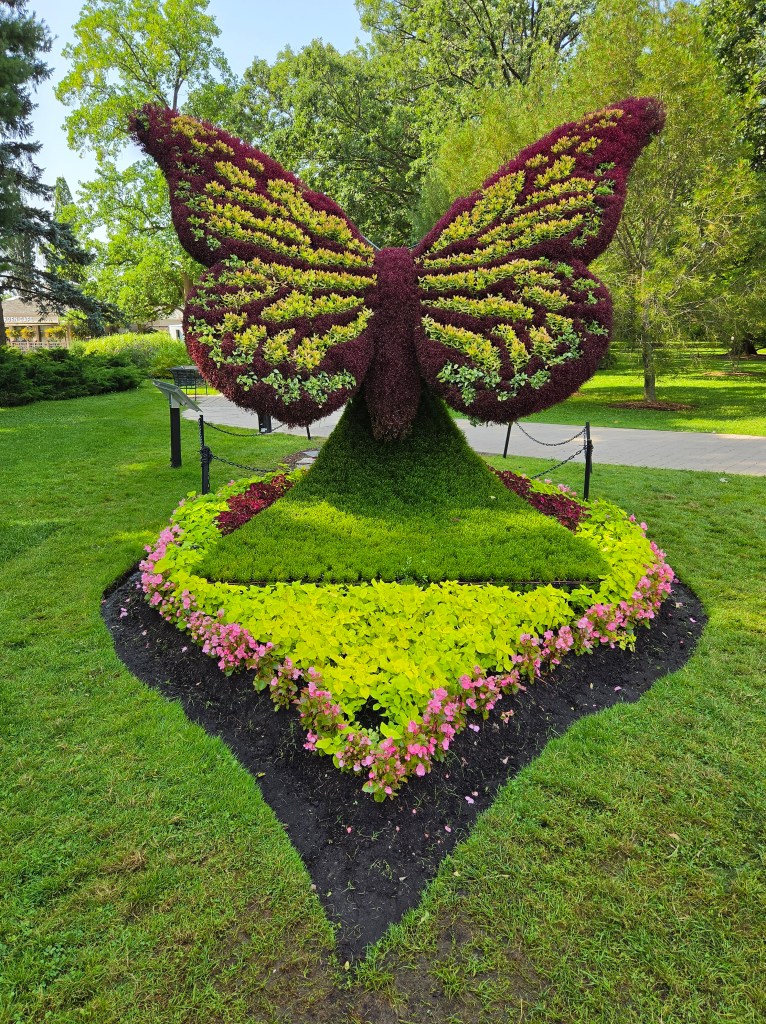
At the entrance to the Butterfly Conservatory 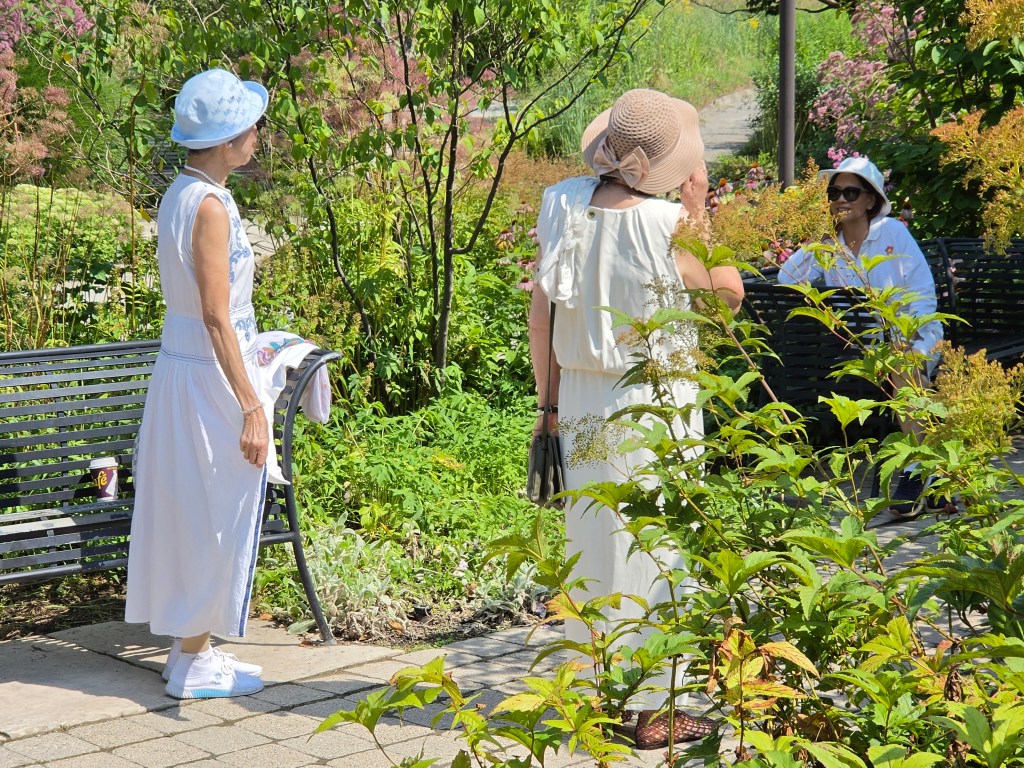
The most stylish visitors to the Gardens “Middle powers must act together because if you are not at the table, you are on the menu. . . .“
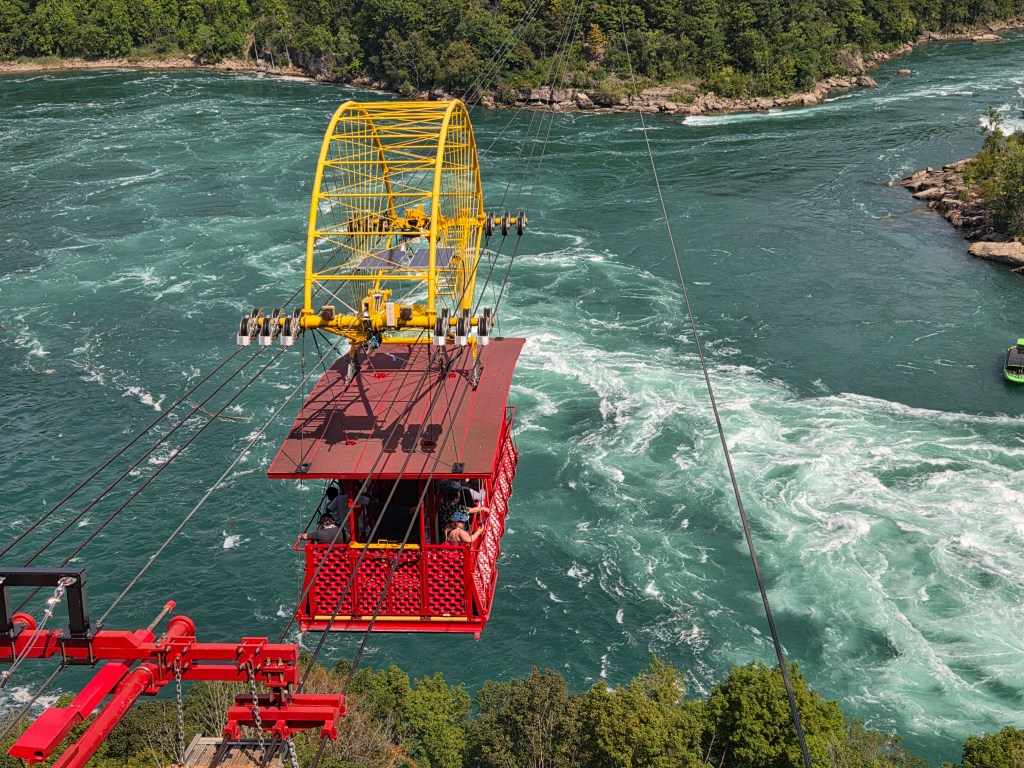
Whirlpool Aero Car (1916) over the Niagara Whirlpool “We should not allow the rise of hard power to blind us to the fact that the power of legitimacy, integrity, and rules will remain strong — if we choose to wield it together. . . .“
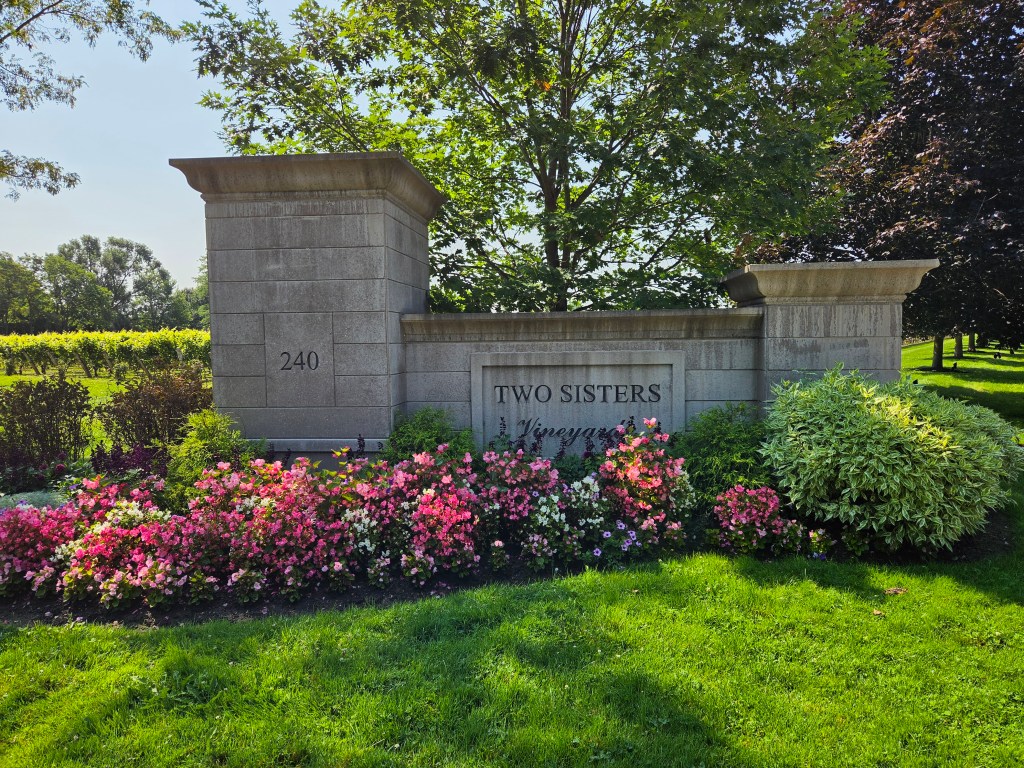
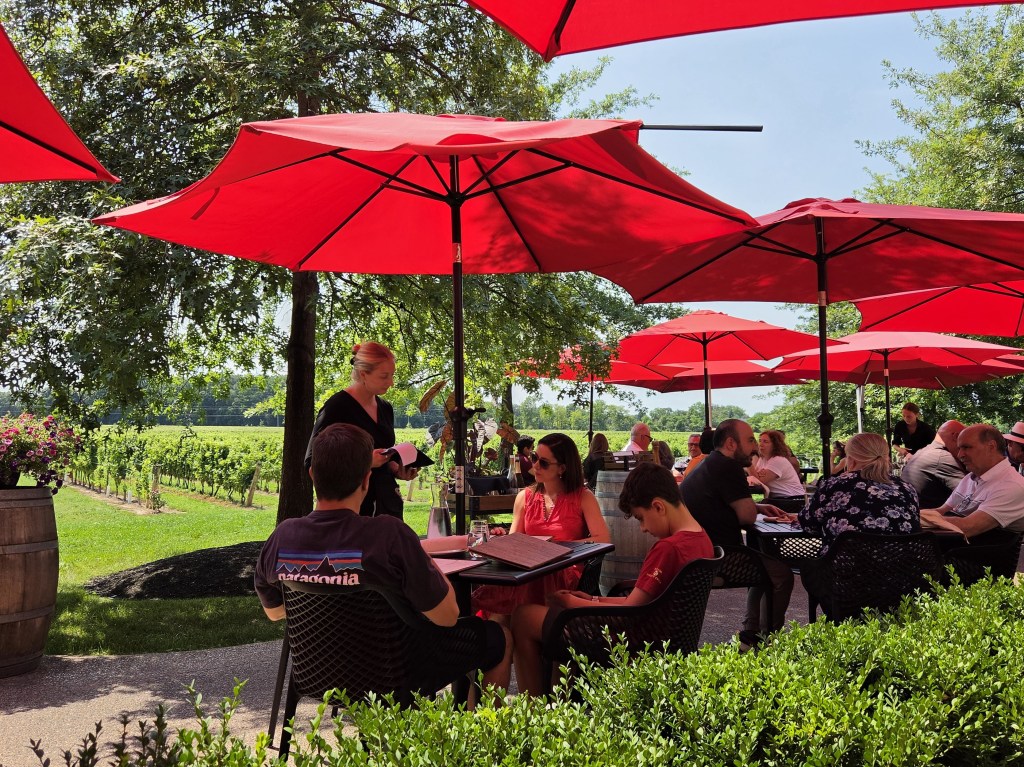
Lunching at the Two Sisters Vineyard’s Kitchen76 
Ideal terroir of limestone, gravel, and clay loam “The old order is not coming back. We should not mourn it. Nostalgia is not a strategy.“
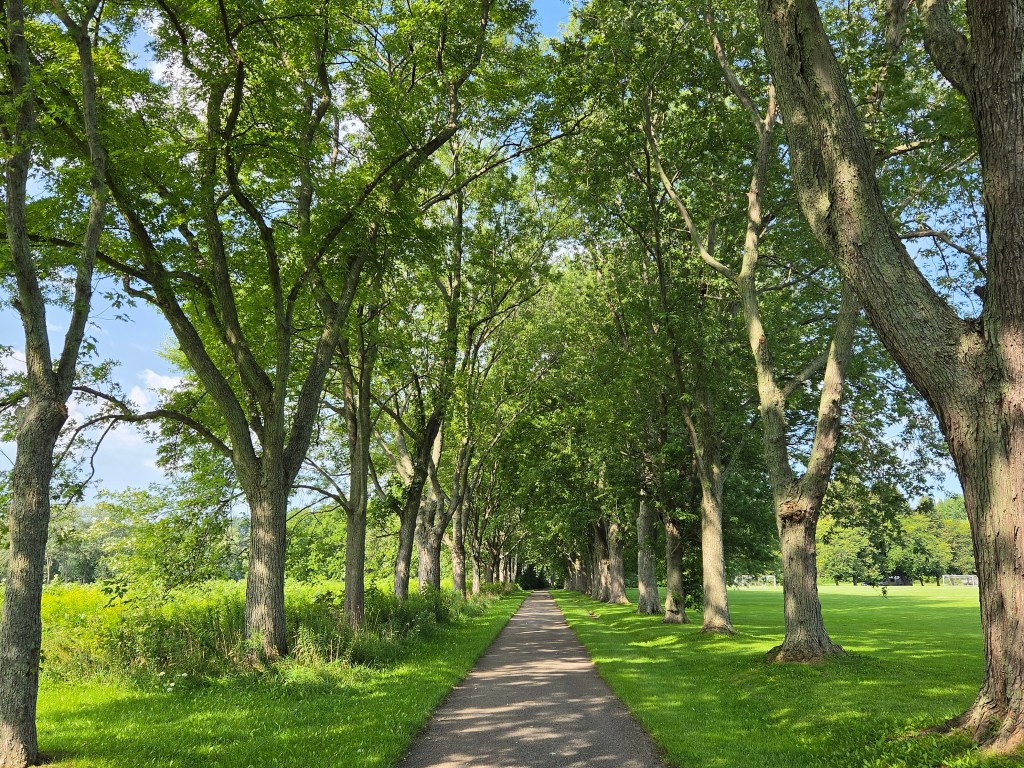
Niagara-on-the-Lake Commons 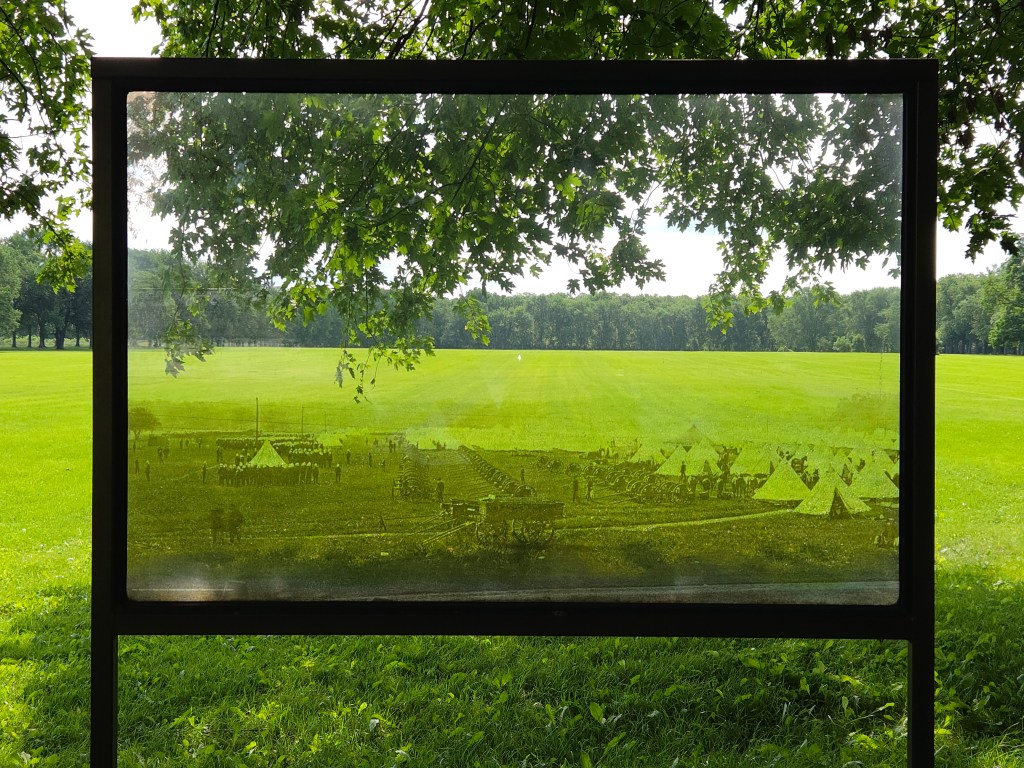
Once a parade ground, now the Commons 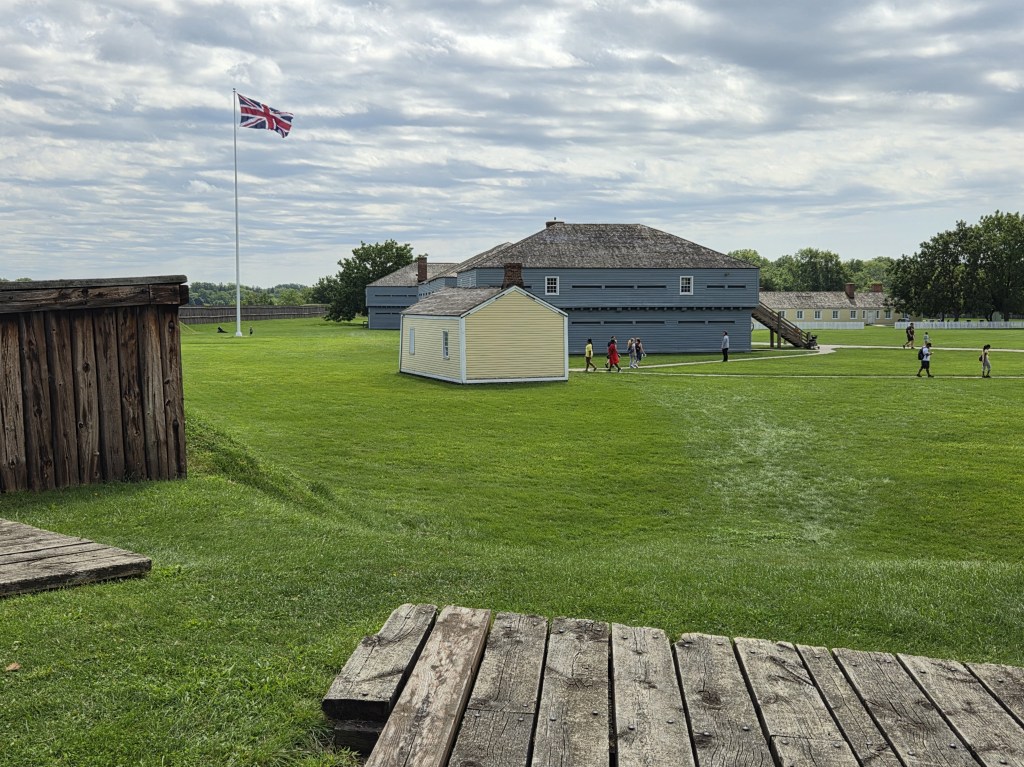
Ft. George (1796-99), destroyed by Americans in May 1813, restored 1937-1940 by Niagara Parks Commission 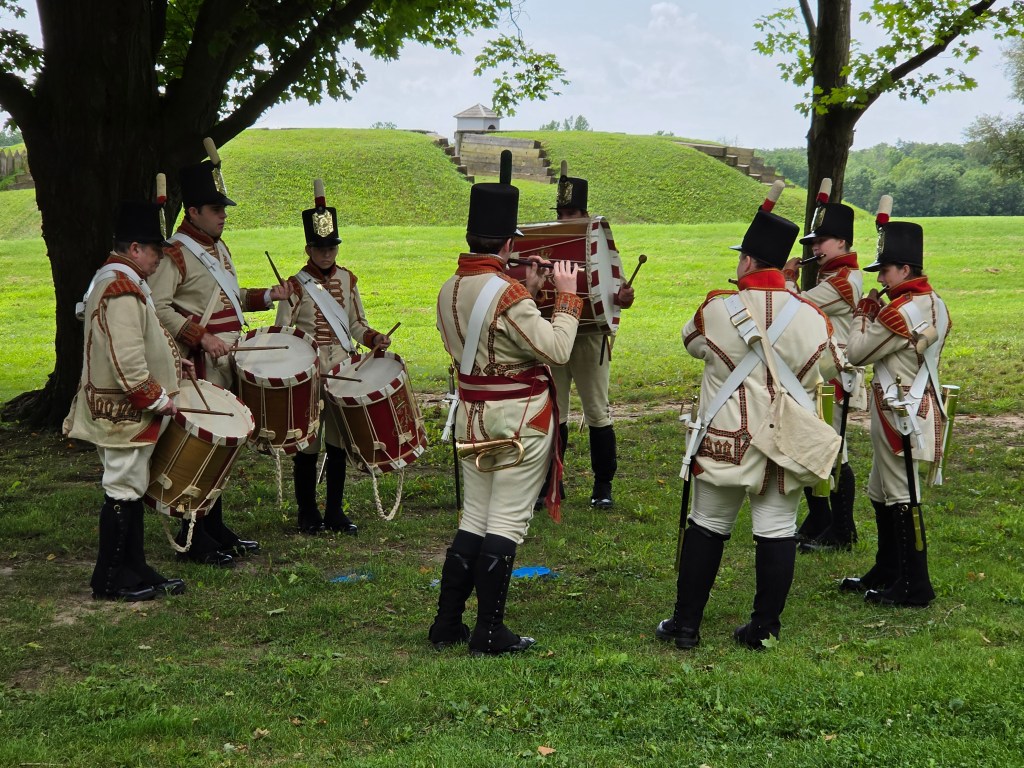
Fife and drum corps at Ft. George 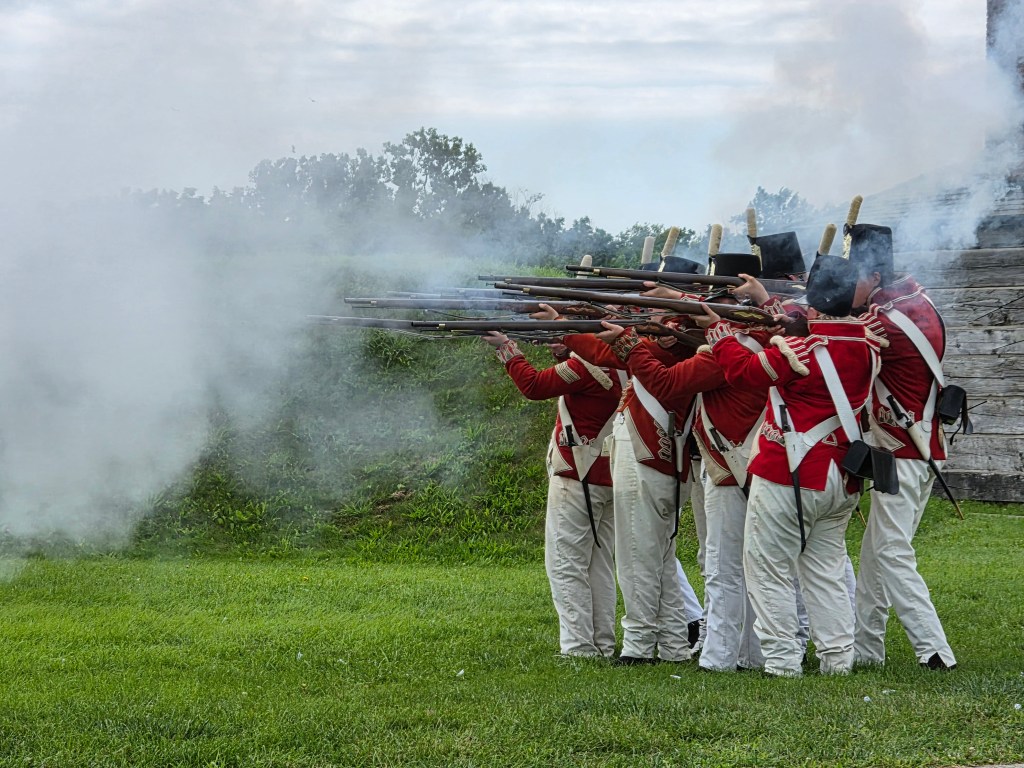
“Brown Bess” demonstration, a musket the source of idioms “lock, stock, and barrel,” “flash in the pan,” and going off “half cocked” 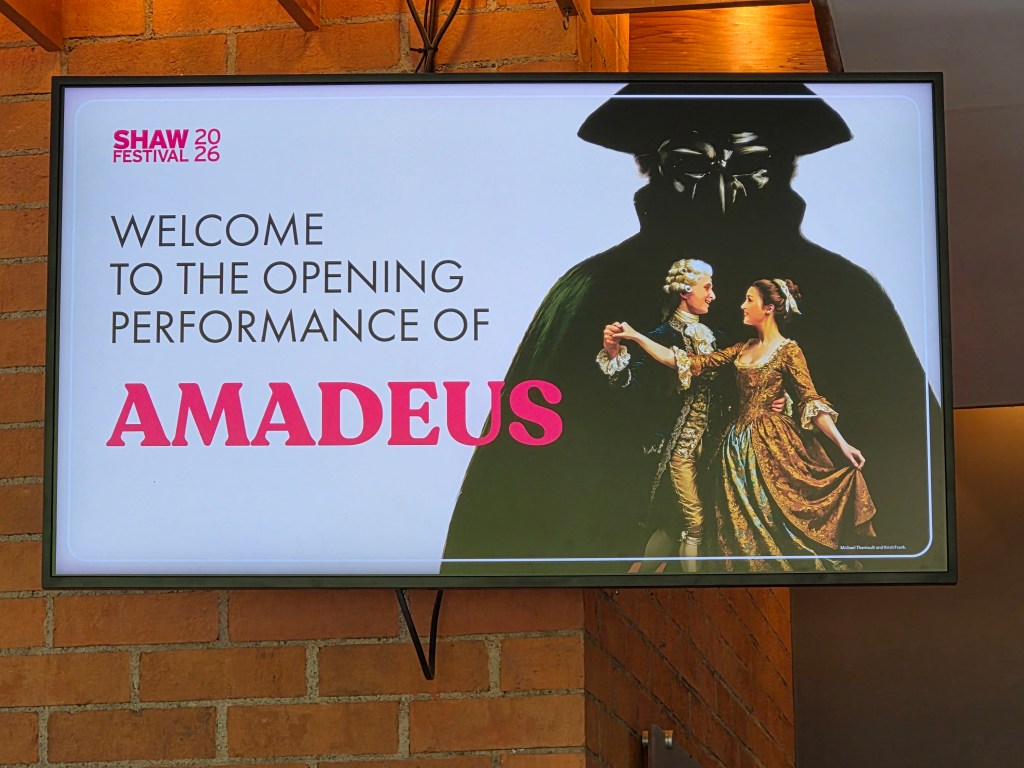
The Festival Theatre’s tribute to the patron saint of mediocrity 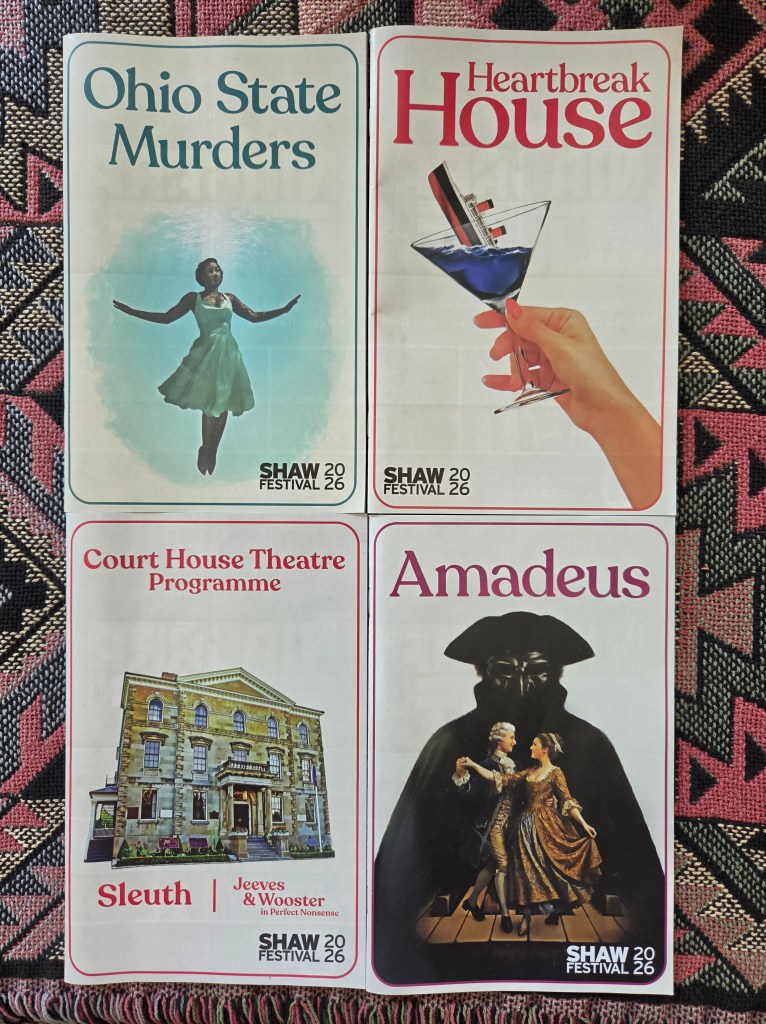
Four wonderful productions AND 12,000 years of Niagara history in a puppet show! Prime Minister Carney concludes his lucid account of history now in the making:
“But from the fracture, we can build something better, stronger, and more just.
This is the task of the middle powers, who have the most to lose from a world of fortresses and the most to gain from a world of genuine cooperation.
The powerful have their power. But we have something too – the capacity to stop pretending, to name reality, to build our strength at home, and to act together.
That is Canada’s path. We choose it openly and confidently.
And it is a path wide open to any country willing to take it with us.”

Kayakers head for Toronto -
Shuffle off to Buffalo
24 August 2026
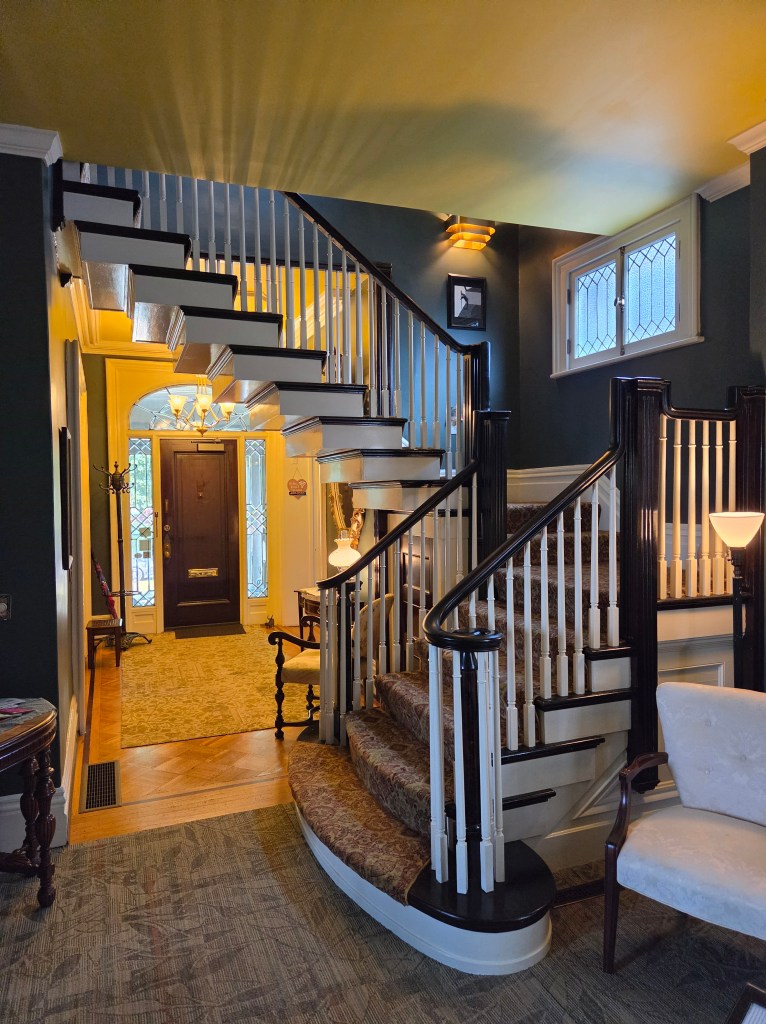
Switchback staircase at Oscar’s Inn, Buffalo, New York Now a week past my return from Ontario, I’m still processing my rich journey, weighing those memories against increasing weirdness reported in the 24/7 news cycle. As I was weeding the northeast flower bed yesterday in preparation for the gift of wild irises thinned and donated by my generous neighbor down the road, I heard one story about how human teachers in classrooms might be preferable to humanoid AI robots (!) followed by news of the 2026 World Humanoid Robot Games now underway in Beijing: machines apparently smashed human records, although some robotic sprinters crashed into barriers while others tipped over or caught on fire—presumably something those human teachers might not do. Two questions: has anyone seen The Terminator, James Cameron’s iconic film that so ironically premiered in 1984? And was it AI that designed and approved all those NY Thruway signs that read “NO EZ-Pass Call *826*? Methinks including a question mark (No EZ-Pass?) would have kept me from wondering why my EZ-Pass transponder was unacceptable to New York State. Will humanoid teachers stress the importance of punctuation I wonder?
Utica, New York is roughly halfway from my Madbury home to my destination of Niagara-on-the-Lake, and was the first stop on my recent travels, unremarkable save for its Beaux-Arts train station and “Greens Morelle” (aka Utica greens), Chef Joe Morelle’s dish of escarole, garlic, hot cherry peppers, and prosciutto vaunted by the New York Times in 1987 that enticed me to Chesterfield’s less-than-scenic Tavolo patio on North Genesee Street and, alas, proved way too salty and spicy for moi.
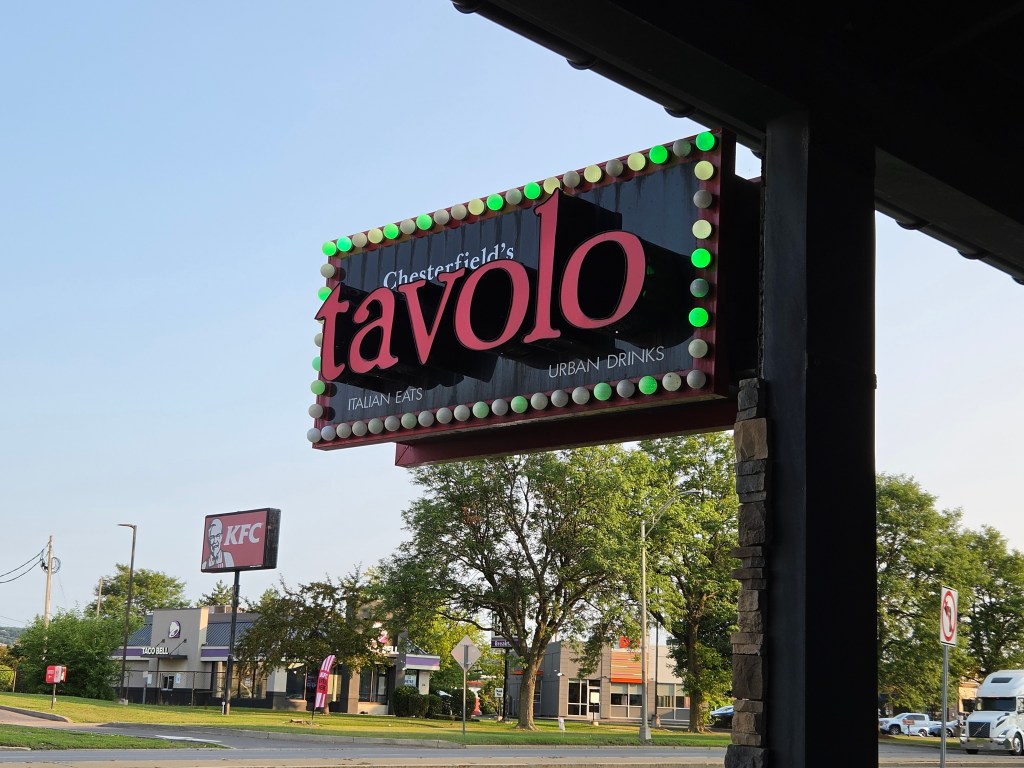
View from the patio at Tavolo Unfortunately, Portofino, the restaurant on the Erie Canal I’d visited each time I’d passed that way before, is (note to self) closed on Sundays.
Never mind. A three-hours’ drive next morning took me to my longtime, ever-since-grammar-school friend Martha’s home in the carriage house of one of Buffalo’s Linwood Avenue gilded age beauties and a lovely homemade lunch.
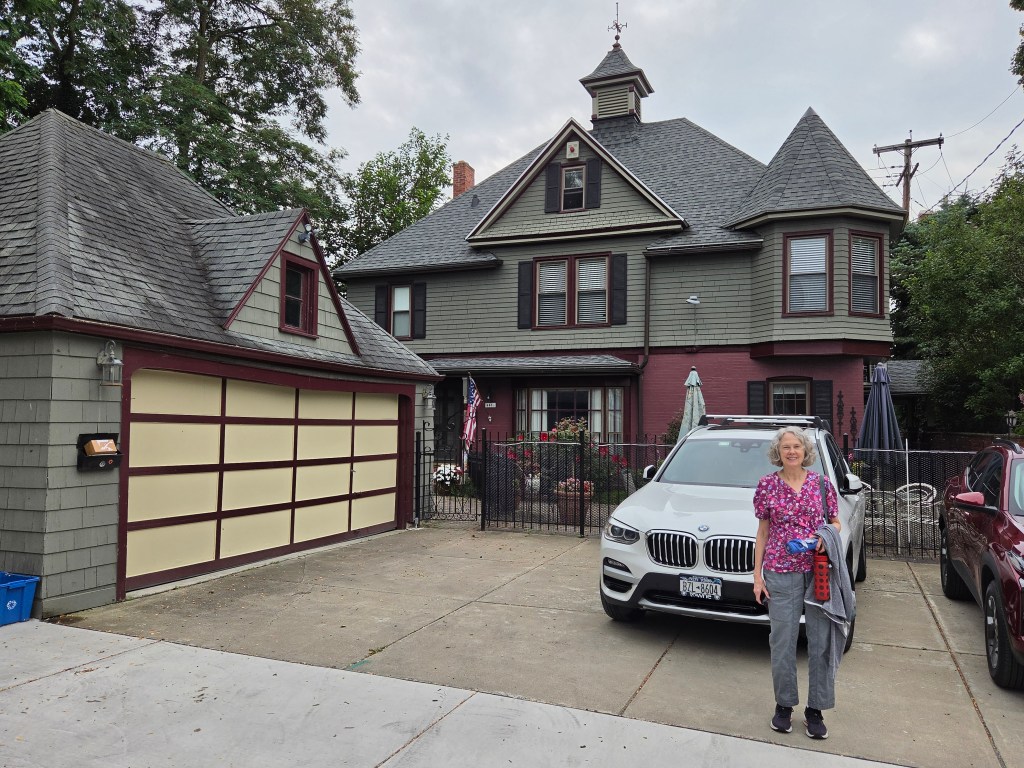
Martha at home on Linwood Avenue For the next 24 hours, we caught up on recent travels, discovering (1) that we had both recently been in New York City, me for the theatre and Martha to spread the gospel; (2) that sustaining herself with sardines puts Martha in the exalted company of comedians John Mulaney and (when he first began as a touring stand-up) David Letterman; and (3) that we both remembered all the words to The Patty Duke Show (on ABC from 1963-1966) theme song about identical twin cousins Patty and Cathy Lane (“Meet Cathy who’s lived most everywhere / from Zanzibar to Berkeley Square / While Patty’s only seen the sights / a girl can see from Brooklyn Heights / What a crazy pair!). Such trivia, I opined, takes up so much space that neither of us could immediately recall the name of the famous landscape architect who designed New York’s Central Park, Boston’s Emerald Necklace, and Buffalo’s Delaware Park-Front Street System: Frederick Law Olmsted. This made Martha laugh heartily, to my delight. Without her, I would never have passed calculus our senior year of high school.
From lunch we went directly to visit Frank Lloyd Wright’s Darwin D. Martin House, FLW’s self-described opus and a real gem at 125 Jewett Parkway.
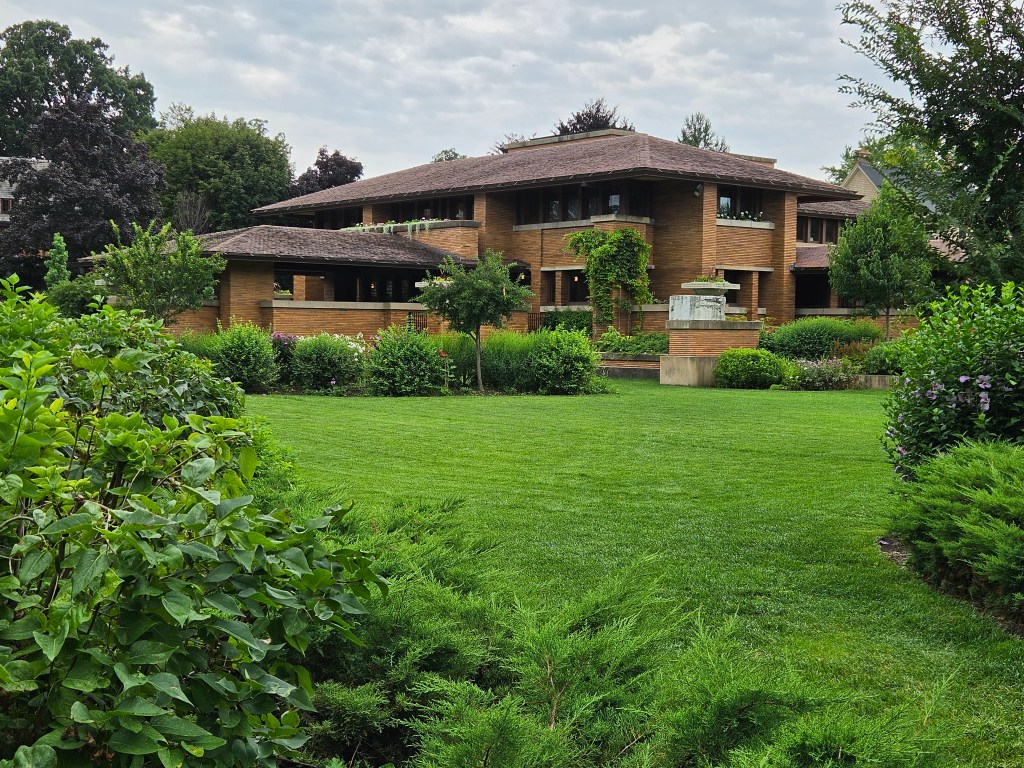
FLW’s Martin House, 1904-05 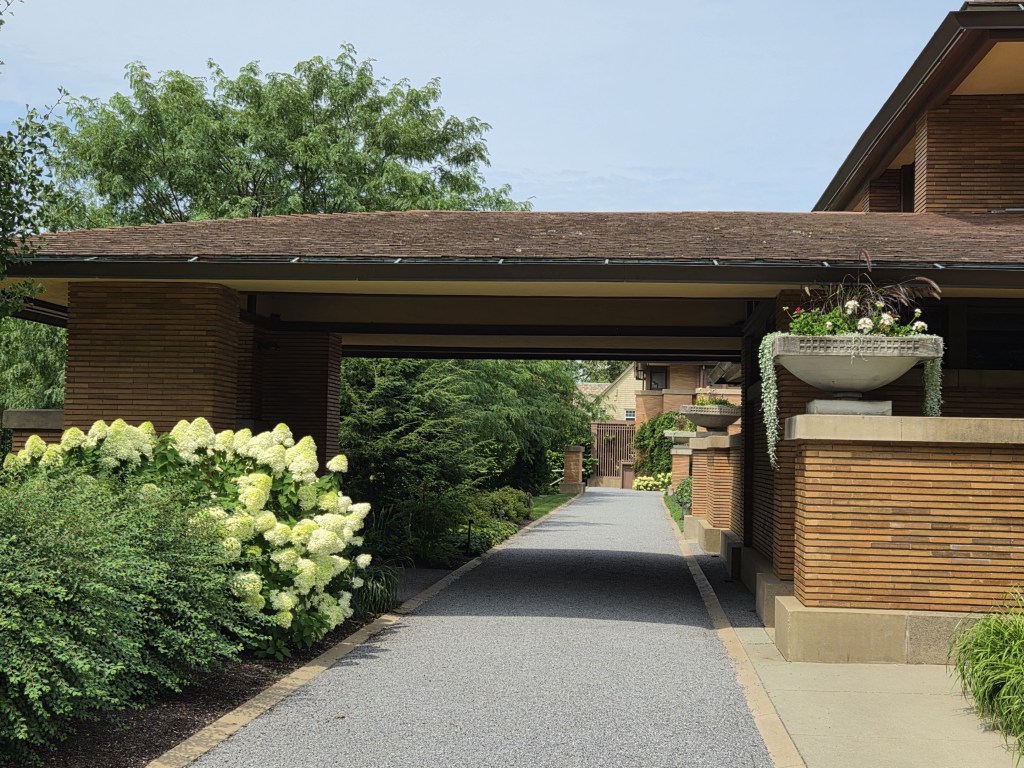
Porte-cochère with entrance concealed behind brick piers with urns Based on a 1901 plan published in Ladies’ Home Journal, “Home in a Prairie Town,” the spatial openness, horizontality, natural palette, and dramatic cantilevers pretty much define the FLW Prairie House; with over 400 art glass “Tree of Life” windows, it surpasses the record of any other.
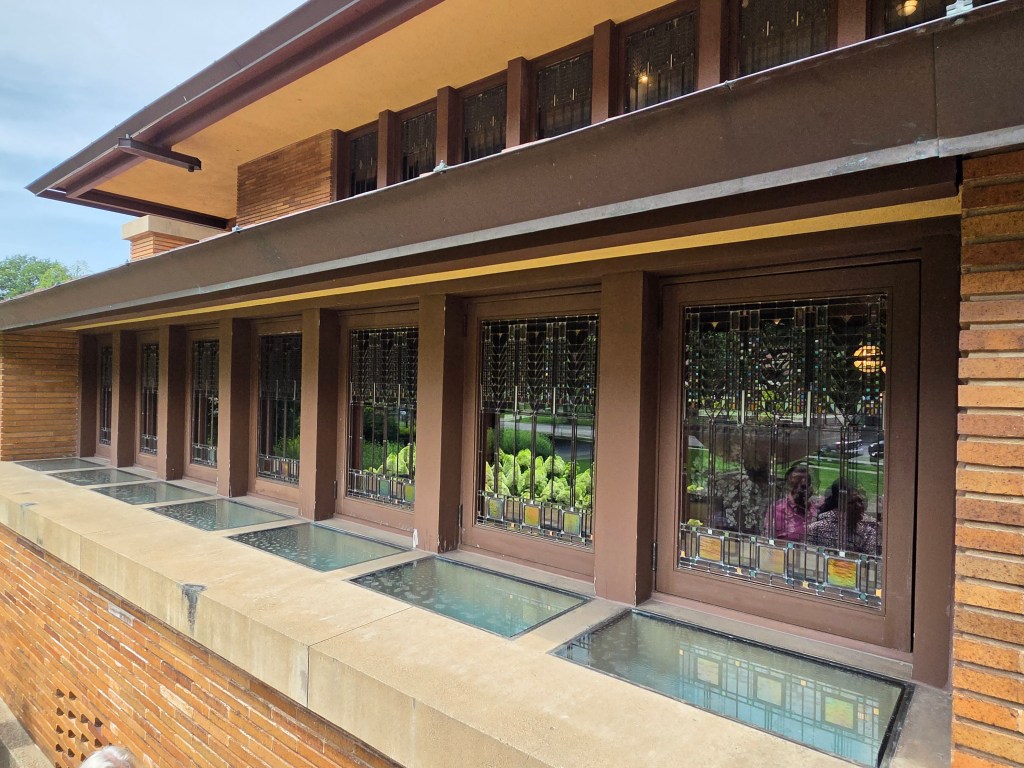
Entrance windows with sun traps lighting the basement below Interior photography isn’t allowed casual visitors, so you should check it out at https://martinhouse.org/hearth-and-home: the warmth of the front reception room’s sunburst fireplace with its Roman brick gold-washed mortar surround and gold-flecked coved ceiling and the double-sided wisteria glass tile mosaic fireplace of the entrance hall are entrancing.
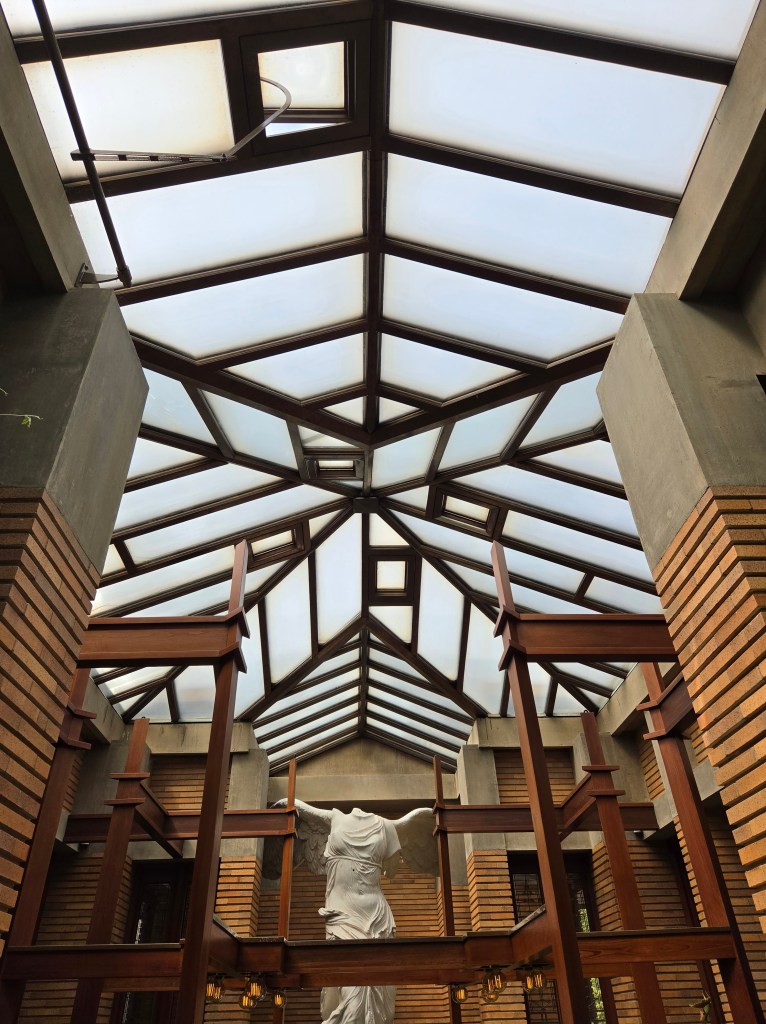
Nike in the conservatory, the vanishing point of a long pergola 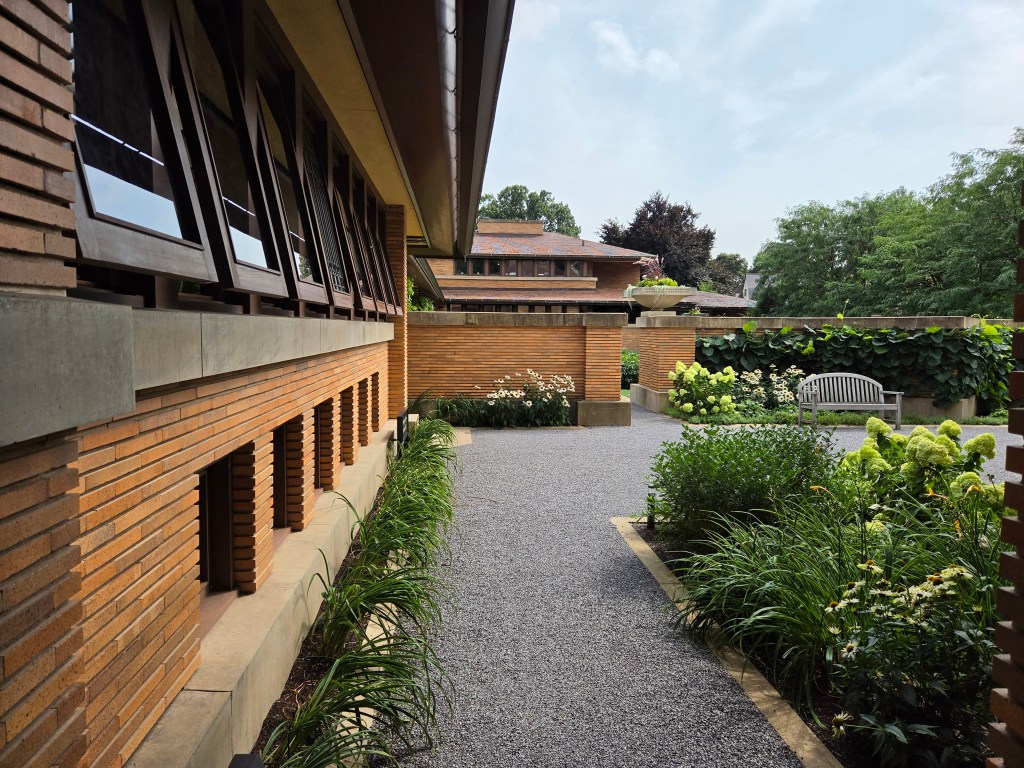
Back garden, pergola on the left 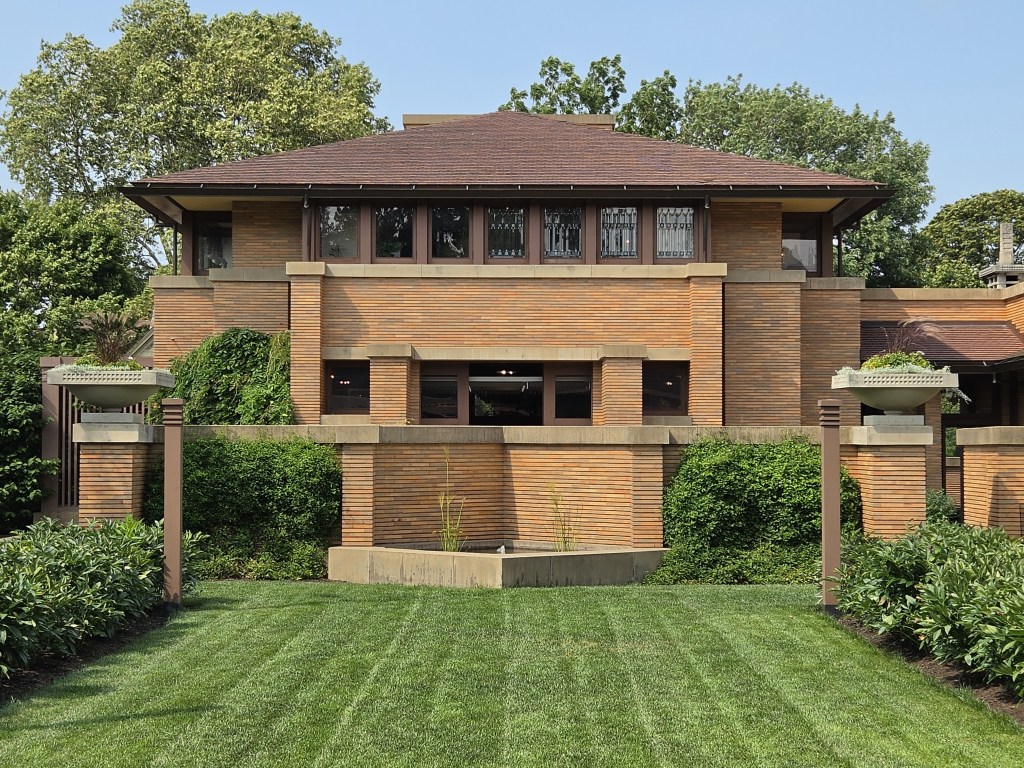
Carriage House and Stable: the pillars next to the piers with urns are for clotheslines The Martin house survived intact for two years after Darwin Martin’s death at age 70, but from 1937 remained vacant and abandoned for decades before ultimately renovations begun in the 1990’s were completed in 2019 at a cost of over $50 million. That they did makes me very happy.
Tours here begin with a film at the elegant Visitor Center, where details of Darwin D. Martin’s life (1865-1935) had an uncanny resonance for me. Darwin was a smart boy with a head for figures, scarred at age 6 by the death of his mother and, the youngest of five siblings, forced to part ways with all but his brother Frank, then selling soap in New York City at the age of 13, but finally moving by himself to Buffalo to work for the Larkin Soap Company and via his accounting skills and ferocious work, rising to corporate secretary of the Company, charged with finding an architect to design a new administrative building, and, at his Chicago brother’s suggestion, settling on an innovative young architect: Frank Lloyd Wright. Over the years, Martin, a millionaire until the stock market crash, lent Wright over $70,000 and, allowing him free reign for his designs of both the Martin House and companion summer home on Lake Erie, Graycliff, helped establish FLW’s reputation. Wright never repaid that $70,000 to Martin, though for his dedicated friend and supporter, FLW designed his only cemetery monument, the Blue Sky Mausoleum at Forest Lawn Cemetery in Buffalo, finally completed in 2004 long after both men has died.
Why did Martin’s story sound so familiar to me? My grandpa Cecil Calvert Senseman (1887-1975) was the oldest of three children born on a farm 12 miles north of Dayton, Ohio. When his mother died, he had to leave school, was separated from his two siblings, and while still a youth, went to work as an apprentice machinist at various factories in the Dayton area. With hard work and, like Darwin Martin, a head for figures (he used to help me with my algebra), in 1931 “Zeke” and his younger brother Vercil purchased the Dayton Tool and Engineering Company and became a major designer and builder of tools supplying the automotive, refrigeration, office, and farm equipment industries, including various government contracts during World War II. Starting in 1938, he also began buying and developing property in Fort Myers, Florida and in 1941, he moved, semi-retired, with my grandmother Clara to Florida, where his good fortune occasioned my own parents’ moving south to St. Petersburg, where I was born: another all-American rags to riches—and back down the ladder of success—story.
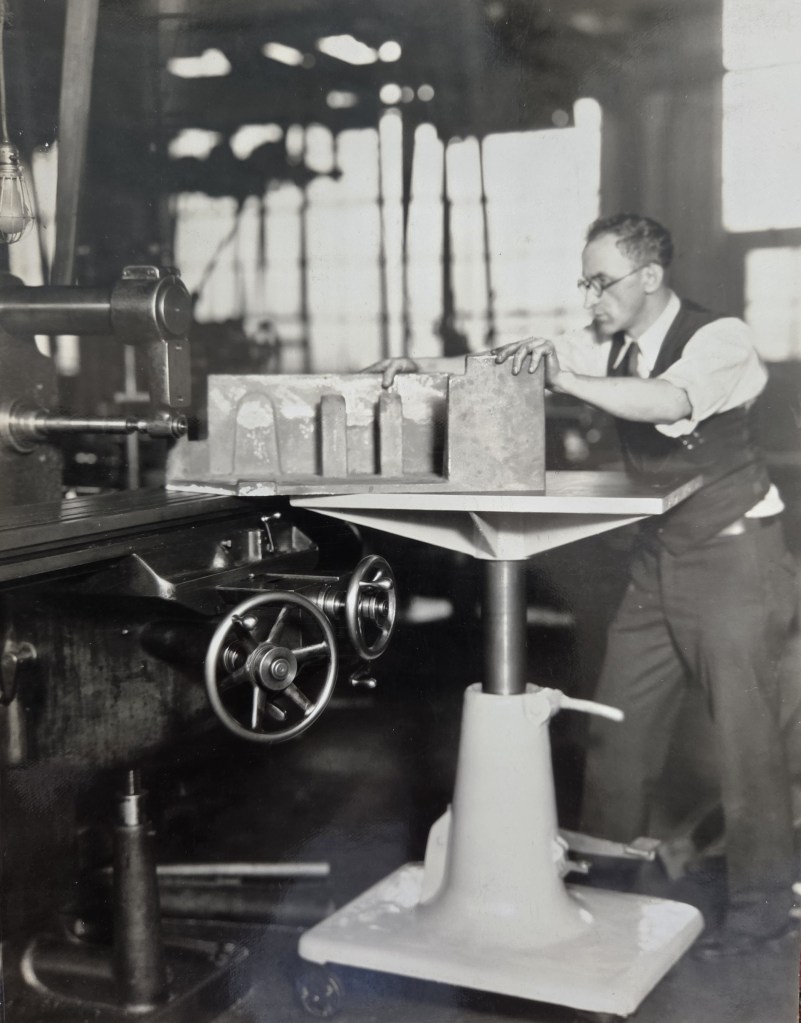
C. C. Senseman, my grandpa, at the Dayton Tool & Engineering Company, c. 1931 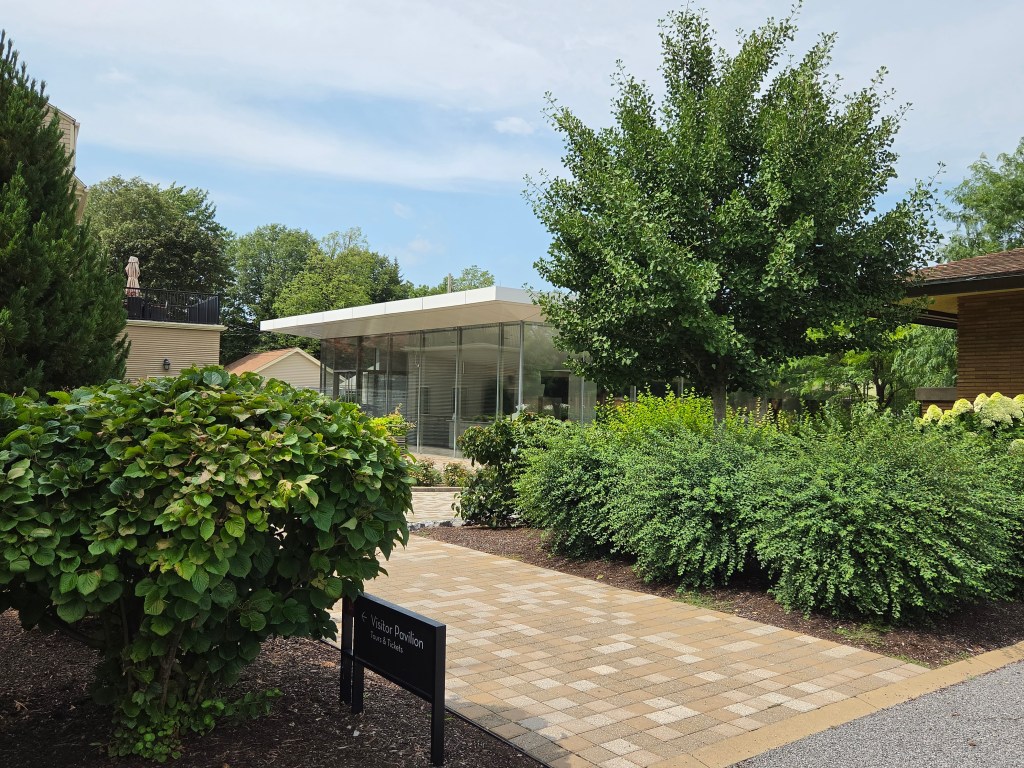
Visitor Center at the Martin House (Toshiko Mori, 2009) This tale I told Martha as later that day we enjoyed the capacious porch at Jen and Rob’s lovely boutique bed-and-breakfast inn, Oscar’s, just a few blocks down from Martha’s carriage house on Linwood Avenue.
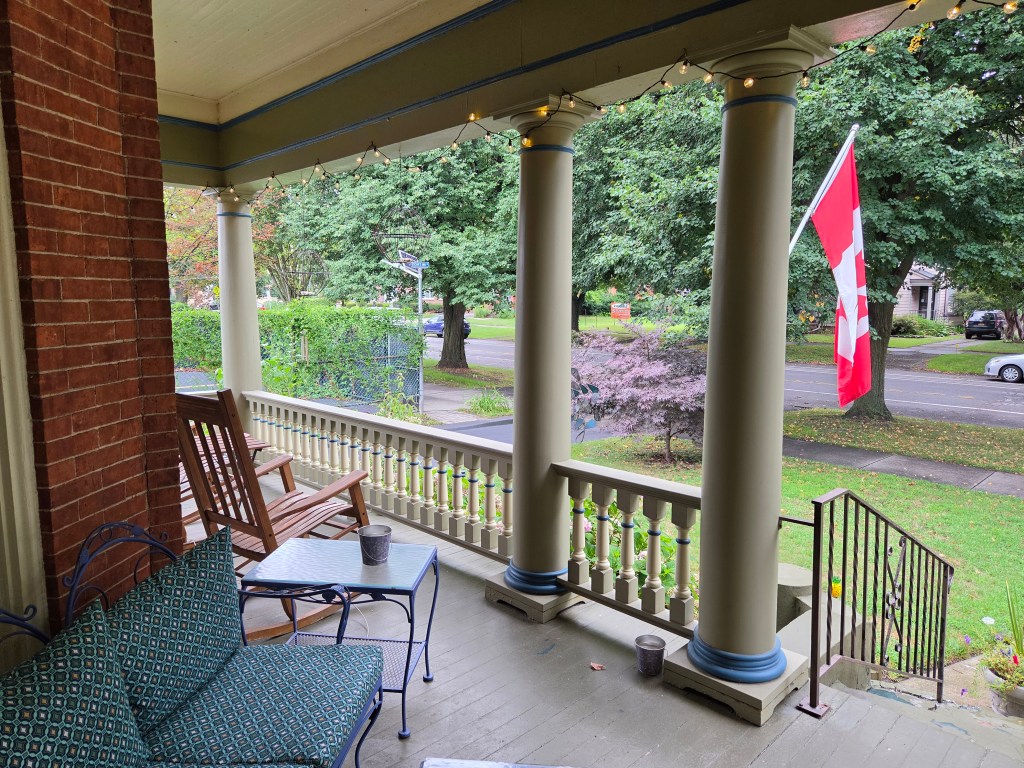
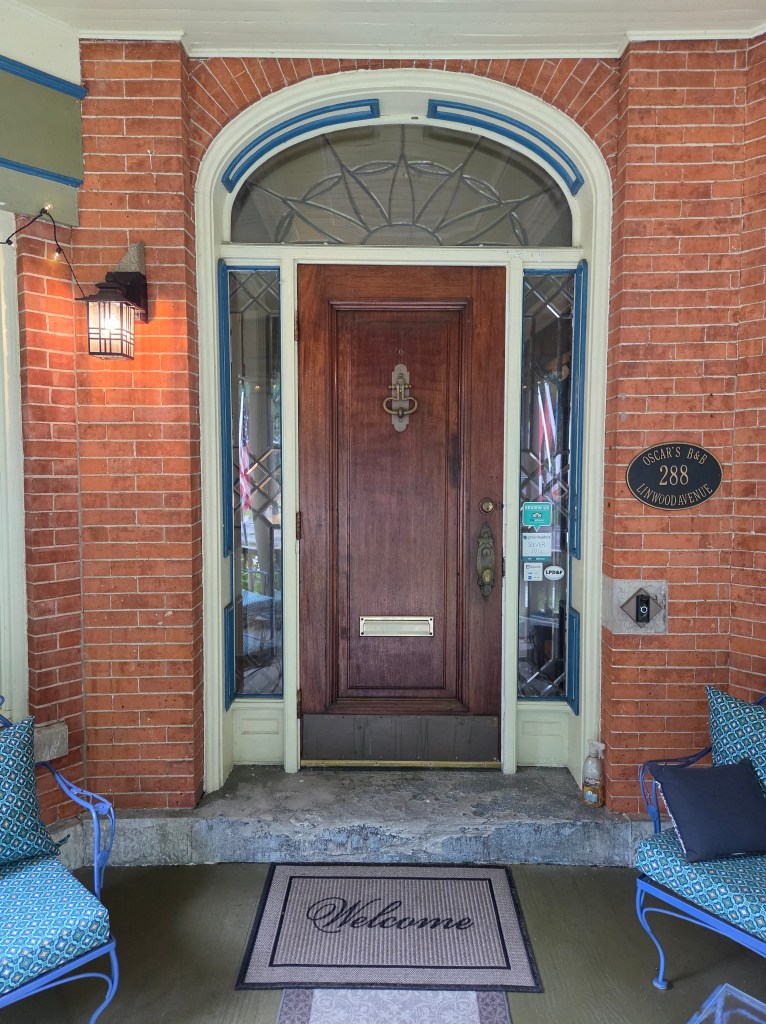
A Second Empire beauty built in 1875 by Oscar S. Lang, architect and contractor who also worked on the Martin House, Oscar’s Inn is part of the handsome Linwood Historic Preservation District.
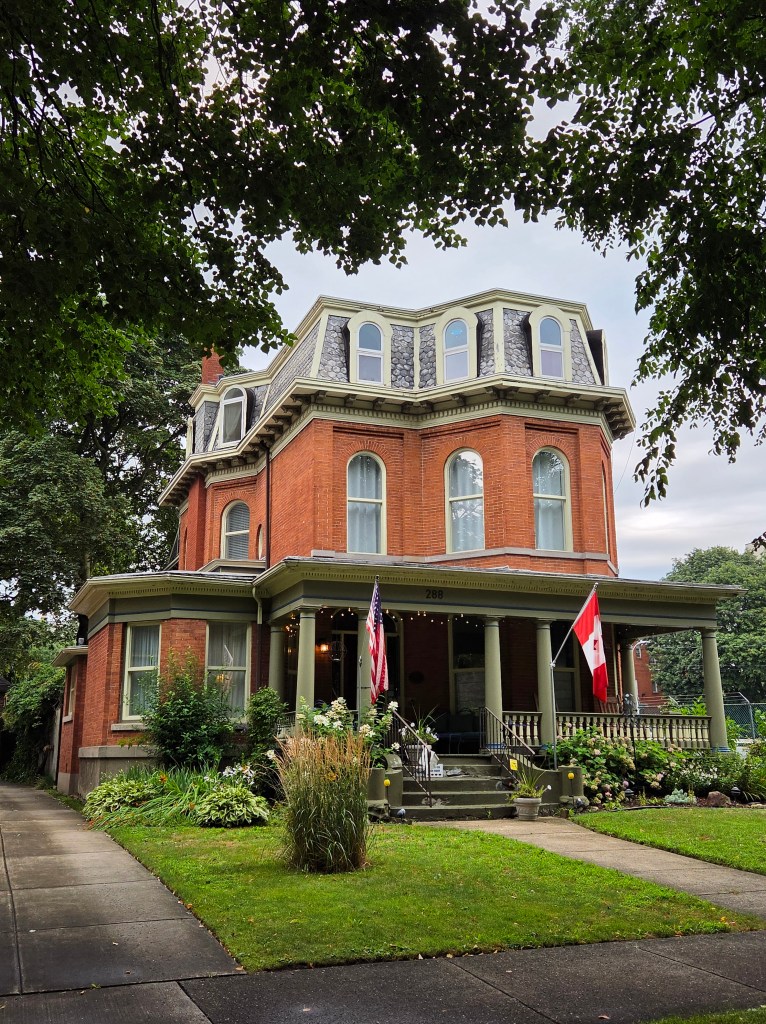
Oscar’s Inn 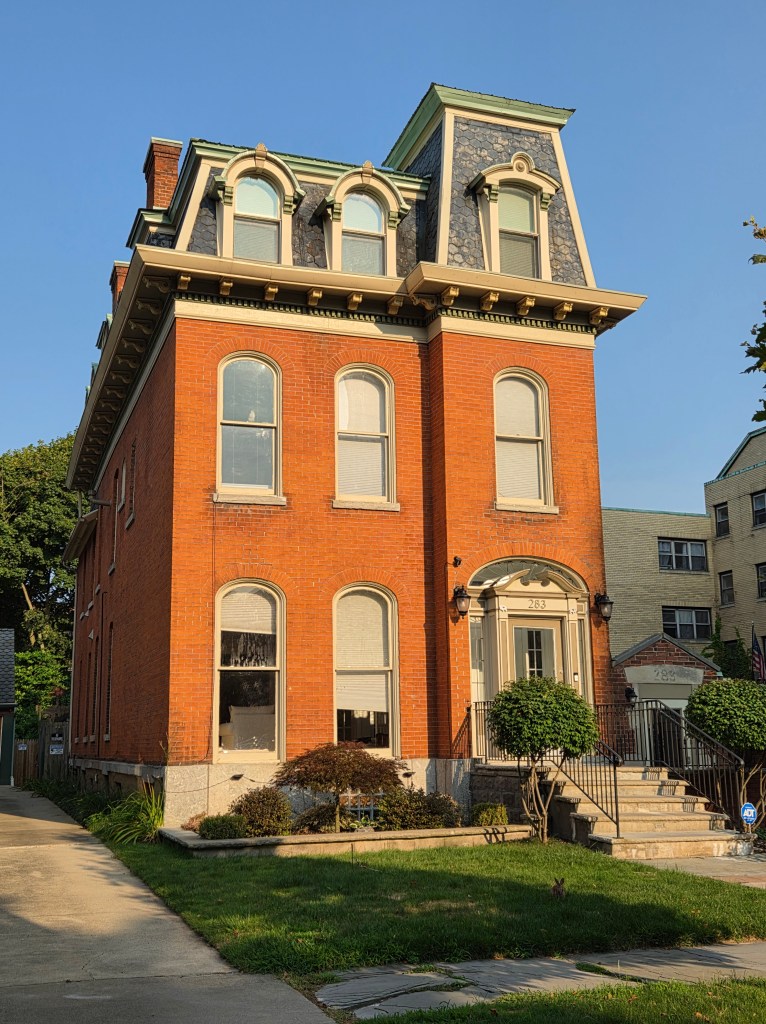
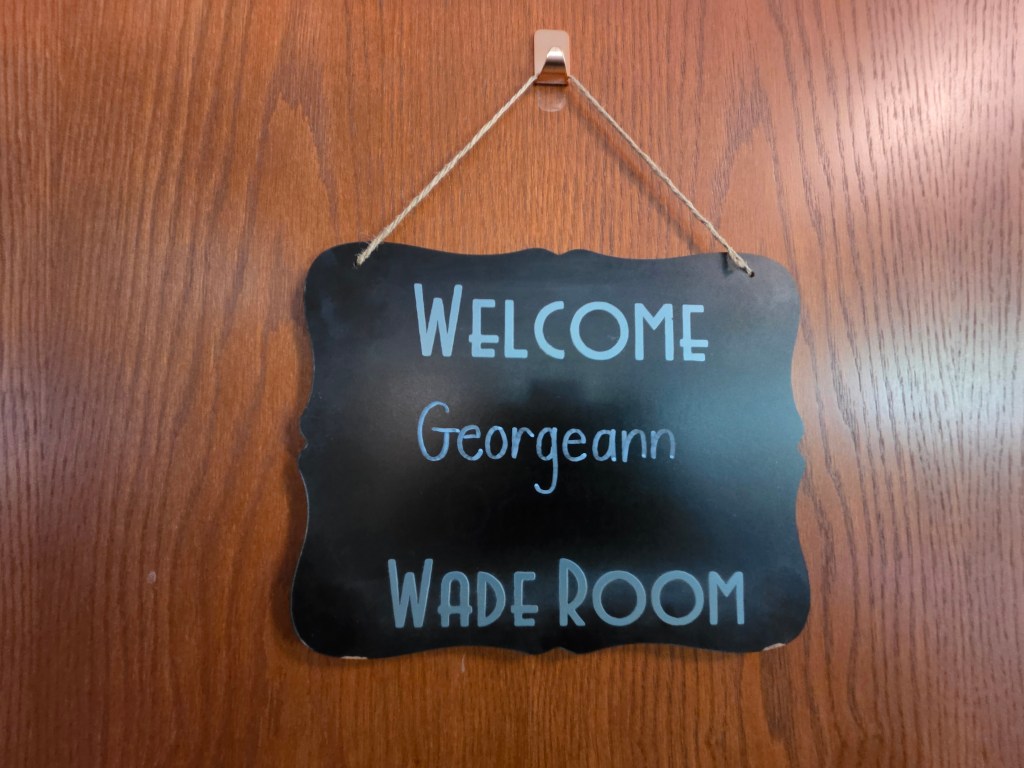
. . . and another beauty across the street After dinner at Martha’s favorite liver-and-onions place, I passed a lovely night in the Wade Room, and together the next morning, Martha and I shared Jen’s lovely three-course breakfast in the handsome dining room.
Loved the buffalo-shaped chocolates! 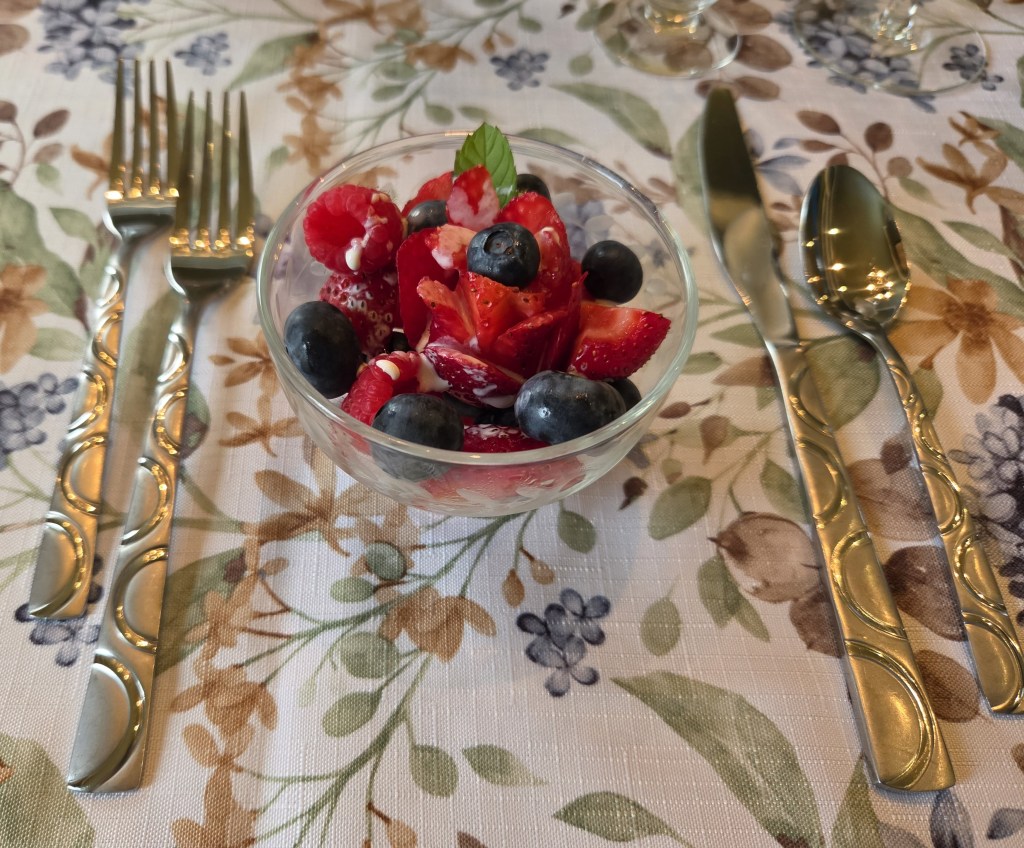
Jen’s strawberry rose breakfast starter 
Hibiscus at Martha’s carriage house Then we headed for a lovely walk around Hoyt Lake at Delaware Park, with views of The Terrace restaurant and the Albright-Knox Art Gallery.
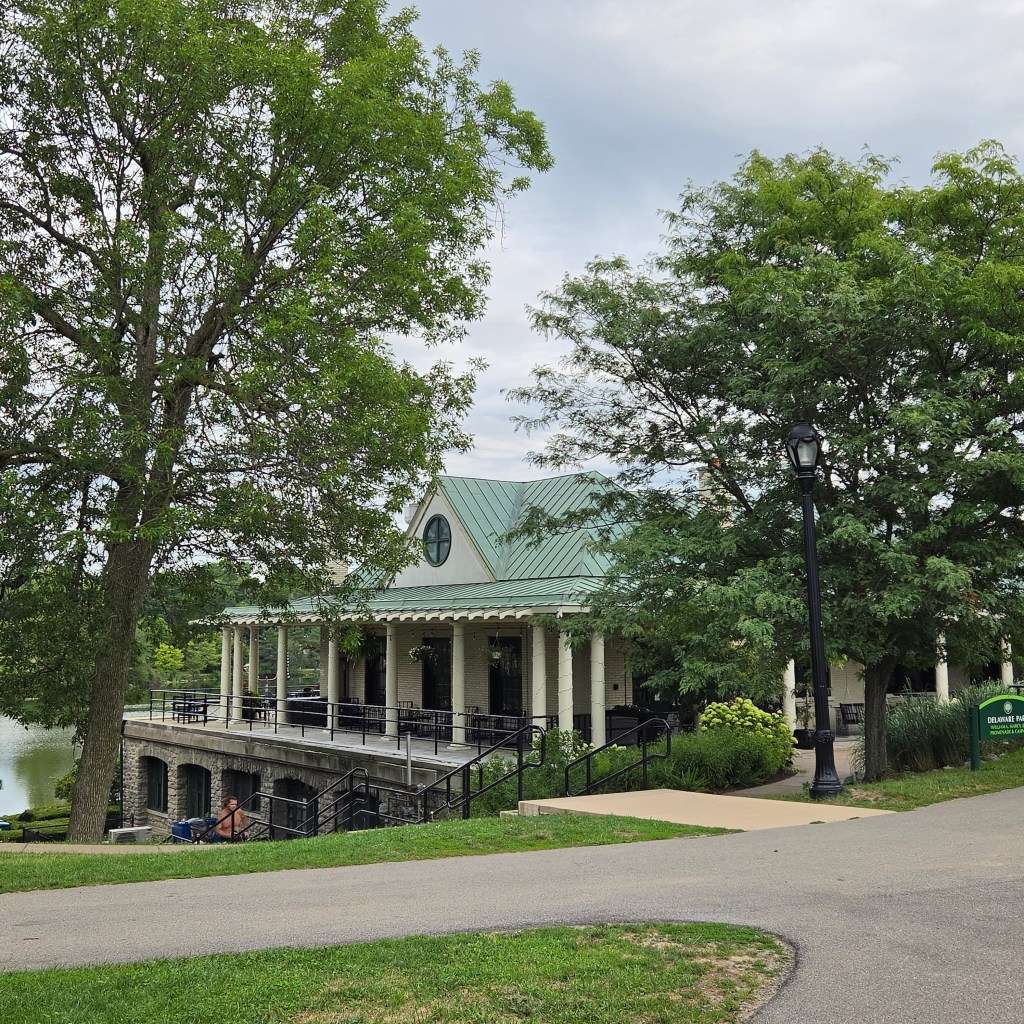
The Terrace Restaurant in Delaware Park 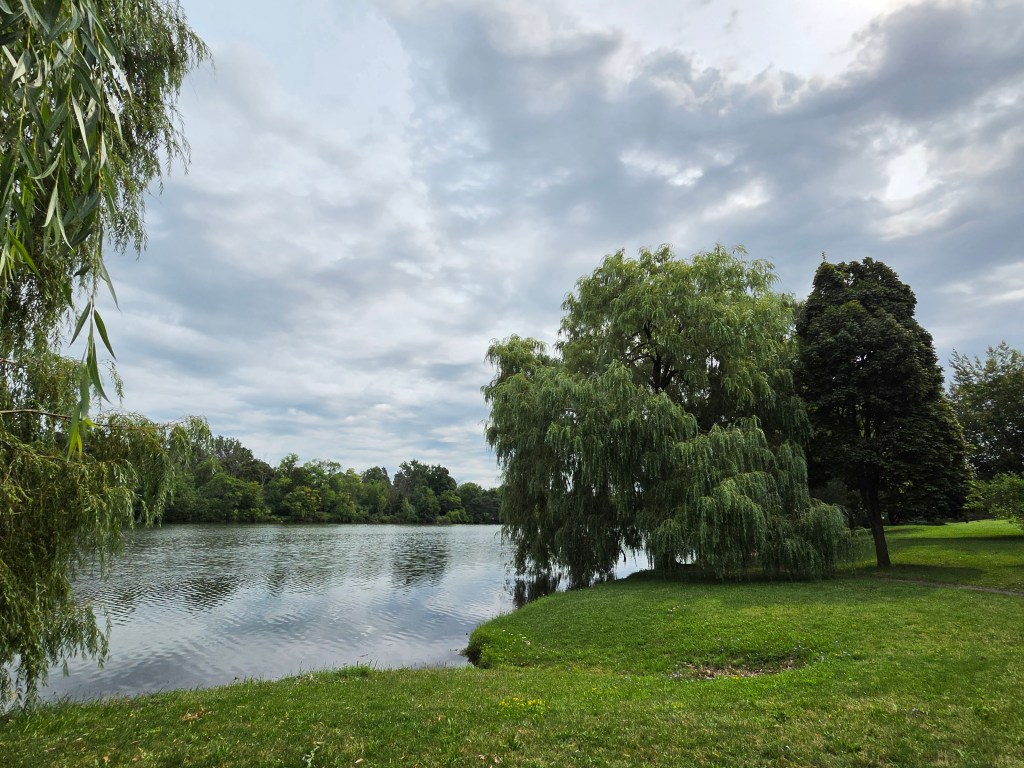
A real-life Constable in Delaware Park 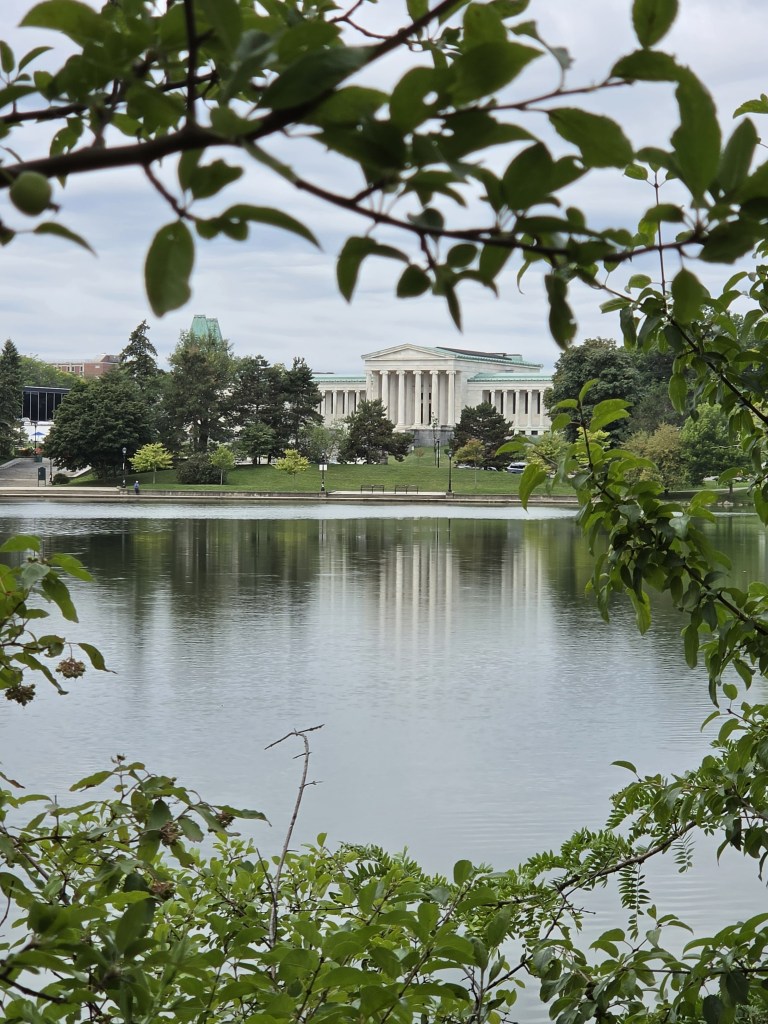
View of the AKG Art Museum across Hoyt Lake 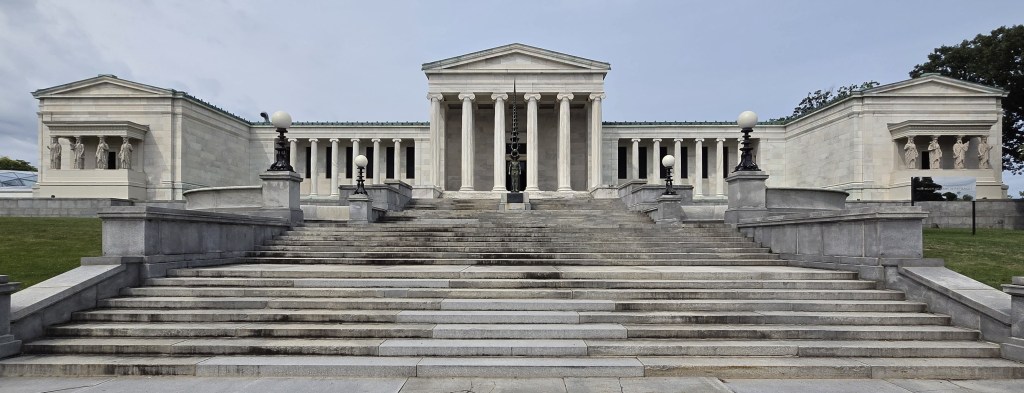
Edward Broadhead Green’s Fine Arts Pavilion, intended for the Pan-American Exposition of 1901 but not completed until 1905, now Buffalo’s Art Museum 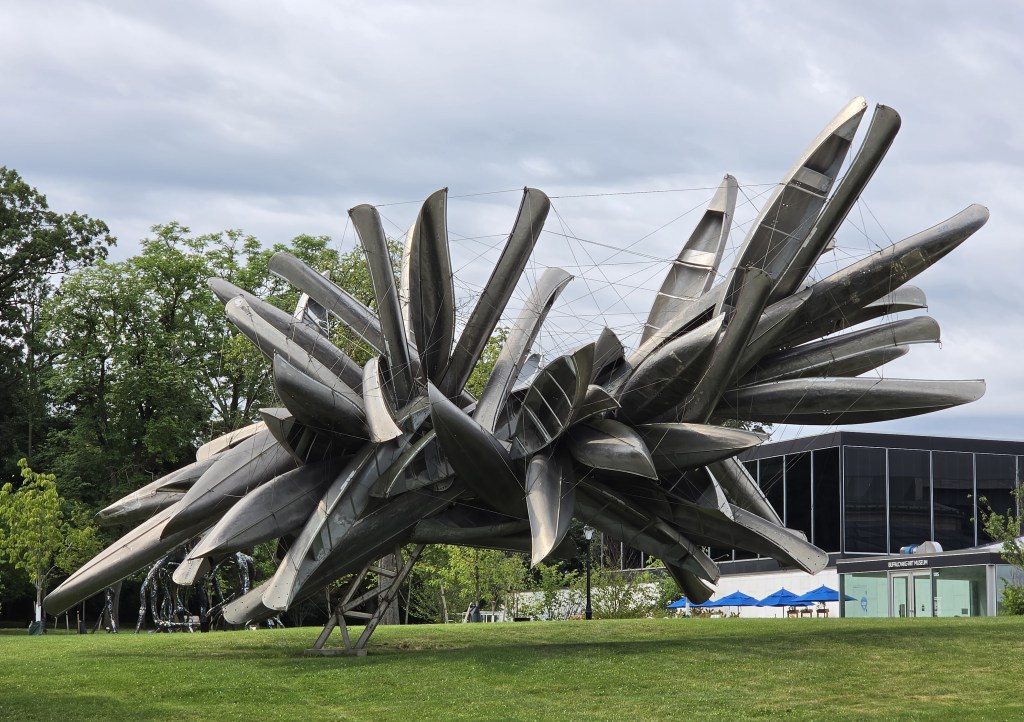
Stainless Steel, Aluminum, Monochrome I, Built to Live Anywhere, at Home Here (Nancy Rubins’s canoe cascade, 2010-2011) Finally, almost exactly 24 hours after my arrival in Buffalo, I loaded up my VW GTI and Android Auto GPS and headed for Ontario, the next leg of my adventure, grateful for this best friend of my youth, the gracious hospitality at Oscar’s Inn, and the foresight of those who saved the Martin House for us to contemplate beauty, times past, and times to come.

Queen Anne’s Lace in Delaware Park -
Homecoming: Union Station and the Pousse-Café
20 August 2026
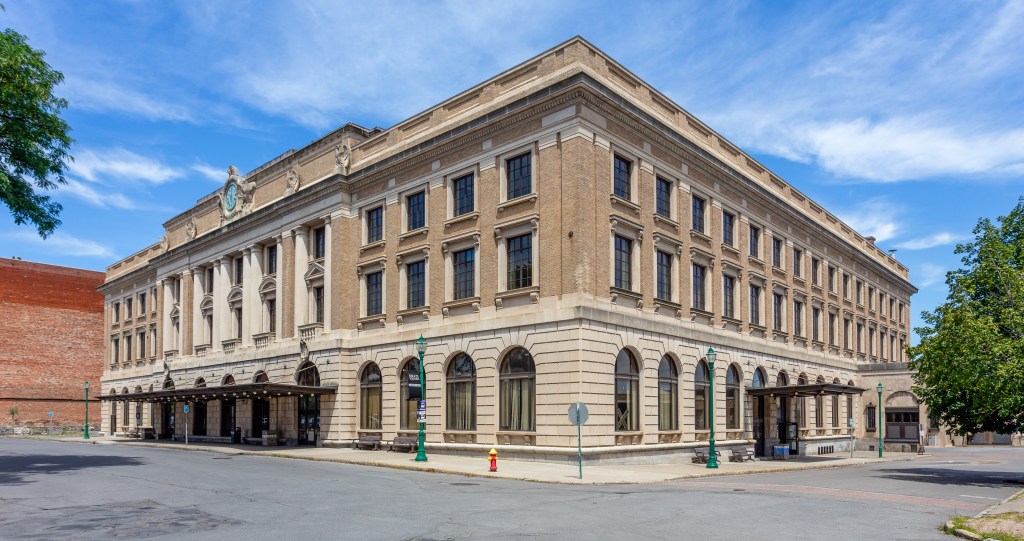
Boehlert Transportation Center/Union Station in Utica, New York. Designed by NY architects Stem and Fellheimer, 1912-1914 (photo by Kenneth C. Zirkel, Wikipedia) Union Station in downtown Utica, New York is a Beaux-Arts beauty: 15,000 square feet of rusticated granite and buff brick with a 47-foot vaulted ceiling supported by 34 marble columns. The station’s construction necessitated rerouting the nearby Mohawk River, a grand gesture. Twelve elegant benches heated by steam pipes and vents incorporated into their structure still serve the public, as does an in-station barber shop: one of the few left in this country.
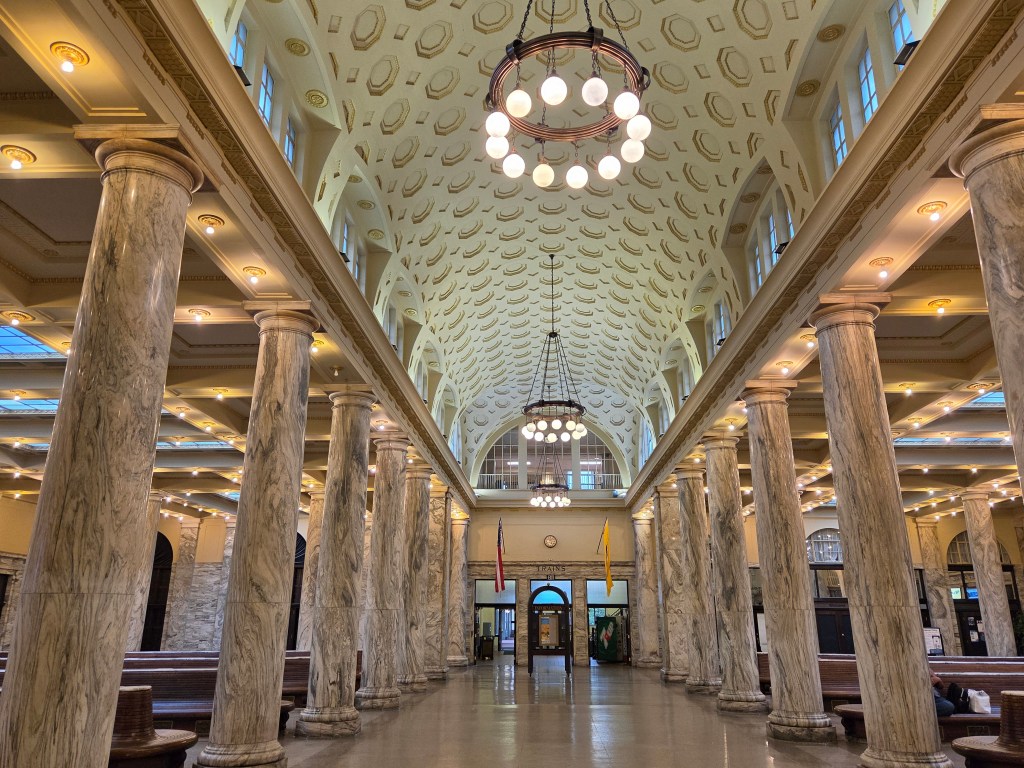
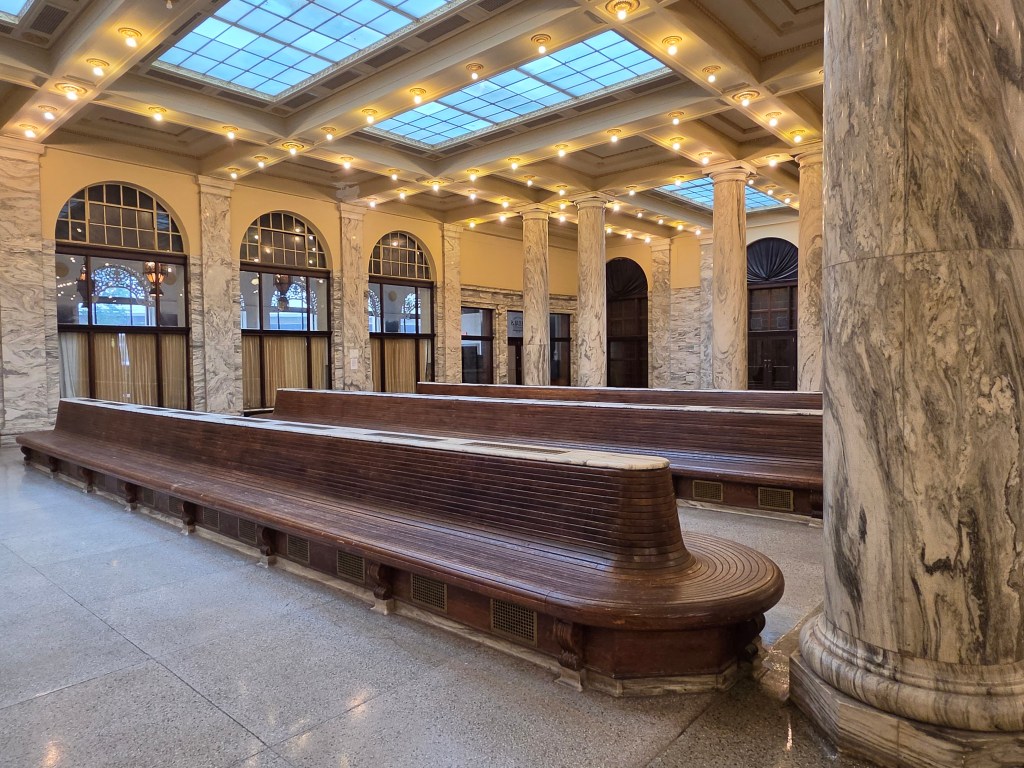
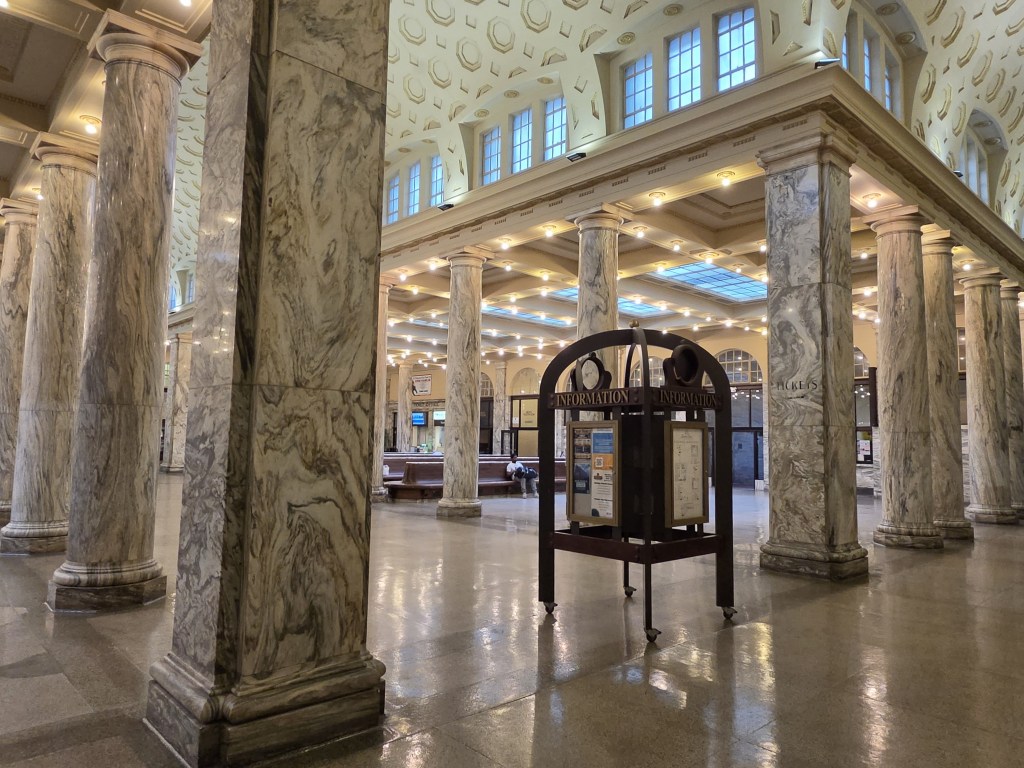
When I visited it around 5 pm on an overcast Sunday night, 16 August, I found it nearly deserted; a single Amtrak train called as I walked about, snapping photos on my cell. I was alone as I left by the south exit: the empty street and brick buildings looked like a set from The Sting, the scene when the Robert Redford character is targeted by the woman he’d spent the night with. Creepy.
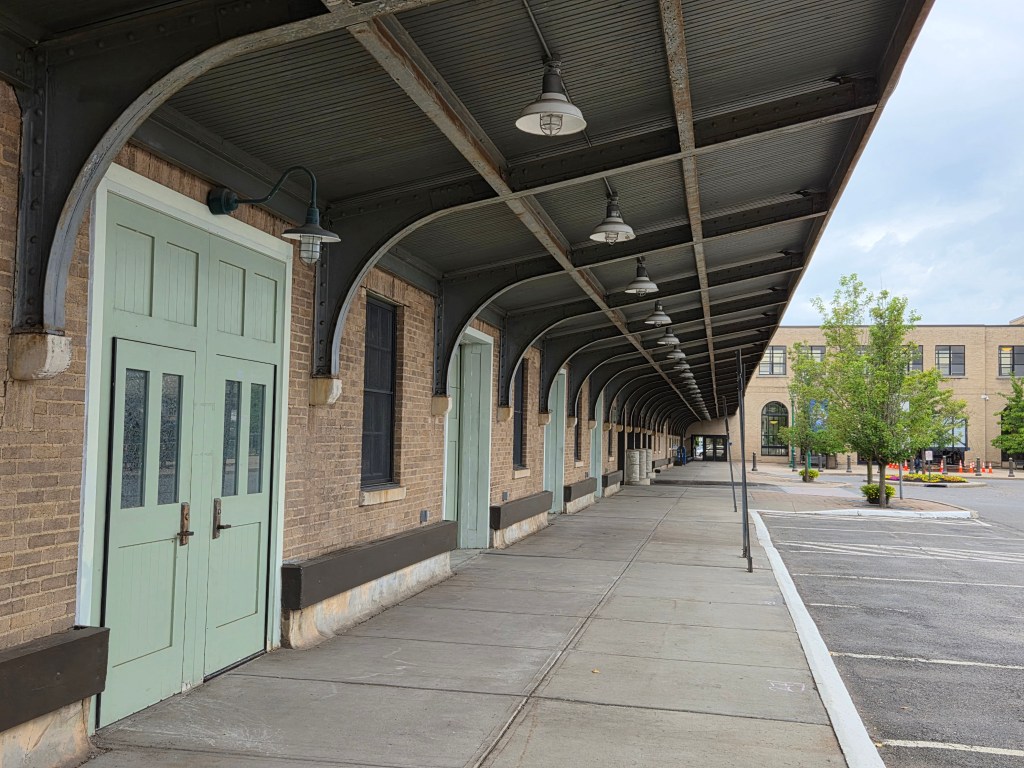
And creepier still when I was approached by a lone Black man with a tale of just passing through looking for money to feed a grandson who was nowhere in sight. He was not aggressive or deliberately threatening; I sympathized, told him I was a tourist myself and had no cash on me (a lie), wished him luck, and walked away, hoping someone else would appear. No one did— except the 30-some passengers on the other side of the tracks separated from me by a fence but visible by the time I got to the north side of the building where I could see my car parked at some distance in the visitor lot. It crossed my mind to wonder if anyone would see/hear/help me if I were suddenly attacked. But no one had followed me, and I returned unscathed to my Best Western, got a chicken sandwich from Wendy’s across the street, and ate it while watching a double feature of Jaws 2 followed by the original, magnificent Jaws (poor Roy Scheider looked so miserable roped into that wretched sequel) interrupted by at least 16 Burger King chicken sandwich commercials. How hath the mighty fallen.
That same morning after my fifth and final breakfast at Harbour House in Niagara-on-the-Lake (an appealingly abundant buffet of treats, though I opted each morning for a poppy seed bagel with lox and a schmear) I had strolled one last time to the charming Queen’s Royal Park with its gazebo, lakeside path, and view of Toronto’s skyline across Lake Ontario.
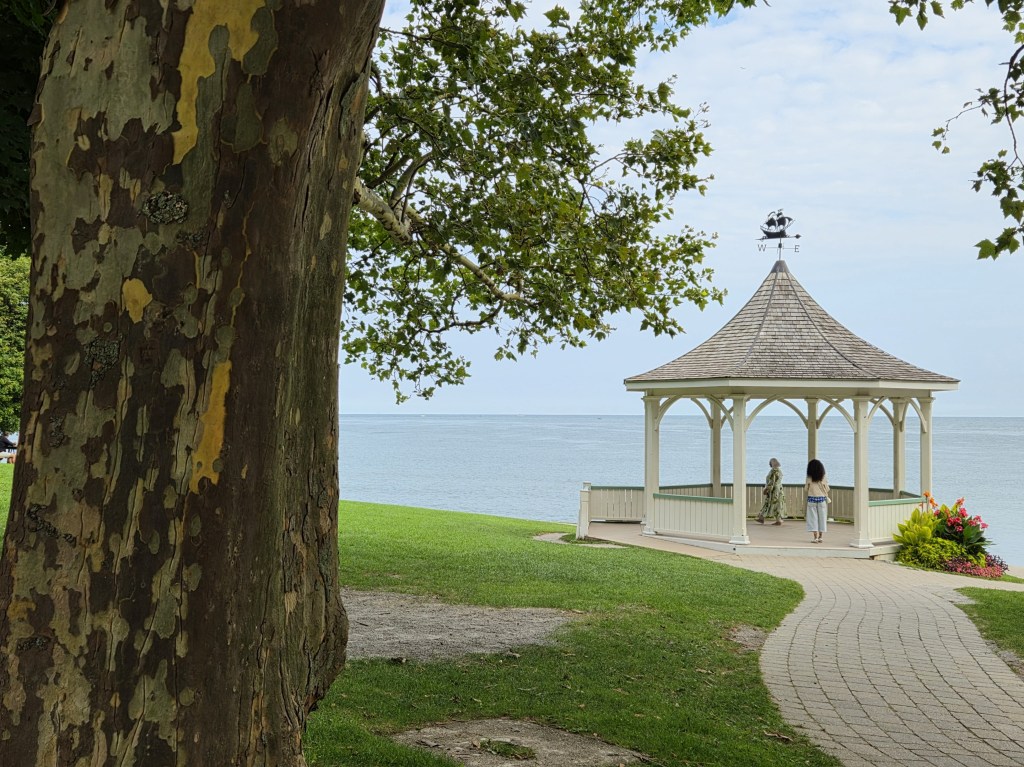
Queen’s Royal Park, Niagara-on-the-Lake, Ontario 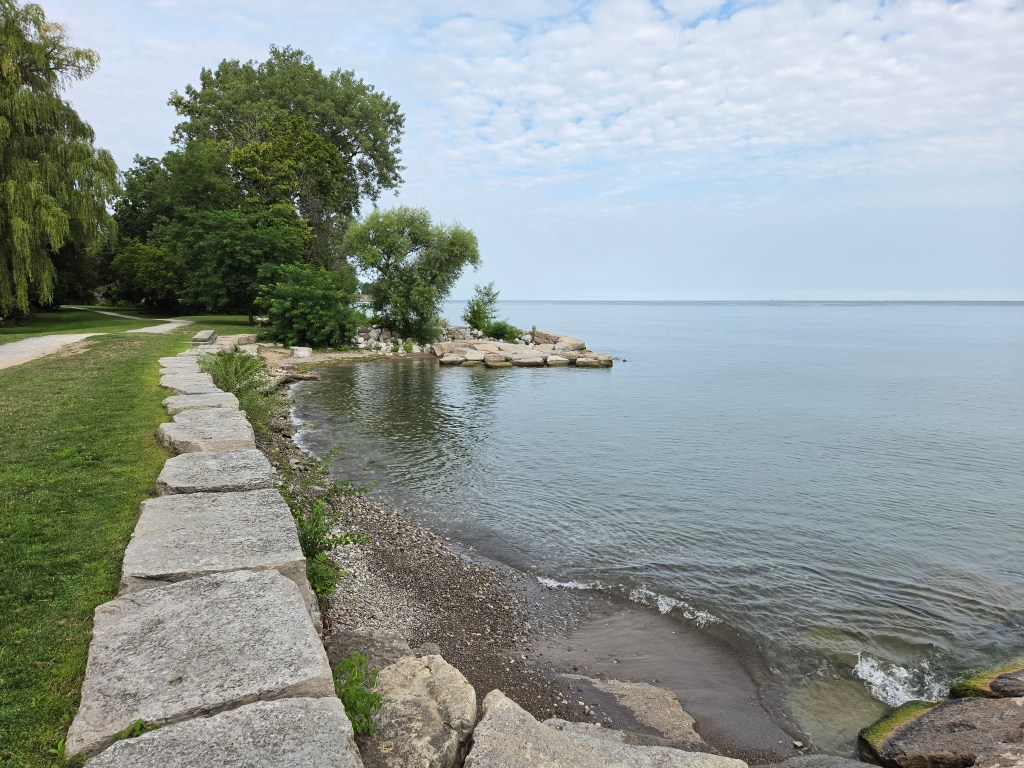
I had, for the third time in my visit, apologized to a Canadian, a fellow guest at our boutique hotel parked next to me in the garage, regretting my country’s abominable treatment of our good neighbor. She was gracious enough to reply, “Well, we’ve got our problems, too.” And then I’d driven one more time along the lovely Niagara Parkway that Churchill once described as the prettiest Sunday drive in the world, passed the Canadian border crossing, and run the no man’s land gauntlet to the U.S. port of entry. The border guard there was a woman with a showy, snowy white manicure who asked my country of origin as she looked at my passport, asked if I had anything to declare (I didn’t—except that I was ashamed of my country, a sentiment I left unspoken), and waved me through with a “Welcome back, Hon.” Easy-peasy. I drove on, westward past legions of metal transmission towers with their high-tension power lines industrializing Niagara Falls, then a huge garbage mountain (monument to excess), followed by the rusty, abandoned amusement park Ferris wheel along I-190. The rain came as I entered the green Mohawk Valley: Leatherstocking country under grey skies, a verdant green breast of the New World left largely unsullied save for the considerable traffic and distantly spaced rest stops along the New York Thruway.
Eight days earlier I’d left home, and now relieved of the anxiety I’ve discovered is an aspect of solo senior traveling (Will I be able to find what I’m looking for without relying on gps I can’t use without incurring international roaming charges? Will I be able to figure out everything I need to about a 2025 still-new-to-me VW GTI setup? Can I keep track of my passport in a purse with too many compartments?) I had plenty of time to ponder events of the past week, layered atop strata of previous experience. I’d first driven this route in 2015 en route to Niagara Falls and the almost impossibly twee Niagara-on-the-Lake for the Shaw Festival to celebrate our 20th anniversary in a campy/classy way.
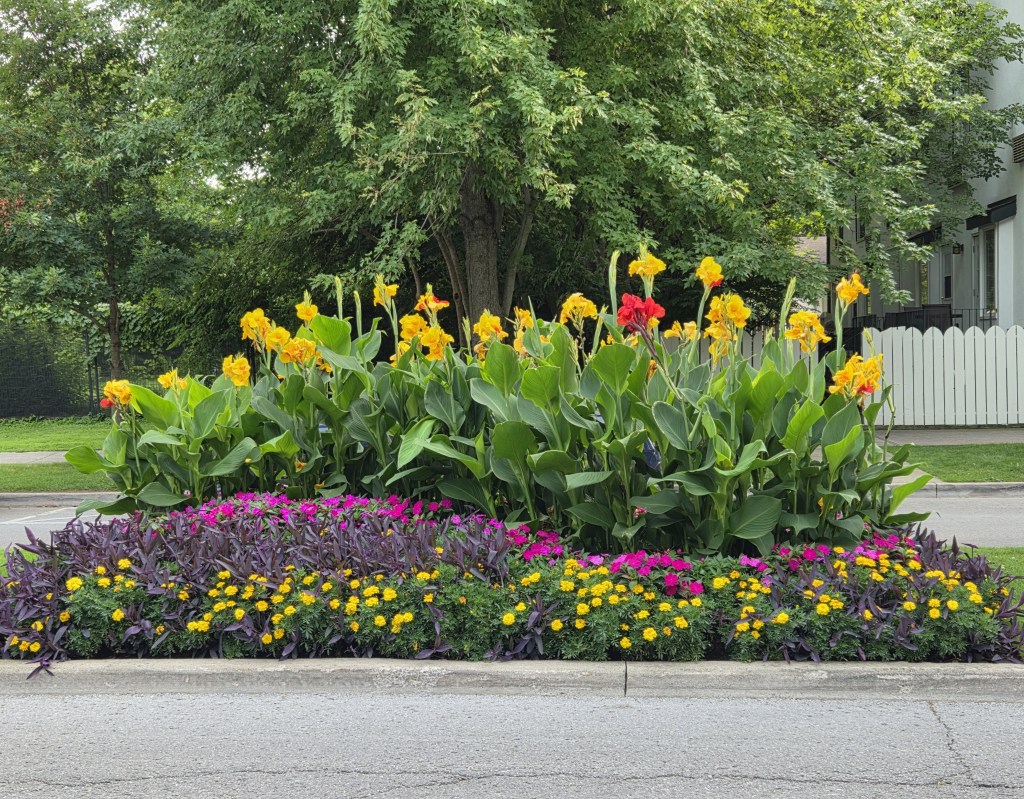
One of many carefully planted median islands in Niagara-on-the-Lake 
Cannas outside the Courthouse, Niagara-on-the-Lake At the time there was a fresh cement repair of the sidewalk outside Harbour House into which I’d inscribed a small heart. It was still there when we returned a couple years later, and again when I’d returned alone following my husband’s passing in the early summer of 2019; I’d contributed the theatre tickets he couldn’t use to the Festival. And this time, when I went to see if that little heart remained, I went directly to where it should be (a kind of muscle memory?), and lo, there it was: indiscernible to anyone else I’m sure, but present.
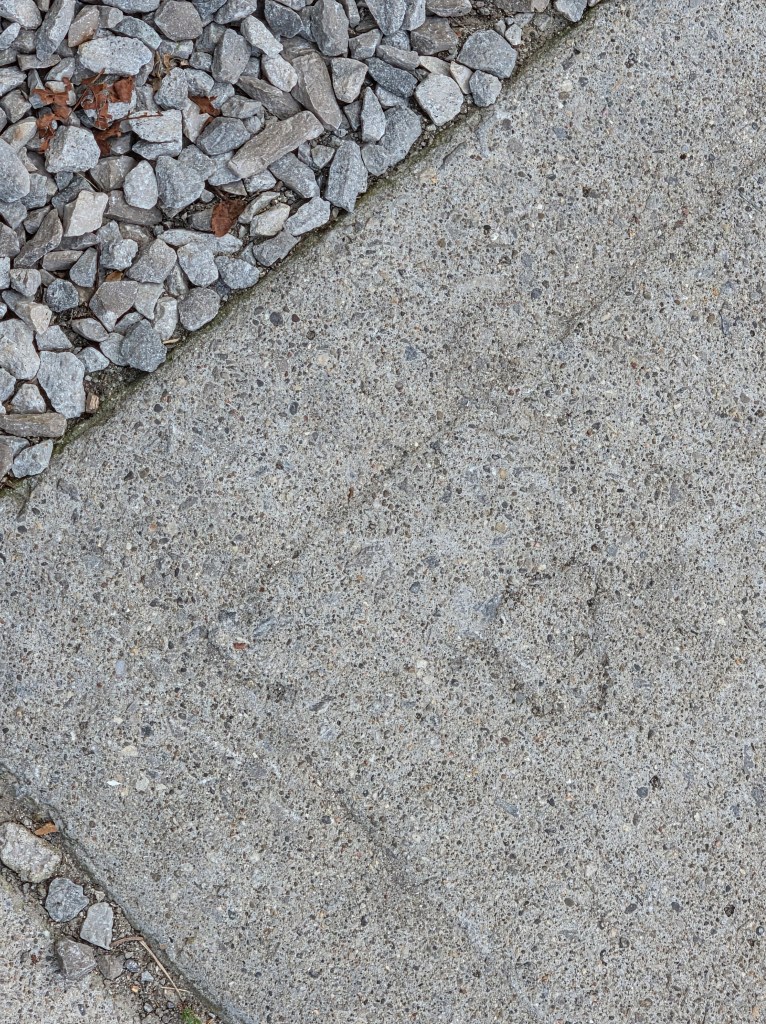
Barely there, but if you know where to look . . . And so it was the whole trip: nearly every new encounter inspired memories of previous experiences, a kind of nostalgic pousse-café. That layered liqueur drink is in reality pretty dangerous, violating as it does the “never mix, never worry” rule about alcohol: up to seven layers of different sweet cordials would spell disaster for me were I to indulge.

Photo by Morpheus1703, Wikipedia But I found I could drink this experiential pousse-café composed of chronological strata and, in the words of Joni Mitchell, “still be on my feet.” Pleasantly. Even when unexpected tears arose on crossing back into New Hampshire, recalling the first time I’d driven north from Kentucky to spend my sabbatical with my then still new Love—such delicious anticipation!—and I found myself irrationally hoping that in some Twilight Zone scenario I would find David waiting to greet me again—even then, I was still on my feet. Or my backside: it’s a 5-hour schlep from Utica back to Madbury, wearing on the bum however comfortable the seat.
And so worth the trip: 1100+ miles; 24 hours in Buffalo with Martha, my friend of longest duration; architectural monuments to the Gilded Age inviting comparison with what we and the billionaire class are up to now; a chance to made personal amends to the Canadian neighbors we have sore offended; wonderful food and wine from the fecund vineyards around Niagara; plus a for me always tonic reminder of that uniquely theatrical power, purposeful assembly engineered by skilled professionals working in concert to unify and move a group of otherwise unrelated individuals to a common understanding. Yes, please: more of that.
Details upcoming, Dear Reader. It IS good to be home, even if I DID manage to startle the doe surprised to see me back in residence.

-
Family
1-3 August 2026
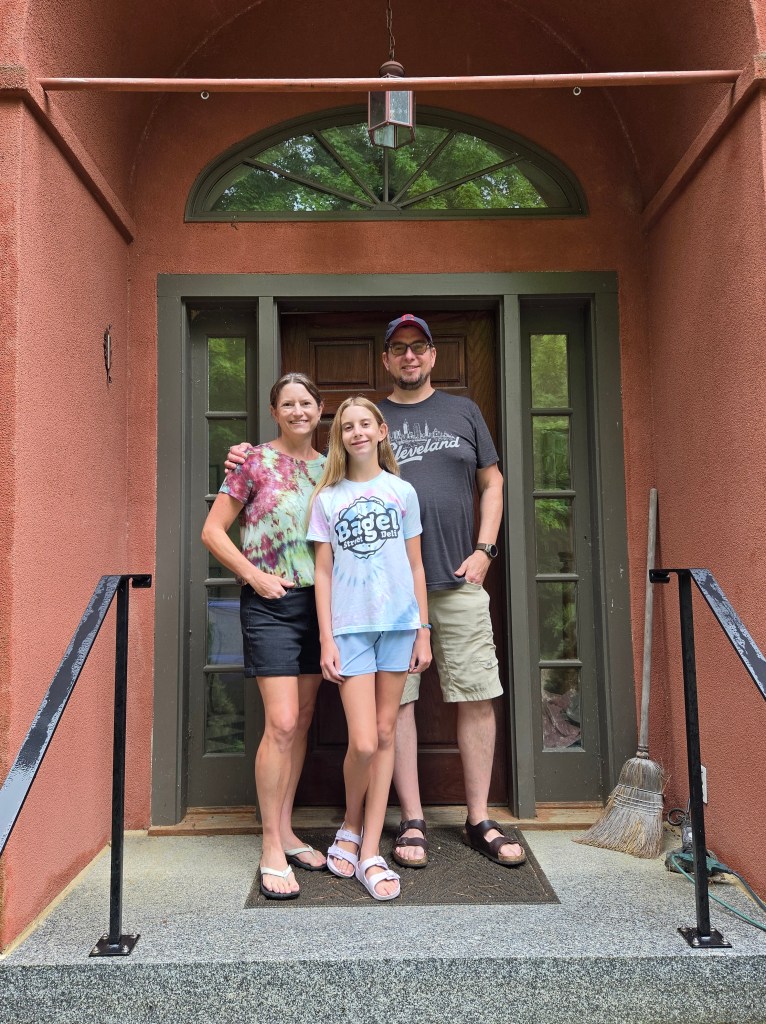
Erin, Azalea, and Steve arrive at Gnawwood on their first visit to New England Last weekend I had the pleasure of hosting houseguests I didn’t really know and discovering over the course of a little more than a day a surprising but profound connection that belies the literal relationship of first cousins once and twice removed. Undaunted by the bad luck of a rental car with a tire leaking air, they arrived on Saturday evening eager to connect and more than capable of hatching a plan to address that hiccup without compromising our one full day together on Sunday.
I had written to and spoken with Erin, my cousin Barbara’s daughter, before, but never met her husband Steve or daughter Azalea. Nevertheless, by the time we’d working our way through the guacamole—first course of the quasi Mexican dinner I’d planned—the talk flowed comfortably. Was it the Midwestern roots we had in common? Or my delight in recovering the childhood admiration I’d had for my Senseman cousins, the “Big Girls” two and four years older than me, always beautifully groomed and dressed by their glamorous beautician mother, my wonderful Aunt Mart, seeing their good looks and charm reflected in Erin? Or maybe it was just the joy of seeing loving parents ease their clever daughter into overcoming the strangeness of new acquaintance and surroundings? Whatever the charm, it took.
We “did” the Portsmouth area, plunged in the chilly Atlantic waters off Great Island Common in New Castle, and enjoyed the classic family seafood restaurant Warren’s in Kittery.
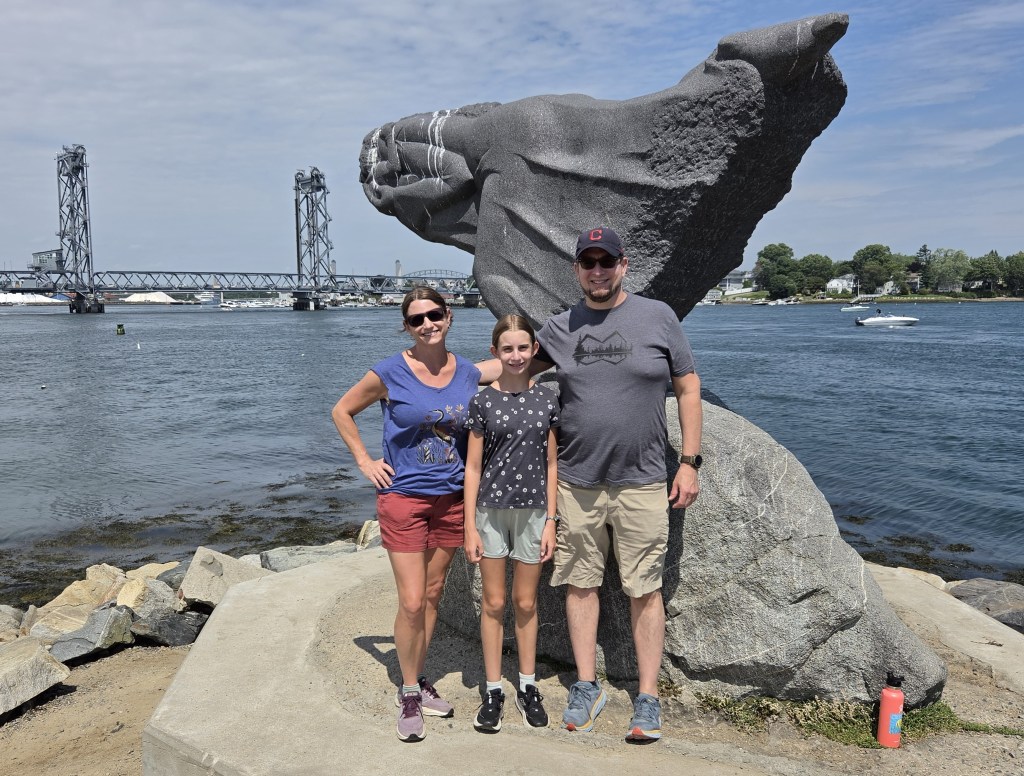
Family at Cabot Lyford’s 1975 sculpture My Mother the Wind on Four Tree Island at the mouth of the Piscataqua River with Portsmouth’s Memorial Bridge in the background. The inscription reads: “For those who sailed here to find a new life.” A sentiment worth remembering. 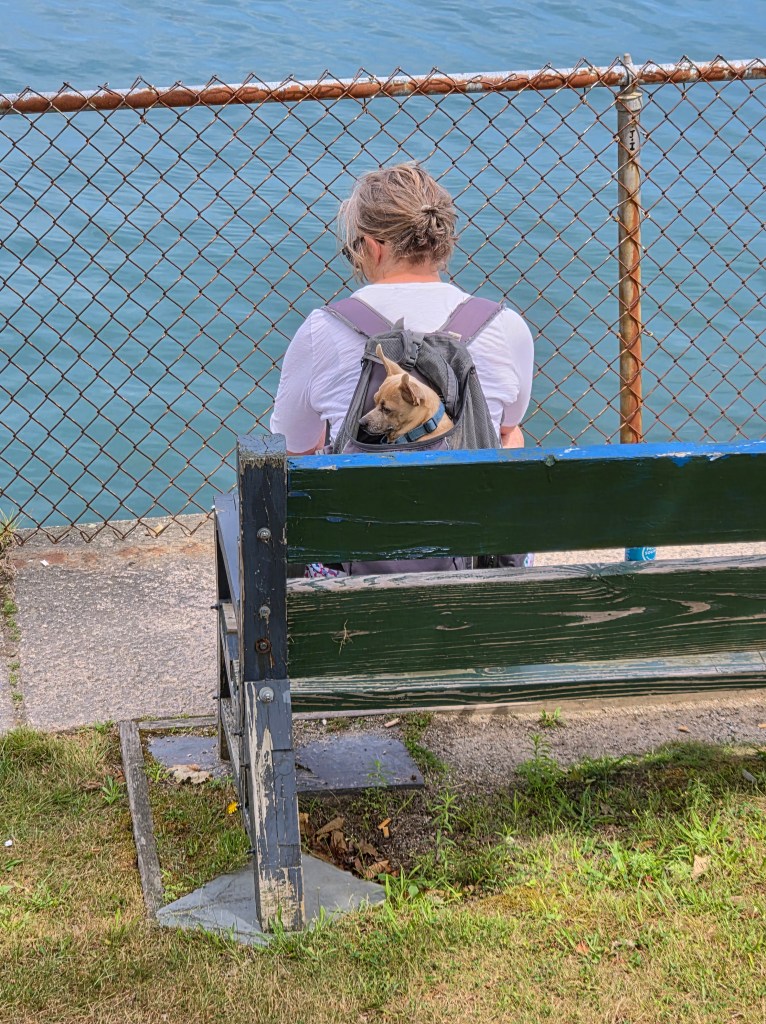
Doggie backpacker on the Peirce Island causeway 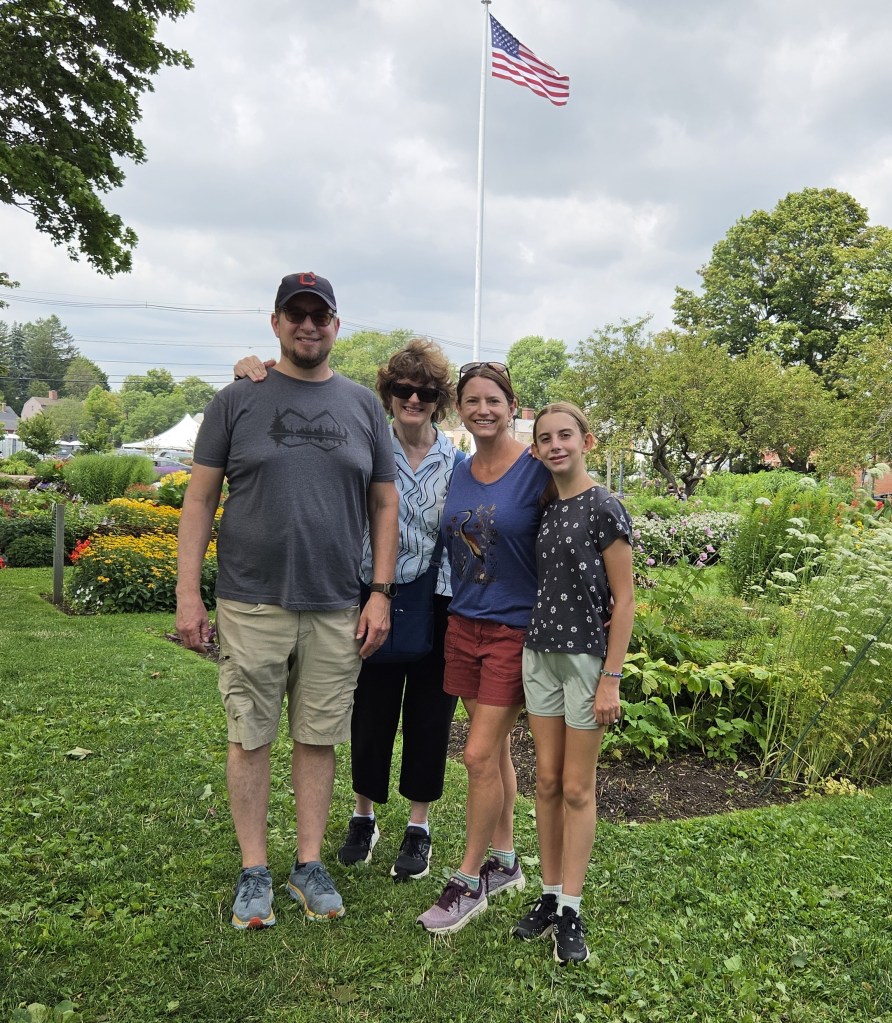
Stairstep cousins at Prescott Park 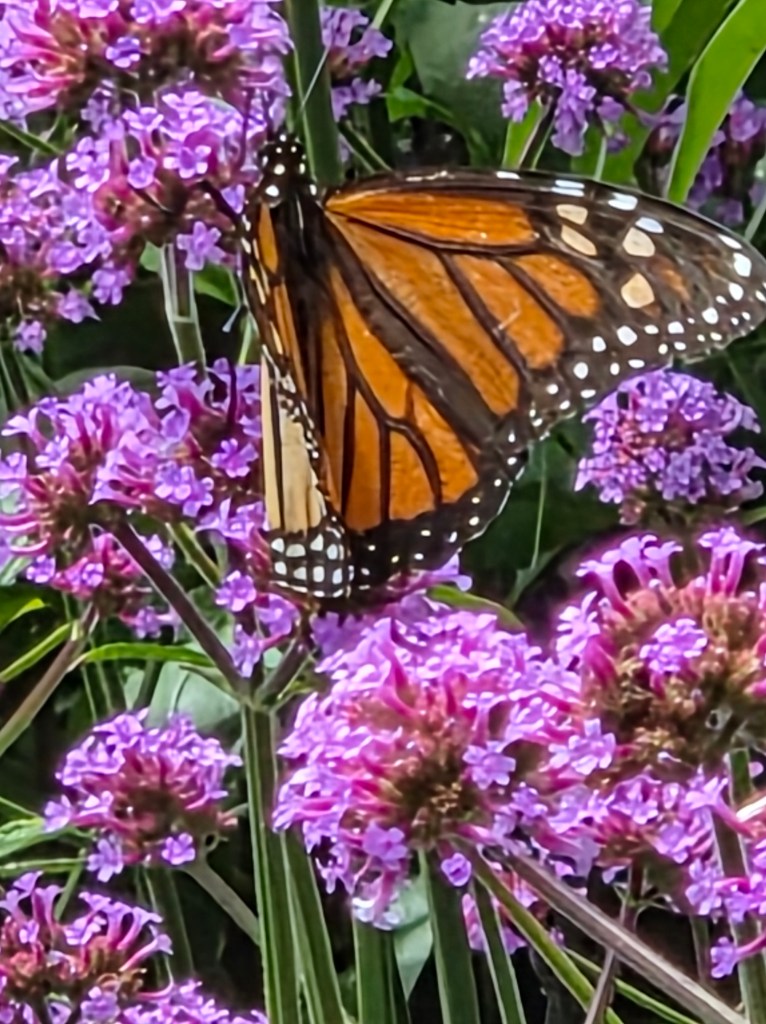
Monarch at Prescott Park’s Trial Garden 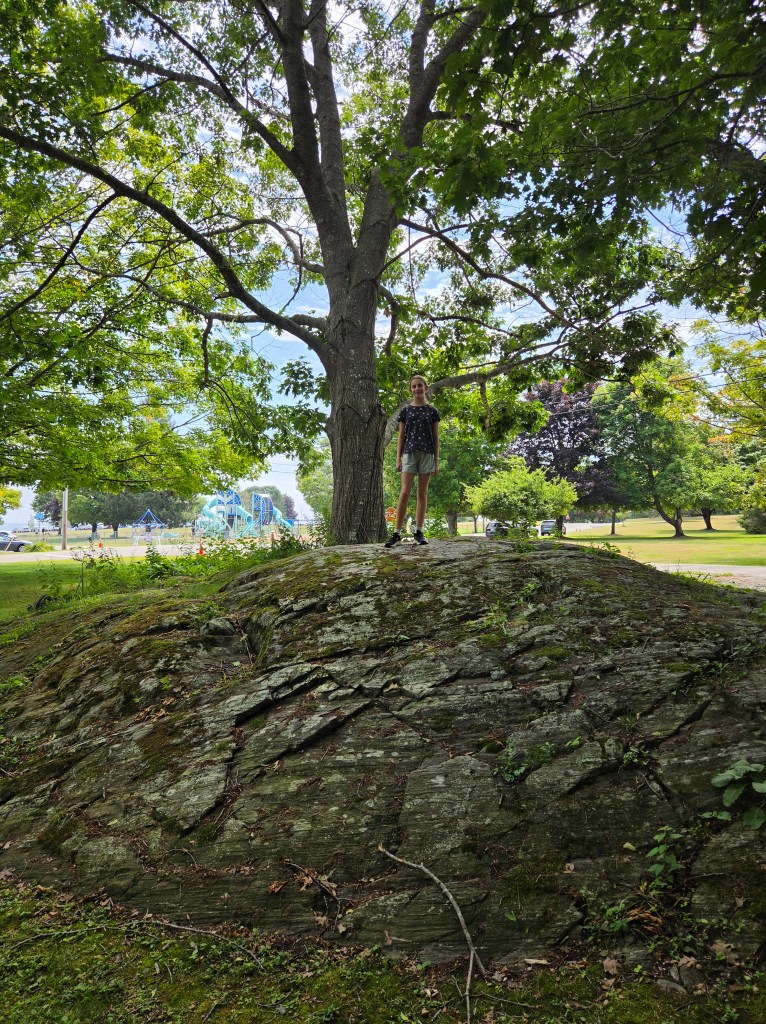
Azalea as mountain goat, having scrambled up the granite outcropping on
Great Island Common, New Castle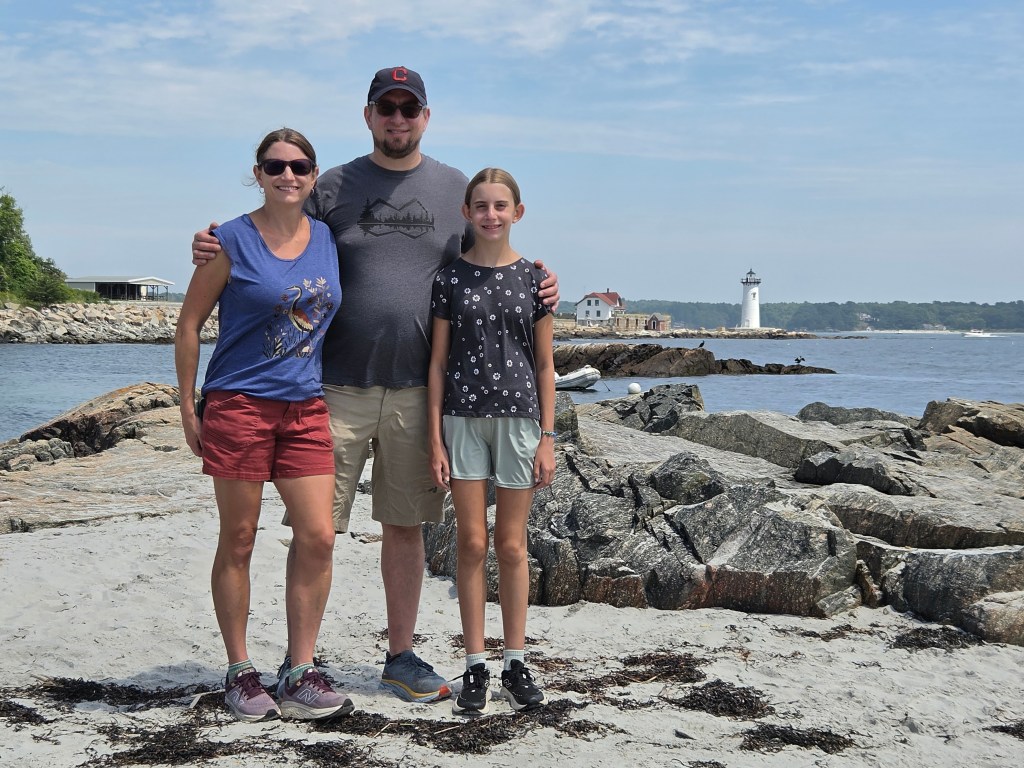
Great Island Common with the Portsmouth Harbor Lighthouse (aka Fort Constitution Light) 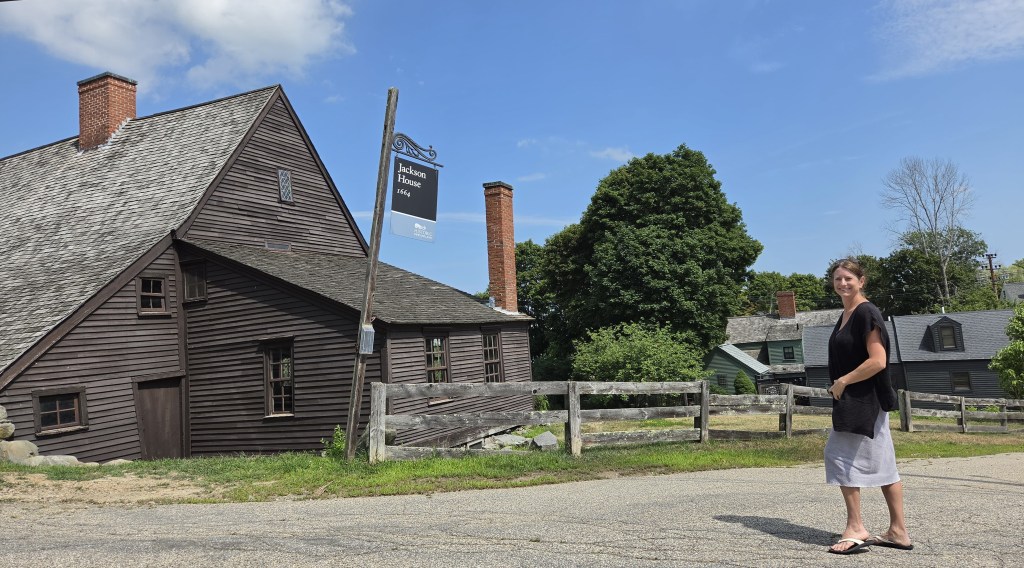
Erin jumps out of the car to check out the Jackson House, 1664, on Christian Shore, the oldest surviving wood-frame house in New Hampshire 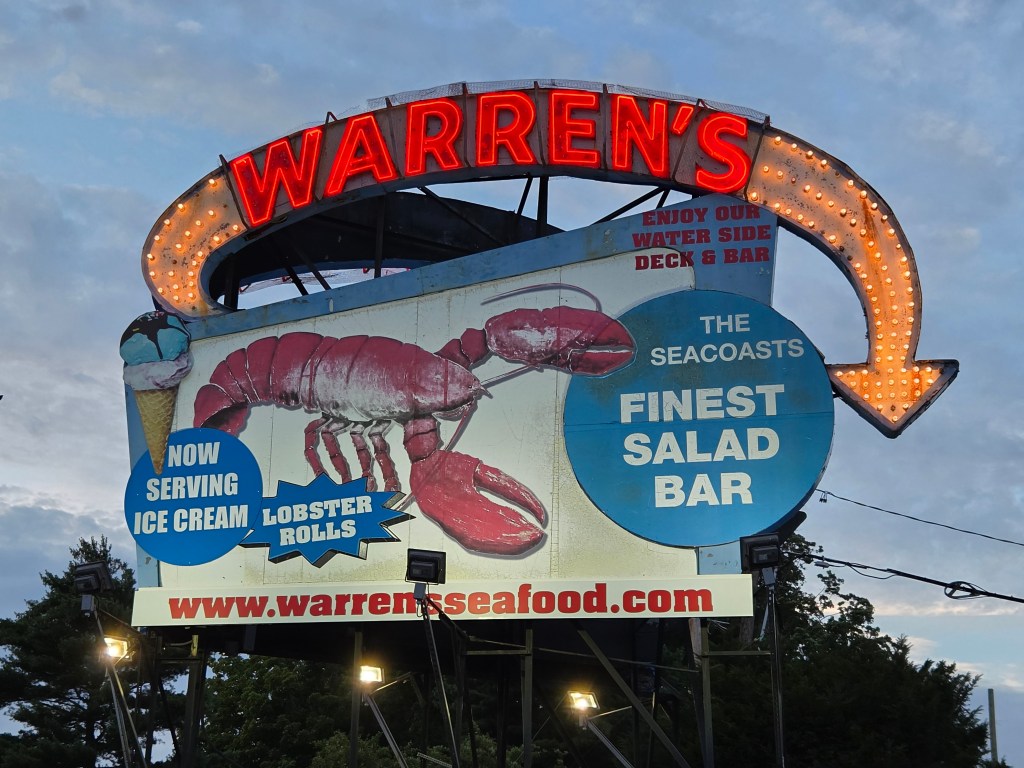
Newly re-opened Warren’s, with excellent service from Romanian waiter Stefan 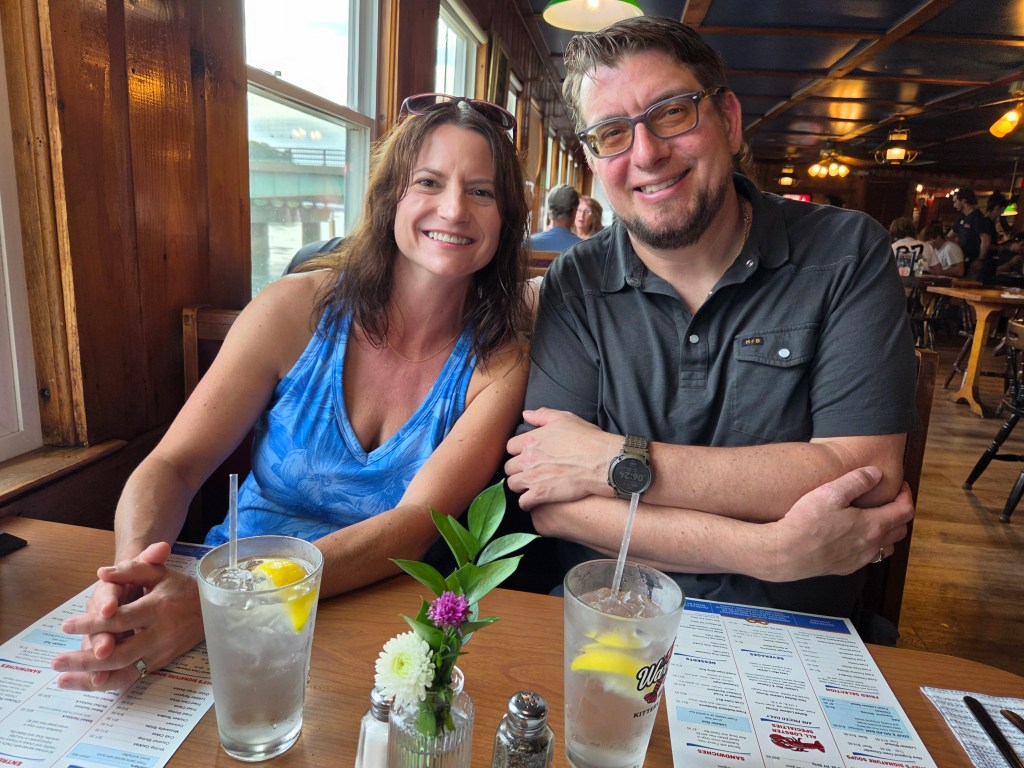
Handsome couple Erin and Steve 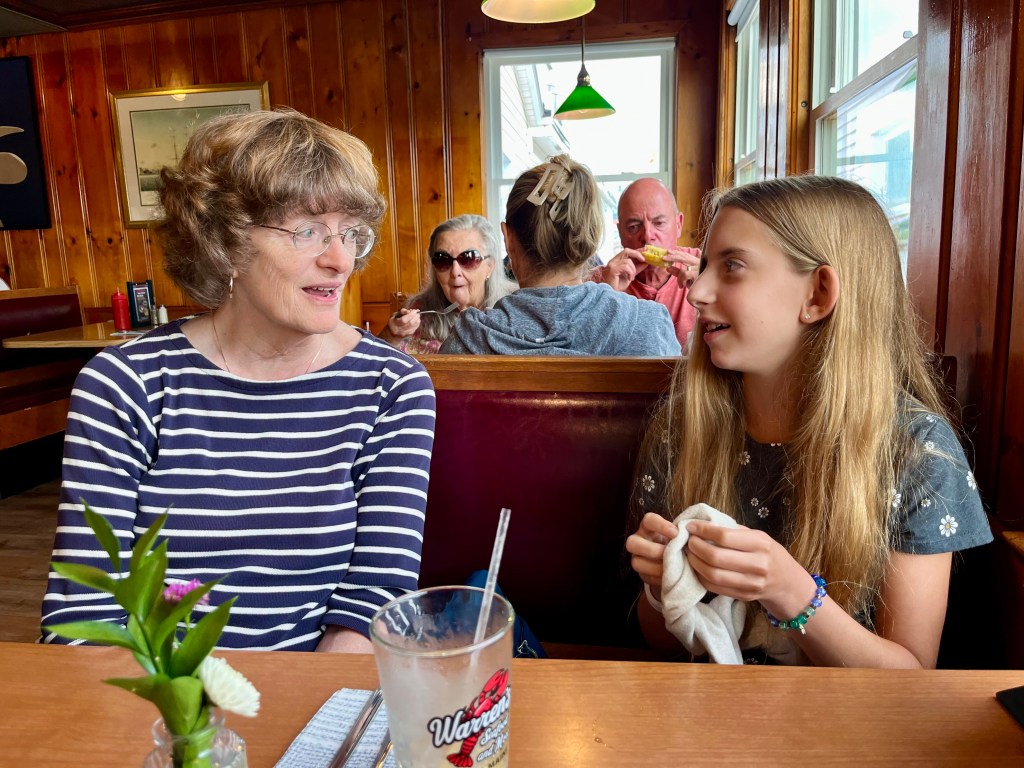
First cousins twice removed, ages 73 and 12 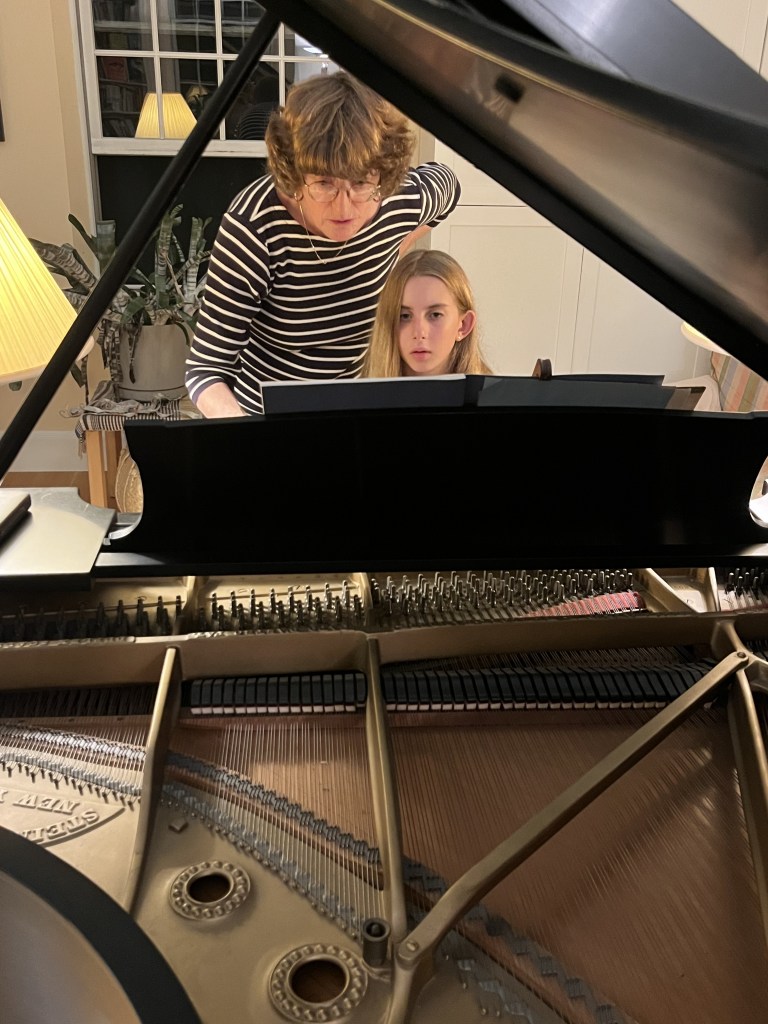
Cousins try to sort out some Bach at the Steinway 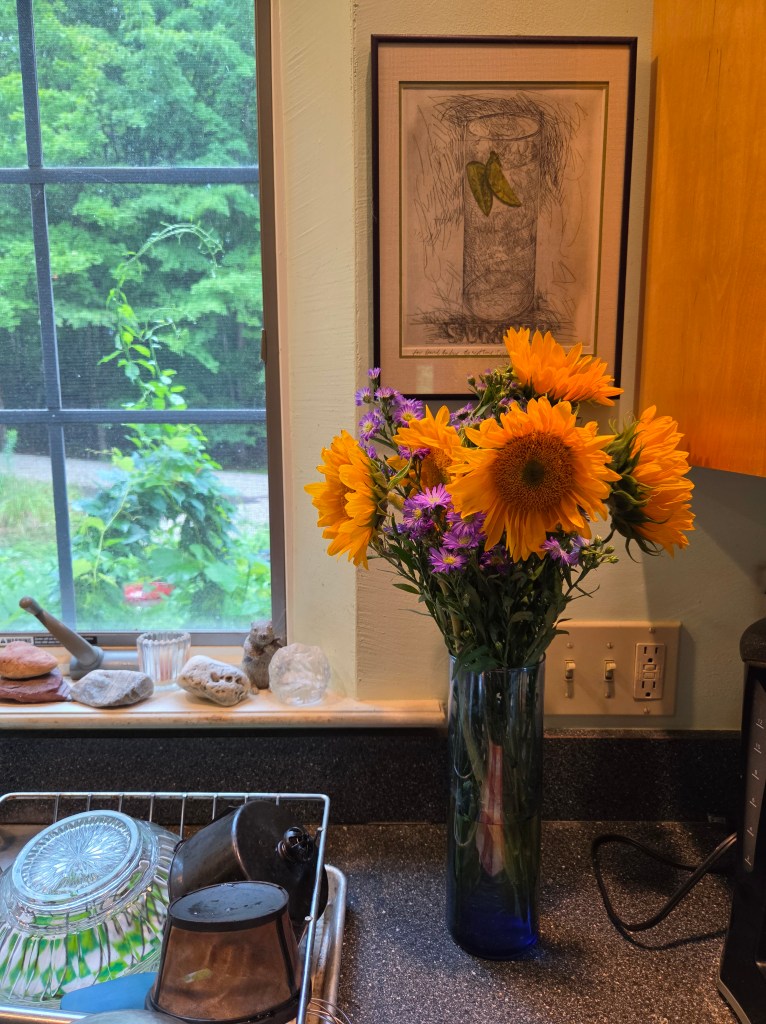
Lovely memento from Steve, August’s sunflowers and asters We looked through family photos so carefully annotated and researched by my mother Virginia, we played the piano together, and Azalea demonstrated her Irish step dancing moves. By the time they departed after Monday’s breakfast, I felt I’d discovered the family I’d been missing, dispelling that last-of-the-Mohicans, no-one-else-knows-the-family-stories isolation haunting me ever since the deaths of my parents and younger sister. To serve dinner on the table I inherited from my grandparents to their great- and great-great granddaughter—the table on which Grandpa Cecil had helped me with my algebra—and at the same time discover how much I liked them all, was a thrill.
So, here’s to the family romance—sometimes actually a tale with a happy ending.

I’m left with part of the resident family at Gnawwood -
Once More to the Lake
13-17 July 2026
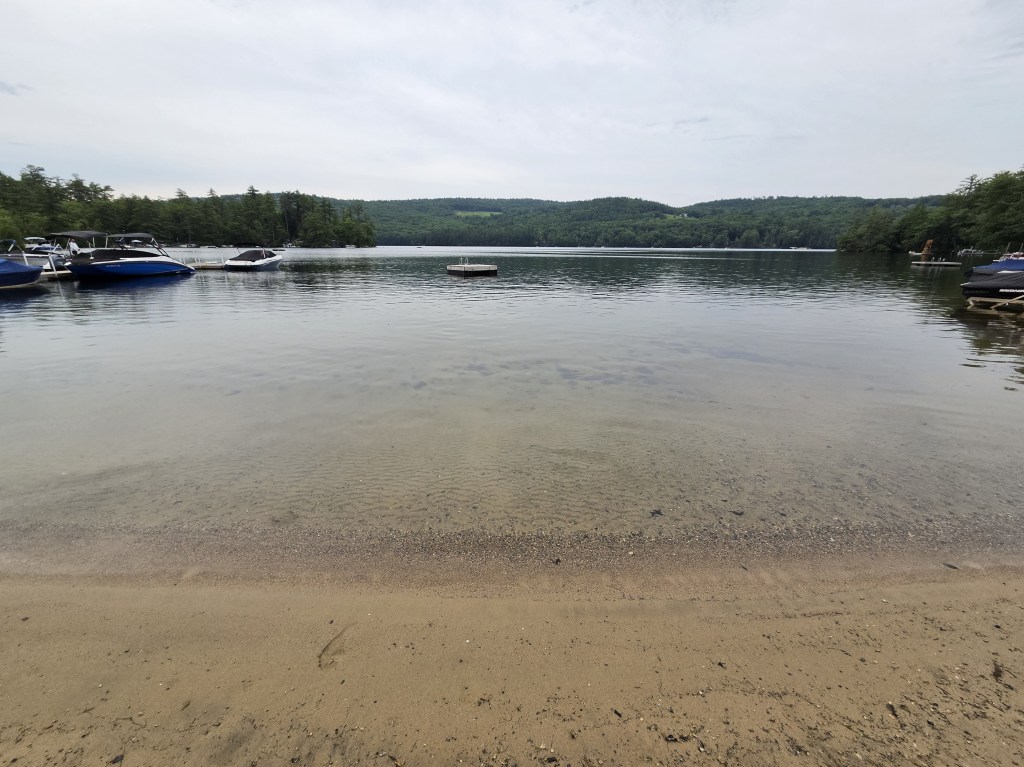
Cottage Place Beach at Little Squam E.B. White’s 1941 essay “Once More to the Lake” about his pilgrimage back to the lakefront resort in Maine he visited as a child is a masterpiece often taught in—or, perhaps more accurately, once often taught in—freshman English courses. The last time I taught English 401, I was encouraged to use a collection of quite mediocre student essays as the course “text,” a baffling pedagogical development I chose to ignore, feeling as I too often did in my last few years of teaching that the time was disconcertingly out of joint.
Like White’s essay and my experience of teaching it, my recent trip to Squam Lake (of On Golden Pond fame) was haunted by nostalgia, a term coined by Swiss medical student Johannes Hofer as a translation of the German Heimweh (homesickness), a composite formed from the Greek nóstos (homecoming) and álgos (pain) to describe the profound melancholia experienced by Swiss mercenaries fighting far away from their native Alpine terrain. The emotion is a complex one, and the word to describe it evasive, elusive, and (it seems) culturally specific. In Turkish, the word is hüzün, a shared, quiet state of loss. I’m partial to the Portuguese saudade, pronounced as an onomatopoetic sigh, a deep emotional state of melancholic longing, a bittersweet yearning for the absent presence of someone or something that is loved and irretrievably lost, combining the sadness of that loss with the warmth and joy of having loved.
What word best describes what is driving Matt Damon’s Odysseus in the Christopher Nolan film, as opposed to Homer’s Odyssey? A topic for a different post. This one is about my friend Cameron’s and my return to places we’d visited with our late husbands, hers the composer Russell Peck, whose music was often programmed for the New Hampshire Summer Music Festival held each summer at Plymouth State, and my David, classmates at the University of Michigan in the turbulent late sixties, both of them part of the avant-garde John Cage-affiliated progressive new music scene then in Ann Arbor. Cameron and Russell spent 13 seasons around the New Hampshire lake district, and twice David and I went up—once even flew up in a doughty Piper Warrior!—to join them for concerts and long conversations had while afloat in a lake, once Squam and once Kanasatka. Cameron had not been back for decades; neither had I—and quite possibly David and I were along on that couple’s last return to the lakes. I can’t remember the year.
But Russell departed this dimension in 2009, as did David in 2019. Could the wives left behind return to the lake and recapture any of that joy? The answer: Reader, we did. Ocular proof follows.
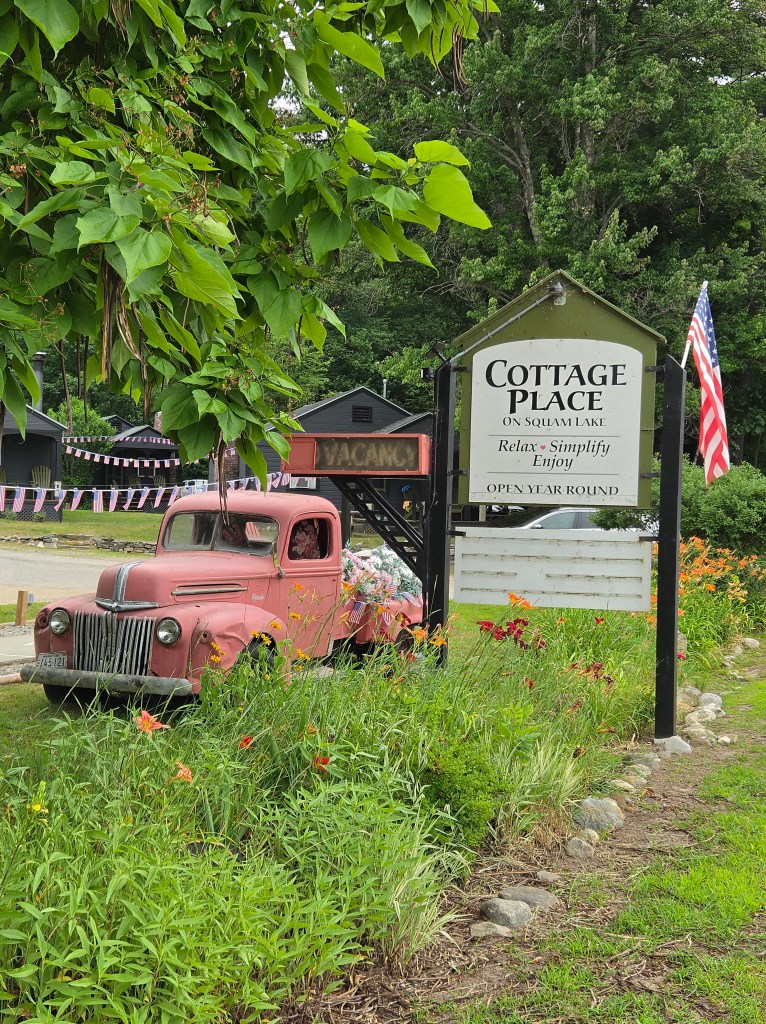
We arrived on 13 July, which would have been my David’s 83rd birthday 
Our cabin looked out on Little Squam, cozy with just the right amount of funk 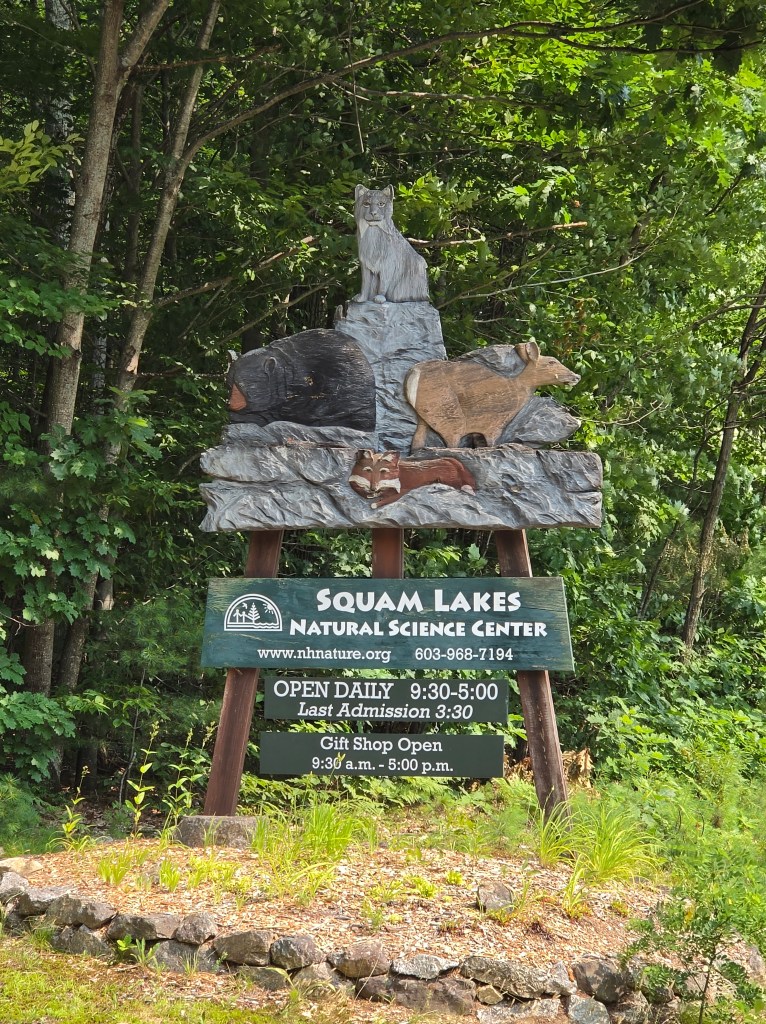
First day attraction: a visit to the remarkably informative and fun for all ages Natural Science Center. Did you know that foxes smell like skunks, or that mountain lion fur feels incredibly soft to the touch? 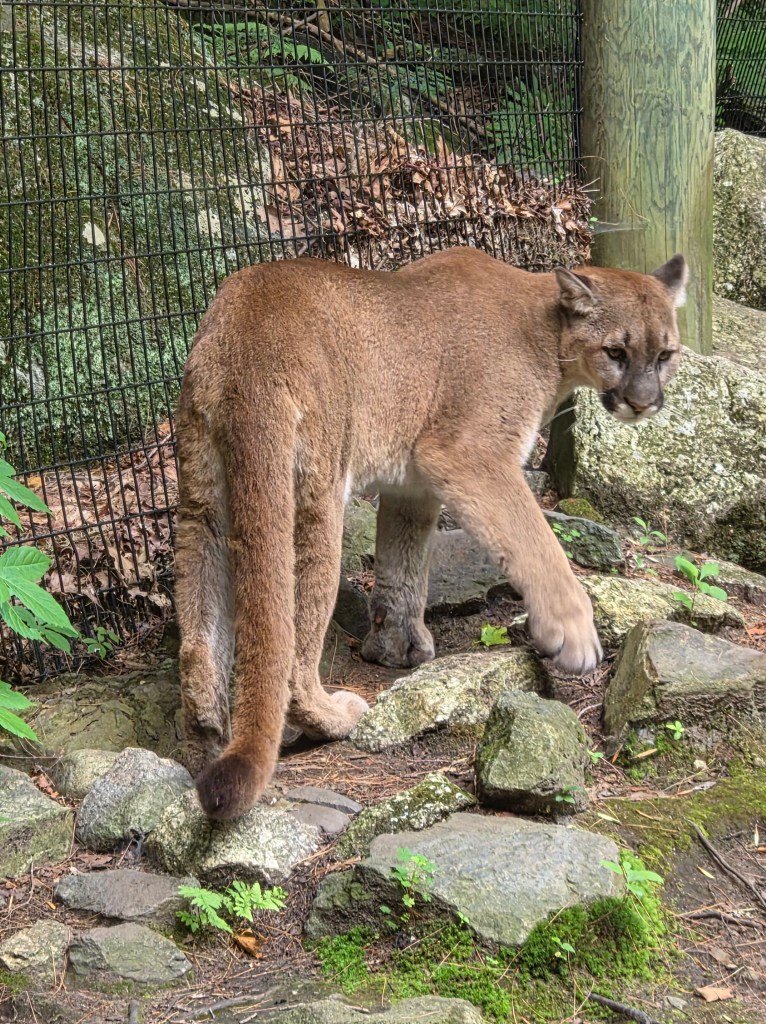
Resident catamount, a species now officially extinct in New Hampshire, though there are still occasional reports of unverified sightings. 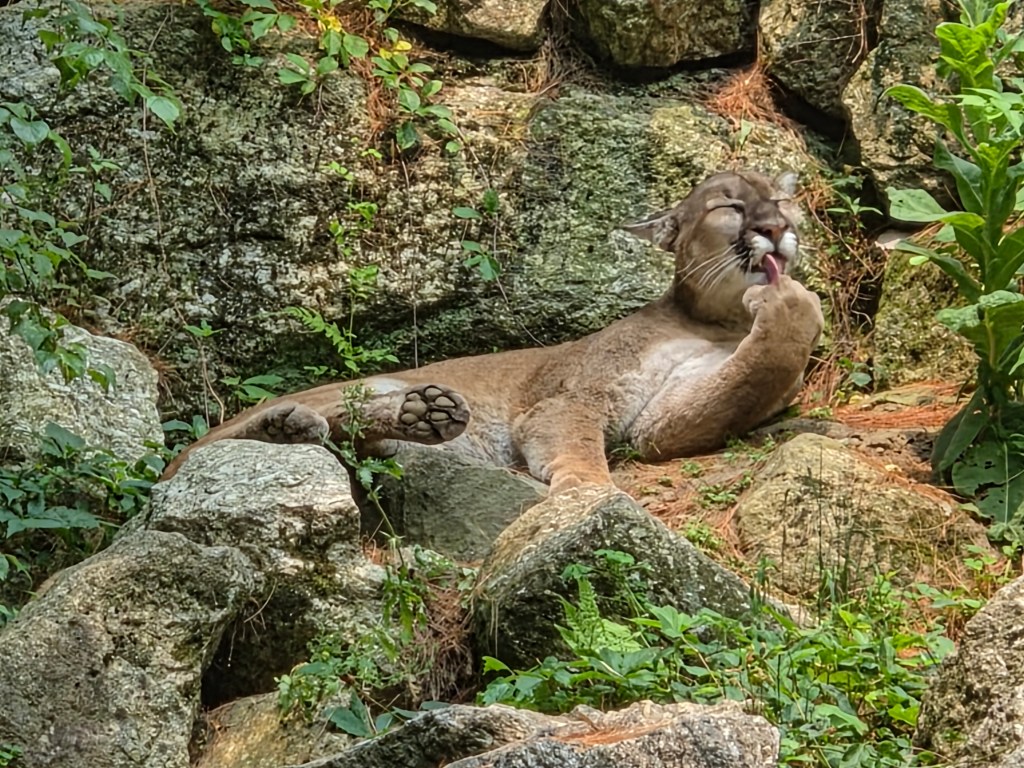
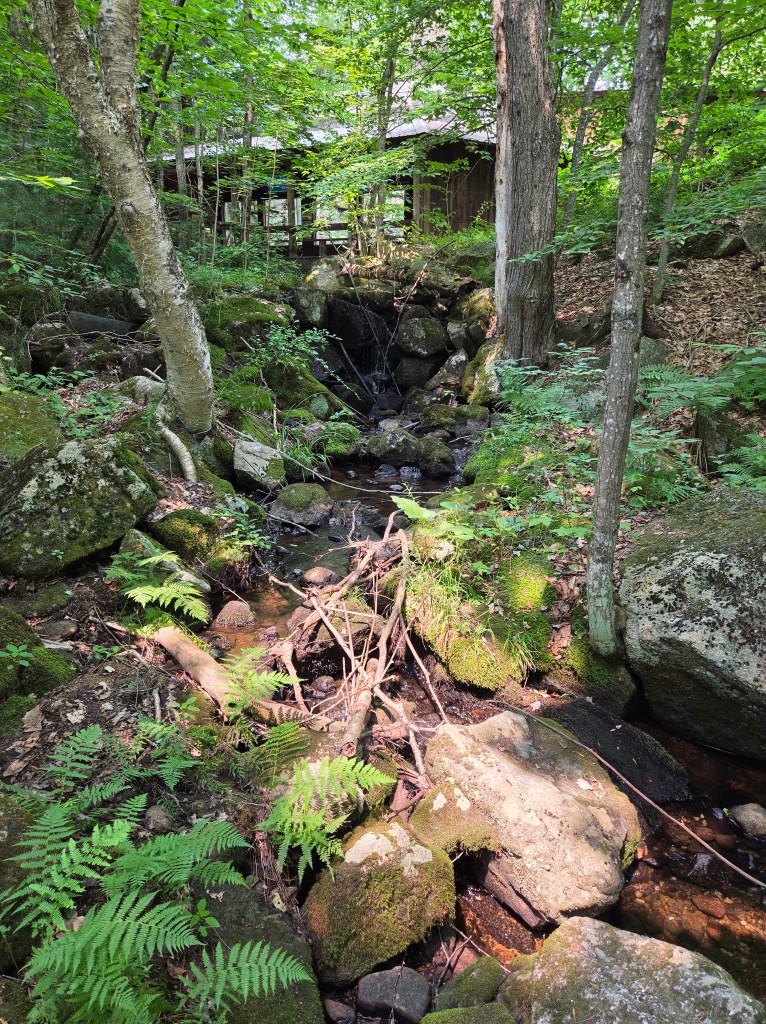
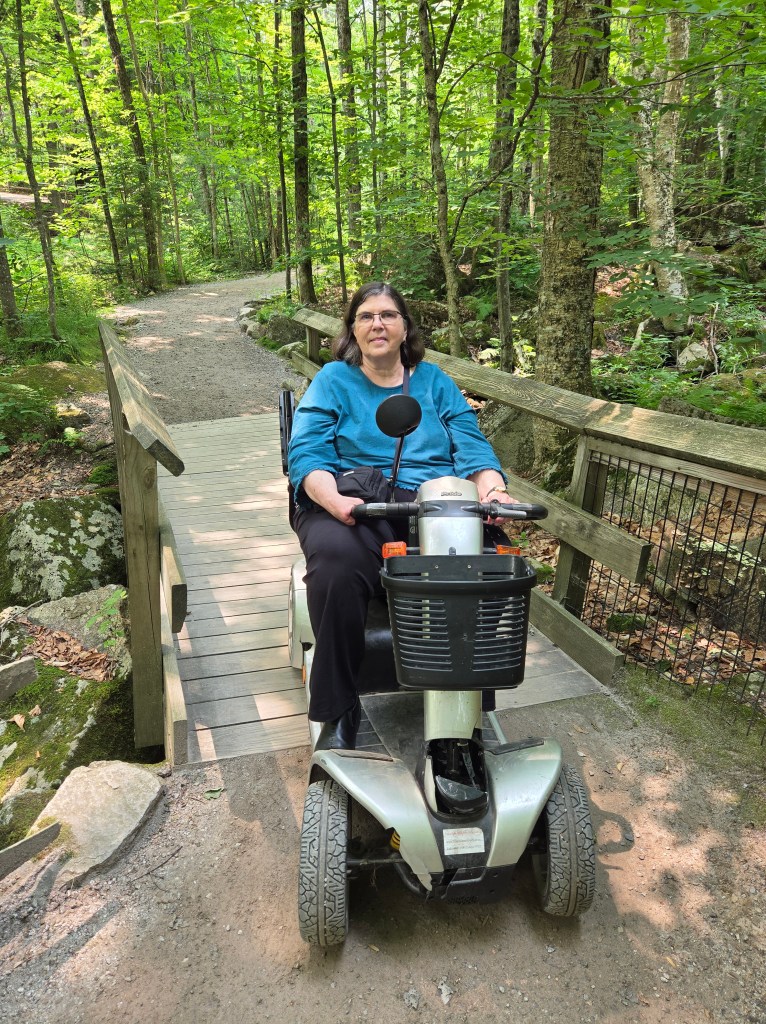
Cameron the Intrepid bravely navigates her first scooter over hills and dales, courtesy of the Center. 
One of the few deer who have NOT been eating my hostas 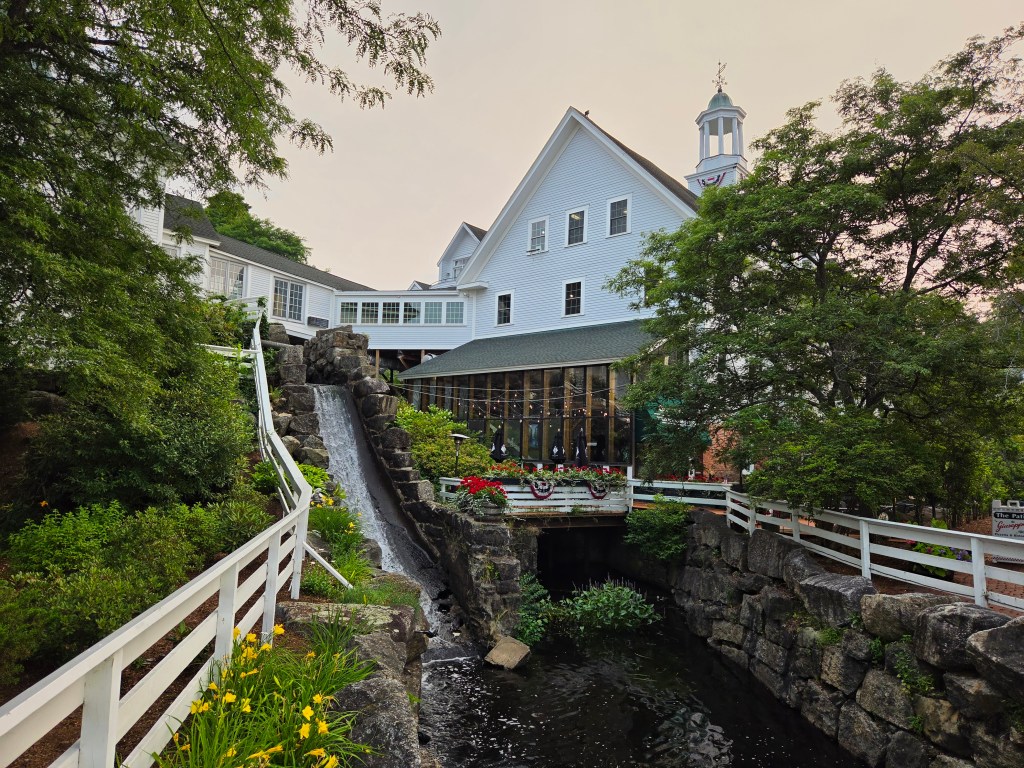
Mill Falls Marketplace in Meredith NH, home to Giuseppe’s, an excellent pizzeria 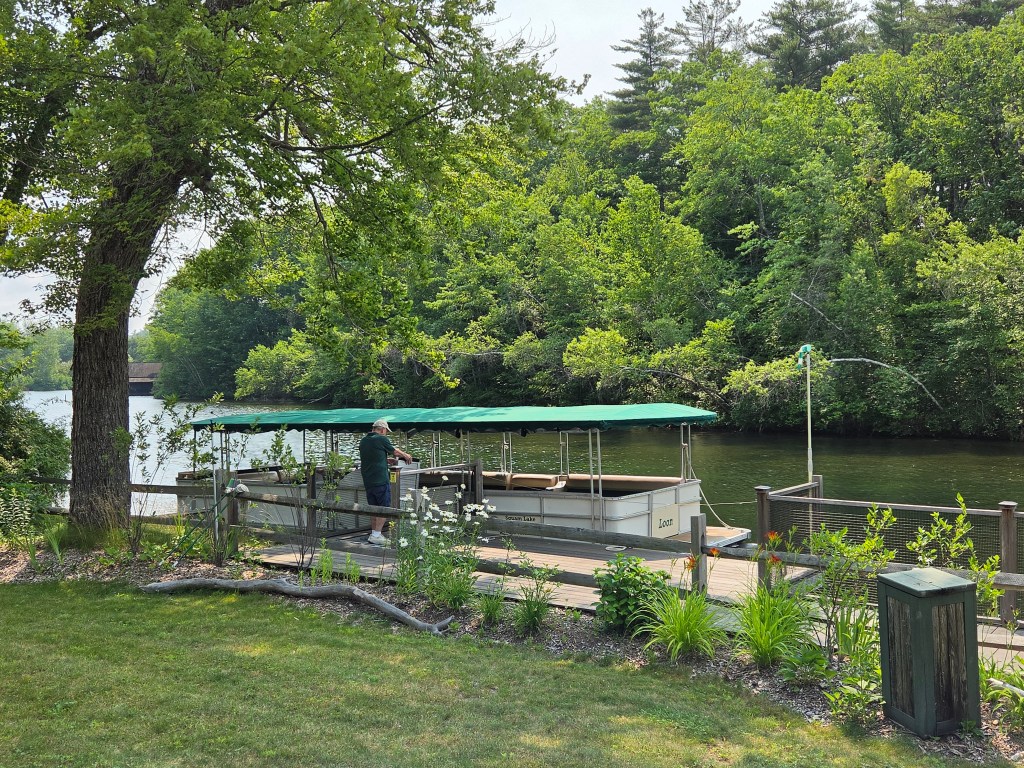
Next day’s adventure: the Natural Science Center’s Discovery cruise 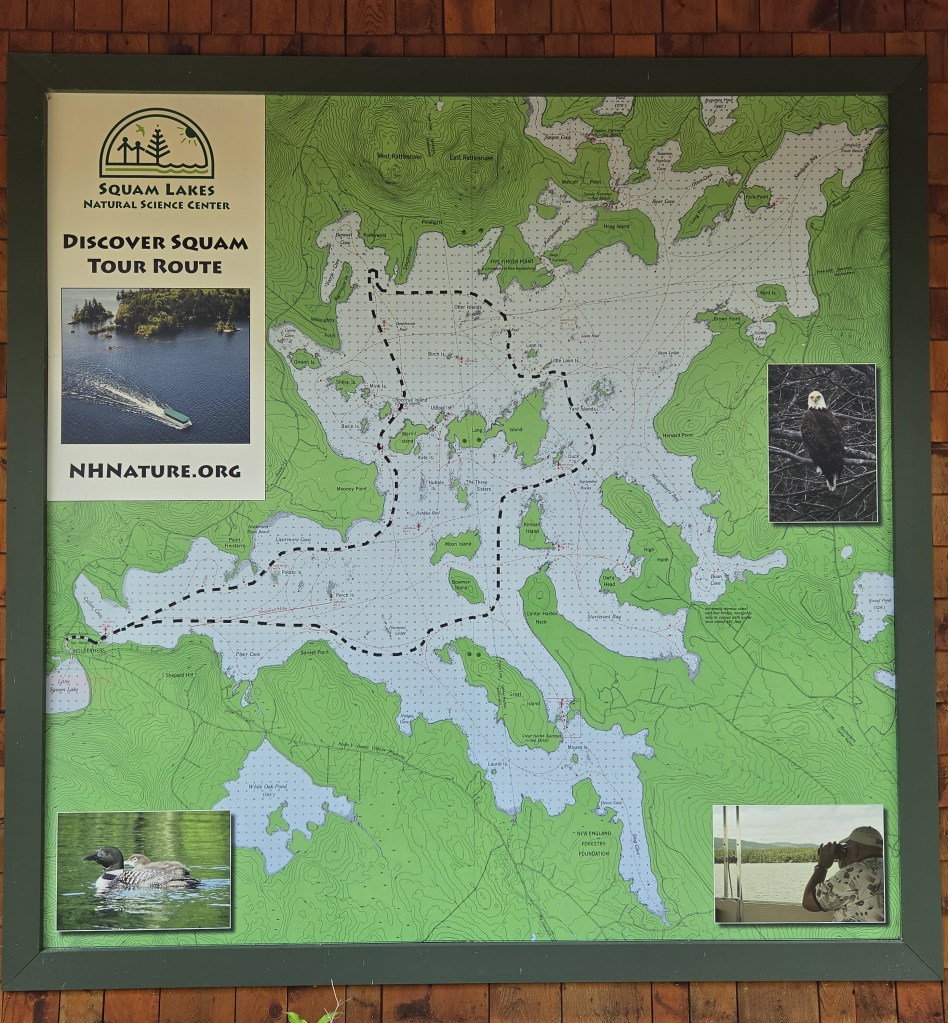
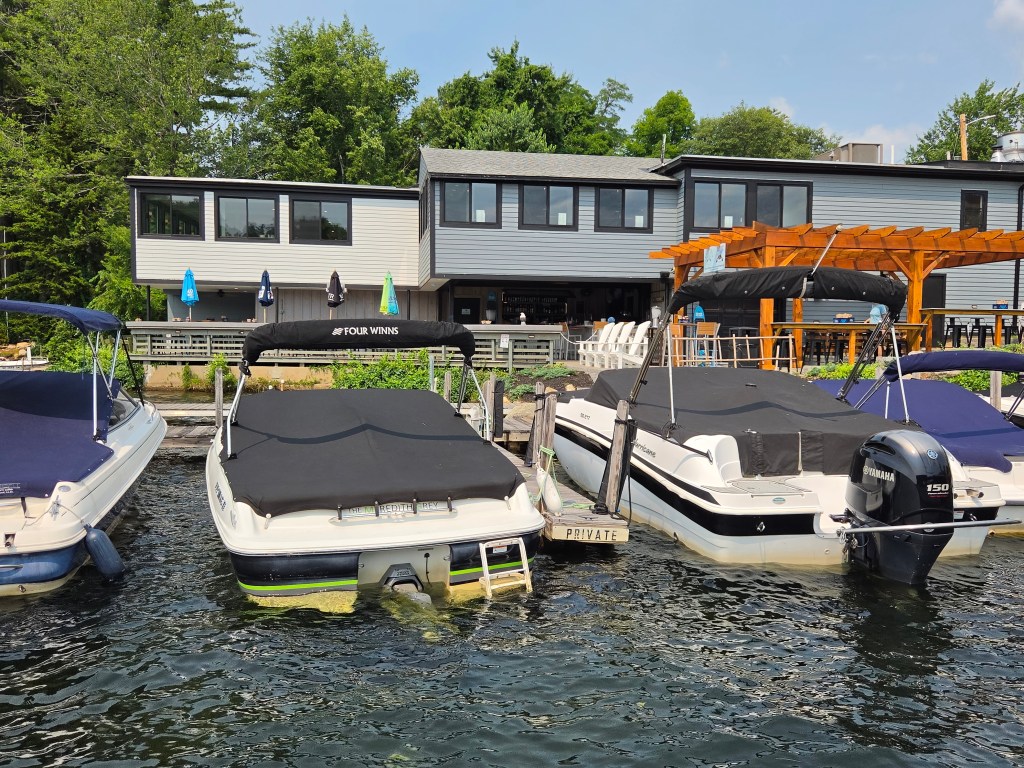
Walter’s Basin restaurant, just through the channel that connects Little Squam to Squam Lake. Walter’s is named for the fish caught and released in the 1981 film On Golden Pond. We enjoyed two excellent meals there, complete with lake views. 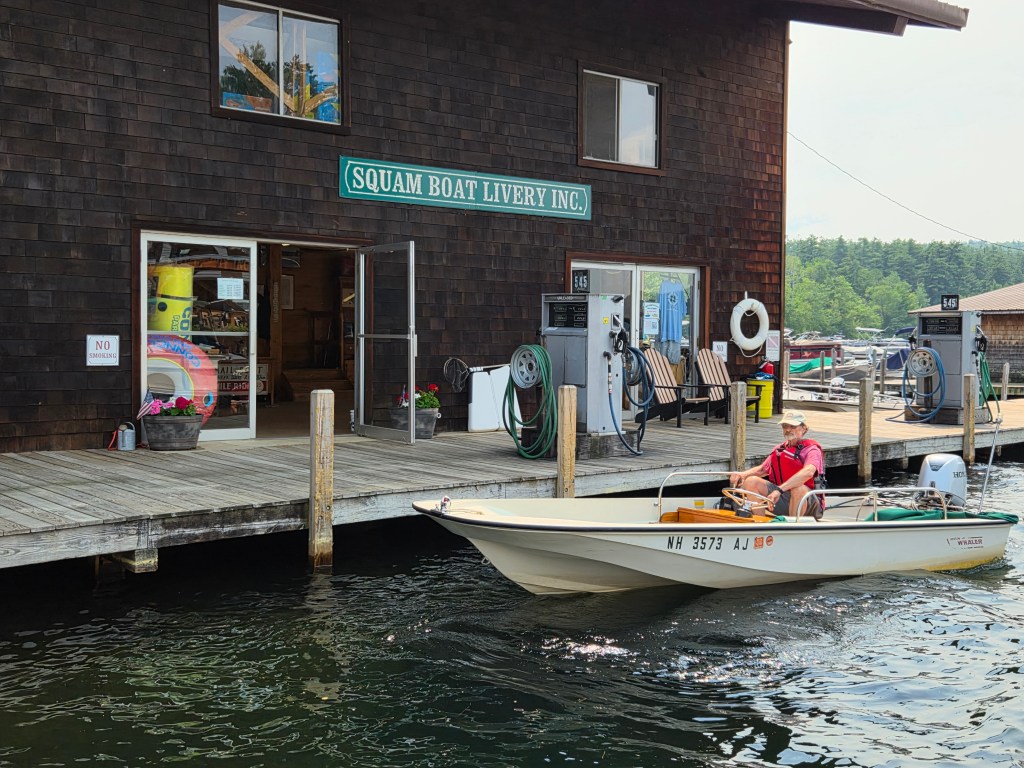
The very marina where Katharine Hepburn as Ethel Thayer gassed up and shopped 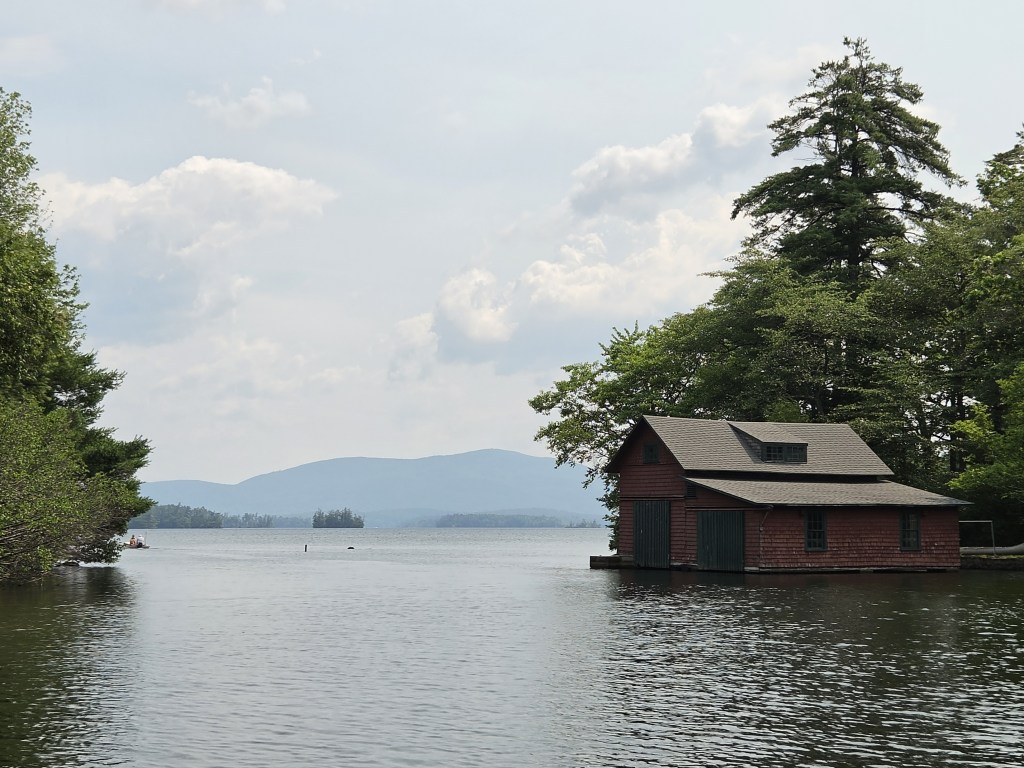
Entering Squam Lake: picture-perfect New Hampshire 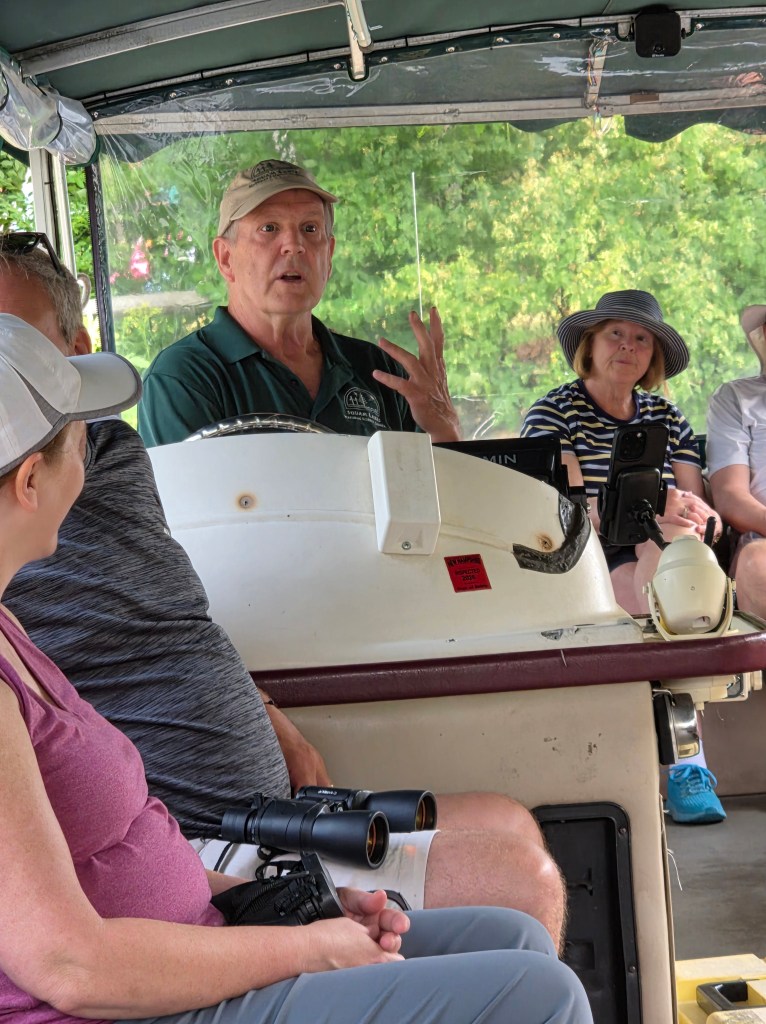
Captain Hugh on the Loon 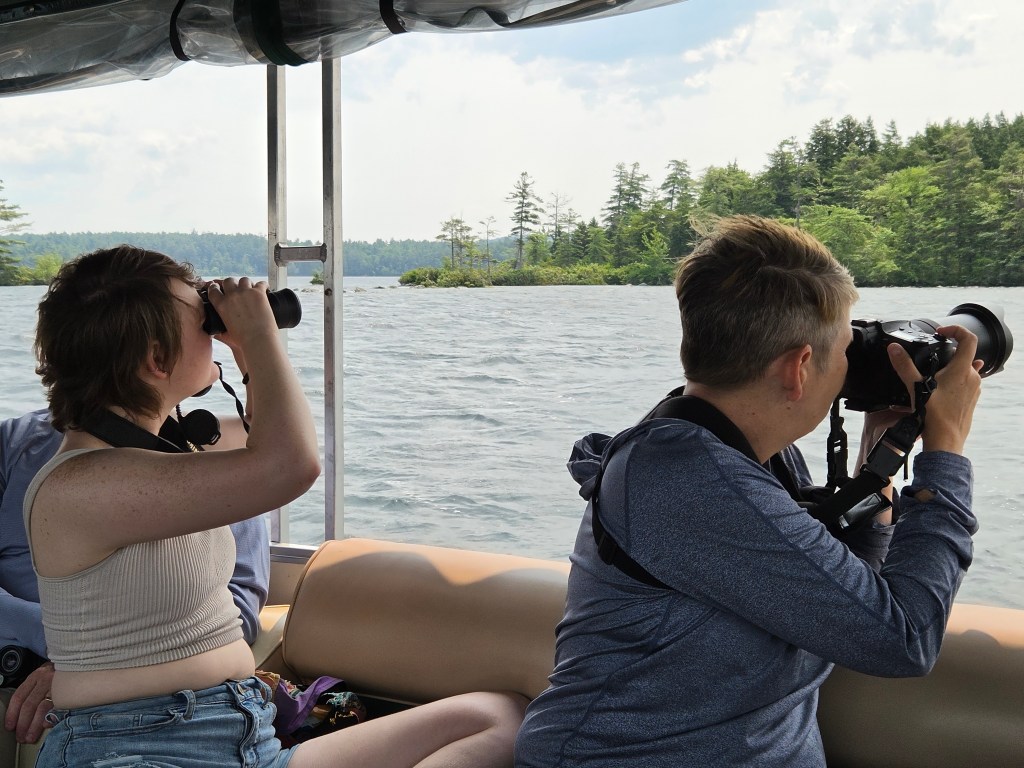
Looking for loons while on the Loon 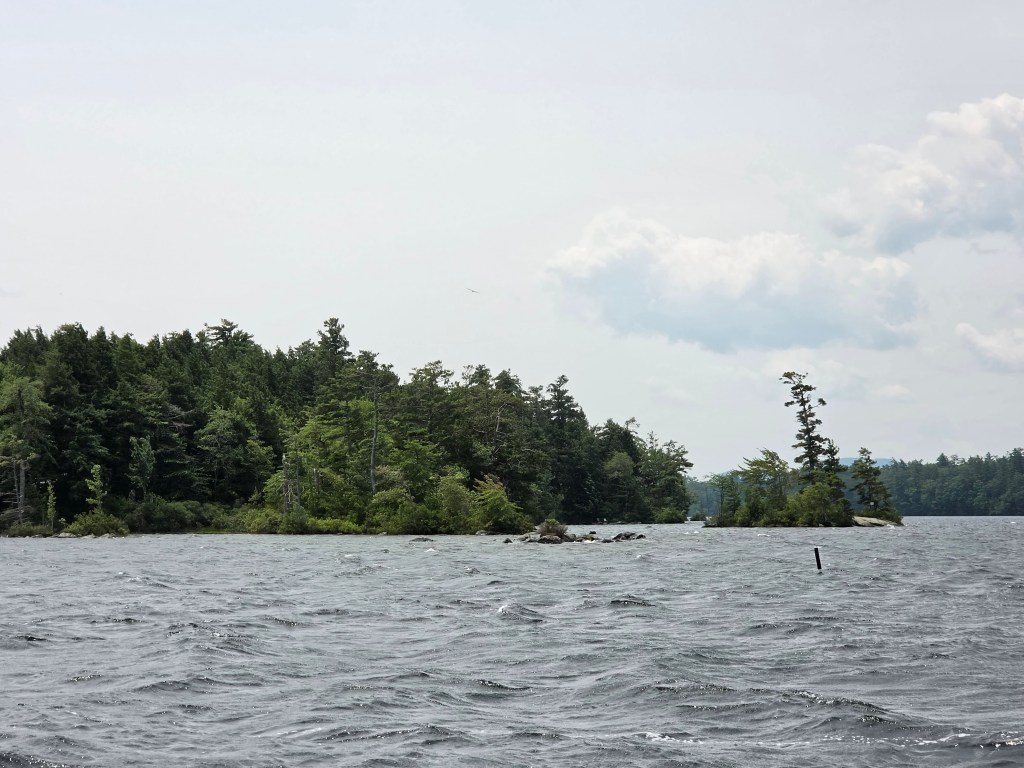
Approaching “Purgatory Cove,” of Golden Pond fame, suitably forbidding with strong wind chop and Canadian forest fire smoke greying the sky. Cpt. Hugh told us that the beautiful mahogany 1950 Chris-Craft Sportsman used in the film was too sturdy to break even when repeatedly run onto the rocks there. The film crew had to build a “crash replica” with a thinner hull panel that would burst on impact to scuttle the Thayer IV. 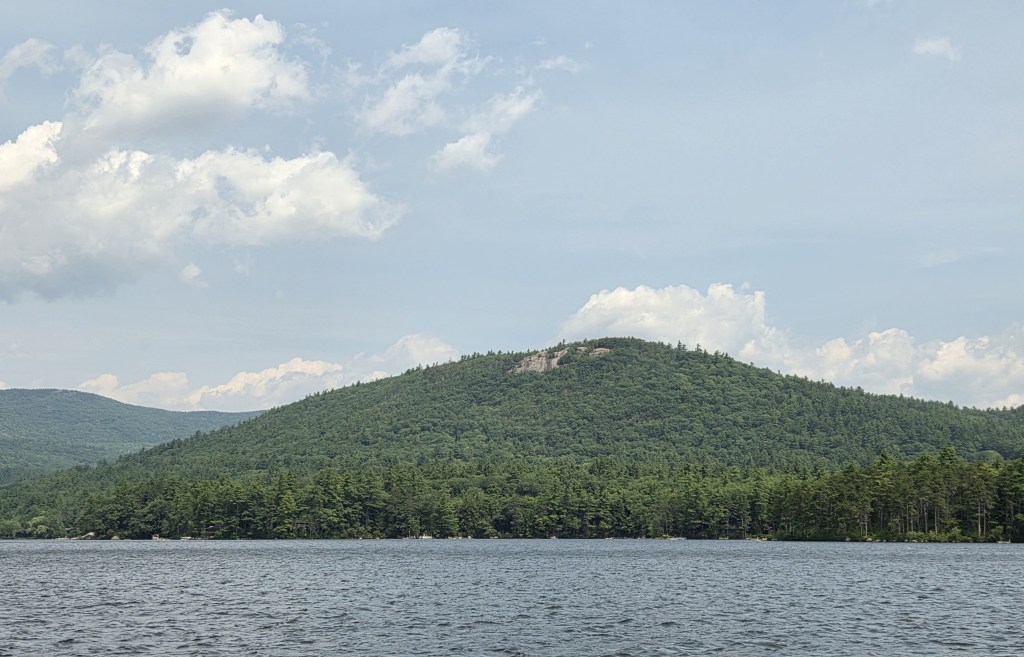
Rattlesnake Mountain. Note to self: must return to hike the famed overlook trail. 
Daisies at the dock 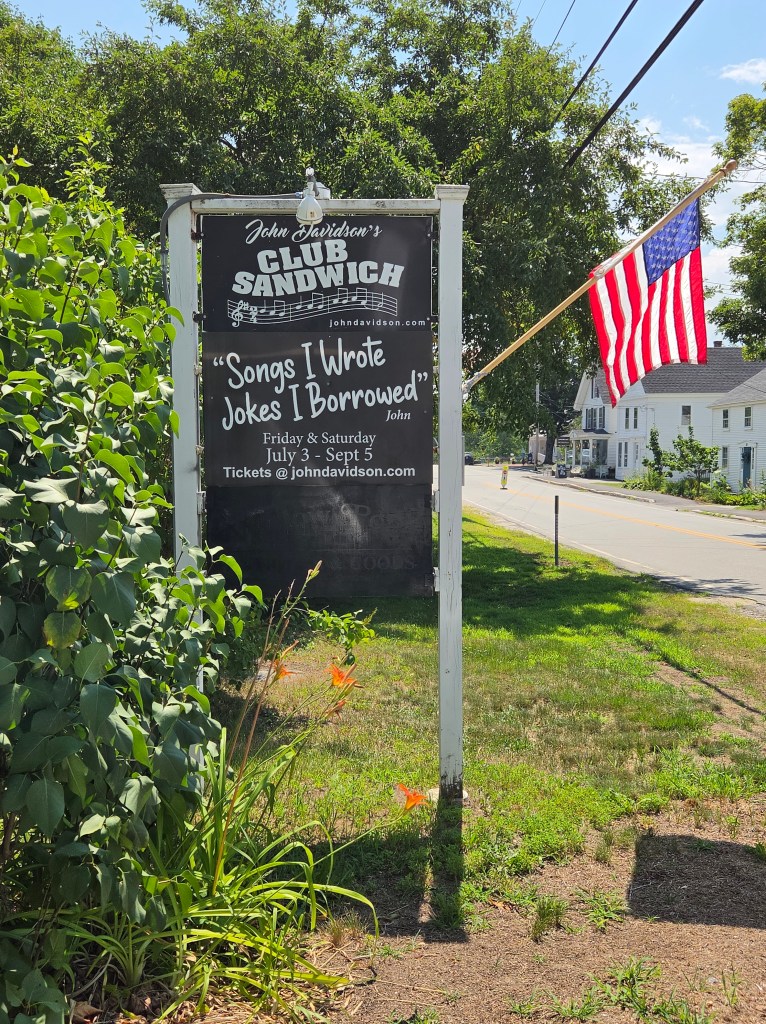
John Davidson’s summer nightclub in the impossibly quaint Center Sandwich 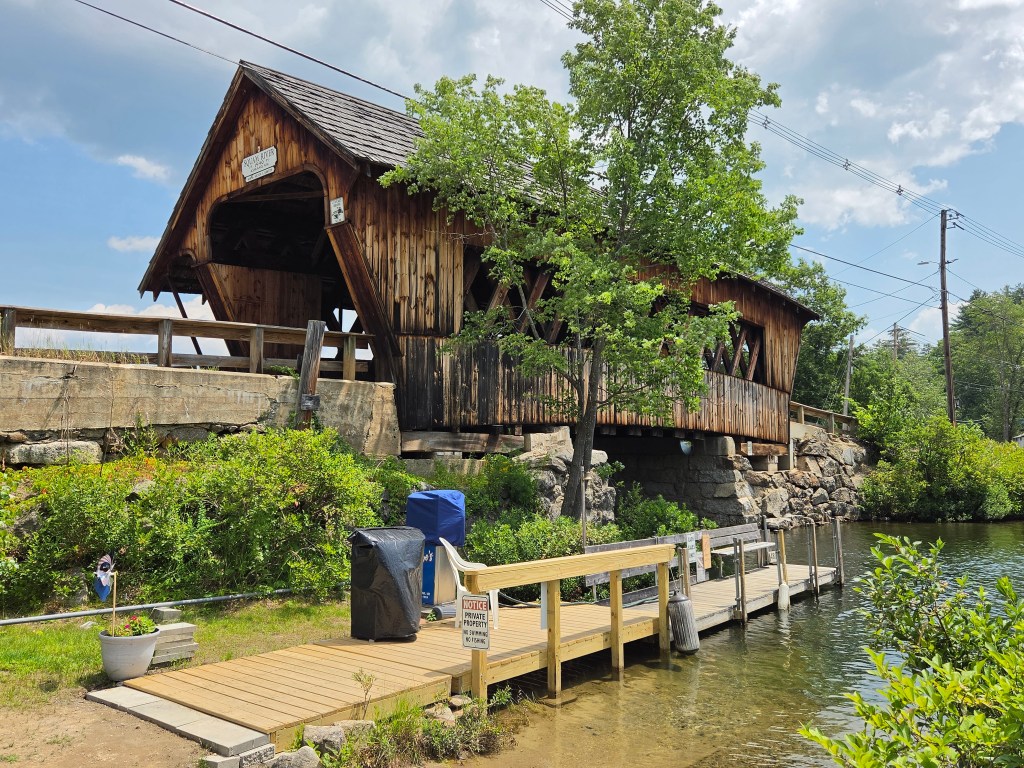
The Squam River covered bridge in Ashland 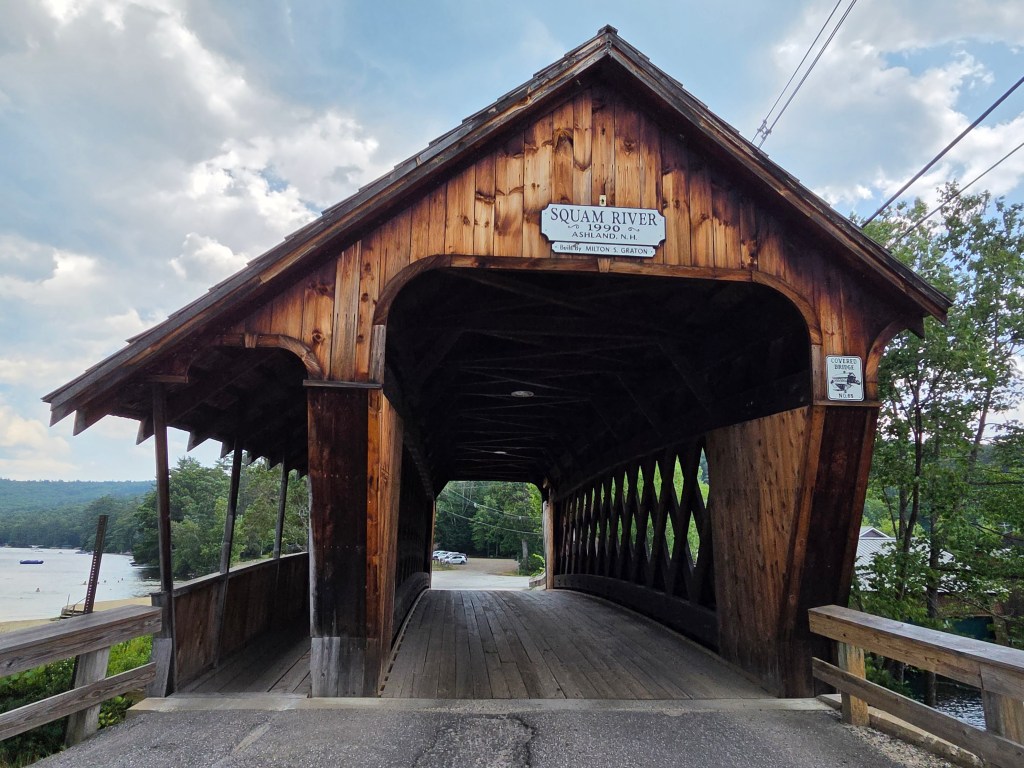
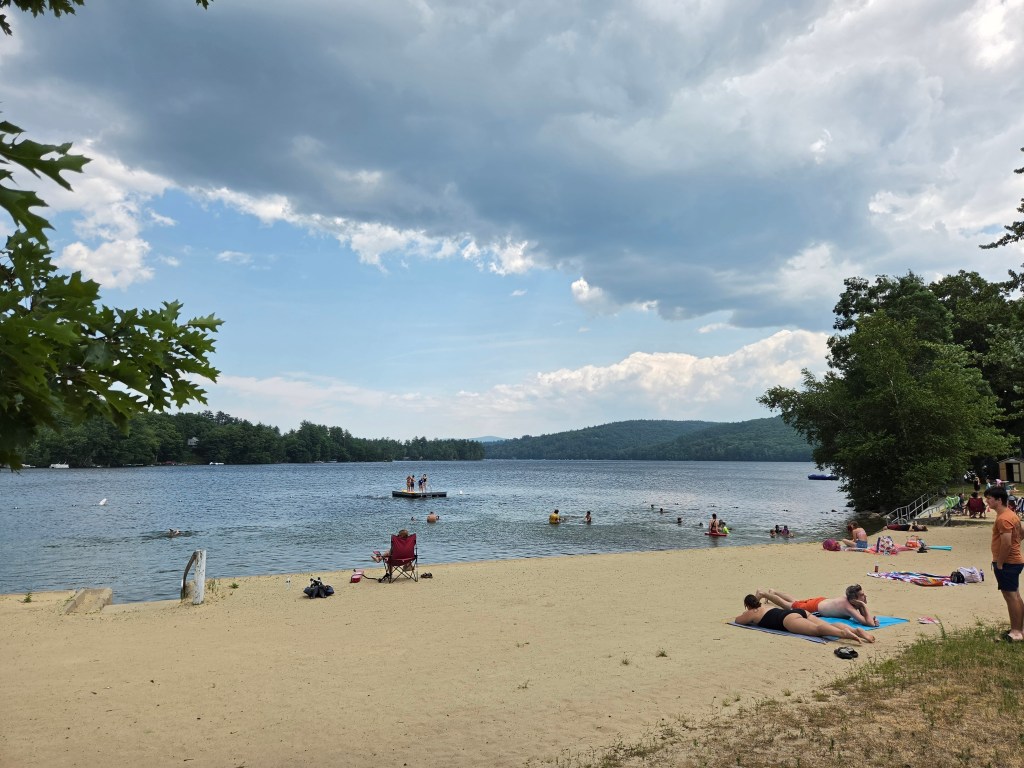
The Ashland Town Beach: a rare public beach on Little Squam 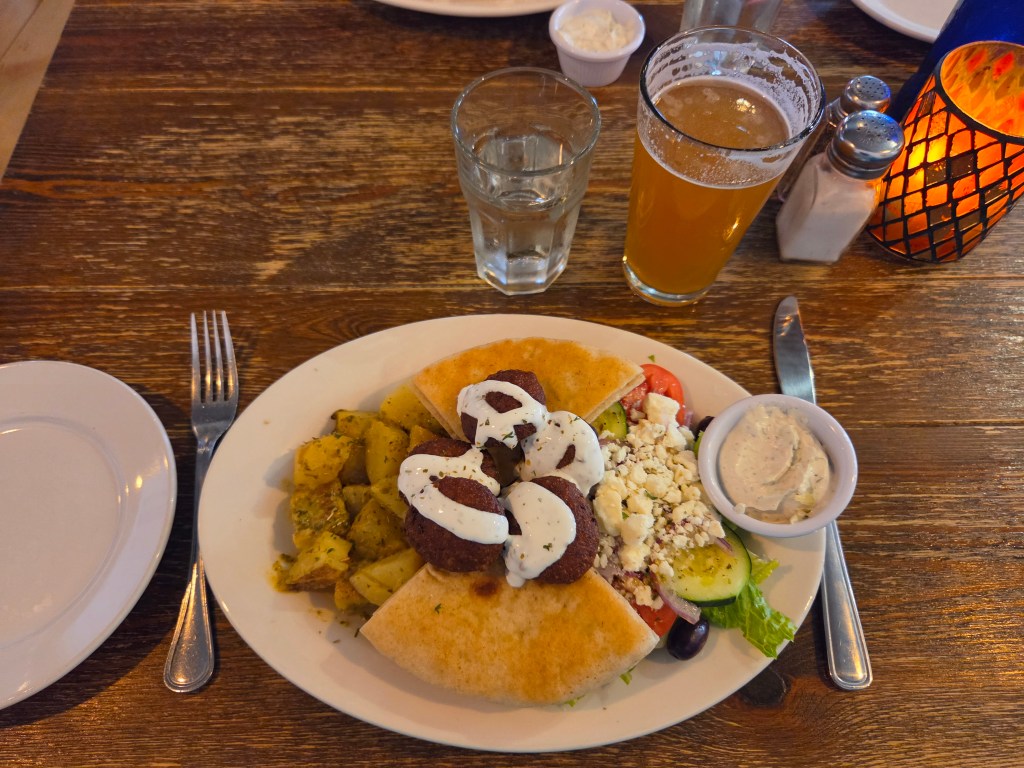
A superior pre-concert dinner at Yamas Greek Eatery on Main Street in Plymouth 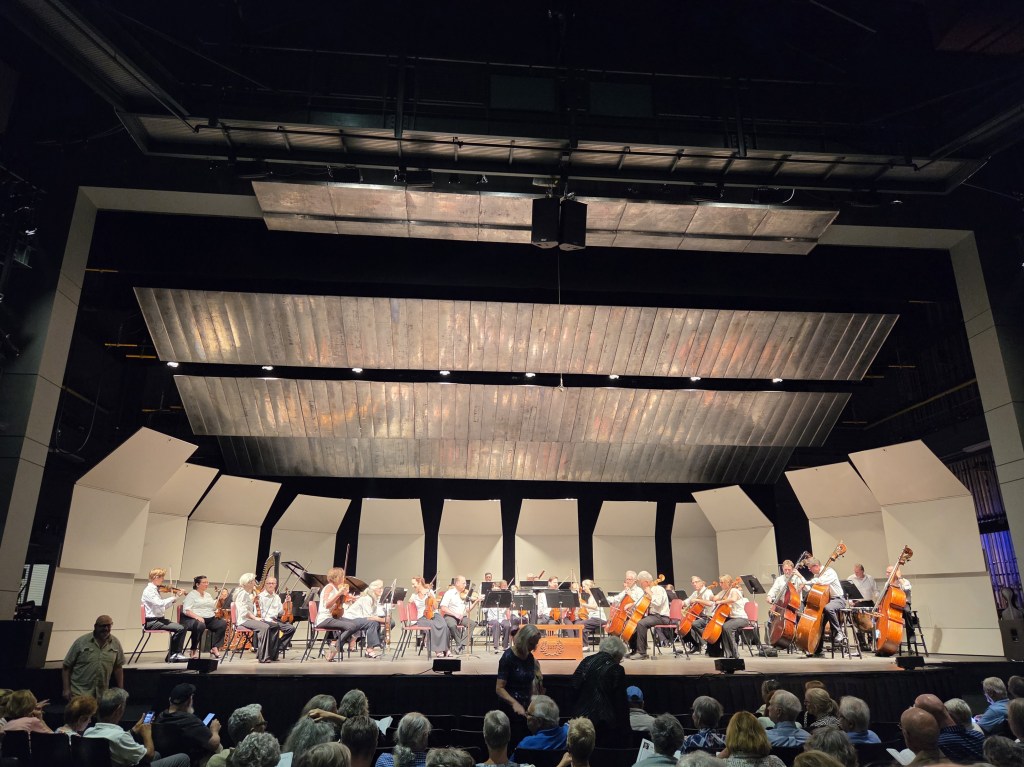
Musicians tune at the Silver Center for the Arts Hanaway Theater before a delightful “Italian & American Summers” program: Respighi’s Trittico botticelliano, Barber’s haunting “Knoxville: Summer of 1915” (beautifully sung by soprano Ashley Marie Robillard,) Anna Clyne’s “Restless Oceans,” and Mendelssohn’s Symphony No. 4, Op. 90, “Italian.” Cameron re-connected with principal cellist Walter Grey. 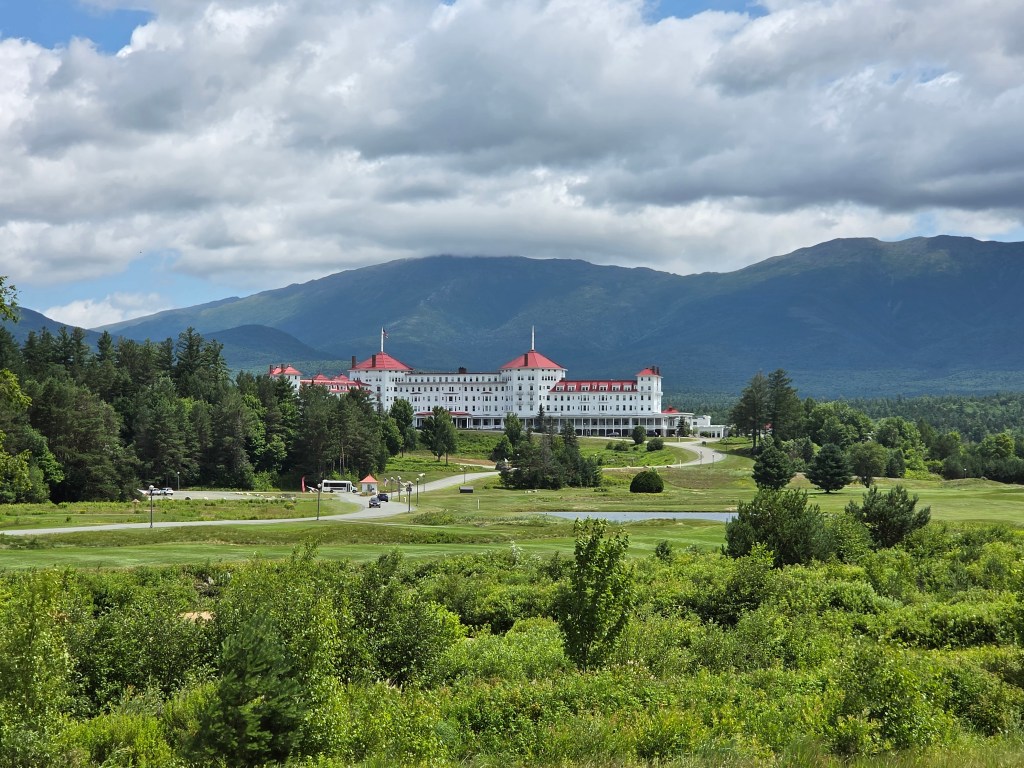
Next day’s drive took us as far north as Mt. Washington for this view of New York architect Charles Alling Gifford’s storied hotel. Built in 1902, it served the elite escaping to the White Mountains with 57 trains a day. 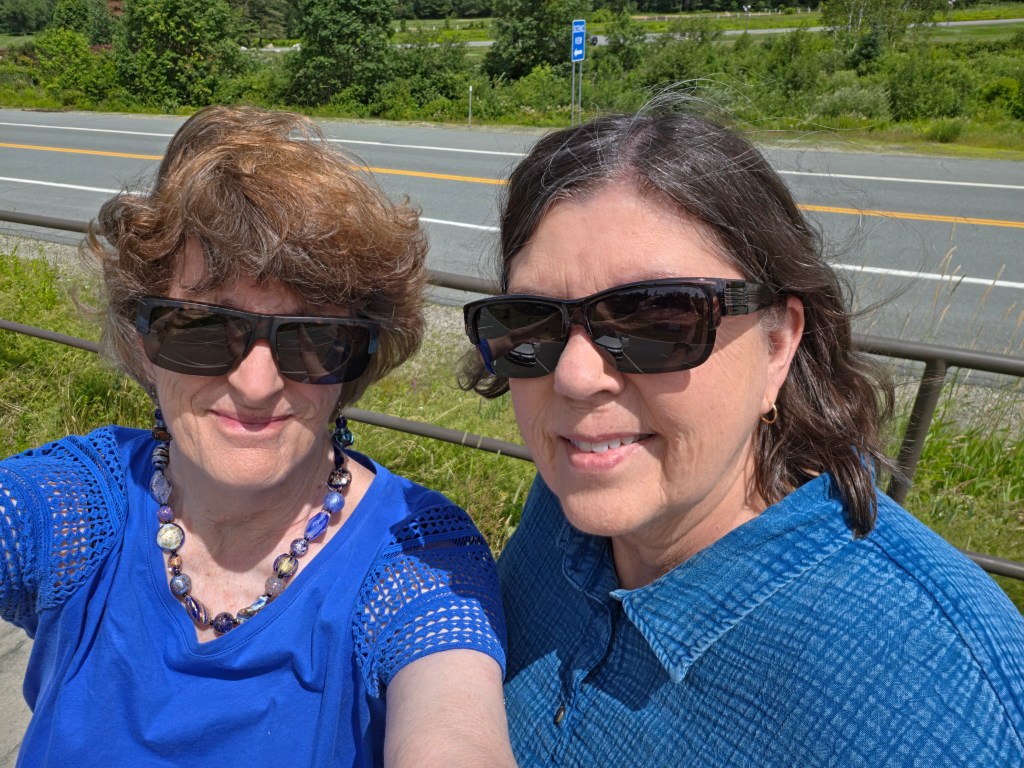
Old friends southward bound, about to head home -
New York City
17-22 June 2026
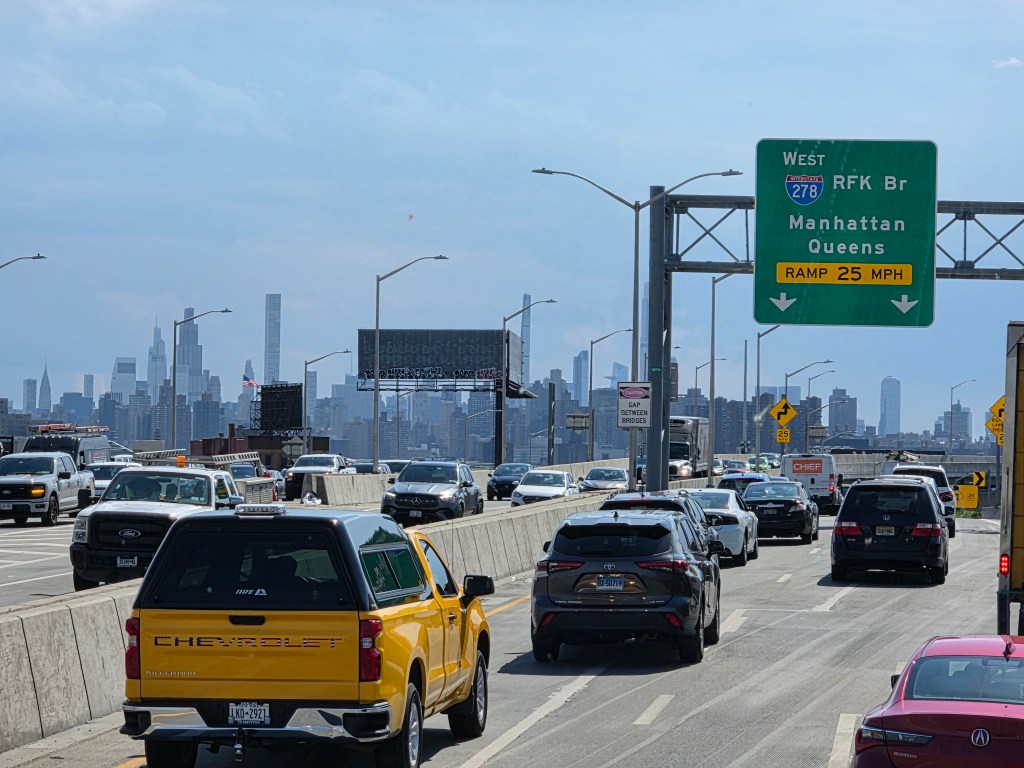
The fabled City comes into view My very first glimpse of New York City came from a bus window in the winter of 1971 as I traveled with classmates in my Furman University Intro to Theatre class to stay at the Hotel Great Northern near Carnegie Hall, eat my first gefilte fish at a deli across the street, attend a taping of The Dick Cavett Show (Danny Kaye was the guest—I got Cavett’s autograph after), and see some wonderful theatre, including Claire Bloom starring in both A Doll’s House and Hedda Gabler and the original production of Hair. The over-the-knee stockings I thought fashionable enough for the City fell down around my ankles as I stood in front of the Empire State Building; I don’t recall how I coped with that. I do remember that later in the 70’s, my friend Jimmy, aware of my champagne tastes and limited budget, tweaked me with a gift book titled New York on $500 A Day.
Well, times have changed: that amount doesn’t cut it in New York City today. Like the culture, much is different, for better and for worse. Times Square is much less dangerously squalid, though much more congested. You can’t buy a blue tablecloth at Macy’s or Bloomingdale’s, where the selection is limited to three or four floral patterns, and the salesclerk at Macy’s smirked when I asked where the tablecloths were. (Does no one use a tablecloth anymore?) And the Oyster Bar at the Plaza no longer exists, site of a rendezvous with my future husband for a glamorously romantic date in November 1994—after flying respectively from Kentucky and New Hampshire, we walked into the Palm Court from separate entrances at exactly the same moment. A cherished cinematic moment.
Getting around in New York, especially for this senior wondering if she’s still up to finding her way, is, however, so much easier these days. An OMNY pass (only $1.50 a ride for seniors!) and smartphone with Citymapper app loaded are all you need: no fumbling with cash or credit cards in subway stations. And since these days EVERYONE’s gaze —not just a disoriented tourist’s—is constantly on a phone, it’s possible to pass as a local.
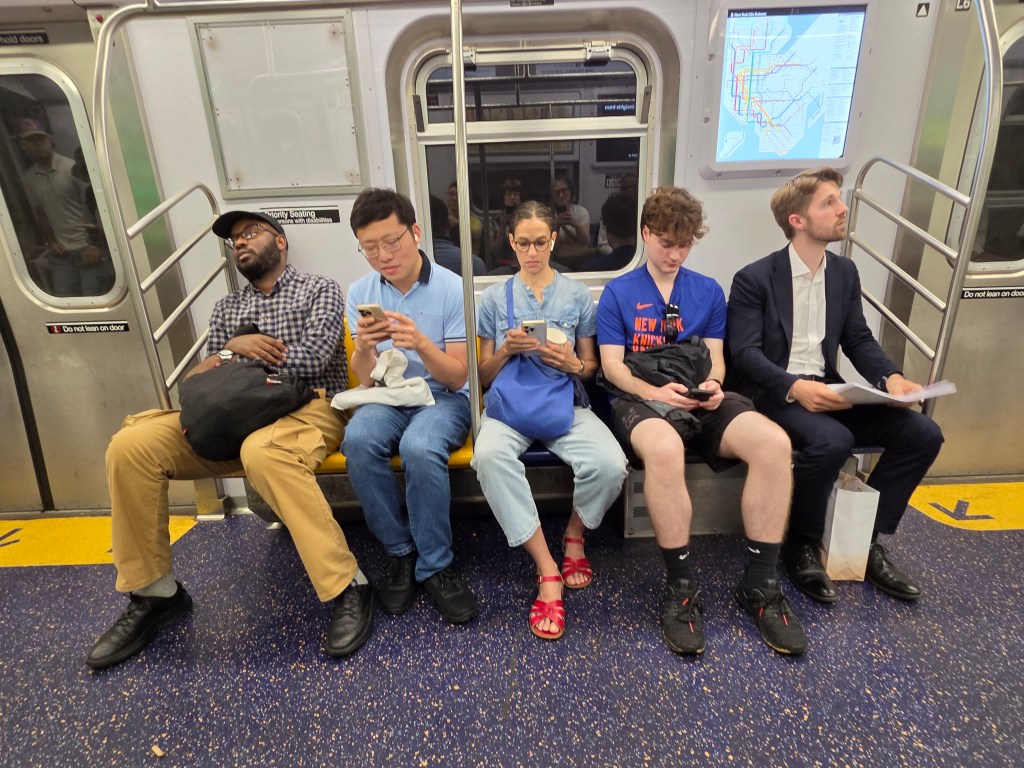

Besides, people seem friendlier. I didn’t hear a harsh word spoken the whole five days I was in town. One stranger asked politely if I had the time, and thanked me when I told him. And when at intermission I complimented the woman seated next to me in the Winter Garden theatre on her summer-y linen ensemble, she volunteered that she got it on sale from J. Jill for only $40!
My first full day back in New York was the day of the Knick’s victory parade in lower Manhattan (I stayed well north in Midtown), and World Cup fans were everywhere, sporting their team’s kits, making overheard conversations—such a delight in the City—even more international than usual. So lovely to see so many happy, hairy men greeting both men and women with kisses on each cheek. The town seemed awash in goodwill, a refreshing breeze and tonic change from the bitterly ironic, algae-slimed pool of despair tainting so many of our days in these Un-tied States. Hundreds of yogis in Bryant Park! A messenger boy on a bike careening down Broadway sans helmet while taking a selfie! A pretty blond girl yakking on her phone, dressed in gauzy white linen and a T-shirt whose rhinestones read “Blow Me,” striding across a subway grate à la Marilyn Monroe. Some sidewalks still smell of urine. But the homeless woman camped out on W 37th fed the pigeons every morning. Ah, New York!
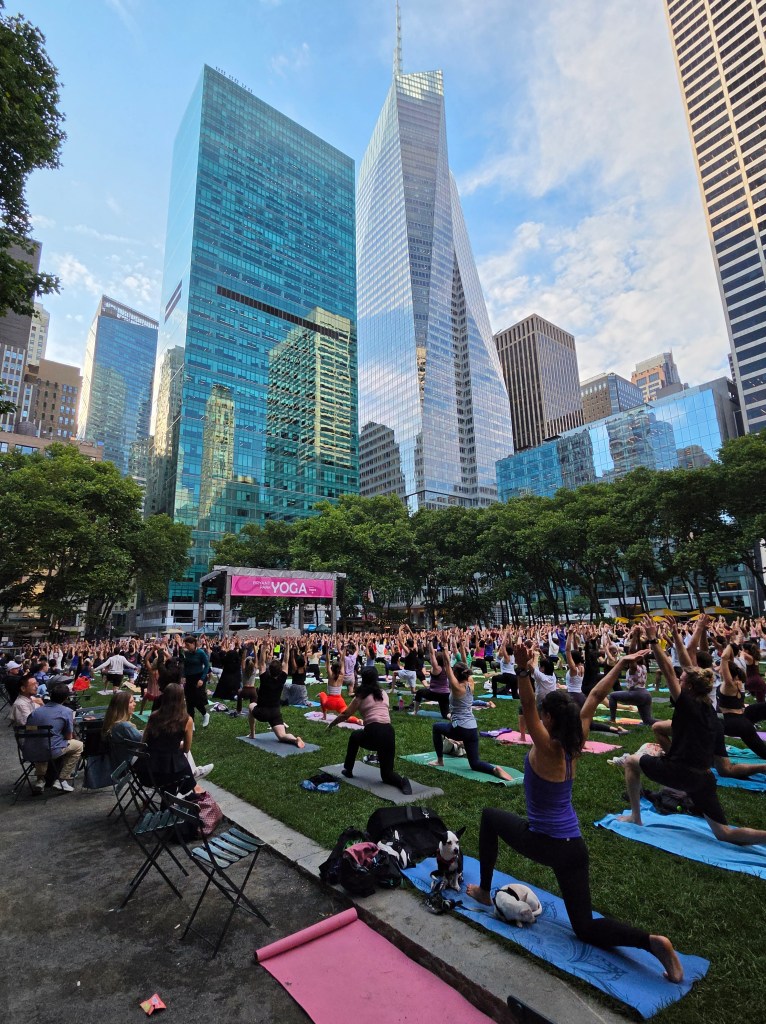
Yogis in Bryant Park, 17 June 2026 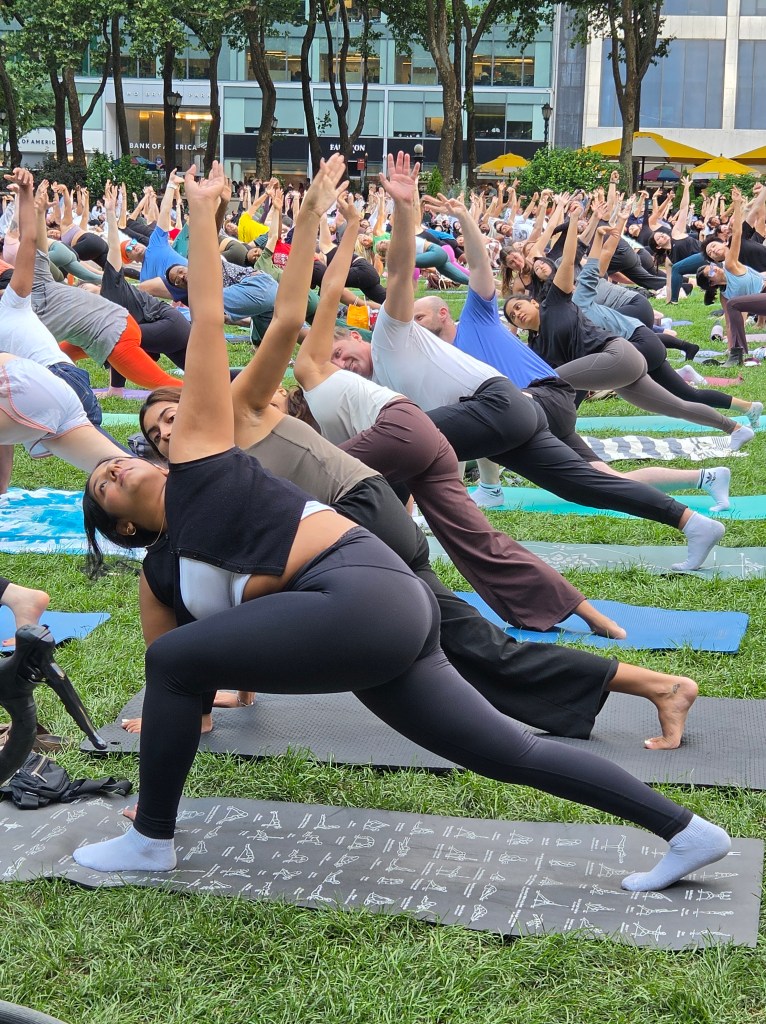
I had a grand time. Saw three superior productions; two intriguing museum shows; visited two good friends; walked that wonderful urban park, the High Line; and got my urban chops back.
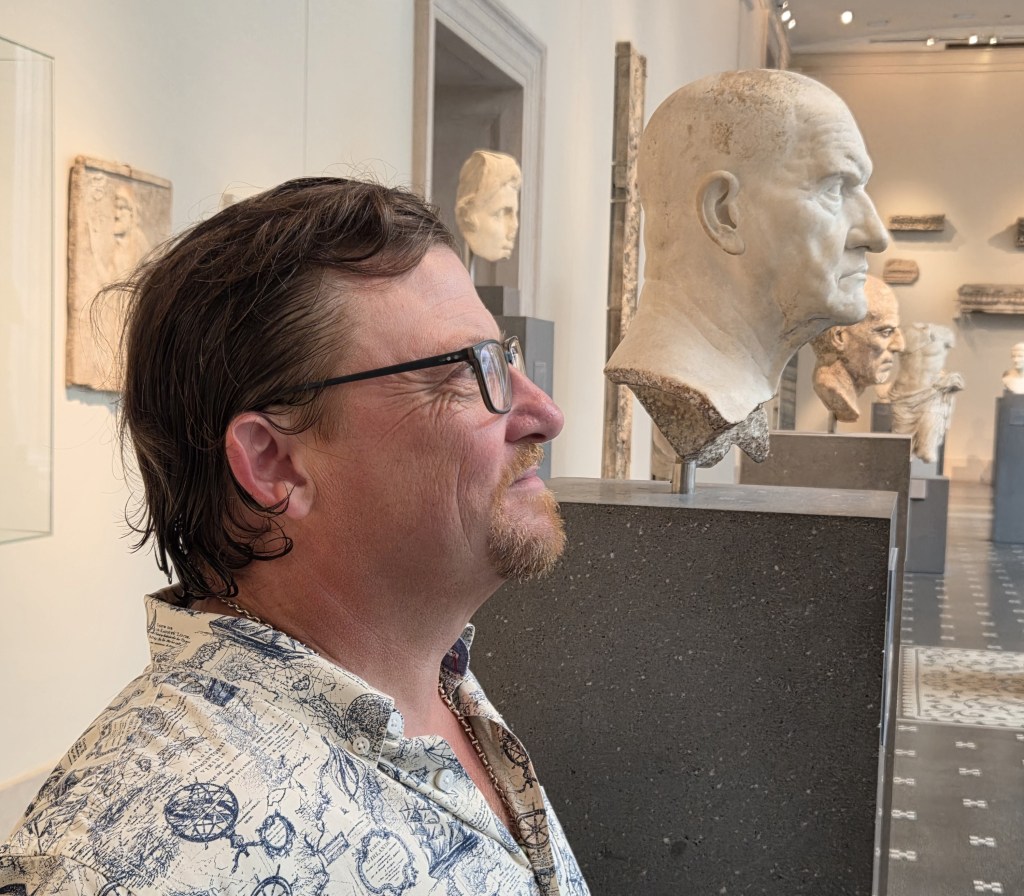
My friend Glenn in the Met, posing with the Roman man who, he says, so resembles his dad 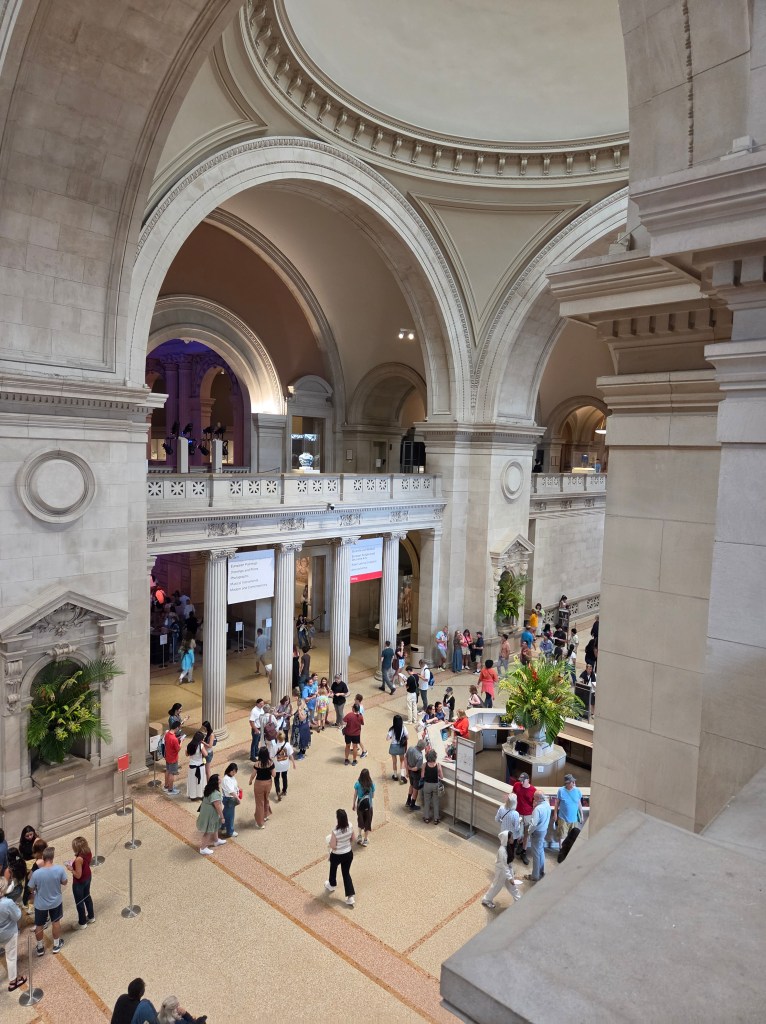
The Met’s Great Hall, seen from the balcony café where we lunched. 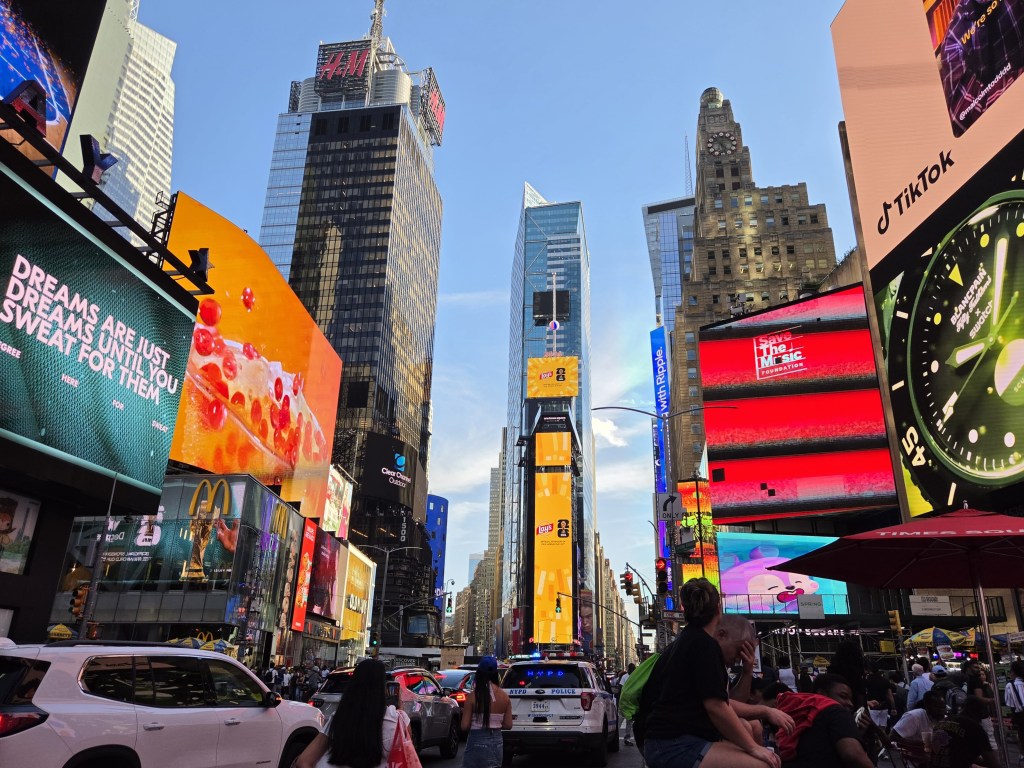
Times Square, 18 June 2026 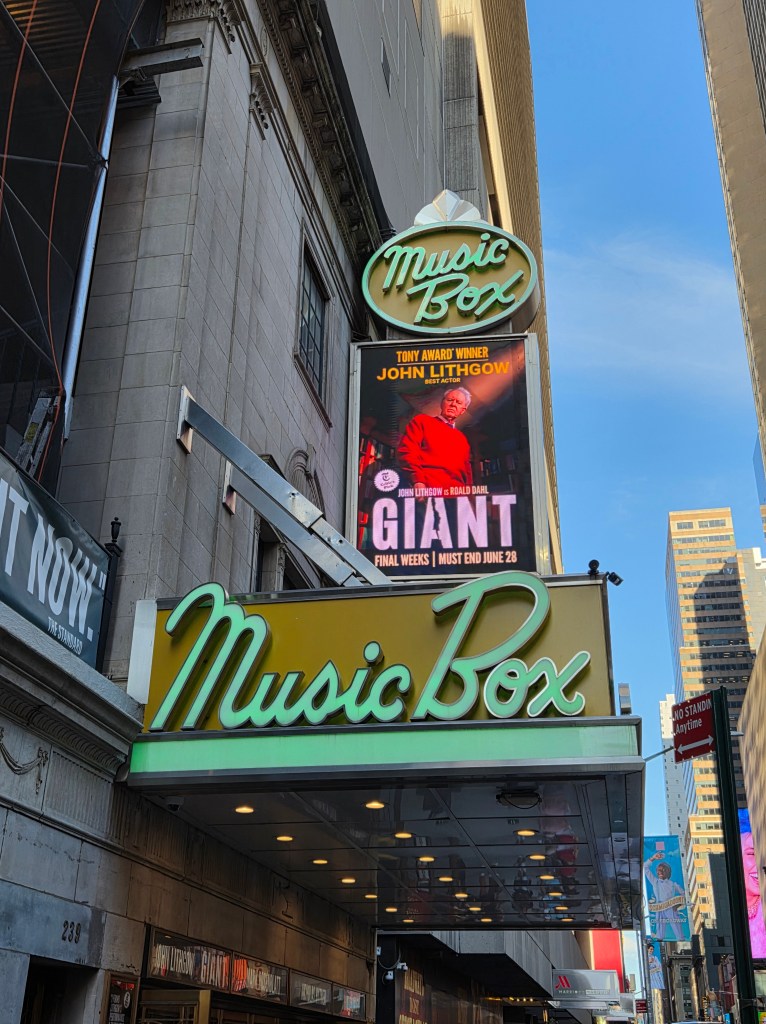
Lithgow acted his final monolog, a verbatim transcript of Roald Dahl’s incendiary phone conversation with a reporter, only feet away from my seat. Great actor, important play. 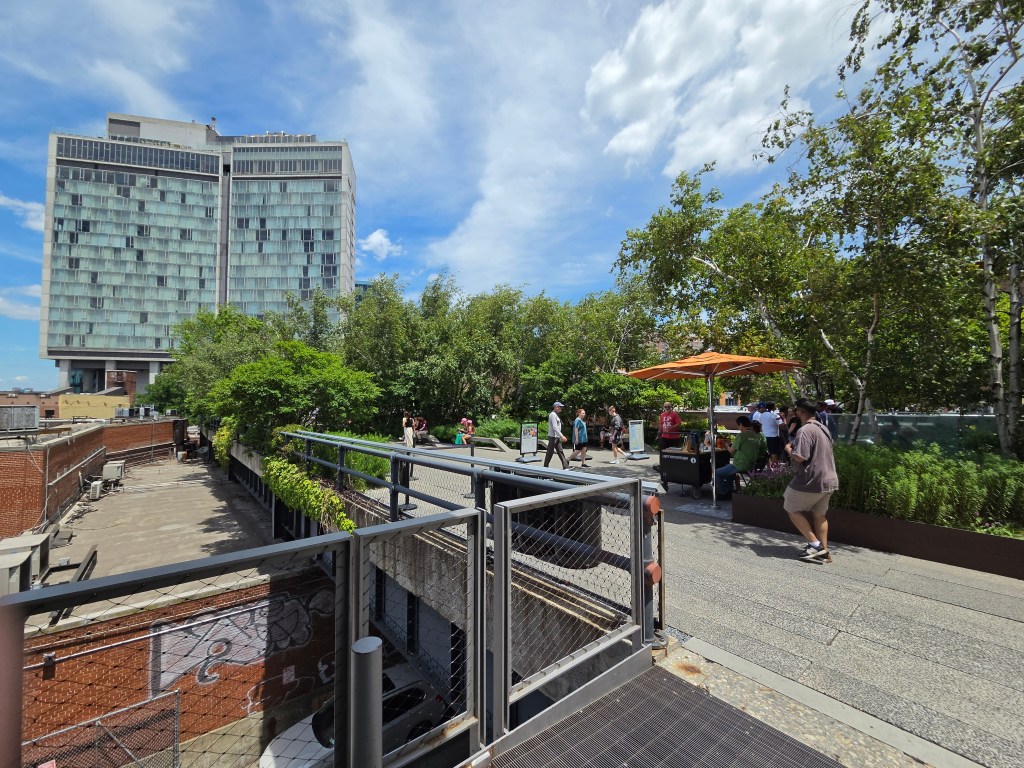
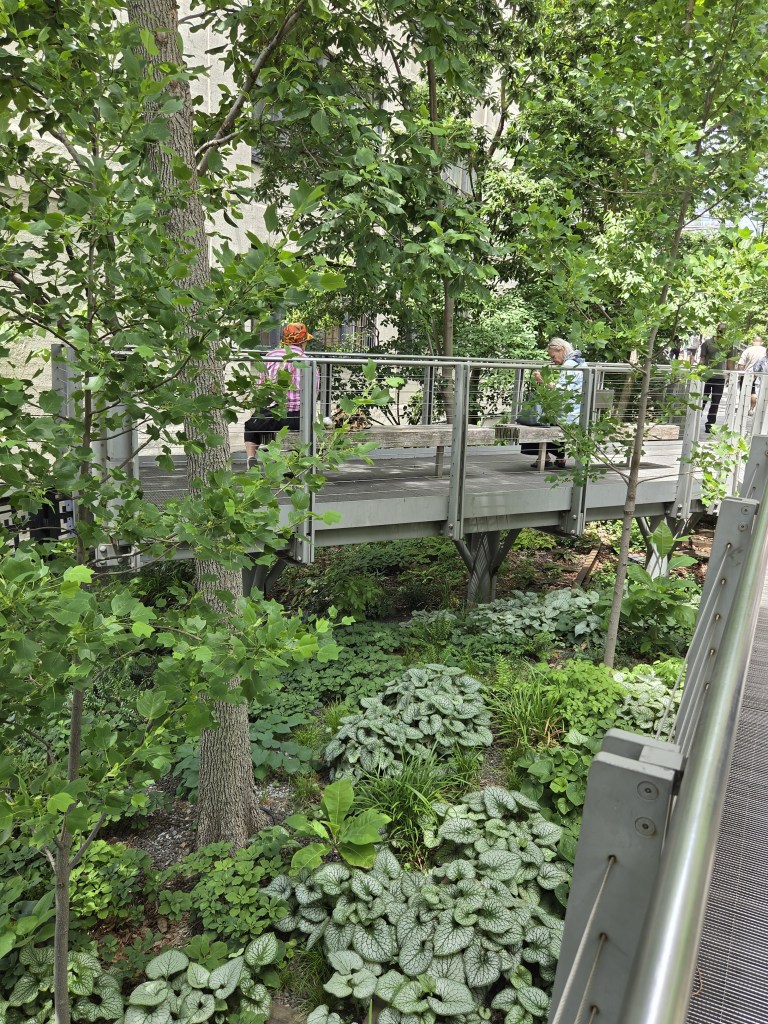
Walking the High Line, starting at the Gansevoort entrance 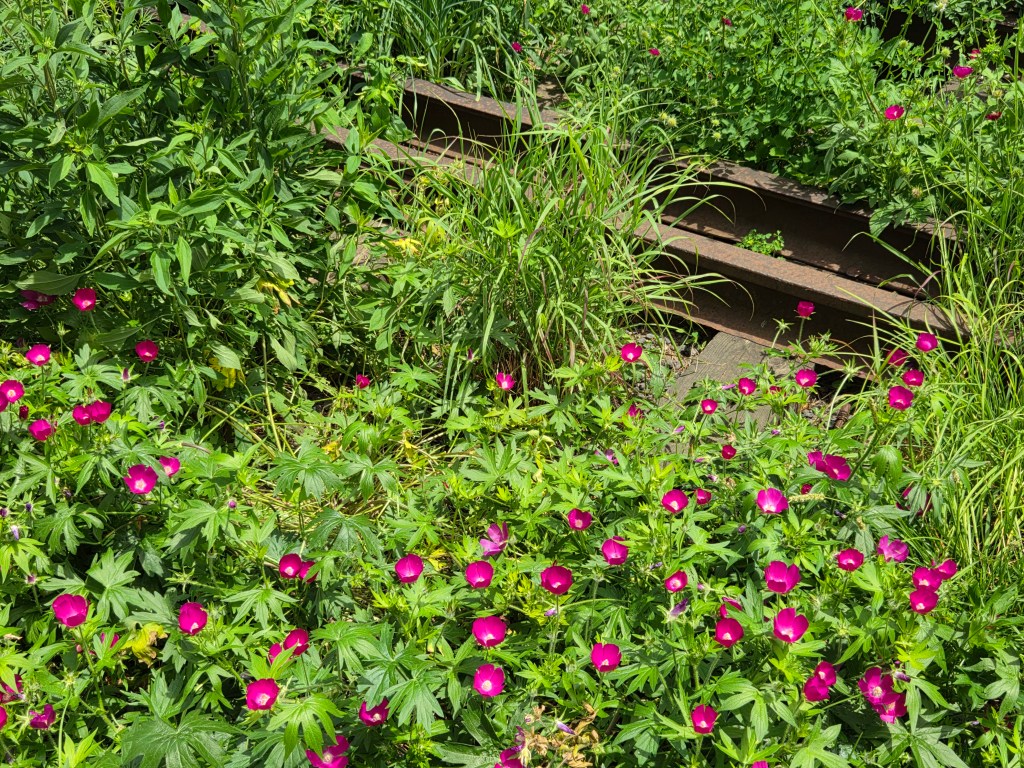
Original rail bed reclaimed by flowers 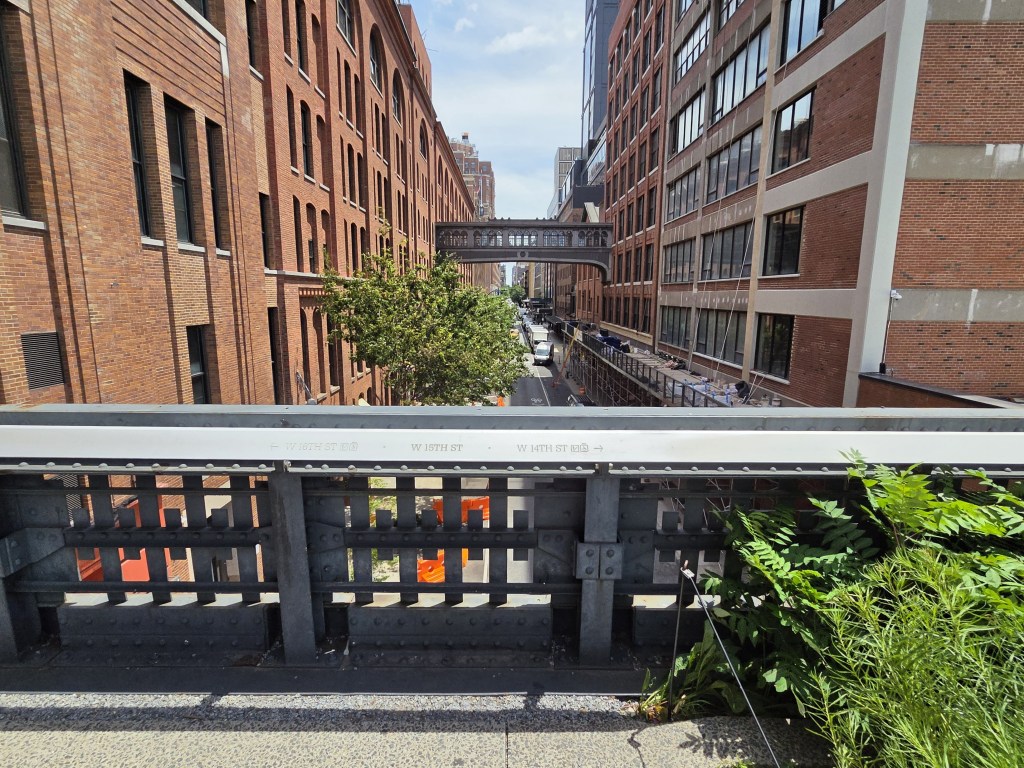
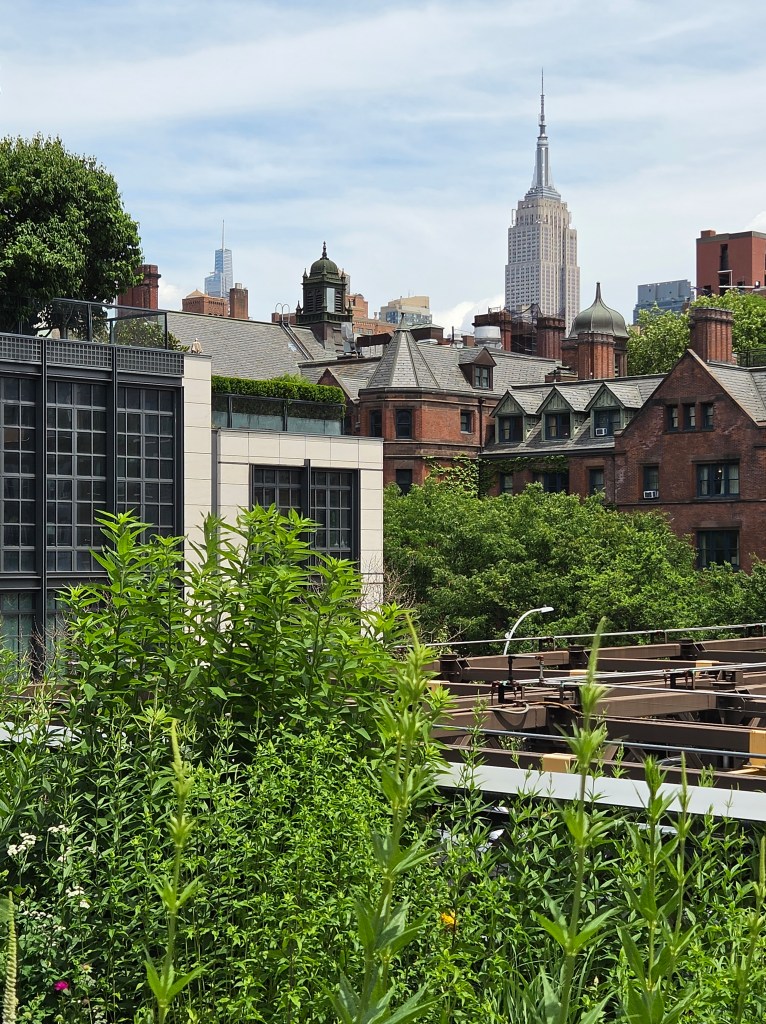
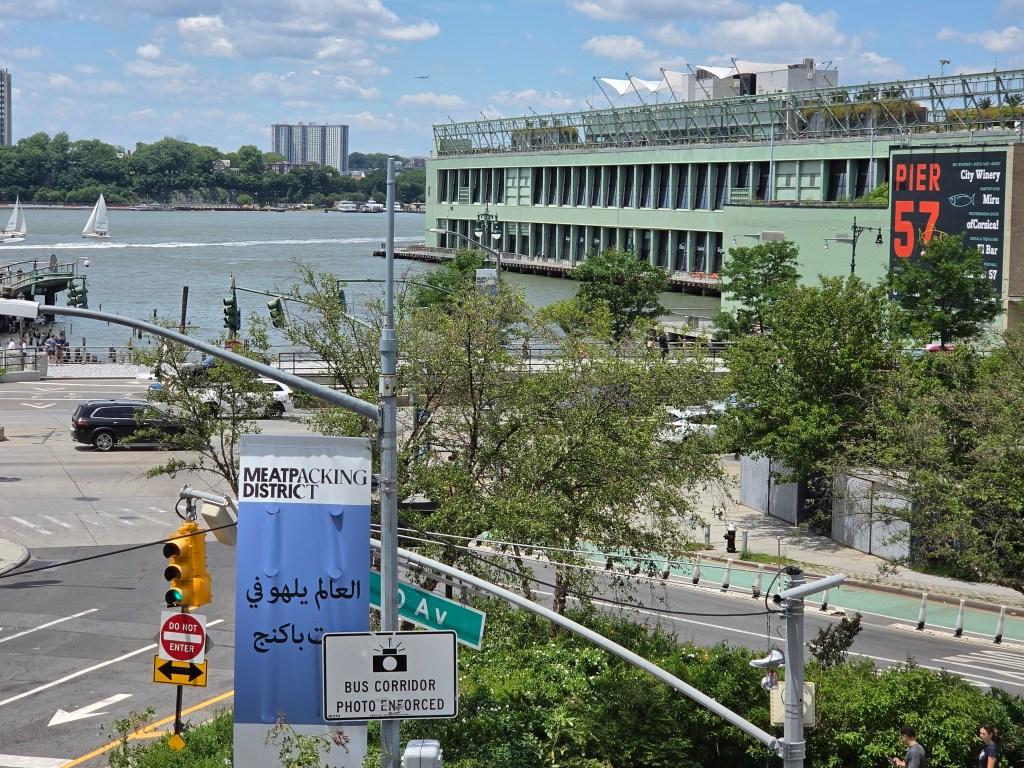
Good day for a sail on the Hudson 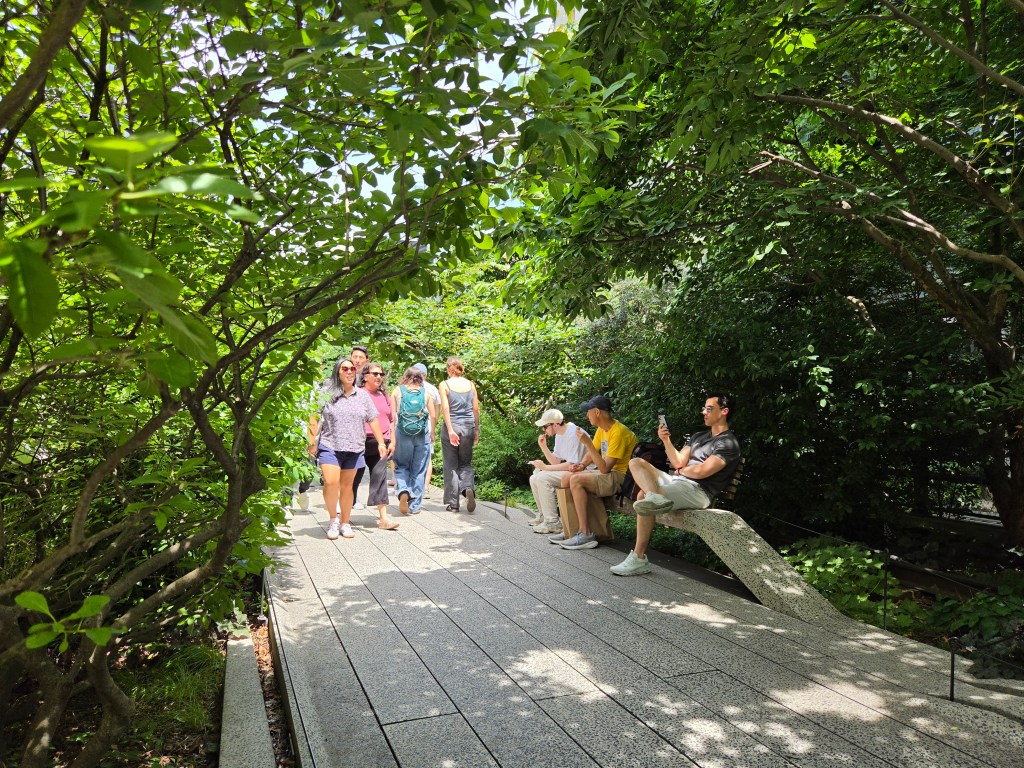

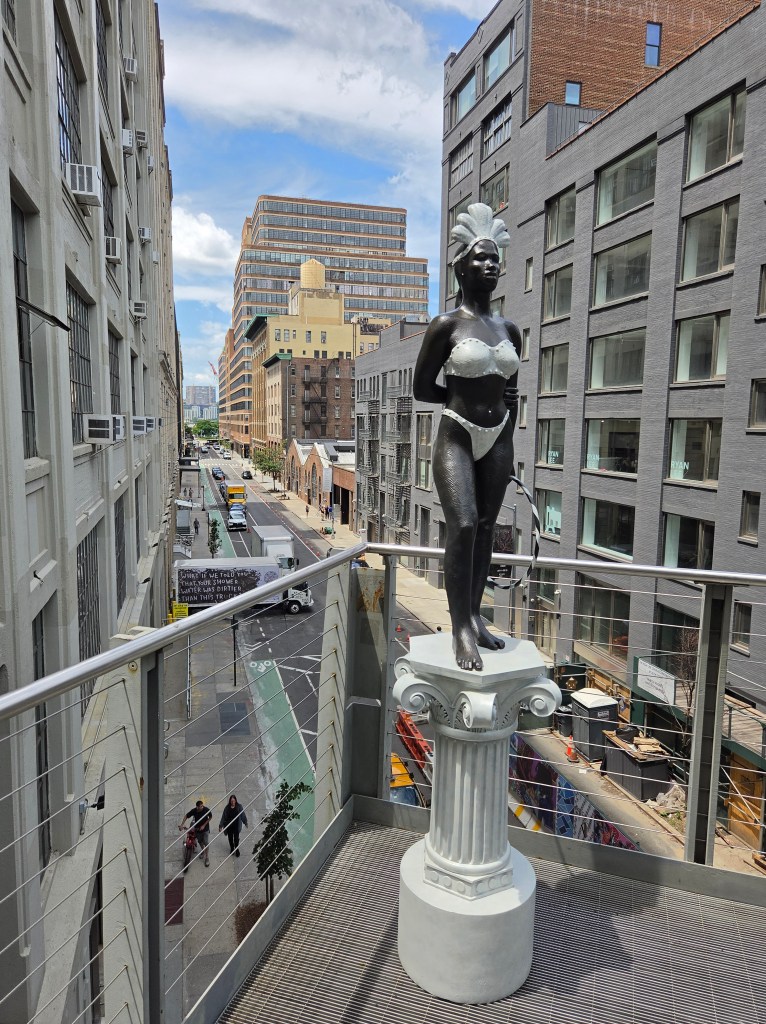
Derek Fordjour’s Archetype II: Servility, 2026 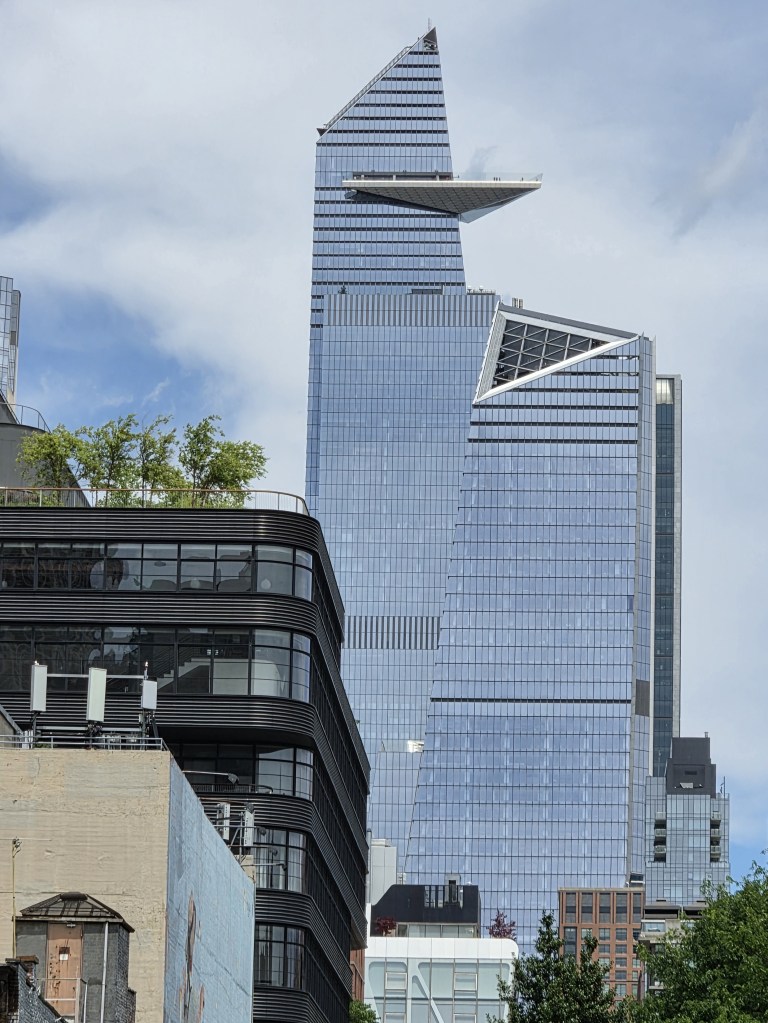
30 Hudson Yards (Kohn Pedersen Fox, 2019) features the Edge, the highest outdoor skydeck in the Western Hemisphere 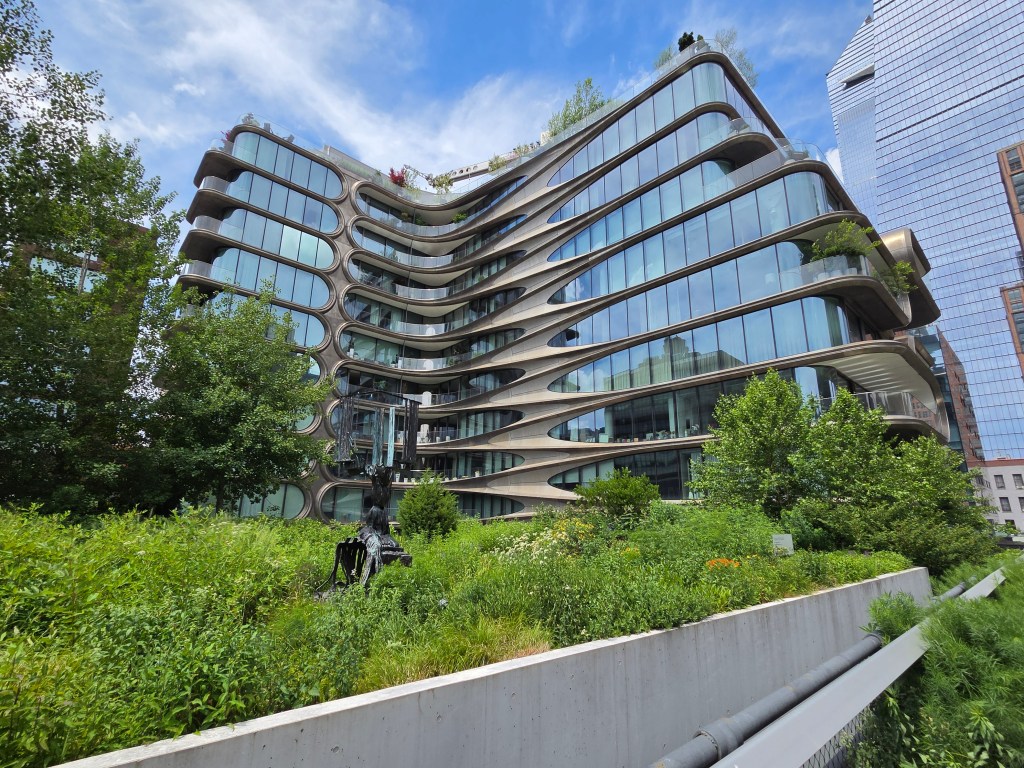
Luxury apartments, part of the Meat Packing District revitalized by the High Line 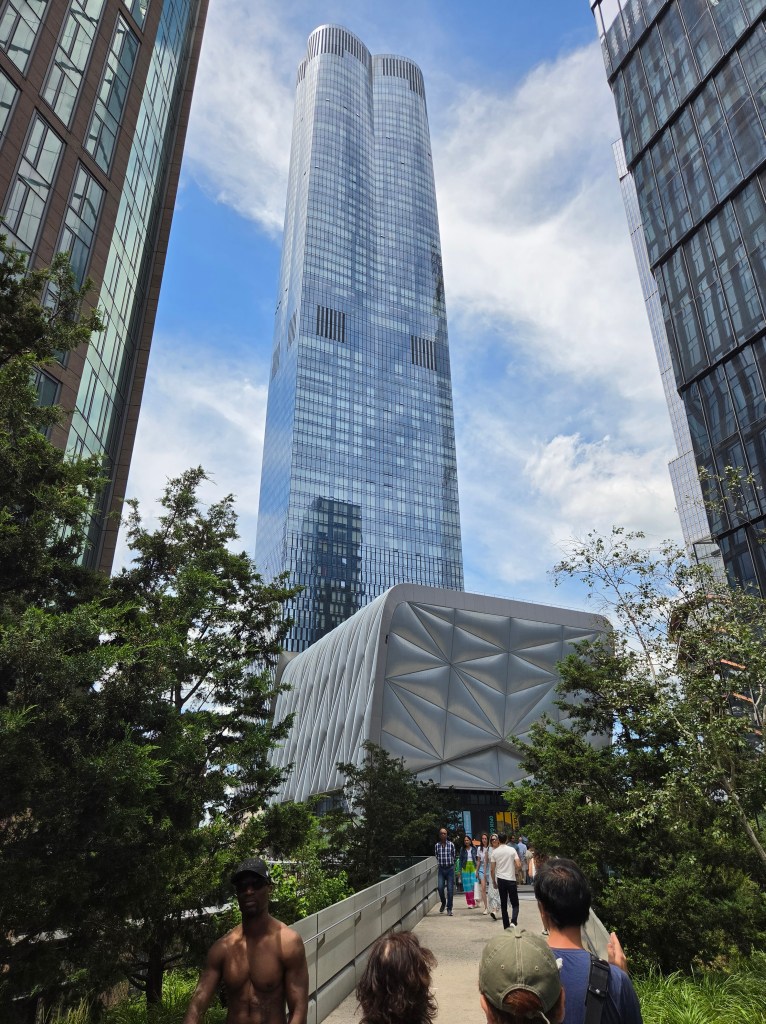
15 Hudson Yards: the quatrefoil skyscraper at the north end of the High Line 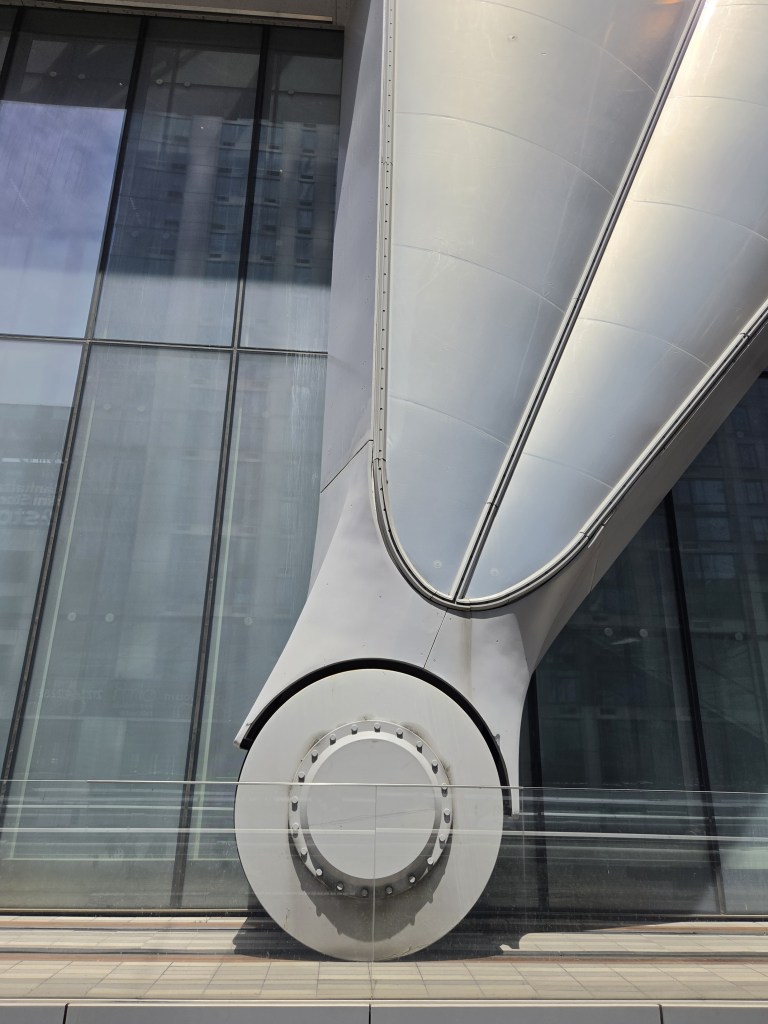
Detail of the telescoping Shed, cultural center and performing arts venue 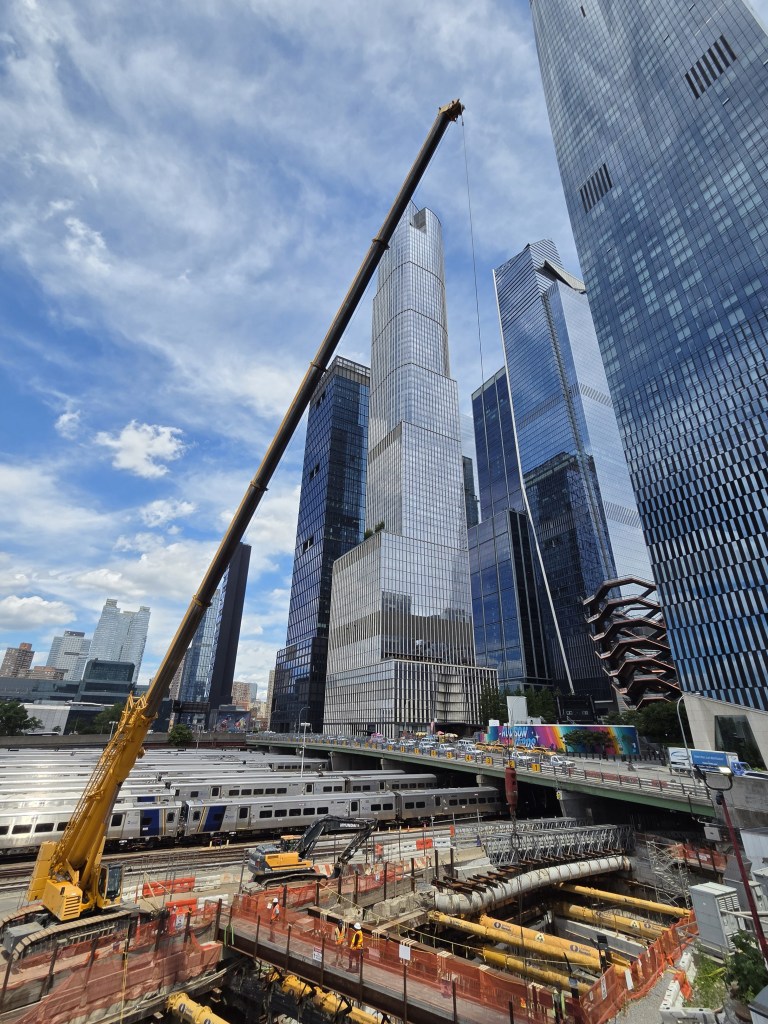
Angles at Hudson Yards 
. . . where substructure work continues 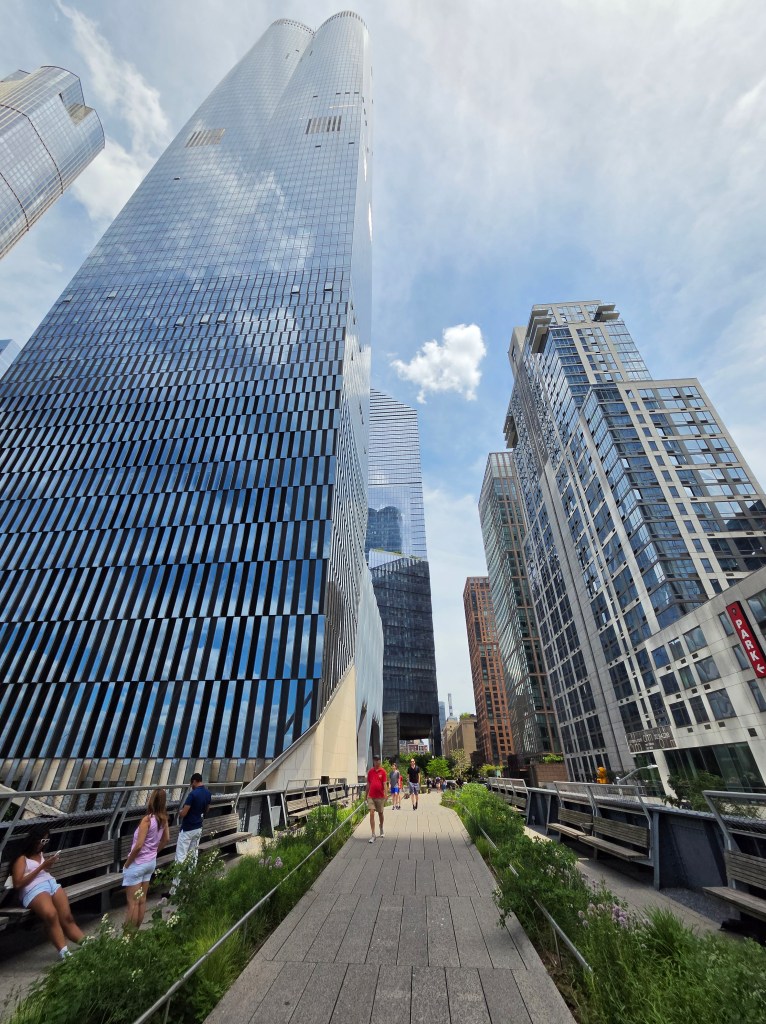
Soaring skyscrapers at the High Line’s northern end 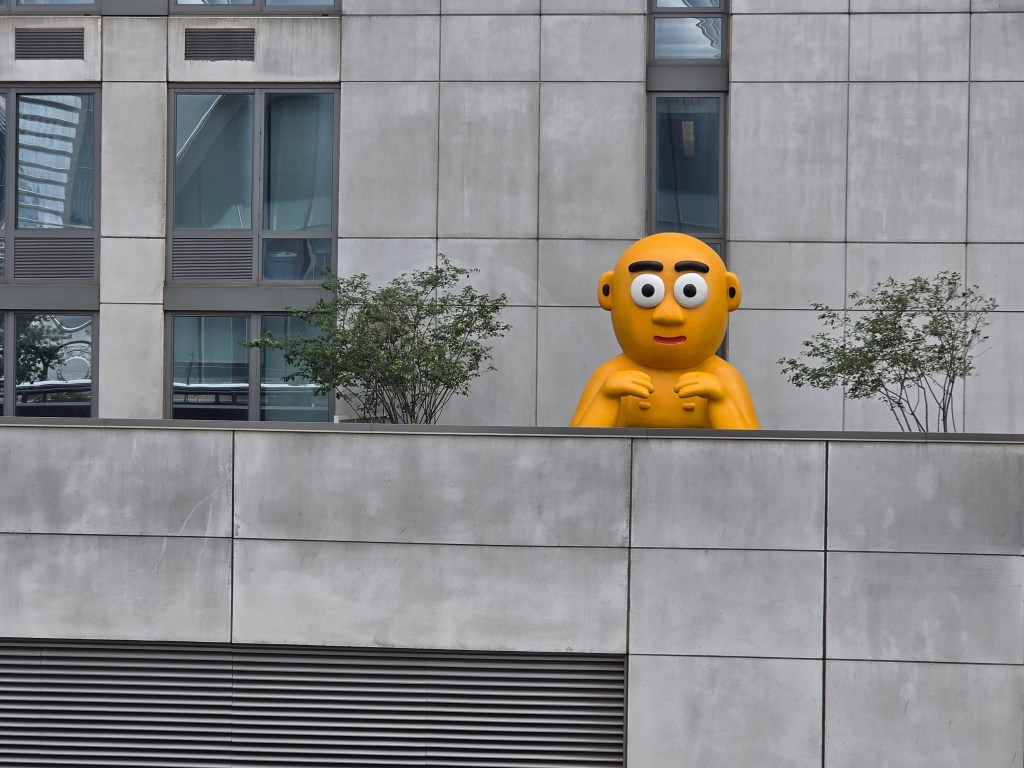
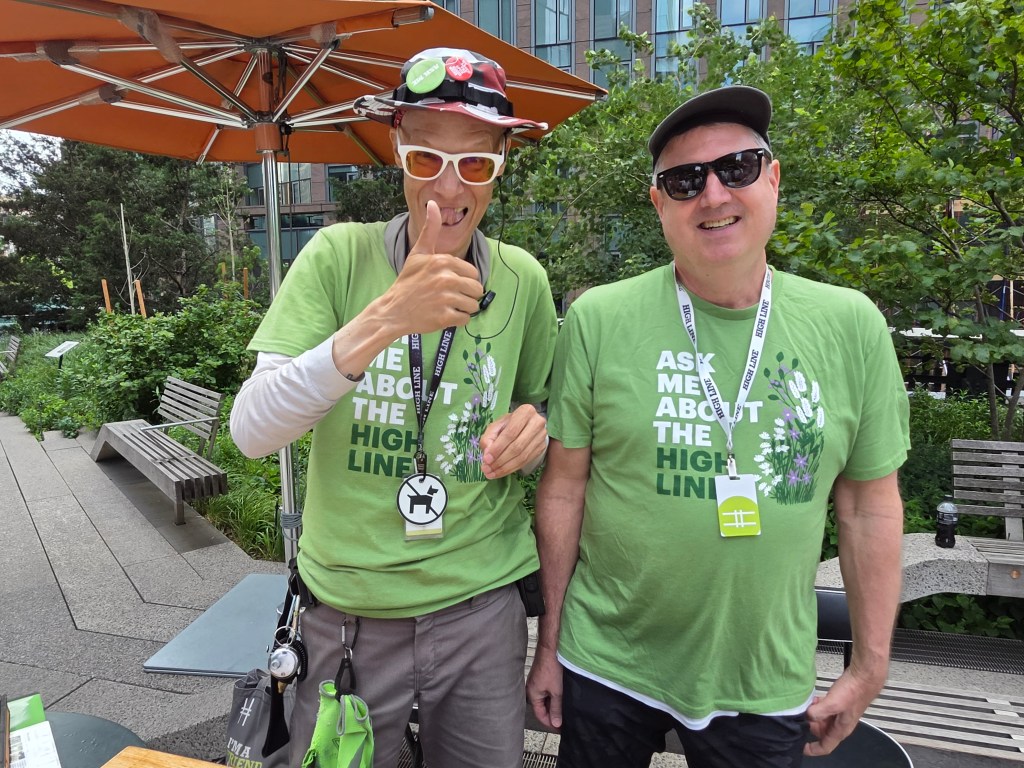
. . . and charming, well-informed guides 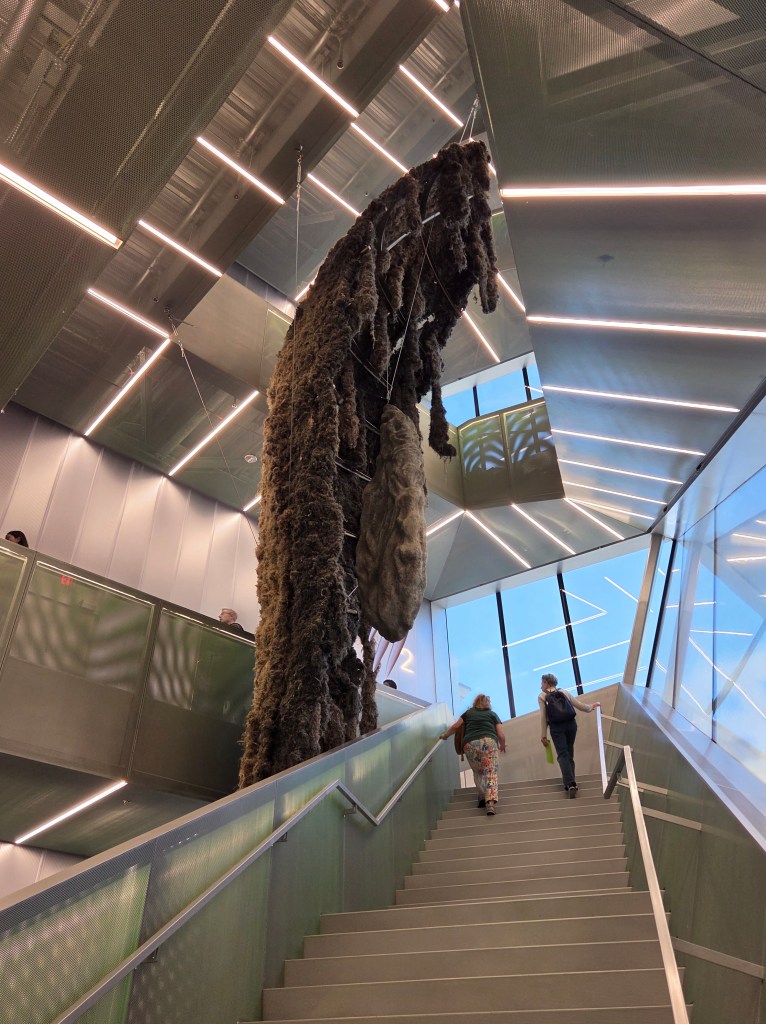
Central Atrium Staircase at the New Museum in the Bowery, with Klára Hosnedlavá’s 4-story soft sculpture Shelter (2026) 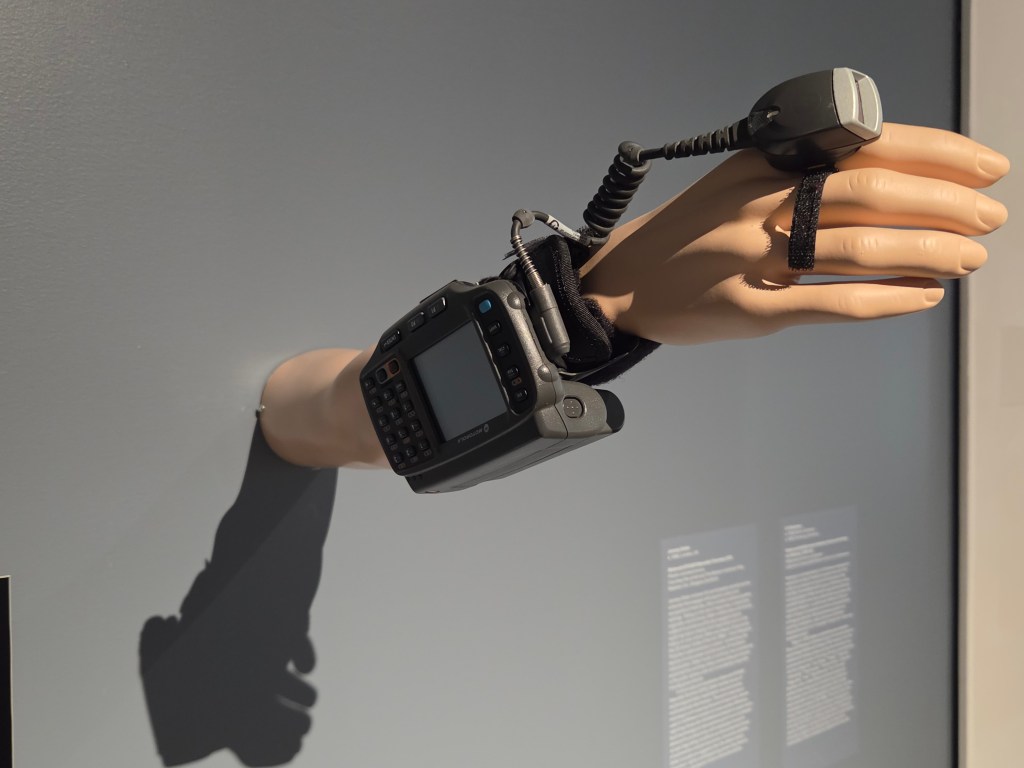
Jeremy Deller’s Motorola WT4000 Wearable Terminal, 2013, part of the “New Humans: Memories of the Future” show at the New Museum. The work replicates the kind of electronic device used in fulfillment centers to track worker efficiency. 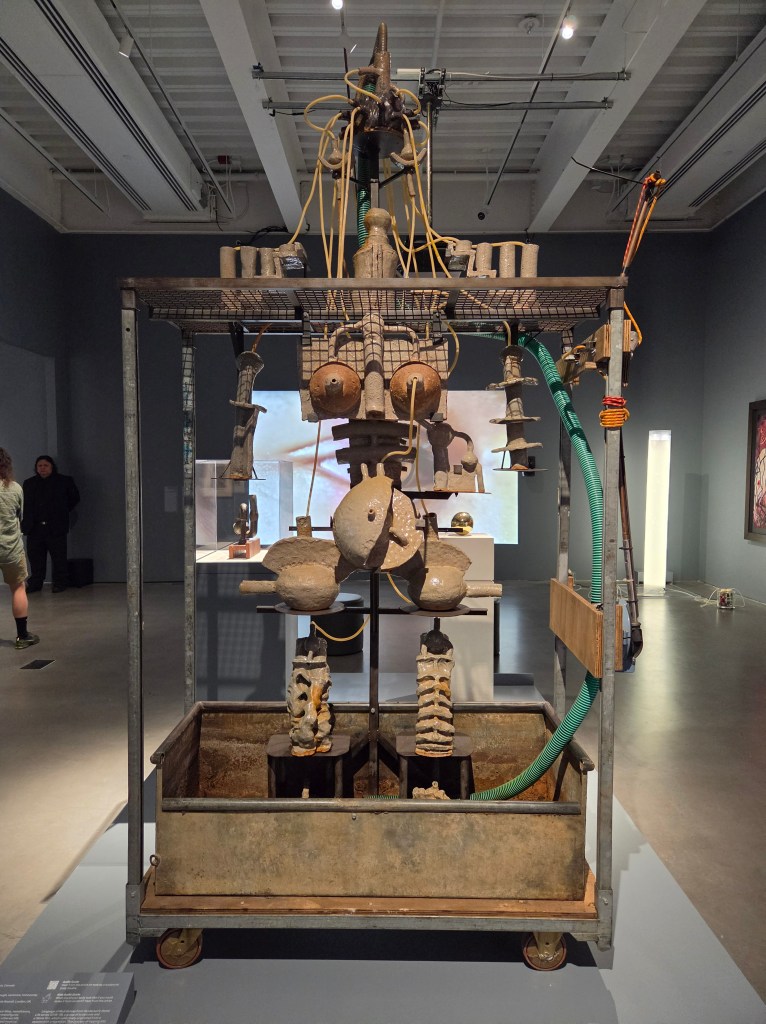
Language of Mud, Tamara Henderson, 2018 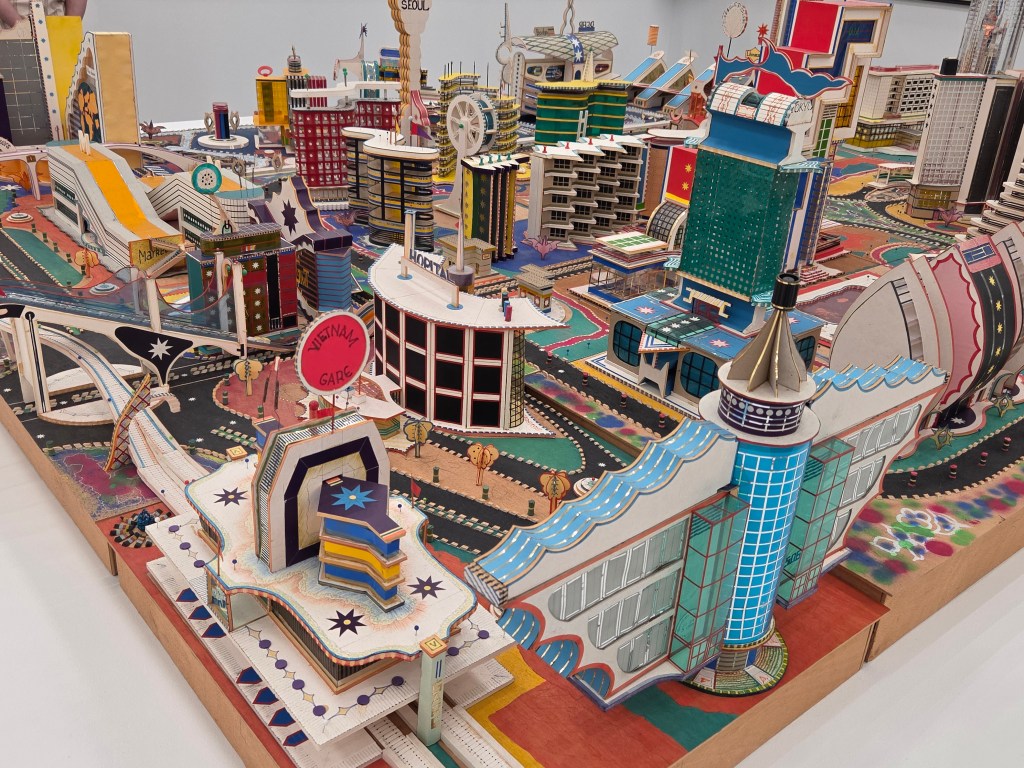
Detail of Ville fantôme (Ghost town), Bodys Isek Kingelez, 1996 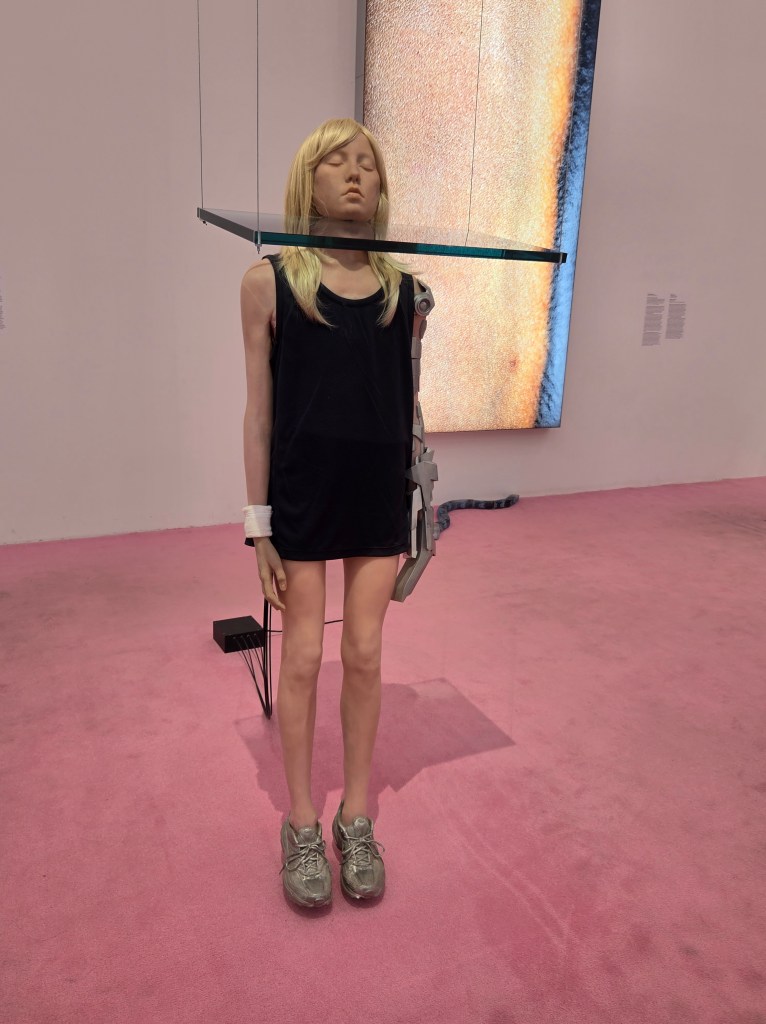
Andro Wekua’s disturbing Untitled, from Some Pheasants in Singularity, 2014. A lifelike mannequin of a teenager appears to be suspended several inches above the ground by its chin. Wires protrude from the figure’s back, connecting it to a black box, and the fingers on its right hand rhythmically twitch while its left arm disappears into a futuristic metal cast. 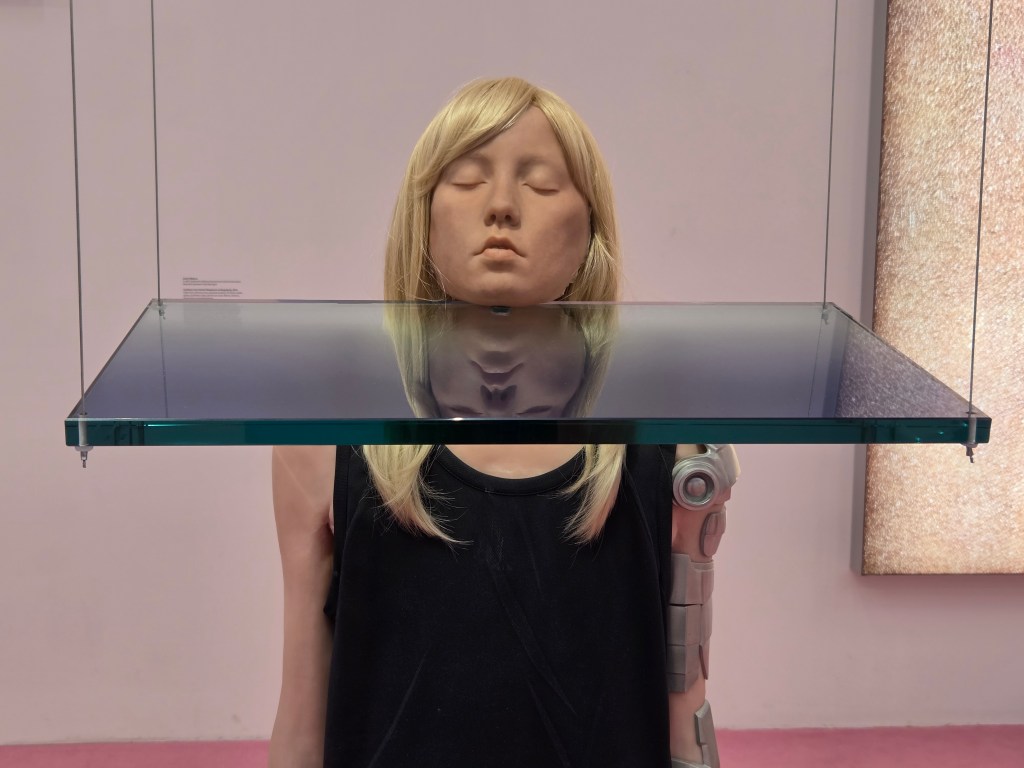
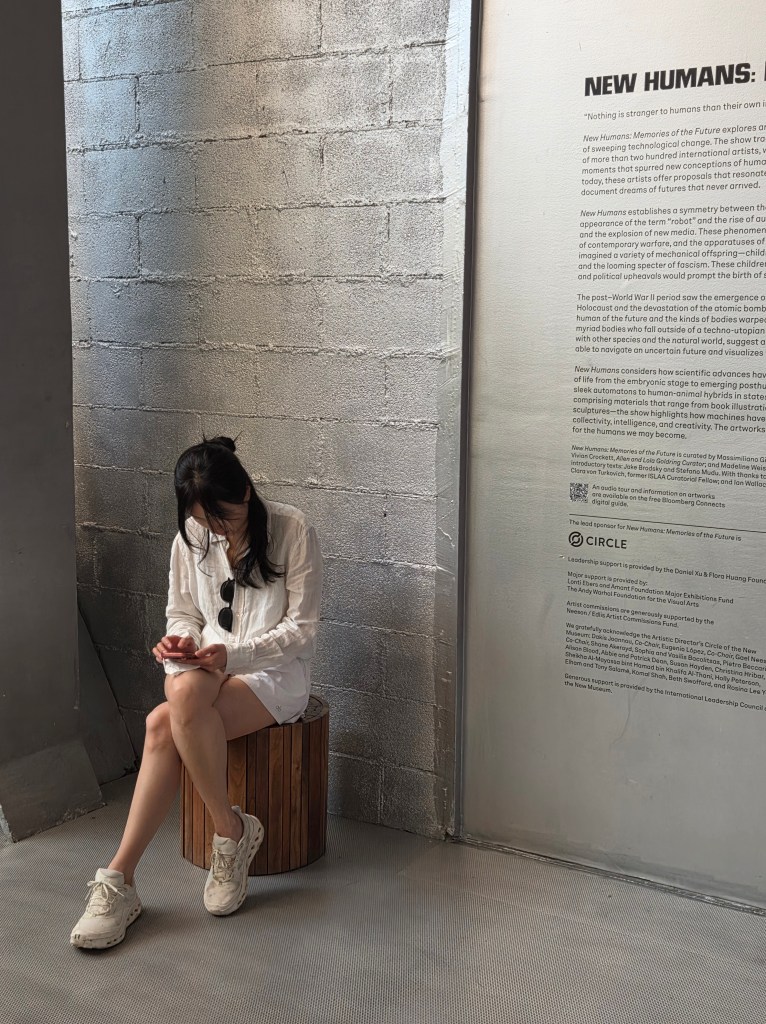
Real girl, not suspended, on the phone at the New Museum 
The august Plaza Hotel upstaged by the City’s new skyline of needle-like skyscrapers 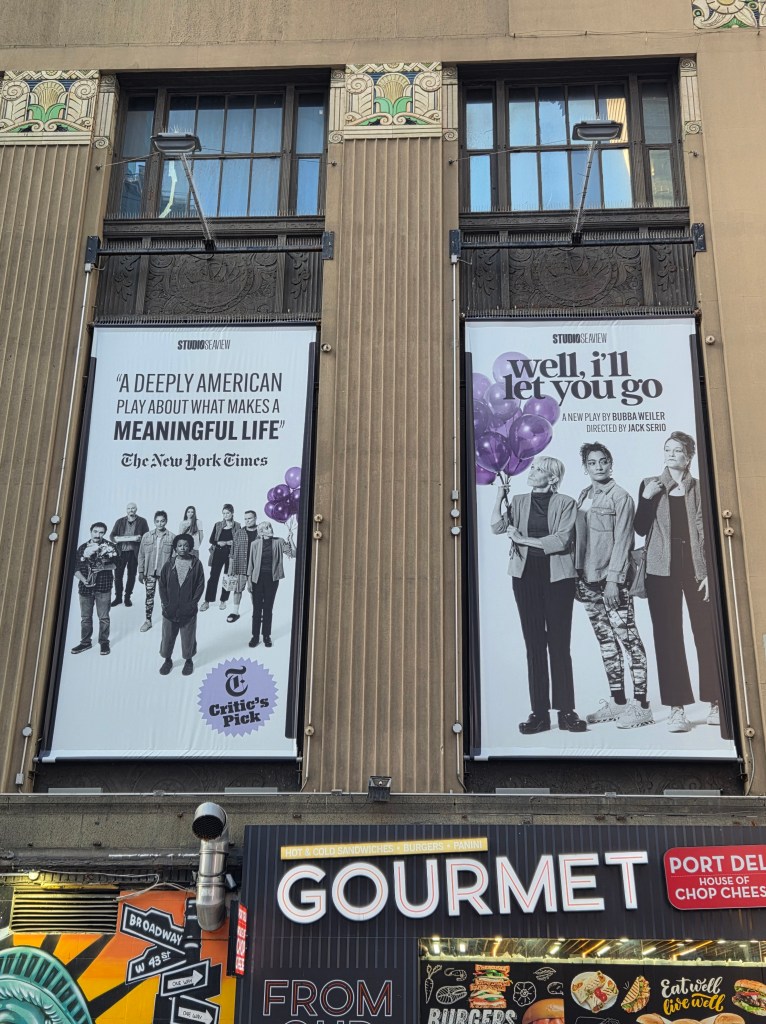
Bubba Weiler’s moving new play, a study in grief, human nature, and what makes life bearable, as well as the power of brilliantly acted theatre 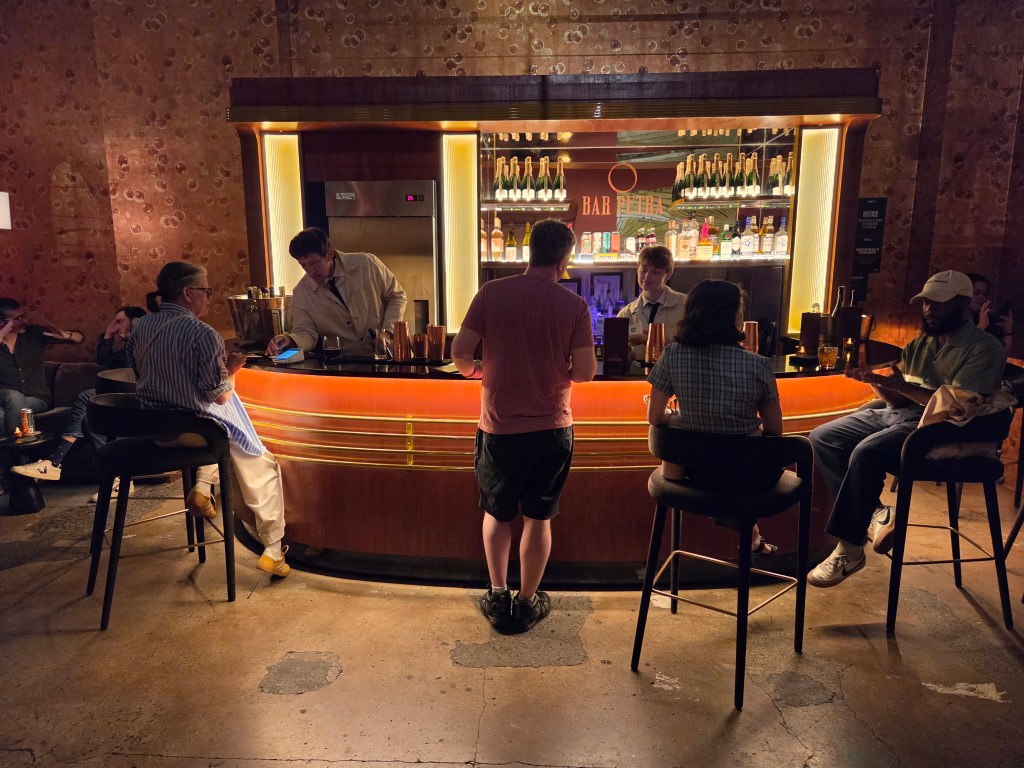
The welcoming Petra Bar in the StudioSeaview theatre off Broadway 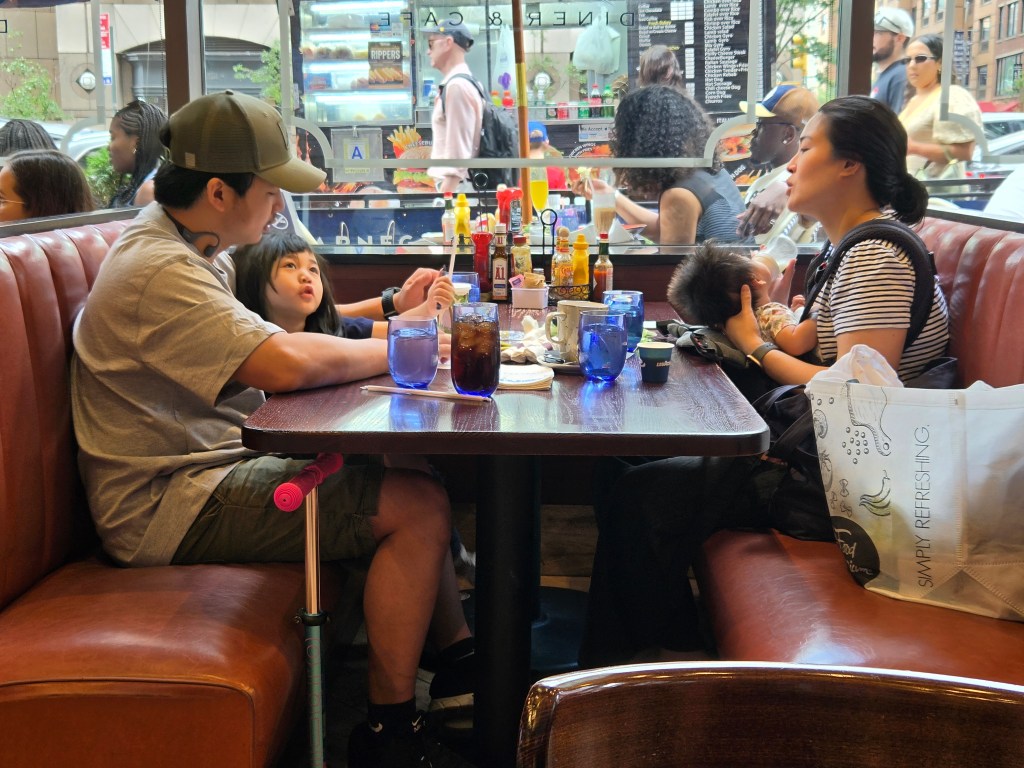
Family brunch at the Carnegie Diner at the corner of 50th and 8th Avenue 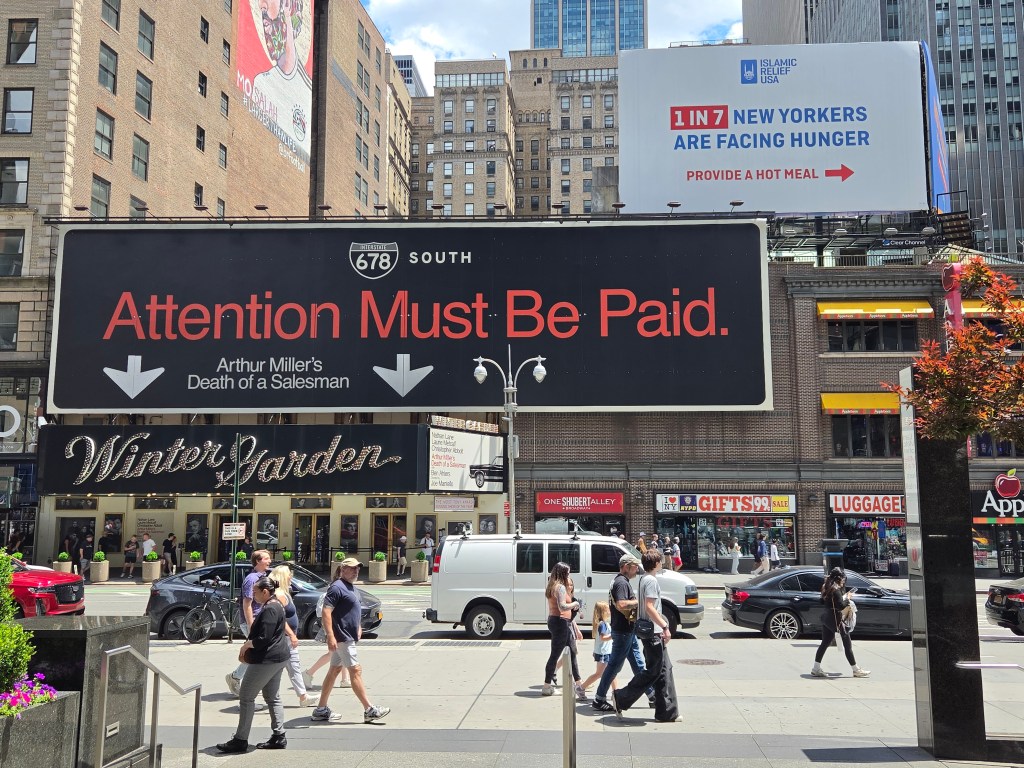
Miller’s famous line given new resonance in 2026 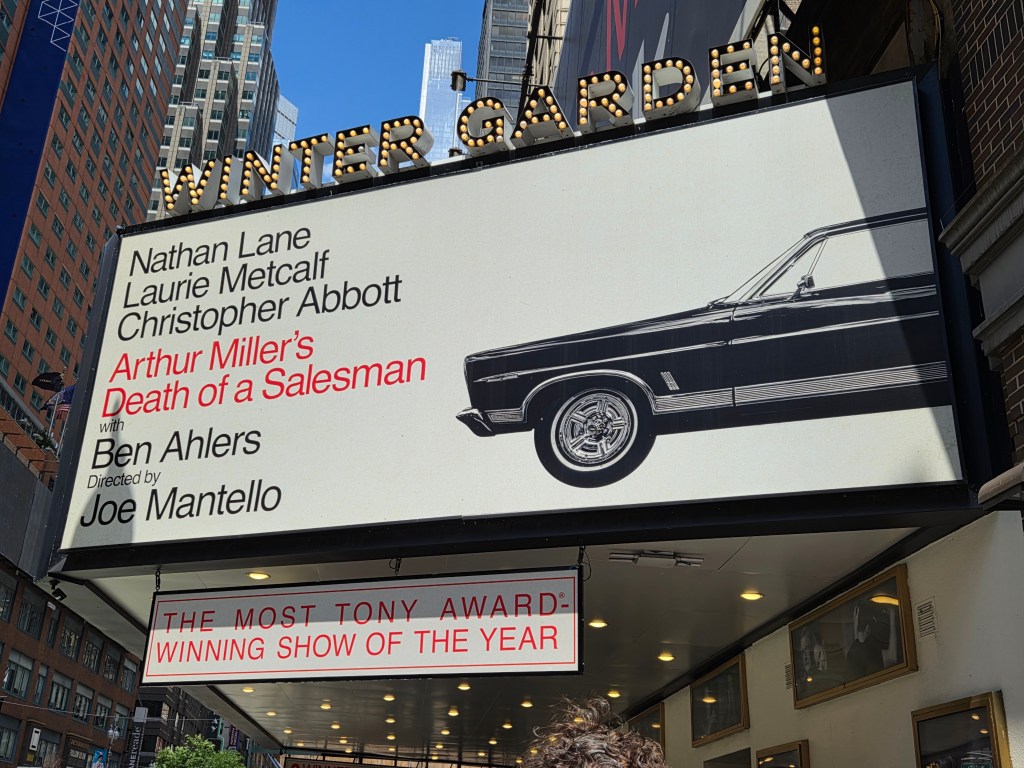
Brilliant production, brilliant cast. Biff’s confession destroyed me. On the ride to Port Authority, my Uber driver Pema told me he had a cousin in New Hampshire, where a four-bedroom house cost only $450,000. So much cheaper than New York, he sighed. Yes, I agreed.
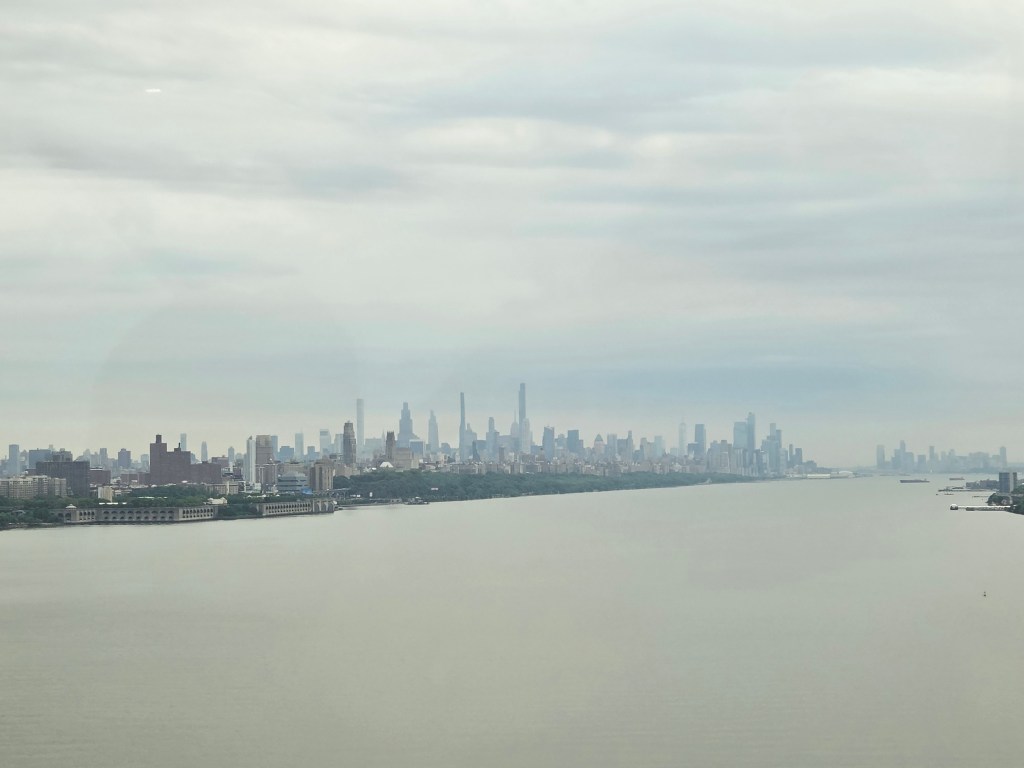
Looking down the Hudson at a skyline rather different from what we saw in October 1998 when David flew us down the river at 500 feet, self-reporting and significantly lower than the Twin Towers we passed. Sigh. And then, after six hours uneventful hours reading Alice Munroe stories on the C&J coach headed north, I arrived back at our home and a drippy, dusky evening. Walking once around the house, my custom after time away, I heard some clicking sounds coming from the stand of trees in front of the house. Birds? Frogs? Then, as I started to walk down the driveway to collect my mail, I heard a huffing sound to my right. And then a growl. Oh. The black bear, the one who’d twice deconstructed my bird feeders and was only briefly deterred a third time when I yelled at her from the deck, was just to my right—and judging from the warning she gave, possibly accompanied by cubs.
I apologized, loudly, for the intrusion, backed swiftly away clapping my hands, and retreated down the hill and back inside through the garage. Safely home. After my adventures in the big city, I had returned to the frontier.
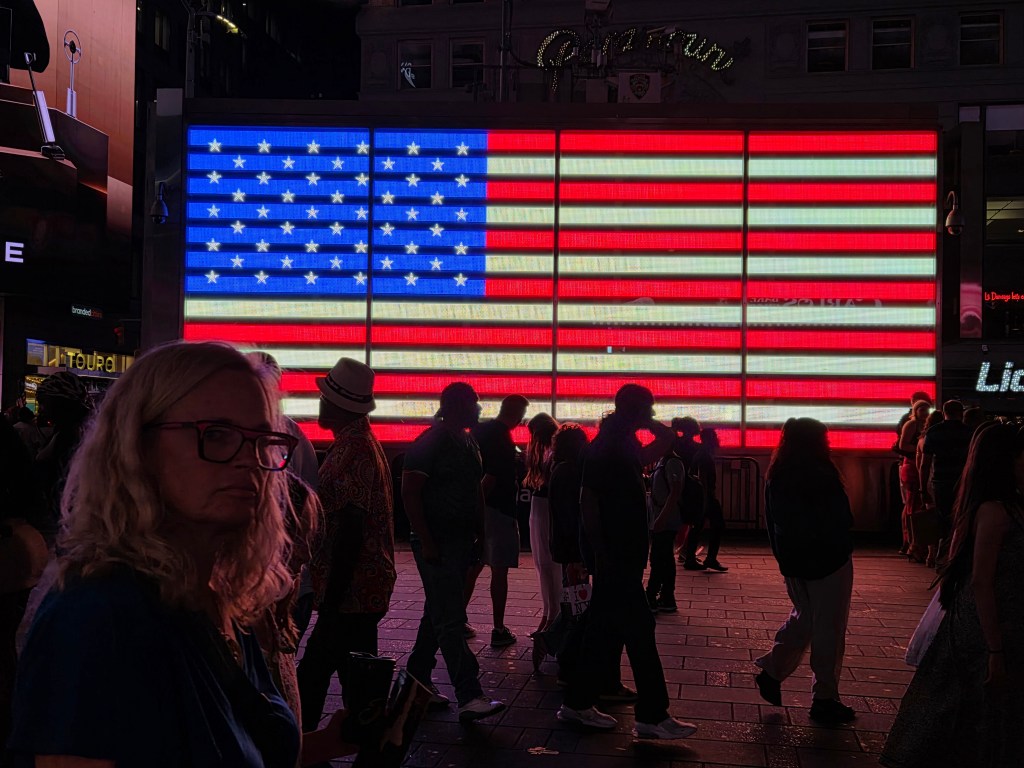
Time Square by night, the 250th Fourth of July approaching. -
Anniversaires
5 June 2026
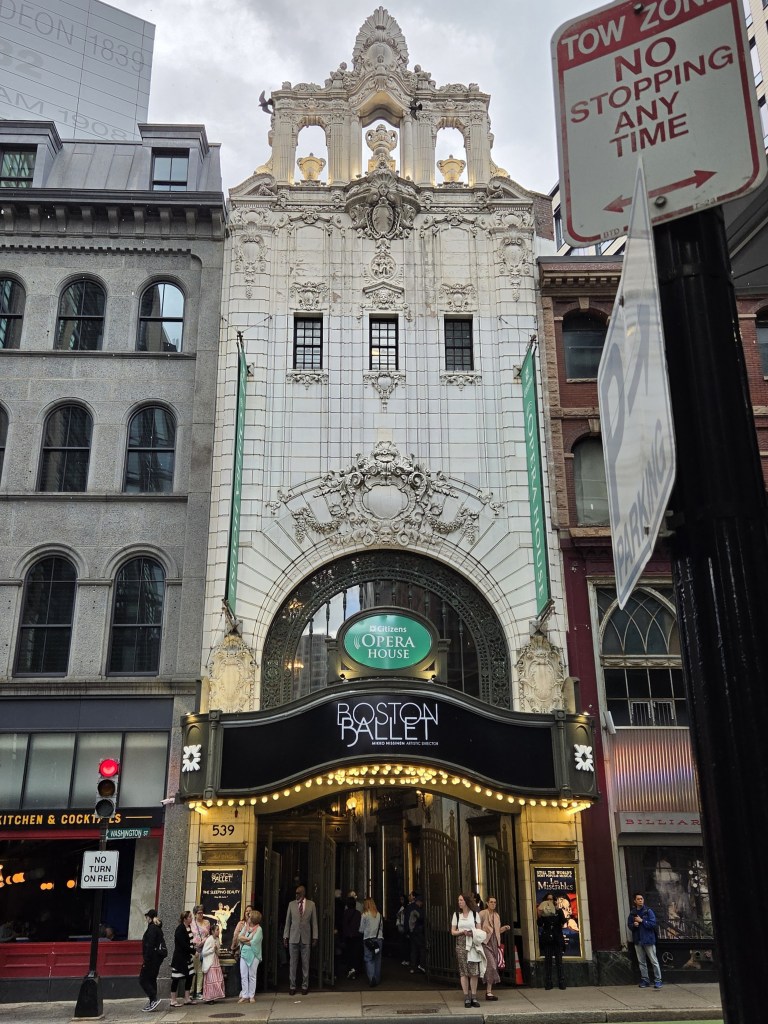
Thomas W. Lamb’s 1928 masterpiece, now Citizens Bank Opera House
and home to Boston BalletFeeling anxious and untethered, Dear Reader? You are not alone; daily experience is not what it used to be. In our PC (Post Colbert) era, so much that was customary is no more, and adapting to the ongoing speed and breadth of change a constant challenge. I loved hearing the legendarily innovative Sir Paul McCartney, a surprise guest on Colbert’s last Late Show, complain about updates on his iPhone: he bought it, he learned how to use it, why should he have to keep learning how to use it all over again? Me, I continue to struggle with my new car AND my new phone; the two do not always play nicely together. Last Friday I was pretty sure I had figured out, definitively, how to get both to communicate. Android Auto came on as it should, as did the radio station I’d programmed; hurrah for me. Then, before I could pull out of my parking space, a pop-up appeared on the car screen, obscuring the map that had been there moments before. I touched it to make it go away, and that turned off the radio.
Exasperated, I exclaimed, “Oh, f*** me!” To which my CAR replied: “I don’t respond to harsh language.” What the hell? I bought this car, and now it’s chiding me for responding to its maddening technical gotchas with profanity? Maybe I should be grateful it didn’t take my “request” literally. Welcome to the robot apocalypse.
With the 250th Fourth of July approaching, and a series of personal anniversaries involving Memorial Days past continually conjuring and then usurping attempts to stay in the present moment, I’ve been thinking a lot about why we cling to these life markers, metaphorical hash marks on the door jambs we passed through long ago, and strategies to keep the less-than-tonic aspects of nostalgia at bay. One answer was a dinner party to celebrate the 25th anniversary of our move into our then brand-new home over Memorial Day weekend 2001, the planning, cooking, and good company distracting from the sadness of my darling husband’s not being at table to join the toast. David departed this dimension around midnight on 31 May 2019. Exactly seven years later, I went to the ballet.
Pausing before a display in the Citizens Bank Opera House, originally the B. F. Keith Memorial Theatre, theatre architect Thomas W. Lamb’s 1928 masterpiece, I felt grateful for the $38-million dollar restoration that brought so magnificent a building back to life in 2004. One explanatory sentence glossed the principle behind the restoration: “The gold leafing was purposefully applied to appear less bright, as if the theatre and all its ornamentation had simply aged, gracefully, over three quarters of a century.”
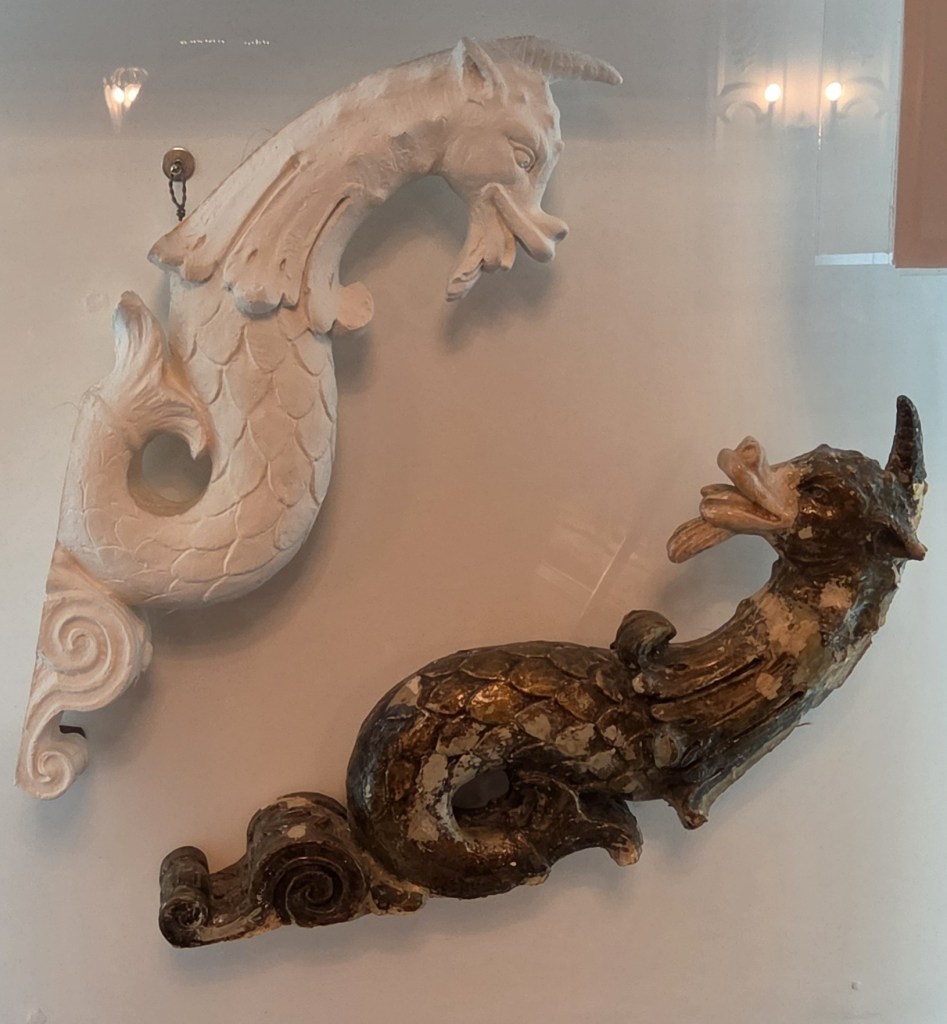
Lamb’s decorative plaster dragons, the lower one restored and aging gracefully, the upper one a replacement cast waiting to be tastefully gilded Contrast that with what The Guardian (31 Aug 2025) called the “extreme goldening of the Oval Office.”

The gilding (guilting?) of the Oval Office: coasters, tympanum, cherub, and new painting (composite photo by Getty/Rex/AP) 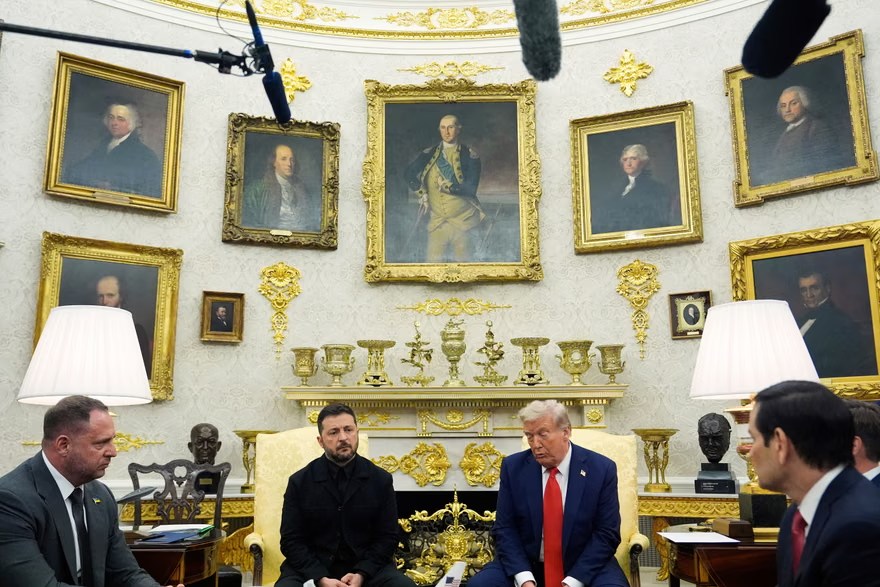
Zelenskyy with FIC at a press conference, August 2025
(Photo by Julia Demaree Nikhinson/AP)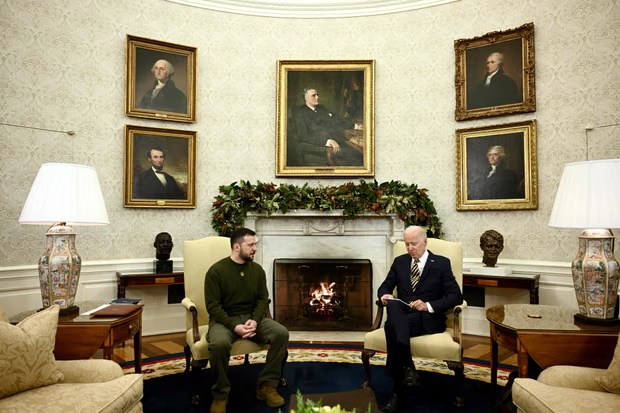
Contrast Zelenskyy with Biden in the Oval Office 2022
(photo by Brendan Smialwoski/AFTOh, I thought, best to head for my seat and avoid that particular rabbit hole of distress.
That was the right move. A chatty young lady named Leah seated next to me provided pre-show and entr’acte entertainment, speaking Russian to her mom and English to me, detailing her affection for ballet (she’d seen Swan Lake and The Nutcracker before), her stellar performance on a recent math exam (“I’m proud of my A+!”), and the excellence of our orchestra seats (“I’ve never been this close before!). The lushness of both production and Tchaikovsky’s Sleeping Beauty score kept me, like Leah, raptly focused, enchanted by consummate artists at work on stage, backstage, and in the pit.
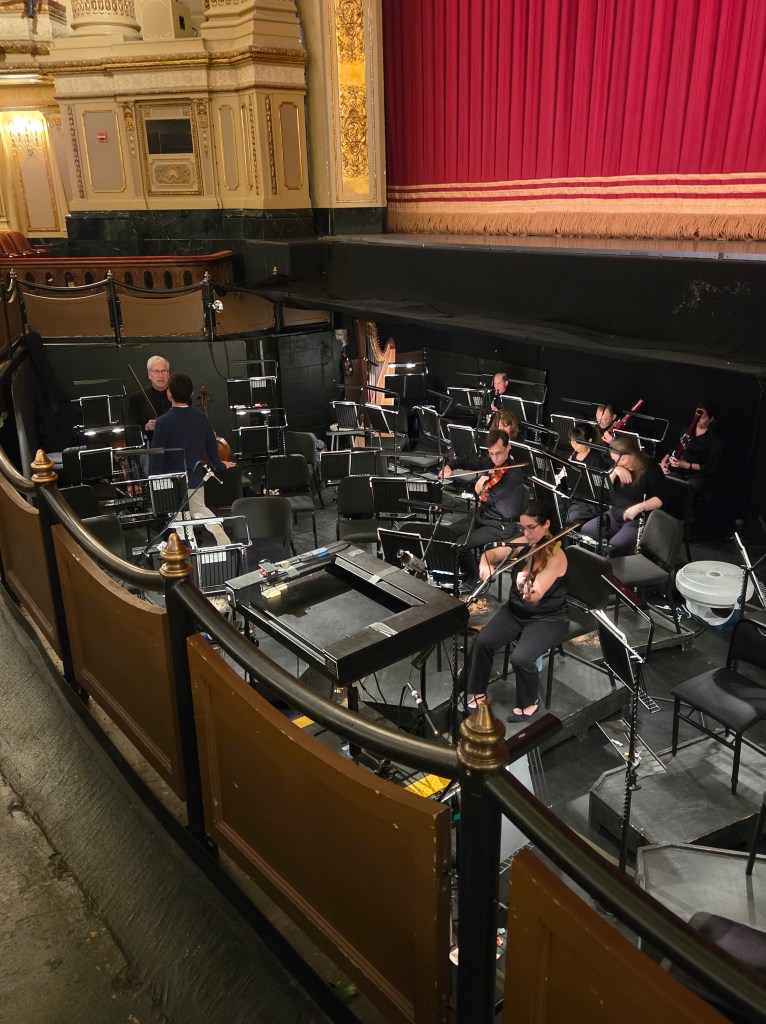
Pre-show practice in the pit 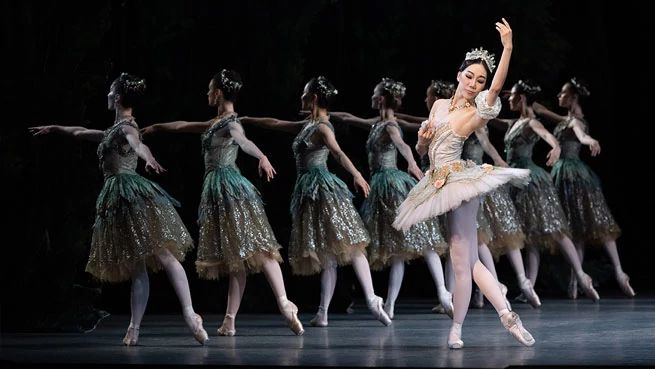
Ji Young Chae and the artists of Boston Ballet (photo by Liza Voll) I’ve been moved to tears at the ballet before, but the gorgeous mutual adoration of Aurora and her Prince, so exquisitely rendered in dance by Ji Young Chae and Jeffrey Cirio, had a special poignancy for me on the seventh anniversary of my own Prince’s departure. As the orchestra began Tchaikovsky’s “Grand valse villageoise,” the lyrics from the animated 1959 Disney Sleeping Beauty came immediately and unbidden to mind:
I know you, I walked with you once upon a dream
I know you, the gleam in your eyes is so familiar a gleam
And I know it’s true that visions are seldom all they seem
But if I know you, I know what you’ll do
You’ll love me at once, the way you did once upon a dream.Yeah. That’s pretty much the way it was. Never underestimate the influence of romance on a young girl.
A gentle rain had begun by the performance’s end, but umbrella in hand, I decided to stroll the Common to collect myself and allow the parking garage traffic to clear.
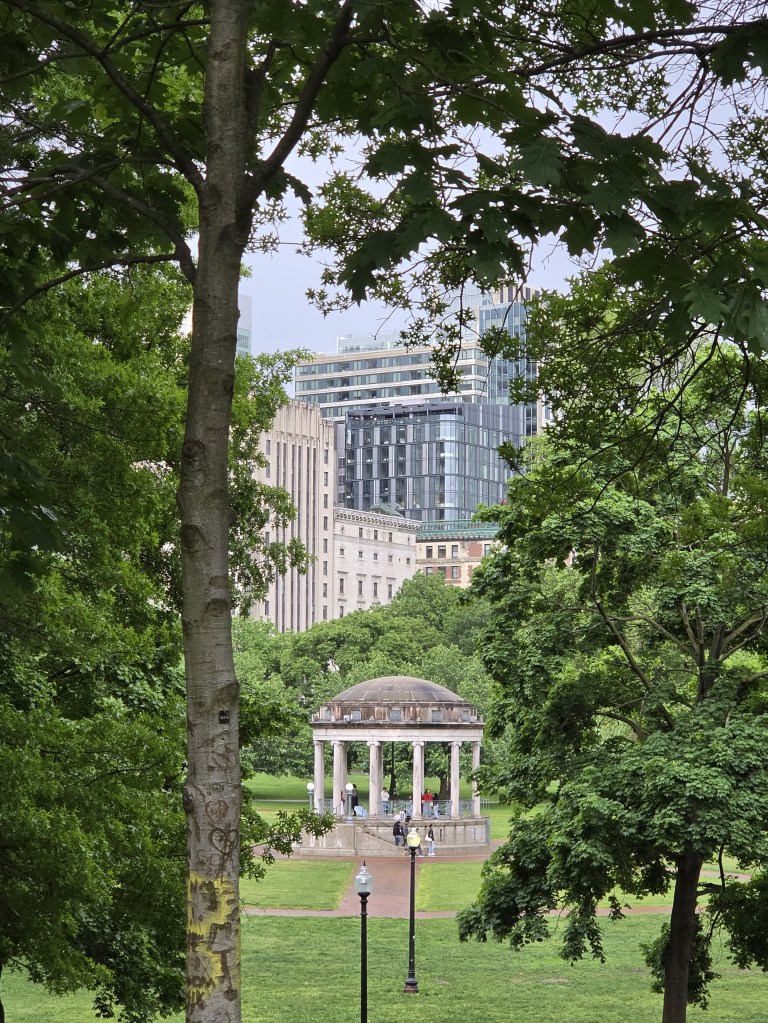
The Parkman Bandstand, 1912 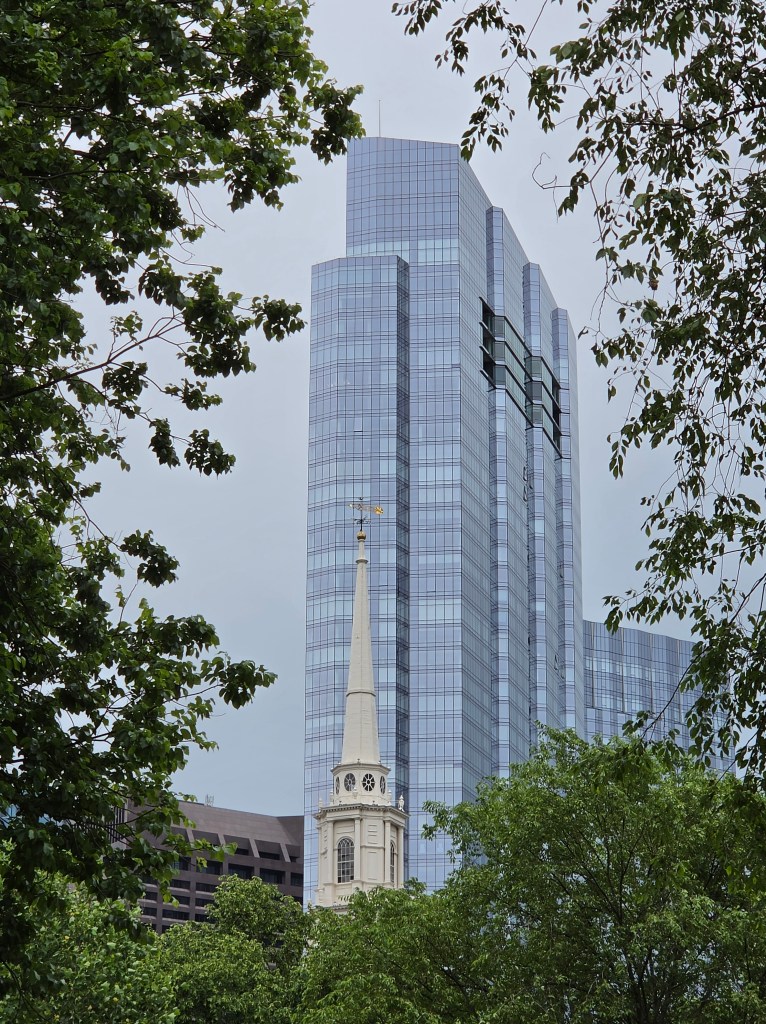
The Park Street Church, 1809, at 217 feet once the tallest building in the early 19th-century U.S., now upstaged by the Millennium Tower, 2016, at 60 stories/684 feet, one of Boston’s highest I was happy to realize it wasn’t just lyrics heard as a seven-year-old that I remembered: I wanted to revisit the Shaw Memorial, and recalled just where it was, directly across from Charles Bulfinch’s State House.
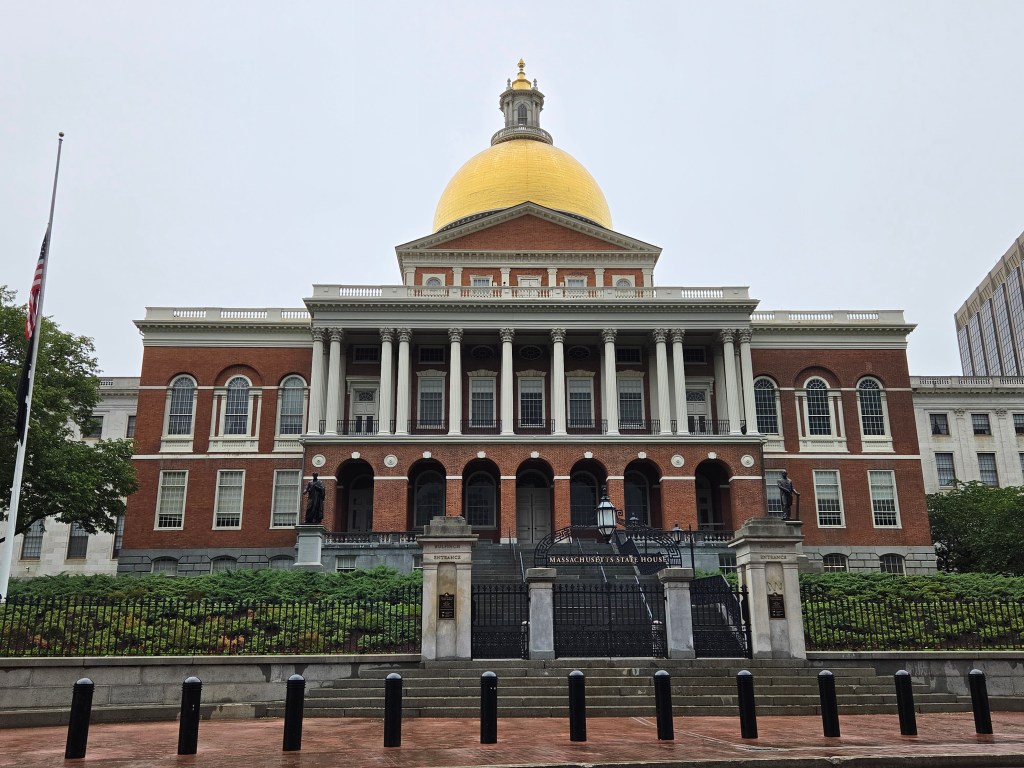
Massachusetts State House, Charles Bulfinch, architect, 1798 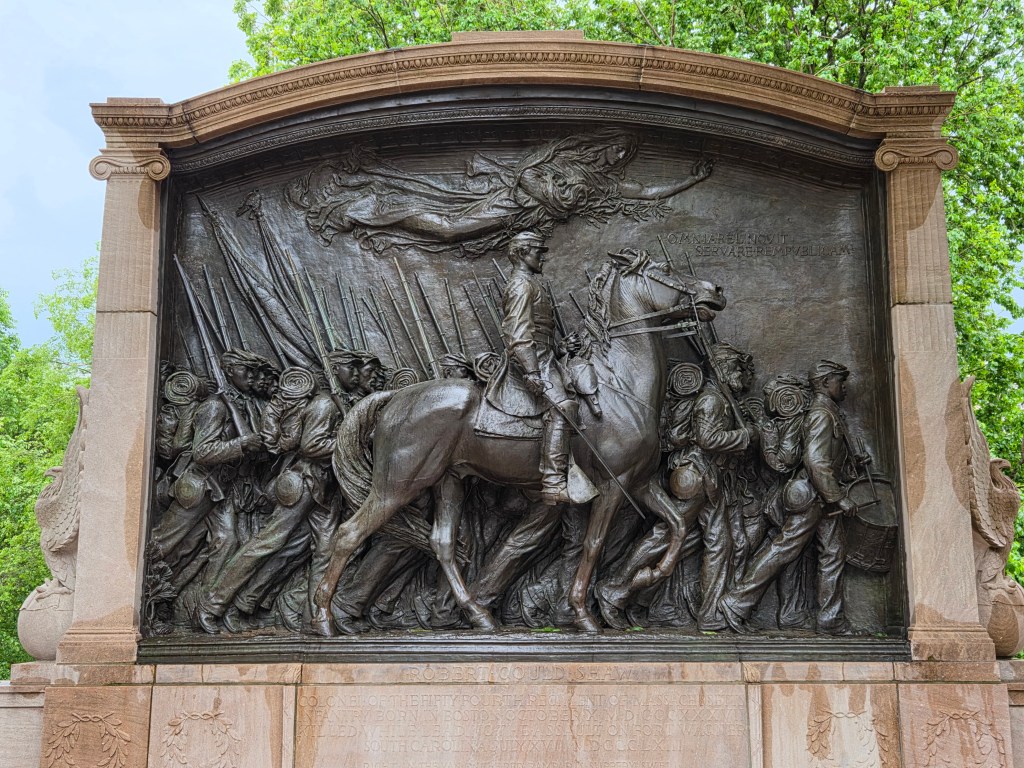
Robert Gould Shaw and the Massachusetts 54th Regiment Memorial,
bronze relief by Augustus Saint-Gaundens, 1897This, of course, evoked more memories of the first time David brought me there, as well as our visit to Saint-Gaudens’s studio in Cornish, NH. But what the sculpture memorializes—the courage of Robert Gould Shaw and the 54th Massachusetts Volunteer Infantry of African American soldiers, so many of whom gave the last full measure of devotion to the Union—diverted my nostalgia in another sad direction.
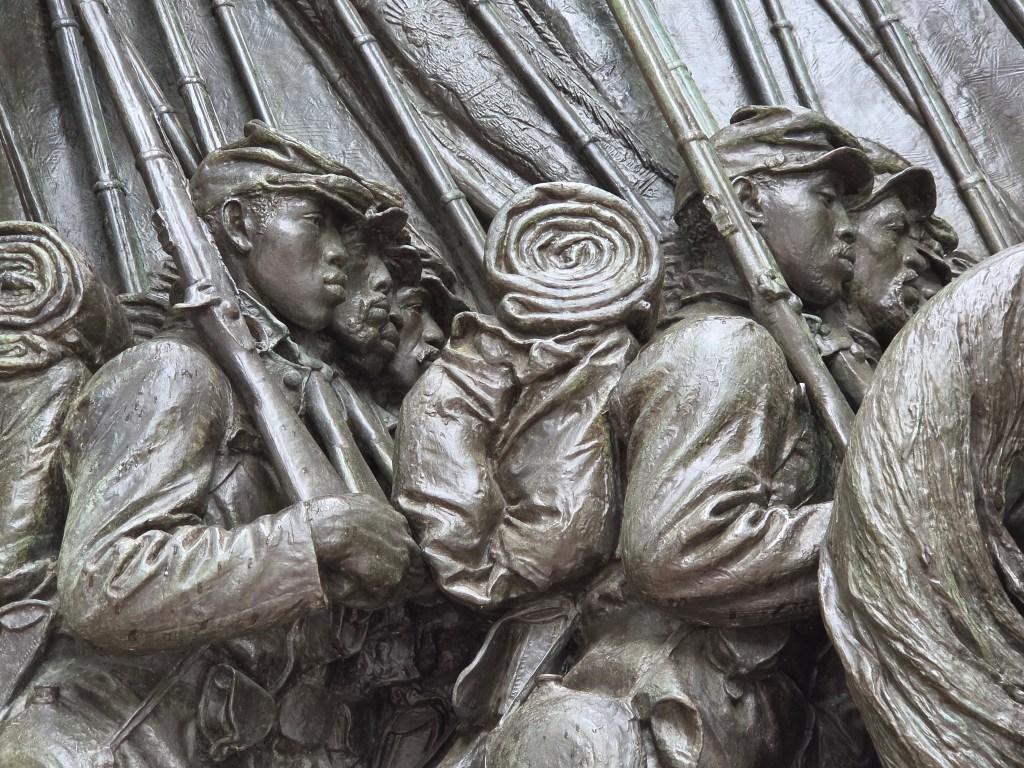
With the 250th Fourth of July celebrations only a month away, the Felon-in-Chief (FIC) proposes celebrating with a cage match, the UFC (Ultimate Fighting Championship) Freedom 250, on the south lawn of the White House (!) on 14 June, the FIC’s 80th birthday (!!). And his MAGA minions have proposed his portrait on a $250-dollar bill (!!!). Celebrating the felon who would be king—what could be further from what the Founders envisioned on that July fourth in 1776?
I was back down the rabbit hole. Time to go home. Heading back to the parking garage, I passed The Embrace memorial to Coretta Scott King and MLK, Jr., who met in Boston in 1952. The Embrace, according to an adjacent sign in the Freedom Plaza, “reflects the power of collective action, the role of women in the freedom movement, and the forging of solidarity out of mutual empathy and vulnerability.”
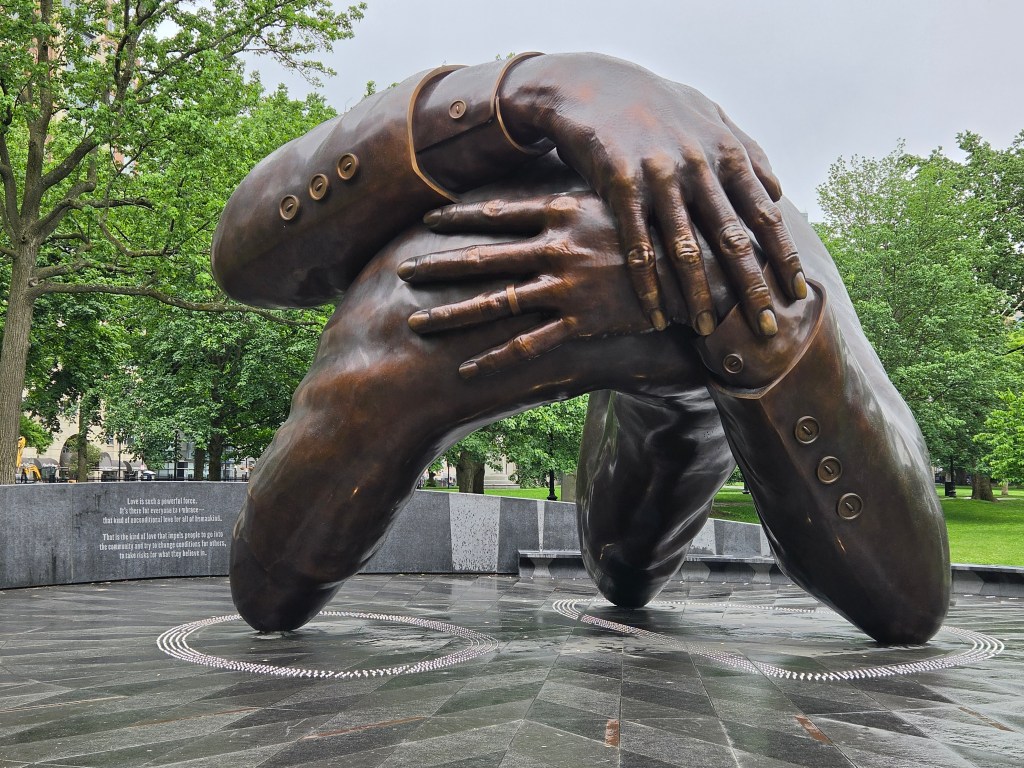
The Embrace, unveiled on Boston Common, January 2023 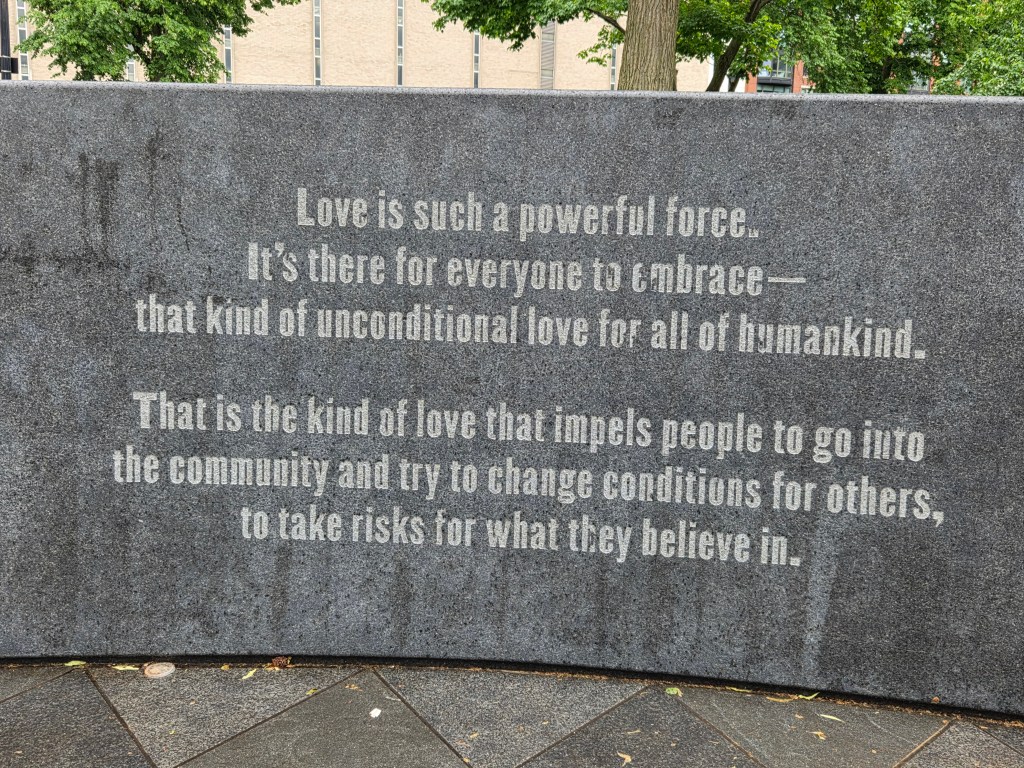
The takeaway engraved behind The Embrace Designed by Hank Willis Thomas, the sculpture depicts the couple’s intertwined arms and commemorates the famous hug they shared after Dr. King won the Nobel Peace Prize in 1964. Right there in American’s oldest public park, Ladies and Gentlemen! A monument to empathy and self-sacrifice. Whatever you think of the sculpture (I’m not a fan), it’s pretty much the opposite of a cage match on the Felon-in-Chief’s birthday.
Back in the garage, I was luckily diverted from my return to the rabbit hole by a new problem to solve: my small VW GTI was pinned in a corner spot with a large truck to my left, a supporting pillar to my right, and an even bigger truck with a long bed parked perpendicular to my space. If I backed straight out, I would hit it. Attention must be paid! Getting my car out of that space took about 15 sweaty minutes, inching forward, backward, forward, backward, adjusting the exit angle ever so slightly with each maneuver. Finally, with side mirrors folded in and a prayer, I eased out of the spot with nary a scratch. And there were no more problems exiting Boston. But when I returned home, I saw that for the second time in three weeks, a bear had deconstructed my elaborate bird feeder system.
Strangely, I didn’t feel all that bad. Somehow my sad gloom had dissipated. And then I remembered our late Dean Palmer’s answer when I asked him how he managed to carry on after losing first his wife and then his only child, all the while suffering increasingly debilitating Parkinson’s. The answer (from a man who navigated bombers over Germany in WW2): “Life is all problems. The trick is to stay interested in solving the problems.”
Right. The next day, 1 June, the seventh anniversary of David’s departure from our home for the final time and the sixth anniversary of my retirement from 43 years as a professor, I had a lovely walk on a new-to-me trail with good friends.

Dragonfly observed on the Leighton Forest trail, 1 June 2026 I then went out and bought new support poles for the bird feeders, and booked tickets online for me and another friend to see The Producers at the Ogunquit Playhouse come August. The day after, I installed the new poles, went to yoga class, got a haircut, and made plans to meet up with another old friend in New York City to see the Raphael show at the Met before it closes. And I mowed the lawn. Staying interested in solving problems.
So, Dear Reader, here’s to hope and happy anniversaries, the past in the present.
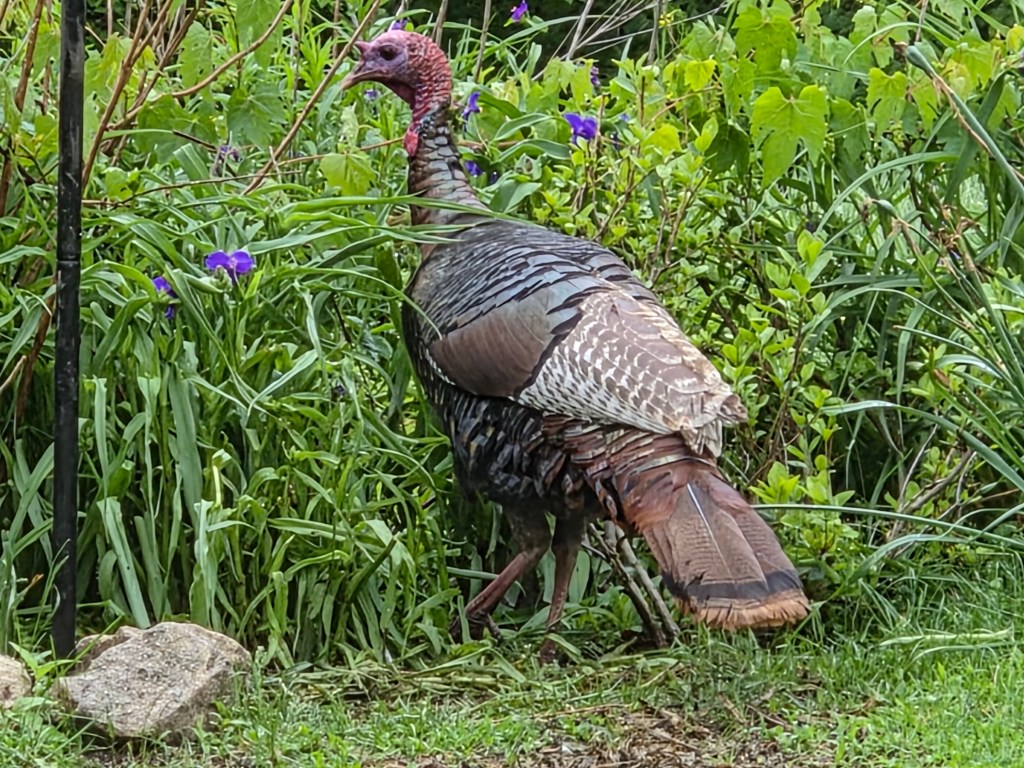
Spiderwort in bloom with turkey hen, happy to find the bird feeders restored 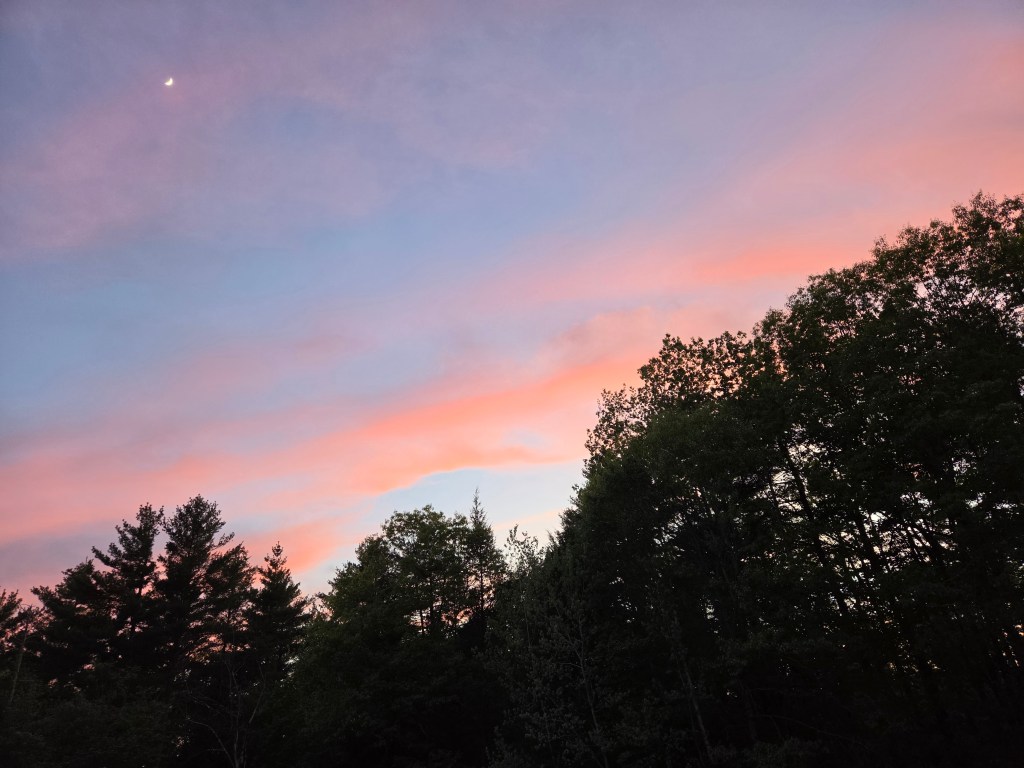
Sunset with waxing crescent moon from the deck, 21 May 2026
-
Subscribe
Subscribed
Have a WordPress.com account? Log in now.

