18 September 2026
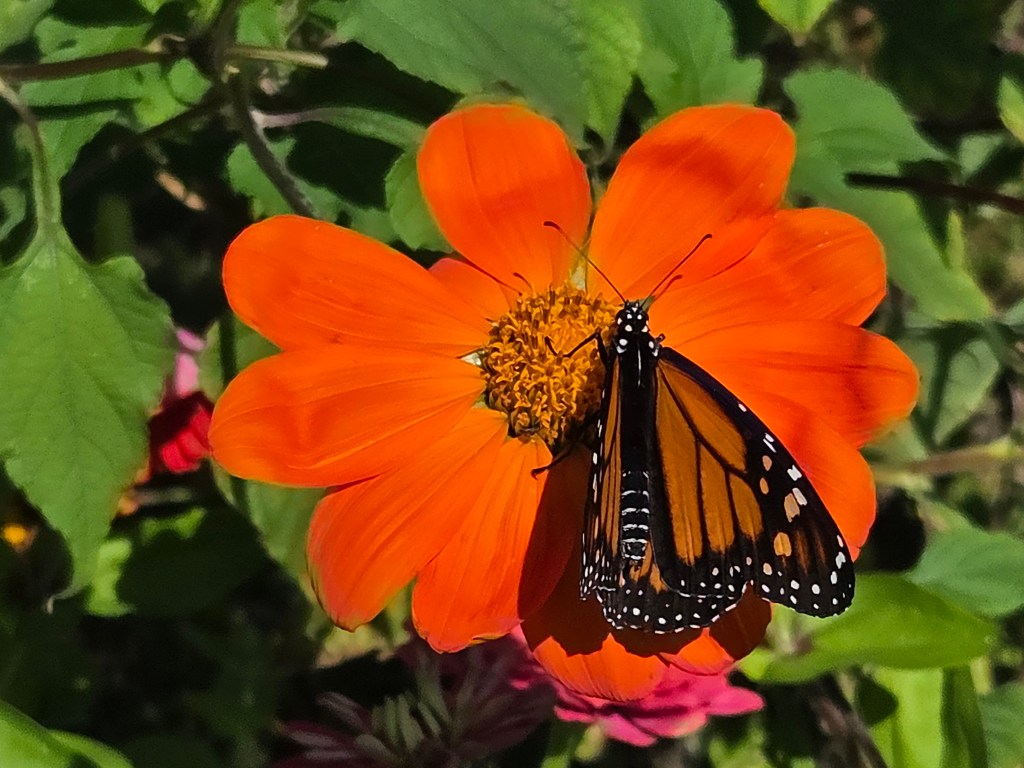
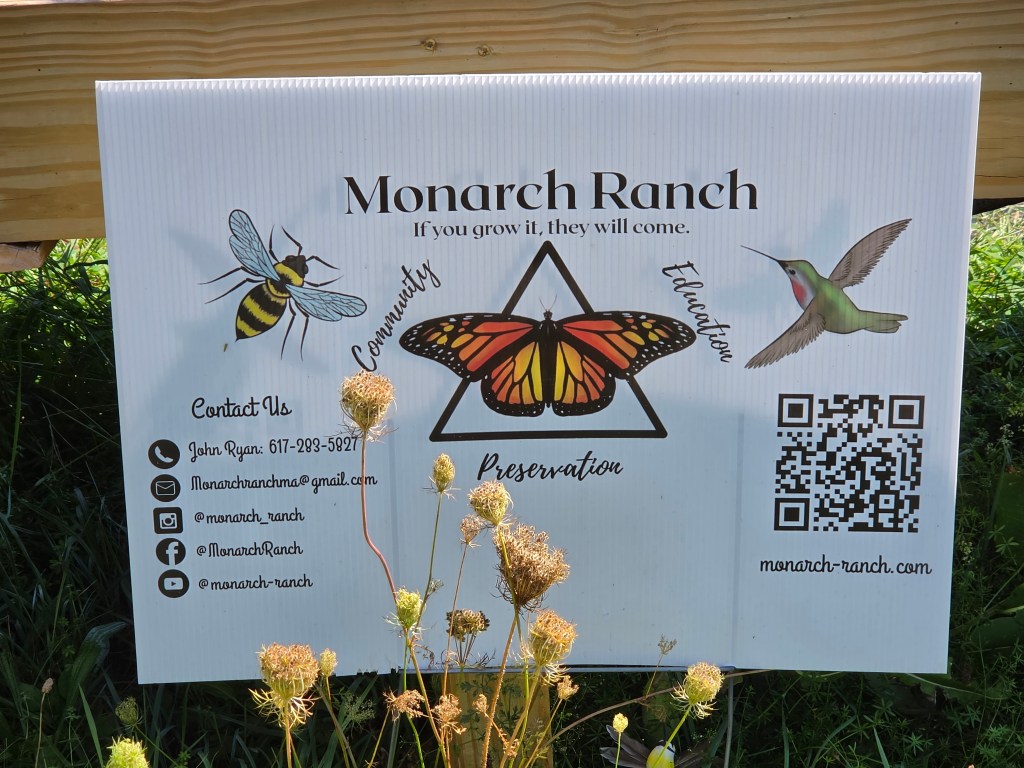
Last Friday, 9/11, my beneficent friends Jay and Susan offered me a beautiful alternative to marinating in the horrors of that 25th anniversary: an afternoon observing the monarchs feasting in the pollinator gardens behind the public library in Tewksbury, Massachusetts. Jay Richard, an accomplished wildlife photographer, I first met seven years ago when, after several days of driving by this guy staked out with camera and impressive telephoto lens, I finally pulled over to ask what he was shooting. A Mississippi Kite it was, nesting not far from UNH, an amazing photo of which now hangs in my dining room. Jay’s gotten involved with founder Jack Ryan’s Monarch Ranch, a community education and preservation project (“If you grow it, they will come”: monarach-ranch.com), sharing his photography skills to illustrate Ryan’s presentations and in turn spreading the environmental gospel. Even my modest Samsung Galaxy S26 could capture some of the tonic beauty there to behold, and with some other friends, we all shared a more than bountiful lunch at the Pushcart Café in Tewksbury (I made two more meals out of that chicken salad).
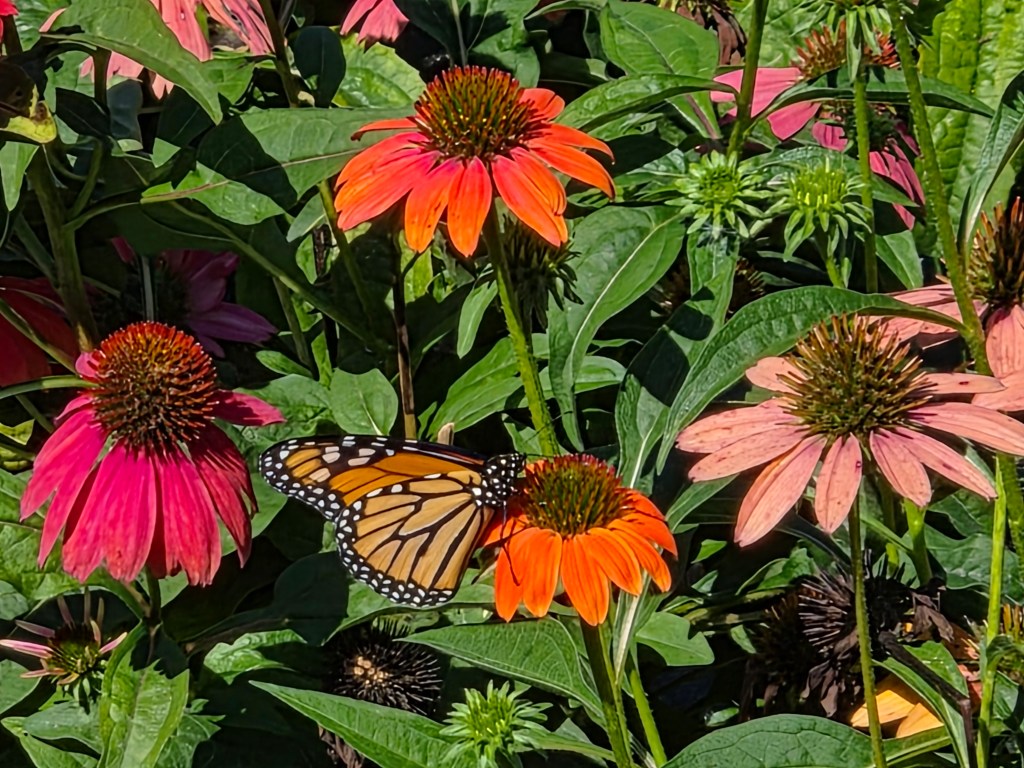
Jay’s and Susan’s hospitality, the worthiness of Ryan’s mission, and the glory of the monarch beauties among the Mexican sunflowers were indeed uplifting, offering some salutary perspective on the past. But I still spend a lot of time looking back. I once had a Mother’s Day brunch with my friend Jimmy at Windows on the World at the top of the twin towers, and years later David and I saluted them from our Piper Warrior as we self-announced our flight path down and back up the Hudson, only 500 feet above the water and considerably lower than Windows on the World. The minute-by-minute revelation of the 2001 attack remains as vivid in my memory as that November afternoon in 1963 when the safety patrol kids who’d just been released to their duties came running back into my 6th grade classroom bearing the news they’d heard from moms arriving to pick up their children: the President had been shot. Mrs. Gassner had spent that afternoon teaching us about the Lincoln assassination; she put her head down on her desk and began to cry. In 2001, I had just gotten to my new job as international undergraduate research coordinator at UNH when my boss’s daughter called her from London to ask if she was all right. But why? Hearing that what we assumed was a small plane had hit a tower, I hurried to the Memorial Union next door where there was a tv, arriving just in time to see the second tower struck. David and I had just moved into our newly built home that summer; my husband was still there, not yet having left for his class. Recalling the “duck and cover” drills prompted by the Cuban missile crisis during my elementary school years in Florida, I thought that perhaps this, finally, WAS the end, and decided that if it was, I wanted to be back with my husband. I went home.

My colleague Bob LeBlanc, emeritus geographer who volunteered time advising study abroad students, had been on his way to a conference in L.A. on United 175, the plane I saw hit the second tower. I’ve now twice been back to the 9/11 memorial there at ground zero and seen his name engraved among so many others. So, 25 years later, following my afternoon of beautiful butterflies and good company, I watched again Paul Greengrass’s powerful 2006 film, United 93, every bit as moving as the first time I saw it.
Among the many remembrances broadcast last week, what I now most recall is Tonya Mosley’s interview of Richard Beck on NPR’s Fresh Air. Beck’s new book Homeland: The War on Terror in American Life looks at how the Sept. 11 attacks led to the expansion of government surveillance and a sharp increase in hate crimes against Muslim Americans, further arguing that the War on Terror laid the groundwork both for Donald Trump to become president and for “impunity culture in American politics.” In that interview, Beck quoted Susan Sontag writing in the 16 September 2001 New Yorker. I understand Sontag was at the time reviled for her truth telling, but 25 years later, her words ring all too true. She begins:
“The disconnect between last Tuesday’s monstrous dose of reality and the self-righteous drivel and outright deceptions being peddled by public figures and TV commentators is startling, depressing. The voices licensed to follow the event seem to have joined together in a campaign to infantilize the public. Where is the acknowledgment that this was not a ‘cowardly’ attack on ‘civilization’ or ‘liberty’ or ‘humanity’ or ‘the free world’ but an attack on the world’s self-proclaimed superpower, undertaken as a consequence of specific American alliances and actions? How many citizens are aware of the ongoing American bombing of Iraq? . . . Let’s by all means grieve together. But let’s not be stupid together. A few shreds of historical awareness might help us understand what has just happened, and what may continue to happen.”
Whither America 25 years after 9/11 in this now even more stupid union led by the self-serving Felon-in-Chief? And what of the youngsters with no living memory of 9/11, for whom too many “education” amounts to cognitive surrender to A I, replacing human deliberation with machine answers?
Well, dear Readers, we do what we can. And when despair threatens, I advise following the arts. And don’t assume the past is template for the future. In the words of my hero, Ted Lasso, “There’s a reason the rearview mirror is smaller than the windshield.”

Autumn is icumen in. The hummingbirds have decamped, but the wild grapes sweetly scent the air. Time to gather in and take stock. And look forward.
 Georgeann Murphy
Leave a comment