14 May 2026
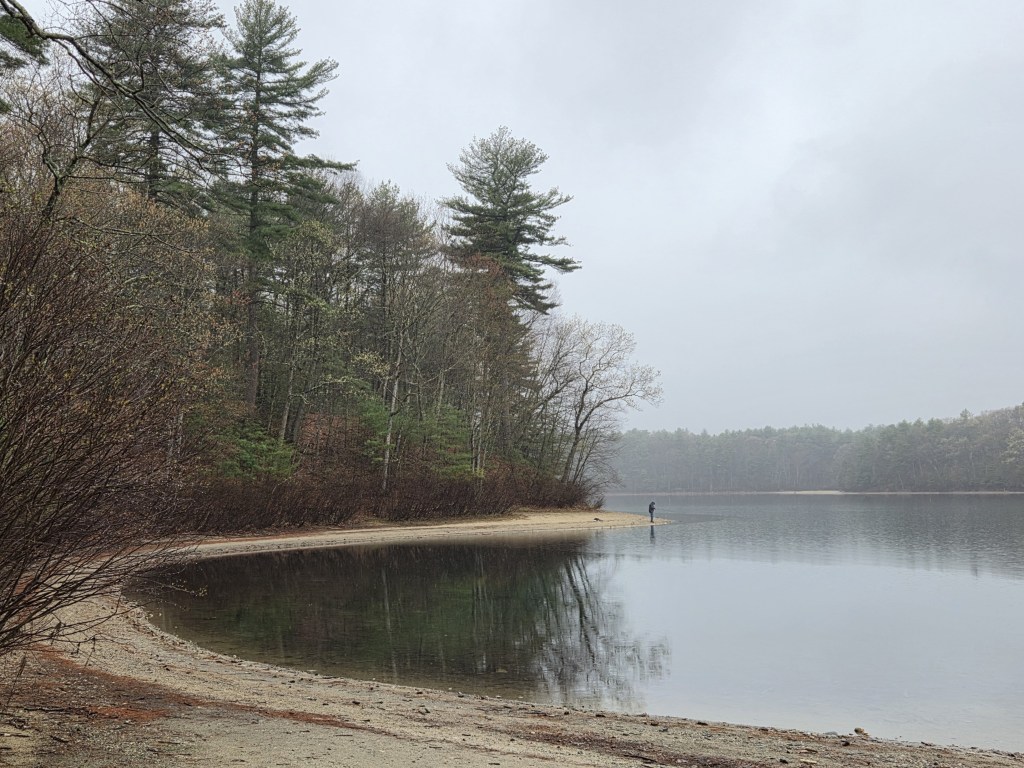
We went to the woods last April, specifically Walden Pond, because we wished to revisit what it meant to Thoreau and what it might mean to us now. Katherine, one of our core Madbury Library Book Club quartet, had last November gifted us with illustrated copies of Autumnal Tints, Henry David Thoreau’s poetic and philosophical essay first posthumously published in The Atlantic Monthly in October 1862, a detailed guide to the colors of a New England autumn urging the reader to play close attention to the deeper meaning of the season’s transformation. Henry David’s exhortation prompted me then to suggest a spring field trip to Walden Pond, which I’d not visited since my Americanist husband had taken me there on one of my early visits to him in New Hampshire, part of a courtship campaign that ultimately succeeded (happily for both of us). On learning that Walden Pond, a State Reservation managed by the Massachusetts Department of Conservation and Recreation, draws 600,000 visitors a year, often filling the parking lot and closing the park early in the day, we chose the last day of April for our visit to avoid the crowd.
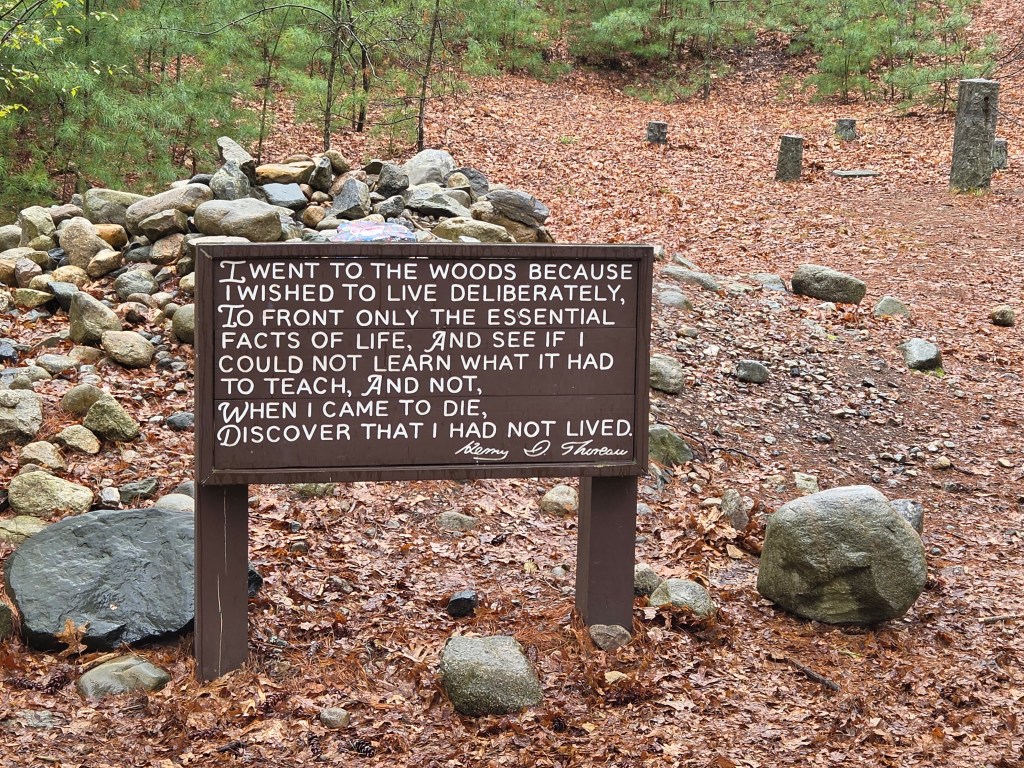
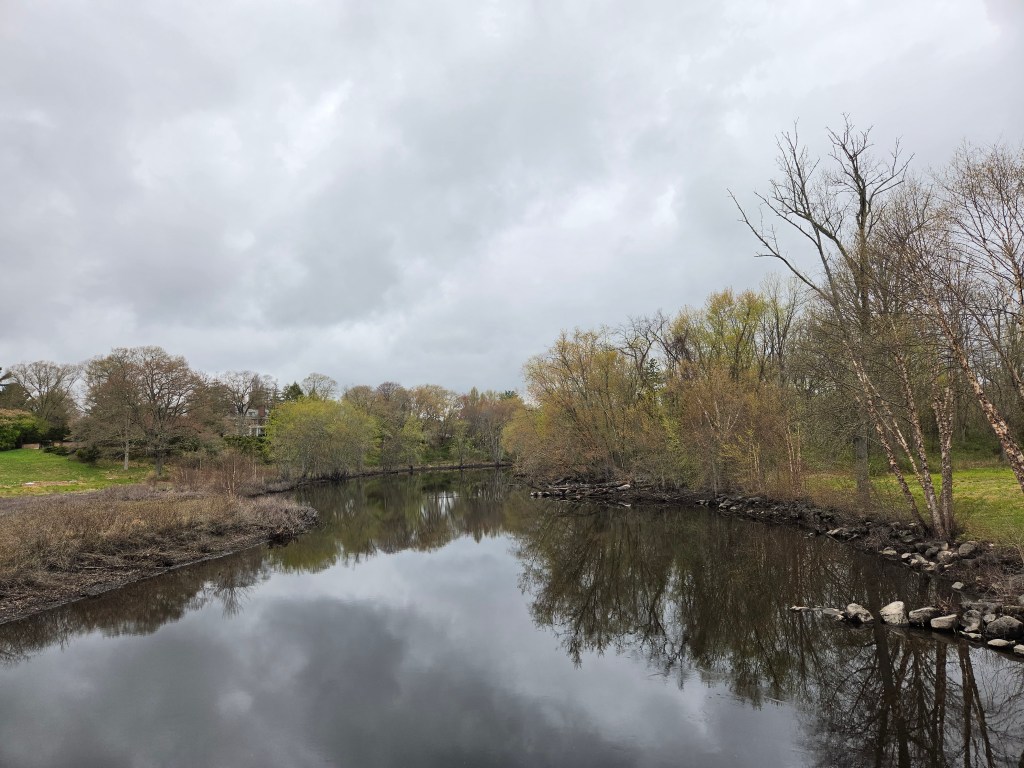
As it happened, a rainy day kept most folks away: when we arrived around 10.30, we were the only car in a parking lot so empty that the ranger staffing the handsome Visitor Center (built mostly from native lumber) waived the $30 parking fee normally charged out-of-state visitors.
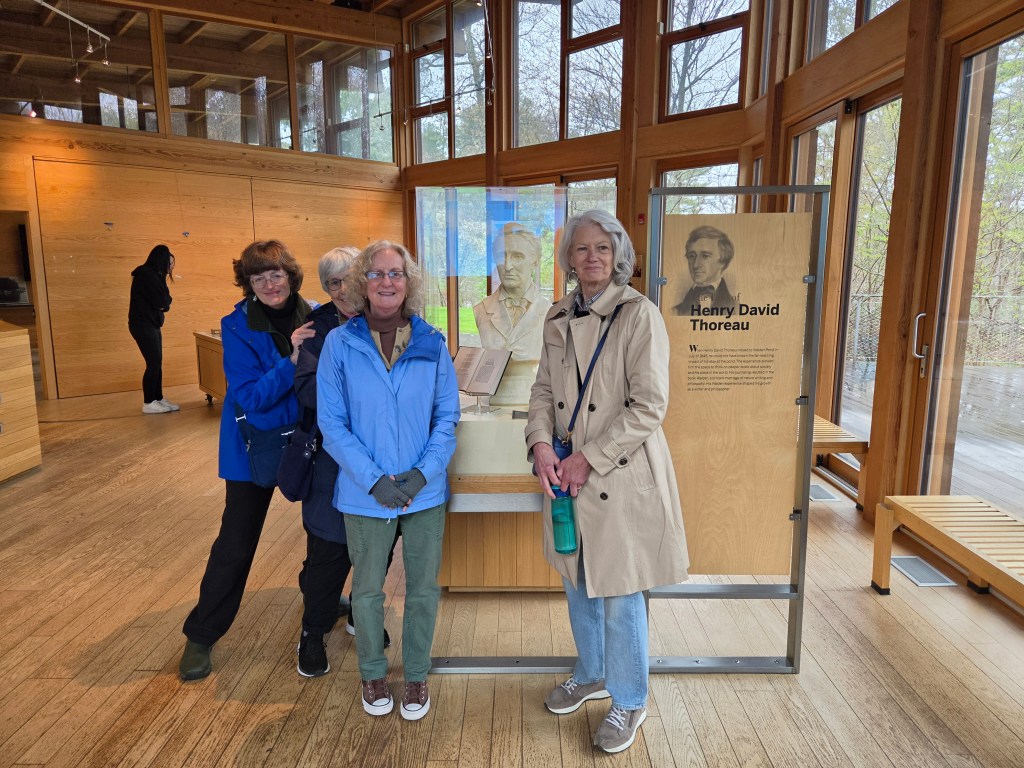
We watched the excellent orientation film, like the recent PBS series, another evocative Ken Burns production, this one narrated by the late Robert Redford. That and the misty grey weather added to a sweetly melancholy nostalgia I felt thinking of all that has been lost since Thoreau’s deliberately chosen tenure by the Pond.
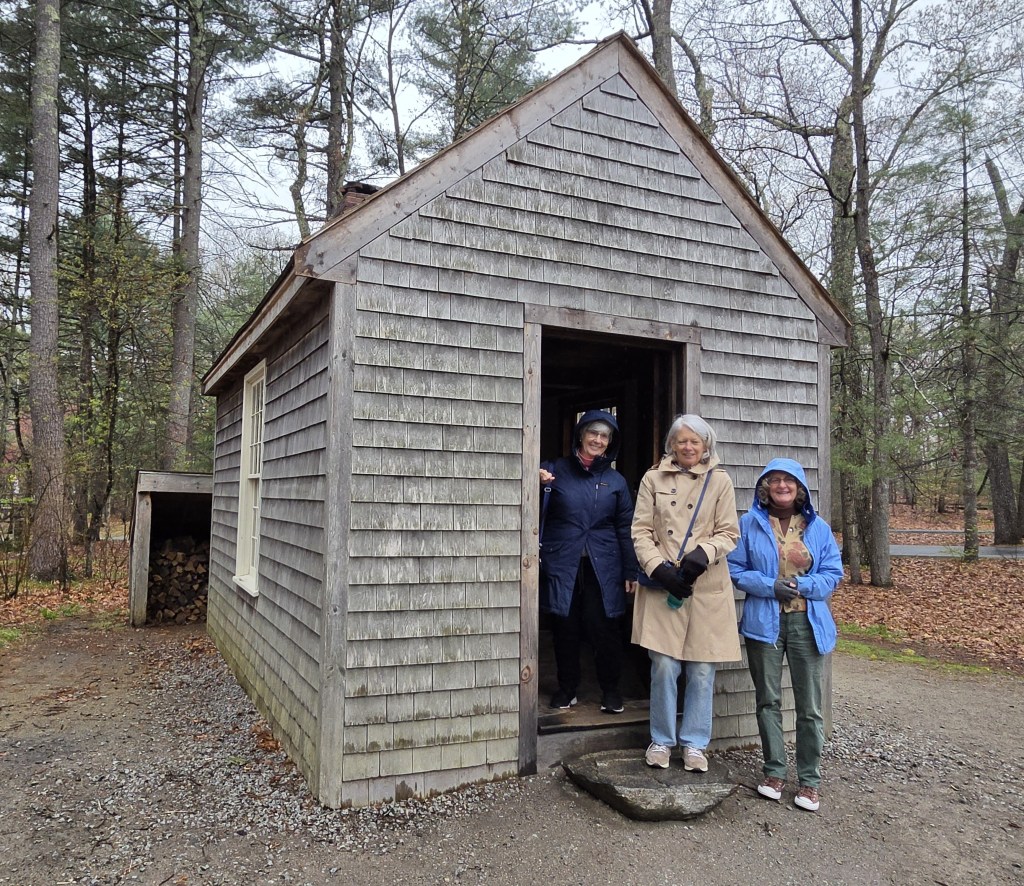
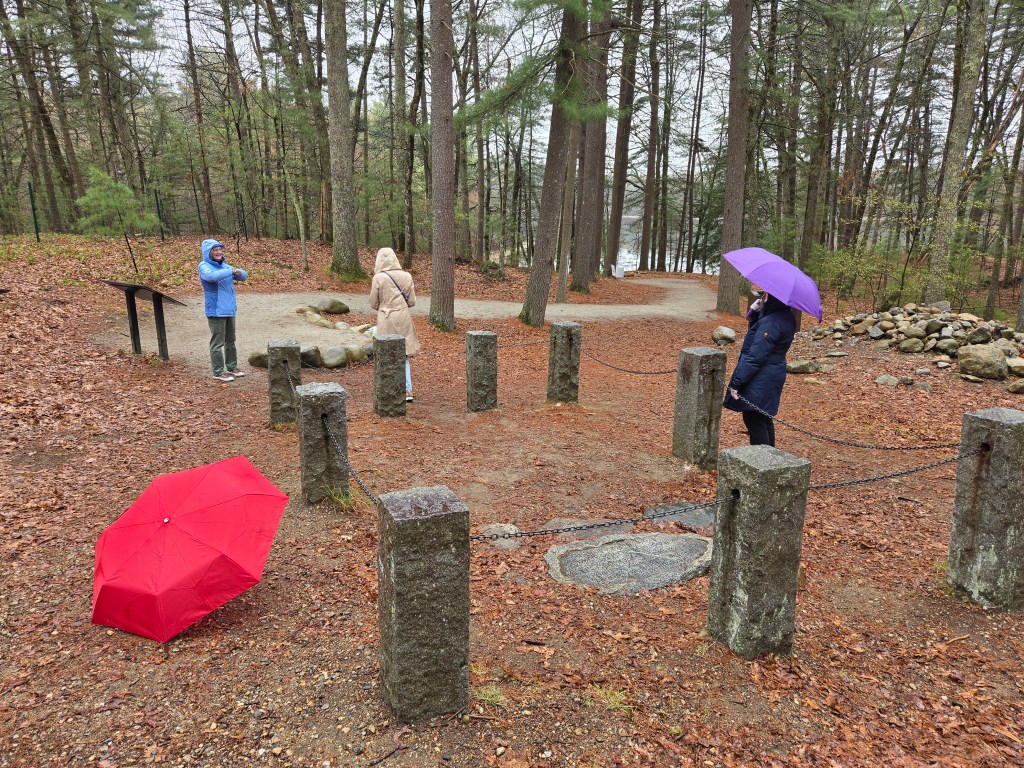
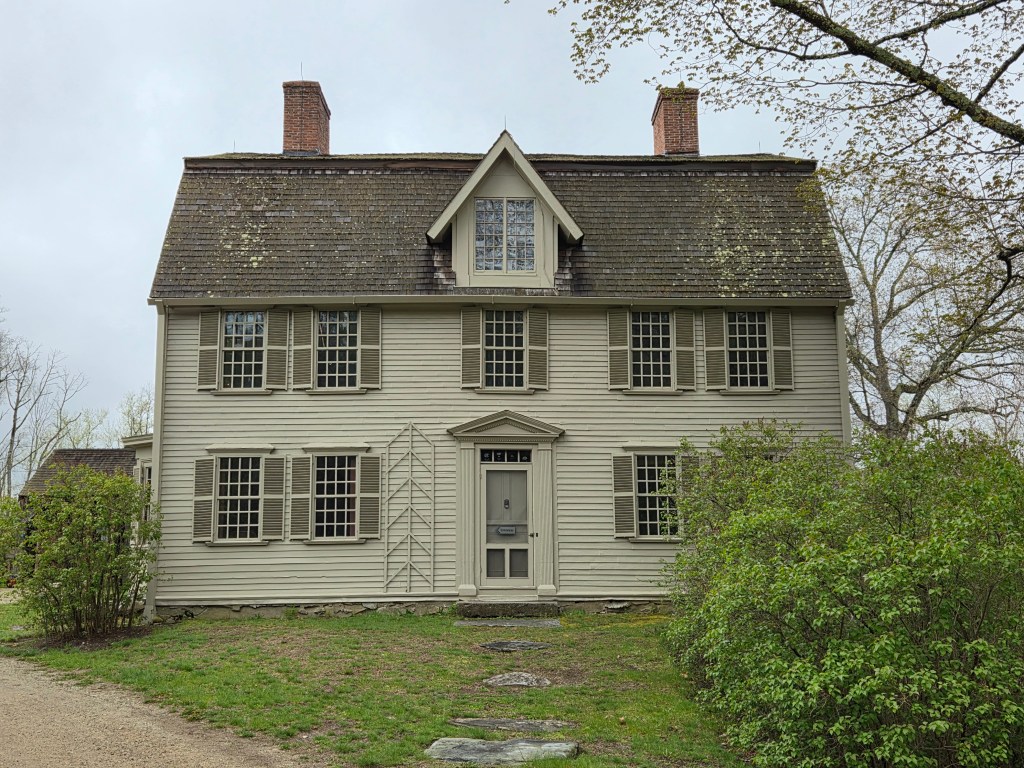
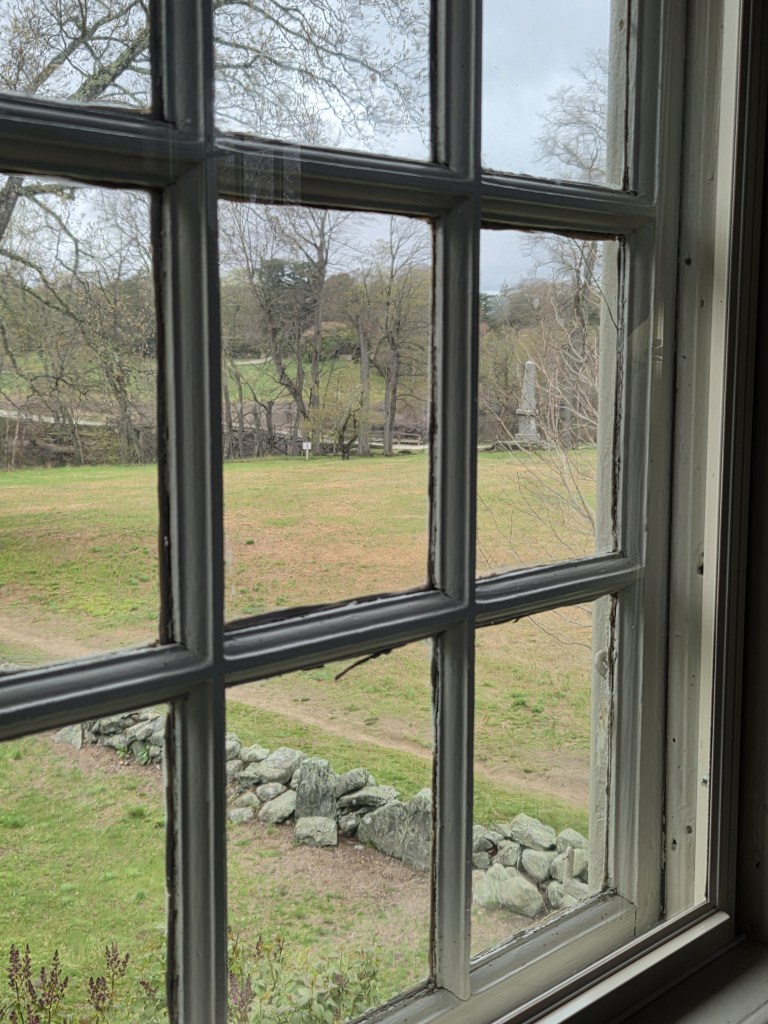
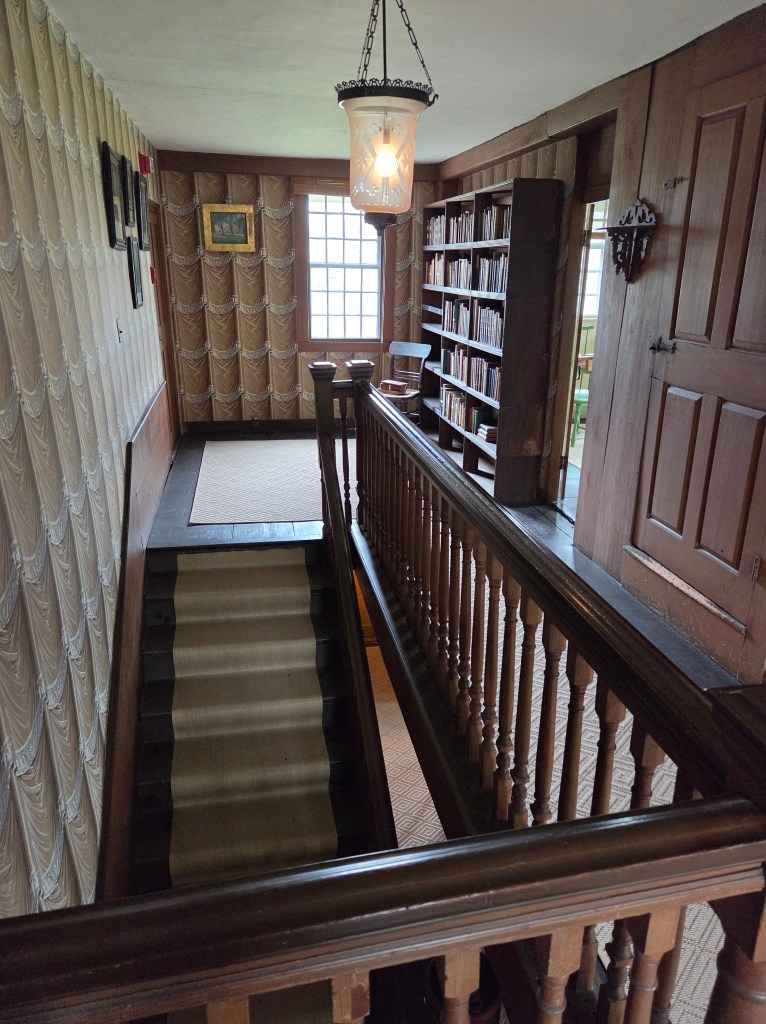
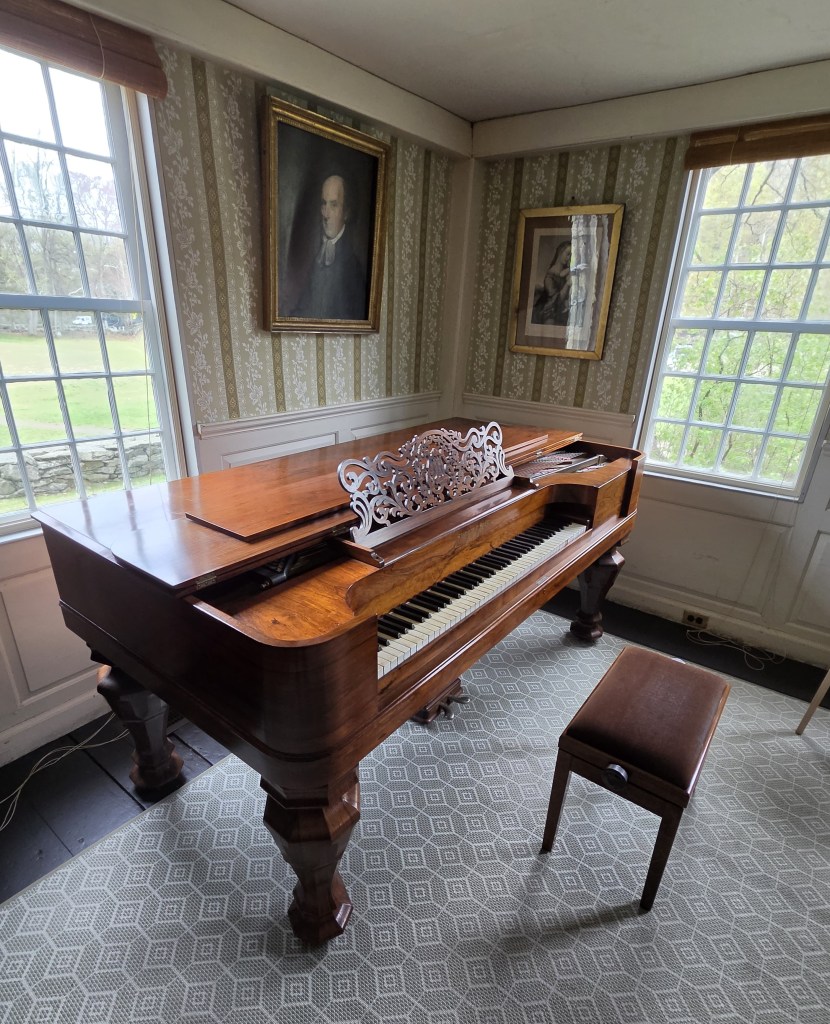
In the weeks since, our visit to Walden and the Old Manse on Concord, home to the Rev. William Emerson (1743-1776), Revolutionary firebrand and from his window, eyewitness to the Battle of Concord on 19 April 1775, as well as the grandfather of American Transcendentalist Ralph Waldo Emerson, has for me often flashed “upon that inward eye / Which is the bliss of solitude.”
I know I am not alone in experiencing the bewildering juxtaposition of past and present, both personal and historical, I think characteristic of Boomers by virtue of their age prone to reminiscence and at the same time baffled, alternately enraged and rendered despondent, by the desecration of truths we once believed self-evident. More than midway along the journey of our life, we find ourselves within a forest dark, for the straightforward pathway has been lost (pace Dante via Longfellow). What comfort, then, from the Northern Pine-Oak Forest of Walden Pond, and all it has come to represent?
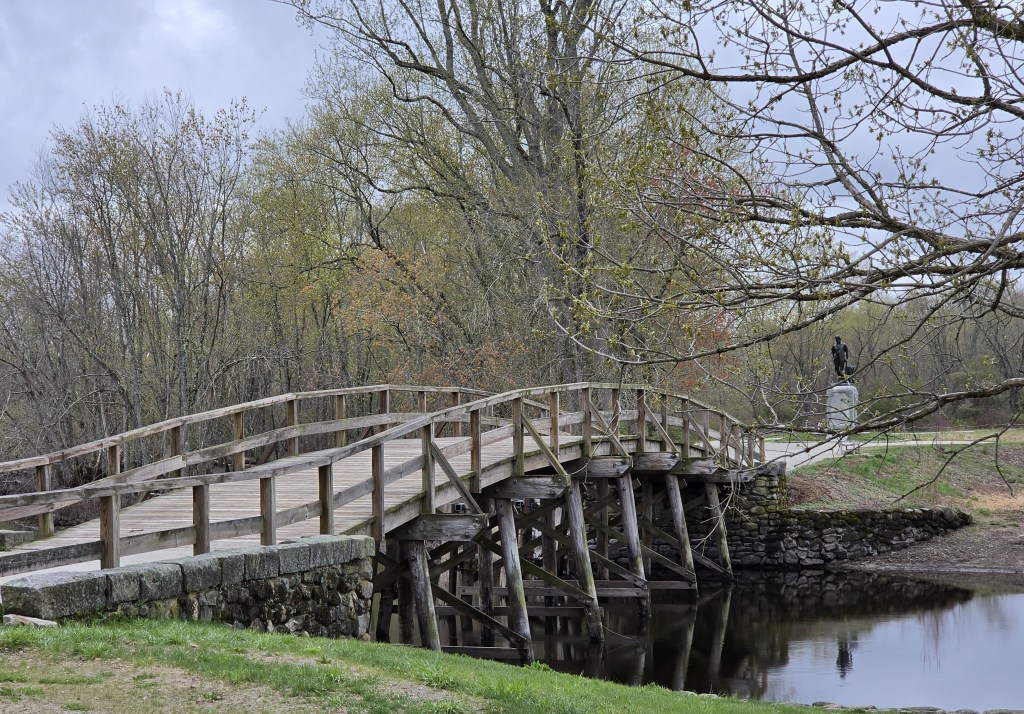
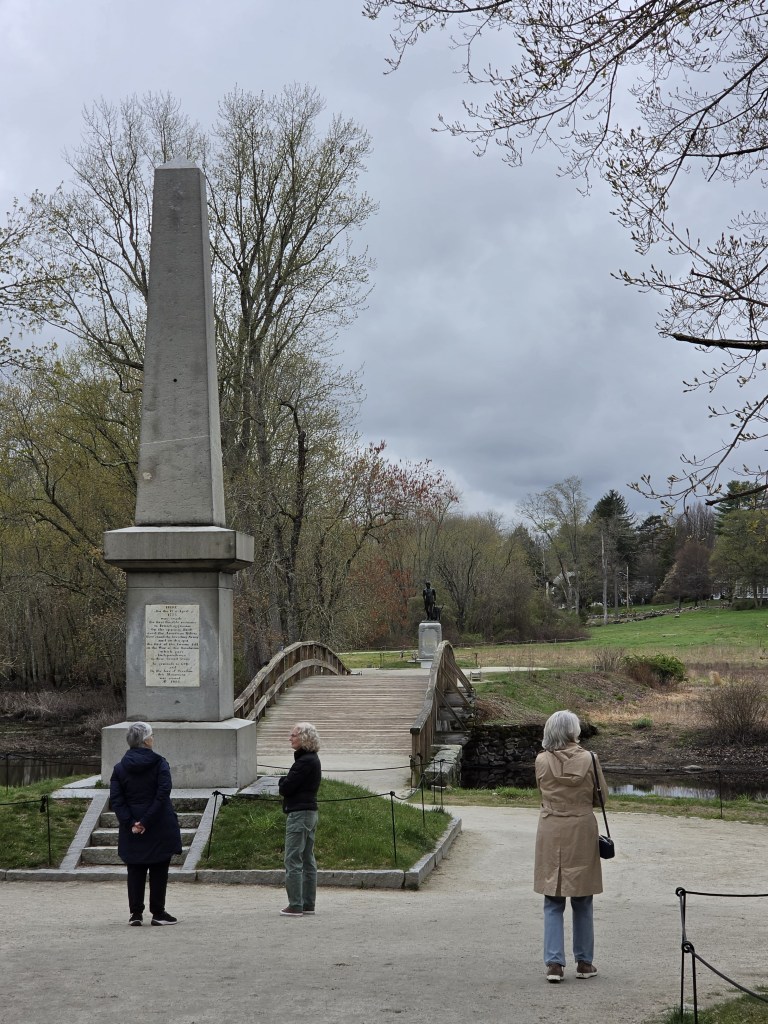
A few days before we went to the woods (negotiating heavy traffic on 95 and 495, hazards with which Henry David did NOT have to contend) on 25 April, alleged assassin Cole Allen released his manifesto as a timed email moments before he stormed the security checkpoint at the Washington Hilton during the White House Correspondents Dinner. His “Apology and Explanation” is very disturbing, however accurate its initial reasoning: “I am a citizen of the United States of America. What my representatives do reflects on me.” Surely opening fire on an assembly with the stated goal of taking out as many of the assembled Administration as possible (with apologies for any collateral damage) is not the nonviolent resistance, the “civil disobedience” that Thoreau advocated, inspiring later peaceful protests as disparate as those of Mahatma Ghandi and Martin Luther King, Jr.—both of them, we must remember, an assassin’s victim. But! What happened at the North Bridge so close to the Old Manse WAS violent, as was the revolution we are exhorted to celebrate on its 250th anniversary.
Our first American Pope, Leo XIV, Robert Francis Prevost, born in Chicago, is also the first Augustinian pope in history, a friar who has lived vows of poverty, chastity, and obedience, focusing on community and the teachings of St. Augustine, which he studied in seminary and at Villanova University, including the definition of a just war conducted to restore peace, remedy injustice, and authorized by a legitimate authority, never motivated by cruelty or greed. And yet, on 14 April Vice President J.D. Vance, first confirmed as a Catholic in 2019, cautioned this pope to “be careful” when discussing theology and public policy. The time is out of joint. Or, “That does not compute” (Robby the Robot, Lost in Space, 1965-1968).
April may not be the cruelest month, but this April may be the most weird. While Vance attempted to school the Pope, King Charles III in his first state visit as a monarch addressed Congress on 28 April, and schooled that assembly on their own history, “a tale of two Georges,” Magna Carta, and limiting executive power, a statement that received a hypocritical standing ovation from the assembly, clapping FOR curbing the “capricious and tyrannical actions” of a monarch.
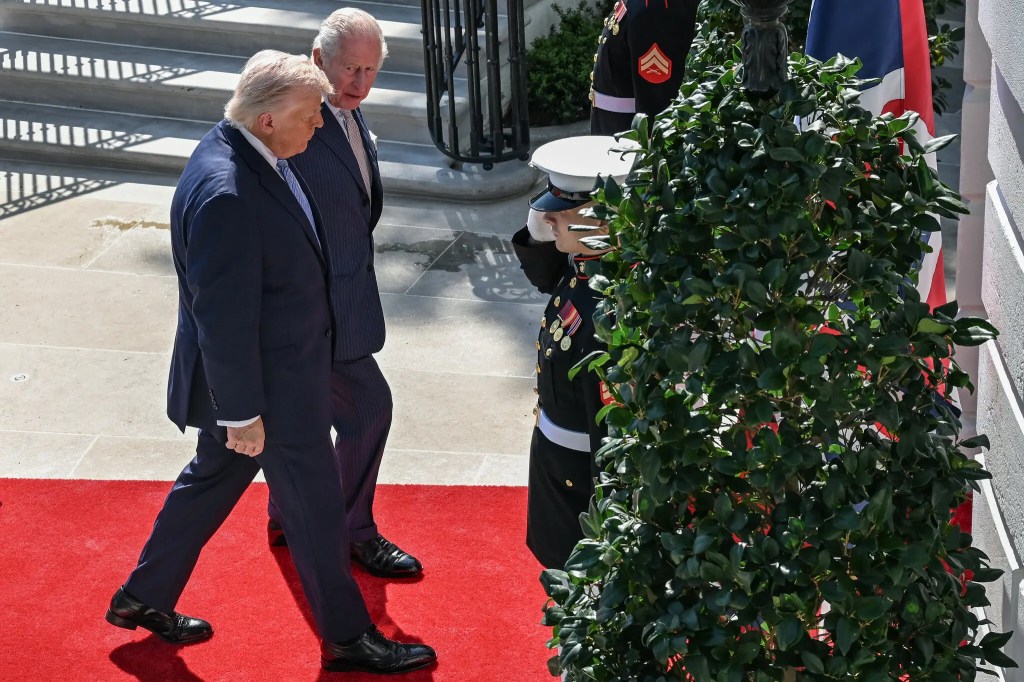
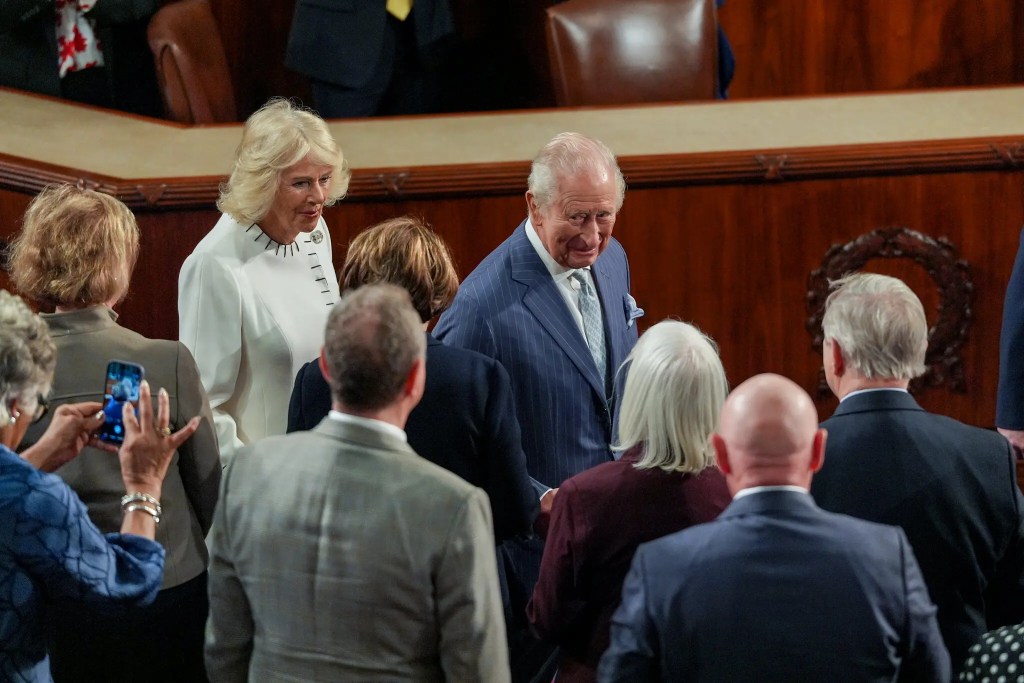
(photo by Salwan Georges for the NYT)
A life-long environmental advocate, the King went on to urge global action to treat Nature as a “precious and irreplaceable asset.” More clapping. To quote the Scrivener in Richard III, so aware of political hypocrisy: “Who is so gross / That cannot see this palpable device?” Or this from another more recent poet: “Send in the clowns / Don’t bother. They’re here.”
Michael Jochum, author of Not Just a Drummer: Reflections on Art, Politics, Dogs, and the Human Condition, a series of essays published on social media, captured my combined admiration and distress on hearing King Charles’s wittily eloquent stealth critique of our current politics, the experience of “witnessing a speaker who understands not only the power of language, but the responsibility that come with it. . . . Listening to Trump after Charles is like following a symphony with a kazoo solo. One man builds an argument; the other builds a grievance. . . . Somewhere along the way, we traded eloquence for noise, clarity for chaos, and principle for performance.”
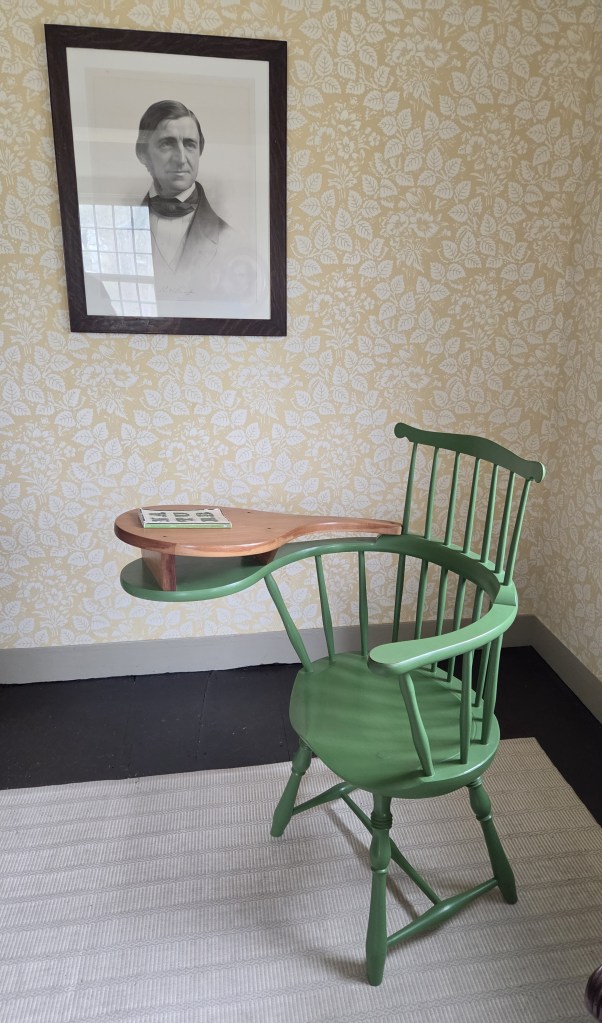
Schooled by a rock/jazz/nu metal drummer! Who’d have thunk it? Jochum’s own command of language sends me back to Ralph Waldo Emerson’s 1836 essay Nature, composed there at the Old Manse: “Throw a stone into the stream and the ripples that propagate themselves are the beautiful type of all influence.” I can’t help but think of how language is the stone that makes the ripples of influence I was feeling that damp day at Walden Pond as we walked and talked and tried to think our way back to Thoreau’s time there, suddenly ripped from the moment by the sound of the T, Boston’s light rail transit system, roaring by.
And it is language that again has me straddling past and present. At the Portsmouth Public Library, this month’s Shakespeare play to discuss will be Love’s Labour’s Lost, a play all about the limits and abuses of language—as I argued well over 40 years ago when I wrote my dissertation on that play. And a real old-style dissertation it is, tracing anti-rhetorical tradition and genre theory from the classics to the still debated date of that play’s composition. Writing it was not, however, a labor lost: doing so initiated all the good fortune I’ve since enjoyed. But oh! Re-reading it now! Soooooo many footnotes! Even when writing it, I suffered Berowne’s indictment of academe:
Study is like the heaven’s glorious sun,
That will not be deep searched with saucy looks.
Small have continual plodders ever won,
Save base authority from others’ books. (LLL, 1.1.84-87)
Reviewing what I once knew, mostly now forgot and frankly irrelevant, spurred me to a happier experience, however: streaming the Royal Shakespeare Company’s brilliant 2015 production of Love’s Labour’s Lost (directed by Christopher Luscombe and set in 1914 at Charlecote Park).
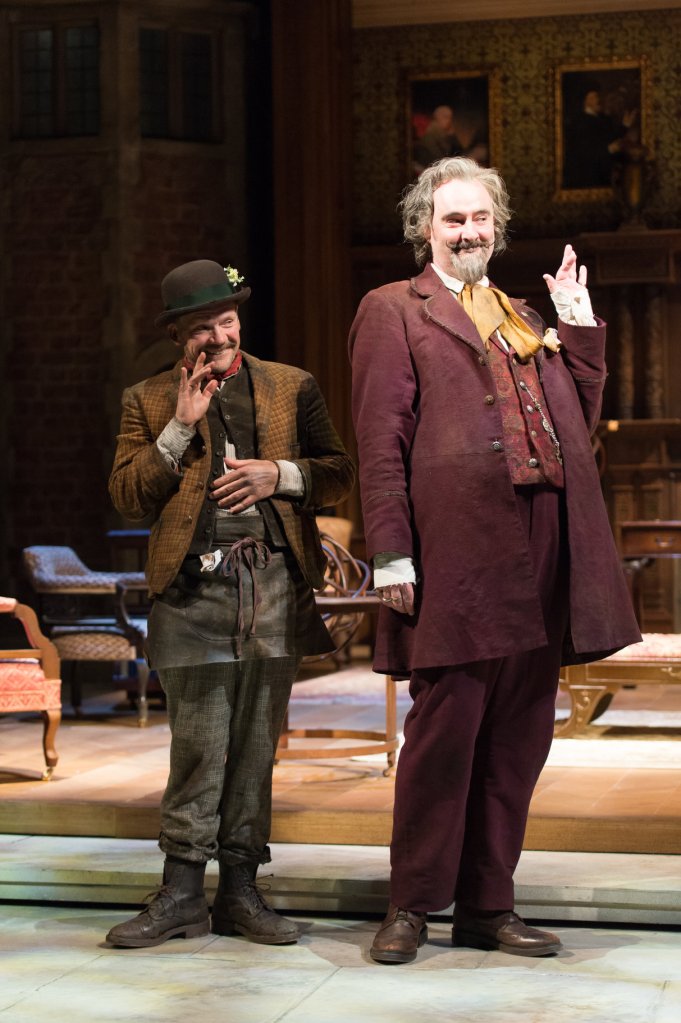
For $2.99 on Amazon Prime—a resource to me beyond imagining in 1984 when I was dissertating—I could re-live the thrill of the best possible production of a play so clearly meant for the stage and not the page, and the many times I had that experience in person there in Stratford-upon-Avon. And, as lagniappe, just two days ago on Morning Edition (12 May 2026), I heard the results of the University of London study establishing that biological aging can be slowed by arts engagement—even to the same extent as physical activity helps maintain genetic function over time. And the effects of that engagement are equally salutary not only for those who produce art, but also for those who partake by visiting concerts, theatres, or museums! Hurrah for epigenetics! Ground-breaking research, not base authority from others’ books.
And so, Dear Reader, as I get the final Euflexxa shot to my right knee next week (my P.A. calls Euflexxa the Ozempic of orthopedics) and attend my monthly Death Cafés, I am buoyed by the thought that going to the ballet, seeing brilliant theatre (and that RSC production qualifies), or even (I daresay) writing this blog, is slowing the rate of my decrepitude. So I keep writing to my representatives to reverse the perilous course of their pathway to autocracy, advocating for and attending to the arts, and taking walks in the woods. Emerson wrote in his Nature, that “In the woods, we return to reason and faith.” You got that right, Ralph Waldo: there I feel that nothing can befall me in life—no disgrace, no calamity, which Nature cannot repair.


Leave a Reply