-
Glimmers
11 April 2025
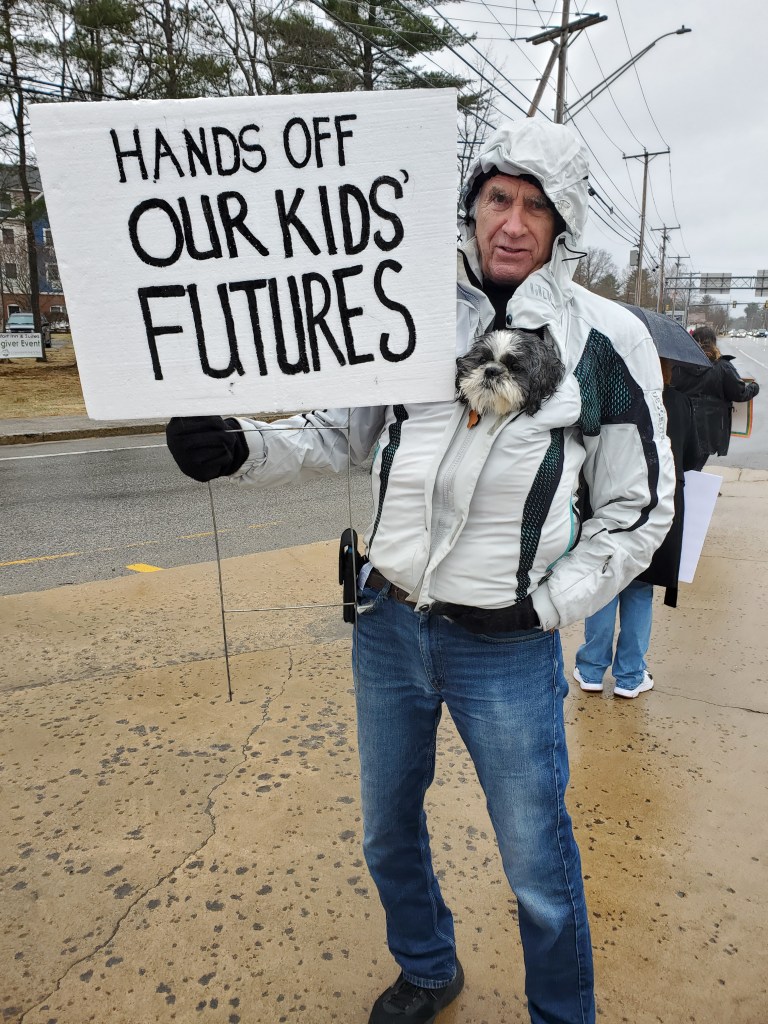
Fellow protestor at the Hands Off rally, Weeks Crossing, 5 April 2025 In 2021 when he was running for Ohio’s Senate seat, J.D. Vance, alumnus of the Ohio State University (’09) and Yale Law School (’13), gave a speech he titled “The Universities are the Enemy,” in which he argued that universities are hostile institutions, and must be attacked “honestly and aggressively.” He concluded his speech by quoting from Richard Nixon (!) in a secret Oval Office recording and not released to the public until 2008: “The professors are the enemy” (On the Media, “Harvard and the Battle Over Higher Education,” 4 April 2025).
When Nixon said that in the fall of 1972, I was a college junior studying at the Shakespeare Institute in Stratford-Upon-Avon, enjoying the first flush of my affinity with Shakespeare that would find me, twelve years later, a Shakespeare professor. So, I have some thoughts about Vice President Vance and his opinion of professors. First, I note the character of the man: with all the confident fluency we saw deployed against Tim Waltz in the Vice Presidential debates last fall, Vance used the privileged education he received from his professors to promulgate attacking them, capping his argument by quoting the until now most flagrant criminal ever to sit behind the Resolute desk, Richard Milhouse Nixon. How appropriate, then, is his sycophantic service to the Felon-in-Chief, the man he in 2016 called an “idiot” and compared to Hitler (Reuters, 6 Nov 2024).
Universities and professors are (like so many others under the Trump administration) having a rather rough time of it just now, a cultural moment when Shakespeare’s Romeo and Juliet can be labeled a pornographic text that encourages young would-be readers to have pre-marital sex. (I am obligated to note that there is no pre-marital sex in the play, but that fact remains irrelevant to those ignorant of what they eagerly censor.) Attacks on universities, professors, and even Shakespeare abound, impervious to truth and reason.
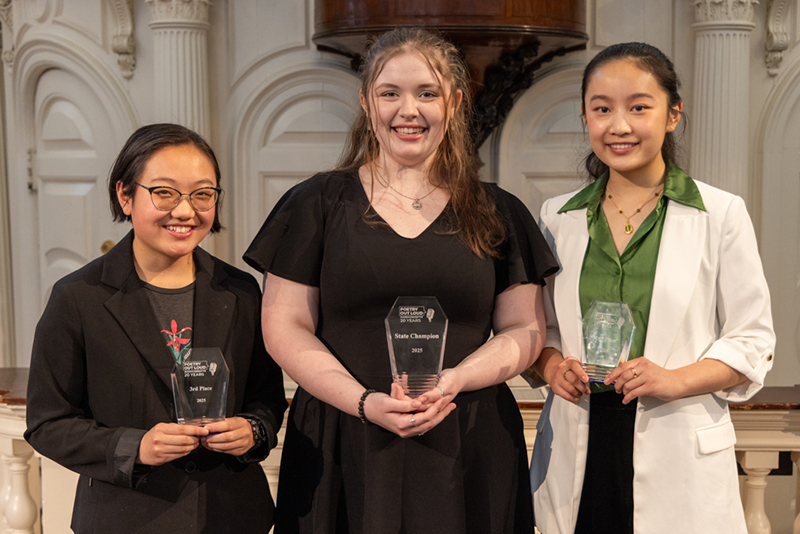
Massachusetts Poetry Outloud finalists, l. to r.: Iris Zhao, Abigail Drumm, and
Ailin Sha (photo by David Marshall)Perhaps that’s why hearing 17-year-old Abigail Drumm on GBH’s Under the Radar last Sunday (6 April) gave me a glimmer. A “glimmer,” I’ve only recently learned, is in the context of mental health a small, positive moment or experience that sparks joy, peace, or a sense of safety: the opposite of a “trigger.” A glimmer is a micro-moment that can help calm the nervous system and promote a sense of well-being, even in challenging times. Ms. Drumm, a senior at Agawan High School and Spoken Word winner of the 2025 Massachusetts Poetry Out Loud competition, made my heart soar with her talent and her specific defense of Shakespeare’s poetry: those texts are NOT exclusionary and elitist, she said, but rather beneficial to those who take the time to understand them, a force that can, in fact, “break down barriers,” not erect them. This young woman, so eloquent in her defense of poetry and the recitation that makes it accessible, will soon be on her way to Washington, D.C. for the national competition to be held at Washington University from 6-7 May. I wish she were on her way to replace J.D. Vance, who seems to have perfected the signature move of the Trump administration: accusing the opposition of offenses they themselves are guilty of: creating divisive discord and punitive chaos.
Which brings me to another glimmer I felt last Saturday, standing in a cold rain on the corner of Indian Brook Drive and Central Avenue in Dover, NH, the intersection named “Weeks Crossing” for the once-landmark restaurant that closed there in 1995. The last time I stood at that crossroads was in January 2024, when I waved a “Write-in Biden” sign to inspire voters in the New Hampshire primary, and garnered more middle finger salutes than support. I received a couple of the same last Saturday, but the insults were FAR outnumbered by thumbs-up gestures and supportive honking. Glimmer! Are my fellow citizens finally waking up to the fact that their president is running the country like a company concerned only for the profits of its shareholders? Trump’s recent backing off of absurd tariff policies may have temporarily offered the market some relief (and allowed insider trading profits to his cronies), but the economic truth remains: prices that are quick to go up are slow to come down.

Jennifer at the Weeks Crossing Hands Off protest, Dover NH, 5 April 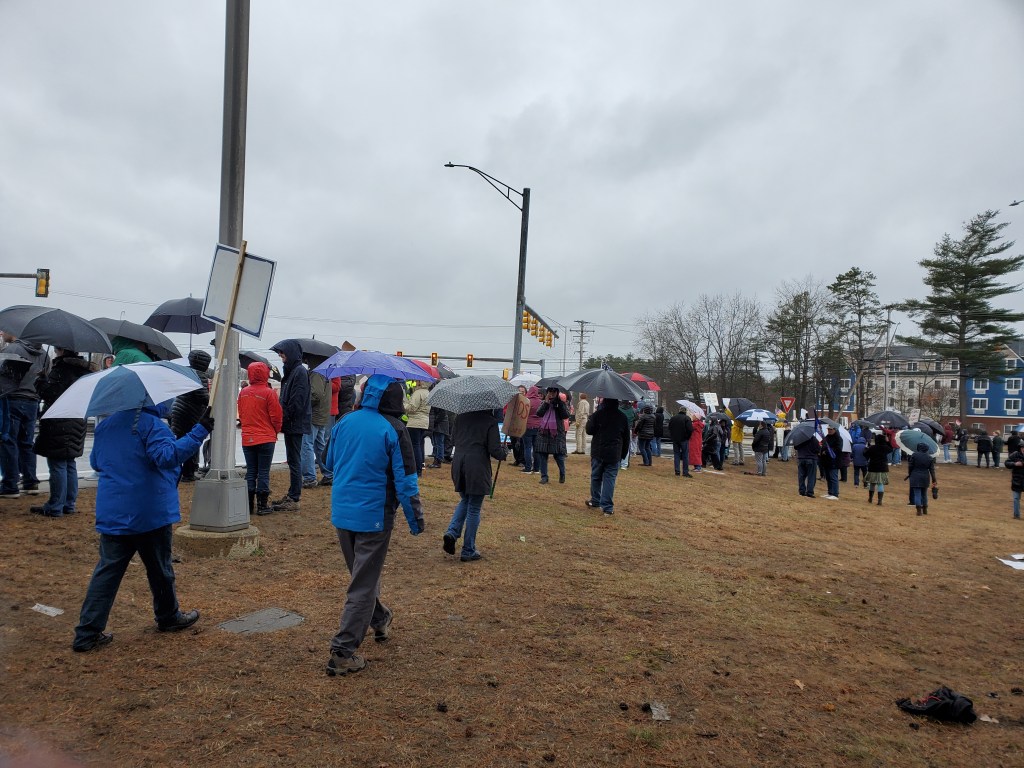
Fellow patriots at Weeks Crossing I’ve been writing emails to Federal and State Representatives, but doing so lacks the gratifying uplift of being in the company of about 300 other folks mad as hell and not going to take it anymore (cf. Howard Beale in 1976’s Network). Taking physical action felt good: definitely a glimmer-esque moment. Here’s to more of that good, necessary trouble.
There’s also comfort in good distraction. Most recently that’s come from my delight in watching Harrison Ford and Helen Mirren face down one disaster after another in Paramount’s neo-Western 1923.
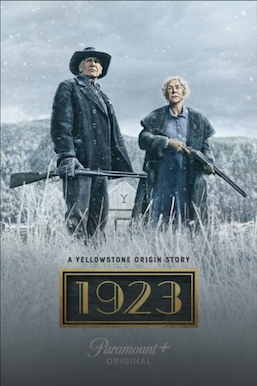
This production’s cinematography and locations are gorgeous, and the cliff-hanging plot lines engaging if somewhat Over The Top. Watching masters of the craft Ford and Mirren work out is delightful, though I have to fault screenwriter Taylor Sheridan for making Mirren speak the word “journaling,” one of too many laugh-out-loud anachronisms. When Pete and Teonna consummate their relationship and so are missing from Teonna’s father’s campsite overnight, covering their absence by saying they fell asleep by the river, Runs His Horse’s response is: “I hate it when that happens.” Really? I will admit that the “Out of Africa” episodes with man-eating leopards, lions, and hyenas both shocked and scared me (however enchanting I found the costumes), but now nearing the end of Season 2, I find the unmitigated series of incredible mishaps befalling the Duttons–and their even less likely survival–rivals “Fenimore Cooper’s Literary Offenses.” I well recall that on first reading Twain’s satirical essay out loud in Mrs. Fletcher’s 8th grade English class, I was rendered helpless with laughter; Sheridan’s comparable offenses have elicited my barks of derision, but at least his graphic plot shocks no longer keep me up at night.
Local delights also counter the prevailing angst, among them my young neighbor Leo first April Fooling me, and then returning to show me how his birthday present, a robotic hand, works.
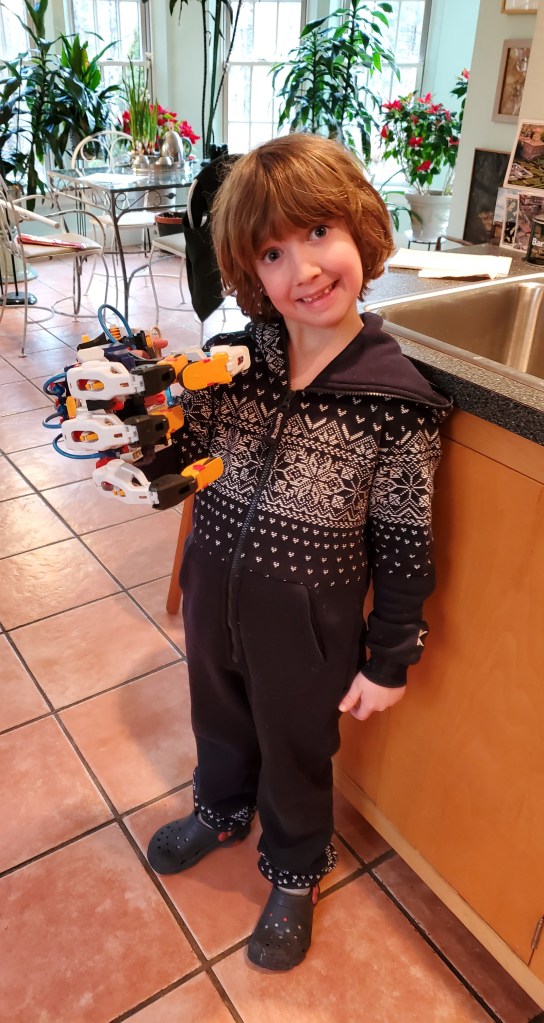
Leo offers me his cheesiest smile Then there are the spring beauties in bloom at Rollinsford’s Wentworth Greenhouses.

Color a-plenty at the Wentworth Greenhouses And, finally, there were all the lessons I recently learned about New Hampshire’s fabled Powder Major, John De Merritt, who after the 1775 raid on Ft. William and Mary in New Castle, NH, seized British gun powder, stored it under the floorboards of his Madbury barn (having dug a trench for a fuse that would blow it all up should the British discover its whereabouts), and then drove it by ox cart to Bunker Hill, where it enabled the Rebels to hold their position against the Redcoats.
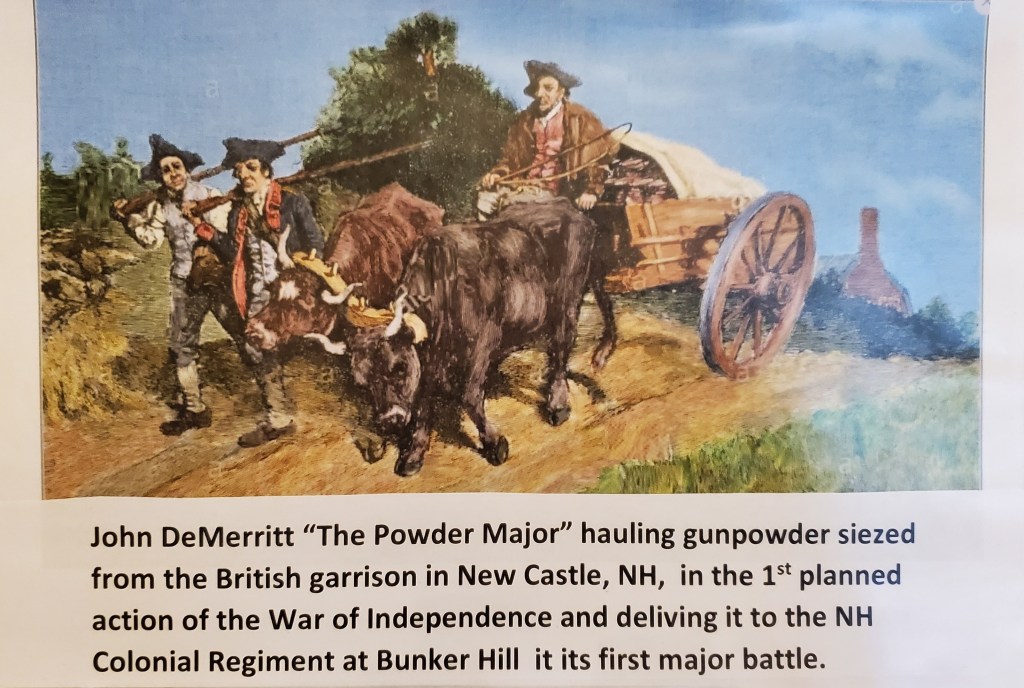
Display at Powder Major’s Barn Last Wednesday night in Powder Major’s reconstructed barn, NH Historical Society program developer and educator Mary Adams gave an informative and entertaining “Rebels and Redcoats” presentation, an account of all the credit due the New Hampshire rebels who first began the Revolutionary War. The handsome venue, now a destination for weddings and events, is just down the road from me on Cherry Lane, the home of the De Merritt family for seven generations, and the Goss family, the current owners, for four. Judging from Ms. Adams’s presentation, NH Yankees have been not only brave but stubborn, irascible, and parsimonious right from their colonial beginnings. Live free or die. We could use a glimmer of that spirit now.
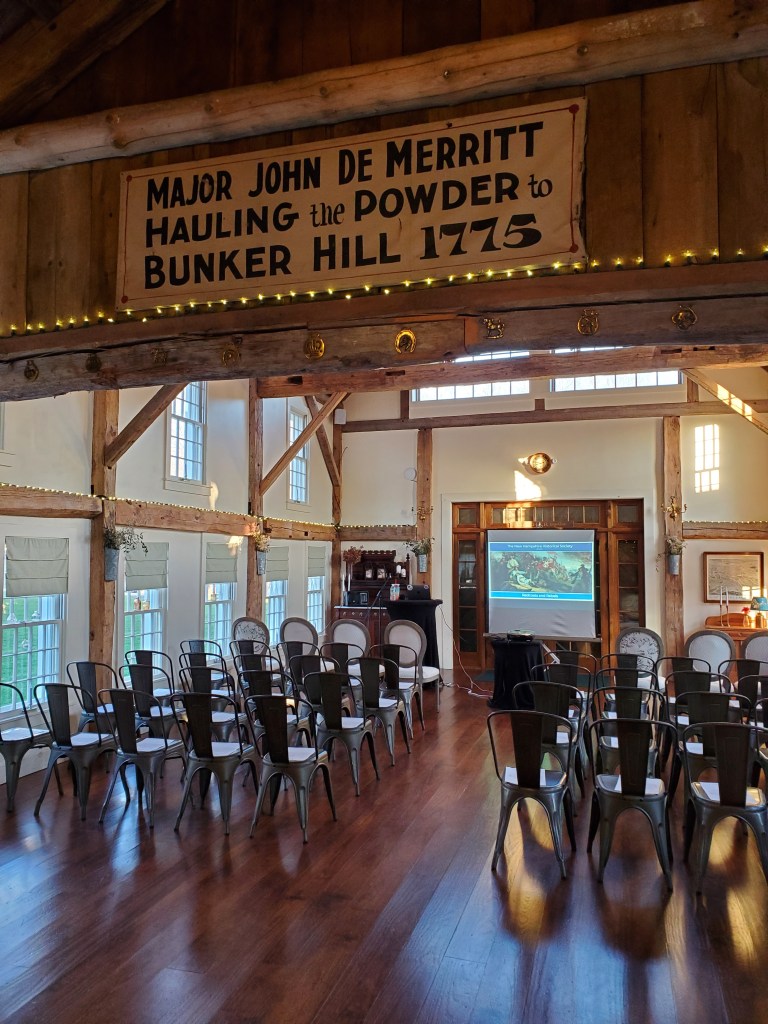
Lecture space . . . 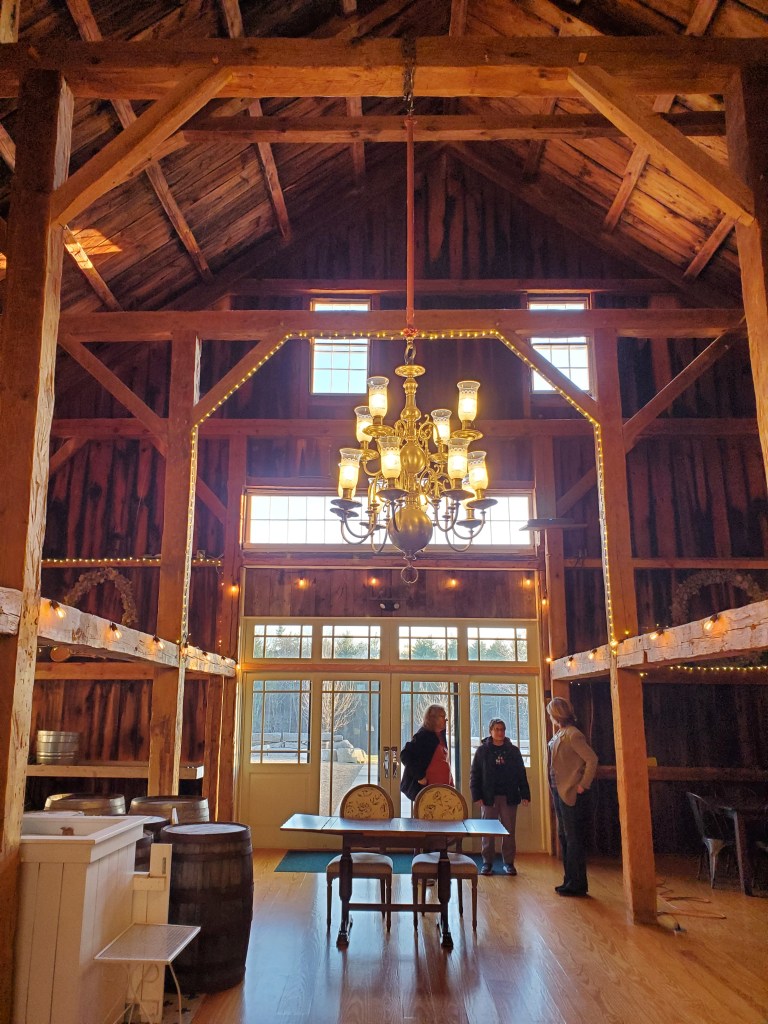
. . . and handsome function room in Powder Major’s new barn, Madbury NH So, what’s to become of rebels against the authority of a president who resembles mad King George III more and more each day? Who can say? This moment, too, will pass, but how and when, and with what left behind?
What’s the best way to celebrate the upcoming 250th anniversary of our Republic? Defend its founding principles now so clearly under attack.
Peaceful view from Powder Major’s new barn -
“Spring” Experience
31 March 2025
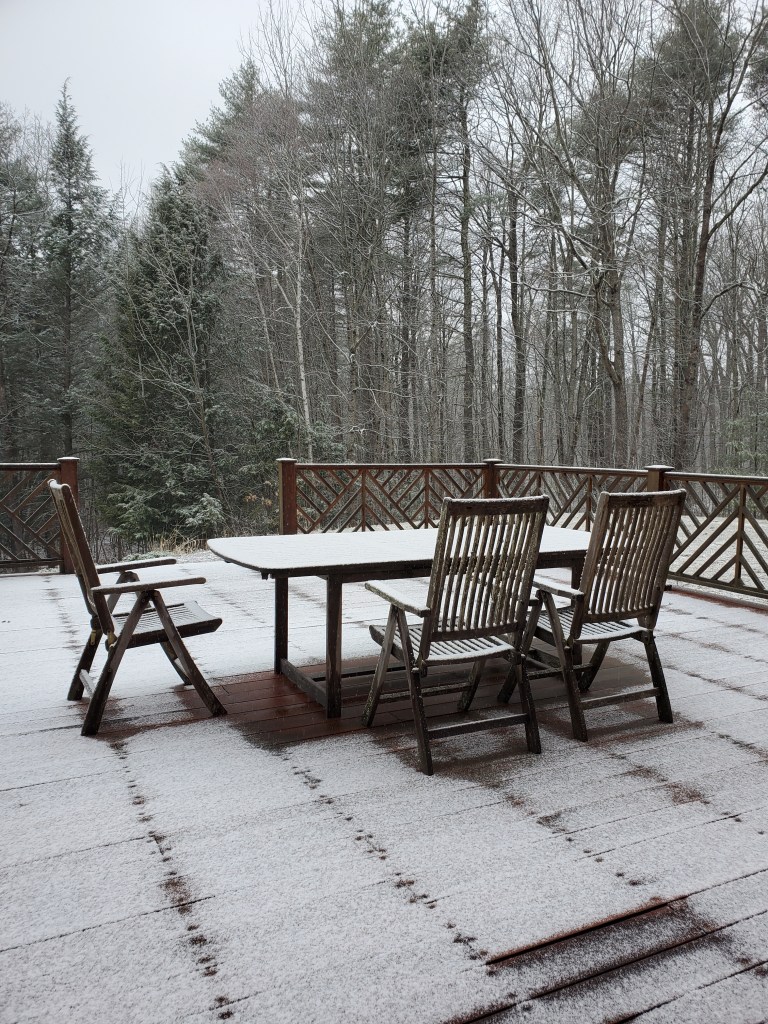
“Spring” in Madbury NH This liminal season, late March in New Hampshire, challenges body and spirit as the weather toggles back and forth between spring promise and winter redux. Waking this Saturday morning to sleet on the newly uncovered deck furniture left me out-of-sorts, uncertain of how to make best use of the day. Friday the deck had offered both bright sun and the aroma of mulch fresh-laid by the landscapers who at last completed their work begun last October while I was at the dentist’s; I had my new garden stairs to admire and the daffodils and daylilies just broken ground beside them to happily anticipate. But when the weekend chill arrived with no obvious responsibilities (no appointments to keep and no weeding to be accomplished in that sleet), I felt rather stymied in transition. I hadn’t so much lost my way (as poor Thomas Cromwell admits he has to his daughter Jenneke in PBS’s Wolf Hall, not long before he loses his head) as found myself unable to assign priority to all that needs doing.
Distractions abound these days. The NH House Representatives’ reports of majority Republican proposals at last week’s Durham Democrats meeting (proposed 0 funding of the State Library, the State Arts Commission, and the R1 University of New Hampshire) provoke outrage that finds no relief in Democratic disarray at local, state, and national levels. How to protest? How to resist?
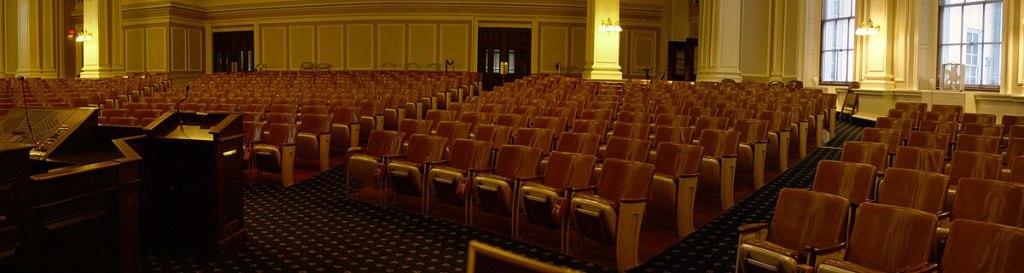
400 Seats in the NH House of Representatives Chamber: 177 Democrats,
221 Republicans, 1 Independent, and 1 vacancy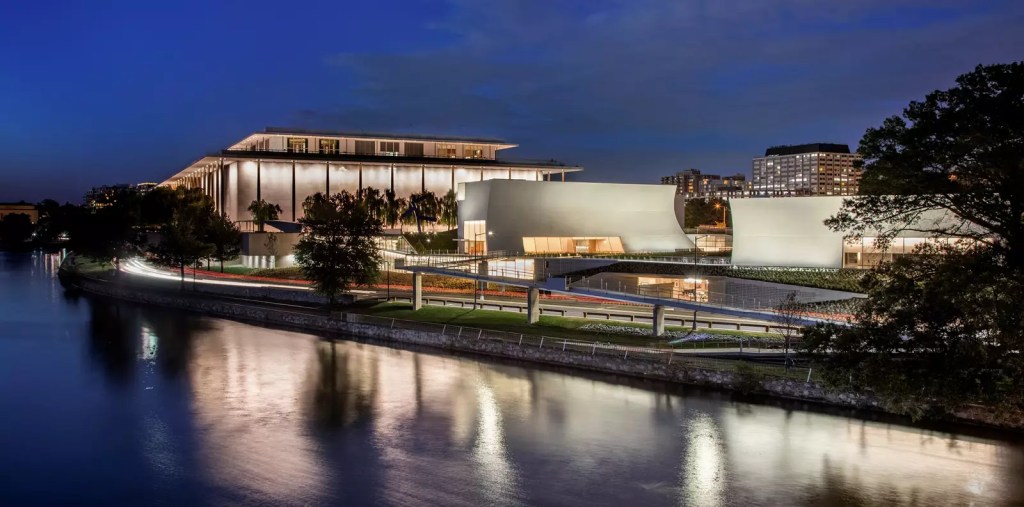
The Kennedy Center: under new management Ever since I heard the Felon-in-Chief (aka Cheeto-in-Charge) proclaim himself head of the Kennedy Center, I’ve been throwing more support to the arts, and last Sunday returned to Boston Ballet for its “Winter Experience” program, spending a completely diverting and uplifting couple of hours in Boston’s Opera House.
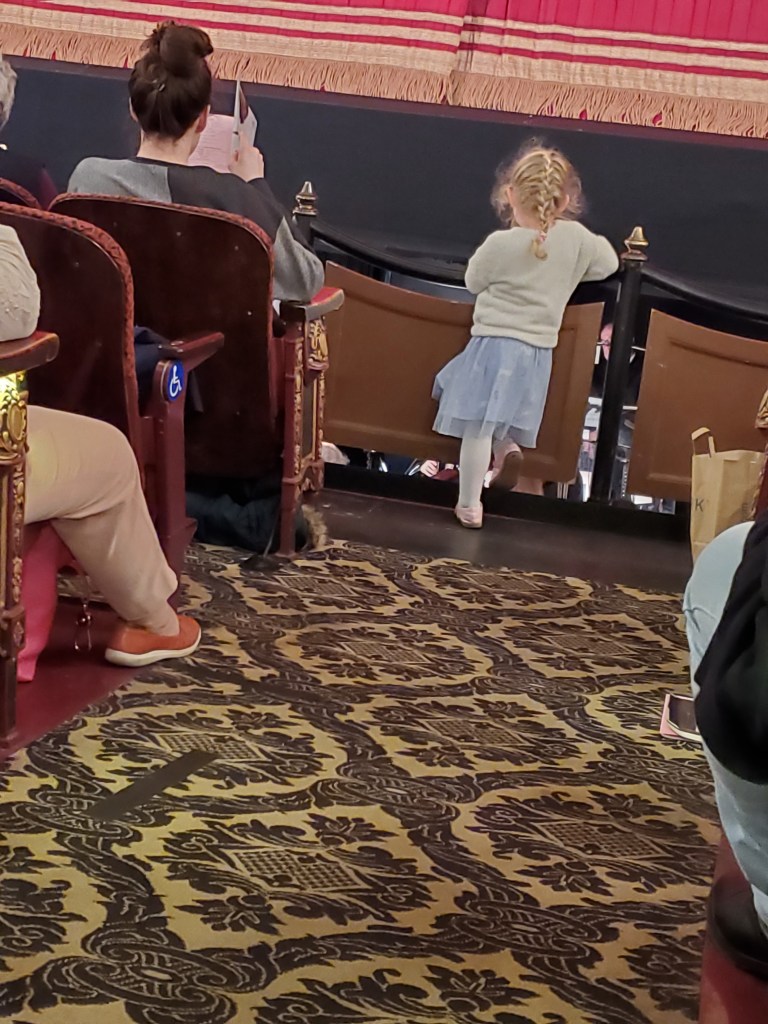
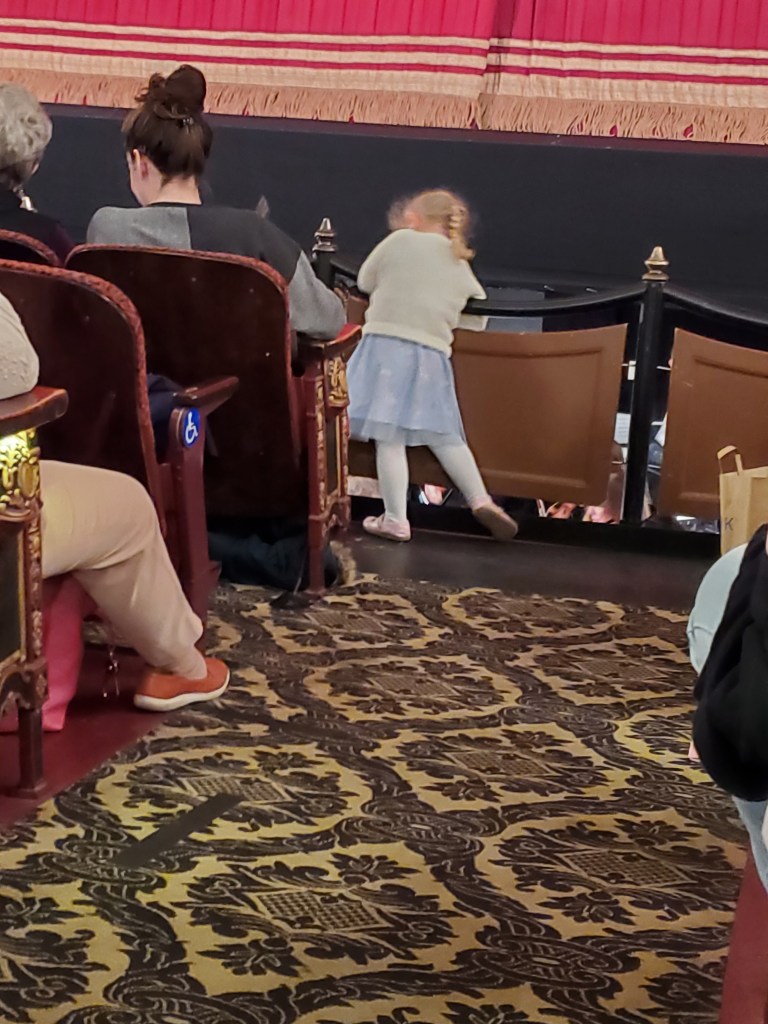
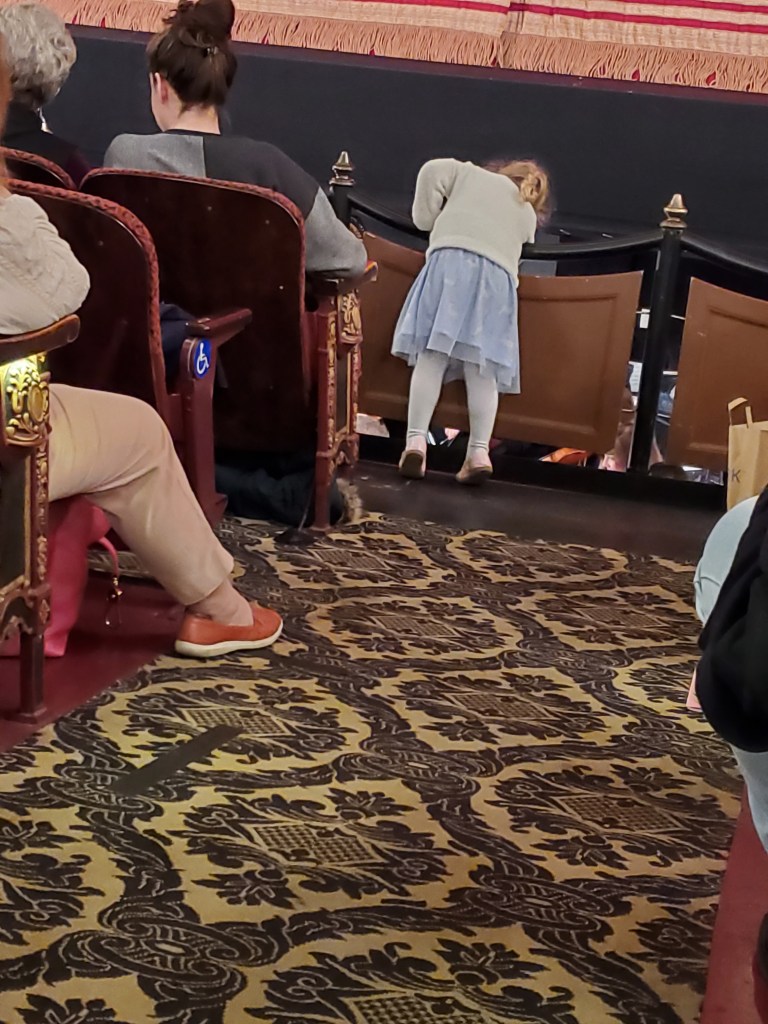
Little Miss fascinated by the orchestra pit Boston Ballet is the only American company trusted to present Leonid Yakobson’s Vestris, the solo originally created for Mikhail Baryshnikov in 1969, now wonderfully performed by the first Black male ever to dance the role, Daniel R. Durrett (https://www.youtube.com/watch?v=BawLRbStXJo).
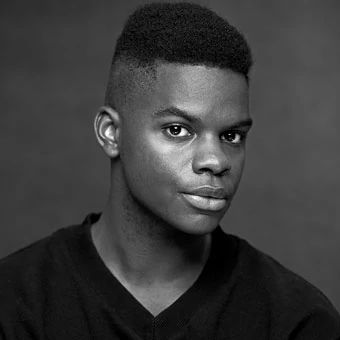
Daniel Durrett, Boston Ballet Soloist Such dedicated, sublime artistry DOES inspire (take THAT, anti-DEI policies!), but it doesn’t direct political action. I write to my Representatives, but they aren’t the ones who need persuading. How DO you persuade a nincompoop who argues we don’t need libraries because we have the Internet?
Like Chaucer’s Clerk of Oxenforde, gladly wolde I lerne, and gladly teche, but these days much of my “learning” comes from NPR, also under attack by the likes of Marjorie Taylor Greene and her DOGE Committee investigation of NPR and PBS. Did Greg Casar’s (D-Texas) witty rejoinders to stupid questions posed by the DOGE Committee have any impact? Sitting in front of a giant poster reading “Fire Elon, Save Elmo,” Casar asked “Has Miss Piggy ever been caught trying to funnel billions of dollars in government contracts to herself and to her companies? I’m told we’re here to talk about government efficiency, but Daniel Tiger has not blown $10 million of taxpayer money to play golf with his friends. But Donald Trump has.” Hilarious, yes. But effective, given the Committee’s dearth of wit? Probably not so much.
TikToker Todd’s lyrics sum up my distress:
We’re in the middle of a hostile government takeover
I wanna talk about it but I’ll be late for work.
And if you say, “Wait a minute. Who we have to stop this?
We had one but you didn’t want that lady in office.
Now that we’re a part of a Nigerian prince scam
Surprise surprise, it ends up being a white man.
Oh! I just wanna know what the hell do I do?
(Probably drink)
But! This American Life’s “Museum of Now” broadcast #857 (28 March 2025) Exhibit Three provided me some optimism about the checks and balances the judiciary can still provide. TAL’S reenactment of one dramatic court hearing on the Trump administration’s executive order 14183 and new policy banning transgender people from serving in the military shows what one clever Federal judge can accomplish with flawless reasoning, legal savoir faire, and a penchant for upholding the truth. Hurrah for Her Honor Judge Ana C. Reyes, who refused to countenance an order with no factual basis. Her intelligent, witty evisceration of the government’s lawyer Jason Lynch’s argument has renewed my faith in the judiciary. Well worth a listen/read: https://www.thisamericanlife.org/857/transcript .

This American Life‘s “Musuem of Now” I’ve also learned so much from the devastating Netflix series Adolescence that I think I’ll have to watch it again. Co-created and co-written by actor Stephen Graham, who plays the father of a 13-year-old accused of murdering a classmate, there’s not a false note or move in any of the four episodes: all the more astonishing as each of the hour-long episodes was filmed in a single continuous, unbroken shot. Shakespeare’s Touchstone, the licensed fool of As You Like It, says “The truest poetry is the most feigning,” and it’s the extraordinary measures taken to feign reality in this complex tale of family dynamics and the social pressures on today’s teens that make its truth so searing. Owen Cooper was cast in the role of Jamie Miller at the age of 13— with no previous experience. He and all the actors are a revelation. OMG, to be a teenager in 2025!
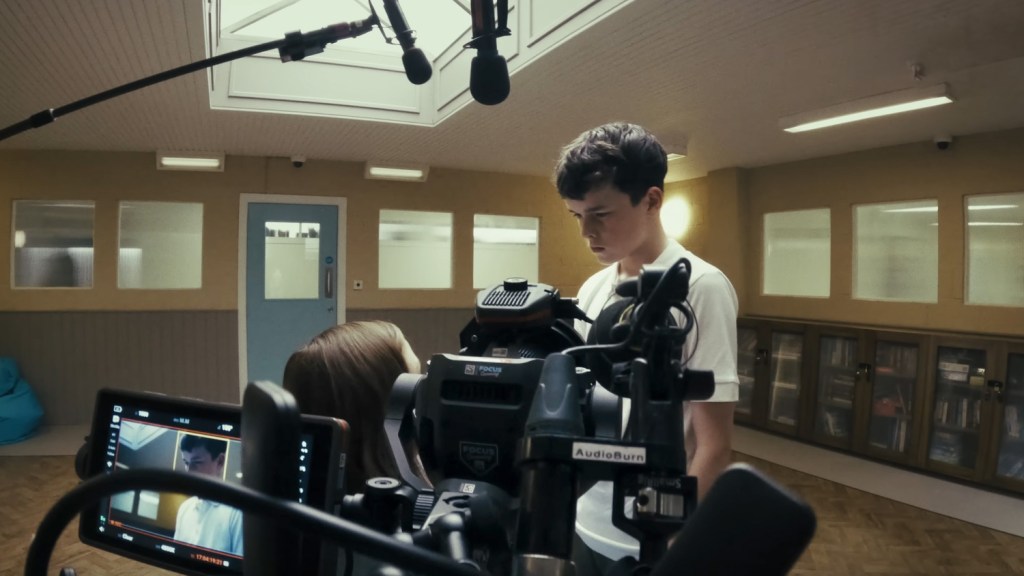
Owen Cooper being filmed in Netflix’s extraordinary series Adolescence However! Yesterday at the handsome Oyster River Middle School I heard a moving performance of madrigals, part songs, Vivaldi’s La Primavera, vocal duets from Heinrich Schütz’s Symphoniae Sacrae II, and J. S. Bach’s longest motet, Jesu Meine Freude, by Amare Cantare under music direction by Catherine Beller-McKenna. Those singers finally broke through my unsteady balance here on the threshold of spring.
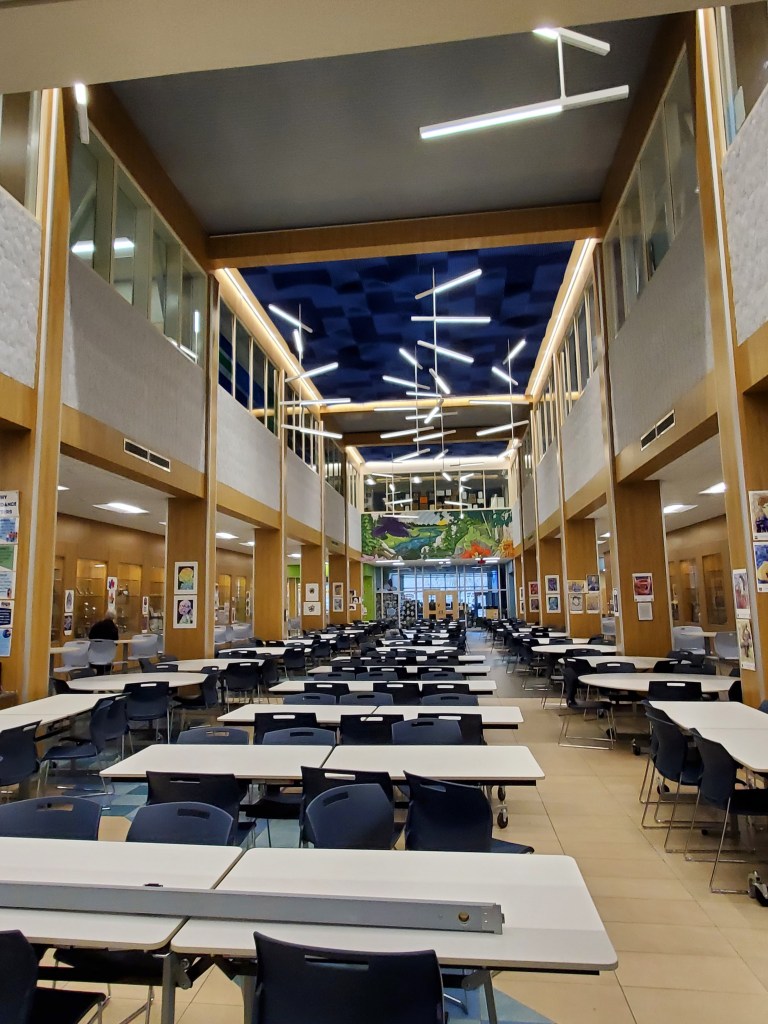
Atrium at Durham’s Oyster River Middle School 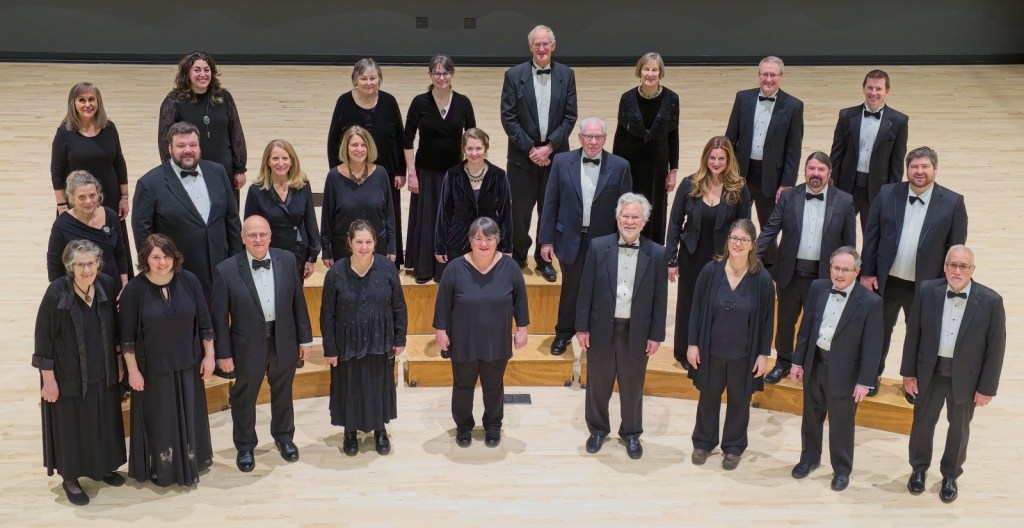
Amare Cantare, with director Catherine Beller-McKenna (bottom row left) I’ve begun slowly but steadily excavating the accretions of past lives in this house, weeding the collections just as I’ll finish weeding the flower beds once the sun returns. And today I bought supplies to craft the sign I’ll carry at the 5 April nationwide protest of current administrative overreach. My sign will read: “BILLIONAIRE$ ARE THE ONLY MINORITY DESTROYING AMERICA.” But thanks to Amare Cantare, I’ll be thinking of Johann Frank’s text set to Bach’s music in movement 5 of Jesu Meine Freude:
Trotz dem alten Drachen, Defy the old dragon,
Trotz des Todes Rachen, Defy the jaws of death,
Trotz der Furcht darzu! Defy the fear of it!
Tobe, Welt, und springe, Rage, world, and attack,
ich steh heir und singe I stand here and sing
in gar sichrer Ruh. in secure peace.
March may not be the cruelest month; April arrives. But Defy the Dragon?
Yes, we can!
-
New Orleans Revisited
5-9 March 2025
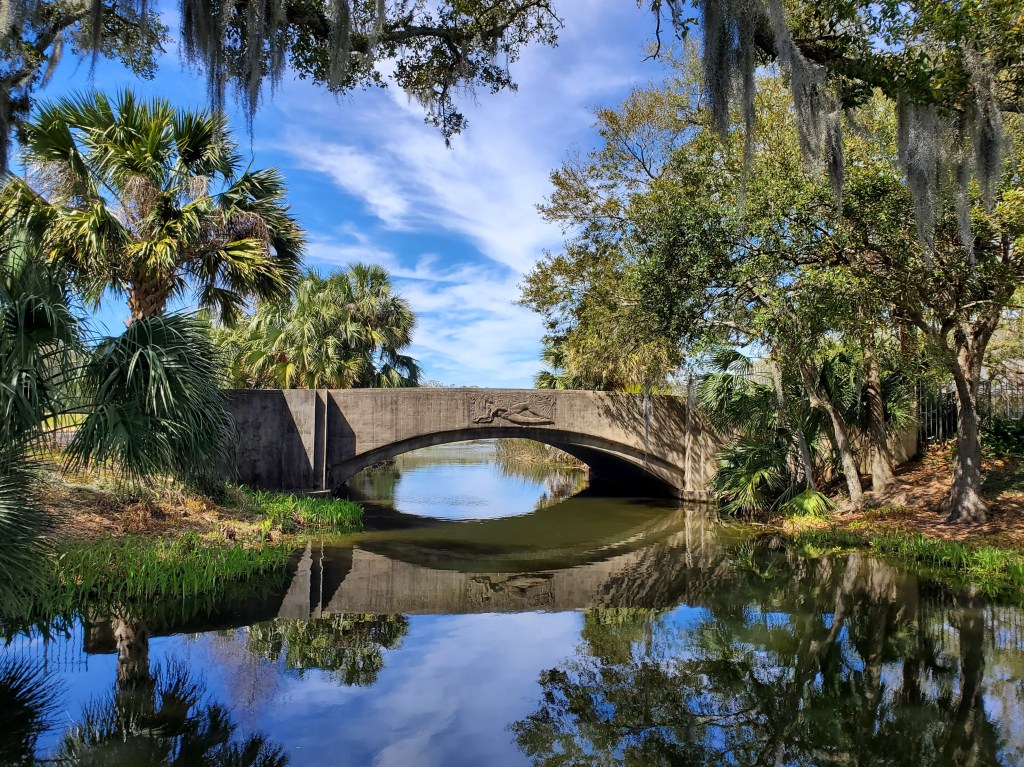
Art Deco in City Park, NOLA, one of several WPA bridges My much-anticipated visit to dear friends in New Orleans got off to a rocky start a week ago when 15 minutes en route to the Manchester airport, I suddenly could not remember lifting my carry-on suitcase into the hatch of my GTI. A look in the review mirror confirmed it wasn’t there, and so I pulled a “uey” right there on 125 to reverse direction, speed home, and recover the case I’d carried into the garage and then left there. Because I’m habitually early (if I’m not early, I’m late), the extra half-hour’s drive still got me to the airport with time to spare, but this lapse cast some doubt on whether my double checklisted always-be-prepared self was still up to solo travel. Getting old, getting on.
My connecting flight in Baltimore was delayed, of course, worrying me about a further imposition on my NOLA hosts Trish and Mike; my scheduled already late 9 pm arrival was now going to be more like a 10.30 disruption. So, once in the rental car facility (at considerable remove from the new NOLA airport), the report from the Dollar associate that he had no car available for me despite my having reserved one weeks earlier further furrowed my brow. But! I have a seldon-used Uber app on my phone. More importantly, I was in New Orleans, where my baffled expression prompted immediate assistance from a young garage attendant as I searched for where the Uber pickup spot would be. This kind fellow walked me there, told me the address to give the driver, and with a smile, wished me a good night.
This occasioned a memory. Two days before I had defended my dissertation and left New Orleans back in the spring of 1984, I had gone downstairs to answer the postman’s bell, only to have him laugh as I opened my security-grilled door. When I asked him what was so funny, he said, “You the only white lady I seen so far today come to the door without a gun in her hand.” There had been a robbery/murder in my neighborhood the week before; apparently all my neighbors had taken up arms. But now, 41 years later, this stranger’s empathetic courtesy made me feel both welcome and safe as a somewhat baffled older woman alone at a late hour in a parking garage. His kind gesture proved the rule, not the exception, over the course of the next few days, a welcome break from taciturn yankee decorum. Good to be back in the Crescent City.
I’d not returned to New Orleans for 14 years, and so the next bright morning after breakfast, my hosts walked me along Bayou St. John to City Park and the New Orleans Museum of Art Sculpture Garden, now easily three times as large as the one I recalled.

Mike and Trish on Bayou St. John Built along the Esplanade Ridge, the Faubourg St. John largely escaped Katrina’s flooding, and remains one of New Orleans’s most historically significant neighborhoods; the navigable end of Bayou St. John was long a Native American trade route and portage trail connecting Lake Pontchartrain with the Mississippi River, where some French traders and trappers settled with the Native Americans by the end of the 17th century. In 1708, the community of Port Bayou Saint-Jean was established there, pre-dating the official founding of New Orleans in 1718, though it was not incorporated into the city boundaries until the early 19th century. Built on the Bayou in 1799, Pitot House was home to James Pitot (1761-1831), the first American mayor of the incorporated city (1804-1805), and one of the few West Indies-style houses left in Louisiana. New Orleans architecture is always a treat, and my friends’ neighborhood is full of gems.
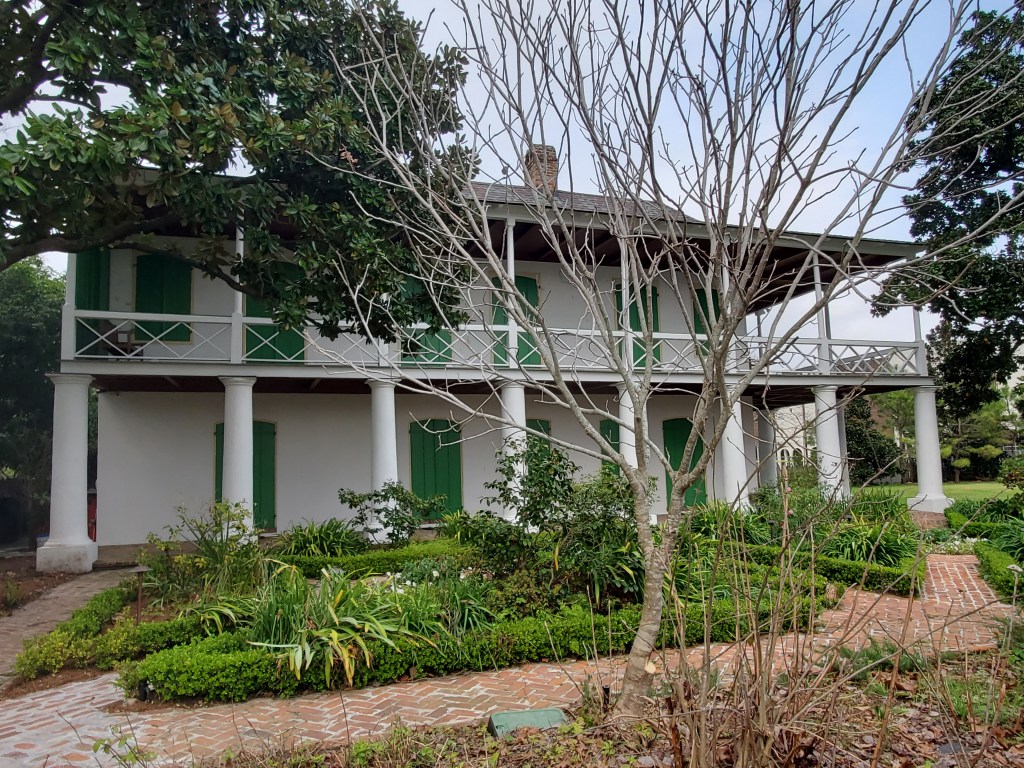
Pitot House, 1799 Having left a 19o snow-packed New Hampshire days before arrival, I was charmed by both weather suitable for sunbathing and the greatly expanded Sydney and Walda Besthoff Sculpture Garden, where the first iris and the last tulips shared space with the art.

Beauty on the Bayou 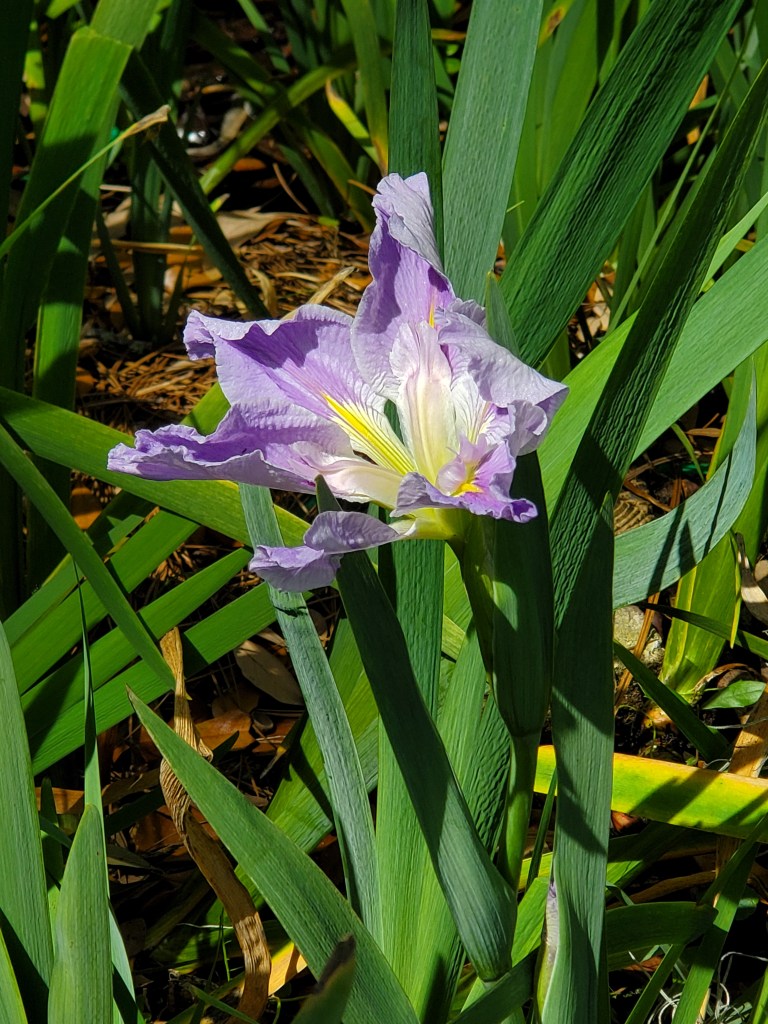
The first iris 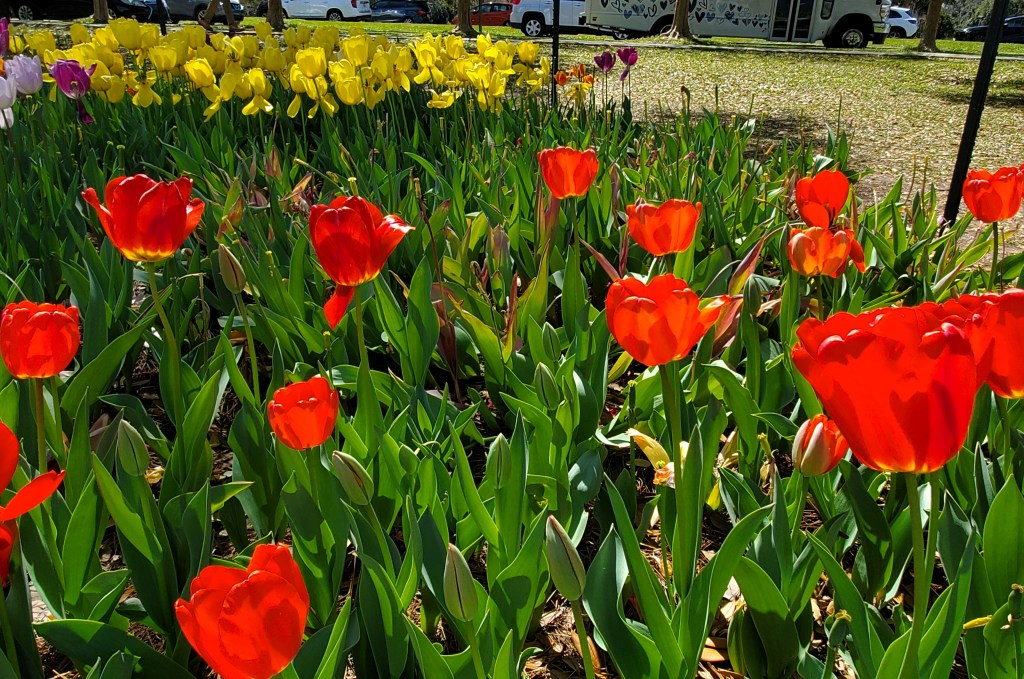
The last tulips 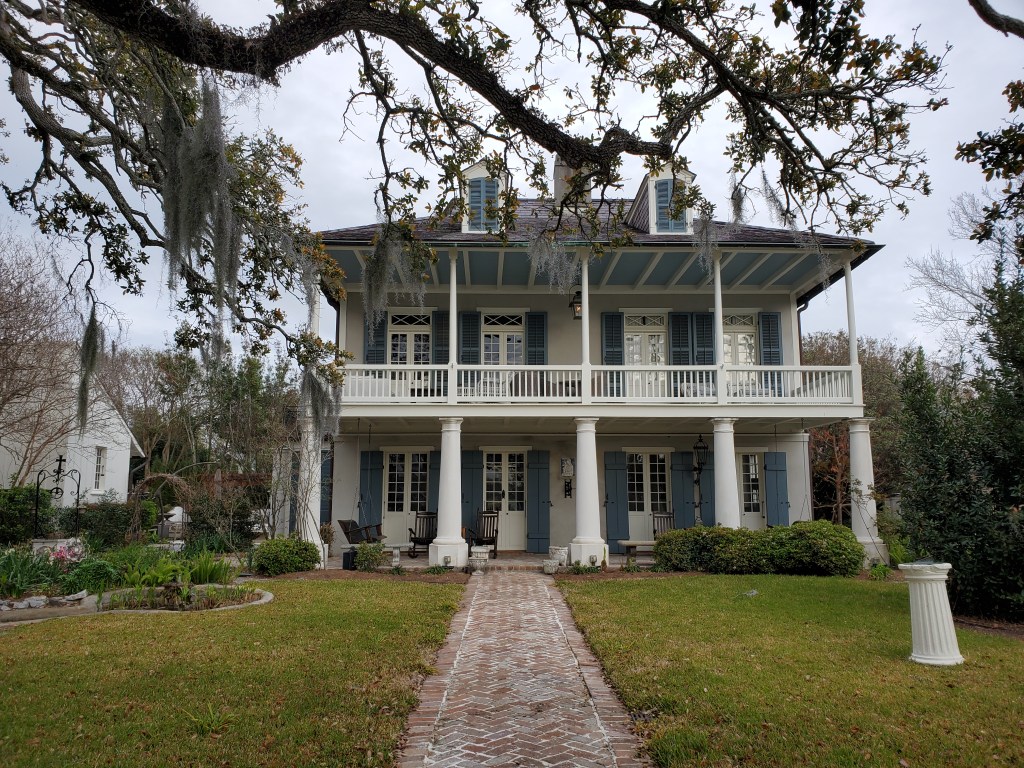
Plantation House also of the French-West Indies style, erected c. 1784
on Bayou St. JohnWater is an integral part of the Sculpture Garden’s design, appropriate to its bayou proximity, and the water itself is wonderfully “sculpted.”

Mississippi Meanders, by Elyn Zimmerman (2019), laminated tempered glass bridge depicting the River’s multiple paths over time 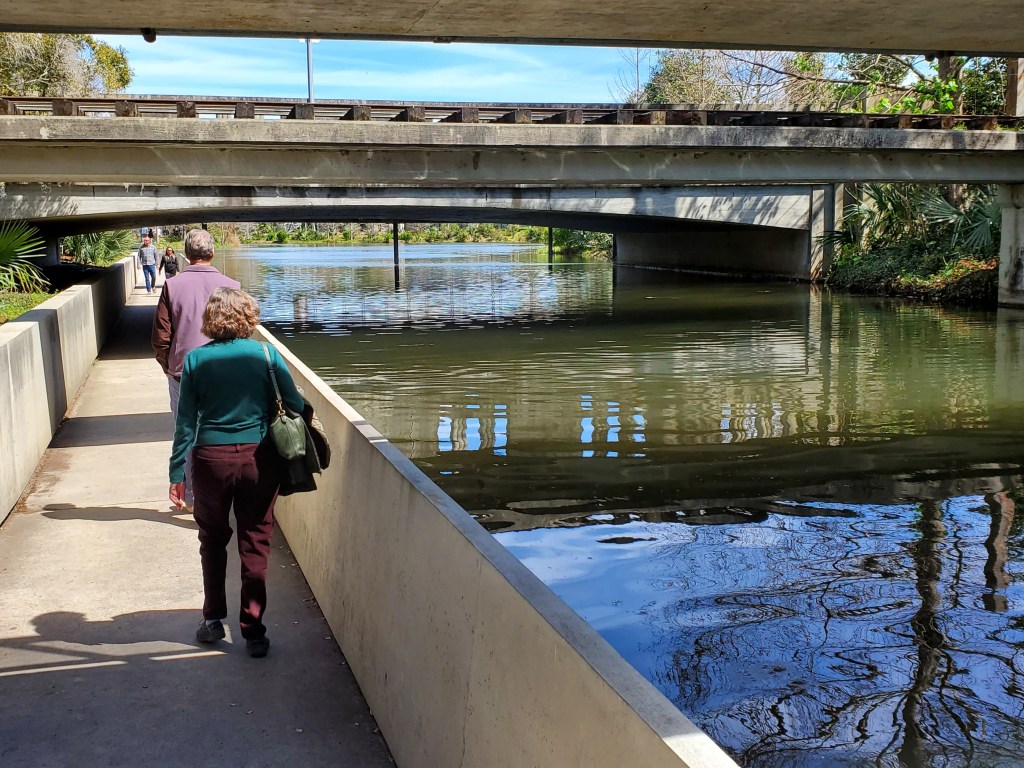
High water, low path in City Park: a reminder that some parts of NOLA
are 10 feet below sea level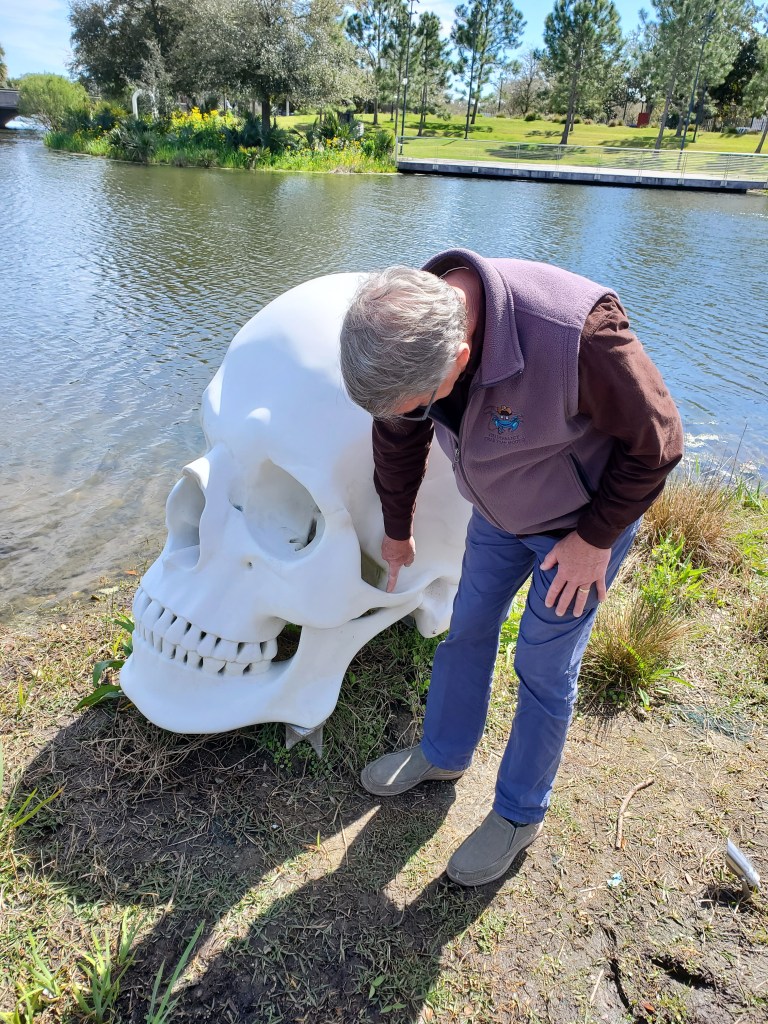
Mike uses Katharina Fritsch’s 2017 painted bronze Schädel (Skull) to point out all the bones he broke in a bad tumble last year, now so luckily, happily mended 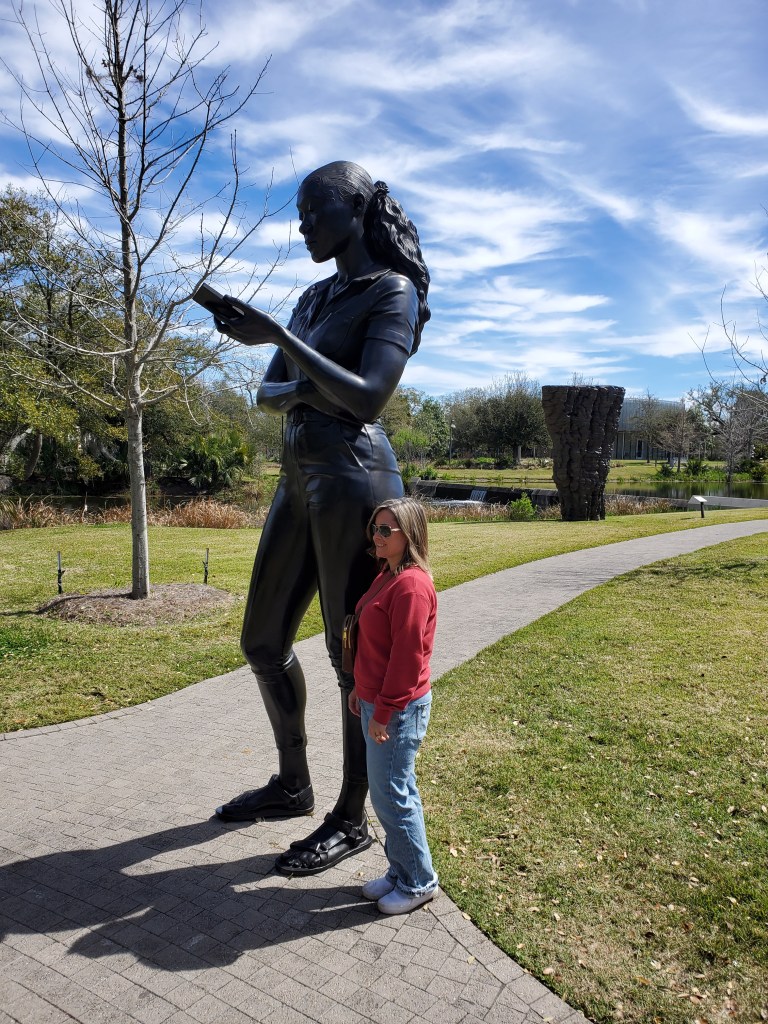
Time Unfolding, by Thomas J. Price (2023), a 9-foot woman on her phone 
Viñales (Mayombe Mississippi) by Teresita Fernández (2019) 
. . . made of thousands of hand-crafted porcelain tesserae After our stroll and a sandwich, Trish turned her errand of picking up a purse mended (rather dearly, as it turns out) by a local cobbler into a driving tour through Mid-City (I recall when a missing “M” delightfully designated that section of town “Id-City), the Central Business District, and the Quarter, evoking all manner of NOLA memories along the way (like the time I brought David to Gallier Hall to pay our respects to local jazz legend Danny Barker, so splendidly there laid out) and prompting an enjoyable conversation about nostalgia’s complexities.
That night my hosts reunited me with my fellow Women Against Dissertation (WAD) friend Susan, Dean Emerita of the College of Liberal Arts at the University of New Orleans from which Trish has now also retired, and the hilarity inspired by Susan’s well-told tales of local grotesquerie (think Eudora Welty or Flannery O’Connor) made our grilled pompano and Pouilly-Fuissé at the Café Degas all the more enjoyable—even if her stories did later provoke Mike’s nightmare of a one-legged man stealing his shoes. It’s transformative, laughing that hard among such dear, old friends. I went to bed very happy.
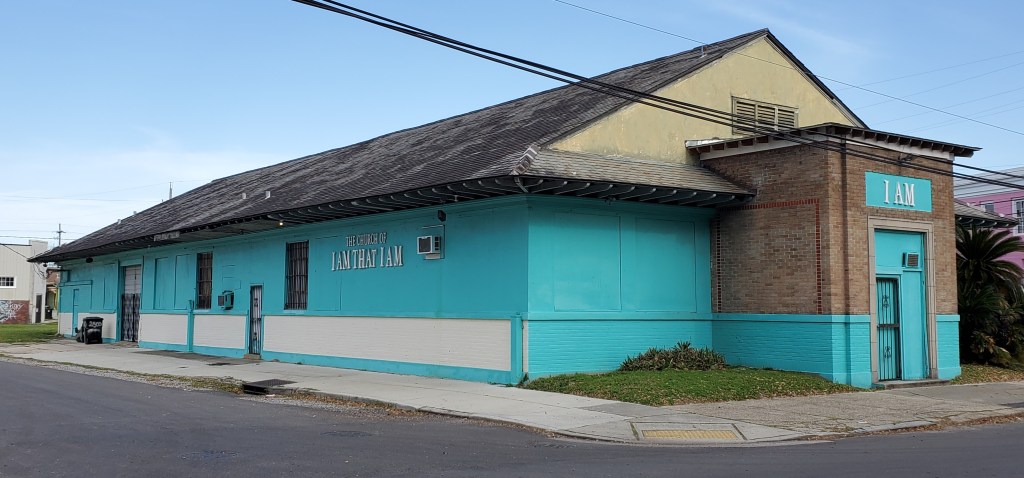
Next morning, after an excellent breakfast of croissants from Leo’s Bread across from the Church of I Am That I Am (Popeye affiliated?), I was ready for Friday’s next big adventure, however briefly perplexed by a perpetual conundrum: why, oh why does the University town of Durham, NH lack a bakery capable of croissants?
Part one of the adventure was a drive through Chalmette, Arabi, Violet, and Alluvial City (Alluvial City!) on the west bank of Bayou La Loutre in St. Bernard Parish, cruising in Mike’s truck past all the raised fish camps to the Hopedale Marina for a guided tour of some favorite fishing spots and lunch on the water courtesy of the Fish Tales food truck. (Chef Mike enjoyed tweaking Chef Patrick about the quality of cheese on the ham & cheese po’ boy.)

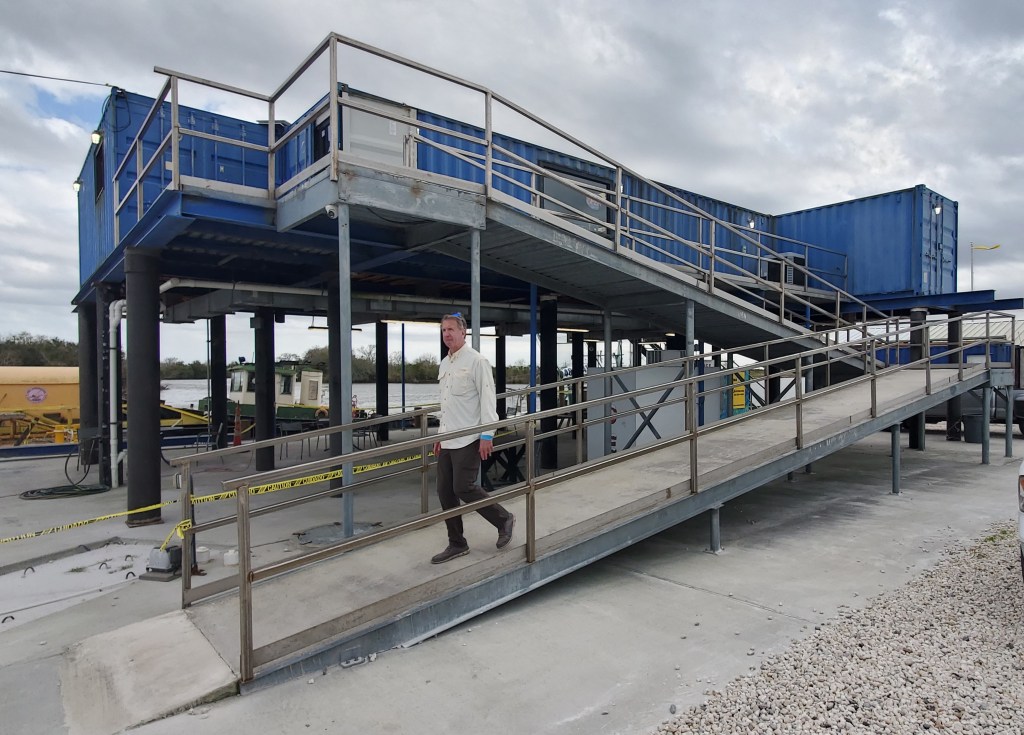
Hopedale Marina 
. . . with “Buffs” and fishing gear for sale inside I admired the selection of neck gaiters (aka “Buffs” after the manufacturer) among the marina provisions, and then we boarded for our bayou tour around sites indistinguishable to this novice but well-known to Cpt. Mike (Corner Grocery, Lena Lagoon, Delacroix Island).

Cpt. Mike at the helm 
Roseau cane and muskrat trap marker 
Lunch on deck 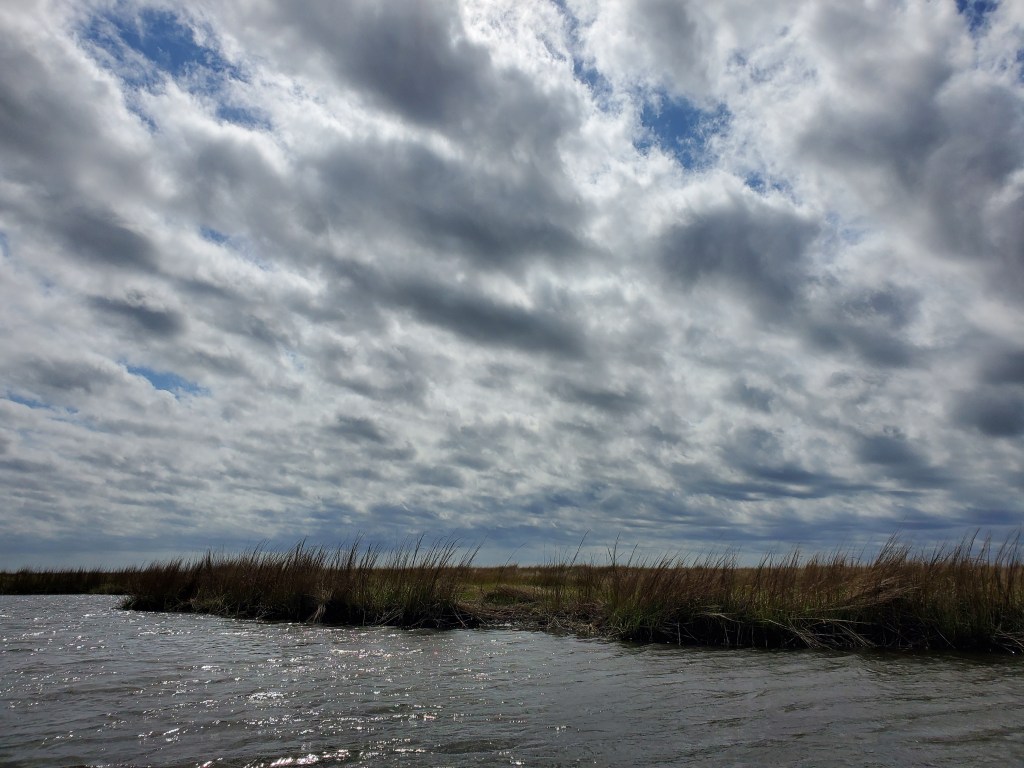
The open Big Sky above the world’s largest contiguous stand of roseau cane (Phragmites australis) was a refreshing vista after the densely forested landscapes of New Hampshire, and speeding through the marsh, observing the ongoing dredging and fill projects designed to absorb ever-rising tides, was fascinating—especially when we counted 10 gators disturbed by our converting gas to noise.
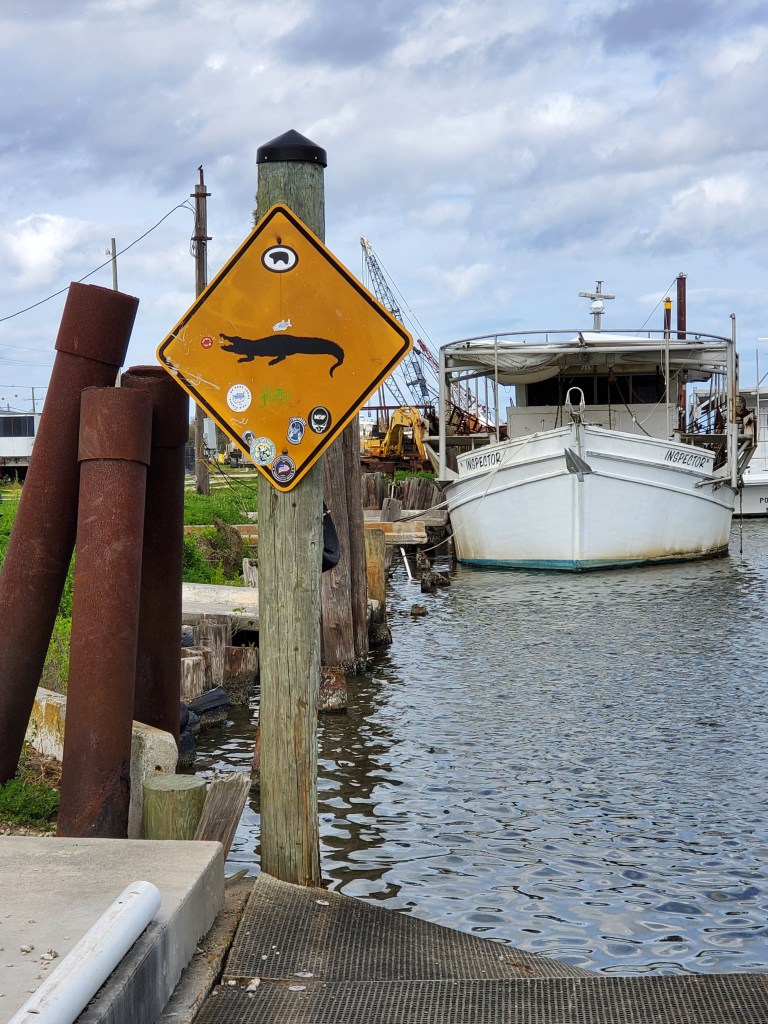
The outing became even more of an adventure when we briefly ran aground, necessitating Mike’s assuming gondoliere status to pole us back into the channel because his trawling motor was in the shop: muscle, savoir faire, and rising tide to the rescue. The wonderful day finished at Café Minh with my very first Shrimp Pho and another night’s good rest abetted by all that fresh air.

Shrimp Pho at Café Minh Saturday was my day to try out my new Le Pas app, NOLA’s RTA innovation allowing me the all-day streetcar rides I had in mind. I boarded at the end of the Canal-City Park / Museum line on Carrolton, and after an initial fright about getting my pass to load, I struck up a conversation with a first-time NOLA visitor from NY (the Village) who asked my advice about what to see and do in the city, which led to my confessing I’d not lived in town since 1984 when I graduated from Tulane and began my career as a professor, from which I’d recently retired after 43 years. He asked what changes in my students I’d noticed over that time; my response: the average student was less prepared for college-level work, the attitude of students toward professors had in many cases shifted to a consumer/vendor relationship, and, of course, technology had changed everything. He then revealed that he had worked in A.I. from its early development, and thought most people were currently unaware of what he called “the 4th industrial revolution” now fast approaching, where only a very few tech overlords (my word, not his) would be required in the workforce; everyone else would be made—is currently being made—redundant. Our car had by then come to an unexpected stop on Canal just before Basin Street; the other New Yorker behind my companion explained that where we were, given ongoing construction, was now the end of the line. So we three parted, wishing each other a good day, and in my case at least, musing about what the future will bring.
I walked the several block to where I could catch the St. Charles line at Common Street, and crowded in with all the other tourists, many of whom got off at Washington, clearly headed for the Garden District.
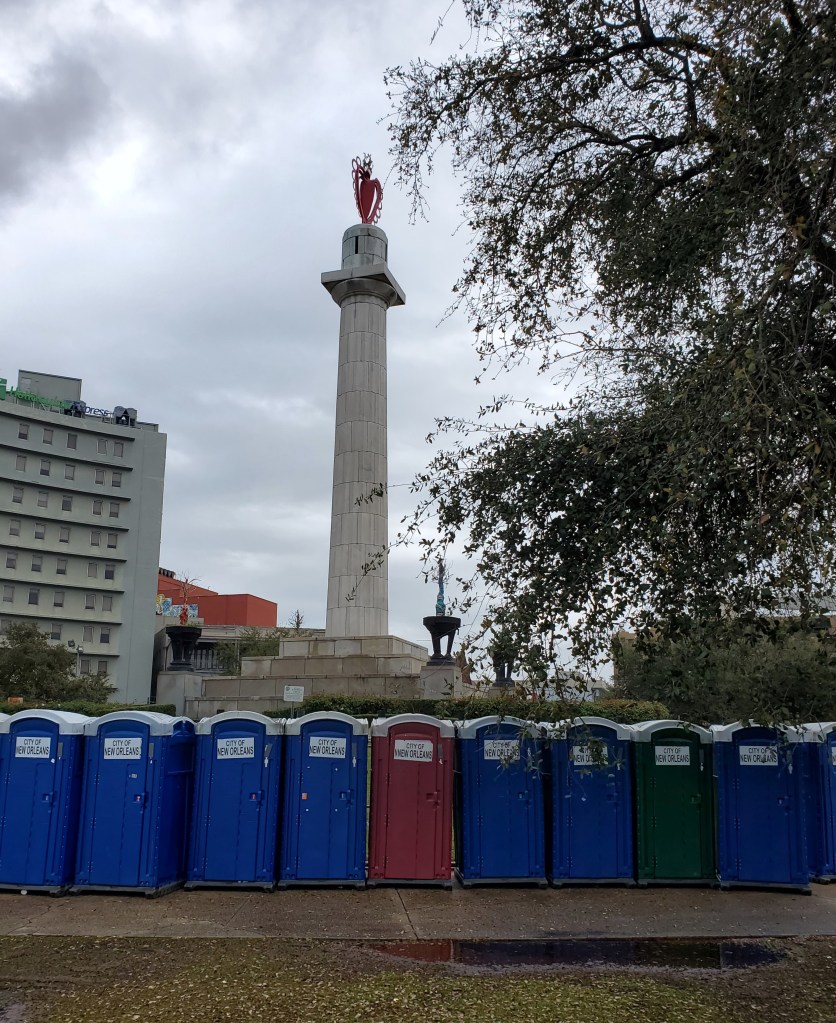
What’s in a name? What was once Tivoli Circle became Lee Circle, but since 2022 absent the stature of Robert E. Lee atop the column, it’s Harmony Circle, with post-Mardi Gras portalets still in place I continued on to Tulane, spontaneously deciding to see what I could of the University I’d left so many years before. Gibson Hall was locked up on that Saturday, but I shot a picture of the window where I once stood, mid-Old English exam, sharpening my pencil and observing that my AMC Hornet parked outside on St. Charles was now flooded up to its door handle, perhaps signifying that both my graduate school career and my transportability were soon coming to an end. I was wrong: I passed that class with a B+ and Rene of the garage next door to my Pitt Street apartment got my car to run again. Another hurdle cleared. One never knows, do one?
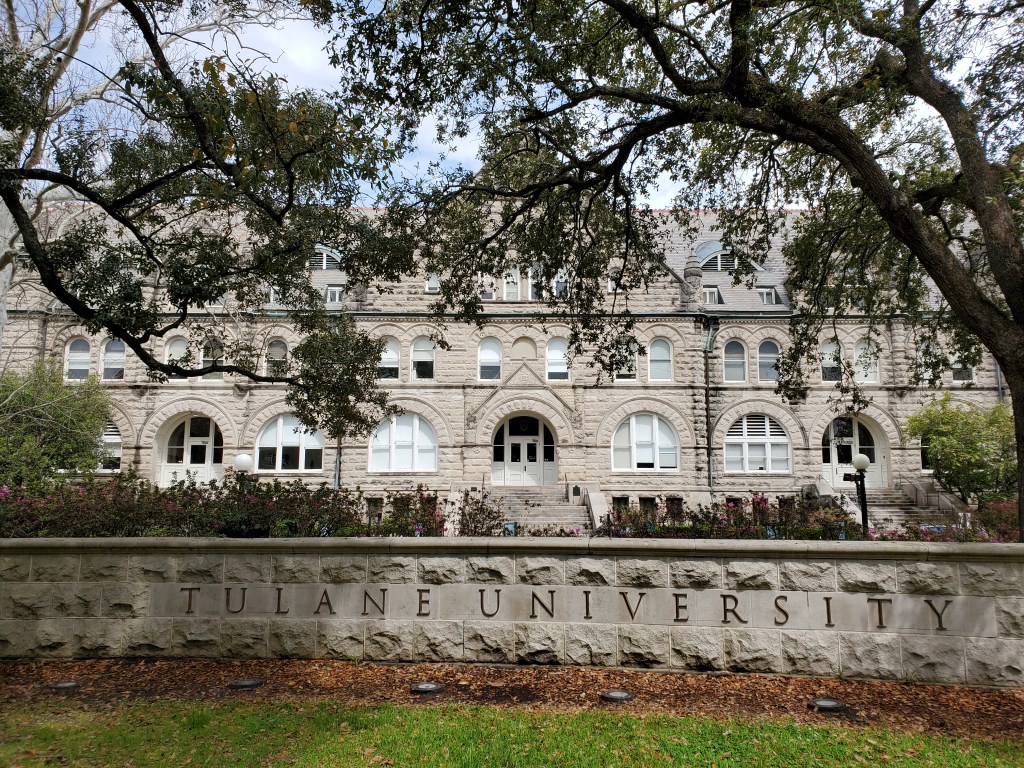
Gibson Hall: LOTS of personal history here I strolled up to the Howard-Tilton Memorial Library where I’d spent so much of my last year in New Orleans, noting along the way lots of colorful Adirondack chairs scattered around the campus, and a bead tree sculpture, signs of frivolity absent during my grad school years.
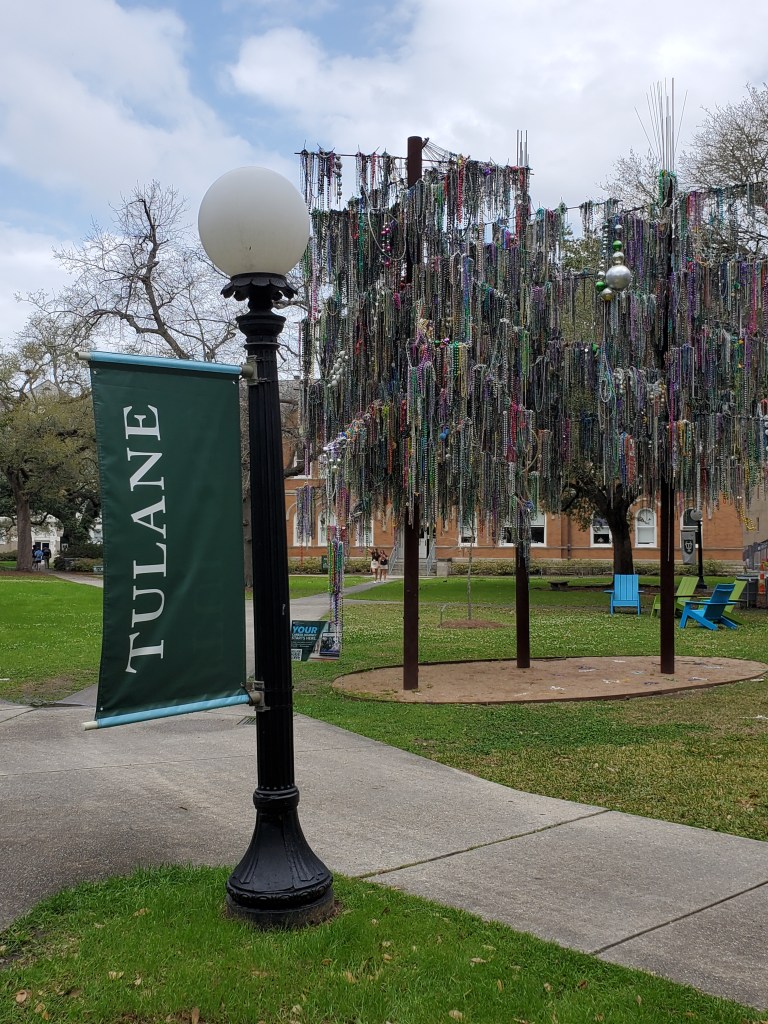
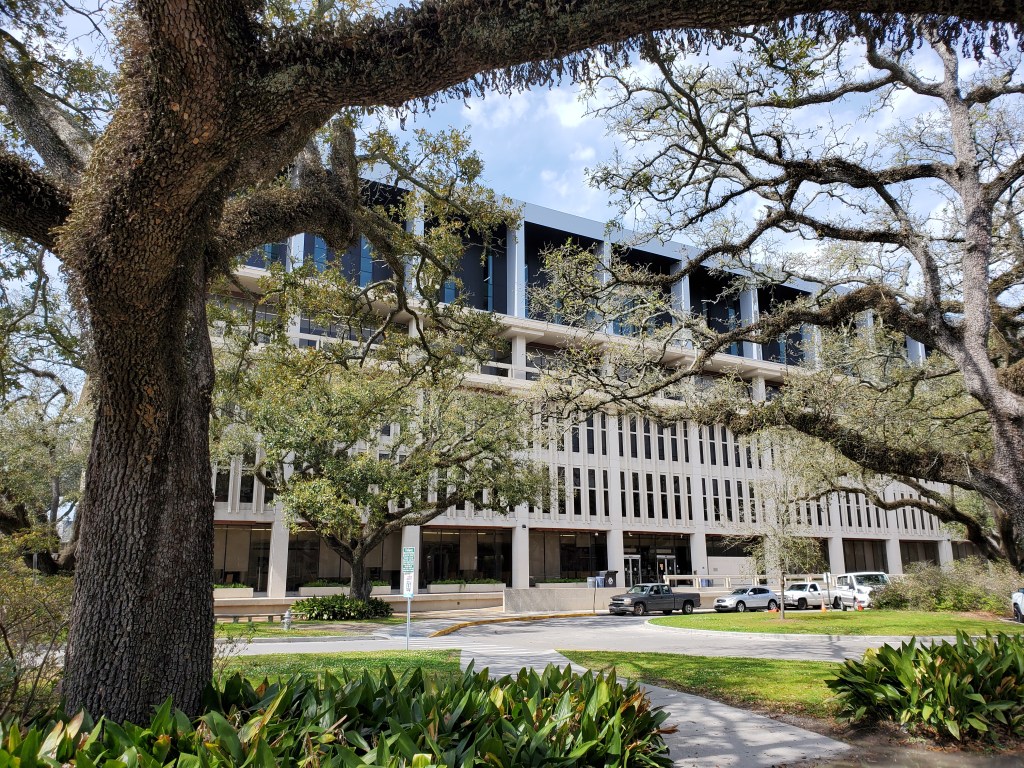
Howard-Tilton Memorial Library, Tulane campus Of course the library, though open, was quite different, too: the big tables where I had once laid out my 3 x 5 note cards to organize my dissertation chapters have all been replaced by computer terminals and small desks.
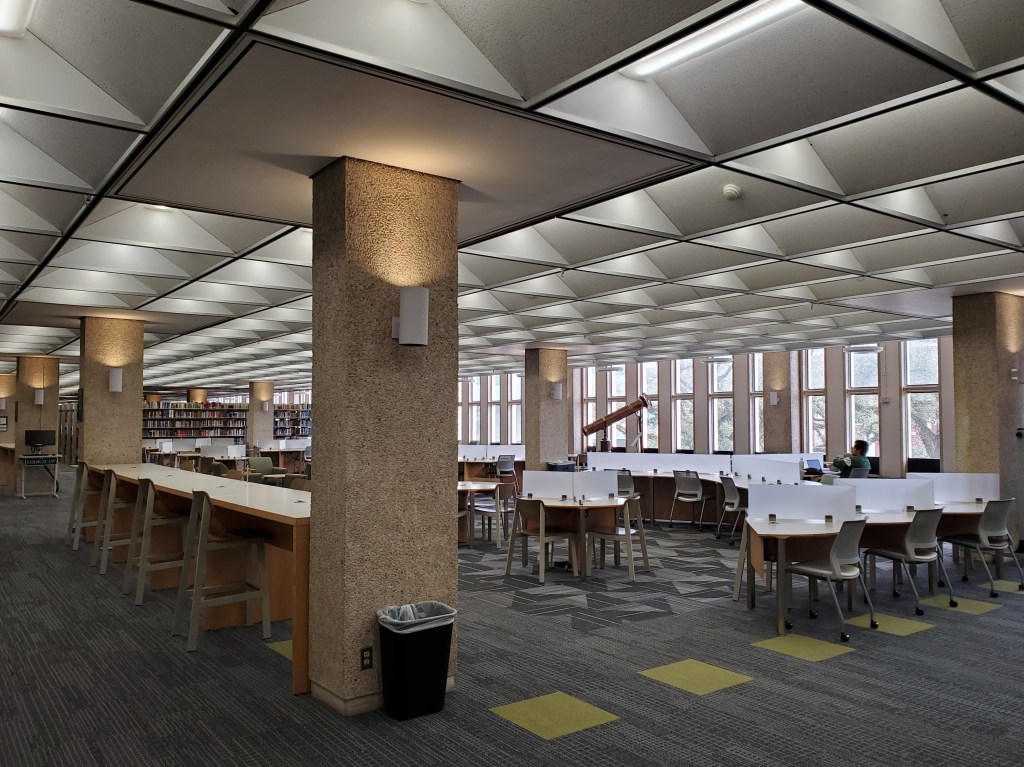
No more big tables for sorting index cards When I inquired about where my actual dissertation was now stored (I thought I might slip a $20 between the pages, a reward to anyone dogged enough to pursue it physically, not digitally), I learned that Special Collections had now moved from the 5th floor of the library across the street to the locked-on-this-Saturday building where the Law School used to be. So, I went on to the greatly expanded University Center (where I once got food poisoning from a tuna sandwich that required my early exit from a 19th-century novel class) to eat the remainder of yesterday’s po’ boy and hunt for the University bookstore—which also turned out to be locked, and a Barnes & Noble.

Ou sont les “campus bookstores” d’antan? This made me nostalgic for the campus janitorial staff, the women who used to gather on the UC’s mezzanine level where the tv was to watch their lunchtime soap operas and talk back to their favorites. After a brief look at McAlister Auditorium, site of the commencement that my sister reported brought my dear old daddy to tears when Prof. Morillo hooded me, I made my way back through Newcomb Place to St. Charles, where I caught the car that rounded the Riverbend and finally dropped me at Carrolton and Claiborne, the end of the line.
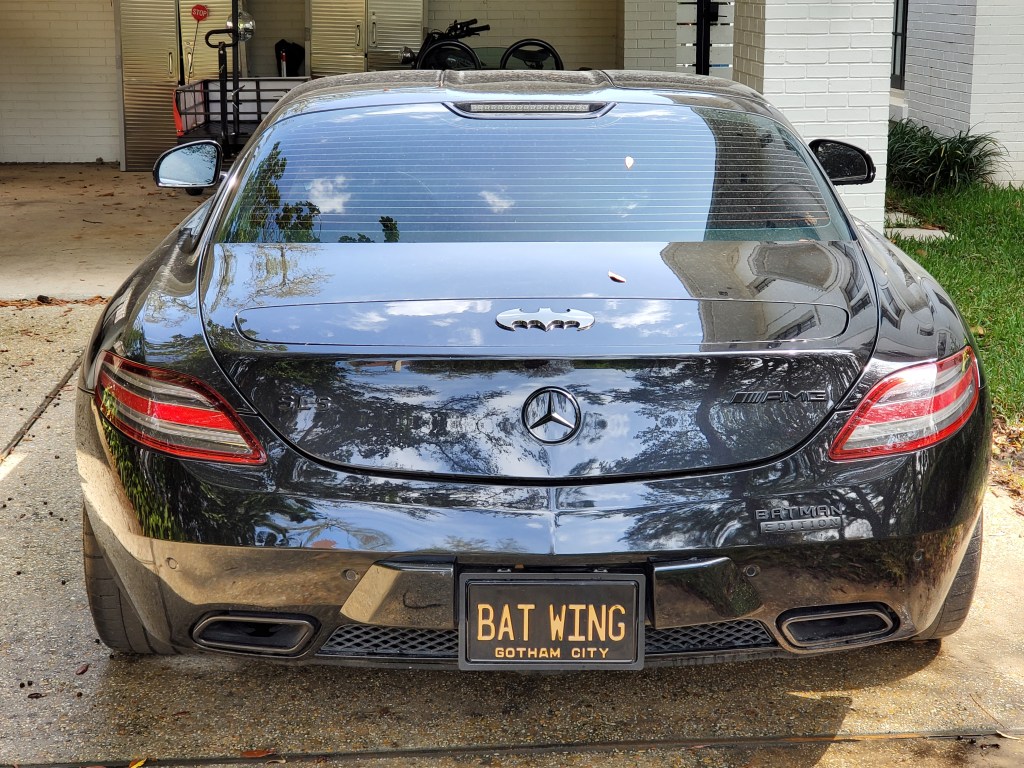
Who knew that Batman lived on Newcomb Place? 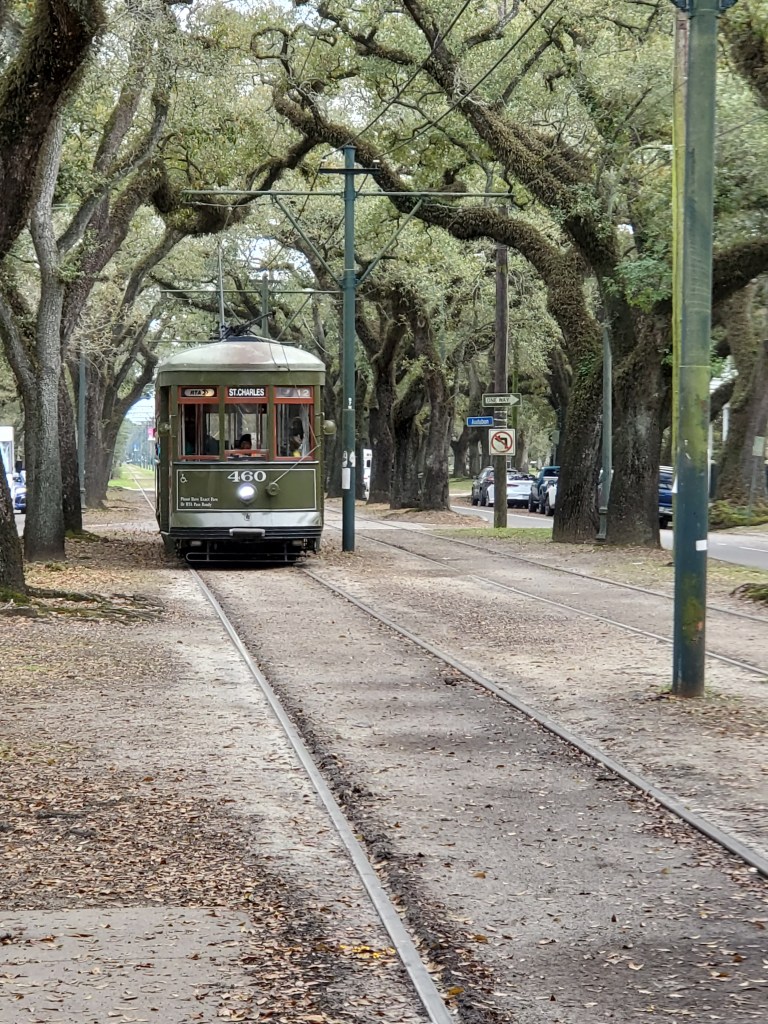
A man with a bull horn stood on the neutral ground there testifying to all of us waiting for the conductor to finish her break and take us back downtown. The message was familiar: Jesus is coming, change is coming, everything will be different, it’s time to prepare. There was one innovation in his testament, however: “It’s all digital!” He for sure got THAT right.
I boarded and then got off again at St. Charles and Duffosat, my stop of yore, to see if my apartment still stood. It did, though Rene’s garage next door was now a fitness center; that seemed an appropriate sign of the times. I took a picture and, by now getting pretty tired, crossed back to Bordeaux to re-board.

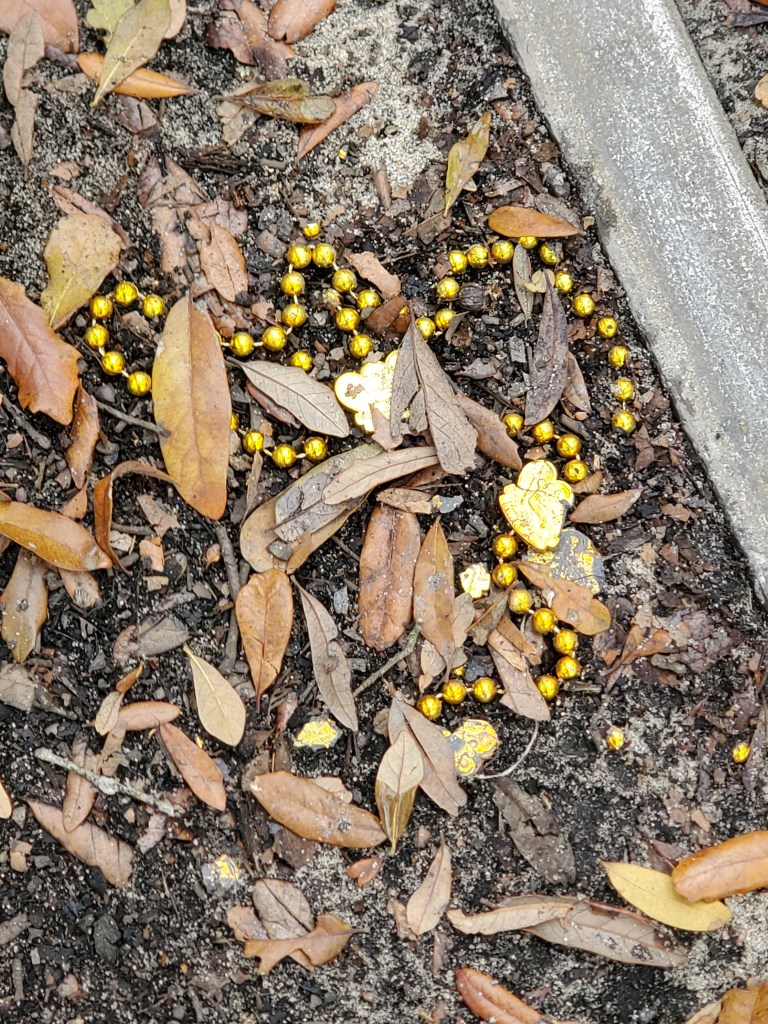
My one-time home: 4828 Pitt Street, one block off St. Charles There I waited quite a while, first with a young mom and kid who eventually just set off again on foot, and then with two others until a third would-be rider, a very skinny fellow with very few teeth, came hobbling up, assisted by a four-footed cane, and carrying a plastic bag, a handful of Mardi Gras beads, a couple of books, and some printed-out pages. This little man returned by greeting and, after offering me some beads, began a very well-informed conversation about Dolly Parton. The pages, he said, were all about her, a woman he really admired, and he cited statistics about her age, how much money she gave away, how many people visited Dollywood each year: a proper fan, he. He told me, too, that there would be more parades the next day, Sunday. I thought him deluded since Mardi Gras had passed, but later learned he was right that some trucks would roll on the morrow.
When the streetcar finally arrived, the other two passengers boarded first; I deferred to my chatty companion, and waited behind him as he struggled to manage his cane, his burdens, and his beltless pants. When he stepped up, he was greeting by the conductor, who handed him the pass which he’d apparently left behind on an earlier ride. That additional item to manage proved too much, however; he dropped both his cane and his pants, which fell to his knees revealing a white diaper just in front of my face. Nonplussed about how to help, and reluctant to offer a boost to that diapered bottom, I hesitated. But my embarrassment on his behalf was short lived; the conductor immediately left his seat, got down off the car, and helped the man up with his pants and onto the car, settling him before asking him how far he was going this time. The man replied, “Just to the next stop.” There he did indeed disembark, once again forgetting his pass but leaving the rest of us rather relieved, and me in awe of the respectful courtesy of the conductor.
The further we rode, the more tourists got on, so I was happy to get off once we reached Canal and walk unimpeded back to Basin Street where my Museum-bound streetcar was parked.
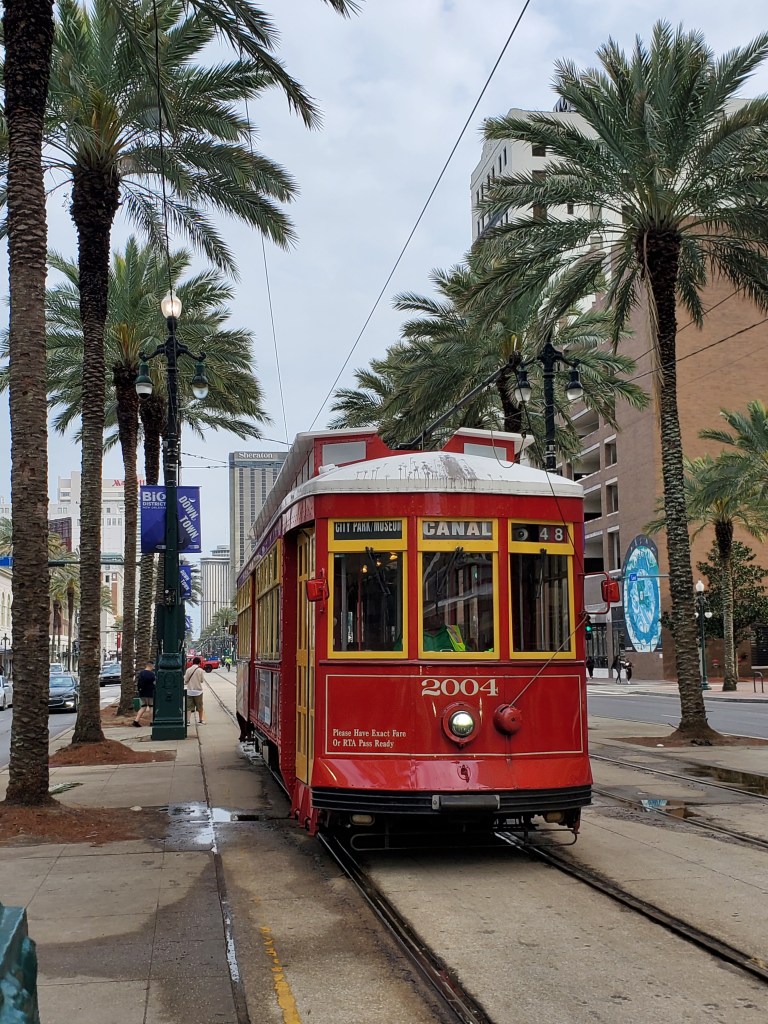
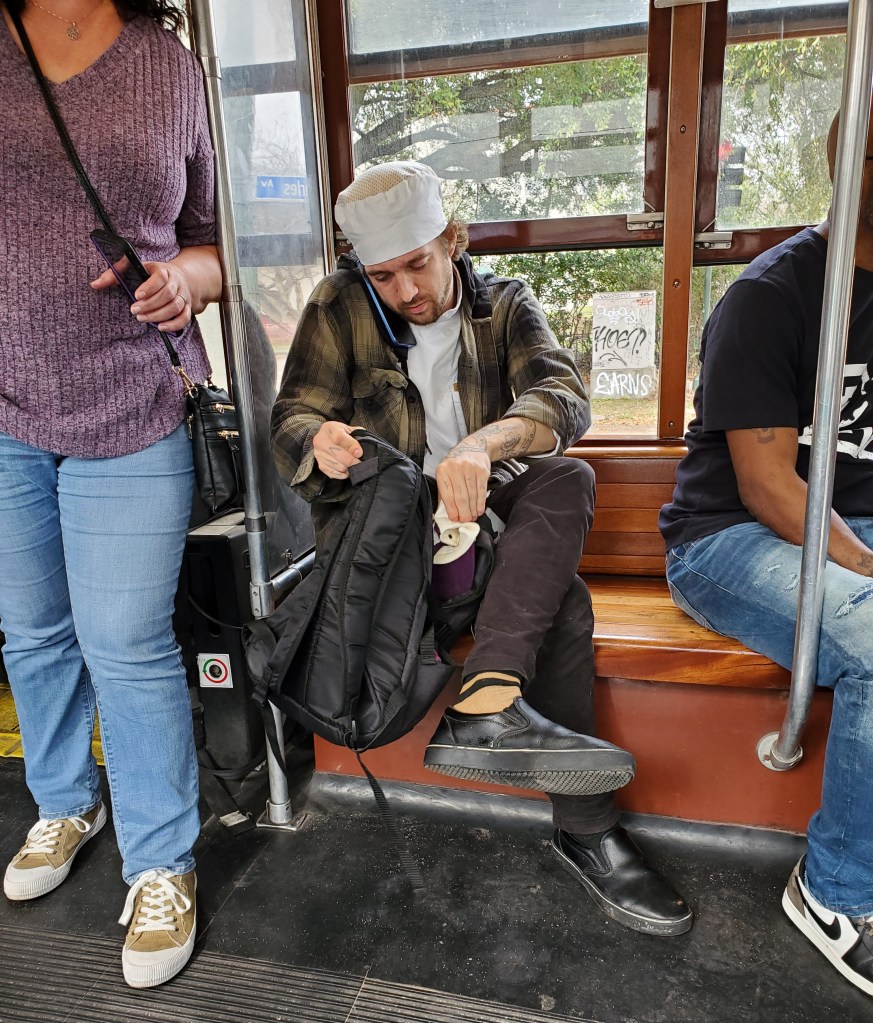
Riders on the streetcar: chef on the phone on the way to work 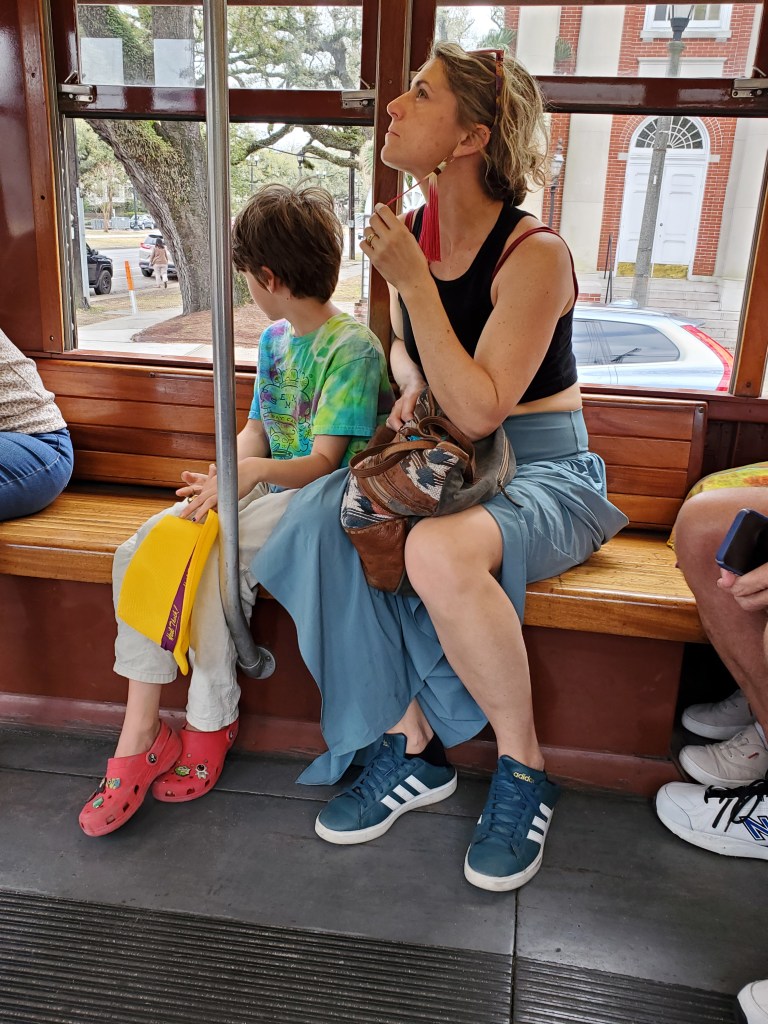
Mom and kid in Crocs 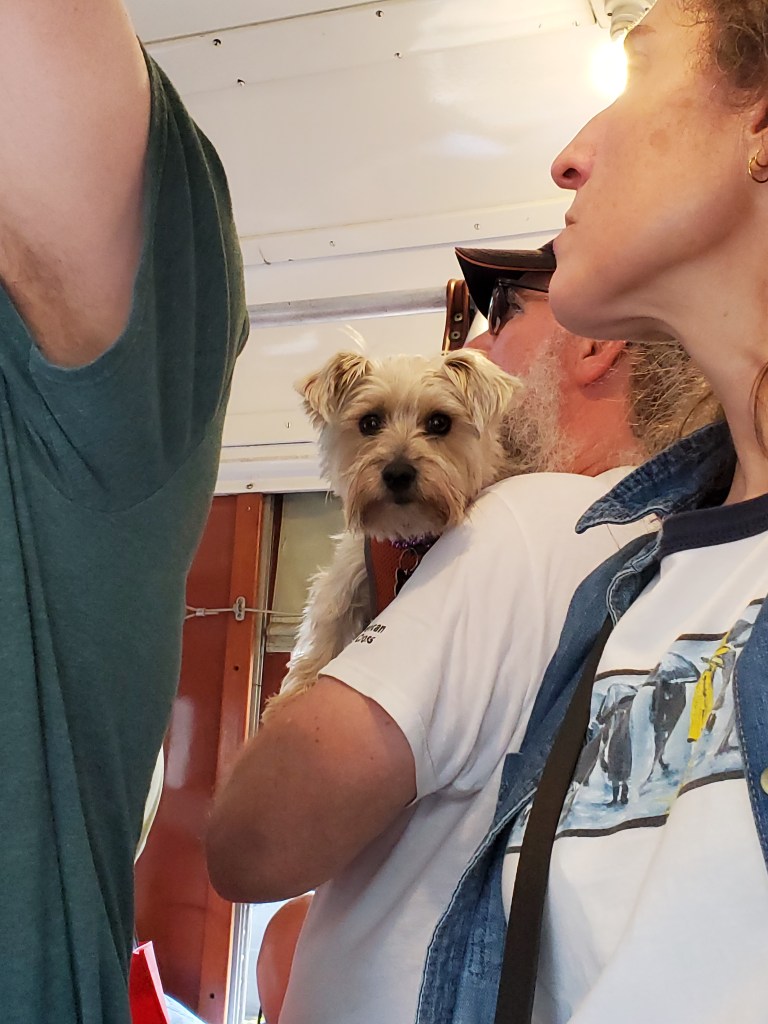
Cute doggy 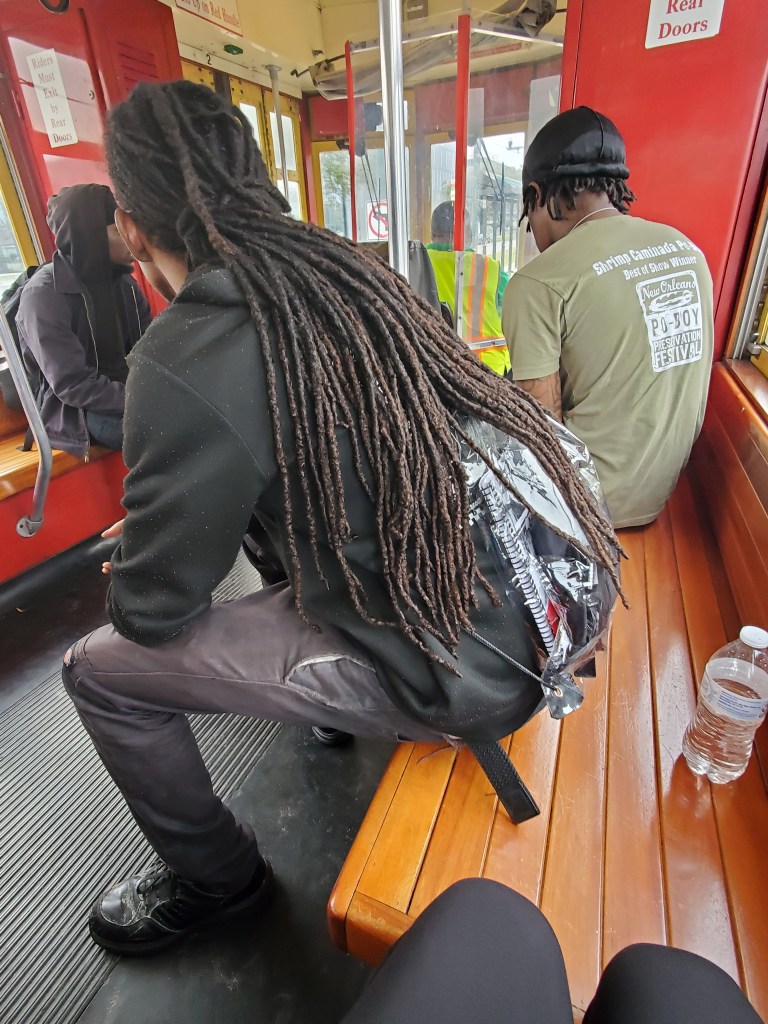
Dudes, one with a great “do” The ride back to Bayou St. John was enhanced by more colorful characters, some locals and some tourists, one of whom, an Indian gentleman, I had to reassure when the car stopped at Canal and Carrolton and the conductor got off to manually change the trolley pole to draw power from the overhead wire. 1893 technology, that. Back on DeSoto, Trish and Mike took adorable Dora for a walk while I rested on their charming sweet olive-scented patio.
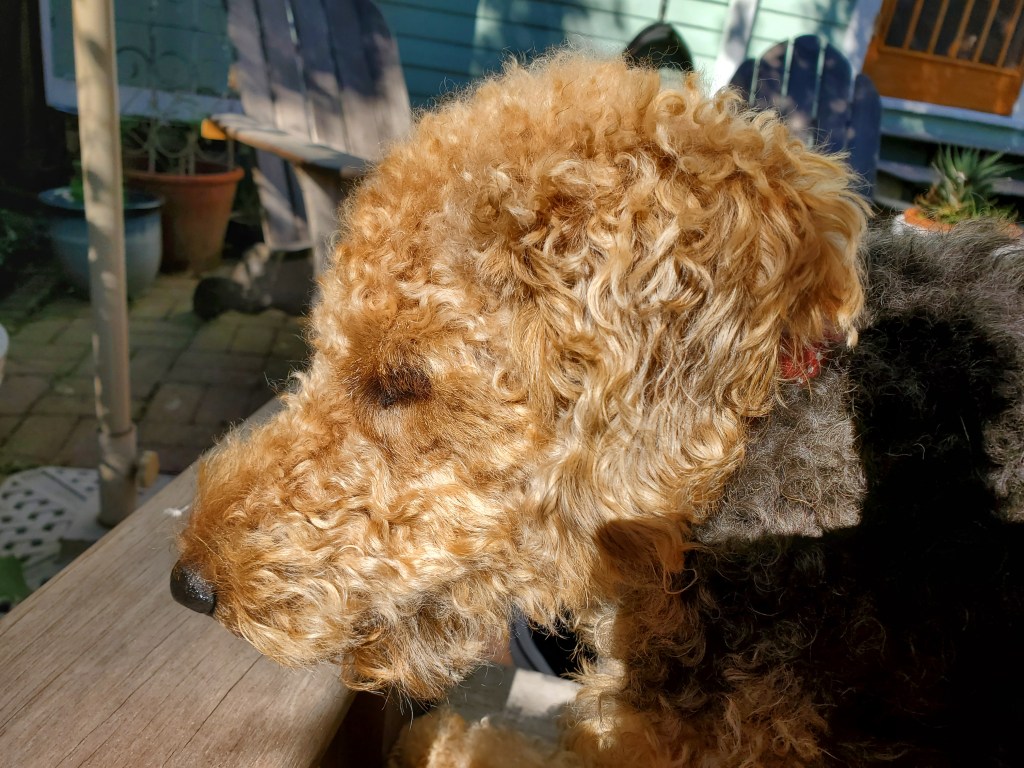
My new friend Dora Dinner that night—at my request: fried oysters with beurre noisette, chopped salad, and an abundance of crawfish.
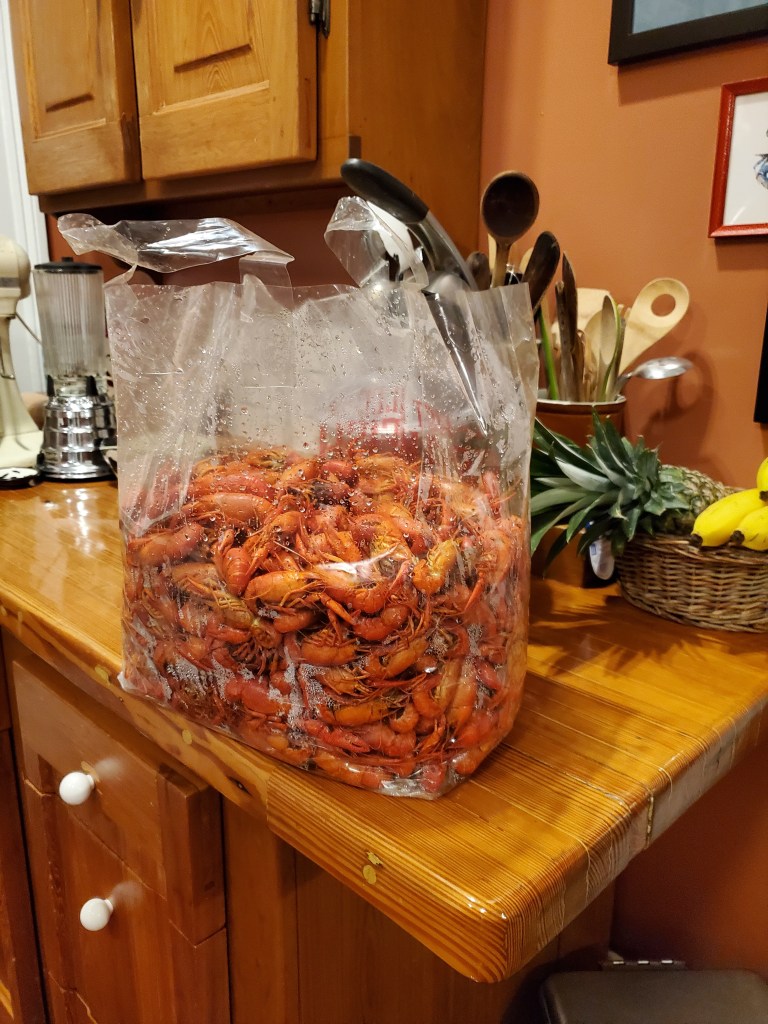
Saturday night dinner awaits 
How to get frying oil for oysters to the exactly right temperature:
laser thermometer!What remained of my NOLA sojourn was a lovely Sunday family brunch of Trish’s perfectly textured chive biscuits, ham, eggs (at $12.27 / dozen!), pineapple, and berries; my small contribution was happily juicing the fragrant oranges with a very efficient motorized juicer.
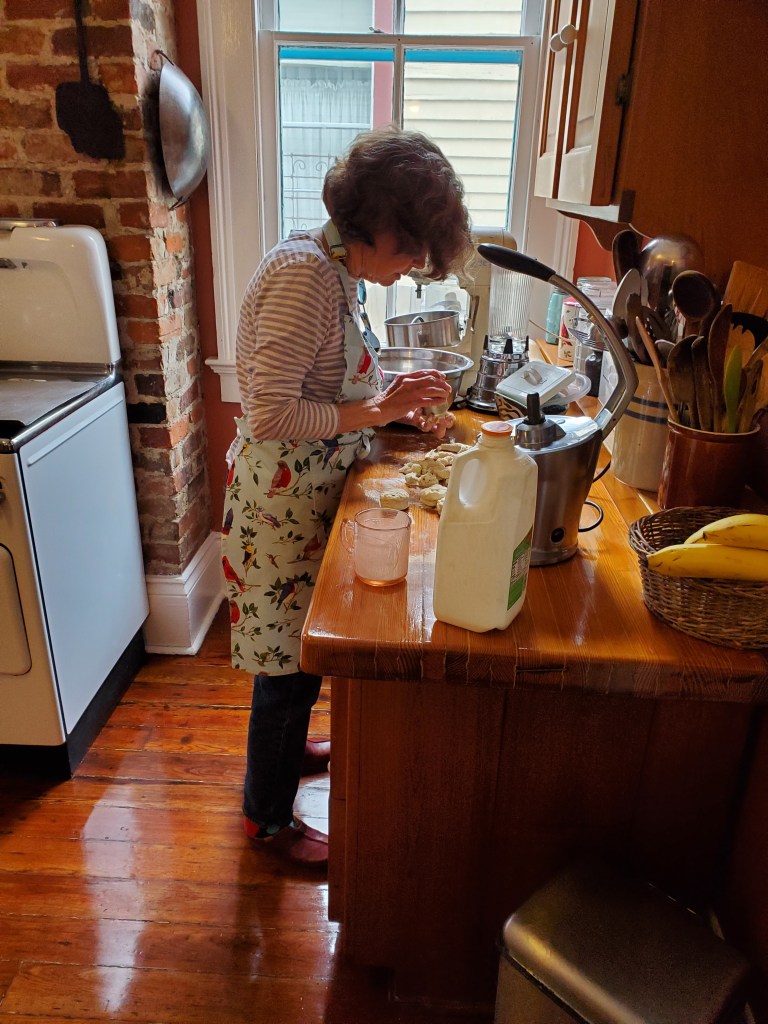
Trish, pro baker and professor, makes biscuits 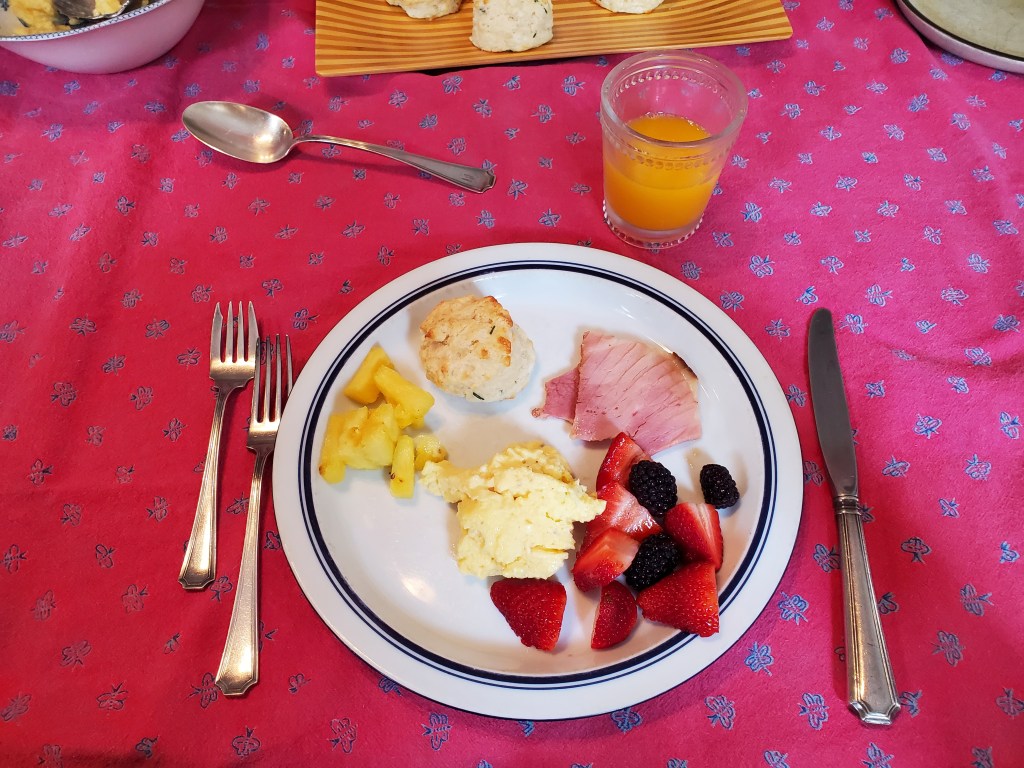
Sunday brunch 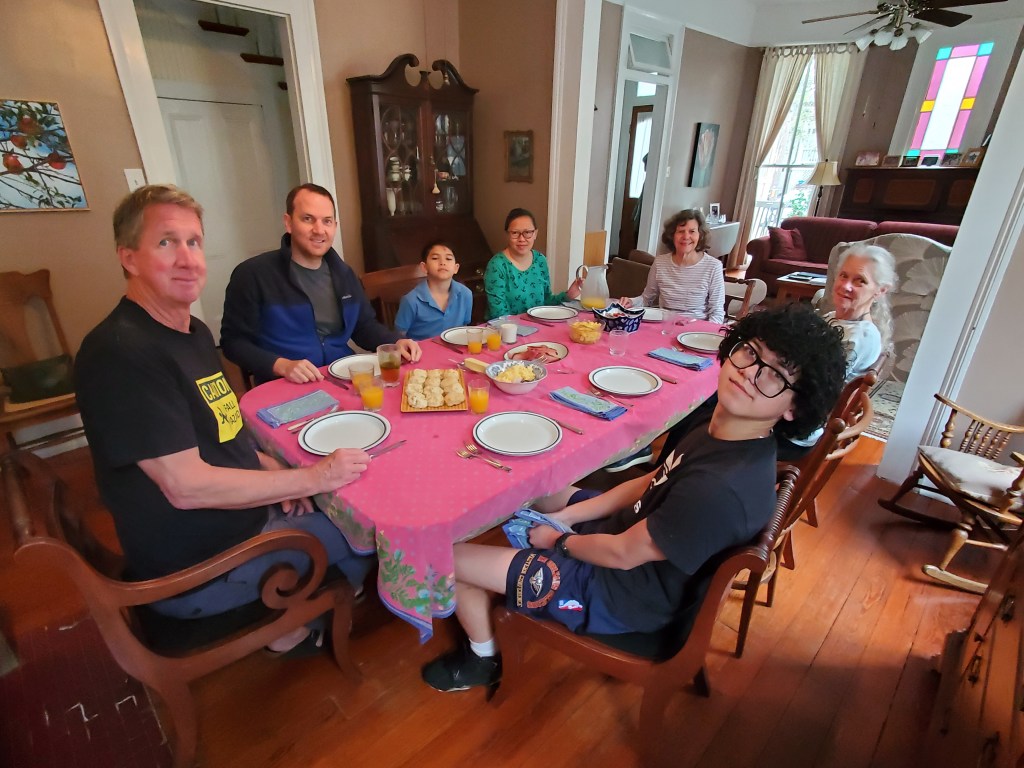
Family and friend at table 
Wonderful homes on the bayou After a final stroll on the bayou, Trish drove me back to the airport: very new, very nice, and loaded with amenities unique to NOLA: live jazz and local food purveyors, a great improvement over the ubiquitous McDonald’s and Cinnabons at airports elsewhere. Turns out there was a Brocato’s gelateria just opposite my gate, so I indulged in a valedictory stracciatella.

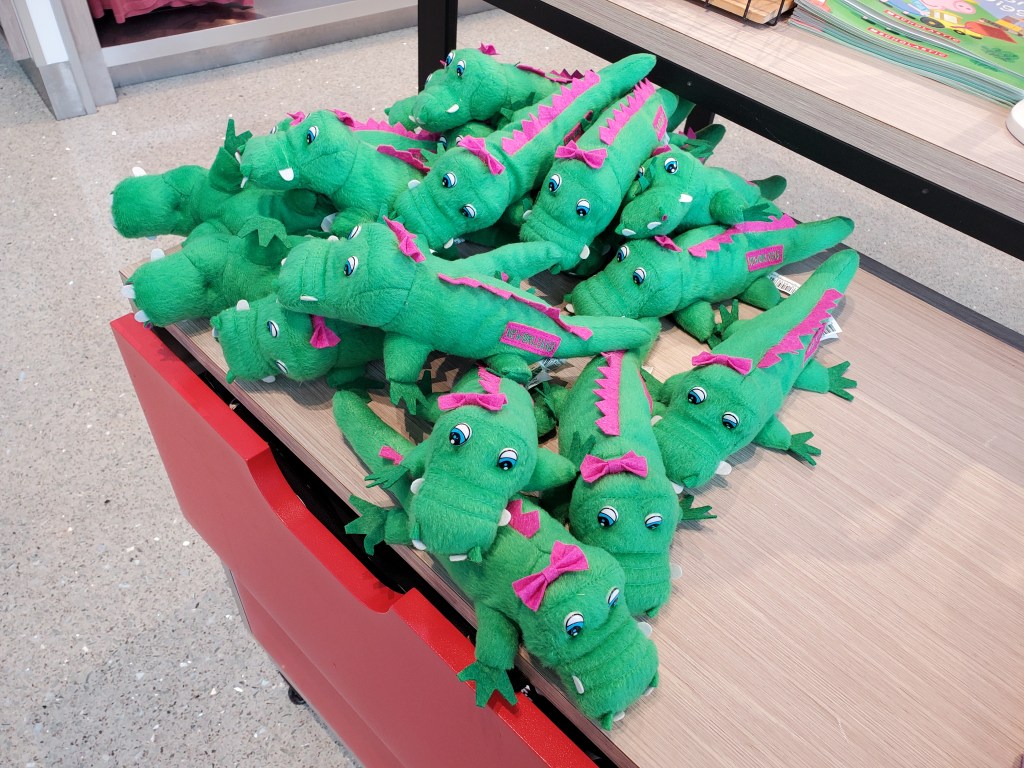
Gators to go at MSY The long flights home were unremarkable and (of course) late, but I had plenty to review and consider. Chief among the impressions: my realizing a distinct advantage of aging: a near half-century of friendships that sustained then and continue to sustain now.
Tuesday was Town Meeting Day here in little Madbury, New Hampshire (population ~2000; in 2024, 16 deaths, 13 births, and 6 marriages). As the Moderator called for votes and we waved our blue paper voter ballots in the air, I could only appreciate the time I’d spent in such good company in such a wonderfully different place.

Madbury Town Hall, 1862 A lot of the snow had melted in the few days I was away. Spring will be here soon.
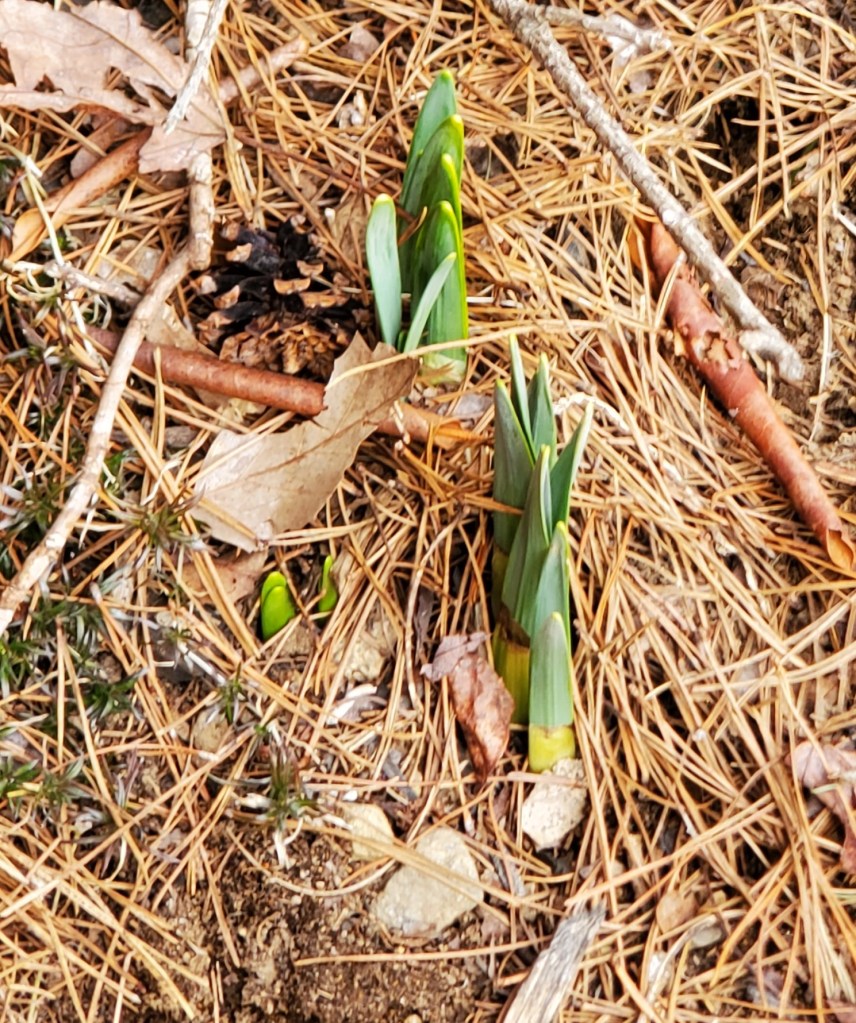
Daffodils emerging -
Performance
4 March 2025

Winter in Portsmouth outside the Hearth Market Hard to process, the nauseating, preposterous attack on a genuine hero, Volodymyr Zelensky, perpetrated by the Felon-in-Chief and his Smarmy Vice Suckup last Friday in the Oval Office, where only days before the Unelected Muskrat’s spawn picked his nose and wiped the results on the Resolute desk, an apt summation of the current state of affairs in these Un-tied States.
The day before I had finally seized an impulse to unpack the six heavy boxes of Murphy family photo albums my thoughtful brother-in-law had sent me last July, which ever since had sat undisturbed behind our big library table. They contained 25 large and 5 small photo albums, all carefully labeled and dated, the life-long work of my mother Virginia, her documentation of what she so clearly saw as her sacred vocation: raising her two daughters. Virginia is in almost none of the photos; she was always taking the picture. I managed to get all the albums out of their heavy cardboard packing boxes and stack them so the dates of the photos they contain show on each cover, break down those cartons, and get them out to the street for recycling pick up the next day before I lost my nerve after opening just one album from 1955, dissolving, and then deferring further investigation until some future date.
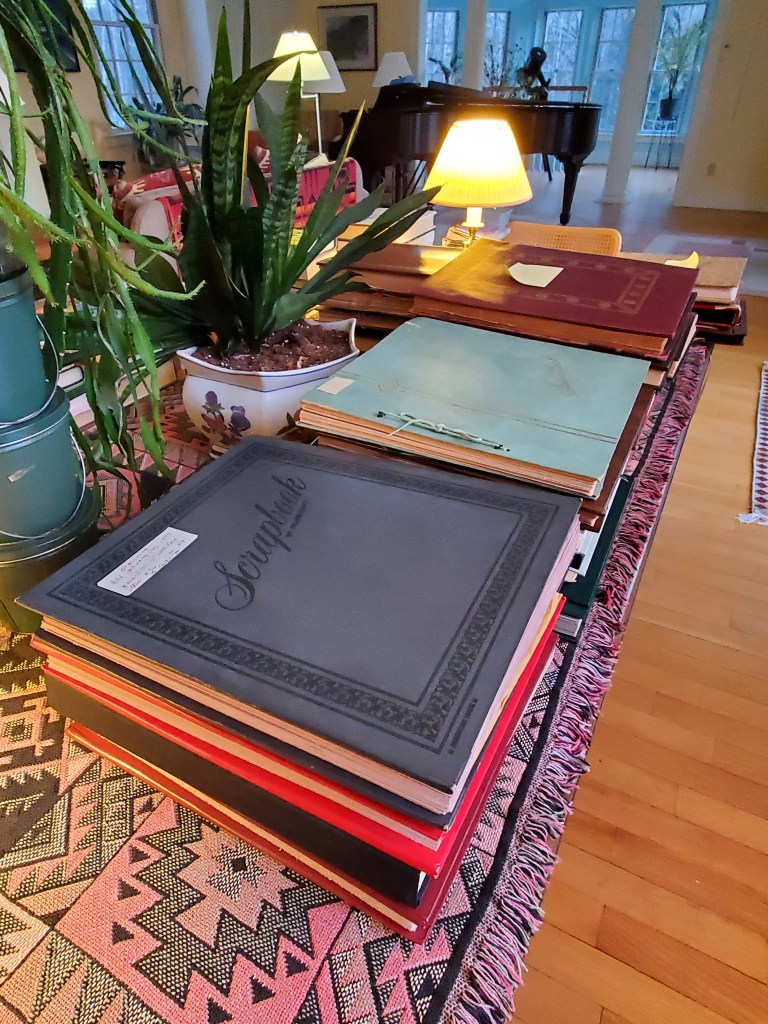
The Murphy Family Albums, curated by my mom All my life, to the end of my mother’s life, now lies on the library table, testament to a world that no longer exists. I’m glad my veteran dad George and my mom, whose little brother Calvin died on the USS New Mexico when it was attacked by two kamikaze planes in May 1945, are not around to witness the deconstruction of everything fine for which so many of their generation sacrificed.

Why my garage door is sometimes frozen shut Winter lingers on here, and though the days lengthen, the warming alternates with polar blasts, so ice dams and glazed driveways are a hazard. I’m weary of the daily footwear decisions: which boots, which set of ice cleats to wear? Will the Stabilicers do, or must I have the full monty punk spikes and chains?

Point of Graves Burial Ground, Portsmouth NH 
Portsmouth, still a working port despite a lot of recent twee construction 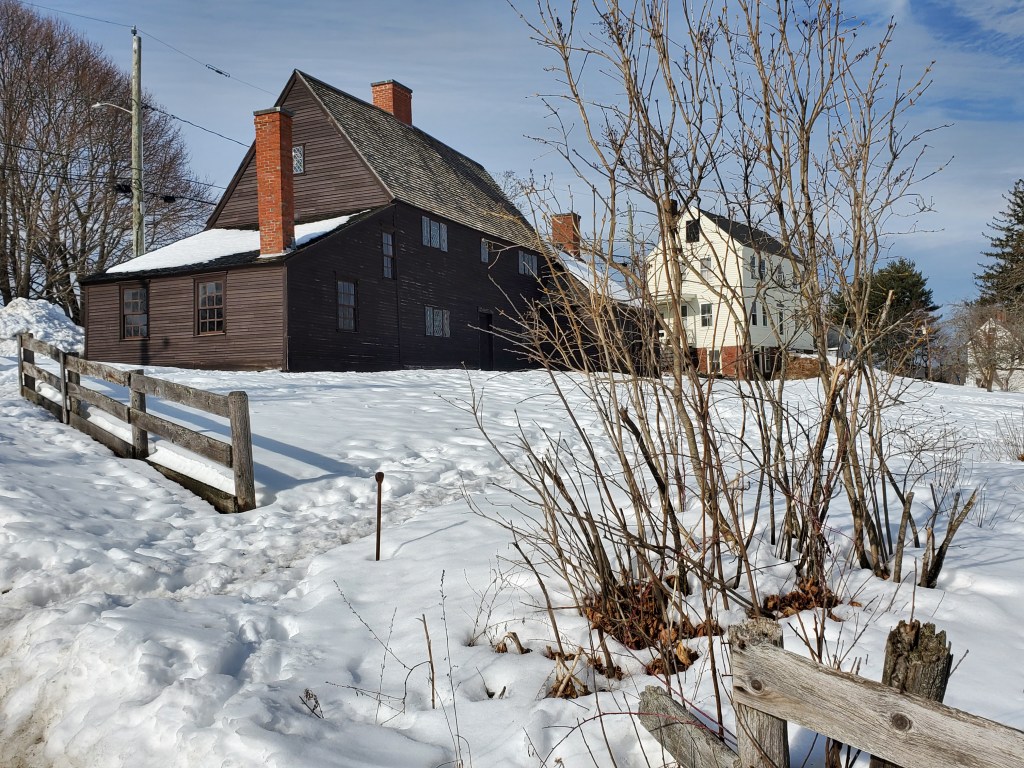
Portsmouth’s oldest house, the Jackson House (1664) on Christian Shore
(south facade)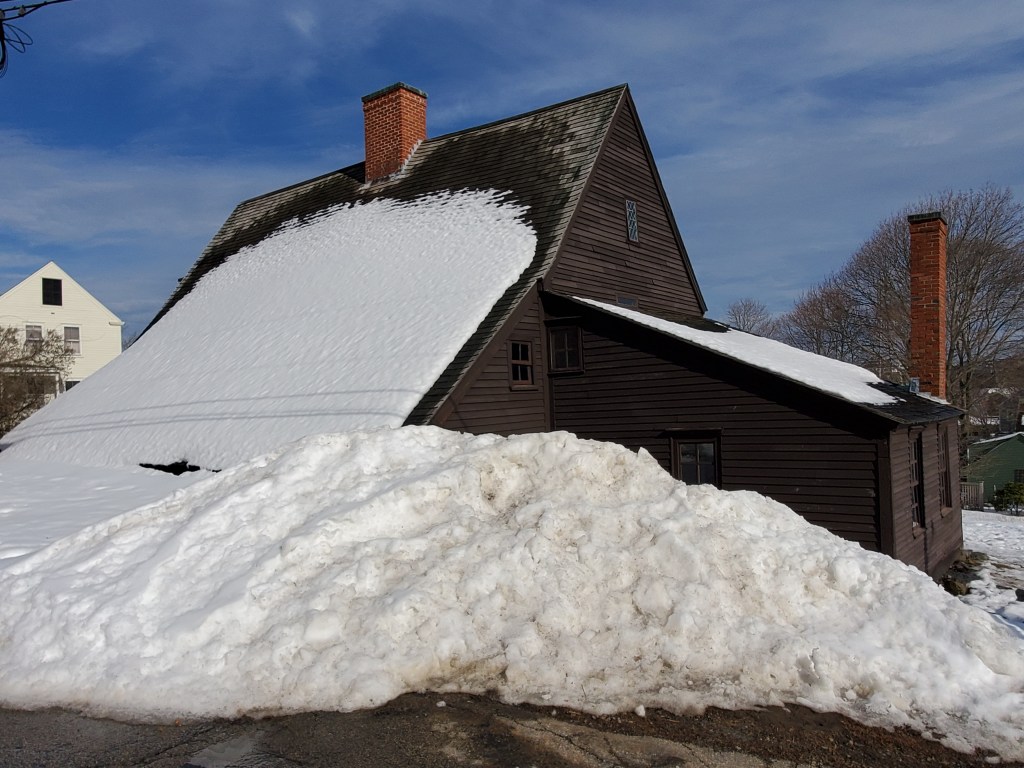
North facade of the Jackson House, with roof built right down into the hillside for protection from the northern gales. Winter is hard in New England. When I’m not weepy over my mother’s devotion to her children, now with only me surviving, I’m trying to figure out how so many of my fellow citizens have been taken in by the imposters currently posing as servants of the people. I’ve recently learned a new term: “kayfabe. ” Possibly originating in U.S. carnival slang, kayfabe is the term used in professional wrestling to describe the illusion that the wrestling is authentic, a code word used by wrestlers and others in the industry to acknowledge that what the audience sees is a scripted performance. Anyone deluded into believing kayfabe real is a “mark”: the same term used by grifters running a con to describe a potential victim. Why can my fellow Americans not see through the kayfabe underway in the executive branch, and recognize that they are the marks of despicable narcissistic opportunists and sociopaths, interested only in further lining their own already bulging pockets? I note here that the Felon-in-Chief has just named former World Wrestling Entertainment CEO Linda McMahon as U.S. Secretary of Education. Why can’t folks see through this palpable device?
Perhaps my emotional vulnerability and grief at all I see slipping away made the performance of Swan Lake I saw Sunday at Boston’s magnificent Opera House all the more moving.
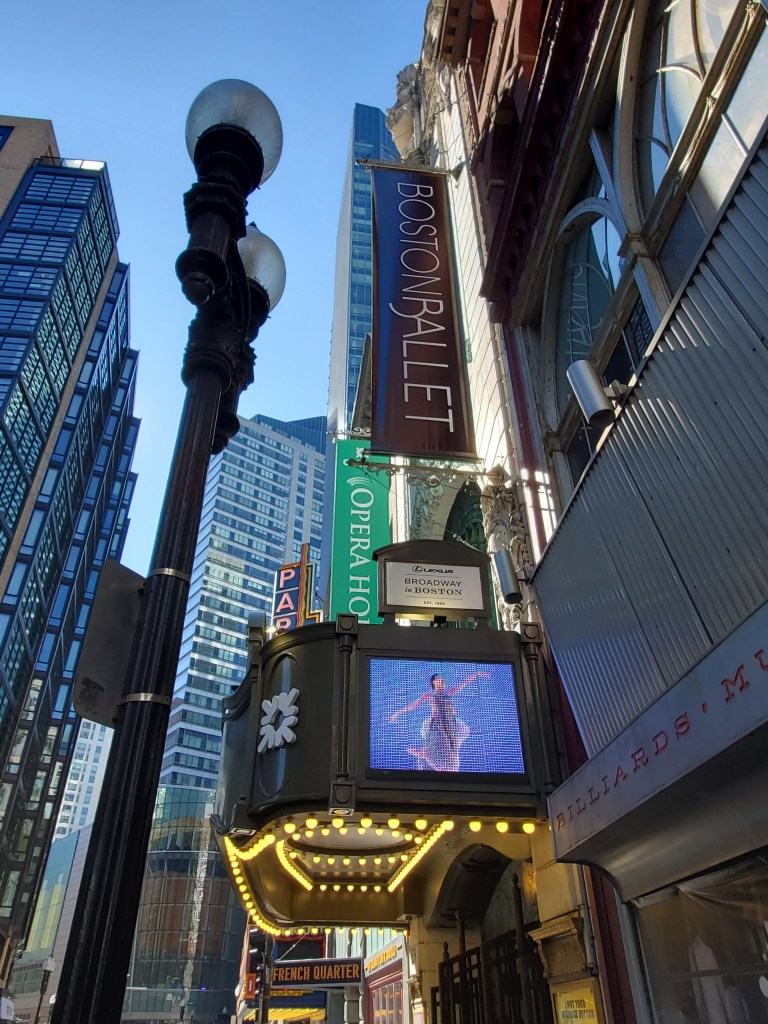
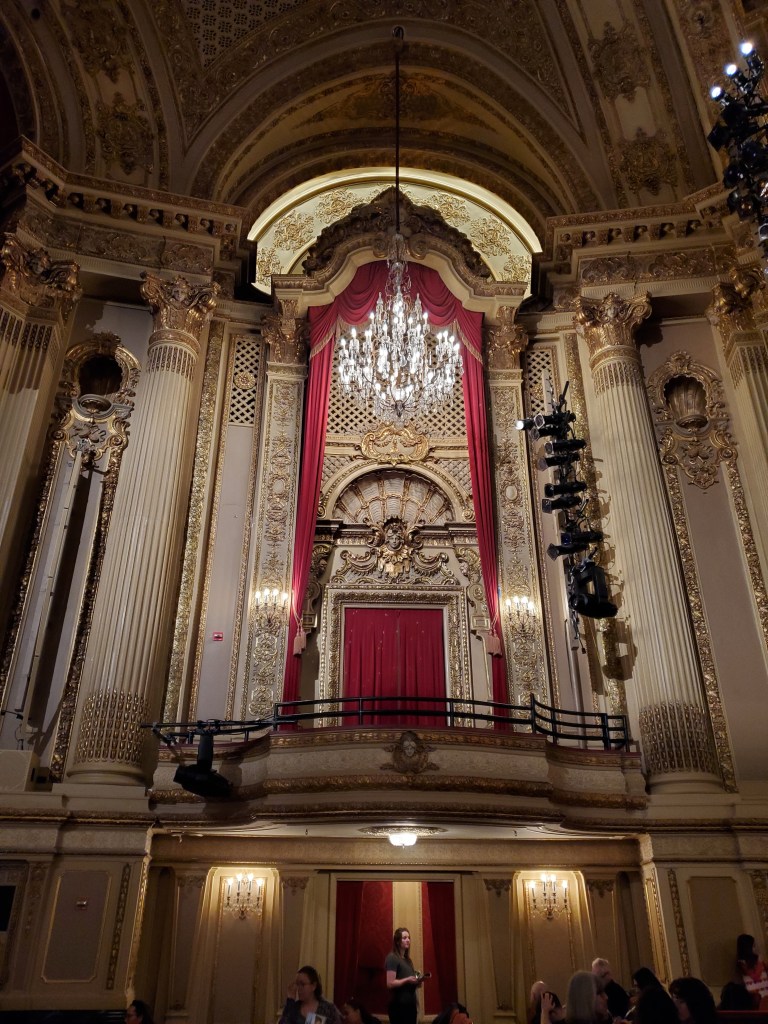
House right detail (originally known as the B.F. Keith Memorial Theatre, designed by Thomas White Lamb and opened on 29 October 1928) The story is fairy-tale tragic: the evil sorcerer, Von Rothbart, casts a spell on a young girl turning her into a swan, Odette, a spell that can only be broken when a young man pledges himself exclusively to Odette. The handsome prince Siegfried, seeing this beautiful Swan Queen in her nighttime human form, does just that, but on the next night at his coming-of-age ball, the evil Von Rothbart presents to Siegfried his daughter, Odile, transformed to appear as Odette, though now dressed in black. When the deceived Siegfried, believing this beauty to be his Odette, swears his devotion to Odile, his vow to Odette is broken, and Odette and all her transformed friends who inhabit the lake formed by the tears of her grief-stricken mother will be swans forever. In the fourth and final act, the Swan Queen Odette tells the swans they are captives to Von Rothbart’s spell for eternity. Siegfried appears and runs to her, and passionately describes how he, too, was deceived by the wicked Von Rothbart. Bound together by the power of their love, Siegfried and Odette defy and destroy the villainous sorcerer, but even in death, Rothbart’s spell is so powerful that Odette and the swans remain doomed. Odette returns to the lake, and the heartbroken prince follows her into the waves.
That fourth and final act begins with a real coup de théâtre: the curtain rises on the moonlit lake, its surface shrouded in a thick layer of mist, from which, cued by Tchaikovsky’s sumptuous score, the swans suddenly unfold their lovely, lithe selves to a very satisfyingly audible audience gasp. And later, when Siegfried lifts Odette high above his head, the power of her forgiveness and their love destroys the evil Von Rothbart. But still they perish.
It’s performance, that ballet, and it’s powerful. Just the thought of all those dancers, musicians, artists, designers, choreographers, and the brilliant composer devoting their lives to producing that collective experience for their audience moves me. I was especially privileged to have a friend, Elizabeth Olds, playing the Queen Mother, and she brought me backstage to see some of how the magic is made. The view of the house from the stage is extraordinary, and a thrill even for this civilian.
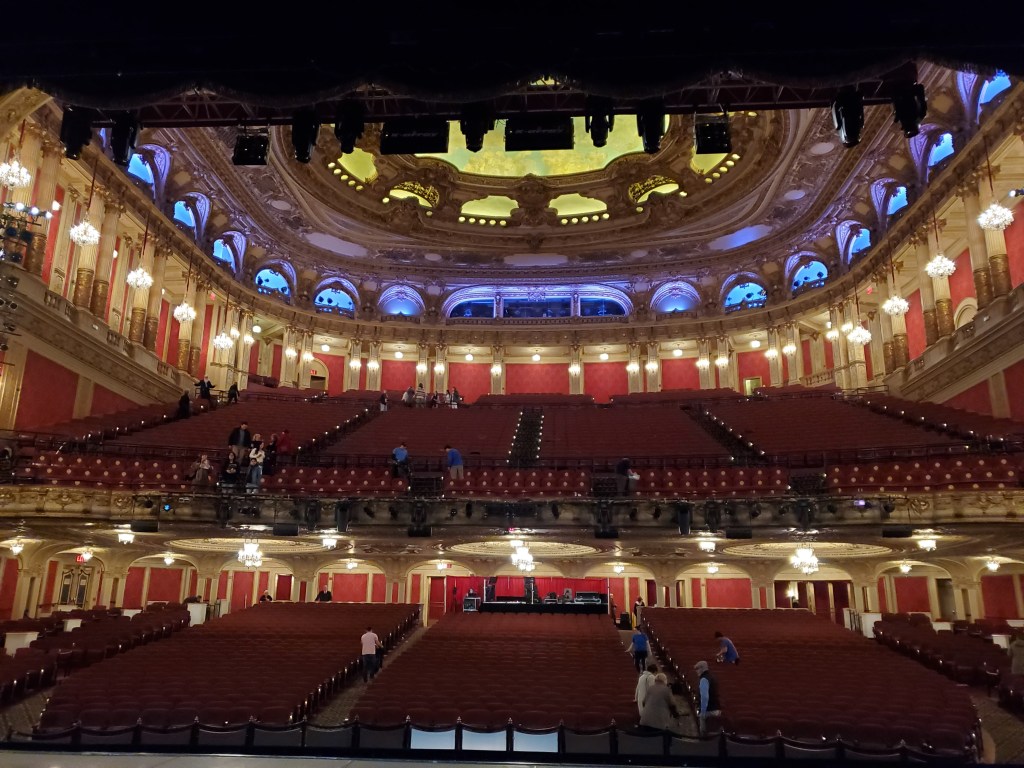
View from center stage 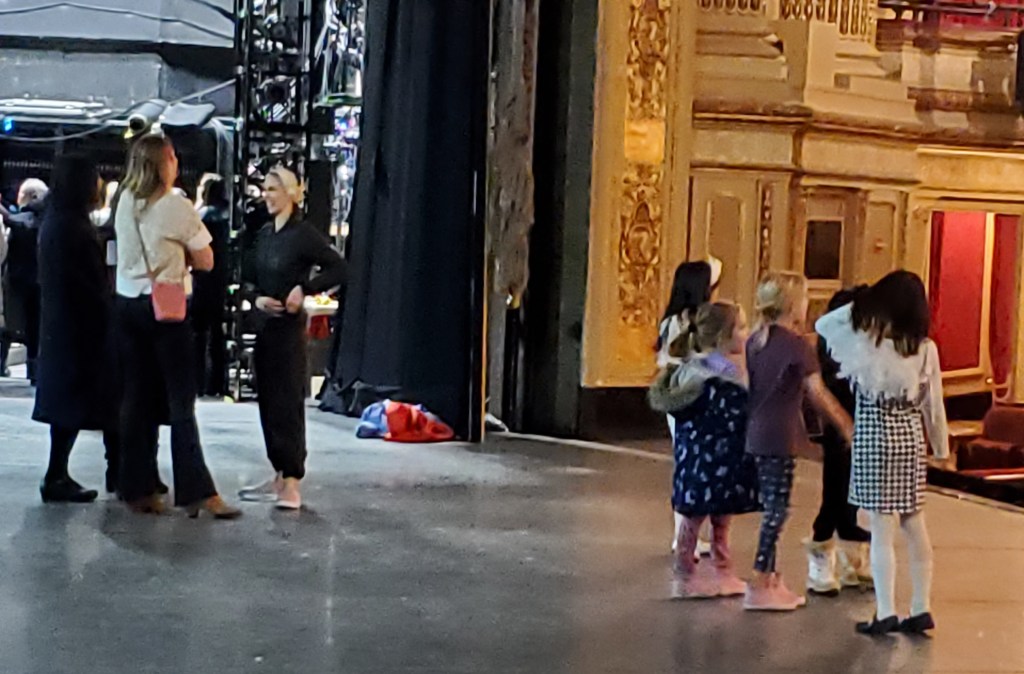
Moms talk with prima ballerina Viktorina Kapitonova following her performance as Odette/Odile, while their daughters are captivated by the view from the stage Elizabeth, once principal dancer for the Royal Winnipeg Ballet and now assistant to Boston Ballet’s Artistic Director Mikko Nissinen, told me she’s danced every female role in Swan Lake, from court attendant to cygnet to Odette/Odile, performing her 32 fouettés in the Black Swan pas de deux. (Insider info: from her on-stage throne, Elizabeth counted prima ballerina Viktorina Kapitonova doing 33 in our performance. Mon Dieu!)
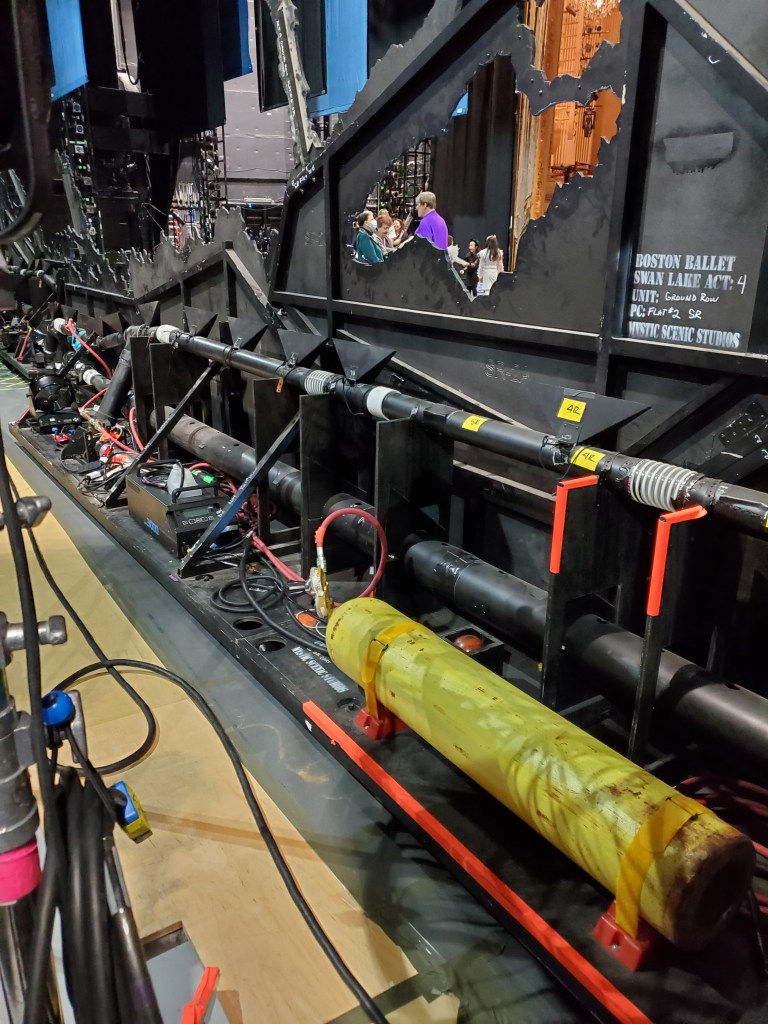
How that mist shrouding Swan Lake is stored 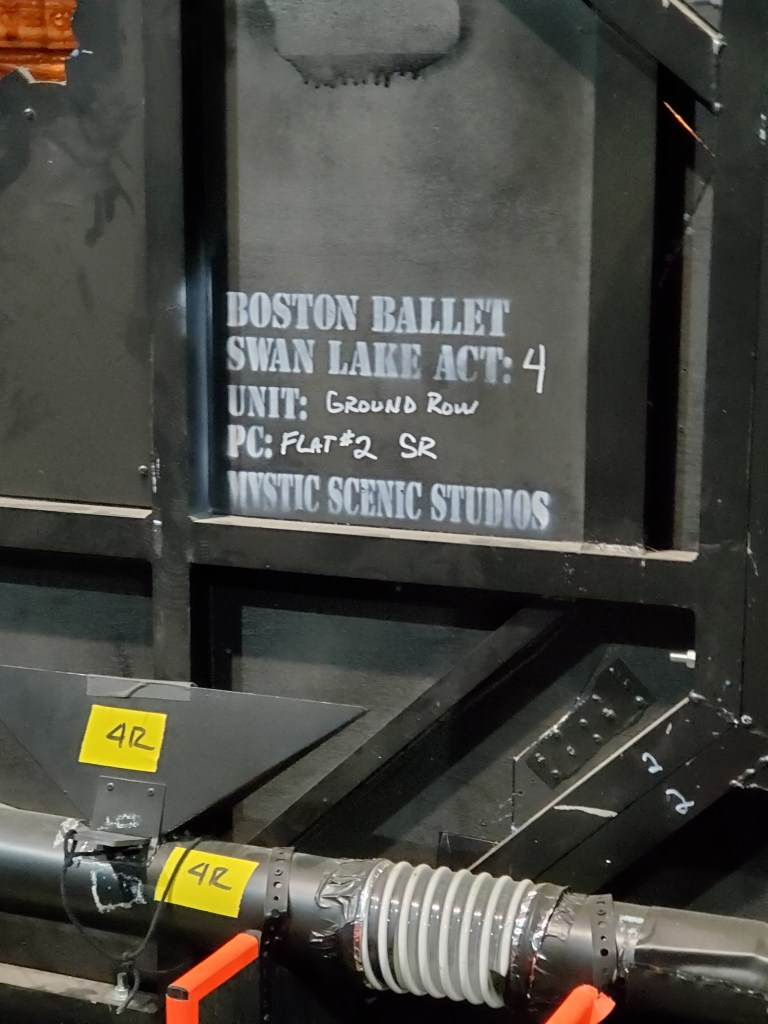
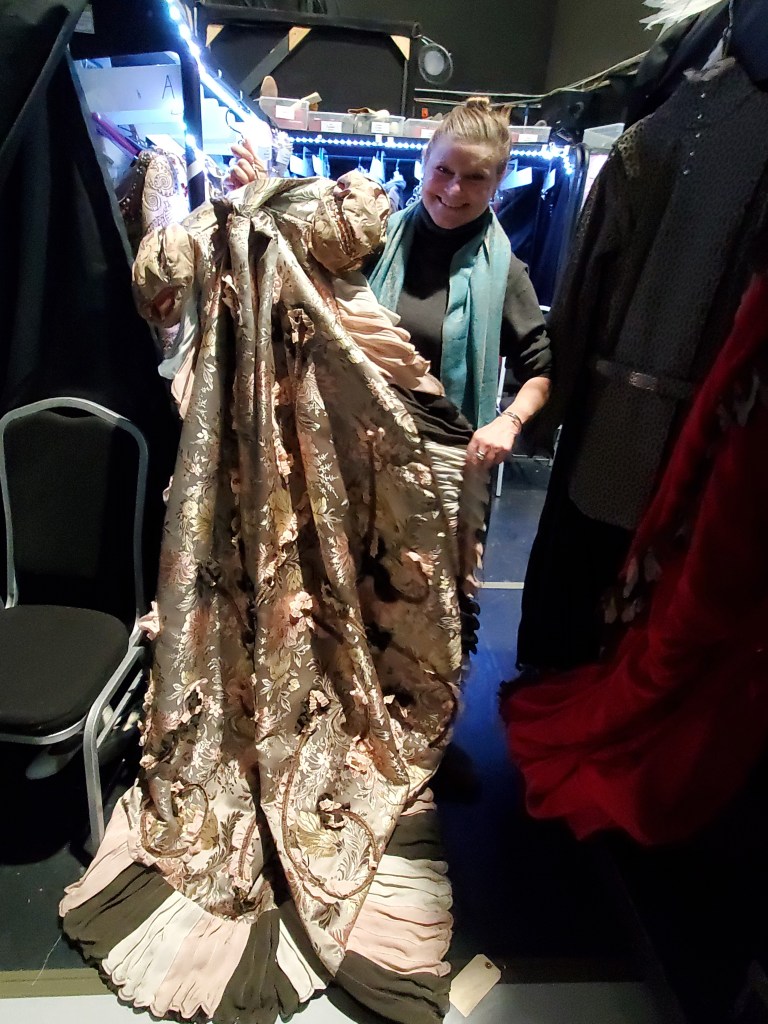
Elizabeth Olds shows off one of her gorgeous costumes as Queen Mother, all built in-house Tonight the Felon-in-Chief (FIC) will address a joint session of Congress, where he will no doubt brag about the destruction he has wrought during his first 43 days in office, making every effort to deceive his audience with his performance. I’ll be thinking about the difference between Swan Lake and the FIC’s performance, the kayfabe designed to hoodwink and cheat his fellow citizens, we the marks, by playing to our worst instincts, and contrasting that with the artists performing for a purposeful assembly: we the people willing to suspend our disbelief long enough to be moved by the spectacle of the literally elevated Odette, soaring to the Tchaikovsky and lifted high by her devoted and forgiven Siegfried, the embodiment of love strong enough to slay the evil Von Rothbart.
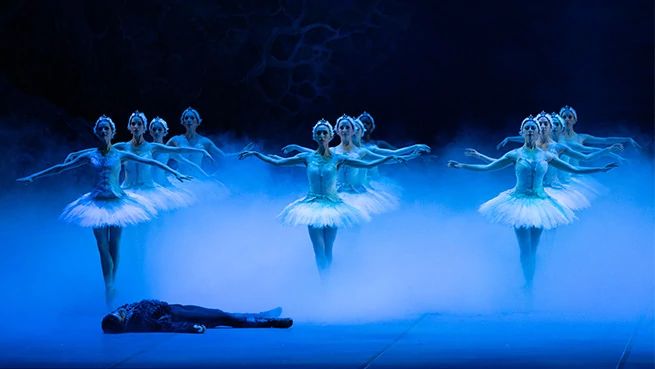
Amor vincit Von Rothbart (Mikko Nissinen’s Swan Lake, photo by Rosalie O’Connor) Can love survive, even defeat the hate that spews from the current leaders who embrace enemies as allies and scorn allies as enemies? Here’s to all the artists who pose the question. Dear Readers, I hope we can answer yes.
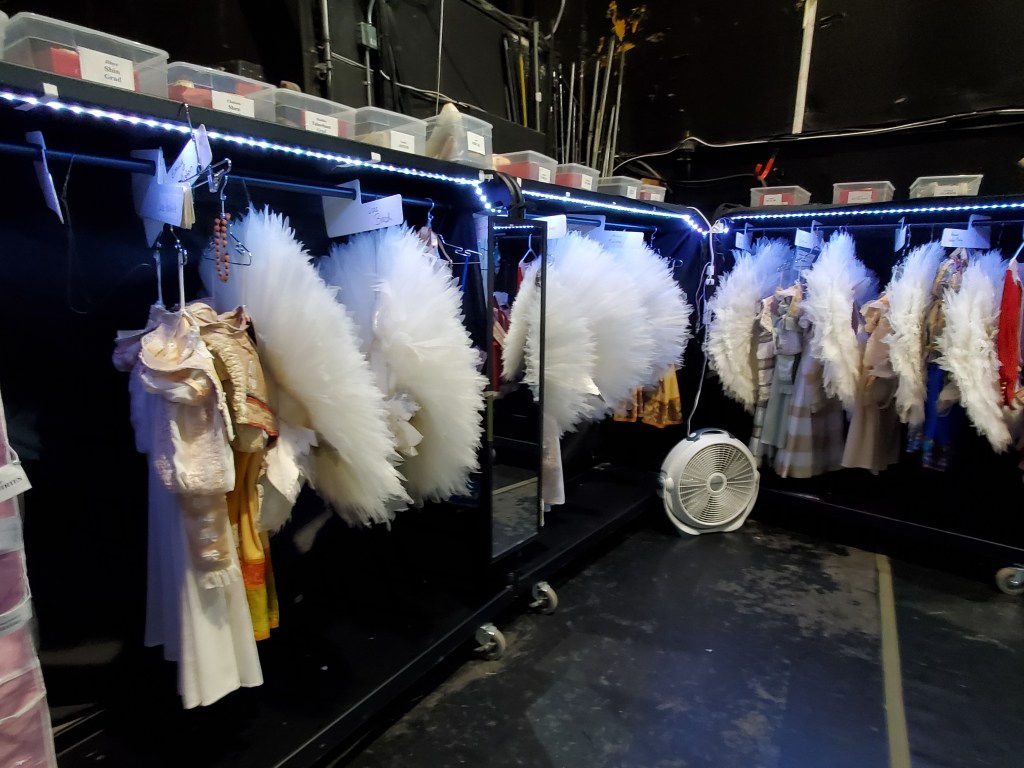
Swan tutus await the next performance -
In transition
17 February 2025
Ars longa, vita brevis Stopping mid-ascent on the stairs yesterday, I spied through the northwest window a small hawk having Sunday brunch at the expense of a fellow feathered creature, whose scattered plumage scudded across snow sculpted smooth by the prevailing wind. Not until I dug out the front entrance and made my way to inspect the latest damage inflicted on my mailbox and bright blue newspaper receptacle, for the second consecutive day knocked off its support by passing plows, did this diminutive raptor take up the bulk of its prey in his talons and make for the woods.

Mailboxes take a hit in Madbury winters Once I got back inside, I recalled that it was from just that same spot on the staircase that on the morning of 1 June 2019 I had looked right rather than left and seen through the fanlight an Eastern phoebe perched on the flagpole that spans our front entrance, her beak filled with breakfast for the three hatchlings in the nest she’d built on the molding in the southwest corner above the front door. Just after 6 am on that so-green spring morning, the two representatives of the Cremation Society had driven away with the mortal remains of my darling husband David. And once again, though the transition is less stark and painful, I feel a bird sighting has marked a transition in my life. Today is the first anniversary of my sister Jane’s passing, and the 23rd birthday of our granddaughters Isabel and Olivia. And I am feeling my age.
From first light early this morning, the wind has gusted around Gnawwood with such ferocity that the change of air pressure rattles interior doors, sporadically interrupting electricity so that oven and microwave protest with random beeps. Winter’s been late arriving this year, but it’s definitely here now. The substantial snowfall is gorgeous and brilliant, but challenging. Twice now, the garage doors have frozen shut; getting out takes some substantial effort and time, and already I am weary of ever-changing footwear requirements. Snowshoeing remains a delight, but attention must be paid, as I learned last week when I stepped on a stick invisible under last week’s deep powder, which, wedged between the outer rim of my right snowshoe and the binding, tripped me so that I dropped the poles that immediately completely disappeared beneath the deep, slippery snow, leaving no trace of their whereabouts. I wasn’t hurt, and I DID finally recover the poles necessary to right myself. But still: a cautionary tale.
Trails well groomed, courtesy of UNH 
Girls having fun on the trails 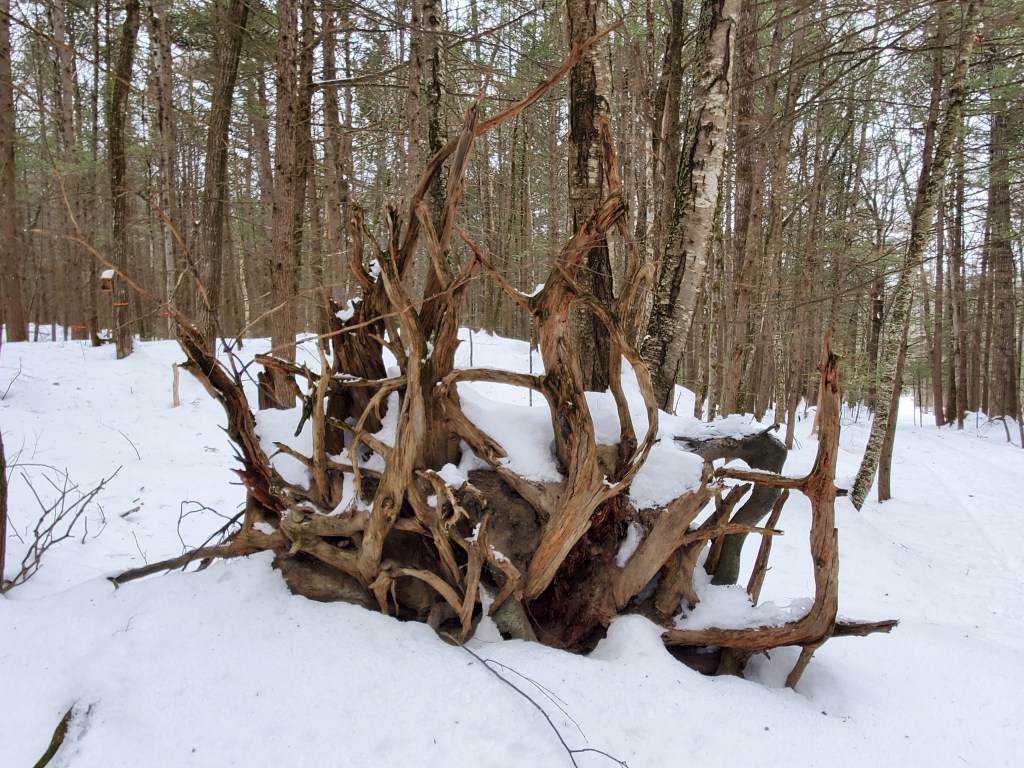
Nature’s winter installation For I am no longer young. My quads tire, and my right hand grows more arthritic. I’m still braving Boston traffic, but can be baffled by QR codes that don’t work to allow pedestrian entrance to parking garages whose doors only admit cars; in the confused exchange with a parking lot attendant over this situation, I managed to leave my car locked, but with the passenger window down. Happily, again, no harm done. But slippage.

New printer: the Brother MFC-J4335DW, Wirecutter’s pick My struggles to get a new printer to connect with my laptop lasted two weeks, entailing a collective 9.5 hours on the phone with Dell technicians (Anthony, Mohit, Rajendra, Chandon, Mohammed, and Kaveri), an appointment at Best Buy, and visits to both the Durham Public Library and Dimond Library at UNH, before help arrived in the person of Jason Wall from Lenharth Systems and sprung me from printer purgatory. (Jason’s take: some aberrant upgrade from Microsoft might well be the culprit). And while my Will to Live book talk last week at the handsome Portsmouth Public Library went very well, I’ve never before had such disconcerting, near-debilitating pre-performance anxiety, or needed so much time to recover.
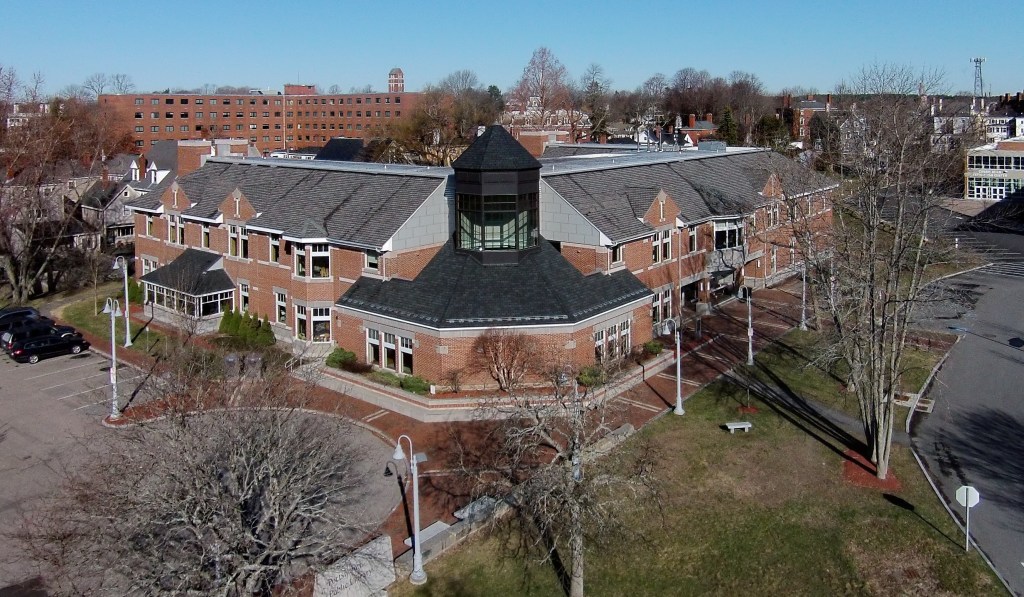
Portsmouth Public Library Here on this President’s Day, the distance between the on-going coup orchestrated by our Felon-in-Chief (ceding all responsibility to a mad, unelected oligarch so that he has time to schmooze with the murderous Putin) and the selfless republican civic virtues of Washington and Lincoln staggers. The negotiated Medicare pharmaceutical prices that Biden put in place for 2026 have already been undone, presumably to further enhance Big Pharma’s profits, so my Eliquis prescription will continue to strain the budget. On the heels of the worst U.S. commercial crash in 16 years, the Felon-in-Chief has now begun firing FAA air traffic controllers. My financial advisor predicts economic trouble ahead: throwing thousands of Federal employees out of work will create even more unemployment for workers depending on Federal investment, and as tariffs raise prices, inflation will creep up. More locally, the new chair of the UNH English department, the only Americanist left on the faculty, reports that both of UNH’s Shakespeareans are retiring, and there’s even discussion of dropping freshman English as a requirement. The world’s in “a terrible state of chassis,” as Capt. Boyle opines in O’Casey’s Juno and the Paycock.
So. What to do. I feed the birds. Lots of bluebirds of late—a good sign? I Get Outside. I stream horrific crime dramas with flawed female British DCIs investigating the worst that humans can do (Marcella is my latest jam). I bake and I cook: most current winners, Junior’s Cheesecake and shrimp and grits, both recent recipes from the New York Times.
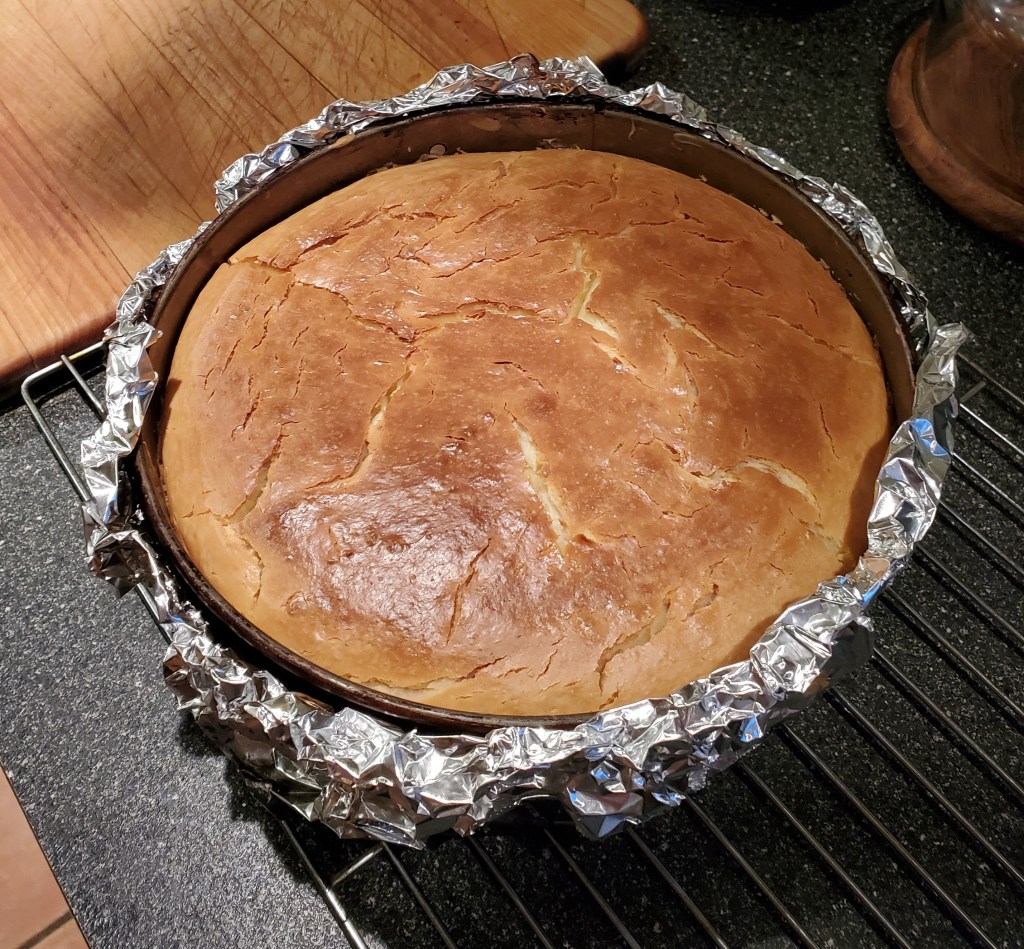
Junior’s cheesecake just emerged from its water bath I write. I read. I practice tai chi and yoga. I connect with Good Organizations: the Madbury Public Library, the National Archives, and the Seacoast Village Project. I plan a return to New Orleans to visit dear friends of these past 50 years.
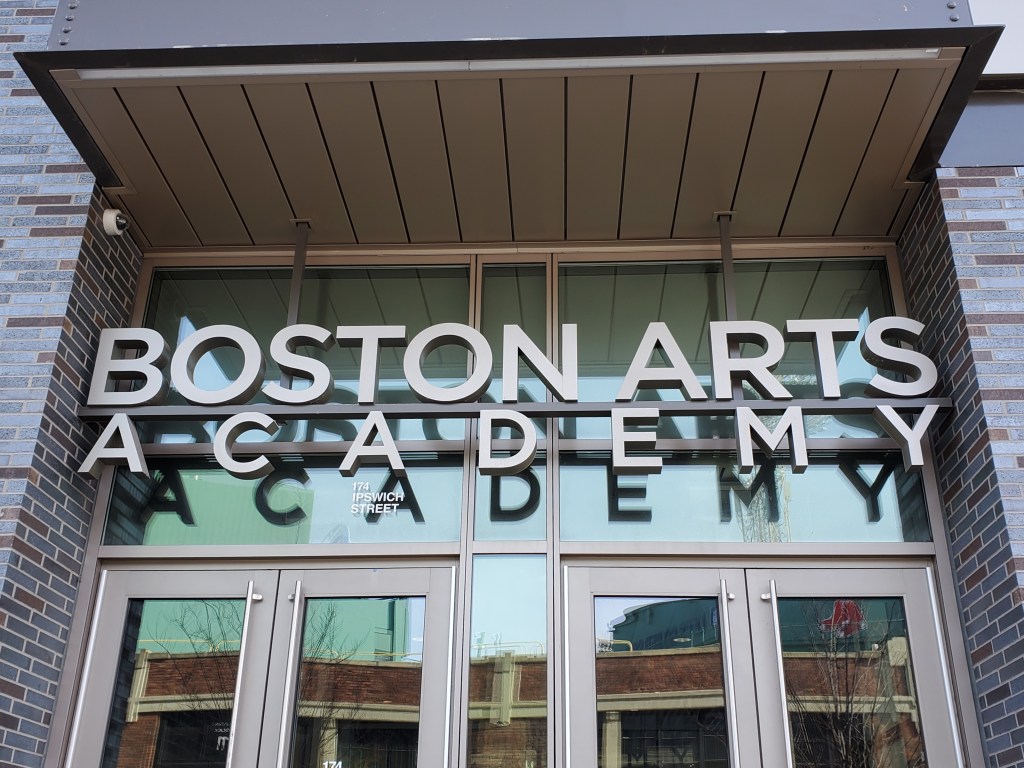
And I take great pleasure in the talent so generously shared by the likes of pianist Conrad Tao and tap dancer Caleb Teicher, whose performance of “Counterpoint” at the Boston Arts Academy last 7 February completely obliterated the shame I’ve been feeling as a human being, replacing it with pure joy as I recognized the best of which our species is capable.
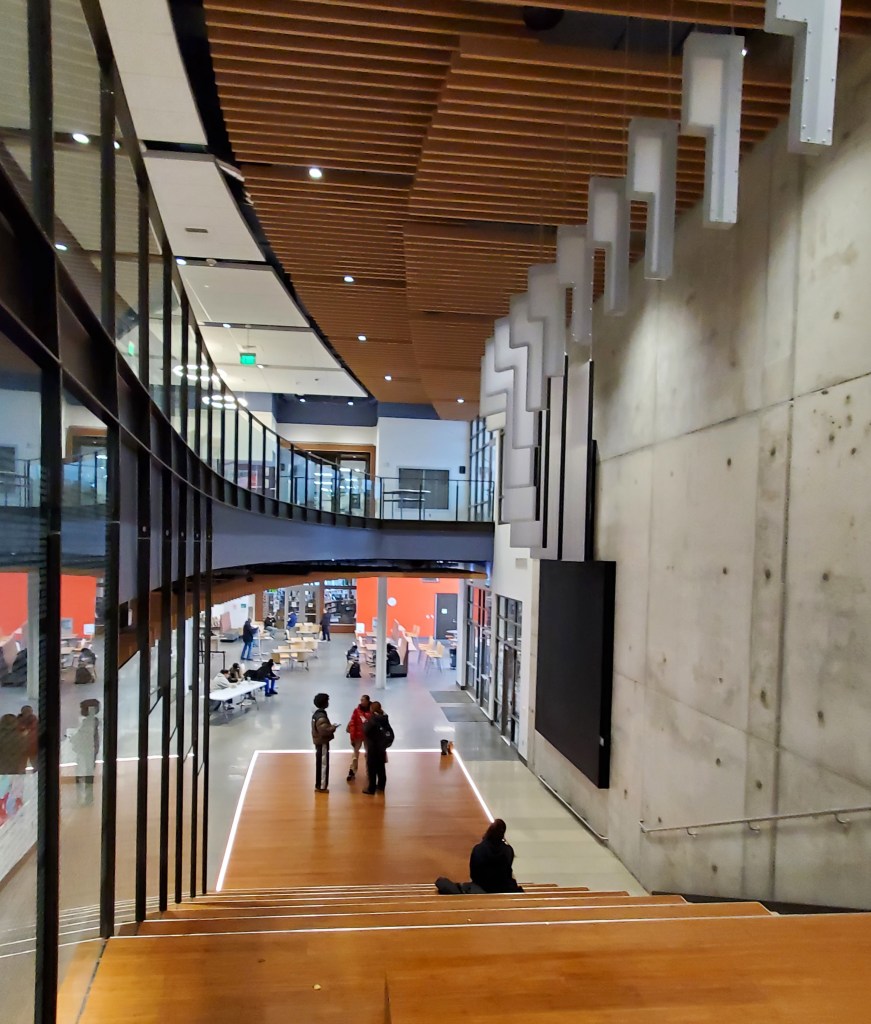
The Boston Arts Academy Bach, Schoenberg, Brahms, Ravel, Gershwin: Tao plays them all, from memory, always clearly, sometimes heartbreakingly lyrically, and spectacularly con brio, and Teicher matches him delight for delight. If you want a lift, Google Tao and Teicher Tiny Desk for a sampling of what these two prodigiously talented young men had to offer, or follow this link: https://www.youtube.com/watch?v=61q6JoGLTc0 .
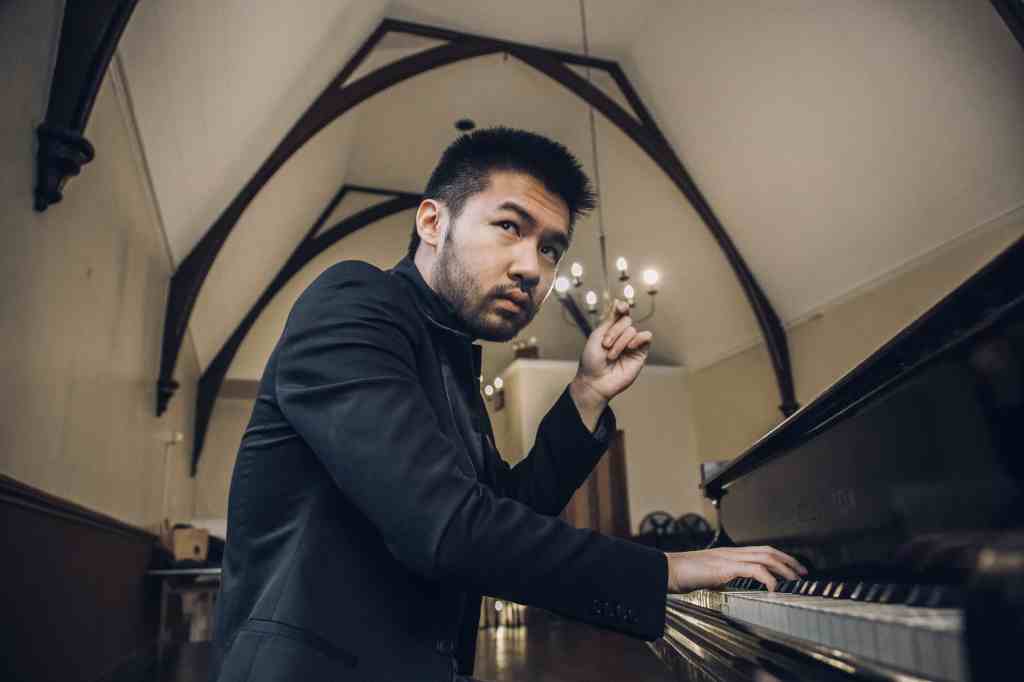
Conrad Tao 
Caleb Teicher 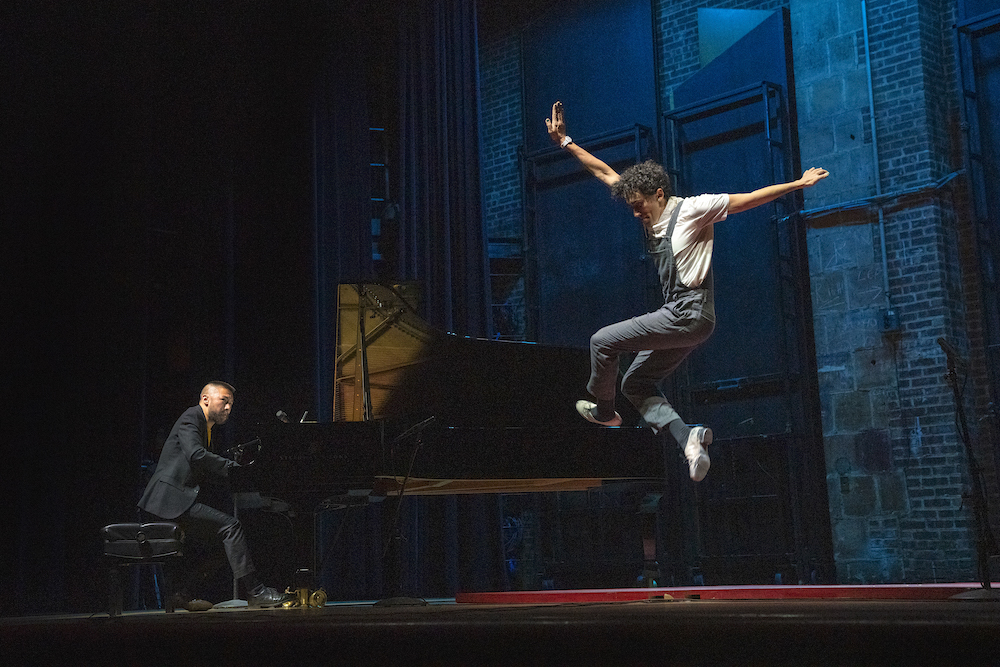
Caleb Teicher & Conrad Tao
“Counterpoint”, a collaboration between pianist and composer Conrad Tao and choreographer and dancer Caleb Teicher (Photo by Richard Termine)Well. There goes the power out. Back on. Now out. Gives new meaning to “only connect.” What’s to come is still unsure: we’re all in transition. Dear Readers, be careful out there.
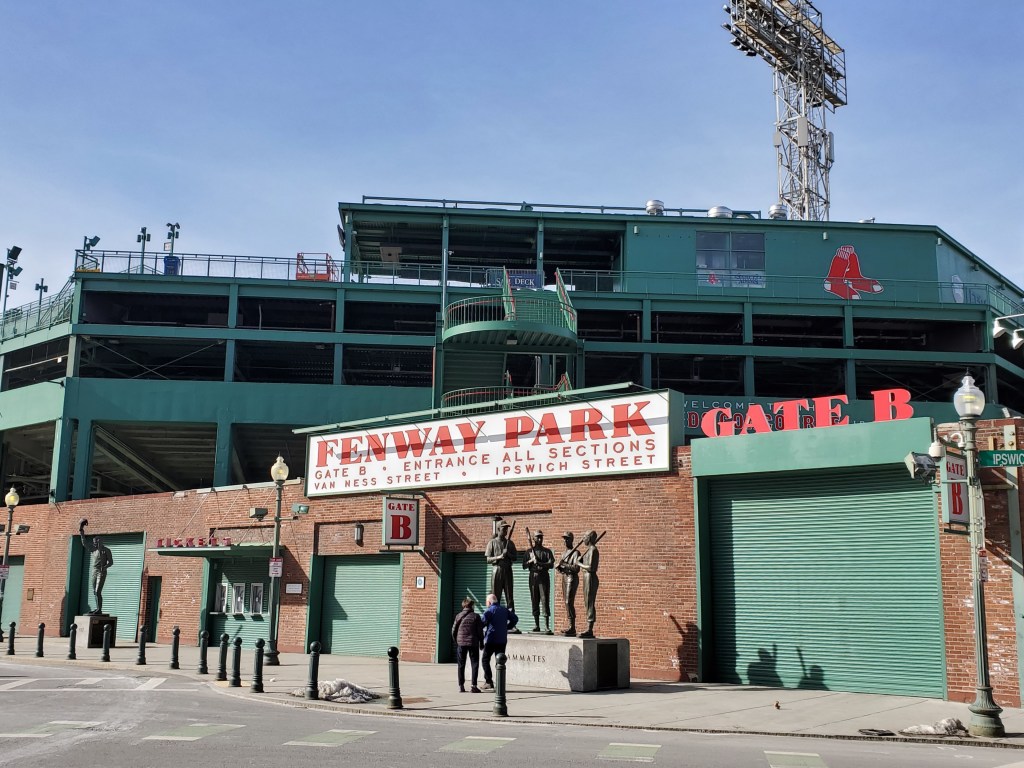
“If winter comes, can spring be far behind?”
(The Boston Arts Academy is directly across from Fenway) -
Crowded with incident
3 February 2025

Iced spider web, a gift from the universe the morning after my heart surgery Here we are, nearing the end of the first quarter of the 21st century, and I am tallying the ups and downs of the past fortnight, beginning with the medical marvel that is the cardiac ablation I had at Mass General in Boston on 21 January: heart surgery as out-patient procedure. Is’t possible? Yes! Dr. Ng declared it a success, confirmed both by his partner cardiologist Dr. Touchan eight days later, and my lived experience. My generous friend Susan made a considerable contribution to my well-being as transporter and companion during her 12-hour shift, from a 6.30 am pickup and drive through rush-hour traffic south to Boston; to standing by during the long prep, procedure, and recovery period; to providing a most welcome additional set of ears attending to post-op instructions; to finally delivering me back home at 6.30 pm. The euphoria I felt on returning to Gnawwood was some rare combo of residual anesthesia, relief, gratitude, and much-improved heart function, but I felt better than I have in a very long time. After obediently refraining from any strenuous activity for the prescribed week of taking it easy, during which I enjoyed our monthly Madbury Library Book Club two days post-op and a most delicious and convivial dinner party in Dover two days later, I returned to my yoga class for two consecutive days, and felt great—so great that I’ve been able to take advantage of the gorgeous snowfall we’ve at last had with back-to-back snowshoeing expeditions through our woods. Sublime.
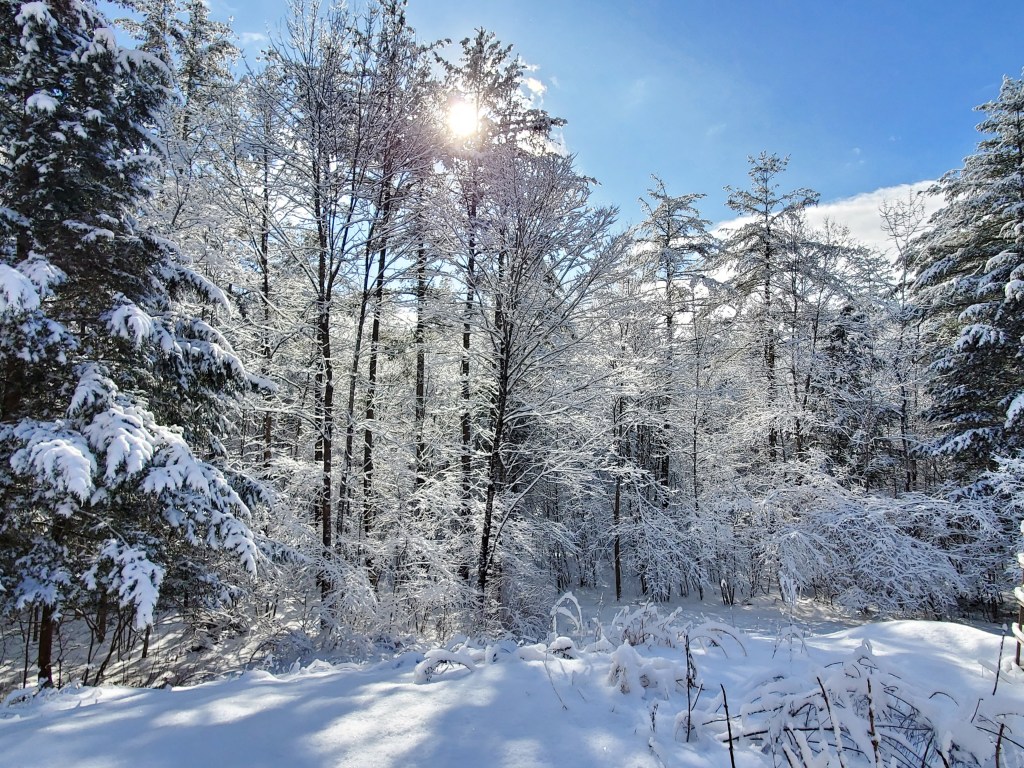
First REAL snowfall in Madbury, 1 Feb 2025 Challenges have, of course arisen, and one can so easily be knocked off balance by the small stuff. Monday the 27th began with some attention-getting not-so-small stuff: my first experience of a 3.8-scale earthquake that in Madbury at least sounded like two back-to-back explosions. I was up at my third-floor desk, but feared that the masons working outside on the beautiful new steps they’ve laid had suffered a propane tank explosion. But no, they were fine, though their report that they felt the ground shake and a call to the Madbury police station confirmed for me that the event was indeed an earthquake that sounded so loud: essentially an aggressive burp from below as the tectonic plates shifted ever so slightly. No harm done, but a tonic reminder that nothing is certain and that all circumstances are subject to change at any moment. My thought: how very lucky I am.
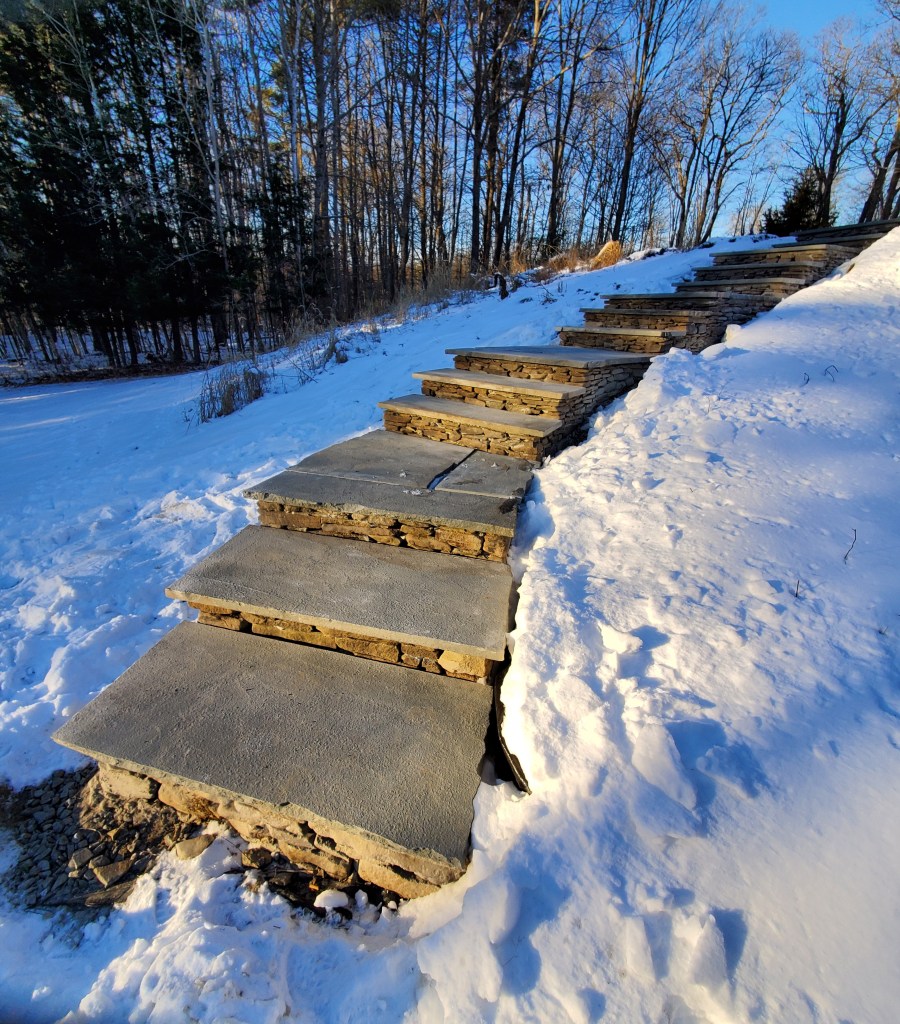
New garden stairs: Rye Beach Landscapers Steve and Josh who laid them remained unharmed by the earthquake of 27 Jan 2025 I’ve been mostly able to sustain that blithe mood despite a spate of Tech Schreck, the neologism I’ve coined for the inimitable challenges of ever-changing technology. First, the microwave my parents gave me in 1974 (!) at last gave up the ghost and had to be replaced. And I again had to fax (yes, FAX! Some technology is retro, presenting its own challenges) all 16 pages of evidence necessary to prove to TD Bank that there are scammers abroad in the land, claiming to be Amazon/KDP and Barnes & Noble and preying on novice self-publishers (moi) to bilk them out of $$$ in exchange for products and services they have no ability to provide and no intention of providing. And then, there’s the special torment of the printer purgatory HP visits on its unsuspecting customers: “customer service” that ain’t. Just try to cancel your Instant Ink subscription after multiple attempts to get SOMEONE or SOMETHING at HP to make available the driver necessary to make your ENVY 4520 that has suddenly stopped working print. Oy vey. Reader, do not risk commerce with Hewlett Packard.

Solar geometry: the deck on 1 Feb 2025 However! Each of these annoyances occasioned an uplifting human exchange sufficient to make me think we’ve not yet arrived at singularity, the merging of machine and human that seems ever more imminent. In the case of the microwave, Dan of Powell Electric, who a quarter century ago wired this house then under construction, came to confirm that my microwave problem was indeed my venerable but exhausted Toshiba, and kindly toted it away for disposal. Via Wirecutter, I then researched and located a replacement Panasonic, ordered it from Target, picked it up with help from a gracious Target employee, brought it home, and after only a few mis-steps (why don’t they inform you that the child-proof lock will not let you open the microwave door until you press STOP?) successfully installed it. The TD Bank associate I spoke to at length (44 minutes and 42 seconds) declared me one smart lady, essentially an investigative reporter, and encouraged me to take my tale of pernicious scammers to the Boston Globe’s Spotlight Team even as she typed up and submitted my charge dispute for the second time. And two successive Dell employees, Rajendra and Mohit, stayed on the phone with me for a collective 2.5+ hours trying to resolve, unsuccessfully, the printer connection problem that HP created. At one point I exclaimed that it had started to snow here in New Hampshire, which prompted Rajendra to reveal his location: “How Beautiful! I’m in Spain, and would have to drive five hours to see snow!” How wonderful, too, that nurse Shari at my cardiologist’s office told me she’d swapped patients with her colleague just so she could hear all the details of my ablation. And how very human that her telling me about trying ever since October to resolve a mistaken hotel double charge to her account made me feel so much better about my own ongoing dispute with TD Bank. At what point will an exchange with A.I. afford us such relief?
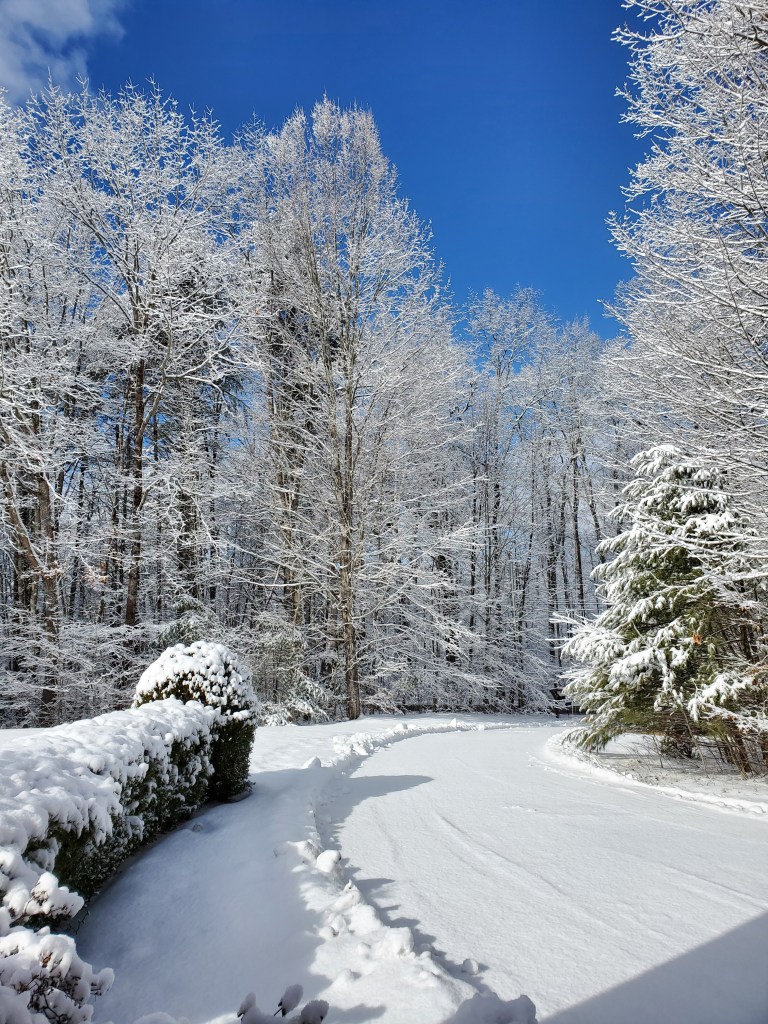
The world out the front door freshly dressed in white, 1 Feb 2025 Aging is, of course, a thing with which to reckon. The definition of aging as “accumulation of damage and decline of function” immediately sparks my mental listing of examples under both headings, but I’m trying not to go gentle. I’ve signed up to be a Citizen Archivist; see https://www.archives.gov/citizen-archivist for details of service that you who can still read cursive writing (we happy few!) can be to the National Archives. And this week I’ll receive the training necessary to become a driver for the Seacoast Village Project. These are functions I CAN still perform.
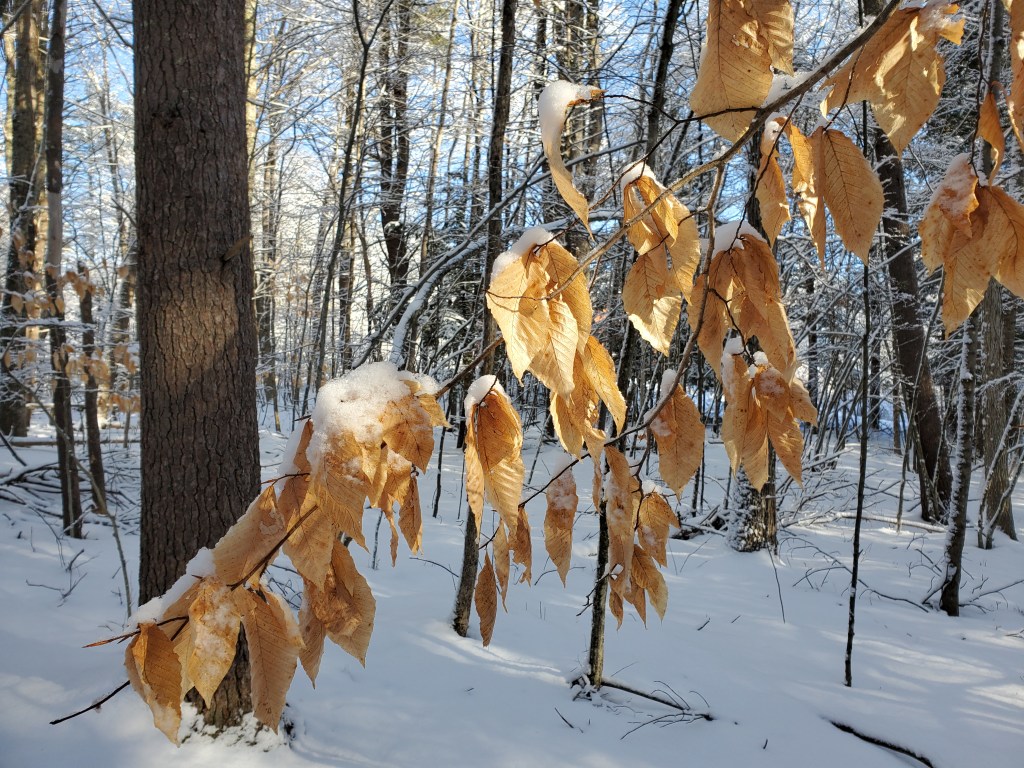
A beech tree in its winter marcescence. Jennifer said they contribute to “the Presbyterian light of the forest.” But the firehose of appalling breaking news remains a challenge. I’ve been finding it necessary to counterbalance reports of the disgraceful, disastrous doings perpetrated by our Felon-in-Chief and his Posse of Predators by streaming, repeatedly, episodes of All Creatures Great and Small. The fifth season finale features Anna Madeley as Mrs. Hall trying doughtily to carry on while wrestling with the likelihood that her son has been killed in action. Spoiler Alert: When she learns he is alive, it no longer matters that Siegfried forgot to pick up the Christmas goose she so cleverly saved up ration coupons to barter for it: a reminder of what’s really important, and a reminder I needed.

Samuel West (Siegfried Farnon), Anna Madeley (Mrs. Hall) and Derek
(Tricki Woo) in All Creatures Great and SmallEarly last Wednesday morning I was stewing about my non-functional printer when I spied my 6-year-old neighbor Leo making his way through the woods that separates my house from his, a child-size show shovel on his shoulder. He didn’t ring the doorbell (an antique he really enjoys ringing), but instead went straight about clearing the snow from my front steps, inscribed his name in the snow, and returned home to continue on to his one-hour-snow-delayed school day. When I texted his mom Anne to let her know of Leo’s good deed, she told me he did it with no prompting from her: it was entirely his idea.
Dear Readers, THAT’s what’s really important. Here’s to countering the darkness with the now ever-increasing light.
-
Reservoir of cheer, “American Primeval,” and a wide receiver
18 January 2025
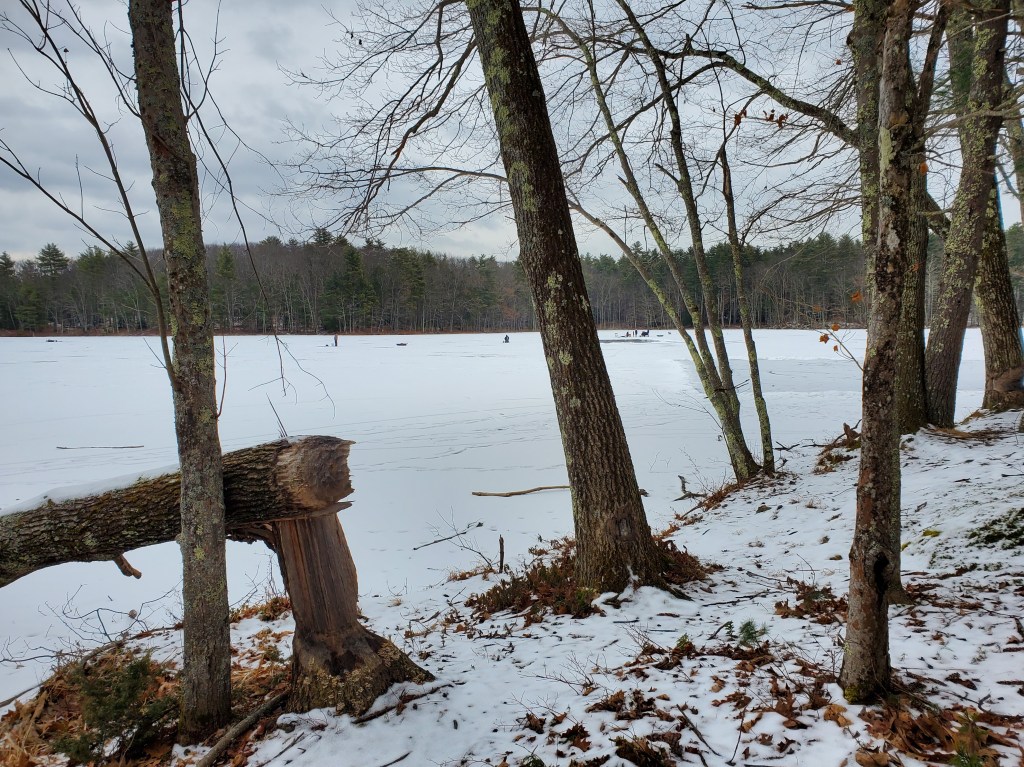
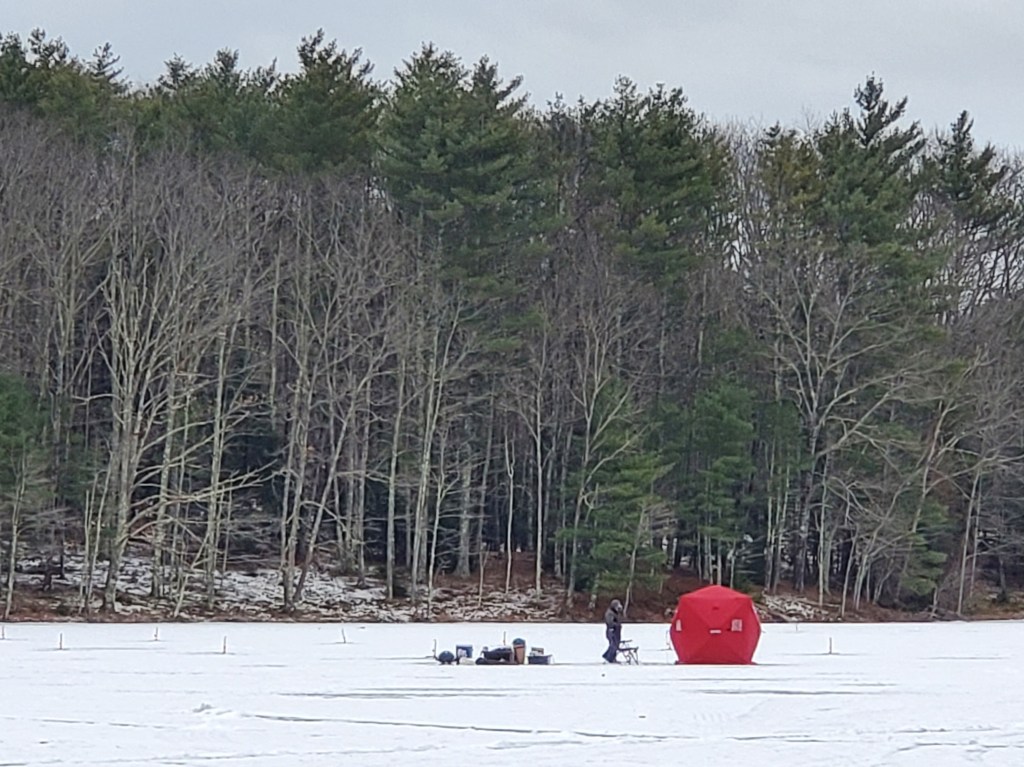
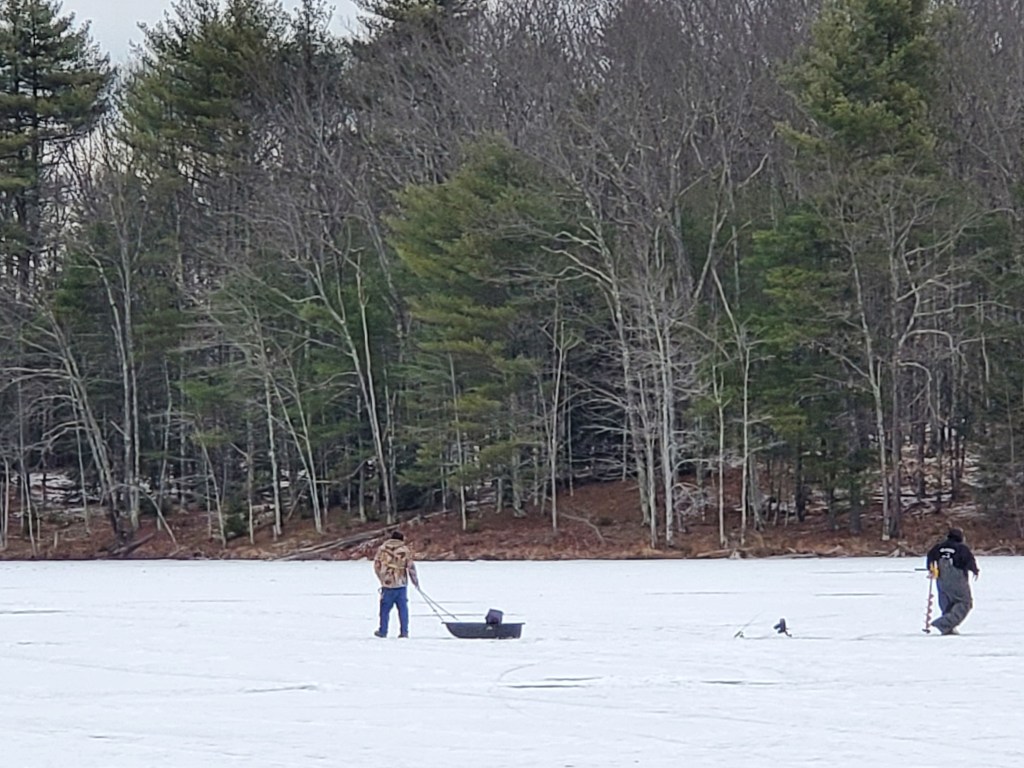
Distant ice fishing and beaver work at the Madbury reservoir After a stretch of bitter cold and howling gales, today’s temperature broke 40o and no wind blew. A better night’s sleep than of late primed me for a most enjoyable stroll to and along the Madbury reservoir, tricked out with ice fishermen and rendering a spacious new world version of a winter scene by Bruegel. The eerie, eldritch sound of the expanding ice sheet, a mashup of whale song and sci-fi soundtrack, seemed a tribute to the late David Lynch, whose 1986 Blue Velvet cast such a spell over me that on first viewing I emerged from that Chapel Hill theatre afraid of the mall I was in. But on this Saturday, the singing ice was only part of a cheering soundscape that included chatter that stopped as soon as the loquacious squirrel dove into a hole drilled by a piliated woodpecker and peeked curiously back out at me, and the friendly greeting of a neighbor with her four charming stair-step children making their way back up from the ice.

All told, this morning was a most welcome respite from annoyances and preoccupations, some minor and others more daunting, leaving me a dyspeptic combo of at least two of the Seven Dwarfs: Sleepy and Grumpy. All those bothersome emails from credit bureaus and banks making it seem necessary to log on, negotiate the two-step verification, and locate the message center only to discover the message is just a come-on for another unnecessary service. Oy. And more oppressively, all that time and effort required to dispute fraudulent credit card charges from scammers! Caveat emptor, Dear Readers, especially online.
Such bothers of privilege do, however, recede in nature and in company. I’ve been enjoying the skilled efficiency of masons Steve and Josh of Rye Beach Landscaping who’ve been uncomplainingly working through the challenging cold to build a set of outdoor steps for me. What a joy to see people who know what they are doing create something both practical and beautiful!


Josh cuts Pennsylvania bluestone as the Kubota lifts it 
. . . and Steve fits the cut bluestone treads And there’s pleasure, too, in contemplating from a very safe distance in time and space the brutal history of western expansion so memorably recreated in the new Netflix series American Primeval, which begins with a shocking, appallingly realistic recreation of the 1857 Mountain Meadows Massacre. As Fresh Air critic David Bianculli noted in his review, it’s a sequence as stunning as the opening moments of Spielberg’s 1998 Saving Private Ryan. With a screenplay by Mark L. Smith, who also wrote director Iñárritu’s 2015 epic and similarly graphic western The Revenant, American Primeval has engaged me over the last couple days of streaming its six episodes to an uncanny degree, perhaps in part because of a personal connection to an abhorrent tragedy.
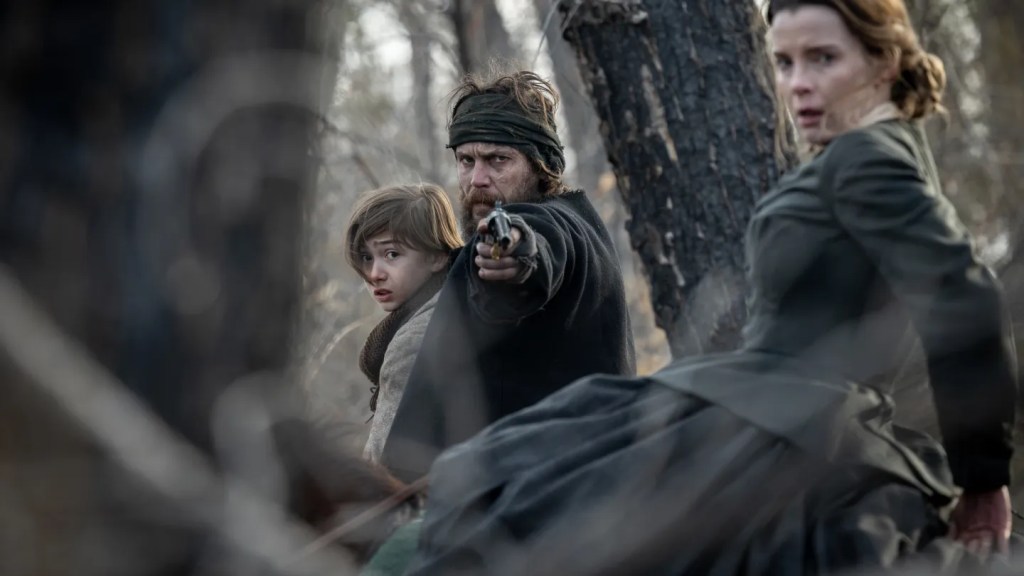
l. to r. : Preston Mota as Devin, Taylor Kitsh as Isaac, and Betty Gilpin as Sara 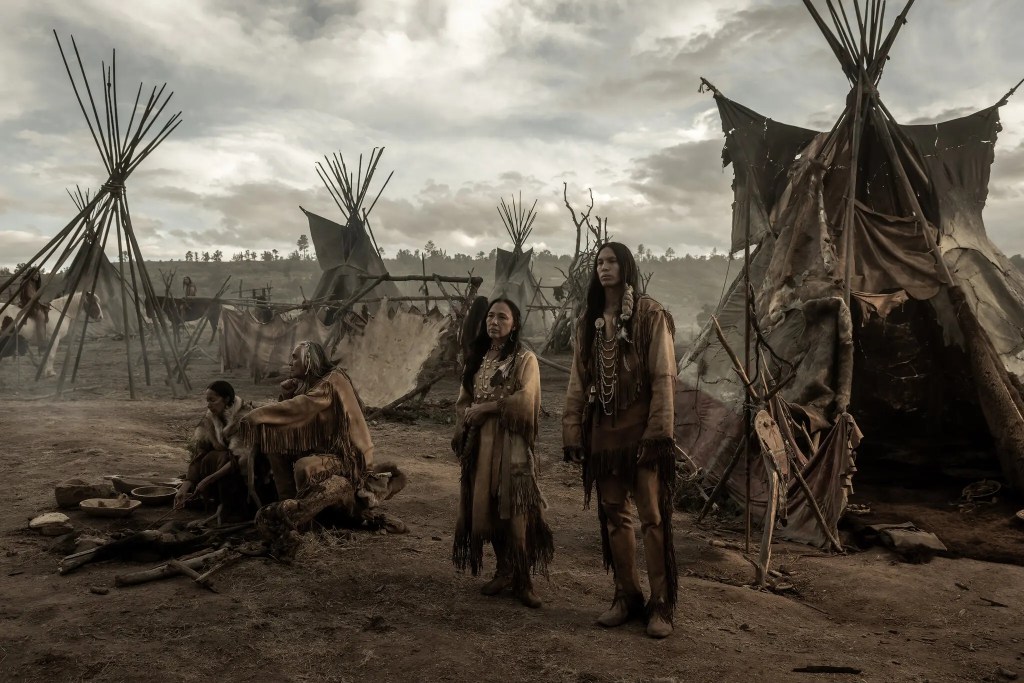
Irene Bedard as Winter Bird, chief of the peaceful Shoshone My late husband David was a descendant of Robert Taylor Burton, a principal officer in the Nauvoo Legion, who led Brigham Young’s territorial militia during the Utah wars. Raised as a Latter Day Saint, though from early on in full-fledged apostasy, David was also an Americanist historian, and part of the desert Southwest’s allure he passed along to me was not only his familial connection to Burton and the Latter Day Saints, but also his intellectual interest in what Tolstoy called Mormonism, “the quintessential ‘American religion.’”
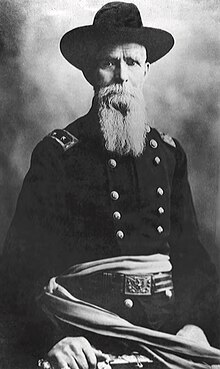
Robert Taylor Burton (1821-1907) Early in our regular visits to Utah and the Four Corners, David took me to see the site of the Mountain Meadows Massacre, a monument a half hour’s drive north from St. George. That’s where I first learned of the attack on the Baker-Fancher immigrant wagon train bound for California on the Old Spanish Trail through Utah under the martial law imposed by territorial governor Brigham Young. Enflamed by suspicion that these settlers would abet the LDS persecution that first caused the Mormon migration west after the Illinois murder of their founder Joseph Smith, and amplified by the hysteria that President Buchanan’s military expedition of March 1857 to replace Young as governor brewed, Young sent the Nauvoo Legion, aided by Southern Paiute Native Americans, to attack the wagon train in the guise of hostile natives. But the travelers fought back, and the Legion, fearing identification, approached the immigrants under a white flag, persuaded them to surrender their weapons, escorted them from their defensive position, and then killed all the adults and children over age 7, leaving most of the bodies exposed to wild animals and climate.
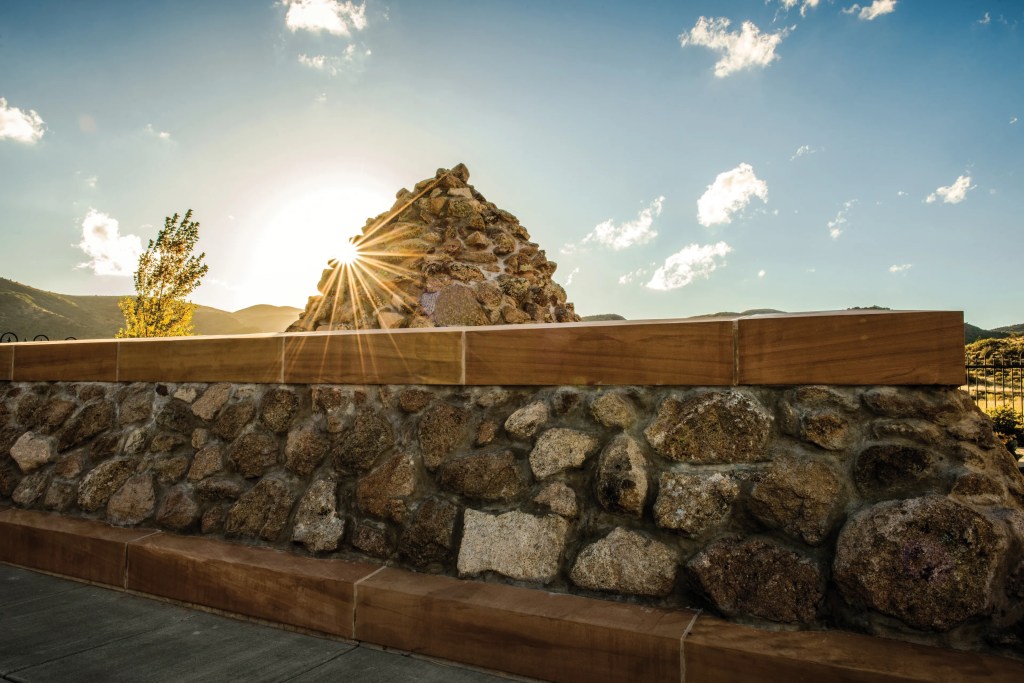
Mountain Meadows Massacre Monument I recall very clearly one name inscribed on the monument wall we visited: America Jane Dunlap, age 7.
I’m wondering now if watching that horror re-enacted on my tv screen is resonating so with me for reasons beyond my distant but personal connection to that historical event. In critical theory, insofar as my limited understanding allows, abjection is the state of being cast off and separated from norms and rules; abjection inherently disturbs conventional identity and cultural concepts. Certainly the story of the Mountain Meadows Massacre on ground contested by four groups, Native Americans, Federal troops, Morman militia, and immigrant settlers, each with competing values and allegiances, prompts questions about whose norms and rules apply. And as we approach the inauguration of the Felon-in-Chief, who will swear to preserve, protect, and defend the very Constitution he sought to defy four years ago—on Martin Luther King Jr Day AND what would have been my late sister Jane’s 67th birthday—I’m adrift in a sea of abjection.
Well, this too will pass. And in the meantime, the news of star Philadelphia Eagles wide receiver A. J. Brown reading Jim Murphy’s self-help book Inner Excellence on the sidelines while his team beat the Green Bay Packers 22-10 last Sunday offers hope to this other Murphy author of another self-published self-help book.
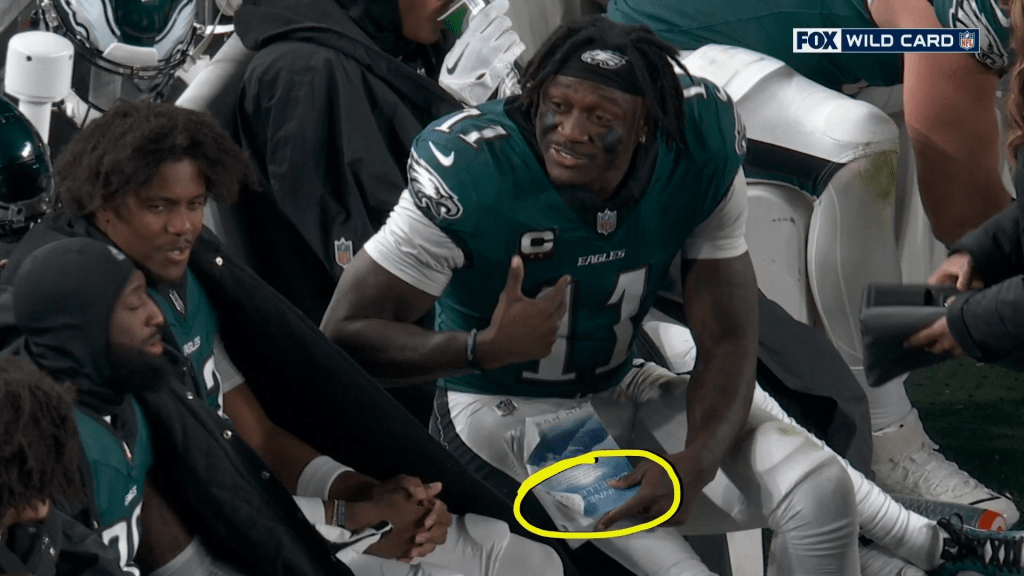
A. J. Johnson with Murphy’s book ESPN reports that from 523,497th place on the Amazon sales list, Inner Excellence, with help from a star football player captured reading it on a nationally televised broadcast, shot to Amazon’s number one best seller. In the resulting coverage of his good fortune, Murphy summed up four daily goals that are a key element of the book:
1. “Give the best of what you have that day.”
2. “Be present. Being in the place where there’s no concern for self, no concern for the outcome.”
3. “Be grateful. Look for the smallest moments, three a day, that were gifts for you. The smaller, the better.”
4. “Focus on your routines and only what you can control.”
I plan to take that advice. And to try to find a footballer intrigued by Shakespeare.
Onward!

-
Tenth Day of Christmas
4 January 2025

Two more nights for this little tree to shine Perhaps I am not alone, Dear Reader, slouching my way into the new year: this holiday season has been a curious mixture of alternating cheer (largely solitary) and anxiety. Leading up to Christmas there were promising developments (the arrival of the Rye Beach Landscaping crew and their marvelous French excavating machine, appearing like an early gift from Santa at my front door the week before Christmas to prepare the way for better daffodil access come spring), some auspicious signs (my tutelary barred owl George made a welcome appearance), and some semi-successful attempts at celebration (a couple hours spent at Strawberry Banke’s Candlelight Stroll in Portsmouth on the night of the winter solstice (crowded, and BLOODY cold!), as well as preparation of a pork-and-apple stew for Christmas dinner (tasty, but consumed alone). Christmas Day itself was bright, and a walk at Wallis Sands helpful: dogs cavorted and taciturn Yankees for once exchanged greetings.

Early Christmas present 
The Sherburne House (1695), the oldest in Puddle Dock 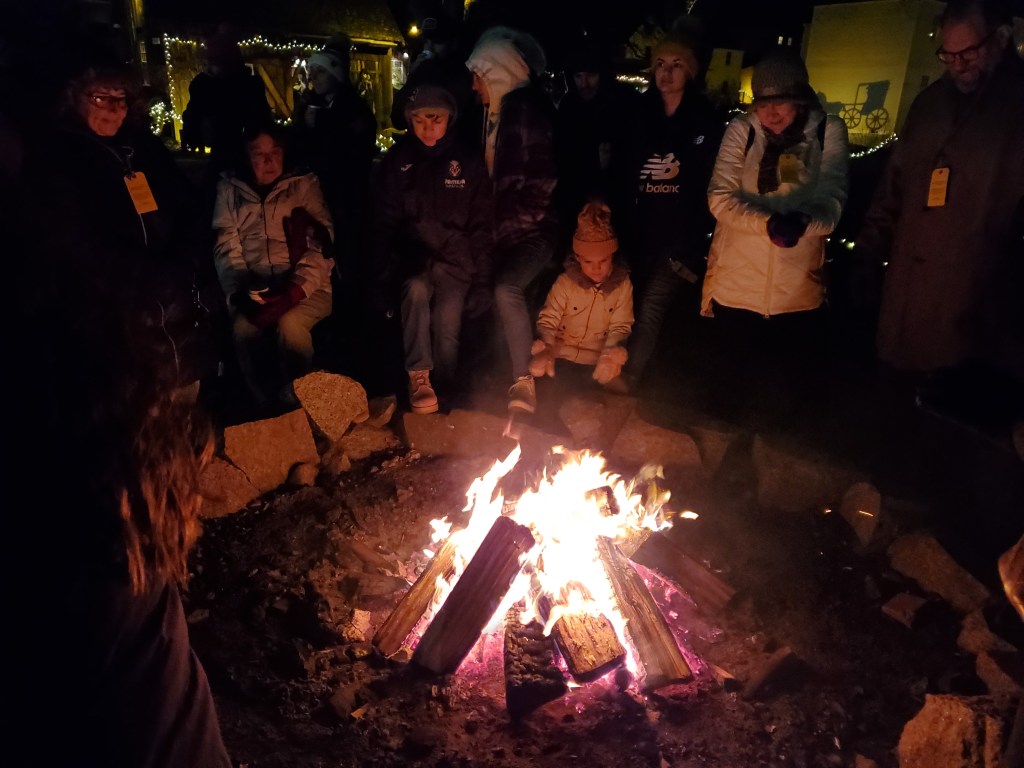
Trying to stay warm during the Candlelight Stroll 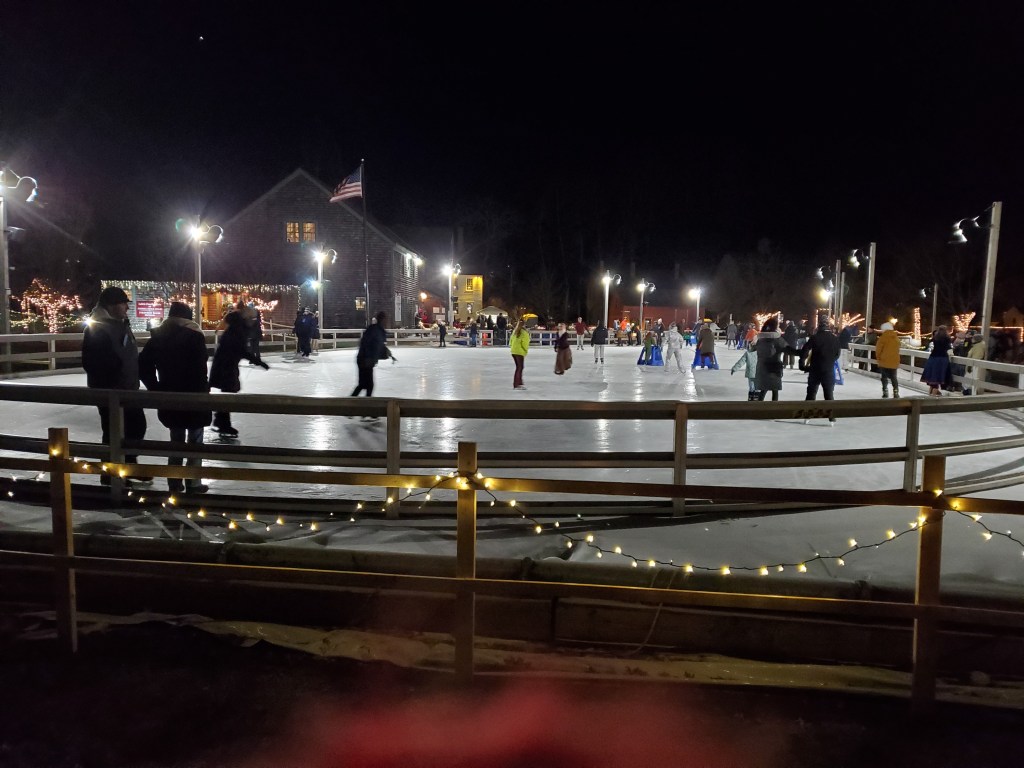
Puddle Dock skaters brave a chill howling gale 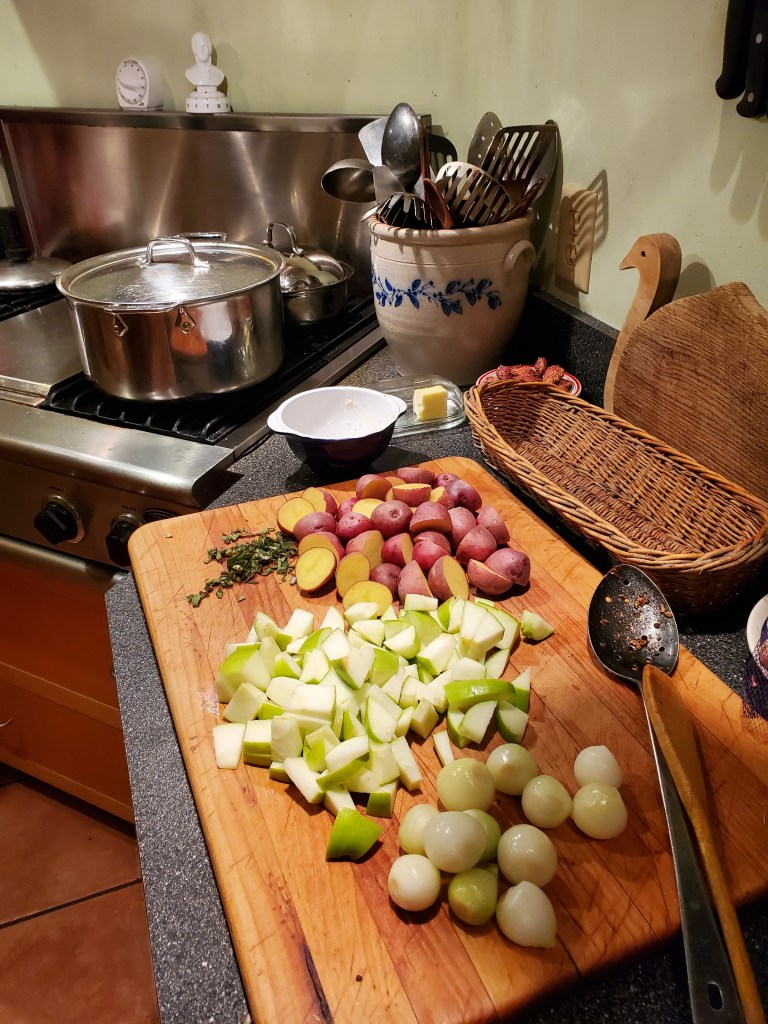
Christmas dinner prep 
Bright Christmas day at Wallis Sands But I was having to work at staying on top of bad news, personal and general. This first Christmas without my sister in the world was never far from my thoughts, and as all those who grieve know, the latest loss recalls all the others. Public radio, my constant companion when I am not reading or writing, kept dropping distressing reports. Barred Owls, considered “invasive” in the Pacific Northwest, are being shot to save the Northern Spotted Owl from extinction, and NPR offered that particular sound byte (Oh, no! George!).
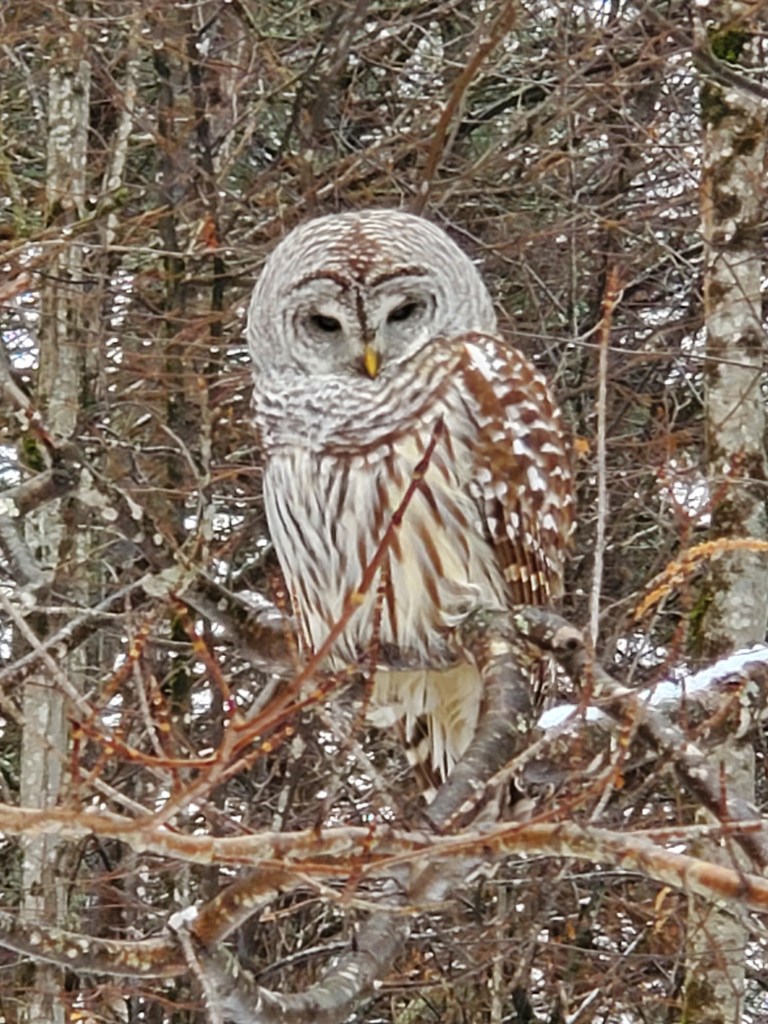
Who could want to shoot George? Then NHPR replayed a most annoying interview with novelist Jodi Picault flogging her latest book, By Any Other Name, by trotting out her “research” provocatively suggesting for the ill-informed and gullible that Shakespeare’s plays were all written by Emilia Bassano. Gawd. That tired old canard, bolstered by one stupid assertion after another (e.g., Shakespeare was a litigious businessman who didn’t have the education to write those plays, and could not have written any plays published in 1623 because by then he was dead! And! There is a character in Othello who speaks a speech no man could have written, and that character’s name is Emilia! Oh, Pah-LEEZE! Let your fiction stay fiction.
And then Jimmy Carter died. President Carter gave the commencement address at Centre College in Kentucky in 1987 when I was on the faculty and, like all my other colleagues, eager to shake hands with the Great Man. Now, it’s true that Centre is a small college with an appropriately small faculty. But imagine my surprise when as I extended my hand to tell the President what an honor it was to meet him, he said, “Why, Georgeann, the pleasure is all mine!” HOW on EARTH did he know my name? Well, as it turns out, the explanation is that someone had shown President Carter a faculty facebook—well before Facebook, simply a page in the annual with all our photos and names—and with his eidetic memory plus a genuine interest in his fellow citizens, he had learned all our names.
How proud I am I got to tell that dear man how much I admired him. And how it rankles that his departure from this dimension so closely precedes the inauguration of the anti-Carter, our soon to be Felon-in-Chief. That January 20 would have been the 67th birthday of my late sister, who heartily detested “the Orange Man,” only adds insult to injury.
I awoke with a scratchy throat on New Year’s Day, and the first thing I heard was that some maniac had plowed through the revelers on Bourbon Street, killing 14 and injuring dozens. OMG. 2025 not off to a great start. In the summer of 1977, my first in New Orleans when I was a graduate student at Tulane, I worked on Bourbon Street, waiting tables at Potpourri, the restaurant in D. H. Holmes, then still a thriving department store as well as one of the country’s first, having opened in 1849. I mostly served dinner to the elderly ladies who lived out their solo lives in the French Quarter; didn’t make much money, but ate like a king (oh, that bread pudding!). I spent plenty of time standing on line to get into Galatoire’s just up Bourbon Street, and even took acerbic critic John Simon to dinner there on behalf of EGO, the English Graduate Organization. Not to mention the Carnival hijinks I enjoyed in the Quarter before I left NOLA in 1984, including the 1979 Mardi Gras police strike, when the National Guard were deployed to keep order—and partied right along with the rest of us. Now those streets always sniffy with discarded Hurricanes (and worse) had to have the blood washed away. And for what?
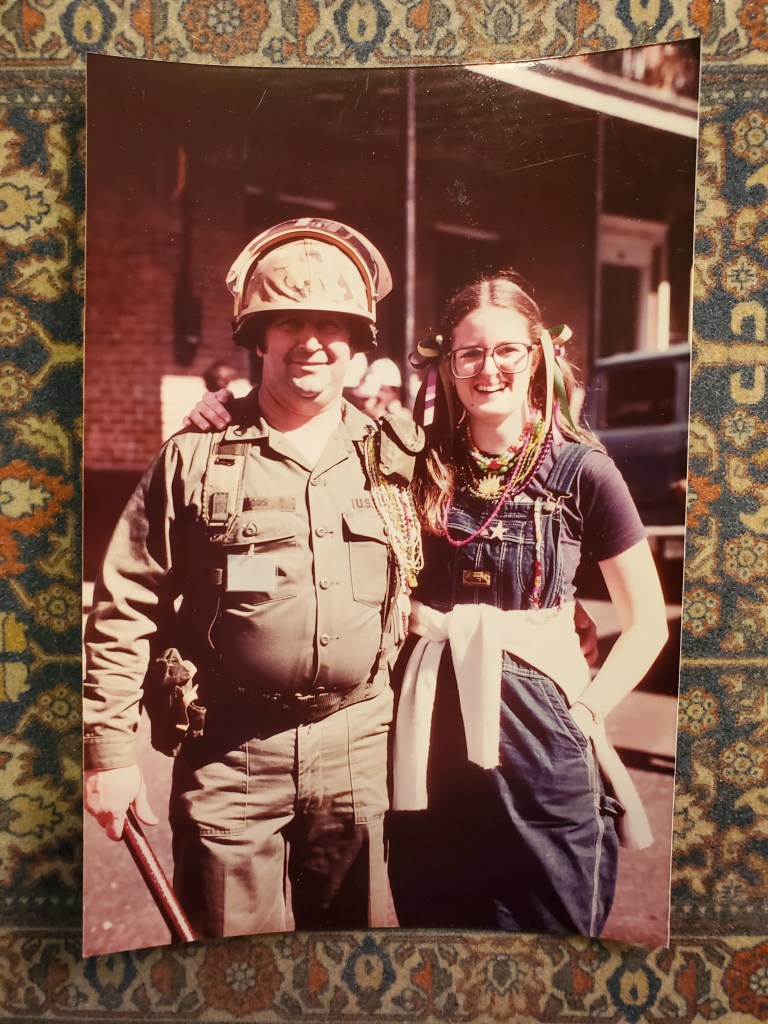
Mardi Gras 1979, happy grad student and her protector Trying to put that behind me, I took up my annual Posting of the Calendars, four upstairs and one down. But where was the 2025 Canyonlands Natural History Association Calendar to replace the 2024 one? There was the cardboard mailer, right where it should be. But it was empty? Could I possibly have forgotten to order it, my most-often-consulted resource hanging just to the left of my computer screen? I logged on to the CNHA site: sure enough, no order posted for the 2025 calendar. Which was now sold out. Oy. Such forgetfulness. Not a good sign at my advanced age.
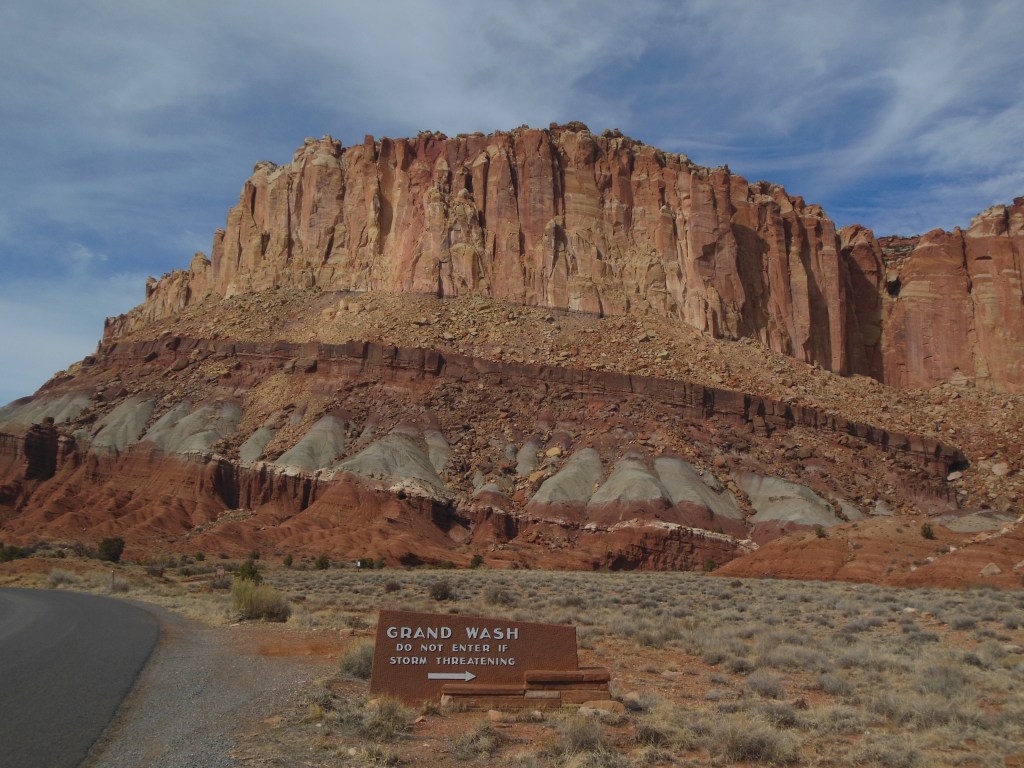
Capitol Reef, spring break 2017: the canyonlands the CNHA calendars recall Okay, okay. Ordered another calendar version of Utah’s parks and monuments and tried to cook my way out of my funk while listening once again to the New Year’s concert broadcast from Vienna. But then I had to hunt for the latest Christmas card I’d written and carried downstairs to post the next day, finding it only when I realized I had dropped it in the recycle bin along with yesterday’s New York Times. The mushroom bourguignon I made for dinner was very tasty, but my throat was even more sore. Three episodes of Ted Lasso (second time through this anti-depressant series) finally put me to bed.
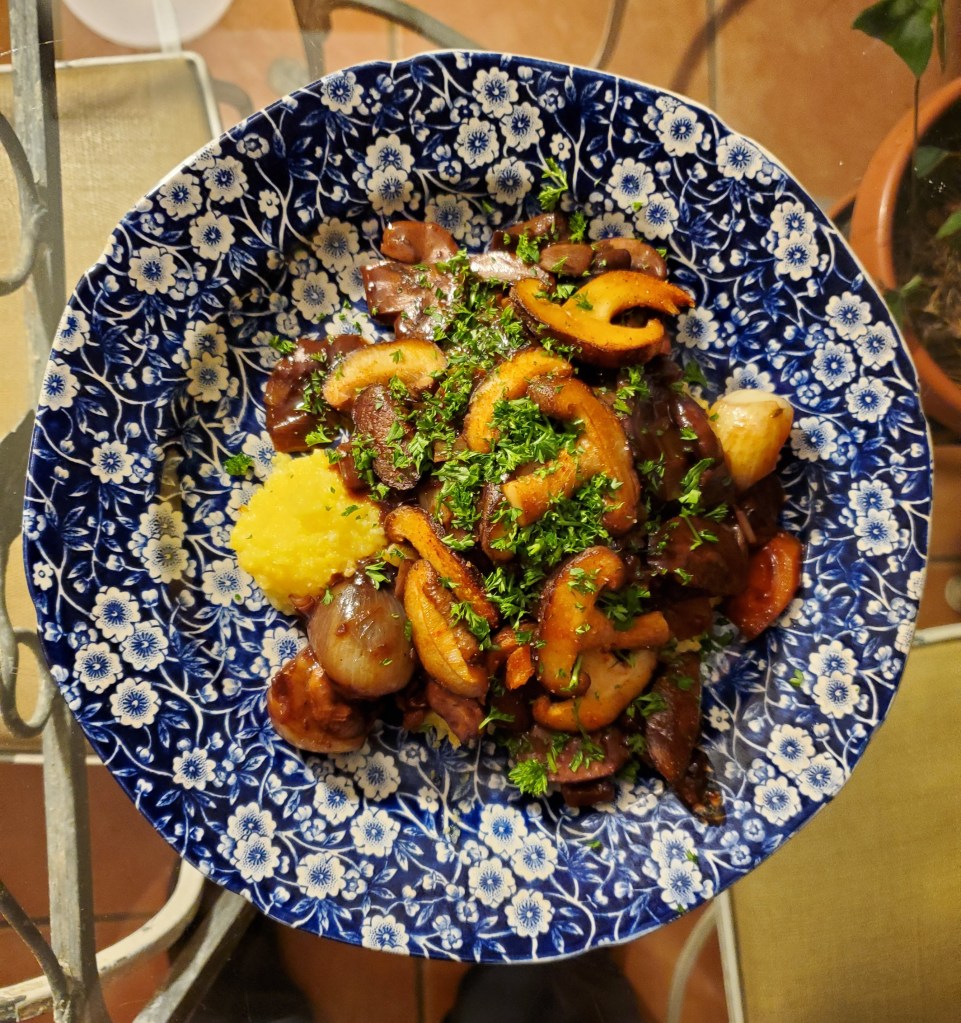
Mushroom Bourguignon over polenta for New Year’s (thanks, Melissa Clark) I woke on January 2 with no voice, and had to croak my way through my cardiologist’s appointment, moved up from the one scheduled for month’s end because of the increasingly frequent—and scary—episodes of a-fib I’ve been experiencing. The news: not good. The Flecainide I’d been taking since 2013 to address arrhythmia was now causing it, and another ablation, one that could only be done at Mass General in Boston, was the answer. I had to bail on my weekly and now much-needed conversation with my Greensboro friend Cameron: no voice to speak my distress. And it was January 2, the seventeenth anniversary of the day my mother died in Florida without my being able to get to her because my husband David had been suddenly so stricken with inexplicable anxiety that he could neither speak nor eat. And it was semester’s end: I had his papers as well as my own to grade. And there was a blizzard; no one could get in or out of our driveway. A Christmas best forgotten, but impossible not to recall.
The laryngitis persisted through the next day when I had to sort some TD Bank business, finally removing David, an absent presence now going on six years, as signatory on my accounts and figuring out what to do with our safe deposit box contents if I were out of the picture—which my erratically pounding heart suggested was not an entirely theoretical scenario. The good news: a call from Mass General offered me an ablation appointment only a little more than two weeks away. The bad news: I’ll need someone to drive me down to Boston and back; I’d had David the last time someone was going to work on my heart. Now that heart was broken again, in more ways than one. And I’d already streamed through the entire final season of Ted Lasso.
Friends to the rescue! My emailed SOS quest for a driver received a prompt and unanimously generous response from all I contacted. Spirits greatly improved. A simple dinner of vegetable broth with Dumpling DaughterTM dumplings (heard about on Boston Public Radio, and now available at Market Basket) worked wonders on my throat, and watching Cillian Murphy (no relation, but proud to share the name) and Emily Watson absolutely nail their performances in Small Things Like These, a disturbing but ultimately redemptive film, put me to bed in much better shape.
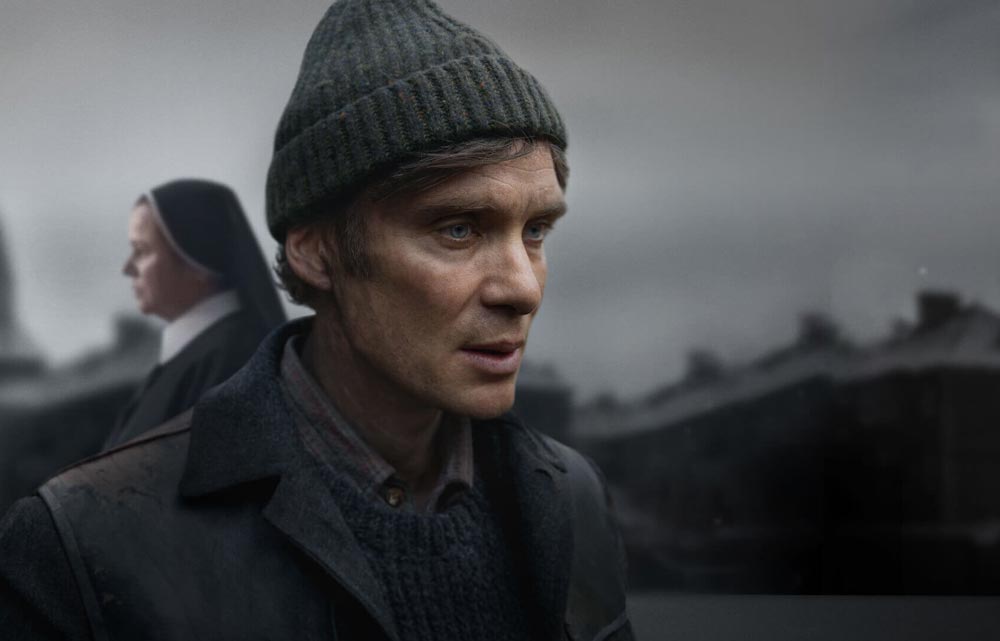
Emily Watson and Cillian Murphy devastate in Small Things Like These So, I’m starting the new year over today and counting my many blessings, including anyone interested enough to have read through all my whinging this far.
Wishing you all a healthy, happy, hopeful new year, with thanks for your much appreciated support. Coraggio!
-
Chapel Hill Grad
23 December 2024

UNC Chapel Hill grads toss their caps in the Dean Smith Center,
15 December 2024 (photo by Jon Gardiner, ’98)A week ago Sunday was a good day, a full moon and the graduation of our other granddaughter, Isabel, from UNC Chapel Hill. Like her sister Olivia part of the Covid Class of ’24, Isabel had weathered a pandemic AND calculus to earn her B.S. in Environmental Science, and Lord knows we need her smarts in that contested arena. As for the arena where the ceremony took place, the Dean Smith Center on Chapel Hill’s campus, there was plenty of room for the more than 1800 new graduates and their proud friends and families. At 50 years past my own graduation from Furman in 1974, with vivid memories of both Isabel and Olivia from infancy on, I was primed to wax nostalgic, but less prepared for the dissonant notes of proceedings that began with a loud speaker announcement that any attempt to disrupt the program would be met with immediate expulsion: “You WILL be arrested.”
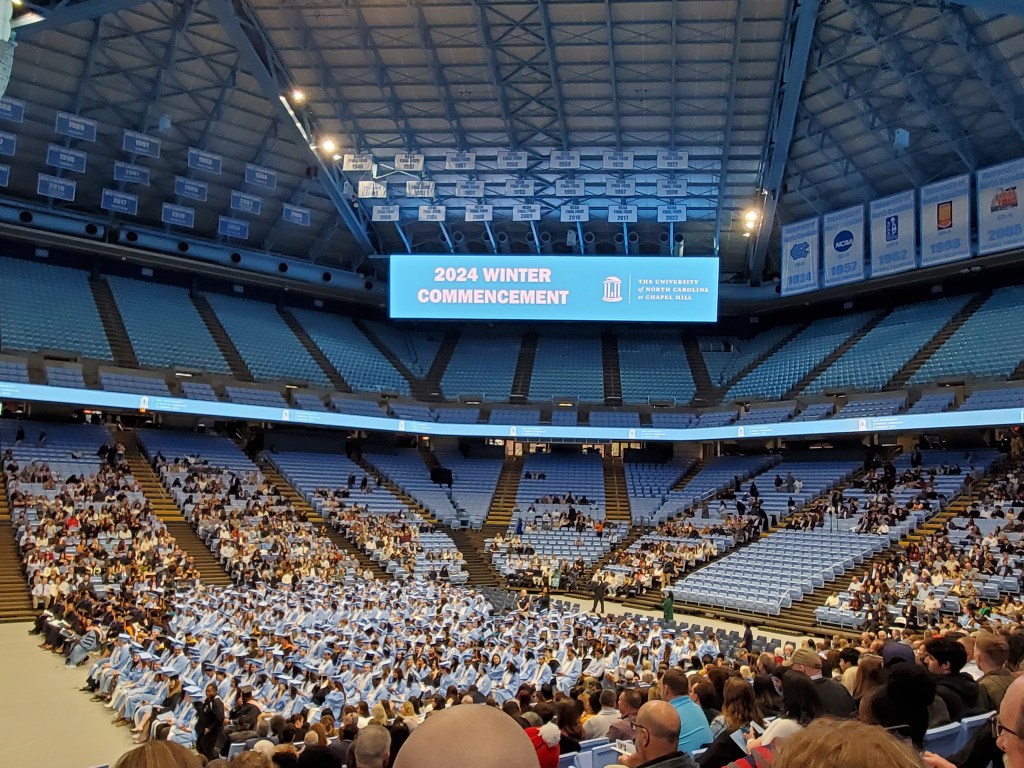
In my 43 years as an academic, I attended a lot of graduations, but that was a first—and ironic, especially for UNC Chapel Hill, as I was to learn later on. Just how much things have changed for universities over the decades was disconcertingly clear, beginning with my passing the time by counting the number of doctoral degrees to be awarded that day: 142, only 6 of which were in English and Comparative Literature, distinct fields back in my day when UNC Chapel Hill was considered one of the most prestigious English programs in the country. Of course, the humanities’ decline is widespread across the country: this November Boston University suspended admission to a dozen graduate programs in humanities (including English) and social sciences, and my own graduate alma mater, Tulane, gave up awarding Ph.D.s in English years ago.

Where’s Isabel? Dead center, looking down,
next to the Master’s candidate in blackSo, times change. But really, why did UNC Chapel Hill Chancellor Lee Roberts welcome the soon-to-be graduates by recounting his own tardy progress toward an undergraduate degree delayed by partying, and citing (as an excuse?) how much Winston Churchill drank? Having been given an art student’s beautiful rock supported by that young artist’s exquisitely crafted wooden pedestal, Roberts’s labored simile compared the graduating class to rocks that evolve over their time at university. Rocks evolve? Really? Back to class, Chancellor Roberts.
Okay. So not a gifted speaker. A gifted speaker did give the commencement address, cancer researcher Prof. Shelton Earp, but his sincere and poignant words—he conveyed not only his own well wishes, but those of his recently deceased wife, whom he clearly was mourning—could hardly be heard because he was too far from the mic, and no one made the necessary adjustment. The doctoral candidates (unlike the baccalaureates! A disappointment that) did get to march across the stage, but they were not hooded by their dissertation directors as I had been in 1984, the moment (my sister reported) that made my dear old dad weep.
Reader, we all celebrated nonetheless, with many photos and some tasty Asian takeout we happily consumed back at the spacious Air B&B proud parents Susan and Mark had rented for grandparents Ann, Jerry, and me to share with Isabel’s twin Olivia and some of Isabel’s closest friends, Sarah, Will, and Alice; we bonded over several jolly rounds of a Ransom Notes game.
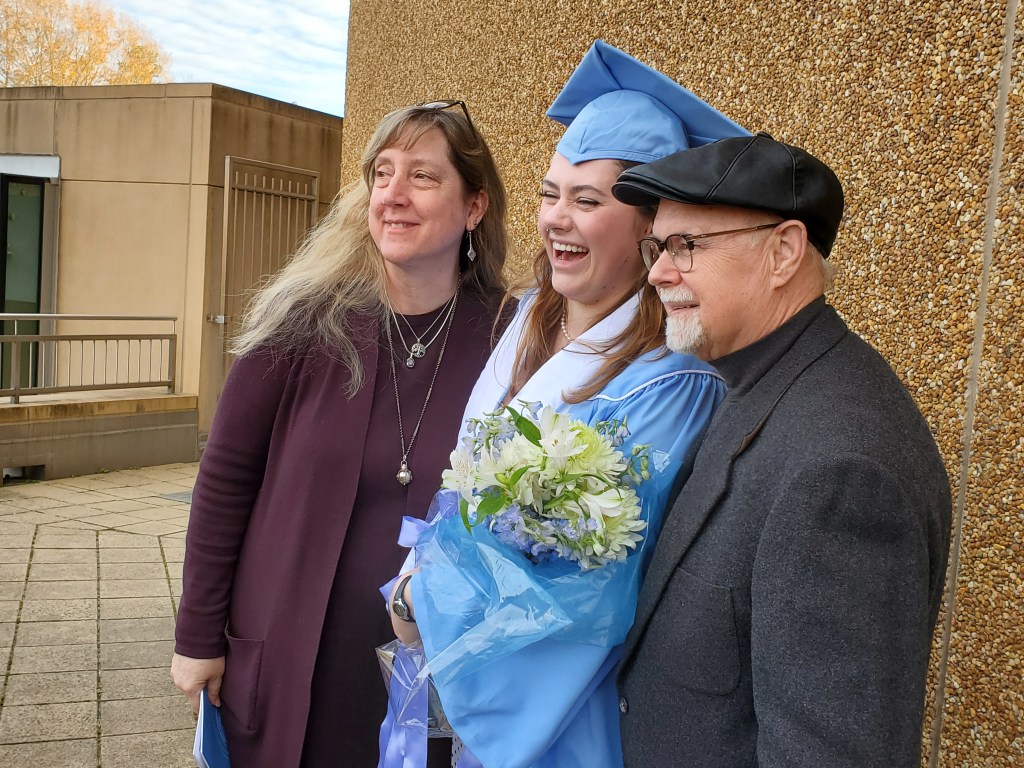
Proud parents Susan and Mark with The Graduate 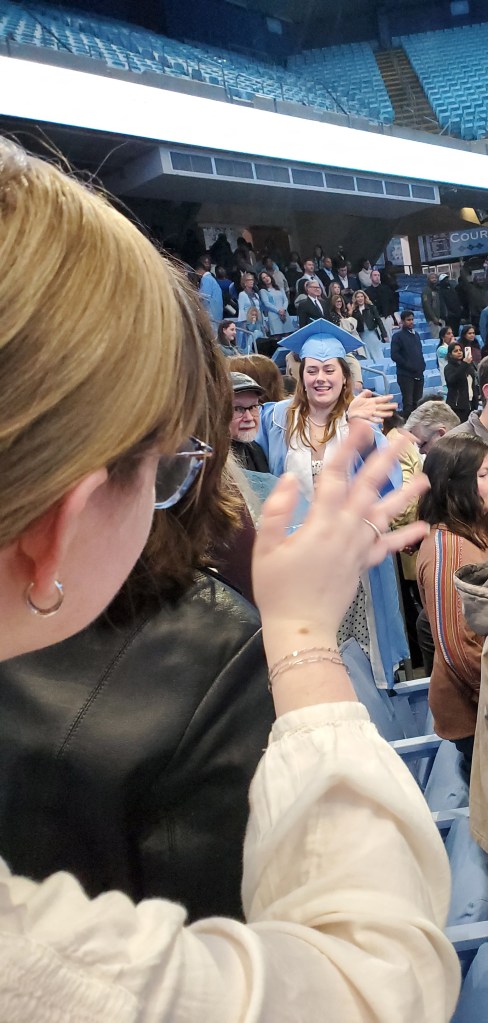
Post-grad wave to sister Olivia 
These boots were made for graduating 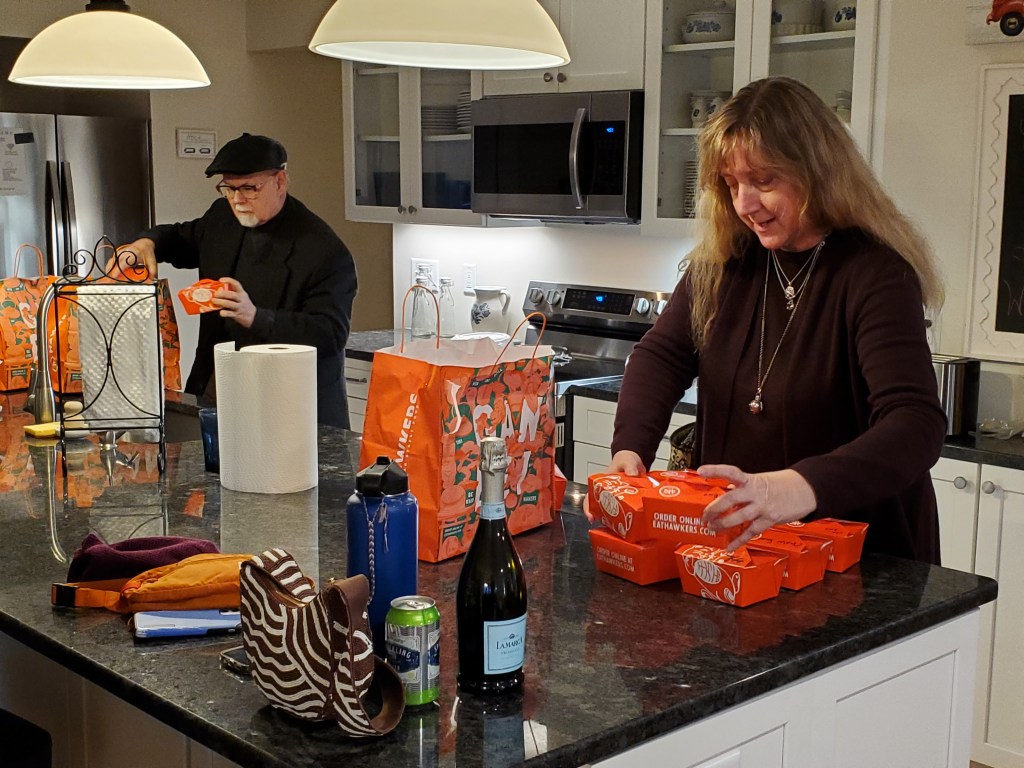
Mark and Susan unpacking graduation dinner from Eathawkers.com 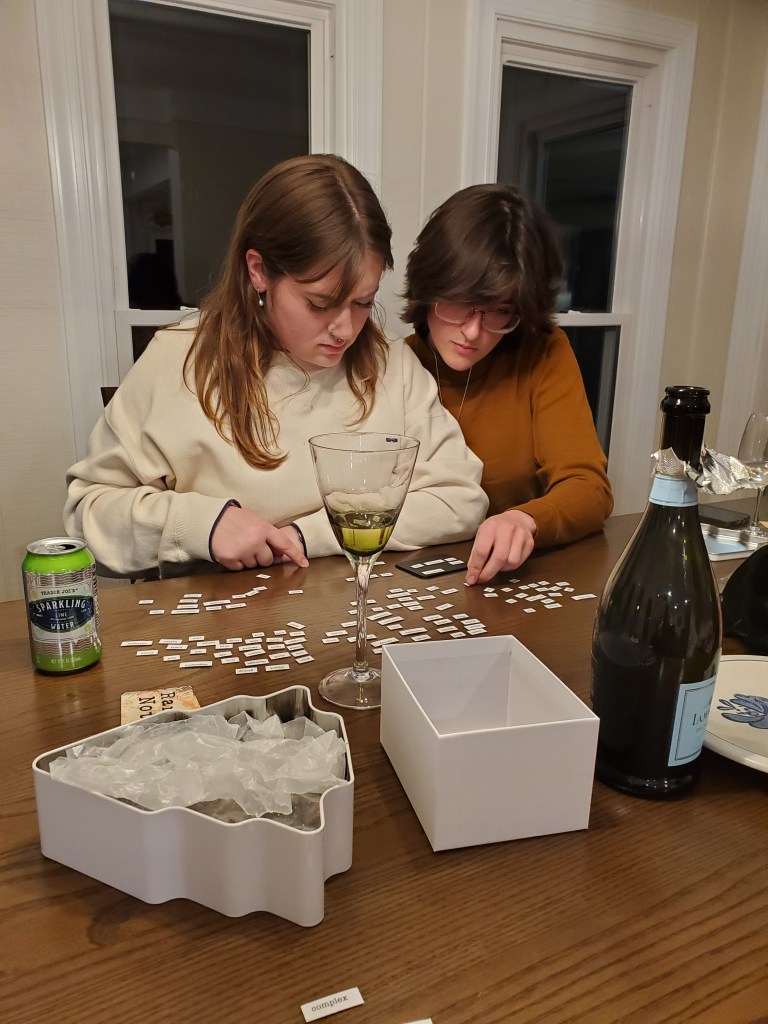
Isabel and Sarah partner for a game of Ransom Notes Being around all these clever, energetic youngsters was encouraging, and the good vibes lasted right though breakfast out at brunch place First Watch the next morning. That the young woman cashier there could not figure out how to change the $20 bill I gave her, even when I specified a ten, a five, and five ones, did, however, inspire some concern about educational slippage.
As the family dispersed, I headed for a walk ‘round the UNC campus I’d not seen before, relieved that I could figure out how to use the Park Mobile app and provided with a map by a gracious undergrad at the Visitor Center on East Frankin. The day was still overcast and chilly as I made my way across McCorkle Place, the weather likely contributing to my less than optimistic mood about the academy and Where We Are Headed. Korean artist Do-Ho Suh’s “Unsung Founders” memorial, a gift of the Class of ’02 installed in May 2005, acknowledges that the University’s first leaders were slave holders, and celebrates the servants and slaves who were crucial to its success: public art as salutary reminder of vexed history.
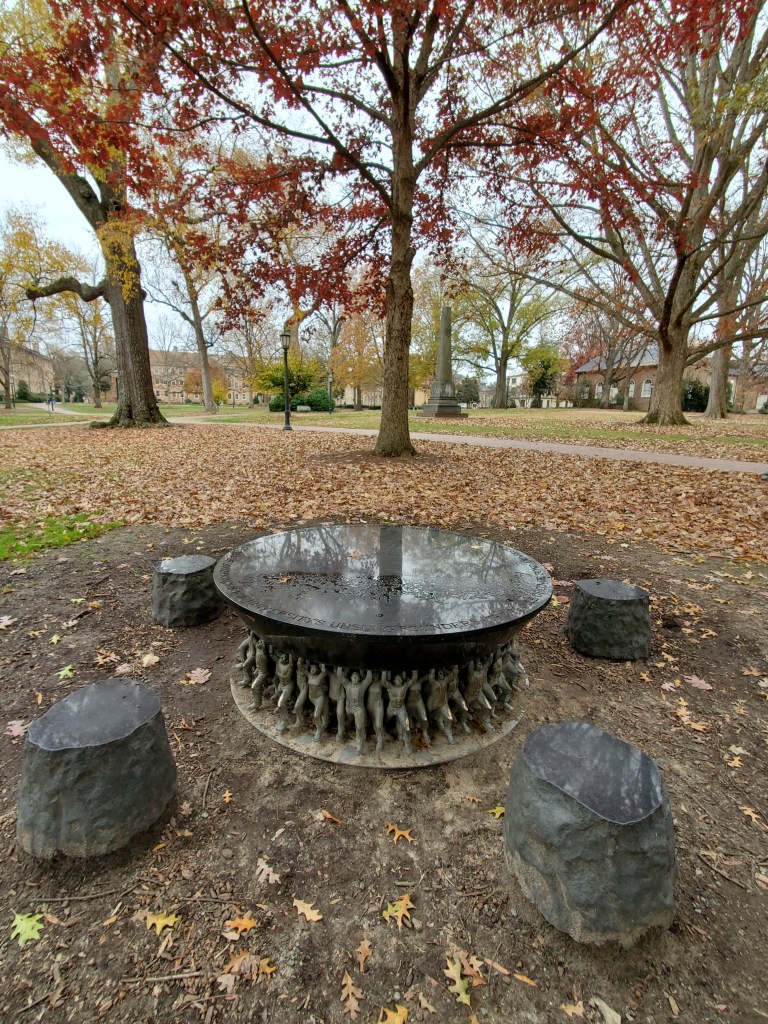
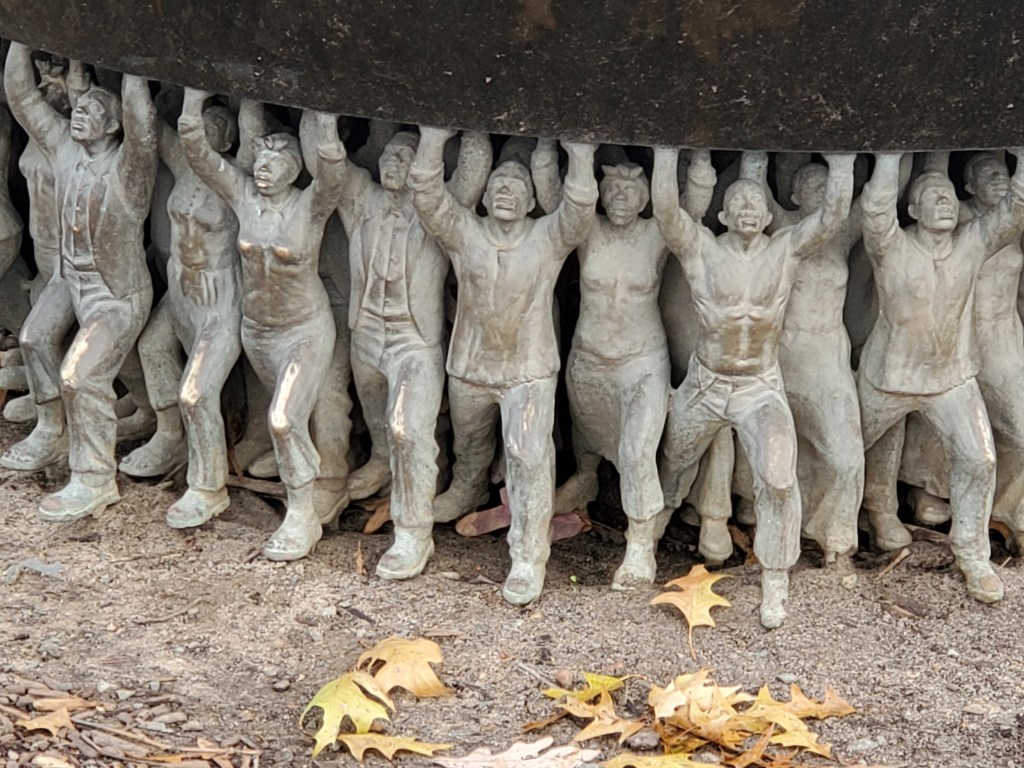
I couldn’t help but think of the U.S. Supreme Court’s June 2023 ruling against UNC’s consideration of race in student admissions, finding that the University violated the Constitution’s equal protection clause. In January 2024, the University paid 4.8 million to the Students for Fair Admissions, and voted to bar the use of race, sex, color, or ethnicity in admissions and hiring decisions. In the fall of 2023, Blacks made up 10.5% of the first-year class. In the fall of 2024, they accounted for only 7.8%. I wonder what the Unsung Founders would think of that?
Continuing southeast on my ramble, I passed the Davie Poplar, named for William R. Davie (1756-1820), who helped charter the University and lay the foundation for the first building in 1793. Legend has it that Davie and a committee of trustees met under that tree and decided to build the University there. But, alas, I learned later that Davie was not on that committee: the legend is false. The Poplar itself surely has seen better days.
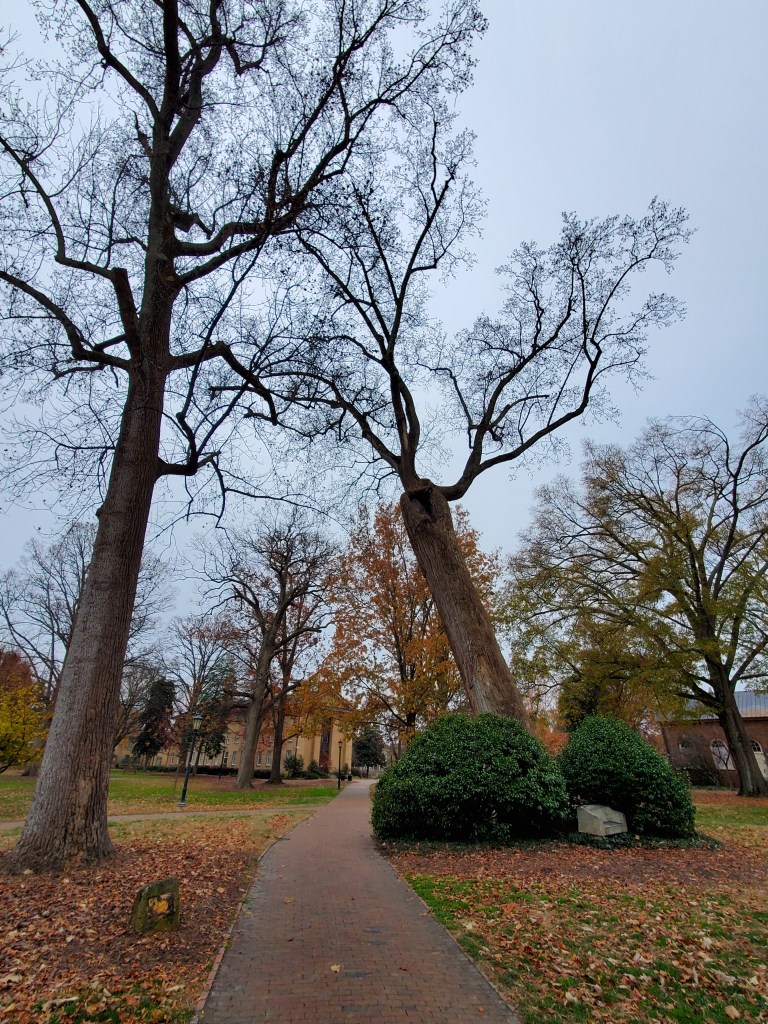
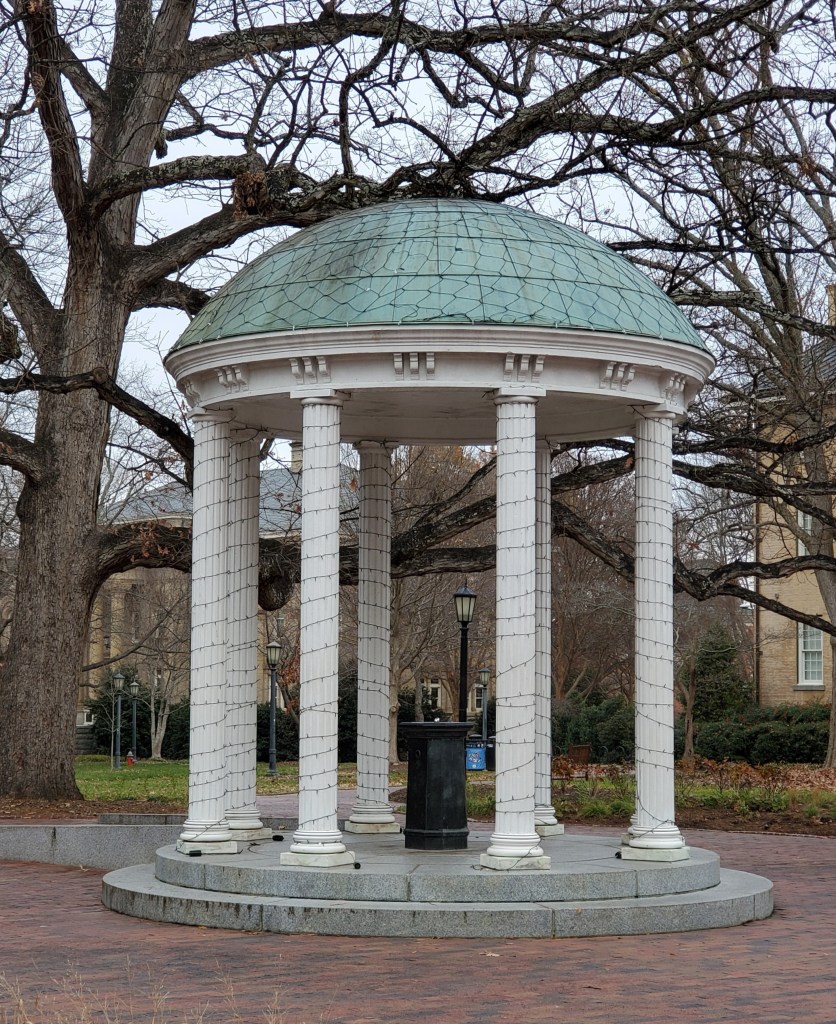
The Davie Poplar But there, at the edge of East Cameron Street was the Chapel Hill’s Old Well, first dug in 1795 as the University’s water source and in 1897 covered by the domed structure modeled on the Temple of Love at Versailles, now the University-licensed icon—and, since 1925, drinking fountain! I couldn’t help but think of the line from my own Furman’s alma mater: “And ‘neath her [Paris mountain’s] shade they [the students] rest secure / And drink from wisdom’s fountain pure.”
I next encountered Gerrard Hall, built in 1822 and named for Maj. Gen. Charles Garrard, a Revolutionary soldier and early benefactor, initially a chapel that took 15 years to construct, as the commemorative plaque records “due to the impoverished state of University finances.” Plus ça change, plus le même chose.

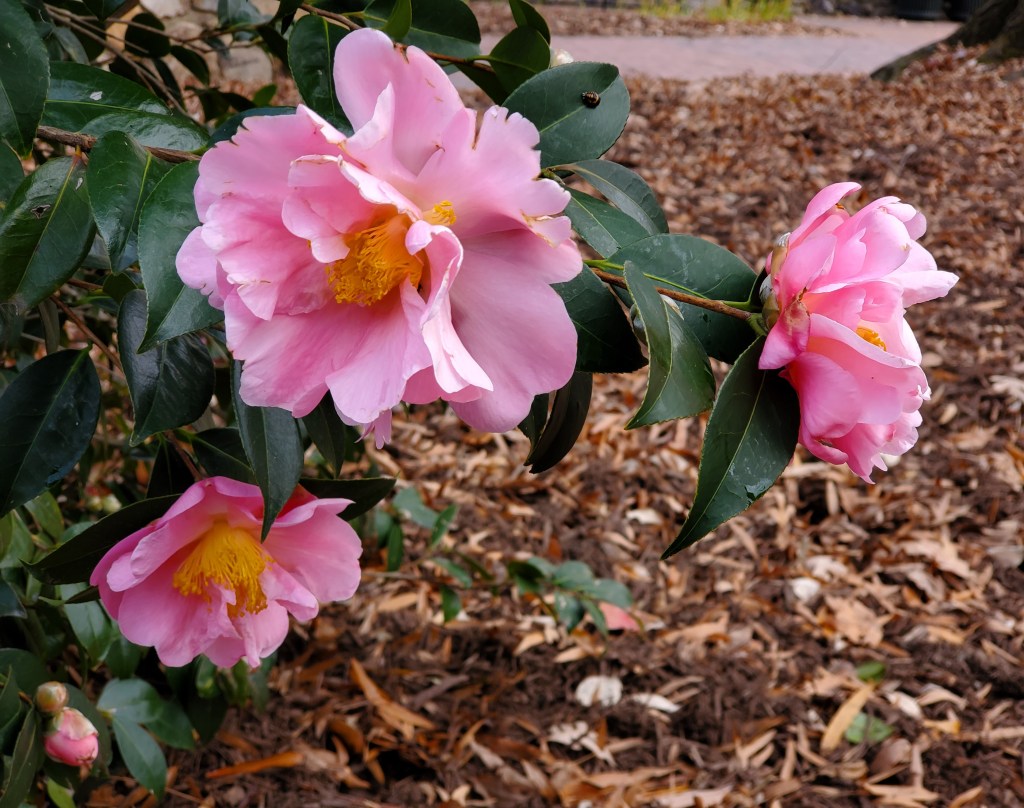
Camellias bloom in December in North Carolina On to the august neoclassical Wilson Library (1929) named for Louis Round Wilson, centenarian, University Librarian (1901-1932), “University Historian and Advisor to Presidents and Chancellors.” Methinks Wilson could have better advised Chancellor Roberts on rhetorical effectiveness. But his namesake building is a Beaux-Arts beauty.
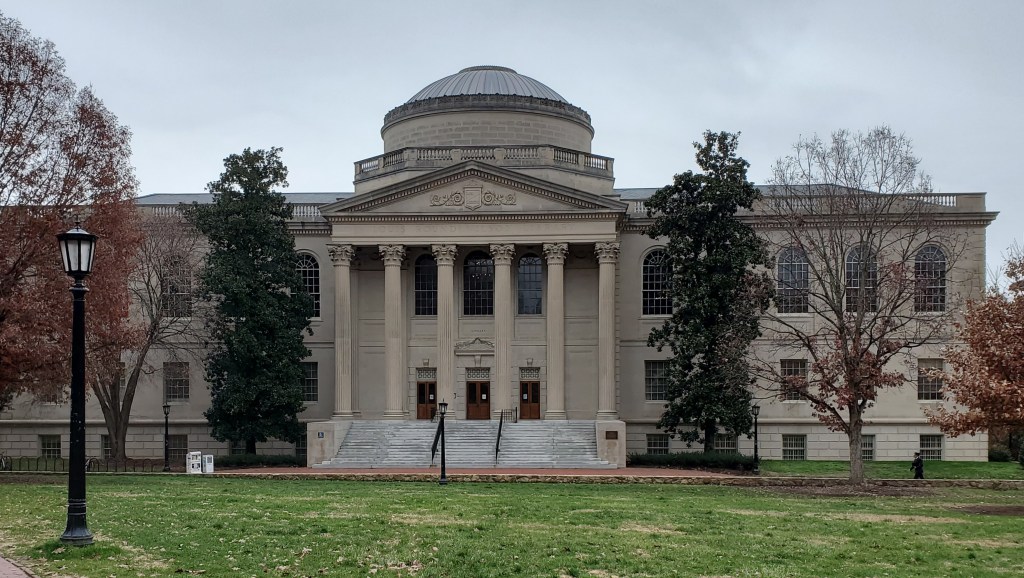
The semester done, and no longer the University’s main library but rather a home to special collections, the Wilson was understandably deserted save for a solitary guard in the magnificent reading room, who told me most UNC graduates never set foot in the place. We shared a lament over that—and the omnipresence of food and drink in most university libraries today.

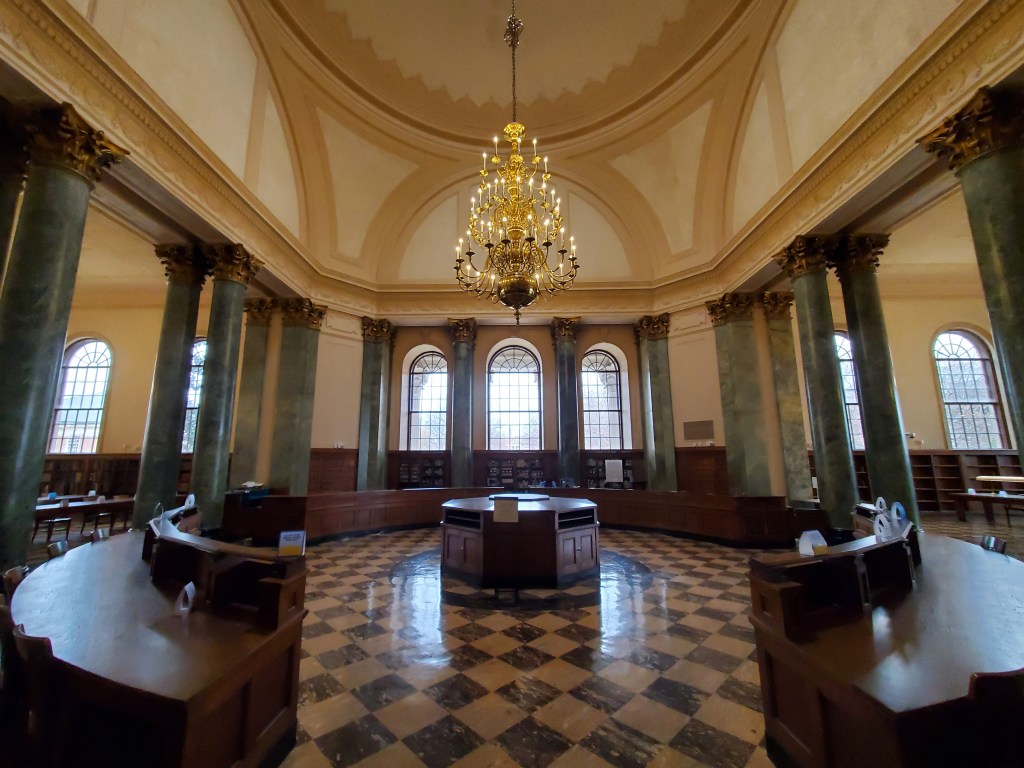
I headed back to my parking spot on Franklin street.
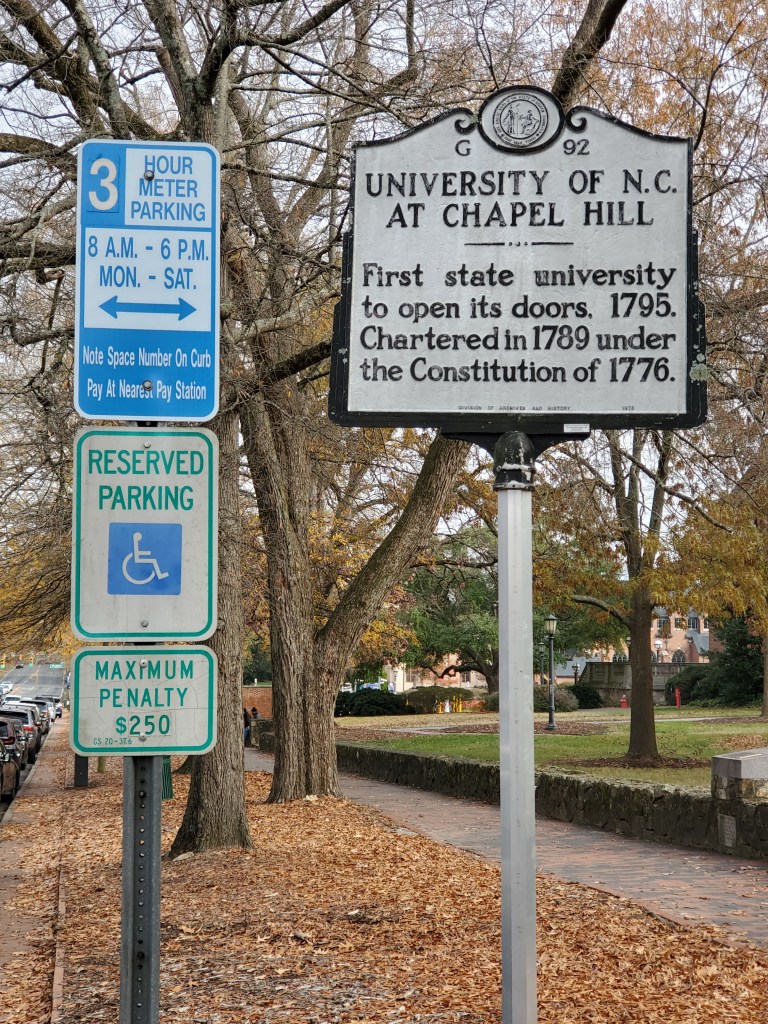
As it happened, I had unwittingly left my rental Nissan right by a monument resonant with topical meaning given the warning that began the previous day’s commencement. Here’s what it said:
The Speaker Ban
Along this wall in 1966 UNC students challenged a state law that regulated who could speak on UNC campuses. The students listed below invited banned speakers Herbert Aptheker, a radical historian, and Frank Wilkinson, a civil liberties activist. When students were prevented from holding these events on campus, they initiated a lawsuit that overturned the “Speaker Ban” law in 1968.
“I hope history will record that the student body did not shy away from this challenge, but firmly and responsibly met it head on.”
Paul Dickson III (Student Body President) February 1966
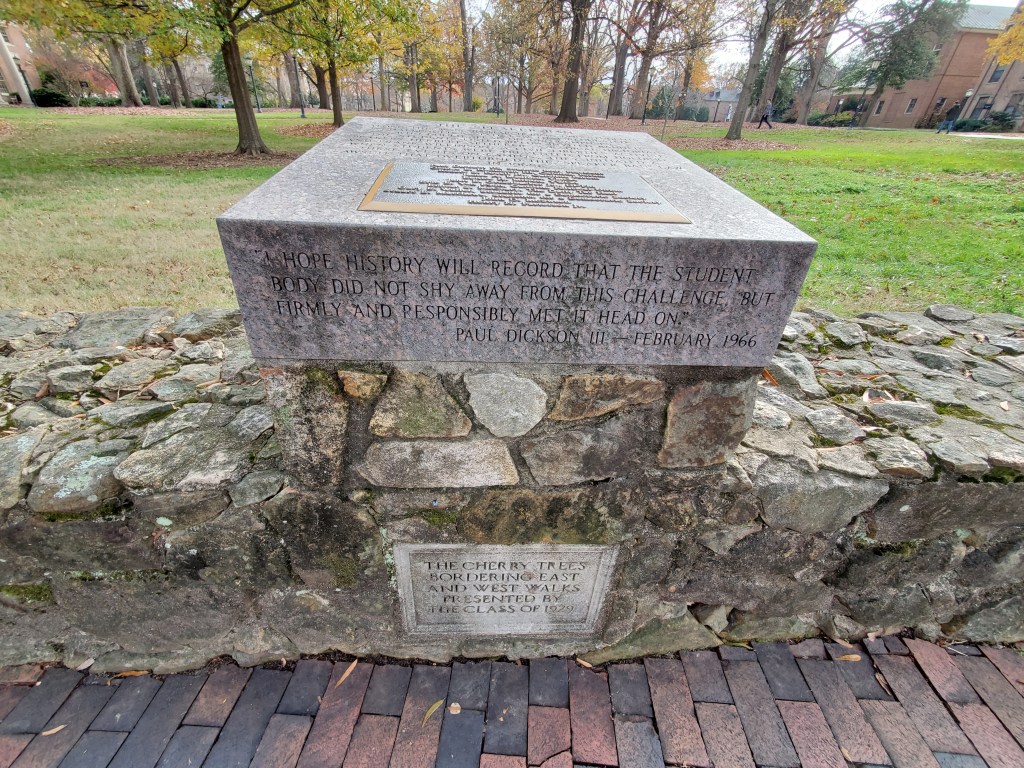
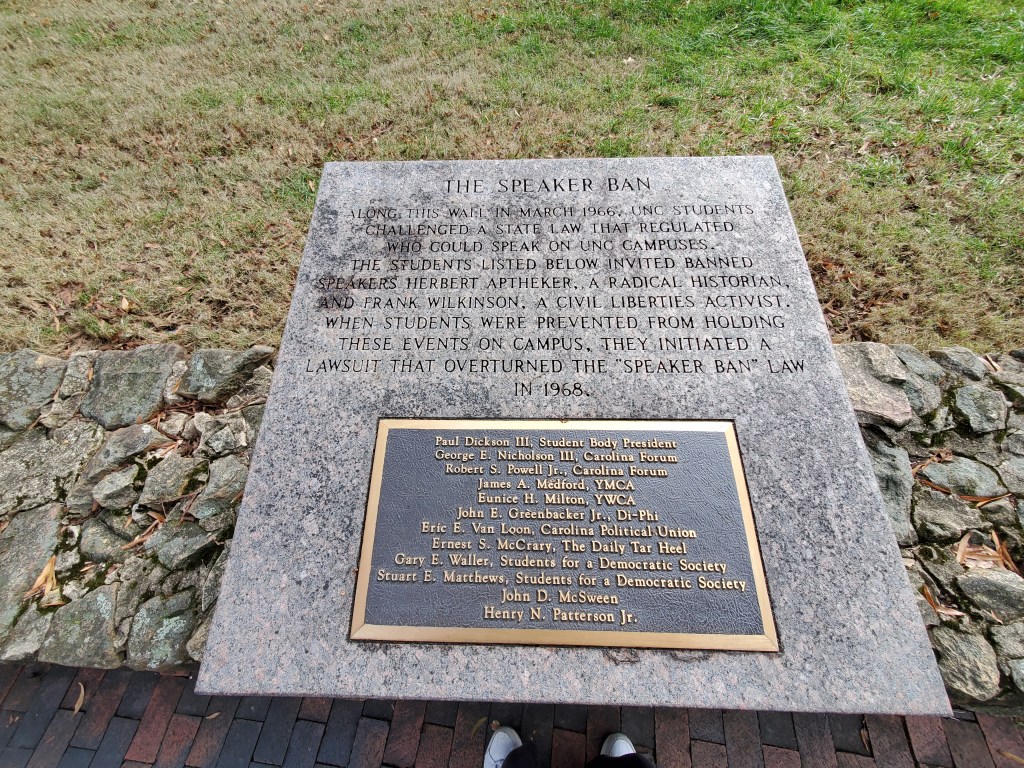
Still contemplating competing impressions of Isabel’s happy graduation juxtaposed with institutional history and the slippery slope of free speech eroded and the humanities abandoned, I took off for the Raleigh Durham Airport (RDU), making two failed attempts to stop at a Chick-fil-A and provision myself for the flight home. One was closed for construction and the other unfindable. The precarity of travel must have been something sculptor Gordon Huether had in mind when he offered RDU his “Highwire Travelers” piece.

But what made an even bigger impression on me as I made my way to the appropriate gate was the excising of human presence in favor of machines. A piano played Christmas carols without a piano player.

No waitress handed me a menu at the American Cafe restaurant; only a bar code greeted me when I sat down to get a bite. That impersonality drove me to the Flight Stop for a half-price sandwich (still $5.99 even at half price), which the automated checkout kiosk did not recognize as half price.


Oy! I was in the Research Triangle, but was only A.I. doing the research?
What saved the day and pulled me out of a dive to despair was, praise be, something no machine would have “thought” to do: the Southwest gate attendant, because she “loved Christmas,” appeared in costume, half Grinch, half Santa’s Helper, and managed to scan us on to the jetway while prompting a smile from all the weary road warriors boarding.
So, hail to thee, Class of ’24! Congratulations and best of luck! And to borrow advice from Jon Batiste’s Late Show band: Stay Human.
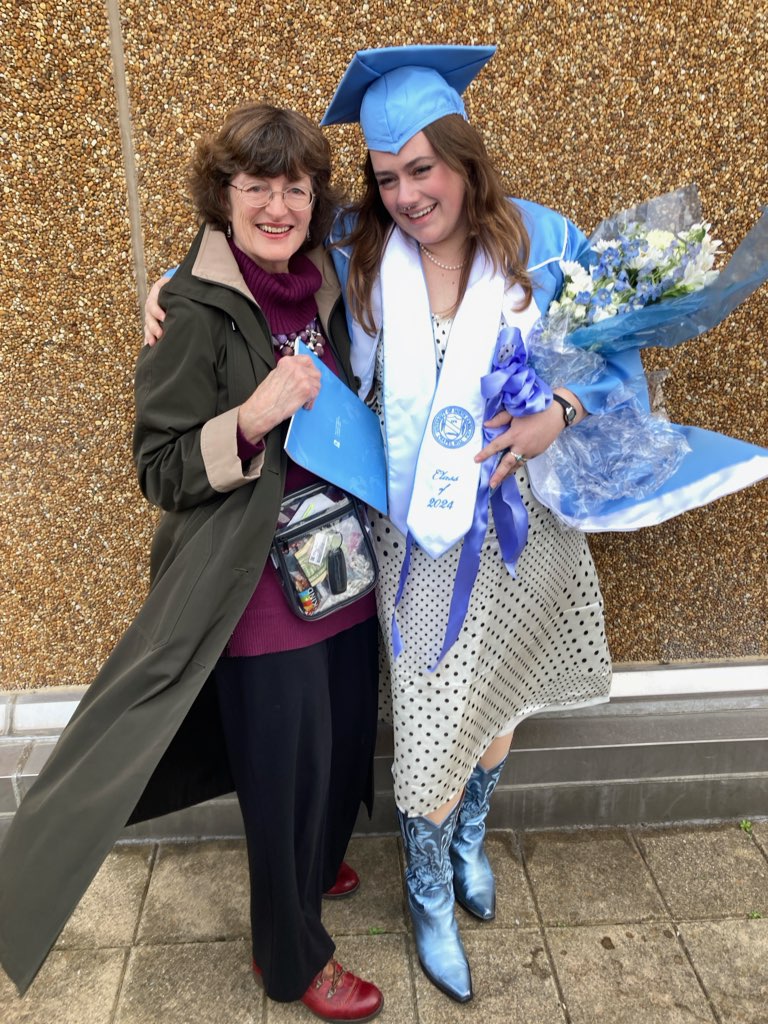
The graduate and I (photo by Susan Andrew) -
Nutcracker Magic
7 December 2024
Backstage at Boston’s Citizens Opera House Last Saturday it was my great pleasure to accompany my wonderful neighbors Anne and Peter and their 6-year-old son Leo to Boston to see Leo’s first Nutcracker. Tchaikovsky’s confection has loomed large in my personal history, starting with my parents’ providing me a boxed set of 45’s to play on my little record player; I can still picture the pink pointe shoe on the cover. I loved that music, and was taking ballet at the time, so when my inspired first grade teacher Okla Hawkins decided to mount a production of The Nutcracker, I, completely unencumbered by stage fright and quite eager to display my “talent,” was a natural to be cast as the Sugar Plum Fairy. Perhaps architecture is destiny. That academic year, 1957-58, Pasadena Elementary School was without sufficient space for all those boomer babies, so Mrs. Hawkins’s class was held on the stage behind the heavy velvet curtains that separated our classroom from the cafeteria—where dining students were not allowed to speak lest they disturb us. I remember that space well, both as classroom and as performance venue. And I remember, too, that the tall, handsome lad Michael whom Mrs. Hawkins cast as the Nutcracker Prince was too petrified to perform, and was replaced by a shorter ginger-haired boy happy to show off—a great disappointment to me.
On Election Night this year, anxiety was running high when my neighbor Anne invited me to cross the woods that separate our homes to enjoy a beverage and some talk by the bonfire she built, her accustomed strategy for coping with fearful uncertainty. So we were there by the fire when young Leo emerged from the house with kazoo and tambourine, and proceeded to entertain us by kazooing selections from The Nutcracker Suite. Tonic hilarity ensued, and I was delighted not only by Leo’s performance by also by the recognition that here was another set of parents devoted to nourishing their child with music and performance, as mine had me. When Leo went back in, I asked Anne if Leo had seen the ballet, and when she replied no, but she thought it was time, our plan was hatched.
And so, we were off on our adventure on a cold but bright day in Boston. Our first stop was for lunch at an all-gluten-free bakery called Verveine on Mass Ave in Cambridge, the place packed with treats each more enticing than the next, as well as an overflowing supply of customers awaiting their orders and/or one of the few places to sit down at one of the communal tables. Staff and customers were all friendly and accommodating despite the crush and bustle, and my apple/cheese/arugula focaccia was delicious, inspiring an oft-repeated lament that our own nearby university town of Durham, NH had no bakeries, gluten-free or otherwise.

Oh, to order one of EVERYTHING! Then it was time to set out for the Opera House, and for me to relish NOT being the one driving for a change. I’d advised Anne to take advantage of Spot Hero, the parking app I’d discovered in the last year, a great stress-reliever in the quest to find parking in Boston, as one books it in advance. I’d also learned the hard way that one should not access said booked parking spot even one minute ahead of the agreed parking time or pay twice, so when we arrived at the garage 2 minutes early, I suggested Anne just “go round the block”—forgetting that blocks are a concept unknown in Boston. Next thing you now, we are headed south under Boston harbor on I-93, and what had seemed a perfectly timed, stress-free arrival now threatened a too-late entrance. But doughty Anne sallied on: working with three different cell phones, we navigated our way back to the Common and the corner of Essex and Washington, where Anne dropped off the three of us to make our way to the theatre in good time while she continued on to the parking garage.
The Citizens Opera House holds 2677 souls, and so there was another crush negotiating the metal detectors into the lobby. But Leo needed to make a stop at the box office. Knowing that we would be treated to a backstage tour after the show—my friend Elizabeth Olds is assistant to Boston Ballet’s artistic director, Mikko Nissinen—Leo had constructed a nutcracker out of a paper towel tube supplied with googly eyes and drawn-on peppermints alternating red and green for buttons. This he hoped to give to the REAL Nutcracker Prince after his performance. But one of the googly eyes had come off. So with help from box office staff and patient dad Peter, who showed his son how to make single-sided tape double-sided, Leo restored his paper nutcracker’s sight and we made our way up the several flights of stairs to left balcony B. Heroic Anne arrived from the parking garage just as the lights were dimming and the magic began, Leo clasping his nutcracker.
Peter, Leo with Nutcracker, and Anne And indeed, even at that distance from the stage, the music and dance were completely captivating. The sassy bear and mechanical-jointed doll inspired laughter, the battle of mice compelled. The snowflakes—balletic and fireproof paper alike—enchanted. Catching sight of a cloud descending from the flies to carry Clara and her prince away at the end of Act 1, Leo voiced an audible “Oh, my!” and warmed the hearts of every adult in the vicinity. Intermission offered a chance to get the wiggles out and to confer with Elizabeth, who surreptitiously passed along to Yue Shi, dancing the Nutcracker Prince at that matinee performance, that he had a fan in the balcony. And Act 2 delivered all the favorites: including the most sensuous Arabians I’ve seen, Mother Ginger, and the Grand Pas de Deux.
As the audience streamed for the exits, we descended to the bottom stage left exit from the balcony where Elizabeth, former principal dancer in the Royal Winnipeg Ballet and herself once a Sugar Plum Fairy, met us and showed us in sequence the Queen’s Box (terrible sightlines!), the snowflake remnants littering the wings (some of the little squares are mylar for sparkle), the prop table with Clara’s crown on its cushion. (How does it stay in place, both on the cushion and on Clara’s head? Magnets!). Chyrstyn Fentroy, soon to be that evening performance’s Sugar Plum Fairy, was warming up, and kindly stopped to inquire about the nutcracker Leo held. We posed on stage. The view from there is an epiphany.
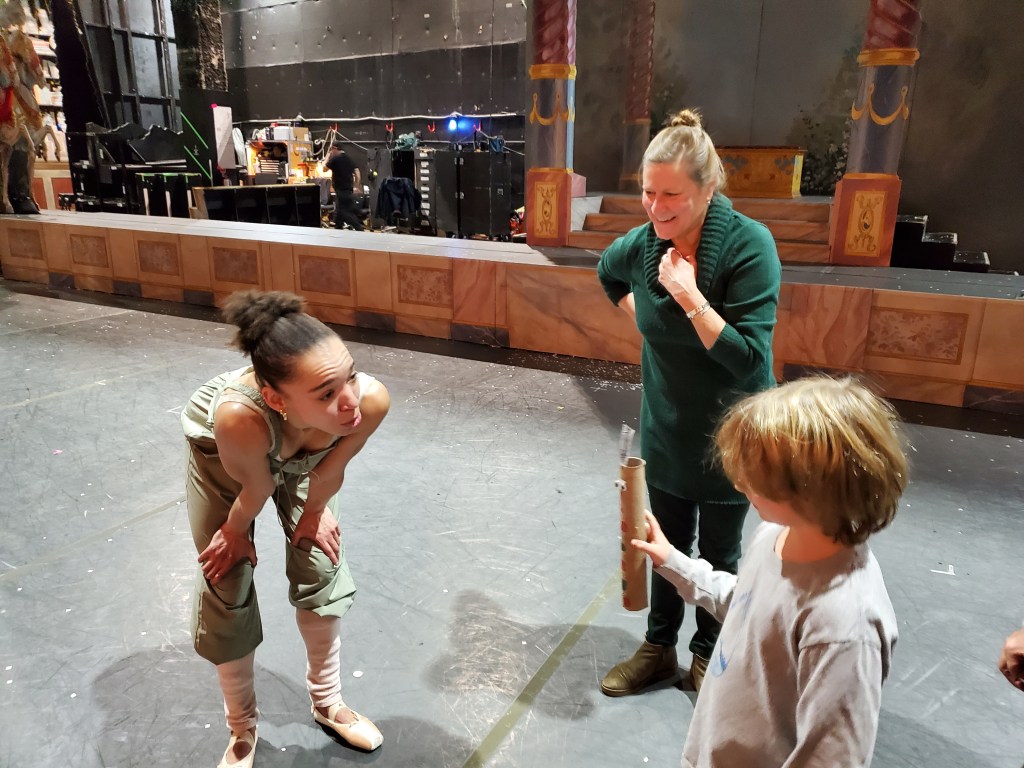
Ms. Fentroy checks out Leo’s craftsmanship, with Elizabeth looking on 
Peter, Leo, Anne, and Georgeann–once again on stage 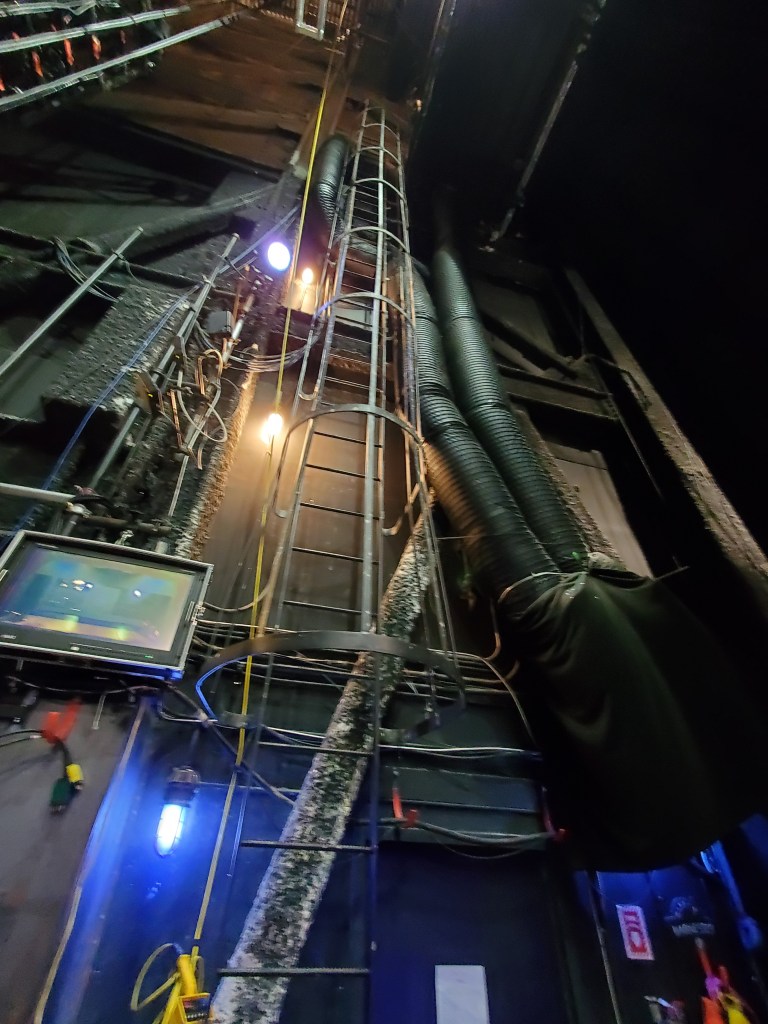
The perilous path to the grid Stage right we saw the steps Mother Ginger has to climb to step into his stilts, directly below the rigging that lowers his 40-pound costume around him so all the Boston Ballet School students can hide beneath “her” skirts. Then to orchestra pit, where we got the conductor’s view of the house as well as the music and some instruments left behind till the next show, and learned the trick of the children’s chorus in the snow scene (the organ, not the kids!). The stage manager’s screen glowed, and Ms. Fentroy explained the purpose of the rosin she was applying to her pointe shoes (the better to avoid slipping) before rehearsing her upcoming pad de deux. I learned that the Opera House remains a “hemp house,” still using the centuries-old tradition of using ropes, pulleys, and counterweights to fly the scenery—by hand! And then, suddenly, there was the Nutcracker Prince, out of costume and appearing as himself, Yue Shi, graciously accepting Leo’s gift of the nutcracker and posing for a memento photo.
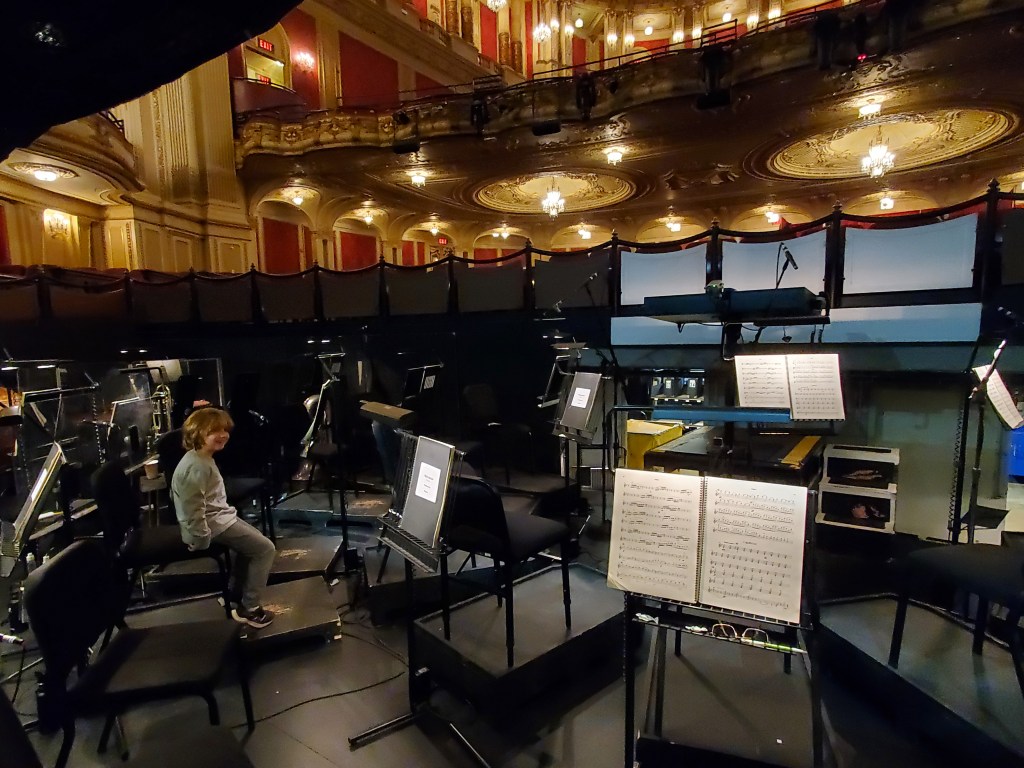
Leo as First Violin 
View from the pit Designed by architect Thomas White Lamb in 1928 as a movie palace, the Opera House was commissioned by Edward Albee Sr. as a tribute to his friend and business partner, Benjamin Franklin Keith.

The horns rest between performances 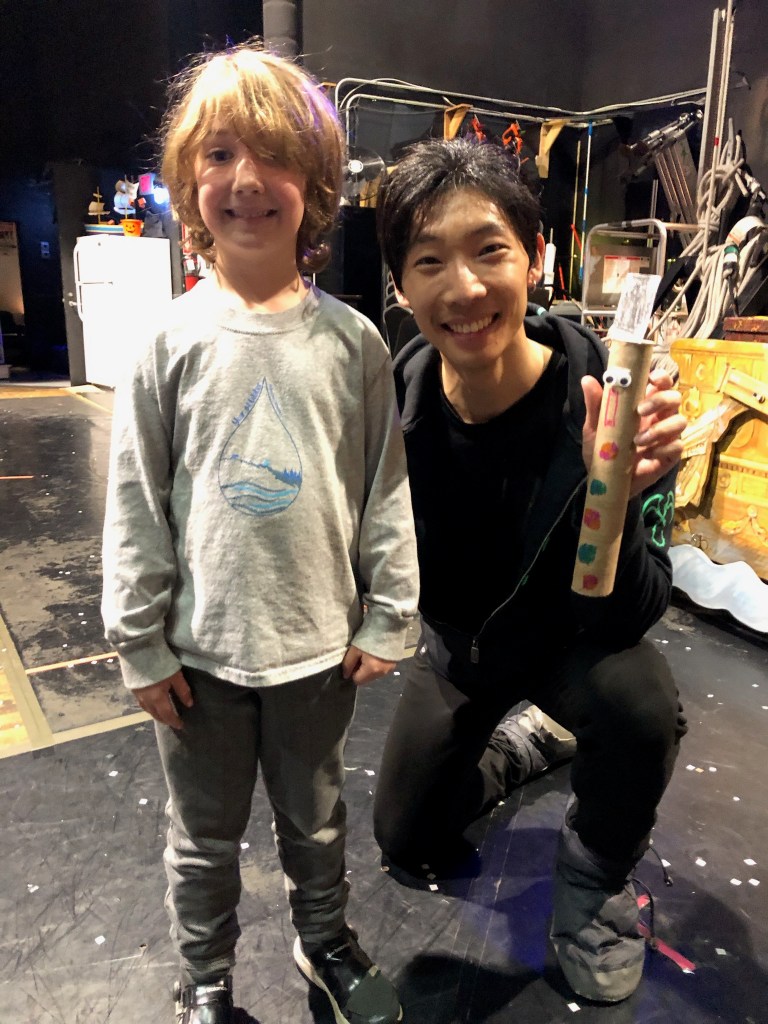
Mission accomplished: the Nutcracker Prince receives Leo’s gift Elizabeth led us on through the costume shop: mice heads, soldier heads, and glittery tutus. Wardrobe manager Heather even retrieved the Mouse King Head for our appreciation (honestly, its realism could be the stuff of nightmares).
Heather displays the Mouse King’s head Finally, we said our thanks and goodbyes, and headed out of the theatre, shedding magic as we walked through the now-dark Boston streets searching out the pedestrian entrance to the parking garage.
Meanwhile, prep for the next performance begins As Anne pulled into my driveway, I was cataloging all of the day’s delights, including “sitting next to you, Leo.” There was a pause as Leo considered this. Then he said: “I didn’t even know who was sitting next to me. I couldn’t see anything but the dancers. I couldn’t look away from them!”
I later texted this review to my generous friend Elizabeth, who replied, “Oh, this makes my heart happy. Leo and his wonder is what it’s all about.”
I can’t imagine a better Christmas gift.
-
Subscribe
Subscribed
Already have a WordPress.com account? Log in now.
 Georgeann Murphy