-
Southern Sojourn Day 6: 18 May 2022 Danville KY

The Jail (replica), Constitution Square, c. 1785 I quote from the pamphlet available at 105 E. Walnut Street in Danville: “Constitution Square Historic Site was the birthplace of Kentucky’s statehood. In 1776, Kentucky was still a frontier and a county of Virginia. The Wilderness Road, blazed by Daniel Boone [thanks to Fess Parker, a girlhood crush], led pioneers through the Cumberland Gap and into Central Kentucky. Danville’s prominent location on the Wilderness Road caused it to become a crossroad for early settlers and a center of political activity. By 1785, Danville was chosen as Kentucky’s first seat of government; and a meetinghouse, courthouse and jail were built to administer the growing territory.”
My southern sojourn to visit friends, I realize, is also inadvertently becoming a search for America (cue Paul Simon’s “American Tune”: “You can’t be forever blessed”). Danville is a key site in my personal history, locus of my ever-so-lucky-to-have-gotten tenure-track position at little Centre College (so named for its geographic centrality in Kentucky), from which all future happy developments sprang: tenure at Centre led me to London and to David, the reason I ultimately left my perfect-for-me position to live with my husband in New Hampshire. I still get weepy over “My Old Kentucky Home” on Derby Day, and after Bill and Grazia’s warm welcome yesterday, I am eager to reconnect with one of the two women who helped guide my entry into professorial life.
I pretty much skipped breakfast, knowing the luncheon my esteemed mentor at Centre and long-time friend Bobbie prepared would be substantial . . .
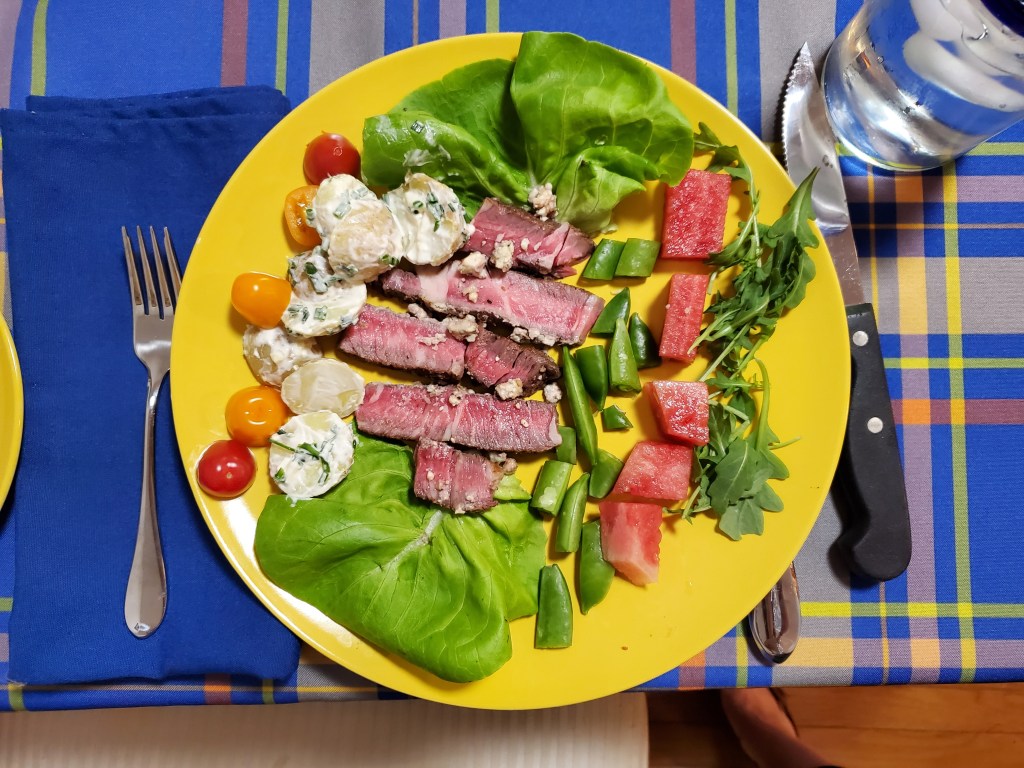
. . . and elegantly plated. It is. My arrival chez Bobbie so slightly precedes that of another colleague and friend of Centre days that I startle her popping out of my car. Kathy is a willowy, long-haired blonde wind of a Kentucky girl whose comfort once got me through a lovelorn breakup with a bad boyfriend and advice later gave me courage to return the love of the good man I would eventually marry. She keeps Bobbie supplied with irises.
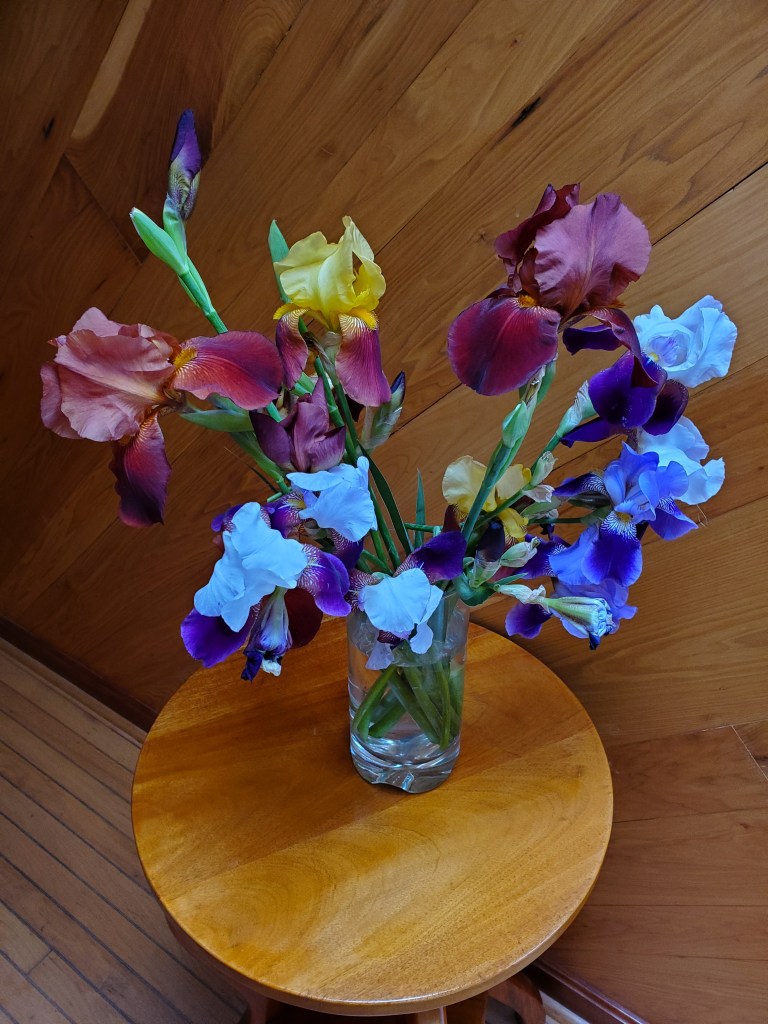
Kathy’s Irises From Bobbie, I learned how to run a department meeting, how to be a good colleague (precious few models of that at Tulane!), and how to face adversity chin up, wit and sense of humor intact. Bobbie once dubbed the handsome but non-academic administrator/former frat boy I cast as Theseus in my production of A Midsummer Night’s Dream “the DKE of Athens,” one of her many spontaneous and on-target quips. Even in recovery from a difficult surgery with a disappointing outcome, she has prepared for Kathy and me an elegant meal, and the table conversation–funny recollections and news of the many changes at Centre since my departure in ’95 (the foundational Humanities program is defunct?! Is’t possible?)—is both nostalgic and hilarious, even as a prelude to my driving Bobbie to her daily radiation treatment. At the Ephraim McDowell Commonwealth Cancer Center, Bobbie clearly knows her way around, and the staff make me welcome, too, complimenting my hairdo (!!). More affable southern charm.
The treatment session is brief, and I return Bobbie to her lovely home and arrive back at “the little house” just in time to beat the big afternoon Kentucky thunderstorm that blows in and conveniently out again before I meet up once more with Kathy and another good friend, classicist and poet Jane, at very lively restaurant downtown now in its third iteration since I left Danville. We three try to catch up over BBQ pork sandwiches, collard greens, and the din of an adjacent birthday party. Kathy gives me an “Art Local Danville KY” t-shirt that I treasure.
I return to Bill and Grazia’s, this time with a PowerPoint slide show of my September visit to the Amalfi Coast.
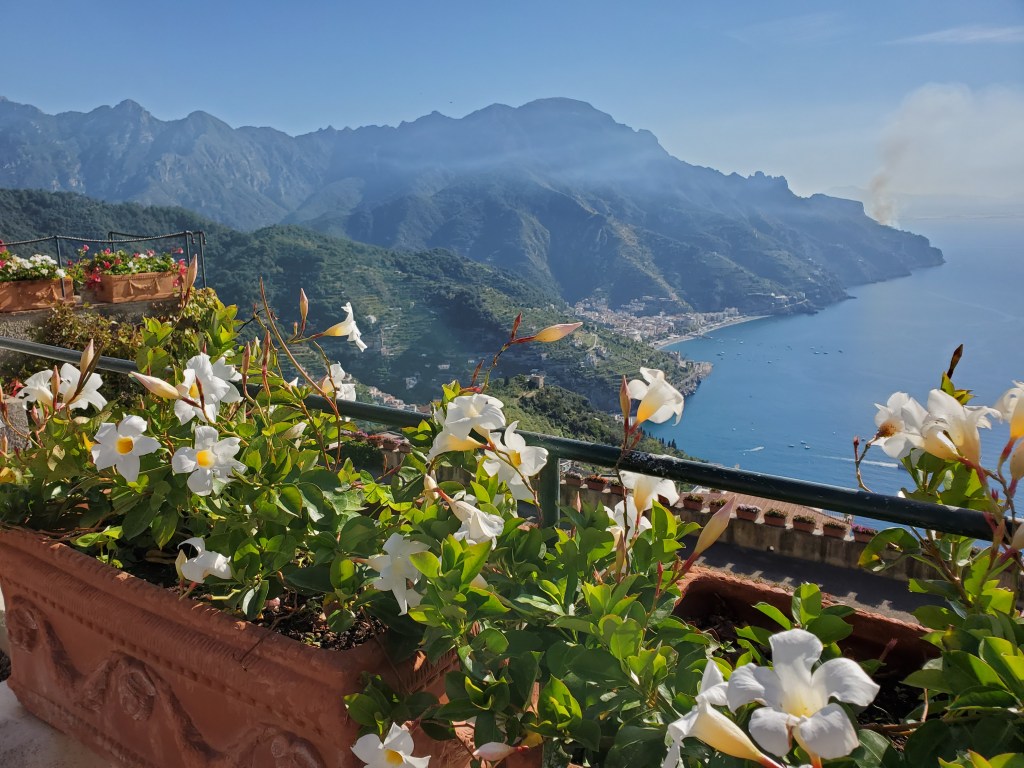
View from the Villa Rufolo, Ravello, 24 September 2021 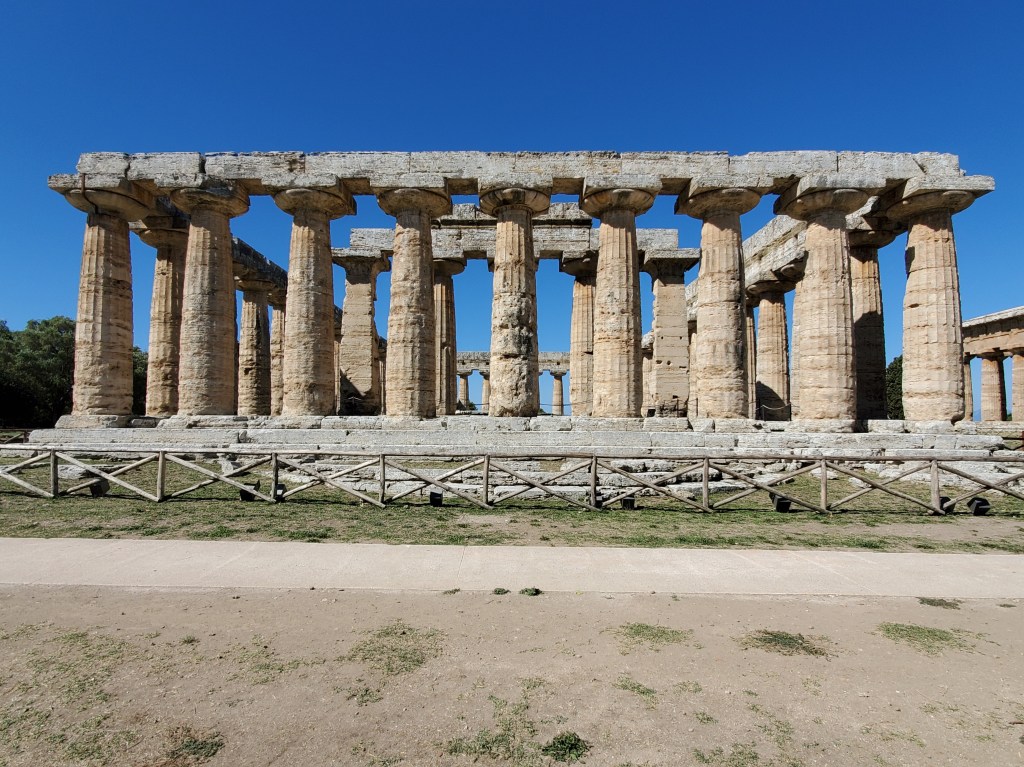
David’s Favorite Temple: Hera 1, Paestum, c. 550 BCE, 23 September 2021 Of course a cultured, well-educated Florentine and an art historian specializing in the Renaissance know much more about the scenes I show than I. I am nevertheless pleased to offer a few shots of some places they had NOT visited, so all three of us take away something new: another so lovely evening in such gracious company. Grazia is tired from her long day of counseling the troubled, but true to her name walks me back to the little house, and I am again grateful for her insight and always endearing company. It’s been a day spent in the company of strong, admirable women. I am content.
-
Southern Sojourn Day 5: 17 May 2022 Charleston WV > Danville KY
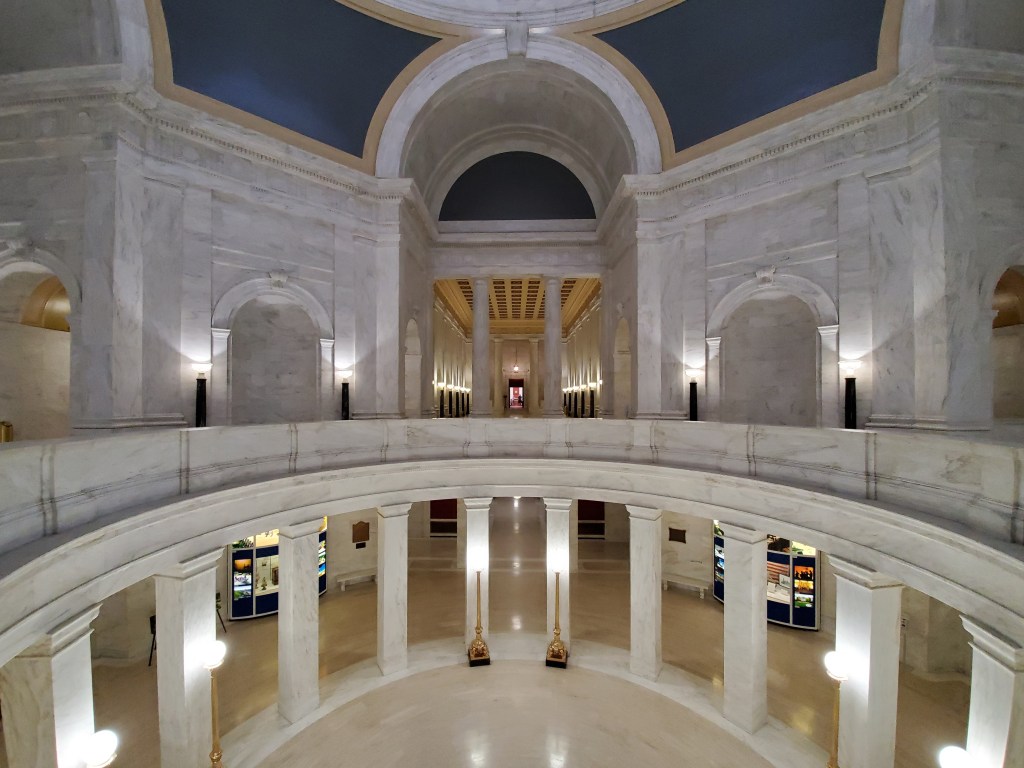
Cass Gilbert’s WV State Capitol Rotunda, completed 1932 While at the standard free Comfort Inn breakfast in Charleston WV, I again complimented the manager on his pleasant and immaculate establishment—the opposite of its forbidding exterior appearance. Overhearing me, another guest chimed in, similarly impressed. The manager then elaborated on the motel’s complete renovation, and how every day through COVID he and his family had wondered if they should just give up and close. It’s been a tough two years. I wished these hard-working folks well and drove off to guide myself through the West Virginia State Capitol before continuing on my way to Kentucky.
Cass Gilbert’s creation is august and grand, and on this morning echoing with exuberant school kids taking tours—a fine thing.
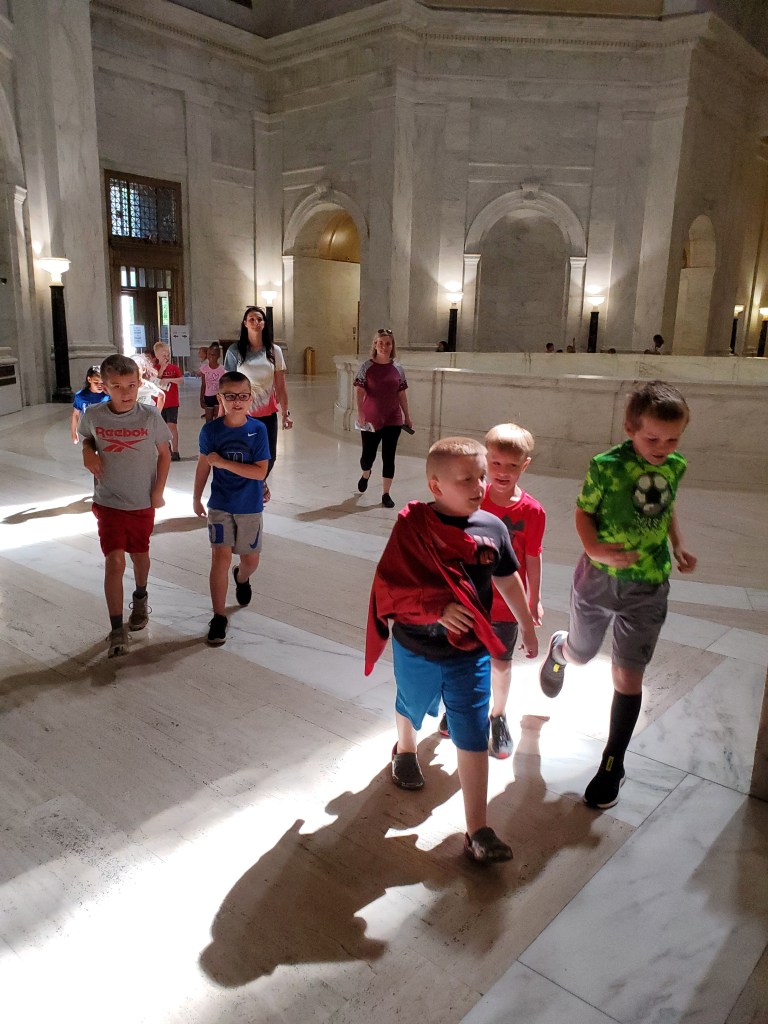
I picked up a handsome “commemorative history” of the building, in its seventh printing as of 2022 and free, though a stack of these in the House chamber went ignored by other visitors talking about every- and anything other than the building or the government it celebrated. A metaphor for our poor country’s current disarray? After seeing all I could see, I exited through the Kanawha River entrance—a one-way exit—and startled a staffer smoking a cigar on the magnificent portico.
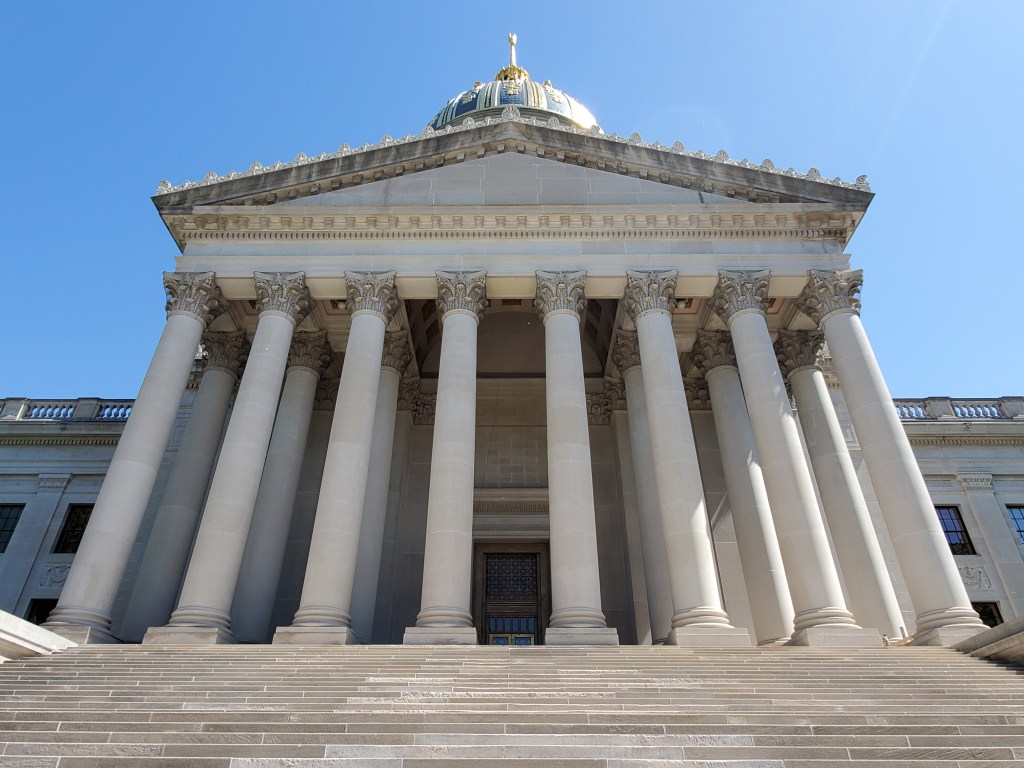

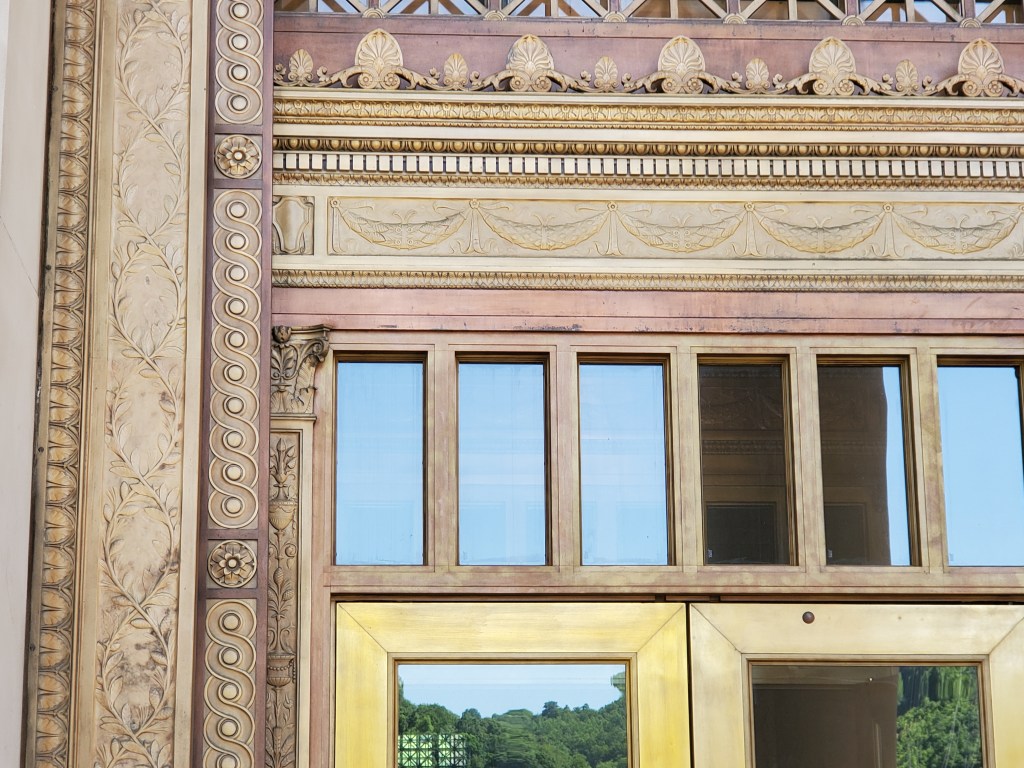
He cautioned me I couldn’t re-enter that way, but when I assured him I was finished with my tour, he began telling tales of the building, including how “Building 3,” the green-roofed edifice behind the Capitol, was also a Cass Gilbert building. Though the state historians owned the blueprints for the Capitol building, they lacked the blueprints for Building 3—but discovered them, oddly enough, up for sale by a Gilbert relative on eBay. “You can’t imagine,” he said between draws on his cigar, “what it took to secure a p-card with an unlimited cap so they could bid for those blueprints on eBay!” Another metaphor exposing the absurdity of metamodern life?
I walked around to the garden façade of the building and at a teacher’s request snapped a photo of her and her class assembled there. The kids were cute and polite, singing out a soprano chorus of “Cheese!” when I asked them to, and then continuing to pose for my own cell shot.
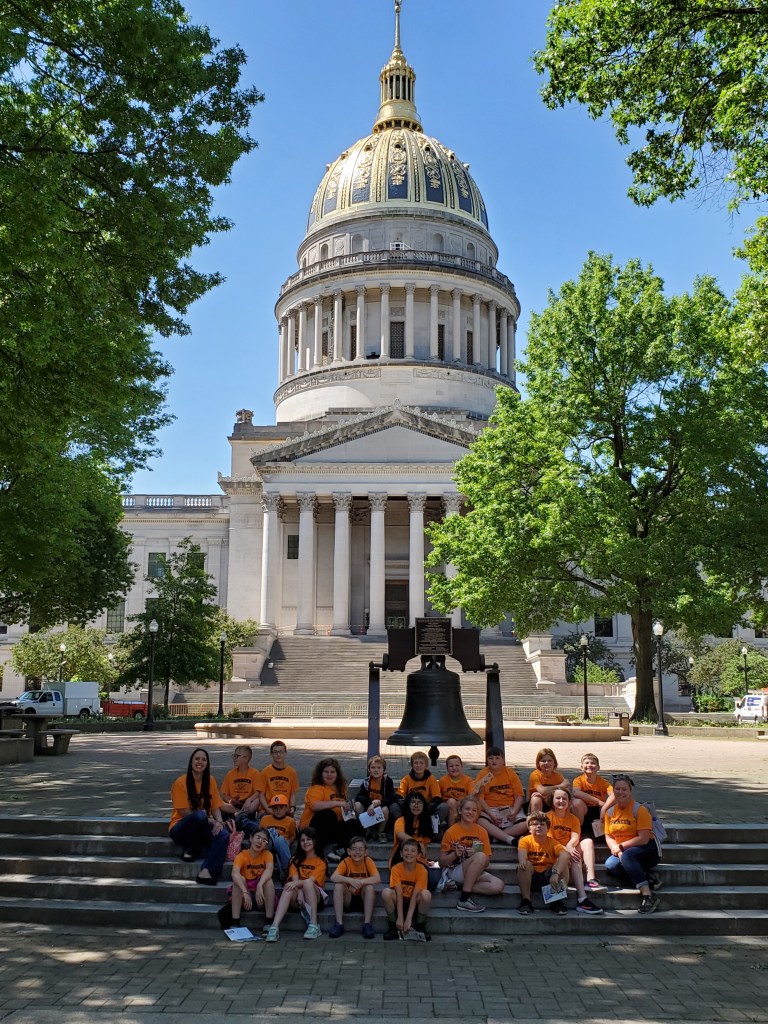
As they passed me on their skipping ways, they just as cheerfully each piped, “Have a nice day!” Such courtesy to strangers, I thought. More native to the south than NH.
Back on the road west, the classical FM frequency I was listening to was intercepted by a Christian radio host dissing President Biden for being “so typically left wing,” making his post-shooting visit to a grieving Buffalo “political” by referencing the “so-called replacement theory.” A white 18-year-old, deranged by racial hatred and disinformation, targets a grocery in a black community and murders 10 people. What should our politician-in-chief say? Even as I thought that, I turned off I-64, having promised myself a bite to eat once I crossed over into Kentucky, and saw first, a McDonald’s, and second, parked across the street, a white truck, flying two U.S. flags and two Trump flags, behind a large sign the read “AMMO.” OMG. The trouble we’re in.
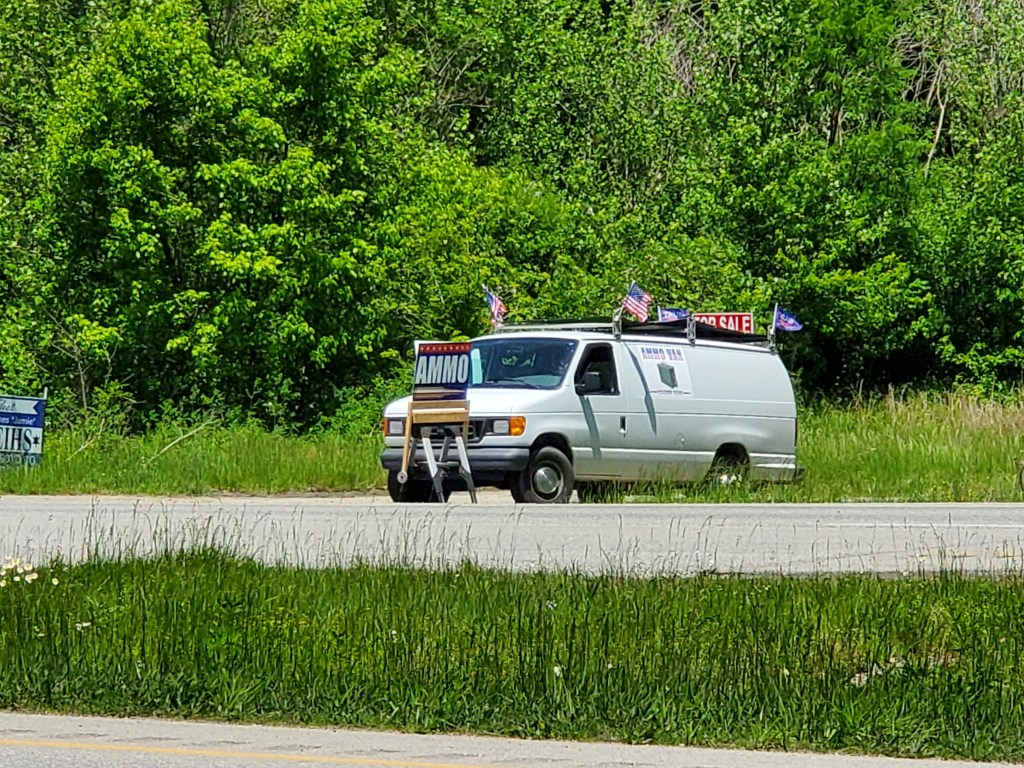
But hunger prevailed and I went into the McDonald’s looking for the salads I recalled they once used to offer. No such luck. But the helpful young woman behind the counter had a solution, posed with rising inflexion: “ You can order a Crispy Chicken Deluxe and tell ‘em to hold the bun and give you extra lettuce and extra tomato?” Suddenly, I’m a young Jack Nicholson in Five Easy Pieces! Since this youngster was, however, quite sincerely wanting to help me, I did NOT tell her to hold the bun “between her knees.” I had my pseudo salad, surreptitiously took photos of the ammo truck and the road-side cross—and knocked over Stop sign beside it–and headed for Danville.
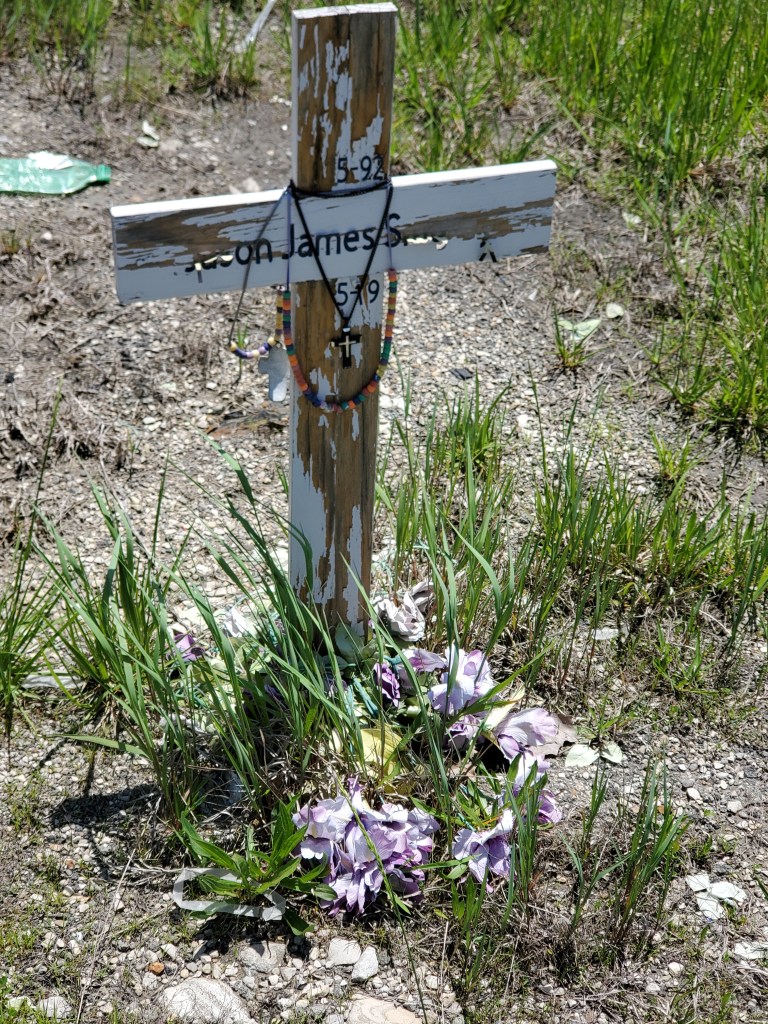
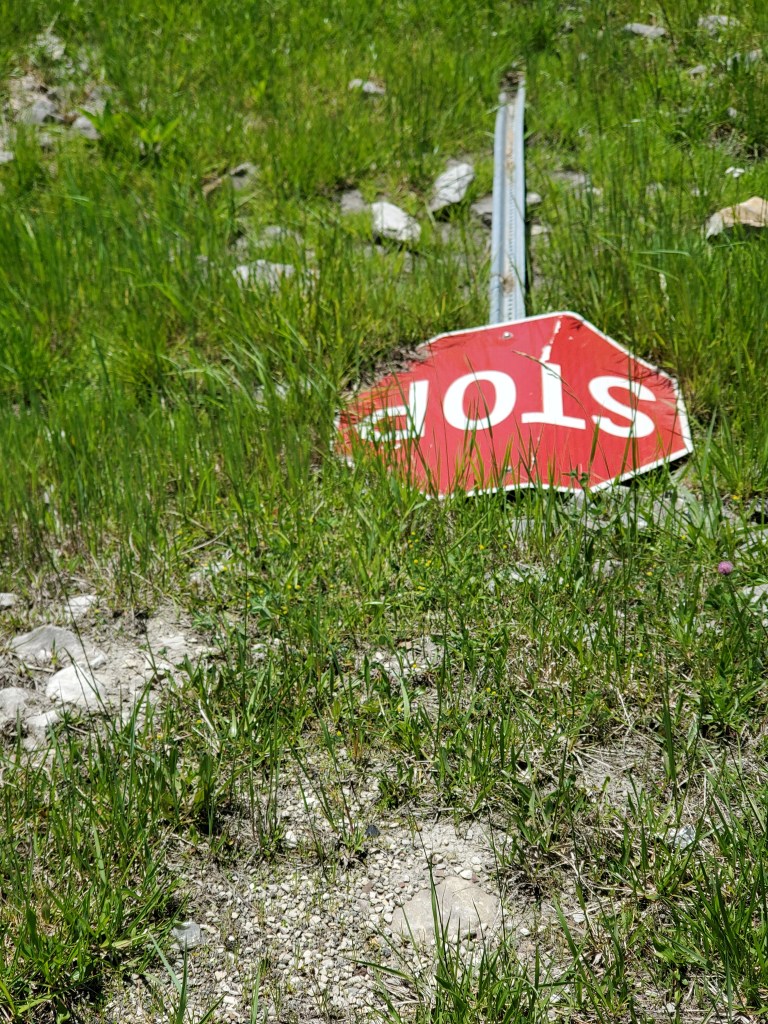
I arrived at my friends Bill and Grazia’s house while they were still at work, Bill continuing his art historical scholarship and Grazia at her clinical social work/therapist practice, and so had time to appreciate the beauty of their home set in a leafy green neighborhood in full spring display.

Such a happy reunion with these two friends! I’d last visited in February 2020, just before the pandemic shut us all down, when they’d invited me to return and stay in their “little house” when next I came to Danville. Having spent 1984-1995 professing at Centre College in Danville, I still have many dear Kentucky friends in town, and so I took up their kind offer. Such tasteful luxury! Both the inviting “big” house and the little one are beautifully appointed with period pieces, art, and books all enhanced by the gracious hospitality of these two. Over a lovely dinner of antipasto (Grazia is Florentine), salmon, and potatoes roasted with garlic, Bill unintentionally challenged my memory by asking about my dissertation (c. 1984: that IS a long time ago; how flattering to be asked, though I can hardly remember my argument). Grazia and I bonded over more recent texts: turns out we had both read Anne Fadiman’s The Spirit Catches You and You Fall Down about the cultural collision that ensued over the treatment of a Hmong child with severe epilepsy. More immediately, we shared our common admiration of Maggie O’Farrell’s Hamnet, especially O’Farrell’s painfully accurate rendering of grief. However fictional, the novel’s invention of a Hamlet backstory not only chimes with my decades’ acquaintance with Shakespeare, but also with Grazia’s practice as a therapist—and, sadly, experience as the mother of a vivacious, beautiful, clever daughter lost in 2007 to a senseless Boston gunfight. Sitting in the lovely dining room at the end of a perfect meal with such dear friends reminds me of a much earlier conversation with another close friend, one also devastated by a shocking, violent loss. Her answer to the question and answer raised by such trauma, a personal, non-sectarian catechism: Why are we here? To take care of each other.
I settle down to sleep in the lovely bedroom of “the little house,” comforted by the ties that bind old friends.
-
Southern Sojourn Day 4: 16 May 2022 Woodbridge VA > Charleston WV

Packed the car and left Woodbridge, phone functioning (hallelujah), about 10.30 and drove west through the Shenandoah Valley under magnificent clouds and light rain, shafts of light breaking through the blue and grey, making the hills preternaturally green and lush, miles and miles of that fresh green breast of the new world. I’m singing “Oh, Shenandoah,” though not so well as my sweet daddy did, until the gorgeous approach to West Virginia prompts several choruses of John Denver’s “Take Me Home, Country Roads.”
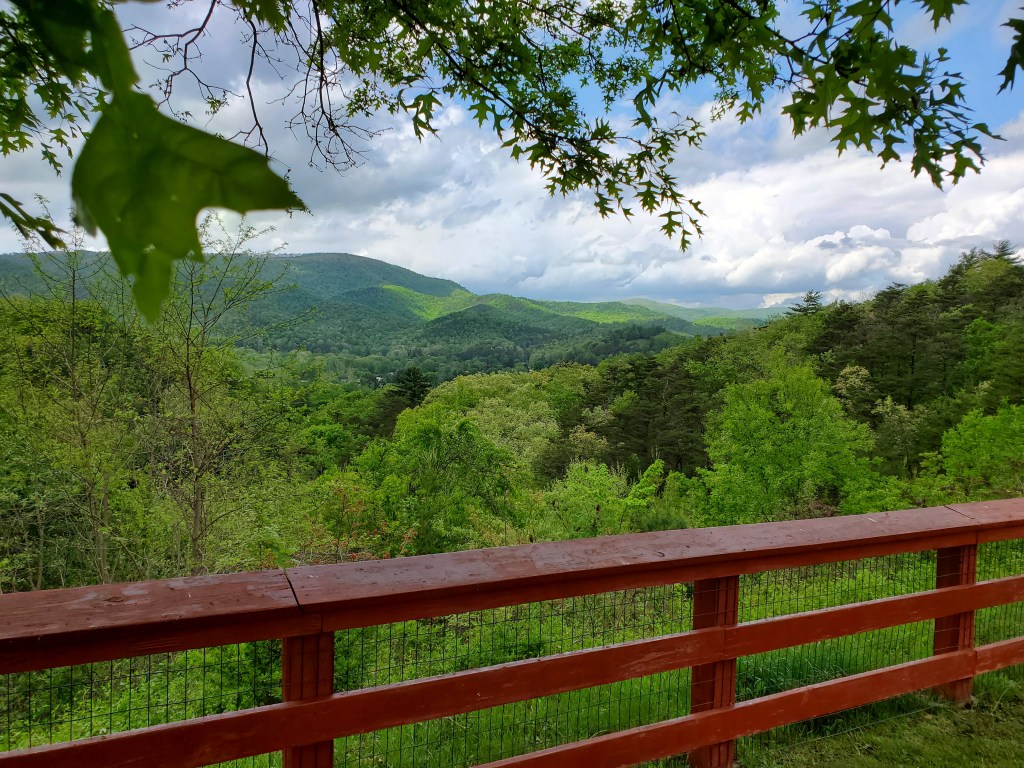
Truly, the vistas do seem “almost heaven,” but the news of two racially motivated mass shootings, one in Buffalo, one in Irvine Ca, begs to differ. At the welcome station, the flag flies at half-staff.
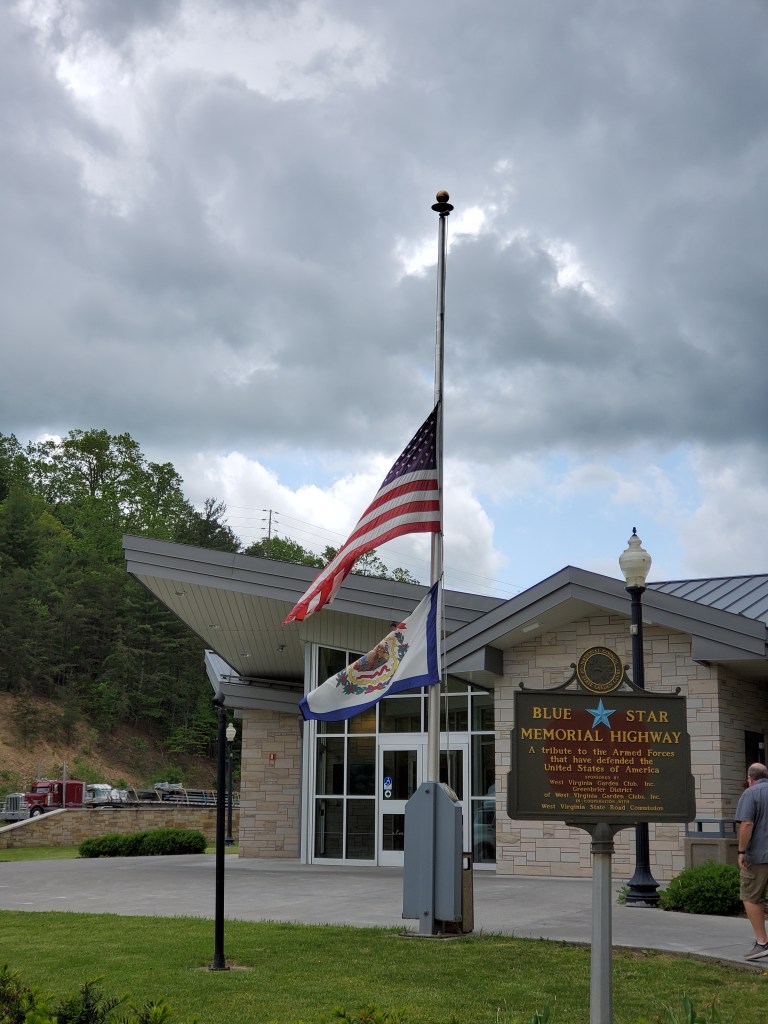
The juxtaposition of such spacious, fertile, seemingly endless natural beauty with the actions of “les mauvais singes,” always my late friend Ed Bastian’s sad dismissal of the evil men do, makes what we wicked monkeys get up to even more incomprehensible.
When I arrive in the industrial outskirts of Charleston WV, the setting of my Comfort Inn on Maccorkle Avenue seems NOT so promising: neither the huge parking lot nor the graceless façade on one of the Inn’s three buildings bodes well, and I spy an enormous truck stop and a McDonald’s next door.
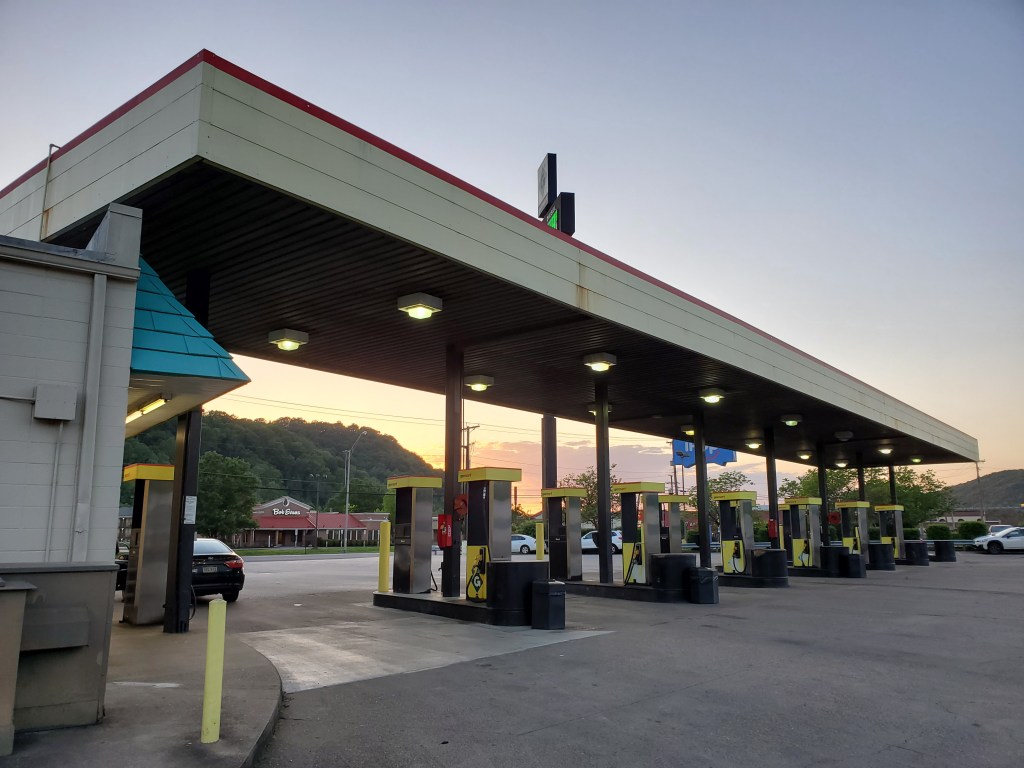

The inside lobby and, finally, the room are, however, new and spotlessly clean, and clearly the Indian family managing the place knows what they are doing. My second floor room overlooks the Kanawha River, conjuring visions of westward migration that I still recall from How the West Was Won, the 1962 epic—in Cinerama! Jimmy Stewart piloting a flatboat ‘cross the wide Missouri!
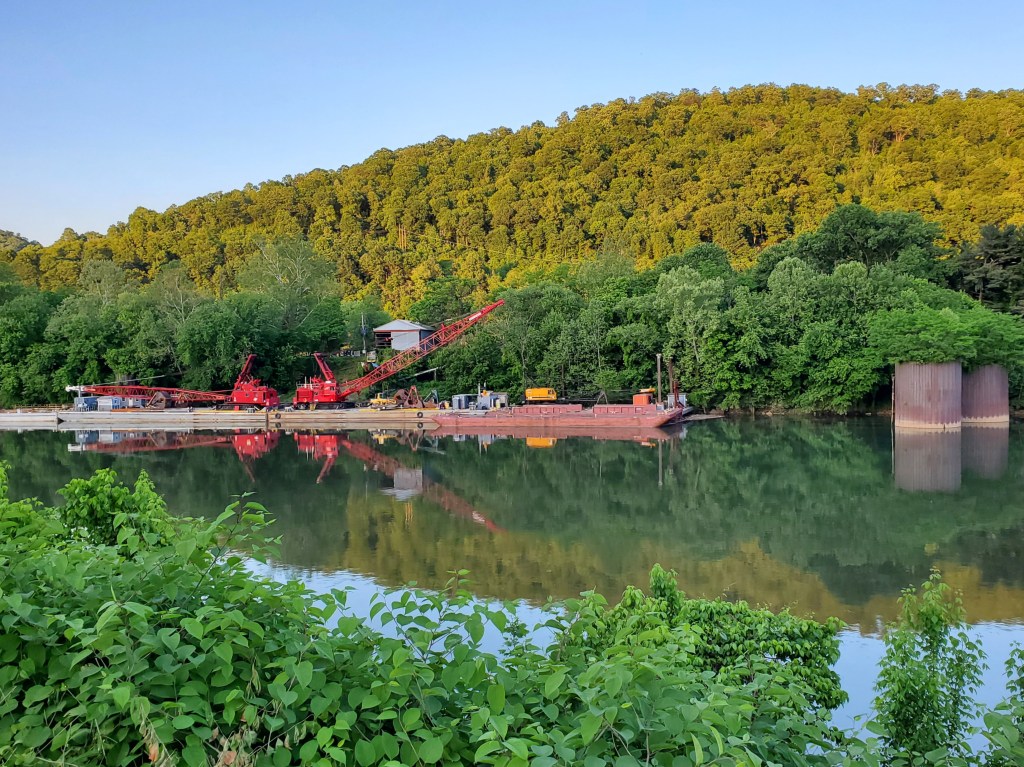
Kanawha River behind the Comfort Inn, Charleston WV With a little phone research I find a pleasant sidewalk restaurant, Pies & Pints, on Capitol Street where my attentive server Shalin serves me a small margherita pie and a glass of Malbec
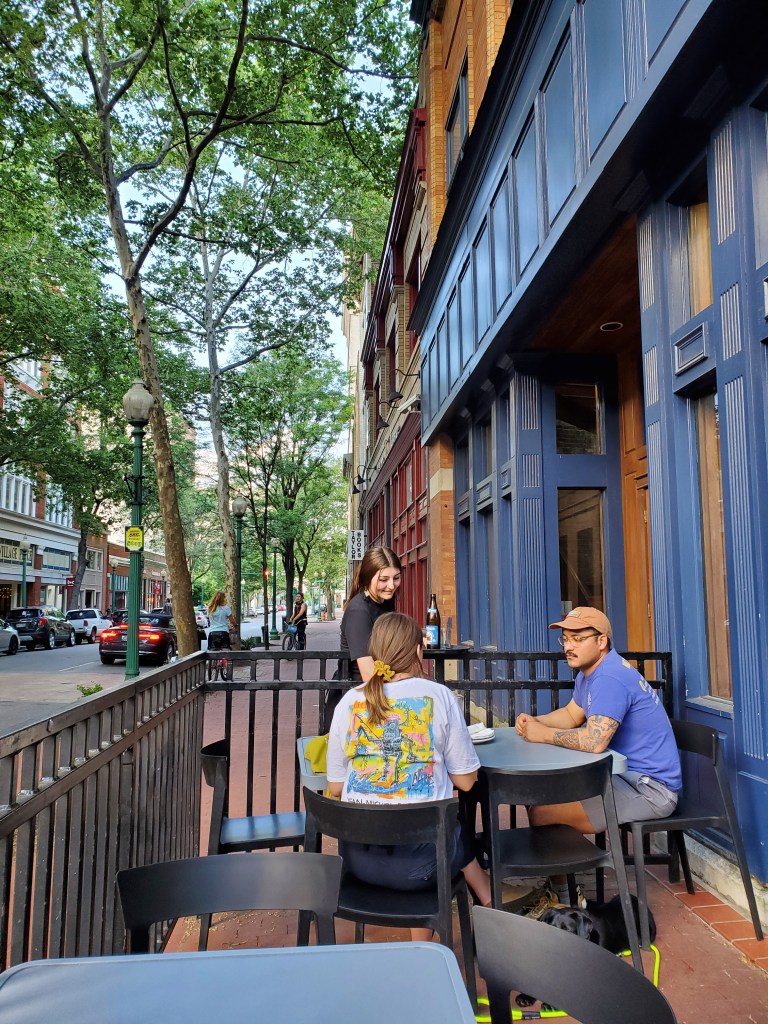
after which, fortified, I drive along the river to Cass Gilbert’s imposing 1832 Capitol building for a first look in the raking late afternoon sunlight.
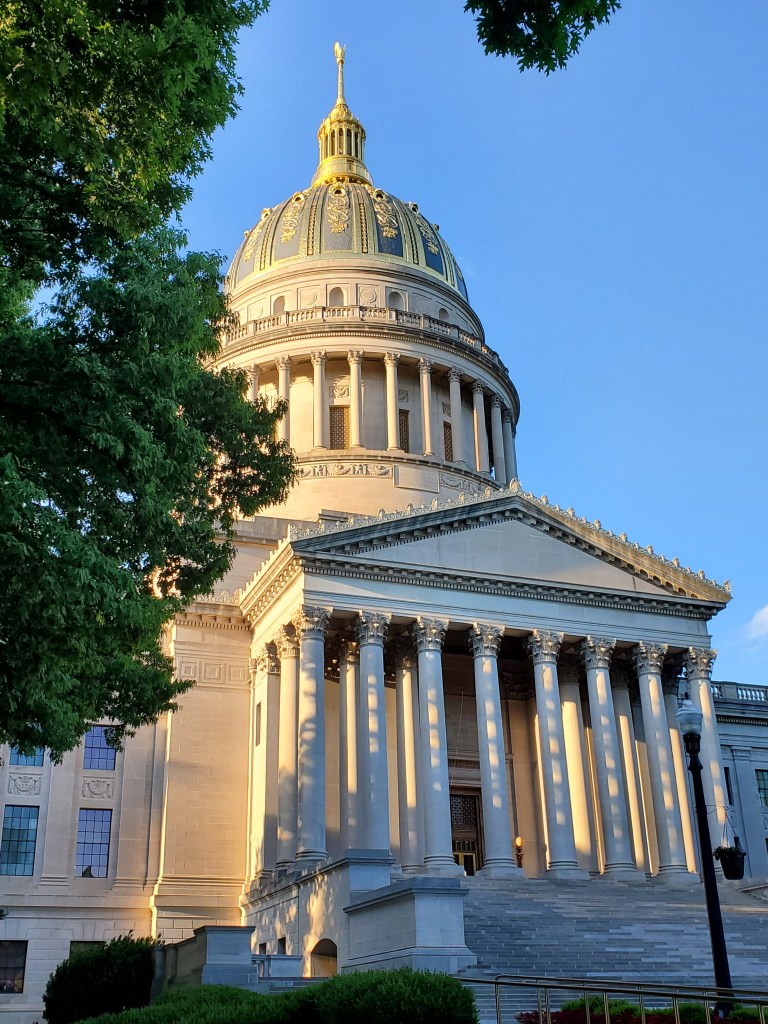
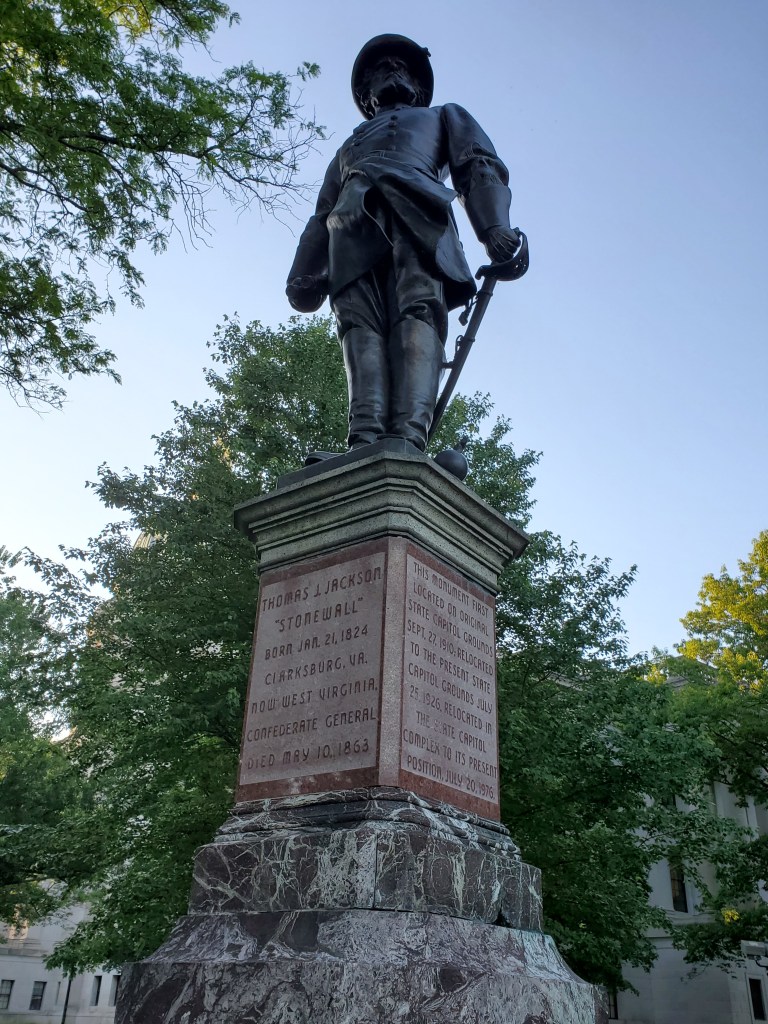
Lincoln is very much in evidence here, but so is Confederate General Stonewall Jackson, and the pall of obstructionist Democrat Senator Joe Manchin rather blights what Gilbert called the “reasonable function” and “idealistic character” of a State Capitol, which should “constitute the best evidences of the character of material, success and solidity, culture and civilization of a state.” O, that our politics and policies lived up to the grandeur of such architecture, or that our present cold civil war were done and the Union preserved.

-
Southern Sojourn Day 3: 15 May 2022 Arlington & Alexandria VA
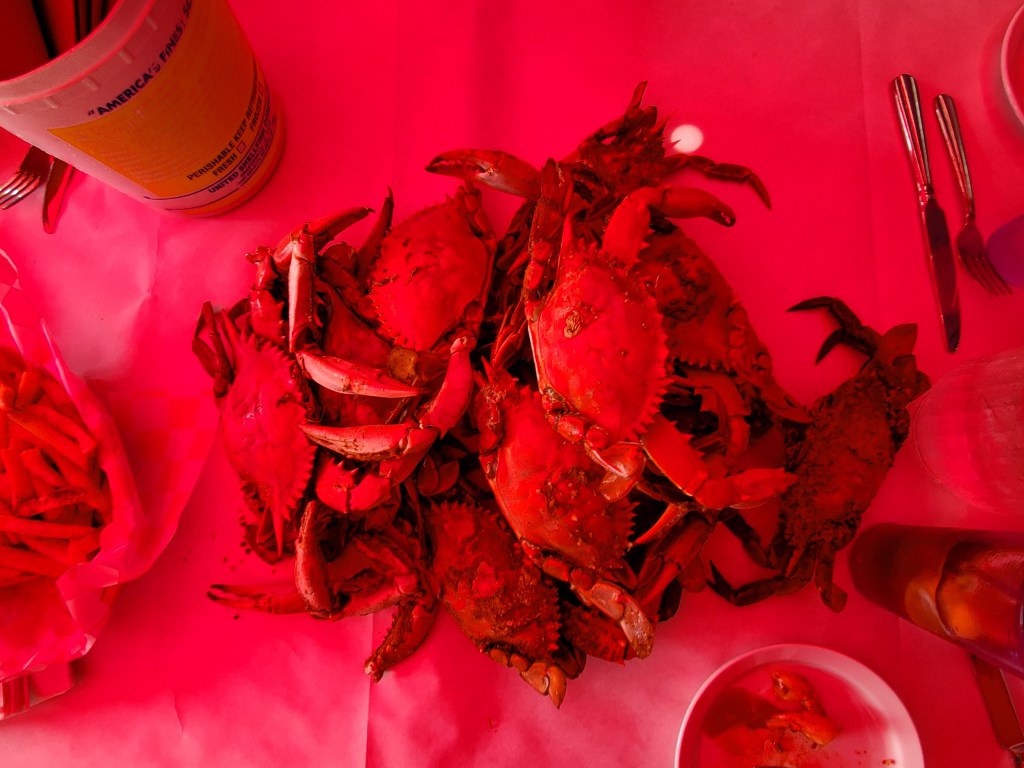
Sunday brunch at the Quarterdeck, Arlington VA, 15 May 2022 Woke early in my Woodbridge guest quarters at 6.30, panicking, bowels loose at the thought of having no working cell phone for the entirely of my odyssey. Somehow managed to talk myself down, and after a light breakfast followed by a few more futile attempts at fixing my Galaxy S10, I gave up, determined to enjoy the day, which was to begin properly at the Quarterdeck in Arlington, a crab place where Chris and I were to meet up with Chris’s daughter Charlotte for lunch. We three arrived just as it opened, and headed for a paper-covered picnic table under a red awning laid with small wooden mallets and assorted condiments. Once we ordered but before we were covered in shell bits dripping with Old Bay-flavored crab juice, Charlotte, both musician and coder, offered her assistance with my phone. I gratefully accepted, and handed it over minus its pink cover. In a matter of minutes, clever Charlotte had it sorted out—as the rest of the photos from this happy day can testify.

Clever Charlotte with proud dad Chris O the bliss, Dear Reader, of disaster averted—and at the beginning of a gorgeous spring day in good company with a pile of delicious crabs to smash and eat. Peripeteia divine! I used the now restored functions of the phone to cancel the previously scheduled tech appointment at a Target miles away, and we made plans for a much pleasanter way to spend a Sunday afternoon, setting out to bring more crabs to another of Chris’s daughters, Marianne, and her family in Alexandria, husband George and young son Christopher. Both hard-working attorneys, Marianne and George also had good tips for visitors, and after taking delivery of said crabs, they sent us off to explore Old Town Alexandria.
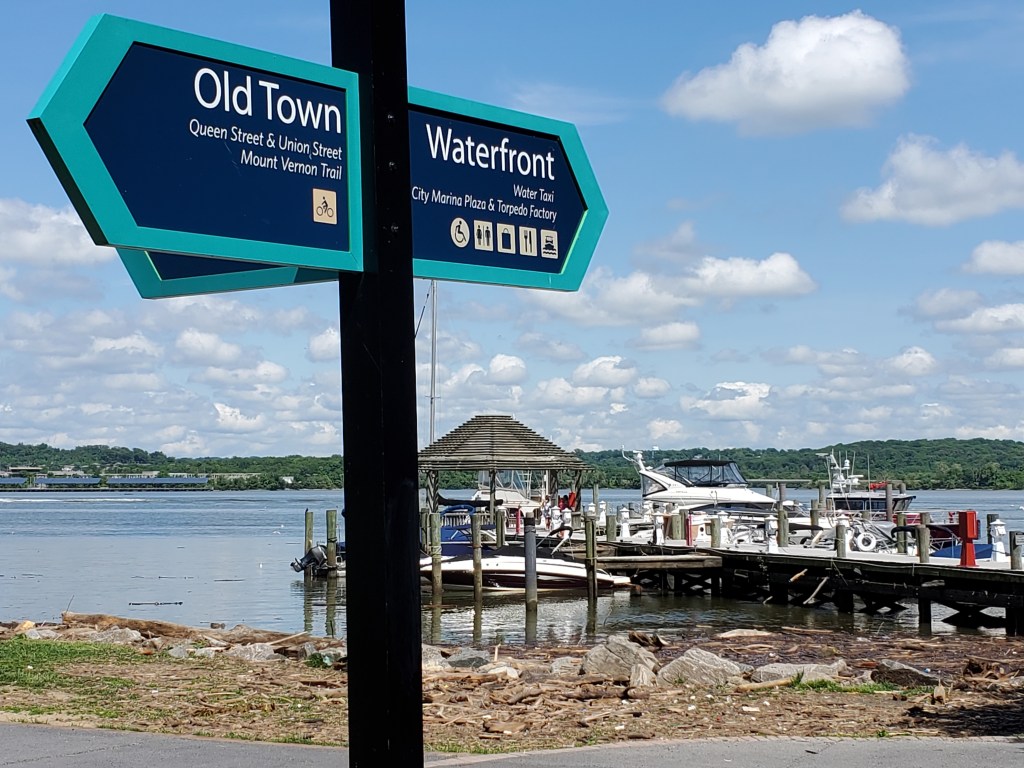
A pleasant riverside Sunday afternoon The vibe there beside the Potomac resembled a smaller, less touristed version of the Riverwalk area of New Orleans: street musicians and magicians, sidewalk artists, green space, gelato shops, a paddle wheeler, restaurants, and a one-time torpedo factory reconstituted as both workshops and gallery space for artists. Another version of swords into plowshares, this, artifacts of destruction replaced by creative art.

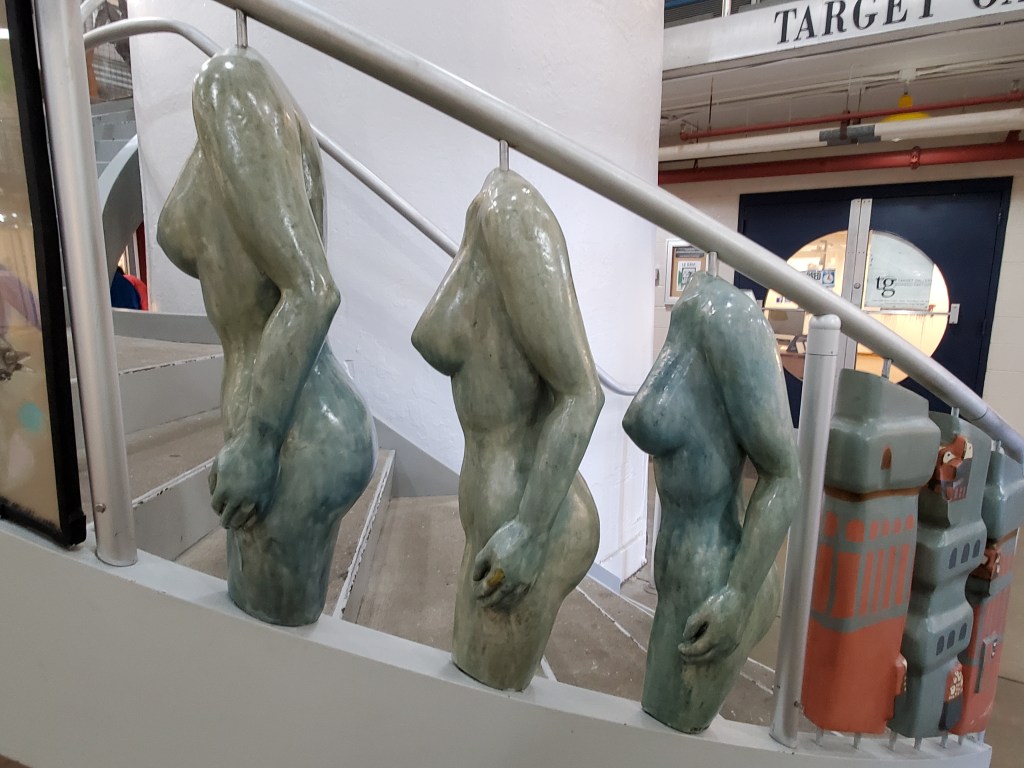
We toured the extensive space, visiting glass artist Alison Sigethy and her dynamic, mesmerizing “sea cores,” and the drip art of Blu Murphy, among other delights.


Back outside, the treats were audible and gustatory; fast-melting sorbet consumed to Dixieland tunes in the park with Chris, Marianne, George, and young Christopher George, who seemed as taken with the ambiance as I was.
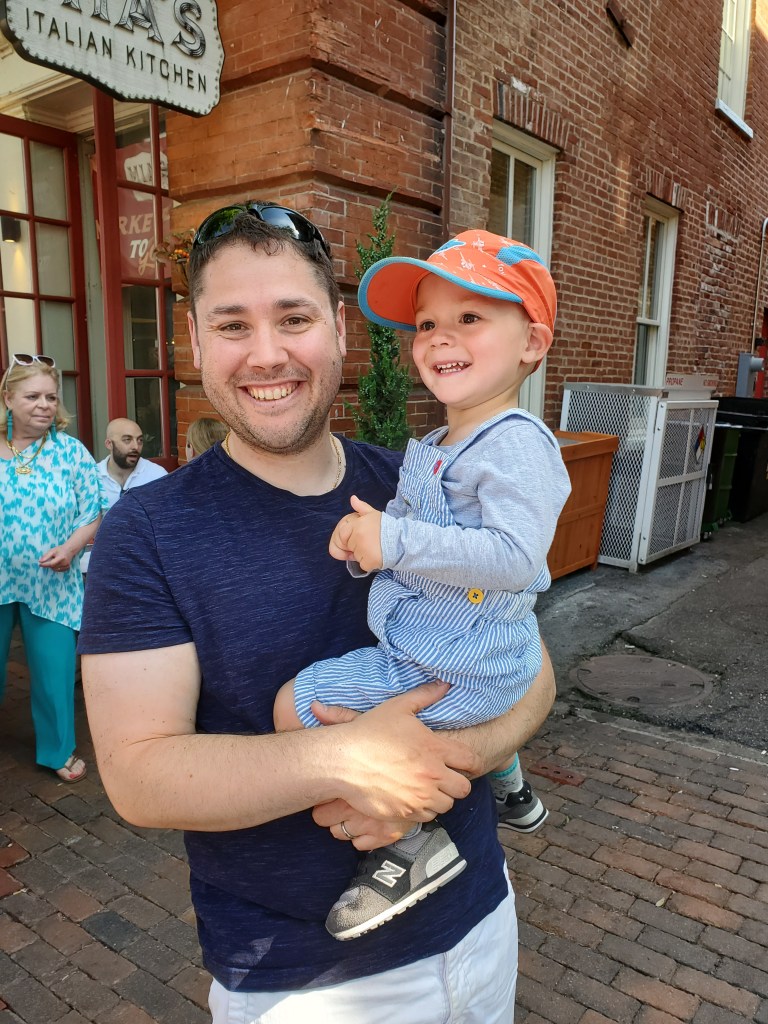
George and Christopher George 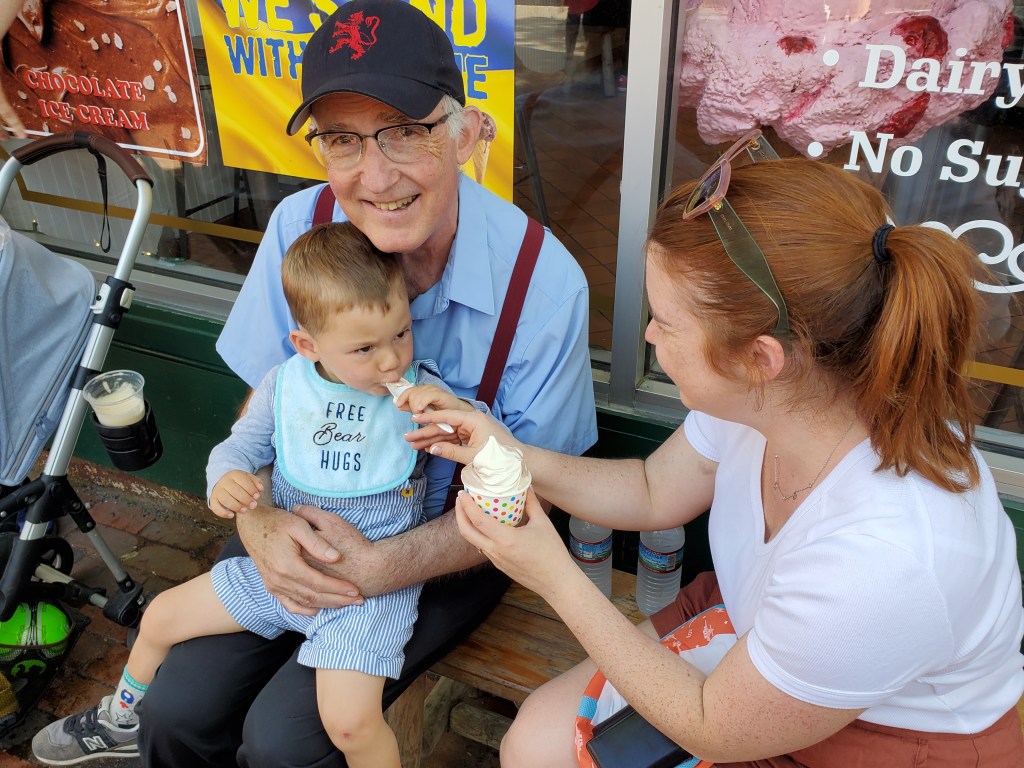
Grandpa Chris, Christopher, and Marianne Another tip from Marianne sent us to Mo Mo’s for a takeaway dinner of extremely elegant and enviable sushi the likes of which are not to be found back in my NH home.

All in all, ‘twas a glorious ides of May, a victory snatched from the jaws of defeat by three generations of a wonderful family. After such a day, I was primed to take up my next adventure in good form, and slept soundly through the night.
-
Southern Sojourn Day 2: 14 May 2022 Princeton NJ > Woodbridge VA
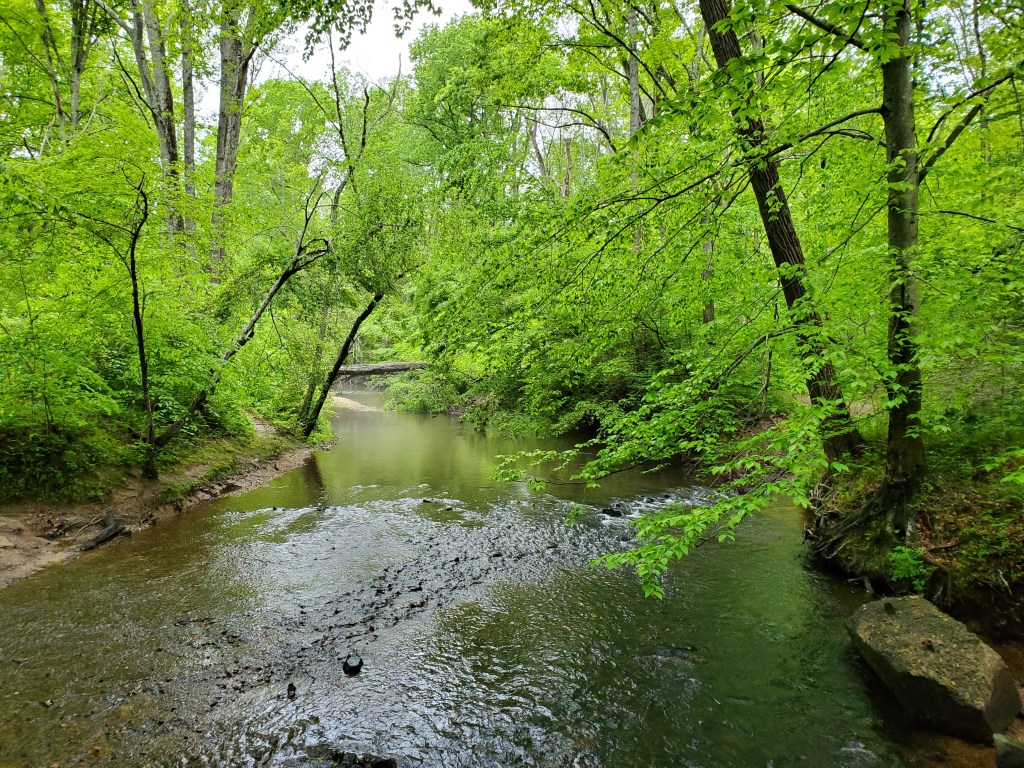
Prince William Forest Park, Triangle VA, 14 May 2022 The day began with coffee in lieu of the free breakfast Marriott did not provide once I negotiated a tricky left exit into the Delaware welcome station, “Home of President Joseph R. Biden, Jr.”; left exits as political statement? Surely not. Traffic got heavier and faster, the traffic patterns more complex, the closer I got to the District, but I had my public radio pals (bless Rick Steves and Scott Simon) and the Google gal to calm and guide me—at least right up until the final turn onto my friend Chris’s street, when Google gal’s voice cut out. Didn’t matter: it was a safe arrival and a very warm welcome. Chris proposed a walk in nearby Prince William Forest Park, 16,000 acres managed by the National Park Service in Triangle VA adjacent to Marine Corps Base Quantico, the largest protected natural area in the metropolitan District of Columbia region, and a “respite of quiet and calm” as advertised, especially welcome after a long, hairy drive. Chris, retired UNH piano professor, had rehearsed (as performers do!) one of the many walks he has come to know since his move to Woodbridge, and indeed, it was restorative: immersion in the humid, burgeoning spring green. When we returned to his home from the park, Chris prepared a glorious antipasto platter for our dinner, and I made a call to Consumer Cellular, my carrier, about my phone’s voice dropping out; the Google assistant wasn’t talking to me when I asked her a question either, so it wasn’t just the gps function. I’ve always had superior tech assistance from CC, expert, encouraging, and non-condescending to us seniors; the last time I’d called, the tech rep had congratulated me on correctly authenticating who I was by rattling off my identifying numbers: “Flawless like a doll!”
This time, however, I had trouble making clear to the rep what my problem was. After several attempts to explain, I seemed to have succeeded, and was executing the various steps she recommended until, I suddenly realized, she must have thought I needed the phone to speak to me because I was blind, and had had me initiate the phone’s accessibility function. Now I was in tech hell: the phone no longer responded to my swiping or tapping buttons, but instead issued vocal orders I could not understand– “quick tap twice long hold”–in a severe voice that lacked the amiable, mellifluous tones of the Google gal. I couldn’t back out of this mode. Neither could the tech rep help me. I couldn’t even turn the damn thing off. The best the rep could do was make a next-day (Sunday, of course) appointment for me at a Target store miles away. The phone kept talking at me; reversing the flip command to “put a sock in it,” I put it in a sock and tried to stave off panic. At the start of my 2700-mile road trip, I now had a dysfunctional phone: no gps, no email, no texts, no calling.
Attempting to convince myself I could still certainly manage travel—as I had many times before—sans cell phone (I had maps! Land lines still existed—in some places), I focused on enjoying the antipasto,
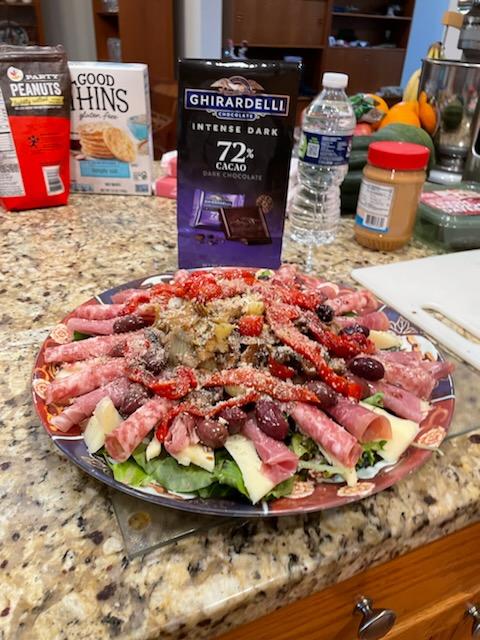
and, after dinner, Chris’s playing. Via You Tube, he introduced me to a gorgeous operatic soprano, Rosa Feola, performing at Wigmore Hall, and I even attempted to play the first of the Schumann Kinderszenen for him. His piano has an action very different from David’s, impressing me with yet another issue professional touring pianists have to put up with. I had only phone panic to contend with; sleep, Dear Reader, after the long day came easily.
-
Southern Sojourn Day 1: Madbury NH > Princeton NJ
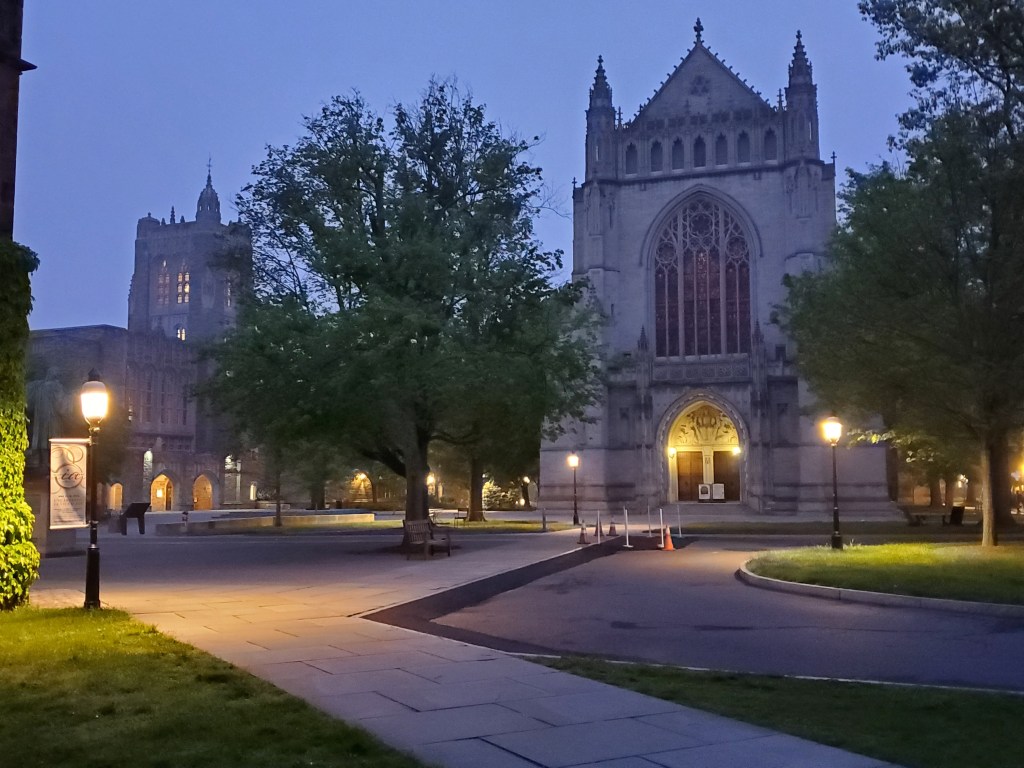
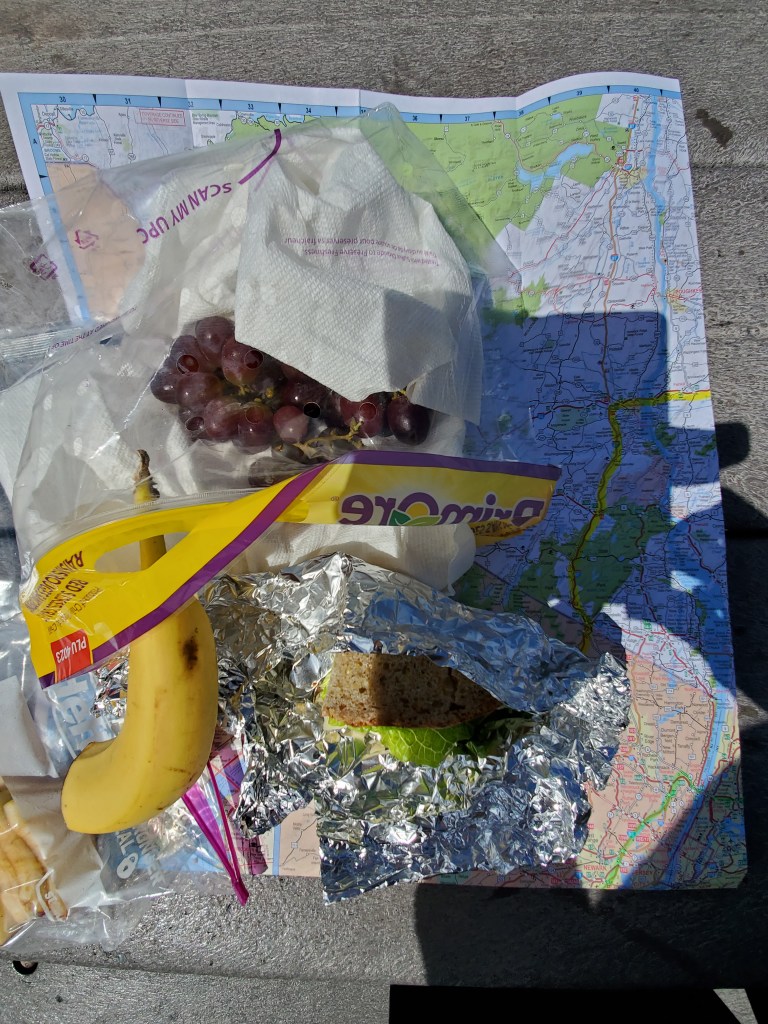
Twilight on the Princeton campus, 13 May 2022 Google maps are great, but how do you contradict the GPS assistant who wants you to take the shortest route when you want to take the longer, less trafficked, and MUCH greener route through the Hudson River valley and across the Tappan Zee (“Tappan” after the Native American sub-tribe of the Delaware/ Lenape people, and “Zee,” Dutch for sea) Bridge? I fight the objecting Google bongo drums directing me south when I want to go west, and lunch at a rest stop near Washington’s headquarters outside Fishkill NY, contemplating the temporal distance between General Washington and me, texting photos of my roadside still life back to photographer friend Julie in NH.
Crossing the Hudson reminds me of flying with David in the Warrior 500 feet above the river, self-announcing our way first down the starboard side and then up the port, well below the top of the World Trade Center en route to a friend’s first gallery show in the City: one of several incentives that prompted David to earn his wings. Revolutionary and personal history fade in and out, like radio waves of Boston Public Radio’s Jim Braude and Margery Egan giving way to Christian Rock, then Afro-Cuban, then Fauré before I exit to NJ 252 and take a one-way bridge and a long ride along the Delaware & Raritan Canal to reach Princeton, my first night destination. One small, panic-inducing hiccup: the first gas station I stopped at declined my VISA card, but accepted another. Later, in the hotel, both a text and an email from Chase explained why: Chase didn’t know it was me. I allayed Chase’s misgivings, paired my cell phone with the Marriott tv (!!!), and searched out a very nice Italian place, Mezzaluna, for a fine dinner in town.
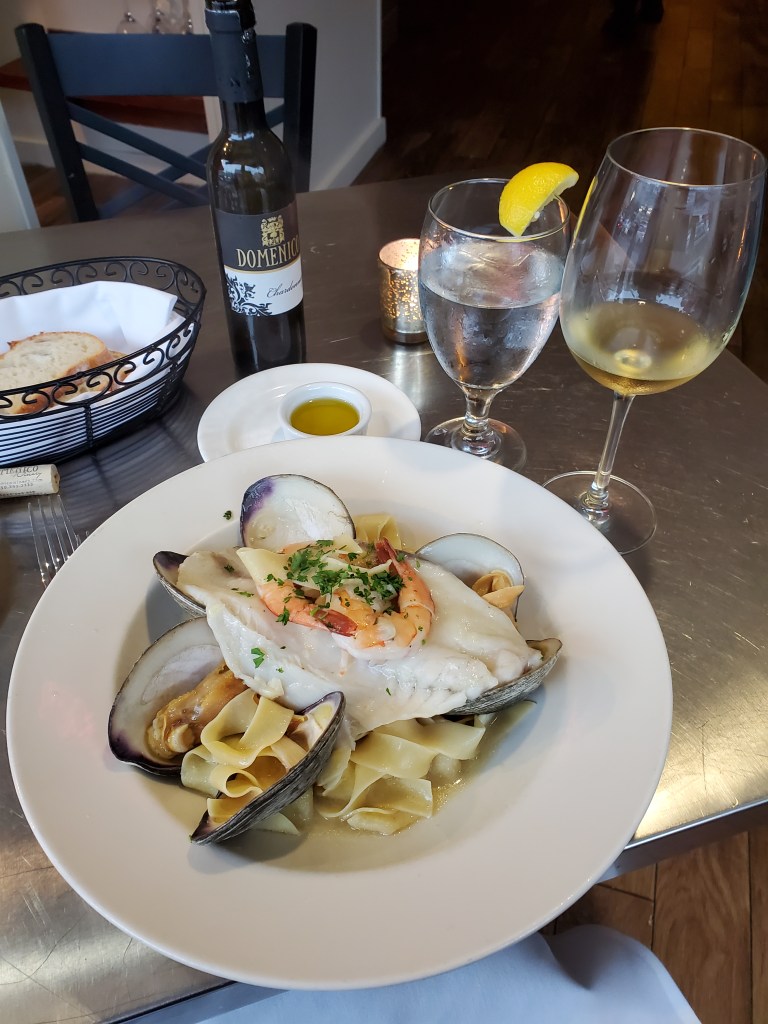
A stroll through the Princeton campus afterward first invited admiration of the vernacular campus gothic, a glow that gave way to dispiriting thoughts of how this new world version of Oxford and Cambridge was ersatz, something of a theme park: America has no medieval universities. Scholarship and learning were held in such high esteem when first universities were founded, borrowing administrative structure and elitism from the Church—the reason Princeton’s library looks like a cathedral. And yet, UCLA and other colleges now expect adjunct professors to work for free: doctorate, five years of teaching experience, and letters of recommendation all for a salary of $0. As a colleague recently observed: being a professor used to be a good job. Not to mention student debt, curricular slippage, and 43% of Americans getting their news—their “truth”—from Fox. Contempt for expertise, facts, data, scientific method has blighted the ivy on those lovely pseudo-gothic walls, and our democracy is imperiled. What would the Princeton founders have made of digital capitalism? Whither the Princeton graduates of 2022? Beautiful campus. Confounding times.
-
Home again
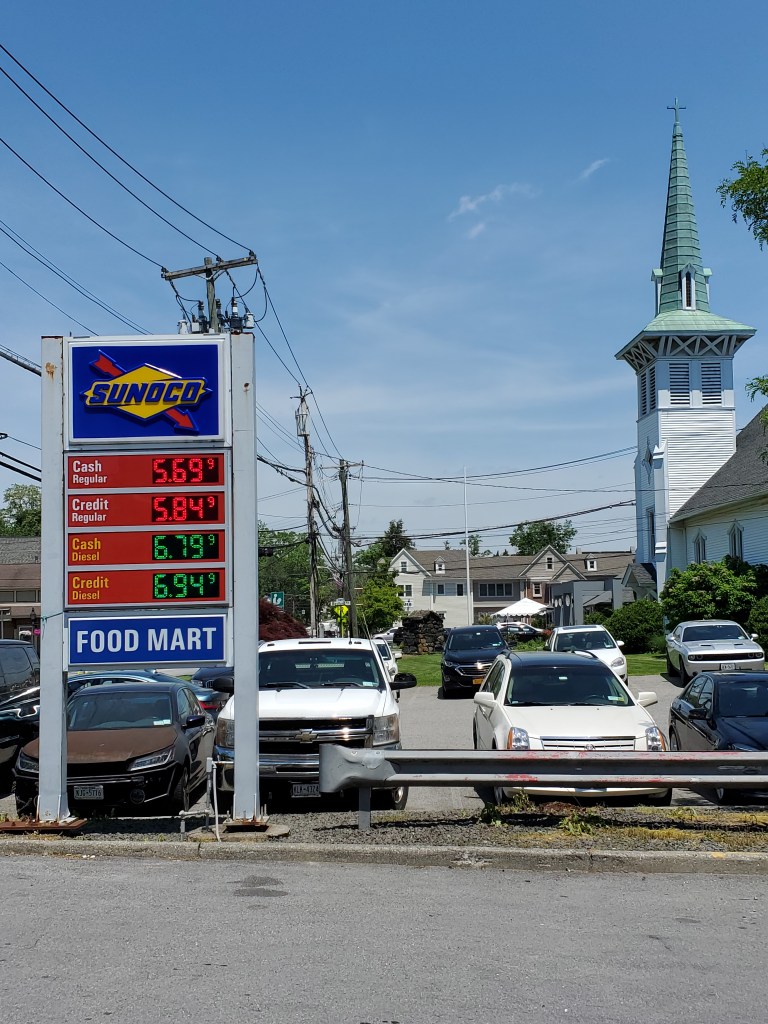
Outside Danbury, Connecticut, last fill-up, 31 May 2022 Leaving Philadelphia at 9 am on 31 May as the temperature climbed to 96o, I arrived back home in Madbury NH to 55o temperatures at 5 pm, three years to the day since the final hours spent with my darling husband David. I awoke alone this morning to the silence of a house with only one resident sleeper, a change from nearly three past weeks of travel and visits, reminded of that 1 June 2019 with David so recently gone, his absence so raw and still present. We moved into this house over Memorial Day weekend in 2001; he left it exactly 18 years later. I am looking for patterns.
When I got home last evening, I first filled the bird feeder with seed, the suet basket with a fresh cake, and the hummingbird font with sugar water, unpacked the car, poured a glass of wine, and surveyed changes in the yard and garden since I’d left on Friday, 13 May. The grass needs mowing and the last of the daffodils are long gone. I’ve missed the lilacs entirely. The rhododendrons are blooming, at least where the deer haven’t cropped them; there, bright new green foliage has sprouted. Ditto the azaleas, most of their blossoms similarly ravaged. The Solomon’s Seals dispatched by deer have allowed the hostas they previously shaded to emerge—including one that most certainly I never planted, now growing across a path, uphill from its fellows, under a pine. How did it get there?
My return home unscathed after so many miles, so much traffic, and the koyaanisquatsi of I-95 (How is it we continue to survive the George Washington bridge approach?) seems no less than miraculous, the revelations of travel and reunions with close friends now distant in time and space rendered rich and strange. I propose, Dear Reader, to consider it all here, in posts of peripatetic epiphanies. Looking for patterns, and now more than halfway through my 69th year, taking stock seems not only a good idea, but a necessity.
My Southern Sojourn:
19 days
2728 miles
13 states + D.C.
21 friends
3 family
2 mass shootings (rising to national—however brief—attention)
-
May the 4th be with you . . . .
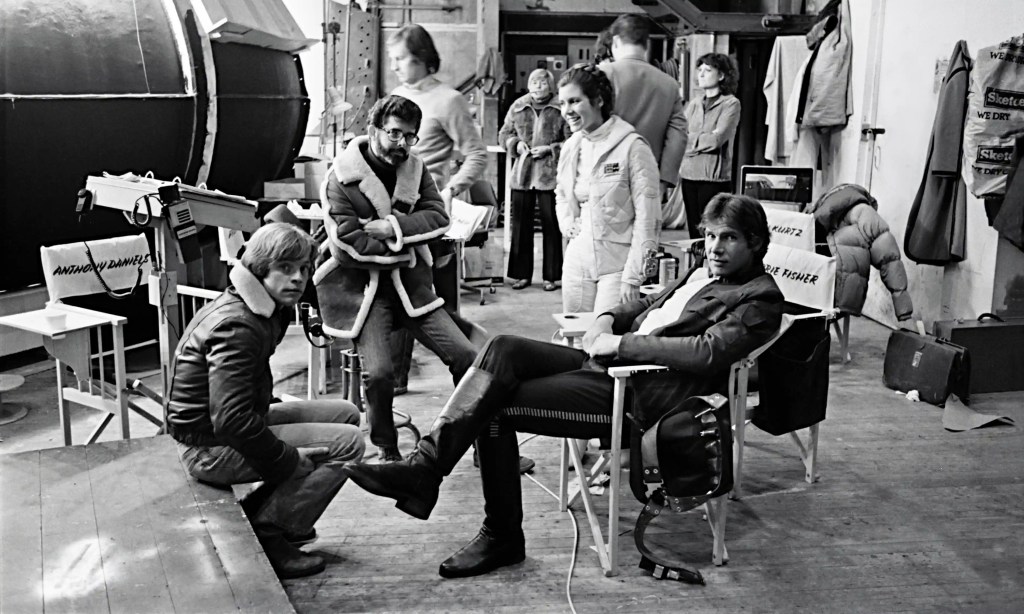
Mark Hamill, George Lucas, Carrie Fisher, and Harrison Ford
Those, Dear Reader, were the days. See “Empire Laid Bare: Making the Original Star Wars Trilogy–in Pictures” in THE GUARDIAN, 3 December 2018.
-
If men could get pregnant, abortion would be a sacrament.

3 May 2022
Demonstrators at the Supreme Court react to news that the Court is poised to overturn the 1973 Roe v. Wade ruling that the U.S. Constitution protects a pregnant woman’s liberty to choose to have an abortion without excessive government restriction.
(photo by Francis Chung / E & E News / POLITICO)Though often attributed to either Florynce Kennedy or Gloria Steinem, Steinem herself elaborated the provenance of this quotation in a 2006 Boston Globe interview:
“You know who said that? Years ago [1971], I was in a taxi in Boston or Cambridge. There was an old Irish woman taxi driver. Flo Kennedy, the civil rights activist, was my speaking partner at the time. We were sitting in the back talking about abortion and the taxi driver turned around and she said, ‘Honey, if men could get pregnant, abortion would be a sacrament.’ And I’ve always been so sorry that I didn’t get her name.”
That taxi driver was spot on.
(Thanks to the good work of the Quote Investigator)
-
The only thing new in the world is the history you don’t know.
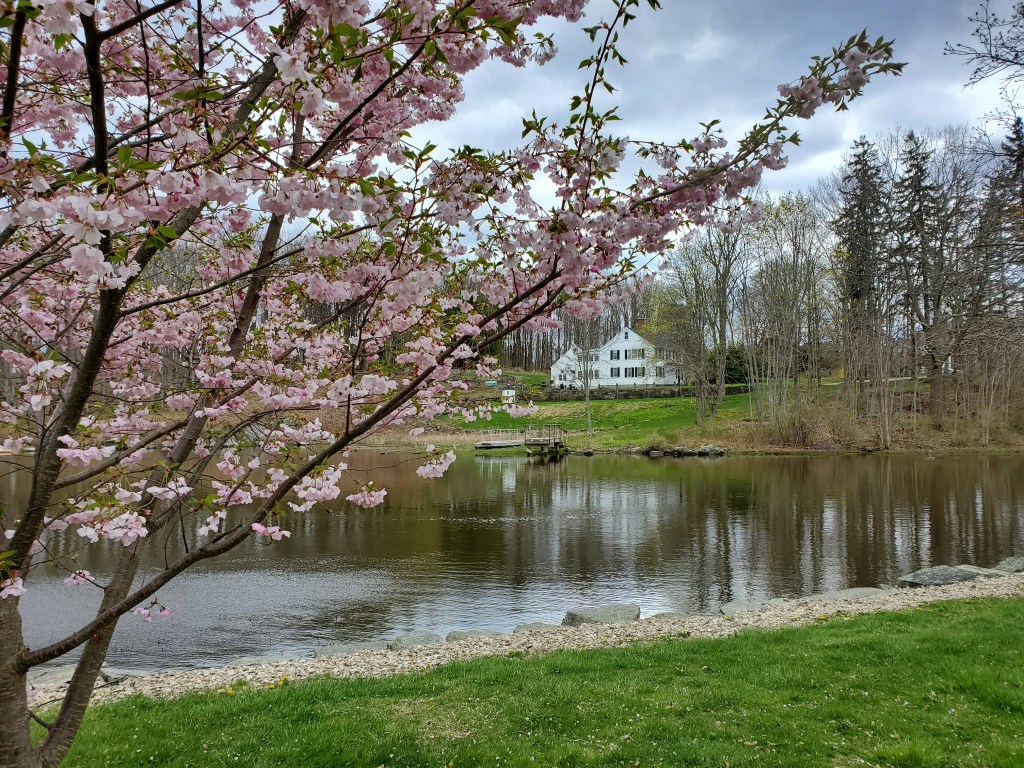
Gen. John Sullivan House, Durham, NH, c. 1740 In “Harry Truman’s History Lessons,” published in Prologue (Spring 2009, Vol.9, No. 1), a magazine featuring articles based on the U.S. National Archives, Samuel W. Rushay, Jr., archivist for the Truman Presidential Museum and Library, asserts what history meant to Harry S. Truman: both ethical and moral guidance and, most notably as President of the United States during his two terms in office (1945-1953), a tool he used to make decisions. Plutarch’s Lives (c. 120 CE), Rushay writes, gave Truman the insight that “It was the same with those old birds in Greece and Rome as it is now . . . . The only thing new in the world is the history you don’t know.”
Today, 28 April 2022, is Yom ha-Sho’ah, Holocaust Remembrance Day, marking the 1945 U.S. liberation of the Dachau concentration camp and commemorating the six million Jews who perished in the Holocaust. Falling on the 27th day of Nisan in the Hebrew calendar, Holocaust Remembrance Day also honors the Jewish insurgents inside the Warsaw Ghetto who in 1943 resisted SS and police efforts to deport them in the first significant urban revolt against German occupation in Europe.
But how much is remembered, or even known?
On 19 September 2020, The Guardian, like many other news sources, published survey findings of a “shocking” lack of Holocaust knowledge among Millennials and Gen Z:
“Almost two-thirds of young American adults do not know that 6 million Jews were killed during the Holocaust, and more than one in 10 believe Jews caused the Holocaust, a new survey has found, revealing shocking levels of ignorance about the greatest crime of the 20th century.
According to the study of millennial and Gen Z adults aged between 18 and 39, almost half (48%) could not name a single concentration camp or ghetto established during the second world war.
Almost a quarter of respondents (23%) said they believed the Holocaust was a myth, or had been exaggerated, or they weren’t sure. One in eight (12%) said they had definitely not heard, or didn’t think they had heard, about the Holocaust.”
More anecdotally, my colleague teaching American students in London recently reported that one of them did not know we were allies with the French, not the Germans, in both WWI and WWII.
And then there’s denial that goes beyond either ignorance or amnesia. As the House committee continues investigating the deadly 6 January 2021 attack on the Capitol, an Axios-Momentive poll from January 2022 revealed that more than 40% in the U.S. do not believe President Biden legitimately won the 2020 election.
Yesterday I strolled along the Oyster River on a glorious spring day, gazing at the lovely home of General John Sullivan, who left the Continental Congress to serve under Washington from Cambridge to Valley Forge, and later served three terms as Governor of New Hampshire, leading the fight for ratification of the U. S. Constitution. The General Sullivan house is Durham, New Hampshire’s only National Historic Landmark: history made visible.
Today, Dear Reader, I wonder what use our fragile democracy makes of history as yet another despot, like so many before, pursues crimes against humanity in Ukraine.
-
Subscribe
Subscribed
Already have a WordPress.com account? Log in now.
 Georgeann Murphy