24 August 2026
Now a week past my return from Ontario, I’m still processing my rich journey, weighing those memories against increasing weirdness reported in the 24/7 news cycle. As I was weeding the northeast flower bed yesterday in preparation for the gift of wild irises thinned and donated by my generous neighbor down the road, I heard one story about how human teachers in classrooms might be preferable to humanoid AI robots (!) followed by news of the 2026 World Humanoid Robot Games now underway in Beijing: machines apparently smashed human records, although some robotic sprinters crashed into barriers while others tipped over or caught on fire—presumably something those human teachers might not do. Two questions: has anyone seen The Terminator, James Cameron’s iconic film that so ironically premiered in 1984? And was it AI that designed and approved all those NY Thruway signs that read “NO EZ-Pass Call *826*? Methinks including a question mark (No EZ-Pass?) would have kept me from wondering why my EZ-Pass transponder was unacceptable to New York State. Will humanoid teachers stress the importance of punctuation I wonder?
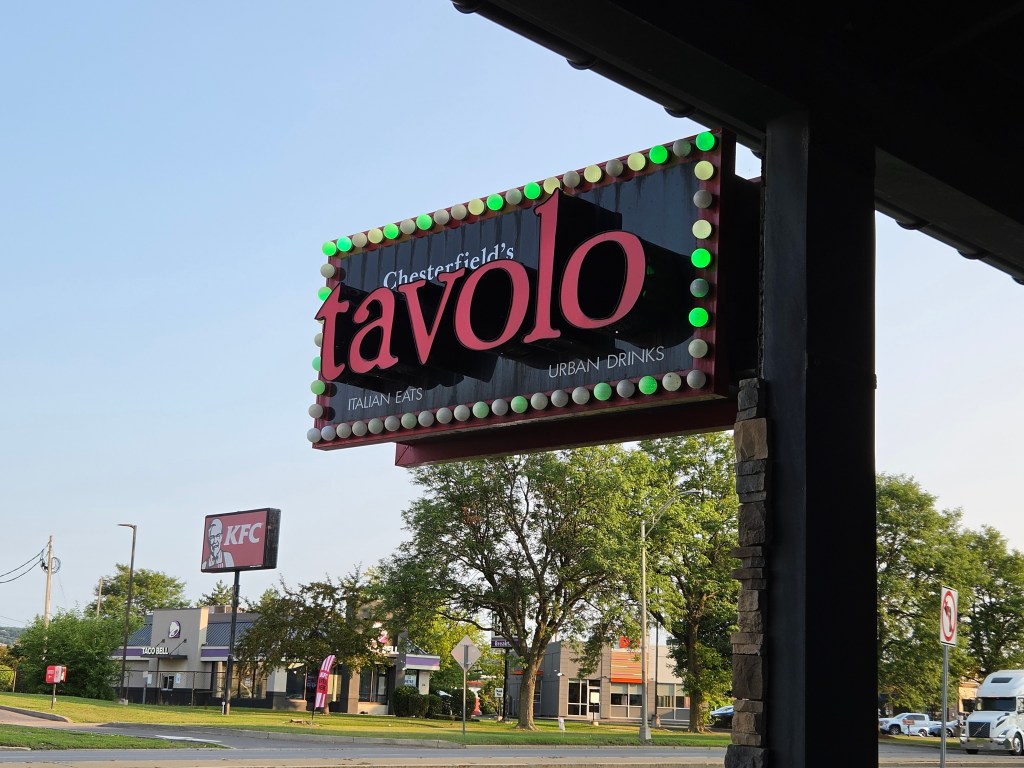
Utica, New York is roughly halfway from my Madbury home to my destination of Niagara-on-the-Lake, and was the first stop on my recent travels, unremarkable save for its Beaux-Arts train station and “Greens Morelle” (aka Utica greens), Chef Joe Morelle’s dish of escarole, garlic, hot cherry peppers, and prosciutto vaunted by the New York Times in 1987 that enticed me to Chesterfield’s less-than-scenic Tavolo patio on North Genesee Street and, alas, proved way too salty and spicy for moi.
Unfortunately, Portofino, the restaurant on the Erie Canal I’d visited each time I’d passed that way before, is (note to self) closed on Sundays.
Never mind. A three-hours’ drive next morning took me to my longtime, ever-since-grammar-school friend Martha’s home in the carriage house of one of Buffalo’s Linwood Avenue gilded age beauties and a lovely homemade lunch.
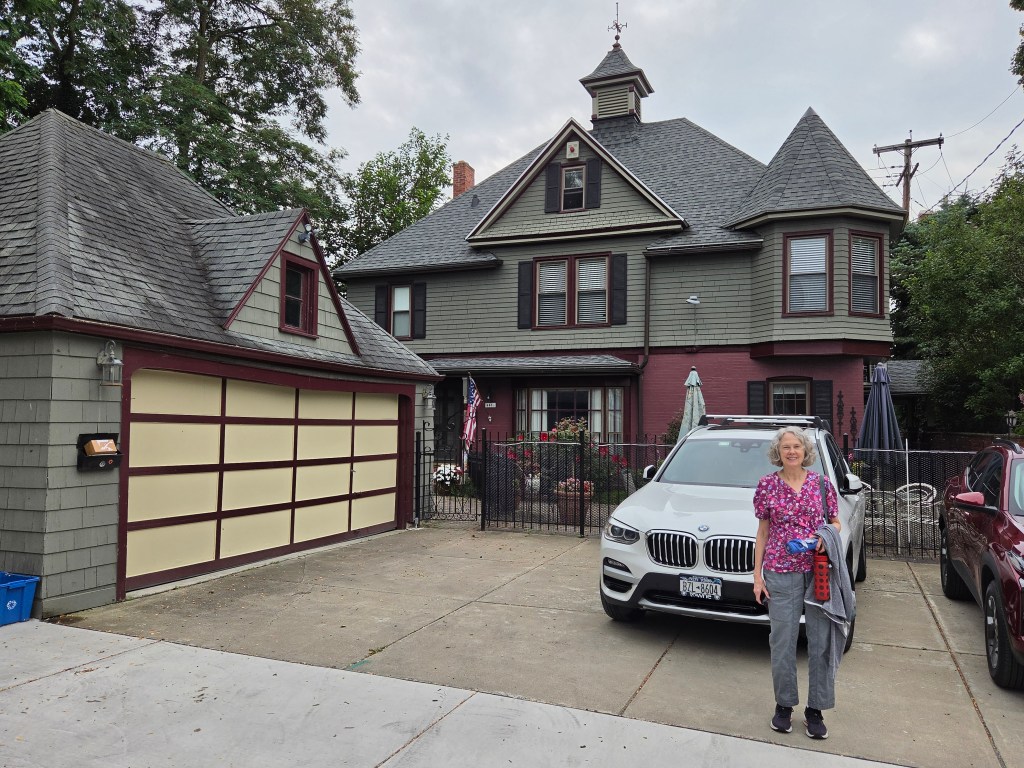
For the next 24 hours, we caught up on recent travels, discovering (1) that we had both recently been in New York City, me for the theatre and Martha to spread the gospel; (2) that sustaining herself with sardines puts Martha in the exalted company of comedians John Mulaney and (when he first began as a touring stand-up) David Letterman; and (3) that we both remembered all the words to The Patty Duke Show (on ABC from 1963-1966) theme song about identical twin cousins Patty and Cathy Lane (“Meet Cathy who’s lived most everywhere / from Zanzibar to Berkeley Square / While Patty’s only seen the sights / a girl can see from Brooklyn Heights / What a crazy pair!). Such trivia, I opined, takes up so much space that neither of us could immediately recall the name of the famous landscape architect who designed New York’s Central Park, Boston’s Emerald Necklace, and Buffalo’s Delaware Park-Front Street System: Frederick Law Olmsted. This made Martha laugh heartily, to my delight. Without her, I would never have passed calculus our senior year of high school.
From lunch we went directly to visit Frank Lloyd Wright’s Darwin D. Martin House, FLW’s self-described opus and a real gem at 125 Jewett Parkway.
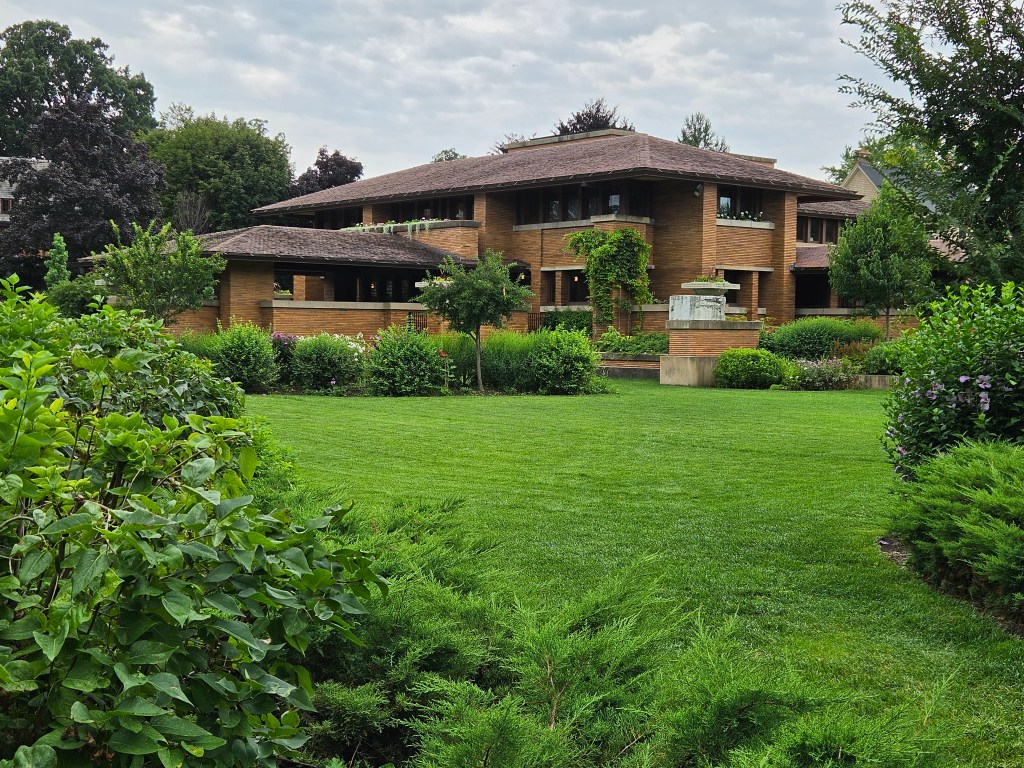
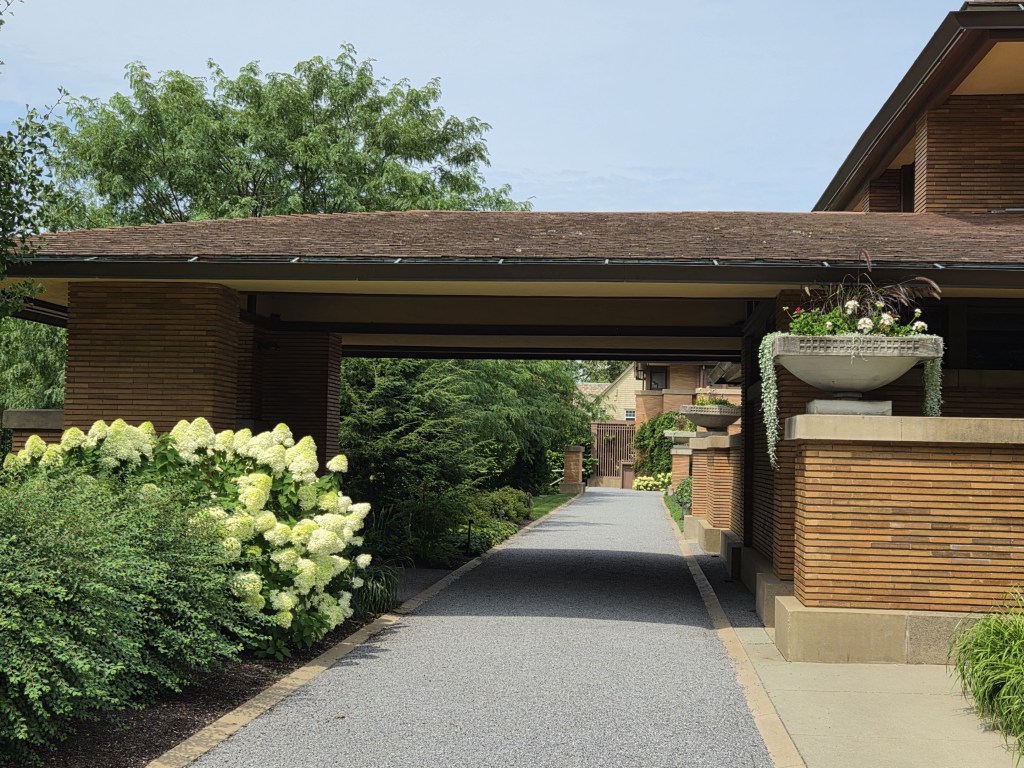
Based on a 1901 plan published in Ladies’ Home Journal, “Home in a Prairie Town,” the spatial openness, horizontality, natural palette, and dramatic cantilevers pretty much define the FLW Prairie House; with over 400 art glass “Tree of Life” windows, it surpasses the record of any other.
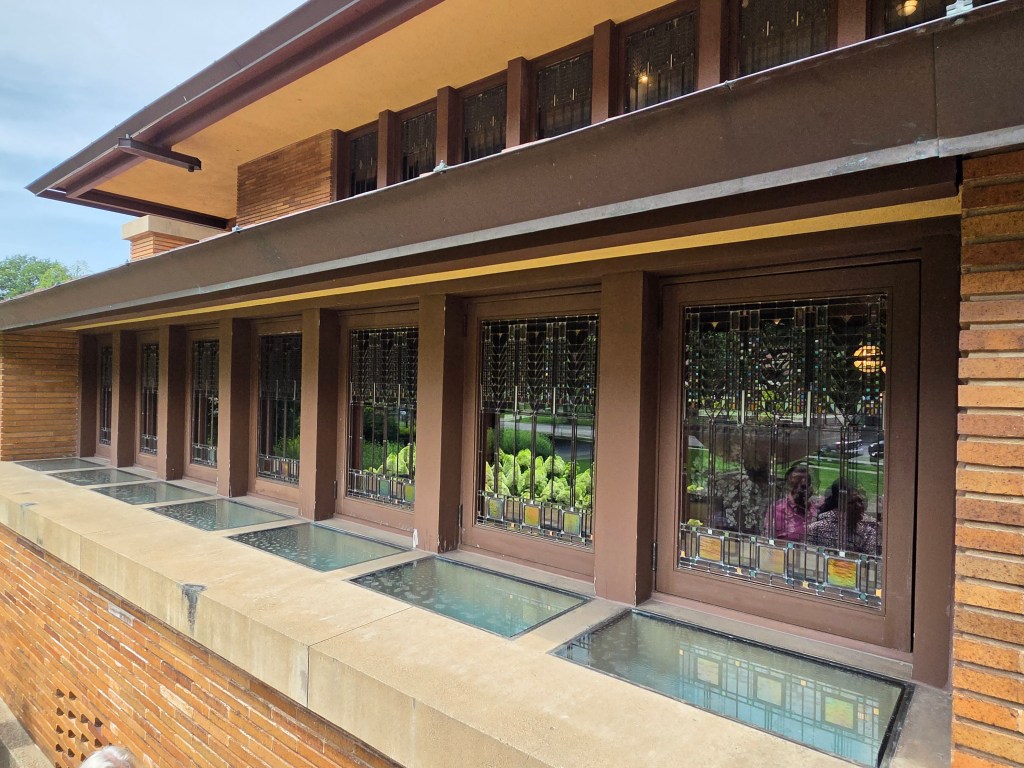
Interior photography isn’t allowed casual visitors, so you should check it out at https://martinhouse.org/hearth-and-home: the warmth of the front reception room’s sunburst fireplace with its Roman brick gold-washed mortar surround and gold-flecked coved ceiling and the double-sided wisteria glass tile mosaic fireplace of the entrance hall are entrancing.
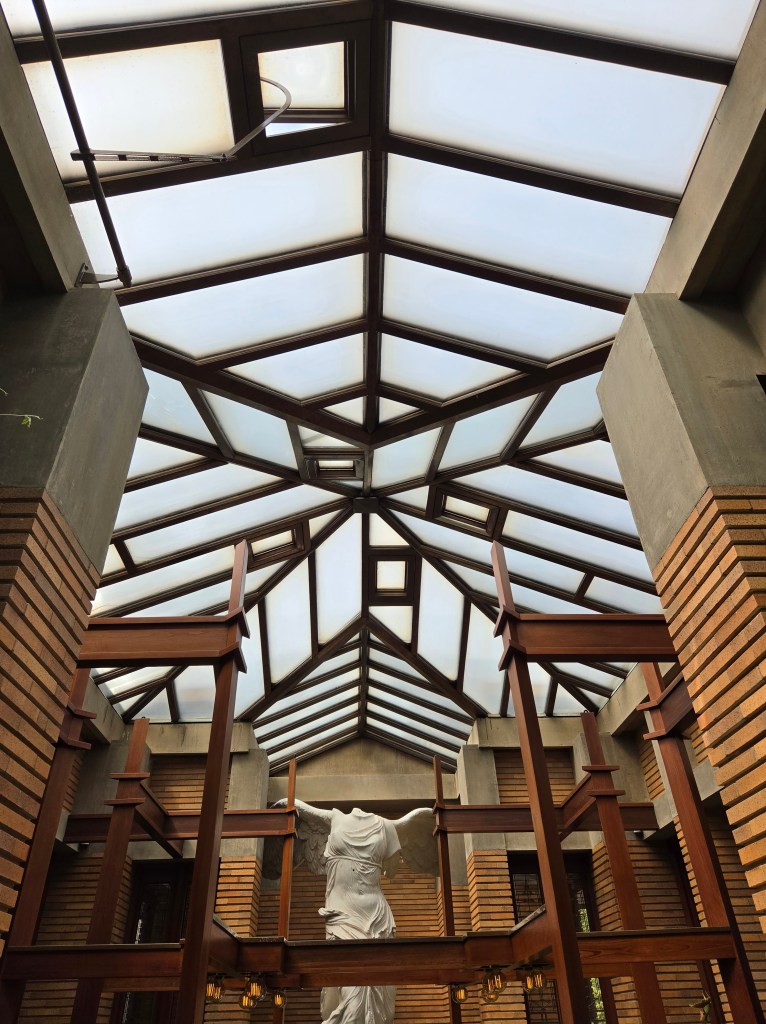
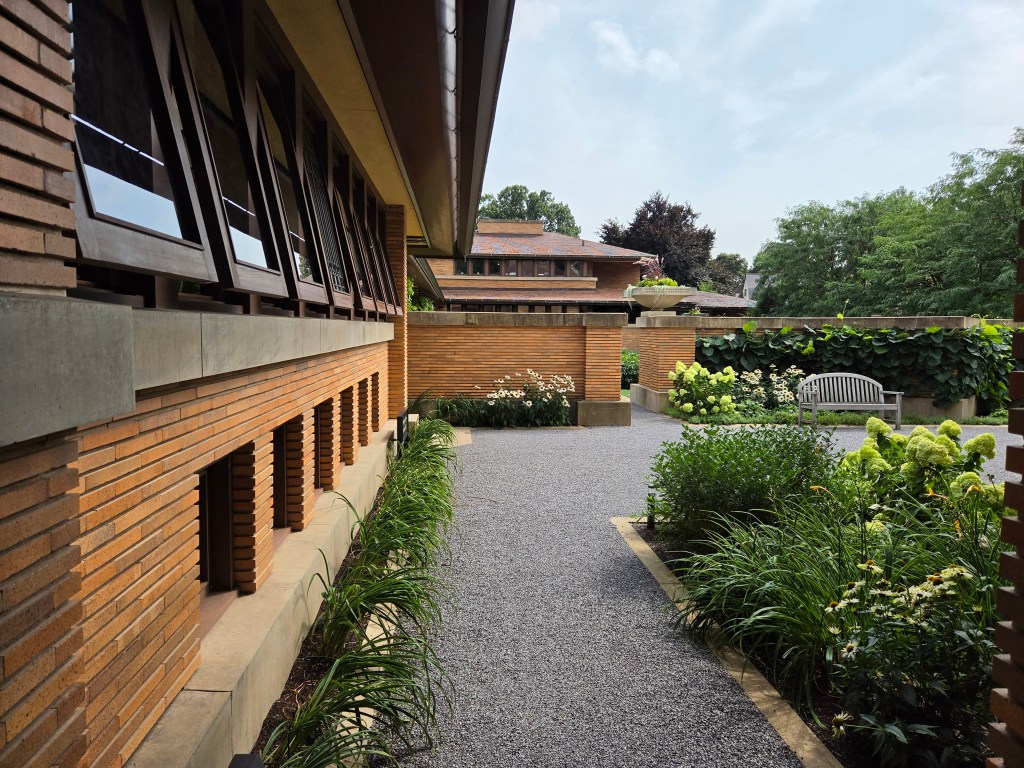
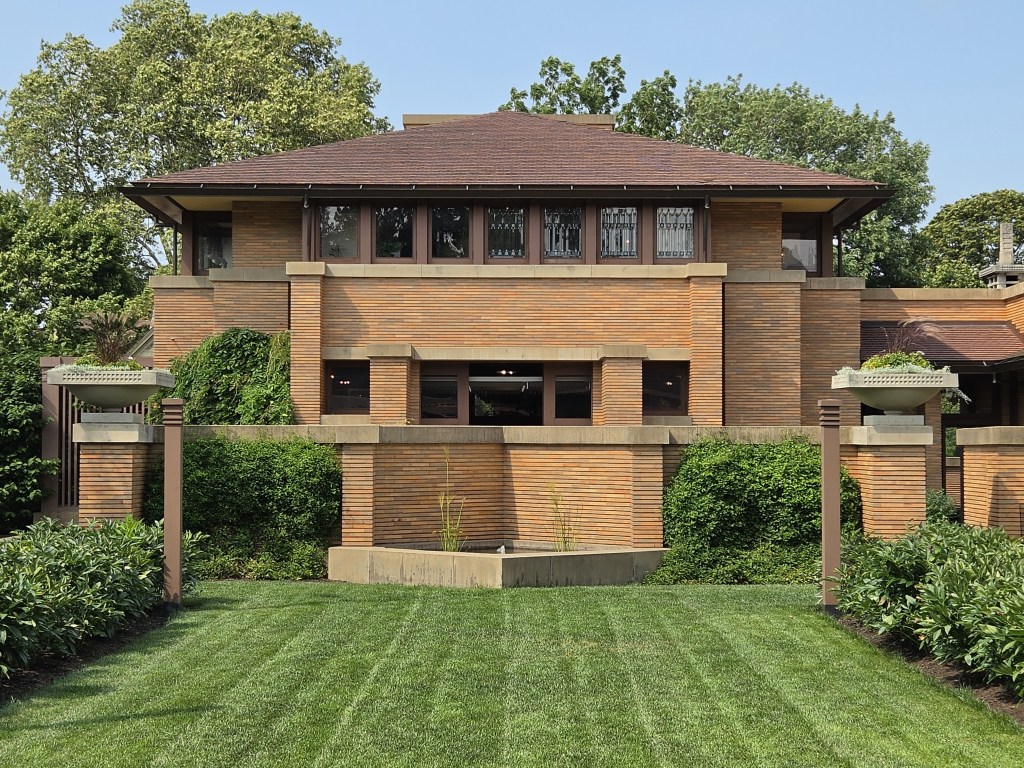
The Martin house survived intact for two years after Darwin Martin’s death at age 70, but from 1937 remained vacant and abandoned for decades before ultimately renovations begun in the 1990’s were completed in 2019 at a cost of over $50 million. That they did makes me very happy.
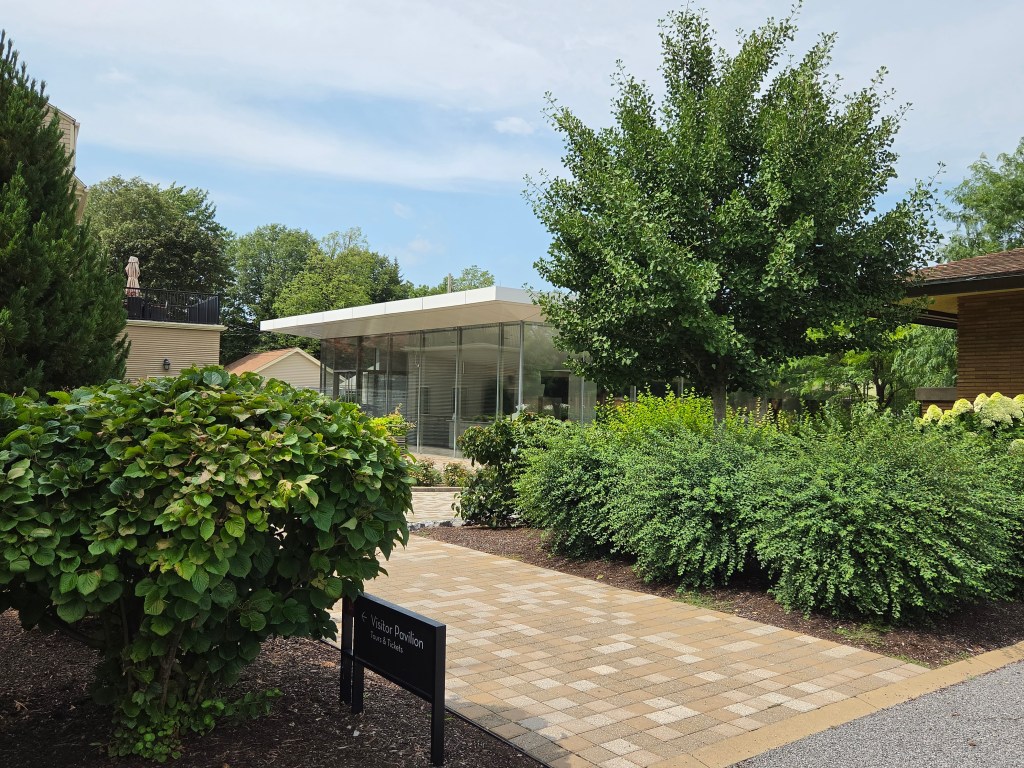
Tours here begin with a film at the elegant Visitor Center, where details of Darwin D. Martin’s life (1865-1935) had an uncanny resonance for me. Darwin was a smart boy with a head for figures, scarred at age 6 by the death of his mother and, the youngest of five siblings, forced to part ways with all but his brother Frank, then selling soap in New York City at the age of 13, but finally moving by himself to Buffalo to work for the Larkin Soap Company and via his accounting skills and ferocious work, rising to corporate secretary of the Company, charged with finding an architect to design a new administrative building, and, at his Chicago brother’s suggestion, settling on an innovative young architect: Frank Lloyd Wright. Over the years, Martin, a millionaire until the stock market crash, lent Wright over $70,000 and, allowing him free reign for his designs of both the Martin House and companion summer home on Lake Erie, Graycliff, helped establish FLW’s reputation. Wright never repaid that $70,000 to Martin, though for his dedicated friend and supporter, FLW designed his only cemetery monument, the Blue Sky Mausoleum at Forest Lawn Cemetery in Buffalo, finally completed in 2004 long after both men has died.
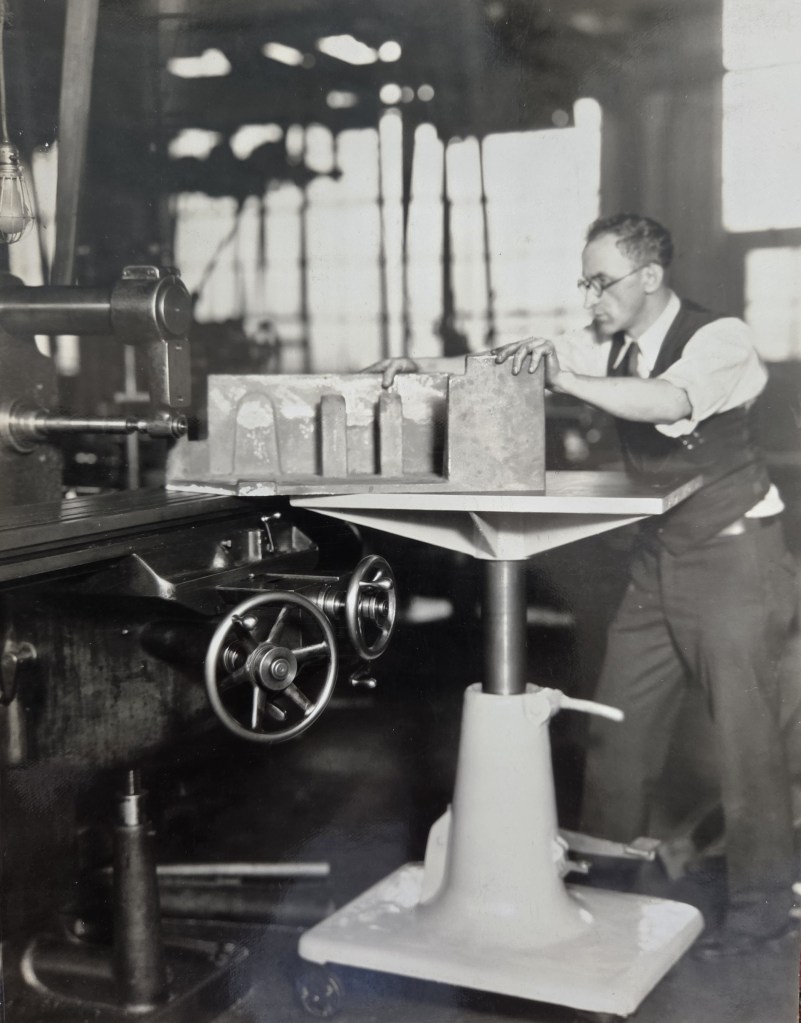
Why did Martin’s story sound so familiar to me? My grandpa Cecil Calvert Senseman (1887-1975) was the oldest of three children born on a farm 12 miles north of Dayton, Ohio. When his mother died, he had to leave school, was separated from his two siblings, and while still a youth, went to work as an apprentice machinist at various factories in the Dayton area. With hard work and, like Darwin Martin, a head for figures (he used to help me with my algebra), in 1931 “Zeke” and his younger brother Vercil purchased the Dayton Tool and Engineering Company and became a major designer and builder of tools supplying the automotive, refrigeration, office, and farm equipment industries, including various government contracts during World War II. Starting in 1938, he also began buying and developing property in Fort Myers, Florida and in 1941, he moved, semi-retired, with my grandmother Clara to Florida, where his good fortune occasioned my own parents’ moving south to St. Petersburg, where I was born: another all-American rags to riches—and back down the ladder of success—story.
This tale I told Martha as later that day we enjoyed the capacious porch at Jen and Rob’s lovely boutique bed-and-breakfast inn, Oscar’s, just a few blocks down from Martha’s carriage house on Linwood Avenue.
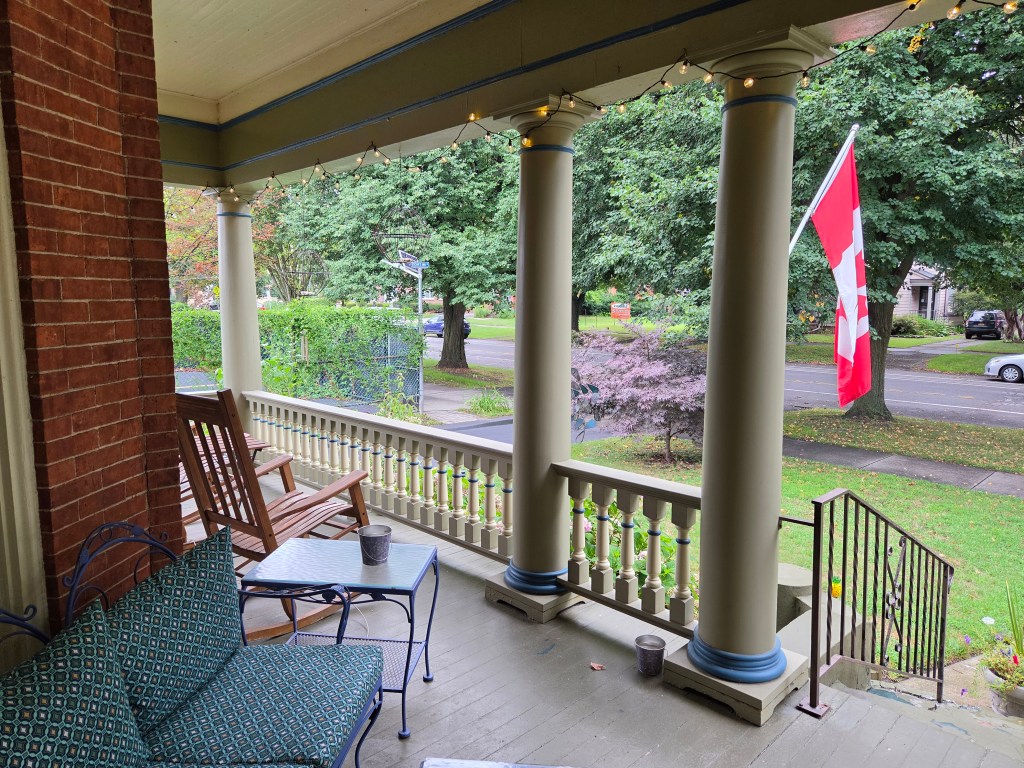
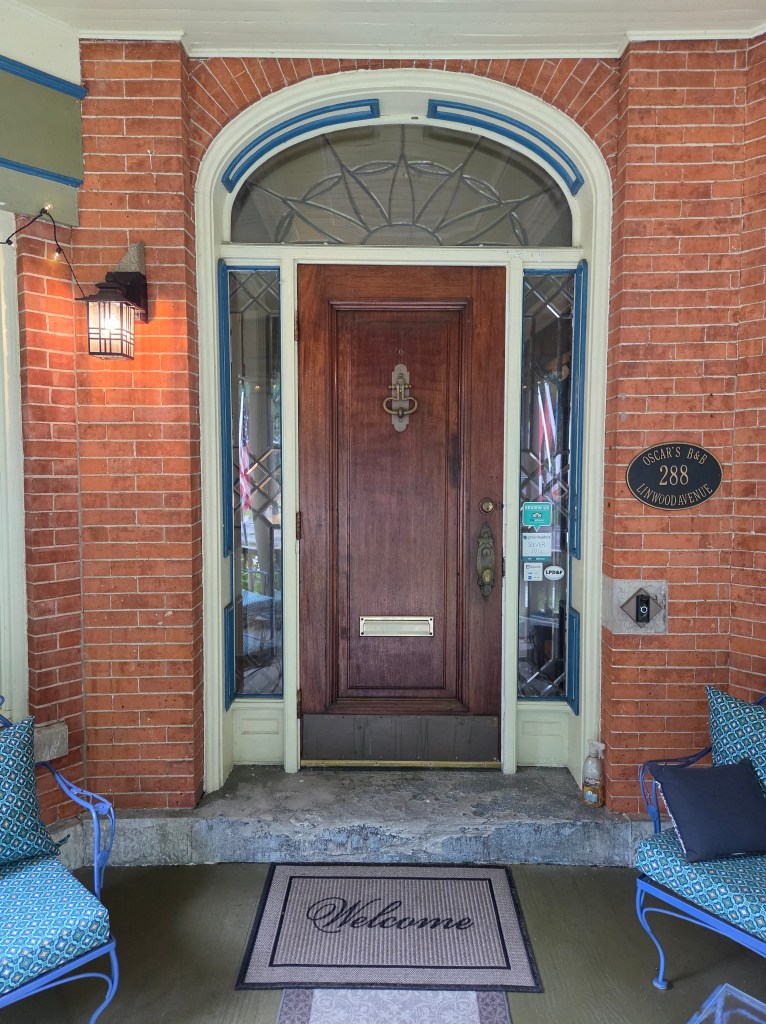
A Second Empire beauty built in 1875 by Oscar S. Lang, architect and contractor who also worked on the Martin House, Oscar’s Inn is part of the handsome Linwood Historic Preservation District.
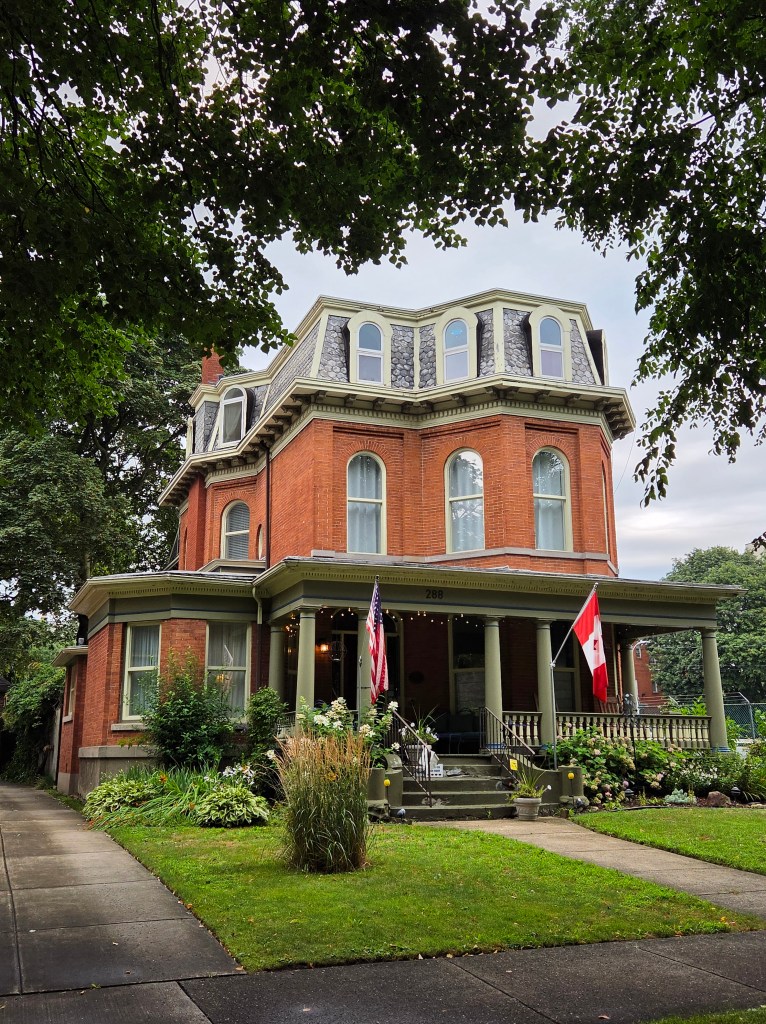
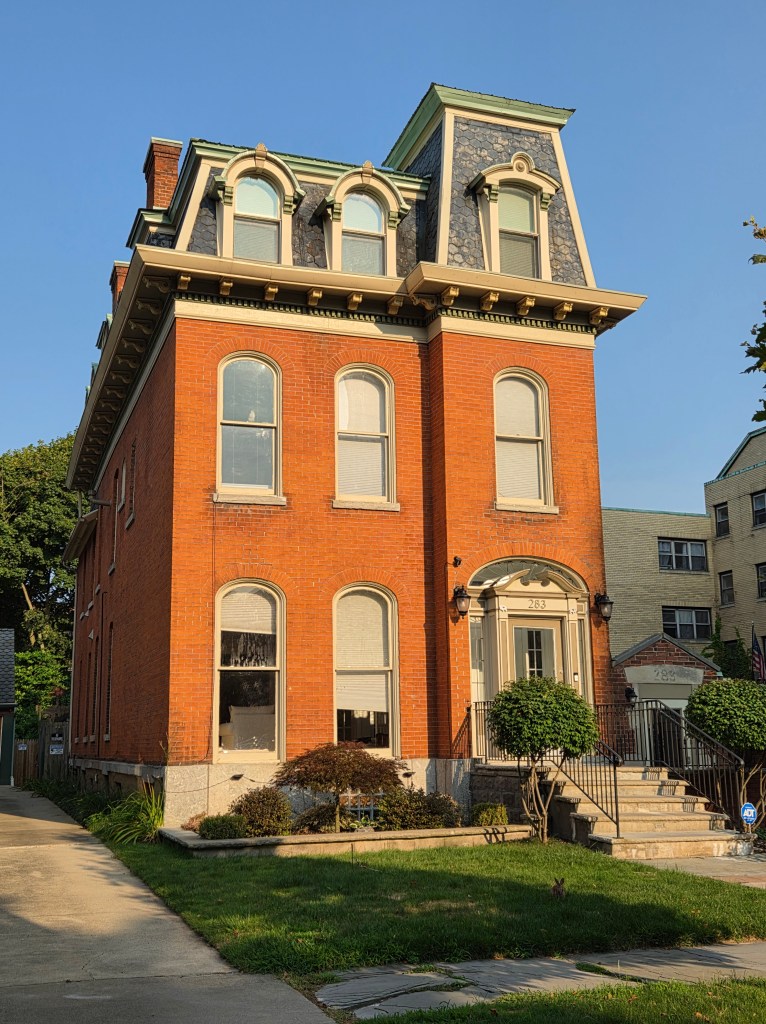
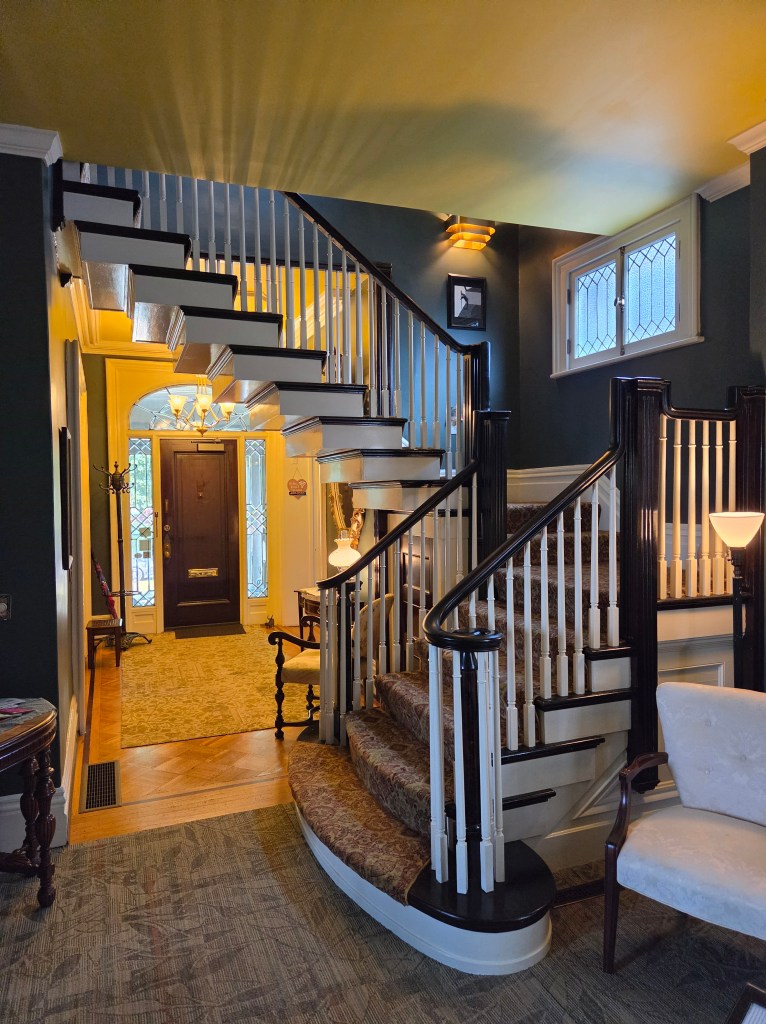
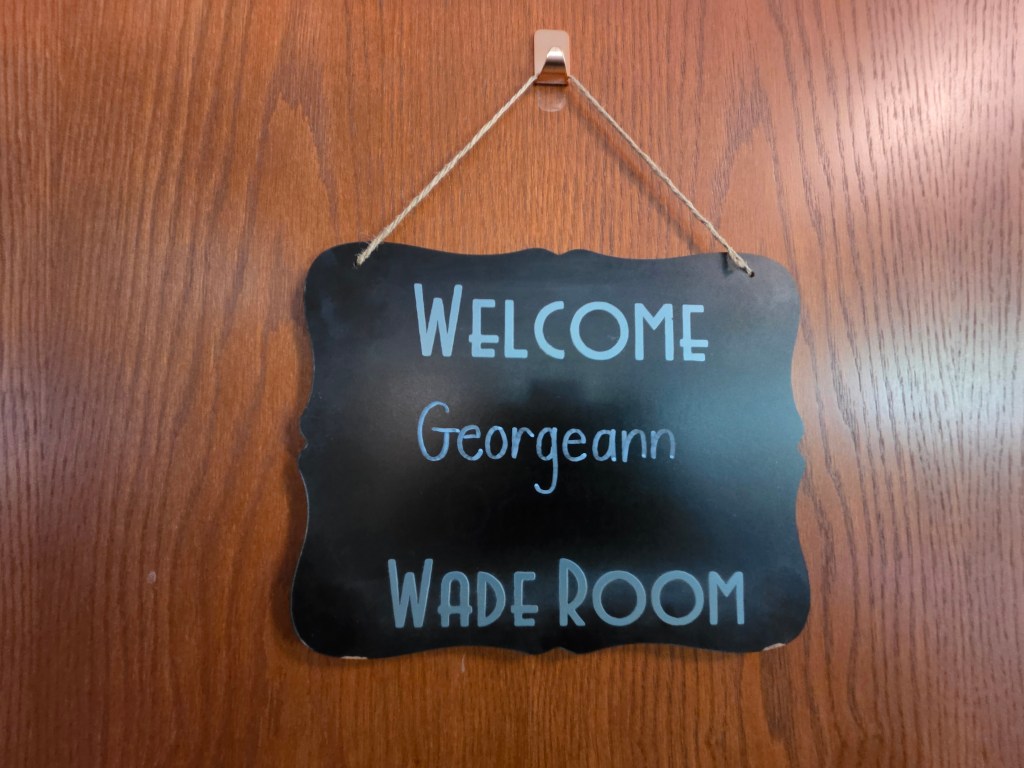
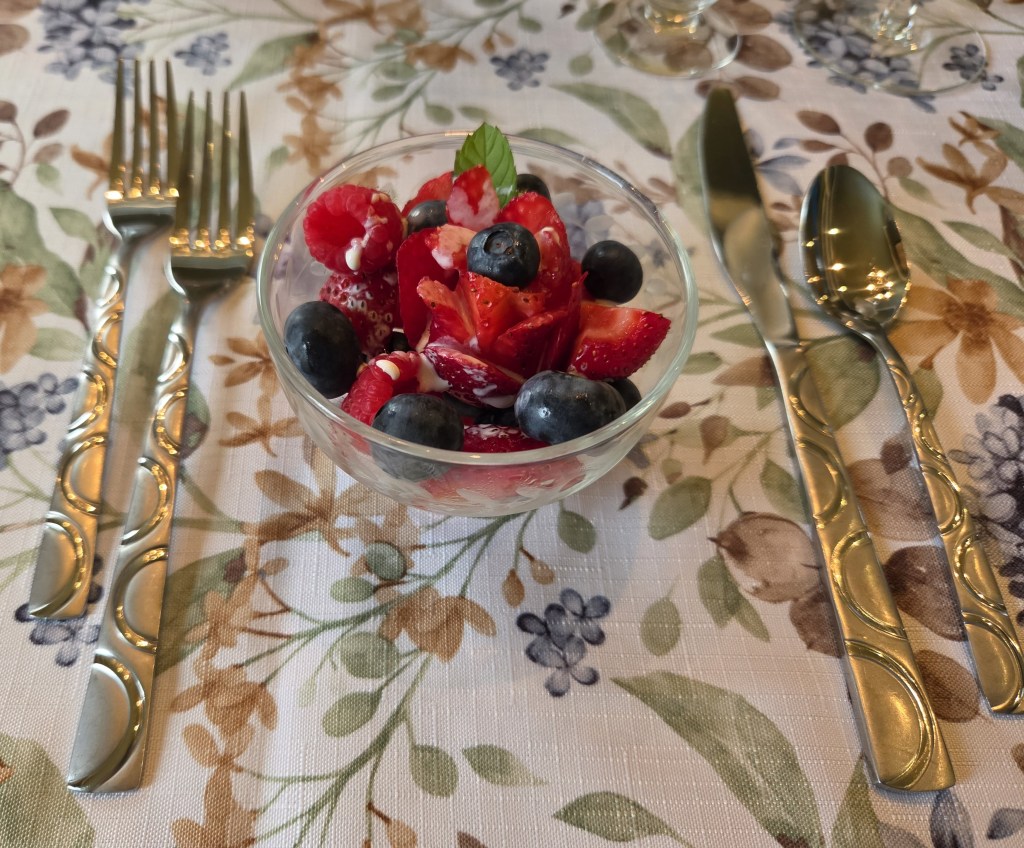
After dinner at Martha’s favorite liver-and-onions place, I passed a lovely night in the Wade Room, and together the next morning, Martha and I shared Jen’s lovely three-course breakfast in the handsome dining room.

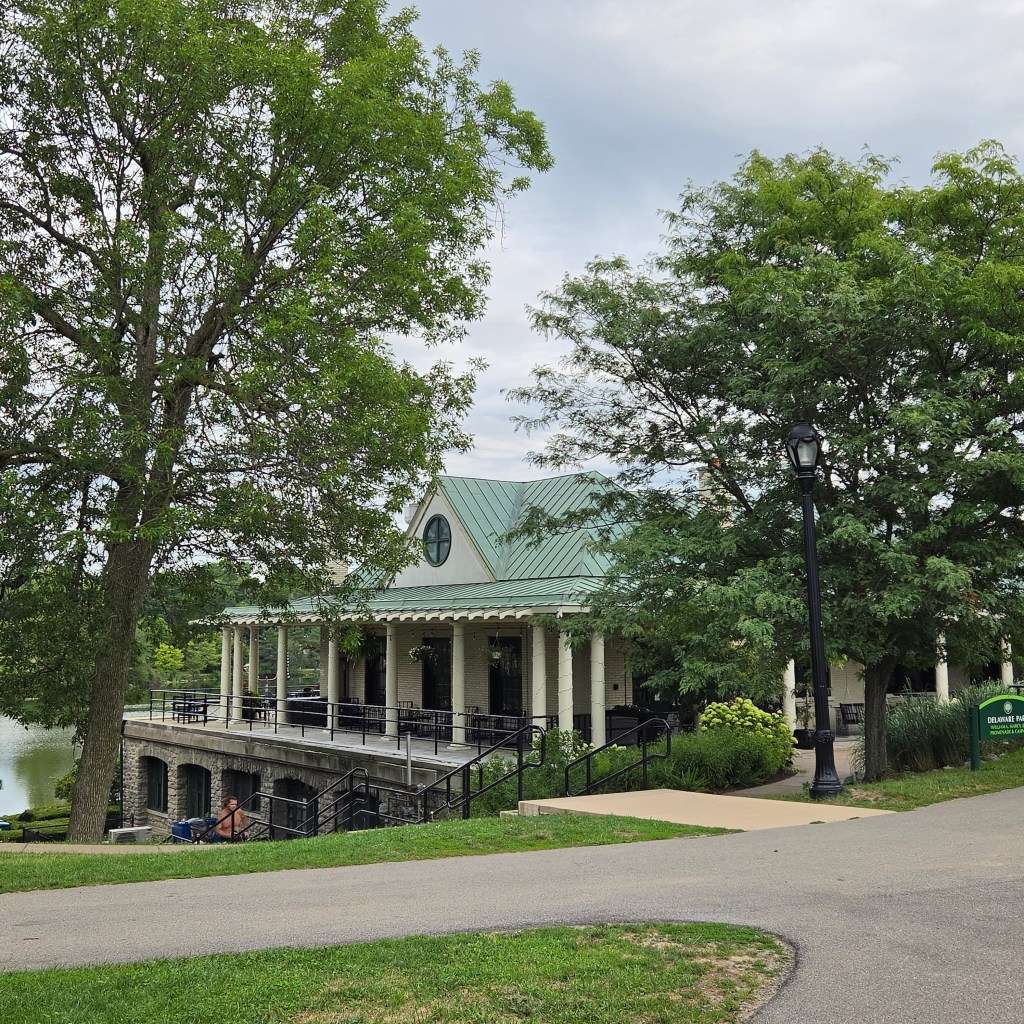
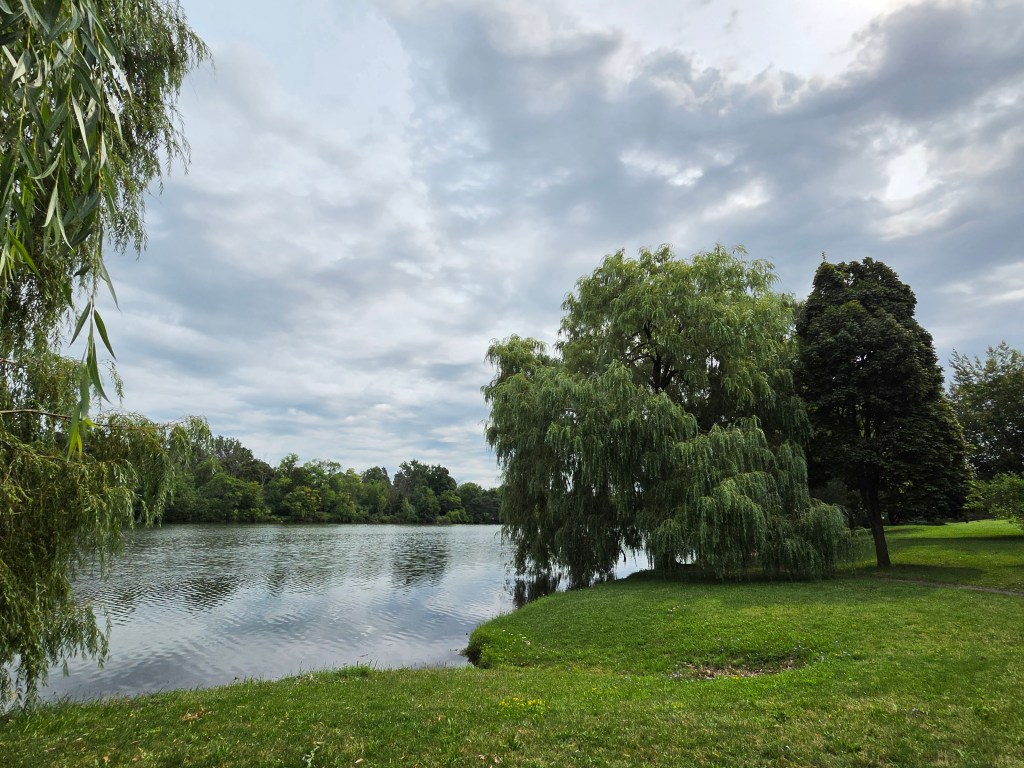
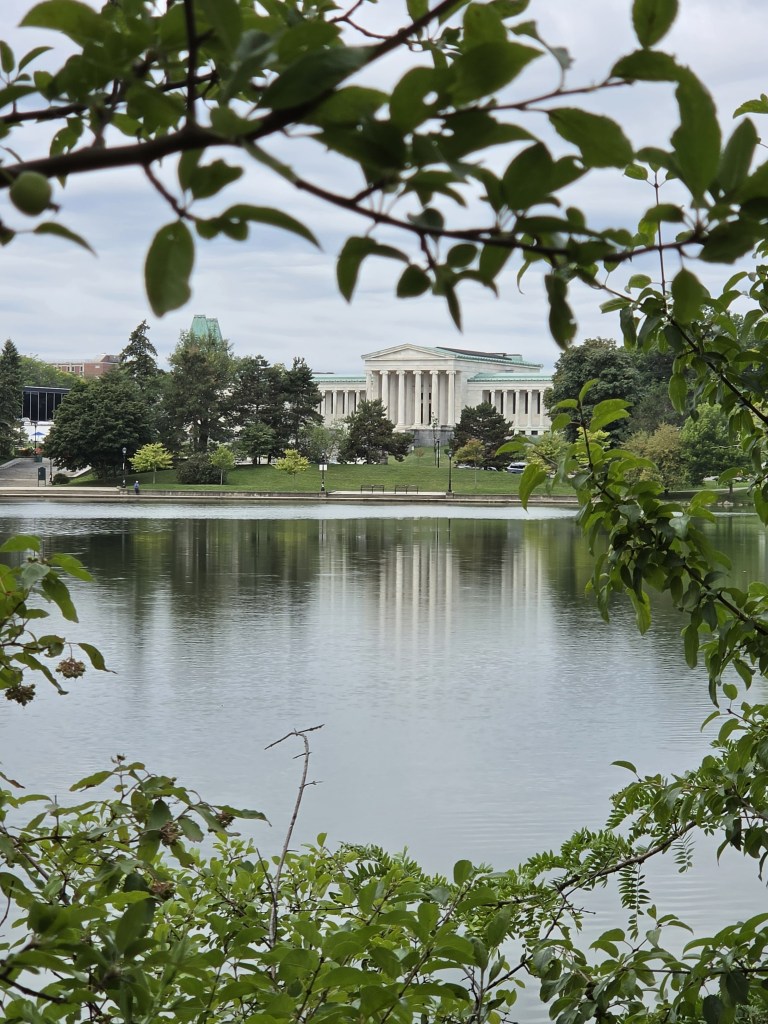
Then we headed for a lovely walk around Hoyt Lake at Delaware Park, with views of The Terrace restaurant and the Albright-Knox Art Gallery.
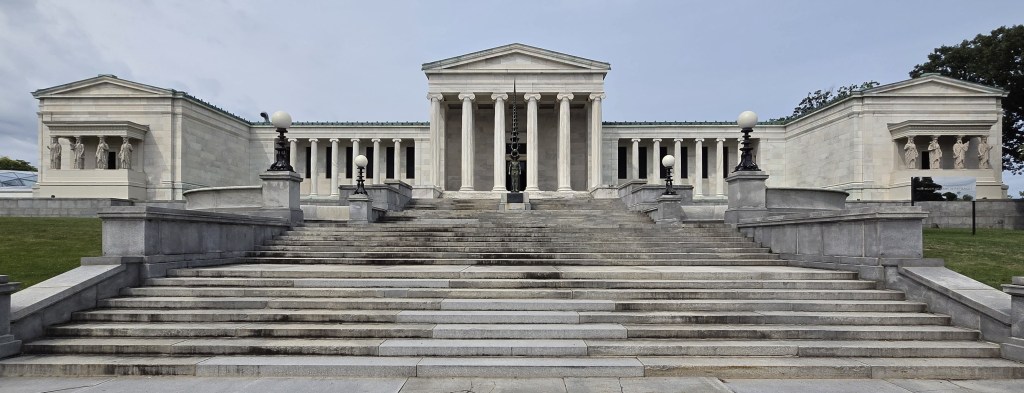
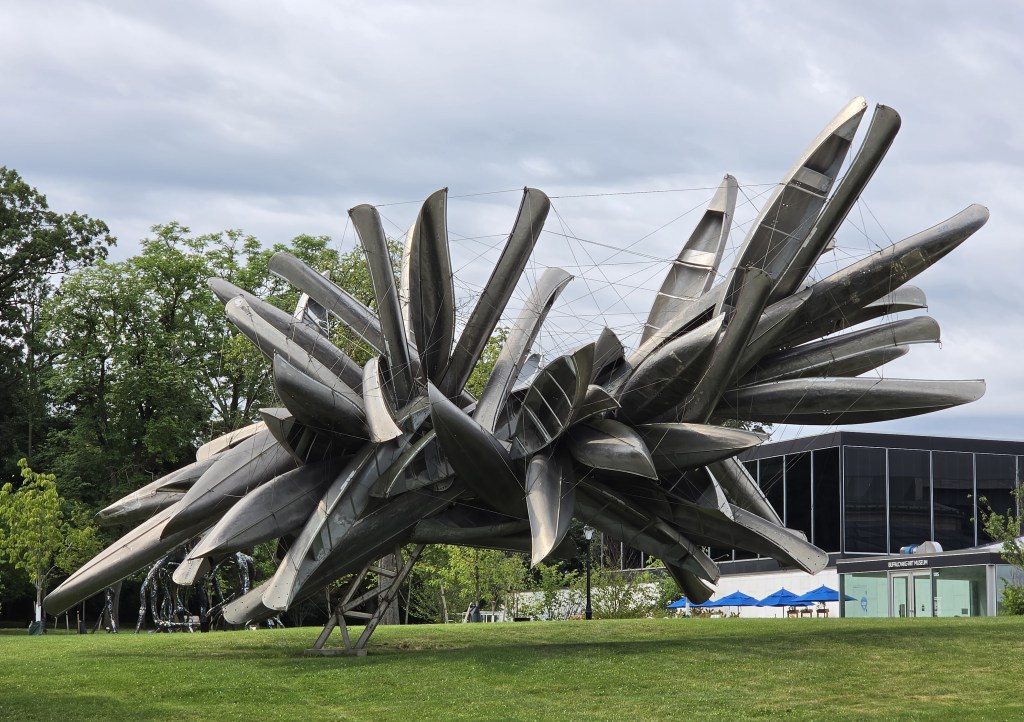
Finally, almost exactly 24 hours after my arrival in Buffalo, I loaded up my VW GTI and Android Auto GPS and headed for Ontario, the next leg of my adventure, grateful for this best friend of my youth, the gracious hospitality at Oscar’s Inn, and the foresight of those who saved the Martin House for us to contemplate beauty, times past, and times to come.



Leave a Reply