5-8 November 2025
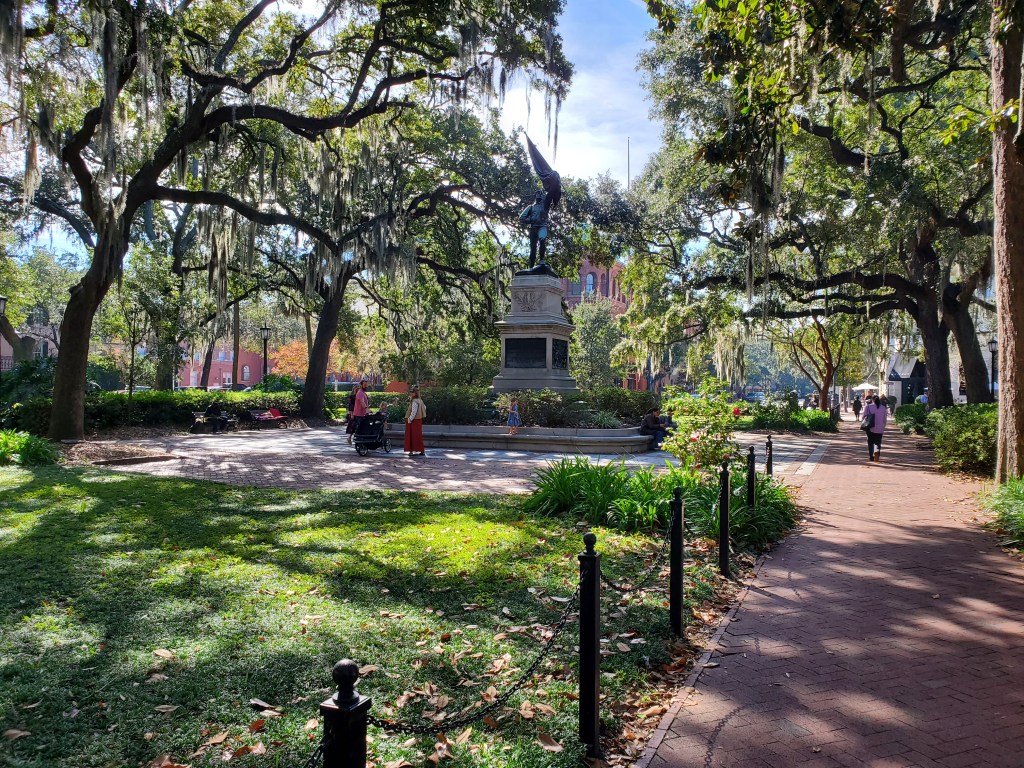
Here on the last day of November, a month crowded with incident, I again pick up an account of my earlier travels south to Savannah, affording escape from a dark-by-4.30, so dreary and wet New Hampshire, while anticipating our first snow storm of the season coming soon.
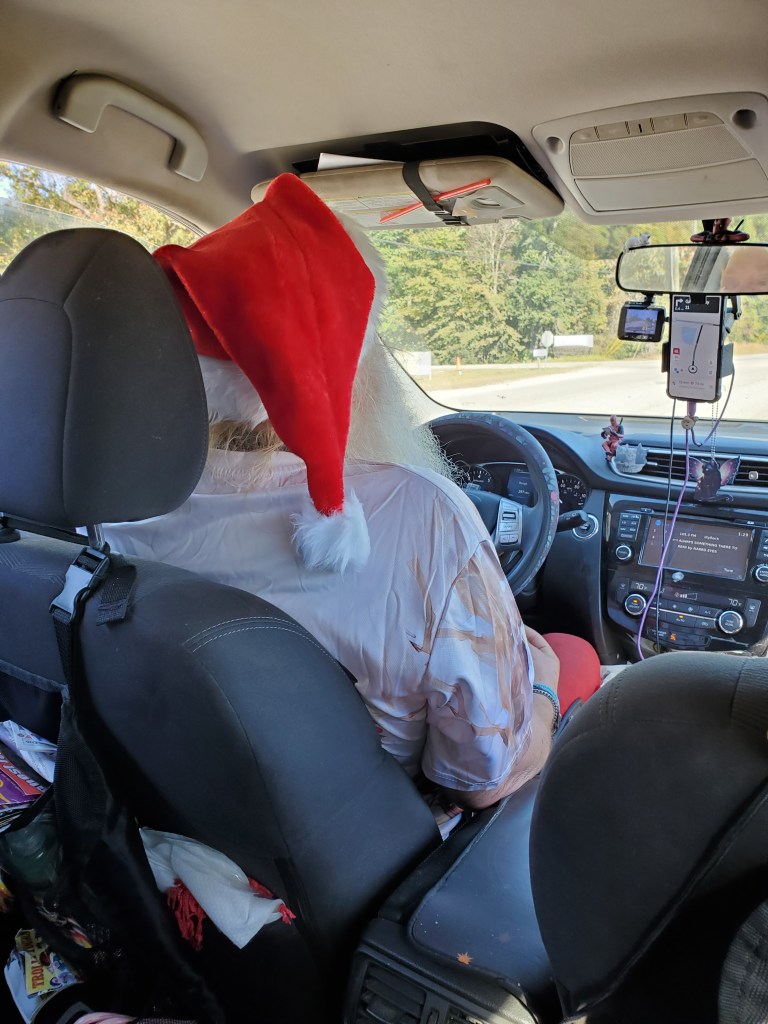
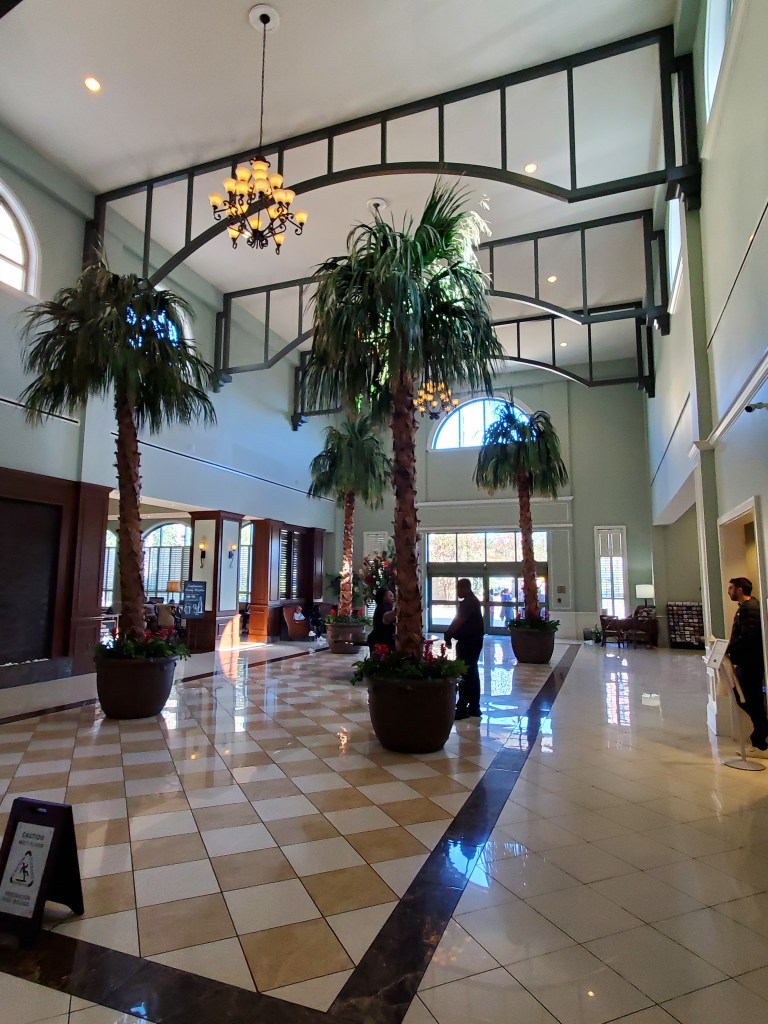
Reader, we are transported back to Georgia on Guy Fawkes day, the fifth of November. Having driven my enormous rented Chrysler Pacifica (the “manager’s special”) back from Hilton Head to the Savannah airport (when only one person emerged from that beast, the Dollar agent was sore amazed: “Only ONE of you?”), I was Ubered to the Embassy Suites in downtown Savannah by Stanley, humorously dressed as Santa, and on arrival was favorably impressed both by the lobby and the attentive service, offering me a lovely corner room on the fifth floor with a fine view of the Eugene Talmadge Memorial Bridge spanning the Savannah River.
Brother-in-law Richard and nephew Daniel arrived soon after, and together we navigated our way to the Mercer-Williams House just in time for a tour of the place first made famous by the 1994 non-fiction novel by John Berendt, and then by the even more famous 1997 Clint Eastwood film, Midnight in the Garden of Good and Evil, starring John Cusack, Kevin Spacey, and a very young Jude Law as well as several memorable actual Savannahians like the late, great Lady Chablis. The handsome Renaissance Revival house on Monterey Square was designed by New York architect John S. Norris for General Hugh Mercer, great grandfather of songwriter Johnny Mercer, its construction in 1860 interrupted by the Civil War, after which Mercer sold the unfinished structure to John Wilder, who completed it in 1868.
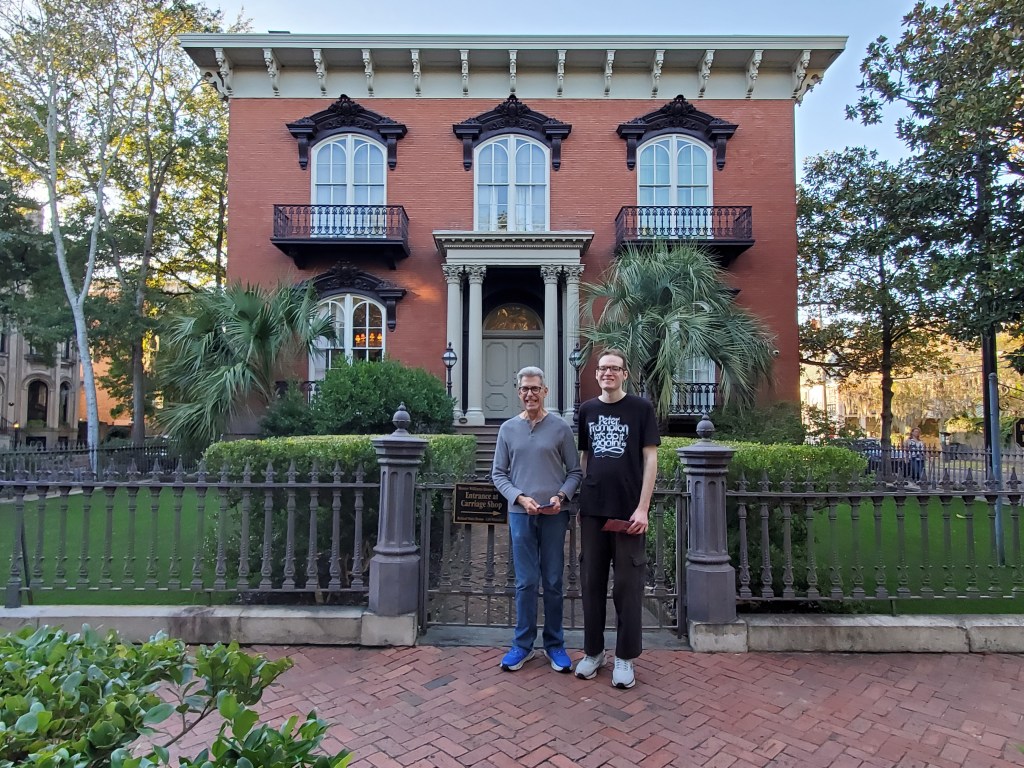
When it was purchased in 1969 by antiques dealer and master preservationist Jim Williams, the house had been vacant and neglected for almost a decade. His painstaking restoration lasted two years, and was then grandly furnished with Williams’s private collection. Scandal and its representation in art, however, keeps the Mercer-Williams House such a popular tourist attraction, for Williams, thanks to a combination of cultivated hospitality and shoddy police work, notoriously got away with the murder of his gay lover, only to die in his handsome home less than a year after he was acquitted. Actor Kevin Spacey’s uncanny resemblance to Williams no doubt helps keep fascination with the Mercer-Williams house alive. The Williams family still own the property, maintained as a museum open to the public to benefit local historic and charitable organizations.
After an informative tour (but no interior photos allowed), we made our way back to our hotel to change for dinner, perhaps still under the spell of a more gracious era than our own.
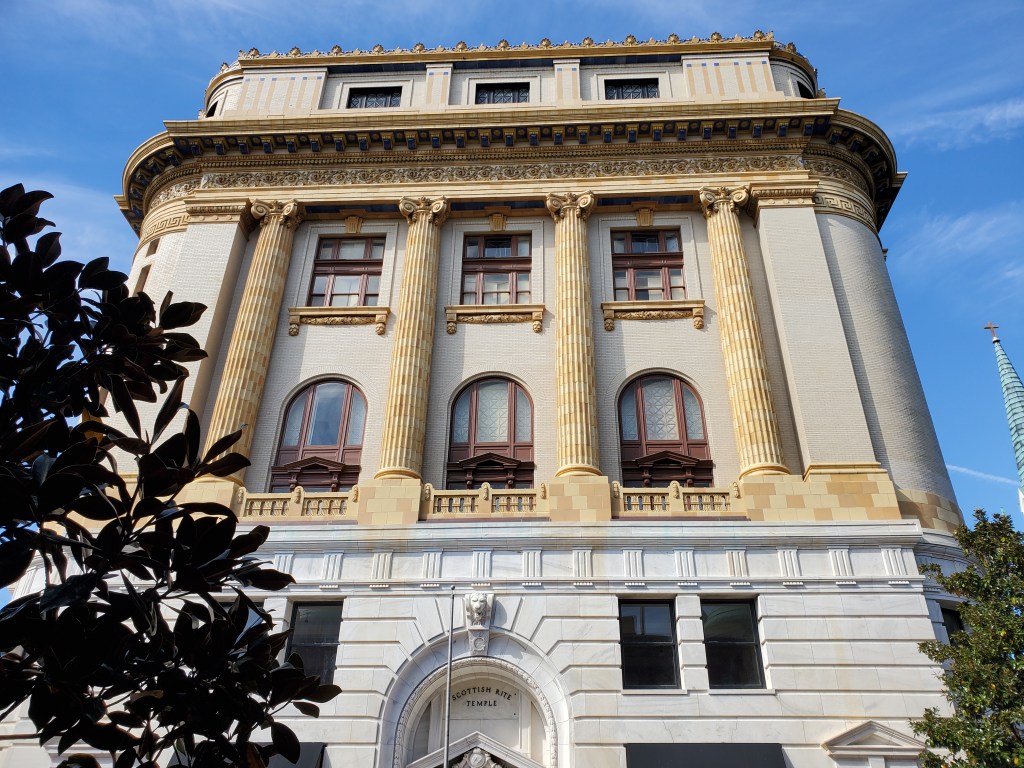
Dressing for dinner, however, proved a thoroughly unnecessary gesture, as we were the sole guests at the 22 Square restaurant, where I nevertheless enjoyed my very tasty shrimp & grits and Daniel had his first gumbo mac & cheese. We noted the Peach Cobbler Factory on Barnard for future reference, as well as how very much the city was coming to life after 9 pm. Wearied by a day’s travel, we, however, retired to our suites.
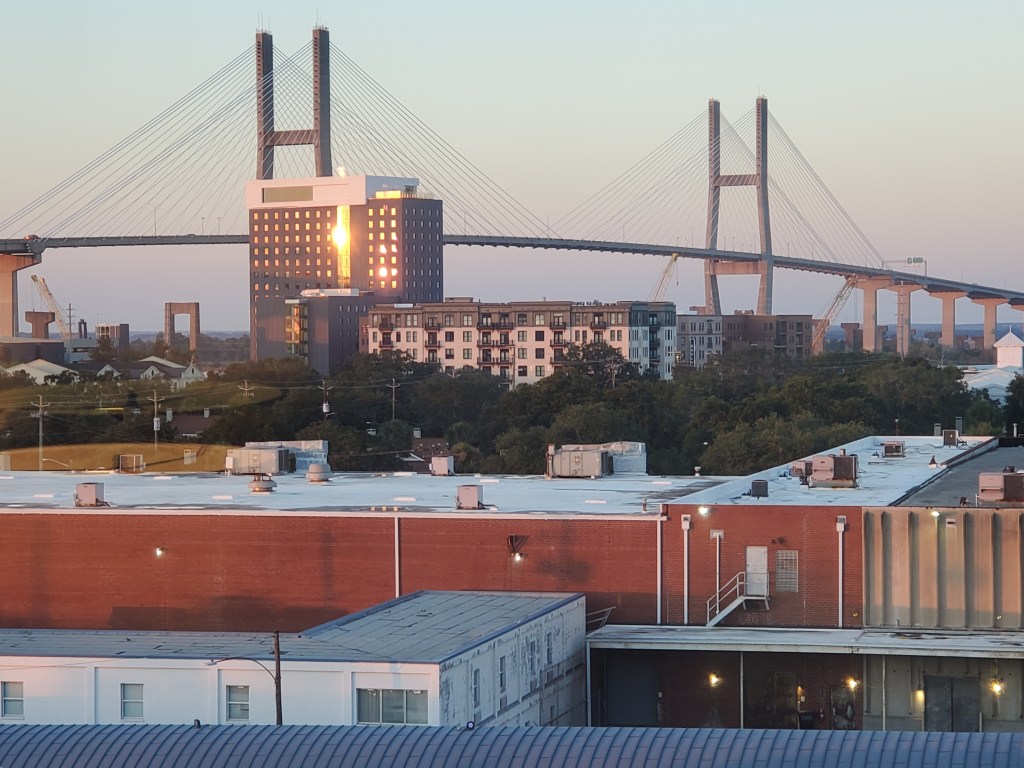
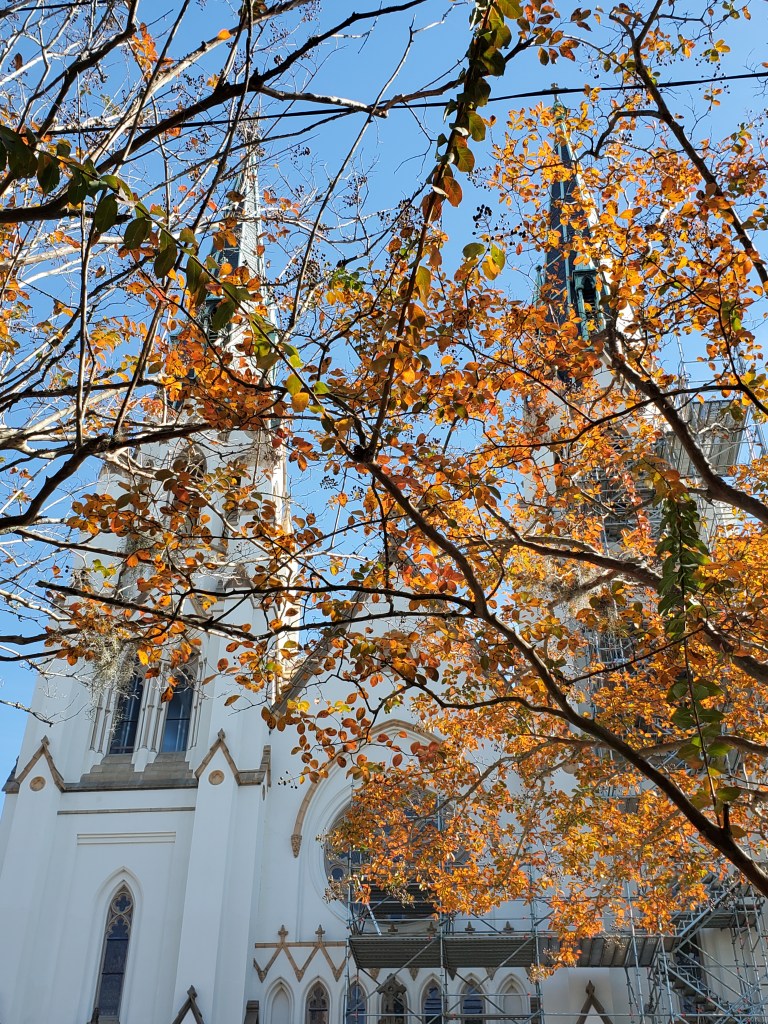
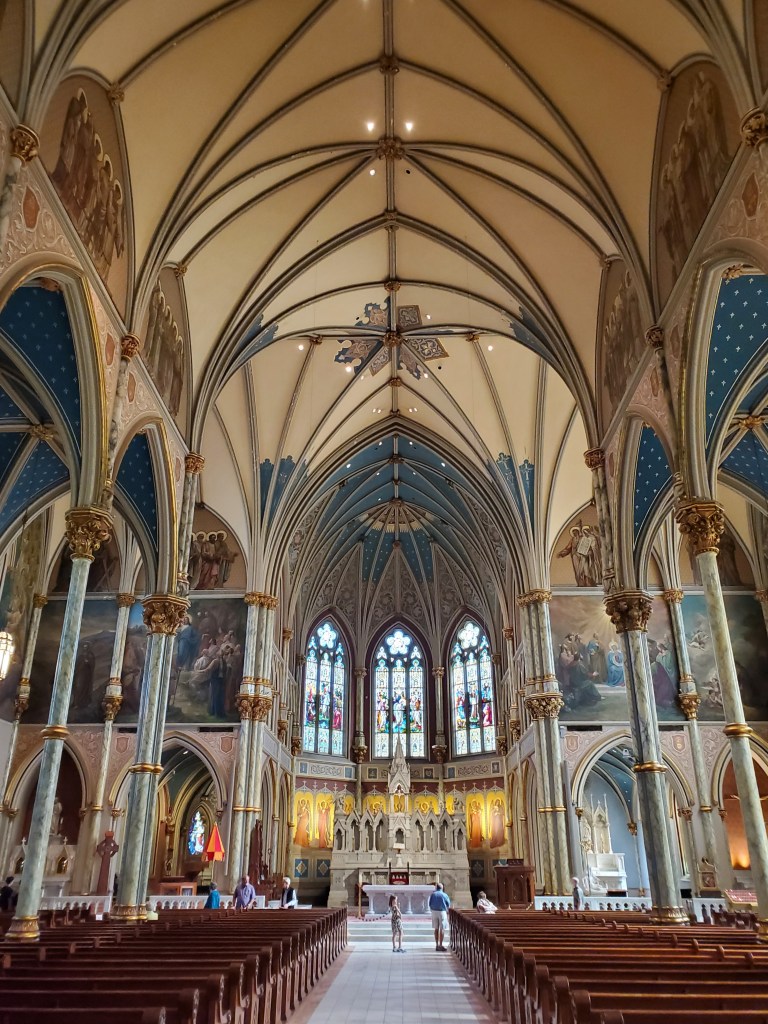
Next morning we met our Genteel & Bard guide, Julianna from Savannah, at the corner of Bull and Oglethorpe, for a most informative walking tour. Julianna knows her history, is an accomplished storyteller and Savannah College of Art and Design (SCAD) grad, and gave us a great 2-hour walkabout, finishing at the Basilica Cathedral of St. John the Baptist.
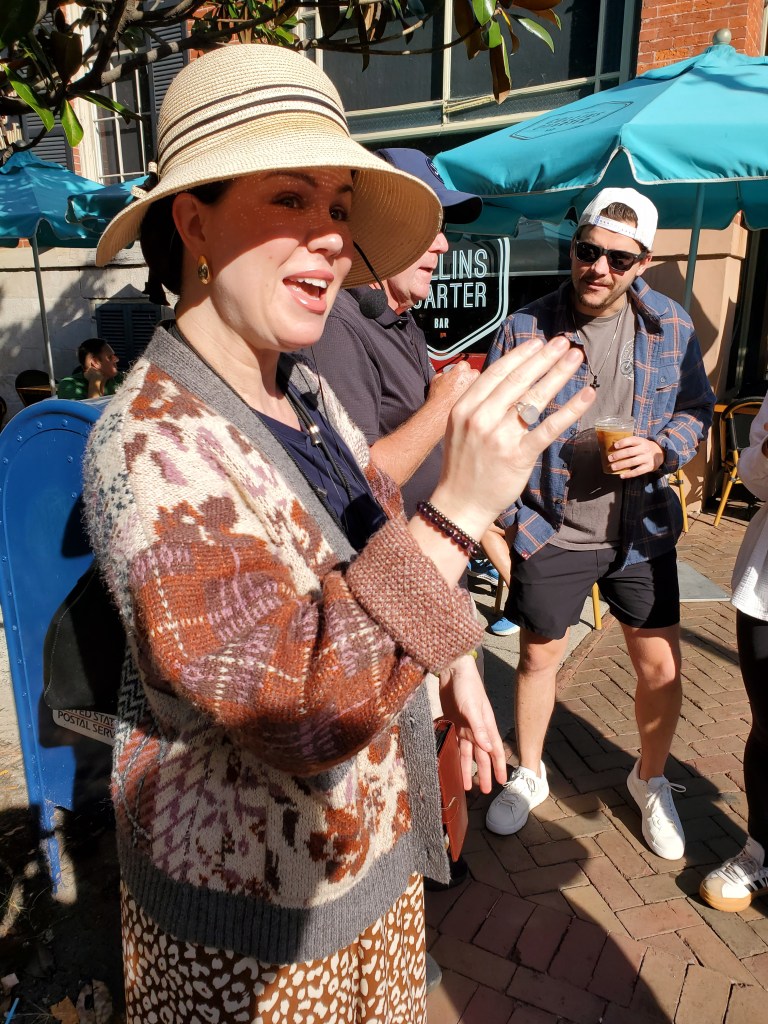
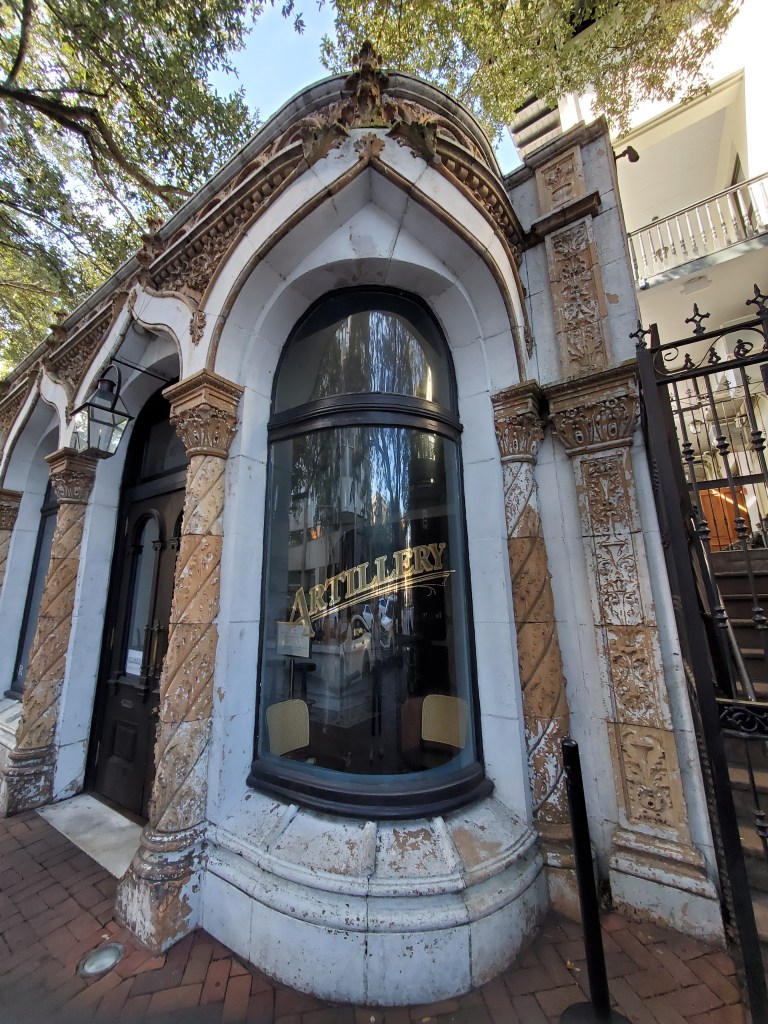
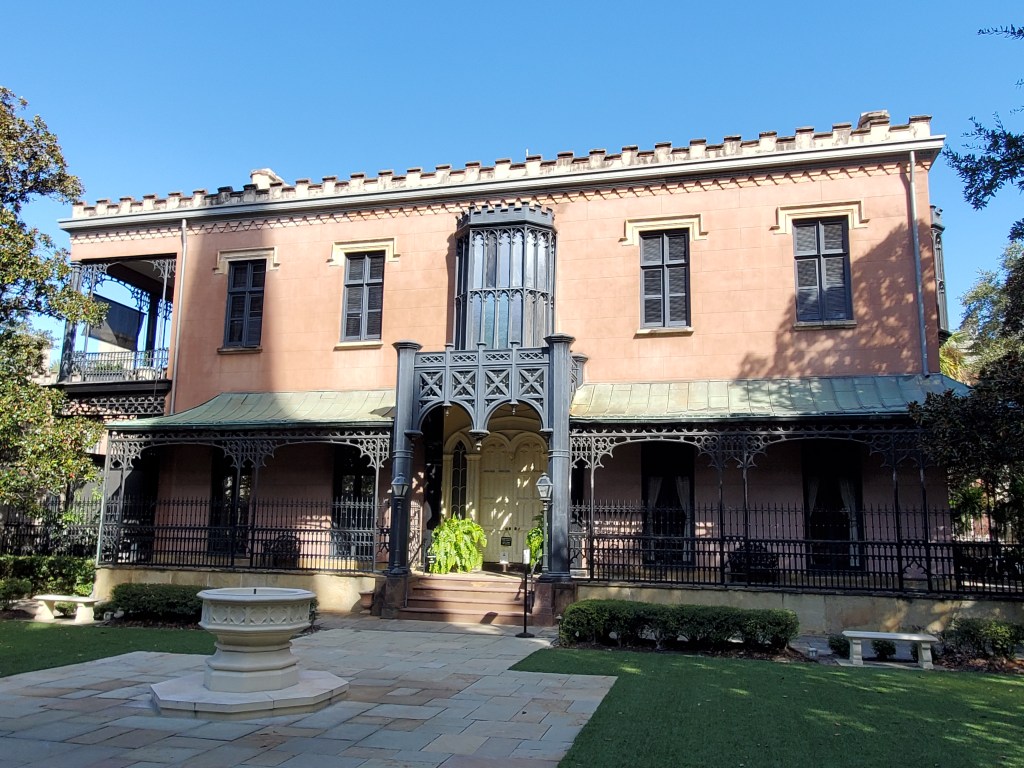
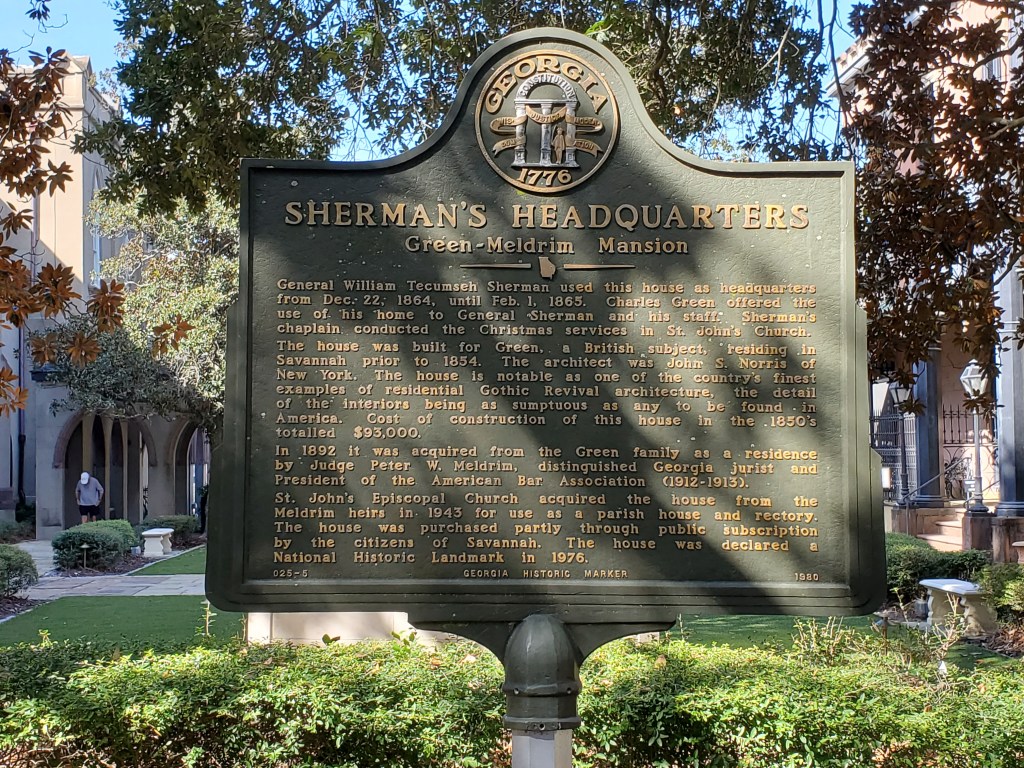
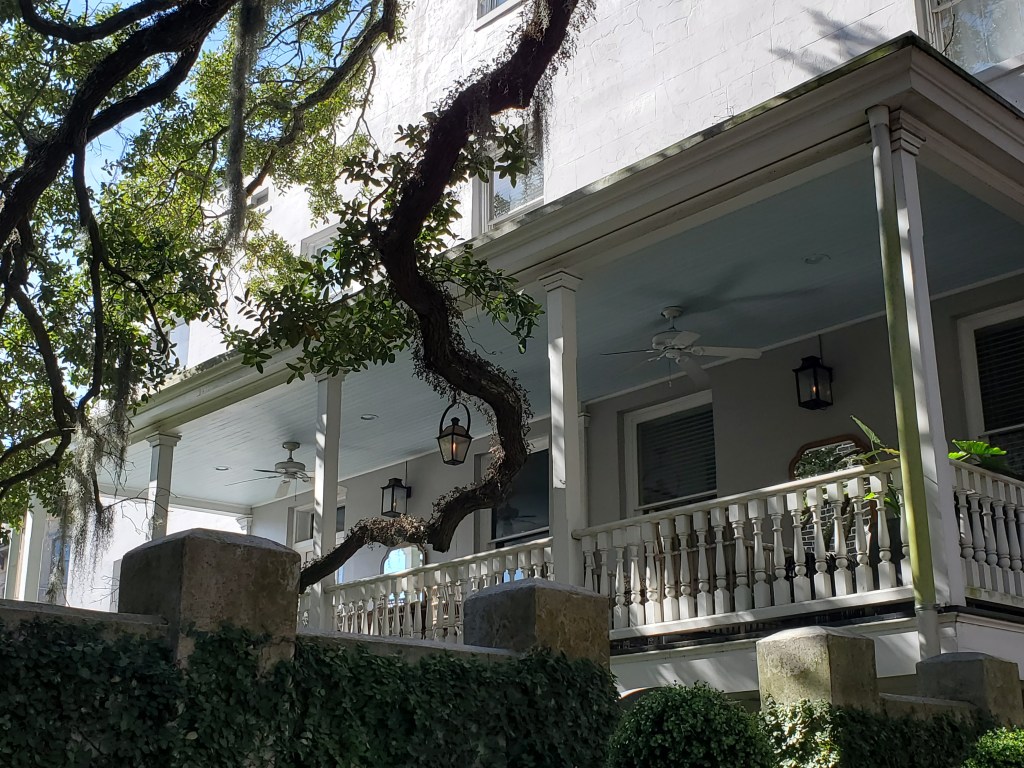
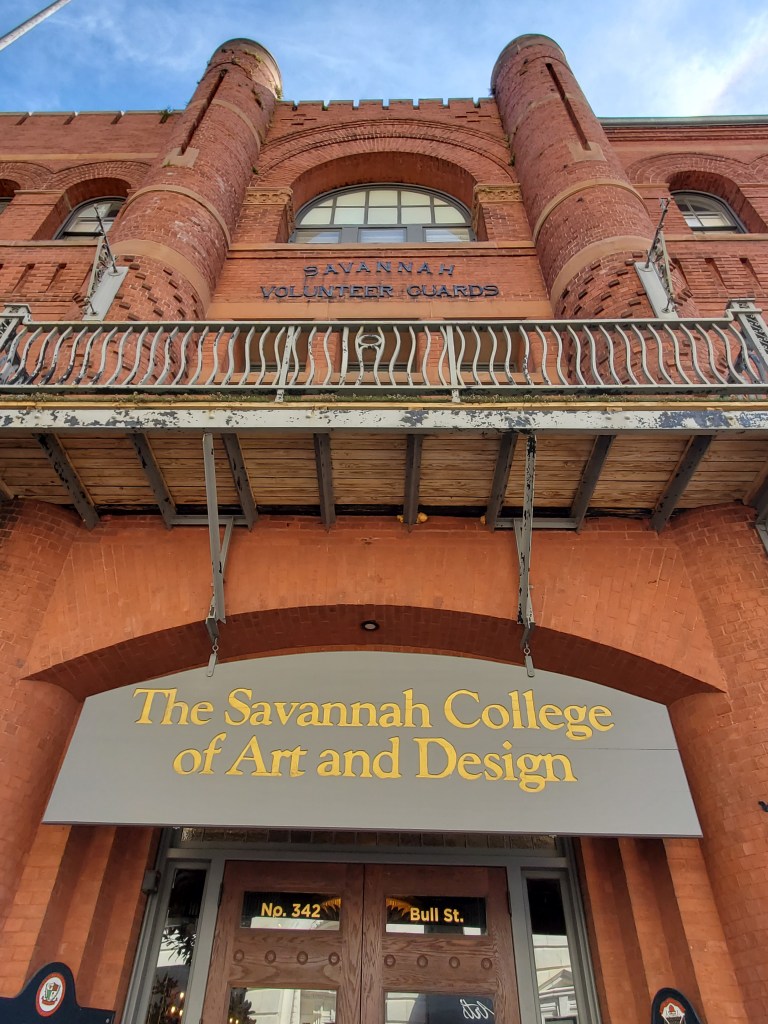
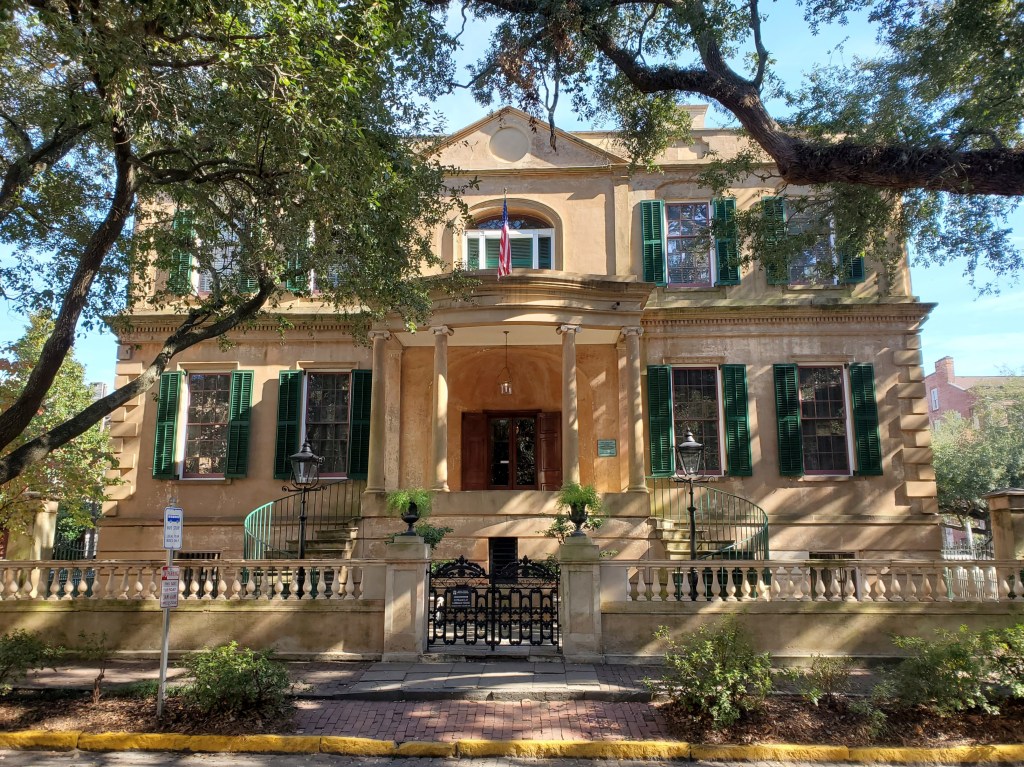
After some excellent grilled cheese at Mirabelle Savannah, the little coffee shop across the street, we made our way north on Abercorn to the Owens-Thomas House and Slave Quarters, a Greek Revival beauty designed by 20-year-old English architect William Jay for Richard Richardson, built from 1816-19, and in 1825 honored with a visit from the Marquis de Lafayette.
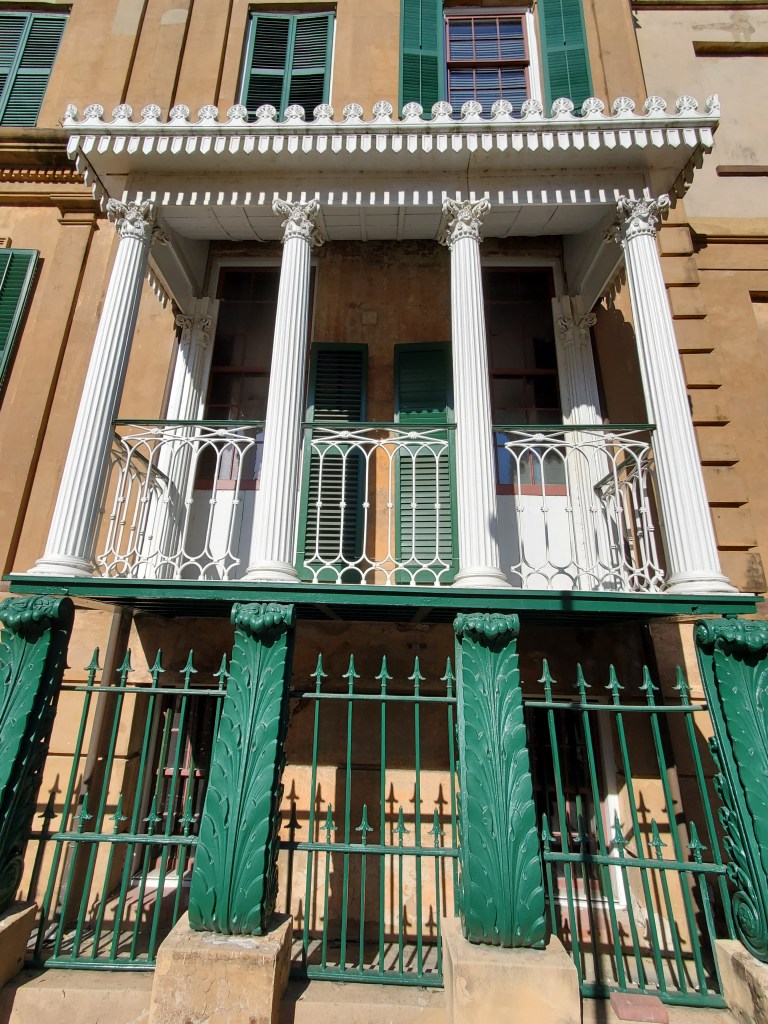


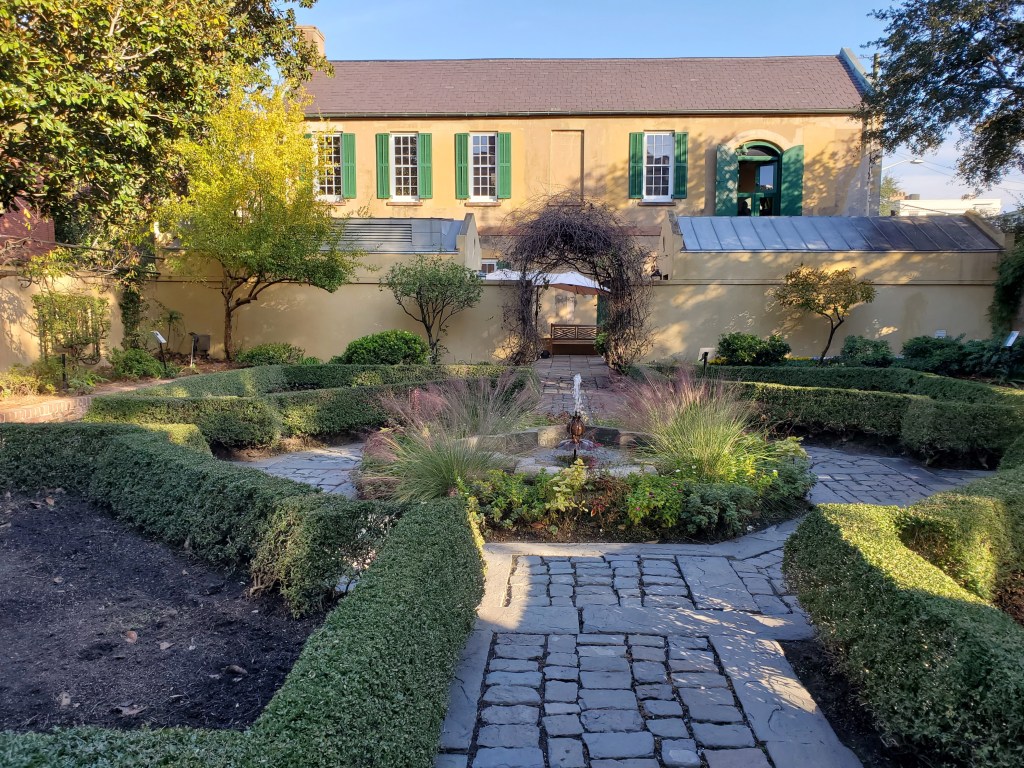
Our knowledgeable guide Jason confirmed the fun fact about porch ceiling paint Julianna had shared the day before: “haint blue” was a color that warded off ghosts and evil spirits, at least according to the Gullah, the once-enslaved African-Americans of the low country and sea islands of coastal South Carolina and northern Georgia. That belief came with practical value, however, as the paint’s mixture of lime, buttermilk, and indigo naturally created lye, a known insect repellent and deterrent salutary in a malarial climate. The house tour lived up to its reputation as both informative and evocative, and admission includes access to both the Telfair Academy and the Jepson Center.

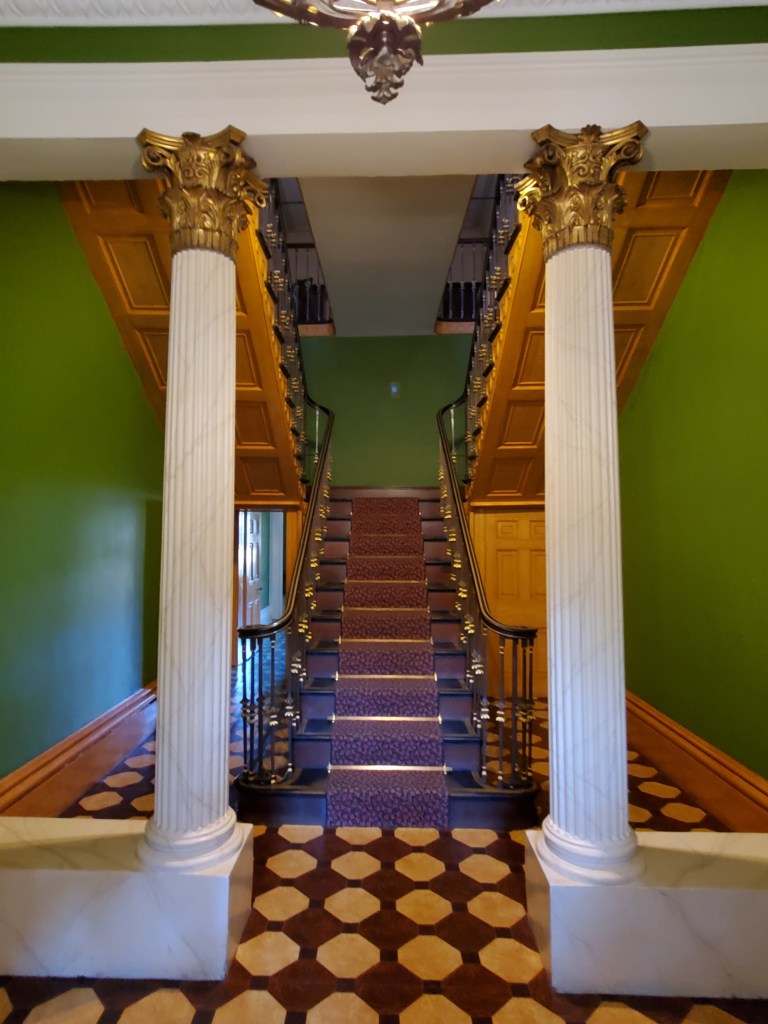
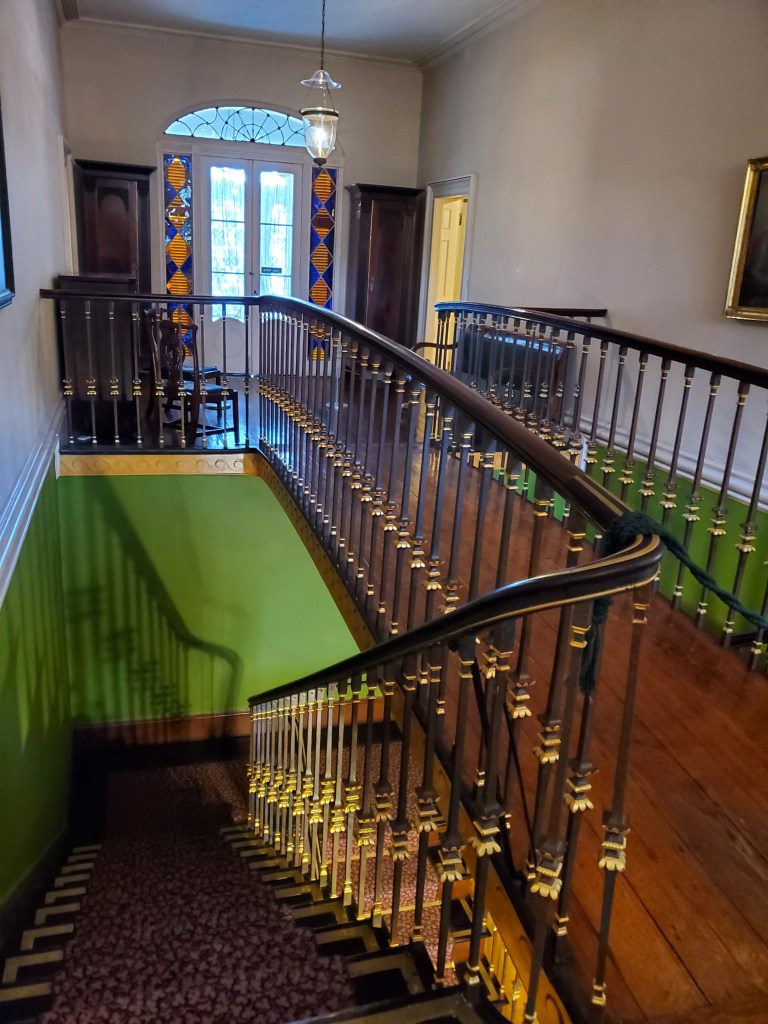
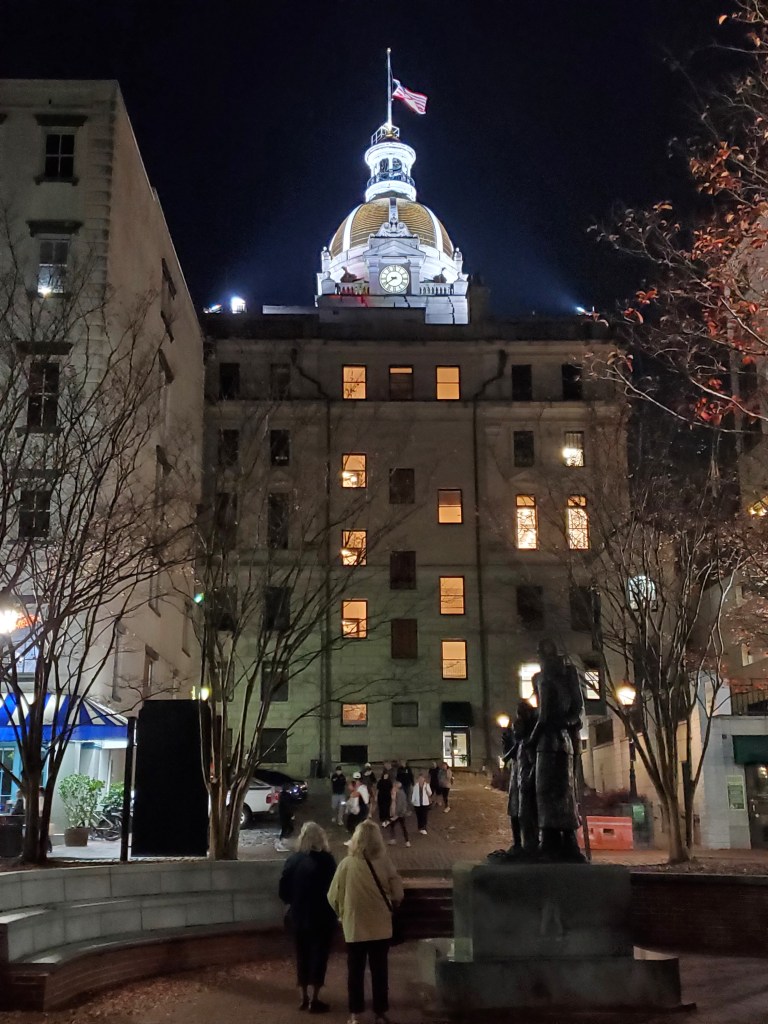
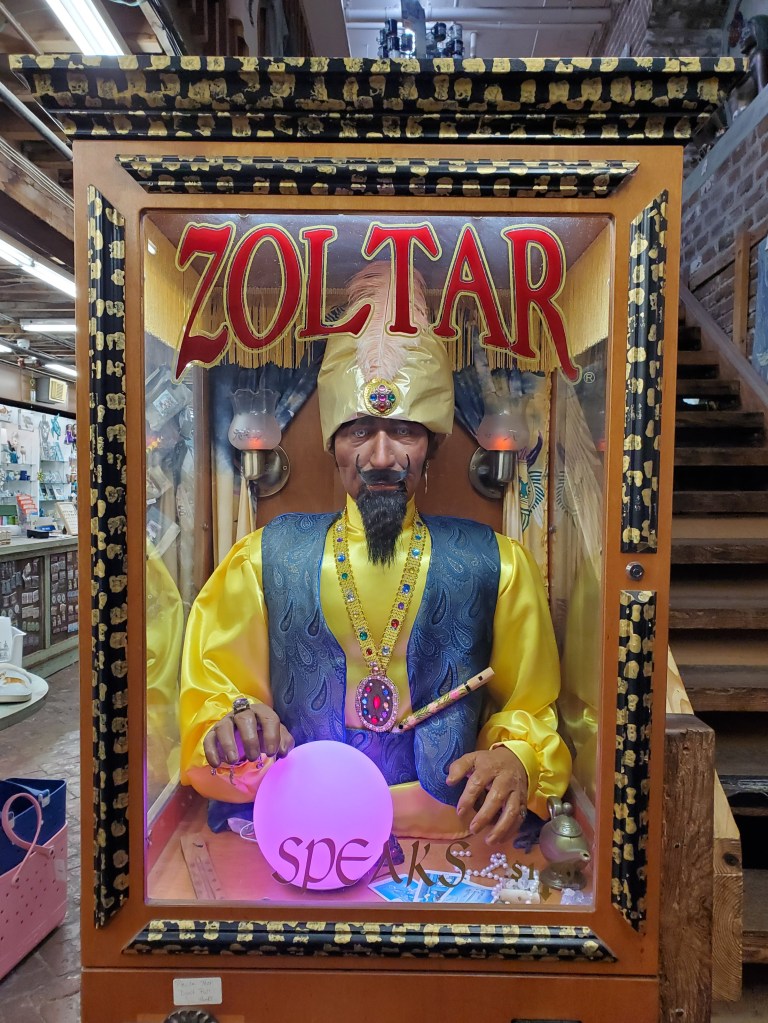
After a day on foot, we opted for an Uber ride to the delightfully funky Treylor Park restaurant on Bay Street, followed by a stroll past City Hall and down (take the elevator between the Hyatt and City Hall) to River Street’s tourist shops and arcades for some ice cream, an encounter with Zoltan, and another Uber back to our Hilton home.

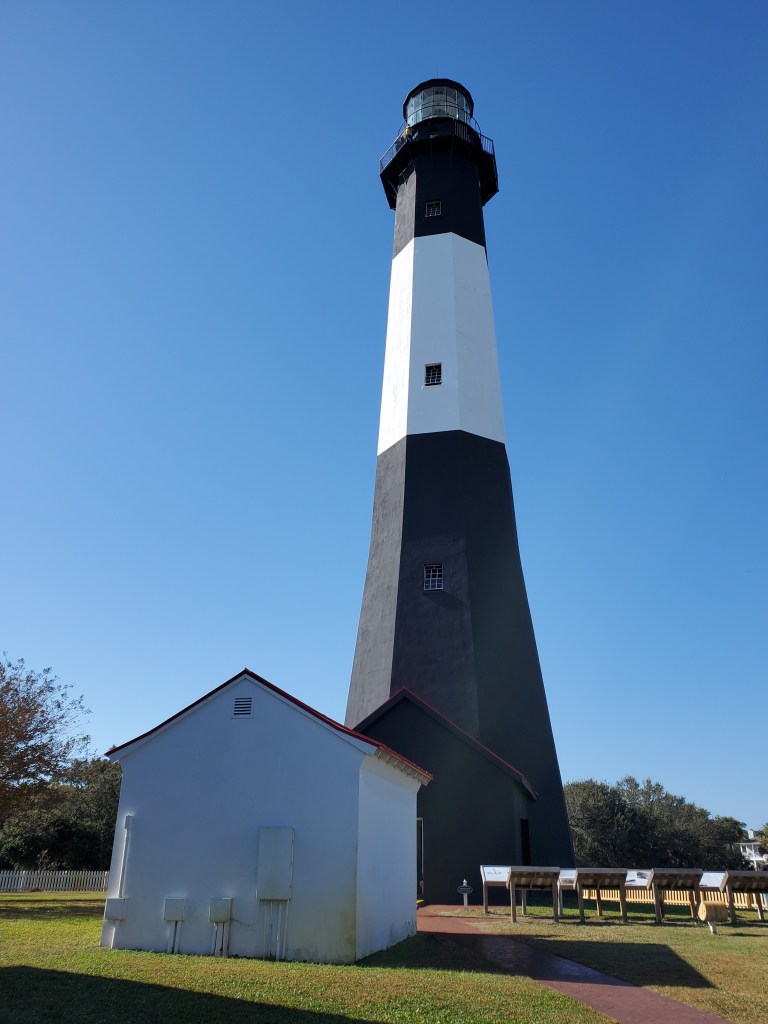
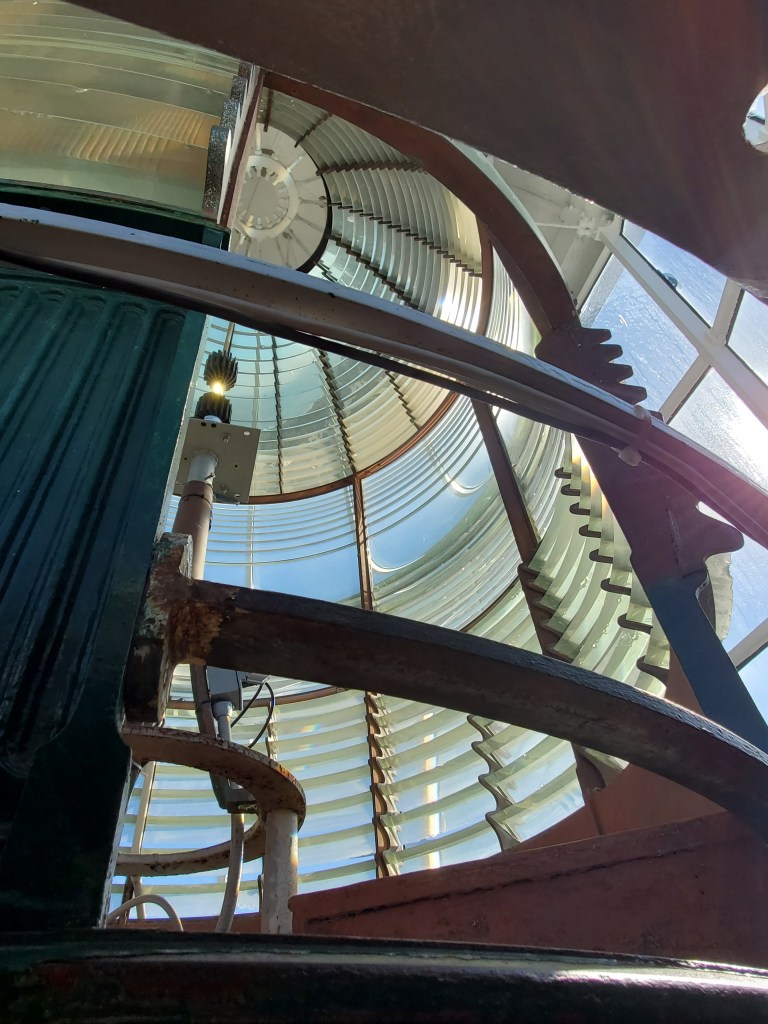
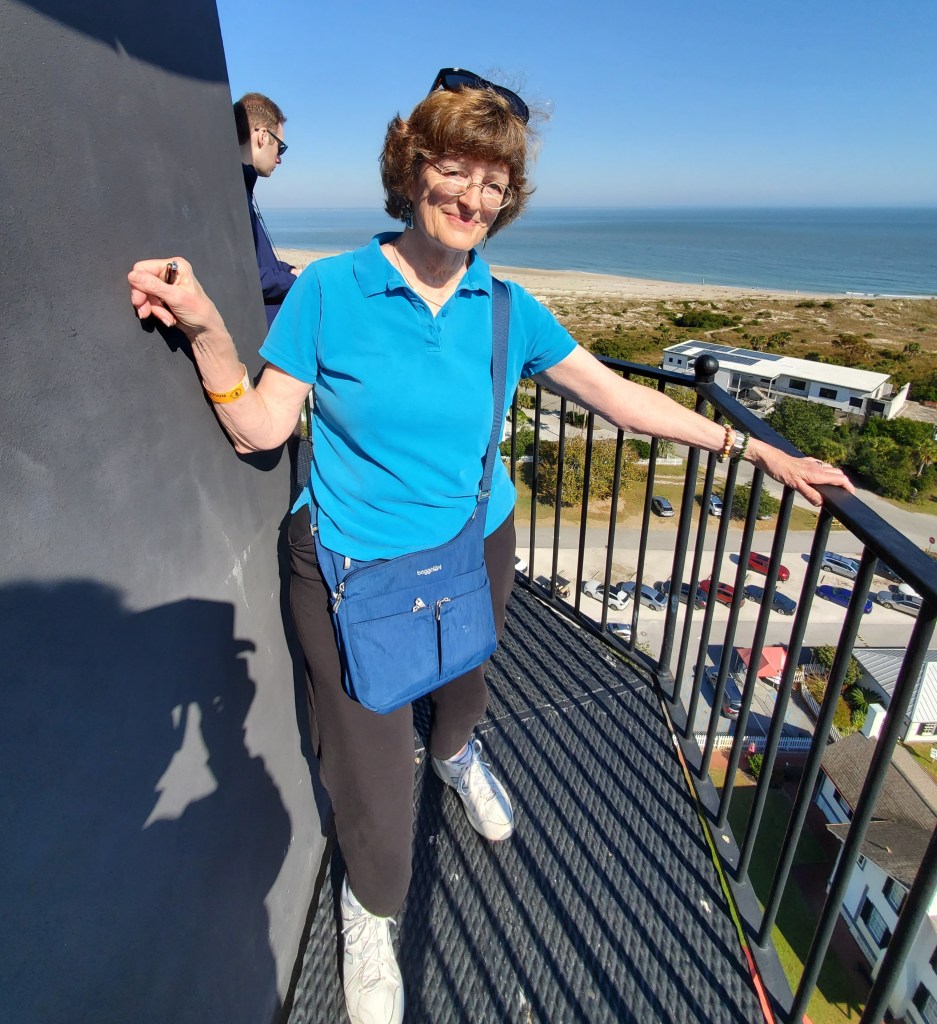
Our last full day together we drove along the causeway flanked by Spartina marsh grass to the Tybee Island Light Station and Museum for a (to me) challenging climb up the 178 steps to take in the view from the oldest and tallest (145 feet) lighthouse in Georgia, as well as a visit to the Head Keeper’s Cottage, built in 1881 and lovingly restored to the last lighthouse keeper George Jackson’s era, 1920-1940, with some of the family’s original belongings.
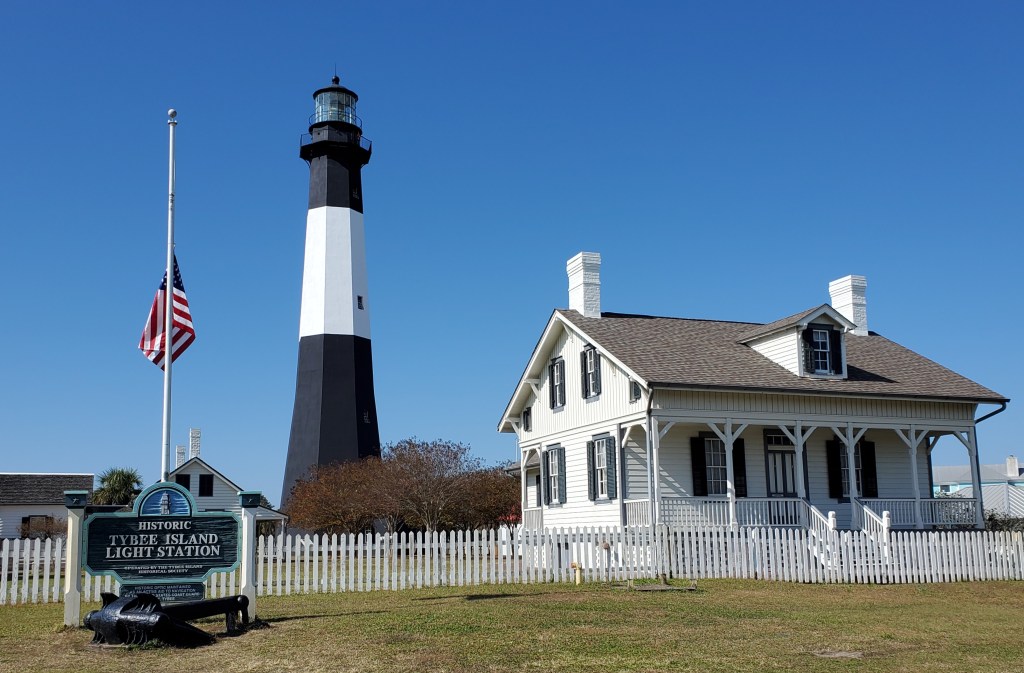
Across the street in Fort Screven, a battery that was part of the U.S. Coastal Defense System until it was decommissioned in 1945, the kindly volunteer docent kept a record of all visitor’s home states, and gave us a good tip about where to have lunch: right next door at the North Beach Bar & Grill.
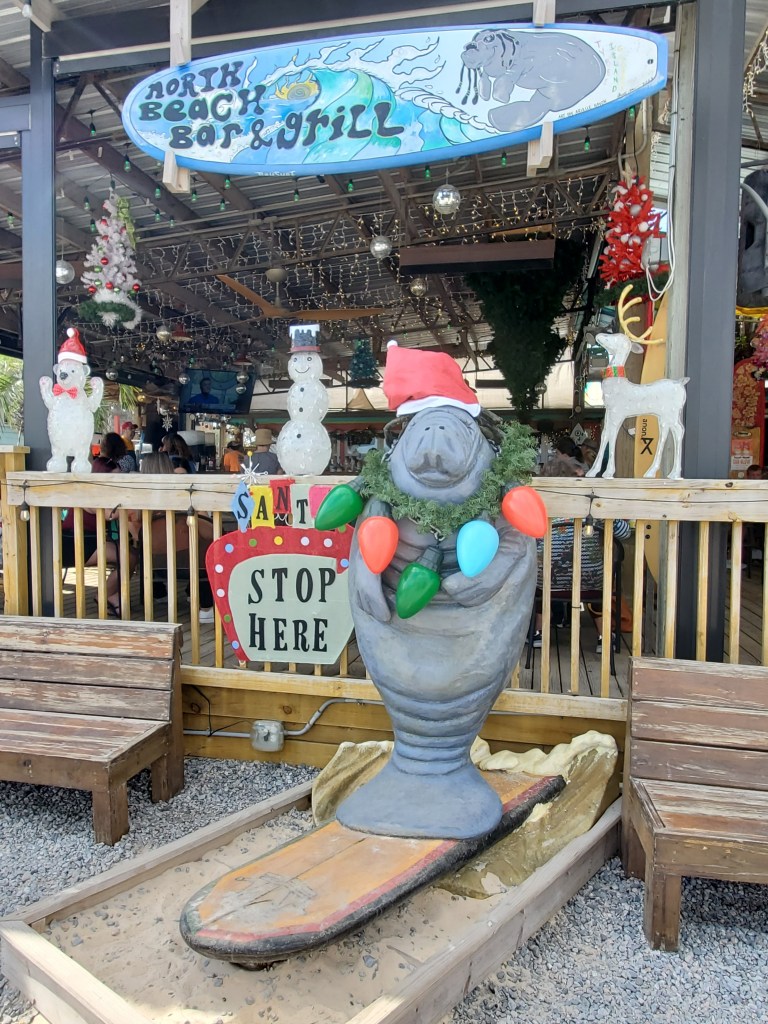

We giggled over Tybee Island’s reputation as the Redneck Riviera/Truck Stop-by-the Sea; monikers I think now rendered obsolete by gentrification.
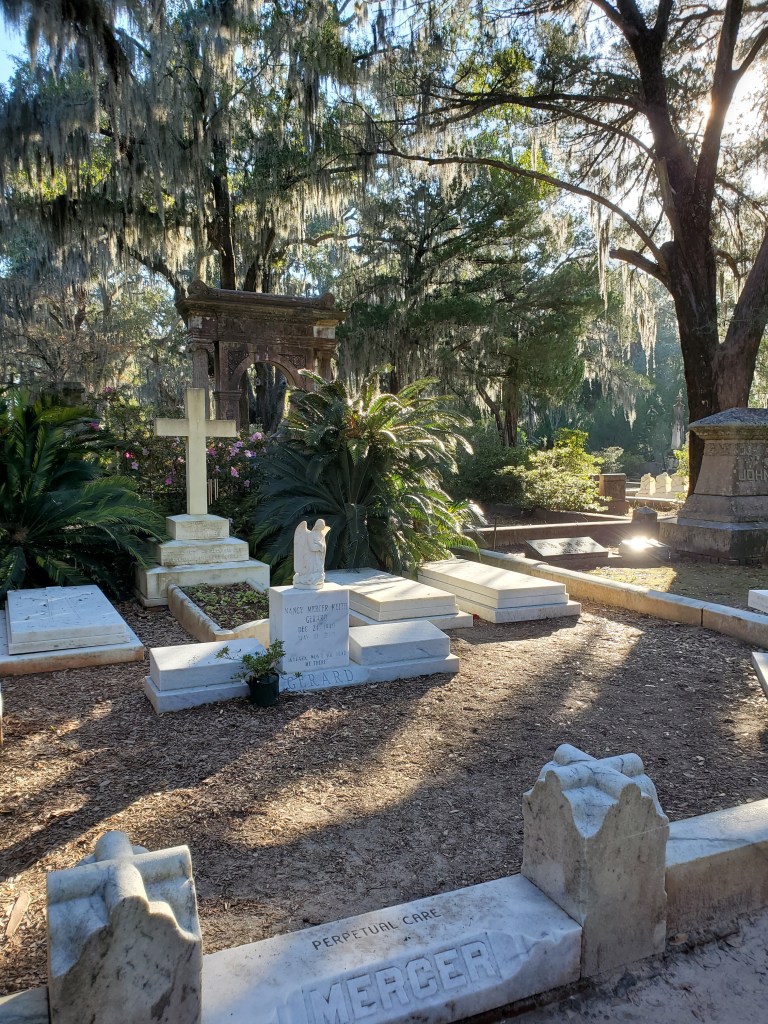
That left us just enough time to drive back to Thunderbolt, Georgia for a guided tour of the storied Bonaventure Cemetery led by raconteur and historian Steven, a consummate performer and purveyor of dad jokes.
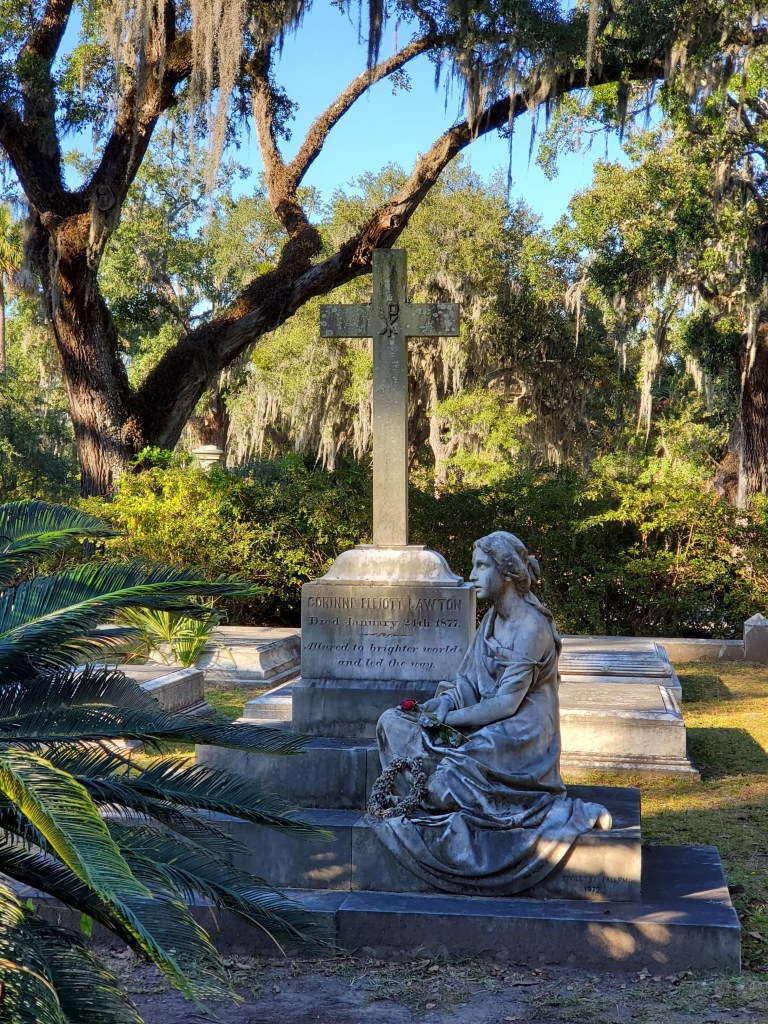
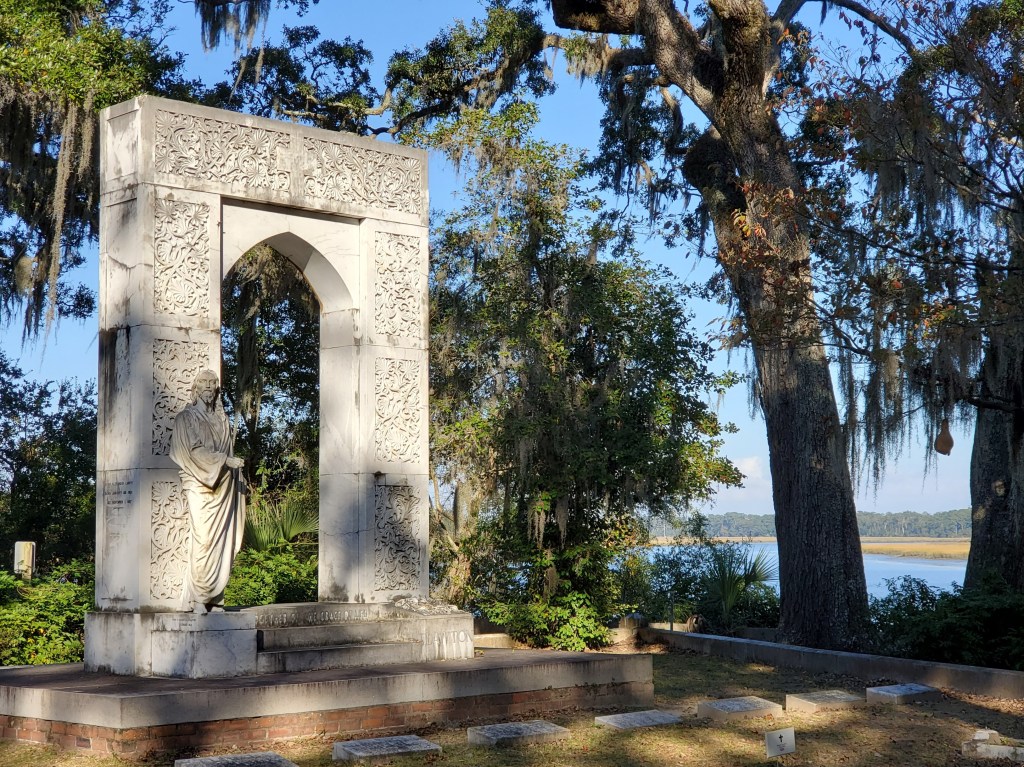
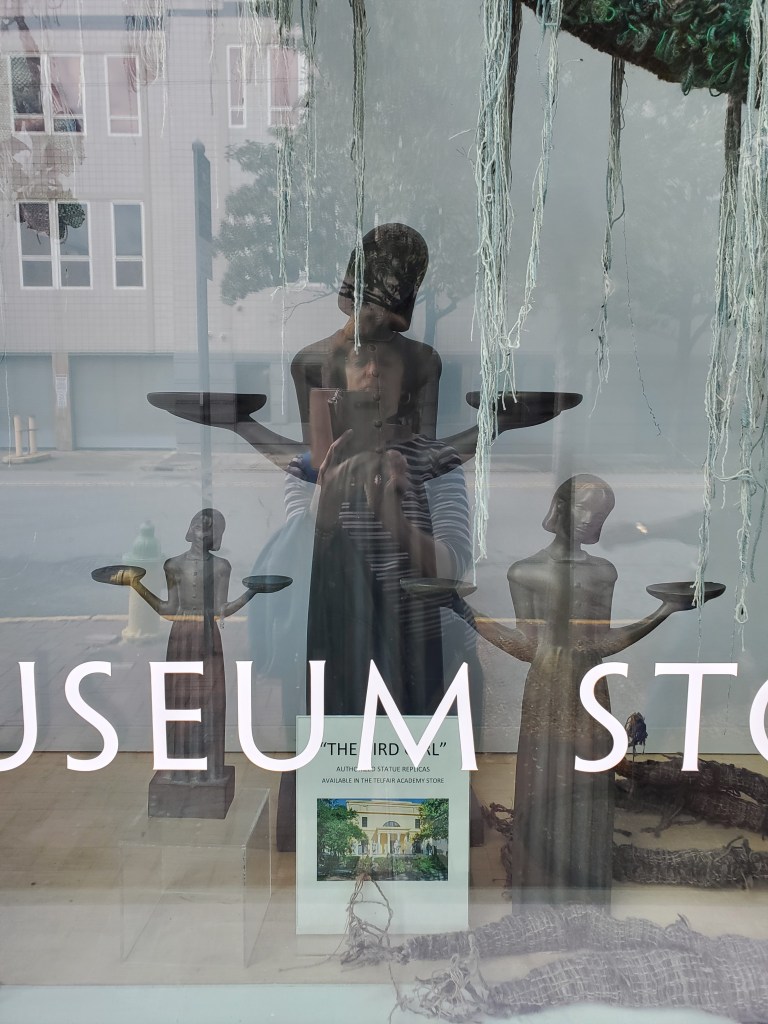
Steven let us know that the Bird Girl once among the cemetery statuary had been so threatened by the fame attending its appearance in Midnight in the Garden of Good and Evil that she’s now housed in the Telfair Academy for safekeeping—with replicas available for sale in the gift shop.
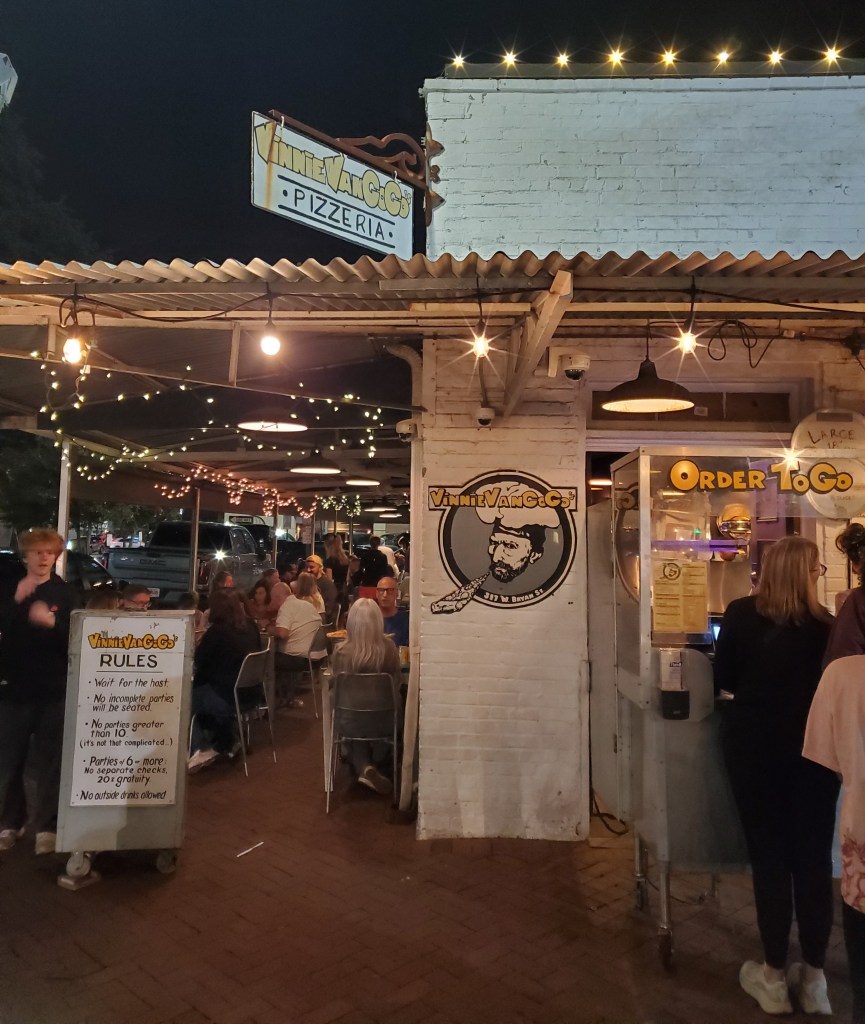
Once again pleasantly pooped after hours of walking, on returning to our hotel we decided to Uber to a dinner of some really excellent pizza at Vinnie Van Go Go’s (watch that pizza dough fly!), and then passed the time awaiting seats at the bar by cruising the lively City Market, home of Byrd’s Famous Cookies. We passed on the cookies, but enjoyed cobbler back on Barnard before returning to our home-away-from-home for one more night.
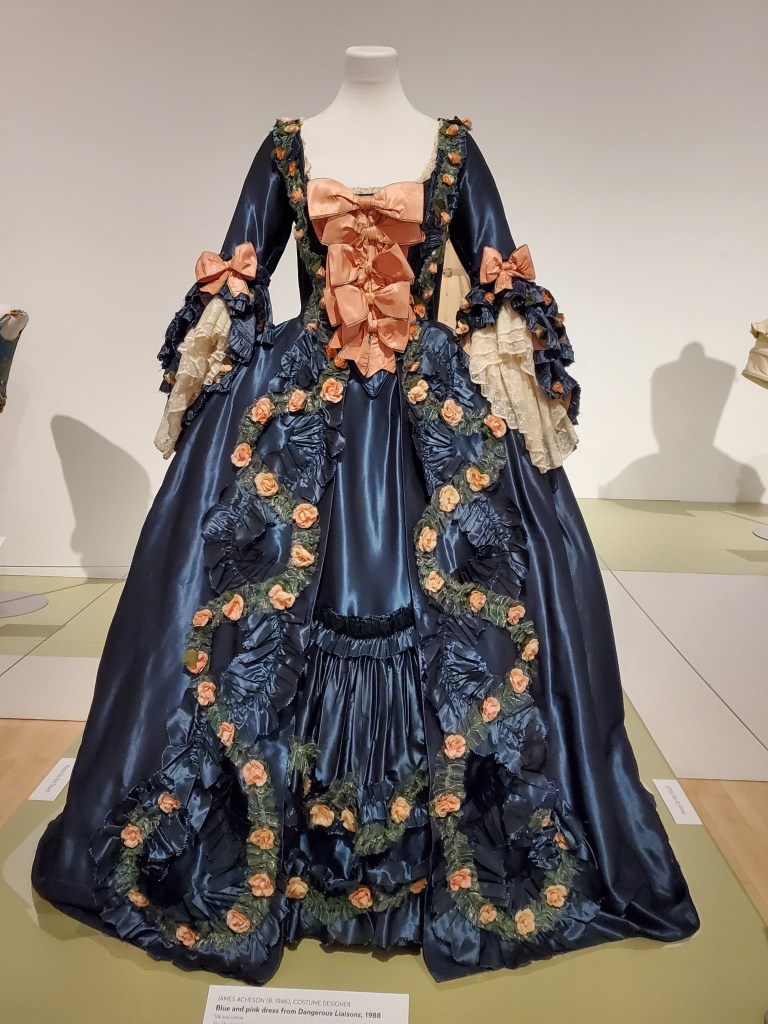
Richard and Daniel drove back to Safety Harbor the next morning after breakfast, and I took my time packing up for my afternoon flight back to Boston, routinely checking flight status until I learned of my original flight’s cancellation: the Federal shutdown took its toll. That proved a perk, however, as I was able to stow my luggage and stroll to the Jepson Center for a good long look around, including a close examination of highlights from the Glenn Close costume collection on display there: amazing artistry (and for such a tiny waist!).
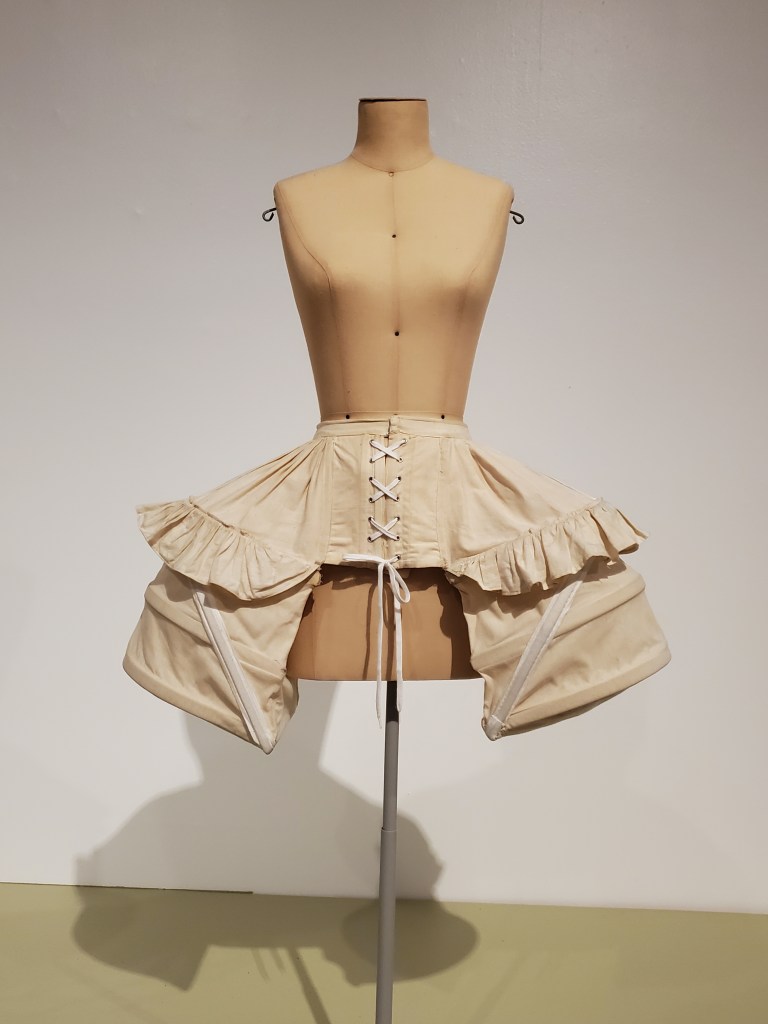
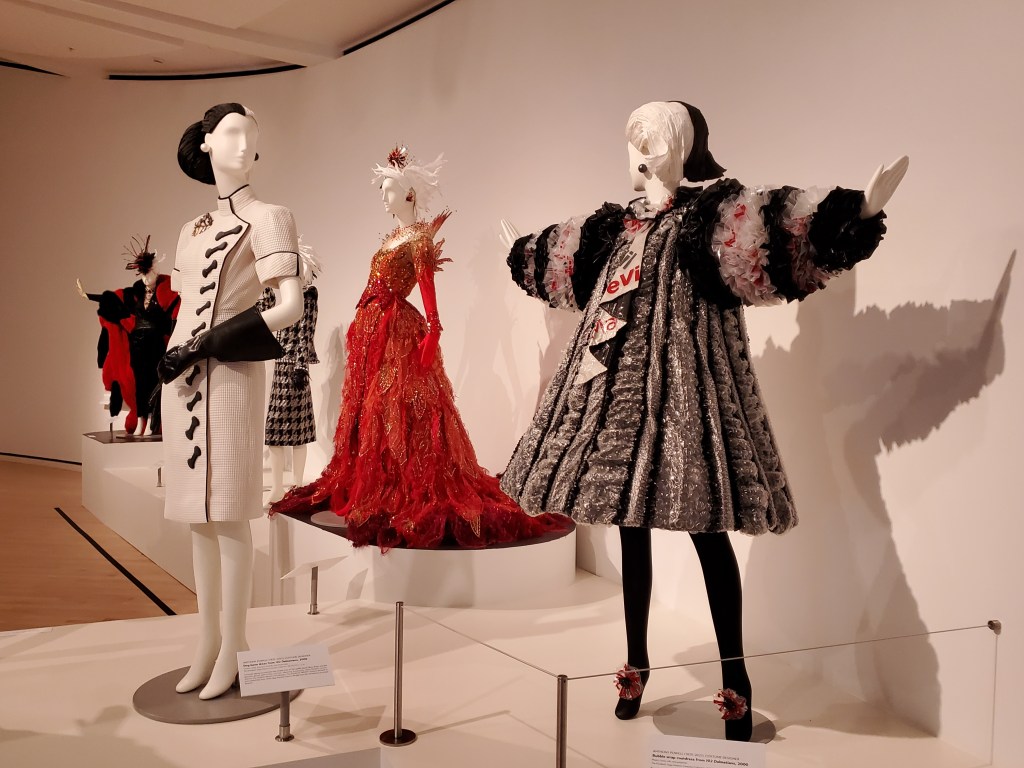
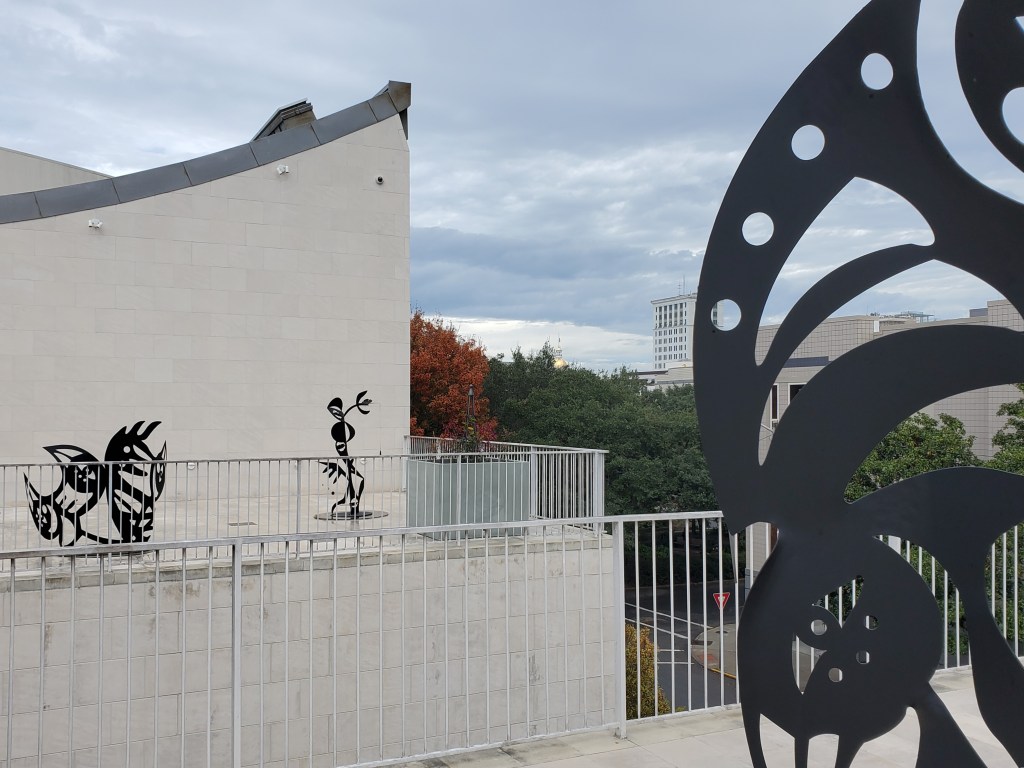
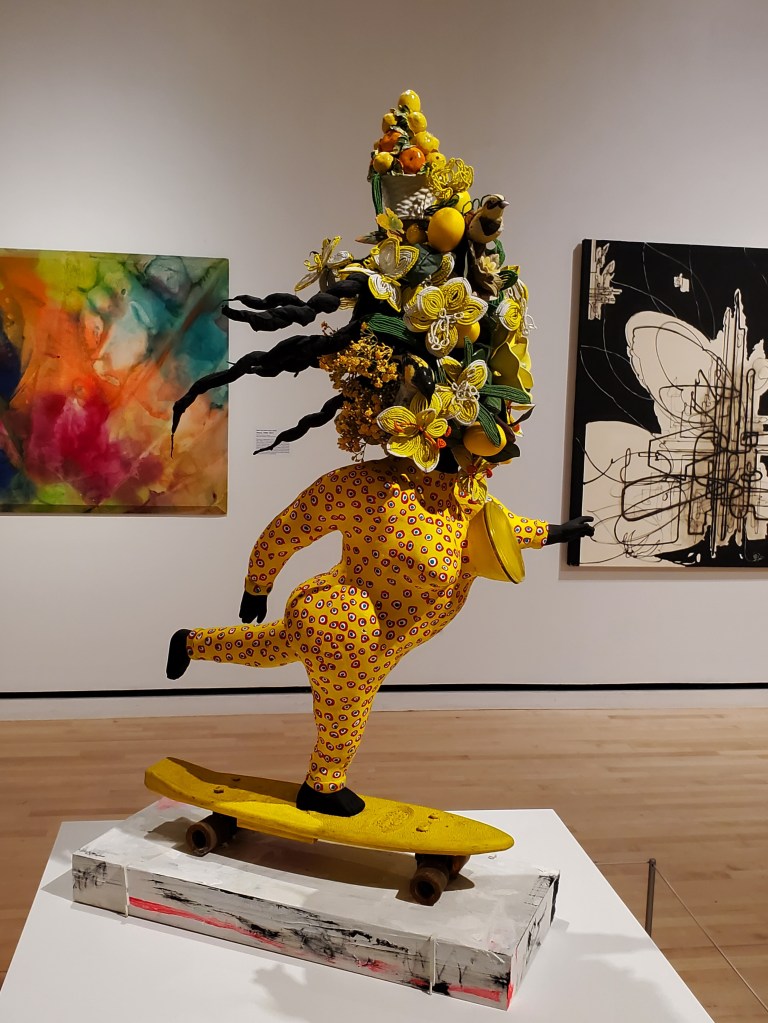
What followed was less fun: another delayed-ultimately-cancelled flight out, a night spent at an airport hotel, an early flight the next morning and a l-o-n-g layover in Baltimore before arrival in Boston 28 hours after originally planned. ‘Twas a good, rich trip nonetheless. I’m already keen to return to Savannah.
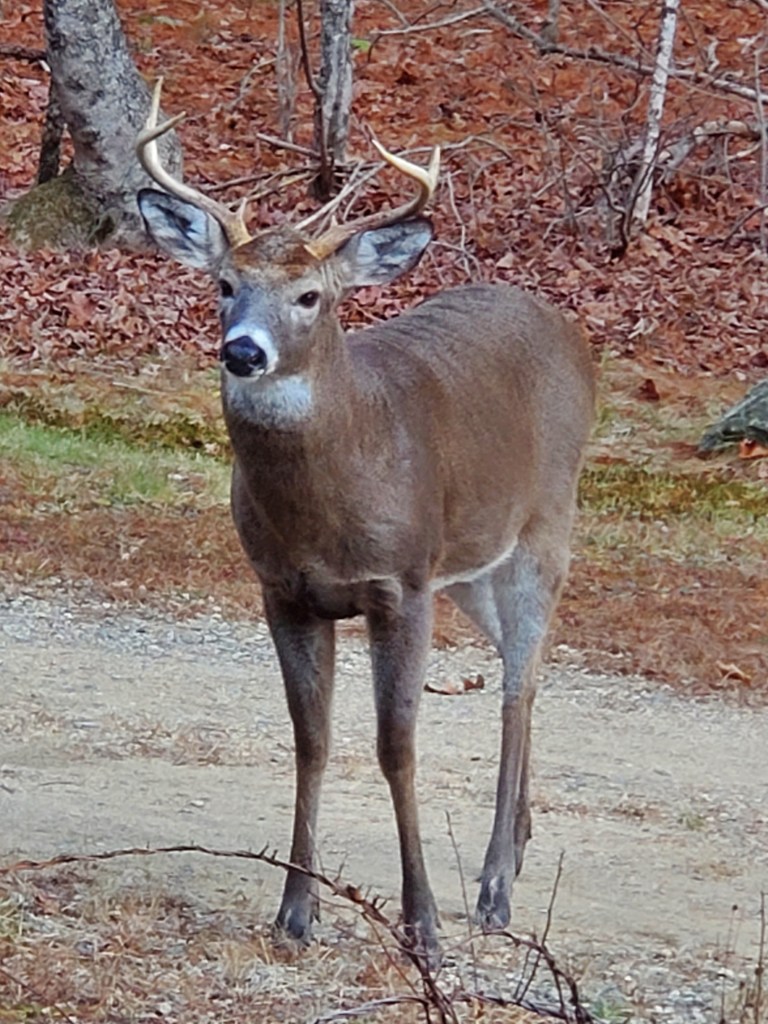
But Madbury also has its charms—and charming visitors, too. This young fellow appeared just outside my kitchen window the day after Thanksgiving, and we locked eyes for so long I wondered at a possible visitation. Well, snow coming tomorrow. Time to settle in. Home sweet home.


 Georgeann Murphy
Leave a reply to georgeannmurphy Cancel reply