7 May 2025
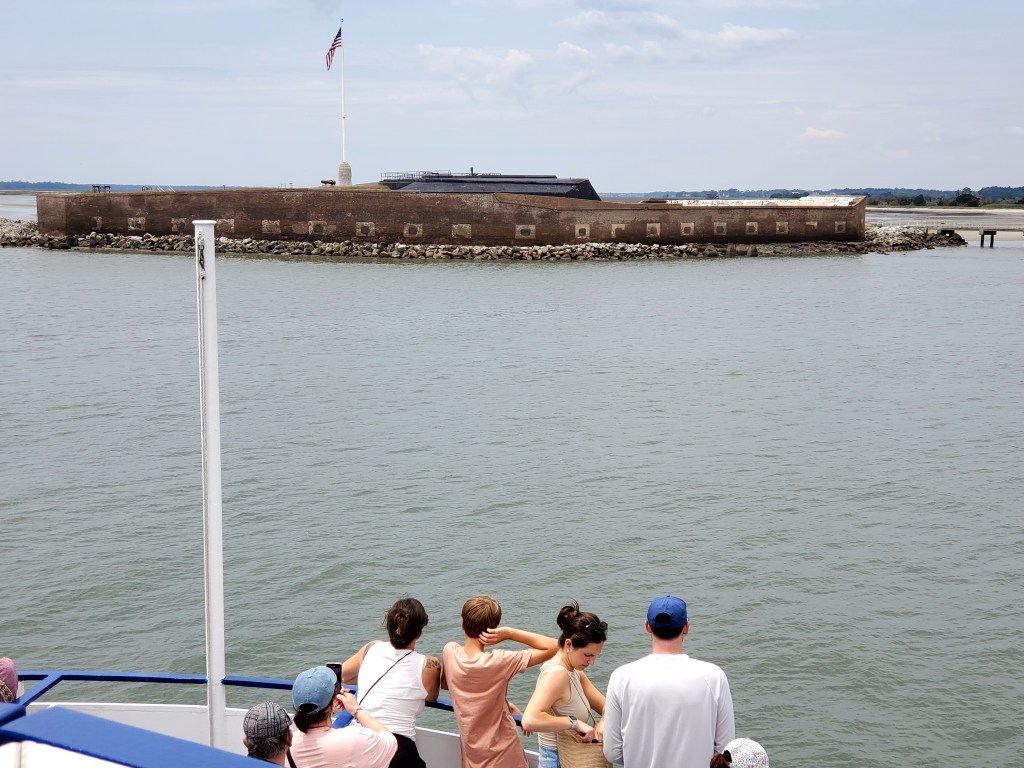
where America’s Civil War began
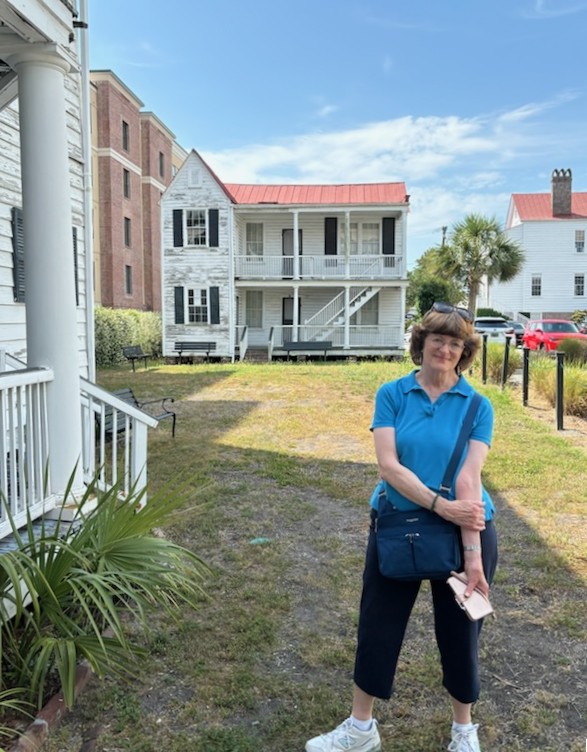
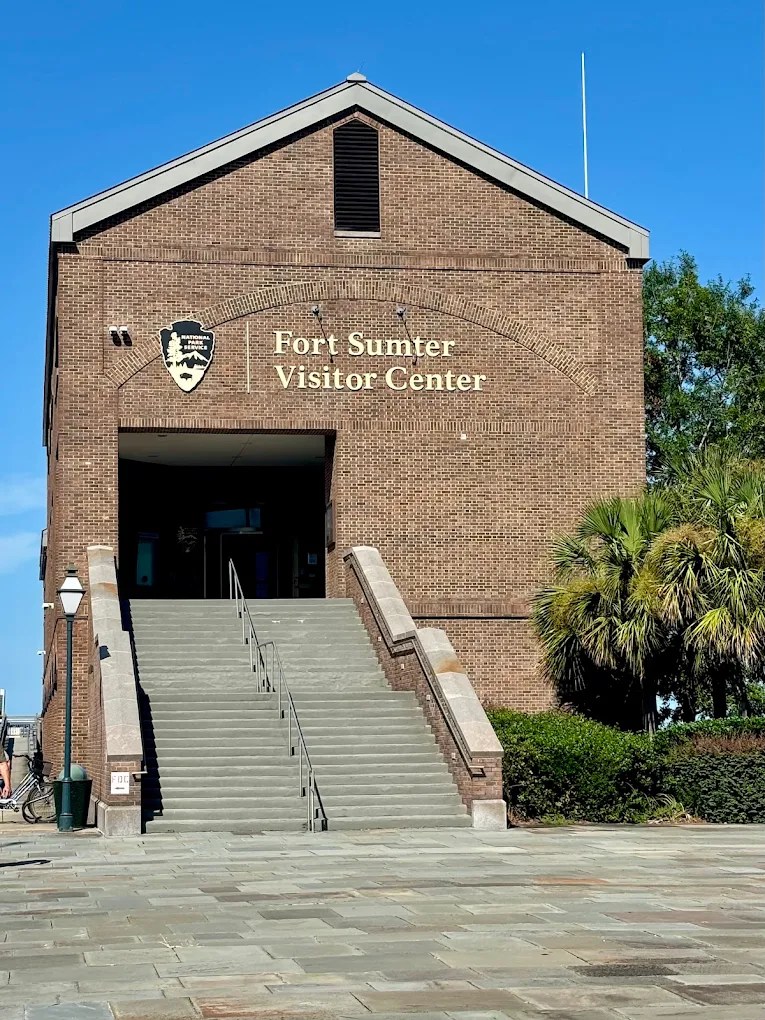
On Wednesday morning we took advantage of the Hampton Inn parking policy that allowed us to leave our car in the hotel garage until we left the Holy City for Folly Beach later in the day. After breakfast on the patio, we walked the short distance from Meeting Street down Calhoun to the Ft. Sumter Visitor Center in Liberty Square, passing along the way the “Borough Houses.” Built in 1852 (a century before my birth) and occupied by Irish immigrants, 35 Calhoun was purchased in 1939 by Willis Johnson, Sr., whose sons Frank and Henry built 35½ Calhoun by hand to complete their carpentry apprenticeships. The two homes are still owned by the Johnson family, and remain the last vestige of “The Borough,” the African-American neighborhood built in 1940 for over 160 families, finally demolished in 1993 after the discovery of toxic waste deposits in the soil. As a descendant of Irish immigrants, I asked my brother-in-law to record my tangential connection with this snippet of Black Charleston history.
The exhibits at the handsome Ft. Sumter Visitor Center, including the replica gigantic garrison flag with its 33 stars once flown over the Fort, are very informative and, for me, revealing of how much our nation’s current divide reiterates tensions present from its founding.
The closely related issues of slavery and state sovereignty were so volatile at the time of the Constitutional Convention in 1787 that any direct reference to slavery in the new document might cause a fatal rupture in the negotiations between regions and prevent a federal union. So, Enlightenment ideals about the abolition of slavery were conveniently omitted. To quote from one display, “The nation quickly learned that the Bill of Rights and the system of checks and balances between the branches of government did not guarantee individual liberties if one political party gained control of all three branches of government. The 1798-1799 Virginia and Kentucky Resolutions written by James Madison and Thomas Jefferson were manifestos of a state’s right to judge the constitutionality of federal actions. The resolutions defined the Union as a compact among the states, giving limited powers to the central government. Arguments of a broken contract, or a failed ‘compact’ that no longer protected a state’s interests, were the basis for secession movements.” The displays further emphasized how tariffs, intended to boost domestic industry, were seen as detrimental to Southern industry, highly dependent on agriculture and international trade, and led to the Nullification Crisis of 1832-33, when South Carolina argued it could nullify federal laws it deemed unconstitutional, including tariffs. As Trump’s Executive Order nullifying birthright citizenship makes its way through the courts and the Supreme Court wrestles with injunctions, I’m again reminded of Harry Truman’s words: “The only thing new in the world is the history you don’t know.”

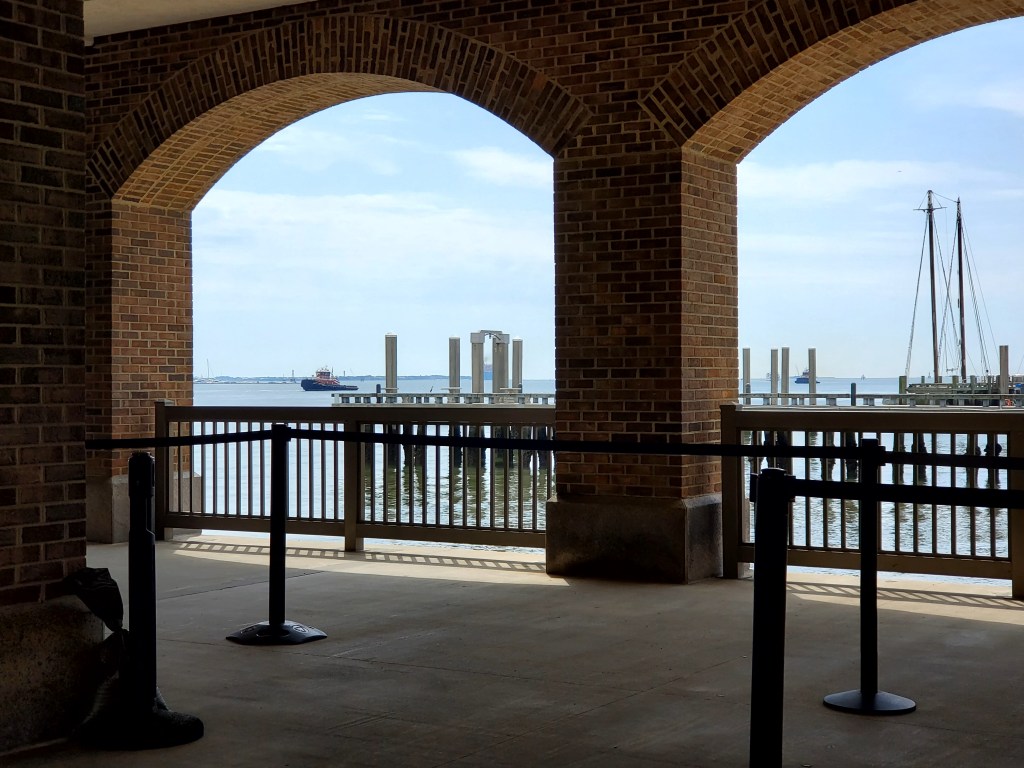
(or, How to Achieve a Darwin Award)
Ft. Sumter’s construction had begun with enslaved labor in 1829, an attempt to fortify Charleston Harbor after the War of 1812 with a defensive structure named after South Carolina Revolutionary War hero Thomas Sumter, a fort designed to protect the Union. But South Carlina seceded from the Union on 20 December 1860 following Abraham Lincoln’s election as president, an act of secession soon followed by other states that led to the formation of the Confederate States of America. At the time Union-held but strategically important to the Confederacy, South Carolina demanded the fort be surrendered. Union commander Major Robert Anderson refused. Lincoln then decided to resupply Ft. Sumter, an act the Confederacy viewed as a further challenge to their sovereignty. General Beauregard of the Confederacy then sent an ultimatum to Major Anderson, demanding the Fort’s surrender. When Anderson again refused, the first shots on the Fort were fired at 4.30 am on 12 April 1861, marking the beginning of the Civil War.
Ranger Summer of the National Park Service pointed out that Ft. Sumter today is essentially a “stabilized ruin” of its former self: walls that once rose 55 feet above sea level today offer a barrier of only 9-25 feet.
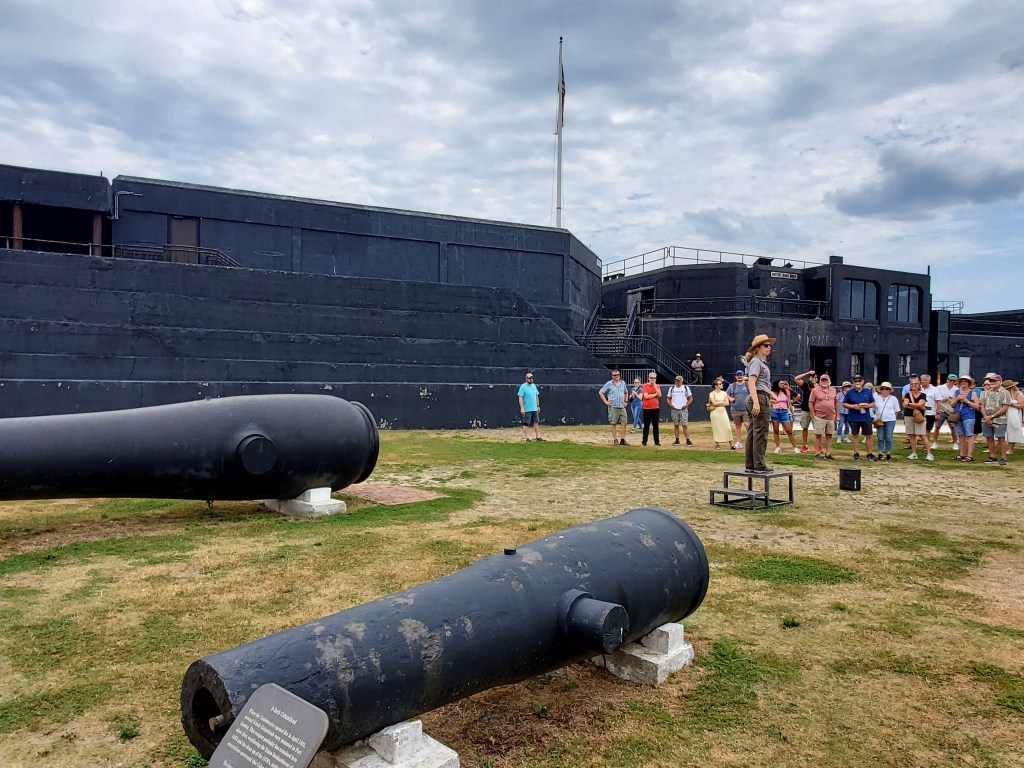
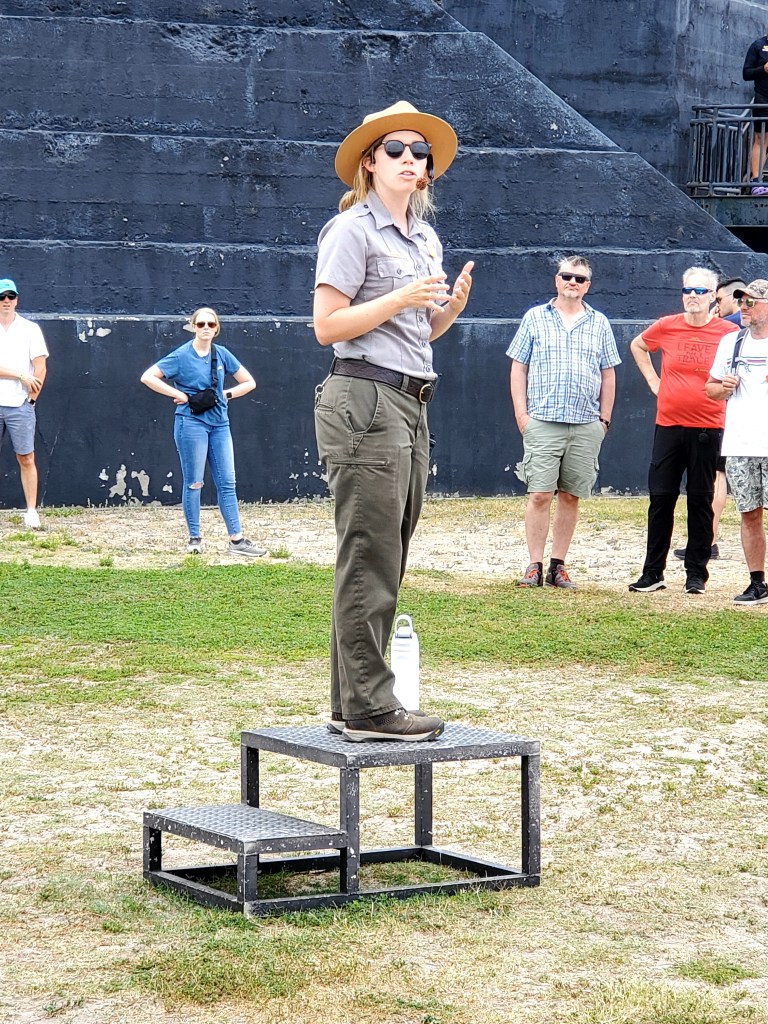
From Ranger Summer, we also learned that states added to the Union only get their star on the U.S. flag on the following Fourth of July, so Kansas, the 34th state to join the Union on 29 January 1861 was not yet represented on the garrison flag that flew over Ft. Sumter when it first received Confederate fire on 12 April 1861. It was also Ranger Summer who pointed out the finger prints of what was likely one of the enslaved children whose comparatively “light work” was making the Fort’s bricks, nearly invisible but enduring evidence of why our country’s most costly war was fought.
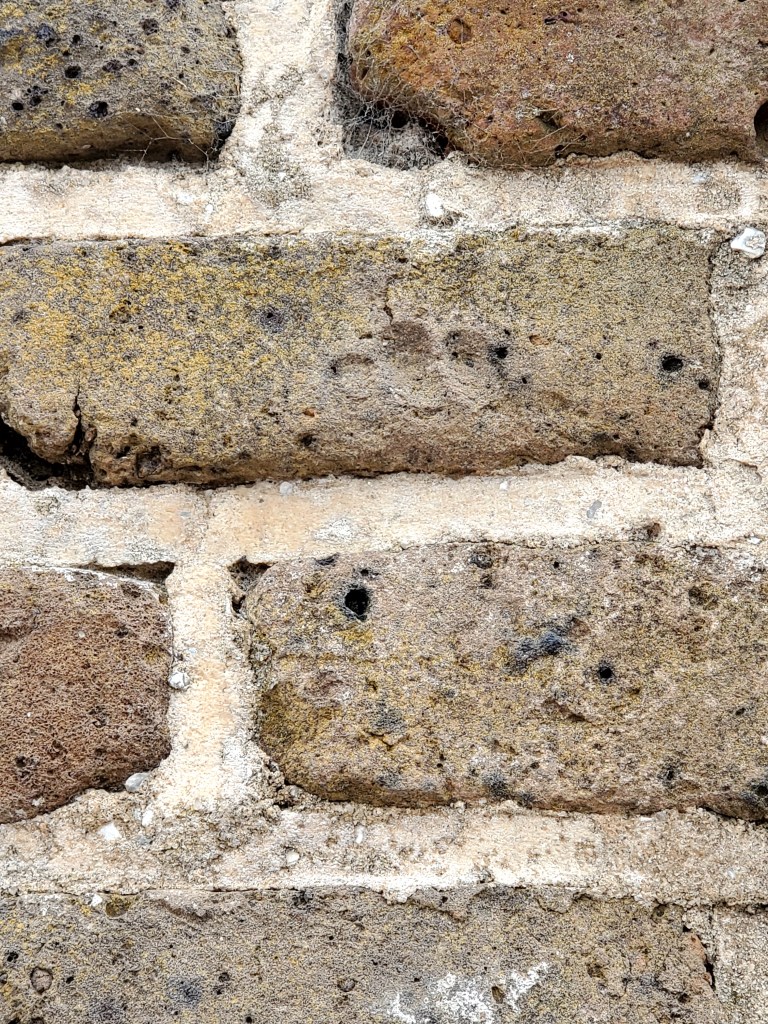
likely made by an enslaved child
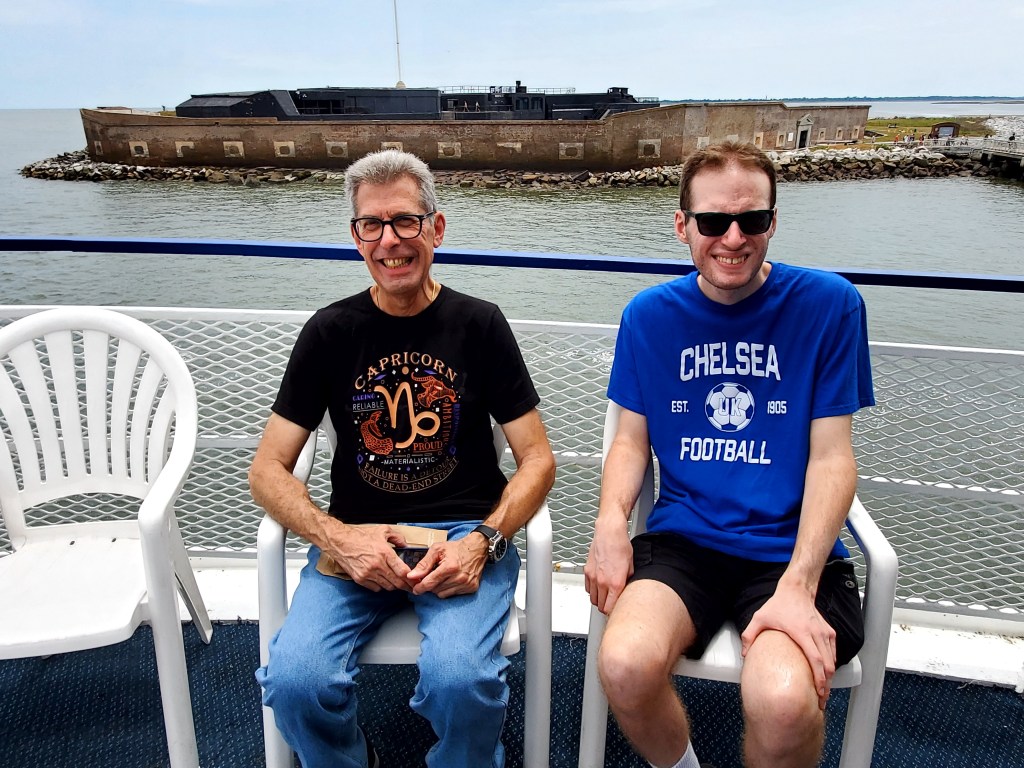

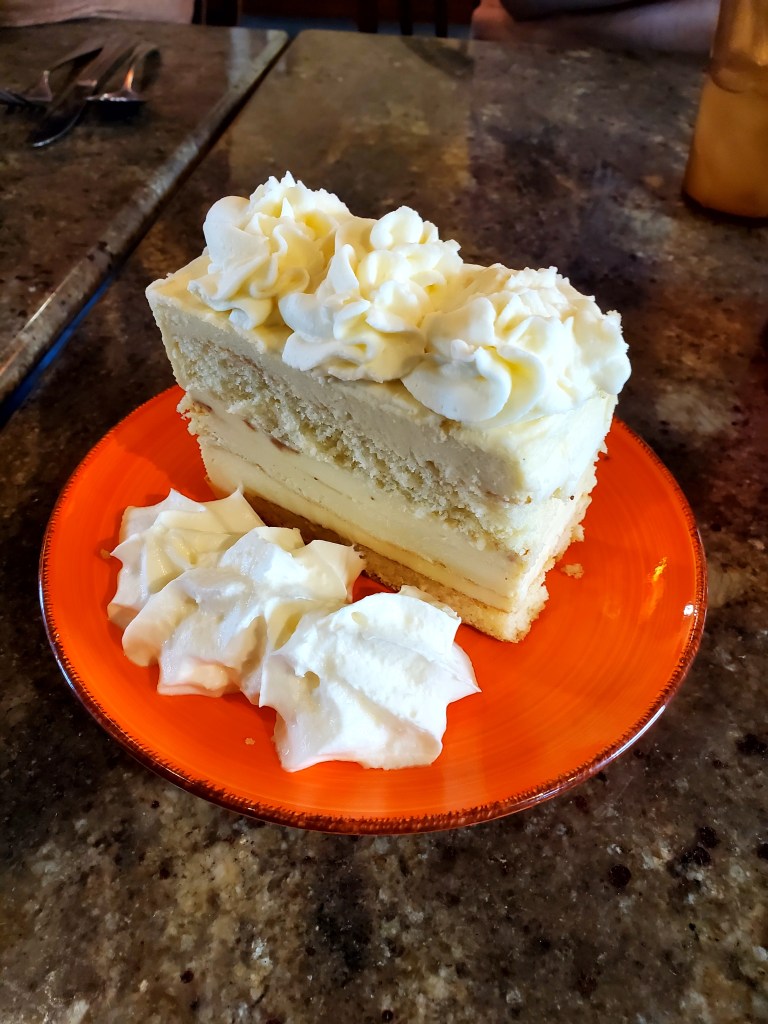
Ranger Summer’s characterization of Ft. Sumter as a “stabilized ruin” left me pondering the balance of stability and ruin typifying the current state of our Union. But a tip from Bill at the Visitor Center gift shop sent us to a happily distracting treat at nearby bakery/café Saffron: iced coffee and a slice of lemon torte sufficient to fuel navigation off the Charleston peninsula and onto our upmarket Airbnb on Folly Beach.

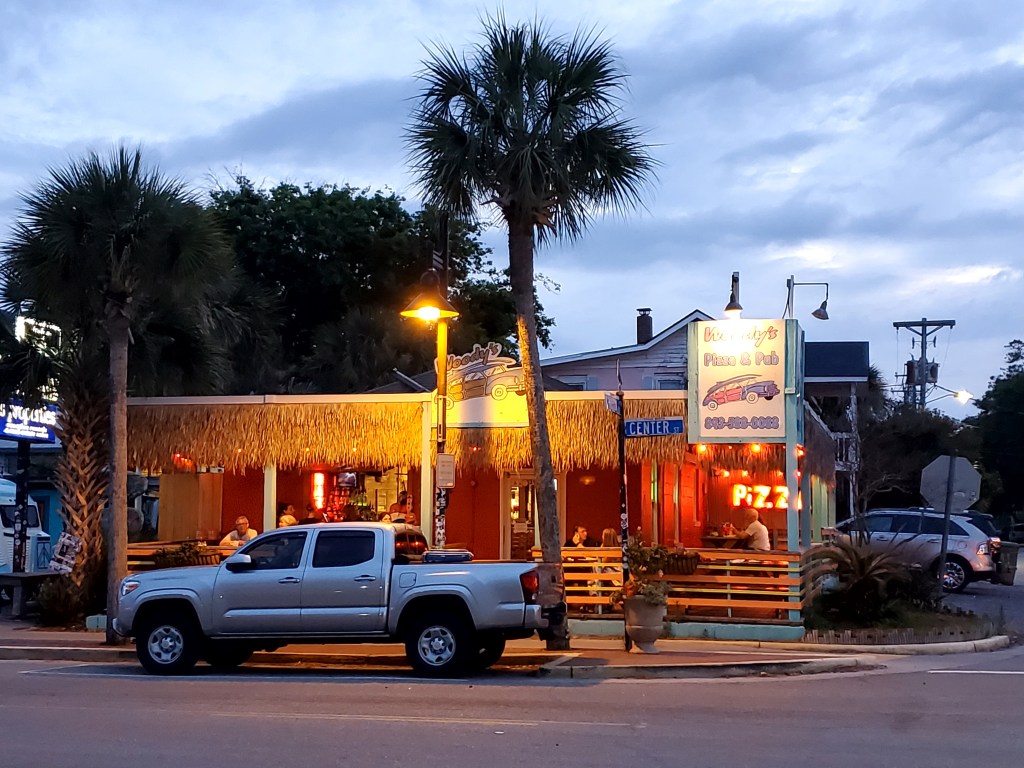
A stroll on the beach and some wood-fired pizza at Woody’s on Center Street concluded our day to the lulling sound of the Atlantic waves.


 Georgeann Murphy
Leave a comment