4-5 May 2025
Gosh, the Uber driver who returned me to the Charleston Airport last Friday, born in Dubai to Pakistani parents, is a well-educated former business analyst and a naturalized citizen who believes that America is the land of opportunity. Despite losing his desk job and subsequently maintaining a brutal driving schedule five days a week to meet his self-imposed daily income goals, Gosh believes in his adopted country, and in making the best of whatever setbacks the universe hands him: he’s determined to establish a nationwide distribution business and one day give a TED talk on the success he’s made for himself and his family in the U.S. He showed me pictures of his two dogs, precursors to the children he hopes soon to have with his wife, an IT specialist who likes Shakespeare. At his request as we neared the airport, I shared my brief story of work, love, loss, and my own relationship with the universe, and gave him my card touting my Will to Live book, which he promised to share with his wife. We agreed on the old-fashioned efficacy of business cards, wished each other well, and parted.
My flights back home were eventful only in recalling the many times I’ve left loved ones behind, prompting some tears; crying on planes, I have heard, is not uncommon. Each painful parting recalls others past as one slips the surly bonds of earth. I had Magda Szabό’s The Door for company, a novel about the distance that separates even those who love ferociously, contributing, as did Gosh, to the philosophical speculation that comes unbidden in the liminal space of an airplane cabin at 30,000 feet. I returned to Madbury in the dark in the rain, grateful to be home after so rich and evocative a visit to Charleston, South Carolina and barrier island Folly Beach with my brother-in-law and nephew, our third reunion in the almost 15 months since my sister’s passing. At home, the daffodils are blown, the lilac and azaleas in bud. My takeaway from our low country encounter: an accurate retelling of history is alive and well among the guides who led us around Charleston, the Magnolia Plantation, and Ft. Sumter. Charleston’s gracious beauty and charm was never allowed to obscure the fact of its dependence on enslaved people. No “war of Northern aggression” whitewashing of facts, no arguing that the Civil War was about states rights. The war between the states was about slavery, the country’s original sin for which we continue to pay a terrible price. Hearing that truth honestly told, together with a break from the 24/7 reporting of the Felon-in-Chief’s latest atrocities and a much-anticipated family reunion, was a tonic comfort and joy.
On arrival at the Hampton Inn last Sunday afternoon, the excellence of the hotel’s location at the intersection of Meeting and John Streets was immediately apparent: once a burlap warehouse, this Hilton property is directly across from the Charleston Visitor Center (formerly a train station) on John Street and the Manigault House on Meeting.
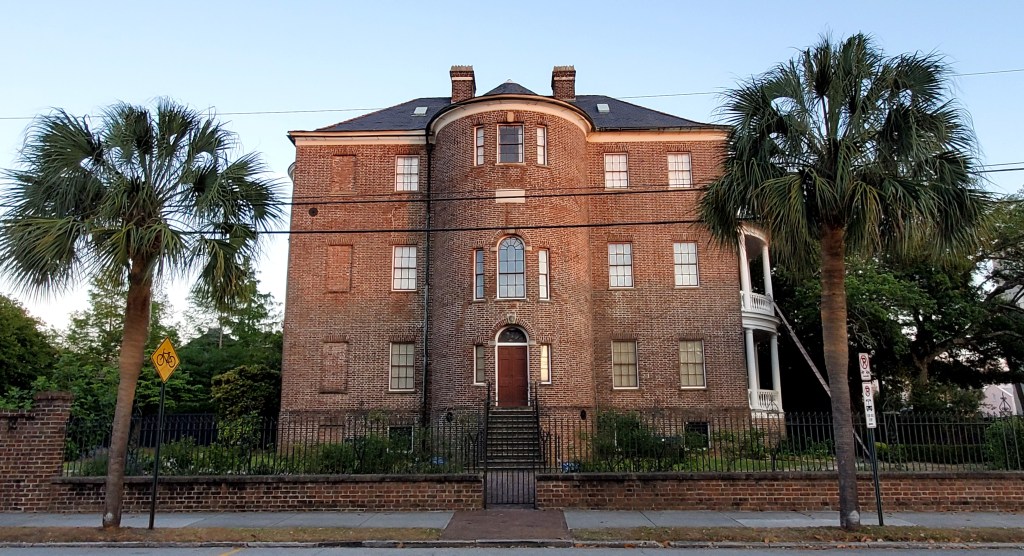
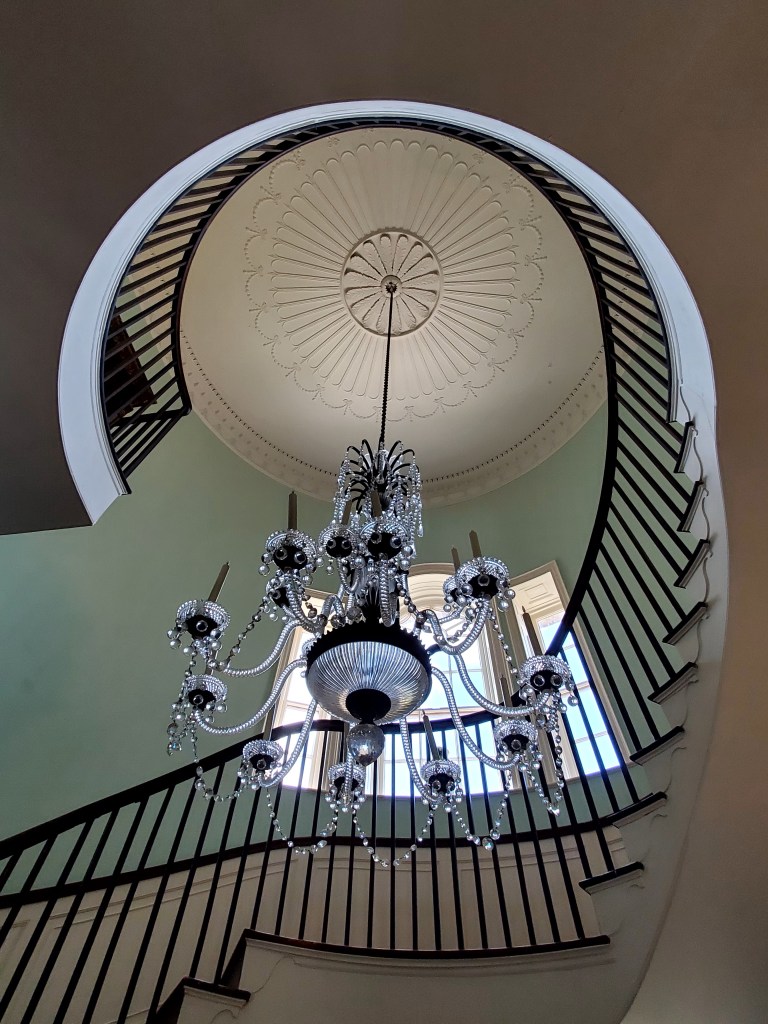
Built in 1803 by enslaved laborers using primarily local materials, Joseph Manigault’s house is a remarkable example of the severe Federal architecture that inspired David’s and my Gnawwood. From its imposing symmetry, blind windows, and Adamesque detail to its high ceilings, light-filled rooms, two-story piazzas, and curving central staircase, the Manigault House is a beauty spared from demolition in the 1920’s and, acquired by the Charleston Museum in 1933, signified the beginning of the preservation movement in Charleston.
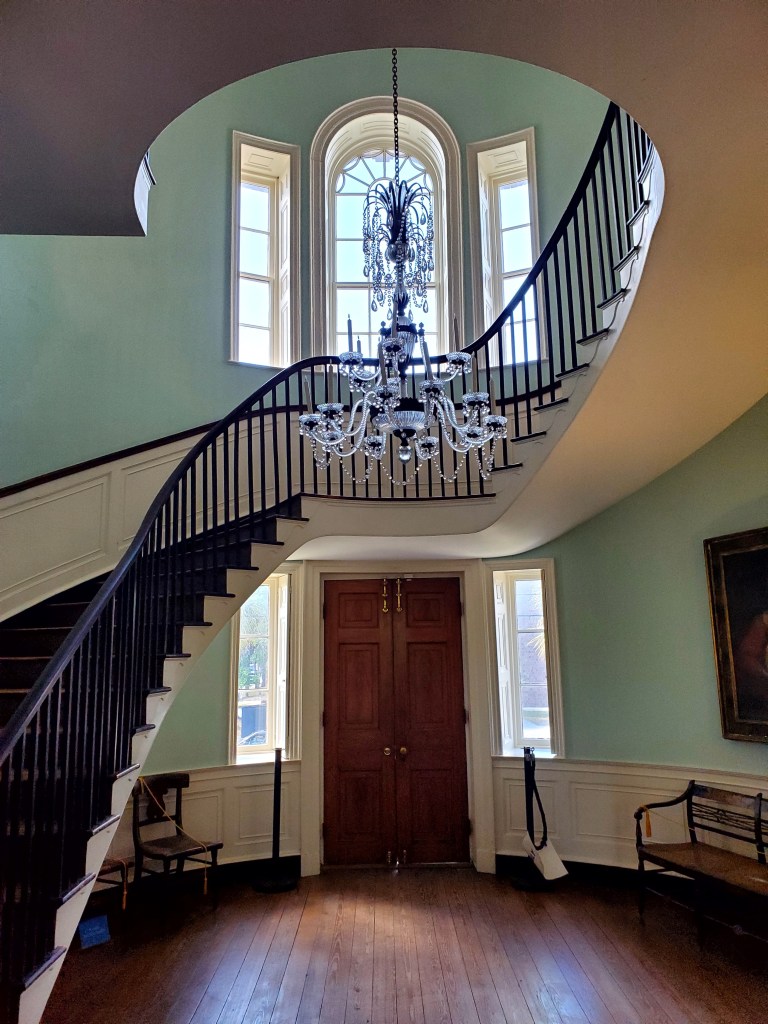
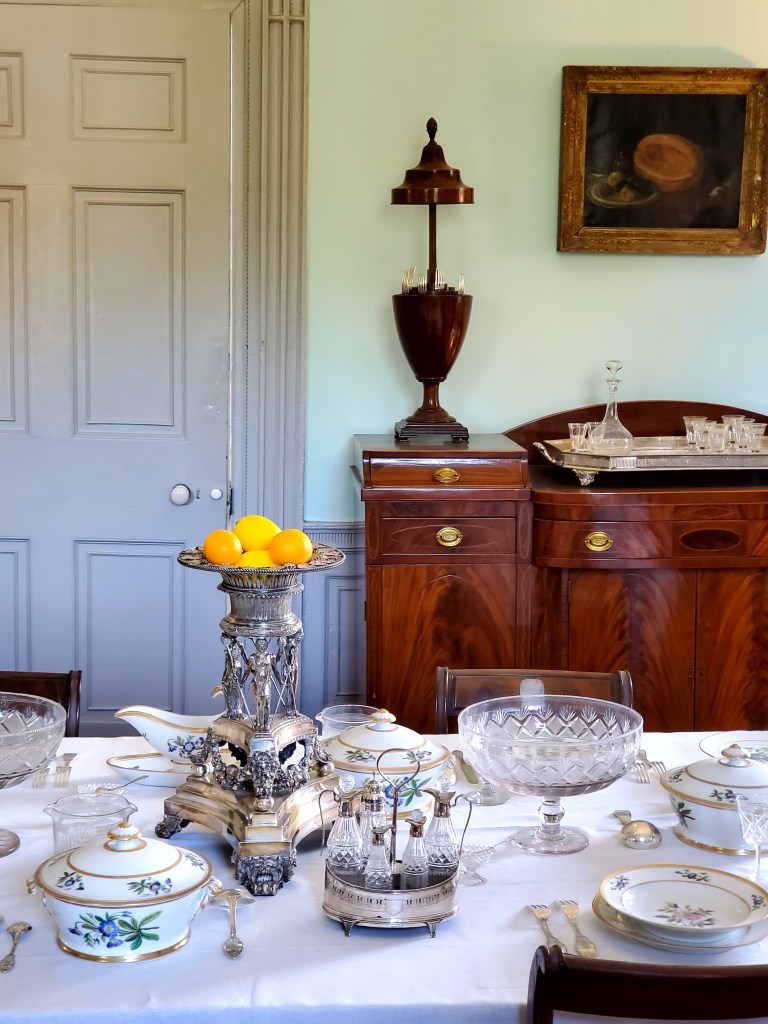
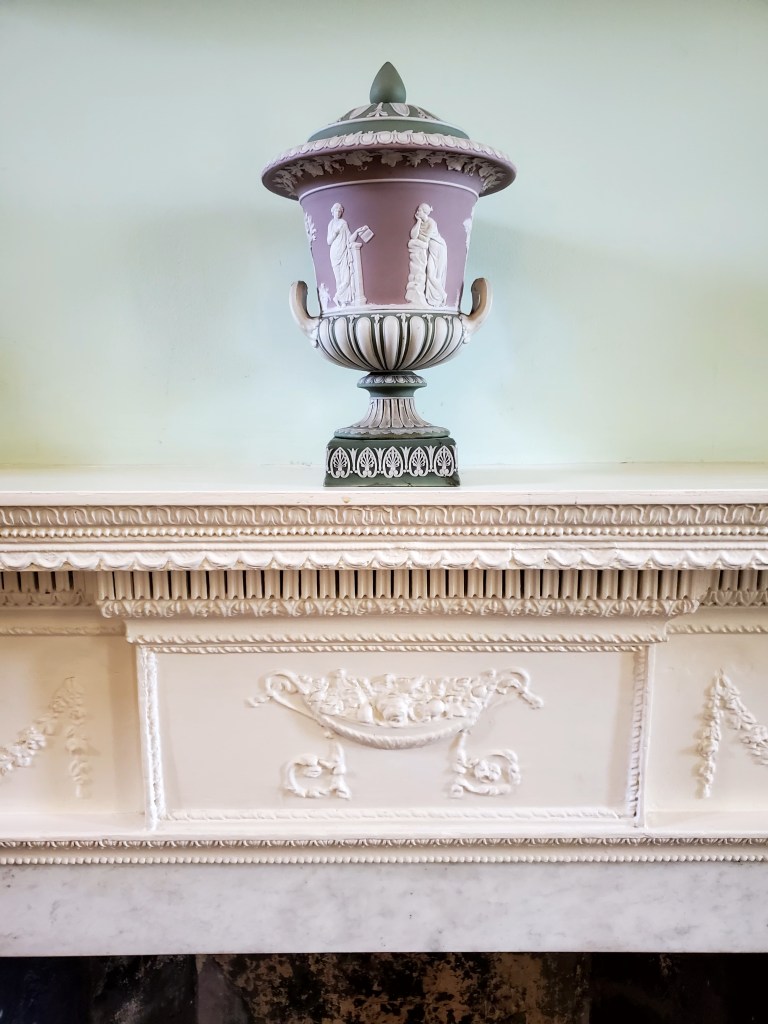
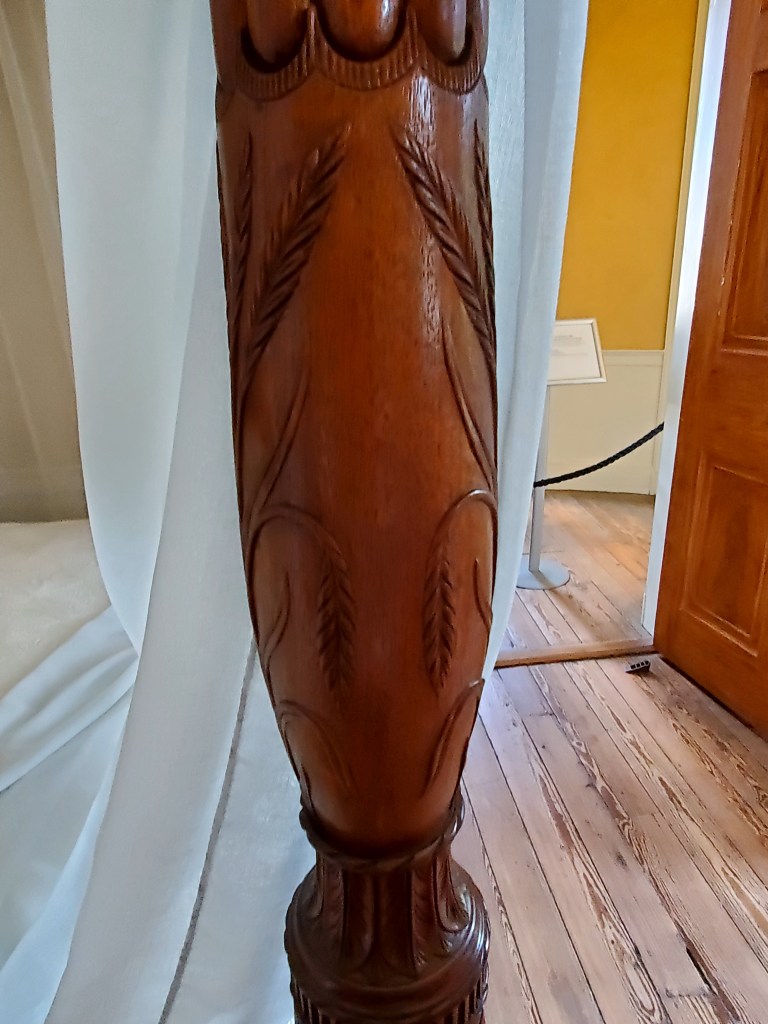
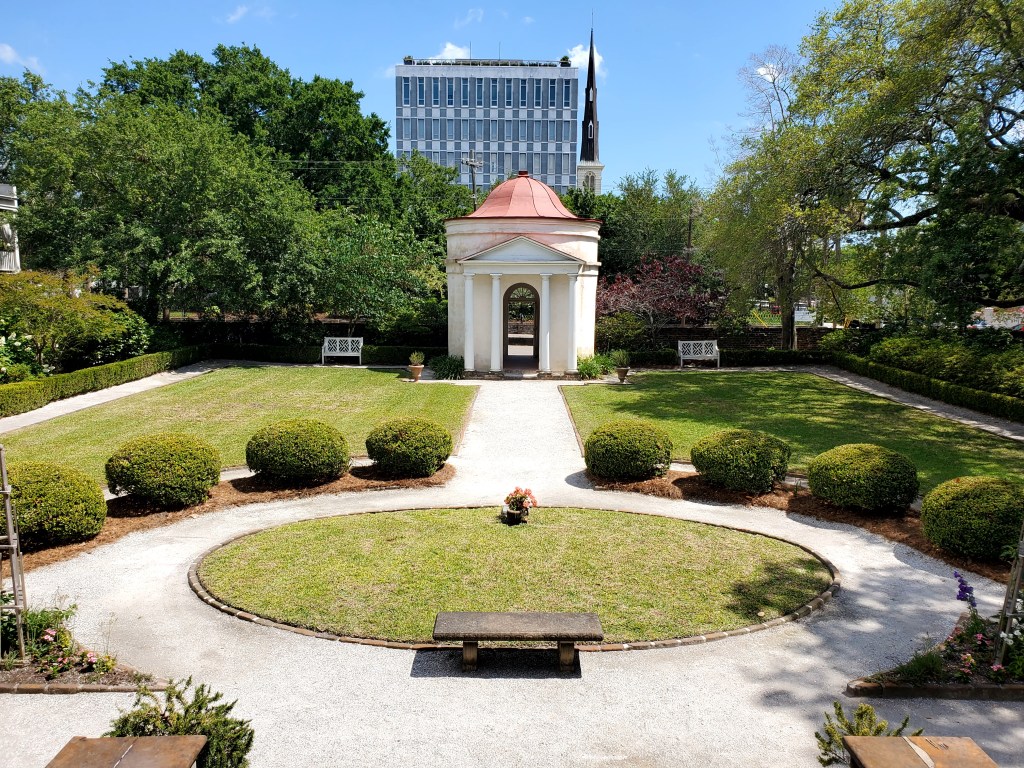
A National Historic Landmark since 1973, Manigault House’s graceful west façade is visible from the Hampton Inn pool, a boon for this tourist on a warm day. Maintaining its original iteration, however, was far more demanding; the House lacked both running water and indoor toilets. Our excellent guide let us know it took 27 enslaved servants to keep the Manigault family in comfort. A descendant of French Huguenots who settled in Charleston around 1685 and later amassed great wealth as merchants and rice planters during the 18th century, Joseph Manigault inherited several plantations from his forebears, which produced rice and other crops through the extensive use of enslaved labor. The canopy bed in the master bedroom testifies to the importance of that prized Carolina Gold rice, a variety of African rice that by 1750 made Charleston the hub of Atlantic trade (in goods and slaves) for the southern colonies, and the largest, wealthiest city south of Philadelphia.

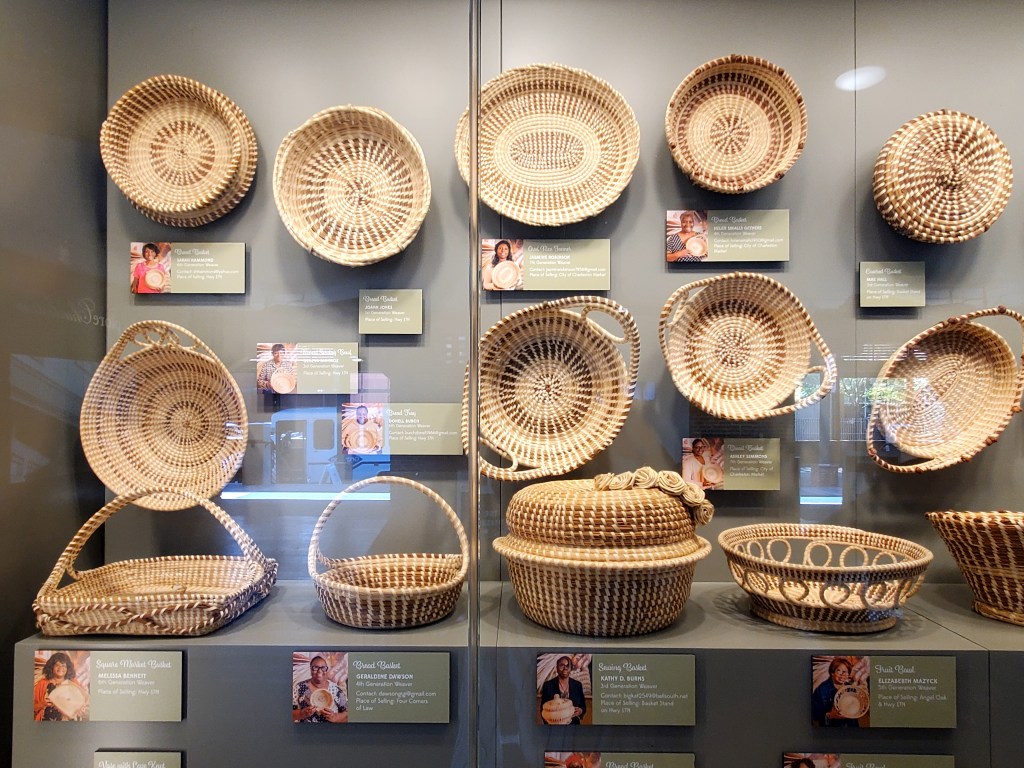
We had begun our acquaintance with Charleston on Sunday afternoon at the Visitor Center, booking a walking tour for the next morning, surveying the neighborhood, and enjoying a low country dinner at Virginia’s on King (my mother Virginia would have enjoyed the crab cakes as much as I did).
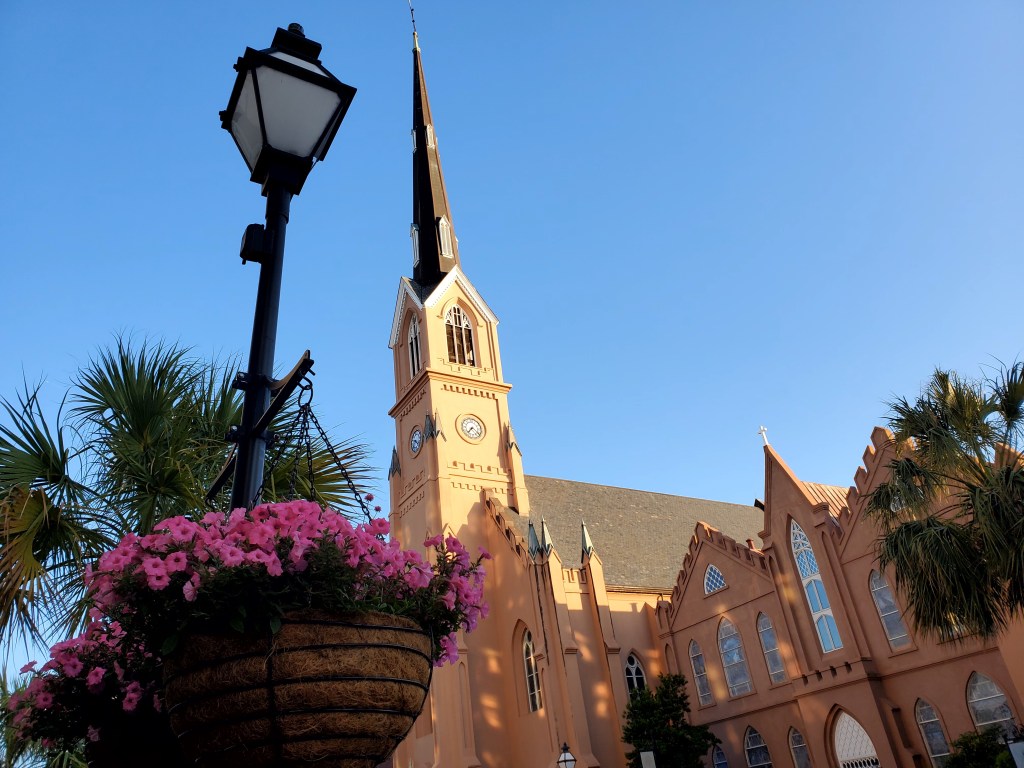
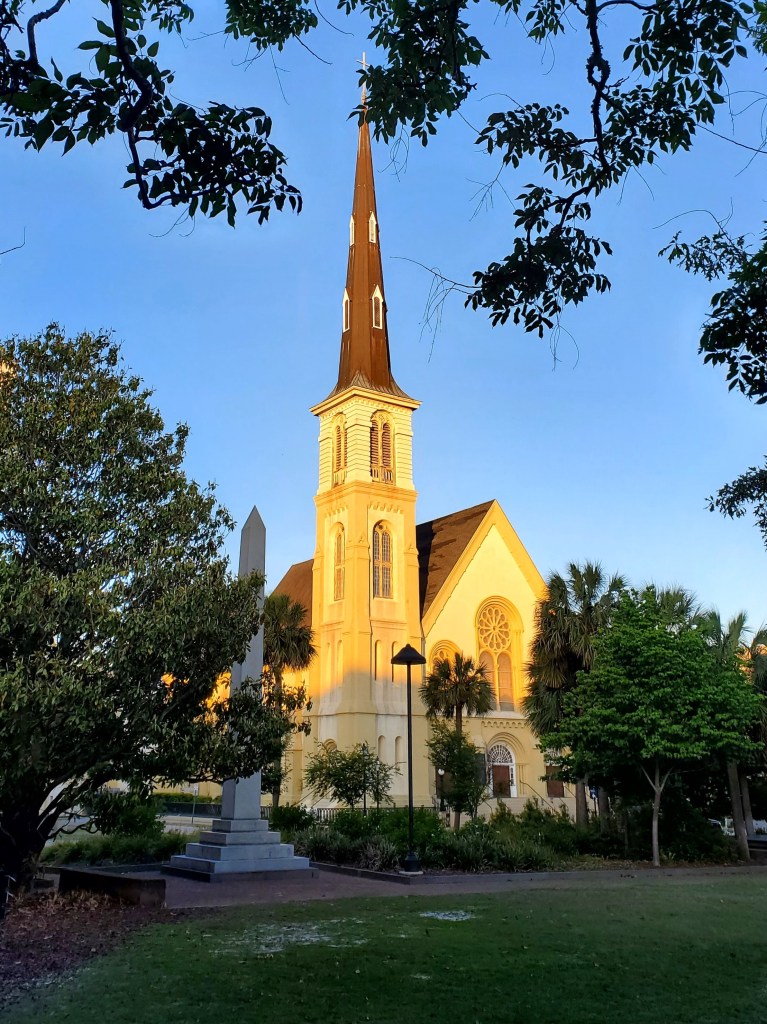
Monday morning, we walked the mile down Meeting Street to the spacious historic Mills House Hotel, designed by architect John E. Earle and opened in 1852, to meet our Bulldog tour guide, Fran Bennett, witty and encyclopedically knowledgeable Charlestonian whose family dates back to the 1680’s. She led our small group on a most informative and entertaining two-hour tour, from Washington Square south of Broad to the High Battery on the Cooper River, winding through the charming streets of Charleston’s southeast peninsula and finally back to the Mills House.

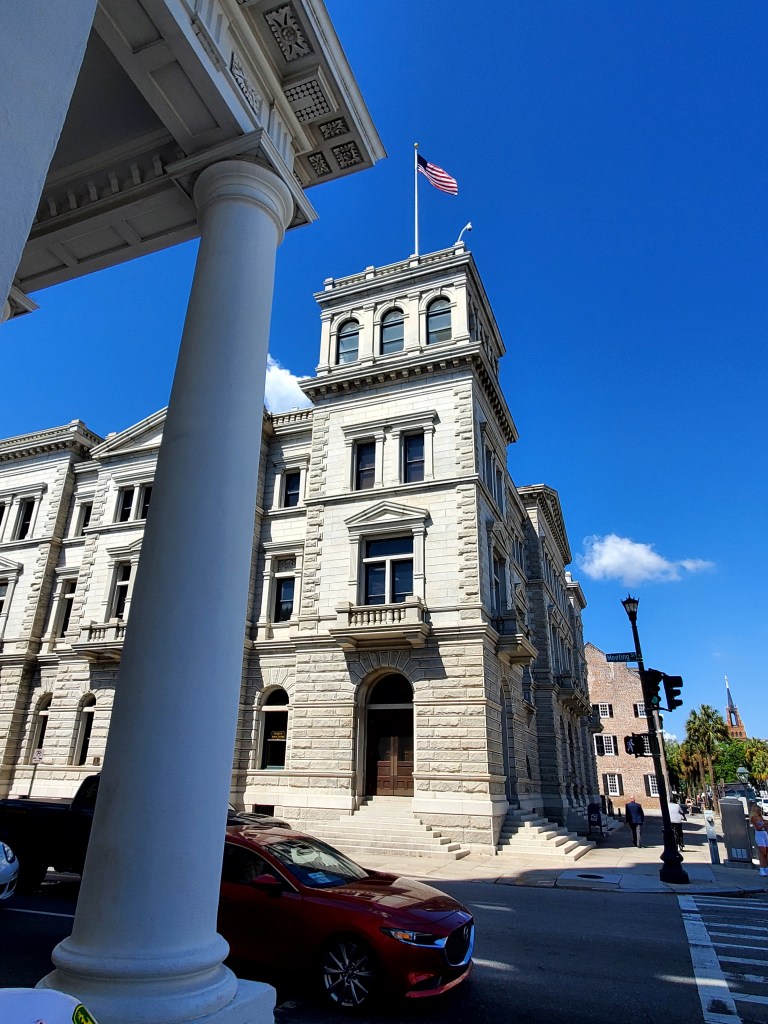
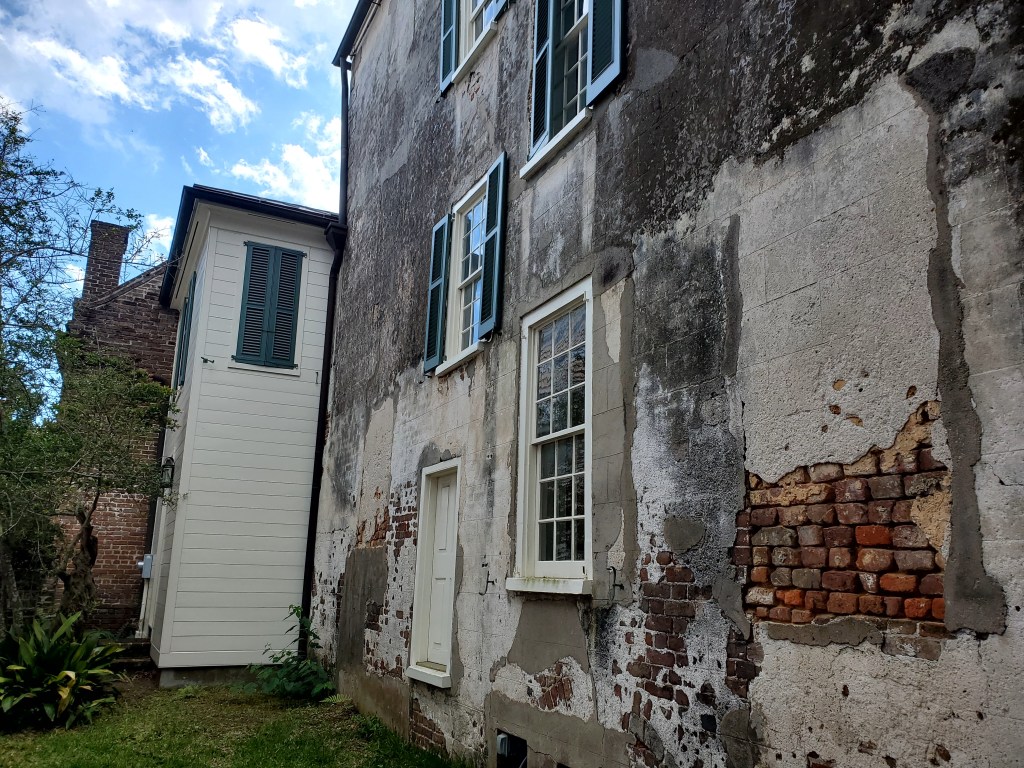
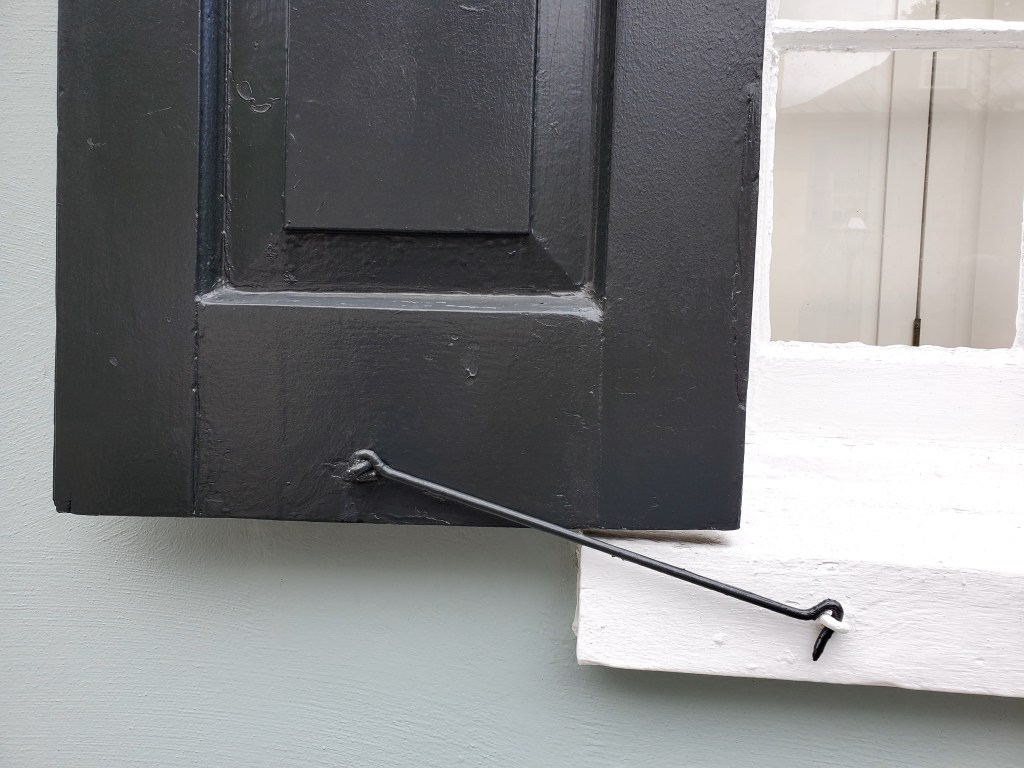
Ms. Bennett, clad in a batik dress of her daughter’s design, illuminated all manner of Charlestoniana with fun facts: Spanish moss is an epiphyte, neither Spanish nor moss; artifacts preserved by rat urine in their nests help date historic houses; “Charleston green” paint is cheap and abundant black paint slightly tinted with the addition of yellow paint; and the difference between a graveyard (burial ground next to a church) and a cemetery (not associated with a church). At the Four Corners of Law, representatives of ecclesiastical (St. Michael’s Anglican Church), federal (the U.S. Post Office and Courthouse), county (Charleston County Courthouse), and city (City Hall) law meet impressively at the intersection of Meeting and Broad Streets.
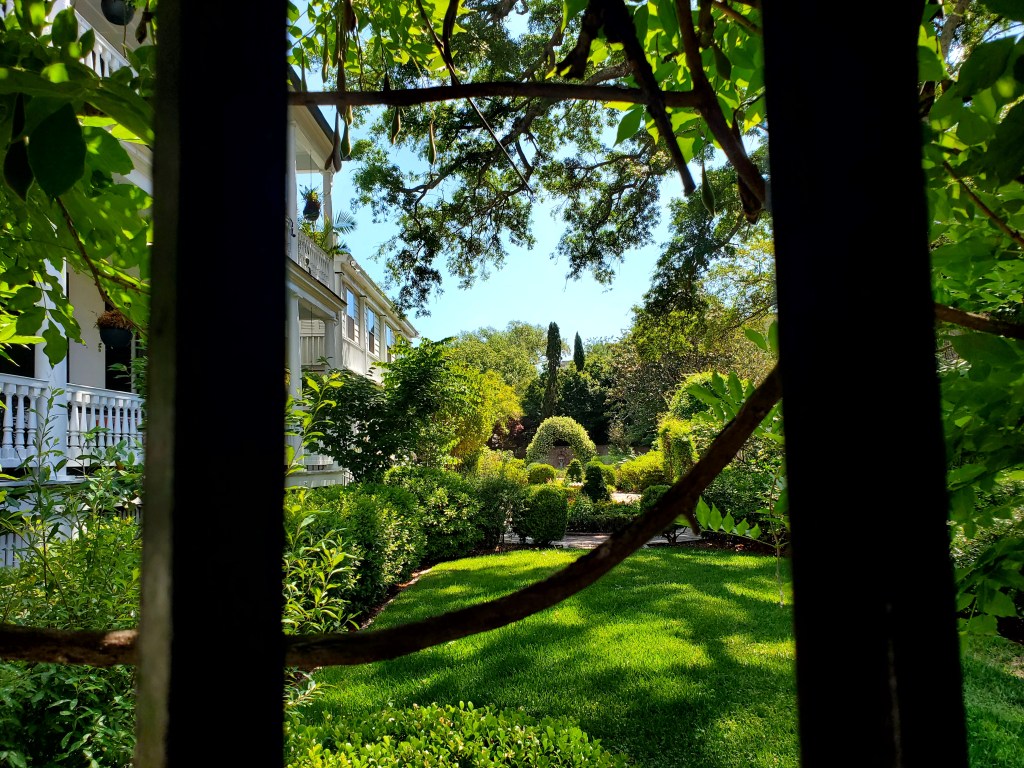
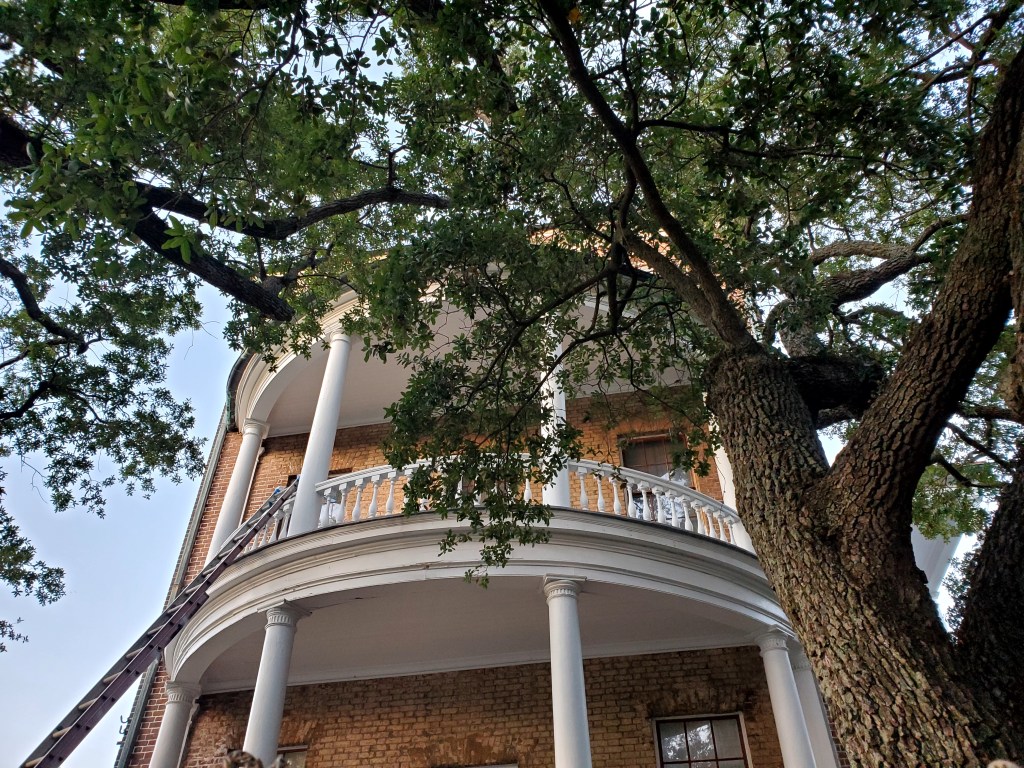
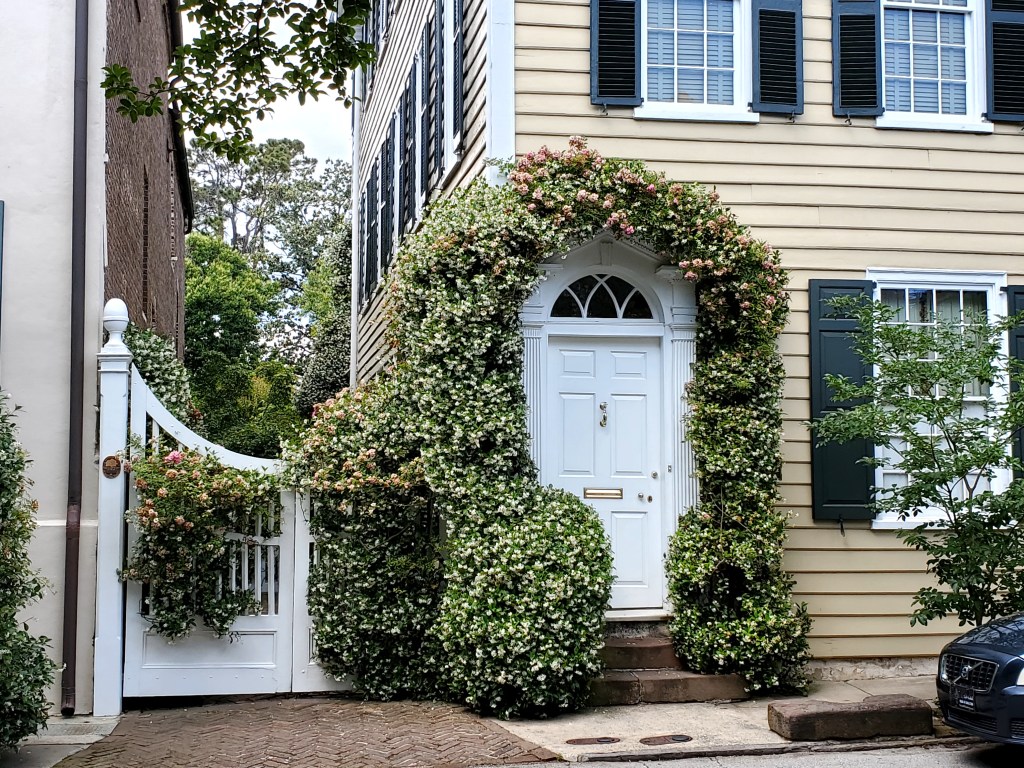
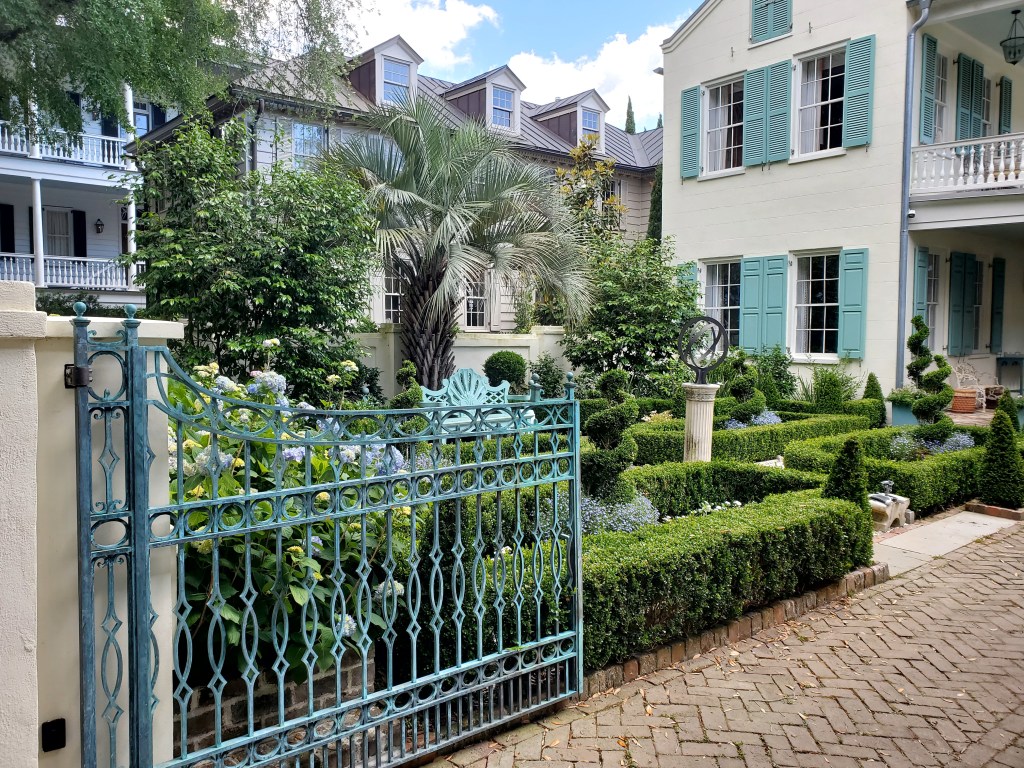
Charleston is known as the Holy City because of its plethora of churches, but the feature most impressing me remains the single houses with their “piazzas,” covered sides porches that extend living space and offer cooling breezes, often overlooking pocket gardens shaded by live oaks.
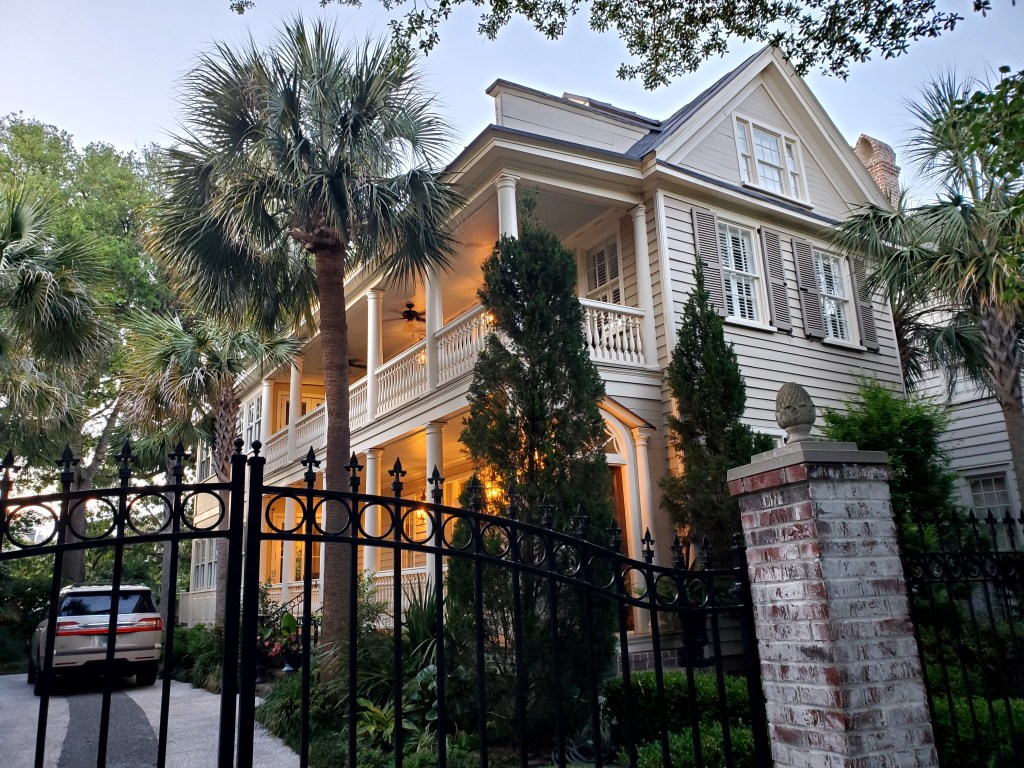
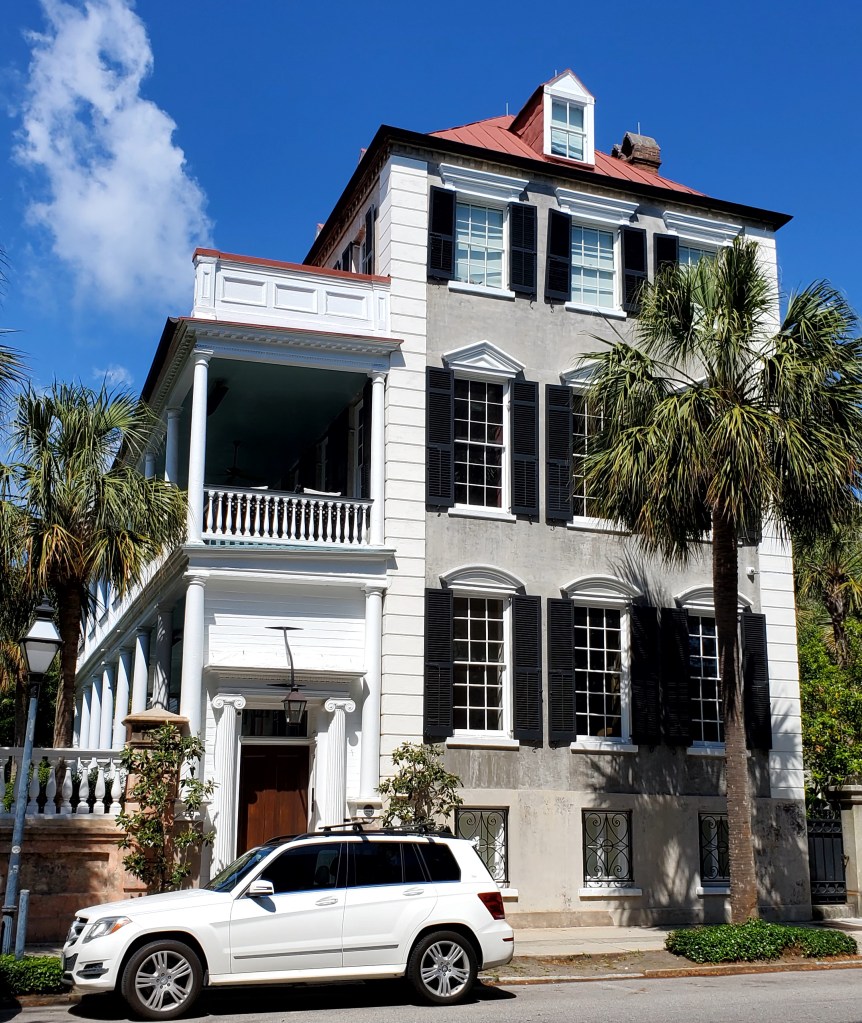
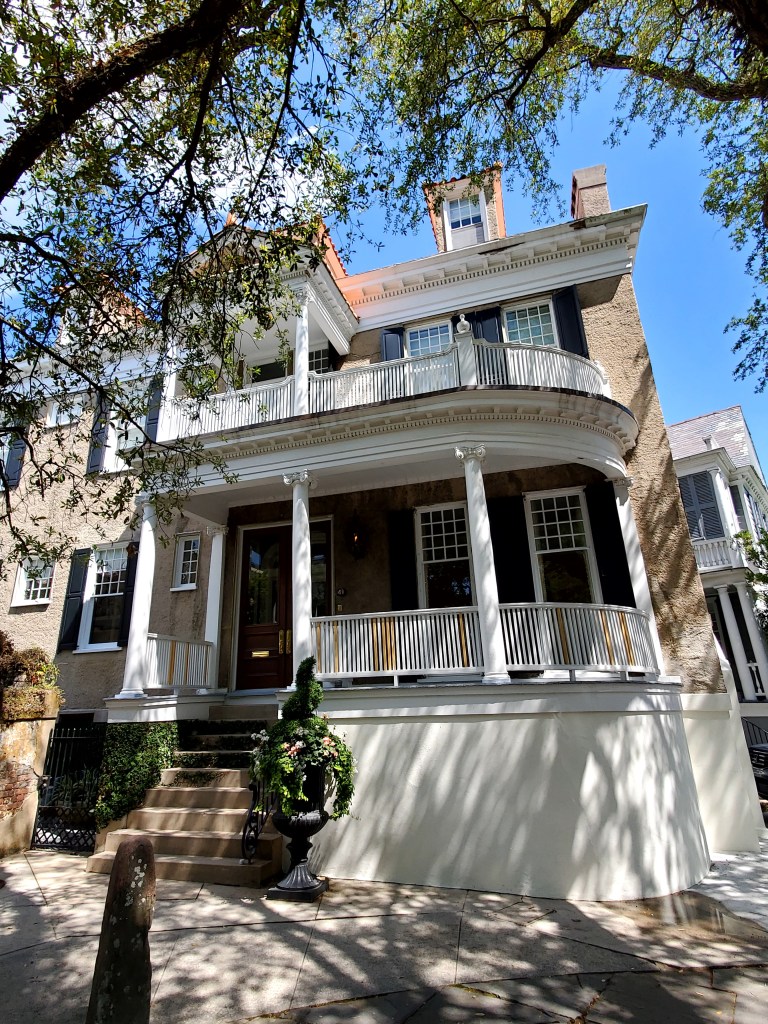
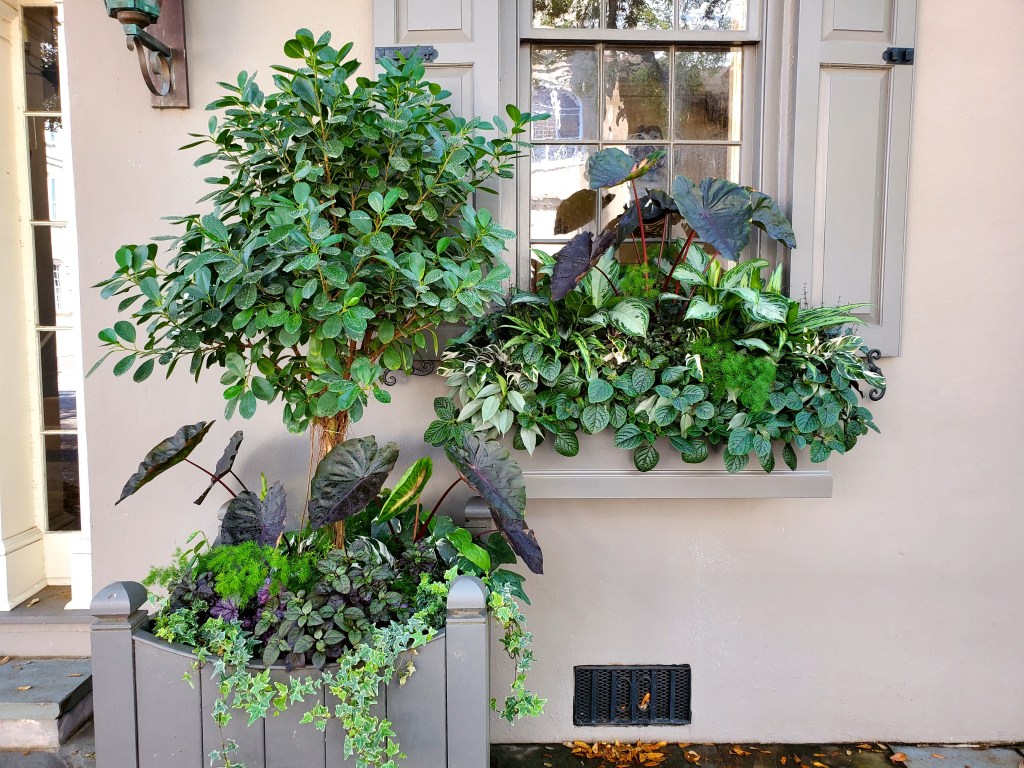
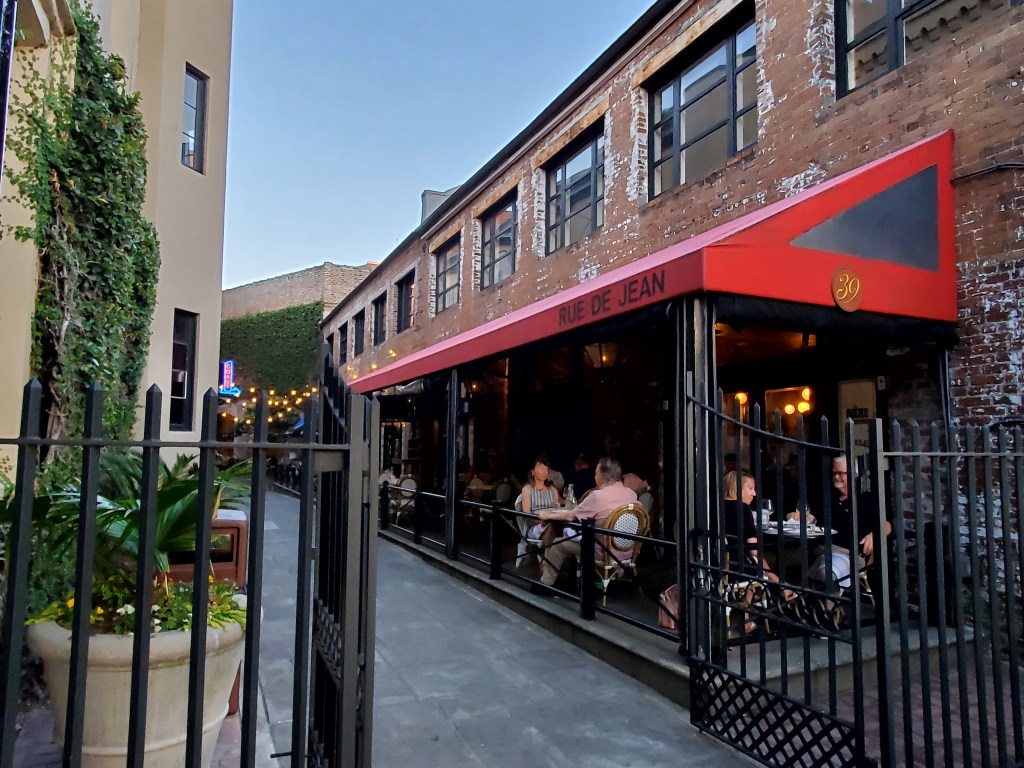
Post tour, we caught the free DASH (Downtown Area Shuttle) bus back to the Hampton Inn, had lunch at the Dueling Piano, and after touring the Manigault House, had a fine dinner of moules and halibut at the Rue de Jean next door. A good, full day.

 Georgeann Murphy
Leave a reply to Neha Jain Cancel reply