9 June 2024
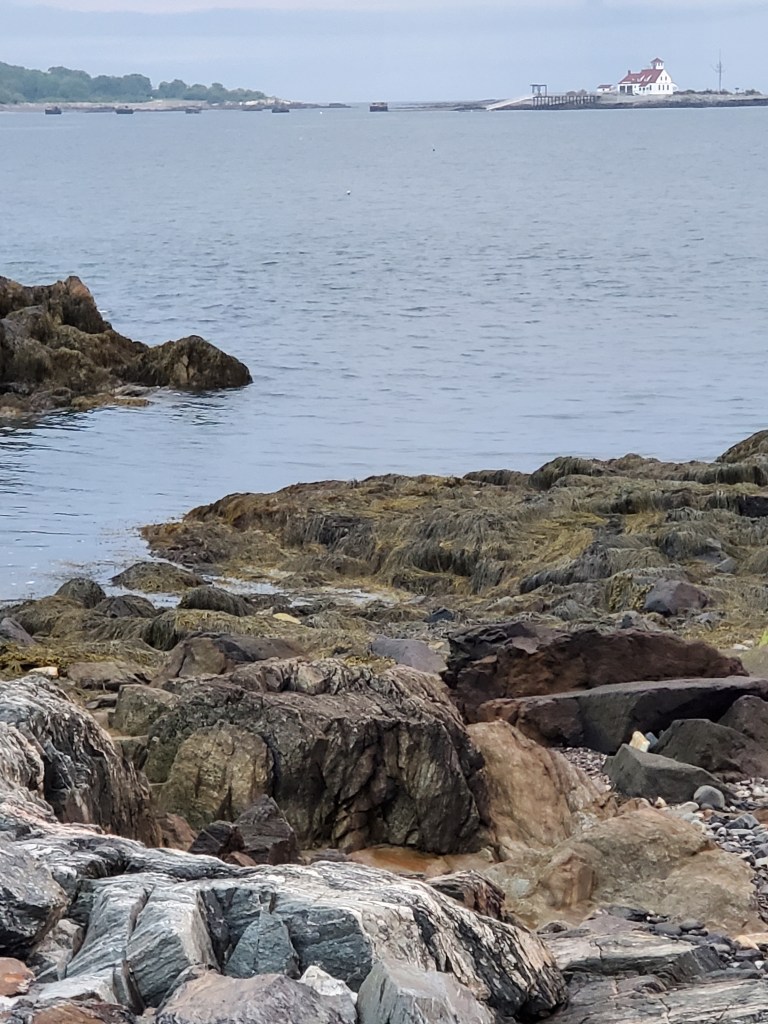
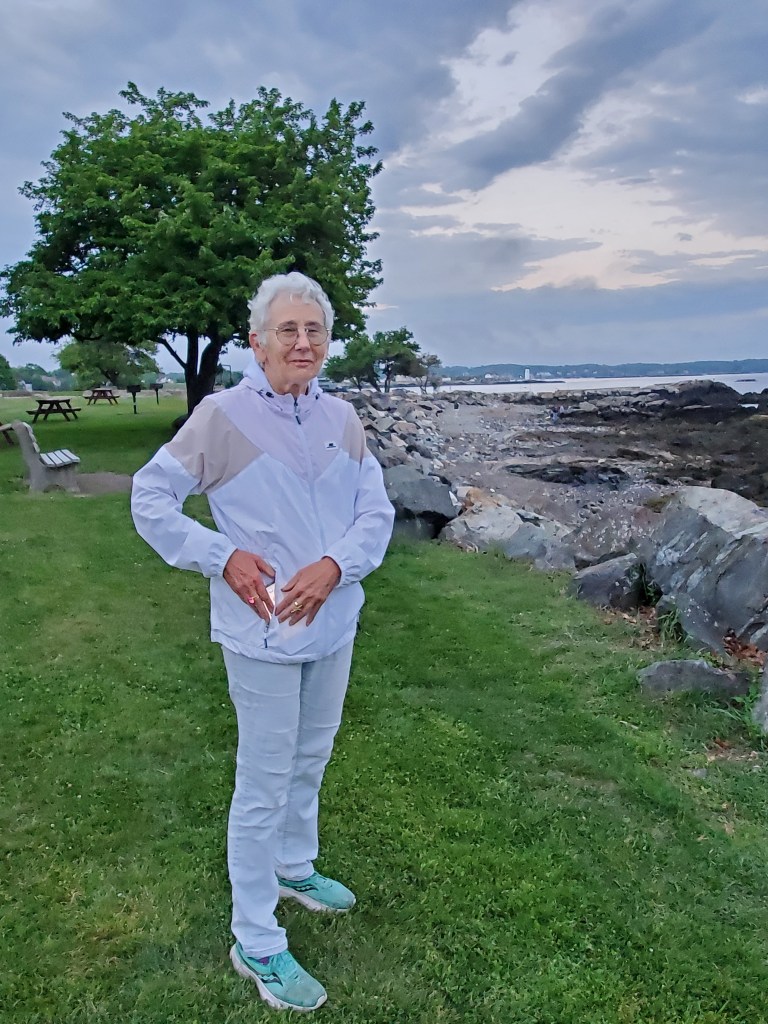
With meteorological summer entering its third week, the nights continue to grow longer, the grass grows faster, and the time for seasonal repairs and cleaning is at hand. This past week I also attended the New Hampshire Library Association Trustees conference in Concord, heard internationally known digital services librarian and consultant Nick Tanzi’s keynote address, “How Libraries Will Find Their Way in the Age of AI (Artificial Intelligence),” and had my first evening picnic of the season back at New Castle Common.
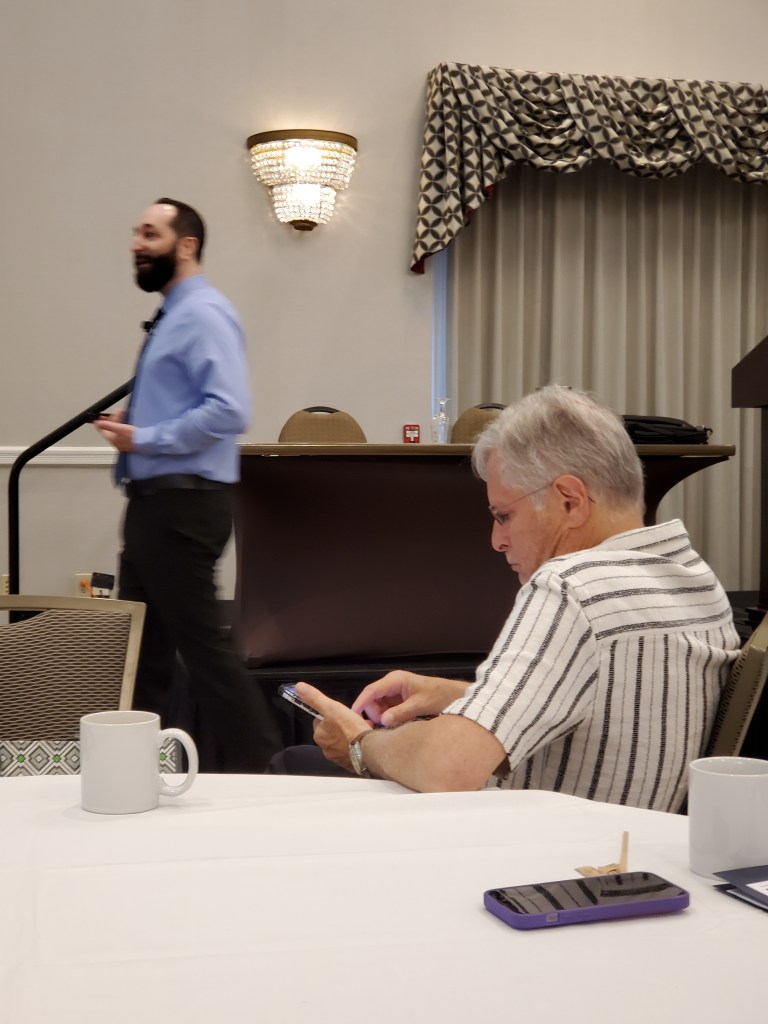
Tech expert Tanzi’s brief account of how information technology has changed since the world wide web opened to the public in 1991 was at first both amusing (how quaint the morning show hosts’ discussion of what “@” meant) and reassuring: look how quickly we all adapted to online life. But then came perhaps the most memorable takeaway from Tanzi’s presentation, a quotation from French cultural theorist Paul Virilio: “When you invent the ship, you invent the shipwreck.” Tanzi’s advice about how to avoid the shipwreck included: When posing a question to AI, be precise and add “Do you understand? If you don’t know the answer, say that.” If you don’t follow that advice, AI will make up answers to what it THINKS you asked.
Advice aside, the speed and current refinement of AI capable of generating completely convincing fakes is both disruptive and dangerous, especially in our era of disinformation and “alternative facts.” Policies and policy reviews are a necessity, not only because of intellectual property issues, but also because (1) technology carries our biases; (2) algorithms use probabilistic math, that is, when AI scours the web for information, it prefers the most popular to the most accurate; and (3) cyber security is a fiduciary duty, while understanding and policy lag far behind technology. How far we’ve come from what feels “normal”!
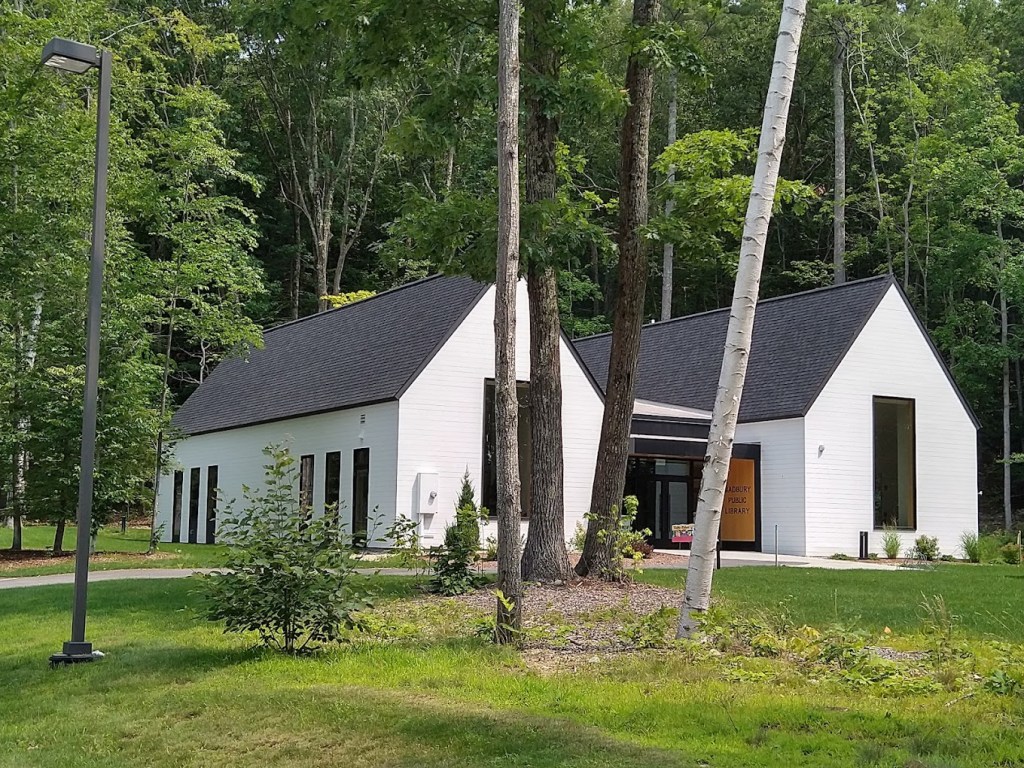
On the way to the conference my three fellow conferees were already commenting on what I’ve learned to call “norm erosion,” only one example being what is considered acceptable dress or behavior, as in Senator Fetterman’s signature gym shorts and hoodies worn on the Senate floor, or teen girls’ “school clothes” that reveal much more than they conceal. In the day’s final conference session, when Placework architects Liz Nguyen and Josh Lacasse, designers of the lovely Madbury Public Library, spoke of “The 22nd Century Library,” I encountered another example of norm erosion—or at least evolution.
Liz and Josh began by showing images of the past’s “temples for books” like the Boston Public Library’s gorgeous reading room and some of the many Carnegie libraries dotting—and for me enhancing the New Hampshire landscape.

Their presentation then moved on to contemporary libraries in Austin, Chicago, and Calgary designed for the library’s ever-expanding societal functions, serving as community centers with tech access; multiple meeting rooms for teens, hobbyists, and seniors; sports facilities; and cafés.
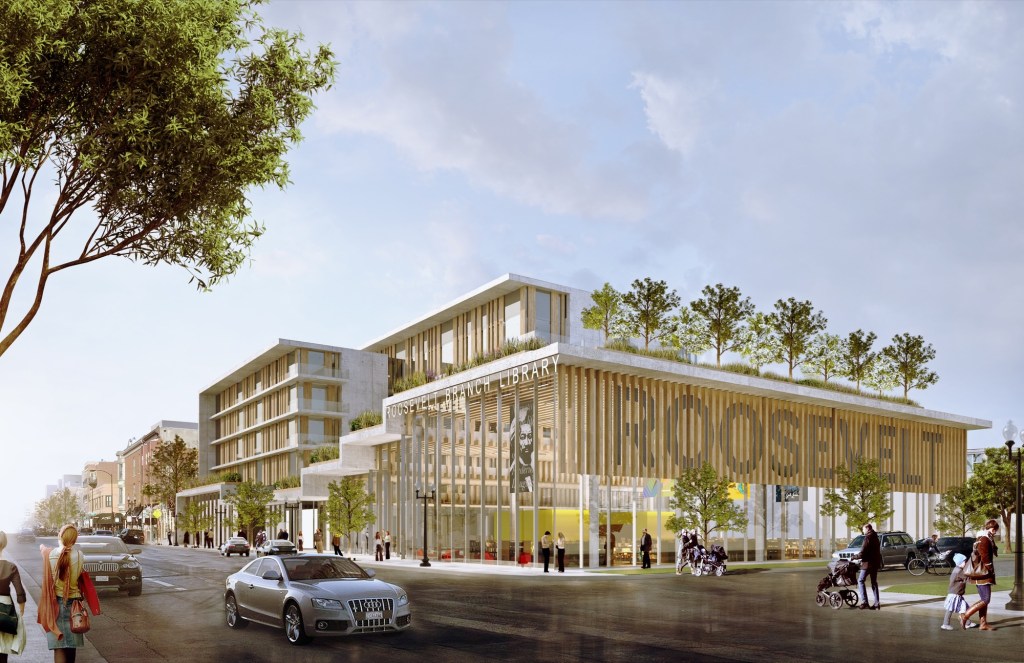
It struck me that libraries, like my David’s Redford High School in Detroit which we re-visited many years back, are having to shoulder so many more societal functions than the ones we boomers attended. On our visit to Redford, we entered through a metal detector; medical, psychiatric, and other social services were all available on site. But even such adaptation proved insufficient; Redford High ceased operations in 2007.
Another example of norm erosion: Currently the Portland Museum of Art’s expansion plans—which include razing a columned adjoining structure built in 1830 and renovated a century later by architect John Calvin Stevens—are “tearing the community apart.” According to Mark Shanahan of The Boston Globe (6 June 2024):
“In its application to the city, the museum claimed that changes to the front of the building — it opened as a theater before becoming a Baptist church, the Chamber of Commerce, and, finally, the Children’s Museum — had diminished its historical significance. But it was another assertion that angered some here: The museum argued that the building should be razed because it was “erected during the Jim Crow era” and the white columns of its Colonial Revival style “carry unfortunate legacies of the past into the future.” In other words, said David Chase, an architectural historian and former curator of the National Building Museum, the structure is a brick-and-mortar embodiment of racism.”
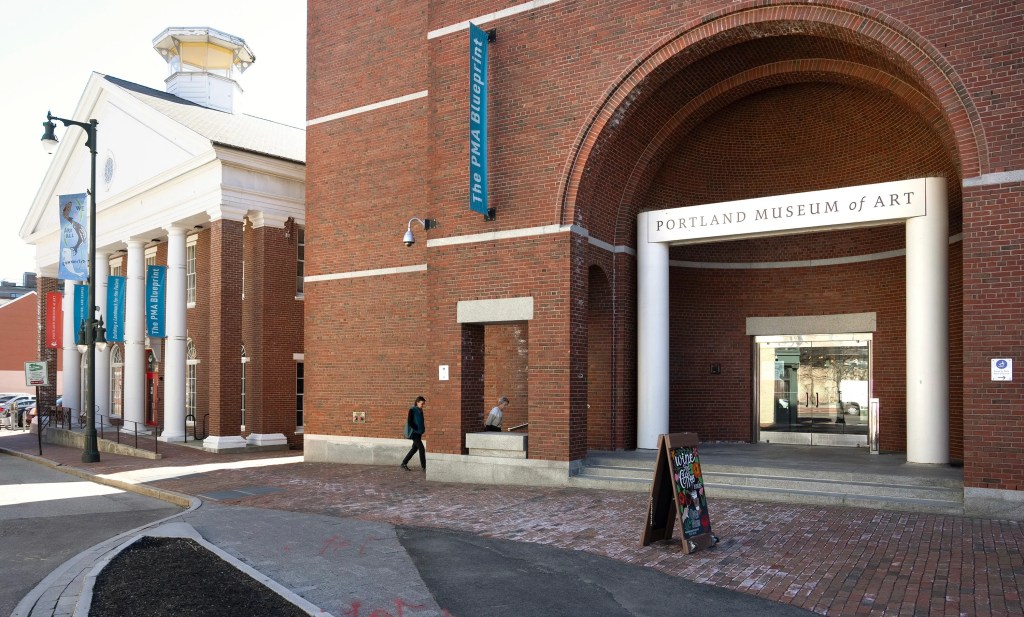
Yikes. If all Greek Revival buildings emulating “the glory that was Greece / And the grandeur that was Rome” are embodiments of racism, then I agree with Chris Newell, an educator and enrolled member of the Passamaquoddy Tribe of Indian Township in northern Maine, who believes opponents of the museum’s plan [to raze the columned building] are being selective in the history they are preserving. But I would NOT go so far as to agree with Newall that the proposed addition’s inclusion of a distinctive curved roof line “that will cradle the morning sun on the summer solstice” is a tribute to the Native Americans who lived on the Portland peninsula for thousands of years before the Revolutionary War. Newell’s take:
“Museums are a colonial artifact. Preserving history and art in museums is something that comes with colonization,” said Newell. “Rather than pay attention to just the last 204 years — the length of time Maine has been in existence — why not add the 12,000 years of existence on that landscape of the Wabanaki peoples?”
Oy. I don’t believe that referencing the solstice belongs exclusively to the Wabanaki, nor that Greek and Roman columns exclusively signify the Jim Crow era. How will we, symbol-making homo sapiens sapiens, ever equitably address and learn from our past while at the same time navigating the prevailing winds of the future?
Hoping for more ships than shipwrecks, in my next post I return, Dear Reader, to recording my most recent past: attending our granddaughter’s graduation.


 Georgeann Murphy
Leave a reply to Ann Silver Cancel reply