23 October 2023

On this Saturday, the grey first day of autumn, the last rose of summer blooms on my kitchen window sill and I am for the fifth straight day under the weather, still reacting to the RSV vaccination I got last Monday afternoon. I’ve not had a bad cold for so long I’d forgotten how annoying and debilitating colds can be. If I’m suffering only a minor response to the Respiratory Syncytial Virus, I shudder to think what the unprotected might endure. The struggle to breathe certainly gets your attention.
Moved by an approaching birthday, I’ve finally begun my self-publishing journey with a mixture of elation, anxiety, and a fit of pique over my Amazon project manager’s skipping our first scheduled meeting, belatedly getting his assistant to call me and only further testing my patience. Clearly not at home with English, the assistant’s abominable grammar and limited understanding did NOT inspire confidence. But I’m carrying on, having sent on my completed manuscript and some suggested cover designs while trying to rise above what will undoubtedly prove a series of frustrating complications. Gentle Reader, we’ll see. Stay tuned for the progress of Will to Live: Learning from Shakespeare How to Be—and NOT to Be on its brave progress to the Amazon catalog.
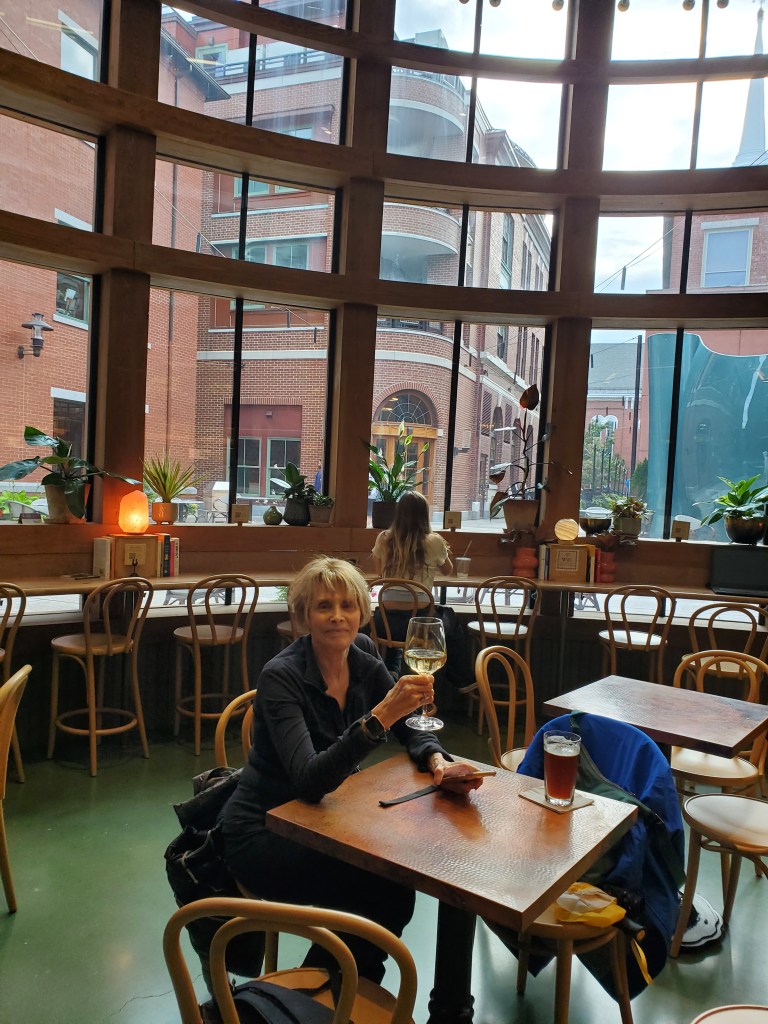
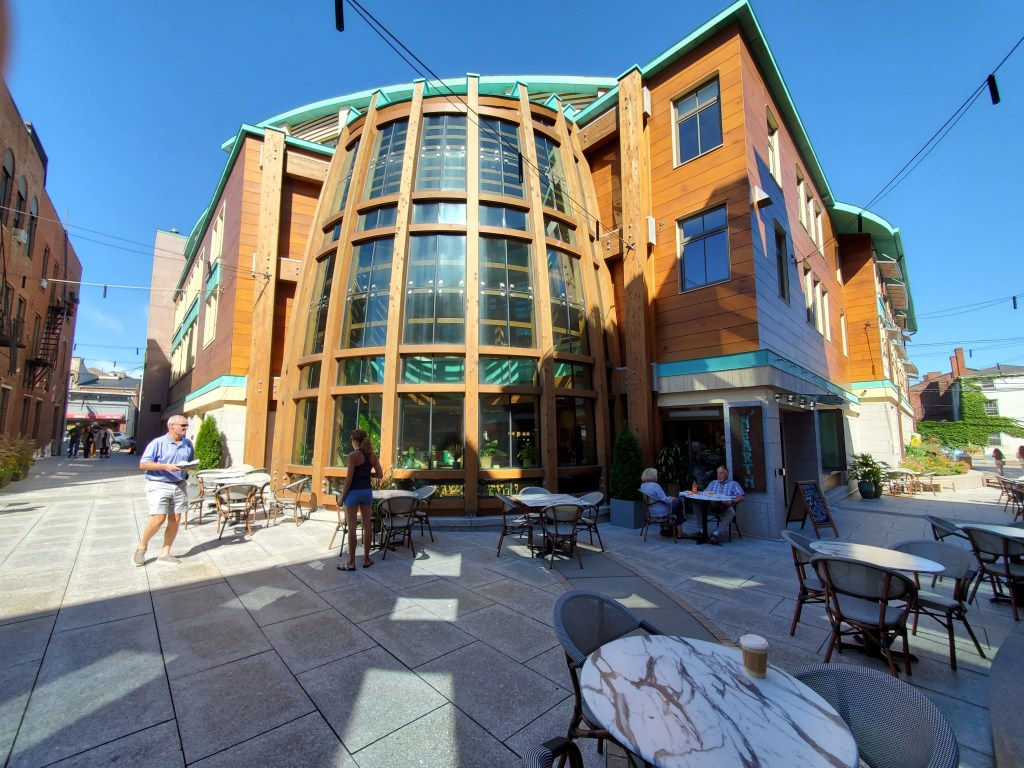
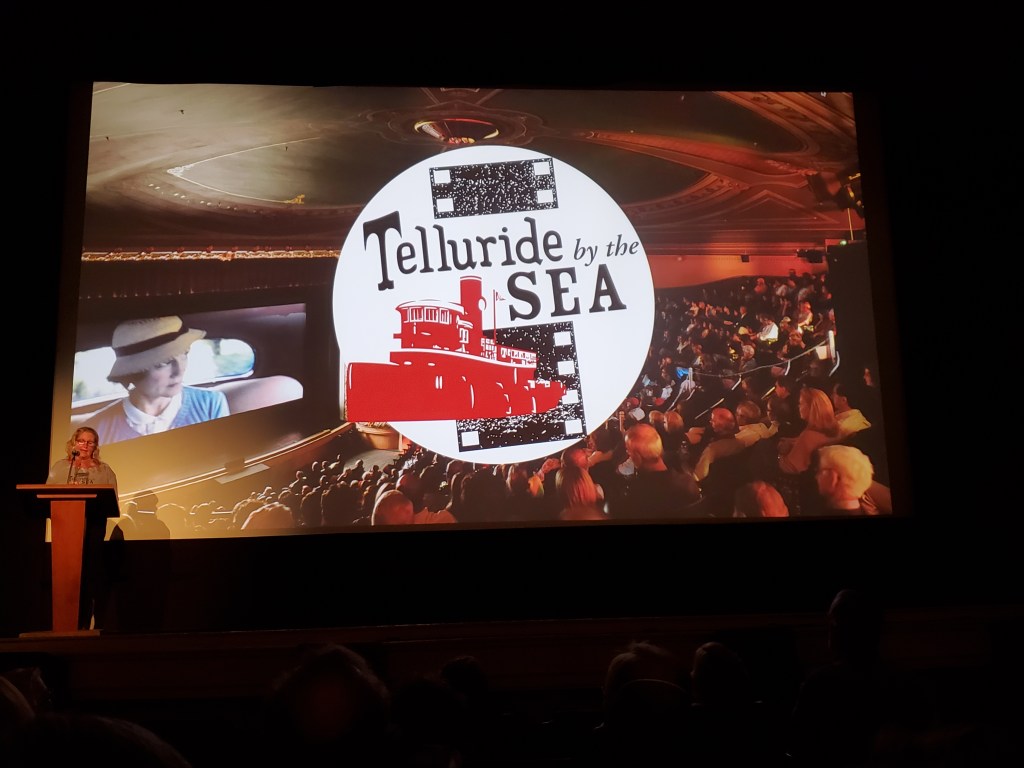
The combination of pre-publication angst and really annoying congestion accounts for my week’s delay in addressing last weekend’s delightful Telluride by the Sea film festival in Portsmouth’s historic Music Hall. Seeing seven films over one evening plus two full days put me in an enjoyably altered state: there was really no time to do or think about anything beyond being captivated by the dream world of cinema, reality intruding only long enough to discuss same with my fellow cinephile and good friend, Carol, while stretching our legs with a short walk to Portsmouth’s new Hearth Market to grab a coffee or a bite. Settling in the Hearth’s high-end food court or remarkably quiet and sunny outdoor piazza in the middle of downtown Portsmouth was really pleasant, especially given the anticipated bluster of Hurricane Lee that brought only limited gales and no rain.
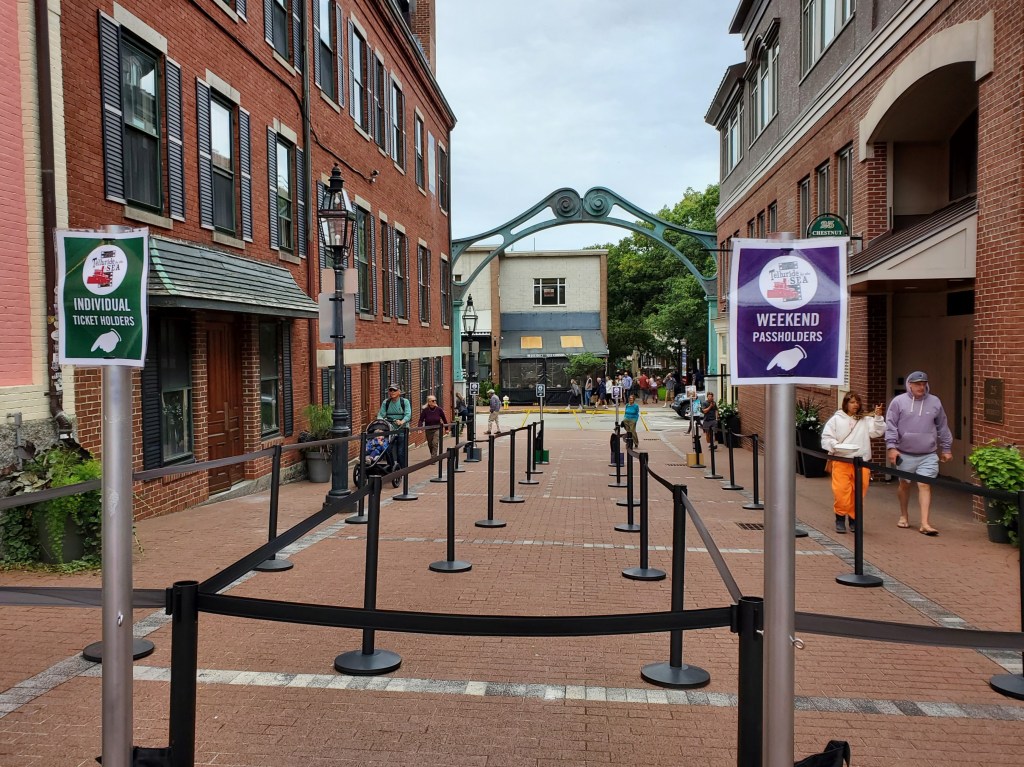
Back in the theatre, we enjoyed the Bergsonian (repetition-as-source-of-humor) trial of listening to seven different Music Hall staff members muddle through the same stock introduction to each film, thanking the donors, including the “Big Brains” at UNH—that made us snort—and stumbling over how to pronounce the name of the local river (It’s Pis-CA-ta-qua, not Pis-ca-TA-qua). And please note: The title of that famous upcoming film is The Sound of Music not Sound of the Music. Gosh, but that blunder made me feel old! But Telluride by the Sea founding father, the late Bill Pence, and his wife Stella certainly deserved the seven rounds of applause for what they brought to the New Hampshire seacoast twenty-four years ago.
As luck would have it, the only real disappointment among the seven films was the one most eagerly anticipated, Poor Things, starring the most famous actors: Emma Stone, Willem Dafoe, and Mark Ruffalo in director Yorgos Lanthimos’s retelling of the Frankenstein story. The promise of a “funny, furious, proudly feminist” version of Mary Shelley’s classic was unfulfilled by (we finally agreed) a tedious script that made every obvious point at least three times over, bizarre Jules Vern-ish mise en scène, the occasional repulsive surgical procedure, and LOTS of gratuitous sex as Bella (Stone), the revived corpse of an adult woman given her unborn infant’s brain acquires carnal knowledge in spite of the hypocritical Victorian society she inhabits. Stone’s is a brave performance, but how she transforms from a jerking doll happily stabbing a cadaver’s eyeballs to an intelligent, humanitarian medical student is inexplicable. My take: nothing can redeem a bad script.
On the other hand, I’m hard pressed to rank the other six films shown, each entirely captivating even after a long day of sitting in those less-than-comfortable Music Hall seats (and watch out if you’re stuck next to a man-spreader who commandeers your arm rest and half your leg room). The Friday night film, I suspect, might be everyone’s favorite: The Holdovers, starring Paul Giamatti as an aging classics professor at an elite New England prep school. Set in 1970 and filmed with 1970’s equipment, the plot turns on the relationship of a rigidly uncompromising and unlikeable teacher stuck with babysitting a group of preppies with nowhere to go over Christmas break. I suspect many of the Portsmouth audience could vouch for the veracity of the temporal and local setting—I myself spent a summer teaching at Phillips Exeter—and there were plenty of knowing laughs from the teachers in the audience. Filmed in part at Deerfield Academy in Massachusetts, Giamatti’s character was well matched by the smart, charismatic, but self-destructive Angus played by his young co-star Dominic Sessa, who amazingly won his role in an open audition at Deerfield Academy where he was at the time a student. He more than holds his own again Giamatti’s star turn, and so does Da’Vine Joy Randolph playing the grieving school cook Mary who has lost her son in Viet Nam. If you think you might anticipate each turn of this plot, you’d be wrong, and I expect Giamatti’s earned an Oscar nomination for his performance in Alexander Payne’s fine film.
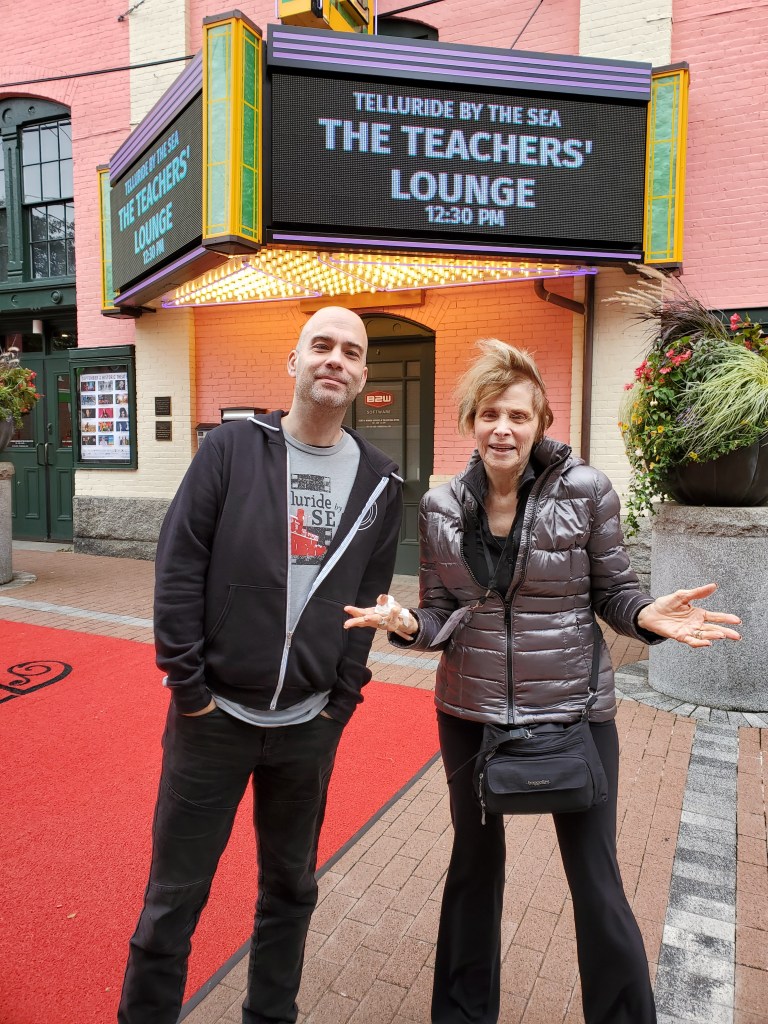
Pedagogy was back on display the next morning with Ilker Ҫatak’s The Teacher’s Lounge. The winner of several German awards, this film’s plot follows a winning new teacher (played by Leonie Benesch) as she tries to navigate a series of increasingly difficult dynamics set in motion by the interrogation of her students over a series of alleged robberies. Initially my heart sank at how well these German sixth-grade students were able to learn challenging mathematics (you can bet none of our U.S. sixth graders could have matched them), but I was quickly was caught up in the dilemmas facing so accomplished and earnest a young teacher as everything and everyone turn against her even as she consistently finds a way to do the right thing. I think this was my favorite of the films, especially because it dovetailed with research of which I’d heard recently on Hidden Brain about how “the jigsaw classroom” consistently outperforms the traditional model of classroom competition when each student vies with all the others for top marks. Psychologist Elliot Aronson’s 1978 research determined that both performance and sociability soared and racism diminished when a group of students were each given only one paragraph of a short essay about Eleanor Roosevelt to learn well enough to explain to the others. They would be tested on the entire essay, and so had to attend to and depend on each other to learn what they needed to know (see the “Outsmarting Yourself” episode of the Hidden Brain podcast). In The Teacher’s Lounge, the script, performances, and ancillary tensions that unfortunately upend contemporary education were brilliantly rendered. All of us teachers were wrung out at the finale.
My other favorite film was the Finish film Fallen Leaves, directed by Aki Kaurismäki, billed as a somber romantic comedy about two marginalized outcasts suffering the indignities and fragile economic status common to laborers and factory workers, a pair who belong together as clearly as Tom Hanks and Meg Ryan did in Nora Ephron’s Sleepless in Seattle but who, like them, repeatedly miss each other via one maddening plot twist after another. Meta about cinema—the couple watch a zombie movie together on their first and likely to be only date—and drolly on point about loneliness and the persistence of desire—this is a hilarious and totally charming picture. And the leading man, Jussi Vatanen, is a dead ringer for a young Jimmy Stewart.
The longest film of the festival at 2 hours 30 minutes was Anatomy of a Fall by French director Justine Triet, but another that held one’s rapt attention throughout as it dissects a marriage through the lens of a whodunit. Billed as a cross between Bergman’s Scenes from a Marriage and Agatha Christie, the script shifts our sympathies from scene to scene following a husband’s fall to his death and his successful novelist wife’s trial for murder as their clever, vision-impaired son grows up suffering their marital storms. Competition, creative drive, resentment, and guilt power a most intelligent, carefully crafted script.
These German, Finish, and French films were my favorites, but two more deserve mention: the gorgeously filmed Danish epic The Promised Land (directed by Nikolaj Arcel), based on the true history of an 18th century Captain who set out to tame in the name of the King the vast, barren Jutland heath despite the resistance of the grotesquely brutal nobleman Schinkel, and the completely different documentary, American Symphony (directed by Matthew Heineman) about an eventful year in the life of musician Jon Batiste as he navigates a career soaring toward the premiere of his ambitious symphony in Carnegie Hall coinciding with the return of his wife writer Suleika Jaouad’s leukemia: a moving portrait of an artist of stupendous talent, stamina, and heart.
So, 6 thumbs up, 1 thumb decidedly down, and a wonderful weekend of Big Time Cinema in our little port town. Now I return to the the day’s tasks bolstered by the creature comfort of Trader Joe’s pumpkin waffles. Happy autumn!


 Georgeann Murphy
Leave a reply to Comcast Cancel reply