
I woke yesterday to what had become the unaccustomed sound of silence from our propane-guzzling generator, which had been running non-stop from 4-something am Monday morning until 2 .07 am Wednesday morning, powering enough circuits to keep heat on and water flowing throughout the most recent if long delayed snow storm of the season. How very unfortunate that power and other lines were never buried when first installed in heavily forested New Hampshire! For a time in the last couple of days, I’ve been without landline, cell service, or internet, cut off from all the “modern conveniences” save for the most helpful if noisy and stinky generator which also kept my groceries from spoiling—unlike the local Market Basket, where after more than 48 hours without refrigeration, perishables could no longer be sold. I shudder to think of all the good food that has gone to waste.
The Year of the Rabbit had gotten off to a fine start on Saturday, 21 January, the lunar new year’s eve when I once again had the privilege of enjoying a dumpling dinner and lively conversation with long-time friends Shiao-Ping and Brian and newer acquaintances Fran and Phil.


Then on Sunday, I was equally privileged to attend the Emerson Quartet’s final performance in Boston’s Jordan Hall, an ambitious program that included two pieces played by the three original Quartet’s members Eugene Drucker (violin), Philip Setzer (violin), and Lawrence Dutton (viola) in 1976 when they were just, as Setzer said, “a baby quartet”: Bartόk’s String Quartet No. 2 and Beethoven’s String Quartet No. 8 in E minor, Op. 59, no. 2 “Razumovsky.” Cellist Paul Watkins joined the Emerson in 2013, himself now a veteran of a decade’s playing together.
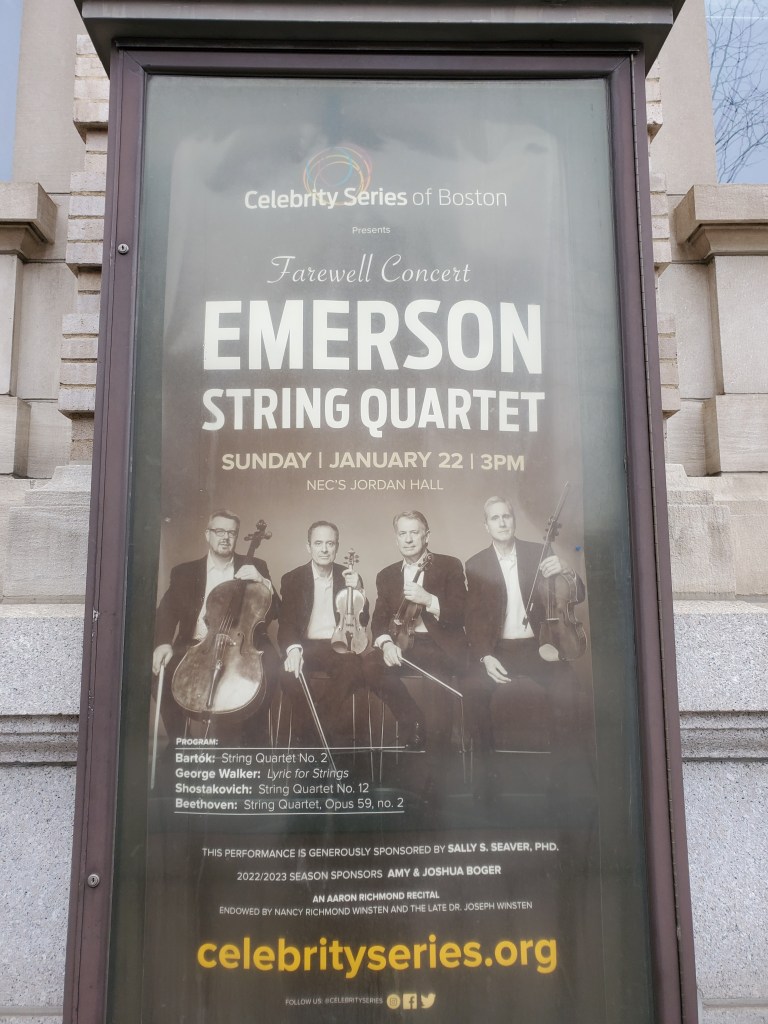
The afternoon was understandably nostalgic, as the Quartet will give its final performance together in New York City in October 2023, and their Jordan Hall appearance—the 27th—was their last in Boston. Violinist Drucker’s notes on the first movement of the Bartόk capture the mood: “There are many forceful, defiant moments, alternating with phrases of bittersweet tenderness, but something has happened to the flow of the music. It stops and starts, changes tempo and character often without a feeling of transition or resolution. These fragments are sometimes simplified, sometimes exaggerated, sometimes grotesque—they point in many different directions but don’t really go anywhere. Together they form a mosaic of nostalgia and despair.” Also on the program: George Walker’s Lyric for Strings, a brief piece ending “in serene resignation” (Susan Halpern) and Shostakovich’s String Quartet No. 12 in D-flat Major, Op. 133, also “full of despair” (Halpern). The slow movement of the Beethoven Op. 59, no. 2, Molto adagio, Beethoven said, is to be played “with much sentiment,” adding to the bittersweet resonances of a performance completed with Dvořák’s wistful Cypresses No. 7.
Ay, me. Even my favorite parking venue serving the New England Conservatory and Symphony Hall, the Midtown hotel, is (according to friendly desk clerk Mark) slated to be razed to make way for a new apartment complex. And by the time I pulled out onto Huntington Avenue, the snow had begun.
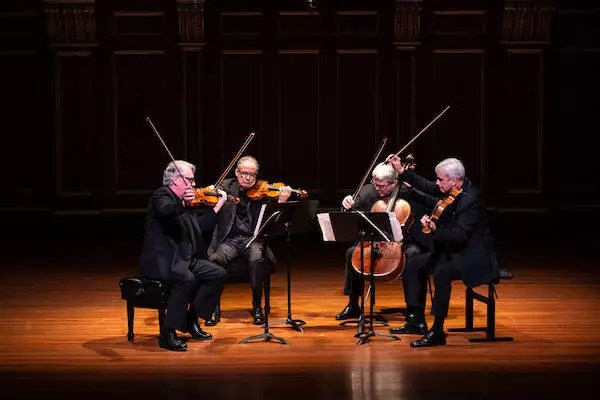
22 Jan 2023
(photo by Robert Torres)
I just barely beat home that Sunday snowstorm, and by early Monday morning, power and landlines were down in New Hampshire. Even the day was dark. My friend Diane, saddened by her father’s recent passing, emailed right before I lost internet service that she can for now continue her break from chemotherapy, her good news mixed with sad.
Then post-storm on Tuesday I visited briefly with my friend Jack down the street, who had just that day begun hospice care. Himself a surgeon, Jack is a wry stoic and seems somewhat bemused by the complexities of 21st century dying, complaining without rancor that it seemed an awfully elaborate business. “The Eskimos had the right idea,” he said, and quipped that the installation of a chair lift in their home’s staircase constitutes the most expensive travel he’s ever undertaken given the duration of the trip. Ours was a calm, gratifying, and plain-dealing conversation even as Jack’s harried wife negotiated calls about medications with only spotty cell service, the land line down and power still out, conditions of course augmenting her anxiety. I reported to Jack the success of my recent Mohs surgery, and voiced my own practical concerns about being mortal: who will look after all of us boomers, the “pig in the python” generation, arriving more or less simultaneously at the terminus? Who can say?
Returning home to the roar of our generator, I decided to seek distraction elsewhere, though my choice of diversion could hardly lift one’s spirits. It didn’t. The film Women Talking is based on the 2018 novel of the same name by Miriam Toews, in turn inspired by real-life events that occurred at the ultraconservative Mennonite Mantiba Colony in Bolivia, where between 2005 and 2009 more than 100 girls and women were raped at night in their homes by a group of colony men who sedated them with animal anesthetic. The youngest victim was three years old, and the oldest was 65. The newly released 2022 American film written and directed by Sarah Polley reimagines a group of colony women, all kept uneducated without schooling and illiterate, gathering secretly to discuss the nighttime attacks they have suffered, and to decide on a course of action. The cast (most notably Claire Foy, Jessie Buckley, and Ben Whishaw, with Frances McDormand, also a producer, in a lesser role) give extraordinary, haunting performances of Polley’s remarkable screenplay, a horrifying, unforgettable story ultimately a paean to female strength and solidarity. With its very limited run at the local Regal Cinema complex, and preceded by appallingly crass trailers of loud, candy-colored, violent, BORING Marvel Universe films and also-ran so-called “blockbuster” movies, Women Talking felt all the more extraordinary and important, finally disturbing and inspiring in equal measure.

By 2.07 am Wednesday morning, the power was back on here in Madbury and quotidian life resumed despite a second though not so wet and heavy snowfall.
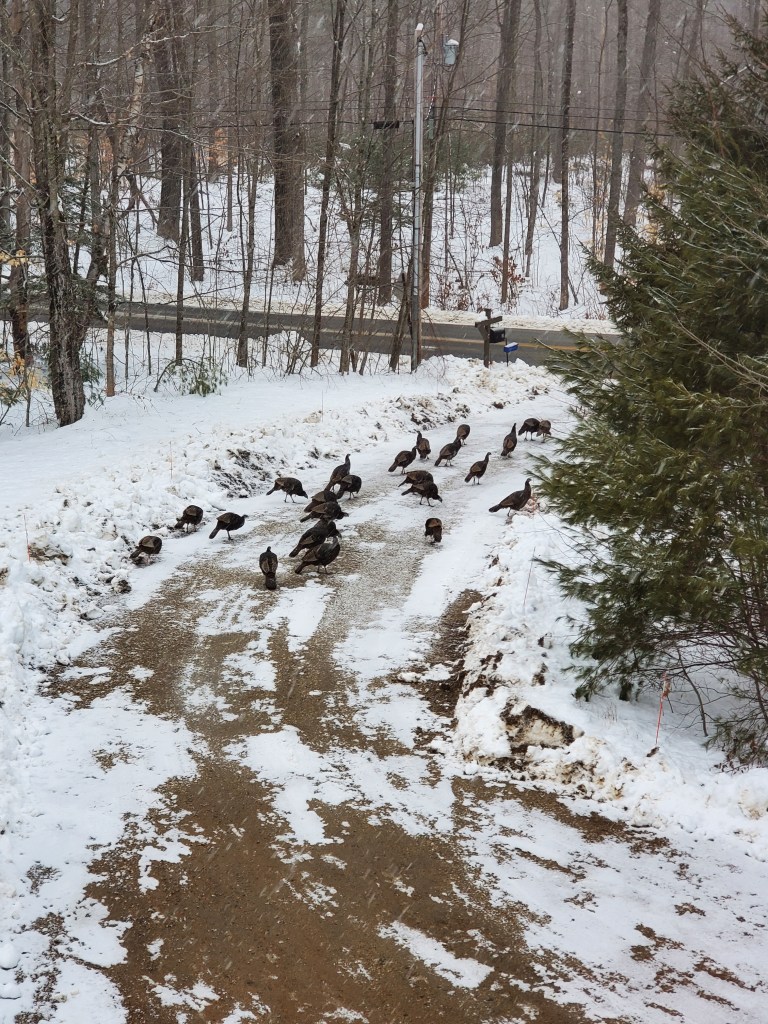
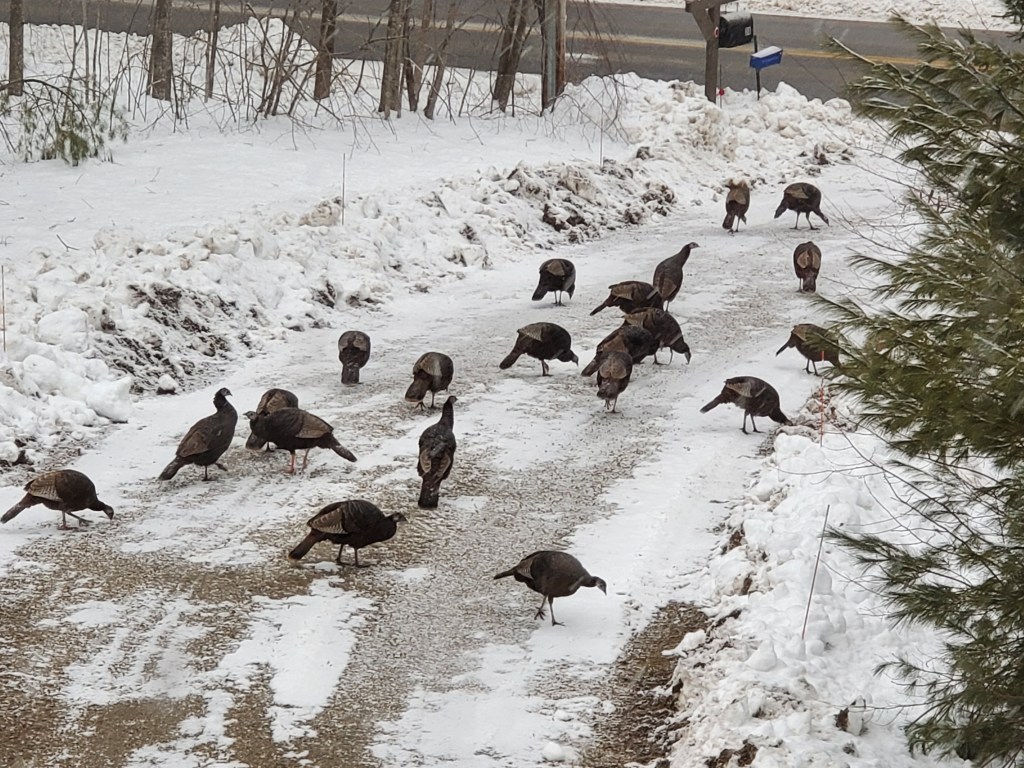
I took up routine again–not, however, unaltered by re-acquaintance with Ultimate Things, my recent experience shaped by consummate artistry and the courage of friends.


 Georgeann Murphy
Leave a reply to georgeannmurphy Cancel reply