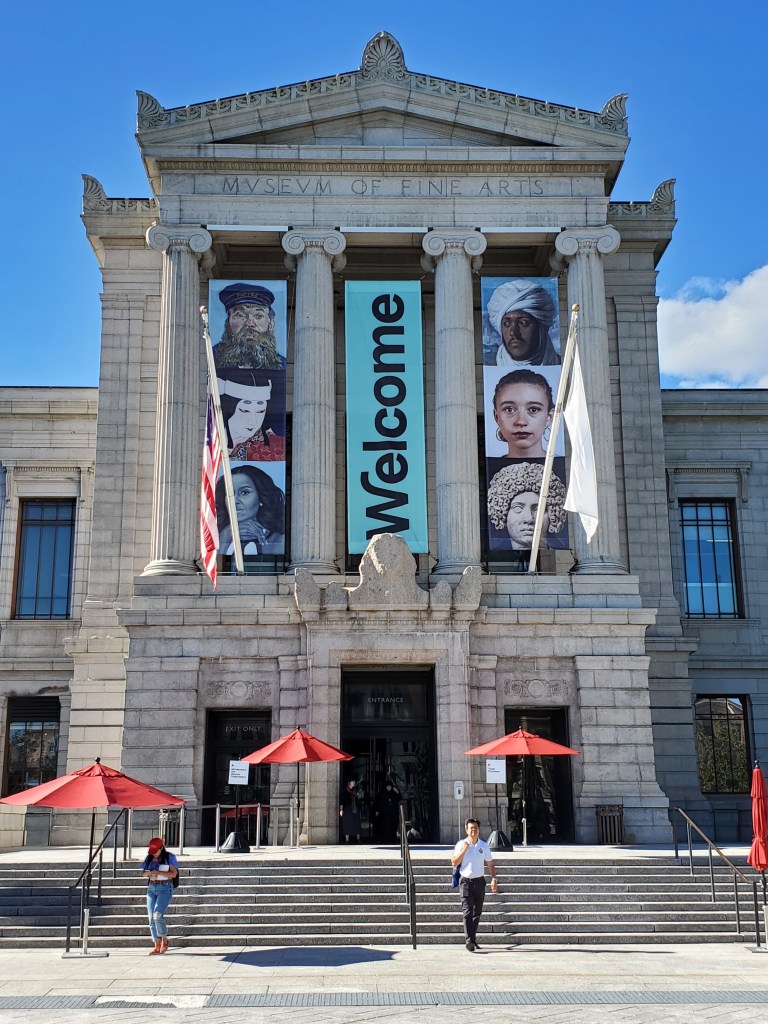
On the first of September I spent a fine time at the Museum of Fine Arts in Boston on the first day the Obama portraits commissioned by the Smithsonian National Portrait Gallery were on display for members. The portraits have been touring the country, and Boston is their last stop before returning to Washington, D.C. I’d not visited the MFA since two favorite galleries, closed for much of COVID and now handsomely redesigned, had reopened. This meant for renewed acquaintance with portraits old and new, and a fine if extravagant lunch in the MFA Courtyard’s New American Café.
First, the Obama portraits: large, formidable, non-traditional.
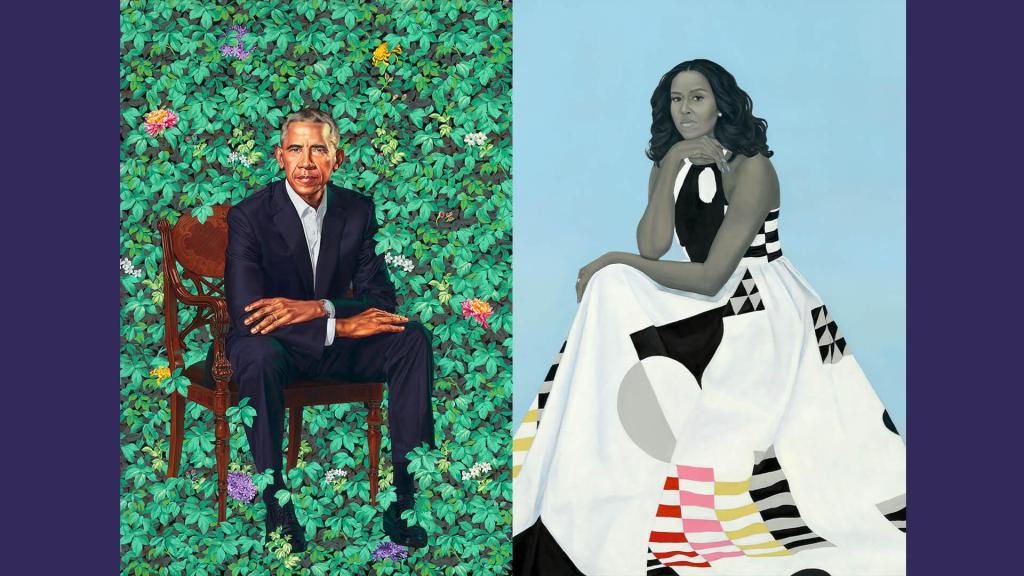
The Barack Obama portrait by Kehinde Wiley pictures the President surrounded by vegetation whose botanical symbolism National Portrait Gallery director Kim Sajet explains: “The purple African lily symbolizes his father’s Kenyan heritage; the white jasmine represents his Hawaiian birthplace and time spent in Indonesia; the multicolored chrysanthemum signifies Chicago, the city where Obama grew up and eventually became a state senator.
Each flower relates to a portion of Obama’s life. Together the lily, jasmine and chrysanthemum—combined with rose buds, the universal symbol for love and courage—provide a metaphor for a well-cultivated, albeit sometimes tangled life full of obstacles and challenges.”
In Kehinde Wiley’s portrait, Obama leans into the viewer’s gaze, giving you his undivided, approachable but discerning attention. I like it very much. Amy Sherald’s pendant portrait of Michele Obama I find less successful, with the dress stealing focus from the sitter’s face. There is no warmth in the skin tones, pose, or expression: her left hand is draped casually across her right knee, supporting her arm and the hand on which she leans her chin, her expression cool, appraising, perhaps a bit judgmental and wary. The gaze is neither welcoming nor warm; she is beautiful and confident. But approachable? Not so much. There is a cartoon-ish quality to the image; somehow it reminds me of the Yellow Submarine Beatles. Maybe it’s the emphasis on lower body, outfits, and tiny heads.

Clearly both portraits exert a magnetic appeal, however, and for me are another reminder of what’s been lost over the last several years, especially under the pall of COVID that seems so much a blur that I’ve come to think of the period from 2020 until now in 2022 as a wrinkle in time (pace Madeline L’Engle). Still, I prefer the official portrait of Michele Obama unveiled only last Wednesday, 7 September 2022, in the East room of the White House, Sharon Sprung’s portrait nine months in the making and kept secret for six years.
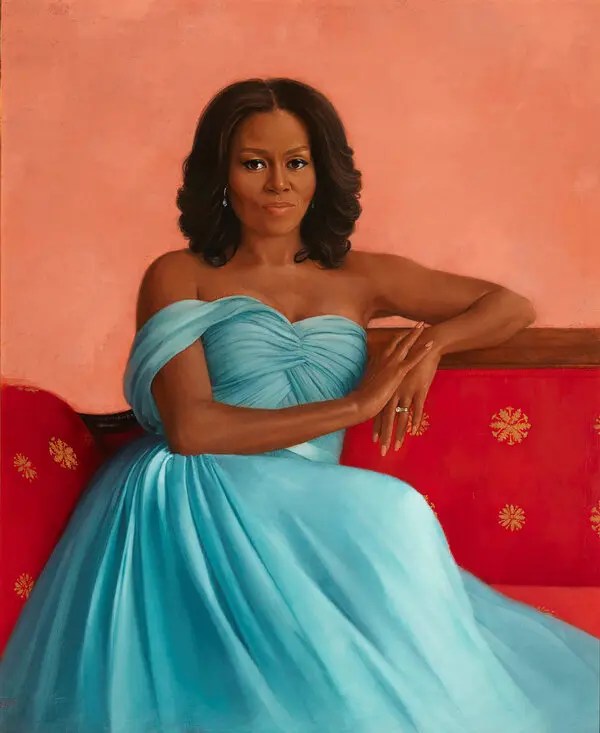
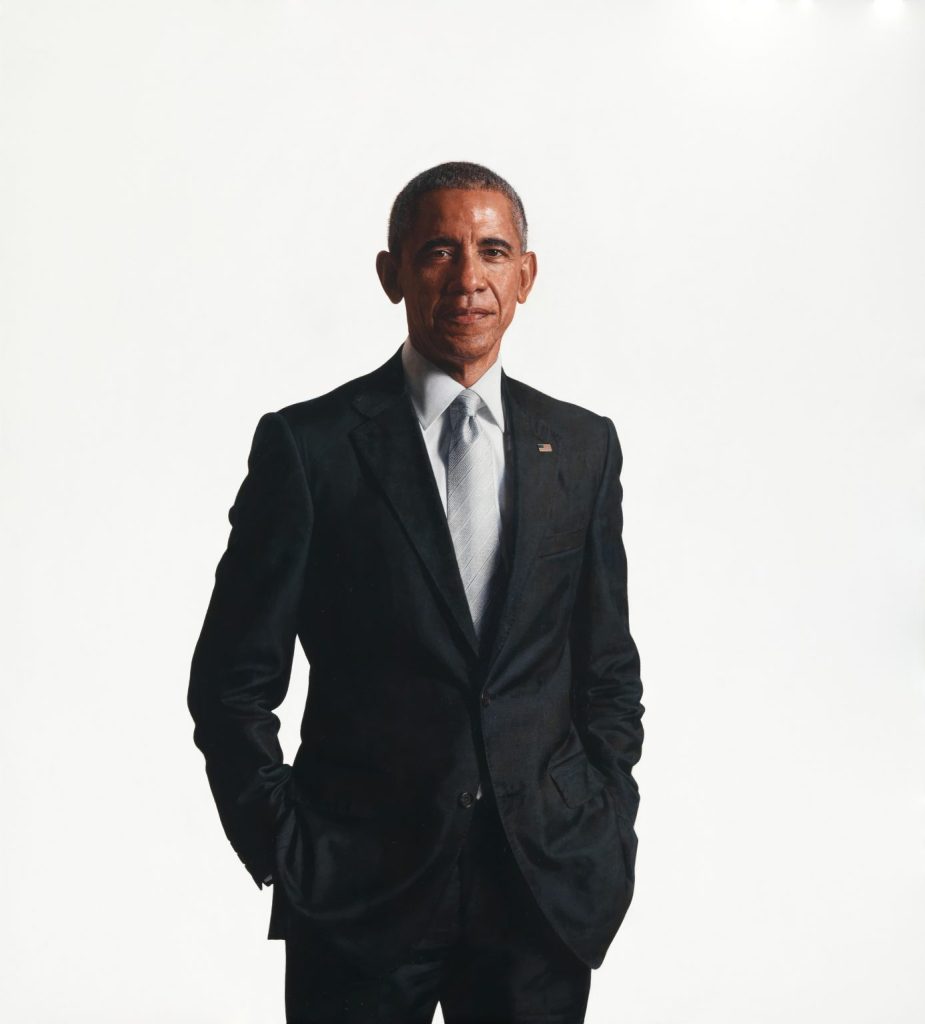
Robin Pogrebin in her 7 September New York Times post, “Official Obama Portraits Are Finally Unveiled at the White House,” explained that former presidents and first ladies for decades had had their official White House portraits (as opposed to the Smithsonian portraits now at the Boston MFA) unveiled by their successors. That did not happen for the portraits of Barack and Michele Obama while Donald J. Trump was in power. You can’t have a White House ceremony without the approval of the sitting president, and of course the sui generis Trump was bound to disrupt so generous a tradition. It took President Biden’s victory and a tamer pandemic to both welcome the Obamas back to the White House and reveal for the first time their White House portraits.
Besides, how could Trump stand comparison with Robert McCurdy’s handsome portrait of the handsome 44th president?
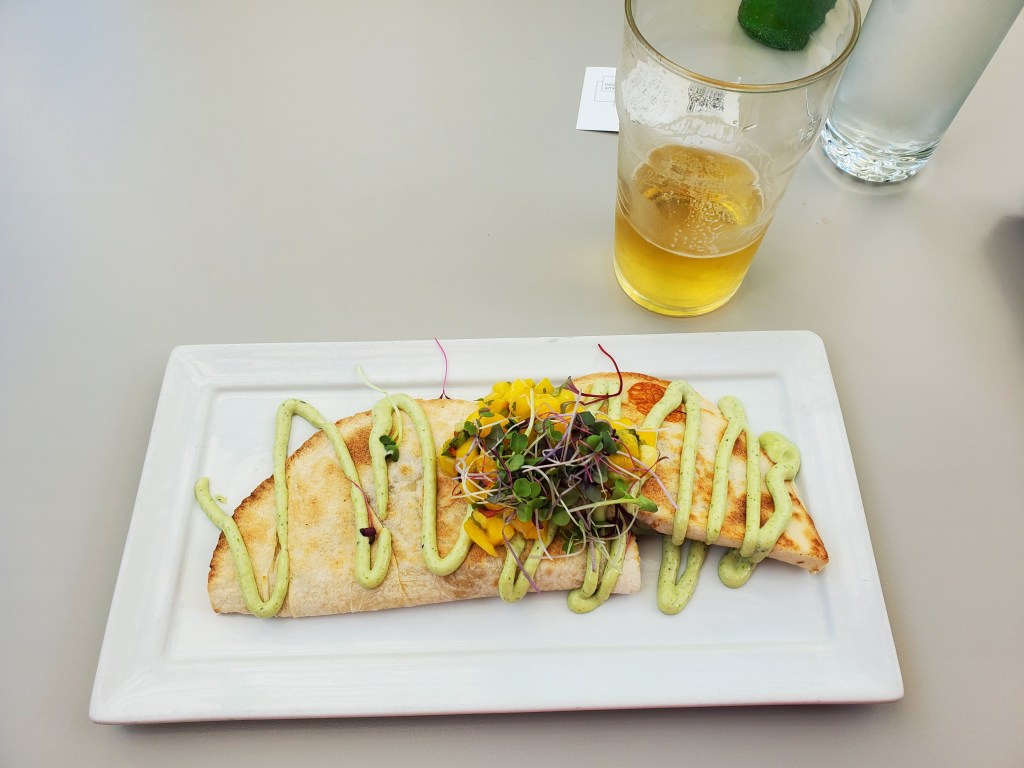
Seeing the Obama portraits evoked in me a painful nostalgia. For solace, I sought lunch (carnitas quesadillas) and a very pricey Stella Artois (Sam Adams was sold out) in the MFA courtyard.
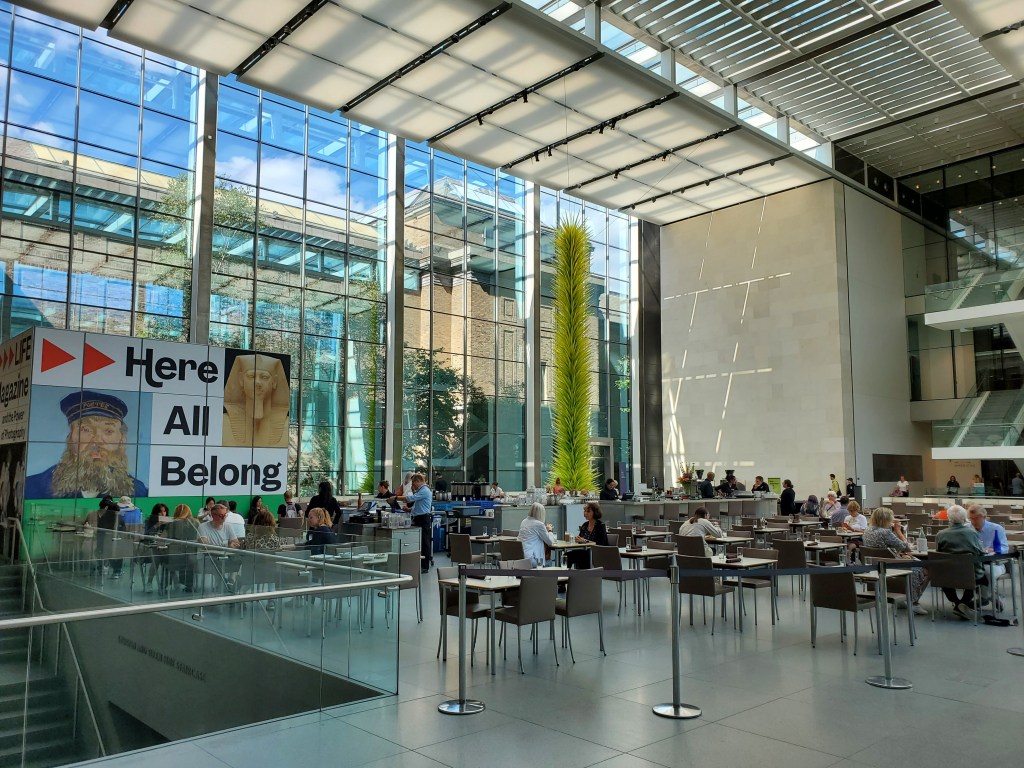
Then came a reunion with another ruling couple, King Menkaura and his Queen—perhaps wife, perhaps mother—Old Kingdom portraiture, 2490-2472 BCE. These two were a favorite of my late husband’s, who regularly assigned his art history students to write about them. And in their dramatically re-designed MFA setting, they are all the more compelling.
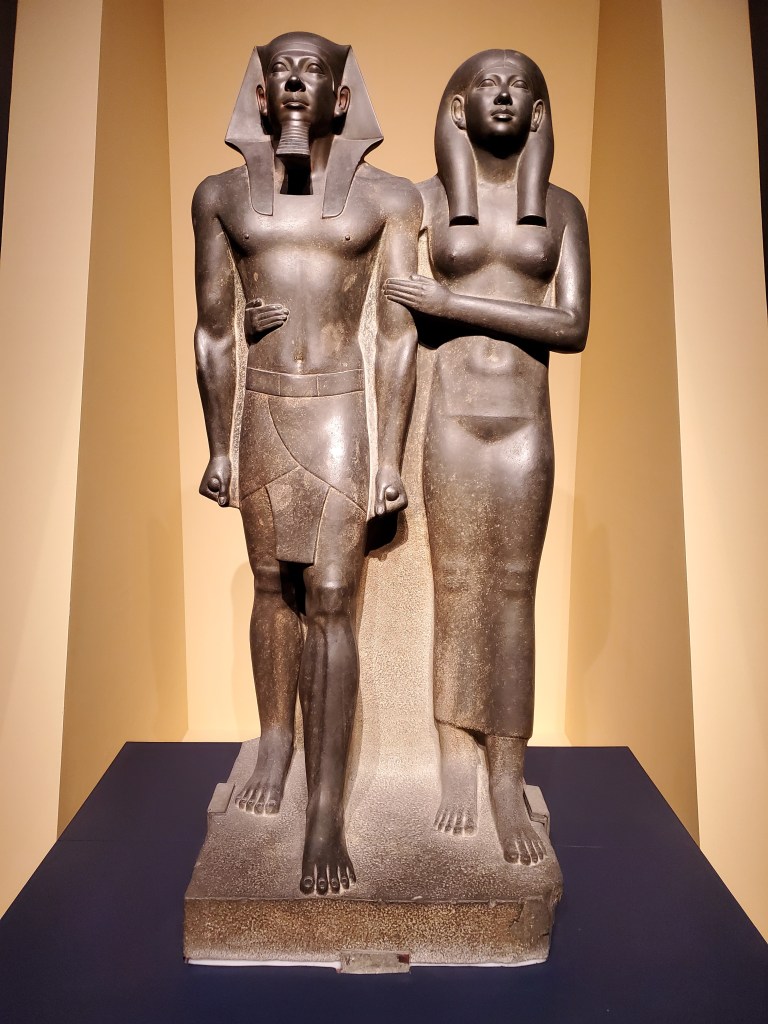
Like Keats’s Grecian urn, these two seem foster children “of silence and slow time,” the queen’s embrace of the king and the pair’s sightless gaze through eternity teases me out of thought of the madding present. For which I am grateful. Thank you, MFA.
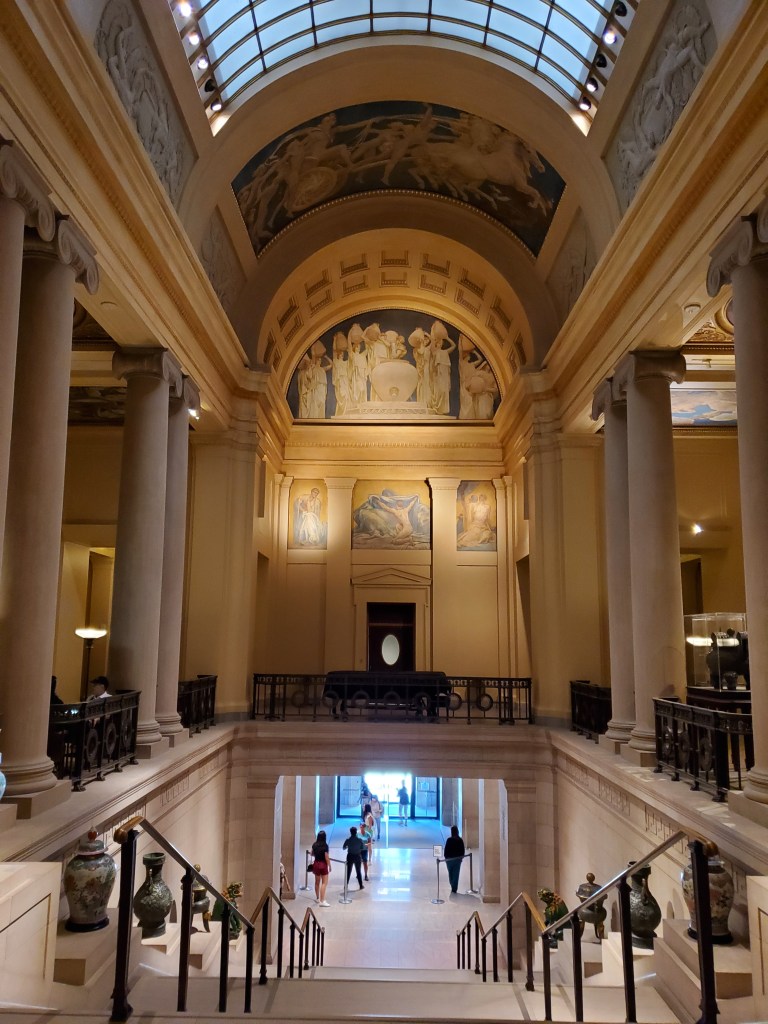
As I was transfixed and transported by art, some poor parents were transporting their college kid to school in Boston that first of September afternoon, and fixed/scalped their U-Haul under one of Storrow Drive’s low-clearance bridges. “Getting Storrowed” happens every back-to-school year. Even the traffic tailback did not fluster me, however; I was still under Menkaura’s spell, and ever so grateful to be neither college student nor parent.
Age has its privileges.


Leave a Reply