7 April 2026

Waking to snowfall this morning—belated April Fooling from Mother Nature—surprised me out of the incipient MADD-ness (Mixed Anxiety-Depressive Disorder) that has too often characterized my first waking moments of late.


Accustomed to feeling overwhelmed by worries personal (the whips and scorns of time) and public (a world subject to the Felon-in-Chief’s latest indecency, obscenely venting mortal threats on Easter Sunday, no less), I suddenly remembered that the day before I had felt hopeful all day—such a rare occurrence. And so I decided to catalog all that contributed to that mood, and extrapolate from doing so a salutary formula, yearning to be able to retrieve hope at will. Here’s what happened, Dear Reader.
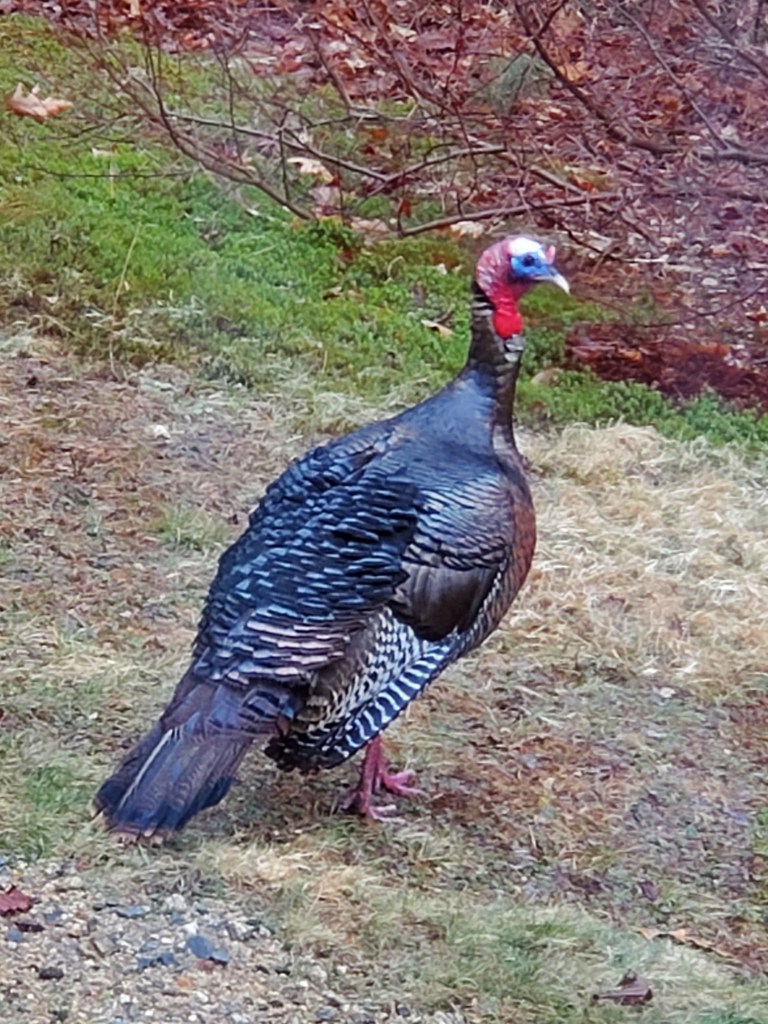
First, there was Easter Sunday, initially heralded by a rafter of turkeys, including one handsome Tom taking the place of the Easter Bunny.
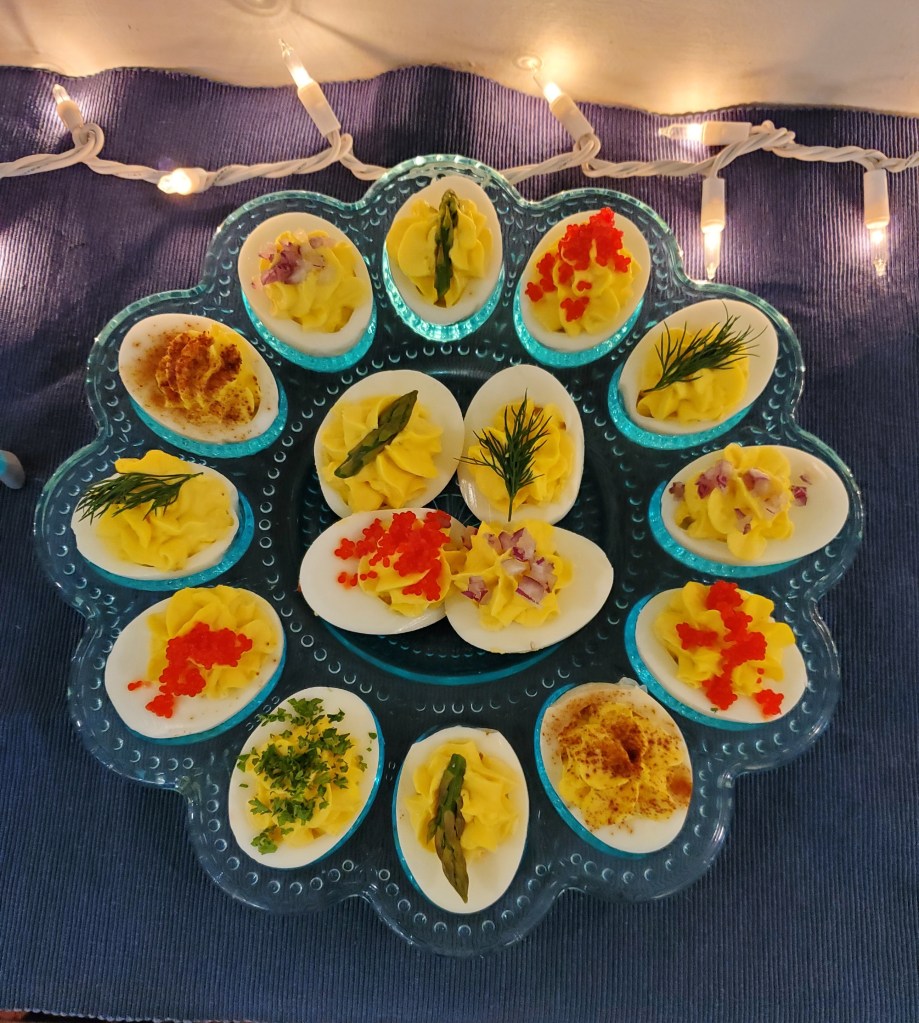
Then came the comforting company of long-standing friends celebrating with a communal feast all the season’s hopeful renewals, sacred and secular. We all contributed—my now traditional offering was once again deviled eggs—and enjoyed both new acquaintances and catching up with the old, a gathering bracketed by the long drive separating Madbury NH from Newton MA where the daffodils are already in bloom.
The schlep to and fro was nevertheless made delightful by convivial chat and a spectacular sunset painting the louring sky a luminous tangerine on the way north. My spontaneous recitation of opening lines from Richard III as we crossed the Tobin Bridge (“And all the clouds that loured upon our house / In the deep bosom of the ocean buried”) made my friends laugh, and made me feel less obsolete for having them in my head.
And then came Easter Monday, Angel Monday, recalling the arrival of the three Marys at the empty tomb where Jesus had been laid, only to be confronted by angels asking them whom they seek. The little four-line elaboration of the Easter Introit, the Quem Quaeritis trope (c. 923-934) marked the beginning of medieval liturgical drama:
Angel: Whom do you seek in the sepulcher, O followers of Christ?
Marys: Jesus of Nazareth, the crucified, O heavenly ones.
Angel: He is not here; he has risen as he foretold;
go announce that he has risen from the sepulcher.
Marys: Alleluia! The Lord has risen!
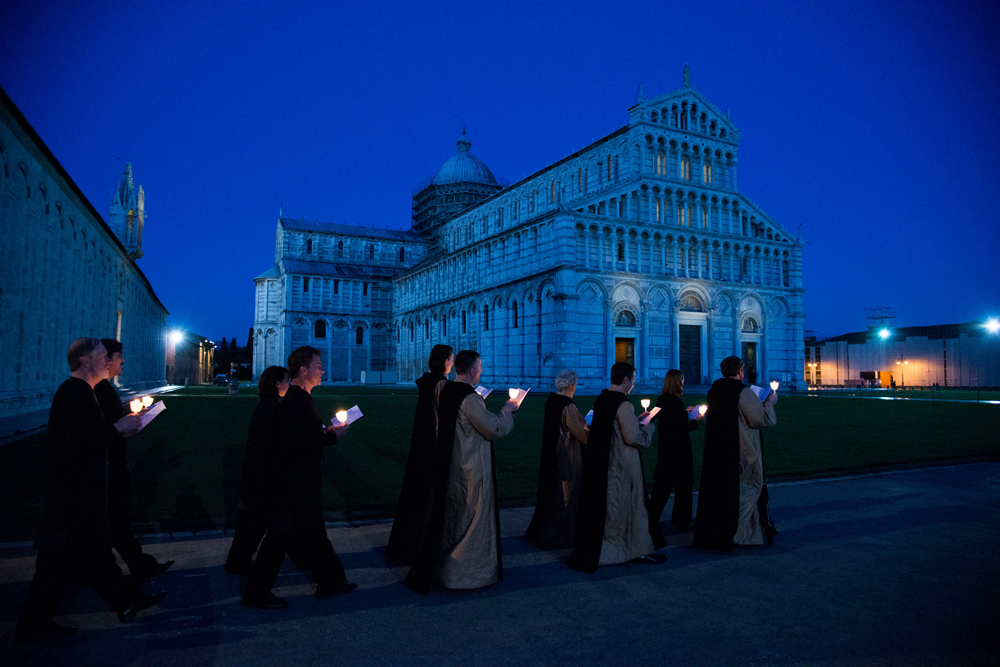
Quem Quaeritis trope in May 2016
Without that impulse to turn liturgy into drama, a development that later collided with the Renaissance recovery of classical texts, including the Latin plays of Plautus and Terence that my boy Will would have translated at the King Edward VI school in Stratford-upon-Avon, I never would have had those opening lines of Richard III in my noggin to tickle my friends. Connection, to each other, to the past, to what one has learned over a lifetime, is the dispeller of despair, progenitor of hope. Connecting with my art historian friends was key, for our Easter dinner had united these disciplinary colleagues, and it had been Mara the medievalist who reminded me that Easter Monday was also known as Monday of the Angel. Joan Didion was right: we tell ourselves stories in order to live. And stories connect us both to each other and to our past, giving the present a consoling context.
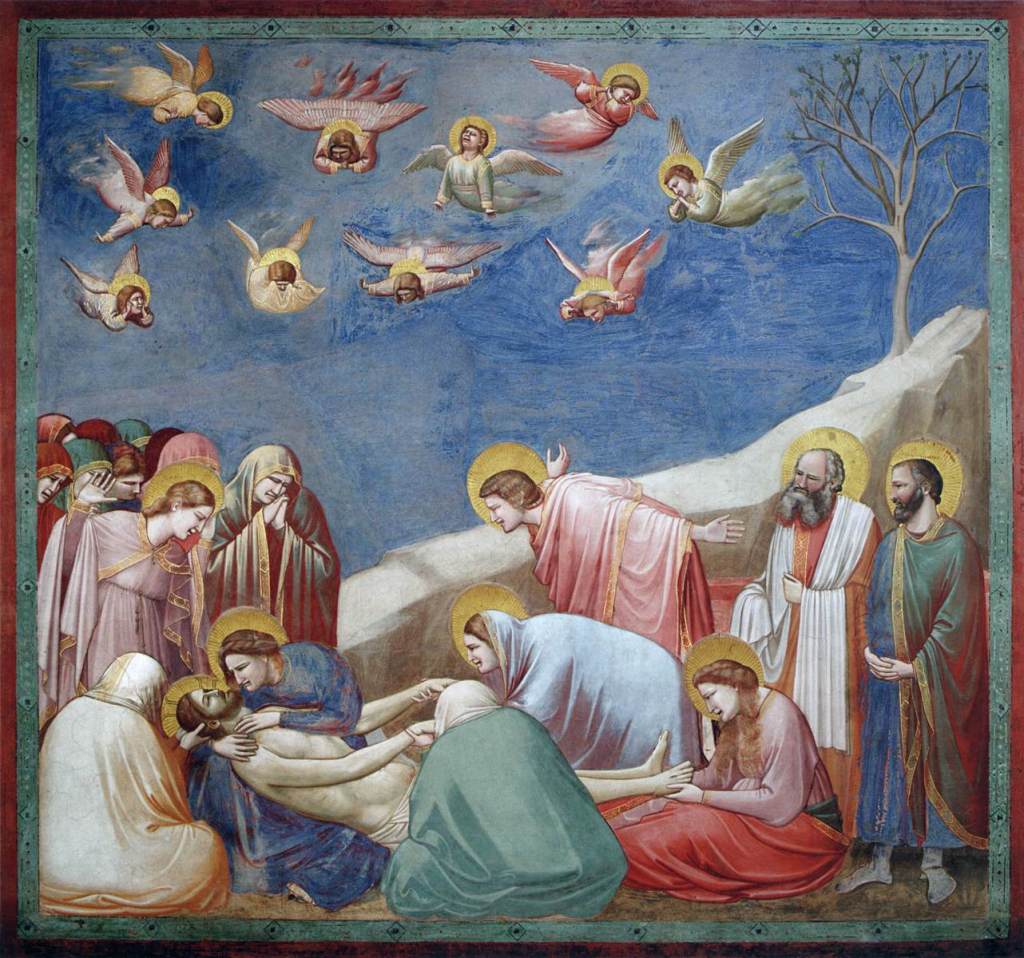
Serendipitously, another former colleague, art historian Anne Leader, had recently sent me a link to her “Meditations on the Death of Jesus,” part of her “Art History with Anne Leader” blog on Substack and an occasional piece offering both a lesson and a spiritual invitation which she had first prepared for the annual prayer vigil of the First Presbyterian Church of Auburn, Alabama back when we were all cloistered by COVID in the spring of 2020. The thirteen devotional texts Anne chose are moving, and her glossing of the art that illustrates them (much of which I’d traveled to visit over the years) again filled me with hope: fine scholars continue to connect us to the humanity we crave, and they find evermore accessible ways to do so.
Technology that has so often filled me with dread now seemed inviting and even inspiring.
And so, while waiting at Wentworth Douglass Hospital in Dover for a post-op checkup with the wonderful APRN Royce, who had helped me through a hernia operation back in December (one of the many replacements and repairs that 70+-year-old flesh is heir to), I decided to fire up my phone to check on the Artemis II crew. Suddenly, as I sat in the waiting room, there they were, right there on my phone, broadcasting live as they approached the far side of the moon, boldly going (in Star Trek parlance) where no man has gone before.
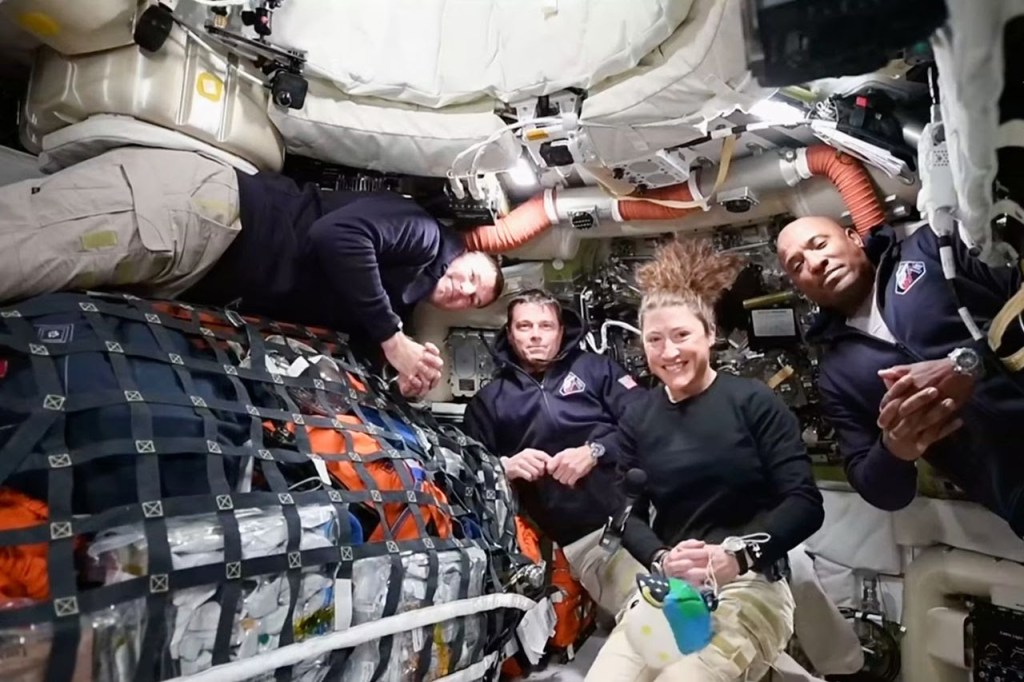

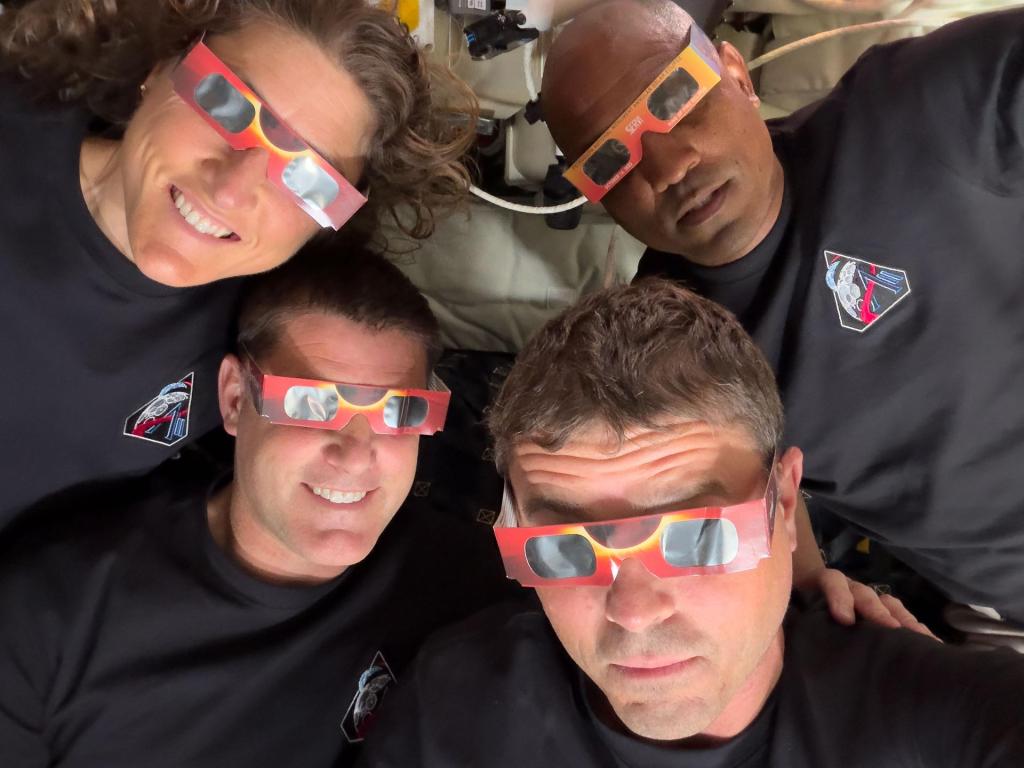
But this intrepid voyager was not just a man, but a diverse crew, including a Canadian, an African American, and a woman—the Felon-in-Chief’s DEI nightmare. My mind was blown. How was it possible that they were broadcasting, live, to me, as they cruised toward the undiscovered country, 252,756 miles from Earth, and I sat in the hospital waiting to see if my hernia was indeed fully repaired?
I carried my phone into the exam room to show Royce. He not only marveled along with me at our connection to the Artemis crew, but also pronounced me entirely healed; robotic laparoscopic surgery is another technological miracle. Lifted as I was by this good news and by the humility of these brave, brilliant astronauts, I extended my checkup by asking Royce if he’d had a good holiday. A real conversation ensued: I shared a tip about how best to peel hard boiled eggs (steam them for 15 minutes and then plunge them into ice water) and told him of my reunion with friends of 30+ years; he told me a similar tale of invaluable old friends and went on to speak of uplifting video clips he’d recently seen illustrating the wise humanism of the former First Couple (Barack: world leaders can also be stupid; Michelle: rich and famous is not something devoutly to be wished).
I left the hospital feeling better than I’d felt in a long time—so much so that I went on connecting, linking by email my former colleague at Centre College and good friend Bill Levin with his fellow Renaissance scholar Anne Leader, and jumping out of my culinary rut with a new pasta primavera recipe from the New York Times. Feels good thus exiting the Slough of Despond.
And so, Dear Reader, reminded that even an April snowfall can be beautiful, I conclude this belated paschal message with the reminder that E. M. Forster’s epigraph to Howard’s End, which I once put on a poster advertising a new Humanities course, remains accurate and compelling: “Only connect.” Connect with your friends, connect with the past, value what the arts have to teach, share your expertise, marvel at and celebrate the best that humans can achieve when they cooperate.
There may well be hope for us after all.

 Georgeann Murphy
Leave a comment