10 March 2026
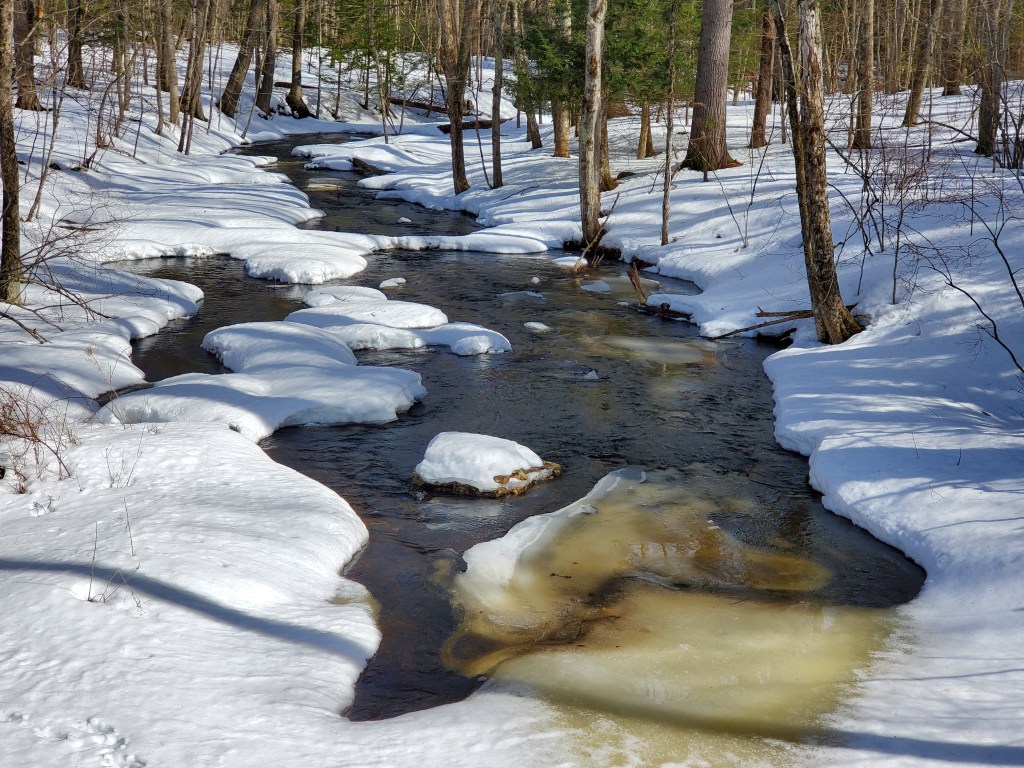
Winter’s ice bonds cracked wide open for me last Sunday. Thanks to Boston Ballet and now sprung forward to Daylight Saving Time, I am no longer frustrated by my unfulfilled quest for what my wise friend and artist Carol terms the meditative, “existential break” of art, a reprieve from a very long winter of discontent. The runup to this spiritual breakthrough had been disappointing as I gadded about seeking some salutary revelation, or at least reassurance from someone or something. Last Thursday that search took me to Portsmouth’s Music Hall for an evening with Gavin Newsom, himself gadding about promoting his new book, Young Man in a Hurry.
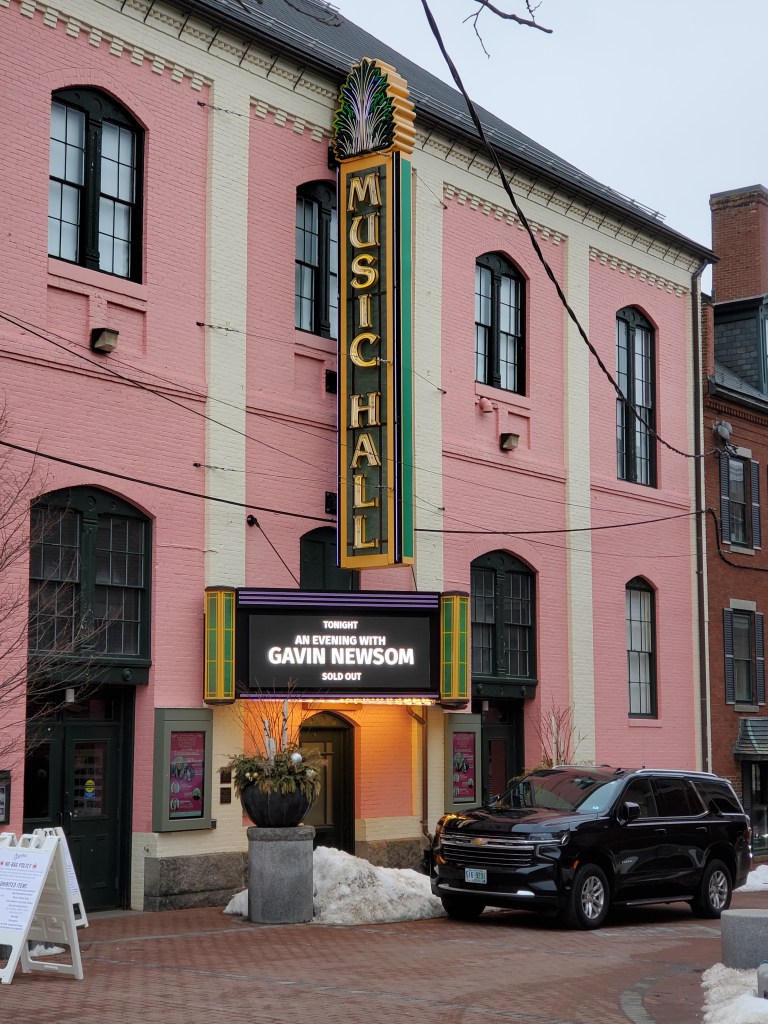
The largely partisan audience was of course jazzed by the just-announced firing of the much-detested Homeland Security Secretary Kristi Noem, a woman blinded by self-promotion and completely oblivious to the iniquities her ignorance perpetuated. And Governor Newsom was both articulate and vehement about the necessity of fighting executive overreach with tough legislative action—“fighting fire with fire.”
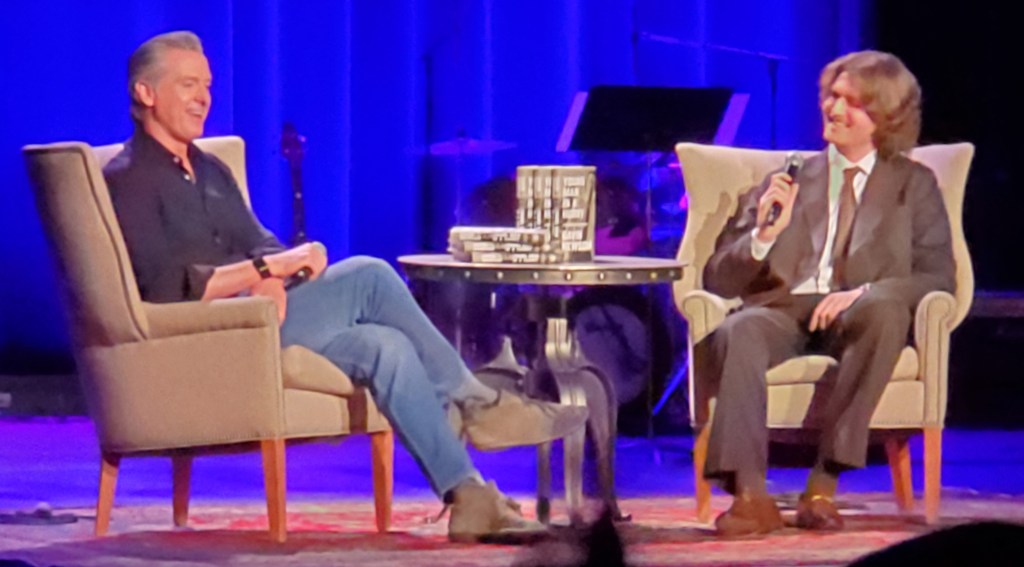
Newsom’s focus, however, was certainly promotion of his book as prelude to presidential candidacy. And he never addressed the fear that roils my friends of late: tampering with or even prohibition of the next election. My heart was no less heavy when I left the Hall.
So, I hoped for more of a lift from Joshua Harmon’s new play We Had A World now at the Huntington’s intimate Wimberly Theatre in Boston’s Calderwood Pavilion. I’d heard Harmon speak of the play’s genesis, a request from his grandmother to tell their family story sparing none of the recriminations and bitterness; Harmon himself called it “my crazy, personal, super-specific play about my nana.”
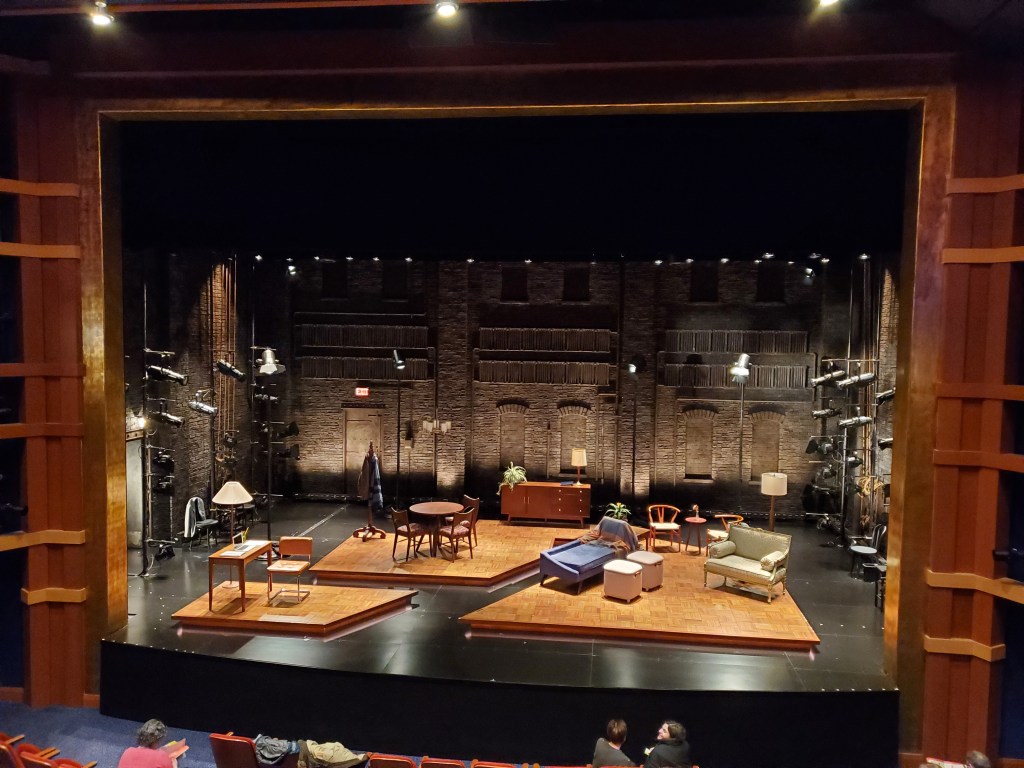
A playwright’s autobiographical play about his particular family romance and an indomitable matriarch of course conjures Tennessee Williams’s devastating memory play The Glass Menagerie, and unfortunately We Had A World suffers from the comparison. Well-acted and occasionally amusing but episodic and finally, for me, unengaging, I missed the moving, transporting vision of the personal made universal, and stayed stuck in bleak winter mode.
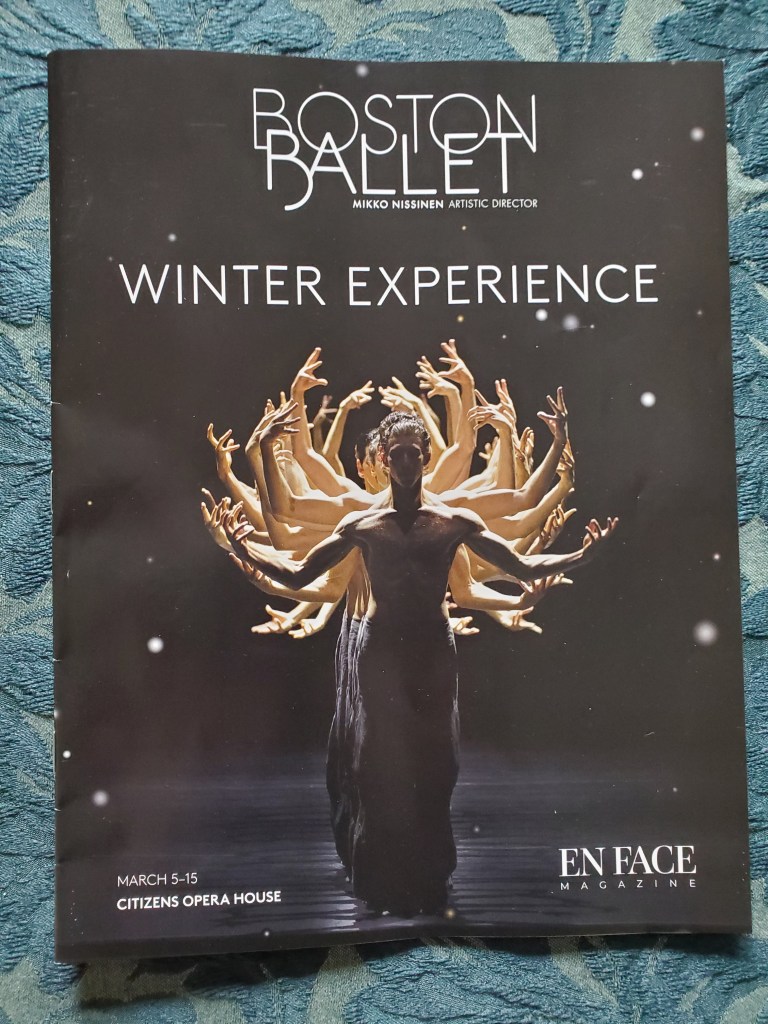
But the next day, the artists of Boston Ballet came through for me with their “Winter Experience.”
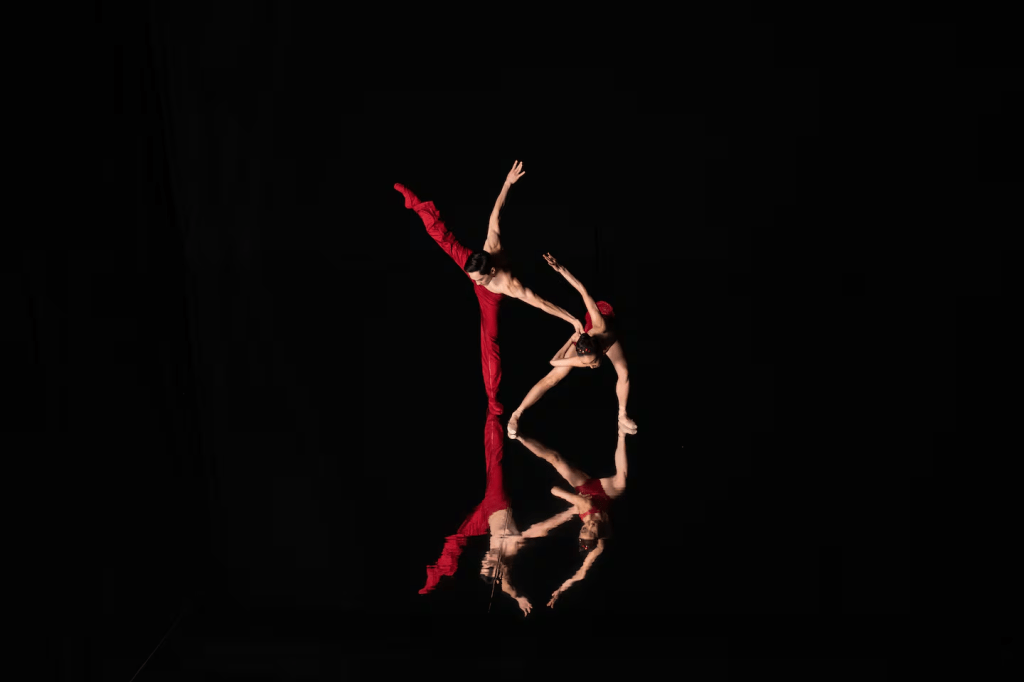
Stravinsky has said that the “violent Russian spring” that seemed to begin in an hour was like the whole earth cracking . . . “the most wonderful event of every year of my childhood.” Together with Nijinsky’s choreography first presented in Paris by Diaghilev’s Ballets Russes on 29 May 1913, Le Sacre de Printemps/The Rite of Spring shocked its audience into shouting, hissing pandemonium. Jorma Elo’s Sacre, last performed by Boston Ballet in 2009, with Stravinsky’s score presented in a new arrangement for reduced orchestra by former Boston Ballet assistant conductor Alyssa Wang under music direction by Mischa Santora, no longer shocks, but it does command. Nijinsky’s choreography challenged classical form with feet turned in, knees slightly bent, and arms held in “prehistoric posture.” Globe critic Jeffrey Gantz nailed the perfect correspondence of Elo’s choreography and Stravinsky’s score: body parts move in isolation from one another like Stravinsky’s instrumental lines. “Dancers crawl backward, stiff-legged, as if de-evolving.” The story’s controlling overlord of the community pushes his victim’s head down or chops at her throat as the stomping pulse of the music evokes a cross between Jurassic Park and nature red in tooth and claw: the violent, ruthless competition of the natural world. Yet the doomed victim of this savage community in Elo’s version ends the struggle with a satisfying gesture of feminist defiance.
Okay. I was on the road to recovery. And then after intermission a stunningly cohesive vision of group dynamics arrived with Crystal Pite’s The Season’s Canon, premiered with the Paris Opera Ballet in 2016 and first performed by Boston Ballet in October 2024 to Max Richter’s “Recomposed: Vivaldi’s The Four Seasons Selections.” Beginning with an ephemeral evocation of spring arriving via a virtual nebula, the reflected light backdrop design of Jay Gower Taylor and Tom Visser, the audience’s first vision of the 54 dancers grouped upstage right is an elemental undulating mass, more ocean swell than community.
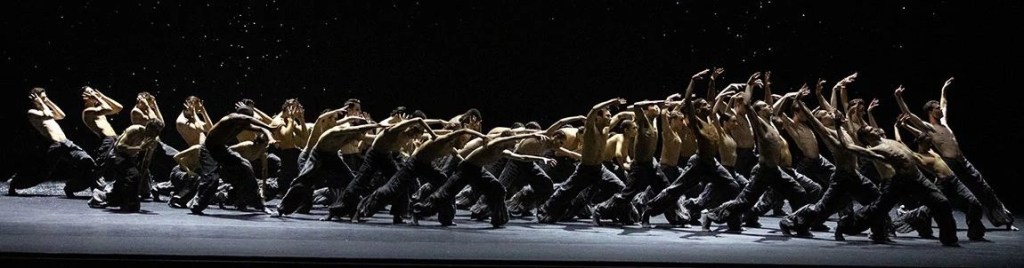
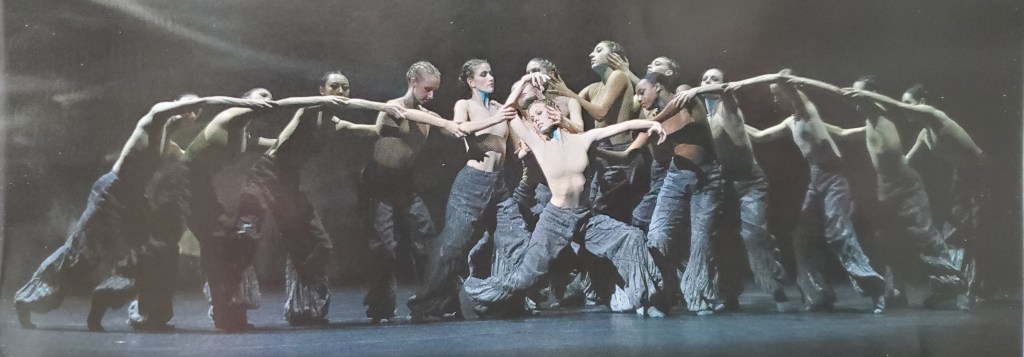
The men bare-chested and the women in flesh-colored tops, everyone in loose gray trousers, they perform murmurations more commonly observed in a flock of starlings. Individuals peep up, and are then subsumed by the group; there are chain-reaction and falling domino effects. The beauty of the collective, individuals moving as one, is the dominant and, I found, affirming theme, one awe-inspiring coup de théâtre after another. The snow that falls in the last movement, Winter, is as beautiful as that always stunning Nutcracker scene. But here, unrestricted by narrative, one experiences that beauty in the context of enduring seasonal cycles and the interdependence of humanity and nature. For me, this vision set to music both familiar and new did finally crack open the ice bonds of this challenging winter. If Winter comes, can Spring be far behind?
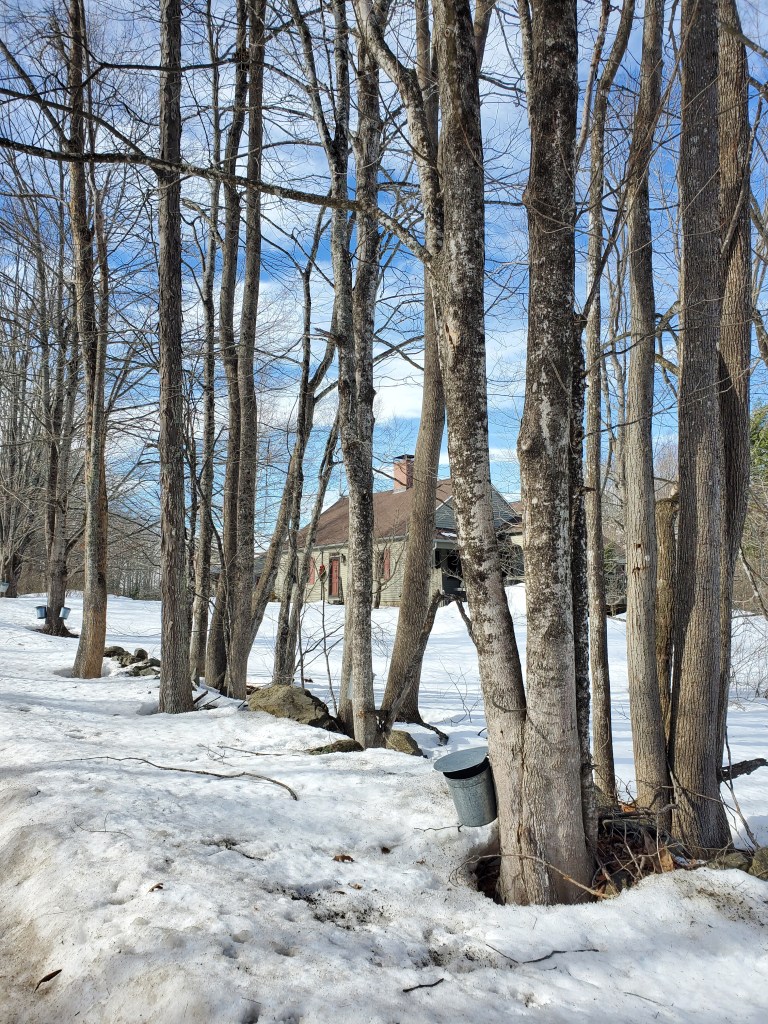
As it happens, not far at all. In fact, the ice bonds HAVE literally cracked. The maples along Nute Road are being tapped.
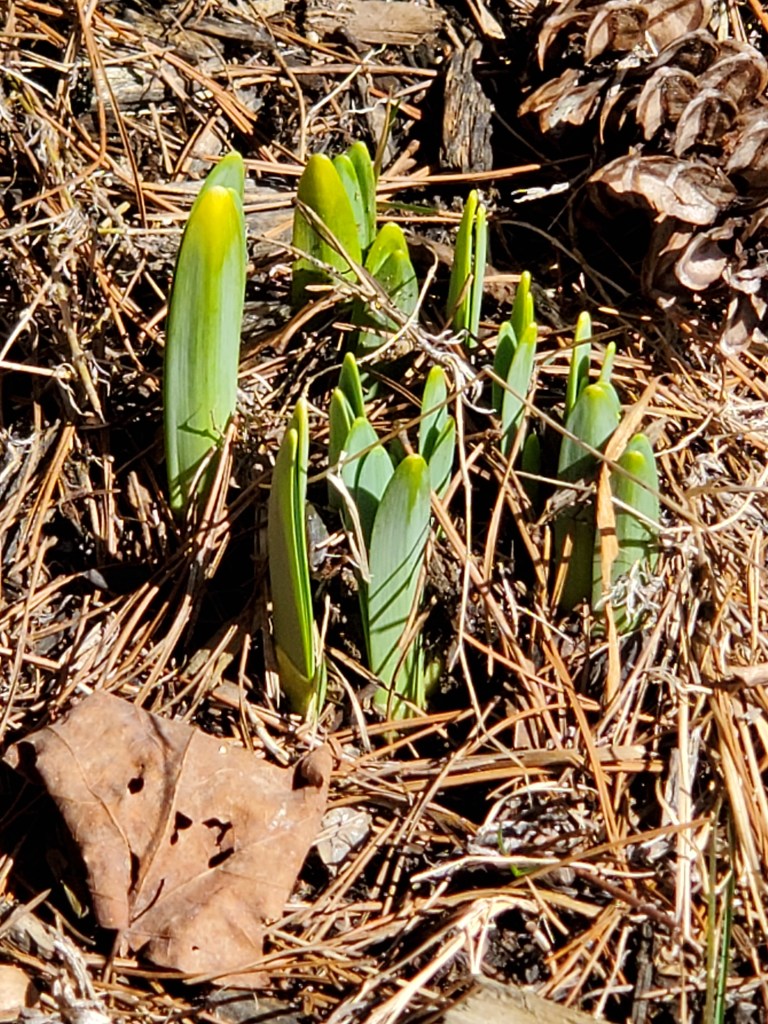
The temperature right now in Madbury is 74o, and I spied the first daffodils to break ground this morning, the force that through the green fuse drives the flower.
Even shut in the cold, dark garage since last November, a pot of chrysanthemums has sprouted anew.

And lines from The Wanderer, the Old English poem preserved in the Exeter Book (c. 960-990) I labored to translate my first year of graduate school come back to me:
“So this middle-earth each of all days declines and falls; therefore a man cannot become wise before he has a portion of winters in the kingdom of the world.”
Spring is nigh. We are wiser for the winters passed. What’s next?


 Georgeann Murphy
Leave a comment