6 August 2025
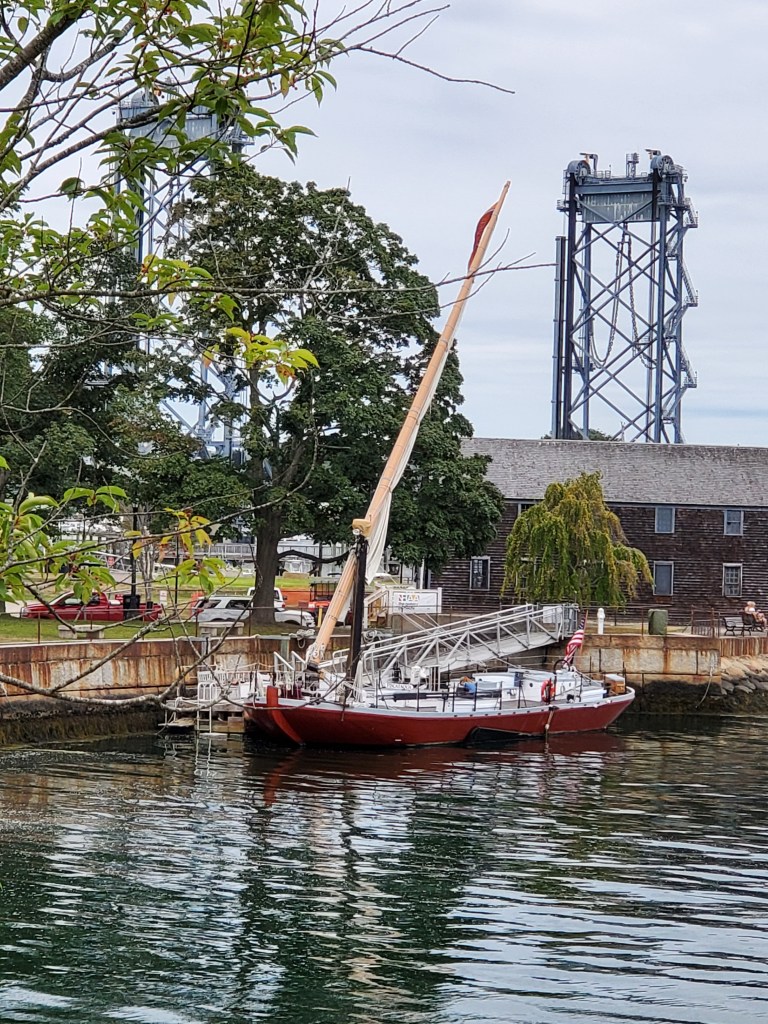
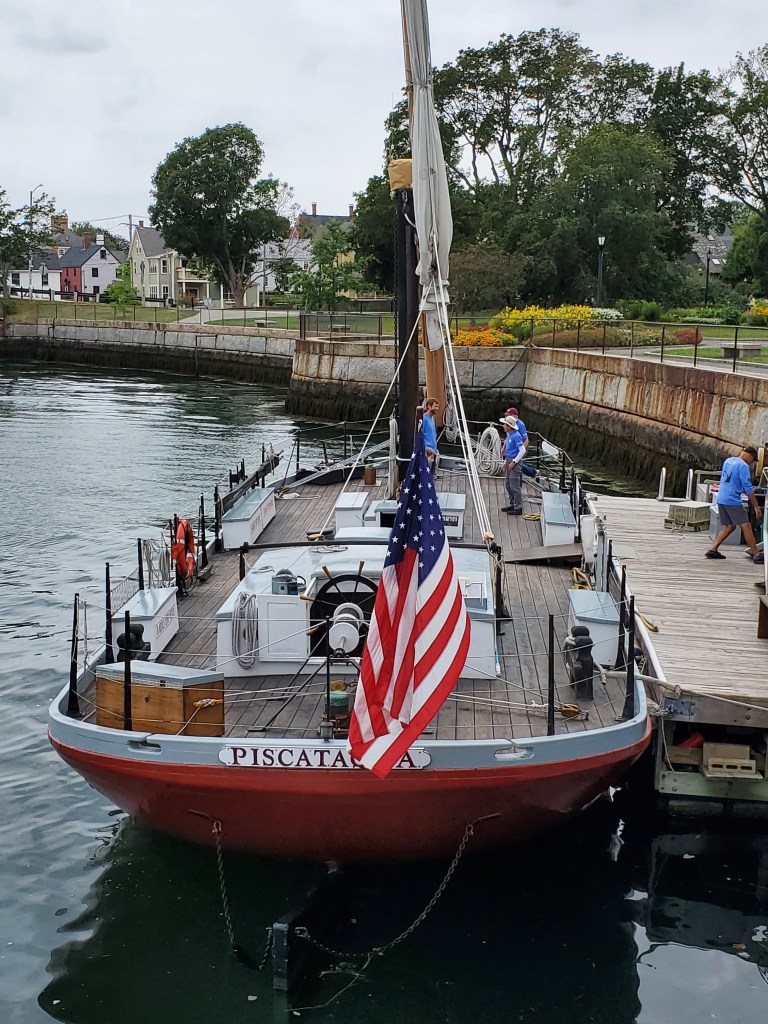
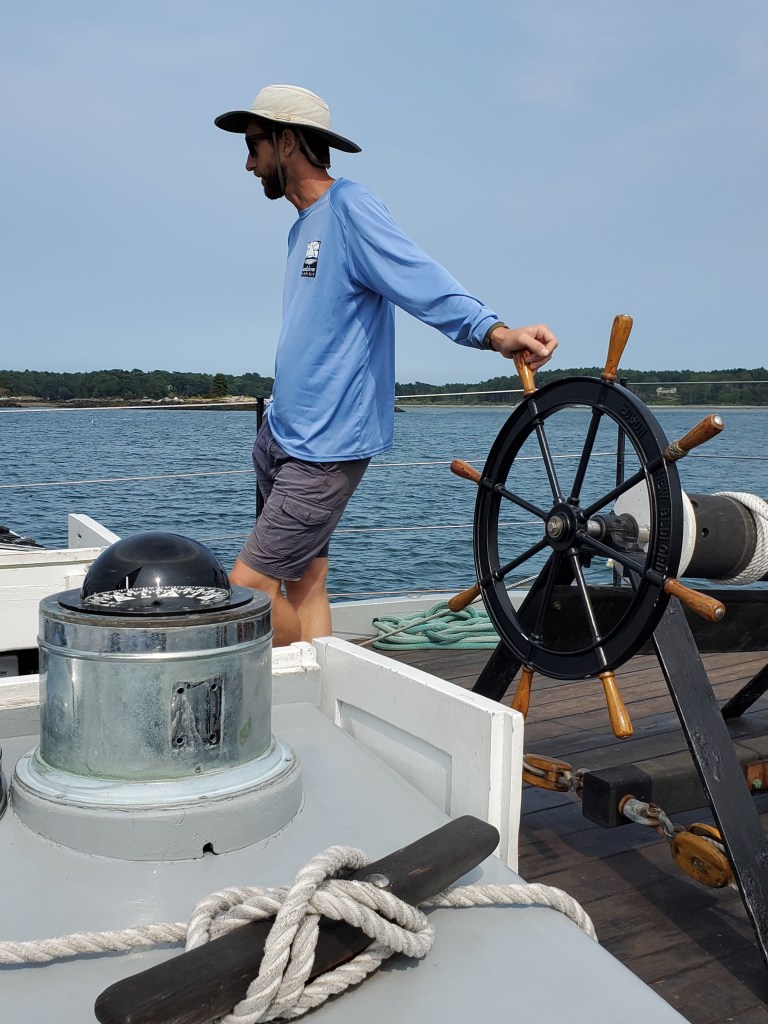
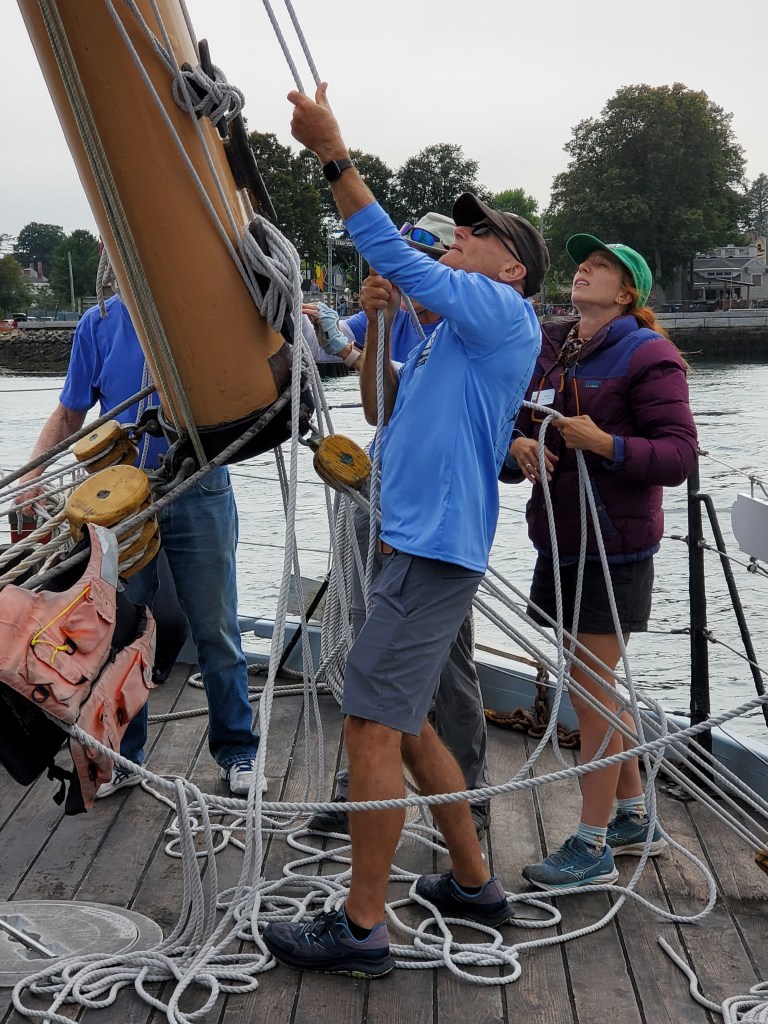
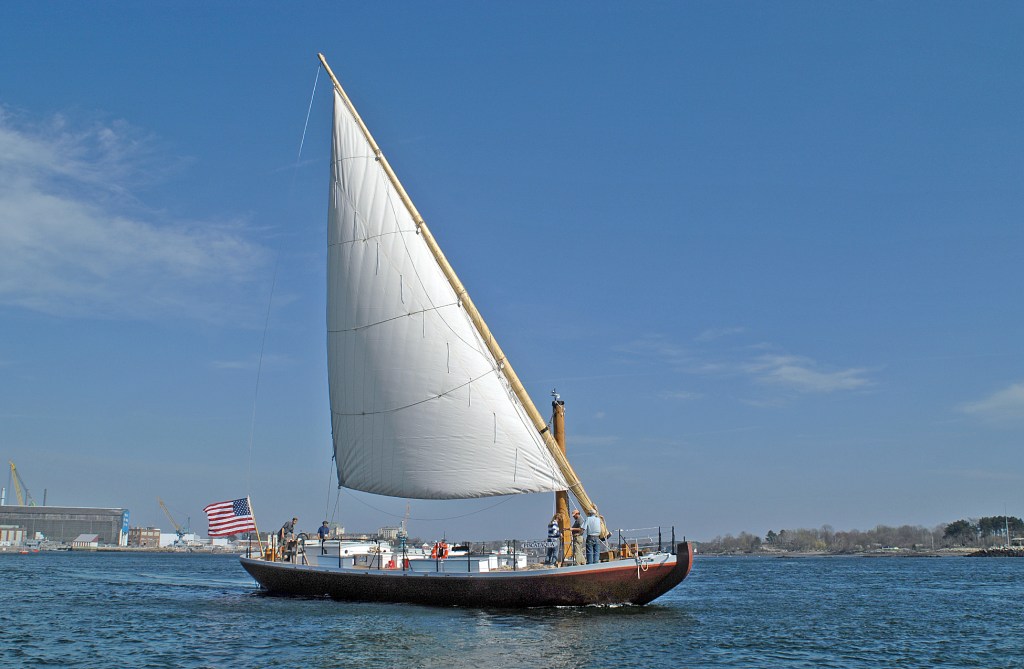
In this brave new world of OpenAI offering both “companionship” for the lonely and the undoing of education as I once knew it, I’ve been seeking solace from such discombobulating changes in the macrocosm—and in my personal microcosm as well. The latest physical annoyance in the latter: floating bodies—chips of bone in my knees, floaters in my eyes—common, alas, to advancing age. Last week’s solution: fight floating bodies with a floating body of a third kind. The gundalow is a flat-bottomed sailing barge that first appeared in Maine and New Hampshire rivers in the mid-1600’s, and used tidal currents for propulsion supplemented by a single triangular (“lateen”) sail brailed to a heavy yard to harness wind. The heavily counterweighted yard attached to a stump mast allows the yard to be pivoted down to shoot under bridges while maintaining the boat’s way; with a draught of only 3 feet, gundalows were very active river craft in the 1700 and 1800’s, sometimes delivering cordwood to brickworks to fire their kilns, and picking up cargoes of finished bricks in return. They were practical and elegant in their practicality.
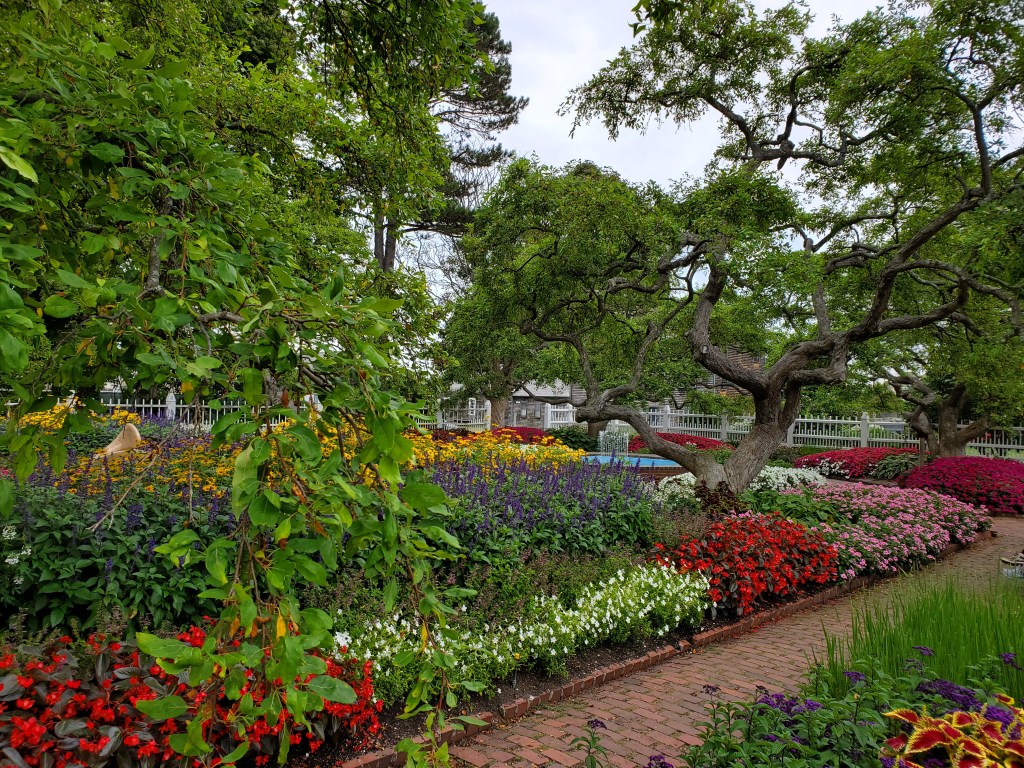
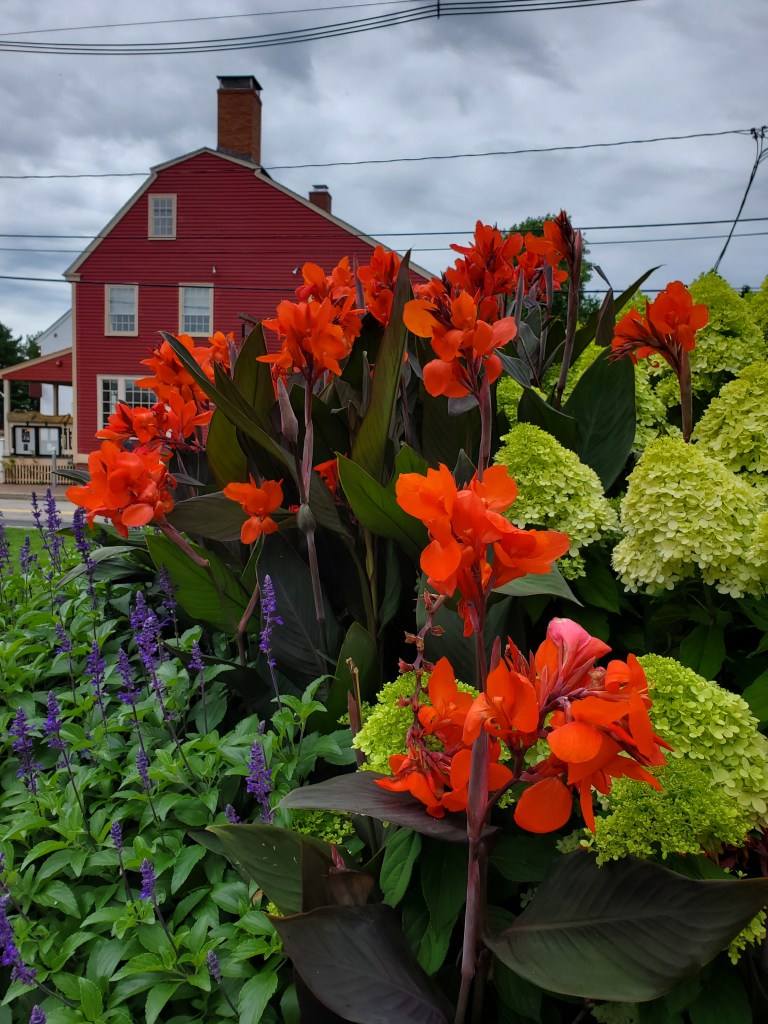
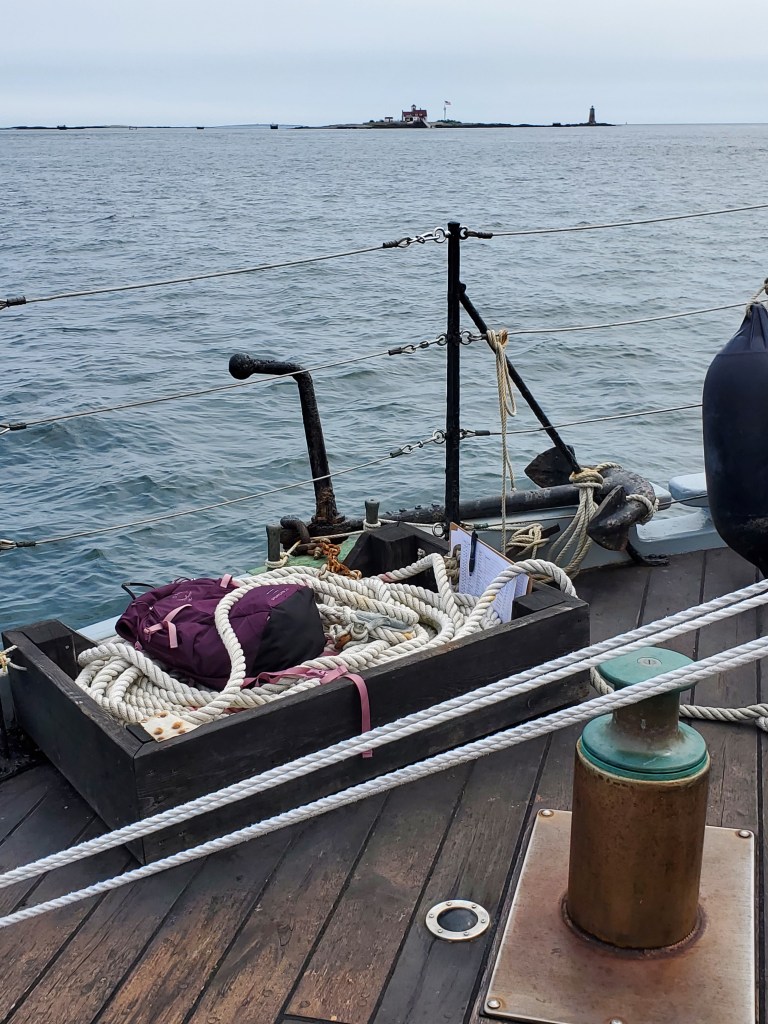
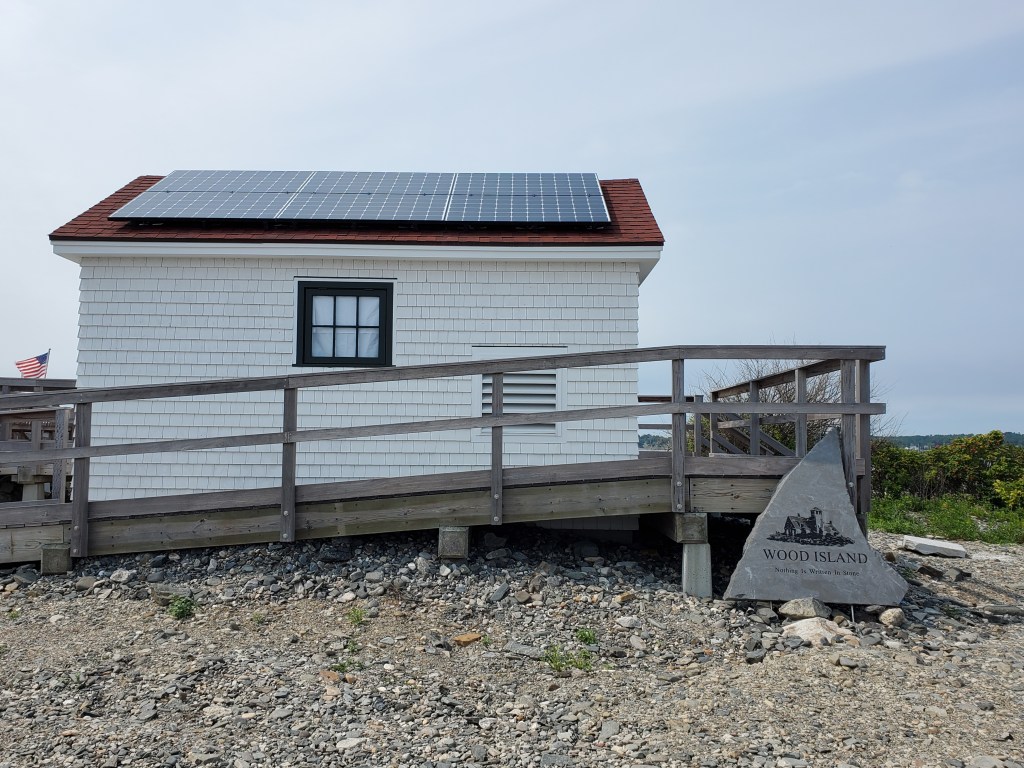
Last Wednesday the Seacoast Village Project, a nonprofit network of older adults working together to improve their odds of aging in place, afforded me my first chance to sail on a reconstructed gundalow, the Piscataqua, and to visit the newly restored Wood Island Life Saving Station at the mouth of the Piscataqua River. Until recently that structure was a romantic ruin off the Kittery coast, tantalizing me from my first arrival in Portsmouth over 30 years ago, so this was an offer I could not refuse. The day was fine, the company enjoyable, and the maritime history captivating, from the first glimpse of the Piscataqua moored at the Marcy Street dock behind Portsmouth’s Prescott Park in its late summer full blooming splendor. Here, Dear Reader, is a photo essay of a delightful outing.



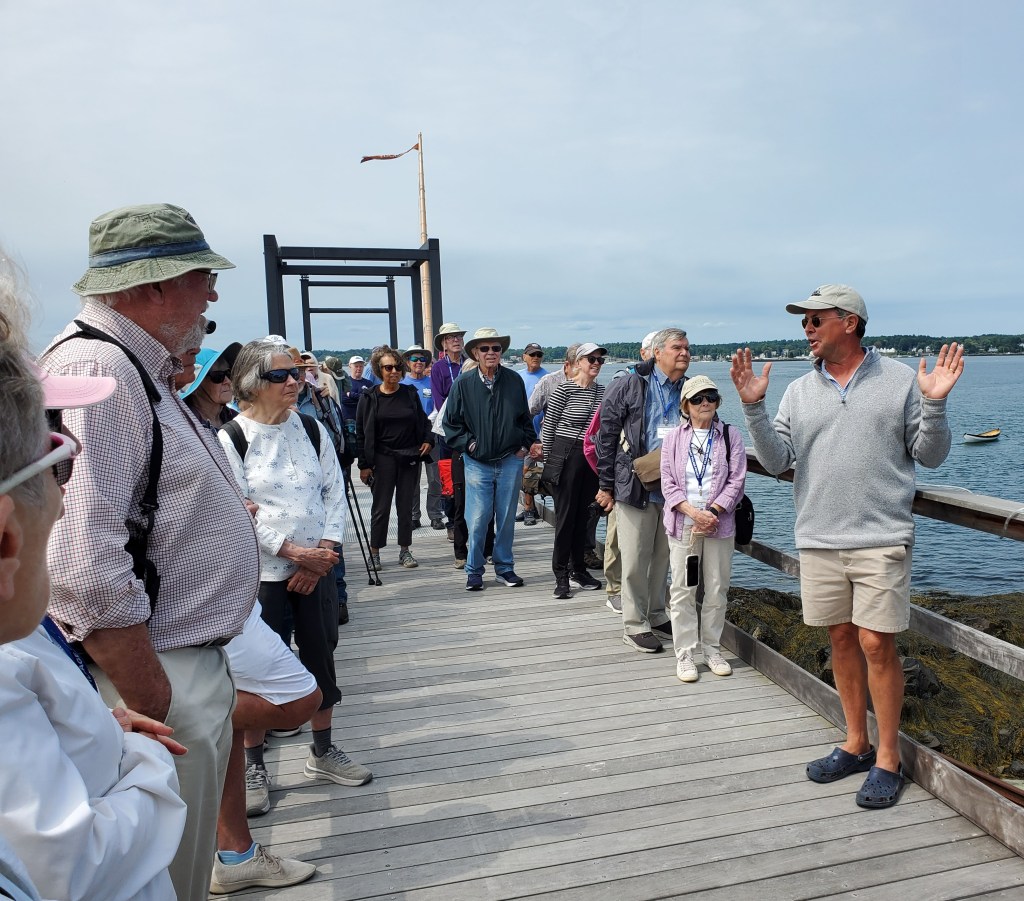
President Sam Reid explains the exemplary history of the Station and its restoration
In 1908, the current Life Saving Station and a tool shed were built by Sugden Brothers of Portsmouth NH for the US Life Saving Service. Its Duluth style, so called because the first examples of this style were built in and around Duluth, Minnesota to serve the Great Lakes, was designed by architect George R. Tolman. (Duluth, Minnesota, by the way, takes its name from French explorer Daniel Greysolon, Sieur du Luht, the first European to navigate the St. Louis River in 1679.) Tolman’s 1908 structure replaced the original Jerry’s Point Station #12 across the harbor in New Castle NH which had been requisitioned by the US Navy. Federal ownership of the Station was conveyed to Kittery ME in 1973, but absent funds to maintain the historic property, it fell into disrepair, and in 2009, Kittery planned to demolish it.
Lacking the money even for demolition, in 2011, Kittery advertised a Request for Proposals for non-profits interested in restoring and reusing the Station on behalf of Kittery. That’s when the newly formed Wood Island Life Saving Station Association was formed, and proved the only respondent to the RFP. With construction help from both the Maine National Guard and the Maine Army National Guard—and $7 million in funds and grants raised by WILSSA—the Wood Island Life Saving Station opened as a museum of maritime history in 2024, honoring the bravery of surfmen over 100 years earlier with the motto “Helping Others, Then and Now.”
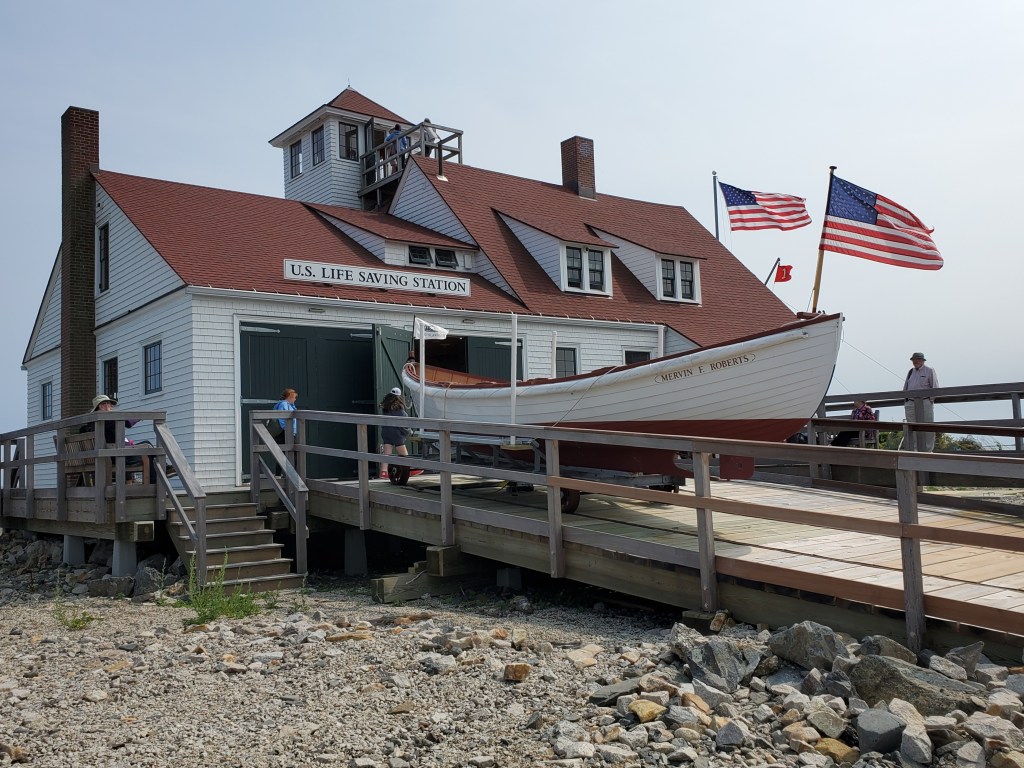
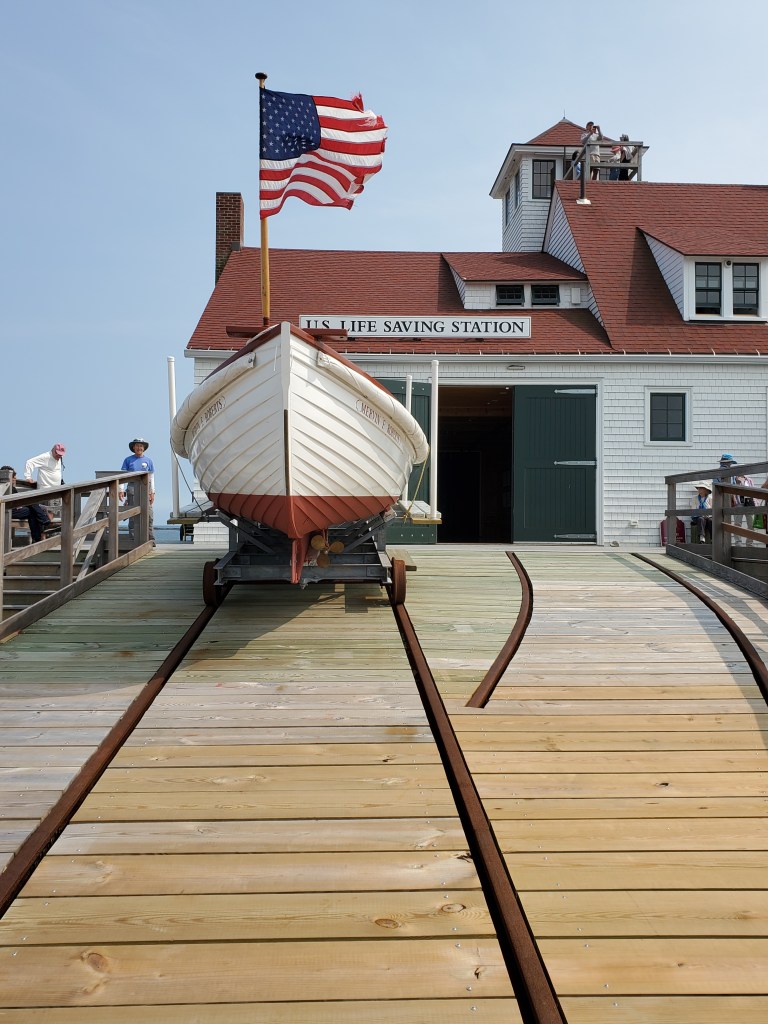
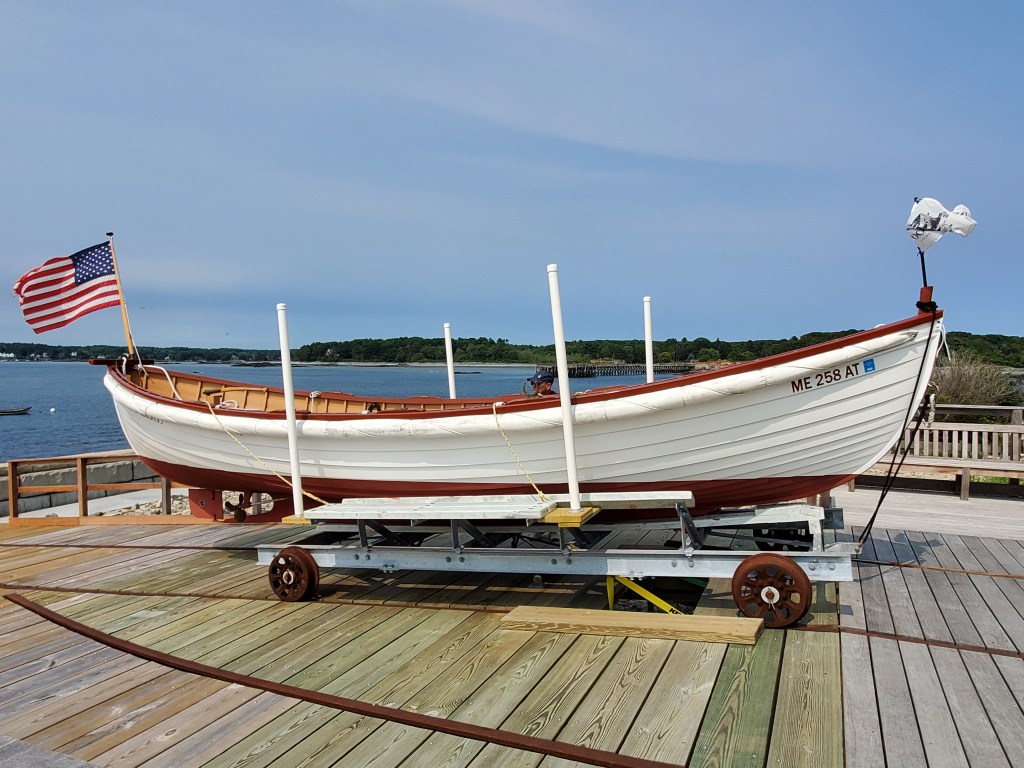
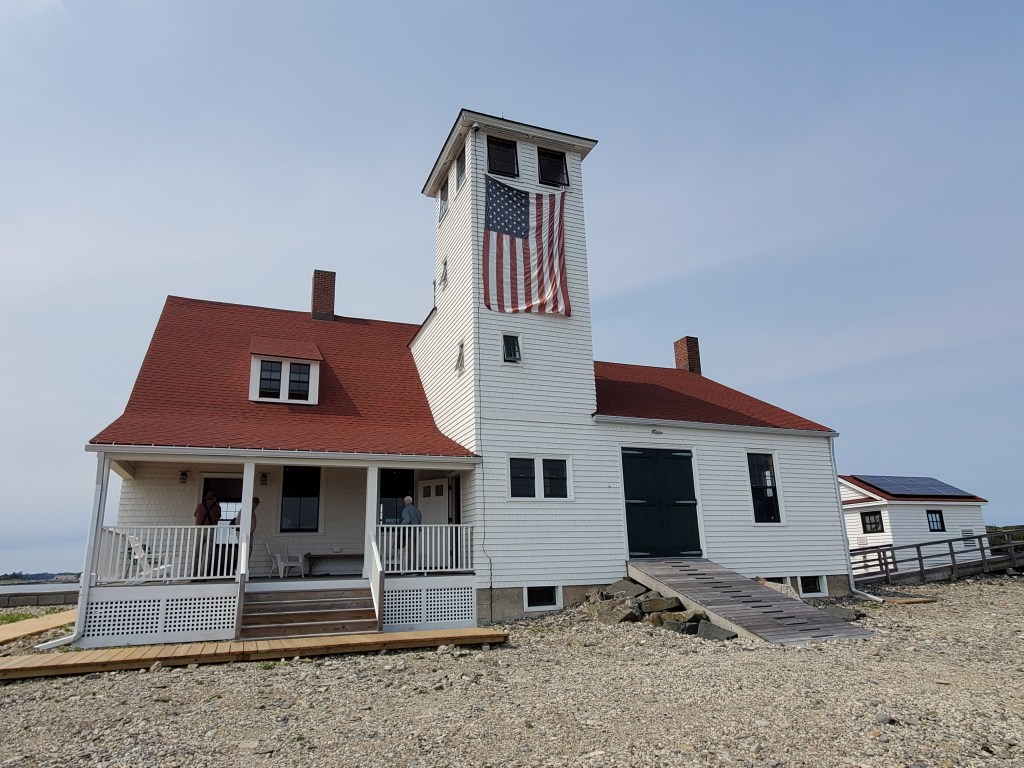
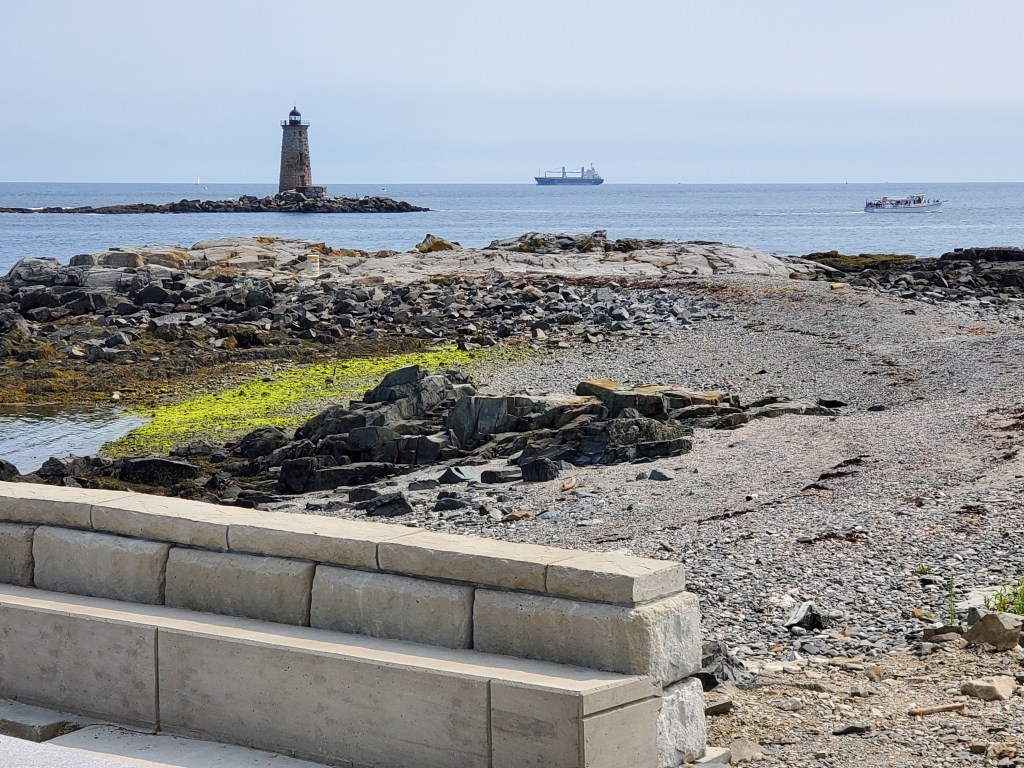
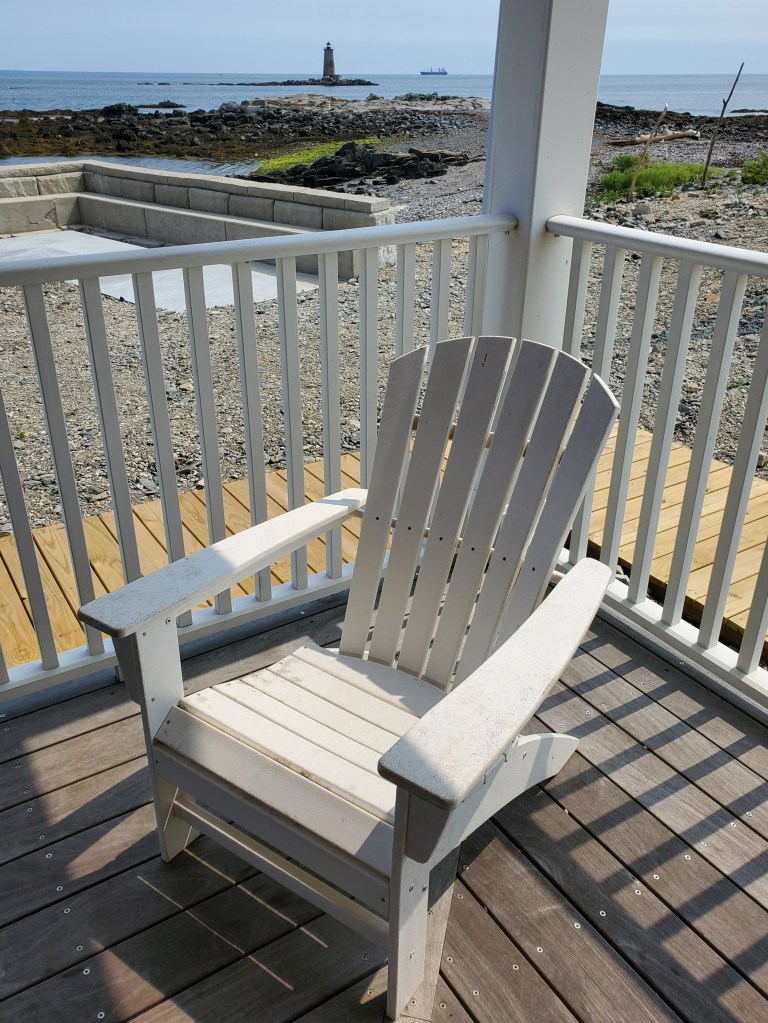
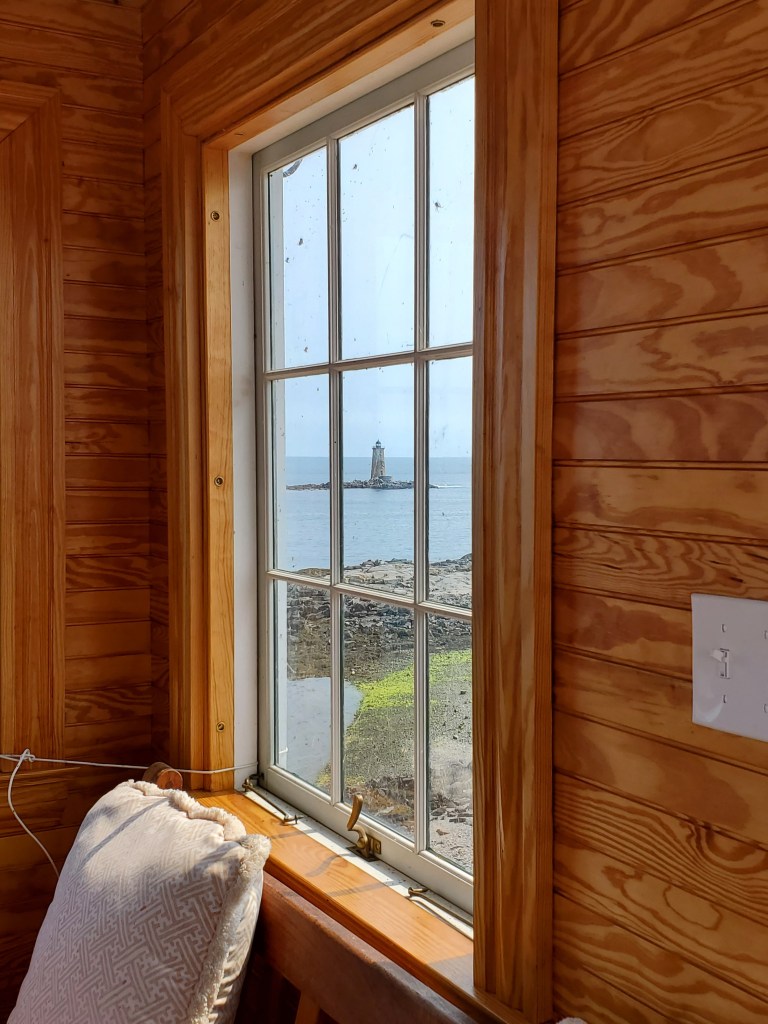

A lighthouse (as Virginia Woolf certainly knew) has an uncanny and oxymoronic appeal: lonely, forbidding, and unreachable, yet illuminating and salutary, warding off disaster. And the romance of Wood Island’s Life Saving Station coupled with the nearby Whaleback Lighthouse is undeniable. The courage and dedication of strong men willing to save lives while risking their own in perilous seas is a tonic antidote to the selfish vanity of late-stage capitalism (think Gordon Gekko’s mantra: “Greed is Good”).
And the complex story of saving the Wood Island Station so that it might continue the altruism of its original purpose is a tribute to our better angels. Add to that already rich tale the story of our first Treasury Secretary, the now (thanks to Lin-Manuel Miranda) reanimated Alexander Hamilton, and the good vibes emanating from Wood Island continue to resonate, for it was Hamilton who on 4 August 1790 persuaded Congress to fund ten Revenue Cutters (fast coastal patrol boats) to collect customs duties at US seaports, creating the oldest continuously operating naval service of the U.S. This merged with the US Life-Saving Service in 1915 to form the US Coast Guard, which in turn incorporated the U.S. Lighthouse Service in 1939; Hamilton is thus credited with founding the U.S. Coast Guard, and became part of our high spirits on a sunny summer’s day.
The Coast Guard celebrated its 235th birthday last Saturday with a fireworks display over Portsmouth Harbor free for all to witness—and to contribute to the Portsmouth Food Bank, Gather—there on New Castle Common
A good day, salutary for body and spirit. Hail to thee, Floating Body!
Photograph by Ralph Morang
 Georgeann Murphy
Leave a comment