4-9 May 2025
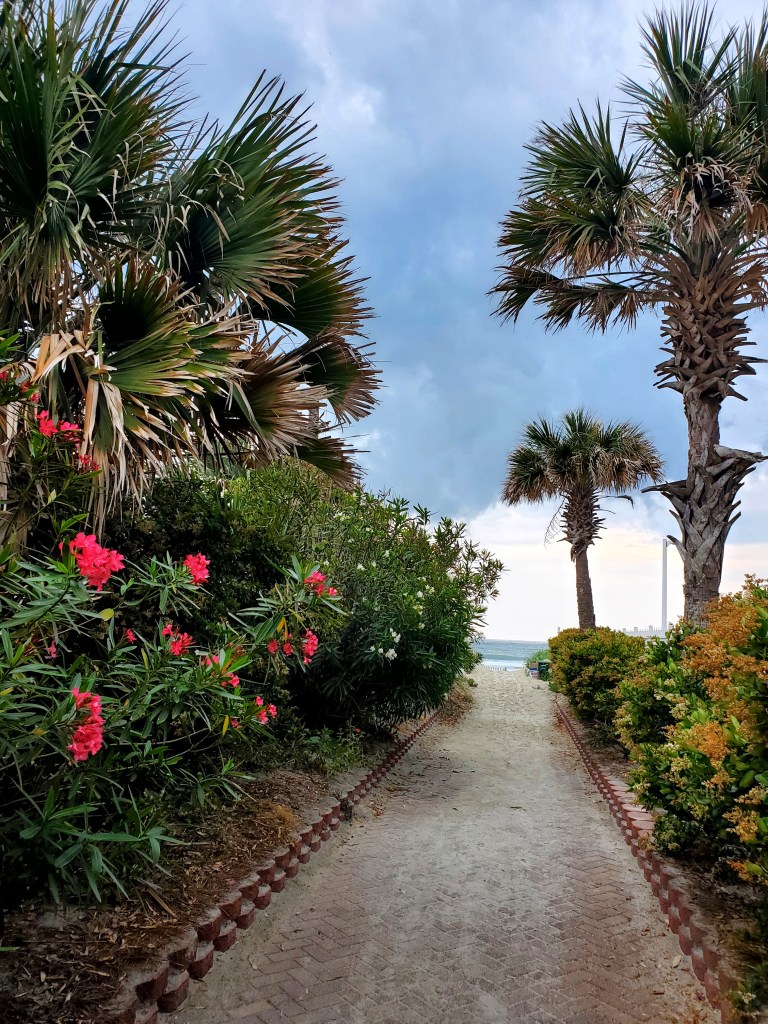
With a name referencing the 17th-century meaning of “folly” (densely packed with trees and undergrowth), Folly Island’s first official mention is a land grant document from King William III to one William Rivers, dated 9 September 1696. The island was home to members of the Bohicket tribe until the increasing number of Europeans in Charleston forced them to move elsewhere. The City of Folly Beach is now home to 2400 residents and many visitors to this laid-back beach community, once among them George Gershwin, who composed Porgy and Bess while staying on Folly in the summer of 1934.
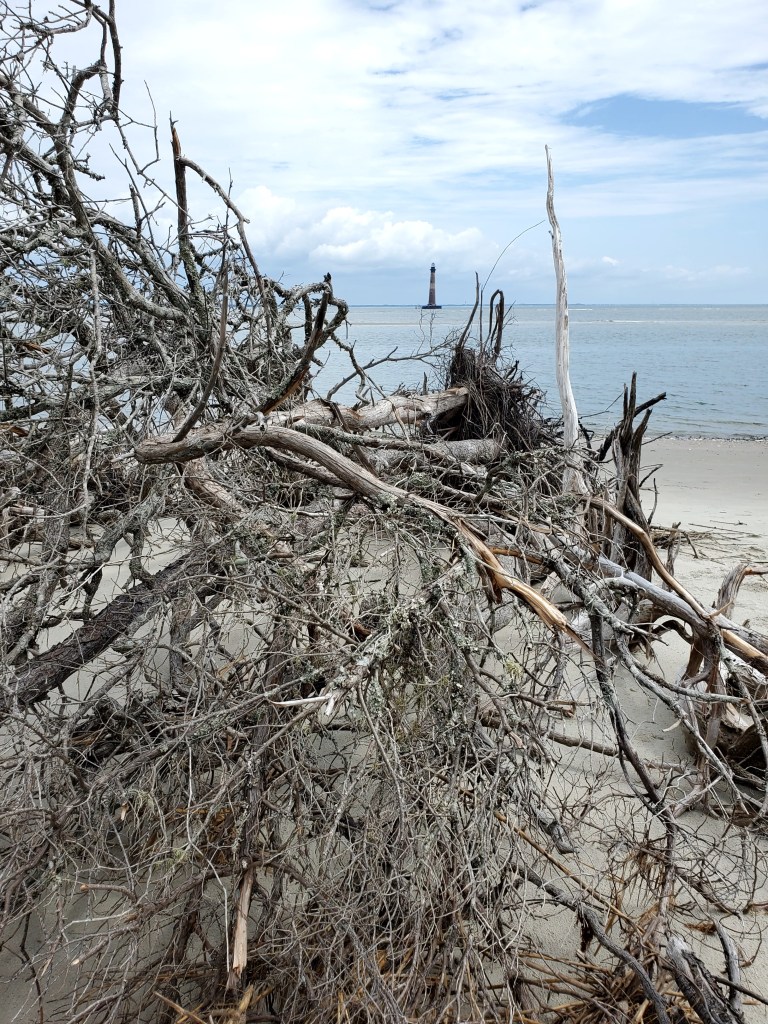
We had only one full day on Folly Island, but the weather complied with our plans to first visit the Morris Island Lighthouse just off the northeastern tip of the Island, the southern entrance to Charleston Harbor. The sun was quite hot as we trekked the paved graffiti-filled path that leads to the dunes of the Lighthouse Inlet Heritage Preserve, but the first glimpse of the lighthouse inspired continuing, and was well rewarded by an uncanny seascape of trees long uprooted, bleached by the sun, and deposited at the island’s end by the ocean currents. The lighthouse itself is, at 161 feet, the tallest in South Carolina. Built in 1876, the tower and adjacent three-story house stood approximately 2700 feet from the water’s edge in 1880, but jetties constructed at the entrance to Charleston harbor caused a gradual erosion that displaced much of the sand on Morris Island. By 1938, it stood at the water’s edge, and today rises alone from its own little island, 1600 feet offshore.
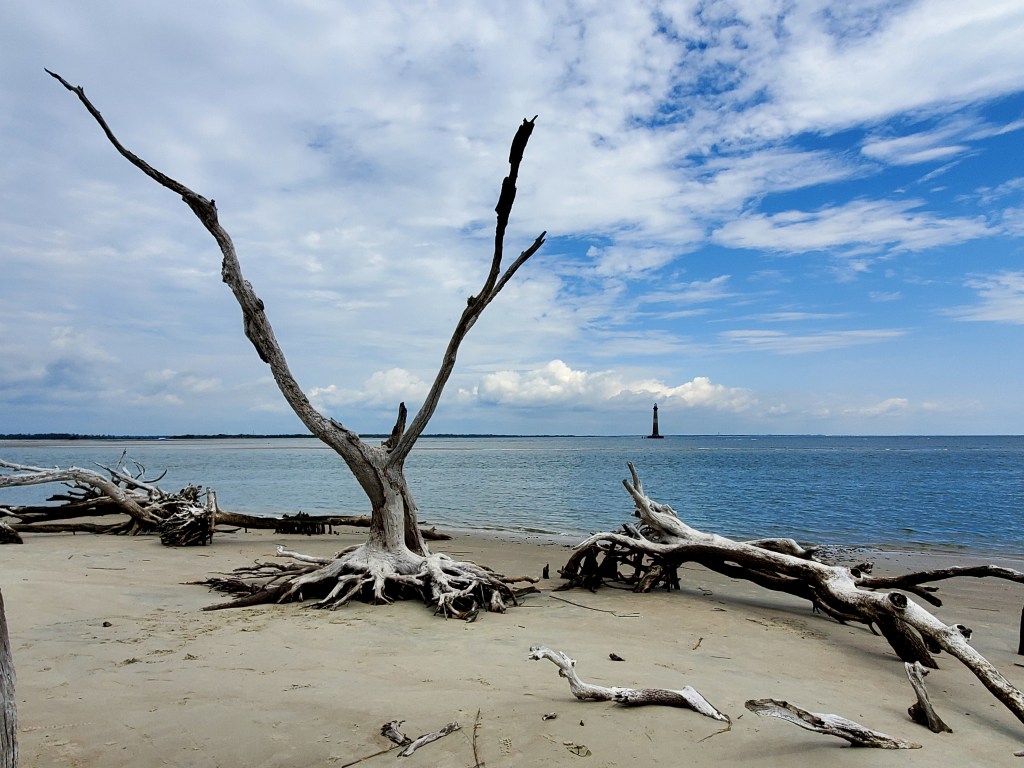
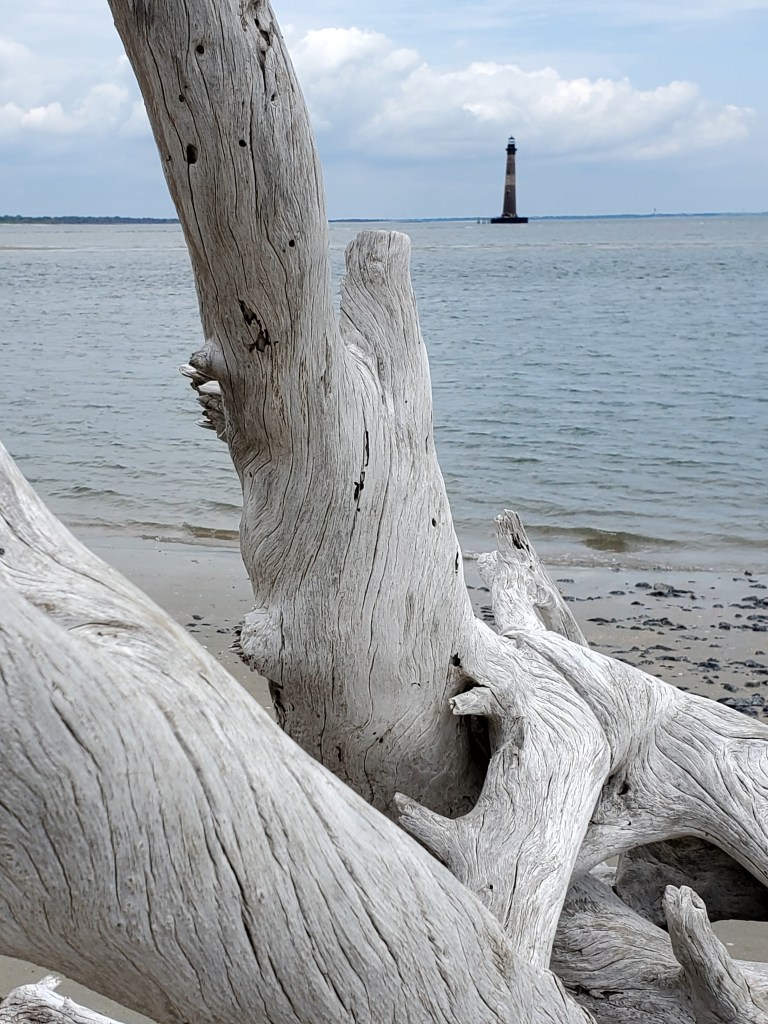
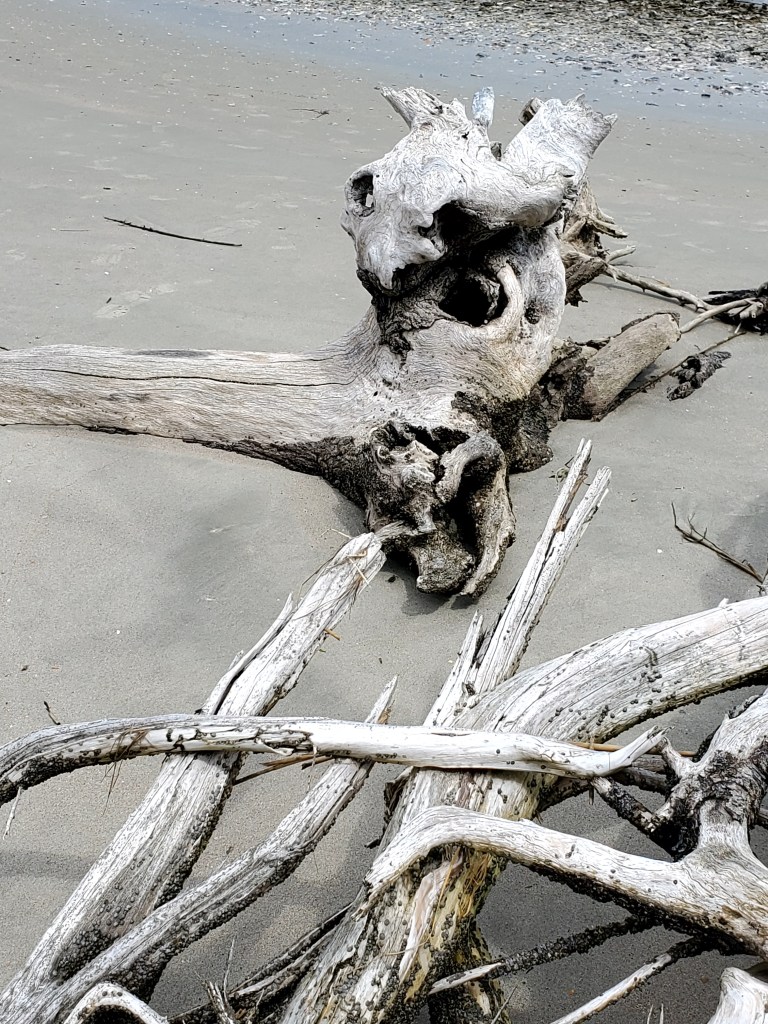
The seascape, reminiscent of a Waiting for Godot set, the final scene of Planet of the Apes, or some other apocalyptic vision, is what most fascinated me: natural, evocative Atlantic sculpture. We took lots of pictures of this tree graveyard, and then headed to Johns Island to visit Angel Oak, our second objective of the day and well worth the drive.


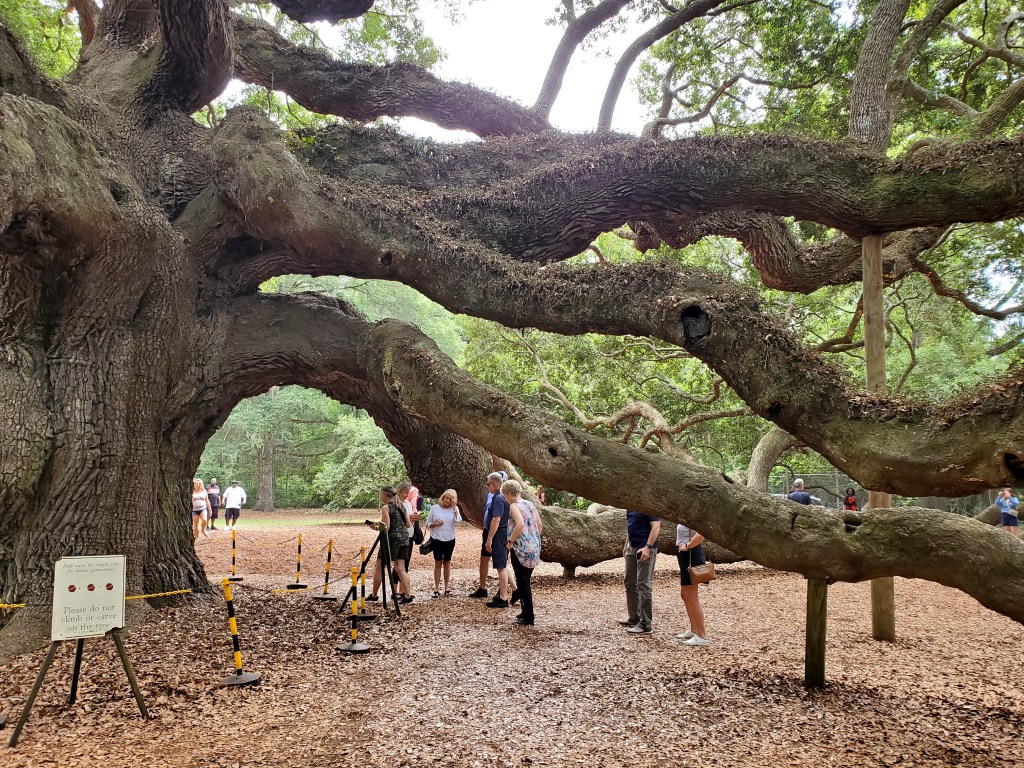
Considered the largest live oak east of the Mississippi at an estimated 400 years old, Angel Oak stands 65 feet high with a circumference of 25.5 feet, shading an area of 17,000 square feet. With 400,000 visitors a year, the tree gets lots of special treatment: multiple supports for branches that graze the ground and, on the day we visited, workers aerating the soil around it to better allow water to nourish its roots. One sign invited a gentle hug or kiss of the tree, the better to allow it to reach its possible lifespan of 900 years. Given the prevalence of coastal hurricanes in our environmentally compromised Earth, that possibility seems unlikely. But as one of the oldest living things in North America, predating European settlement and the founding of Charleston, this Quercus virginiana does inspire reverence—and a kiss. And while its redoubtable age suggests the immortality of an angel, the tree is named not for those celestial denizens, but for the Angel family. The tree stands on land originally granted to colonist Abraham Waight in 1717, whose daughter Martha married Justus Angel in 1810. Their descendants owned the land and the Angel Oak until the mid-1900’s; the City of Charleston purchased it in 1991.
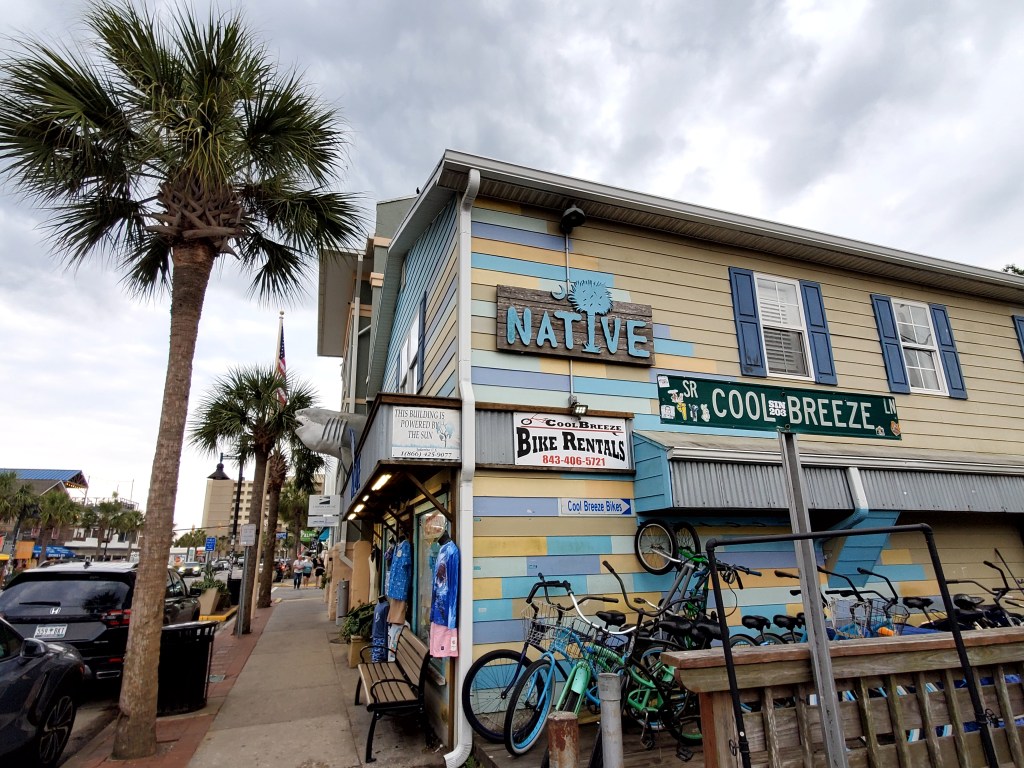
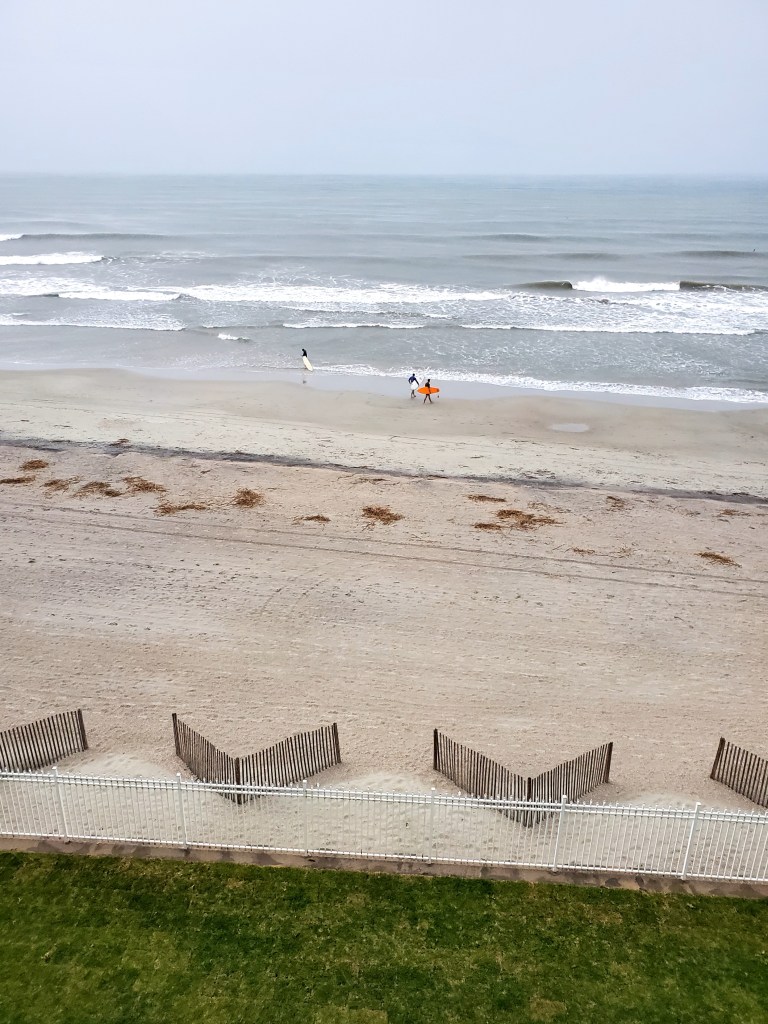
We returned to Folly Beach just as the weather broke into a downpour, and spent a cozy hour or so having a late lunch in Coconut Joe’s. The rain stopped conveniently as we finished our meal, allowing me a brief dip in the seaside pool, and an even briefer one in the turbulent Atlantic before we returned to Woody’s to retrieve Daniel’s sunglasses (left there the night before and happily returned to the bar by some good Samaritan), get a couple souvenir t-shirts, and enjoy some seafood and live music on the upper deck at Loggerhead’s.
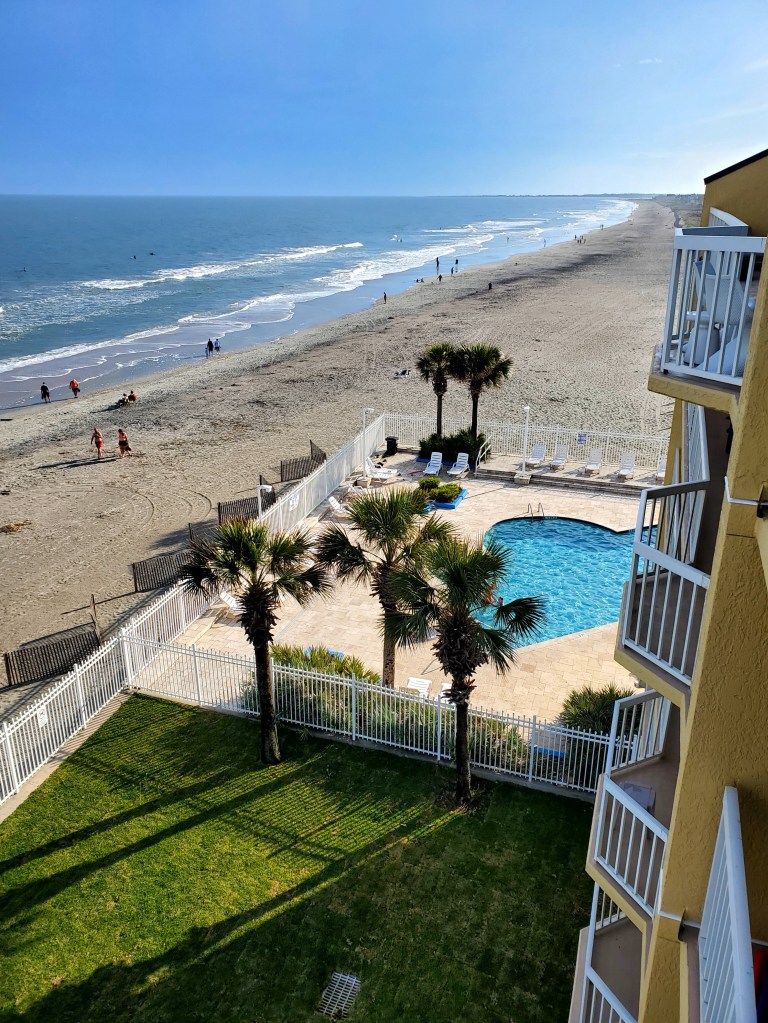

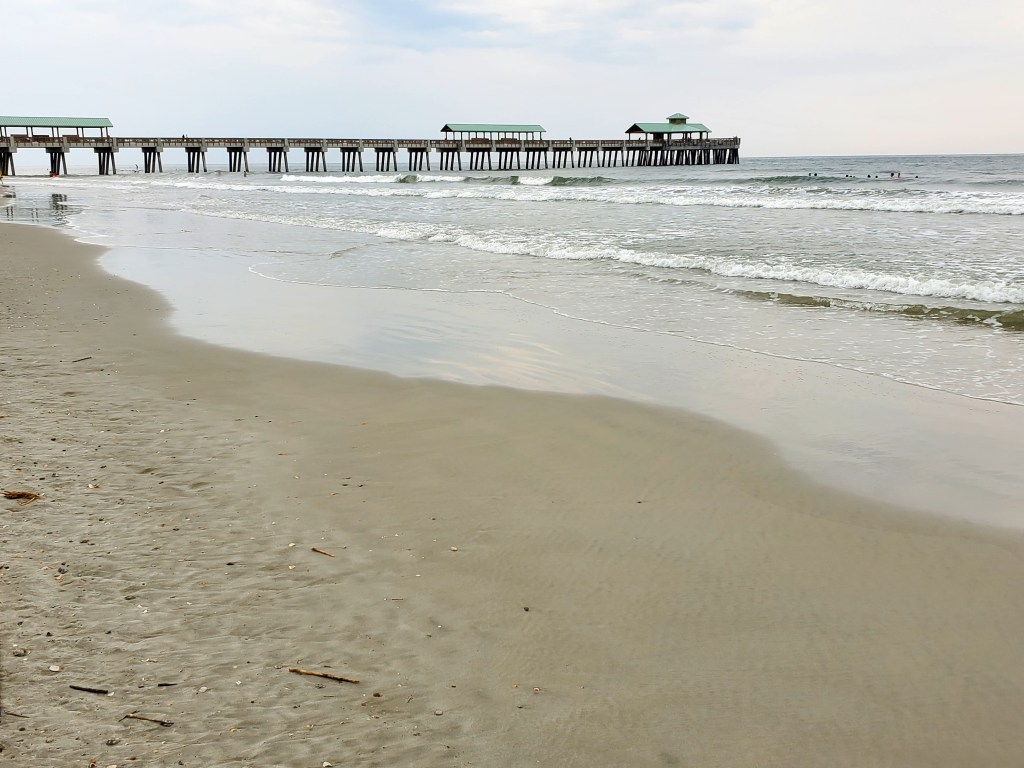
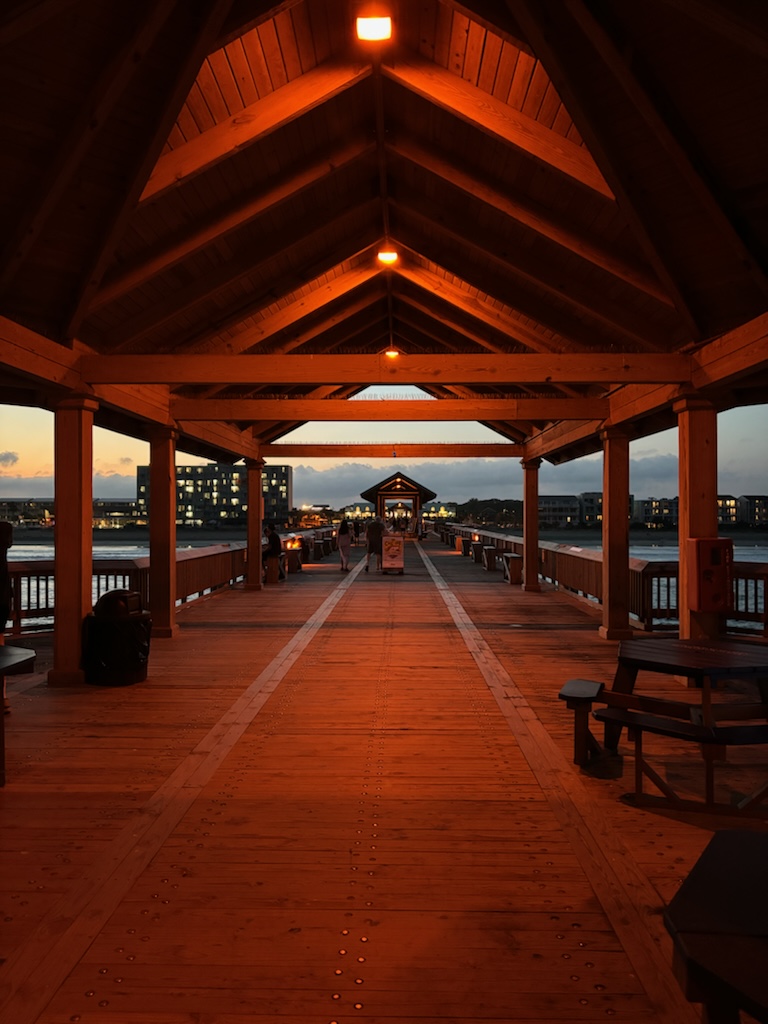
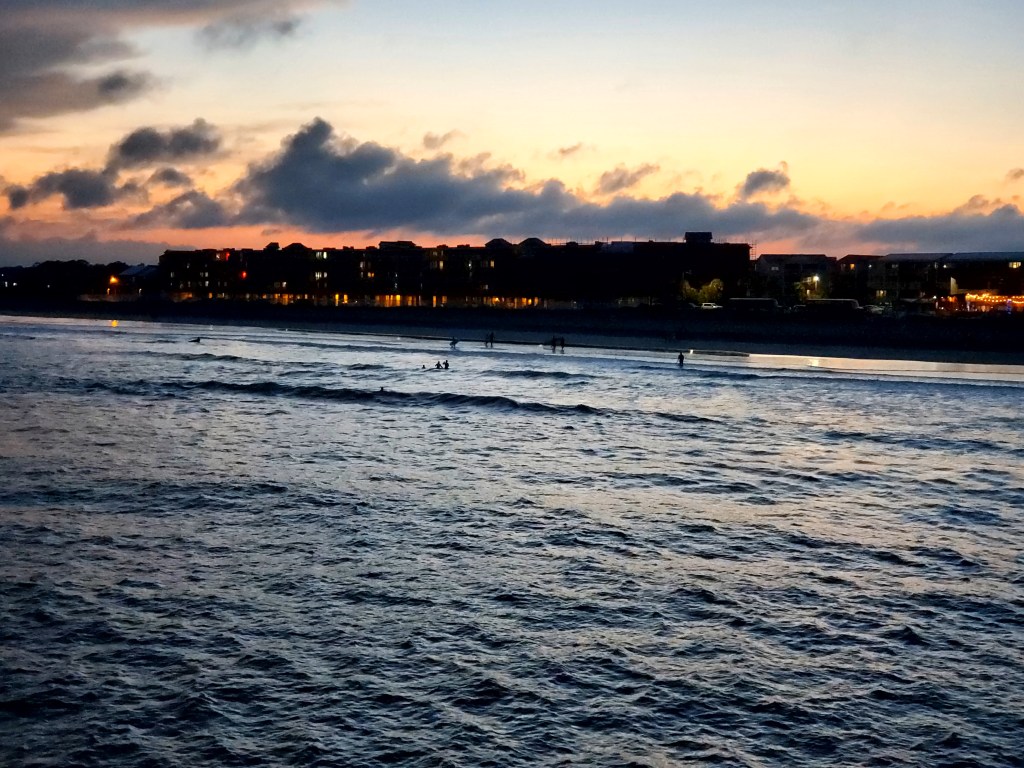
The day concluded with a stroll to the end of Folly Pier as the sun set.
The next morning, the boys dropped me at the Vacasa office and headed back to Safety Harbor as I made my way to the Charleston airport with Uber driver Gosh, so enthusiastic about being a citizen of this country. Mark Twain famously said “Travel is fatal to prejudice, bigotry, and narrow-mindedness.” Remembering the number of signs I saw posted in Charleston area widows prohibiting concealed weapons, I wonder if travel is the cure we all need to see our situation more clearly. That speculation and Gosh’s newly naturalized adoration of his adopted country have me still mulling over all I learned during our brief visit south. But I’m enjoying a return to the azaleas still blazing further north, and the Eastern phoebe nest I found unexpectedly sitting in the middle of my driveway yesterday: like the Angel Oak, it’s a marvel of natural creation. Nature always wins. I take comfort in that.
 Georgeann Murphy
Leave a comment