11 April 2025
In 2021 when he was running for Ohio’s Senate seat, J.D. Vance, alumnus of the Ohio State University (’09) and Yale Law School (’13), gave a speech he titled “The Universities are the Enemy,” in which he argued that universities are hostile institutions, and must be attacked “honestly and aggressively.” He concluded his speech by quoting from Richard Nixon (!) in a secret Oval Office recording and not released to the public until 2008: “The professors are the enemy” (On the Media, “Harvard and the Battle Over Higher Education,” 4 April 2025).
When Nixon said that in the fall of 1972, I was a college junior studying at the Shakespeare Institute in Stratford-Upon-Avon, enjoying the first flush of my affinity with Shakespeare that would find me, twelve years later, a Shakespeare professor. So, I have some thoughts about Vice President Vance and his opinion of professors. First, I note the character of the man: with all the confident fluency we saw deployed against Tim Waltz in the Vice Presidential debates last fall, Vance used the privileged education he received from his professors to promulgate attacking them, capping his argument by quoting the until now most flagrant criminal ever to sit behind the Resolute desk, Richard Milhouse Nixon. How appropriate, then, is his sycophantic service to the Felon-in-Chief, the man he in 2016 called an “idiot” and compared to Hitler (Reuters, 6 Nov 2024).
Universities and professors are (like so many others under the Trump administration) having a rather rough time of it just now, a cultural moment when Shakespeare’s Romeo and Juliet can be labeled a pornographic text that encourages young would-be readers to have pre-marital sex. (I am obligated to note that there is no pre-marital sex in the play, but that fact remains irrelevant to those ignorant of what they eagerly censor.) Attacks on universities, professors, and even Shakespeare abound, impervious to truth and reason.

Ailin Sha (photo by David Marshall)
Perhaps that’s why hearing 17-year-old Abigail Drumm on GBH’s Under the Radar last Sunday (6 April) gave me a glimmer. A “glimmer,” I’ve only recently learned, is in the context of mental health a small, positive moment or experience that sparks joy, peace, or a sense of safety: the opposite of a “trigger.” A glimmer is a micro-moment that can help calm the nervous system and promote a sense of well-being, even in challenging times. Ms. Drumm, a senior at Agawan High School and Spoken Word winner of the 2025 Massachusetts Poetry Out Loud competition, made my heart soar with her talent and her specific defense of Shakespeare’s poetry: those texts are NOT exclusionary and elitist, she said, but rather beneficial to those who take the time to understand them, a force that can, in fact, “break down barriers,” not erect them. This young woman, so eloquent in her defense of poetry and the recitation that makes it accessible, will soon be on her way to Washington, D.C. for the national competition to be held at Washington University from 6-7 May. I wish she were on her way to replace J.D. Vance, who seems to have perfected the signature move of the Trump administration: accusing the opposition of offenses they themselves are guilty of: creating divisive discord and punitive chaos.
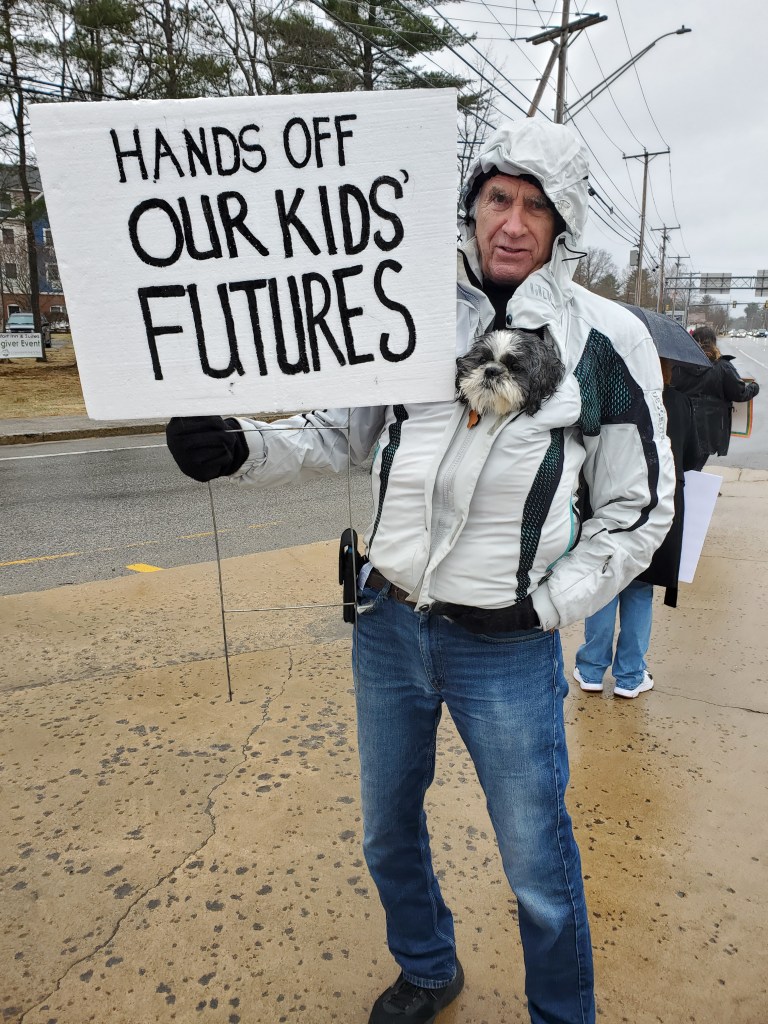
Which brings me to another glimmer I felt last Saturday, standing in a cold rain on the corner of Indian Brook Drive and Central Avenue in Dover, NH, the intersection named “Weeks Crossing” for the once-landmark restaurant that closed there in 1995. The last time I stood at that crossroads was in January 2024, when I waved a “Write-in Biden” sign to inspire voters in the New Hampshire primary, and garnered more middle finger salutes than support. I received a couple of the same last Saturday, but the insults were FAR outnumbered by thumbs-up gestures and supportive honking. Glimmer! Are my fellow citizens finally waking up to the fact that their president is running the country like a company concerned only for the profits of its shareholders? Trump’s recent backing off of absurd tariff policies may have temporarily offered the market some relief (and allowed insider trading profits to his cronies), but the economic truth remains: prices that are quick to go up are slow to come down.
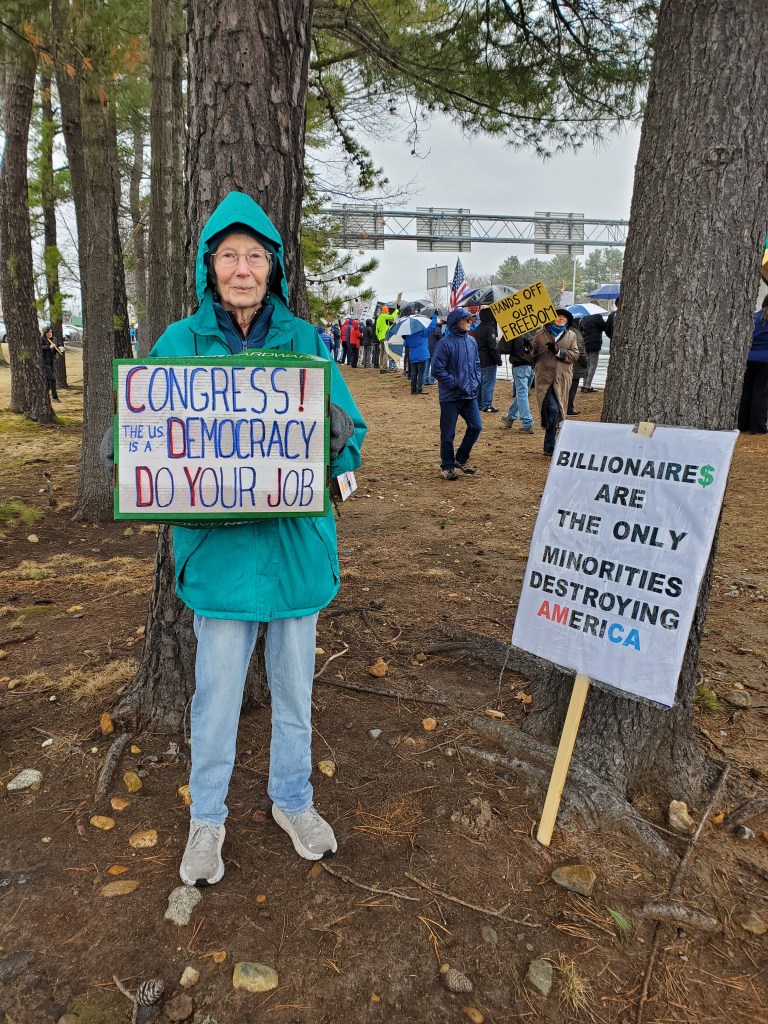

I’ve been writing emails to Federal and State Representatives, but doing so lacks the gratifying uplift of being in the company of about 300 other folks mad as hell and not going to take it anymore (cf. Howard Beale in 1976’s Network). Taking physical action felt good: definitely a glimmer-esque moment. Here’s to more of that good, necessary trouble.
There’s also comfort in good distraction. Most recently that’s come from my delight in watching Harrison Ford and Helen Mirren face down one disaster after another in Paramount’s neo-Western 1923.
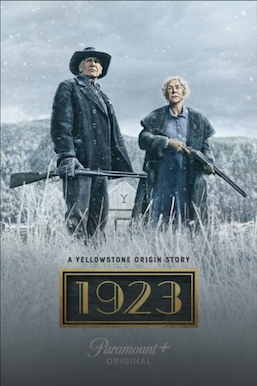
This production’s cinematography and locations are gorgeous, and the cliff-hanging plot lines engaging if somewhat Over The Top. Watching masters of the craft Ford and Mirren work out is delightful, though I have to fault screenwriter Taylor Sheridan for making Mirren speak the word “journaling,” one of too many laugh-out-loud anachronisms. When Pete and Teonna consummate their relationship and so are missing from Teonna’s father’s campsite overnight, covering their absence by saying they fell asleep by the river, Runs His Horse’s response is: “I hate it when that happens.” Really? I will admit that the “Out of Africa” episodes with man-eating leopards, lions, and hyenas both shocked and scared me (however enchanting I found the costumes), but now nearing the end of Season 2, I find the unmitigated series of incredible mishaps befalling the Duttons–and their even less likely survival–rivals “Fenimore Cooper’s Literary Offenses.” I well recall that on first reading Twain’s satirical essay out loud in Mrs. Fletcher’s 8th grade English class, I was rendered helpless with laughter; Sheridan’s comparable offenses have elicited my barks of derision, but at least his graphic plot shocks no longer keep me up at night.
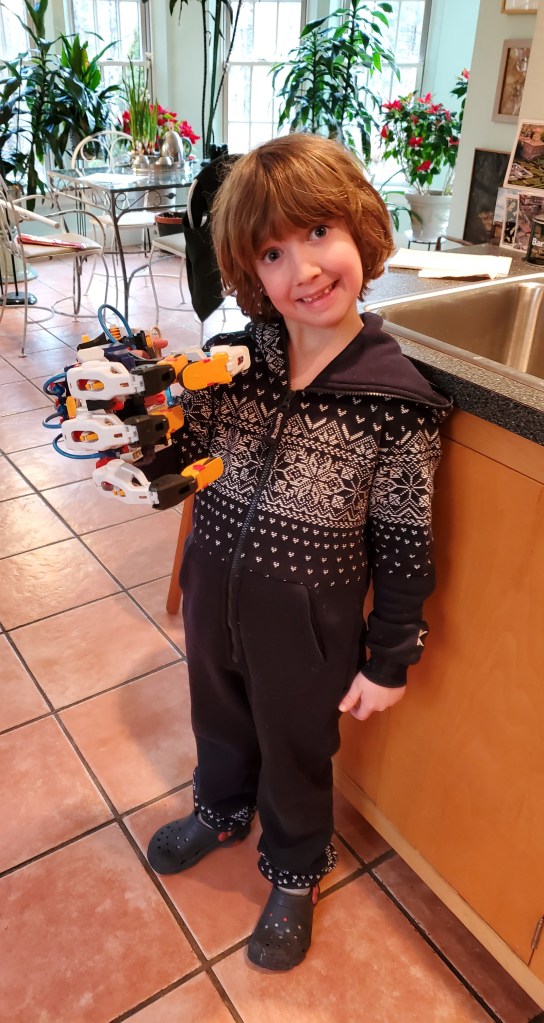
Local delights also counter the prevailing angst, among them my young neighbor Leo first April Fooling me, and then returning to show me how his birthday present, a robotic hand, works.
Then there are the spring beauties in bloom at Rollinsford’s Wentworth Greenhouses.

And, finally, there were all the lessons I recently learned about New Hampshire’s fabled Powder Major, John De Merritt, who after the 1775 raid on Ft. William and Mary in New Castle, NH, seized British gun powder, stored it under the floorboards of his Madbury barn (having dug a trench for a fuse that would blow it all up should the British discover its whereabouts), and then drove it by ox cart to Bunker Hill, where it enabled the Rebels to hold their position against the Redcoats.
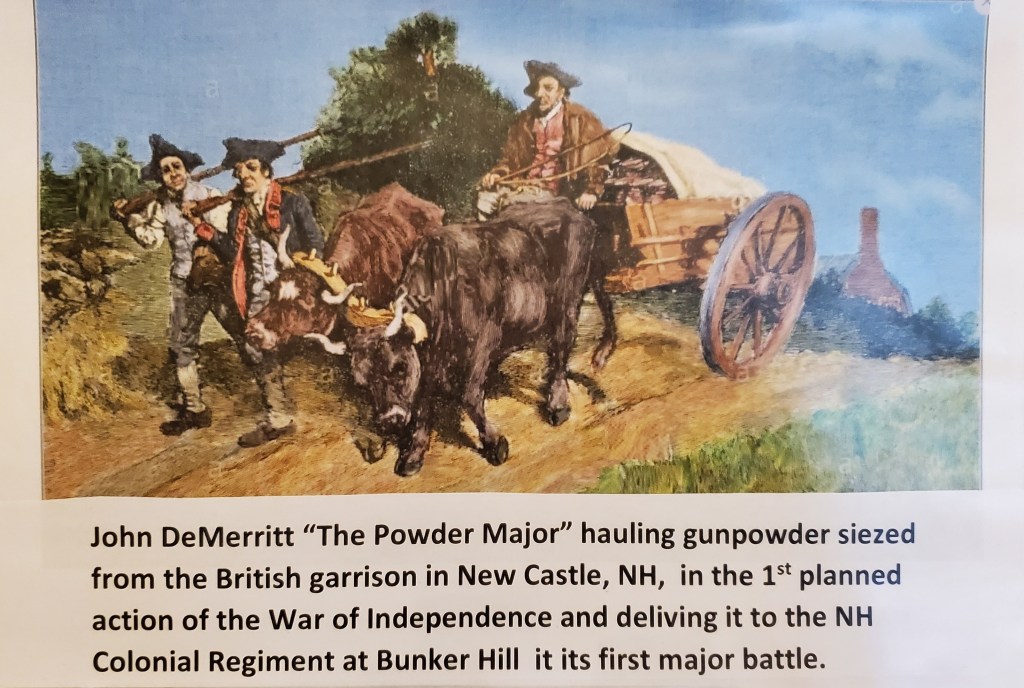
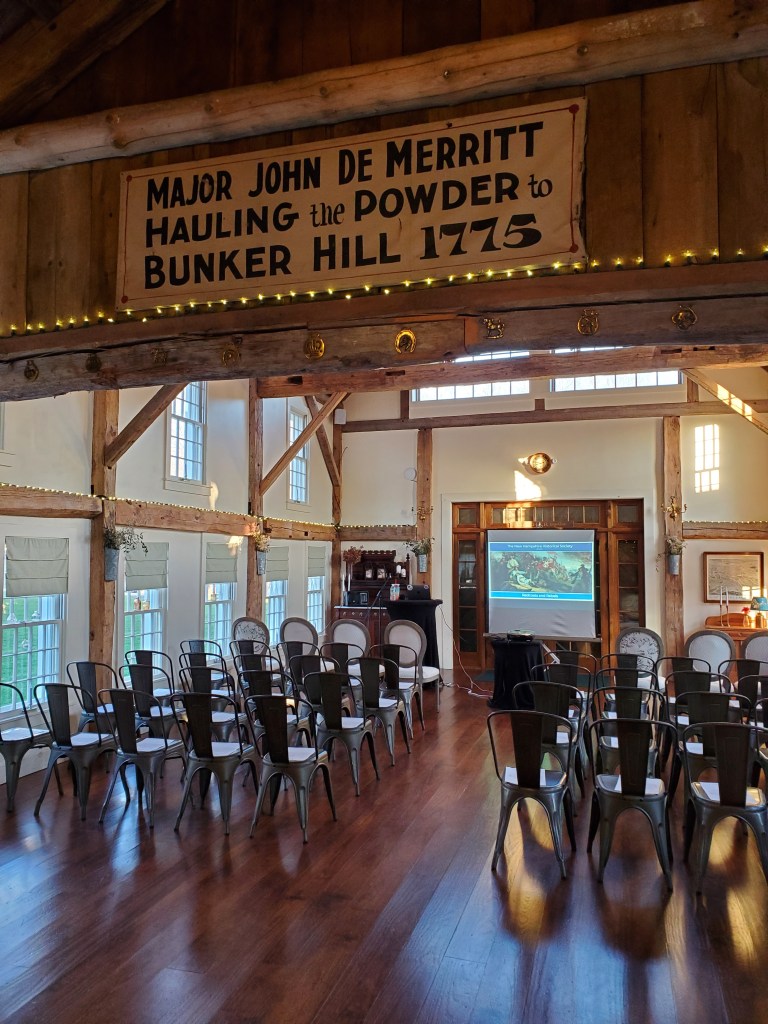
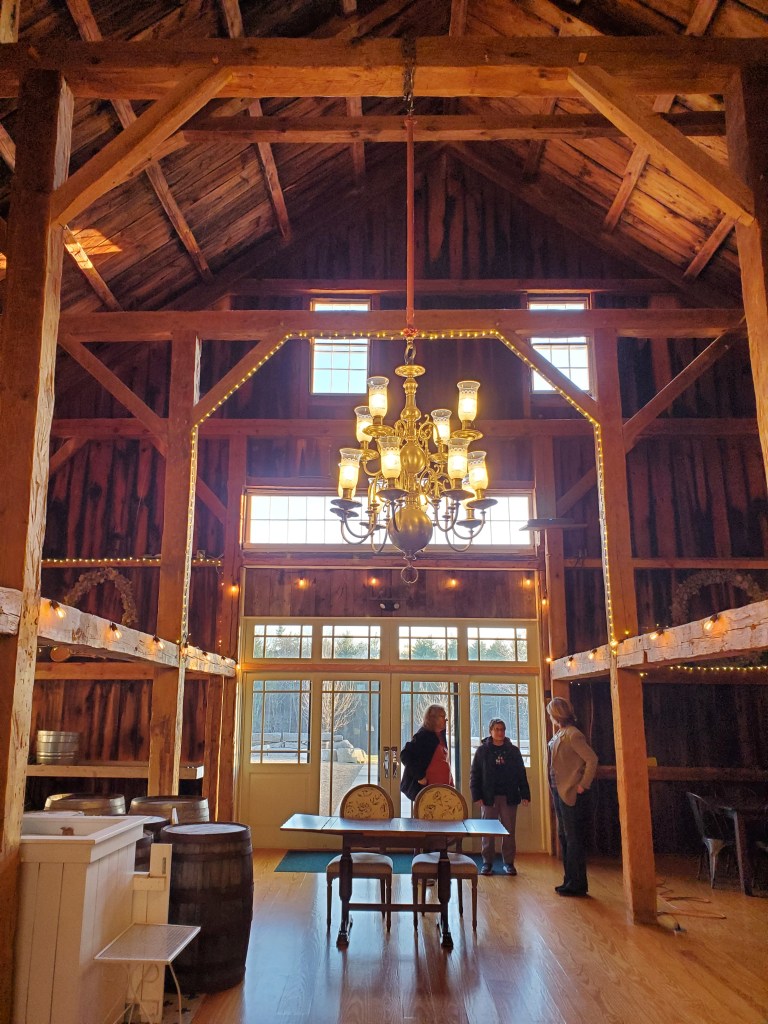
Last Wednesday night in Powder Major’s reconstructed barn, NH Historical Society program developer and educator Mary Adams gave an informative and entertaining “Rebels and Redcoats” presentation, an account of all the credit due the New Hampshire rebels who first began the Revolutionary War. The handsome venue, now a destination for weddings and events, is just down the road from me on Cherry Lane, the home of the De Merritt family for seven generations, and the Goss family, the current owners, for four. Judging from Ms. Adams’s presentation, NH Yankees have been not only brave but stubborn, irascible, and parsimonious right from their colonial beginnings. Live free or die. We could use a glimmer of that spirit now.
So, what’s to become of rebels against the authority of a president who resembles mad King George III more and more each day? Who can say? This moment, too, will pass, but how and when, and with what left behind?
What’s the best way to celebrate the upcoming 250th anniversary of our Republic? Defend its founding principles now so clearly under attack.
 Georgeann Murphy
Leave a comment