5-9 March 2025
My much-anticipated visit to dear friends in New Orleans got off to a rocky start a week ago when 15 minutes en route to the Manchester airport, I suddenly could not remember lifting my carry-on suitcase into the hatch of my GTI. A look in the review mirror confirmed it wasn’t there, and so I pulled a “uey” right there on 125 to reverse direction, speed home, and recover the case I’d carried into the garage and then left there. Because I’m habitually early (if I’m not early, I’m late), the extra half-hour’s drive still got me to the airport with time to spare, but this lapse cast some doubt on whether my double checklisted always-be-prepared self was still up to solo travel. Getting old, getting on.
My connecting flight in Baltimore was delayed, of course, worrying me about a further imposition on my NOLA hosts Trish and Mike; my scheduled already late 9 pm arrival was now going to be more like a 10.30 disruption. So, once in the rental car facility (at considerable remove from the new NOLA airport), the report from the Dollar associate that he had no car available for me despite my having reserved one weeks earlier further furrowed my brow. But! I have a seldon-used Uber app on my phone. More importantly, I was in New Orleans, where my baffled expression prompted immediate assistance from a young garage attendant as I searched for where the Uber pickup spot would be. This kind fellow walked me there, told me the address to give the driver, and with a smile, wished me a good night.
This occasioned a memory. Two days before I had defended my dissertation and left New Orleans back in the spring of 1984, I had gone downstairs to answer the postman’s bell, only to have him laugh as I opened my security-grilled door. When I asked him what was so funny, he said, “You the only white lady I seen so far today come to the door without a gun in her hand.” There had been a robbery/murder in my neighborhood the week before; apparently all my neighbors had taken up arms. But now, 41 years later, this stranger’s empathetic courtesy made me feel both welcome and safe as a somewhat baffled older woman alone at a late hour in a parking garage. His kind gesture proved the rule, not the exception, over the course of the next few days, a welcome break from taciturn yankee decorum. Good to be back in the Crescent City.
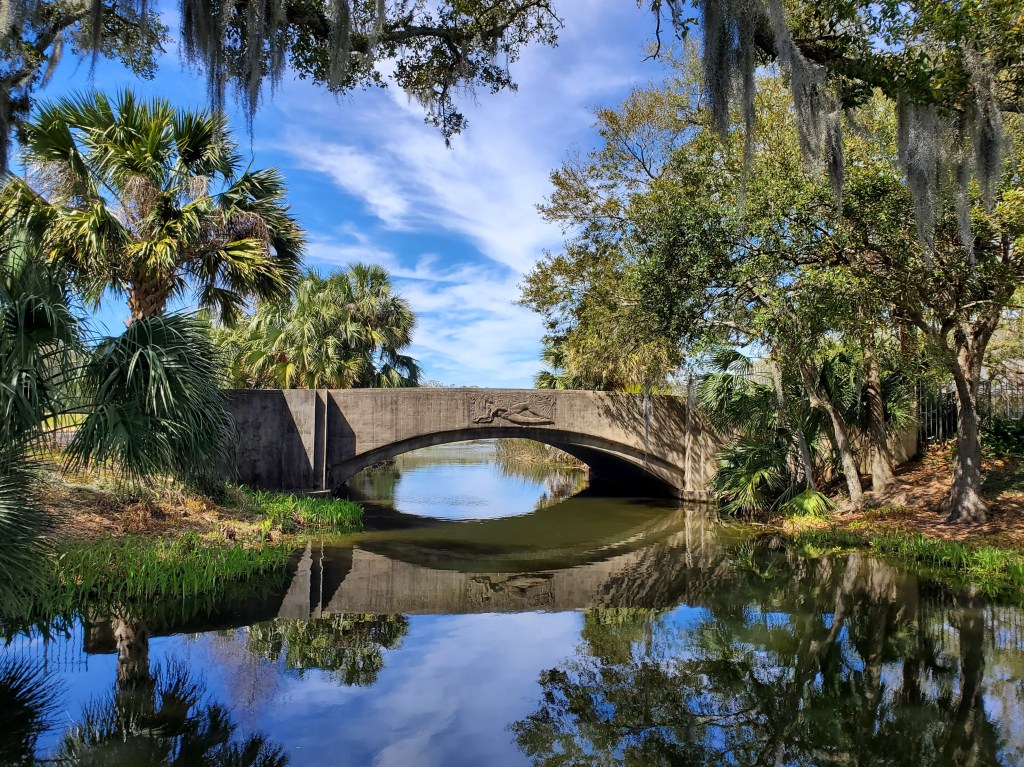
I’d not returned to New Orleans for 14 years, and so the next bright morning after breakfast, my hosts walked me along Bayou St. John to City Park and the New Orleans Museum of Art Sculpture Garden, now easily three times as large as the one I recalled.

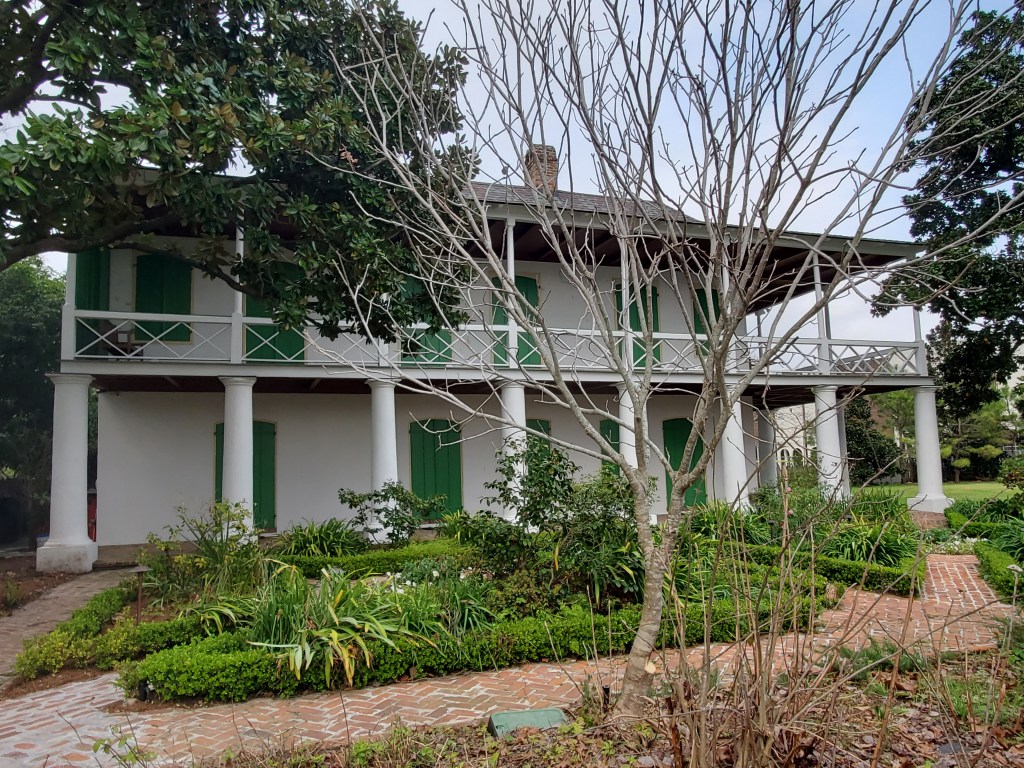
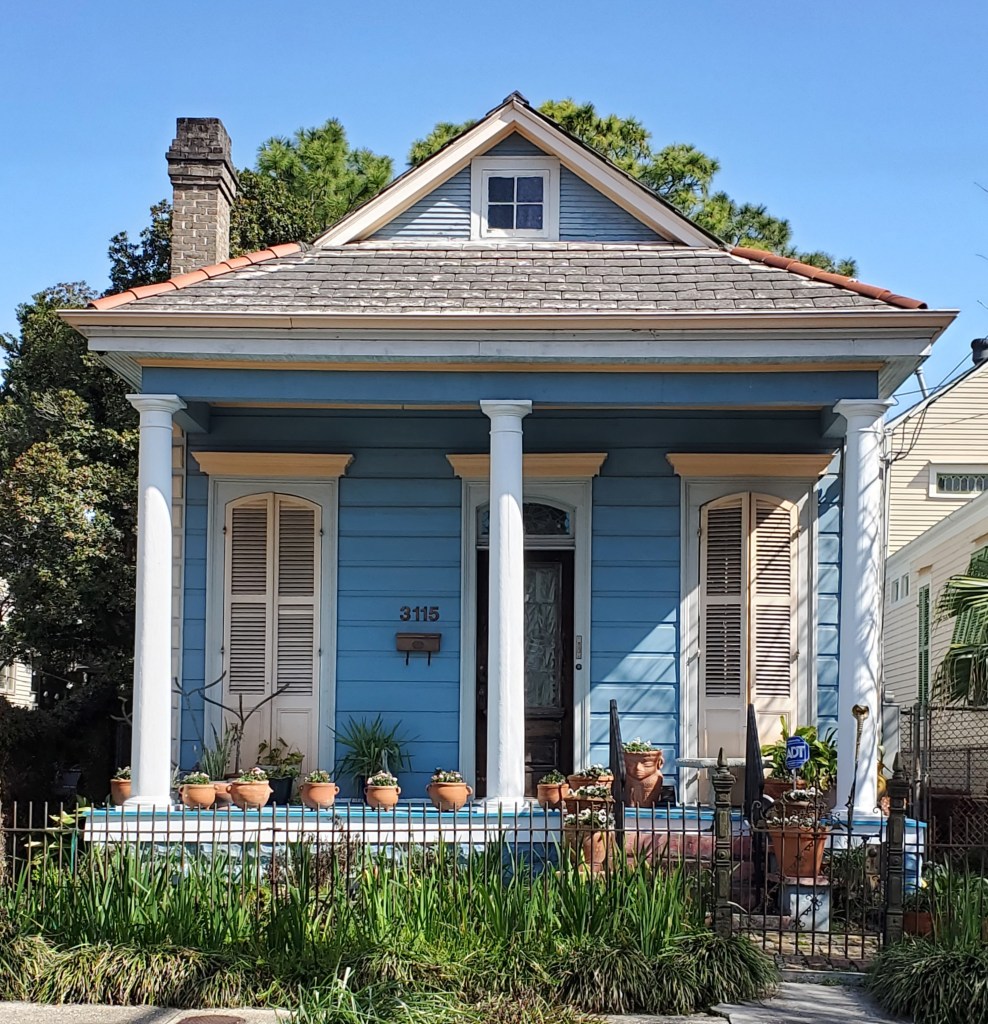
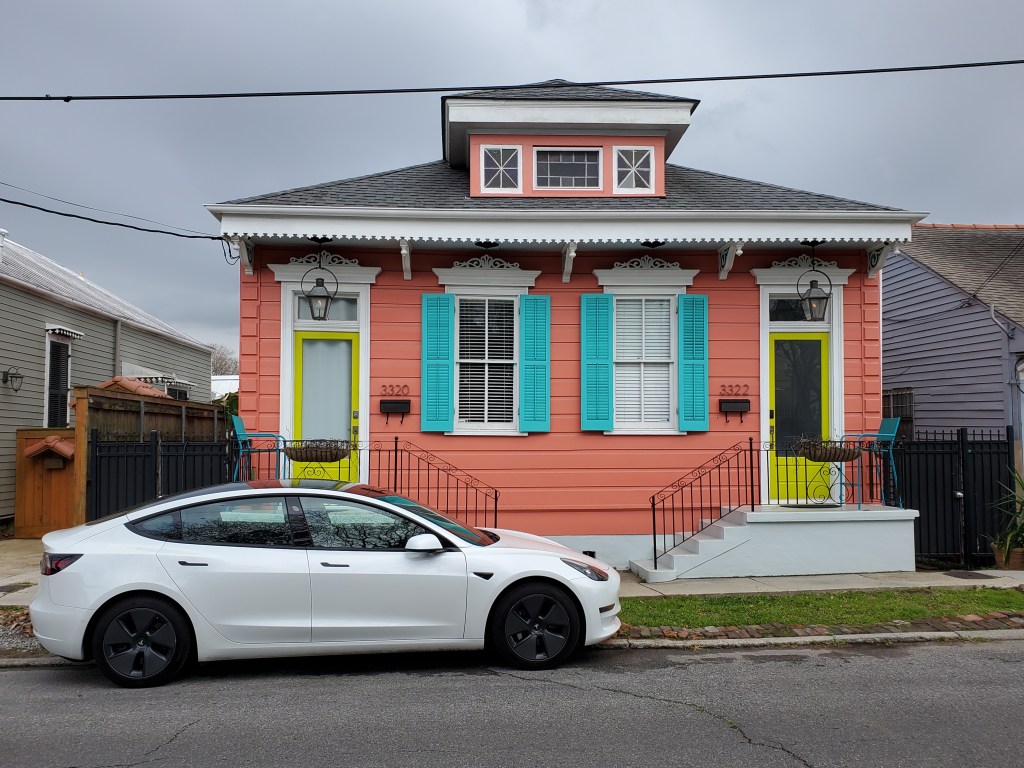
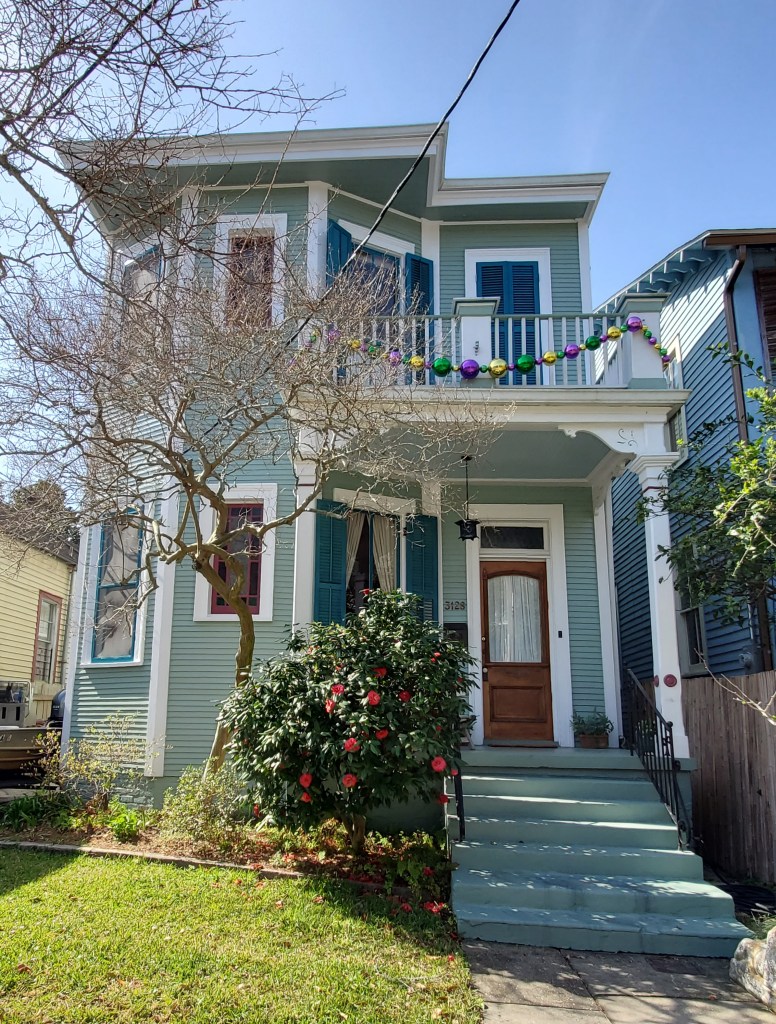
Built along the Esplanade Ridge, the Faubourg St. John largely escaped Katrina’s flooding, and remains one of New Orleans’s most historically significant neighborhoods; the navigable end of Bayou St. John was long a Native American trade route and portage trail connecting Lake Pontchartrain with the Mississippi River, where some French traders and trappers settled with the Native Americans by the end of the 17th century. In 1708, the community of Port Bayou Saint-Jean was established there, pre-dating the official founding of New Orleans in 1718, though it was not incorporated into the city boundaries until the early 19th century. Built on the Bayou in 1799, Pitot House was home to James Pitot (1761-1831), the first American mayor of the incorporated city (1804-1805), and one of the few West Indies-style houses left in Louisiana. New Orleans architecture is always a treat, and my friends’ neighborhood is full of gems.
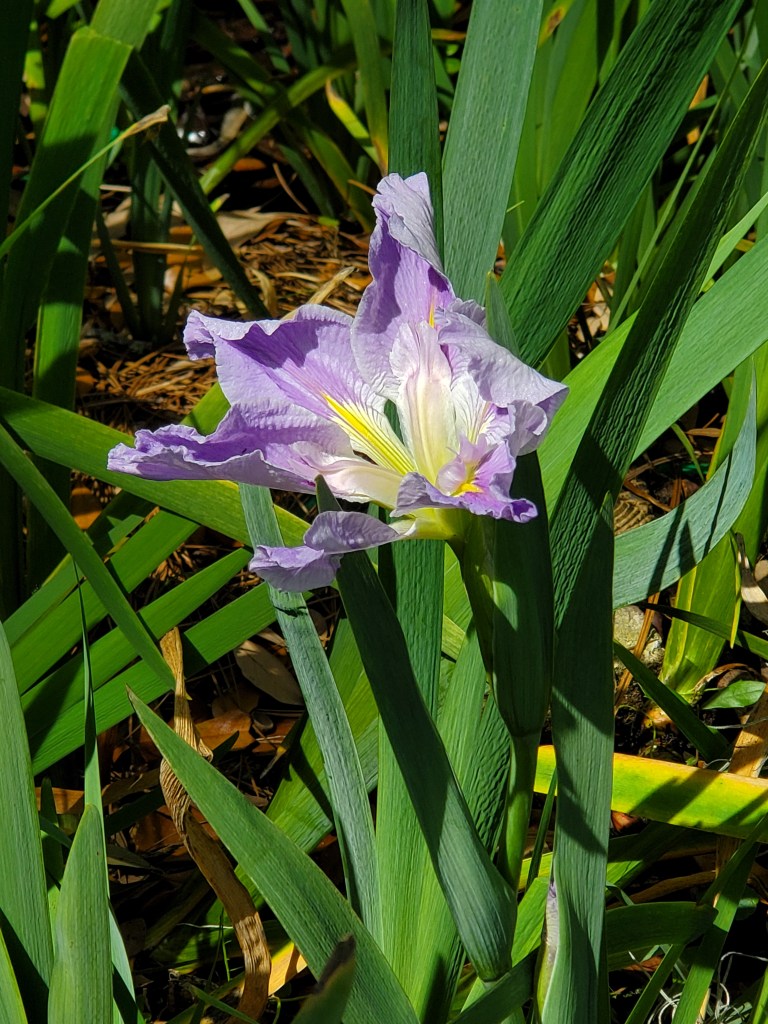
Having left a 19o snow-packed New Hampshire days before arrival, I was charmed by both weather suitable for sunbathing and the greatly expanded Sydney and Walda Besthoff Sculpture Garden, where the first iris and the last tulips shared space with the art.
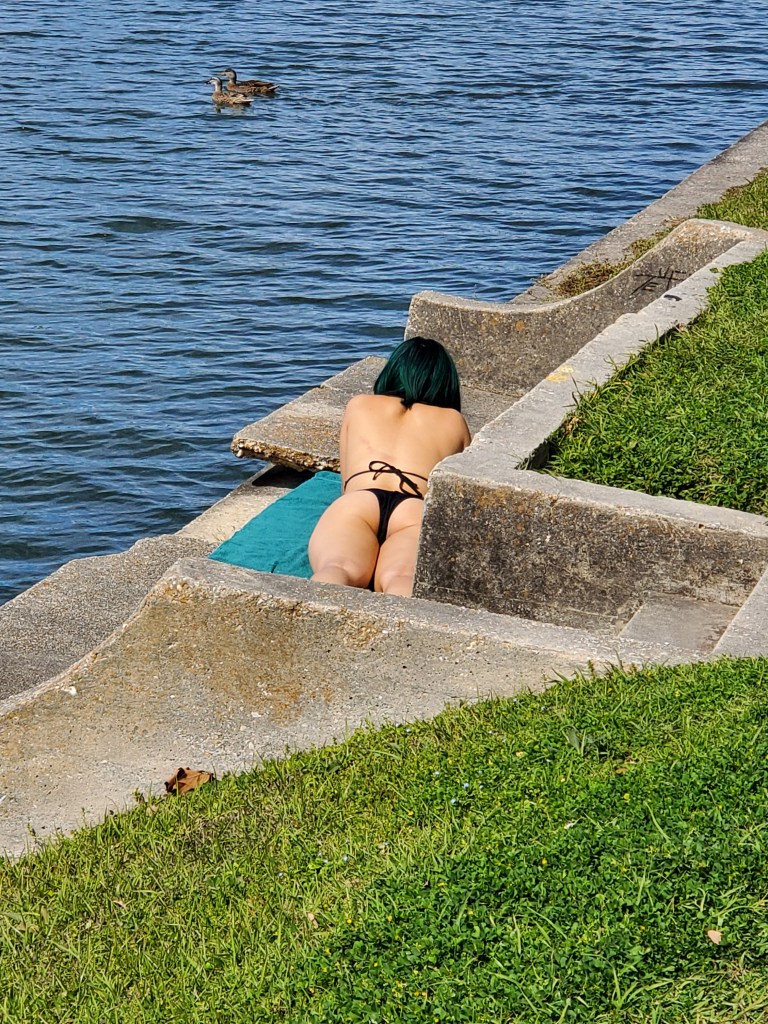
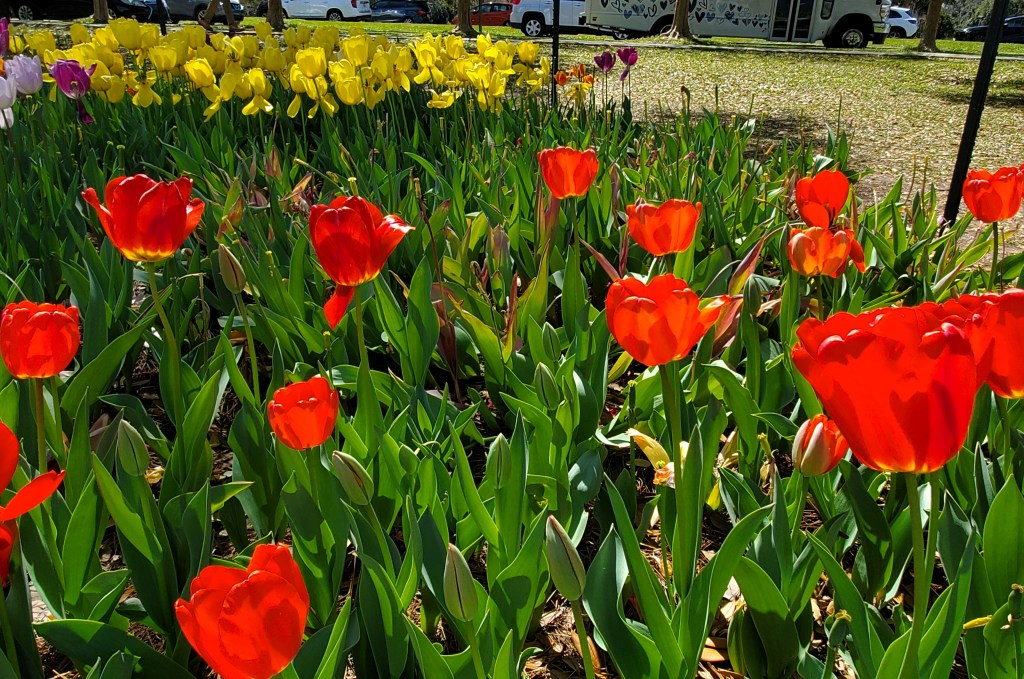
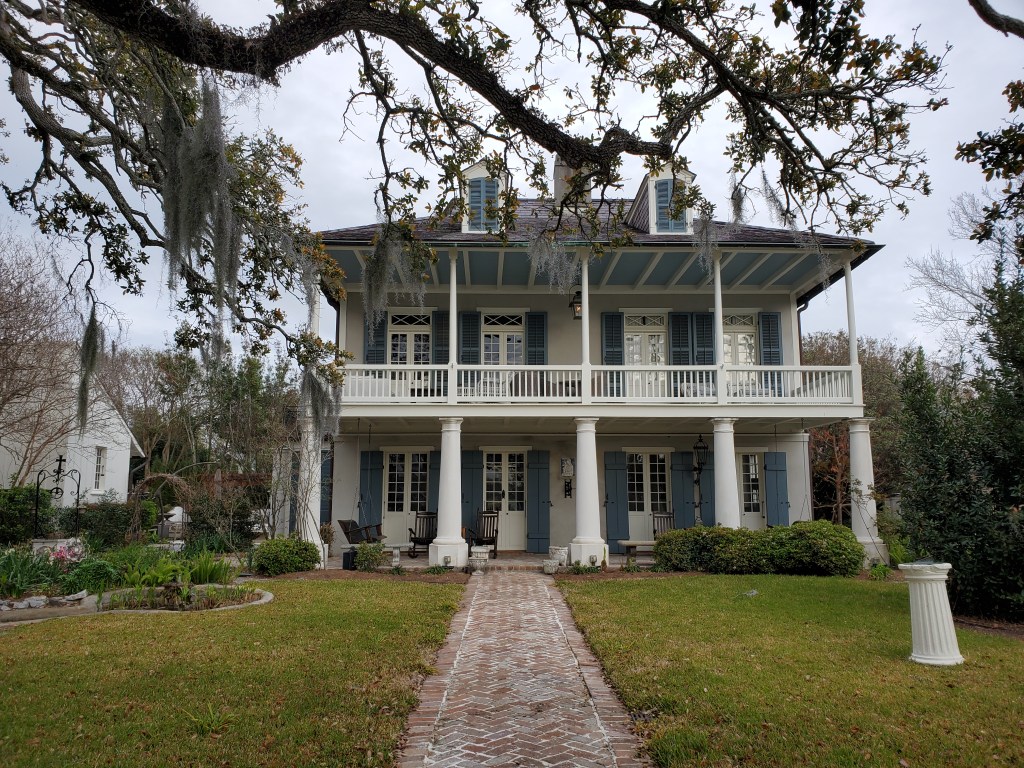
on Bayou St. John
Water is an integral part of the Sculpture Garden’s design, appropriate to its bayou proximity, and the water itself is wonderfully “sculpted.”

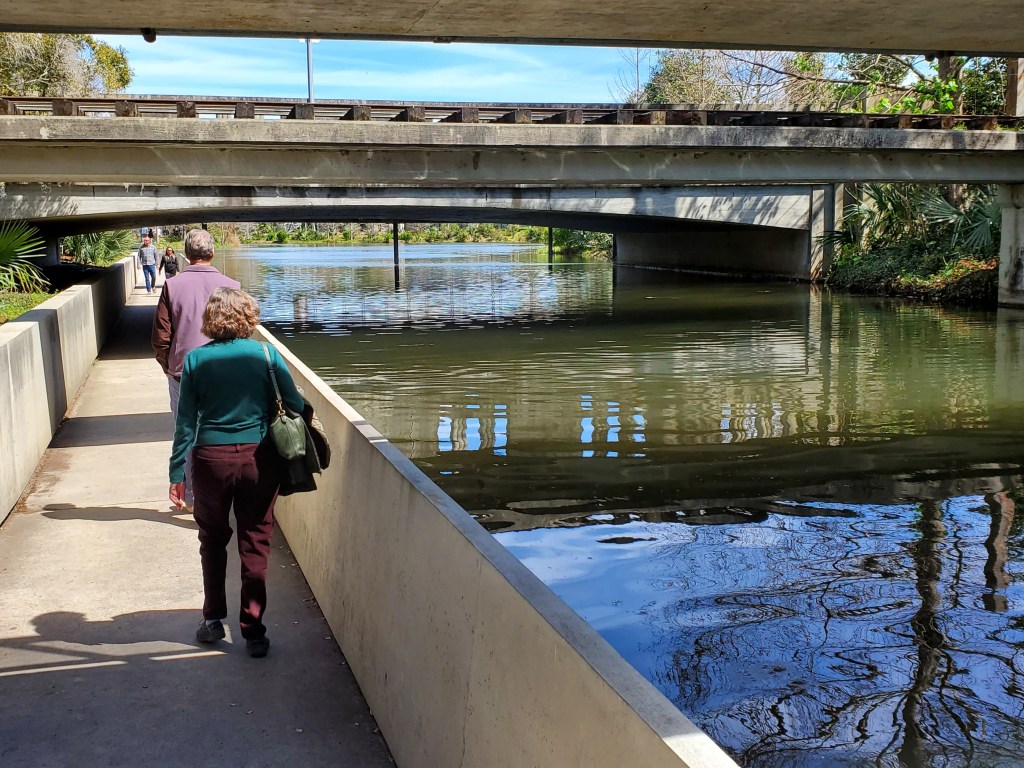
are 10 feet below sea level
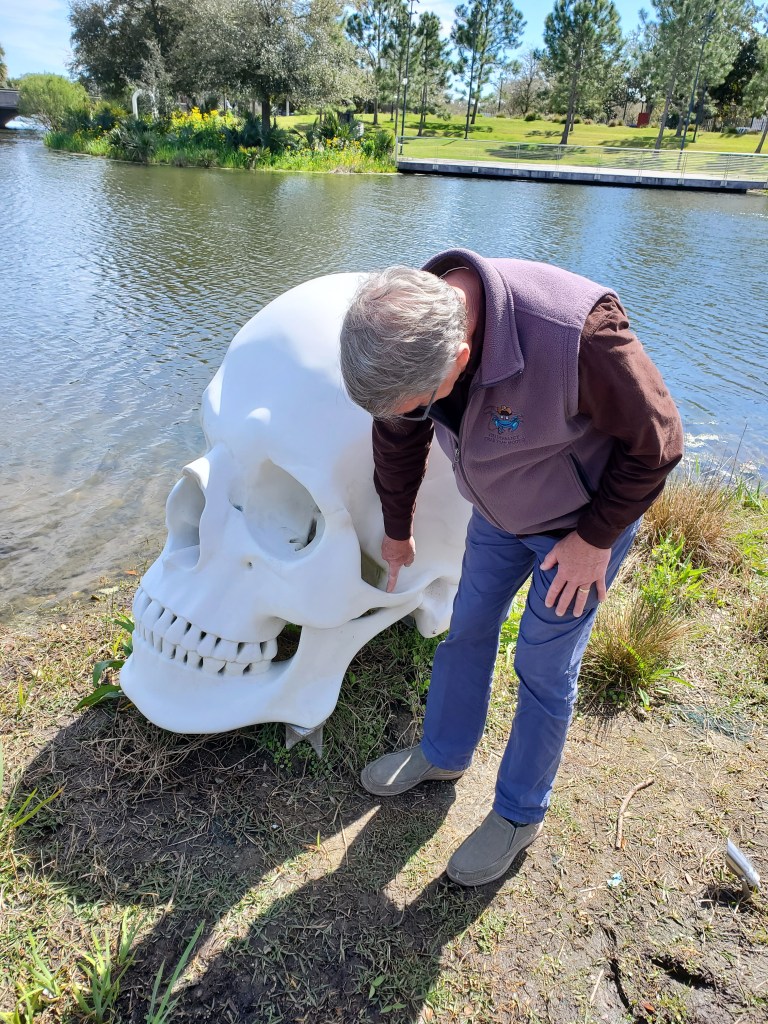
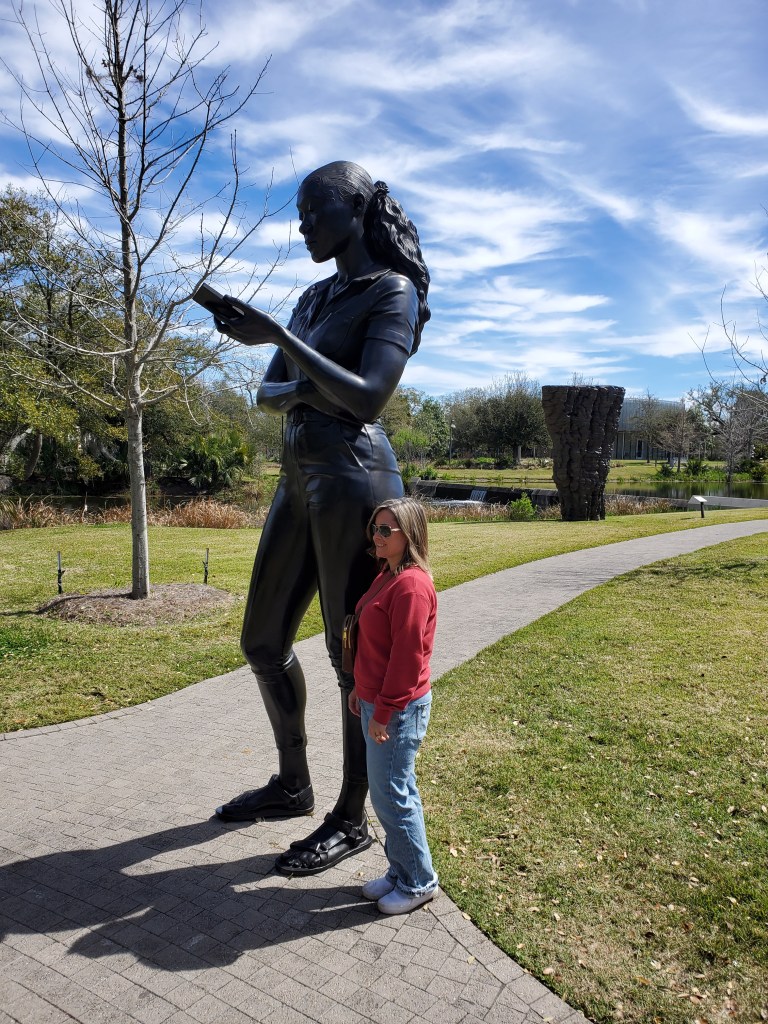


After our stroll and a sandwich, Trish turned her errand of picking up a purse mended (rather dearly, as it turns out) by a local cobbler into a driving tour through Mid-City (I recall when a missing “M” delightfully designated that section of town “Id-City), the Central Business District, and the Quarter, evoking all manner of NOLA memories along the way (like the time I brought David to Gallier Hall to pay our respects to local jazz legend Danny Barker, so splendidly there laid out) and prompting an enjoyable conversation about nostalgia’s complexities.
That night my hosts reunited me with my fellow Women Against Dissertation (WAD) friend Susan, Dean Emerita of the College of Liberal Arts at the University of New Orleans from which Trish has now also retired, and the hilarity inspired by Susan’s well-told tales of local grotesquerie (think Eudora Welty or Flannery O’Connor) made our grilled pompano and Pouilly-Fuissé at the Café Degas all the more enjoyable—even if her stories did later provoke Mike’s nightmare of a one-legged man stealing his shoes. It’s transformative, laughing that hard among such dear, old friends. I went to bed very happy.
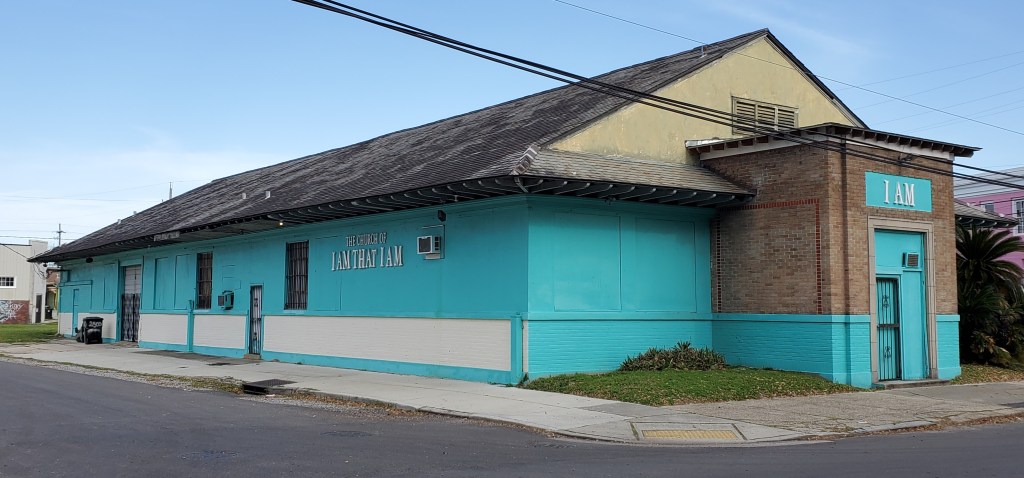
Next morning, after an excellent breakfast of croissants from Leo’s Bread across from the Church of I Am That I Am (Popeye affiliated?), I was ready for Friday’s next big adventure, however briefly perplexed by a perpetual conundrum: why, oh why does the University town of Durham, NH lack a bakery capable of croissants?
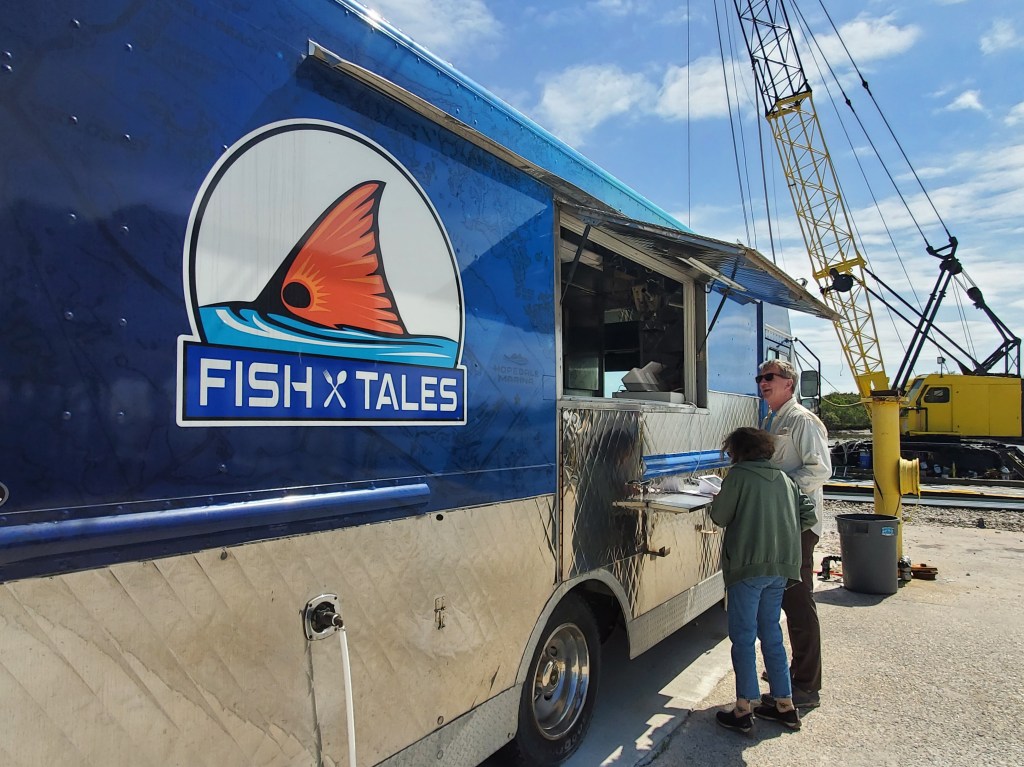
Part one of the adventure was a drive through Chalmette, Arabi, Violet, and Alluvial City (Alluvial City!) on the west bank of Bayou La Loutre in St. Bernard Parish, cruising in Mike’s truck past all the raised fish camps to the Hopedale Marina for a guided tour of some favorite fishing spots and lunch on the water courtesy of the Fish Tales food truck. (Chef Mike enjoyed tweaking Chef Patrick about the quality of cheese on the ham & cheese po’ boy.)
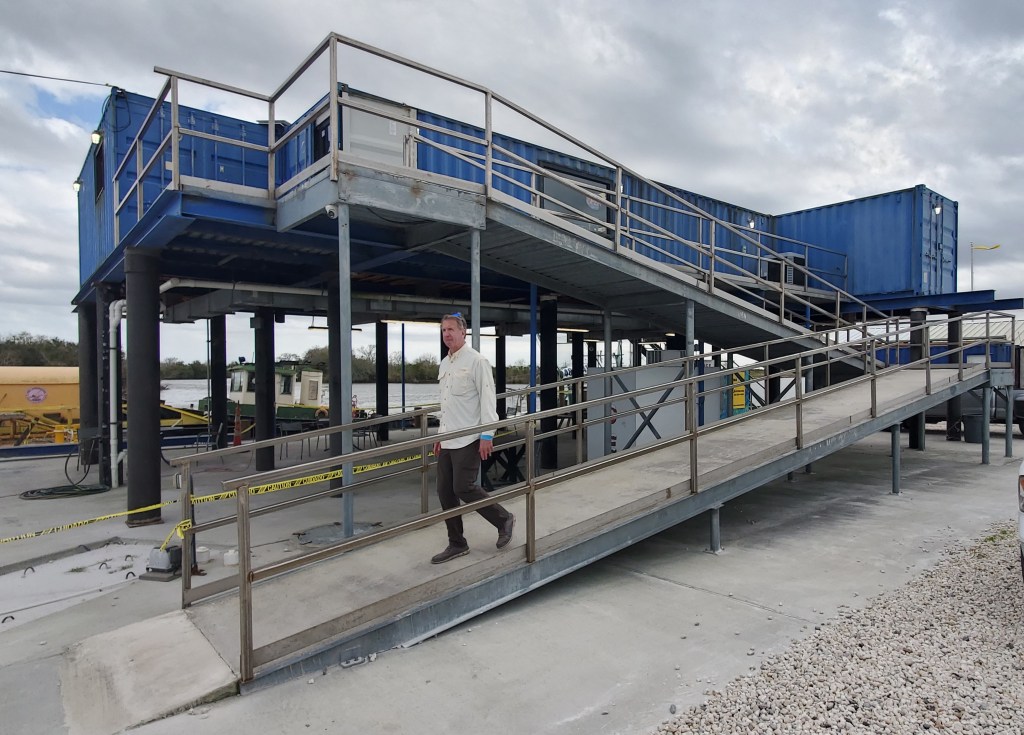

I admired the selection of neck gaiters (aka “Buffs” after the manufacturer) among the marina provisions, and then we boarded for our bayou tour around sites indistinguishable to this novice but well-known to Cpt. Mike (Corner Grocery, Lena Lagoon, Delacroix Island).
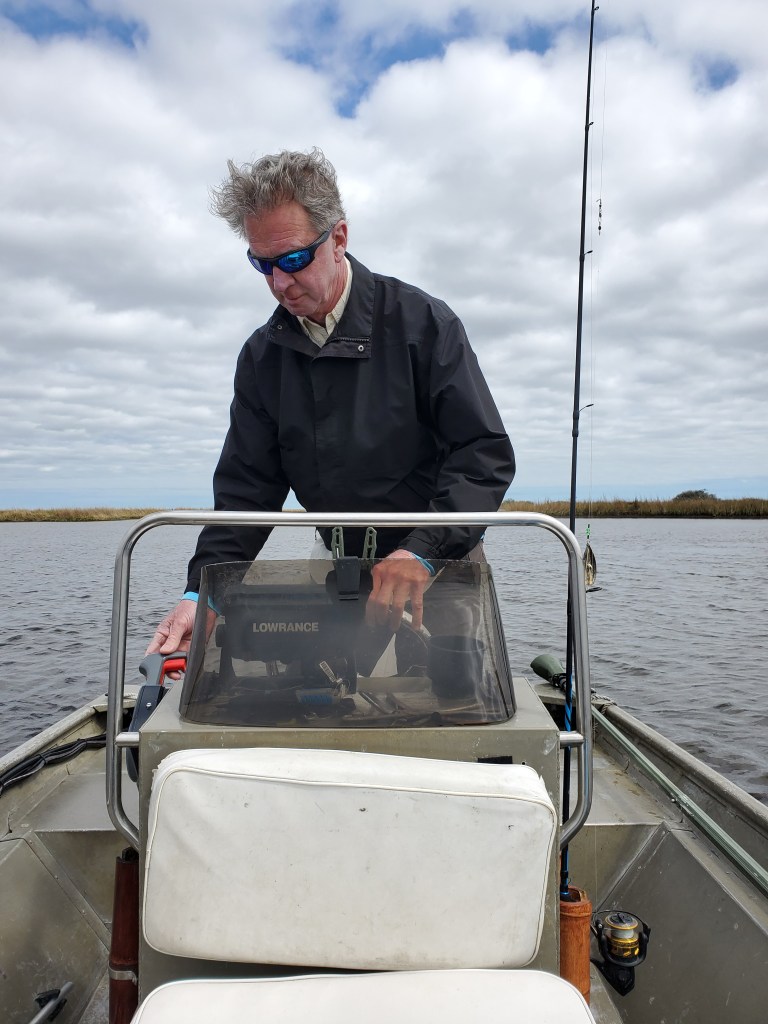

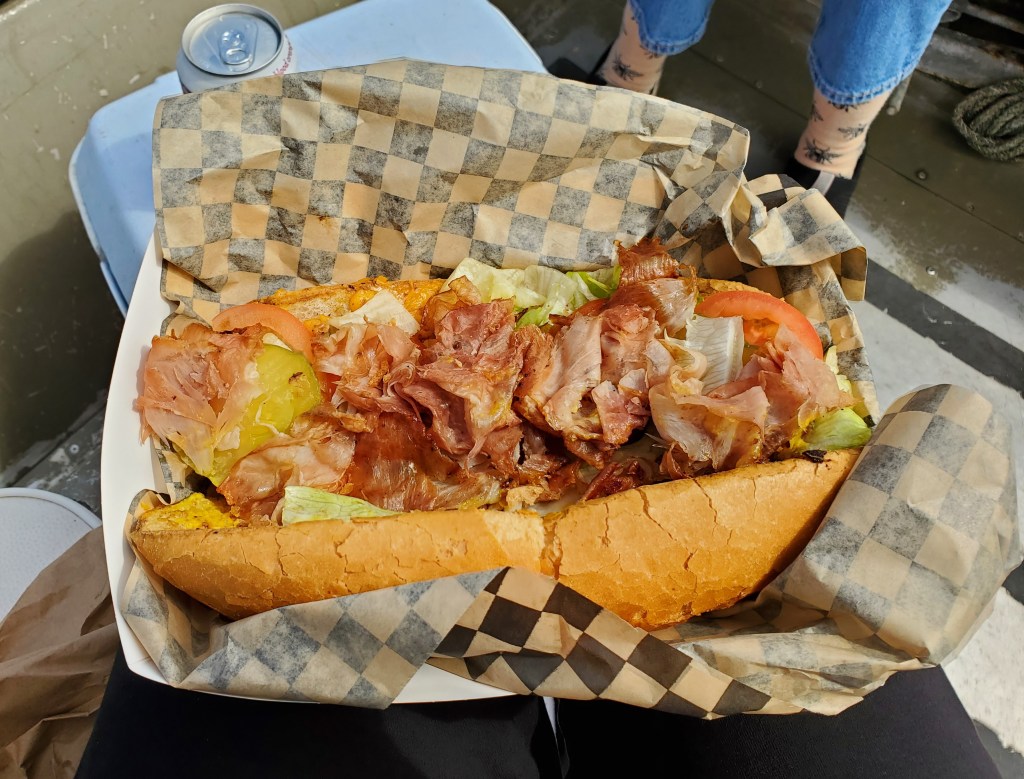
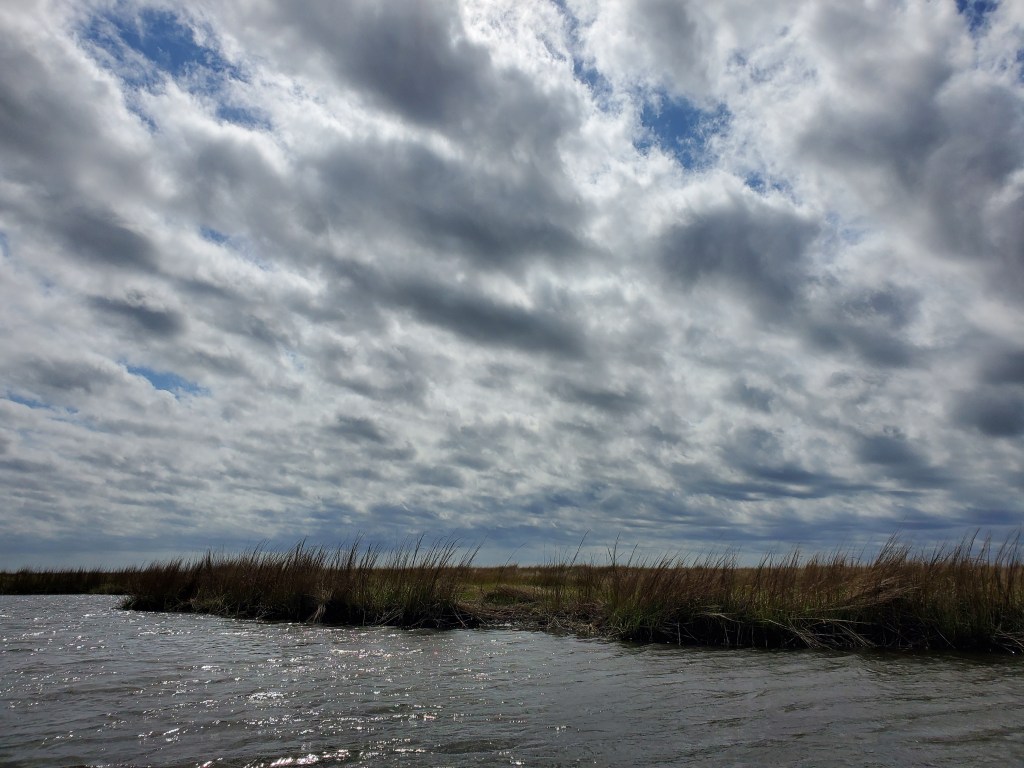
The open Big Sky above the world’s largest contiguous stand of roseau cane (Phragmites australis) was a refreshing vista after the densely forested landscapes of New Hampshire, and speeding through the marsh, observing the ongoing dredging and fill projects designed to absorb ever-rising tides, was fascinating—especially when we counted 10 gators disturbed by our converting gas to noise.
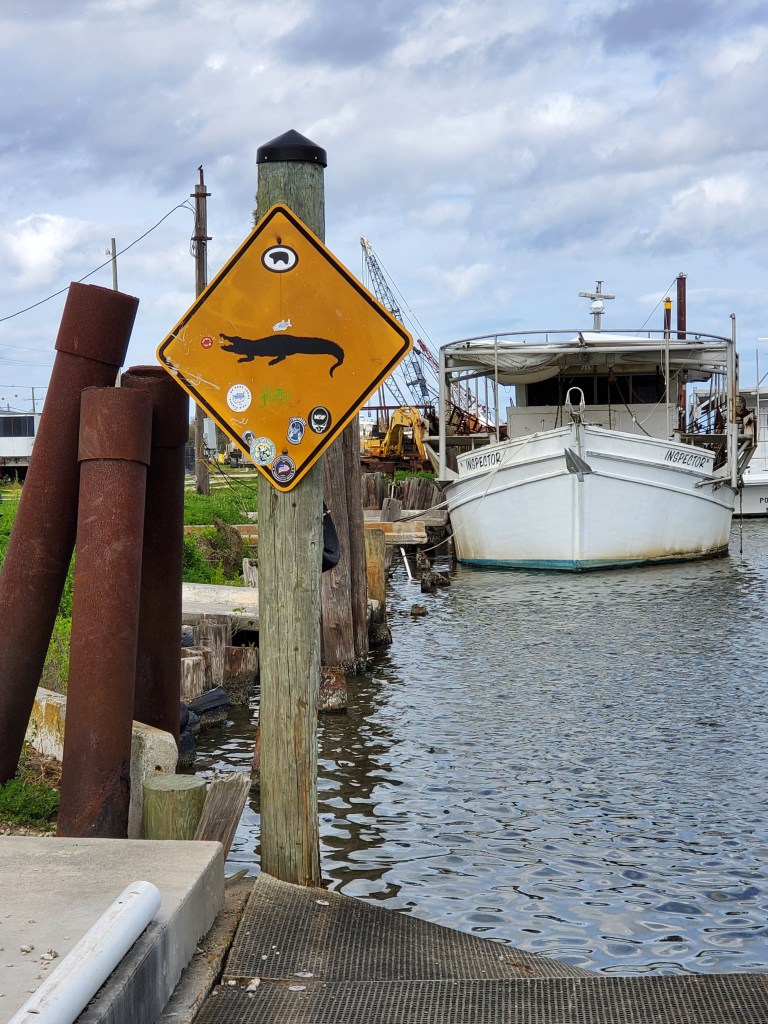
The outing became even more of an adventure when we briefly ran aground, necessitating Mike’s assuming gondoliere status to pole us back into the channel because his trawling motor was in the shop: muscle, savoir faire, and rising tide to the rescue. The wonderful day finished at Café Minh with my very first Shrimp Pho and another night’s good rest abetted by all that fresh air.

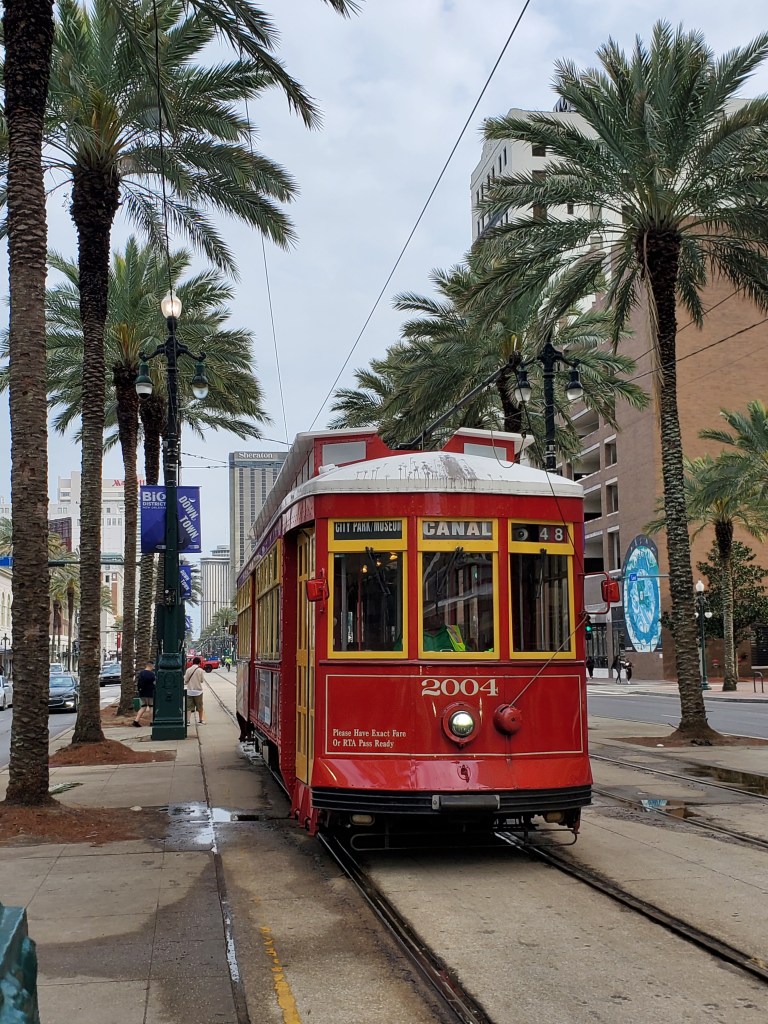
Saturday was my day to try out my new Le Pas app, NOLA’s RTA innovation allowing me the all-day streetcar rides I had in mind. I boarded at the end of the Canal-City Park / Museum line on Carrolton, and after an initial fright about getting my pass to load, I struck up a conversation with a first-time NOLA visitor from NY (the Village) who asked my advice about what to see and do in the city, which led to my confessing I’d not lived in town since 1984 when I graduated from Tulane and began my career as a professor, from which I’d recently retired after 43 years. He asked what changes in my students I’d noticed over that time; my response: the average student was less prepared for college-level work, the attitude of students toward professors had in many cases shifted to a consumer/vendor relationship, and, of course, technology had changed everything. He then revealed that he had worked in A.I. from its early development, and thought most people were currently unaware of what he called “the 4th industrial revolution” now fast approaching, where only a very few tech overlords (my word, not his) would be required in the workforce; everyone else would be made—is currently being made—redundant. Our car had by then come to an unexpected stop on Canal just before Basin Street; the other New Yorker behind my companion explained that where we were, given ongoing construction, was now the end of the line. So we three parted, wishing each other a good day, and in my case at least, musing about what the future will bring.
I walked the several block to where I could catch the St. Charles line at Common Street, and crowded in with all the other tourists, many of whom got off at Washington, clearly headed for the Garden District.
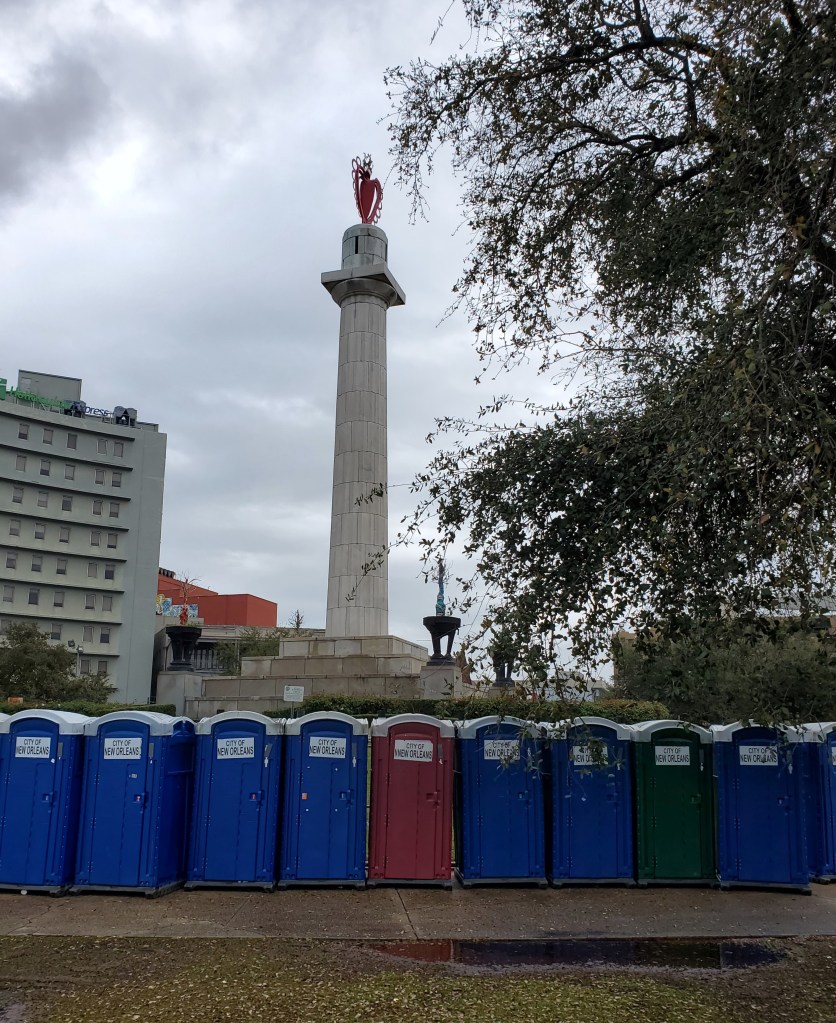
I continued on to Tulane, spontaneously deciding to see what I could of the University I’d left so many years before. Gibson Hall was locked up on that Saturday, but I shot a picture of the window where I once stood, mid-Old English exam, sharpening my pencil and observing that my AMC Hornet parked outside on St. Charles was now flooded up to its door handle, perhaps signifying that both my graduate school career and my transportability were soon coming to an end. I was wrong: I passed that class with a B+ and Rene of the garage next door to my Pitt Street apartment got my car to run again. Another hurdle cleared. One never knows, do one?
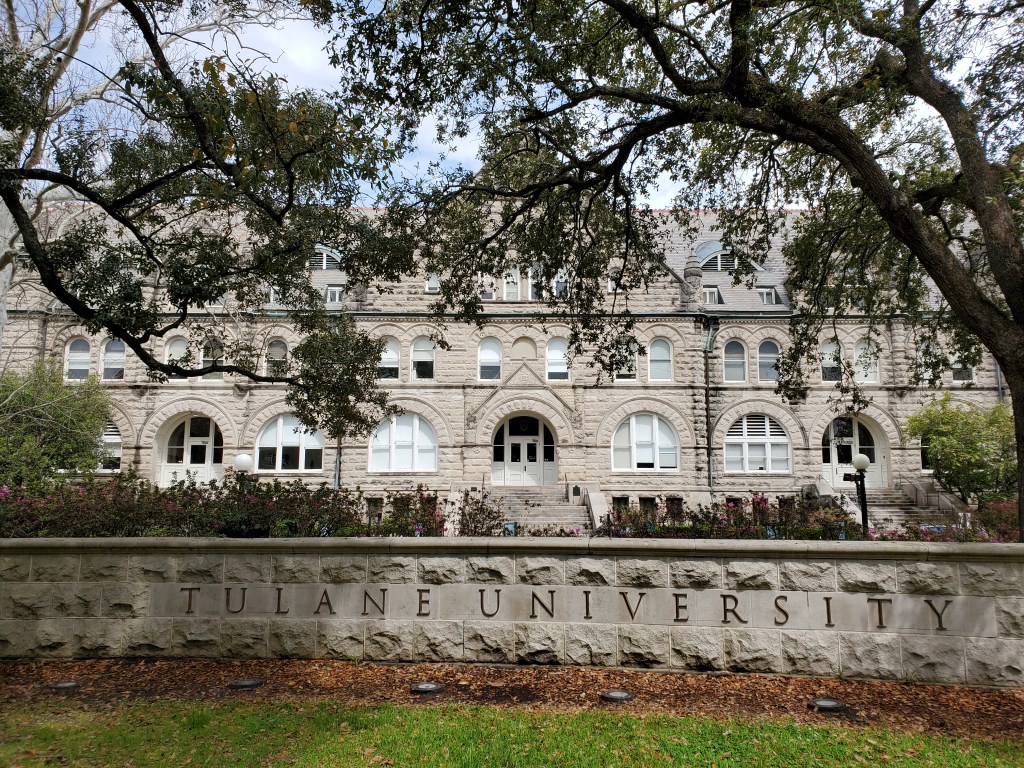
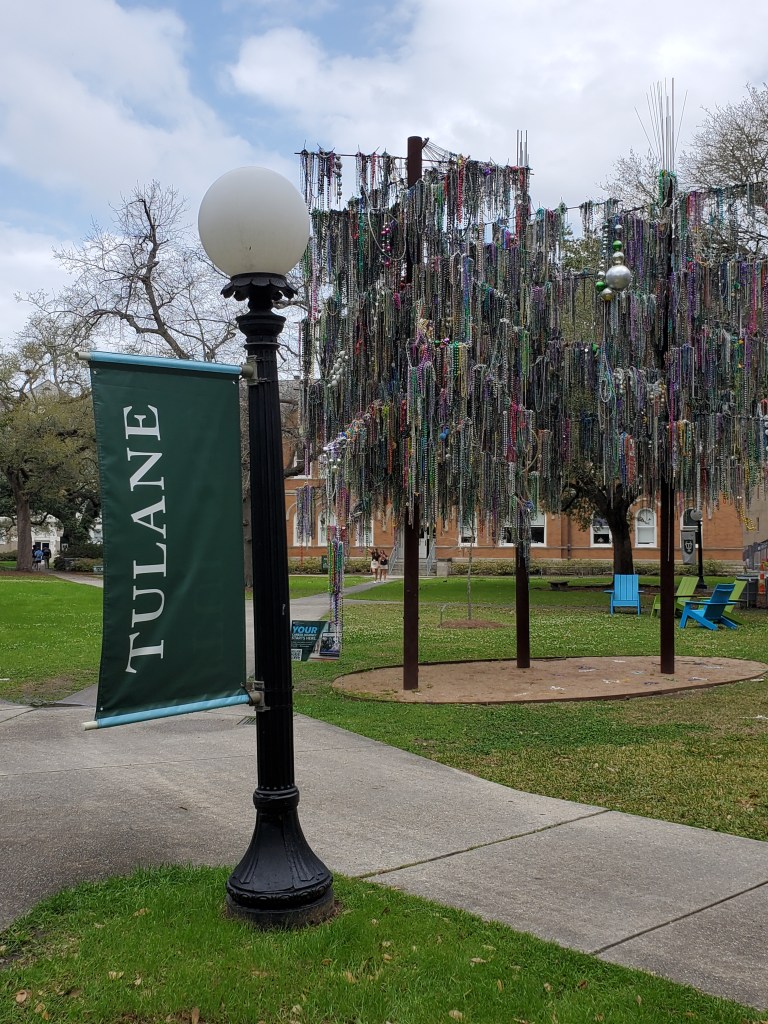
I strolled up to the Howard-Tilton Memorial Library where I’d spent so much of my last year in New Orleans, noting along the way lots of colorful Adirondack chairs scattered around the campus, and a bead tree sculpture, signs of frivolity absent during my grad school years.
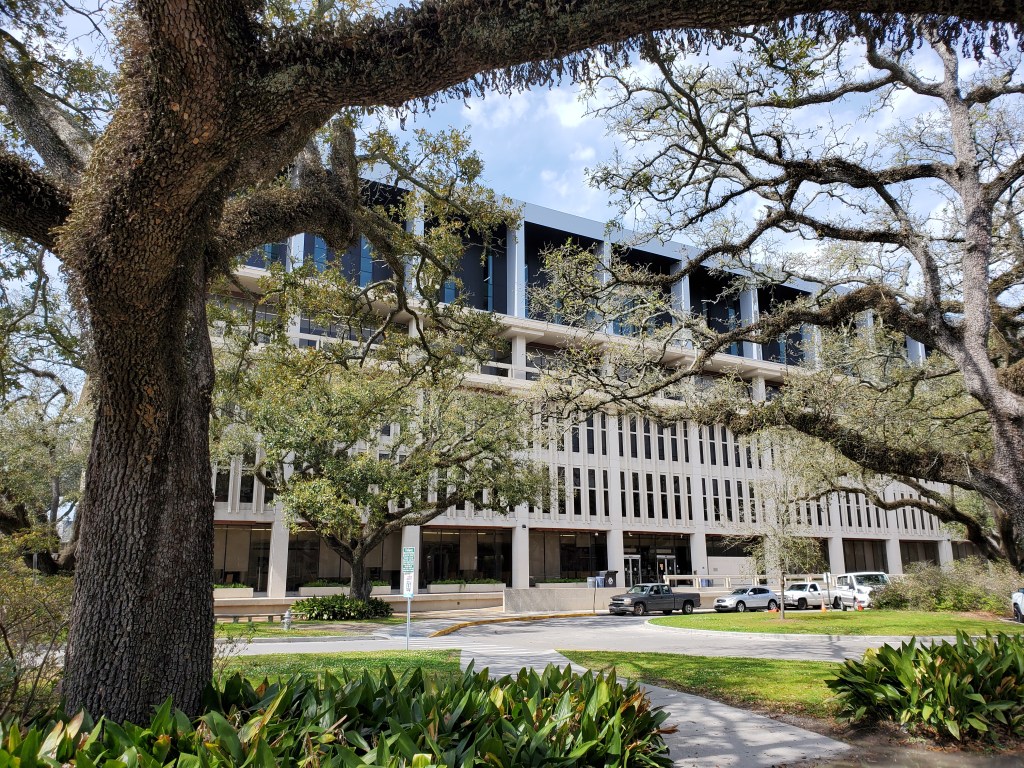
Of course the library, though open, was quite different, too: the big tables where I had once laid out my 3 x 5 note cards to organize my dissertation chapters have all been replaced by computer terminals and small desks.
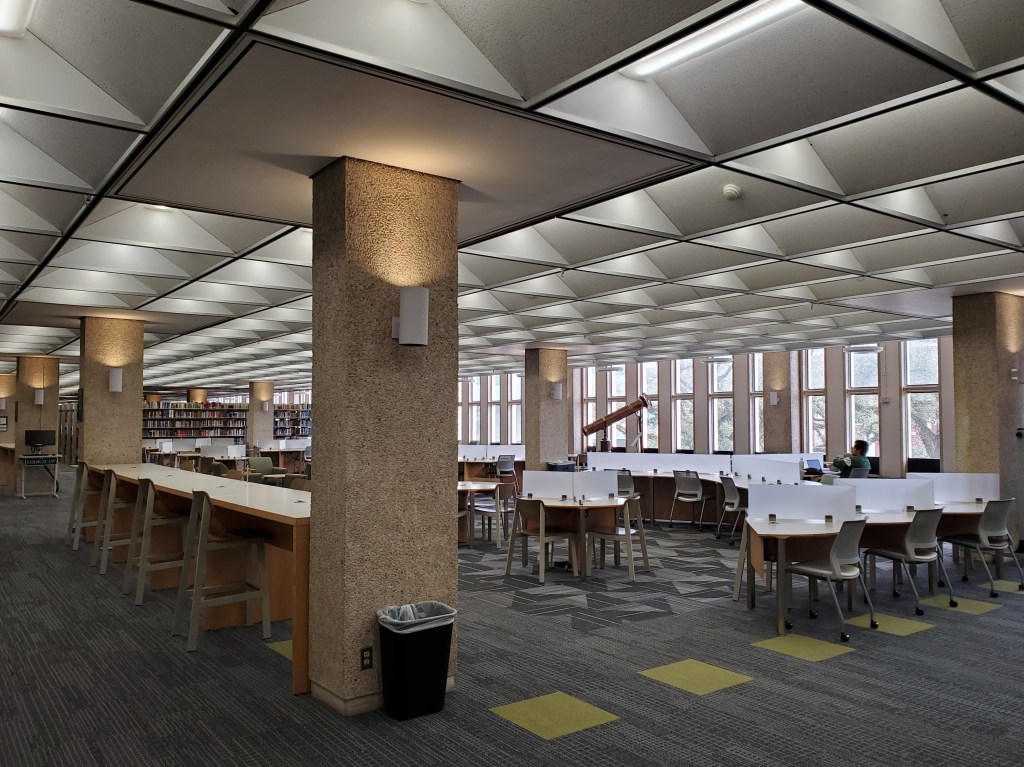
When I inquired about where my actual dissertation was now stored (I thought I might slip a $20 between the pages, a reward to anyone dogged enough to pursue it physically, not digitally), I learned that Special Collections had now moved from the 5th floor of the library across the street to the locked-on-this-Saturday building where the Law School used to be. So, I went on to the greatly expanded University Center (where I once got food poisoning from a tuna sandwich that required my early exit from a 19th-century novel class) to eat the remainder of yesterday’s po’ boy and hunt for the University bookstore—which also turned out to be locked, and a Barnes & Noble.

This made me nostalgic for the campus janitorial staff, the women who used to gather on the UC’s mezzanine level where the tv was to watch their lunchtime soap operas and talk back to their favorites. After a brief look at McAlister Auditorium, site of the commencement that my sister reported brought my dear old daddy to tears when Prof. Morillo hooded me, I made my way back through Newcomb Place to St. Charles, where I caught the car that rounded the Riverbend and finally dropped me at Carrolton and Claiborne, the end of the line.
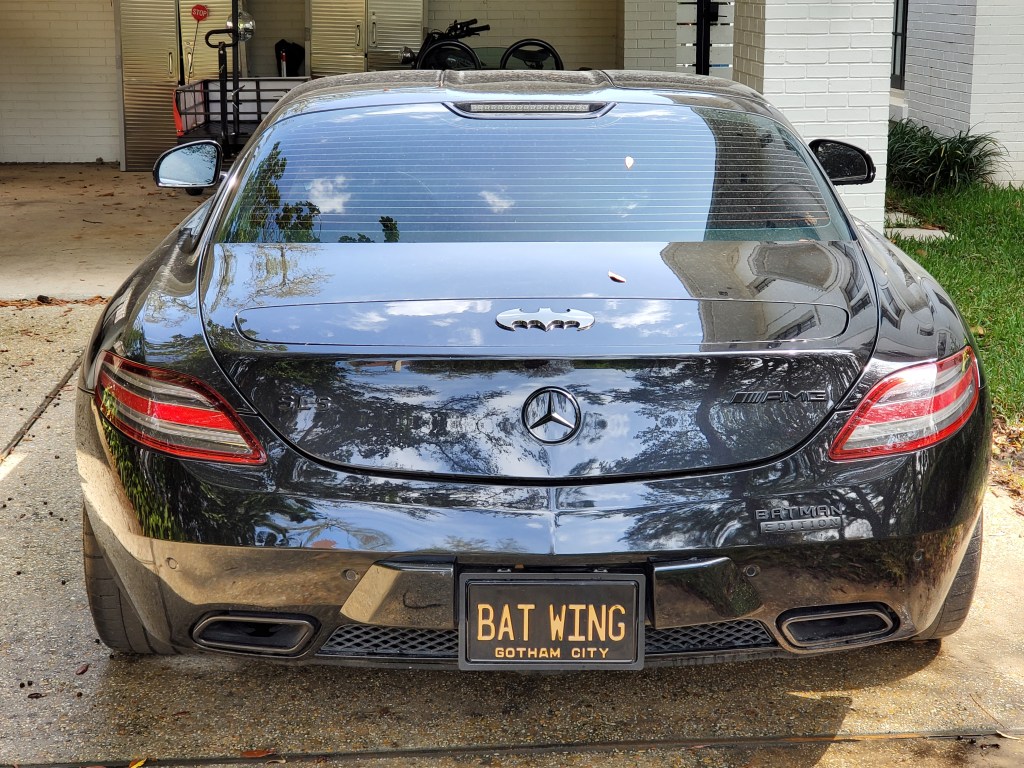
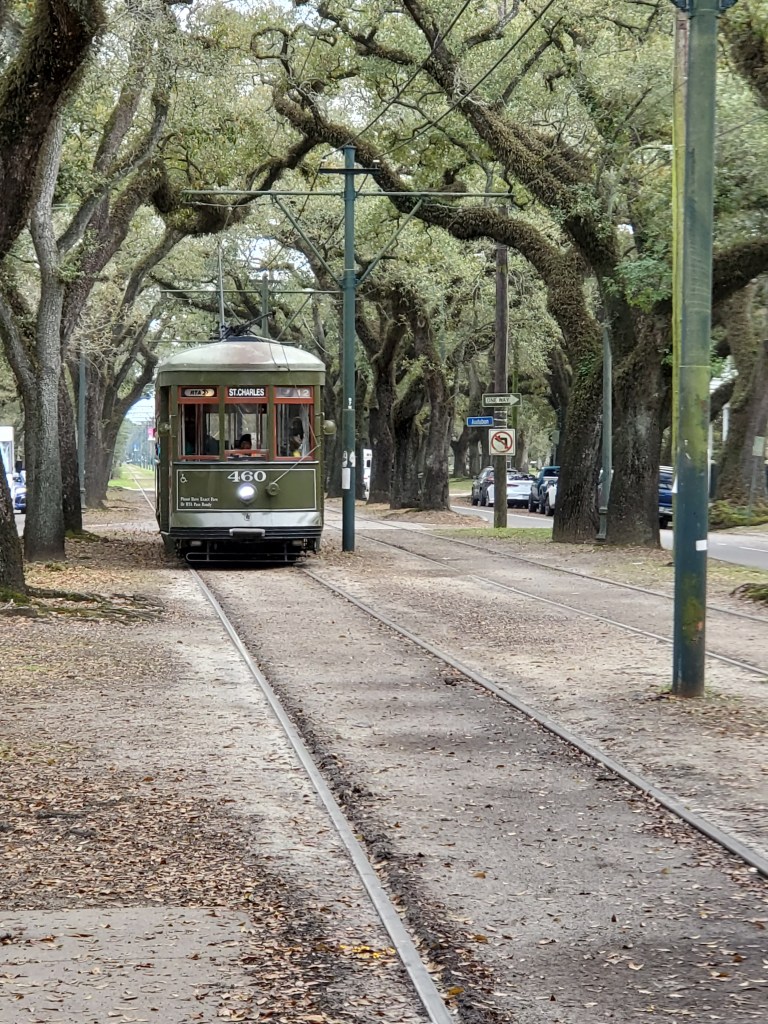
A man with a bull horn stood on the neutral ground there testifying to all of us waiting for the conductor to finish her break and take us back downtown. The message was familiar: Jesus is coming, change is coming, everything will be different, it’s time to prepare. There was one innovation in his testament, however: “It’s all digital!” He for sure got THAT right.
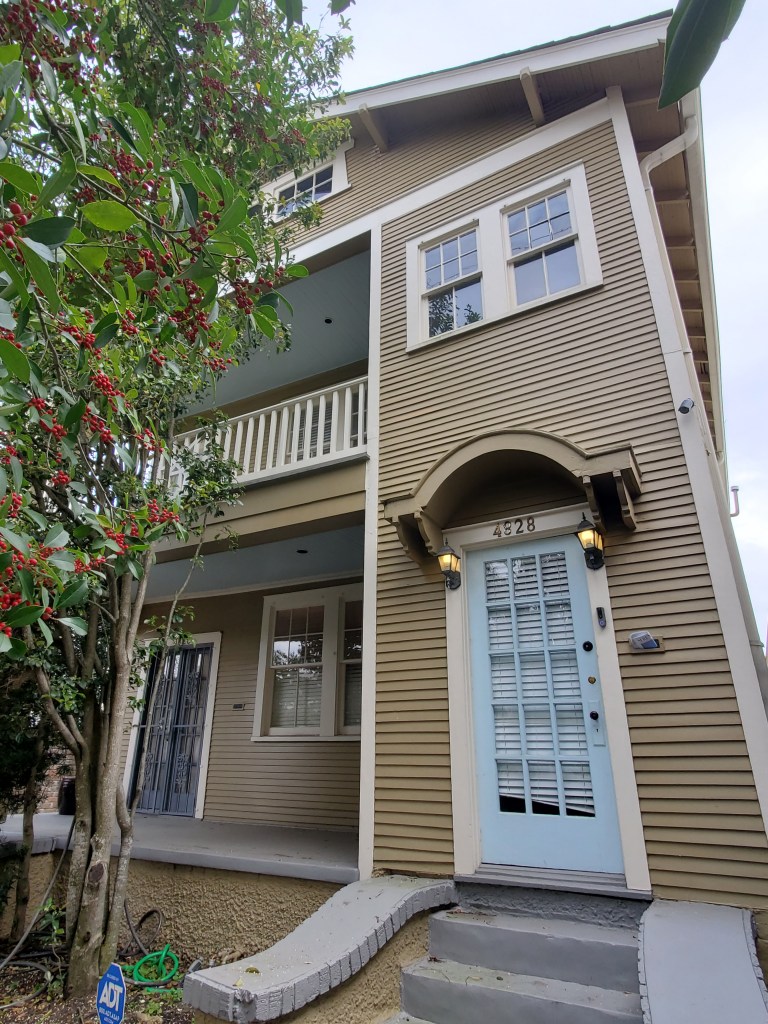
I boarded and then got off again at St. Charles and Duffosat, my stop of yore, to see if my apartment still stood. It did, though Rene’s garage next door was now a fitness center; that seemed an appropriate sign of the times. I took a picture and, by now getting pretty tired, crossed back to Bordeaux to re-board.
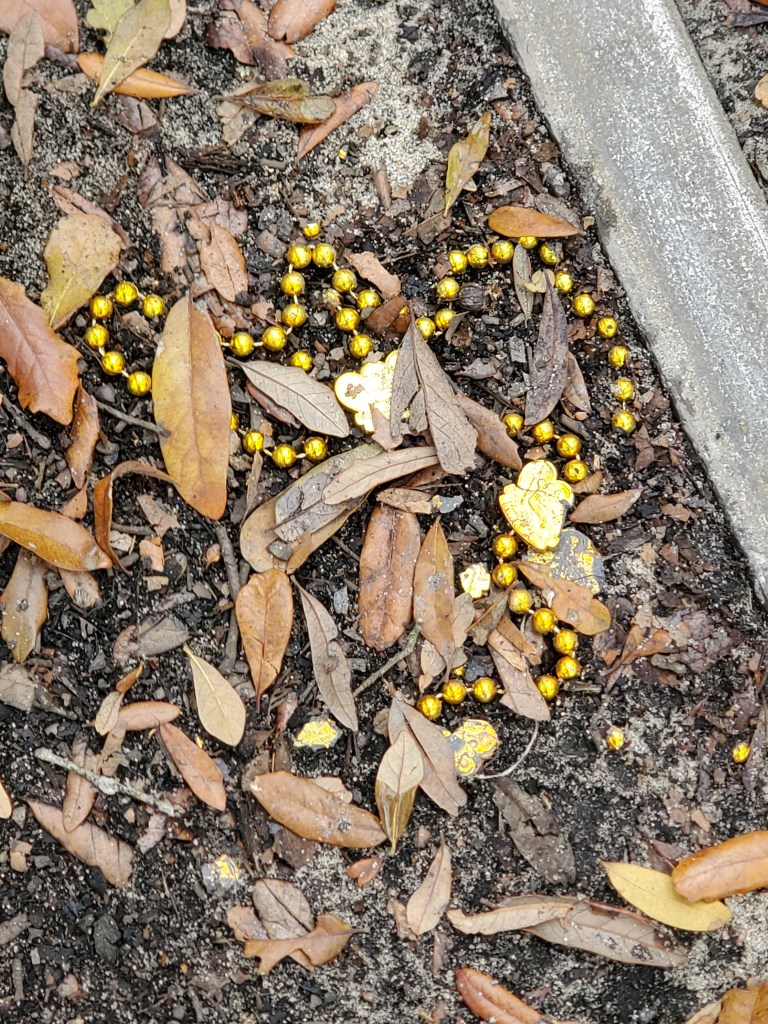
There I waited quite a while, first with a young mom and kid who eventually just set off again on foot, and then with two others until a third would-be rider, a very skinny fellow with very few teeth, came hobbling up, assisted by a four-footed cane, and carrying a plastic bag, a handful of Mardi Gras beads, a couple of books, and some printed-out pages. This little man returned by greeting and, after offering me some beads, began a very well-informed conversation about Dolly Parton. The pages, he said, were all about her, a woman he really admired, and he cited statistics about her age, how much money she gave away, how many people visited Dollywood each year: a proper fan, he. He told me, too, that there would be more parades the next day, Sunday. I thought him deluded since Mardi Gras had passed, but later learned he was right that some trucks would roll on the morrow.
When the streetcar finally arrived, the other two passengers boarded first; I deferred to my chatty companion, and waited behind him as he struggled to manage his cane, his burdens, and his beltless pants. When he stepped up, he was greeting by the conductor, who handed him the pass which he’d apparently left behind on an earlier ride. That additional item to manage proved too much, however; he dropped both his cane and his pants, which fell to his knees revealing a white diaper just in front of my face. Nonplussed about how to help, and reluctant to offer a boost to that diapered bottom, I hesitated. But my embarrassment on his behalf was short lived; the conductor immediately left his seat, got down off the car, and helped the man up with his pants and onto the car, settling him before asking him how far he was going this time. The man replied, “Just to the next stop.” There he did indeed disembark, once again forgetting his pass but leaving the rest of us rather relieved, and me in awe of the respectful courtesy of the conductor.
The further we rode, the more tourists got on, so I was happy to get off once we reached Canal and walk unimpeded back to Basin Street where my Museum-bound streetcar was parked.
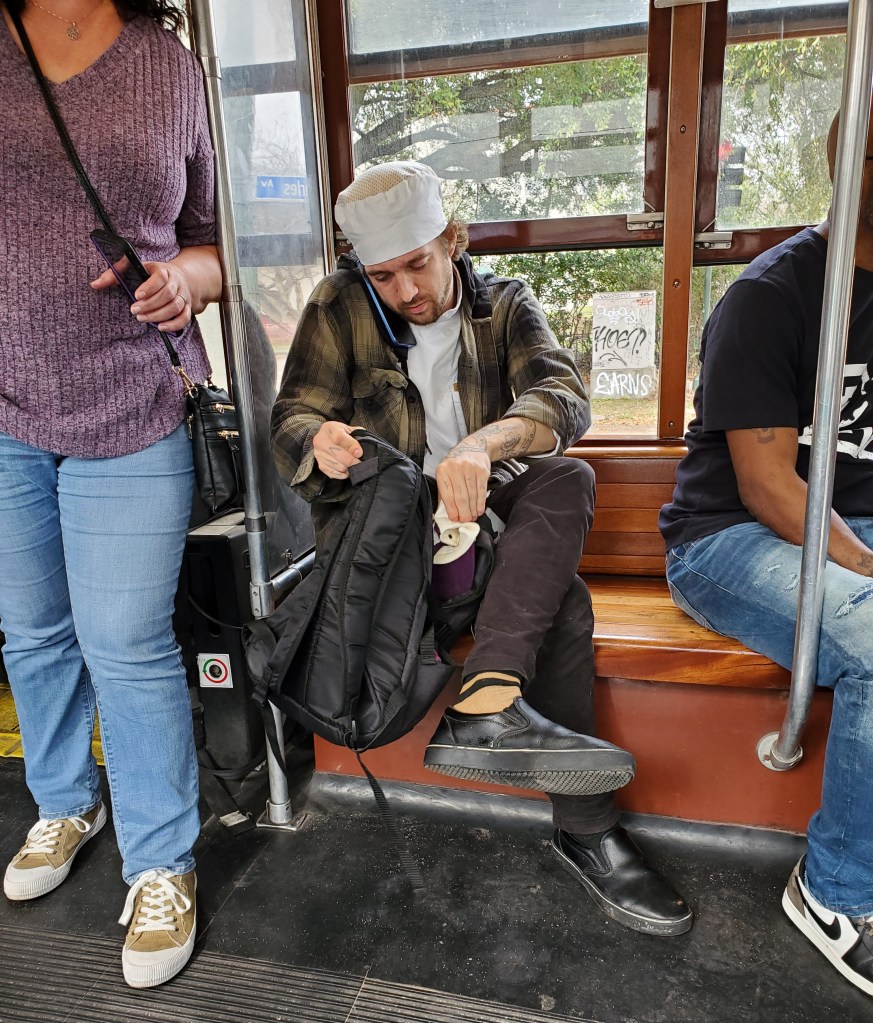
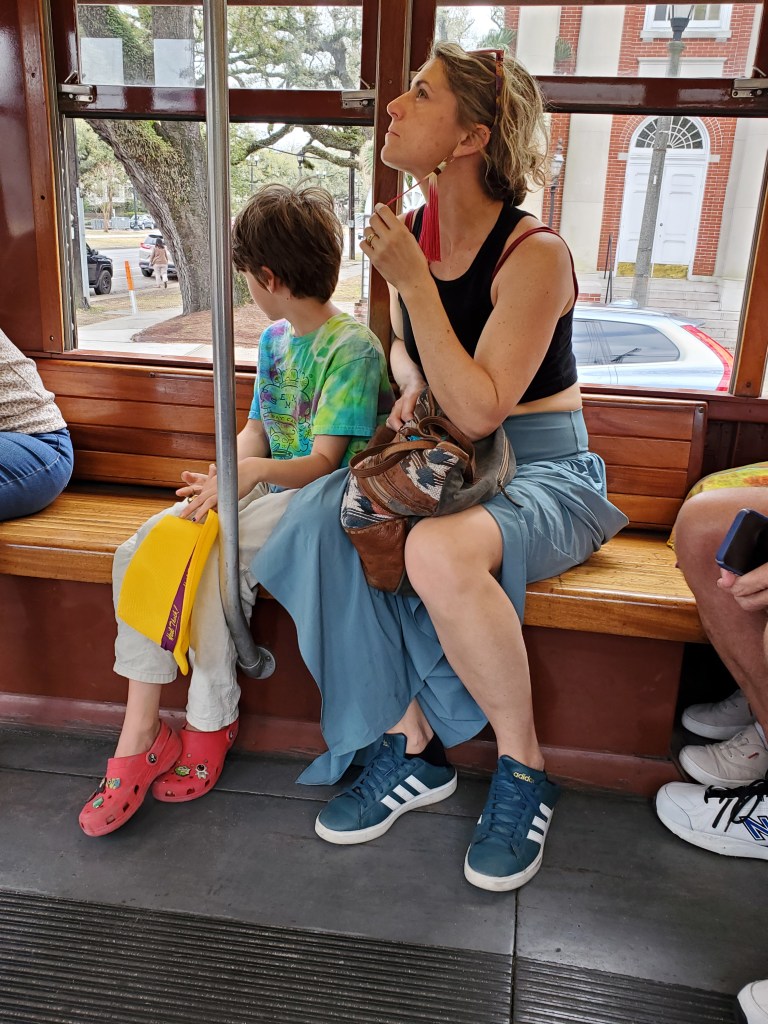
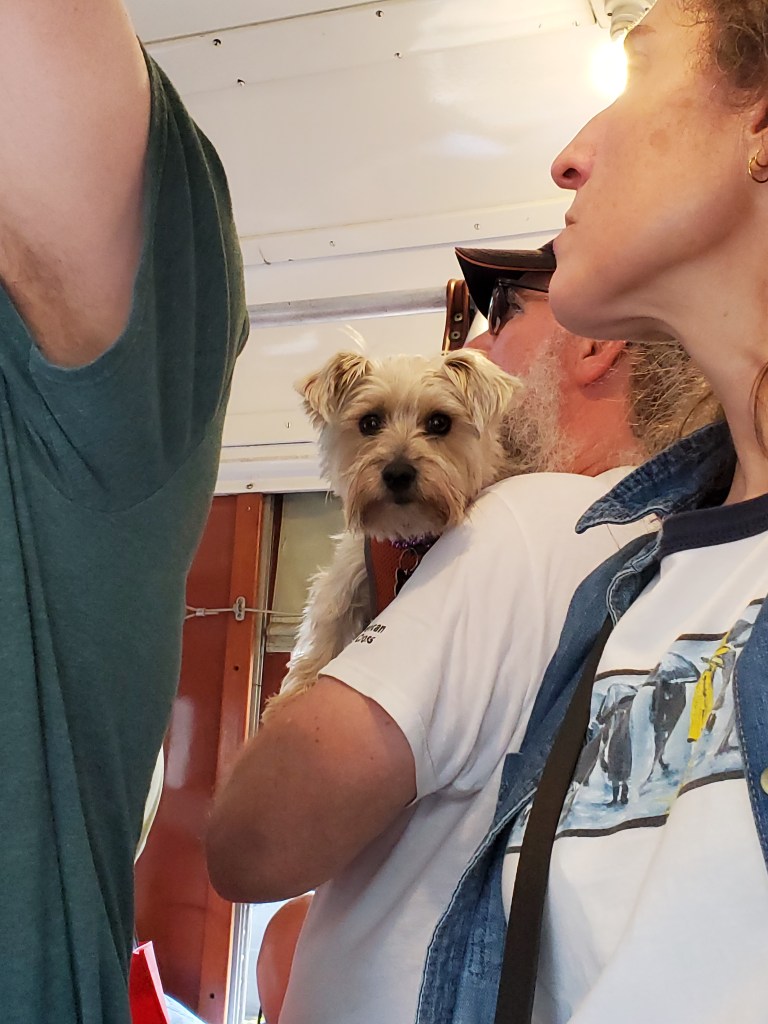
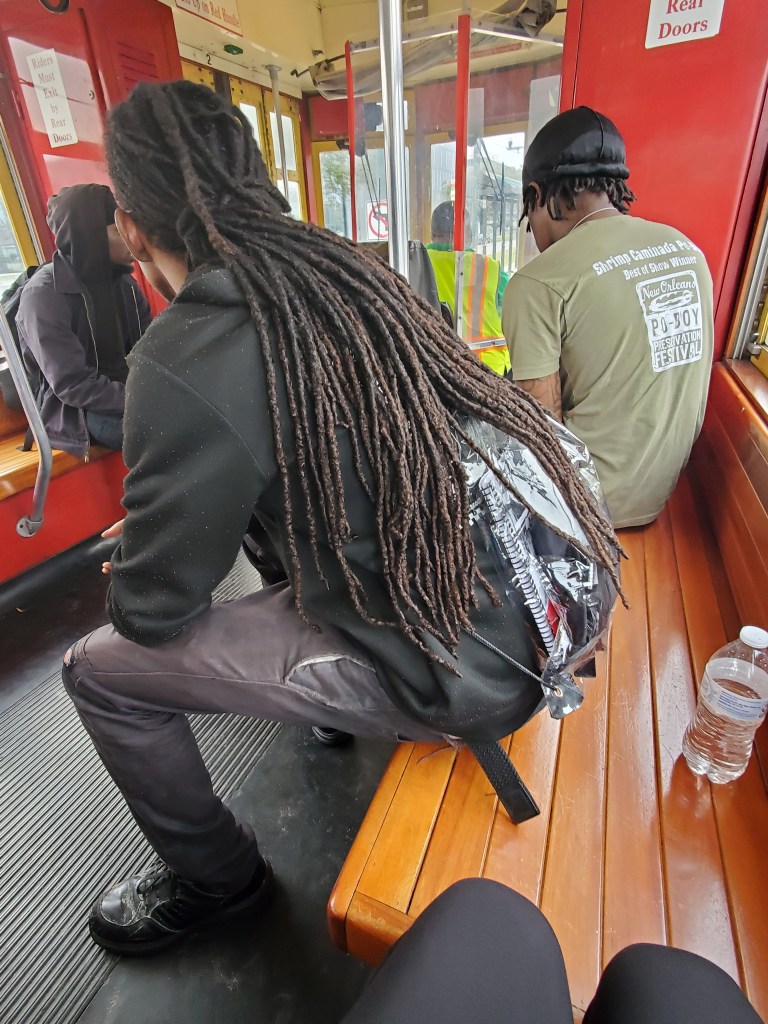
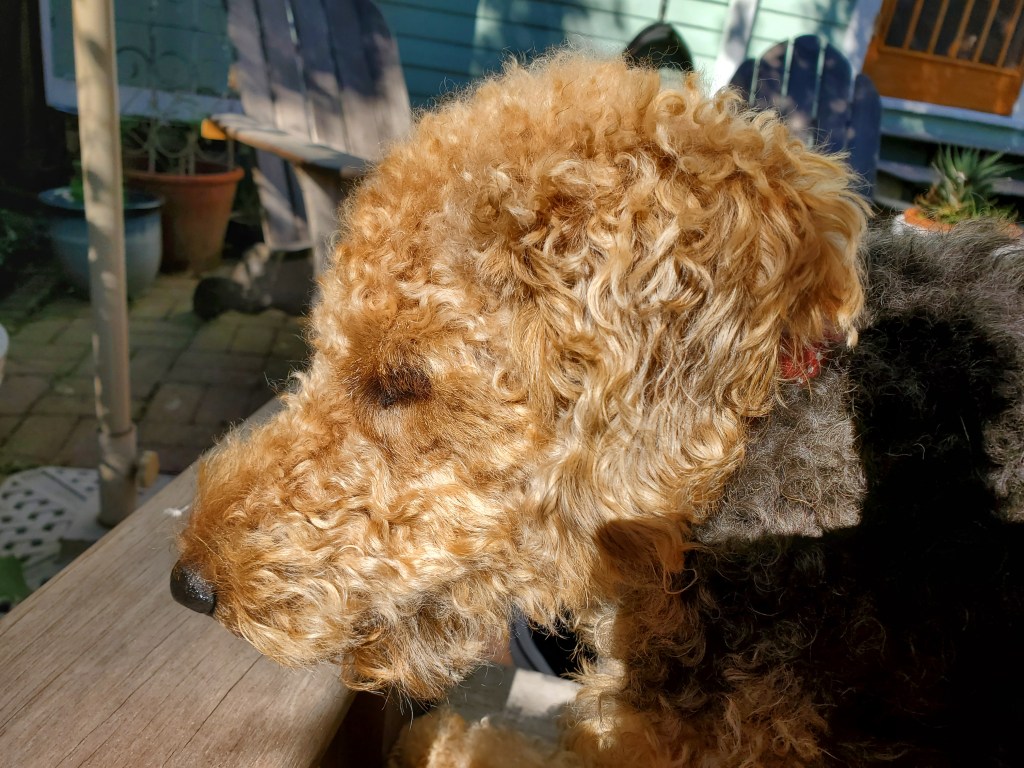
The ride back to Bayou St. John was enhanced by more colorful characters, some locals and some tourists, one of whom, an Indian gentleman, I had to reassure when the car stopped at Canal and Carrolton and the conductor got off to manually change the trolley pole to draw power from the overhead wire. 1893 technology, that. Back on DeSoto, Trish and Mike took adorable Dora for a walk while I rested on their charming sweet olive-scented patio.
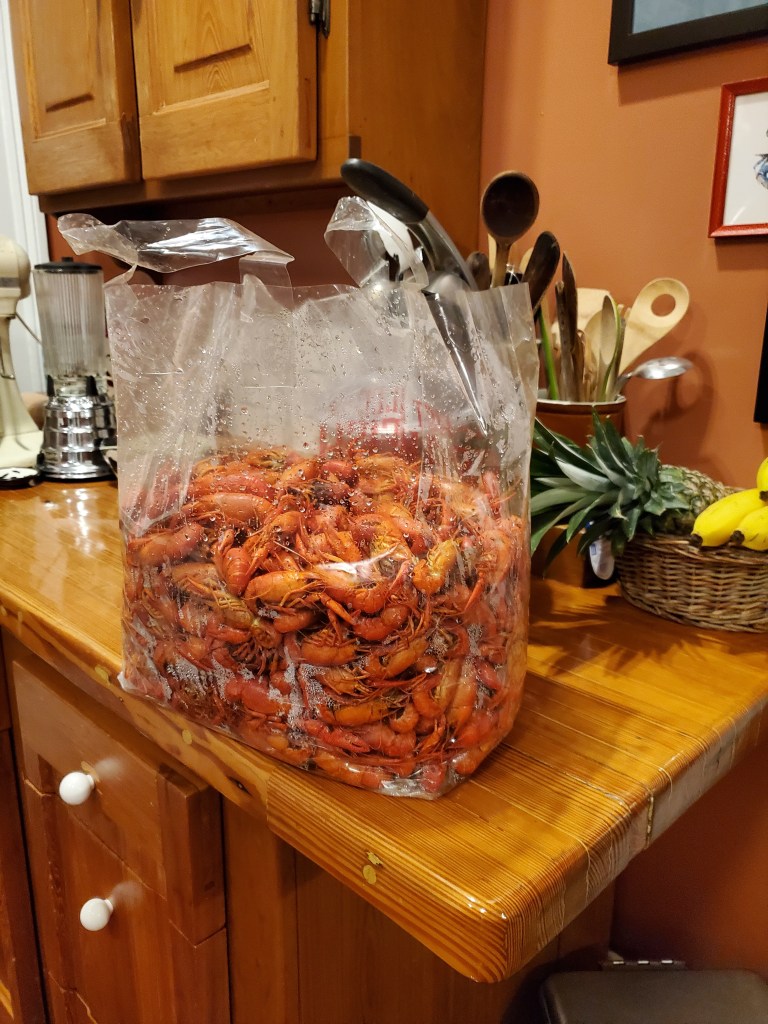
Dinner that night—at my request: fried oysters with beurre noisette, chopped salad, and an abundance of crawfish.

laser thermometer!
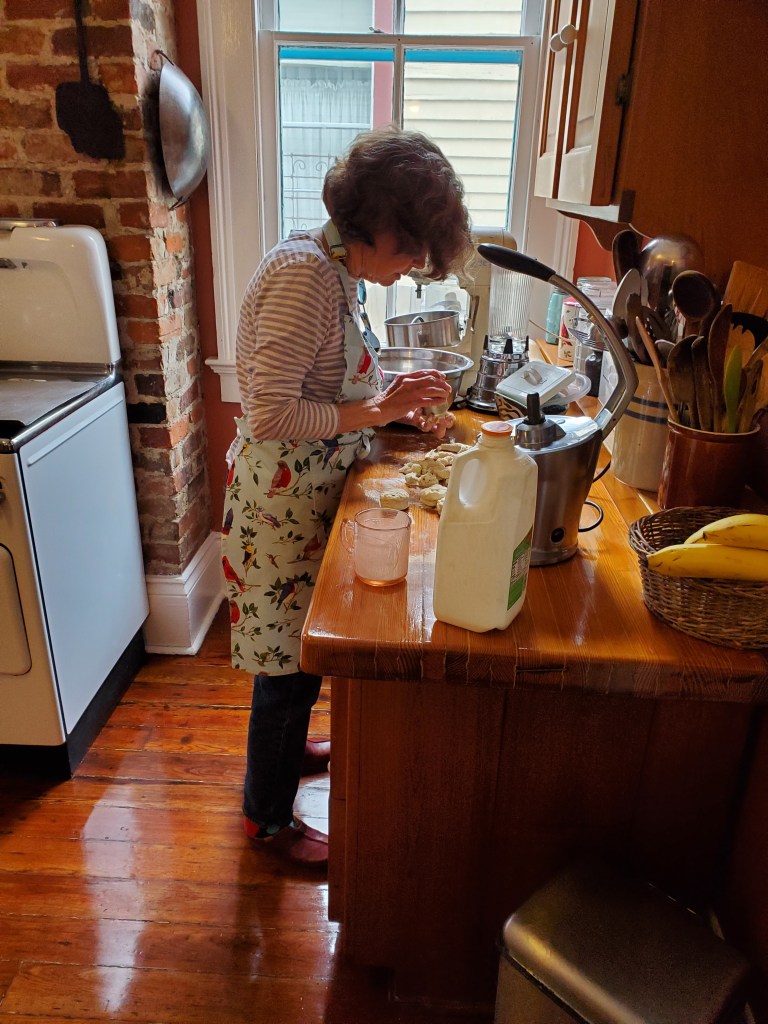
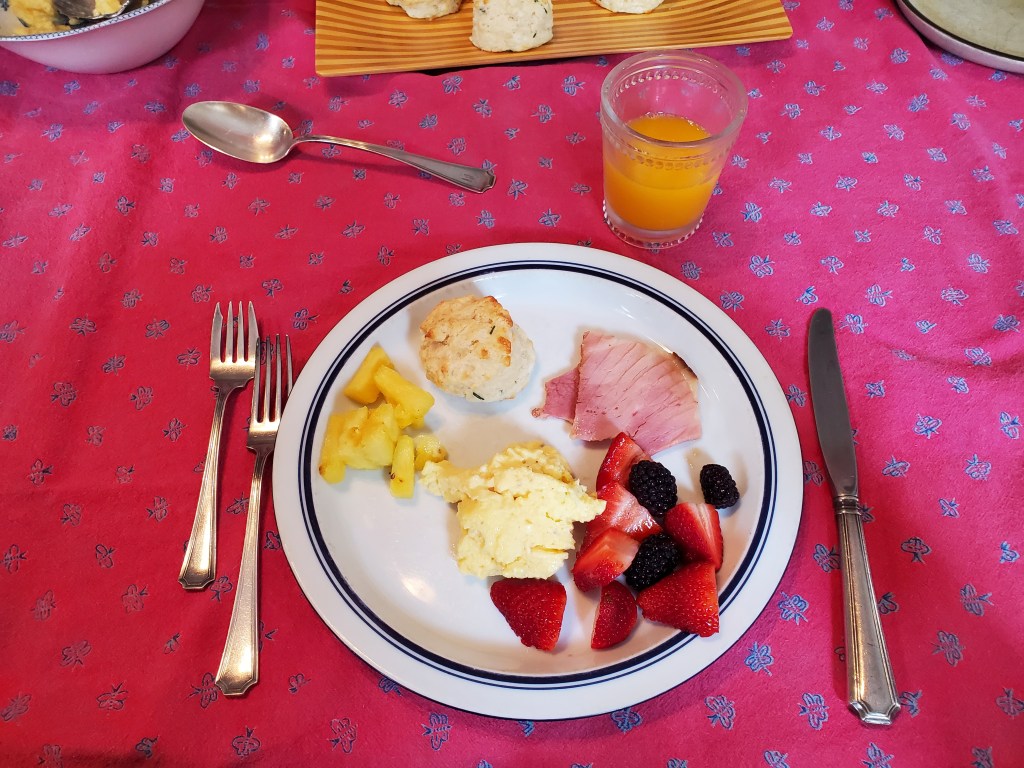
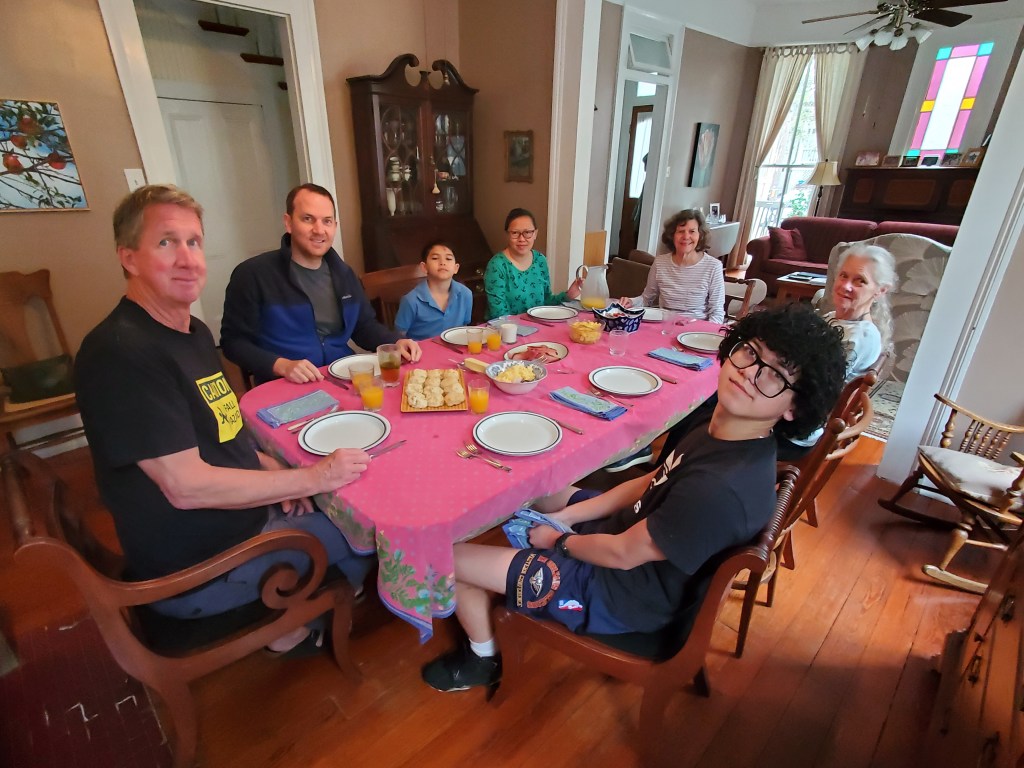
What remained of my NOLA sojourn was a lovely Sunday family brunch of Trish’s perfectly textured chive biscuits, ham, eggs (at $12.27 / dozen!), pineapple, and berries; my small contribution was happily juicing the fragrant oranges with a very efficient motorized juicer.
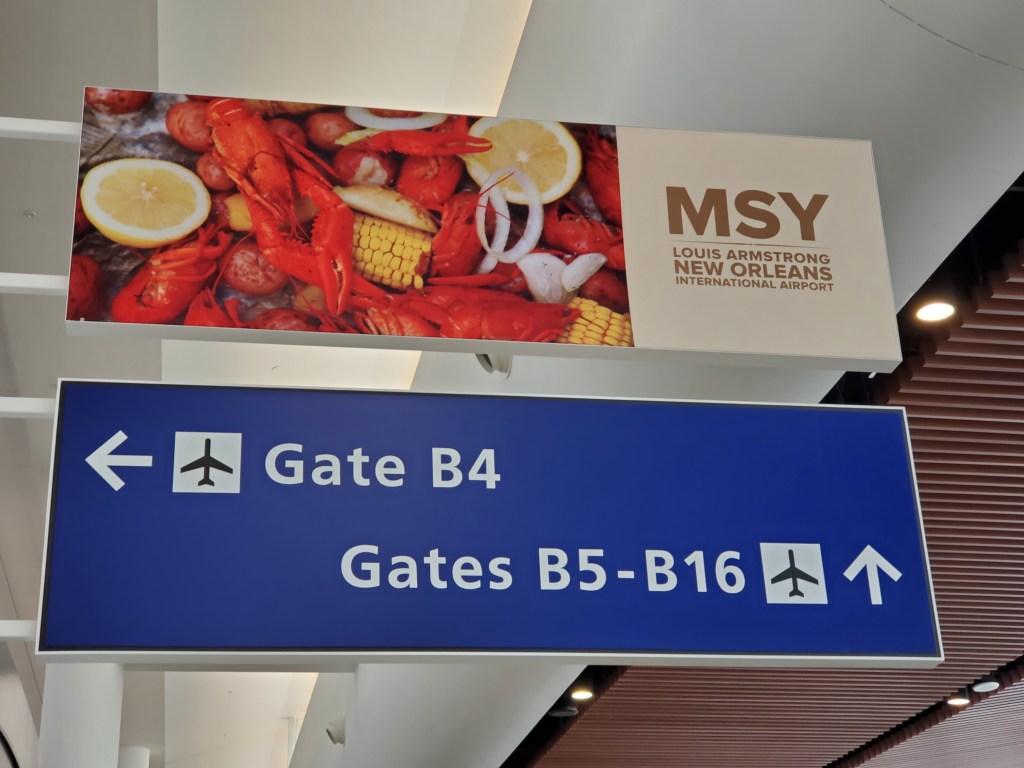
After a final stroll on the bayou, Trish drove me back to the airport: very new, very nice, and loaded with amenities unique to NOLA: live jazz and local food purveyors, a great improvement over the ubiquitous McDonald’s and Cinnabons at airports elsewhere. Turns out there was a Brocato’s gelateria just opposite my gate, so I indulged in a valedictory stracciatella.

The long flights home were unremarkable and (of course) late, but I had plenty to review and consider. Chief among the impressions: my realizing a distinct advantage of aging: a near half-century of friendships that sustained then and continue to sustain now.
Tuesday was Town Meeting Day here in little Madbury, New Hampshire (population ~2000; in 2024, 16 deaths, 13 births, and 6 marriages). As the Moderator called for votes and we waved our blue paper voter ballots in the air, I could only appreciate the time I’d spent in such good company in such a wonderfully different place.

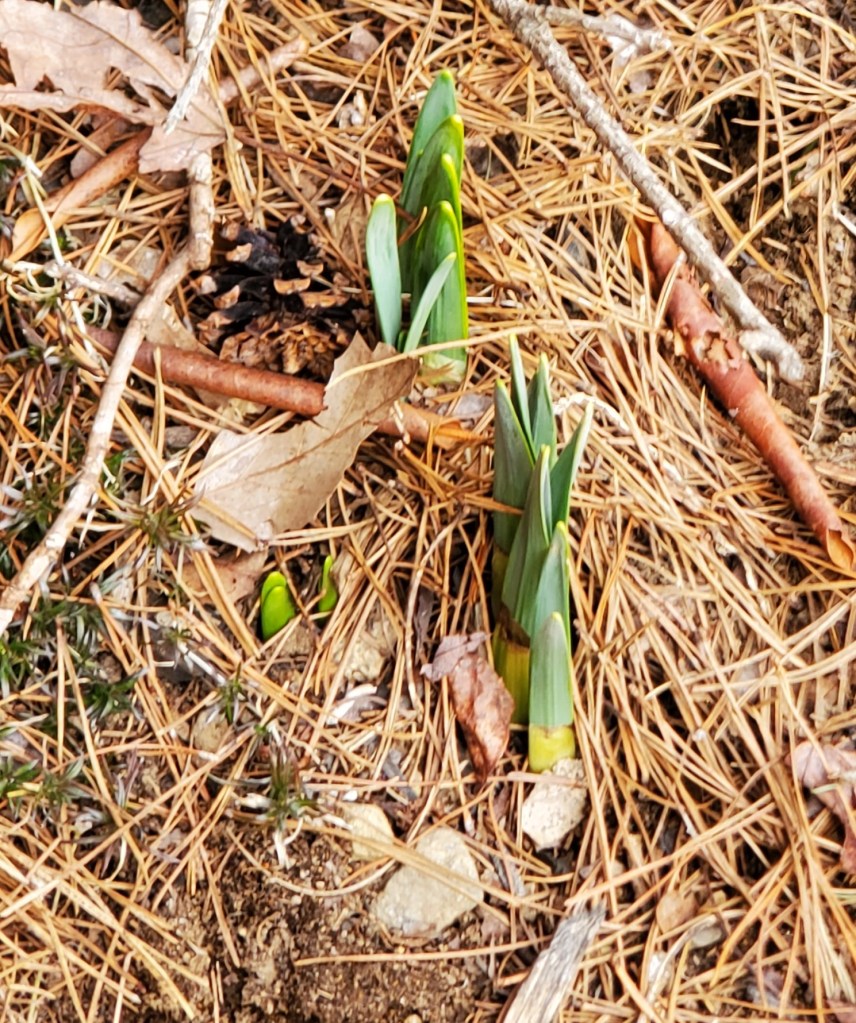
A lot of the snow had melted in the few days I was away. Spring will be here soon.
 Georgeann Murphy
Leave a comment