23 December 2024
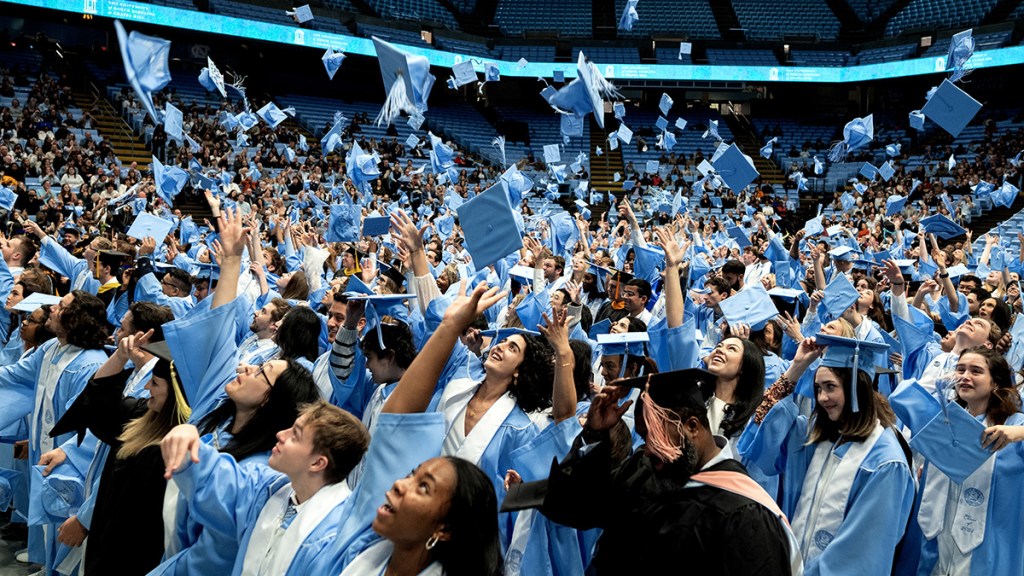
15 December 2024 (photo by Jon Gardiner, ’98)
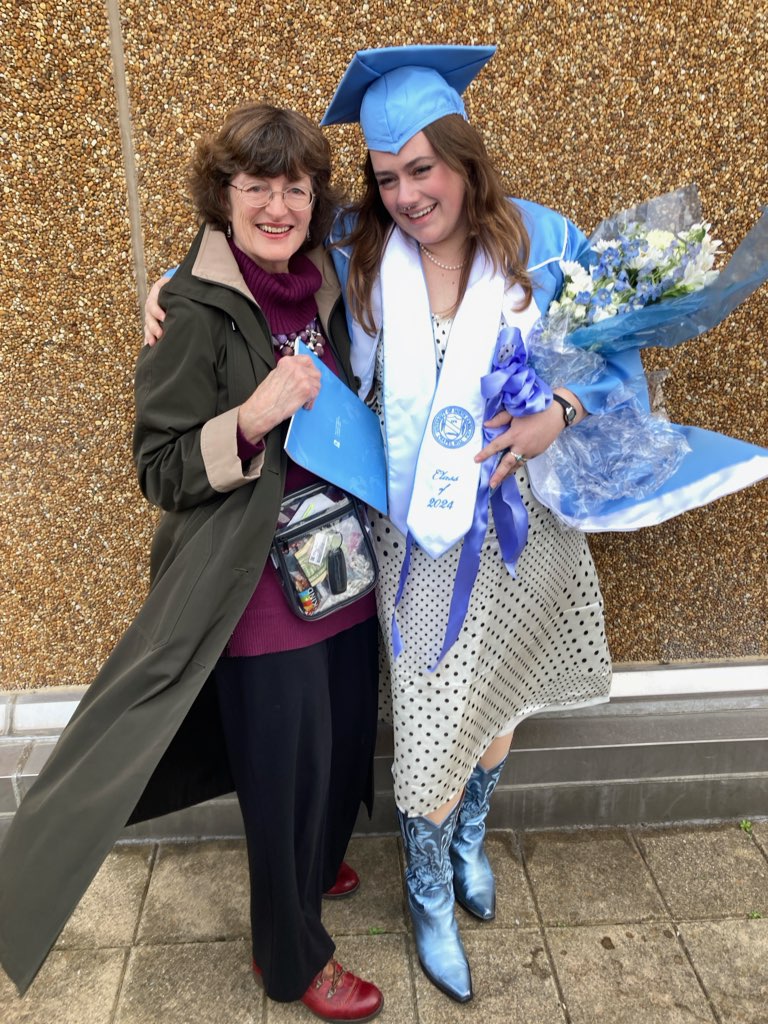
A week ago Sunday was a good day, a full moon and the graduation of our other granddaughter, Isabel, from UNC Chapel Hill. Like her sister Olivia part of the Covid Class of ’24, Isabel had weathered a pandemic AND calculus to earn her B.S. in Environmental Science, and Lord knows we need her smarts in that contested arena. As for the arena where the ceremony took place, the Dean Smith Center on Chapel Hill’s campus, there was plenty of room for the more than 1800 new graduates and their proud friends and families. At 50 years past my own graduation from Furman in 1974, with vivid memories of both Isabel and Olivia from infancy on, I was primed to wax nostalgic, but less prepared for the dissonant notes of proceedings that began with a loud speaker announcement that any attempt to disrupt the program would be met with immediate expulsion: “You WILL be arrested.”
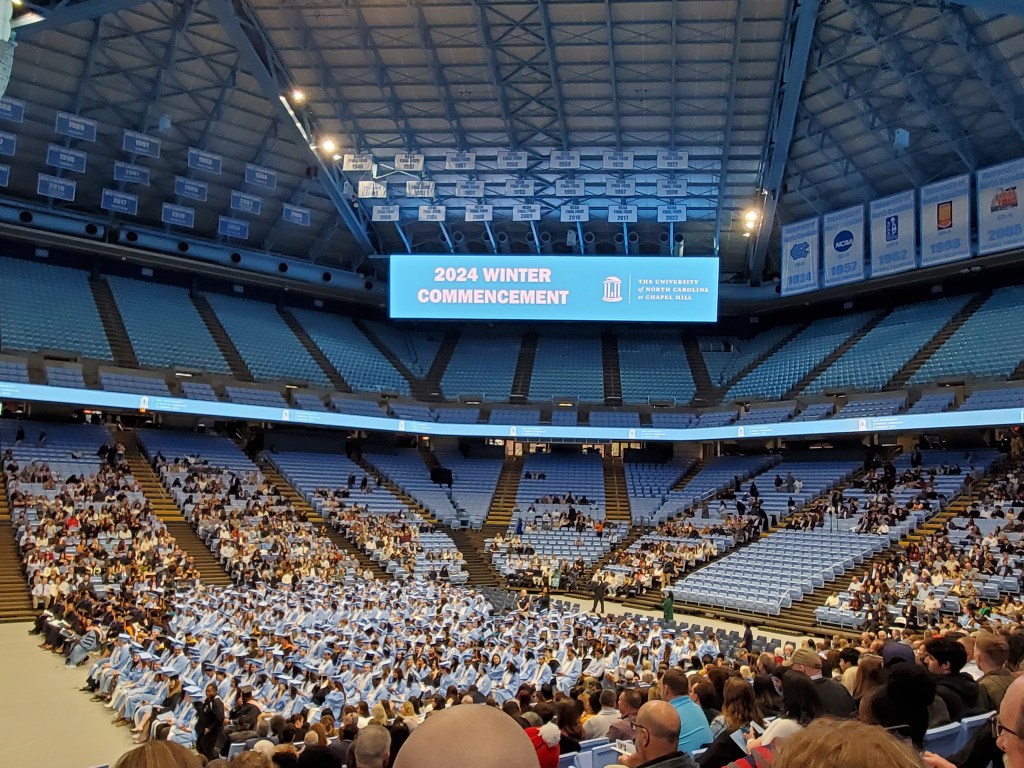
In my 43 years as an academic, I attended a lot of graduations, but that was a first—and ironic, especially for UNC Chapel Hill, as I was to learn later on. Just how much things have changed for universities over the decades was disconcertingly clear, beginning with my passing the time by counting the number of doctoral degrees to be awarded that day: 142, only 6 of which were in English and Comparative Literature, distinct fields back in my day when UNC Chapel Hill was considered one of the most prestigious English programs in the country. Of course, the humanities’ decline is widespread across the country: this November Boston University suspended admission to a dozen graduate programs in humanities (including English) and social sciences, and my own graduate alma mater, Tulane, gave up awarding Ph.D.s in English years ago.

next to the Master’s candidate in black
So, times change. But really, why did UNC Chapel Hill Chancellor Lee Roberts welcome the soon-to-be graduates by recounting his own tardy progress toward an undergraduate degree delayed by partying, and citing (as an excuse?) how much Winston Churchill drank? Having been given an art student’s beautiful rock supported by that young artist’s exquisitely crafted wooden pedestal, Roberts’s labored simile compared the graduating class to rocks that evolve over their time at university. Rocks evolve? Really? Back to class, Chancellor Roberts.
Okay. So not a gifted speaker. A gifted speaker did give the commencement address, cancer researcher Prof. Shelton Earp, but his sincere and poignant words—he conveyed not only his own well wishes, but those of his recently deceased wife, whom he clearly was mourning—could hardly be heard because he was too far from the mic, and no one made the necessary adjustment. The doctoral candidates (unlike the baccalaureates! A disappointment that) did get to march across the stage, but they were not hooded by their dissertation directors as I had been in 1984, the moment (my sister reported) that made my dear old dad weep.
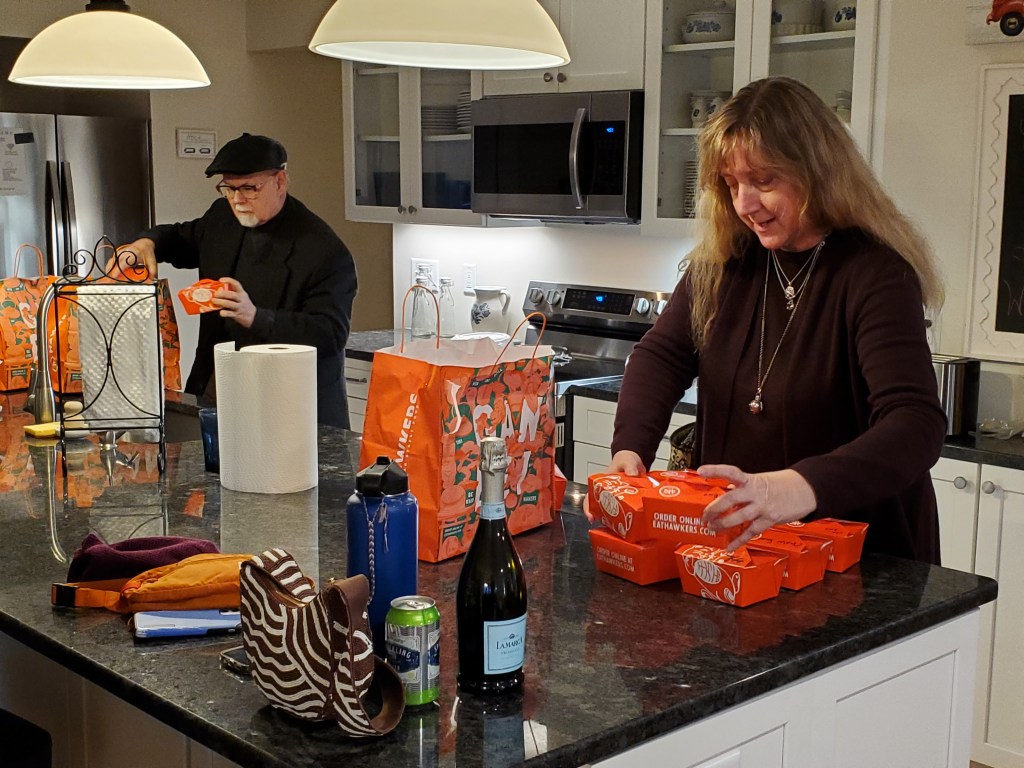
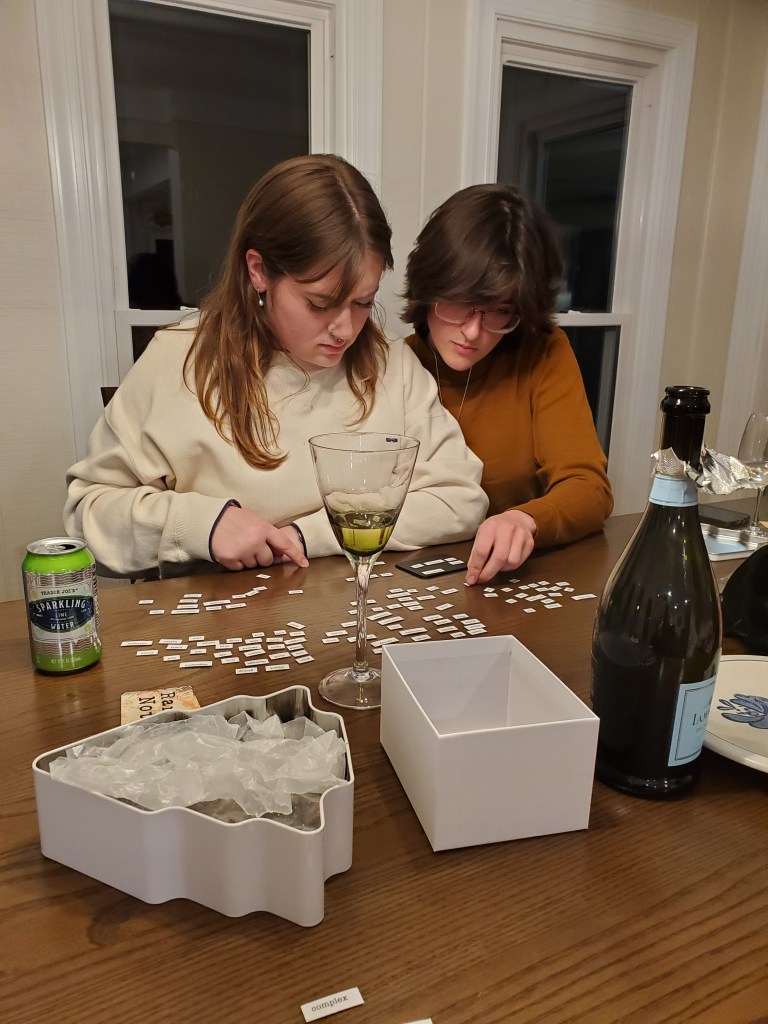
Reader, we all celebrated nonetheless, with many photos and some tasty Asian takeout we happily consumed back at the spacious Air B&B proud parents Susan and Mark had rented for grandparents Ann, Jerry, and me to share with Isabel’s twin Olivia and some of Isabel’s closest friends, Sarah, Will, and Alice; we bonded over several jolly rounds of a Ransom Notes game.
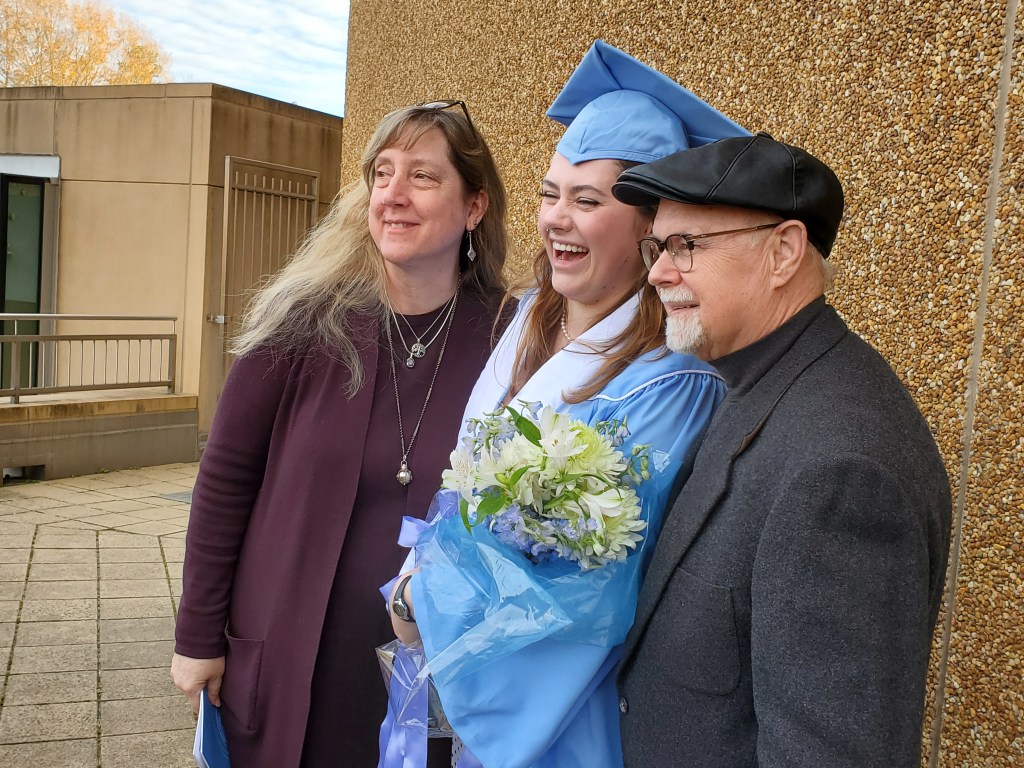
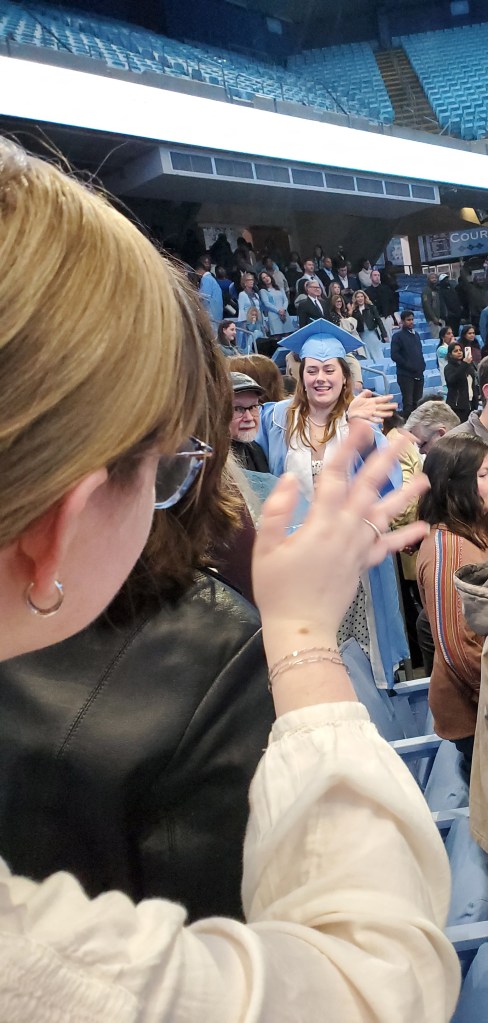

Being around all these clever, energetic youngsters was encouraging, and the good vibes lasted right though breakfast out at brunch place First Watch the next morning. That the young woman cashier there could not figure out how to change the $20 bill I gave her, even when I specified a ten, a five, and five ones, did, however, inspire some concern about educational slippage.
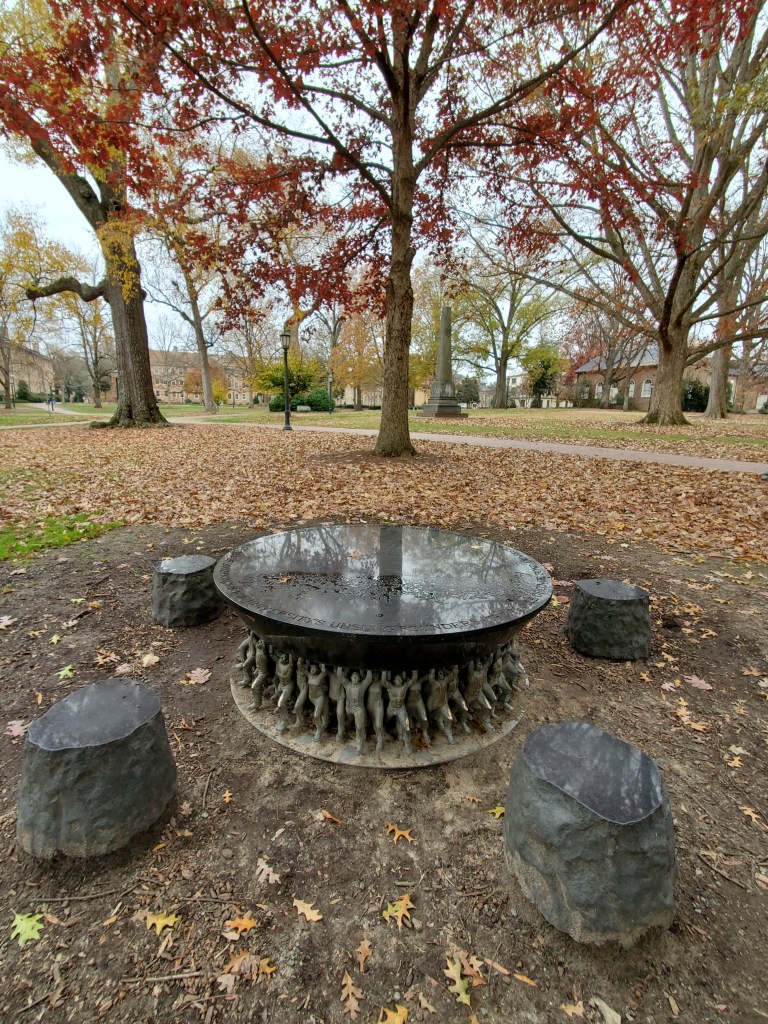
As the family dispersed, I headed for a walk ‘round the UNC campus I’d not seen before, relieved that I could figure out how to use the Park Mobile app and provided with a map by a gracious undergrad at the Visitor Center on East Frankin. The day was still overcast and chilly as I made my way across McCorkle Place, the weather likely contributing to my less than optimistic mood about the academy and Where We Are Headed. Korean artist Do-Ho Suh’s “Unsung Founders” memorial, a gift of the Class of ’02 installed in May 2005, acknowledges that the University’s first leaders were slave holders, and celebrates the servants and slaves who were crucial to its success: public art as salutary reminder of vexed history.
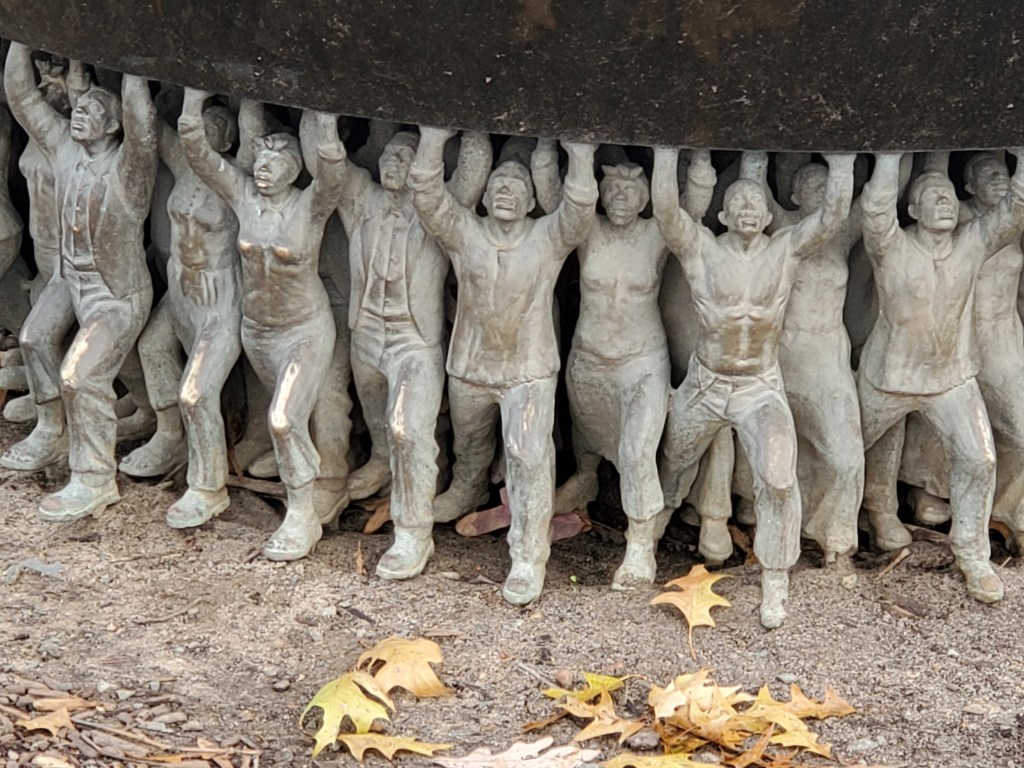
I couldn’t help but think of the U.S. Supreme Court’s June 2023 ruling against UNC’s consideration of race in student admissions, finding that the University violated the Constitution’s equal protection clause. In January 2024, the University paid 4.8 million to the Students for Fair Admissions, and voted to bar the use of race, sex, color, or ethnicity in admissions and hiring decisions. In the fall of 2023, Blacks made up 10.5% of the first-year class. In the fall of 2024, they accounted for only 7.8%. I wonder what the Unsung Founders would think of that?
Continuing southeast on my ramble, I passed the Davie Poplar, named for William R. Davie (1756-1820), who helped charter the University and lay the foundation for the first building in 1793. Legend has it that Davie and a committee of trustees met under that tree and decided to build the University there. But, alas, I learned later that Davie was not on that committee: the legend is false. The Poplar itself surely has seen better days.
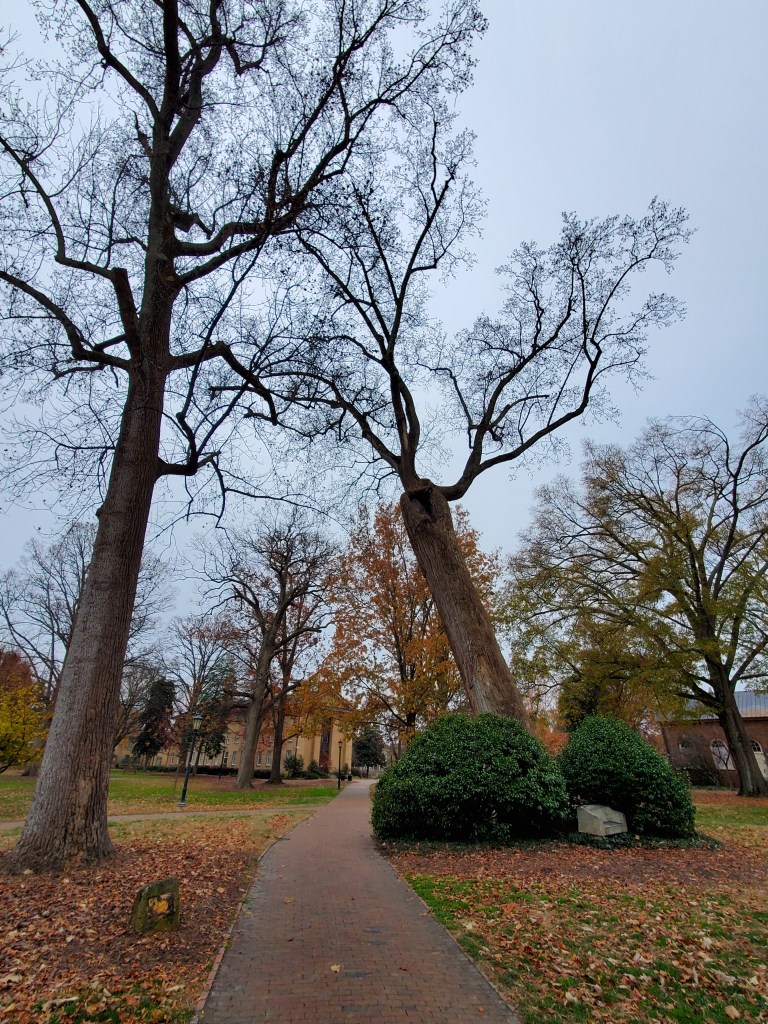
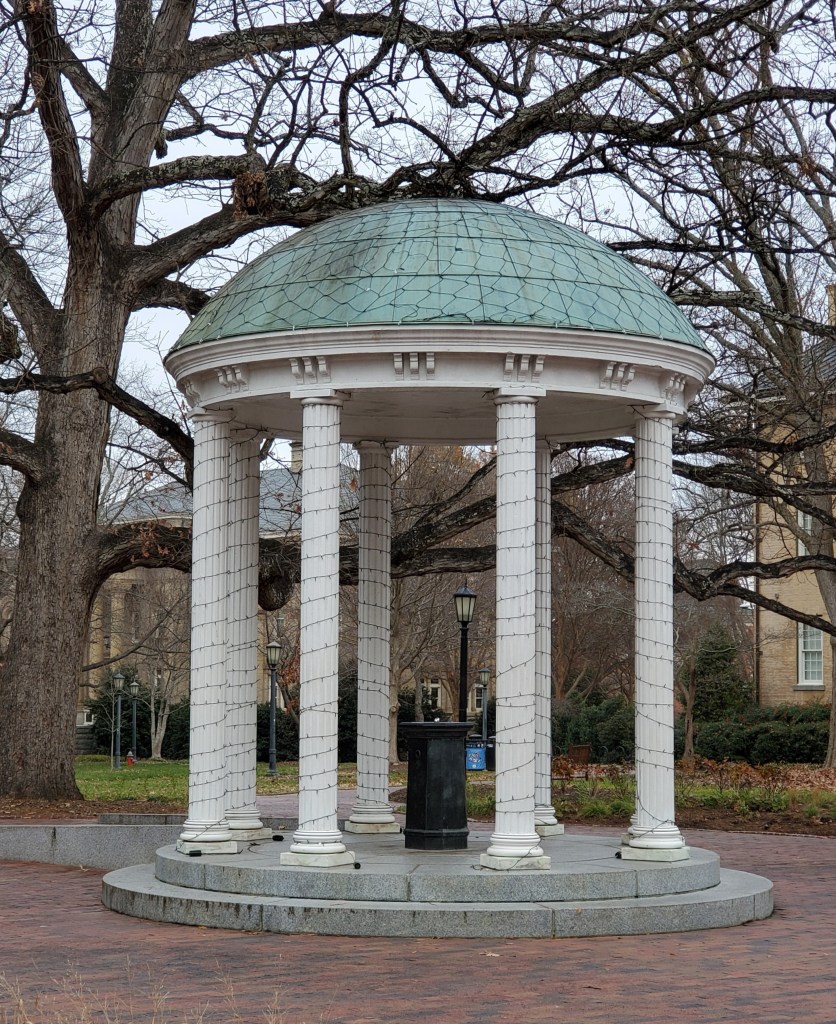
But there, at the edge of East Cameron Street was the Chapel Hill’s Old Well, first dug in 1795 as the University’s water source and in 1897 covered by the domed structure modeled on the Temple of Love at Versailles, now the University-licensed icon—and, since 1925, drinking fountain! I couldn’t help but think of the line from my own Furman’s alma mater: “And ‘neath her [Paris mountain’s] shade they [the students] rest secure / And drink from wisdom’s fountain pure.”
I next encountered Gerrard Hall, built in 1822 and named for Maj. Gen. Charles Garrard, a Revolutionary soldier and early benefactor, initially a chapel that took 15 years to construct, as the commemorative plaque records “due to the impoverished state of University finances.” Plus ça change, plus le même chose.

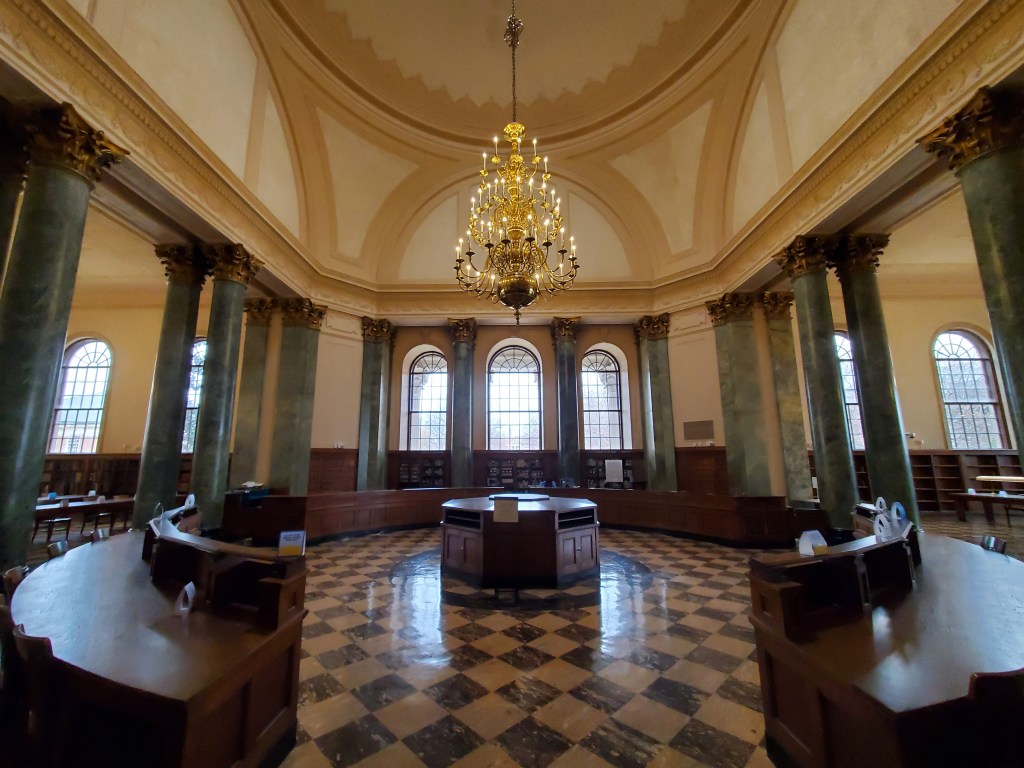
On to the august neoclassical Wilson Library (1929) named for Louis Round Wilson, centenarian, University Librarian (1901-1932), “University Historian and Advisor to Presidents and Chancellors.” Methinks Wilson could have better advised Chancellor Roberts on rhetorical effectiveness. But his namesake building is a Beaux-Arts beauty.
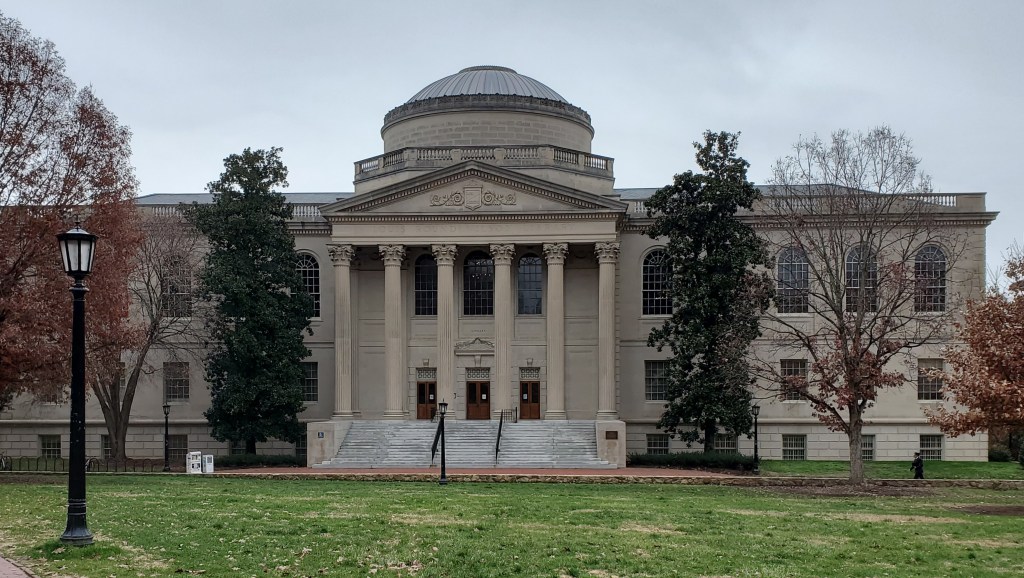
The semester done, and no longer the University’s main library but rather a home to special collections, the Wilson was understandably deserted save for a solitary guard in the magnificent reading room, who told me most UNC graduates never set foot in the place. We shared a lament over that—and the omnipresence of food and drink in most university libraries today.

I headed back to my parking spot on Franklin street.
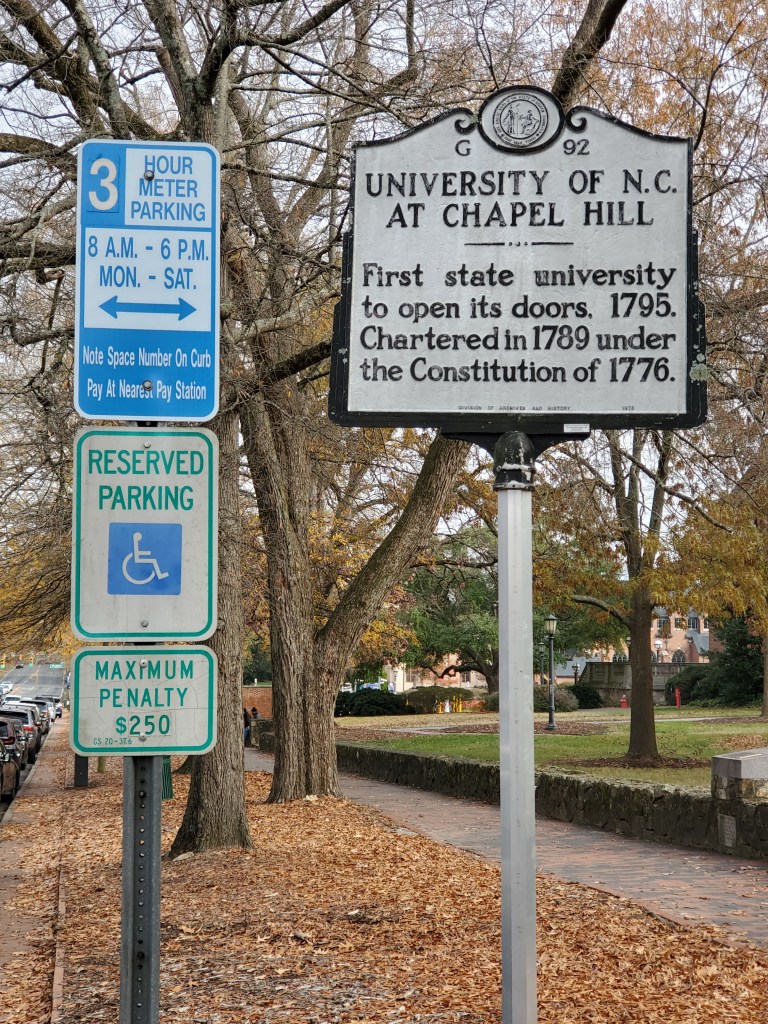
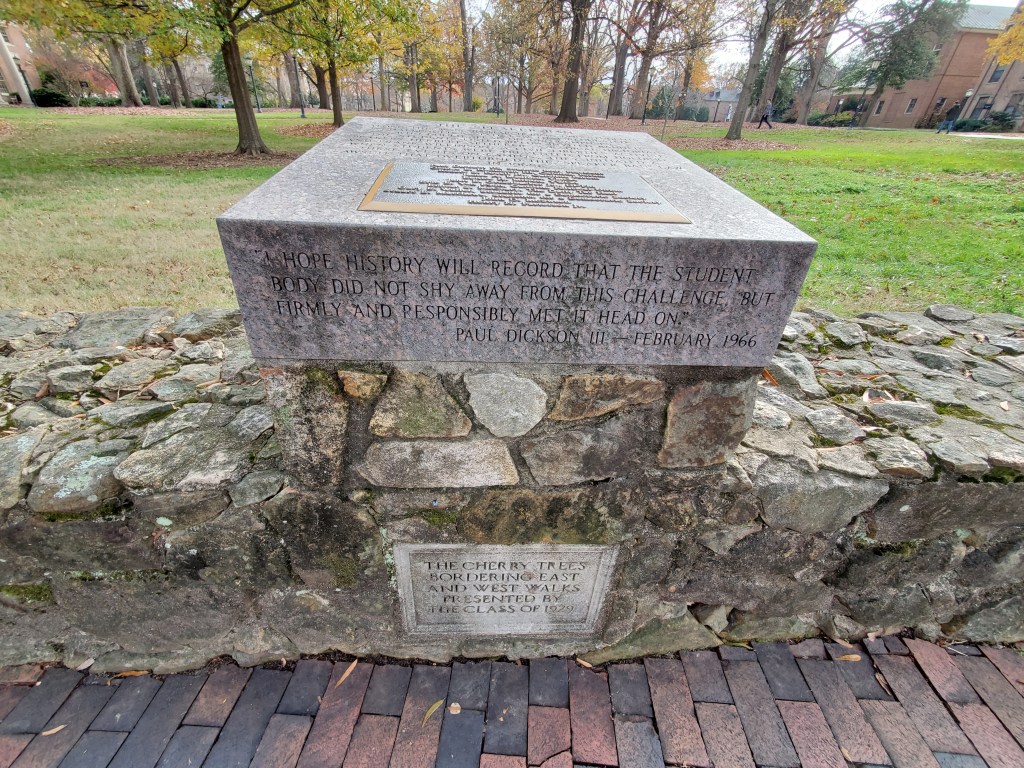
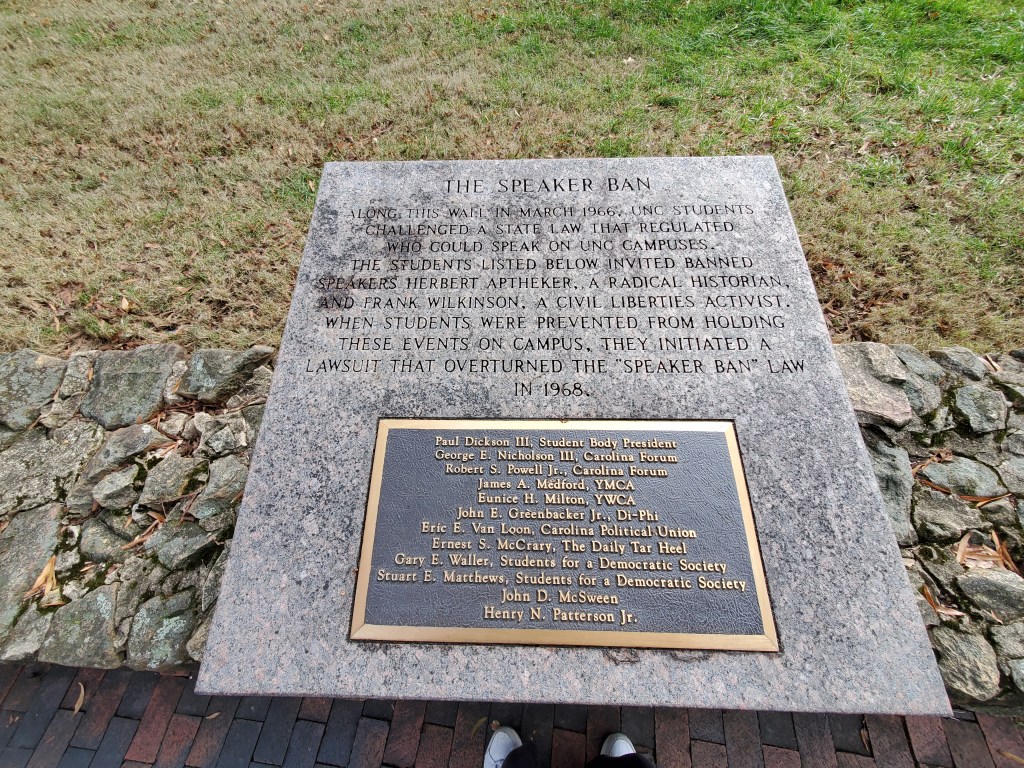
As it happened, I had unwittingly left my rental Nissan right by a monument resonant with topical meaning given the warning that began the previous day’s commencement. Here’s what it said:
The Speaker Ban
Along this wall in 1966 UNC students challenged a state law that regulated who could speak on UNC campuses. The students listed below invited banned speakers Herbert Aptheker, a radical historian, and Frank Wilkinson, a civil liberties activist. When students were prevented from holding these events on campus, they initiated a lawsuit that overturned the “Speaker Ban” law in 1968.
“I hope history will record that the student body did not shy away from this challenge, but firmly and responsibly met it head on.”
Paul Dickson III (Student Body President) February 1966
Still contemplating competing impressions of Isabel’s happy graduation juxtaposed with institutional history and the slippery slope of free speech eroded and the humanities abandoned, I took off for the Raleigh Durham Airport (RDU), making two failed attempts to stop at a Chick-fil-A and provision myself for the flight home. One was closed for construction and the other unfindable. The precarity of travel must have been something sculptor Gordon Huether had in mind when he offered RDU his “Highwire Travelers” piece.

But what made an even bigger impression on me as I made my way to the appropriate gate was the excising of human presence in favor of machines. A piano played Christmas carols without a piano player.

No waitress handed me a menu at the American Cafe restaurant; only a bar code greeted me when I sat down to get a bite. That impersonality drove me to the Flight Stop for a half-price sandwich (still $5.99 even at half price), which the automated checkout kiosk did not recognize as half price.
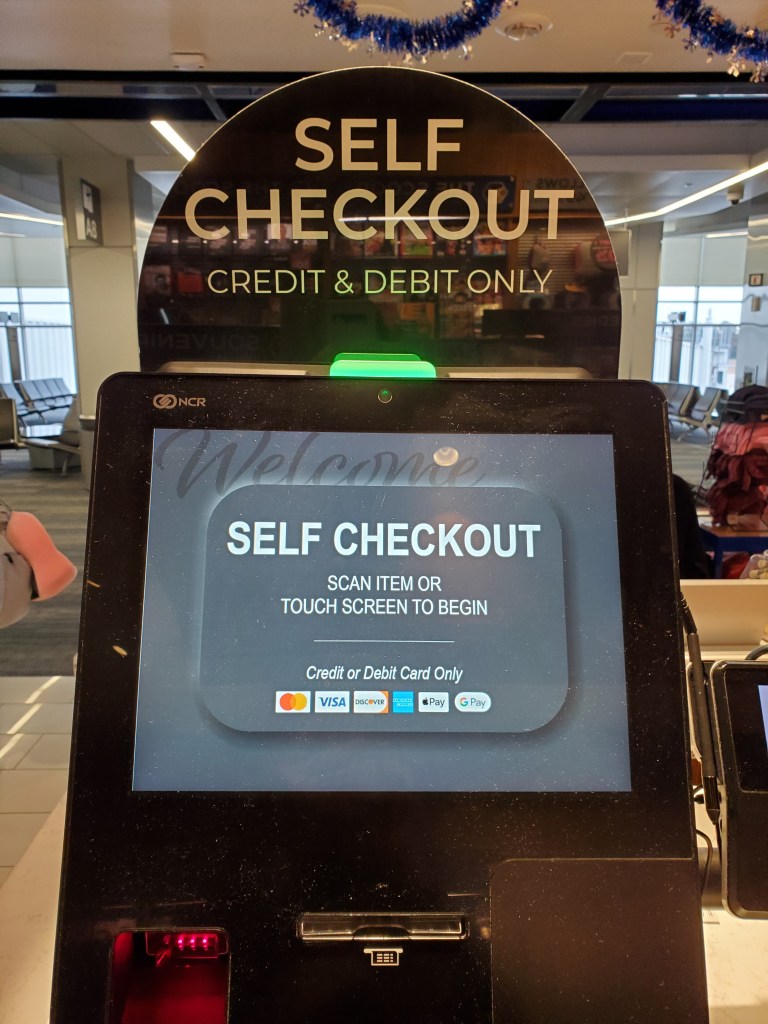
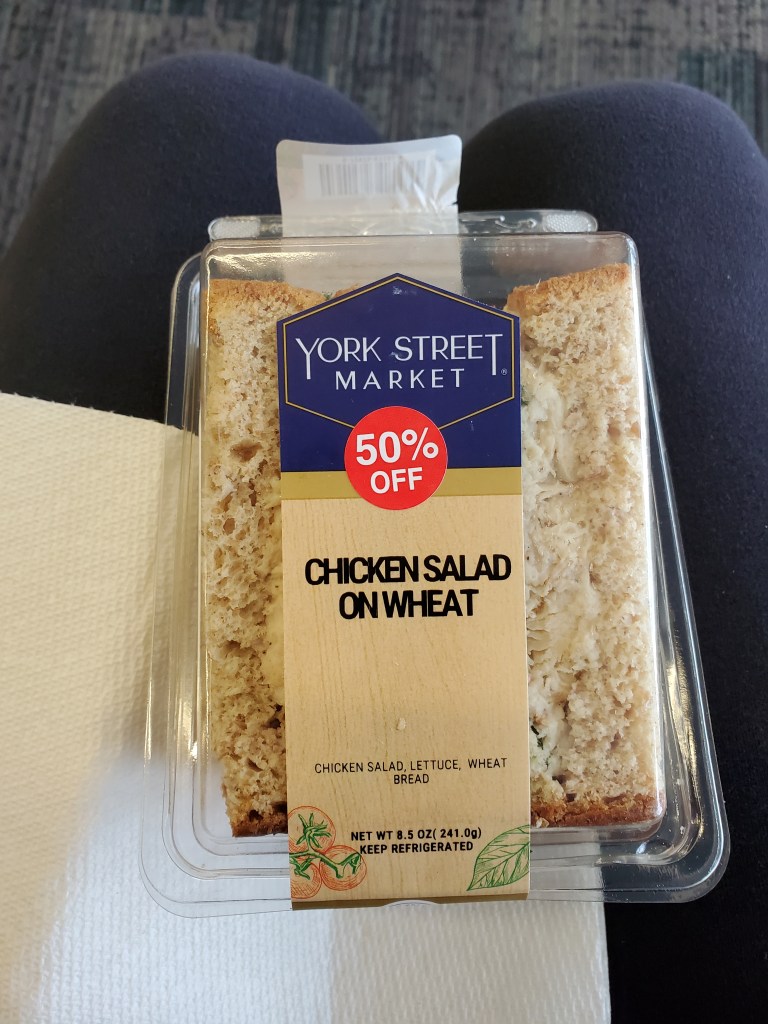

Oy! I was in the Research Triangle, but was only A.I. doing the research?
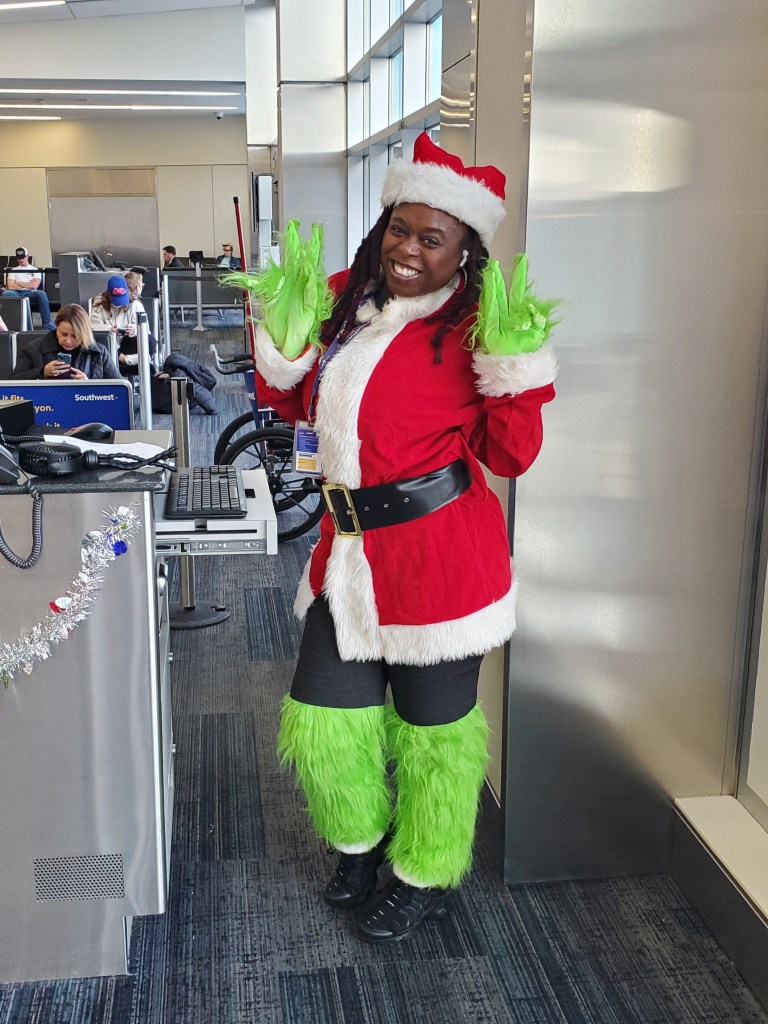
What saved the day and pulled me out of a dive to despair was, praise be, something no machine would have “thought” to do: the Southwest gate attendant, because she “loved Christmas,” appeared in costume, half Grinch, half Santa’s Helper, and managed to scan us on to the jetway while prompting a smile from all the weary road warriors boarding.
So, hail to thee, Class of ’24! Congratulations and best of luck! And to borrow advice from Jon Batiste’s Late Show band: Stay Human.
 Georgeann Murphy
Leave a comment