18-21 November 2024
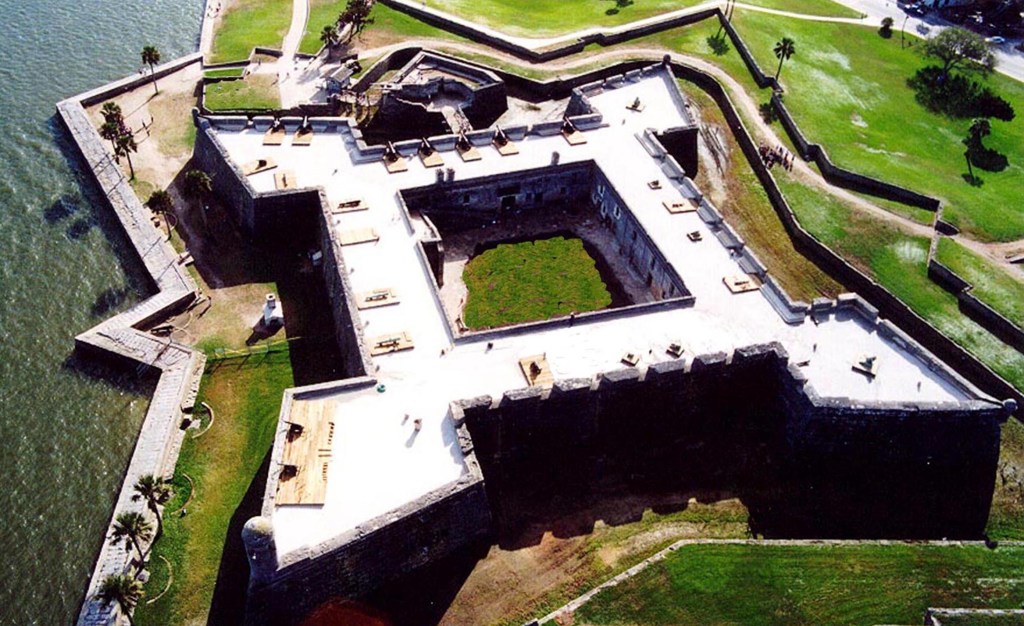
constructed 1672-1695 (National Park Service photo)
Seeking an escape from the woes of this soon-to-pass year (my sister’s death, Hurricanes Helene and Milton, and the return of felonious Trump), I had a pre-Thanksgiving reunion with my brother-in-law Richard and nephew Daniel in our nation’s oldest city, St. Augustine, founded in 1565 (Shakespeare was then one year old) by Spanish conquistador Don Pedro Menendez de Aviles. Both Richard and Daniel are history buffs, and my earlier October 2021 visit with my Women Against Dissertation (aka WAD) pals from Tulane days was sufficiently fresh in my mind to suggest the city’s charms as a respite from care.
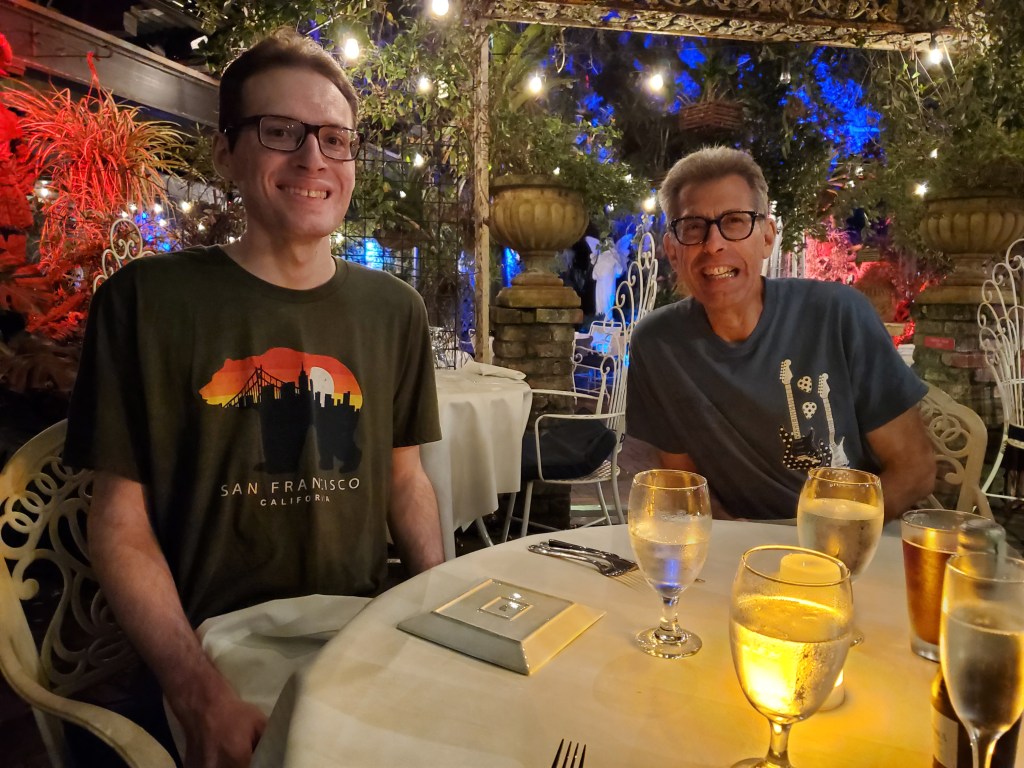
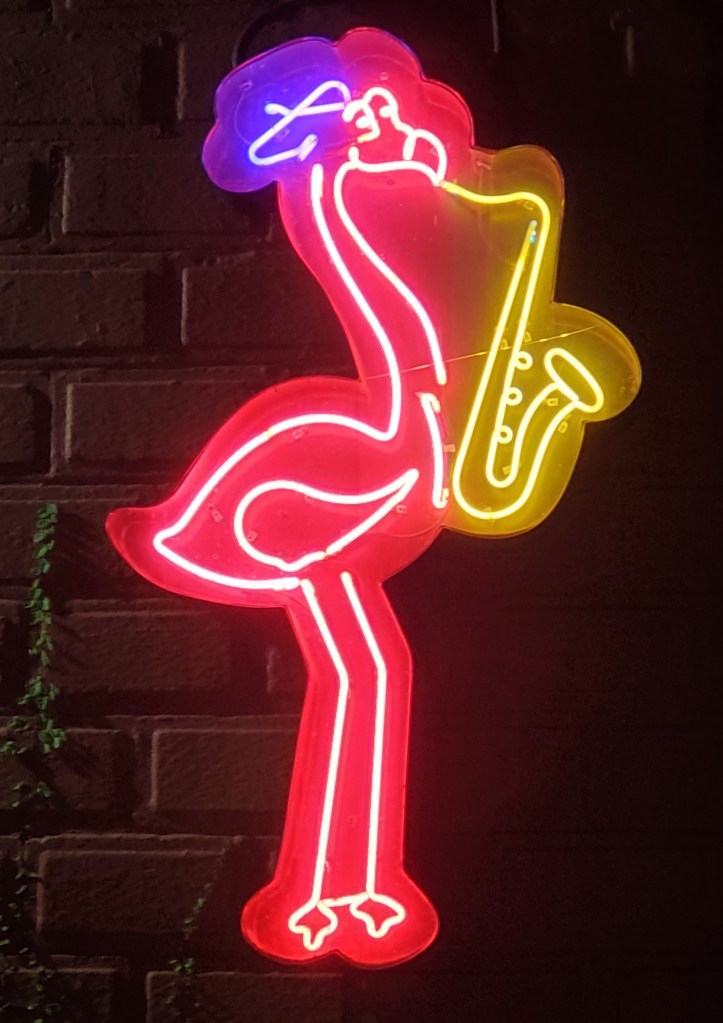
The city delivered, first with an excellent dinner al fresco at Cortesse’s Bistro and Flamingo Room Piano bar on San Marco Avenue not far from our Doubletree. The Mediterranean food was excellent, reasonably priced, and served by the charming Alejandra, a Mexican beauty. Such a treat for me, just arrived from chilly NH, dining on flounder piccata and enjoying the lovely patio. Next time, I’d return for the piano bar and laissez les bon temps rouler.
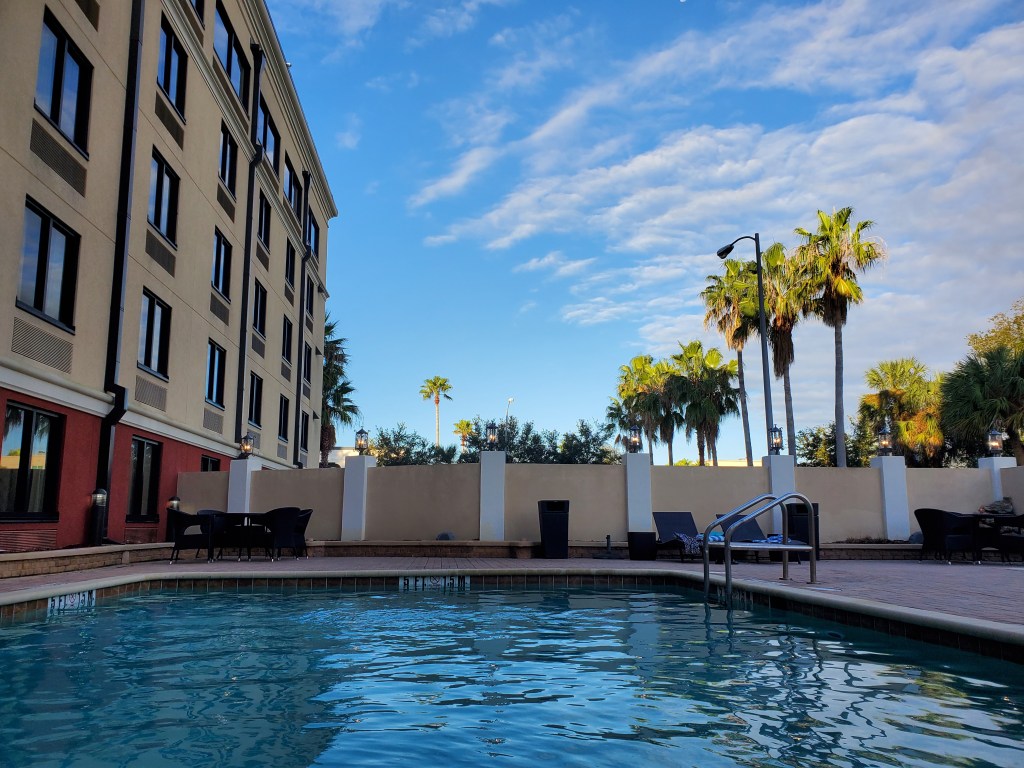
Appreciating tropical weather in November as I never did while growing up in St. Petersburg, the next morning I enjoyed a brief swim in the Doubletree’s unnecessarily heated pool.
I note here that when I returned my rental car at the Orlando airport three days later, the temperature was 62o and the Dollar rental attendants were all wearing puffy jackets and wool caps. Perception of cold is certainly relative, especially if you’ve recently taken a plunge in New Hampshire’s Lamprey River.
Our first morning we had breakfast at a nearby Denny’s: not recommended, but the Doubletree offered only an extravagantly priced breakfast—$15 for a mere continental, PLUS a $24-per-night parking fee. Caveat emptor: the hotel’s location on San Marco is good, but those warm chocolate chip cookies on arrival don’t make up for breakfasts not included. We then walked a short way north on San Marco to the Old Jail to get tickets for a single day hop-on-hop-off Old Town Trolley tour. Unlike the Doubletree, this was a bargain at the senior ticket price of $38.47.
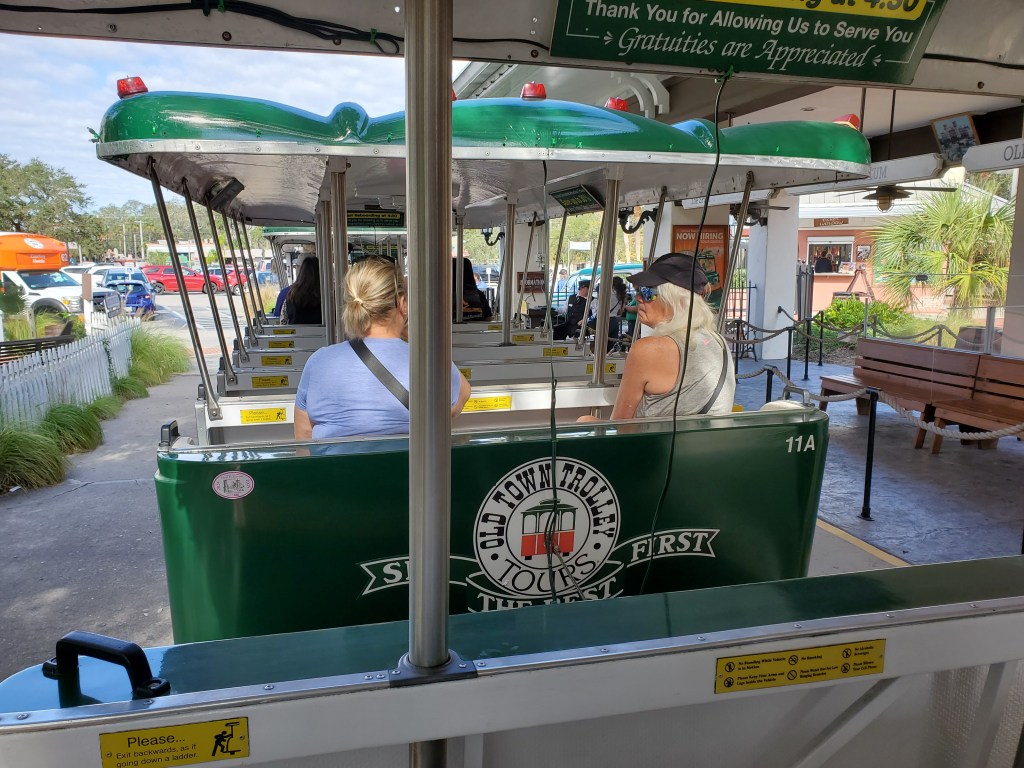
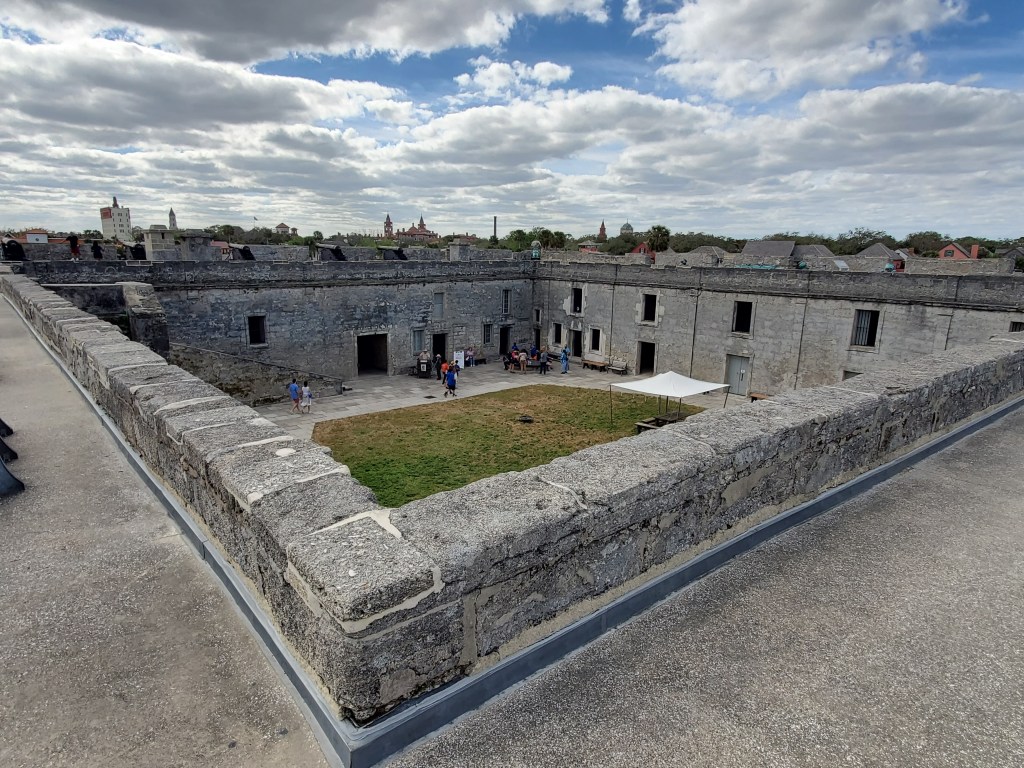
We got off just past the city gates and made our way to Castillo de San Marcos—along with LOTS of youngsters in school groups. This was Richard’s and my maiden voyage with our lifetime senior passes to the National Parks and federal recreational lands, and it turns out each of us could have brought an additional three adult guests. Another good deal!
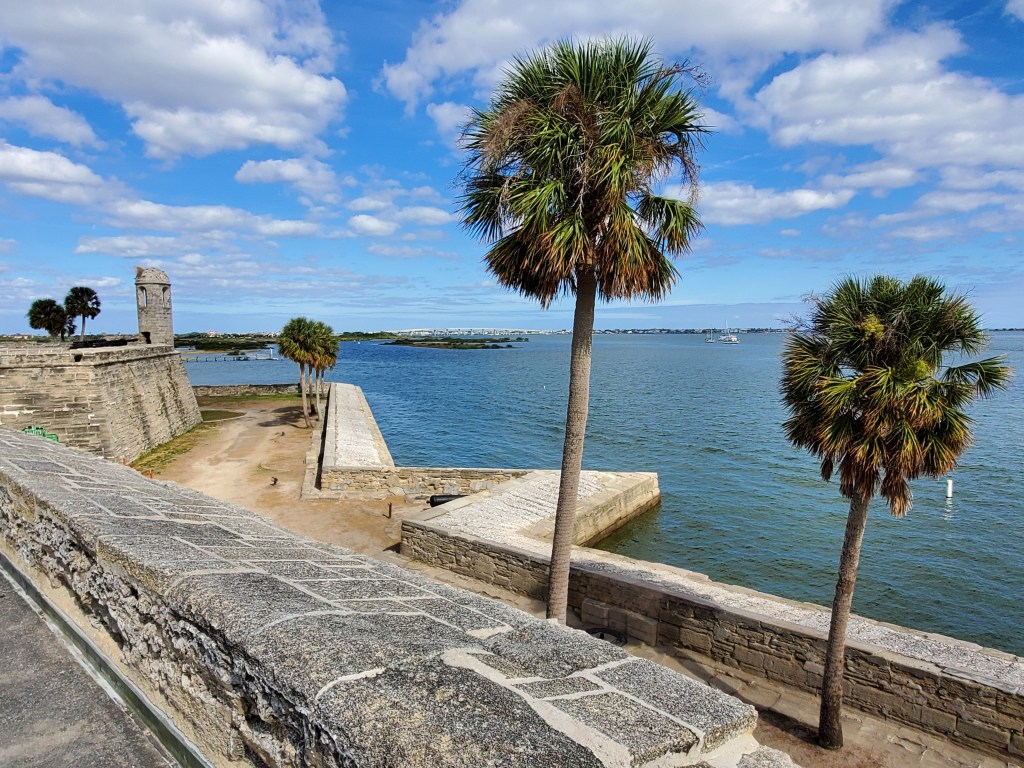
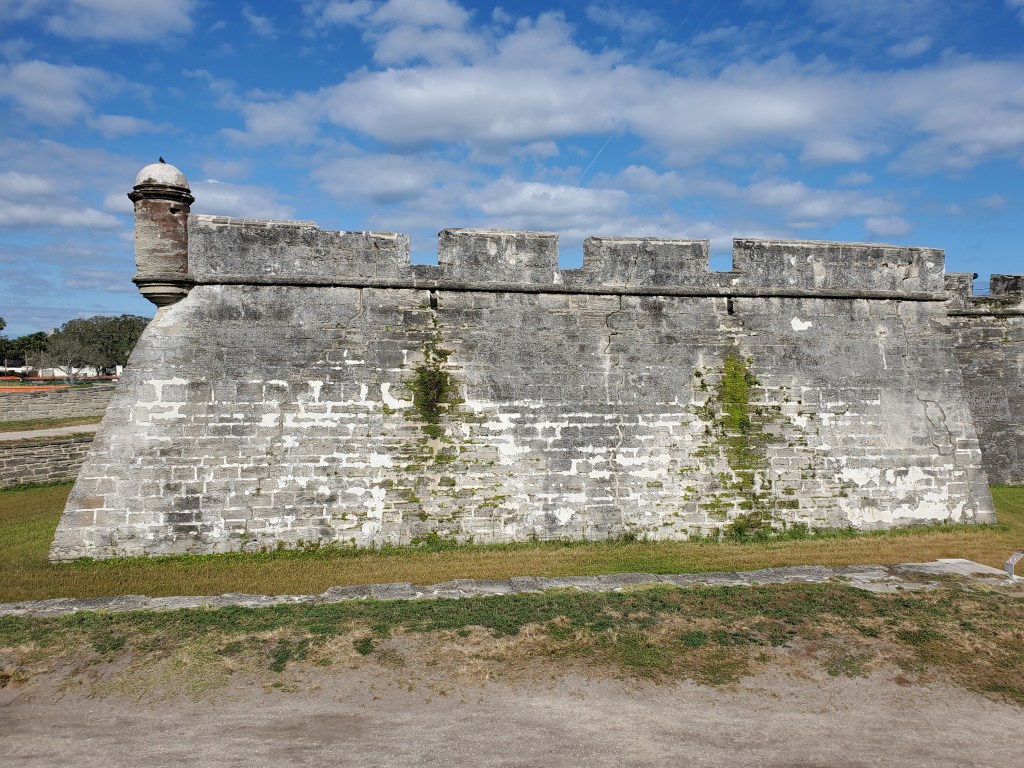
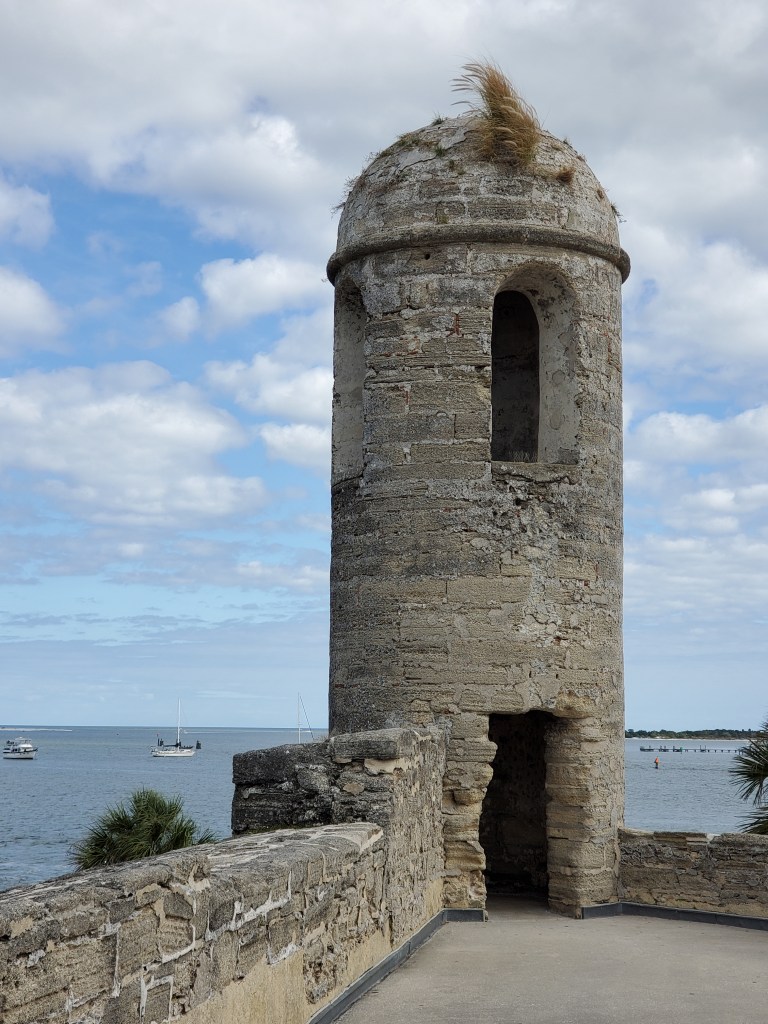
I can’t really explain my fascination with forts; I seem able to compartmentalize and stow away the brutality and pure cussedness of humanity they represent. I’ve certainly come to understand Mark Twain’s paraphrased inability to understand prejudice: white men, red men, black men, yellow men—they’re all human beings, and there’s nothing worse than that. The geometry of the Castillo certainly appeals, and the ranger who spoke to us (the son of two teachers, and it showed) made clear the strategic advantages of its star shape, waterless moat (for keeping cattle safe), and the extraordinary cannon-ball-eating coquina limestone of which the fort’s walls, between 12-19 feet thick, are made.
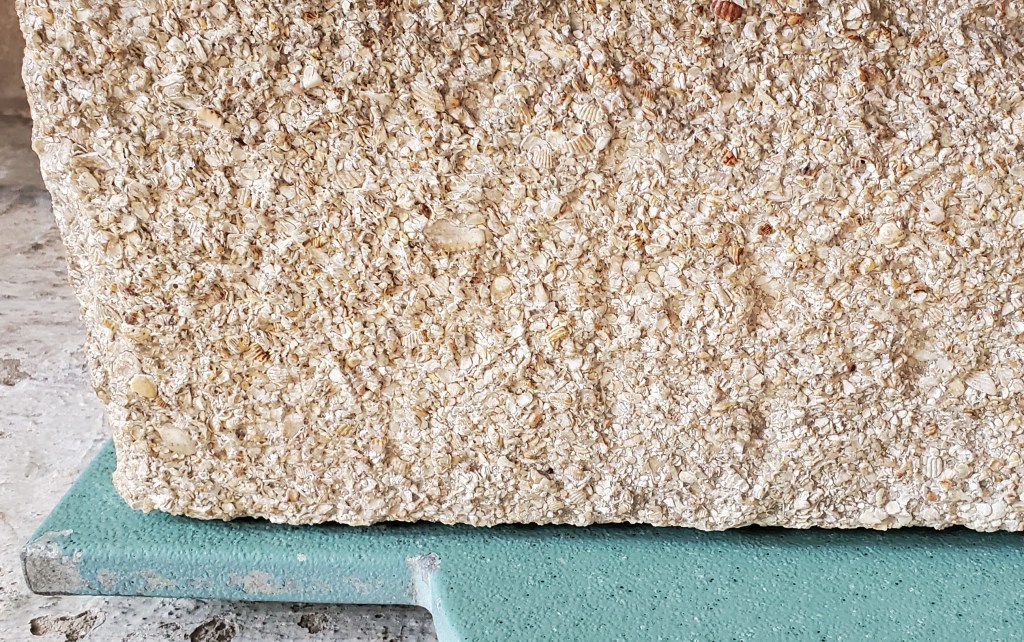
How extraordinary that those little shells, the small pink, lavender, yellow, and white “butterflies” I collected in my youth could over time form stone that defeated iron by simply absorbing its impact. The watchtowers of this fort look very like those of the earlier El Morro, the castillo guarding the port of Havana built between 1589-1640. So, as with most experience these days, each new adventure carries for me an analogous memory: David’s and my 2015 trip to Cuba as well as my mother allowing her little Georgy to bring live coquinas, packed in a sand-and-salt water-filled Tupperware, on their flight back to Ohio . Reader, don’t try this, even if TSA allowed. Which they wouldn’t.
After a thorough inspection of the Castillo, we hopped back on the trolley to reach our next stop, the Cathedral Basilica of St. Augustine on the northern edge of the Plaza de la Constituciόn, the oldest Catholic church in the city and the oldest parish in the country.
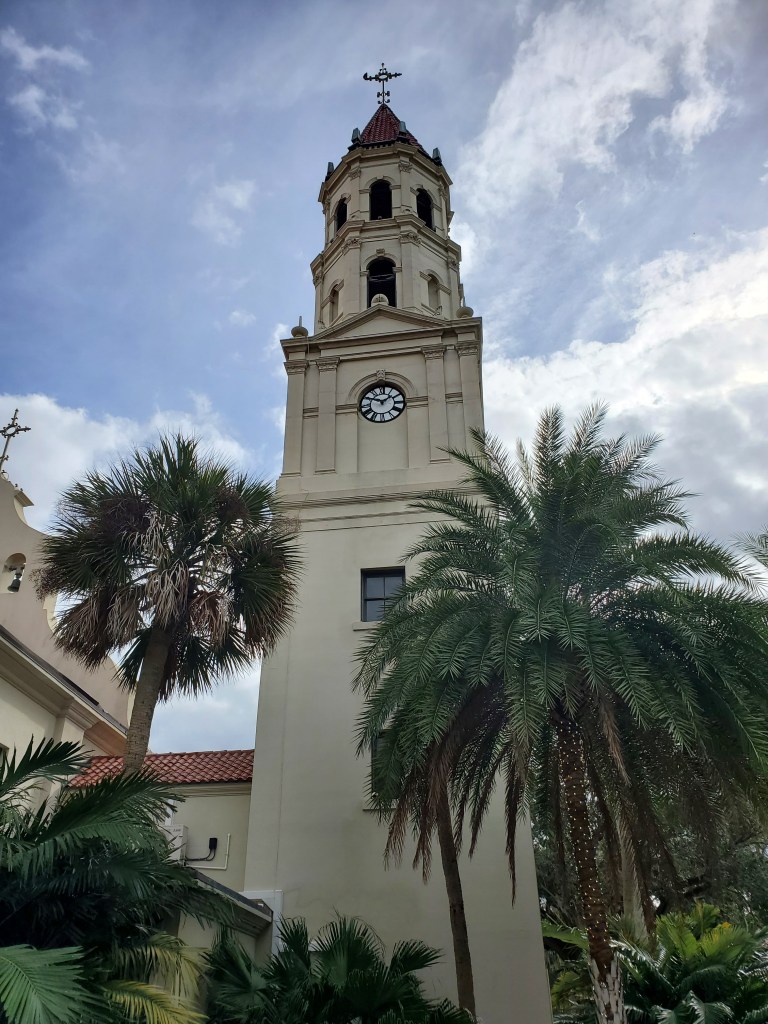
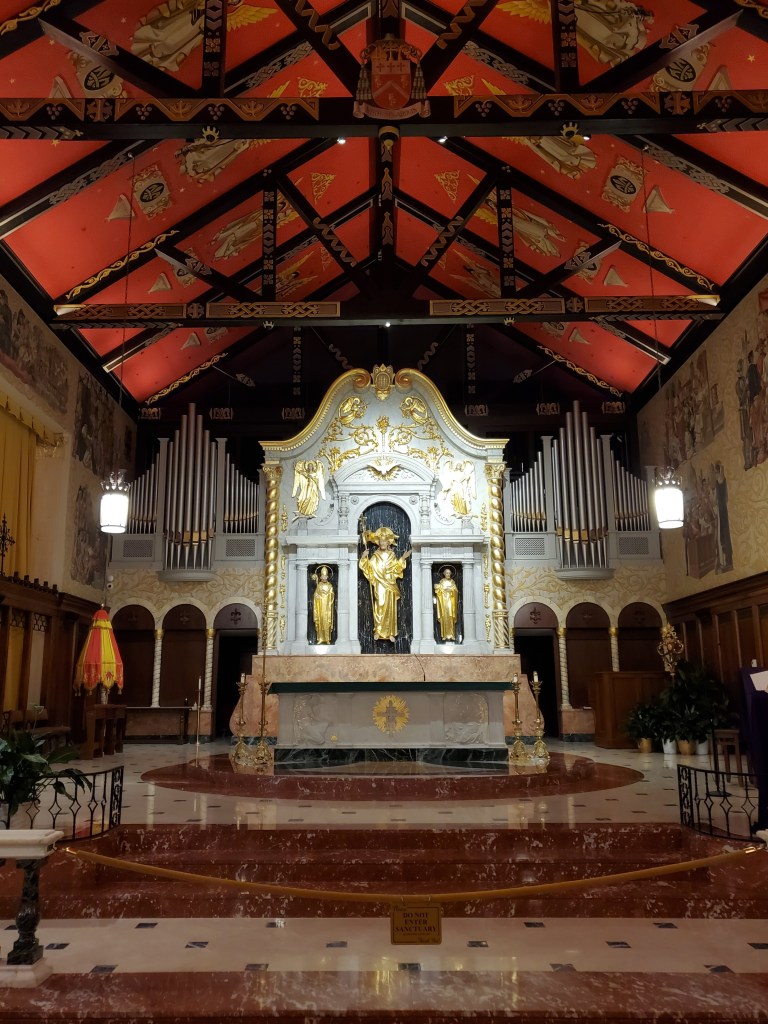
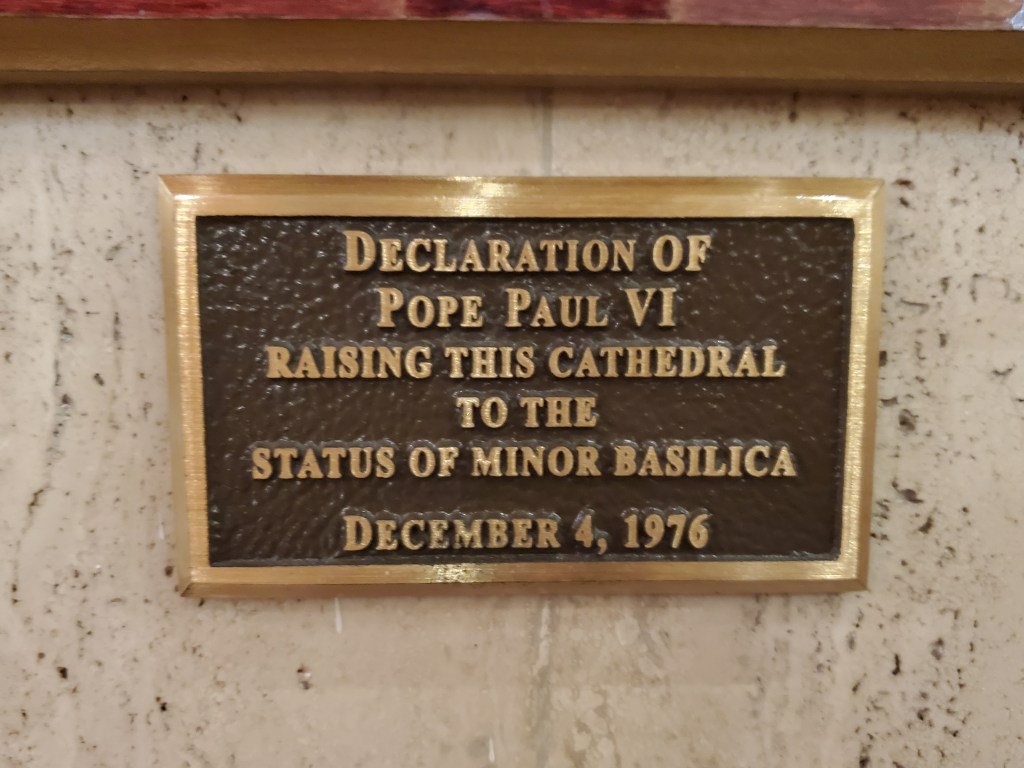
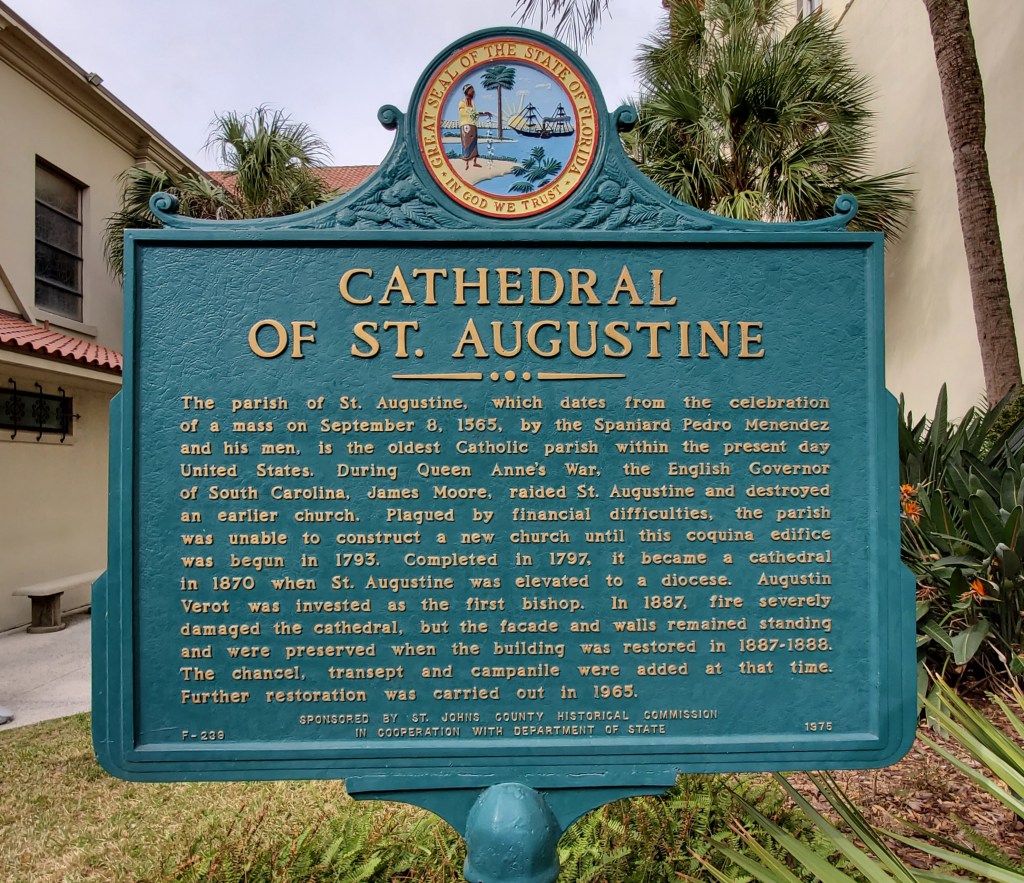
I lit a candle for my sister—like me, baptized Catholic, but unlike me married Catholic—and for all those gone before, while nonetheless discomfited by all I know of Catholicism’s institutional brutality and iniquitous abuses. Family history: to marry my Catholic father in 1947, my fiercely Protestant mother had had to promise to baptize their children Catholic, though in later life my dad just as fiercely lapsed. In the meantime, my mother, once I reached what she judged the age of discretion, took me to visit every different house of worship, including the local temple, in St. Pete so I could “make up my own mind.” And at the end, my dad, who never went to mass once he moved to Florida, told me in no uncertain terms to keep the priest then making rounds at the hospital away from him.
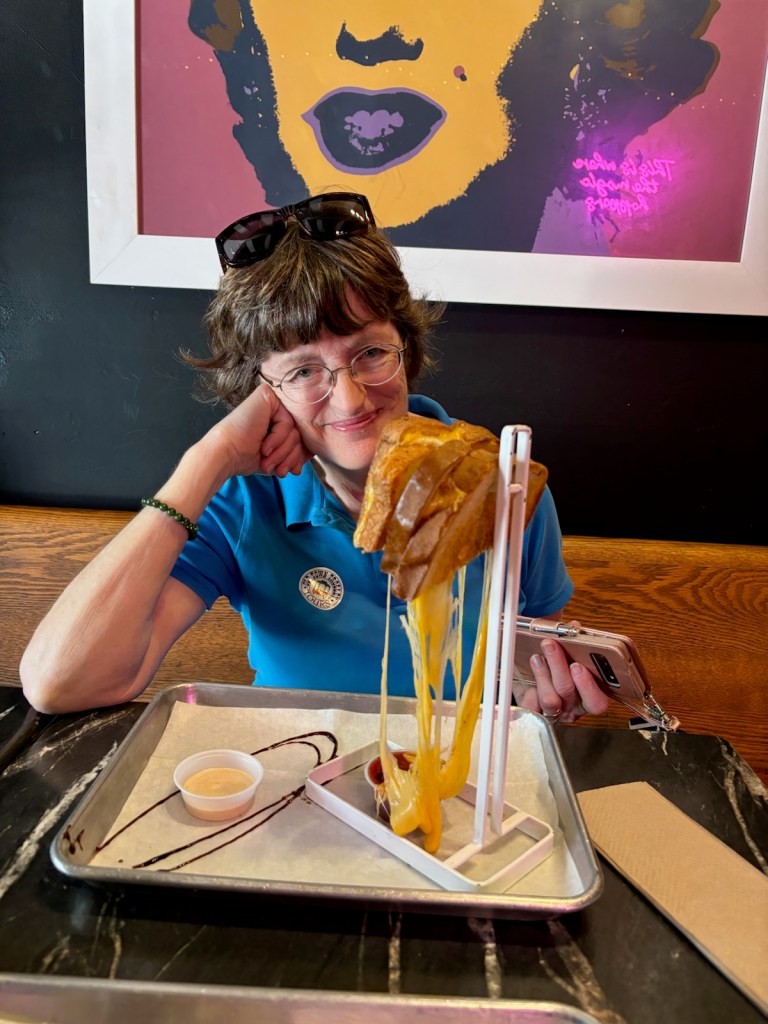
It’s complicated, such reconsiderations of what has gone before. But it was early afternoon, and Richard had spotted what I initially thought was an unlikely lunch venue for a sunny, very warm day: a black-walled grilled cheese joint. I nevertheless allowed myself to be persuaded, with happy results: the Grilled Cheese Gallery lived up to its promise of magic with my “Night in Amsterdam” (gouda, gruyere, swiss, and cheddar on artisan white) and raspberry hibiscus iced tea. The disco lighting and soundscape (the pounding beat and Donna Summer, shades of the late ’70’s French Quarter in NOLA) nearly had my tired tourist self dancing. Presentation, as my artist friend Carol said, is everything.
Well fed and refreshed, we walked over to Flagler College, built in 1888 as the first in a series of luxury resorts on Florida’s east coast, the Hotel Ponce de Leόn, by Guilded Age industrialist and railroad magnet Henry Morrison Flagler who had partnered with John D. Rockefeller to found the Standard Oil Company. The grand hotel launched the careers of young architects John Carrére and Thomas Hastings, at the time young men just out of college now best noted for designing the New York Public Library and the House and Senate Office Buildings adjacent to the Capitol in Washington, D.C. Louis Comfort Tiffany designed the interiors, replete with stained glass and mosaics. The Edison Electric Company powered the building with steam heat and 4000 electric lights, making it one of the first electrified buildings in the country. Our Old Town Trolley guide told us that because light switches were so novel as to be alarming to hotel guests, the Ponce hired staff whose only job was to turn them off and on.

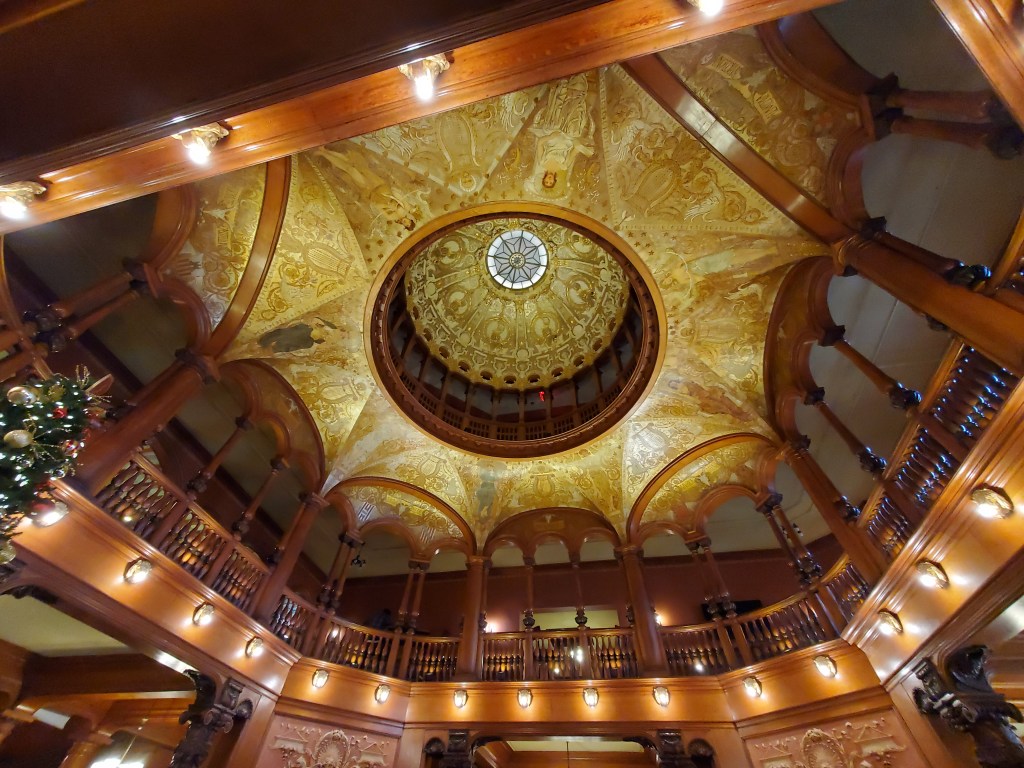
In 1968 the former hotel became Flagler College, with an annual tuition of $42K, our guide reported, which seemed to astonish our fellow trolley-ites; me, not so much, since out-of-state tuition at the public University of New Hampshire is well over $37K, and the most expensive schools in the U.S. are now billing at $70-$80K. In 2021, my visit to Flagler College was in the company of my fellow WAD friend Sandy, who had with her husband Alan stayed at the Ponce then still in its glory days, another layer of sedimentary history to add to my current experience, along with the knowledge that my great uncle Vercil Senseman once lived between the winter homes of Edison and the Ford on the Caloosahatchee River in Ft. Myers. Uncle Verce, initially trained as a fine-finishing carpenter before becoming a real estate success, used to make furniture from felled exotic trees given him by his neighbor, Edison. And the woman on my recent Madbury hike was a Flagler descendent who attended my rival high school in St. Pete. Is aging all about diminishing degrees of separation?
The remainder of our trolley tour took us past places worth exploring on another visit: the Lincolnville historic district, a community established by freedmen after the Civil War in 1866 which became in 1964 a base for civil rights activists like the Rev. Martin Luther King, Jr., who marched on the street now named for him. Our late grilled cheese repast kept us too full for dinner at one of two intriguing restaurants, both on Riberia Street, the St. Augustine Fish Camp and the Ice Plant, places to try next time. We had just enough time post trolley tour to drive to and finally locate the St. Augustine Lighthouse on Anastasia Island in the failing light. Deciding to come back the next day, we opted for a humble pizza joint dinner at Borrillo’s on San Marco and called it a night.
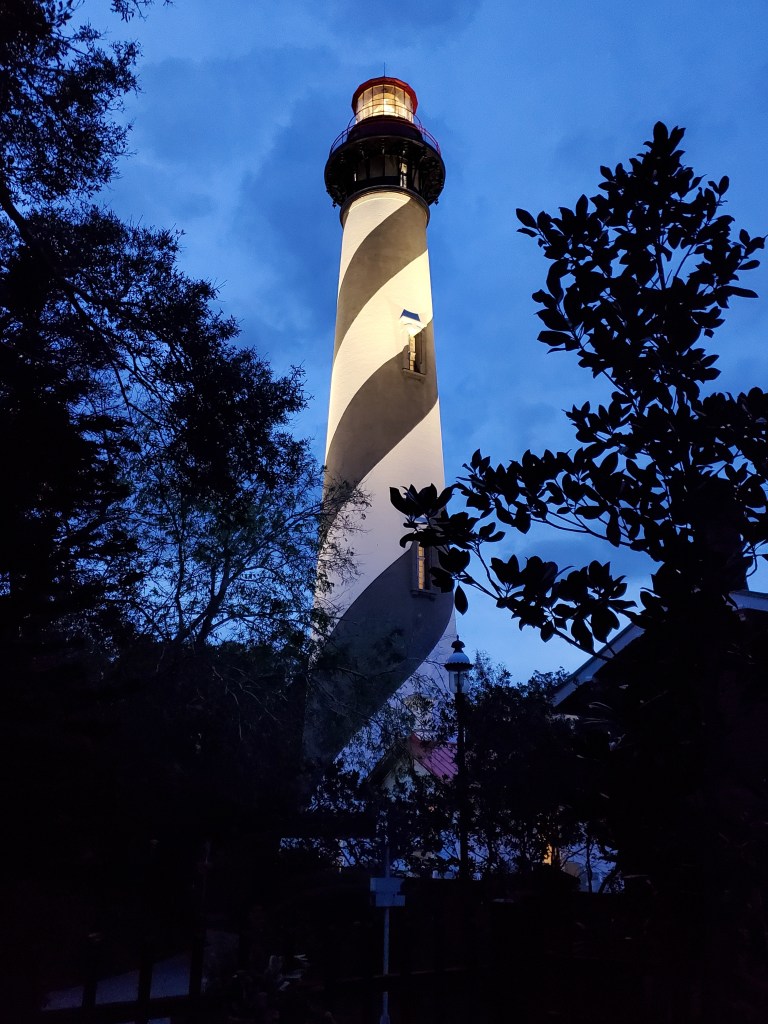
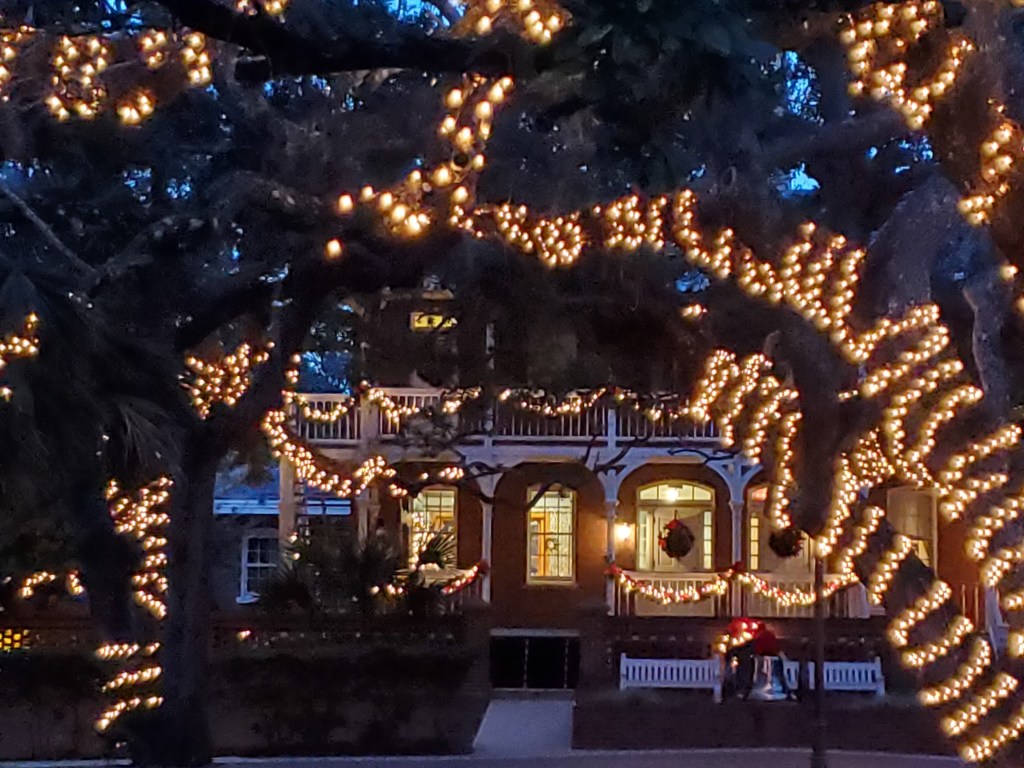
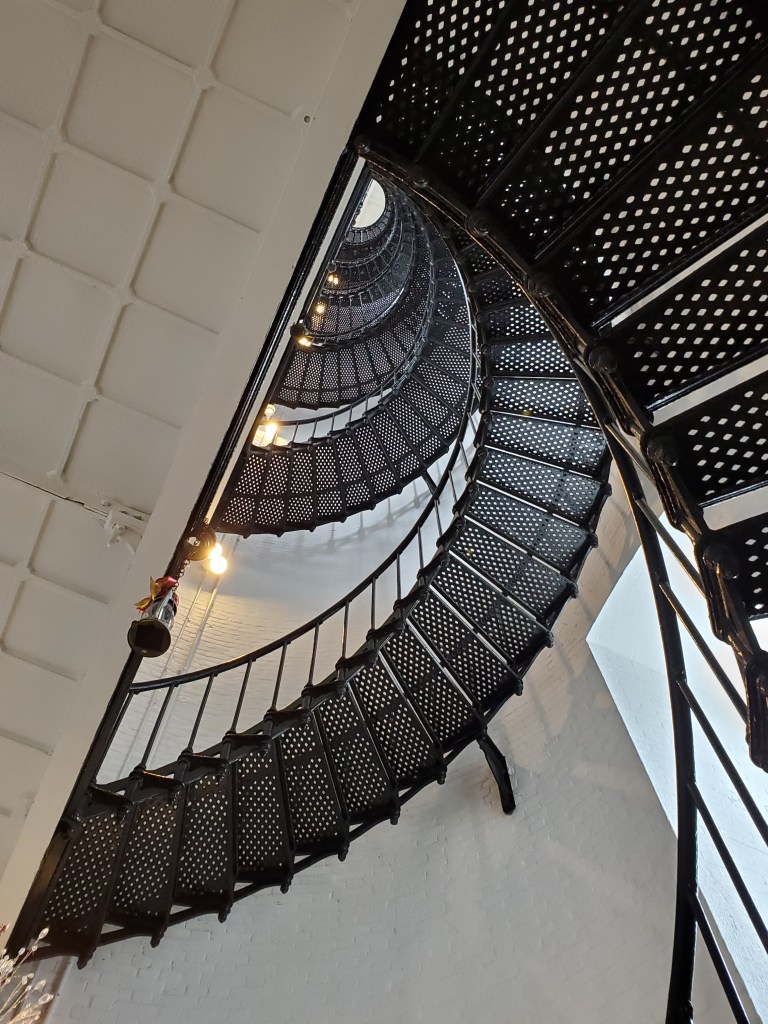
After breakfast at the FarmHand Kchn on Ponce de Leon—MUCH better than Denny’s across the street and purveyor of an excellent Cuban sandwich—we returned to the St. Augustine lighthouse, at 165 feet the second tallest in Florida and 27th highest in the country. Along with the Maritime Museum in the Keeper’s House, the lighthouse is now a Smithsonian affiliate, and deservedly so. The current exhibition on the east coast’s nascent shrimp industry was really interesting, but taking seriously the posted cautionary sign, I enjoyed sitting out the 219-step climb to the top of the lighthouse that Richard and Daniel gamely accomplished.

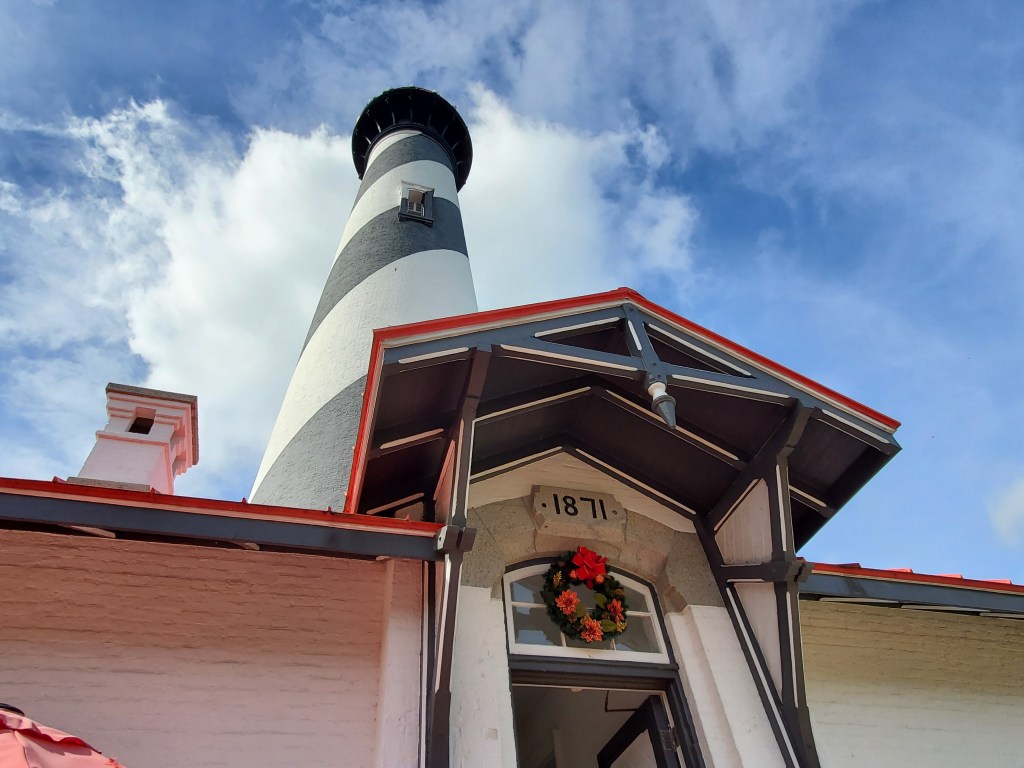
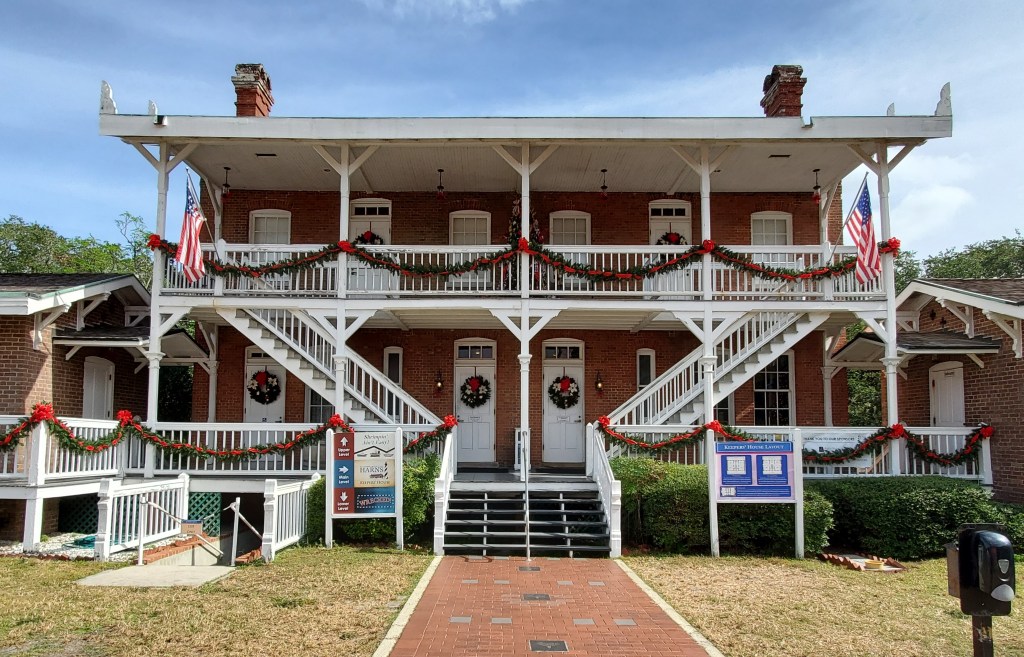
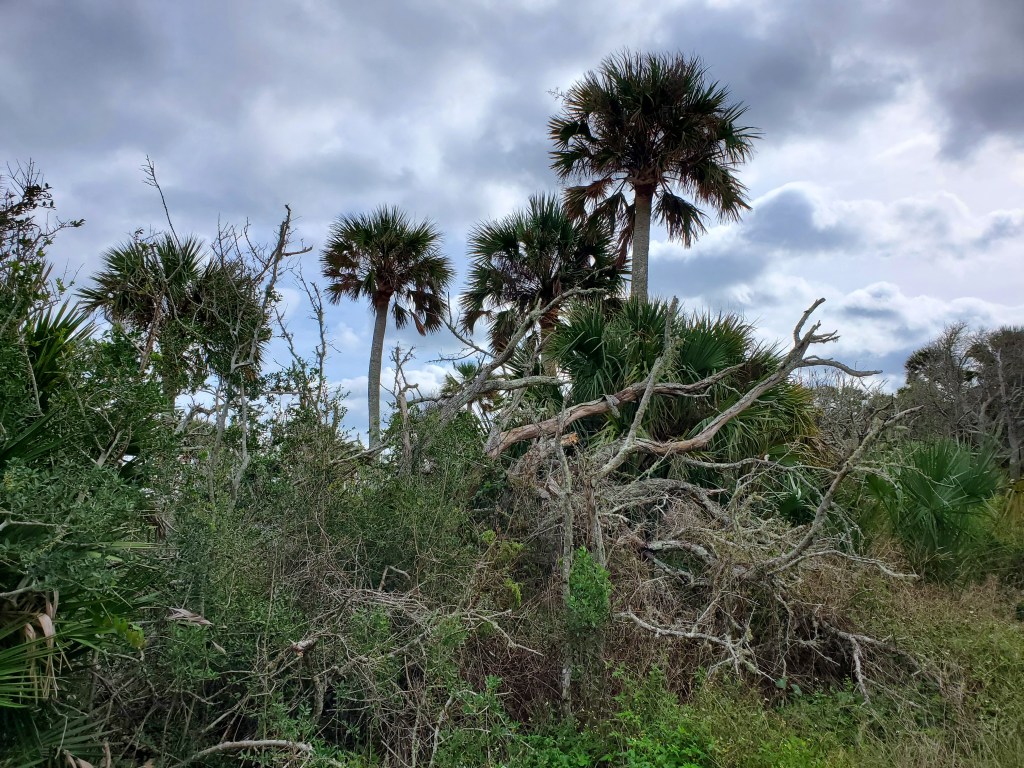
From there we headed to Anastasia State Park also on the island Spanish engineer Arradondo named for the martyr in 1737. While the boys had lunch at the snack bar, I took in the vistas: dramatic skies, scrub, and waving sea oats much less plentiful than when my mother painted their cousins in St. Pete in the 60’s.
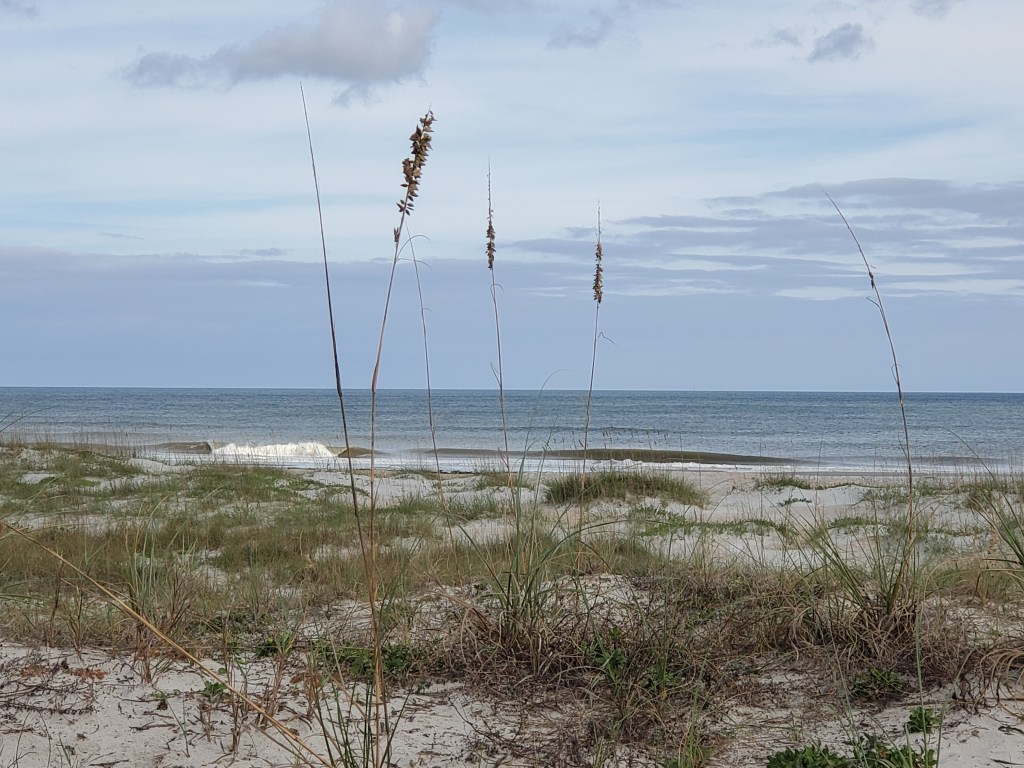
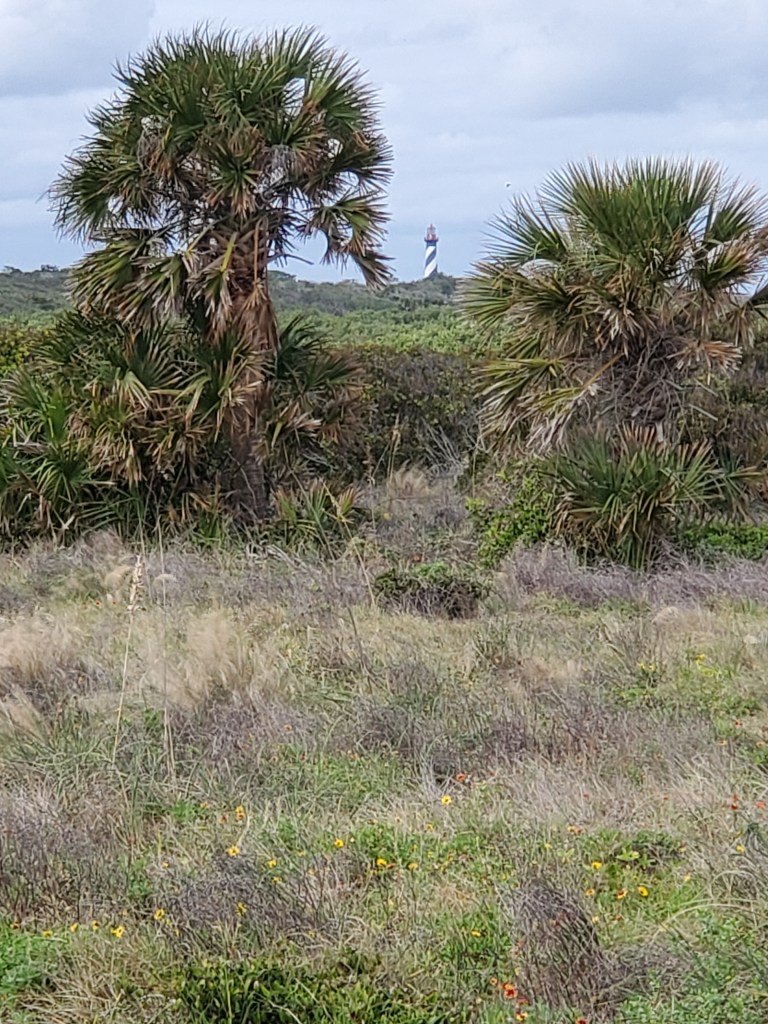
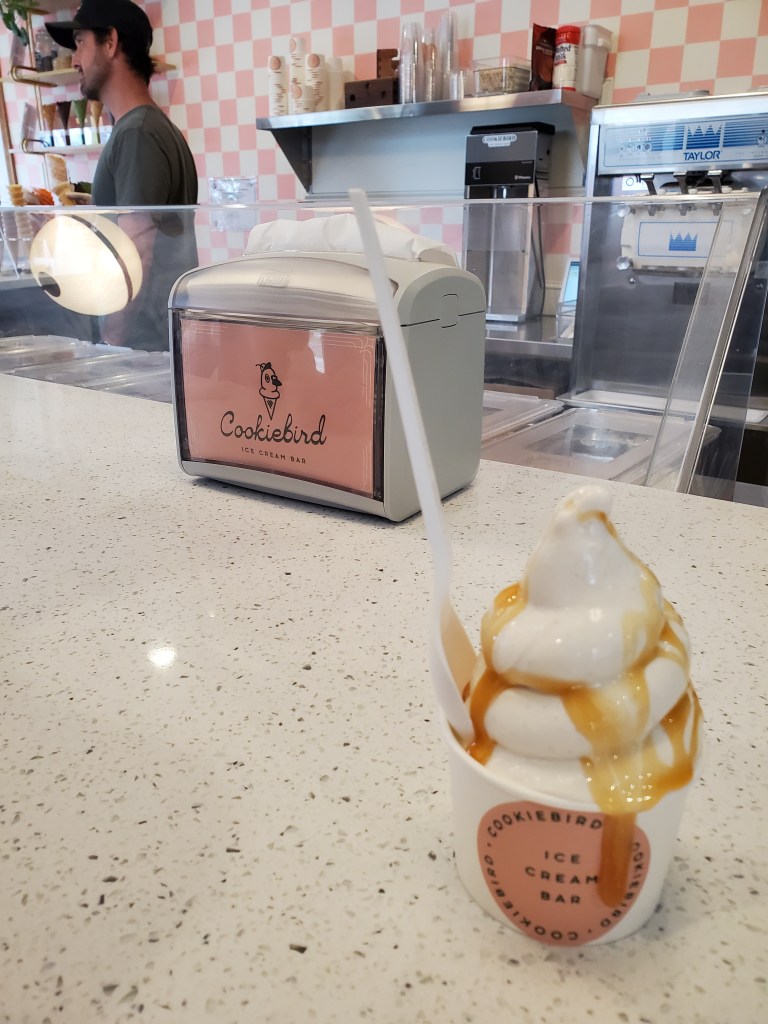
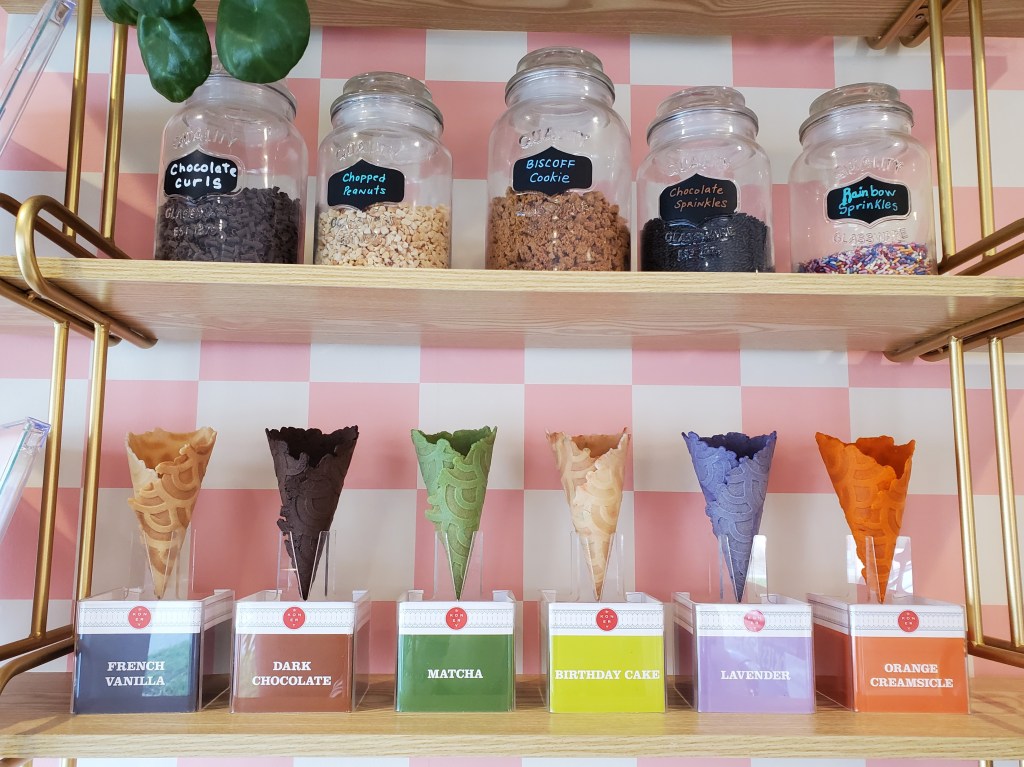
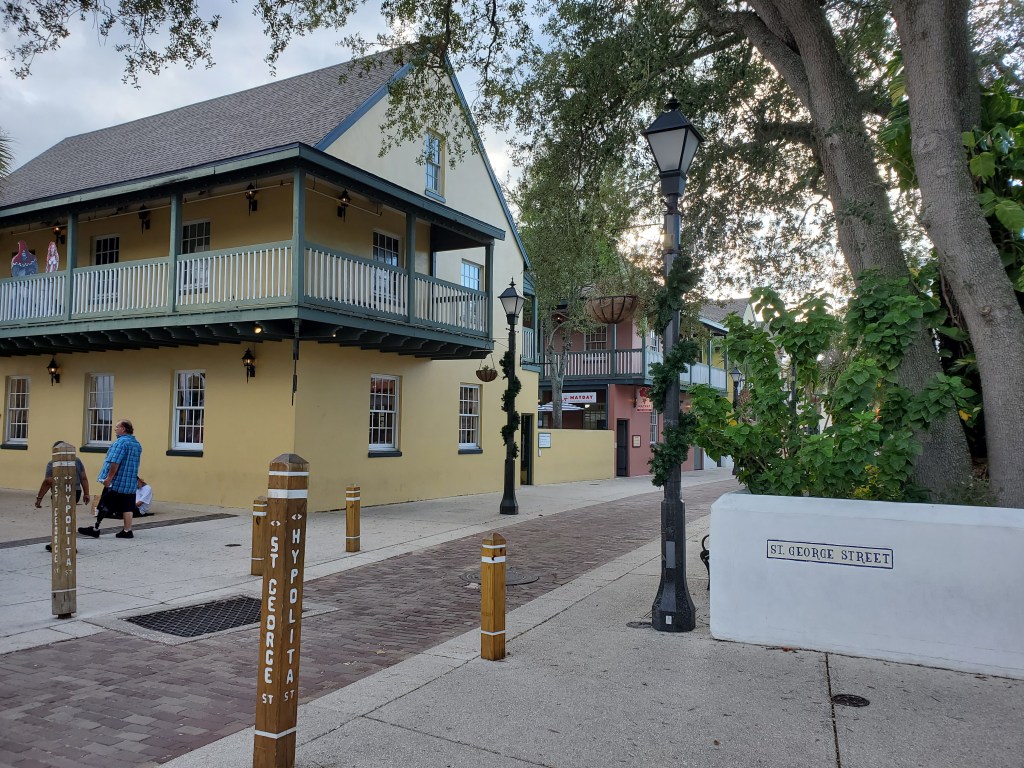
We followed up the beach with a visit to the newly opened Cookiebird ice cream bar back on San Marco and a stroll down St. George Street to window shop and visit the Saint Photios Greek Orthodox National Shrine, a memorial to the first Greek settlers arriving on the American continent in 1768.
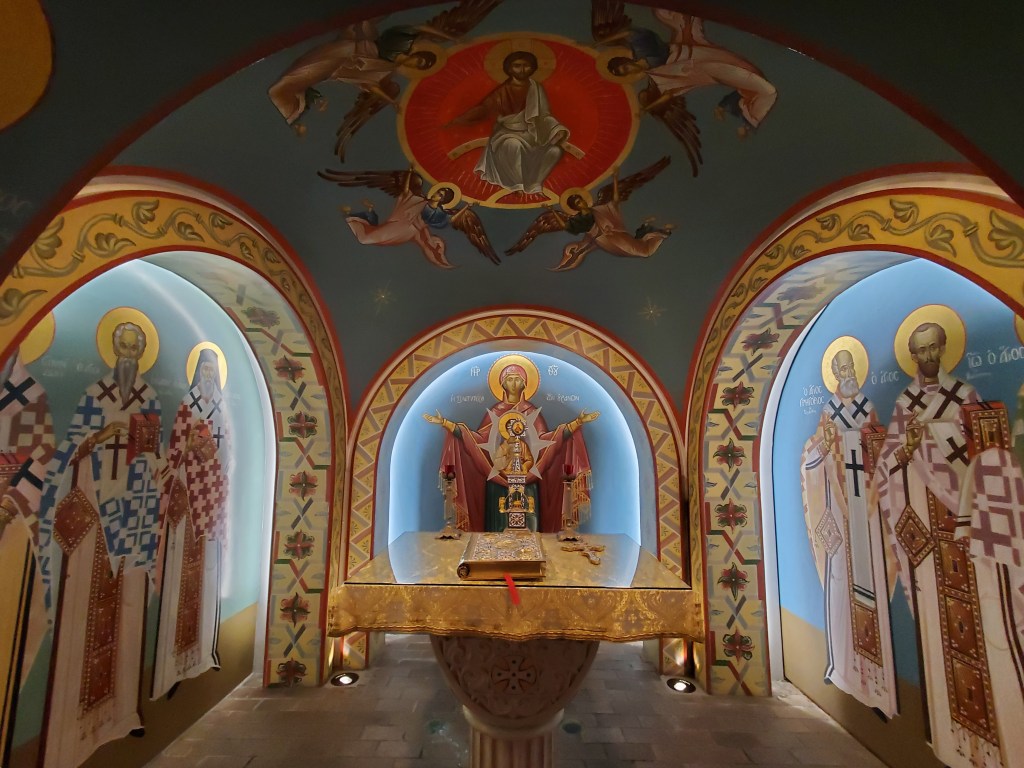

We finished our last day in town with dinner at the local Village Inn, a first for me (adequate liver and onions, excellent apple pie).
Early the next morning I negotiated the complicated way back to the dauntingly enormous Orlando airport, passing along the way the “World’s Longest Car Wash” and a man hosing down a 20-foot-tall rubber duck at a hot tub dealership (ah, Florida!), and began my journey back north, uneventful save for a near-miss collision in the rainy dark at the traffic circle only 10 minutes from my Madbury home. That left me shaken, and all the more grateful to be safely back from Florida. Home again.
 Georgeann Murphy
Leave a comment