12 September 2023
Reading Barbara Kingsolver’s Demon Copperhead after Dickens’s David Copperfield is a déjà vu delight, though one can only hope Kingsolver’s epigraph borrowed from Dickens resonates for readers: “It’s in vain to recall the past, unless it works some influence upon the present.” The present rhyming with the past is right up my street these days, as you, Dear Reader, will have noticed, and is perhaps the inevitable consequence of aging. Boston College historian Heather Cox Richardson’s millions of subscribers to her Letters from an American can perhaps testify to the grounding solace of learning the history behind today’s politics, though perhaps some Stoicism is required when considering how much does not change for the better where human endeavor is concerned.
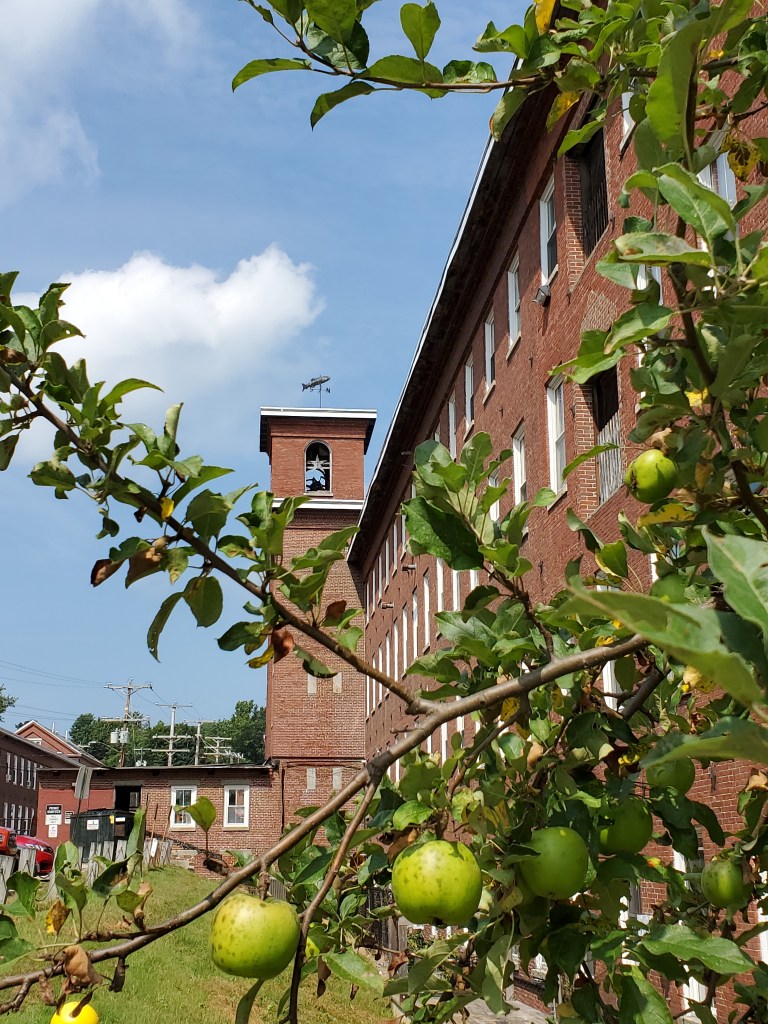
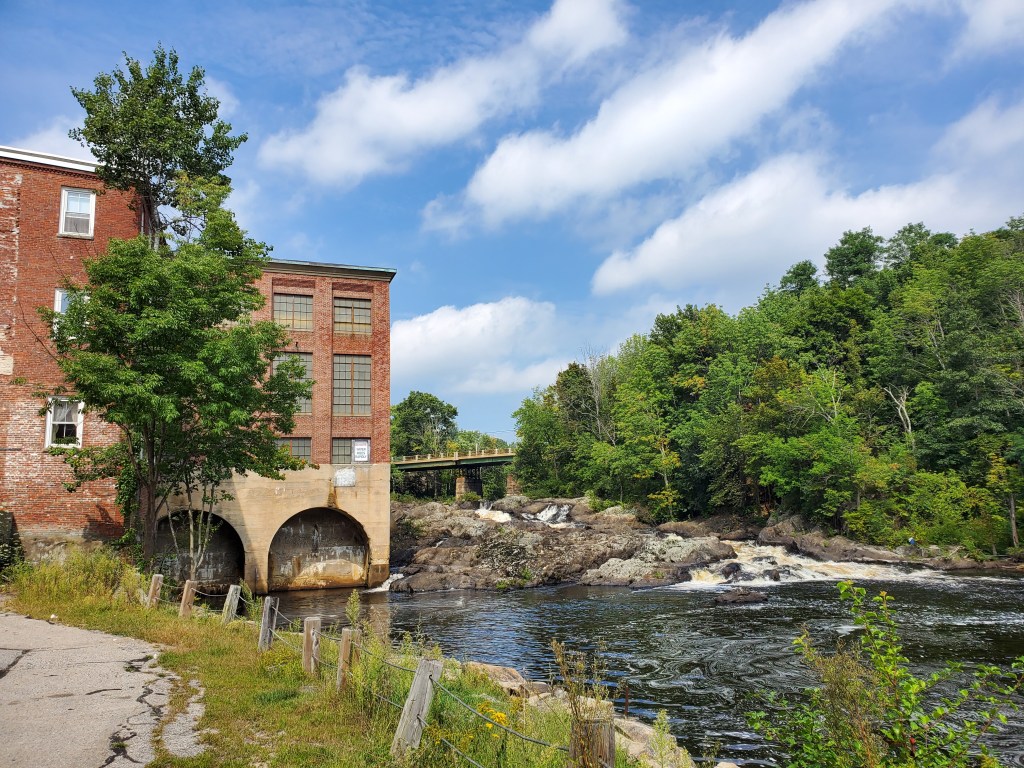
The juxtaposition of past and present was very much on my mind this past weekend, beginning with my first visit to my wonderful neighbor’s studio in the lower mill building of the Rollinsford NH Historic District. The Salmon Falls River there was first dammed as early as 1623-24 (also the publication year of Shakespeare’s First Folio) to power a sawmill; in 1822, a Portsmouth merchant purchased the water privilege and established a successful woolen mill on the site. That burned in 1834 and was soon replaced by a cotton mill, eventually purchased by Boston textile industrialist Amos Lawrence and eventually incorporated as the Salmon Falls Manufacturing Company. Lawrence built a second mill building, introduced the new turbine technology perfected at Lowell, Massachusetts, and the Industrial Revolution in New Hampshire was underway.
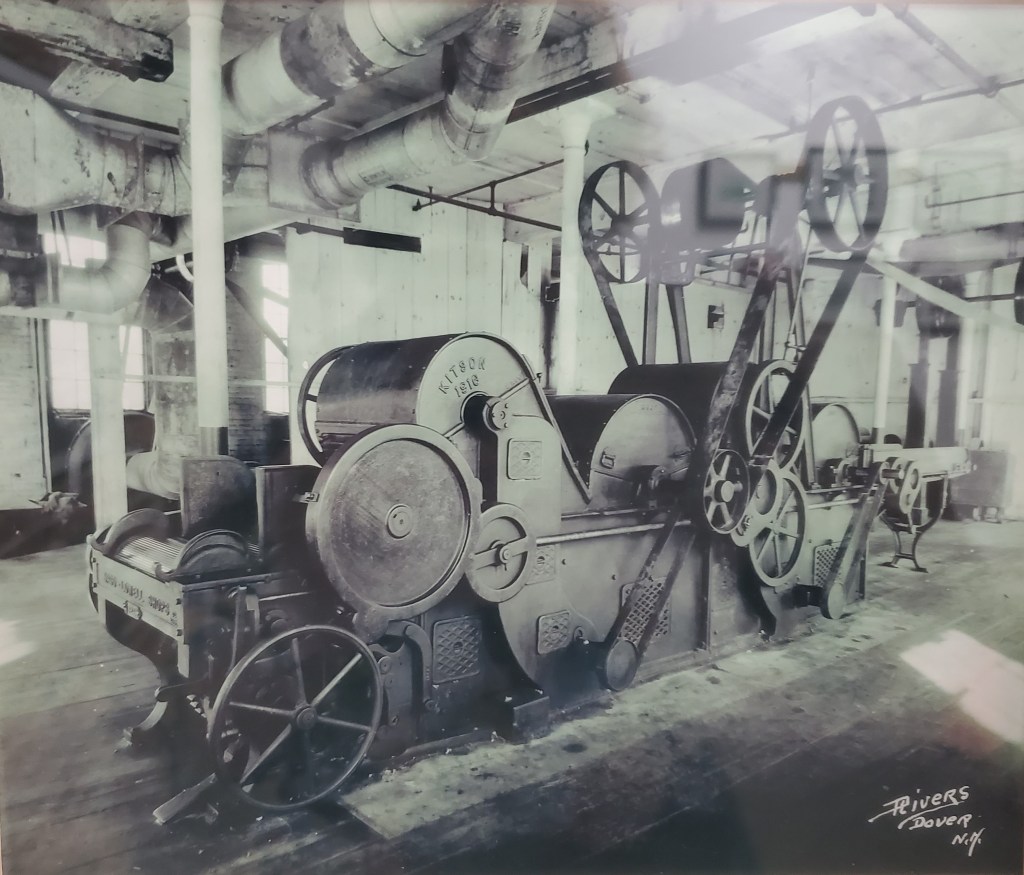
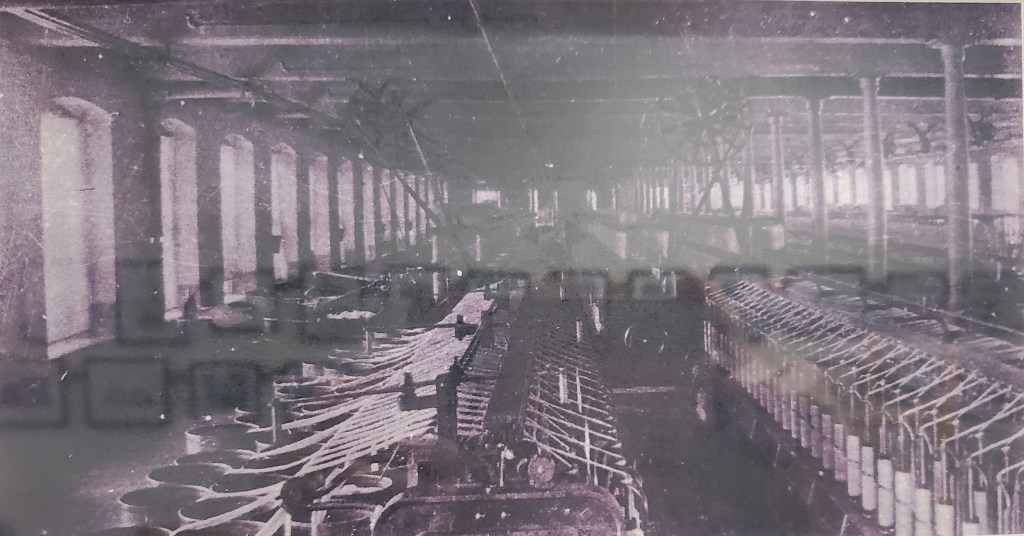
(Notice: No lighting system of any kind)
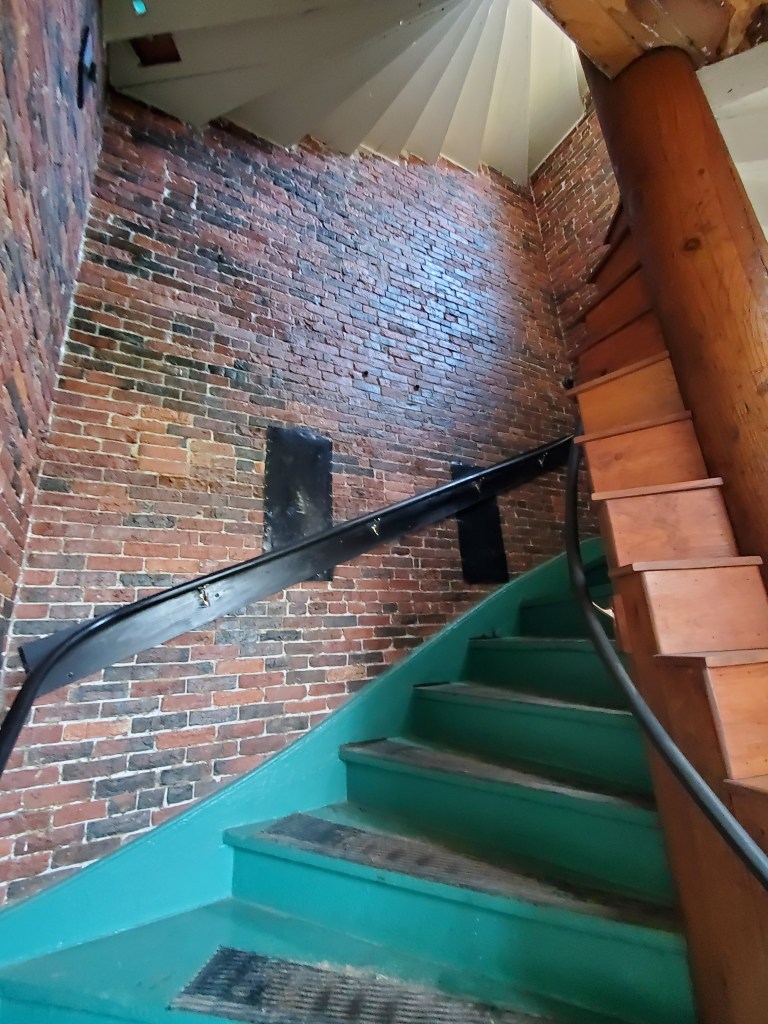
The Salmon Falls Manufacturing Company ended production in 1927, but the buildings, most structures built of brick in an unusually consistent industrial Italianate style, remain on the National Historic Register, many currently occupied by over 100 artists, along with local businesses, the Rollinsford Public Library, and the new studio of my accomplished friend and next-door neighbor, Anne Marple, LMT (https://www.annemarple.com).
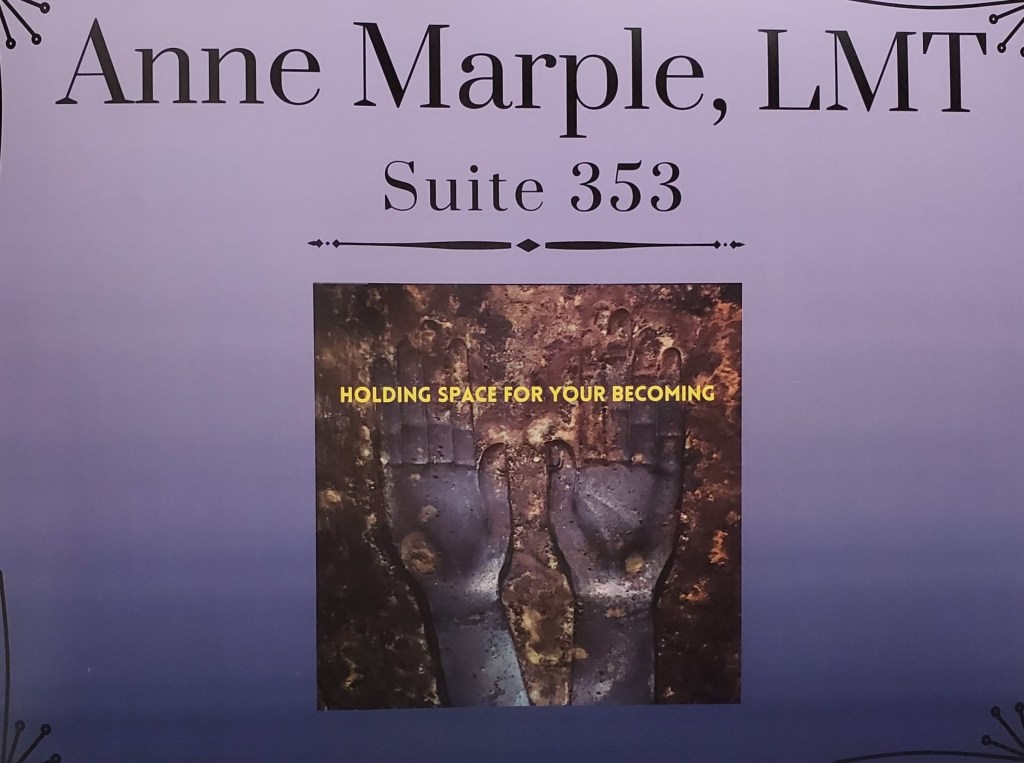
Last winter, I was several times, right in my own home, the beneficiary of Anne’s practice as she pursued her Licensed Massage Therapist credentials. Having eagerly volunteered to play the role of client, I enjoyed Anne’s ministrations while listening to morning ragas, comfortably settled on the massage table she set up in front of the fireplace. The rich are different (thank you, Scott Fitzgerald), and with Anne’s help, I could pretend I was—just like the Meryl Streep character in the Roy Scheider/Streep vehicle, Still of the Night (1982). Bliss.
Having now earned her LMT and opened her Salmon Falls studio, Anne trained in an earlier chapter of her life as a professional aerial artist, working as a performer and coach for over a decade, and so learning about movement and how to use stretches and exercises to support a healthy body. Also a certified Reiki practitioner, Anne complements her physical work with training in the Myrrophore tradition of healers and a background in etheric work, using a blend of Myofascial release, Swedish massage, and reflexology—among other practices well beyond my ken: if some of those terms sent you to Google, I’m right there with you. But this I can avow: a Marple massage is transcendently different from and superior to the few I’ve had before, and highly recommended.

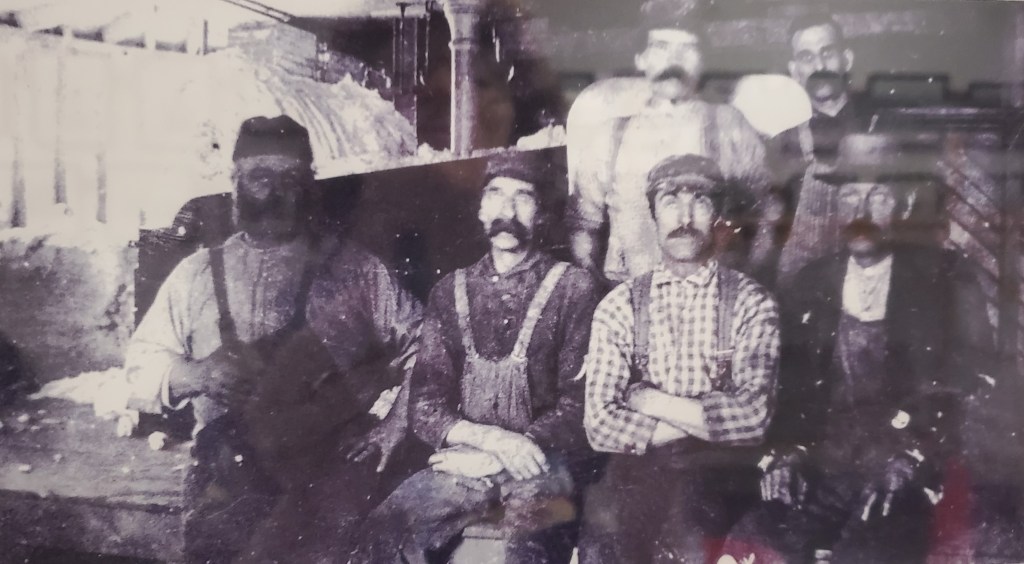
Still, on Friday I could not help but remark the disjunction between what once went on in those mill spaces and what goes on there now; having so incongruously pierced the veil of history I associate with such a setting, I felt pretty otherworldly for the remains of the day. Only as I write this do so many other Dickensian associations with “dark Satanic mills” (thank you, William Blake) return to mind. Aside from Dickens, there’s the brief film UNH Master of Arts of Liberal Studies candidate Brenda Whitmore made in 2002 as her final MALS project, The Lighting Up, examining the untenable conditions in textile factories that led to the Mill Women’s Strike in Dover NH in December 1828, the first labor strike by women in the United States.
And then, too, I recall the 2004 visit David and I made to Heywood in the metropolitan borough of Rochdale, part of greater Manchester, England, to see the town in which David’s great (or great great?) grandfather Frederick Chadwick Andrew was born in 1820, and from which he emigrated to Salt Lake City, where he died in 1878, part of a substantial British immigration to Utah in 1850-70; from 1860-1880, 22% of the total Utah population and 67% of those foreign born were from Britain (see “Imperial Zion: The British Occupation of Utah” by Frederick S. Buchanan in The Peoples of Utah, 1976, pp. 61-113). The 27 cotton mills operating in Heywood by 1833 are shuttered now, but seeing the smoke stacks and imagining the air quality when they were all in business was not hard, and informative signs posted about the town made clear the diminished quality of life those 19th-century mill workers suffered. The Latter-day Saints’ promise of Zion in the New World—as well as the sanctioned taking of a second wife along with the first—must have been irresistible.
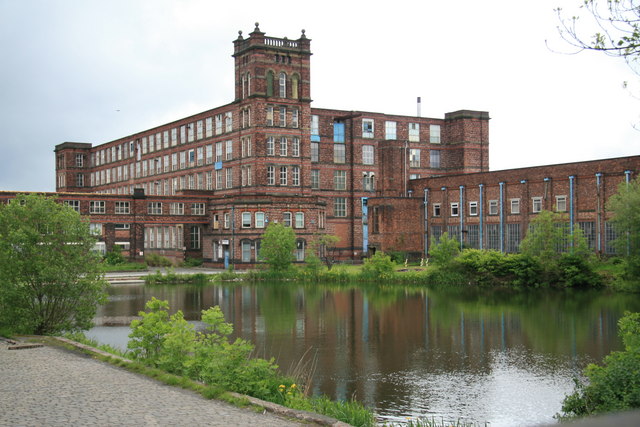
What would Grandfather Andrew have made of the repurposed mills of Salmon Falls, I wonder? Far less removed in time from big cultural changes within my own lifespan, I still struggle to adapt, and with A.I.’s burgeoning presence, I expect what’s to come while I’m still around will be well beyond my imagination.
So, on Saturday morning, Madbury Day, it was a comfort to see how much pleasure the Madbury Library’s book sale brought to me as well as to them who donated books and them who carried them away.
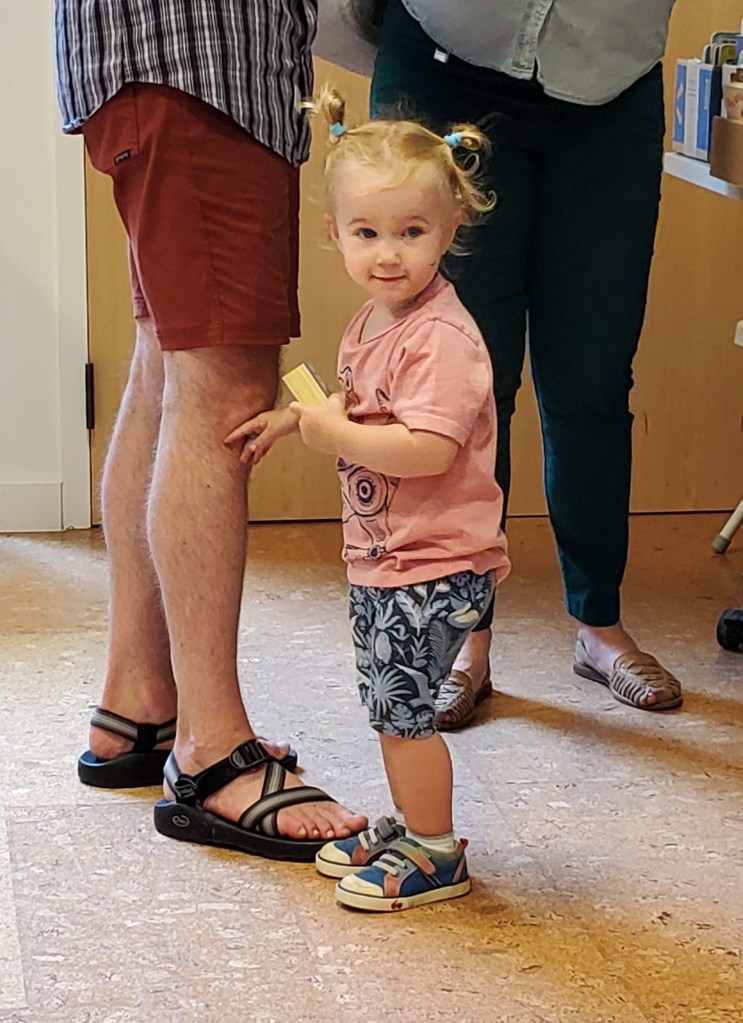
Little Madbury, with a population of only 1,931 according to the 2021 Census, could easily be mistaken for Thornton Wilder’s Our Town, yet well past that play’s 1901-1913 setting, a substantial number of its citizens still read and value BOOKS! I felt more proud than silly marching in the skimpy Madbury Day parade behind two illustrious Friends of the Madbury Public Library: Anne, not only purveyor of excellent massage therapy but also chair of the Friends, and long-time Friend and library advocate, Joan, CEO of book sales.
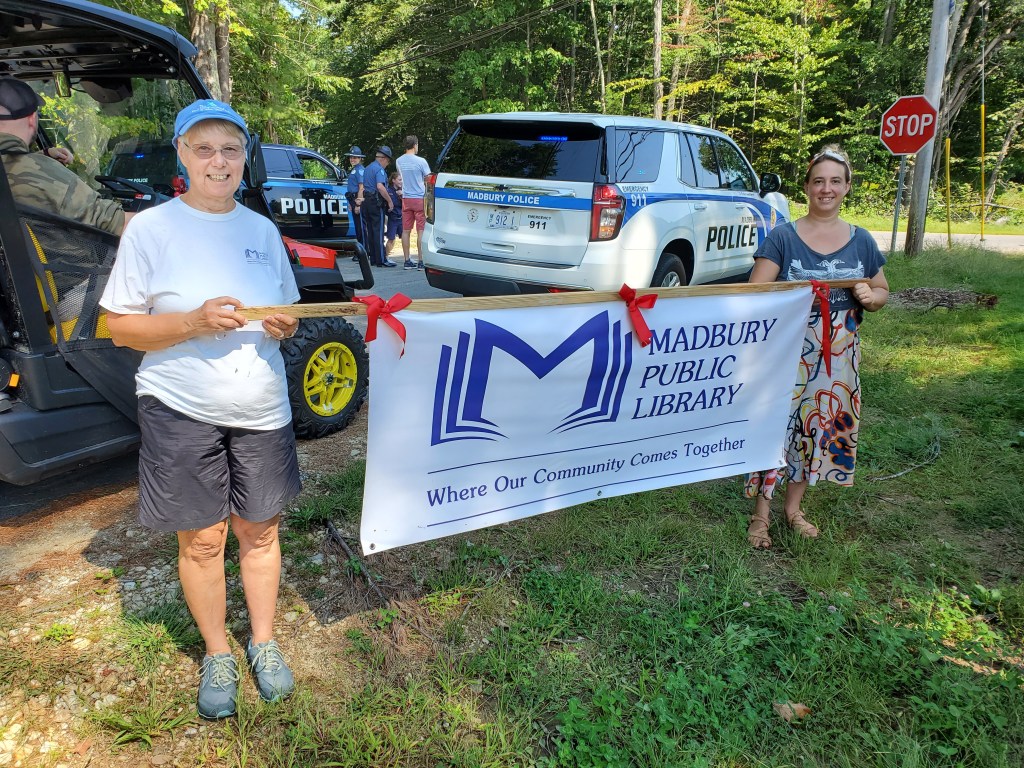
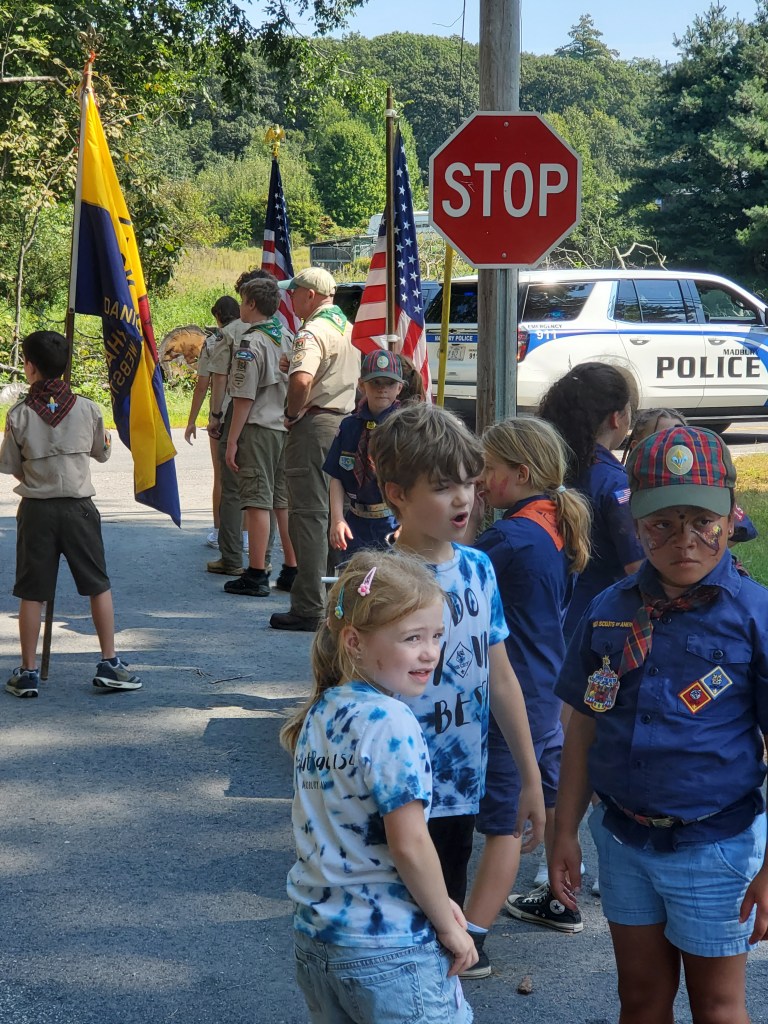

The size of the appreciative crowd was underwhelming, surely. But the books that changed hands on Saturday do inspire some optimism, as did the folks who came to the library for the first time and shared their delight in the lovely space. Here’s to more such connective tissue for the body politic— and the creative repurposing of old institutions for new times.


 Georgeann Murphy
Leave a comment