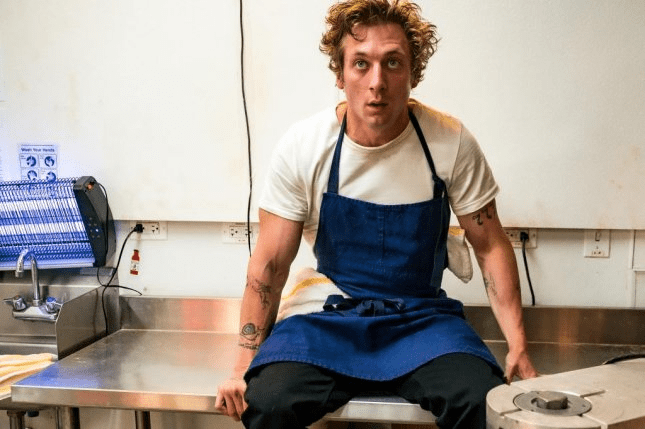
(photo from upi.com)
Having now succumbed to temptation by streaming through all 8 episodes of The Bear for the second time in as many weeks, I’m doing a little self-audit to examine just why I love this series (which I’m happy to note will indeed have a second season).
The first few reasons are quite personal. My working at the New Orleans Hilton’s fine dining restaurant Winston’s in the early 80’s (as I struggled to write my dissertation until my wonderful dad gave me the money to quit waiting tables and just finish the g.d. thing) was a wonderful and complex experience. Front of the house was all show biz, as we worked in “butler & maid” boy/girl teams, right up my alley as a drama and English major—and a professor in training, learning how to read a room, a table, and an individual’s responses and deliver what was wanted: to be left alone (Dick Clark), to be secluded but fawned over (Billy Joel, using the separate wine room’s mirrored table for blow), chatted up, or merely taken good care of (the NOLA fire chief, who smoothly palmed me a C-note with his end-of-meal handshake). The maître d’, a mad Frenchman named Claude de Leon, assigned me the VIP tables, and so ‘twas I who waited on Robert Lawrence Balzer, the first serious wine journalist in the U.S., when he came to dinner representing Travel/Holiday magazine. Though “Bobby” Balzer found our chilled salad forks a “meaningless affectation,” I helped Winston’s earn the extra star we sought that night.
Back of house, however, was the real education, and though I had worked before at a fine dining establishment in Greenville, South Carolina (with a wonderful chef named John L who looked after this neophyte with advice to “put on the chef” whatever went wrong with service, since I was the one working for tips), I’d never before served with an executive chef and CIA-trained (Culinary Art Institute of America) line cooks. As I recall, there were three or four of these young men and a woman as pantry chef or garde manger, plus Big Al, the grill master. I think Bart Shoemaker was sous chef, regretting his surname because the last thing a chef wants to be known as is a shoe maker. The kitchen ran on adrenaline, drama, and sex; I had a brief, happy, and significant fling with one of the line cooks, a flirty Dutchman.
Their work in that kitchen was HARD, hot, fast, demanding performance work—something The Bear’s creator, Christopher Storer clearly understands. The show’s premise is that Carmen “Carmy” Berzatto (the eponymous Bear, played by Jeremy Allen White), a young chef from the world of fine dining, has come home to Chicago to run his family’s Italian beef sandwich shop. His beloved, difficult big brother Michael has taken his own life and left Carmen the restaurant, so in addition to the burden of re-inventing how the shop in shambles works, Carmen and other family members—including the close-knit kitchen crew—are coping with grief. Carmen has one ally in a CIA grad who knows both Carmen’s superior reputation and the Escoffier kitchen brigade system, Sydney Adamu (played by the wonderful Ayo Edebiri). Brilliant ensemble acting and frantic quick-flash editing together with a gang busters premise and narrative arc over 8 episodes really rock, alternately hilarious and deeply moving.
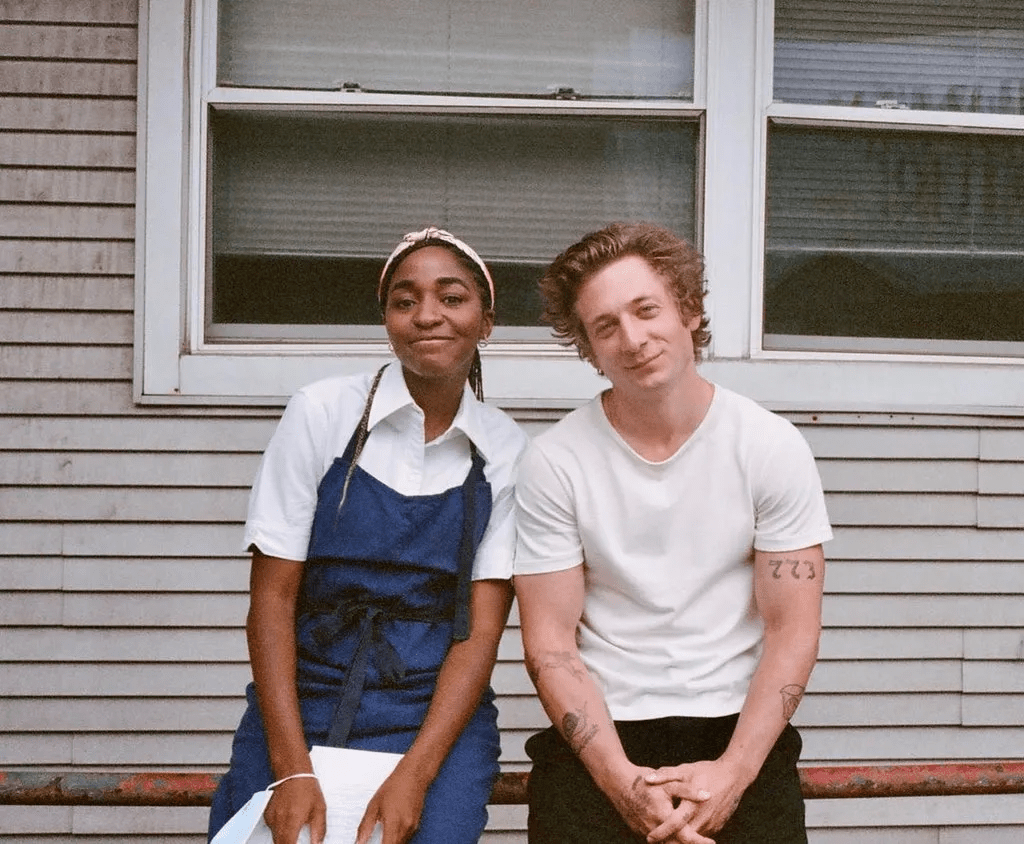
(photo from maxblizz.com)
So, aside from the pleasure of re-living part of my young life, why do I love this show? Let me count the ways:
- The “kitchen confidential” (pace Anthony Bourdain) exposé of what goes on back-of-house in a restaurant careening through service at full tilt boogie is thrilling. Carmen’s explaining the man-hours dedicated to producing a single dish at The French Laundry alone is enthralling/appalling.
- Valorizing the sacrifice and commitment of people dedicating themselves to doing something very hard very well, over and over again, is something Americans need to see more of. Hard work in the pursuit of excellence is the opposite of “quiet quitting,” deserving of respect and emulation—especially in a culture that has come to so readily disrespect expertise in any field.
- Respect is what the diverse characters of The Bear earn and practice—another template for our currently fractured and fractious era to consider. This is what hard work for all the right reasons–and true familial devotion—look like.
- The show also does a good job of exposing the damage suicide wreaks on those left behind, another valuable lesson.
- Examining the relation of what one does to one’s identity may currently be unfashionable, on the assumption that the self exists independent of accomplishment. As Garrison Keillor used to point out, in Lake Wobegon “All the children are above average.” But that relationship is real and relevant, and attention must be paid.
When I got my hair cut by my long-term most excellent stylist Terri last week, I asked if she’d seen this show I liked so much, The Bear. She hadn’t, but one of her young associates had. “That food show?” she asked. “It’s great.” I asked her why she liked it. Her reply, “I’ve worked in restaurants. It’s real and relatable.”
She’s right.
See you in September!
 Georgeann Murphy
Leave a comment