24 July 2022
A Sunday drive and cookout were a tradition in my family, with the usual destination a picnic table at Fort De Soto Park in Tierra Verde, Florida, just south of my hometown St. Petersburg, 1,136 acres on five interconnected keys on Tampa Bay and the Gulf of Mexico, home to mangroves, palm hammocks, live oaks, and LOTS of bird life—including seagulls capable of snatching a sandwich right out of my mother’s hand (“You dirty dog!” she exclaimed). Typically we’d cook our Sunday breakfast on one of the stationary grills provided—scrambled eggs and bacon–supplemented by a treat picked up en route, usually from Mister Donut (the cherry cake donut was my favorite).
All these years later, what my Wisconisn family had in store for me offered a very different landscape, but just as much fun (and egg salad on croissants standing in for scrambled eggs). It’s a long schlep from Portage WI to Pikes Peak State Park, Iowa, but well worth the 119-mile drive. The only Pikes Peak I knew of was in Colorado, but it turns out this Pikes Peak is named for the same Pike. In 1805, then Army lieutenant Zebulon Montgomery Pike led two expeditions under the authority of President Thomas Jefferson through the Louisiana Purchase territory, first to reconnoiter the headwaters of the Mississippi River, and next to explore the southwest to the edge of the northern Spanish settlements of New Mexico and Texas. It was on his expedition of 1806 that Pike sighted and tried with his men to climb his namesake peak in present-day Colorado before giving up the ascent in waist-deep snow. Pike’s 1810 published account of his expeditions proved so popular it was translated into several languages for European distribution. All that adventure and abundant new land!
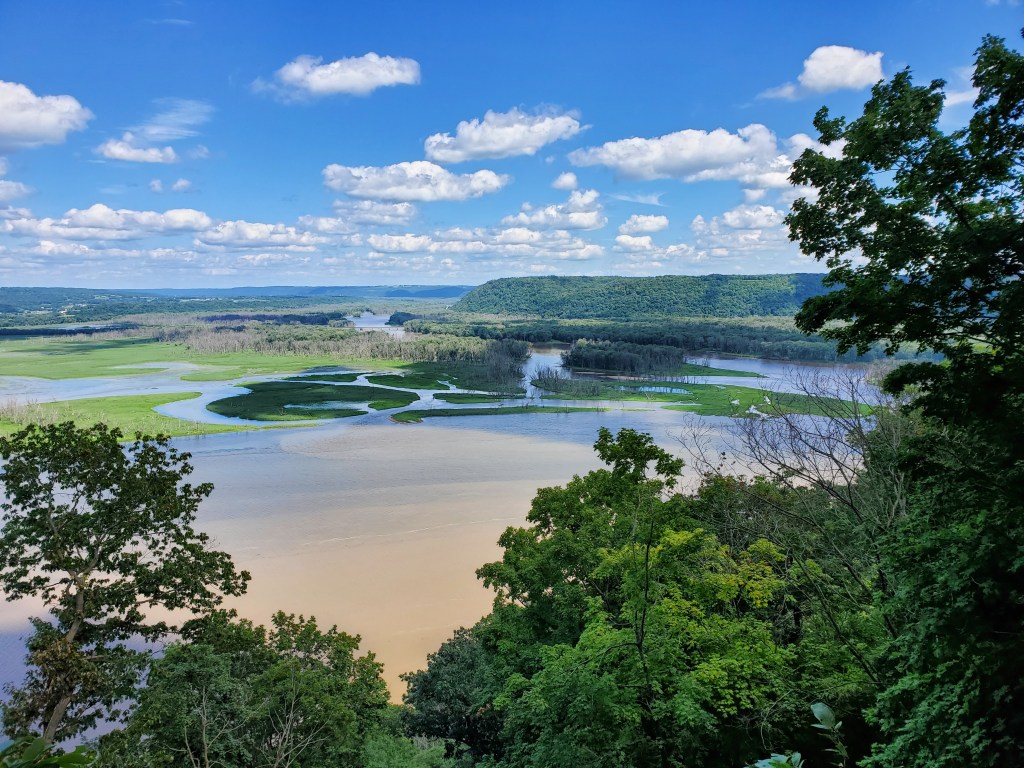
Pikes Peak State Park features a 500-foot bluff (elevation 1130 feet) overlooking the upper Mississippi at the confluence of the Wisconsin River, providing a magnificent view, as stunning today as it must have been to the first Europeans to encounter it in 1673, French explorers Father Jacques Marquette and mapmaker Louis Jolliet, who journeyed down the Wisconsin River in two bark canoes to meet the mighty Mississippi. Once again, Nick Carraway’s musing at the end of The Great Gatsby comes to mind: they must have held their breath in the presence of this continent, “a fresh green breast of the new world.”
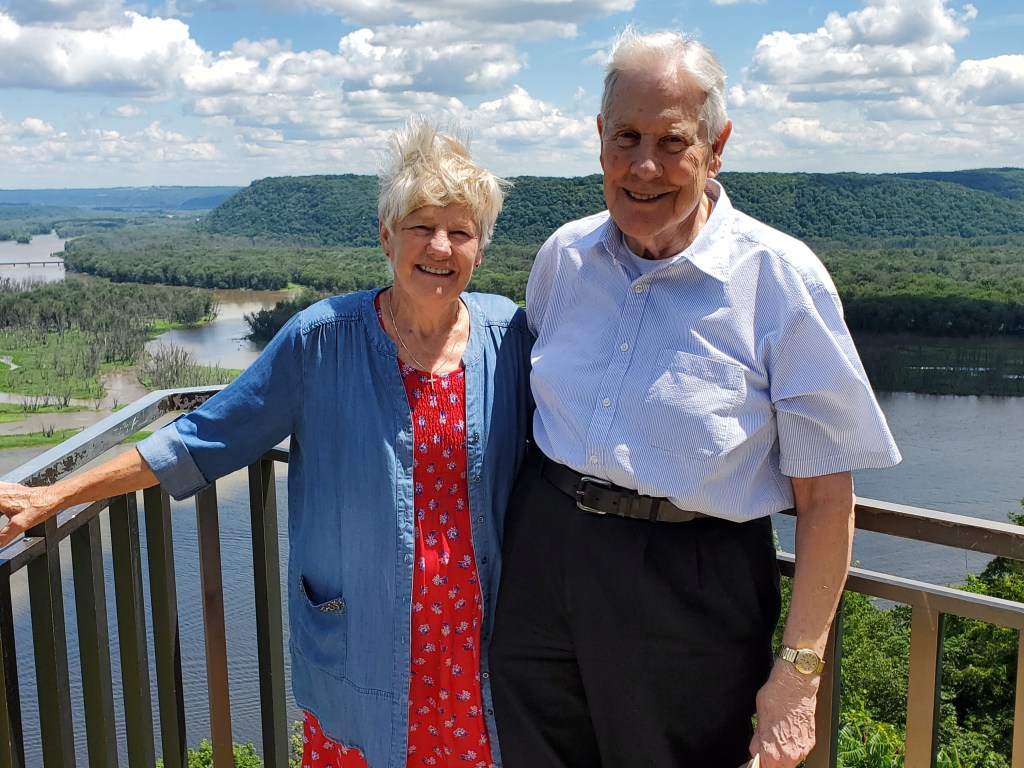
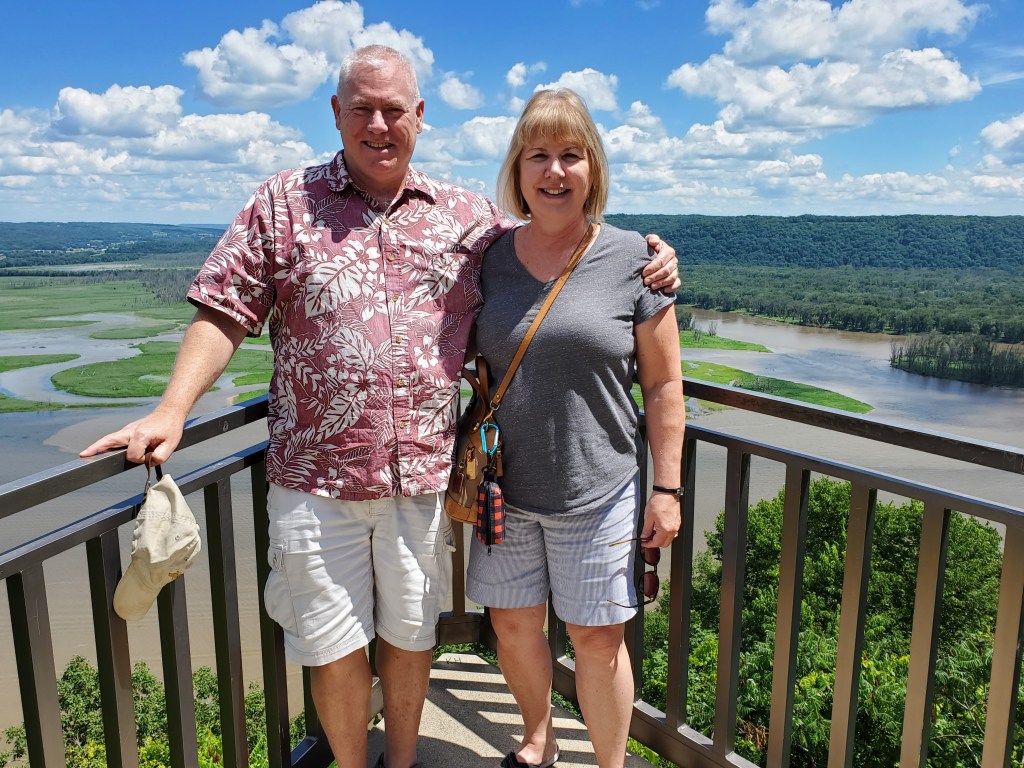
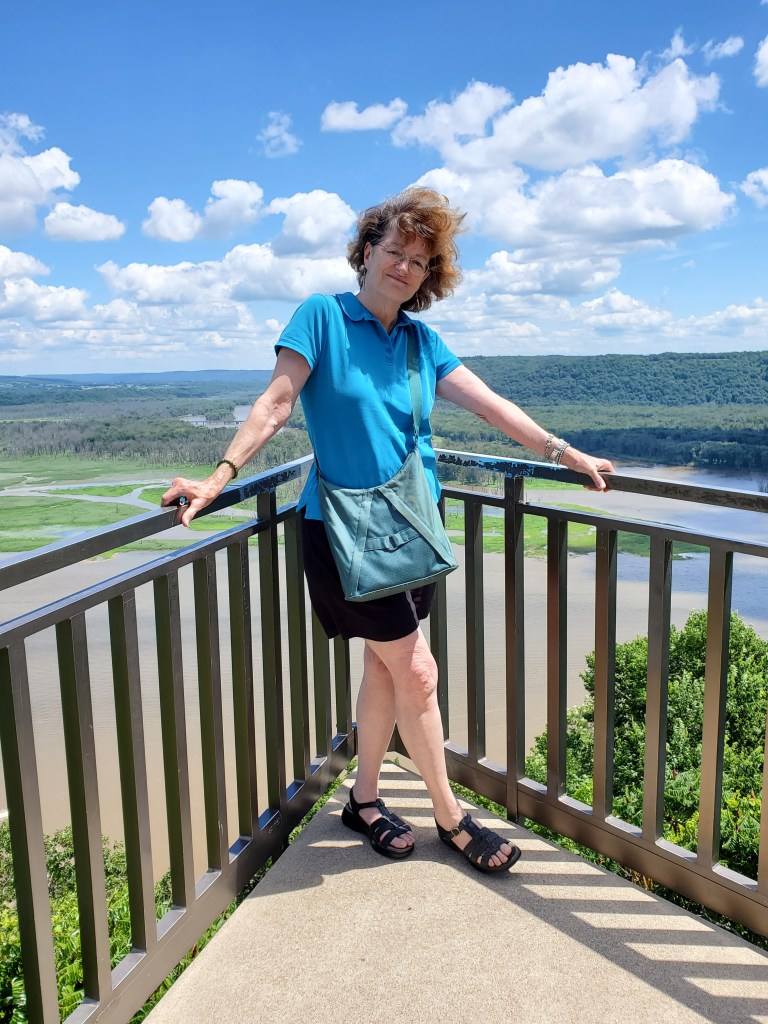
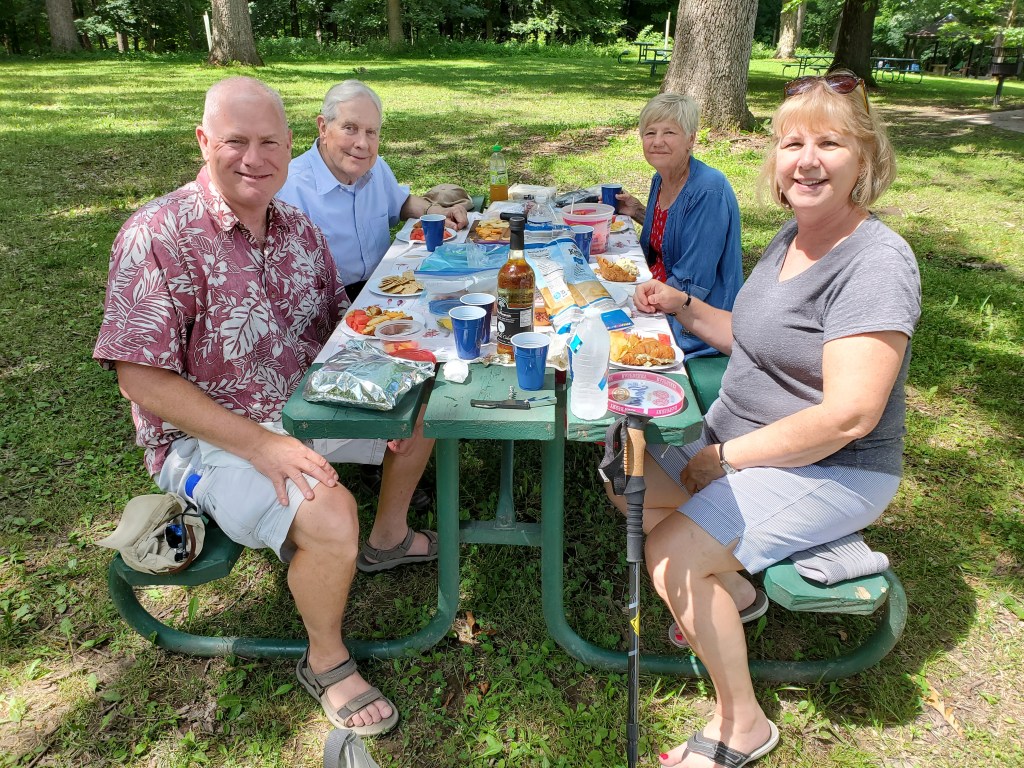
The wonder of the place inspired us to take turns posing before this majestic backdrop, after which we enjoyed Jan’s excellent picnic lunch.
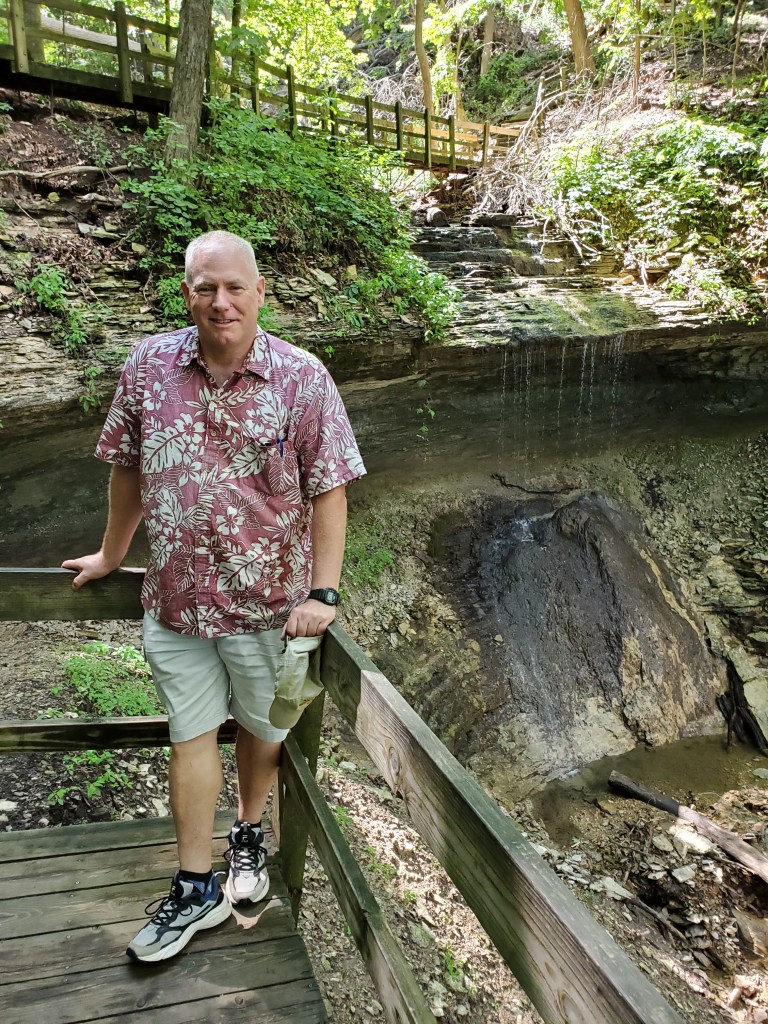
I was happy to have Rob accompany me on a modest hike to see a modest waterfall, and all the world’s troubles seemed quite remote–
–remote, that is, until we encountered a fellow hiker, who brought news from the previous Friday we had (happily) missed on our day of reunion and good times together: the shockingly senseless, inexplicable early morning murder of three members of the Schmidt family, Tyler, his wife Sarah, and their 6-year-old daughter Lula, at another Iowa camp ground in the Maquoketa Caves State Park, the apparent murderer himself also dead of a self-inflicted gunshot wound. Such horror in another Iowa State Park just 80 miles to the south, leaving a 9-year-old boy, Arlo Schmidt, the lone survivor, traumatized for life and all alone.
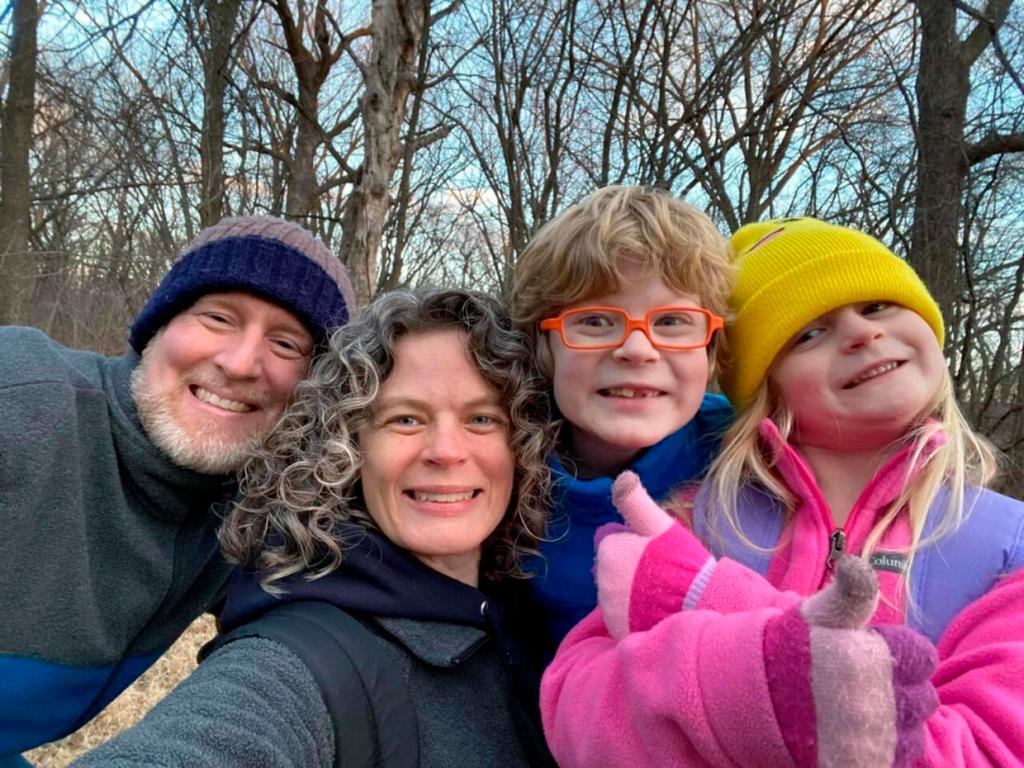
On our lovely Sunday outing, I am too preoccupied by the warmth of the family around me to think much more about the family lost in yet another random shooting in America, land of the free, home of the brave—and the well-armed deranged. But as I type this, I think of the Schmidts and wonder why. Paul Simon sang it:
For we lived so well so long
Still, when I think of the road we’re traveling on
I wonder what’s gone wrong
I can’t help it, I wonder what’s gone wrong
(“American Tune,” 1975)
 Georgeann Murphy
Leave a comment