23 July 2022
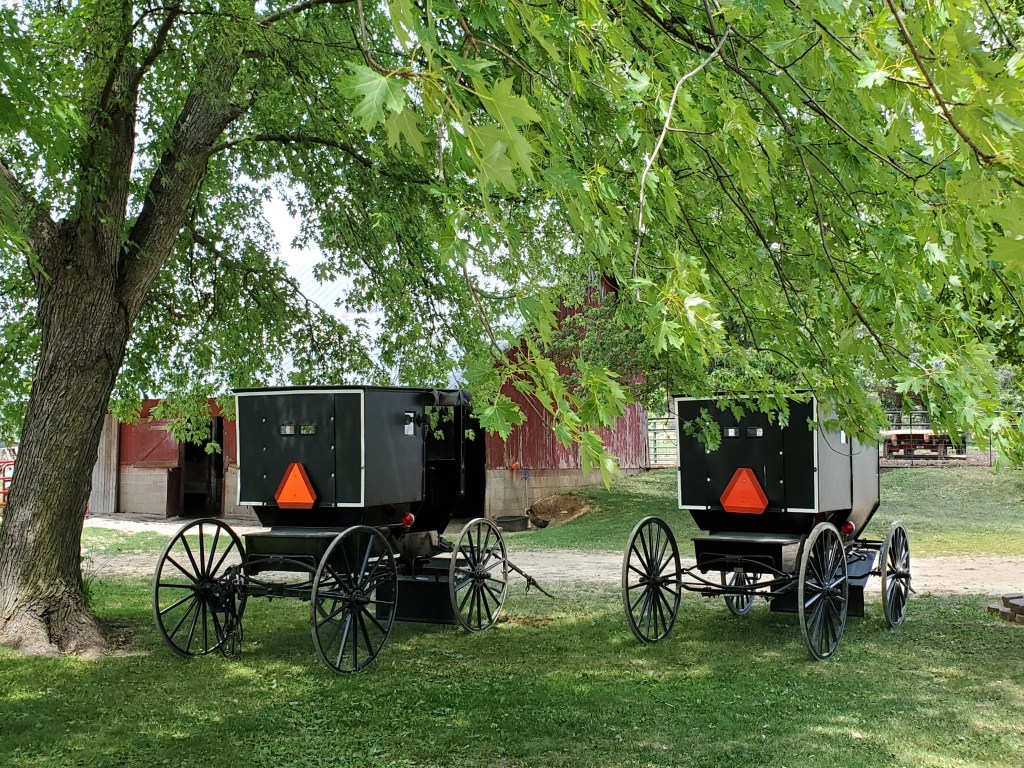
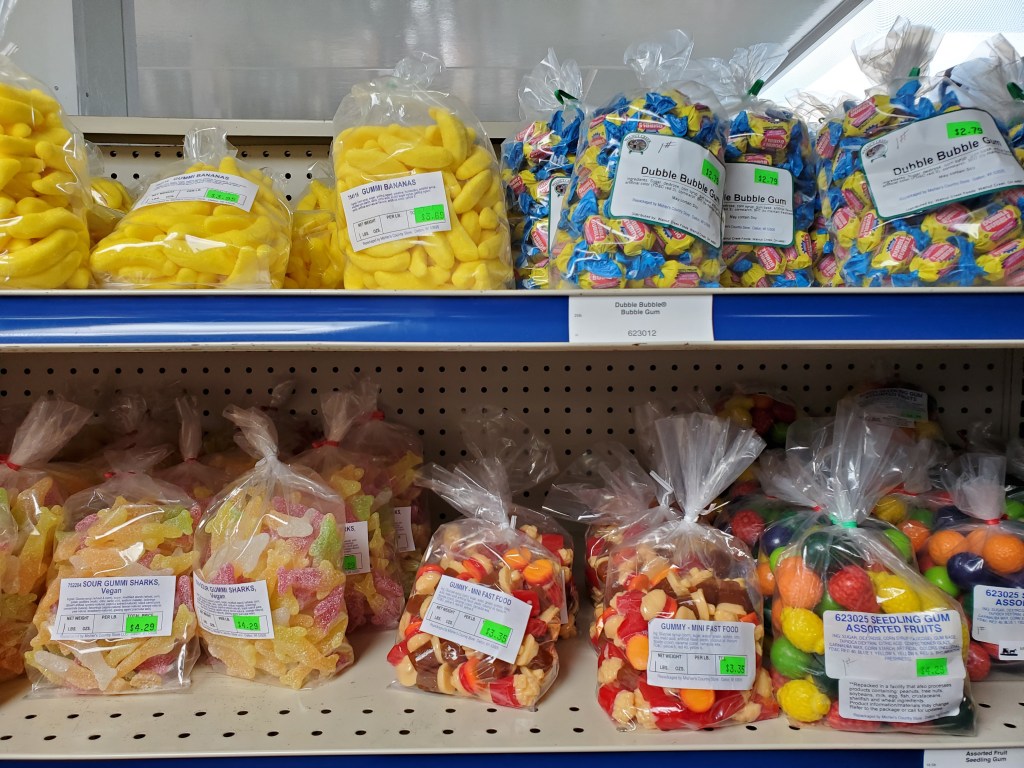
The Andrew family had a full range of Wisconsin attractions planned for this Saturday, and after our cereal and Pero (a non-caffeinated coffee substitute), we set out through miles of really beautiful farm land to the Amish-run Mishler’s Country Store in Dalton WI, a treasure trove of bulk spices, old-fashioned candy, fancy soaps, and hard-to-find practical items for use in the kitchen, including a set of ergonomic measuring cups in a full range of sizes (like ¾ C). The place was very busy, its parking lot serving on this morning as a registration site for some bicycling event. No electricity (so no ac), no credit cards, just simplicity on offer, a place so out-of-this-metamodern world as to feel like a theme park.
Once back in the car, we naturally all start talking about the 1985 Harrison Ford / Kelly McGillis film Witness, a favorite of my late husband’s and our friends in Munich, who found they could understand the Pennsylvania Dutch (or “Dietsch”) spoken in the film. I’ve Mennonite inheritance on my mother’s (the Senseman) side, but no gift for languages other than English, so I, however, could not: another degree of separation from the Amish and anyone not so typically monolingual as me and most Americans.
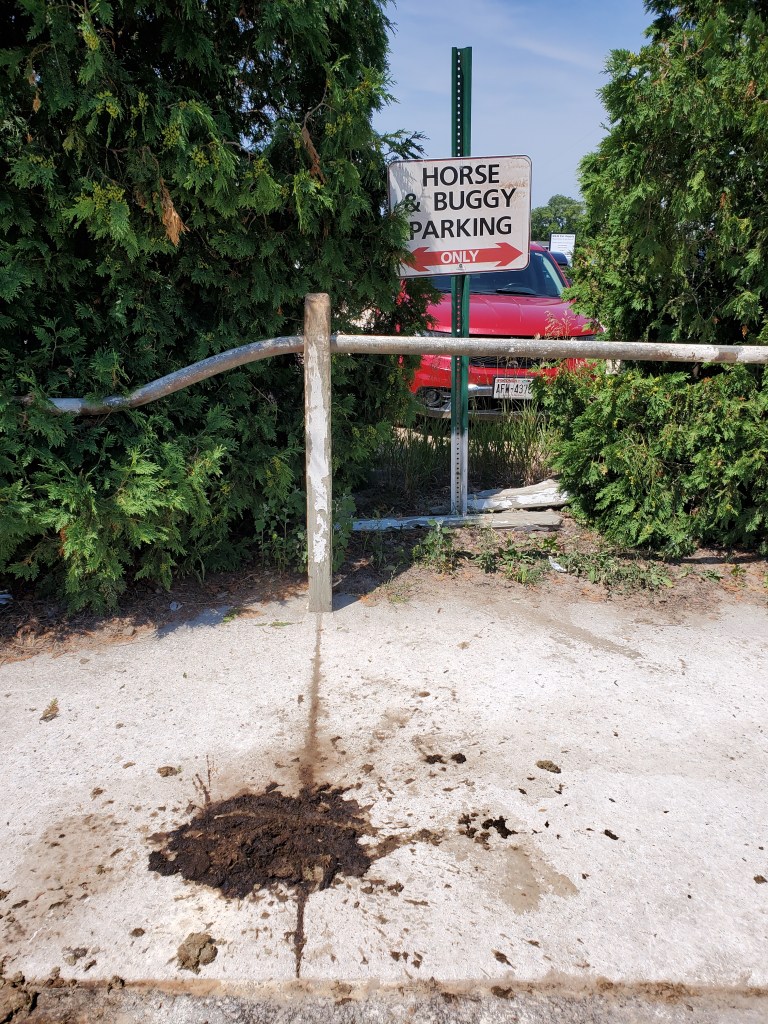
I found myself wondering about the way the Amish were in the world, traveling by horse-drawn carriages—and then thinking that the 1985 world of Witness now felt almost as foreign to me as the men in their broadfall trousers with suspenders and broad-brimmed straw hats and the women in their full-skirted dresses and aprons, prayer cap-covered buns at their napes, and bare feet—even when walking through the manure byproduct of their horses. In 1985 there were no social media, gps navigators, smart phones, or e-tickets, and back then in the first spring of my assistant professorship at Centre College in Kentucky, I still wrote my lectures and papers on a typewriter, as I had my dissertation the year before. Hard now to imagine all that away. So how much harder to imagine life without electricity? How do the Amish vote, I wonder—not just politically, but literally? Can they vote electronically? Maybe, as in my hometown of Madbury NH, pencils and paper and a wooden ballot box are still de rigueur. And I’m pretty sure the Amish are better off not consuming 24/7 news on screens.
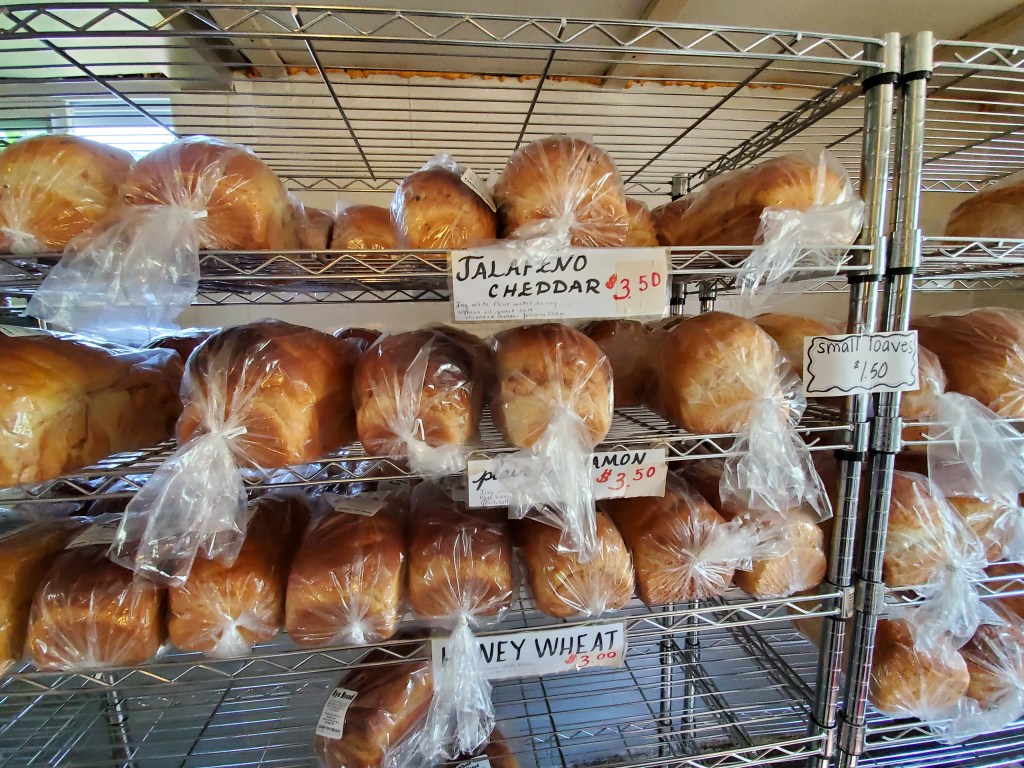
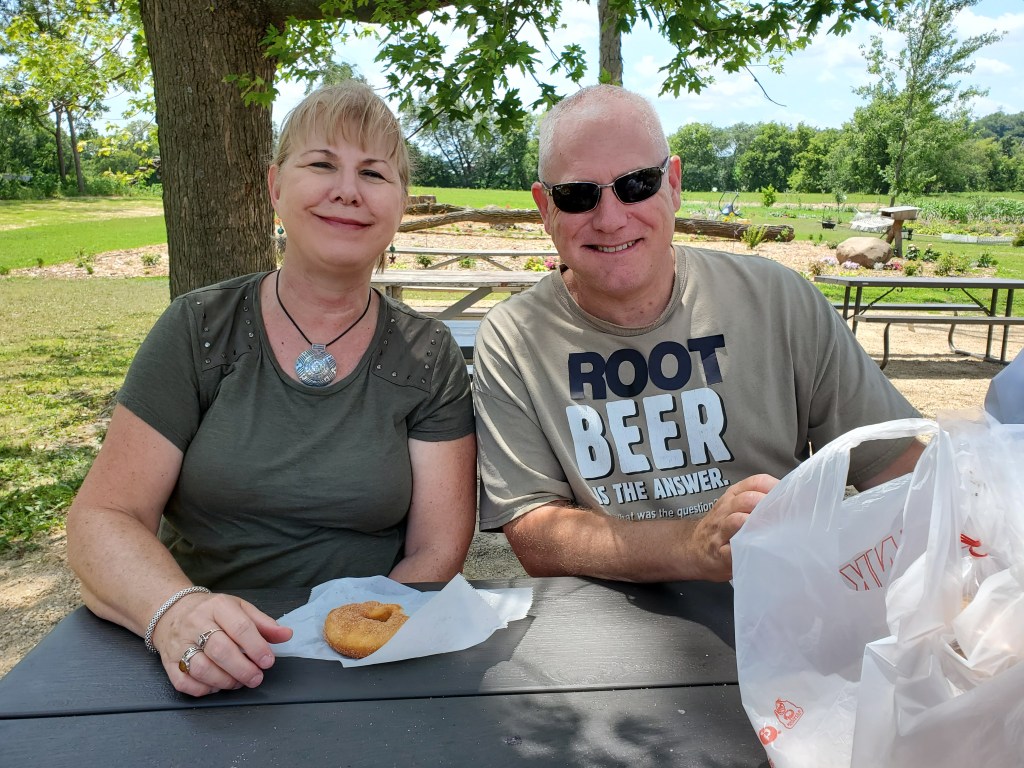
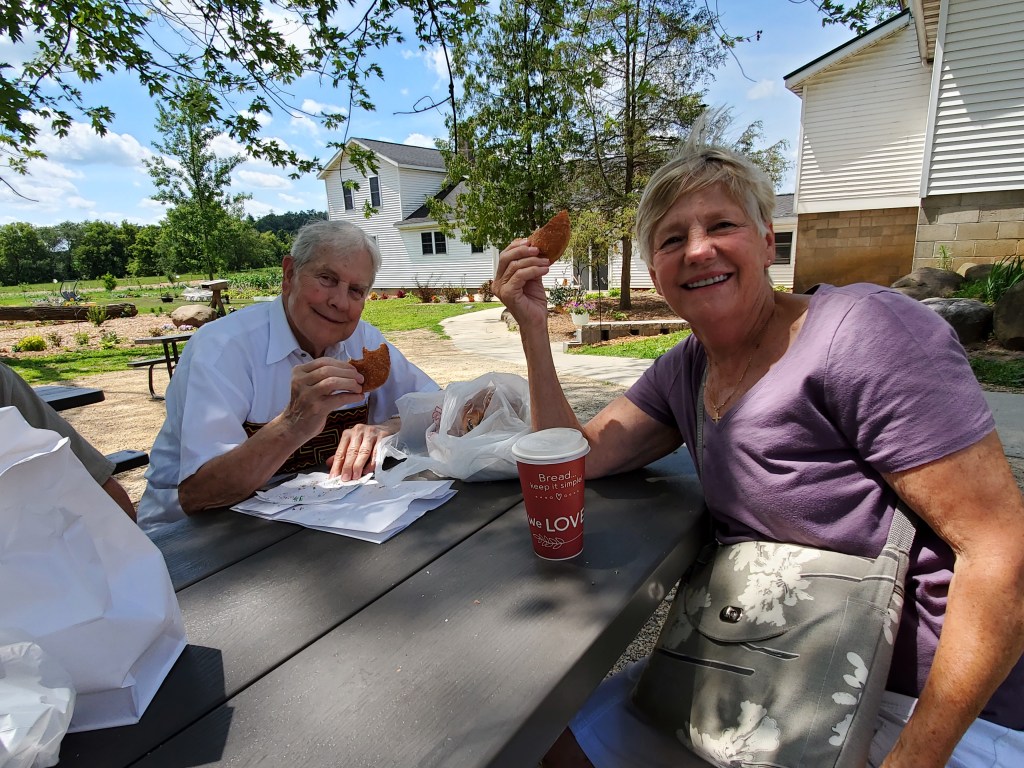
From Mishler’s we drove to the nearby Amish Bakery on County Road H only to find it closed (due to health concerns, alas), but relied on our cell phones and Google maps to get us to another Amish bakery, Pleasant View, on Kiefer road, and discovered it, too, doing a bustling business. The alluring aroma of fresh-baked goods in the lower level bakery below the homestead was hard to resist, even though lunch time approached, and lots of folks were taking advantage of the fine day to enjoy some donuts on the spot. Attempting restraint, I bought a Czech peach kolache and some cashew brittle for later, and tried to distract myself with photography—and happily (thanks to my niece, who pointed out there was an Amish girl behind the bread rack I was focusing on) avoided shooting the young woman doing her best to stay out of the frame, shunning the graven images, individualism, and vanity of our selfie-obsessed era. Good on the Amish.
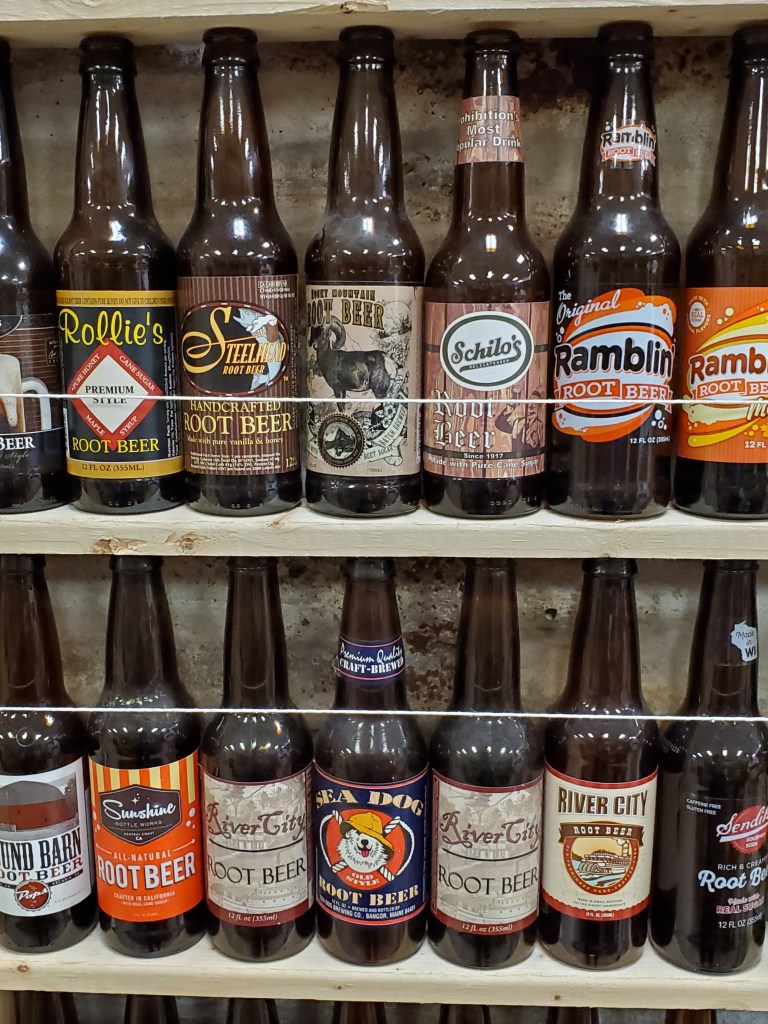
Next stop, two firsts for me: both the Museum of Root Beer and the Wisconsin Dells where it is located. The museum is the brainchild of my brother-in-law’s namesake son Reed, and features interactive and educational exhibits (like the loop of historical root beer commercials) and an amazing bottled root beer collection manifesting the astonishing variety of root beer production, from the sassafras root beverages made by American indigenous peoples before the arrival of Europeans in North America, through root beer’s first commercial marketing by pharmacist Charles Elmer Hires in 1875 and well beyond. At Reed’s Museum one can taste-test a flight of root beers, enjoy “gourmet” root beer floats, and purchase an extensive selection of root beers, sodas, and related souvenirs. My favorite: one called “1919.” But I limited my sampling because lunchtime was nigh.
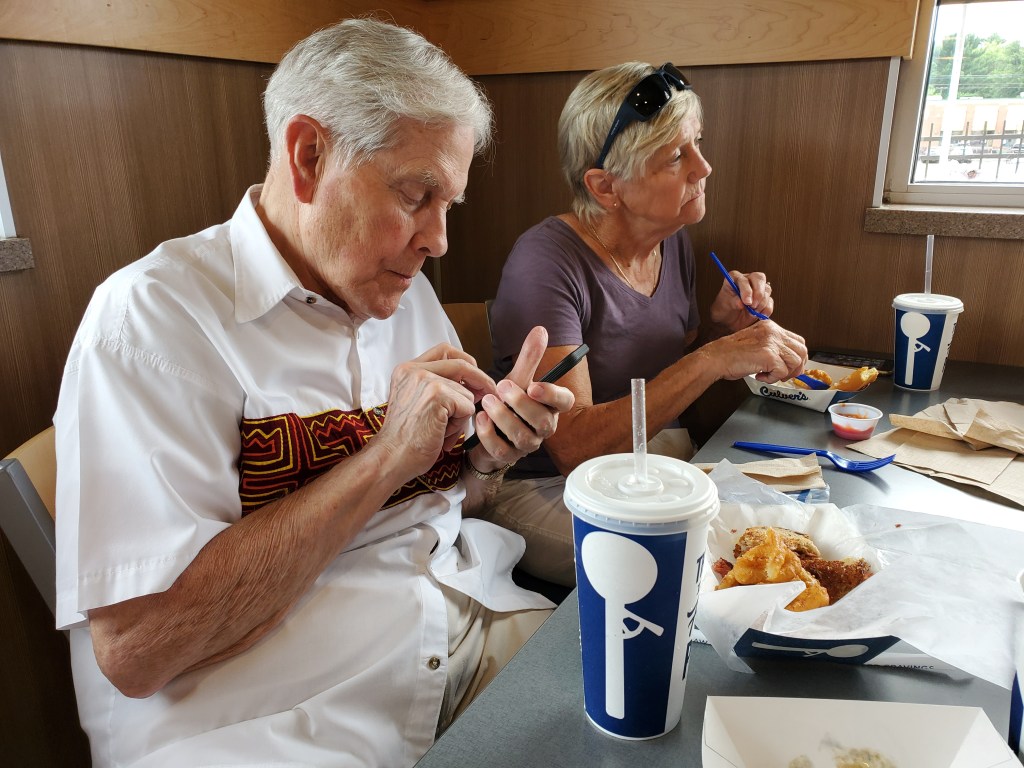
We arrived at a Culver’s restaurant after driving the gauntlet of the Dells’ commercial drag, a stupefying several miles of tourist attractions—water parks, roller coasters, and other “family friendly” amusements built around–and completely obscuring–the natural beauty of the Wisconsin River’s glacier-carved sandstone formations. I’m reminded of similarly beautiful natural wonders blighted by crappy capitalism: Niagara Falls, for example. Culver’s is a welcome respite, a very successful burger chain rooted in Wisconsin featuring ButterBurgers, Frozen Custard, Wisconsin Cheese Curds, and Pretzel Bites in addition to less locally celebrated fare. I indulged in a mushroom-and-swiss ButterBurger and my semi-annual shake. The posted menu invited patrons to inquire about flavors other than those listed, and I asked about the possibility of getting my favorite: coffee. Brian, the boy behind the counter, sadly informed me they had no coffee shakes—only “expresso [sic].” I told him that would be fine, and indeed it was.

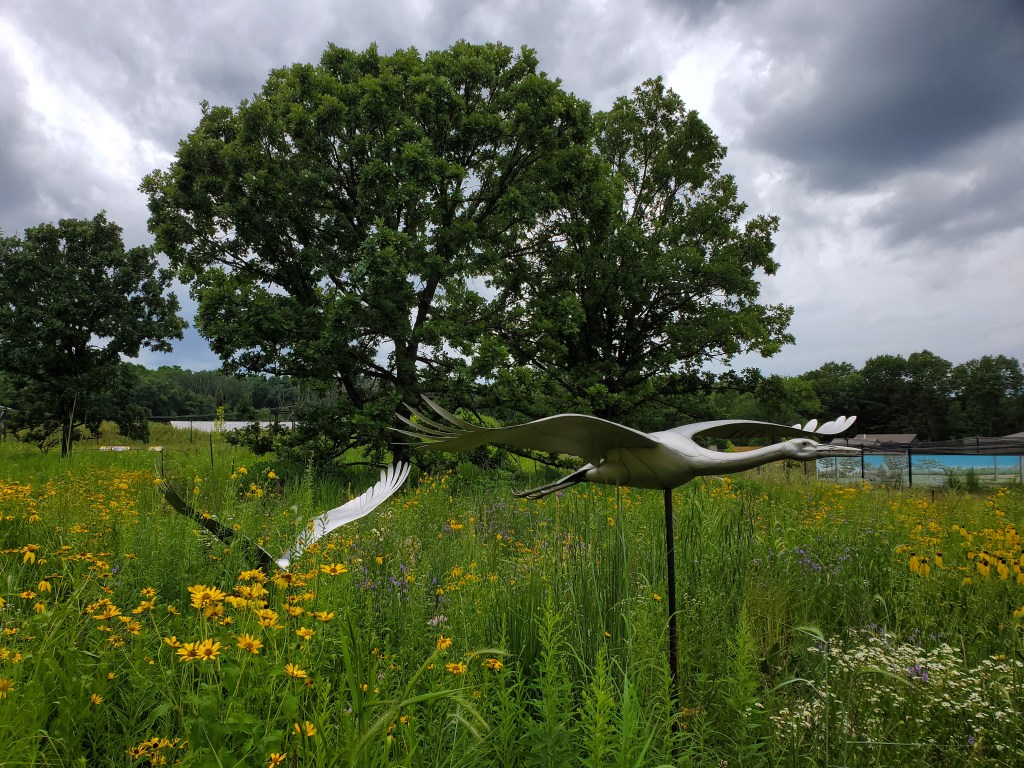
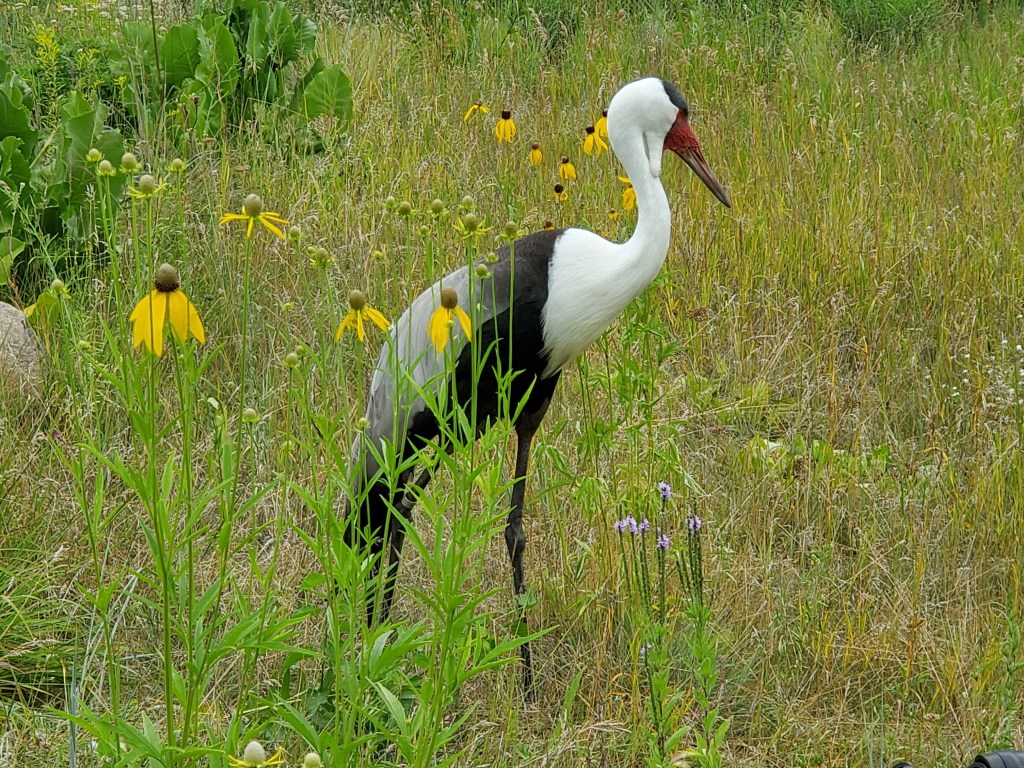
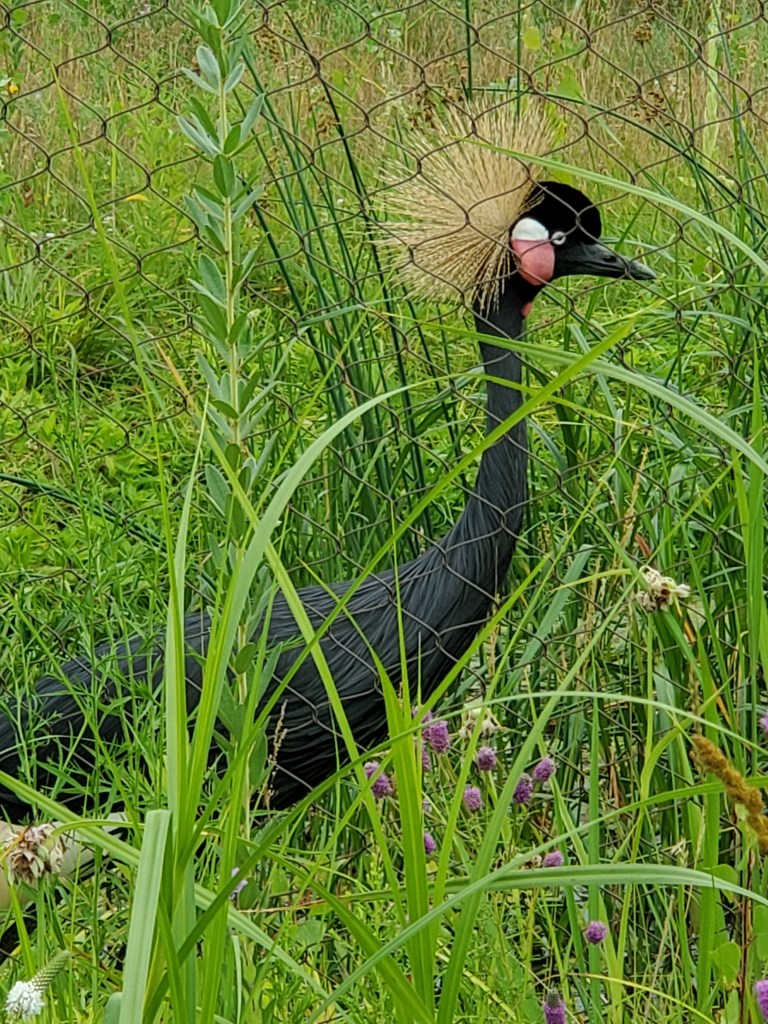
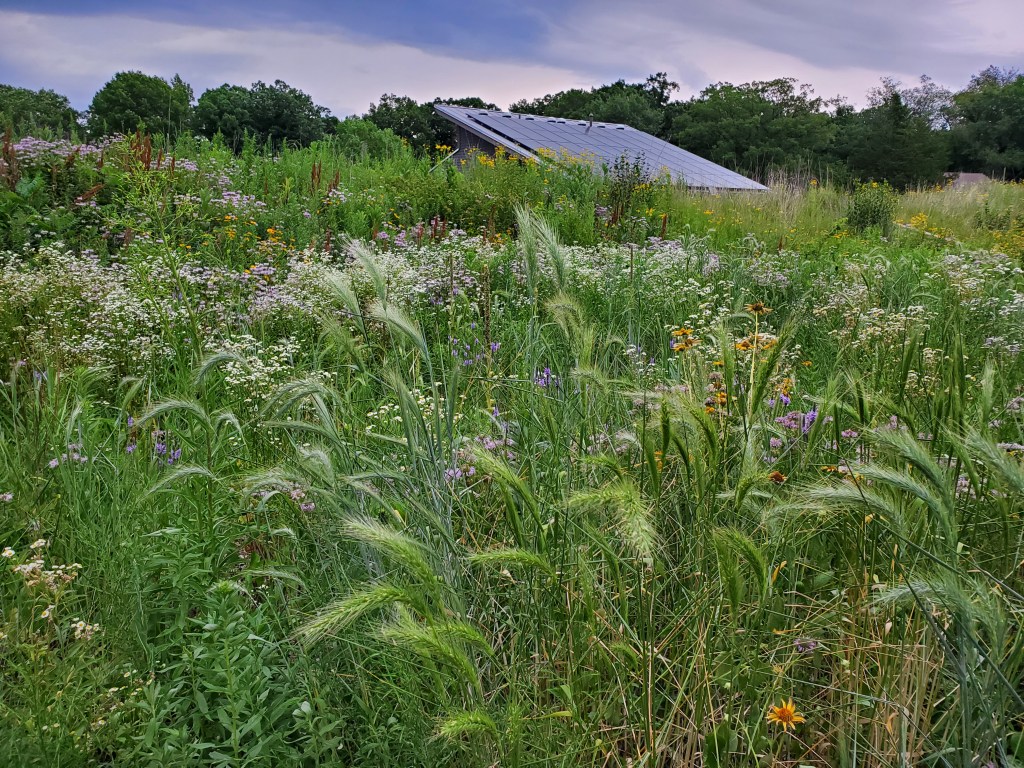
By then in our day of Wisconsin-themed adventures it was well past 3 pm, and we still had the International Crane Foundation to visit—and darkening clouds on the horizon. The cloud cover turned out to be a blessing on this very hot day, however, and we made a quick tour of the living exhibitions before the docents had to hurry us out a bit in advance of the 5 pm closing time to keep us safe from approaching lightning strikes. The Crane Foundation works worldwide to conserve cranes and the ecosystems, watersheds, and flyways on which they depend, and the Center in Baraboo WI features all 15 species of cranes, nature trails, guided tours, and a gift shop. The thunderstorm’s approach abbreviated our visit, but after a day filled with so many new sights for this novice WI visitor to see, heading home to enjoy Jan’s pasta salad dinner and the sound of the rain hitting a thirsty landscape felt quite a good idea.
Back in Saddle Ridge, I played the one piece I’ve learned after taking up the piano again for the first time since sophomore year in high school, the initial piece in Schumann’s Kinderszenen, a sunny if ever-so-slightly wistful Von fremden Ländern und Menschen. My brother-in-law’s Steinway B’s action and tone are very different from my husband’s—familiar, yet surprisingly disparate, rather like the midwestern “foreign lands and people” I’ve spent the day with.
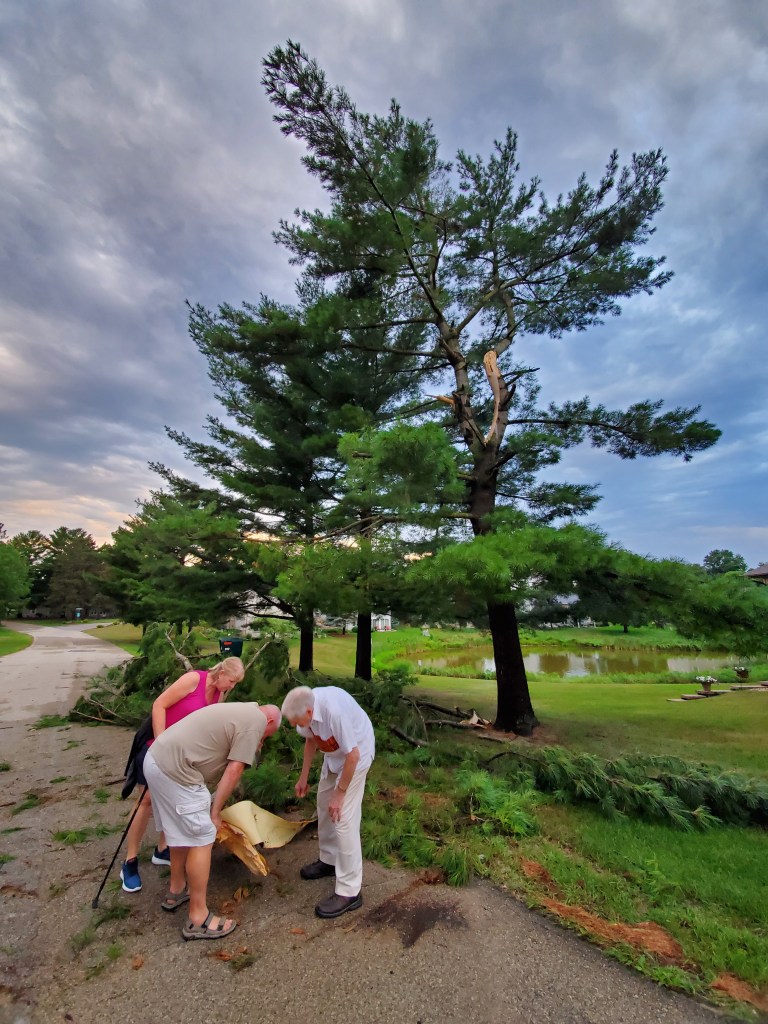
After dinner, we survey storm damage: the wind—perhaps a microburst—has taken down a massive limb from a nearby pine, temporarily blocking the road. The branches of the family tree, however, feel more strongly attached than ever.
 Georgeann Murphy
Leave a comment