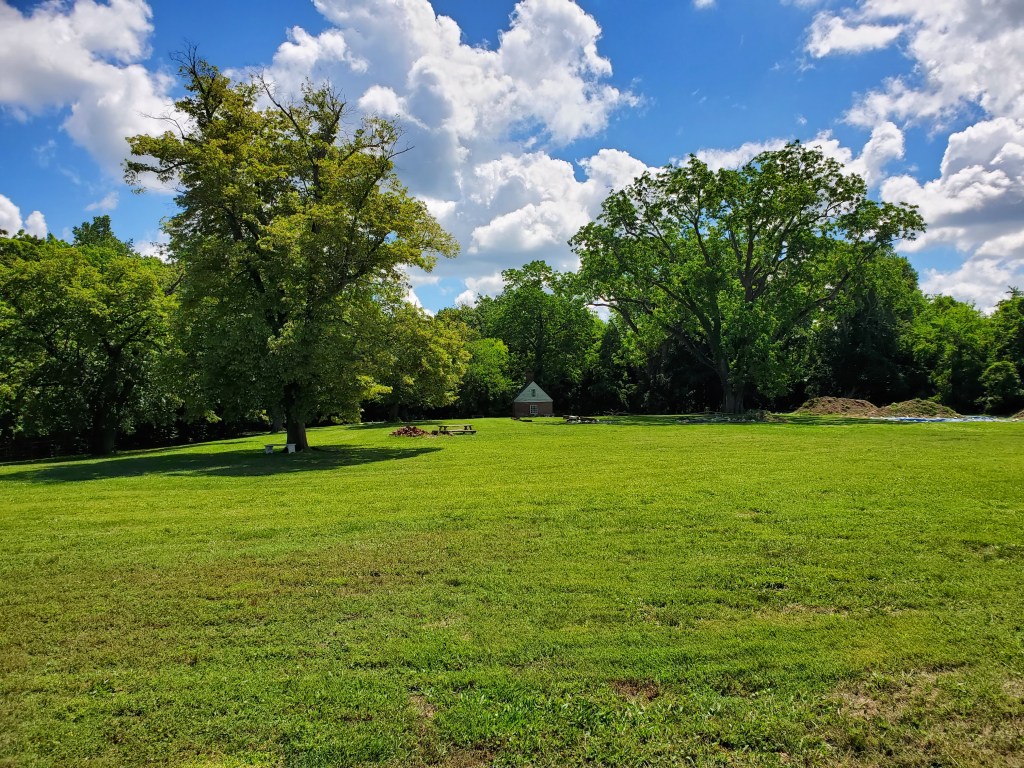
After breakfast, Sandy drives me to Colonial Williamsburg—CW to the cognoscenti—where she is In Her Element, and gives me a private tour emphasizing two ongoing archaeological excavations. The first, “Custis Square,” is uncovering the physical evidence left behind by (1) John Custis IV, father-in-law to Martha Washington, whose first husband, Daniel Parke Custis, was John’s son; (2) his family; and (3) the enslaved people who lived on that land between 1714 and 1749. Custis was (according to the explanatory sign) “a scientifically curious gardener who mixed local plants with English imports to create a formal garden described in 1734 as ‘[i]nferior to few if any in Vir[gini]a.’” What today seems an open field was once gardens that featured shaped topiary, lead statuary, and gravel-lined walks tended and maintained by enslaved men and women; Custis owned more than 200 slaves, as well as several other Virginia plantations totaling thousands of acres. Custis Square was his townhome. Custis, it seems, was something of a difficult (Custis=cussed?) man, whose infamous arguments with his wife Frances Parke required intervention in the form of written “Articles of Agreement.” He was slow to approve his son Daniel’s marriage to Martha (née Dandridge and later Washington’s wife), and is widely believed to have fathered by his enslaved woman, Alice, a son named Jack who was in Curtis’s will emancipated and promised a house and land–which he unfortunately did not live long enough to receive.
The second excavation Sandy interprets for me is the site of the Historic First Baptist Church–Nassau Street, founded in secret and defiance of local law in 1776, by one of the nation’s oldest African-American congregations, and hidden under a parking lot for decades. The Church’s “Freedom Bell,” cast in 1886 to mark the Williamsburg Church’s 100th anniversary, was refurbished to be rung at the opening of the National Museum of African American History and Culture in Washington, D.C. on 24 September 2016, when 99-year-old Ruth Odom Bonner, daughter of Mississippi slave Elijah Odom, joined the Obamas onstage to ring that emblem of African-American resilience.
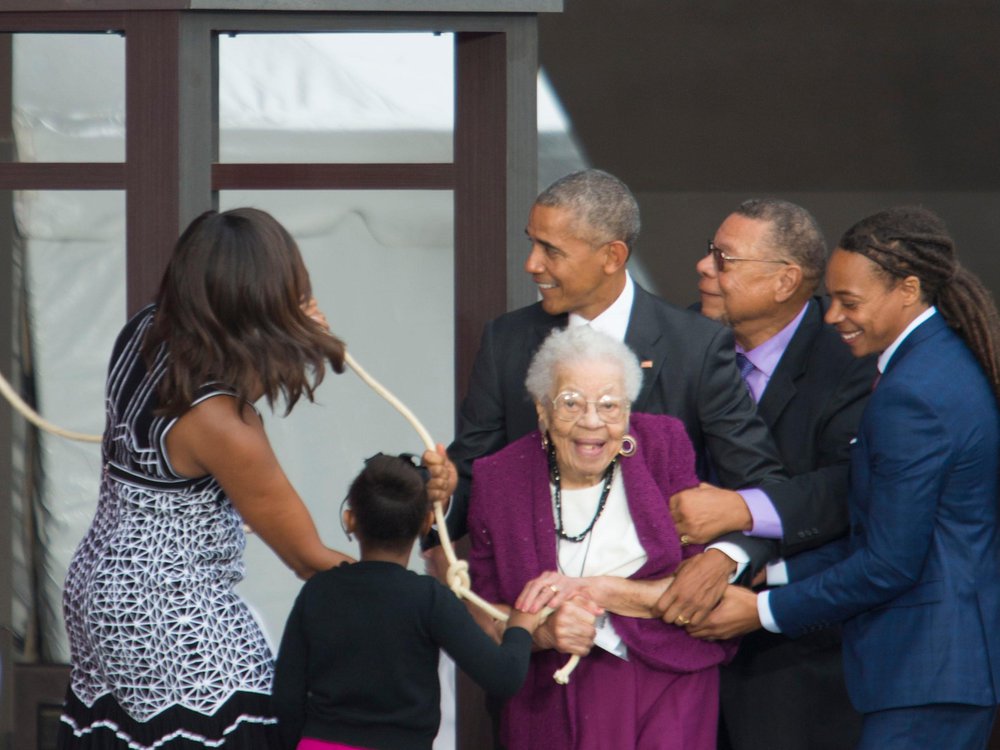
(photo by Leah L Jones for the NMAAHC)
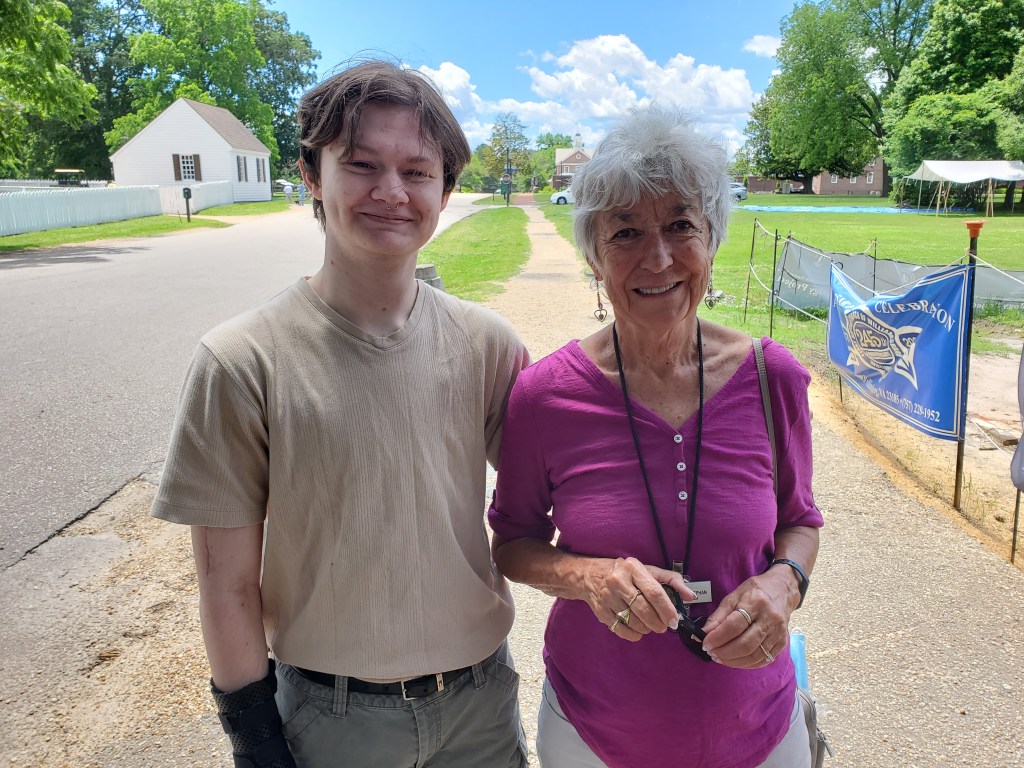
As Sandy explains what has gone on and what is yet to come at the excavation, a young man stops to listen, and when Sandy invites him to join us, introduces himself as Alex Daniels, a rising senior history major at William & Mary who has worked extensively in its archives and is writing his capstone thesis on the foundation of Colonial Williamsburg as the displacement of the at-the-time majority black community, dismissed by the CW founders as “undesirable elements” from which CW should be “liberated.” The ironies of such language expressed in documents young Alex has found speak volumes, the gobsmacking collusion of both Rockefellers and William and Mary educators.
We go on to spend hours in the 1715 Bruton Parish Church cemetery, its monument to “Mammy Sarah” juxtaposed to the company of this bright, articulate young man eager to out past injustices.
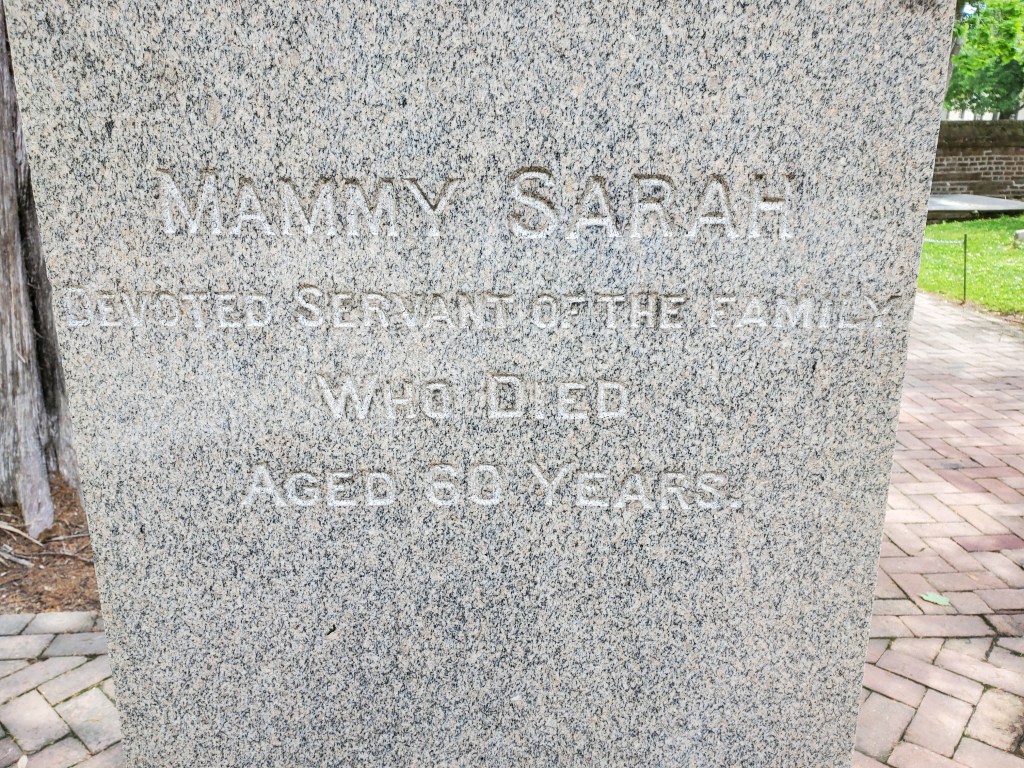
With his arm in a cast from a skating accident, Alex is bursting to expound on his research—and, most flatteringly, to ask advice of us. That advice: his capstone beggars many dissertations, and should go straight to publication! Alex’s bright academic future cheers both Sandy and me—me especially, now two years into retirement and away from the thrilling conversations I once had with UNH’s very best undergrads about their research in fields I often knew nothing of. I miss those chats and those kids, and Alex, in many ways, immediately becomes a highlight of my road trip, a scintillating ray of youthful hope in our country’s dark days.
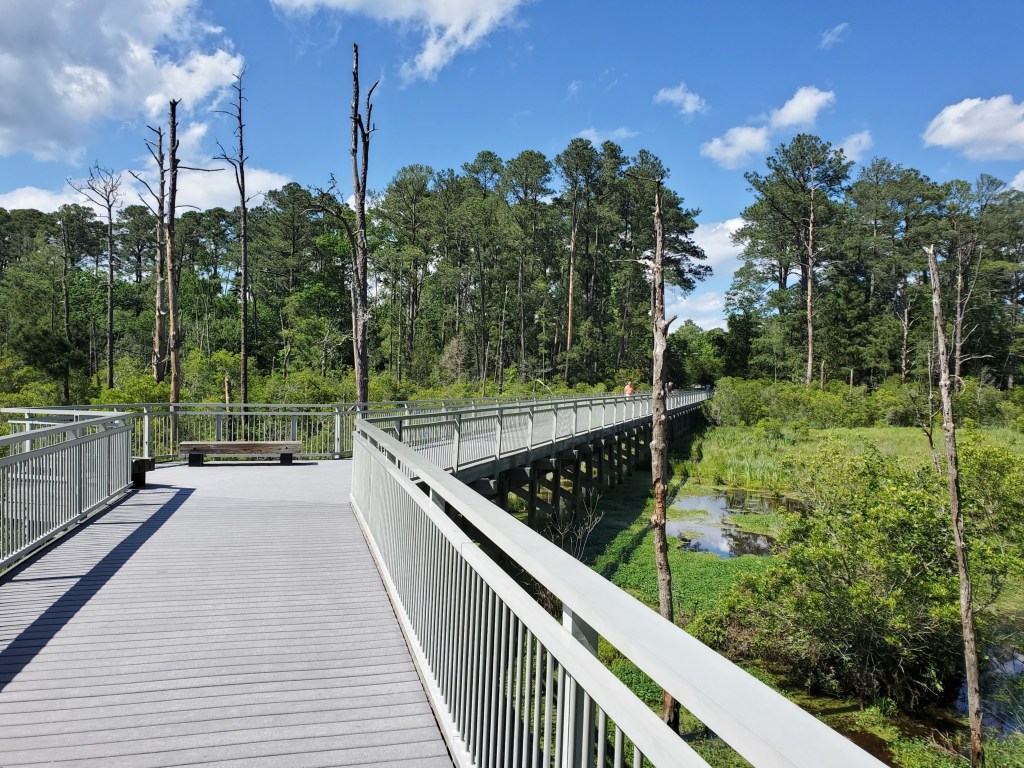
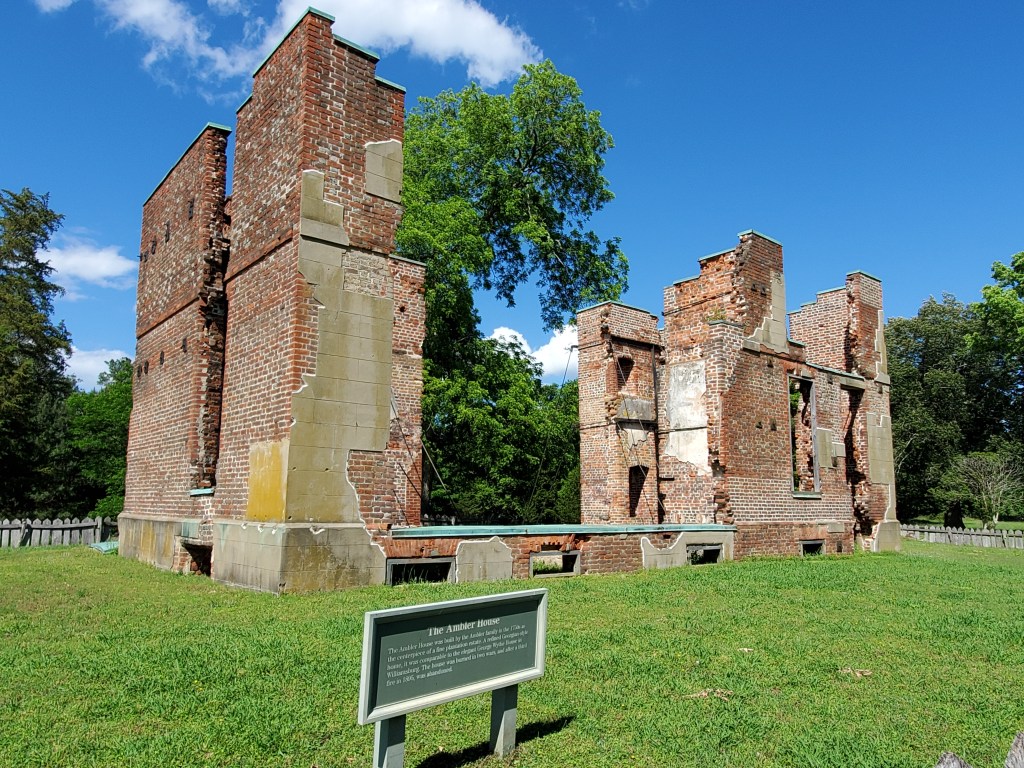
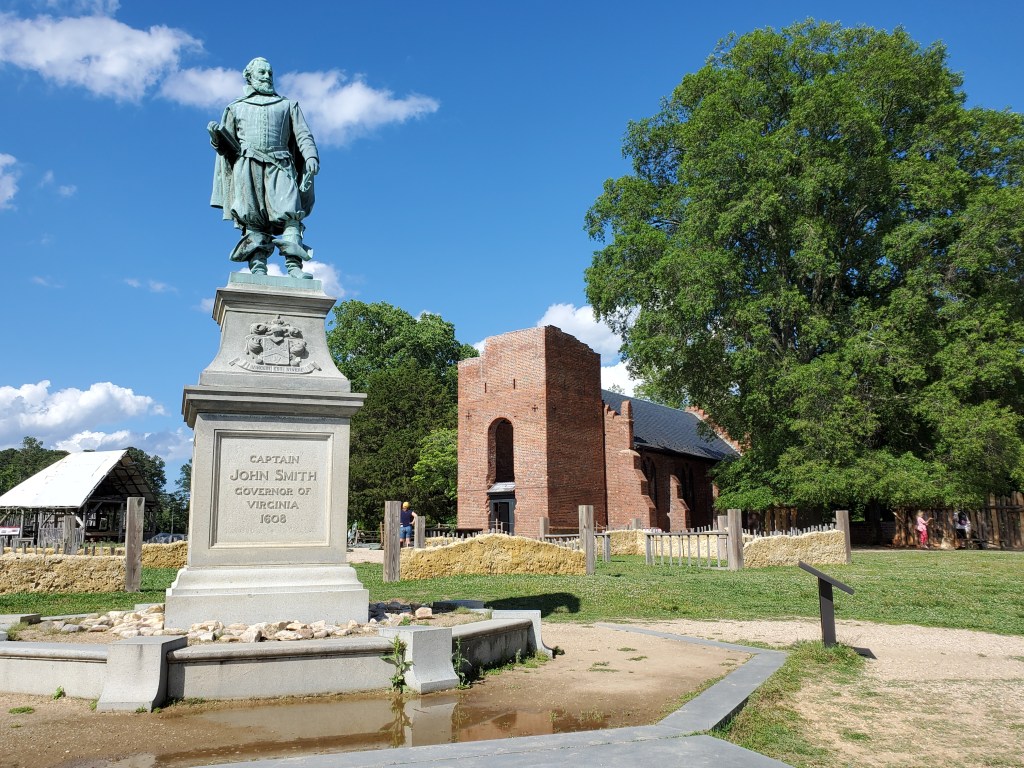
By the time we part with Alex at the Church, I’m hungry, so we share a sandwich at the CW Cheese Shop before driving on the Colonial Parkway to the Jamestown Rediscovery archaeological dig, baking in the bright sun next to the James River. Once arrived, you approach by foot on a bridge crossing a swamp best viewed from above, the first evocation of the terrible trials that befell those Virginia Company settlers who landed on Jamestown Island in May 1607 to establish the first North American English colony 60 miles from the mouth of the Chesapeake Bay. First, the malaria-infested swamp water laced with arsenic (!), then the starving time, cannibalism, and sporadic attacks from the native Powhatan tribe. We walk past the Ambler Mansion (c. 1750) ruins, thrice burned, first in the Revolutionary War, again in the Civil War, and finally abandoned after a third fire in 1895, further testament to hard times and a veneer of civilization as thin as the remaining stone facing on the brick foundation.
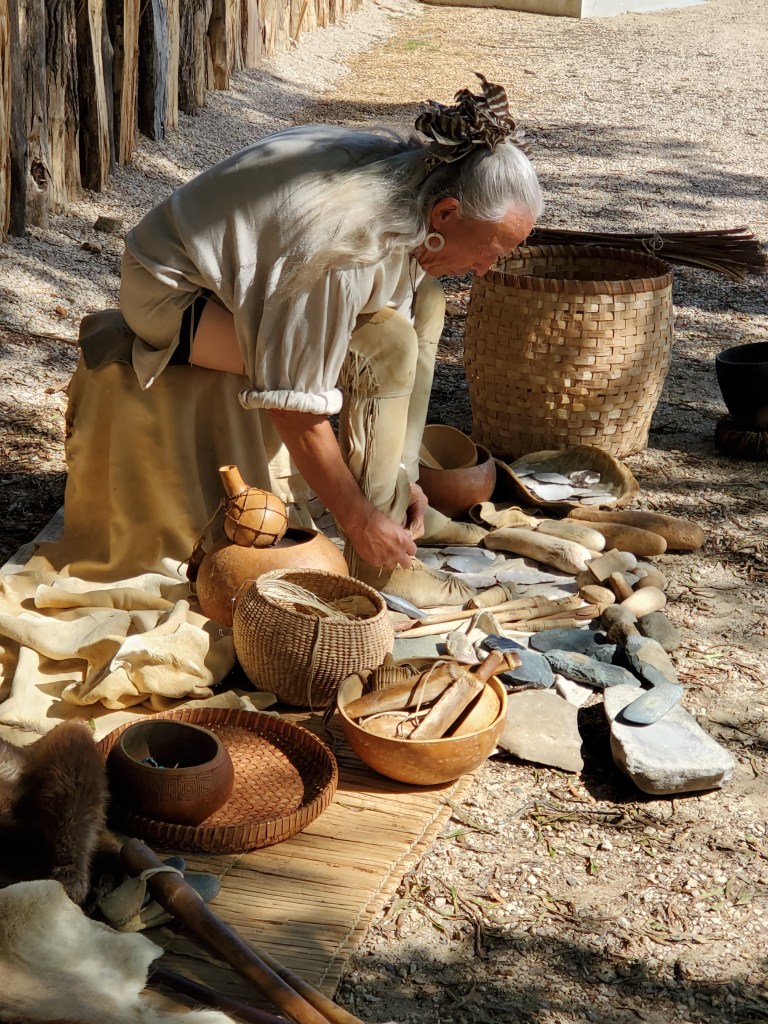
We watch a handsome Native American with a gift for presentation explain the construction of buckskin apparel—and the necessity of cooperation and codes of behavior strictly enforced within a tribe, as banishment from one’s people in so harsh an environment meant certain death. A lesson for our Balkanized nation?
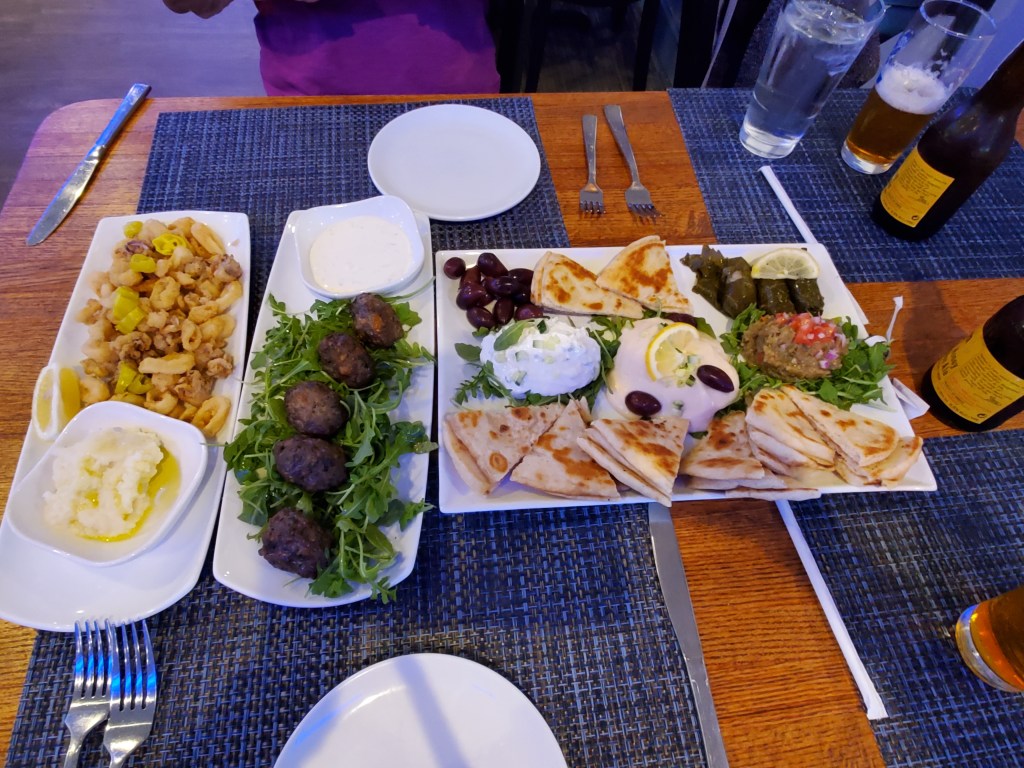
We make a quick tour of the archaeological museum just before closing time, and head back to “civilization” for a wonderful feast at Greek restaurant Keφi, a cold pikilia platter with taramasalata, melitzanosalata, and tzatziki on a bed of arugula with kalamata olives, dolmades, and grilled pita, keftedes and kalamari with skordalia accompanied by a delicious Honey Golden Ale, and finally a slice of delicious orange semolina cake, portokalopita, for dessert.
Back home we speak of missing our late, loving husbands, Alan and David, and the company of men in general, and confess how long it took each of us to appreciate the autoeroticism of fancy underwear. Sandy, despite her seemingly unassailable good health and youthful looks, is, like Cameron, considering a move from her lovely home with its many steps. Ever reasonable, she’s concluded if you want to age in place, you will be stuck at home if you can’t negotiate steps. In an unrelated act of generosity, she makes a gift to me: a set of “yoga toes,” the better to straighten and stretch our bunions.
And so, to bed.
 Georgeann Murphy
Leave a comment