In “Harry Truman’s History Lessons,” published in Prologue (Spring 2009, Vol.9, No. 1), a magazine featuring articles based on the U.S. National Archives, Samuel W. Rushay, Jr., archivist for the Truman Presidential Museum and Library, asserts what history meant to Harry S. Truman: both ethical and moral guidance and, most notably as President of the United States during his two terms in office (1945-1953), a tool he used to make decisions. Plutarch’s Lives (c. 120 CE), Rushay writes, gave Truman the insight that “It was the same with those old birds in Greece and Rome as it is now . . . . The only thing new in the world is the history you don’t know.”
Today, 28 April 2022, is Yom ha-Sho’ah, Holocaust Remembrance Day, marking the 1945 U.S. liberation of the Dachau concentration camp and commemorating the six million Jews who perished in the Holocaust. Falling on the 27th day of Nisan in the Hebrew calendar, Holocaust Remembrance Day also honors the Jewish insurgents inside the Warsaw Ghetto who in 1943 resisted SS and police efforts to deport them in the first significant urban revolt against German occupation in Europe.
But how much is remembered, or even known?
On 19 September 2020, The Guardian, like many other news sources, published survey findings of a “shocking” lack of Holocaust knowledge among Millennials and Gen Z:
“Almost two-thirds of young American adults do not know that 6 million Jews were killed during the Holocaust, and more than one in 10 believe Jews caused the Holocaust, a new survey has found, revealing shocking levels of ignorance about the greatest crime of the 20th century.
According to the study of millennial and Gen Z adults aged between 18 and 39, almost half (48%) could not name a single concentration camp or ghetto established during the second world war.
Almost a quarter of respondents (23%) said they believed the Holocaust was a myth, or had been exaggerated, or they weren’t sure. One in eight (12%) said they had definitely not heard, or didn’t think they had heard, about the Holocaust.”
More anecdotally, my colleague teaching American students in London recently reported that one of them did not know we were allies with the French, not the Germans, in both WWI and WWII.
And then there’s denial that goes beyond either ignorance or amnesia. As the House committee continues investigating the deadly 6 January 2021 attack on the Capitol, an Axios-Momentive poll from January 2022 revealed that more than 40% in the U.S. do not believe President Biden legitimately won the 2020 election.
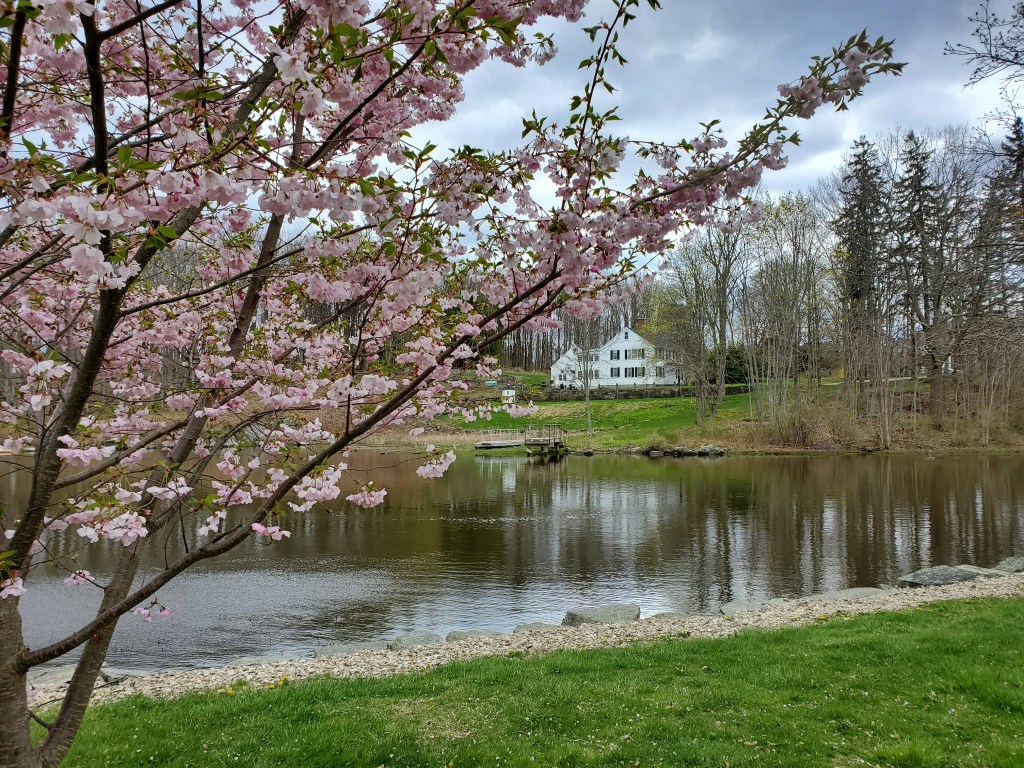
Yesterday I strolled along the Oyster River on a glorious spring day, gazing at the lovely home of General John Sullivan, who left the Continental Congress to serve under Washington from Cambridge to Valley Forge, and later served three terms as Governor of New Hampshire, leading the fight for ratification of the U. S. Constitution. The General Sullivan house is Durham, New Hampshire’s only National Historic Landmark: history made visible.
Today, Dear Reader, I wonder what use our fragile democracy makes of history as yet another despot, like so many before, pursues crimes against humanity in Ukraine.
 Georgeann Murphy
Leave a comment