And this our life, exempt from public haunt,
Finds tongues in trees, books in the running brooks,
Sermons in stones, and good in everything. (AYLI, 2.1.12-17)
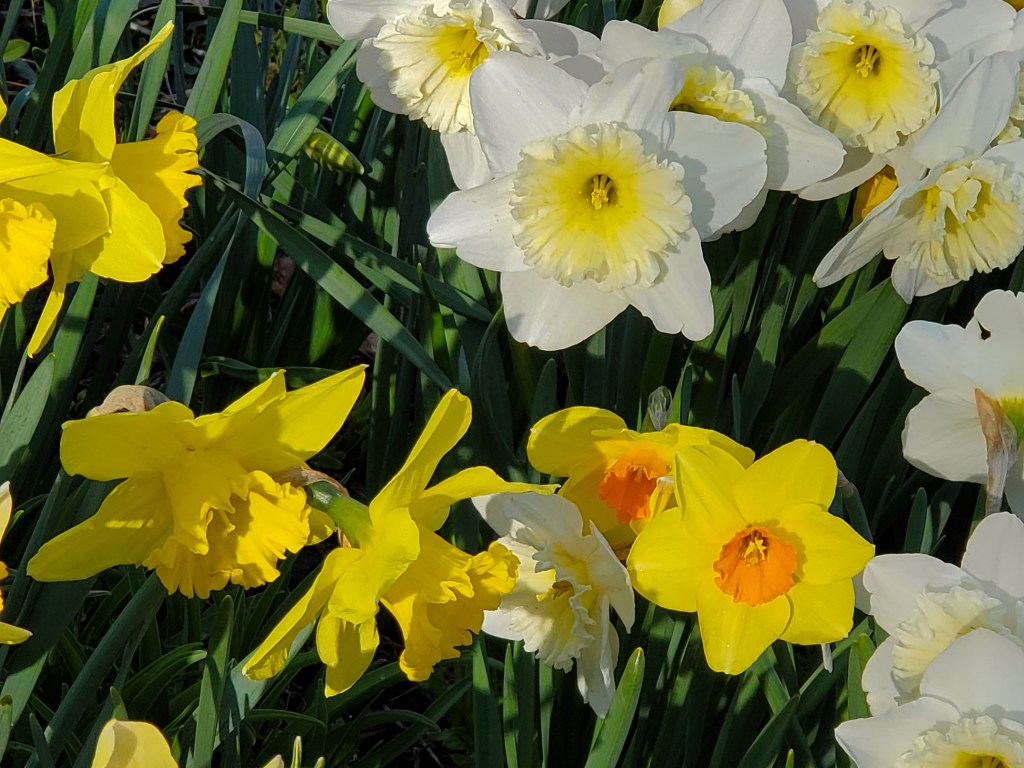
This Good Friday seems a good day to address a dear friend’s question about the meaning of daffodils–and also to shape the wherefore of this new blog. Anthropologist Leslie Alvin White proposed symbols as the basis of human behavior, and certainly it is a truth universally acknowledged that humans make, deploy, interpret–and mistake!–symbols. Daffodils, those brave vernal trumpets, undaunted by late frosts and hungry deer, manifest rebirth, spring, and new beginnings. For lives shaped by literature, as mine has been, they recall the “jocund company” that flashed on Wordsworth’s inward eye, filling his heart with the remembered pleasure of their breezy, fluttering dance.
Communion with nature is a balm my family, immediate and extended, share, and many more have rediscovered in our current time of plague. The quotation that heads this post comes from Shakespeare’s AS YOU LIKE IT, when Duke Senior encourages his brothers in exile from a corrupt court to appreciate how much better is their life in the Forest of Arden; his counsel to find salutary meaning in nature provided our granddaughters’ nursery a painted motto to help them grow and find the good in everything. My parents, Virginia, planter of trees, and George, rose gardener and guide to the natural wonders of our National Parks, continue to nurture me–as do their ashes the daffodils that return each year in my garden. As, this year, does my darling departed husband, David.
Finding adversity useful, even sweet, is today’s lesson, Dear Reader. Maybe it took my contracting COVID to begin this blog, a new venture the daffodils help launch. I hope you find this, and them, useful. And sweet!
 Georgeann Murphy
Leave a comment